NEW YORK CITY — A national chess master accuses the city’s largest charter school network of systemic racial discrimination in a $64 million lawsuit, court records show.
Former Success Academy chess director Jerald Times tells Patch he believes he was fired for speaking out against a “separate but equal” doctrine that saw Black educators sidelined to the benefit of less-qualified white employees.
“Success Academy was in essence operating under a color line,” Times told Patch. “I challenged the color line and was dismissed.”
Times’ lawsuit, filed last week in New York Federal court, details nearly two years of service during which the chess master saw a Black guest speaker with a Ph.D. fingerprinted and himself replaced by a white worker without a college degree.
A Success Academies representative declined to directly respond to the lawsuit but noted 69 percent of staff and 55 percent of teachers are not white….
The chess master began almost immediately to disapprove of Success Academy’s game.
Times joined Success Academies in 2019 with an impressive resume, accolades that included a glowing New York Times profileand a strong desire to teach the game he loved to New York City kids of all colors.
But as Times taught students to master the board, Success Academy began making moves he couldn’t condone.
The lawsuit contends the following:
Success Academy appointed a white job applicant over five more-qualified people of color, as well as directing Times to demote three Black teachers, the lawsuit contends.
Internal chess competitions were held in Cobble Hill and the Upper West Side and none in Black and brown communities, despite the fact that more than 80 percent of students are of color.
Success Academy’s chess manager routinely gave Black chess coaches lower evaluations than their white counterparts and denied them promotions.
The school system furloughed its basketball coaches, who were mostly Black, but didn’t do the same for its white soccer coaches.
Success Academy demanded a Black man with a Physics Ph.D. first be fingerprinted, submit to an intensive background check and be tested for drugs before speaking at an online chess tournament. Two other white guest speakers did not go through the same process and only one was fingerprinted.
The New York Times reported that the College Board plans to revise its controversial AP African-American studies course. Last year, it was about to roll out a syllabus when a writer in The National Review said it was a radical Marxist course that would teach students to hate America. The state of Florida, under Governor DeSantis’ direction, negotiated with the College Board to remove topics and authors that it wanted removed. DeSantis announced that unless the course satisfied Florida, the state would ban it.
The College Board revised the course to satisfy Florida, and many schols of African-American studies objected.
The College Board said on Monday that it would revise its Advanced Placement African American studies course, less than three months after releasing it to a barrage of criticism from scholars, who accused the board of omitting key concepts and bending to political pressure from Gov. Ron DeSantis, who had said he would not approve the curriculum for use in Florida.
While written in couched terms, the College Board’s statement appeared to acknowledge that in its quest to offer the course to as many students as possible — including those in conservative states — it watered down key concepts.
“In embarking on this effort, access was our driving principle — both access to a discipline that has not been widely available to high school students, and access for as many of those students as possible,” the College Board wrote on it website. “Regrettably, along the way those dual access goals have come into conflict.”
The board, which did not respond immediately to an interview request, said on its website that a course development committee and experts within the Advanced Placement staff would determine the changes “over the next few months.”
The College Board, a billion-dollar nonprofit that administers the SAT and A.P. courses, ran headlong into a conflict between two sides unlikely to find any room for compromise. Black studies scholars believe that concepts the board de-emphasized — like reparations, Black Lives Matter and intersectionality — are foundational to the college-level discipline of African American studies. Conservatives — politicians, activists and some parents — believe the field is an example of liberal orthodoxy, and they are concerned that schools have focused too much on issues such as racism and systemic oppression.
Stay tuned. If DeSantis boycotts the course, other red states will follow. Will the College Board stick with the scholars or the market?
Politico reported that rightwing cultural warriors lost most school board elections, despite their big-money backers. Voters in Illinois and Wisconsin were not swayed by fear-mongering about critical race theory, LGBT issues, and other spurious claims of the extremists. These results should encourage the Democratic Party to challenge the attacks on public schools in the 2024 elections. An aggressive defense of public schools is good politics.
Amid all the attention on this month’s elections in Wisconsin and Illinois, one outcome with major implications for 2024 flew under the national radar: School board candidates who ran culture-war campaigns flamed out.
Democrats and teachers’ unions boasted candidates they backed in Midwestern suburbs trounced their opponents in the once-sleepy races. The winning record, they said, was particularly noticeable in elections where conservative candidates emphasized agendas packed with race, gender identity and parental involvement in classrooms.
While there’s no official overall tally of school board results in states that held an array of elections on April 4, two conservative national education groups did not dispute that their candidates posted a losing record. Liberals are now making the case that their winning bids for school board seats in Illinois and Wisconsin show they can beat back Republican attacks on divisive education issues.
The results could also serve as a renewed warning to Republican presidential hopefuls like Donald Trump and Ron DeSantis: General election voters are less interested in crusades against critical race theory and transgender students than they are in funding schools and ensuring they are safe.
“Where culture war issues were being waged by some school board candidates, those issues fell flat with voters,” said Kim Anderson, executive director of the National Education Association labor union. “The takeaway for us is that parents and community members and voters want candidates who are focused on strengthening our public schools, not abandoning them.”
The results from the Milwaukee and Chicago areas are hardly the last word on the matter. Thousands more local school elections are set for later this year in some two dozen states. They are often low turnout, low profile, and officially nonpartisan affairs, and conservatives say they are competing aggressively.
“We lost more than we won” earlier this month, said Ryan Girdusky, founder of the conservative 1776 Project political action committee, which has ties to GOP megadonor and billionaire Richard Uihlein and endorsed an array of school board candidates this spring and during the 2022 midterms.
“But we didn’t lose everything. We didn’t get obliterated,” Girdusky told POLITICO of his group’s performance. “We still pulled our weight through, and we just have to keep on pushing forward on this.”
Labor groups and Democratic operatives are nevertheless flexing over the defeat of candidates they opposed during races that took place near Chicago, which received hundreds of thousands of dollars in support from state Democrats and the attention of Democratic Gov. JB Pritzker, and in Wisconsin. Conservative board hopefuls also saw mixed results in Missouri and Oklahoma.
Democrats hope the spring school election season validates their playbook: Coordinate with local party officials, educator unions and allied community members to identify and support candidates who wield an affirming pro-public education message — and depict competitors as hard-right extremists.
Yet despite victories in one reliably blue state and one notorious battleground, liberals are still confronting Republican momentum this year that could resemble November’s stalemated midterm results for schools and keep the state of education divided along partisan lines.
Conservative states are already carrying out sharp restrictions on classroom lessons, LGBTQ students, and library books. And they are beginning to refine their message to appeal to moderates.
Trump, DeSantis, former Vice President Mike Pence, former South Carolina Gov. Nikki Haley and other Republican presidential hopefuls are leaning on school-based wedge issues to court primary voters in a crowded White House campaign.
Open the link. The wedge issues are working against the Republicans. Most people know and like their tearchers and their public schools.
Scott Maxwell, a columnist for the Orlando Sentinel, reports on Orwellian legislation that has been proposed by conservative elected officials. These officials don’t want professors to teach about racism. It is sure to be divisive and make someone uncomfortable. Thus they find it necessary to ban “teaching theories that suggest “systemic racism, sexism, oppression, and privilege are inherent in the institutions of the United States and were created to maintain social, political, and economic inequities.” This is a recent addition to the state’s higher education bill (SB 266).
This legislation is intended to shield students from unpleasant facts.
Students should not be taught about the origin of Florida’s law (recently revised) that did not allow former felons to vote, ever.
Maxwell writes:
That policy was instituted in the wake of the U.S. Civil War by Florida politicians who were, according to the Brennan Center for Justice, trying to stop the state from becoming too “n*ggerized.”
Sen. Geraldine Thompson, an African American Democrat who founded Orlando’s Wells’Built Museum of African American History and Culture, said the goal of the legislation is to distort history so students will never learn the history of systemic racism. Nor will they learn that the University of Florida did not admit Black students for its first 100 years. Legislators want to bury those facts, as they want to bury the history of lynchings and massacres. Nor do they want students to learn about the unequal sentences imposed on Blacks and whites convicted of the same crimes.
There were examples galore. Like two 17-year-olds in Lee County who were both charged with robbing gas stations with guns. Both had precisely three prior records as juveniles. Both made off with a few hundred bucks. The Black teen got four years in prison. The White one avoided prison altogether…
Thompson actually floated a legislative proposal to more thoroughly study the discrepancies found in the Herald-Tribune’s “Bias on the Bench” series to get more complete numbers and see what, if anything, needed fixing. Her idea was rejected.
This seems to be the new Florida way for handling systemic inequality. First, you nix efforts to fix it. Then you try to ban even discussing it.
The actual language in the higher-ed censorship proposal is a hot mess, full of nebulous catch phrases and vague bans, forbidding curriculum that, for example, “teaches identity politics,” as if that’s a statutorily defined thing.
The goal seems to be to generally chill speech, so that no one’s quite clear what they’re allowed to teach…
Thompson noted that the chilling effects are already happening with Florida schools canceling classes that they fear might offend legislators.
Teaching students actual history and sharing with them concrete contemporary data isn’t unpatriotic. Trying to stop or censor that is.
As Ron DeSantis and his compliant legislature tightens their control of tenure and academic freedom in the state’s public universities, many of the faculty at the private University of Miami have joined to protest the attack on their colleagues.
It has long been said that the states are “laboratories of democracy.” If you wonder why I post so much about Florida, it is because it has become a “laboratory of fascism,” where the state’s leadership is intent on controlling thought and expression, research and study.
Nearly 1,000 faculty, staff and students at the University of Miami have signed an open letter opposing a state bill moving through the Florida Legislature that they say is an “unprecedented attempt to exert political control over free thought and professional expertise in higher education.”
As a private university, UM isn’t funded or governed by the Florida Board of Governors, which oversees the 12 public universities in the state. As such, it wouldn’t be affected by House Bill 999, and its companion Senate Bill 266, which could make it harder for professors to hold onto tenure and would give university presidents the authority to hire and fire faculty, instead of deans, department chairs and faculty committees currently making those decisions.
Because of these proposals and others in the bills, some of UM’s faculty, staff and students are “standing in solidarity” with their counterparts at Florida International University and the state’s other public universities.
“We affirm our commitment to the principles and practices of academic freedom and shared governance in all Florida institutions of higher education, whether public or private,” reads the missive, which a small group of UM faculty members started in early April and now want to share with as many people as possible, particularly elected officials…
Mary Anne Franks, a law professor at UM, said she stamped her name on the open letter because she sees the bills as an attack not only on education, but on democracy.
“I’m incredibly angry, and I’m concerned for students everywhere, and I’m particularly saddened for my fellow faculty members at public universities,” she said. “Florida is becoming known as a state where intellectual freedom goes to die.”
The Tennessee legislature has passed a law controlling the freedom of teachers and college professors to discuss racism. Quite literally, teachers are required to deliver content without expressing a point of view, for instance, acknowledging that slavery was wrong. The author of the bill says he is promoting freedom of expression by restricting freedom of expression.
NASHVILLE, Tenn.—
“Divisive concept” rules are a set of laws passed last year that include many concepts usually taught in courses like sociology, psychology and political sciences.
The bill passed the House of Representatives on April 13, after passing Senate on April 5.
In 2022, lawmakers passed rules that allow state leaders to withhold funding for schools that teach about social, cultural and legal issues related to race and racism. Most of those concepts focus on how the impact of racism affects people today.
The law also specified that schools can teach about ethnic groups’ histories as described in textbooks and instructional materials. Educators can also only teach about controversial aspects of history, such as racial oppression or slavery, as long those discussions are impartial.
The bill, HB 1376, was introduced by Representative John Ragan (R – Oak Ridge). He previously said that the new bill was meant to strengthen the law passed in 2022 by “promoting freedom of expression,” and keep “colleges about advancing knowledge, not about advancing political or social agendas.”
Originally, the bill required institutions to publish a syllabus for each course offered in the semester on its website, meant to assess whether a “divisive concept” may be included in the curriculum. That requirement was removed in an amendment to the bill.
The bill restricts universities from using state funds for meetings or activities of an organization that “endorses or promotes a divisive concept.” It also requires employees who support diversity initiatives to “increase intellectual diversity” and support students through mentoring, career readiness and workforce development initiatives.
Employees would be exempt from the requirement if the new duties conflict with other laws, such as Title IX officers.
It also allows students and employees who believe that the school violated last year’s law a chance to file a report with the school. The school would then need to annually report violations to the comptroller of the treasury, redacting them as needed to stay in compliance with the Family Educational Rights and Privacy Act.
The bill would also specifically require universities to allow any guest speaker on campus regardless of “non-violent political ideology” or “non-violent political party affiliation.”
The concepts that were banned from lessons in 2022’s law are listed below.
That one race or sex is inherently superior to another race or sex
That a person, by virtue of their race or sex, is inherently privileged, racist, sexist or oppressive — whether consciously or subconsciously
That a person should be discriminated against or receive adverse treatment because of their race or sex
That a person’s moral character is determined by their race or sex
That a person, by virtue of their race or sex, bears responsibility for actions committed in the past by other members of the same race or sex
That a person should feel discomfort, guilt, anguish or another form of psychological distress because of their race or sex
That a meritocracy is inherently racist, sexist or designed by a particular race or sex to oppress members of another race or sex
That Tennessee or the U.S. is fundamentally or irredeemably racist or sexist
Promoting or advocating the violent overthrow of the U.S. government
Promoting division between, or resentment of, a race, sex, religion, creed, nonviolent political affiliation, social class or class of people
Ascribing character traits, values, moral or ethical codes, privileges or beliefs to a race or sex, or to a person because of their race or sex
That the rule of law does not exist but instead is a series of power relationships and struggles among racial or other groups
That “all Americans are not created equal and are not endowed by their Creator with certain unalienable rights including life, liberty and the pursuit of happiness”
That governments should deny to any person within their jurisdiction the equal protection of the law
It also bans lessons that include “race or sex scapegoating” or “race or sex stereotyping,” as those terms are defined in law. In October 2022, a group of UT faculty called the law “chilling,” and questioned the law’s intent.
Rep. Justin Jones (D – Nashville) spoke about the bill when he returned to the House of Representatives after he was expelled and reinstated. He asked a series of questions, such as whether “college students are mature enough to talk about race and systemic racism, some of the concepts you want to prohibit being discussed at the college level?”
“I believe in God. All else is settled by facts and data,” Ragan said.
Jones again asked him to answer the question, but Ragan said he responded to the question.
“So, we’re playing ‘not-answer.’ Okay,” Jones said.
He also asked why the bill was introduced and said it seemed based on “white fragility and fears of the truth of history.”
“This bill was brought to me by a dean of college education, in addition to another university contributed to this bill. That was my motivation, too,” Ragan said.
He also said he did not want to name the person who brought the bill to him.
“How will we be honest about our history if you’re prohibiting any concepts about America’s racist history?” Jones said. “This sounds like fascism. This sounds like authoritarianism. This does not sound like democracy or freedom … This member has consistently invoked God to justify this unjust, immoral and extreme, racist law.”
Speaker Cameron Sexton (R – Crossville) stopped Jones from speaking. Rep. Justin Pearson (D – Memphis) also spoke after being reinstated to the House.
“This is a deeply concerning bill because it is continuing a pattern of practice that is harmful to all people,” he said. “When you try to control what a person thinks, then you are assuming the role of God rather than allowing freedom of thought.”
He said that the list of “divisive concepts” bars discussions on biases, white privilege and racism’s role in slavery.
The bill passed by a vote of 68-26 in the House.
During a meeting on March 13, Ragan said he received complaints from universities in the state about an “overemphasis” of the original law at the expense of “intellectual diversity,” which led to him proposing the new bill.
Representative Harold Love, Jr. (D – Nashville) previously asked if a conference focusing on Black history could still be held and promoted by a university should the bill pass. Ragan said it would be allowed as long as they “are not required to promote or endorse.”
The following was posted by Anand Giridhadaras on his blog The Ink. He is the author of Winners Take All: The Elite Charade of Changing the World.
In 2017, a political eternity ago, I gave a talk at the Obama Summit in Chicago. One section of it dealt with the question of so-called wokeness, which has in the years since between a national tinderbox, with more heat than light. I wanted to share that part of the speech today. The bottom line: Wokeness is good, actually. But we need a plan for the still-waking……
As our society fractures, some change-makers are drawn to visions of progress that don’t bother with suasion. I’m thinking especially of those of us who live in what we regard as the America of the future and who think of ourselves as “woke” — aware of injustice, committed to pluralism, willing to fight for it.
As wokeness has percolated from Black resistance into the cultural mainstream, it seems at times to have become a test you must pass to engage with the enlightened, not a gospel the enlightened aspire to spread. Either you buy our whole program, use all the right terms, and expertly check your privilege, or you’re irredeemable.
Is there space among the woke for the still-waking?
Today, there are millions who are ambivalent between the politics of inclusion and the politics of exclusion — not quite woke, not quite hateful.
Men unprepared by their upbringing to know their place in an equal world. White people unready for a new day in which Americanness no longer means whiteness. People anxious about change’s pace, about the death of certainties.
The woke have a choice about how to deal with the ambivalent. Do you focus on building a fortress to protect yourselves from them? Or a road to help them cross the mountain?
A common answer to this question is that the people angry at losing status don’t deserve any help. They’ve been helped.
I understand this response. It is hardly the fault of the rest of us that those wielding unearned privilege bristle at surrendering it. But it is our problem. The burden of citizenship is committing to your fellow citizens and accepting that what is not your fault may be your problem. And that, amid great change, it is in all of our interest to help people see who they will be on the other side of the mountaintop.
When we accept these duties, we may begin to notice the ways in which our very different pains rhyme. The African-American retiree in Brooklyn who fears gentrification is whitening her borough beyond recognition probably votes differently from the white foreman in Arizona who fears immigration is browning his state. Yet their worries echo.
When we learn to detect such resonances, we gain the understanding of other people that is required to win them over, and not simply to resist them.
It isn’t enough to be right about the world you want to live in. You gotta sell it, even to those you fear.
I find this rhetoric very appealing. Of course, we should try to persuade those who don’t agree with us, as they try to persuade us we are wrong.
But I think the appeal to reason is doomed. It would be like trying to persuade a devout follower of Trump that he is a con man. I have tried but never succeeded, just as they have tried to persuade me that Biden is demented, with no success.
The leaders of the anti-WOKE frenzy, like DeSantis and Rufo, are riding this crusade for power and money. They are not open to suasion.
Their followers tend not to be able to define what WOKE is. They just know they are against it. They assume that WOKE means grievance politics, and they want nothing to do with it.
I’ll see if Anand has some useful ideas about how to remove the stigma that rightwing rabble rousers have attached to the word WOKE. I certainly see nothing attractive in their antonyms: “I’m sleeping.” “I’m not awake.” “I have no interest in making the world a better place.” “I don’t care about social justice.” Who would espouse such views?
A reader who identifies as “Retired Teacher” sees the school choice juggernaut as a deliberate plan to destroy our common good: public schools. Thomas Jefferson proposed the first public schools. The Northwest Ordinances, written by the founding fathers, set aside a plot of land in every town for a public school.
The origin of the school choice movement was the backlash to the Brown Decision of 1954. Segregationists created publicly-funded academies (charters) for white flight and publicly-funded vouchers to escape desegregation.
What replaces public schools will not be better for students, and it will be far worse for our society.
So much reckless “choice” will make the public schools the schools of last resort for those that have nowhere else to go. Choice is a means to defund what should be our common good. How are the schools supposed to fund the neediest, most vulnerable and most expensive students when so much funding is transferred to private interests? How will public schools be able to pay to maintain the buildings, hire qualified teachers and pay for all the fixed costs like insurance, transportation and utilities?
The billionaires and religious groups behind so-called choice would like to see public schools collapse. Choice benefits the ultra-wealthy and segregationists. Choice empowers the schools that do the choosing, not the families trying to find a school for their child. If public schools become the bottom tier of choice, they will become like the insane asylums of the 19th century where the unfortunate were warehoused, ignored and abused. This dystopian outcome would be the opposite of what the founding fathers envisioned. Their vision was one of inclusion where all are welcome, a place serves the interests of the nation, communities and individuals with civil, social and individual benefits. A tiered system of schools is neither ‘thorough or efficient.’ It is a nightmare, and nothing any proponents of democracy should be supporting.
I am thrilled to announce that Dr. Leslie T. Fenwick will speak at Wellesley College in the annual lecture series that I endowed. Admission to the lecture is free and open to the public. If you live within driving distance, be there.
The lecture will be held in the auditorium of Jewett Arts Center. Be there!
Living with Histories That We Do Not Know with Leslie Fenwick
Tuesday, April 11, 4 p.m. ET Dr. Fenwick will draw on her sustained contribution to education policy research and groundbreaking findings from her recently published award-winning and bestselling book, Jim Crow’s Pink Slip. Dr. Fenwick’s research upends what we know and understand about Brown vs. Board of Education and details why the newly excavated history she shares is important to the nation’s racial justice and educational equity goals.
Dr. Leslie T. Fenwick, PhD, is a nationally-known education policy and leadership studies scholar who served as Dean of the Howard University School of Education for nearly a decade. A former Visiting Scholar and Visiting Fellow at Harvard University, Fenwick holds an invited appointment as a MCLC Senior Fellow at the U.S. Military Academy at West Point where she occasionally lectures about character leadership and ethics. Additionally, Fenwick served as an appointed member of the National Academy of Sciences committee that produced the first study about mayoral control of Washington DC Public Schools. Fenwick (who is a former urban school teacher and adminstrator) is regularly called upon to testify about educational equity and college access to the U.S. Senate, National Conference of State Legislatures (NCSL), U.S. Conference of Mayors, National Urban League, Congressional Black Caucus (CBC), American Federation of Teachers (AFT), Education Writers Association (EWA), National Education Association (NEA), National Association for Equal Opportunity in Higher Education (NAFEO), Hispanic Association of Colleges and Universities (HACU), and the National Alliance of Black School Educators (NABSE). Additionally, she has been an invited speaker at the National Press Club, the Washington Lawyers’ Committee on Civil Rights and Urban Affairs and the Washington Policy Seminar.
Fred Klonsky is a retired teacher who blogs regularly about Chicago, Illinois, the nation, politics, and culture. In this post, he draws an interesting comparison between the recent expulsion of two Black legislators in Tennessee and events concurrent with the end of the Reconstruction era and the reign of Jim Crow. There is this difference: The two ousted members are very likely to be restored to their seats in the legislature by their local elected officials. The Tennessee Three are now national figures revealing the fascist hand in the iron glove of the Republican Party when it has the majority.
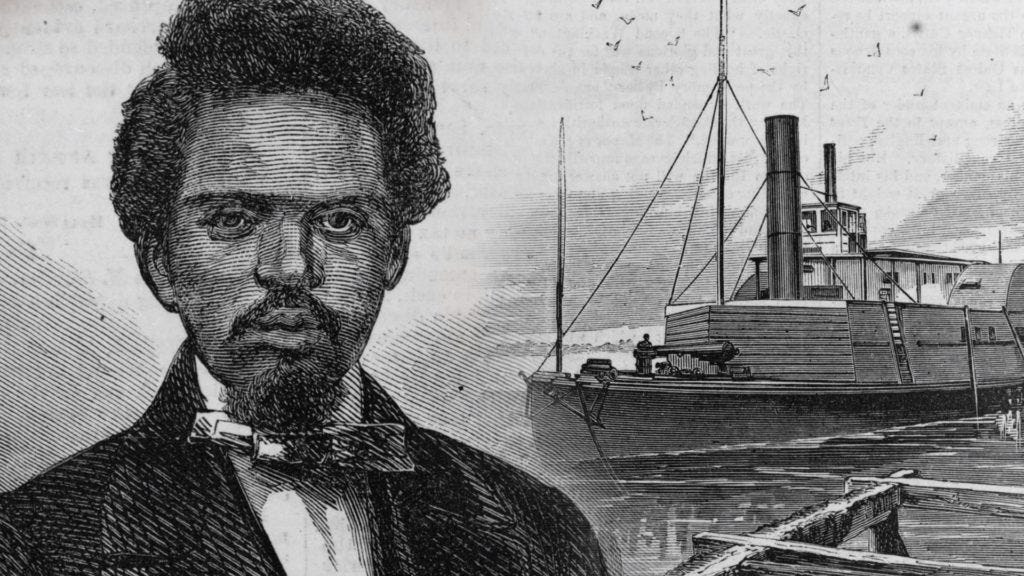
Robert Smalls, Congressman during Reconstruction.
The expulsion of Rep. Justin Jones and Rep. Justin Pearson from the Tennessee legislature has a direct historical link to the overthrow of real democracy and Reconstruction following the Civil War.
On May 13, 1862 an enslaved man named Robert Smalls, who labored on a Confederate steamer in South Carolina’s Charleston harbor, set into motion a daring plan.
As his great-great-grandson Michael Boulware Moore explained, “He saw that the Confederate crew had left, and he knew that oftentimes they left for the evening, not to come back until the next day.”
For Smalls and six other enslaved people and their families, the stakes couldn’t have been higher. “They knew that if they got caught, that they would be, not just killed, but probably tortured in a particularly egregious and public manner,” said Moore.
Disguising himself in the straw hat and long overcoat of the ship’s white captain, Smalls piloted the ship past Fort Sumter towards the Union blockade, and freedom.
After serving on a Union Naval vessel during the Civil War, Smalls returned home to Beaufort, S.C., and was elected to the U.S. House of Representatives – one of more than a dozen African Americans to serve in Congress during the period known as Reconstruction, when the formerly-rebel states were reabsorbed into the Union, and four million newly-freed African Americans were made citizens.
South Carolina, and throughout the former Confederacy, the era of Reconstruction saw the rise of Black political power and representation in both the U.S. Congress and Southern state legislatures.
During the 1870s, more than a dozen African American men, many of whom had been born into slavery, were elected to the U.S. Congress.
It was a great democratic movement that ended all too quickly.
Former Southern insurrectionists, aided by the rise of the Ku Klux Klan, violently organized an anti-democratic counterrevolution.
Born in South Carolina, Aaron A. Bradley was a shoemaker in Augusta Georgia.Sometime around 1834 he ran away to the North, where he became a lawyer.
In 1865 he returned to Georgia. He was the most outspoken member of the Black delegation to the constitutional convention.
In 1868 he was elected state senator from the First District. Bradley rallied plantation workers around Savanah with his insistence that the formerly enslaved people be given land.
But Black political power and Reconstruction was short lived.
One quarter of the Black legislators in Georgia were killed, threatened, beaten, or jailed. In the December 1870 elections the Democrats won an overwhelming victory in overthrowing democracy and Reconstruction.
In 1906 W. H. Rogers from McIntosh County was the last Black legislator to be elected before Black voters were legally disenfranchised in 1908.
The actions by white Republican members of the Tennessee legislature to expel two elected Black members has all the stench of the overthrow of Reconstruction and the establishment of Jim Crow.