Archives for category: Oklahoma

Mitch Randal, a pastor in Norman, Oklahoma, and CEO OF Good Faith Media, published his opposition to the state’s recent decision to fund a religious virtual charter school.

Randal wrote:

The Oklahoma Statewide Virtual Charter School Board voted 3-2 to approve using state funds to support a new Catholic school this week. One of the board members voting “yes” was installed to their post last Friday, according to Tulsa World.

The board’s actions began creating the first religious charter school supported by taxpayer dollars in the United States. The online school, St. Isidore of Seville Catholic Virtual School, will be managed and operated by the Roman Catholic Archdiocese of Oklahoma City and the Diocese of Tulsa.

Oklahoma’s previous Attorney General, John O’Connor, issued a non-binding 15-page opinion in December 2022 suggesting that Oklahoma’s restriction of taxpayer funds from being used for religious schools would most likely be found unconstitutional by the United States Supreme Court.

Education Week reported, “O’Connor had concluded that recent U.S. Supreme Court decisions authorizing the inclusion of religious schools in choice programs such as tax credits for scholarship donations, and tuition assistance meant that the high court would likely not ‘accept the argument that, because charter schools are considered public for various purposes, that a state should be allowed to discriminate against religiously affiliated private participants who wish to establish and operate charter schools.’”

St. Isidore of Seville Catholic Virtual School’s application asked for $2.5 million to serve a potential 500 students in the first year. That will be $2.5 million taken away from public schools to support private religious education.

O’Connor’s successor, Gentner Drummond, withdrew the opinion earlier this year, stating, “Religious liberty is one of our most fundamental freedoms.”

Drummond continued: “It allows us to worship according to our faith, and to be free from any duty that may conflict with our faith. The opinion as issued by my predecessor misuses the concept of religious liberty by employing it as a means to justify state-funded religion.”

While some Christian conservatives, such as Oklahoma’s State Superintendent Ryan Walters, praised the board’s decision, other politicians and faith leaders criticized its actions, characterizing them as unconstitutional and a direct violation of the Establishment Clause.

After the 3-2 vote in favor of funding St. Isidore of Seville Catholic Virtual School, Drummond reiterated his opinion that this decision was improper. “The approval of any publicly funded religious school is contrary to Oklahoma law and not in the best interest of taxpayers,” he said.

“It’s extremely disappointing that board members violated their oath in order to fund religious schools with our tax dollars,” Drummond said. “In doing so, these members have exposed themselves and the State to potential legal action that could be costly.”

Clark Frailey, executive director for Pastors for Oklahoma Kids, commented: “By authorizing a public school that is explicitly affiliated with a particular religion, Oklahoma is endorsing that religion and entangling the government in religious affairs.”

“In addition,” Frailey continued, “the proposed school is to be funded by taxpayer dollars. This clearly misuses public dollars, as it would fund religious indoctrination of children.”

Historically, Oklahoma has been notoriously guilty of using taxpayer dollars to indoctrinate children with religious doctrines. Many times, Good Faith Media has called attention to the misguided and violent actions occurring at Chilocco Indian Agricultural Boarding School.

Thousands of Indigenous children were taken from their families and provided “Christian” education using taxpayer funding. Hiding behind a compassionate mission to educate Indigenous children, the actual objective was to assimilate them into white Protestant doctrines.

While no one suggests the Oklahoma Catholic Diocese is following this model, the dangers of using taxpayer dollars are ominous. Besides taking precious funding away from public education to fund private religious charters, using taxpayer money violates the religious liberty of others not wanting to support religious teachings.

Should taxpayers be forced to support religious teachings contradictory to their belief systems? Will there be any oversight of the use of taxpayer money used at religious schools?

Like public schools, do religious schools have to accept all students or can they discriminate? Will religious schools need curriculum to be approved? If so, who decides? Can any religious sect apply for funding?

Americans United for Separation of Church and State responded, “It’s hard to think of a clearer violation of the religious freedom of Oklahoma taxpayers and public-school families than the state establishing the nation’s first religious public charter school.”

AU went on to point out the unconstitutionality of the action: “State and federal law are clear: Charter schools are public schools that must be secular and open to all students. No public-school family should fear that their child will be required by charter schools to take theology classes or be expelled for failing to conform to religious doctrines. And the government should never force anyone to fund religious education.”

“Funding private religious schools with public dollars violates core legal principles protecting religious freedom for all,” said Amanda Tyler, executive director of BJC (Baptist Joint Committee for Religious Liberty).

Paul Brandeis Raushenbush, CEO of Interfaith Alliance, told The Independent that this would “open the floodgates for taxpayer-funded discrimination.” He added: “Taxpayer money should never be used to fund religious instruction, and it is now up to the state to at least ensure St. Isidore abides by the federal nondiscrimination protections guaranteed in public schools.”

The decision by the Oklahoma Statewide Virtual Charter School Board is clearly a disregard for the democratic principles established by the nation’s founders.

Thomas Jefferson’s words in his letter to the Baptists of Danbury, Connecticut, are as crucial today as they were in 1802: “I contemplate with sovereign reverence that act of the whole American people which declared that their legislature should ‘make no law respecting an establishment of religion, or prohibiting the free exercise thereof,’ thus building a wall of separation between Church & State.”

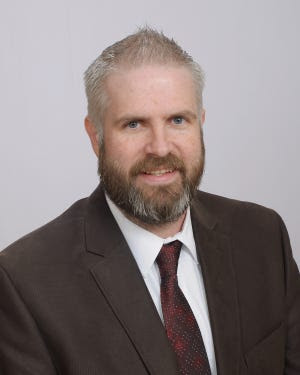
Mitch Randall headshot

Mitch Randall

CEO of Good Faith Media.

goodfaithmedia.org

Rev. Clark Frailey is the chair of Pastors for Oklahoma Kids and a strong supporter of public schools, open to all children. He wrote in the Oklahoman against the decision by a state board to authorize a religious charter school. The original title of this article is: “Pastor: We’ve heard much about ‘indoctrination.’ What do you call Catholic charter school?”

It is important to preserve the separation of church and state as enunciated by Thomas Jefferson.

Before the Oklahoma Statewide Virtual Charter School Board, I recently testified that authorizing a religious private school as a public charter school would be an egregious violation of our state constitution, the First Amendment, and religious liberty.

Plainly stated: Church and state should be separate.

While I believe the virtual charter board has the right intentions at heart ― to expand educational choices to Oklahoma students ― the consequences of their recent decision will be far-reaching and harmful.

The First Amendment to the U.S. Constitution states, “Congress shall make no law respecting an establishment of religion, or prohibiting the free exercise thereof.” This means that the government cannot endorse or promote any particular religion, nor can it interfere with the free exercise of religion.The Oklahoma Constitution further states, “Provisions shall be made for the establishment and maintenance of a system of public schools, which shall be open to all the children of the state and free from sectarian control.”

The state is endorsing a particular religion by funding a sectarian public charter school with taxpayer dollars. Title 70 (§70-3-136) of Oklahoma’s Charter School Act could not be more precise in stating this is not allowed: “A charter school shall be nonsectarian in its programs, admission policies, employment practices, and all other operations. A sponsor may not authorize a charter school or program that is affiliated with a nonpublic sectarian school or religious institution.”

Why board members Brian Bobek, Nellie Sanders and Scott Strawn chose to violate historic precedent and plainly written laws is not clear. What is clear is that these board members voted to break charter school law as activists radically opposed to our current understanding of public education, which welcomes all students, regardless of religious preference.

We have heard much about the supposed “indoctrination” in public schools, which makes it incredibly ironic that an organization that makes its indoctrination aims clear is being authorized by a state agency with Gov. Kevin Stitt’s and state schools Superintendent Ryan Walters’ blessing.The separation of church and state is one of the most essential principles of our nation. The church should not resort to the civil power to carry on its work. Separation protects religious liberty and ensures that the government cannot interfere with our religious beliefs.We must protect the separation of church and state by opposing any attempt to use public funds to support religious schools.

The Rev. Clark Frailey

The Rev. Clark Frailey is pastor of Coffee Creek Church, Edmond, and the executive director of Pastors for Oklahoma Kids, a nondenominational coalition of pastors from across Oklahoma that advocates for excellent public schools for all kids

The board that cast a 3-2 vote to authorize a Catholic virtual charter school in Oklahoma may have been invalid because a new appointee was not supposed to be seated until November 1 and was not eligible to cast a vote.

Monday’s national headline-making vote to give state sanctioning and Oklahoma taxpayer dollars to a Catholic school may have been invalid.

It turns out the state Attorney General’s Office believes that Oklahoma City businessman Brian Bobek is ineligible to serve on the Statewide Virtual Charter School Board until November.

But an email to that effect was not received by the board’s chairman and executive director until after Bobek cast the deciding vote Monday to approve state sponsorship for St. Isidore of Seville Catholic Virtual School.

Long-serving member Barry Beauchamp, a retired school superintendent from Lawton who had been allowed to continue serving after his term expired some months ago, was replaced abruptly on Friday by Oklahoma House Speaker Charles McCall.

Less than half an hour before Monday’s special board meeting began at noon, Deputy Attorney General Niki Batt sent an email to board Chairman Robert Franklin and Executive Director Rebecca Wilkinson saying that because Beauchamp had not vacated his seat, the law that created the Statewide Virtual Charter School Board doesn’t allow Bobek to take over the seat until November.

Franklin said that if Bobek was ineligible, his vote was invalid.

He is also concerned that a lengthy, written statement that Bobek read during Monday’s meeting, which included numerous legal citations, could have influenced the votes of other board members, including Scott Strawn, who was recently appointed to the board by Gov. Kevin Stitt.

Oklahoma just gave its permission for the Roman Catholic Archdiocese of Oklahoma City and the Diocese of Tulsa to open an online charter school, supported by public funds. Governor Kevin Stitt and the state’s Superintendent of Schools Ryan Walters are hard-right Republicans. This decision is sure to go to the U.S. Supreme Court. No one knows how it will rule. Even charter lobbyists are concerned about this turn of events because they like to refer to charters as “public charter schools.” A religious charter, which teaches religion, is not a public school.

Sarah Mervosh wrote the story for the New York Times:

The nation’s first religious charter school was approved in Oklahoma on Monday, handing a victory to Christian conservatives, but opening the door to a constitutional battle over whether taxpayer dollars can directly fund religious schools.

The online school, St. Isidore of Seville Catholic Virtual School, would be run by the Roman Catholic Archdiocese of Oklahoma City and the Diocese of Tulsa, with religious teachings embedded in the curriculum, including in math and reading. Yet as a charter school — a type of public school that is independently managed — it would be funded by taxpayer dollars.

After a nearly three-hour meeting, and despite concerns raised by its legal counsel, the Oklahoma Statewide Virtual Charter School Board approved the school in a 3-to-2 vote, including a “yes” vote from a new member who was appointed on Friday.

The relatively obscure board is made up of appointees by Gov. Kevin Stitt, a Republican who supports religious charter schools, and leaders of the Republican-controlled State Legislature.

The approval — which is almost certain to be challenged in court — comes amid a broader conservative push to allow taxpayer dollars to go toward religious schools, including in the form of universal school vouchers, which have been approved in five states in the last year. The movement has been bolstered by recent rulings by the U.S. Supreme Court, which has increasingly signaled its support for directing taxpayer money to religious schools.

John Thompson, historian and retired teacher, brings us up to date on the latest twists in the bizarro world of Oklahoma politics, where the most bizarro of all is the State Superintendent Ryan Walters (I think I could use that headline again and again, just changing the name of the state). John talks to Republicans in the legislature, and he finds that there are moderates who don’t agree with their leadership but keep a low profile and rein them in whenever they get too whacky.

He writes:

The 2023 Oklahoma legislative session, combined with the rightwing extremism of Gov. Kevin Stitt and State Superintendent Ryan Walters, began as possibly the worst threat to public education in our state’s history. Following more than a decade of teach-to-test mandates and increased segregation by choice, the Covid pandemic, and a history of underfunding schools, education faced a combination of existential threats.

But, rightly or wrongly, my history of working Republicans tempered my pessimism; so I’ve been struggling to listen and evaluate whether the victories that came out of the final education bills were mostly band aids or whether the resistance to Gov. Stitt and Superintendent Walters could lead to a turning point.

Yes, the total increase for education came to $785 million, but one can only guess how much of those expenditures will be beneficial to students, and how much damage will be done. Worse, Oklahoma is likely to see an economic downturn, as $2 billion in federal Covid money runs out. Moreover, it seems unlikely that pro-education legislators will gain the power to reverse policies that fail. For instance, what happens (which seems increasingly likely) if $250 million per year in “tax credits” (vouchers) are institutionalized? And worse of all, what will be the longterm costs if the cruelty and lies by extremists are institutionalized?

Only five years ago, the Teacher Walkout led to an important increase in educators’ salaries in 2018 and 2019. And Republican leaders invested $150,000 to purge their party’s craziest haters. (But then, it would have been hard for me to believe that the xenophobic, Muslim-hating Sen. John Bennett would survive and become the Republican Party Chair.) And after listening to thousands of educators, Sen. Adam Pugh (R) started this year with bills proposing $541 million in new spending. They would raise average teacher pay to the middle of the pack of neighboring states, even though starting teacher pay would remain below $40,000. Pugh would fund maternal leave, and his bills didn’t even mention vouchers.

Previously, rural Oklahomans were so firmly opposed to school vouchers that it seemed impossible that local candidates would listen to “astro-turf” think tanks, funded by rightwing Billionaires Boys Clubs which insisted that candidates running for state office would have to support vouchers, marketed as “tax credits.” But, then, Republicans gained an overwhelming super-majority, where individual legislators’ had to obey each and every one of the leaderships’ orders.

The strangest of 2023’s non-negotiable demands were made by House Speaker Charles McCall who, almost certainly, was driven by his desire to be elected governor. He switched from opposing vouchers to demanding complete loyalty to “tax credits” for private schools. Almost certainly, his mandates backfired, unleashing chaos which allowed the more reasonable Senate Republicans to fight back and to win some victories.

Even so, McCall misleadingly claimed, “the Legislature will have invested more funding into public education in the past five years than in the previous 27 years combined.”  Moreover, Shawn Hime, executive director of the Oklahoma State School Boards Association, agreed that the bill is “really game changing for public education.”  He added, “Over the past six years, state leaders have put an additional $1.5 billion into funding public schools, a 59% increase.”

A more accurate evaluation was provided by Rep. John Waldron who twittered, “My initial assessment of the budget process this year: ‘Never has so much money been argued over for so long to benefit so few.’” And Senate Minority Leader Kay Floyd, D-Oklahoma City said, “It is important to remember that we are talking about $600 million over three years that will not serve 95% of Oklahoma students,”

Actually, McCall and Hime inadvertently pointed to an historical fact that is essential to understanding why Oklahoma schools have gone from one crisis to the next. In the early 1990s, a comprehensive increase in school funding, HB 1017, “used a $560 million tax increase over five years to reduce class sizes, boost minimum teacher salaries, and fund statewide curriculum standards, testing, and early childhood programs.”

HB1017 launched a decade of progress, but it also produced a backlash, passing State Question 640, which required a super-majority to raise taxes. So, during the 21at century it’s been virtually impossible to maintain funding for salaries and other needs. Yes, we occasionally found the votes for a pay raise, but then real wages would stagnate. Worse, as a Republican legislator recently explained to me, we had no plan for fixing schools.

I would add that the only comprehensive plan that I recall was the first step towards full implementation of test-driven, choice-driven corporate reforms. They sought to use reward-and-punish mandates, and testing to provide the ammunition for charter-driven competition to undermine neighborhood schools and teachers’ autonomy. They used segregation by choice to supposedly recover from generations of Jim Crow. And during and after the Covid pandemic ordeal, anti-public education leaders like Gov. Stitt and Superintendent Walters’ sowed falsehoods and bitterness, while censoring class discussions regarding LGBTQ and Trans students’ rights; Diversity, Equity, and Inclusion (DEI); and honest History lessons.

Even after increasing average wages to below average in the region, and wages of new teachers to almost $40,000 per year, (as assaults on teaching have spun out of control) we can only guess whether such increases will improve teacher retention and morale. For instance, how much bigger of a paycheck would it take to get educators to forget Walters’ charges that teacher unions are “terrorist organizations;” schools are “a breeding ground for liberal indoctrination,” and spreading pornography; and claiming:

The far left wants to turn kids against their families,  … They want to convince them that America has a racist, socialist history. Instead of allowing your kids to see the fundamental principles that guide this country. … What they want is your kids to hate America.

Similarly, on the financial side, the costs of these policies haven’t been fully estimated. As mentioned earlier, the costs of vouchers start out at $150 million per year, increasing to $250 million. On one hand, some hope that, real world, only the affluent who already send their kids to private schools will widely benefit from “tax credits,” thus keeping the price tag down. But what if we see a surge of lower cost, low- quality private schools that attract families making less than $75,000 per year, undermining the stability of large numbers of public schools?

Yes, one of the worst parts of the bill, the attempt to undermine the state’s funding formula, was defeated. The House’s bill would have only increased per student funding in urban schools by about $60- $70, when rural per capita spending increased by up to $750 (or more). Now, about $500 million will be distributed by Oklahoma’s much more fair funding formula, meaning that per student funding will be $1000 (which is far short of what our students need.)  Moreover, the demand for merit pay was beaten back. But, will the new $125 million Redbud Fund, combined with the successful voucher campaign, open the door to more survival-of-the-fittest attacks on urban and poor students?

Finally, during this year’s chaos, a “longtime education grant writer,” Terri Grissom, testified that Walters “lies” to legislators. Grissom said:

“He (Walters) said, ‘We have applied for millions and millions of grants since I took office.’ We have not applied for one single grant. That was a blatant lie,” she said. “When legislators said, ‘We want a list of those,’ he gave them a list of everything I did under (former Superintendent Joy Hofmeister’s) leadership. Nothing was new.

“The new leadership team is not moving on anything. They won’t approve anything. They won’t sign contracts. No work is actually happening. When work shuts down, everything is in jeopardy.”

Some legislators are investigating the total costs of competitive grants that Walters hasn’t filed and/or mishandled. For instance the whistle-blower explained that Ryan Walters hasn’t spent “between $35 and $40 million of grant money,” and “the state could be on the hook to repay.”

Also, the legislature is now operating in a “concurrent session,” in order the override Stitt’s 20 vetoes, especially his effort to defund the Oklahoma Educational Television Authority (OETA), in order to punish legislators who didn’t support his education plan. 

Due to the lack of transparency, we can only guestimate the benefits and costs of the education bills. I intentionally avoided reaching conclusions until the end of the process. My best judgement is that I wish the adult Republicans had been more open in expressing concerns about the bills, but I acknowledge that that was probably impossible. We must not underestimate the value of their efforts to strip the most destructive parts from the process. Their wage and other funding increases may not be enough to reduce the damage to public education but, without them, its future would be worse. It’s unlikely that one year’s resistance could provide more than band aids. What matters is whether pro- or anti- public education advocates win the battles of the next few years.  

Since this post was submitted, a bill which gives grounds for optimism was passed. The Tulsa World reports:

“The State Department of Education shall not decline, refuse participation in, or choose not to apply for any federal grant funding that had been received by the Department prior to FY2023 without joint approval from the President Pro Tempore of the Oklahoma State Senate and the Speaker of the Oklahoma House of Representatives,” states Senate Bill 36x, which was approved 20-0 on the Senate side and 34-0 in the House.

John Thompson, historian and former teacher, updates us on the state of education in Oklahoma. I reported a few months ago on a secret Republican poll showing that Oklahomans overwhelmingly oppose vouchers. Wouldn’t it be great if they held a state referendum? We know they won’t.

It is virtually impossible to understand the Oklahoma State Superintendent of Schools Ryan Walters recent rant against teachers unions without understanding the reason the American Federation of Teachers president, Randi Weingarten, has been targeted by MAGAs – and vice versa. Jonathan Mahler’s New York Times article about Randi Weingarten, The Most Dangerous Person in the World offers some – but not nearly enough – perspective on why teachers, unions, and schools are under such brutal, and fact-free, inter-connected assaults.

It took the threat of “arm-twisting” by Republican Oklahoma House Speaker Charles McCall to get Ryan Walters to speak to the House Appropriations and Budget Committee. Then, as the Tulsa World reports, “Tensions flared Monday as House lawmakers grilled Oklahoma’s controversial state superintendent.” He “called teachers’ unions ‘terrorist organizations’ and accused his predecessor of running the State Department of Education into the ground.” Walters said that Joy Hofmeister had left “an absolute dumpster fire.” Presumably that is why he fired 7 employees, had 37 resignations, and eliminated 17 positions.

As the Oklahoman reports:

Lawmakers were particularly concerned with whether the agency would meet deadlines to apply for federal grants this month.

The state Education Department, which recently lost its lead grant writer, manages about $100 million in competitive grants from the federal government and over $900 million in total federal funding.”

This prompted pushback by Republican Vice Chairperson Rep. Ryan Martinez, who, like McCall, supports most of the session’s anti-public education bills, complained about a lack of transparent actions by Walters:

“If we do not receive specific grants, if we do not apply for a certain grant or if those monies are not disbursed, guess who’s trying to find the money to make sure those programs don’t go away,” Martinez said. “It’s the people on this committee.”

Walters also “accused teacher unions of demanding extra government funds in exchange for their cooperation with reopening schools during the COVID-19 pandemic.” As Nondocexplains, he added, “I don’t negotiate with folks that are going to intentionally sabotage our kids. (…) You are hurting kids intentionally to shake down the federal government for money — that’s a terrorist organization in my book.”

Then, the Oklahoman reported, Walters’ “most incendiary comments prompted groans from Democrats before the meeting came to an abrupt end.” As Walters claimed, “Democrats want to strike out any mention of the Bible from our history,” Martinez “gaveled for adjournment amid vocal objections from the minority party to Walters’ comments.”

The latest performance by Walters should be seen in the context of the best parts of Jonathan Mahler’s New York Times article about Randi Weingarten, Mahler starts with former CIA Director Mike Pompeo’s charge that Weingarten is “the most dangerous person in the world.” Then he puts it in context with similar attacks on the teachers union, such as the previous claim that former AFT president Al Shanker said, “When schoolchildren start paying union dues, that’s when we start representing the interests of schoolchildren.” Mahler adds that the highly respected researcher, Richard Kahlenberg, found no evidence that Shanker ever said such a thing.

Mahler also added context to the claims rightwingers have made that teachers unions hurt students by keeping schools closed during the Covid pandemic. I wish he had been more explicit, but implicit in his narrative is a reminder that it made sense for public health institutions, like the Center for Disease Control, to consult with organizations with knowledge of diverse conditions in schools. He notes that while suburban parents were pushing for re-openings, poor and Black parents, and families with multi-generation households, opposed the early returns to in-person instruction.

The AFT plans that are now under attack came at times when deaths and/or new variants were surging. I would add Education Week’s explanation that yes, “the pandemic has massively disrupted students’ learning,” but the story is complicated. It explained, “Reading scores for students in cities (where the AFT is strongest) stayed constant, as did reading scores for students in the West of the country.”

Yes, Covid closures led to an unprecedented decline in test scores, especially for the poorest students. But Mahler, like so many other journalists, should have looked more deeply at propaganda dating back to the Reagan administration that inappropriately used NAEP test scores when arguing that public schools are broken.

First, as Jan Resseger and Diane Ravitch noted, Mahler made:

A common error among journalists, critics, and pundits who misunderstand the achievement levels of the National Assessment of Educational Progress (NAEP). “Proficient” on NAEP is not grade level. “Proficient” on NAEP represents A level work, at worst an A-. Would you be upset to learn that “only” 40% of 8th graders are at A level in math and “only” 1/3 scored an A in reading?

Secondly, Mahler should have asked why the admittedly unprecedented (and expected) fall in NAEP scores during Covid followed a decade of stagnating or declining reading and math scores, that also disproportionately hurt low performing students. Like virtually every teacher I’ve worked with, I would argue that the pre-Covid decline was due, in large part, to test-driven, competition-driven corporate school reform. (I also suspect this is especially true of the dramatic drop in History outcomes due to instruction in that subject being pushed out of classrooms by pressure to teach-to-the test.) Had Mahler taken this into account, he likely would have understood why teachers resisted corporate reforms, and chosen his words more carefully, and would not have repeatedly labeled us as “leftists.”

Such an understanding would help explain why No Child Left Behind’s and Race to the Top’s focus on “disruptive” change prompted teachers to resist policies that undermined high-quality instruction, and undermined holistic learning, especially in high-poverty schools. It also explains why, for the benefit of teachers and students, Weingarten had to seek centrist compromises when resisting doomed-to-fail mandates by the Obama administration.

As Ravitch explains, it’s okay to disagree with Weingarten, but it makes no sense to compare her balanced approach to the rightwing zealotry of those who have attacked her so viciously. She also worries that the Times Magazine’s format and attempt to present both sides as political activists could put Weingarten in danger.

Education and education politics are political. Yes, the bipartisan corporate reforms, which a full range of educators resisted, is now “a shadow of itself;” that is due to both the inherent flaws in their reward and punish policies, and the pushback by those of us who were in schools and saw the damage it did to our students. Similarly, the CDC was correct in listening to educators and parents of students who attended schools where vaccines, social distancing and masks were, due to anti-science mandates, not implemented, especially after holidays when variants were surging.

But, Mahler and others who bend over backwards to treat the words of moderates like Weingarten, and rightwing extremists and their funders as equally true, should ask what will happen if the nation’s Ryan Walters and Mike Pompeos, and their funders succeed. Surely he understands that the argument that teachers and unions are terrorists is not equal to the counter arguments of education leaders like Weingarten, and those of us who are still fighting for what we believe is best for our schools and students.

Governor Kevin Stitt of Oklahoma vetoed state funding for PBS, accusing the public television network of

Gov. Kevin Stitt, R-Okla., recently vetoed a bill that would continue funding for the statewide PBS station, claiming that the national network has been indoctrinating young children with LGBTQ propaganda.

During a press conference last week, the Republican lawmaker defended his decision to veto ongoing funding for the Oklahoma Educational Television Authority (OETA), the state network of public broadcasting service affiliates.

OETA broadcasts PBS, which now includes LGBTQ content in some of its programming. The governor pointed to that as the main reason he signed the veto last Wednesday.

Historian and retired teacher John Thompson is a close observer of the state’s bizarro GOP leaders. There is a small core of “traditional” GOP legislators, who have not lost touch with reality. But the loud and boisterous MAGA faction, led by Governor Kevin Stott, inhabit an alternate universe.

Thompson writes:

Both houses of the Oklahoma legislature, the Governor, and his State Superintendent are engaged in a Battle Royal. Politicos on all sides are asking whether it is merely surreal, or a performance art tactic to gain a political victory – or deflect attention from a political defeat. But there is virtual unanimity that it is bizarre; even in a state known for crazy politics, there seems to be a bipartisan agreement that this weirdness is unprecedented.

This week, Gov. Kevin Stitt said, “I cannot, in good faith, allow another year to go by without cutting taxes and reforming education.” His education plan features tax credits (vouchers), and an extremely regressive funding formula. Then, Stitt vetoed 20 Senate bills “with identical veto messages that said he ‘will continue to veto any and all legislation authored by senators who have not stood with the people of Oklahoma and supported this plan.’”

His vetoes included legislationintended to renew Oklahoma Education Television Authority’s (PBS’) authorization for another three years.” Stitt also questioned whether there was a reason for the OETA to survive. The Republican Senate Pro Tem’s office also criticized the veto of a bill which would have “allowed people receiving Temporary Assistance for Needy Families to own a vehicle worth more than $5,000, which is the current limit.” Other bills that had previously been routinely signed would extend agencies like the Board of Governors of the Licensed Architects, Landscape Architects and Registered Commercial Interior Designer, the Board of Chiropractic Examiners, and the State Board of Examiners of Psychologists.

Sen. Pro Tem Greg Treat responded, “Hopefully he’ll calm down and sober up,” and “look at this through the lens of policy, and not through the lens of emotion.” He also said Stitt’s vetoes were “appalling” and “beneath the dignity of the office.”

Then Treat “swiftly rejected” the nominations of Stitt’s secretary of commerce and the CEO of the Oklahoma Health Care Authority. The Republican leader explained:

If (Stitt) continues down this road of killing policy, we will be forced to exercise our constitutional authority, as well,” … “He has chosen to exercise his veto authority. We are choosing to exercise our confirmation authority.”

Then the Senate briefly excluded the governor and house members from a discussion on education bills. So, the Tulsa World reports, “House Republicans closed shop and left in something of a huff after their Senate GOP brethren told them they couldn’t come on the floor in that chamber for awhile Thursday afternoon.” Rep. House Majority Leader Jon Echols complained that senate Republicans had thus made, “the most juvenile move I’ve ever seen” during his 11 years in the Legislature.

That week, Stitt supporter, State Superintendent Ryan Walters, also ramped up his attacks on Diversity, Equity, and Inclusion (DEI) which he said“is Marxist at its core.” Walters stressed “that it is a top priority of this administration to ensure that every parent has full parent choice — that parents decide for their kids where their children attend school and are the ones making those decisions that most impact their children,” Walters said. “This has to get done this session.”

So, what is happening here? Will the Republicans get out of this battle unscathed, reaching a compromise between traditional conservatives and the MAGAs? Or will these performances result in an effort to push back against this chaotic politics of destruction?

It seems to me that Republicans who abhor this rightwing campaign against the norms and principles of our democracy have remained silent because they understood how powerful emotions of hatred and fear have been helping their party. The extremists want to turn back the clock to the pre-civil rights era of the 1950s. The traditional Republicans may or may not care that, back then, Oklahoma was one of the most corrupt and most racist states in America. They don’t seem worried that Christian Nationalists are now welcoming the return of that era’s corruption, violence, and racism.

But today’s Battle Royal-style theatrics reminds me of the cruel joke played on Ralph Ellison when he grew up in Oklahoma City. (If Stitt or Walters are aware of the Battle Royal, I doubt they would want it taught in school.) Ellison was ambiguous about the actual facts he faced that inspired the story of the brutal, surreal charade presented in his novel, The Invisible Man. He tells the story of ten young Black men who “are ushered into a boxing ring. Then they are all blindfolded and instructed to fight each other all at once until only one is left standing.”

This week’s ridiculous fight, a metaphorical Battle Royal that featured affluent Whites who were funded by the super-rich, should embarrass Republicans. It echoes the previous cruelty promoted by the Robber Barons and the Ku Klux Klan that survived until I was a child. Now it’s the billionaire privatizers who are funding a destructive 21st century propaganda campaign. This week, it resulted in conservatives and Trumpians blindly humiliating themselves as political fights are being transformed into performances demonstrating that they are angry and hateful enough to get reelected.

The silliness promoted by Stitt and the House has virtually nothing to do with improving education. For instance, the combatants are much more focused on not making the mistake that the narrator (based on Ellison) made when giving his post-fight speech. There is no way that these conservatives will offend the MAGAs by accidently using the words “social equality.”

Postscript: At the end of the week, compromises were being discussed. It looks like modest increases in school funding will be distributed more fairly. The vouchers for families making over $250,000 per year will be capped at $5,000 while homeschool tax “credits” will be capped at $1,000. But the governor remains committed to income and corporate tax cuts (as well as sales tax cuts.) So it looks like the chaos was intended to be performance art to advance the agenda of the rich. The elites are on track to get what they want. But the surreal week still degenerated into a Battle Royal where even influential White men humiliated themselves in order to advance their donors’ interests.

Then, Stitt condemned OETA, which has the highest viewership of any of the nation’s PBS stations, for shows like “Clifford the Big Red Dog,” and PBS NewsHour for interviewing parents of transgender children.

He said such shows “over sexualize” children. What next? A list of banned films? More dangerous TV programs? A police investigation of every state employee’s computer to search for porn?

John Thompson, historian and retired teacher in Oklahoma, analyzes the behind-the-scenes infighting between extremist MAGA Republicans and traditional conservatives, who don’t use inflammatory rhetoric and prefer to know the cost of new programs before they pass them.

He writes:

Across the nation, voters are following the battles between former-President Donald Trump and Governor Ron DeSantis. There is no way to know how that conflict between extremist Republicans will play out, but I find it hard to believe it won’t damage their party’s chances in 2024. Even in Oklahoma, Trump’s unfavorable rating has grown to 47%, and conflicts between conservatives and MAGAs are becoming more public.

And as Oklahoma Republicans, such as State Superintendent Ryan Walters, Governor Kevin Stitt, and House Speaker Charles McCall, ramp up their irrational, inflammatory rhetoric, there seems to be both a growing behind-the-scenes and public responses by some traditionally conservative Republicans against the far right. This post will focus on two issues where it seems like the Republican leader of the Senate, Greg Treat is pushing back on the MAGAs.

To understand these disputes, however, a confusing aspect of the Oklahoma constitutional system must be understood. Oklahoma has two statewide education leadership positions; the Secretary of Education is appointed by the governor and confirmed by the Senate, and the Superintendent of Public Instruction, who is elected by the people.

The Oklahoman now reports on a behind-the-scenes issue that could be an important response to Walters. Walters was first appointed as Secretary of Education by Gov. Stitt, and was quickly confirmed by the Senate. Walters was then elected to the State Superintendent office, and reappointed by Stitt as Secretary of Education.

This time, however, there is no movement towards his reconfirmation to that position. The Oklahoman explains, “Walters is still waiting, and it there has been little or no work done to shepherd his nomination through the Senate, even though his previous term expired on Jan. 9.” It adds that the job is mostly to advise the governor and has “few legal responsibilities.” However, the confirmation delay “highlights the ongoing political conflict between the executive and legislative branches of Oklahoma’s government.”

Given the pushback by some influential Republicans against Walters’ bizarre rhetoric and overreach (not to mention his misuse of federal funds), the lack of movement toward confirming Walters is not good news for Walters and his rightwing allies. Whether or not Walters loses his Secretary of Education position is obviously unknown. It might just be a threat serving as a “bargaining chip” for advancing the Senate agenda, as opposed to the Walters’ and the Speaker of the Houses’ extremism. But, either way, the MAGAs’ agenda is threatened by such publicity.

Moreover, this happened as Walters, as the Tulsa World reported, emailed all legislators “images and text [that] depict gay sex and ambiguously gendered bodies. The email provides no context to the images.” The World also reported, “Some of those receiving the emails said Walters quickly tried to ‘unsend,’ or retrieve them.” Walters was invited to the Appropriations and Budget Subcommittee on Education to provide evidence for the email’s claims but he didn’t respond. Instead, as the Oklahoman reported, he sent “lawmakers a list of four books he deemed “pornographic,” four more ‘books in the marketplace to monitor’ and 190 children’s books focused on LGBTQ+ themes.” School system leaders denied Walters’ claims about four pornographic books that allegedly were in their schools. These continuing behaviors have made Walters more vulnerable.

Also during the week, Speaker Charles McCall, who apparently hopes to run for governor, doubled down on outrageous demands and claims against the Senate Republican leadership. Previously he demanded that the vote for his education funding bill, including vouchers (called tax credits), be passed without amendments, which the Senate refused to do. So when the Senate defied McCall and Gov. Stitt by putting an income cap of $250,000 on families for school choice tax credits, McCall called it “class warfare.” Sen. Treat replied, “The speaker seems to be intent on torpedoing meaningful education reform… It is unfortunate and I hope he comes to his senses.”

Then, illustrating the depth of the conflict between the Senate and House leaders, the Speaker’s office made the bizarre claim that under the Senate’s $285 million a year plan, “The Senate amendments to House Bill 2775 would only require public school districts following the state minimum salary schedule to give full teacher pay raises, neglecting over 43,000 teachers in over 400 districts.” (Oklahoma has around 45,000 teachers) Sen. Treat’s office replied “that every teacher in the state would get a pay bump based off years of service,” and that “The speaker is operating in a fantasy land.” Again, these behaviors are making the MAGAs more vulnerable.

And that leads to the second major story which seems to represent the best pushback by the Senate leadership against the behaviors of rightwing ideologues. As I explained previously,the Oklahoman’s Ben Felder reported, despite a $700 million incentive, Volkswagen chose to invest in Canada with its “strong ESG (environmental, social and governance) practices,” rather than Oklahoma where Gov. Stitt had said, “don’t expect support from us unless you reject ESG.”

I must stress that counter-attacks by conservative, pro-voucher Republicans are not an answer to continuing assaults on public education, and neither can we merely trust pro-corporate Republicans’ call for rethinking the reasons why corporations reject Oklahoma’s subsidies for investing here. But, Senate Pro Tem Treat and many or most Republican legislators must understand that such extreme rhetoric is making it harder to attract corporations that invest in Oklahoma.

Sen.Treat formed a panel to study why Volkswagen and Panasonic rejected subsidies up to $700 million, and he cited the lessons of recent history. After United Airlines rejected incentives for investing in Oklahoma City because it lacked the cultural institutions that its employees would want, in the early 1990s the city made a plan, raised taxes, and invested in social and educational institutions.

While I praise Treat’s initiative, I’ve wondered whether his predominantly Republican effort would be transparent and open-minded. I have been urging the panel members I know to listen to the leaders who succeeded in transforming Oklahoma City. Number 1 on my list has been Cliff Hudson who led the bipartisan MAPS for Kids which saved the Oklahoma City Public School System from collapsing. I have never participated in a greater, evidence-based process which truly listened to researchers, educators, students, parents, and the community. So, I was thrilled to see Hudson’s guest editorial in the Oklahoman.

Hudson explained that “many business leaders who aren’t from here” understand that “Oklahoma is committed to providing competitive financial incentives and that our tax policies are considered pro-business.” But, Hudson notes, “they also hear the hateful rhetoric that can make people feel unwelcome, either because of their gender, their religion, their skin color or their orientation.”

Hudson knows that “Oklahomans are, overall, kind, welcoming and loving.” But he rejects “the negative voices … [that make] things harder for all of us.” It “means fewer companies will want to bring their jobs here. It means the best and brightest may choose not move here — or that they grow up here and leave as soon as they can.” So, “we miss out on great executives, exciting creatives and dedicated medical professionals when we don’t make clear that everyone is valued and welcomed in Oklahoma.”

In other words, especially if Republican leaders listen to Hudson and others who transformed the Oklahoma City (and Tulsa) metropolitan areas, we can build on our strengths. But first, I believe, they must reject these hate-filled MAGAs and learn from our history, and the values we once praised as “the Oklahoma Standard.” And at some point, traditional conservatives, as is true across the nation, must explicitly condemn the rightwingers who are spreading hate, and threatening our democracy and its norms.

Historian and retired teacher John Thompson updates us on the toxic MAGA politics that is undermining the state’s economy and the future of the state.

Republican politicians are competing to see who can be more extremist, more MAGA than the other far-right zanies. Although an unreleased poll conducted by a Republican pollster found that Oklahomans are overwhelmingly opposed to vouchers, the Governor, the state commissioner of education, and legislators are competing to see who can offer the biggest voucher and who is most indifferent to public schools. Quality of education is a lure for corporations; indifference is not.

Similarly, MAGA Republicans are competing to denounce corporations that are committed to socially responsible policies regarding ESG (environmental, social, and corporate governance). Corporations don’t usually like government interfering in their internal policy making, especially those attempting to present a public face of social responsibility.

Thompson writes:

Monday marked the beginning of the second half of the Oklahoma legislative session. The first half was largely dominated by the MAGAs rhetoric, and led by Gov. Kevin Stitt, Secretary of Education Ryan Walters, and the House leader Charles McCall, as they tried to be tougher than Ron DeSantis and the other extremists. But the top headlines, recently, have shifted to the state’s failure to persuade Panasonic and Volkswagen to make major investments in Oklahoma.

On National Public Radio, Sen. Pro Temp Greg Treat sounded like a timid version of old school, adult Republicans. Treat seemed to be pushing back on the $300 million House voucher bill (called a tax credit), saying we need to protect funding for the 90% of students who will remain in public schools. But, the House bill then advanced in the Senate Education Committee with 100% of Republican votes. Perhaps the timid nature of Treat’s comments about pushing back on the House’s demands foreshadowed the Senate increase in the size of tax credits (vouchers) by 50% per student.

Although the Senate committee increased the size of the teacher pay raise, it also provided steps towards Ryan Walters’ merit pay for 10% of educators, which would promote even more of a reward and punish school culture.

Democrat Sen. Julia Kirt explained that the private school tax credit cap is $250,000 which is almost ten times as great as the average Oklahoma wage. Only 3% of taxpayers would hit that limit, so “almost any Oklahoman could claim $7,500 tax credit for private school.”

Moreover, education supporter Greg Jennings gave examples of two private religious schools that are being constructed which could undermine the survival of two rural districts (serving 3,800 students combined). Even when the goal was $5,000 vouchers, these religious schools showed how private schools could be replicated, with serious negative consequences, in rural areas. The plan is to expand from pre-k to 8th grade by 2024. Students would be taught a “Christian Based Education.”

In other words, the MAGA culture wars may have undermined corporate investments seeking to create good-paying, 21st century jobs, but vouchers could spark a boom in Christian Nationalism.

Then, Treat addressed the loss of the Volkswagen plant to Canada and called for a study as to why it happened. He compared it to the bipartisan study which launched Oklahoma City’s growth in the 1990s after United Airlines rejected the city’s bid because of our lack of social, cultural and educational institutions. As the Oklahoman’s Ben Felder reported, despite a $700 million incentive, Volkswagen chose to invest in Canada with its “strong ESG practices,” rather than the mindset expressed by Jonathan Small, the Oklahoma Council of Public Affairs’president:

Not only do ESG policies penalize energy production to prop up “green’ companies, but they also pressure businesses to take stances on non-economic issues such as redefining gender, promoting Critical Race Theory, and abortion tourism.

Surely, even the most extreme MAGAs know that those beliefs would make investors cautious about coming to Oklahoma after the state’s “Legislature and governor banned state investment funds from working with companies that utilize ESG policies.” After all, Stitt had said, “don’t expect support from us unless you reject ESG.”

Neither would investors be encouraged by State Treasurer Todd Russ, who “issued letters to more than 160 companies giving them an April 1 deadline to confirm they don’t ‘boycott energy companies.’” Russ further explained:

I took office on January 9 and began compiling a list of companies, banks, and other entities that act against Oklahoma’s interests because of their ESG stance. … It is my responsibility to ensure Oklahomans’ tax dollars will not be used to enrich organizations that act counter to our taxpayers’ interests and our values.

Getting back to Monday’s education debate, Democratic Sen. Carri Hicks said, “We’re asking taxpayers to fund a second school system when we haven’t funded the first.” She then explained, “Struggling schools mirror struggling communities. Oklahoma legislature has ignored the urgent need to address the 60 percent of Oklahoma’s children who live in poverty in our public schools.” Then she closed with a message that Treat should understand. “When we are looking at removing additional funding that could be invested in all of our kids’ futures — I think this is a misstep.”

And this brings back Treat’s call for remembering the lessons learned in the 1990s after Oklahoma City lost in the effort to attract 1,000 United Airlines jobs. During the deindustrialization spurred by the Reagan administration’s Supply Side Economics, Oklahoma received national and international attention for scandals ranging from the bank and saving and loans collapses; the Housing and Urban Development and County Commissioners scandals; and corruption in juvenile justice, prison, and county jails. Even the CEO of the Chamber of Commerce acknowledged that Oklahoma City “was a really destitute place to live.”

It took a two-pronged, collective response to turn Oklahoma City around. The first was bipartisan campaigns to raise taxes and rebuild abandoned neighborhoods; invest in parks, libraries, and sports and cultural institutions; and invest in public schools. As Sam Anderson of the New York Times Magazine explained:

After all of that sacrifice — the grind of municipal meetings and penny taxes and planning boards, the dust and noise and uncertainty of construction, the horror of 1995 — the little city in the middle of No Man’s Land has finally arrived on the world stage.

I would add in regard to the horror of the Murrah Building bombing on the second anniversary of the Waco tragedy, with the loss of 86 lives, nobody bought Timothy McVeigh’s justification for terrorism as a response to federal intervention in Waco.

Finally, I guess it’s is too much to ask of Treat et.al, but if we want to thrive in the 21stcentury, don’t we need a bipartisan rejection of Trump’s beginning his presidential campaign on the 30th anniversary of Waco with dog whistle calls for violence? Why can’t Republicans distance themselves from Trump’s supporters like the Proud Boys who cite Waco as justification for more violence? And why do they support a candidate who has “vowed retribution;” proclaimed, “PROTEST, TAKE OUR NATION BACK!;” and warned of “potential death & destruction” if he is prosecuted?

So, when Republican leaders like Treat are reluctant to speak out against ideology-driven policies that they know will fail, the damage from that timidity – though significant – is not the biggest problem. It’s their silence in the face of attacks on our democratic systems that should be the #1 concern.