Denis Smith retired from his position at the Ohio Department of Education, where he oversaw charter schools (which are called “community schools” in Ohio). In this post, he describes what he saw at the Network for Public Education Conference in Columbus, Ohio, in early April.
He wrote:
When It’s About Hands Off! That Also Applies to Public Schools
The Hands Off! demonstrations at the Ohio Statehouse that drew thousands of protestors wasn’t the only gathering of activists last weekend in downtown Columbus. Just a short distance away at the Hyatt Regency Hotel, a smaller but equally passionate gathering of concerned citizens from across the nation came to Ohio’s capital city to attend the Network for Public Education’s National Conference and affirm their support for the common school, the very symbol of democracy in this increasingly divided nation.
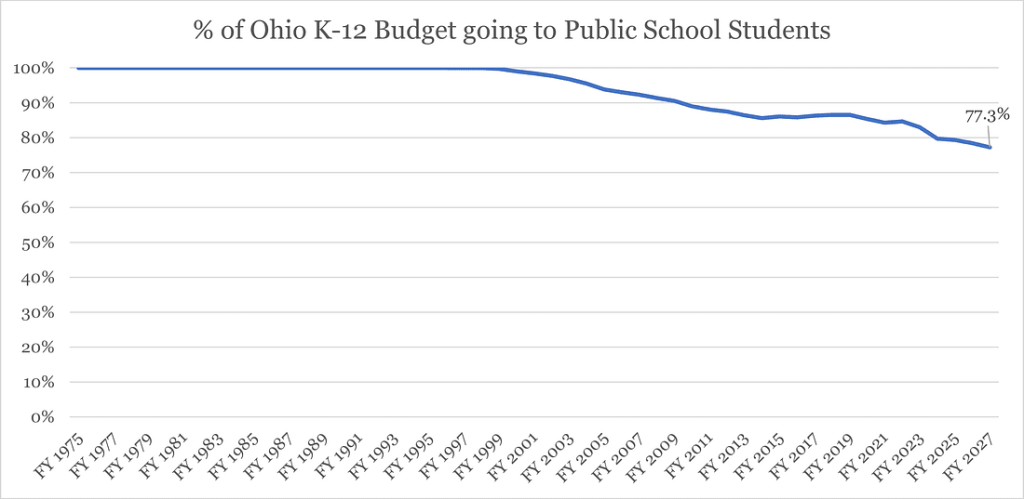
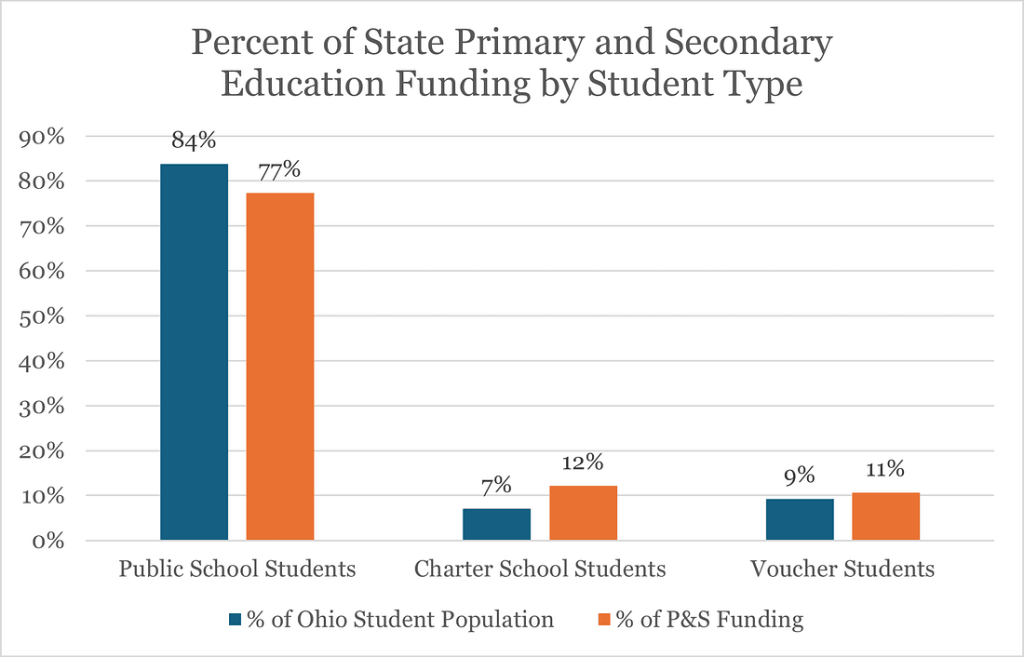
That disunion is driven in part by the rapid growth of universal educational vouchers and charter schools, where public funds flow to private and religious schools as well as privately operated charter schools and where public accountability and oversight of taxpayer funds is limited or even absent. In many states, including Ohio, those public funds in the form of vouchers are drawn from the very state budget line item that is earmarked for public schools.
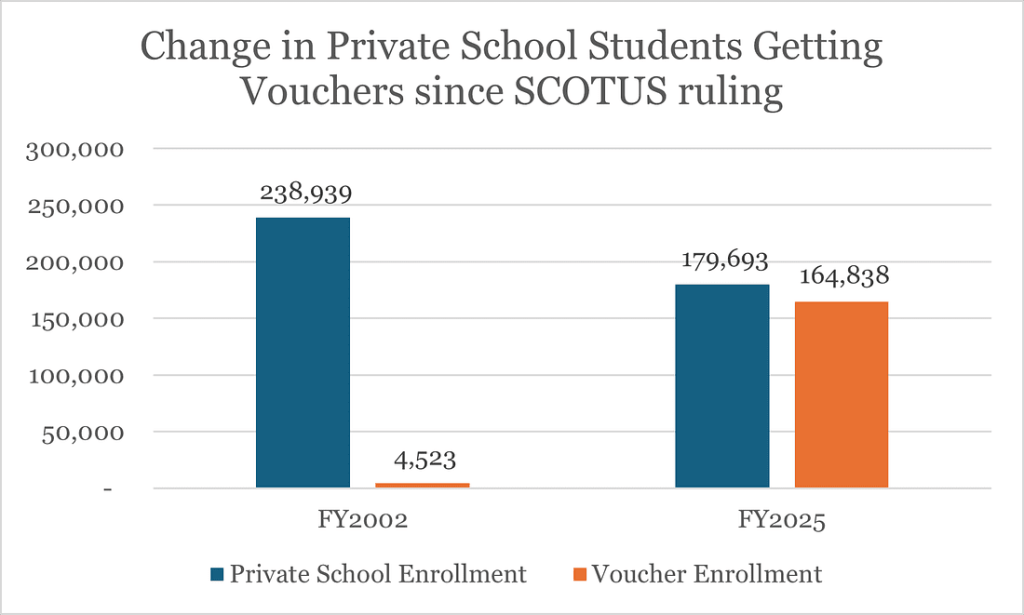
Of particular concern to the conference attendees is the division in communities fueled by vouchers, which have been shown in some states to subsidize private and religious school tuition exceeding 80% of those enrolled. In Ohio, according to research conducted by former Ohio legislator Stephen Dyer, the figure is 91%.Several speakers referred to this situation as “welfare for the rich” and “an entitlement for the wealthy.”
The research shared at the conference also confirmed the findings of the National Coalition for Public Education that “most recipients of private school vouchers in universal programs are wealthy families whose children never attended public schools in the first place.” So much for the tired Republican rhetoric of vouchers being a lifeline of escape from “failing schools” for poor inner-city children.
Another strong area of concern shared at the NPE event was the growing intrusion of religious organizations like Life Wise Academy which recruit students for release time Bible study during the school day. While attendees were told that school guidelines direct that such activities are to be scheduled during electives and lunch, the programs still conflict with the normal school routine and put a burden on school resources, where time is needed for separating release time students and adjusting the instructional routine because of the arrival and departure of a group within the classroom.
One presenter, concerned about students receiving conflicting information, said that his experience as a science teacher found situations where there was a disconnect between what he termed “Biblical stories and objective facts.” In addition, he shared that a group of LifeWise students missed a solar eclipse because of their time in religious instruction.
Some Ohio school districts, including Westerville and Worthington in Franklin County, had to amend their policies in the wake of HB 8, which mandated that districts have religious instruction release time policies in place. The district policies had been written as an attempt to lessen the possibility of other religious programs wanting access to students and the further disruption that would cause to the school routine.
The recent legislative activity about accommodating religious groups like Life Wise is at variance with history, as conference chair and Network for Public Education founder Dr. Diane Ravitch pointed out in her remarks about the founding of Ohio. As part of the Northwest Territory, she noted that Ohio was originally divided into 32 plots, with plot 16, being reserved for a public school. No plot was set aside for a religious school.
Ohio became the first state to be formed from the Northwest Territory, and its provision for public education would become a prototype for the young republic. The common school, an idea central to the founders of the state, would be located such “that local schools would have an income and that the community schoolhouses would be centrally located for all children.”
Unfortunately, the idea of the common school being centrally located in every community is an idea not centrally located within the minds of right-wing Republican legislators. From the information exchanged at the conference, that is the case in the great majority of statehouses, and a matter of great concern for continuing national cohesiveness.
The theme of the NPE National Conference, Public Schools – Where All Students Are Welcome, stands in marked contrast with the exclusionary practices of private and religious schools where, unlike public schools, there are no requirements to accept and enroll every student interested in attending. While these schools are reluctant to accept students who may need additional instructional support, they show no reluctance in accepting state voucher payments.

Texas Rep. Gina Hinojosa. Photo: Texas House of Representatives
Texas State Representative Gina Hinojosa, one of the keynote speakers, told the audience about her experience in fighting Gov. Greg Abbott’s voucher scheme and the double meaning of the term school choice. “School choice is also the school’s choice,” she told the audience, as she estimated that 80% or more of state funds will go to kids who are already enrolled in private and religious schools.
Her battle with the Texas governor, who has defined the passage of voucher legislation in the Lone Star State as his “urgent priority,” is a tale of his alliance with Jeff Yass, a pro-voucher Pennsylvania billionaire who has donated $12 million so far to Abbott’s voucher crusade.
Hinojosa was scathing in her criticism of Abbott and his fellow Republicans and of a party that once “worshipped at the altar of accountability.” Now, she told the attendees, “they want free cash money, with no strings attached.”
“Grift, graft, and greed” is the narrative of appropriating public funds for private purposes, Hinojosa believes, a tale of supporting “free taxpayer money with no accountability.”

Minnesota Gov. Tim Walz. Photo: Denis Smith
The NPE conference ended with an address by Minnesota Gov. Tim Walz, the 2024 Democratic Vice-Presidential nominee. With his background as a former teacher and coach, Walz had a strong connect with an audience comprised mostly of educators and public school advocates. His folksy language and sense of humor further endeared him to the conference attendees.
Based on the continuing bad behavior of Jeff Yass and other affluent actors in the voucher and charter wars, greedy bastards is a better descriptor than oligarchs, he observed. From the reaction of the audience and what they heard previously from Gina Hinojosa and other presenters, the language offered by Walz was a more accurate definition of welfare for the wealthy.
At the end of his remarks, Walz encouraged educators not to despair but to accept their key place in society. “There is a sense that servant leadership comes out of serving in public education.”
Attendees at the NPE conference included educators, school board members, attorneys, legislators, clergy, and policy makers – a cross-section of America. Their presence affirmed a core belief that the public school, open to all, represents the very essence of a democratic society. And there is no debate about whether or notthose schools are under attack by right-wing legislatures intent on rewarding higher-income constituents with tuition support to schools that choose their students as they exercise the “school’s choice.”(As a devotee of the Apostrophe Protection Society, I applaud this distinction.)
So what are we going to do about this? Attendees left the conference with some strong themes.
The choir needs to sing louder.
Hope over fear. Aspiration over despair.
The road to totalitarianism is littered with people who say you’re overreacting.
Who are the leaders of the Democratic Party? They’re out there. On the streets.
It’s not just don’t give up. Be an activist.
As the loudness about the subject of what is more aptly described as “the school’s choice” gets louder,” you can bet that servant leaders like Diane Ravitch, Gina Hinojosa, Tim Walz and others are making a difference in responding to the challenge of servant leadership to ensure that the common school, so central to 19th century communities in the Northwest Territory and beyond, continues to be the choice of every community for defining America and the democracy it represents.

 Diane Ravitch's blog