Archives for category: Funding

The blog called “Misinformation Kills” usually focuses on COVID Lies and misinformation and their perpetrators. In this post, however, Dr. Alison Neitzel takes a different perspective on the money men who are undermining our democracy by capturing the courts.

She shows the outlines of a “vast rightwing conspiracy,” as described years ago by Hillary Clinton in 1998. At the time, people thought she was exaggerating. Now we know it exists.

It involves not only Harlan Crowe, the very generous benefactor of Justice Clarence Thomas, but Charles Koch and the mysterious Council on National Policy, where rightwing zealots meet and greet and plan their strategy.

Leonard Leo, the Catholic and deeply conservative leader of the Federalist society, planned the successful conquest of the U.S. Supreme Court. Donald Trump was his useful idiot.

Koch is all in for deregulation. But not when women’s reproductive rights are at issue.

Will Justice Thomas be held accountable for his unethical behavior? His benefactors will protect him. His dear personal friendship with Mr. Crowe began after Justice Thomas joined the Supreme Court. What a coincidence!

ProPublica has another scoop involving Justice Clarence Thomas and his friend Texas billionaire Harlan Crow.

Harlan Crow is a really good friend to Supreme Court Justice Thomas. Not only did he give Justice Thomas and his wife fabulous vacations over the past two decades (which the Justice never reported on financial disclosure forms), but the very generous Mr. Crow bought Justice Thomas’s family home in Georgia, with his mother still living in it. He also bought two vacant lots from Justice Thomas on the same street. The billionaire made some repairs on the home. He sold the two lots. It’s not clear whether Mama Thomas continues to live in the home purchased by the kindly billionaire.

Justice Thomas did not report that sale, as he did not report the lavish vacations that were gifts from Crow.

A federal disclosure law passed after Watergate requires justices and other officials to disclose the details of most real estate sales over $1,000. Thomas never disclosed his sale of the Savannah properties. That appears to be a violation of the law, four ethics law experts told ProPublica.

Justice Thomas broke the law.

Samuel E. Abrams and Steven J. Koutsavlis wrote a fiscal analysis of private school vouchers, and it comes as several states have enacted new voucher programs without any realistic review of the financial consequences for their states. It is typical of voucher proponents to give a low-ball projection of the cost, then to say “Oops, sorry” when the actual cost is two or three times their projection. Whatever the limits or caps in the first legislation, you can be sure that those limits and caps will be lifted or erased in future legislative sessions.

Samuel E. Abrams is the director of the National Center for the Study of Privatization in Education, Teachers College, Columbia University, and the author of Education and the Commercial Mindset (Harvard University Press, 2016). He is serving during the current academic year as a Fulbright visiting professor at the University of Turku in Finland. Steven J. Koutsavlis is a Ph.D. candidate in education policy at Teachers College, Columbia University, and a veteran math teacher at MS 443 in Brooklyn.

In their analysis, they explain the three different types of vouchers: conventional vouchers; tax credit scholarship programs; and educational savings account vouchers.

They explain the dangers of these three types of vouchers:

The prevalence of all three types of vouchers described above has surged over the past decade. The number of students using vouchers in the fall of 2012 was 212,000.12 By 2021, that number had topped 600,000.13 While that sum in a country with nearly 50 million students in public PK-12 schools is small,14 the trend is significant. Indeed, although dozens of voucher proposals are rejected by state legislators and governors each year, many states continue to estab- lish or expand these programs, despite their consequences for
state budgets.15


With this growth come mounting concerns. As noted, voucher programs—of any type—send public dollars to private schools or companies, depleting the public treasury and shifting public resourc- es to private hands. The programs are expensive to operate, with studies showing they typically cost more per student than public schools.16 And many of the nation’s public schools remain chronically underfunded although they serve the vast majority of the nation’s children.17

States can ill afford to siphon scarce resources away from public education to private providers.
The claim that it costs less to educate students with private school vouchers than in public schools ignores numerous realities. Voucher programs shift key expenses to parents; often subsidize private tuition for families who would never have enrolled in public schools; do not dilute fixed costs for public education systems; and concen- trate higher-need, more-costly-to-educate students in already-un- derfunded public schools.18

As noted above, early voucher programs were explicitly discriminatory—providing white families with educational opportunities unavailable to Black children with the explicit intent to preserve segregation. Still today, data show that voucher programs exacerbate racial segregation.19 Moreover, private schools accepting vouchers are not subject to many of the anti-discrimination laws that protect students with disabilities, LGBTQ+ students, and other vulnerable groups, who may—sometimes unknowingly—give up their rights when they move to private schools.20 While public schools are required to serve all children, many private schools have a history of denying admission or pushing students out based on these and other characteristics. These discriminatory practices often apply to educators and staff, as well.

Private schools participating in voucher programs are generally not subject to the same regulatory standards as public schools. These may include standards for licensing of teachers, criminal background checks for employees, curriculum requirements, building safety codes, and more.21 Most states do not require private schools partici- pating in voucher programs to publicly report the results of state and national tests. Nor do they require public reporting of demographic data on participating students.22 A lack of fiscal transparency and oversight has resulted in incidents of fraud and mismanagement
of public funds, as documented in several states.23

Separate and apart from these troubling issues, numerous studies have failed to demonstrate that vouchers improve academic outcomes, particularly for low-income students and students of color. A range of studies on academic outcomes for students using vouchers have found that there is either no significant change in student test scores or that students actually perform worse than similar peers in public schools.24

The authors review the costs of vouchers in seven states.

They reach the following conclusions:

The pattern of education spending in these seven voucher states is unmistakable. Private school voucher programs are initially proposed as limited in size and scope, then grow as existing programs are expanded, and/or additional voucher programs are established. This results in greater and greater amounts of public funding diverted to private educational institutions and private corporations. At the same time, as noted, funding for public schools in these states has largely decreased.
Although direct cause and effect is difficult to prove, the bottom line is clear: As states transfer millions of dollars to private hands, there are fewer available state resources for projects that serve the public good, from mass transit to public parks, libraries, and schools.

Voucher programs, even with significant expansion during the last one to two decades, still serve only a small percentage of the nation’s children.82 Nearly 90 percent of PK-12 students in the U.S. continue to attend public schools. Yet this expansion in voucher programs is nevertheless cause for substantial concern, particularly in districts with heavy usage of vouchers. The financial consequences of vouch- ers in such districts can be severe. Even when students with vouchers leave public schools for private schools, the fixed costs involved in running public school systems remain virtually unchanged. In addition, the children with the greatest needs, who, in turn, require the greatest resources, in large part remain in the public schools.

In most states, public elementary and secondary education accounts for over a third of state general fund spending. Public schools were hit particularly hard by the 2007 Great Recession. Amidst the economic crisis, states made deep cuts in public education spending. Yet, as economies rebounded over the ensuing years, most states chose not to restore those investments. Education Law Center’s 2021 report $600 Billion Lost: State Disinvestment in Education Following the Great Recession found that public schools across the U.S. lost nearly $600 billion through state disinvestment in the decade following
the Great Recession.25 While economic activity, measured as gross domestic product (GDP), recovered, state and local revenues for public schools lagged far behind, despite increasing enrollment and, importantly, increases in the percentage of high-need students concentrated in public schools.26Over that same decade, state spending on vouchers nevertheless mounted considerably. In some states, spending on vouchers doubled during this time, and in the case of Georgia—one of the states profiled here—it increased by nearly 900 percent. Beyond expanding existing voucher programs, many states launched new ones.

In this report, we document rising spending on voucher programs in seven states from fiscal year 2008 through fiscal year 2019. As a point of comparison, we also provide data on these states’ spending on public education during the same period.

Over that same decade, state spending on vouchers nevertheless mounted considerably. In some states, spending on vouchers doubled during this time, and in the case of Georgia—one of the states profiled here—it increased by nearly 900 percent. Beyond expanding existing voucher programs, many states launched new ones.

This is an important study. Open the link and review the data. Then share it with your elected officials.

A reader who identifies as “Retired Teacher” sees the school choice juggernaut as a deliberate plan to destroy our common good: public schools. Thomas Jefferson proposed the first public schools. The Northwest Ordinances, written by the founding fathers, set aside a plot of land in every town for a public school.

The origin of the school choice movement was the backlash to the Brown Decision of 1954. Segregationists created publicly-funded academies (charters) for white flight and publicly-funded vouchers to escape desegregation.

What replaces public schools will not be better for students, and it will be far worse for our society.

So much reckless “choice” will make the public schools the schools of last resort for those that have nowhere else to go. Choice is a means to defund what should be our common good. How are the schools supposed to fund the neediest, most vulnerable and most expensive students when so much funding is transferred to private interests? How will public schools be able to pay to maintain the buildings, hire qualified teachers and pay for all the fixed costs like insurance, transportation and utilities?

The billionaires and religious groups behind so-called choice would like to see public schools collapse. Choice benefits the ultra-wealthy and segregationists. Choice empowers the schools that do the choosing, not the families trying to find a school for their child. If public schools become the bottom tier of choice, they will become like the insane asylums of the 19th century where the unfortunate were warehoused, ignored and abused. This dystopian outcome would be the opposite of what the founding fathers envisioned. Their vision was one of inclusion where all are welcome, a place serves the interests of the nation, communities and individuals with civil, social and individual benefits. A tiered system of schools is neither ‘thorough or efficient.’ It is a nightmare, and nothing any proponents of democracy should be supporting.

YOU ARE INVITED TO A “DAY OF ACTION” AT THE STATEHOUSE

Pastors for Indiana Children is a nonpartisan, independent ministry, not beholden to any special interest group, political party, or church office. We believe in local democracy, cooperation across lines of difference, and organizing to support public education opportunities for Indiana children.

WHO: Any Pastor, Community Leader, Parent, Student, Advocate who wants to keep public schools public, fully funded, and equitably meet the needs of ALL students. Pastor Charles Johnson, Executive Director of Pastors for Texas Children is planning to join us.

WHAT: Pastors for Indiana Children is hosting an Day of Action. We will be speaking with State Legislators directly about HB 1001, HB 1002 and HB 1591. These bills threaten the further destroy public education.

WHEN: Thursday, April 13th, 2023 from 10 a.m. to 12:30 p.m. Press Conference to follow at 12:30PM

WHERE: Indiana State Capitol Building
200 W Washington St, Indianapolis, IN 46204

WHY SHOULD PASTORS STAND UP FOR PUBLIC EDUCATION:

There are several reasons why pastors should stand up for public education:

  1. Public education is a common good: Public education is a fundamental pillar of a healthy and just society. It provides all children, regardless of their background, with the opportunity to learn and develop the skills they need to succeed in life.
  2. Equity and access: Public education is essential for promoting equity and access for all students. It provides a level playing field for students of different socio-economic backgrounds, and helps to reduce disparities in educational opportunities.
  3. Moral imperative: As leaders in our/your communities, Pastors have a moral obligation to support the common good and to advocate for justice and equality. Standing up for public education is one way to fulfill this obligation.
  4. Community engagement: Public schools are often the hub of their communities, serving not just as places of learning, but also as gathering places for community events and activities. Pastors can help to strengthen their communities by supporting public schools and advocating for their improvement.
  5. Shared values: Public education is consistent with many of the values that Pastors hold dear, such as the value of education, the importance of social justice, and the idea that we are all called to work for the common good.

By standing up for public education, Pastors can help to promote equity, justice, and the common good, while also strengthening our communities and living out our values.

Pastors, Ministers and Congregants please take the opportunity to share with other Pastors who may not know what is going on. Although, I have listed 3 bills that are a problem, there are many bills floating through and being passed in our statehouse. We must stand together to push back on this attack of public education and in specific the most vulnerable, OUR CHILDREN.

See you at the State House on April 13, 2023!

Sincerely,


Dr. Ramon L. Batts
State Director
Pastors for Indiana Children
www.PastorsForIndianaChildren.org

Governor Gregg Abbott went all in and all out to pass vouchers, so that public money would fund religious schools, private schools, and homeschools. His proposal passed in the State Senate.

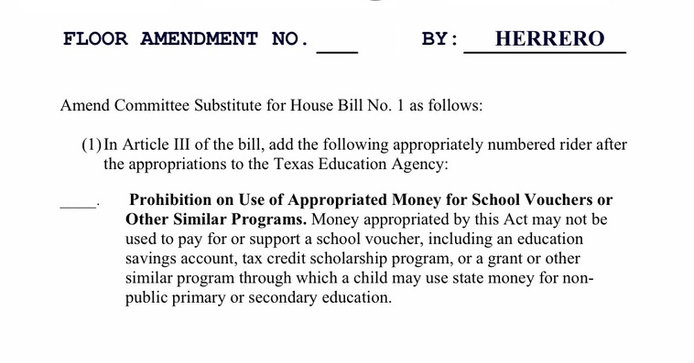
But it in trouble in the House of Representatives, where rural Republicans are standing with urban Democrats against vouchers for nonpublic schools. The House today passed the Herrero Amendment, prohibiting public funding for vouchers.

The Pastors for Texas Children have worked tirelessly to protect public funding for public schools. Five million children attend public schools. Three hundred thousand students are enrolled in private schools. they issued the following statement about today’s events:


FOR IMMEDIATE RELEASE

CONTACT: Rev. Charles Foster Johnson

210-379-1066

Johnson.cfj@gmail.com


Herrero Amendment Blocking Voucher Funding Passes Overwhelmingly


The Herrero Amendment prohibiting tax money for private school vouchers passed the Texas House of Representatives this afternoon on an 86-52 vote.

The Texas House has once again repudiated a private school voucher program, as they have many times over the past 25 years.

This rejection of vouchers is particularly powerful because Gov. Greg Abbott made the passage of a voucher policy an “emergency item” this legislative session, and personally lobbied House members on the chamber floor to advance it.

“Texans abhor private school vouchers,” said the Rev. Charles Foster Johnson, Founder and Executive Director of Pastors for Texans Children. “For public dollars to be diverted to subsidize the private education of affluent children and to pay for religious education, particularly that contrary to one’s own, is fundamentally unjust.”

“Unfortunately, Gov. Abbott has tied up the entire legislature this session, at the cost of millions of tax dollars, for in his own petty personal political agenda.”

The Texas State Constitution, in Article 7, Section 1, calls for the suitable provision for “public free schools.” There is no consideration whatsoever for public funding diverted to private schools.

Using public tax dollars, taken from our 5.4 million Texas schoolchildren, to underwrite the private education of a few, is an egregious moral violation.

We find it particularly troubling for public funding to advance and establish religious programs in private schools. This is a clear violation of the First Amendment to the United States Constitution and God’s Moral Law.

Pastors for Texas Children is grateful that the Texas House of Representatives once again stood firm for the true Texas conservative value of universal education for all Texas schoolchildren, provided and protected by the public.

+++


Pastors for Texas Children mobilizes the faith community for public education ministry and advocacy. http://www.pastorsfortexaschildren.com

PO Box 471155 – Fort Worth, Texas 76147

http://www.pastorsfortexaschildren.com

Jan Resseger nails the central issue in the Chicago mayoral race: school reform. Pail Vallas tried to make the race about crime and his promise to control it. But the deciding issue was education, and their very different visions for improving it.

How do we know? Vallas has no record as a crime-fighter. He has a long resume as a school superintendent, starting in Chicago. He was the ultimate technocrat, who ruthlessly imposed his test-and-punish and school closing-choice ideology, regardless of how parents, students, and teachers felt about it.

Brandon Johnson was a social studies teacher and then a community organizer for the Chicago Teachers Union. He was the antithesis of Vallas. He knew that the root of school problems was not in the schools but in the social and economic conditions in which children were growing up.

Brandon is the heir of the late, great Karen Lewis. She changed the narrative when she led a citywide strike in 2012. She organized communities and teachers. She continues to be our greatest visionary of what education should be.

How about that, Brandon!

For another account, read Chalkbeat Chicago.

Johnson’s win marks a stunning achievement in the grassroots movement started by Chicago Teachers Union leadership roughly a decade ago to focus on issues beyond the classroom, such as affordable housing, public health, environmental justice, and police reform.

“We have ushered in a new chapter in the history of our city,” Johnson said. “Whether you wake up early to open the doors of your businesses, or teach middle school, or wear a badge to protect our streets, or nurse patients in need, or provide child care services, you have always worked for this city. And now Chicago will begin to work for its people…”

Vallas, a torch bearer for school choice and charter schools who has supported voucher expansion, faced criticism and applause for his complicated schools’ legacy. Johnson taught at Jenner Academy of the Arts and Westinghouse College Prep before becoming a union organizer for the Chicago Teachers Union. His education platform, which aligns closely with the teachers union, promises more staff, free transit for students, and green schools…

The CTU called Johnson a “protege” of the late former union president Karen Lewis, who almost ran for mayor herself in 2015 before being diagnosed with a brain tumor.

“You don’t have a Brandon Johnson without a Karen Lewis,” said CTU president Stacy Davis Gates said. “She transformed the political debate in our city. She showed Chicagoans how to stand up and demand what their schools and their city need and deserve. Tonight affirms Karen’s dream of a city that works for us all, not just a privileged few.”

The Florida legislature passed a universal voucher plan, meaning that the state will subsidize the tuition of every student, no matter their family income, Rich or poor. The state will hand out subsidies to rich families whose children go to elite private schools. All money deducted from public schools. Short-sighted and stupid, a giveaway to families who can afford private schools.

Currently, there are more than 400,000 students enrolled in private schools. About 80,000 may already have a voucher. Now, even those attending an exclusive school will be subsidized by the state. Homeschoolers will also be subsidized by the state, at least 20,000 in the fumigation year.

Most of the schools that take vouchers are religious and most are not accredited.

Likely new cost: 320,000 students already enrolled in private schools without a voucher plus 20,000 homeschooled kids x $7,800=$2.65 billion. And that’s without a single student now in public school asking for a voucher. A realistic estimate for the annual cost of Florida’s universal voucher would be at least $3 billion a year.

The Center for Budget and Policy Priotities notes that the Florida voucher funding is designed to reduce the funding of public schools, which currently enroll about 80-85% of the state’s children:

While voucher programs are often funded as line-item appropriations in state budgets or through private donations (which over time reduces the revenues available for education and other state priorities), this Florida voucher is actually designed to take money away from the state K-12 funding formula designated for public school districts.

Scott Maxwell of the Orlando Sentinel says that Florida’s universal voucher program is likely to blow a billion-dollar hole in the state budget. As I pointed out above, $1 billion is a low estimate. That hole in the budget will be closer to $3-4 billion, when you include the students whose parents can already afford to pay tuition.

He writes:

Florida lawmakers are about to take the biggest educational gamble in American history — financed with your tax dollars.

They want to offer every child in Florida the chance to use publicly funded vouchers at private schools that have virtually no regulation and offer no guarantee that the students will get educated.

Florida’s existing network of voucher schools is so infamously unchecked that the Orlando Sentinel has found schools employing teachers that don’t have high-school diplomas themselves. Some refuse to serve children with disabilities or gay parents. Others were such financial wrecks that they shut down in the middle of the school year, stranding students.

Flaw #1:

Voucher schools in Florida are unregulated. They can hire teachers who are not certified. They can hire teachers who never finished college. Voucher schools do not take state tests. They need not disclose their graduation rate or their curriculum. They are not overseen by state officials. Some voucher schools ignore safety codes, because they are not required to comply with them. The Orlando Sentinel conducted an investigation called “Schools Without Rules,” demonstrating that voucher schools take tax money without any oversight, transparency or accountability.

Flaw #2:

Voucher schools operate in secrecy. They are not required to report anything to the state.Not test scores, graduation rates, SAT scores, or anything else. Florida is operating on the principle of “Trust But Don’t Verify.” Public schools are held to tight accountability requirements. Voucher schools, none at all. If accountability is good for public schools, why is it unnecessary for voucher schools?

Flaw #3:

Voucher schools can discriminate against any group. Unlike public schools, voucher schools can discriminate on any grounds. They don’t have to accept students with disabilities, gay students, students who don’t speak English, or students from a religion they don’t like.

Flaw #4:

Legislators think that choice is the only accountability needed. If a parent is unhappy, make a different choice. The only choice that parents do not have is to stop paying their tax dollars to fund this sector.

There is another grievous flaw:

The Florida voucher program reduces funding for the schools that the overwhelming majority of students attend. Why does this make sense?

Maxwell says there are good voucher schools, and they should have no objection to accountability, transparency, and oversight. Maxwell recommends the following fixes for the state voucher program.

All voucher-eligible schools should be required to:

  1. Publish graduation rates and nationally accepted test scores.
  2. Hire teachers who are certified or at least have a college degree.
  3. Disclose all the curriculum being taught.
  4. Ban discrimination. (If discrimination is a key tenet of a religious organization’s belief system, they should fund that discrimination with their own money. Any group that receives public dollars should serve all the public.)

Maxwell does not address the two glaring defects of the voucher program:

1. 75-80% of the students who take vouchers already attend private schools. Why is it in the interest of Florida to pay their tuition?

2. About 60% of the students who switch from a public school to a voucher school will drop out within two years. The vast majority of voucher studies conclude that students lose ground academically when they take a voucher. Shouldn’t parents be warned of the risk that they are taking by accepting a voucher?

Full accounts of fundraising and sources are not yet available, but here’s what we know so far:

NBC said a few days before the election that Paul Vallas raised $19 million, while Brandon Johnson raised “nearly $11 million.”

https://www.nbcchicago.com/investigations/high-dollar-donations-fueling-johnson-and-vallas-in-chicago-election-how-might-that-influence-the-next-mayor/3109471/?amp=1

Chalkbeat Chicago reviewed the donors. Johnson’s money came mainly from unions (CTU gave him $2.2 million) and 8,000 individual contributions. Vallas’ funding came mainly from financiers and supporters of charters, vouchers, and TFA.

https://chicago.chalkbeat.org/2023/3/31/23665374/chicago-mayors-race-campaign-donations-paul-vallas-brandon-johnson-teachers-union-betsy-devos?_amp=true

Governor Gregg Abbott has pushed very hard for vouchers to fund religious schools, homeschooling, and anything else that calls itself a school. Texas has a state constitution that requires public schools, but voucher advocates abandon the language of state constitutions when they get in the way of their goal.

We know from experience that most vouchers will be used by students already enrolled in private or religious schools. We know that the cost of funding kids already in private schools will be enormous. More than 300,000 students attend private schools in Texas. Add in home schoolers, and you are looking at an annual cost of nearly $3 billion before any public school student has asked for a voucher.

We know from research studies that most of the public school kids who take vouchers will drop out of their religious school and return to their public school far behind their peers.

No group has been more effective in fighting to preserve public schools than Pastors for Texas Children. They have mobilized rural Republicans to stand strong for their public schools, which are the hub of their community.

PTC released the following report today:

Call and Write Your Senator and Representative TODAY!

The SB 8 education savings account voucher bill will likely pass out of the Senate Education Committee today or tomorrow, then go to the Senate floor for a vote. It’s been astonishing that the bill has been stalled in the Senate for the past week! As you know, the Texas Senate, under the leadership of Lt. Gov. Dan Patrick, has long supported private school vouchers. Contact your State Senator anyway! Our job is to influence and educate them!

Vouchers stop and die in the Texas House of Representatives. They will vote on Thursday on an amendment to the budget bill preventing public money from funding private schools. Here it is:

Call and email your State Representative before Thursday and urge him or her to support the Herrero Amendment prohibiting private school voucher funding.

You can find their Austin office numbers here.

PTC pastor Rev. Julio Guarneri, the pastor of Calvary Baptist Church in McAllen, has written a powerful letter to his state senator. It gives us all a good, succinct script for our talking points as we contact our policymakers.

It’s our job before God to speak truth to power. God bless us all as we bear witness to God’s truth and justice this week!


Senator Hinojosa,

I hope you had a good weekend. I attempted to call you on the phone this morning but you were in a meeting and I know this is a busy week for you. I hope to still be able to talk to you over the phone but in the meantime, let me share with you what I am calling about.

I am the Lead Pastor at Calvary Baptist Church in McAllen. I am also currently serving as president of the Baptist General Convention of Texas (Texas Baptists), to whom the Christian Life Commission relates. And I am with Pastors for Texas Children as well.

I am writing you in regard to SB 8 (Education savings account/school voucher bill). As a Baptist, as a pastor, and as a religious leader, I am opposed to SB 8 for several reasons. My conviction is that church and state should be separate. A free church in a free state is our ideal. Thus, I do not believe tax dollars should be used to fund religious education. Public tax dollars should be used for public schools. Religious causes should be supported by donations from private individuals.

There are only two choices for religious schools who receive help from tax credits. They either receive oversight from the government, which violates the separation of church and state, or they receive the benefit without accountability, which is wrong.

Furthermore, this measure seems to mostly benefit middle to upper class families, leaving lower income families either without enough of a tax credit to afford a private school or with an underfunded public school system. We will do a disservice to Texas if we leave lower income families at an educational disadvantage.

I know you have historically opposed school vouchers and I am thankful for that. I respectfully ask you to hold your position. As a religious leader I believe it is the right thing.

Please do not hesitate to call me or email me.

May you have a blessed Holy Week and a Happy Easter!

For our Texas children and our Texas future,

Julio S. Guarneri, Ph.D.

Calvary Baptist Church

McAllen, Texas

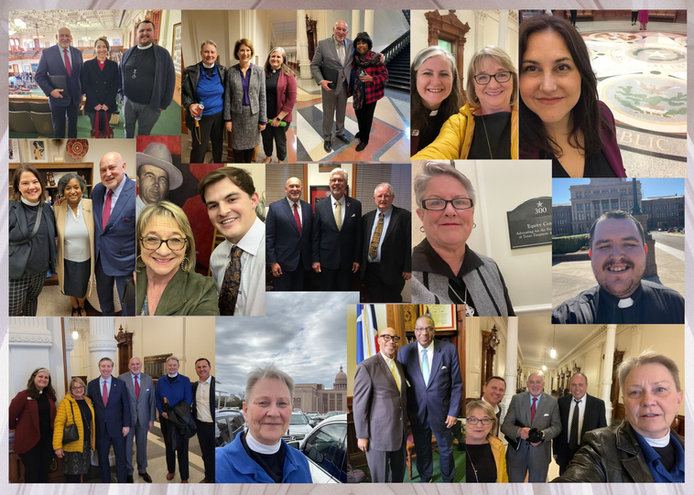
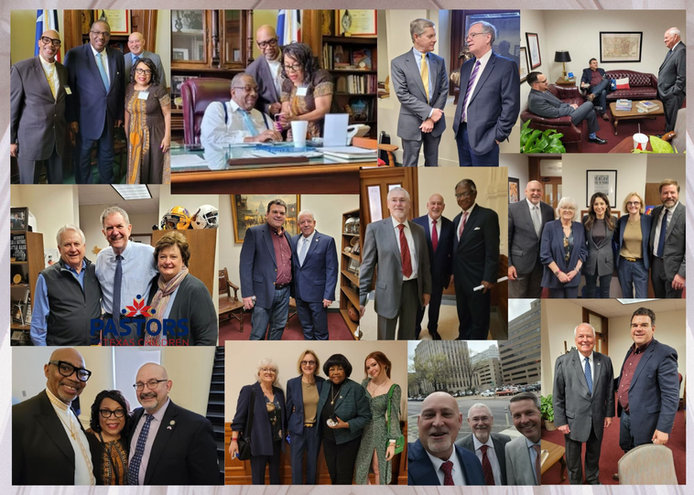
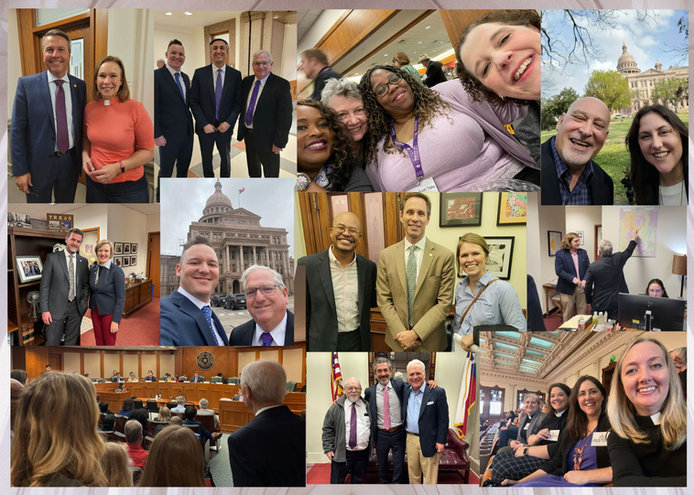
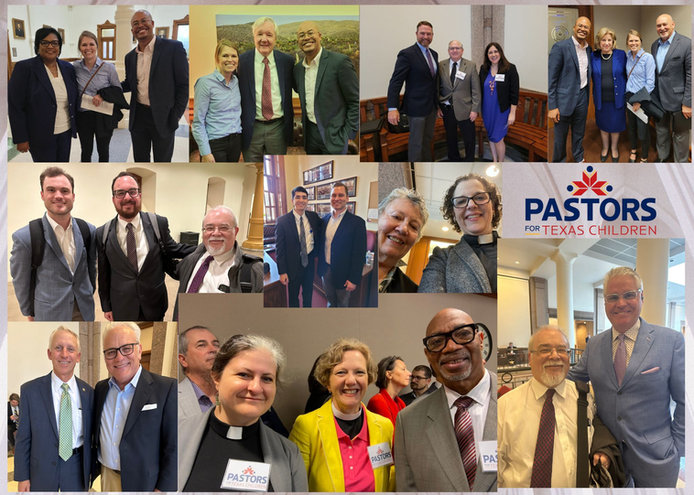
Pastors at the Capitol

DONATE TO PTC


PO Box 471155, Fort Worth, Texas, 76147

Check out our website