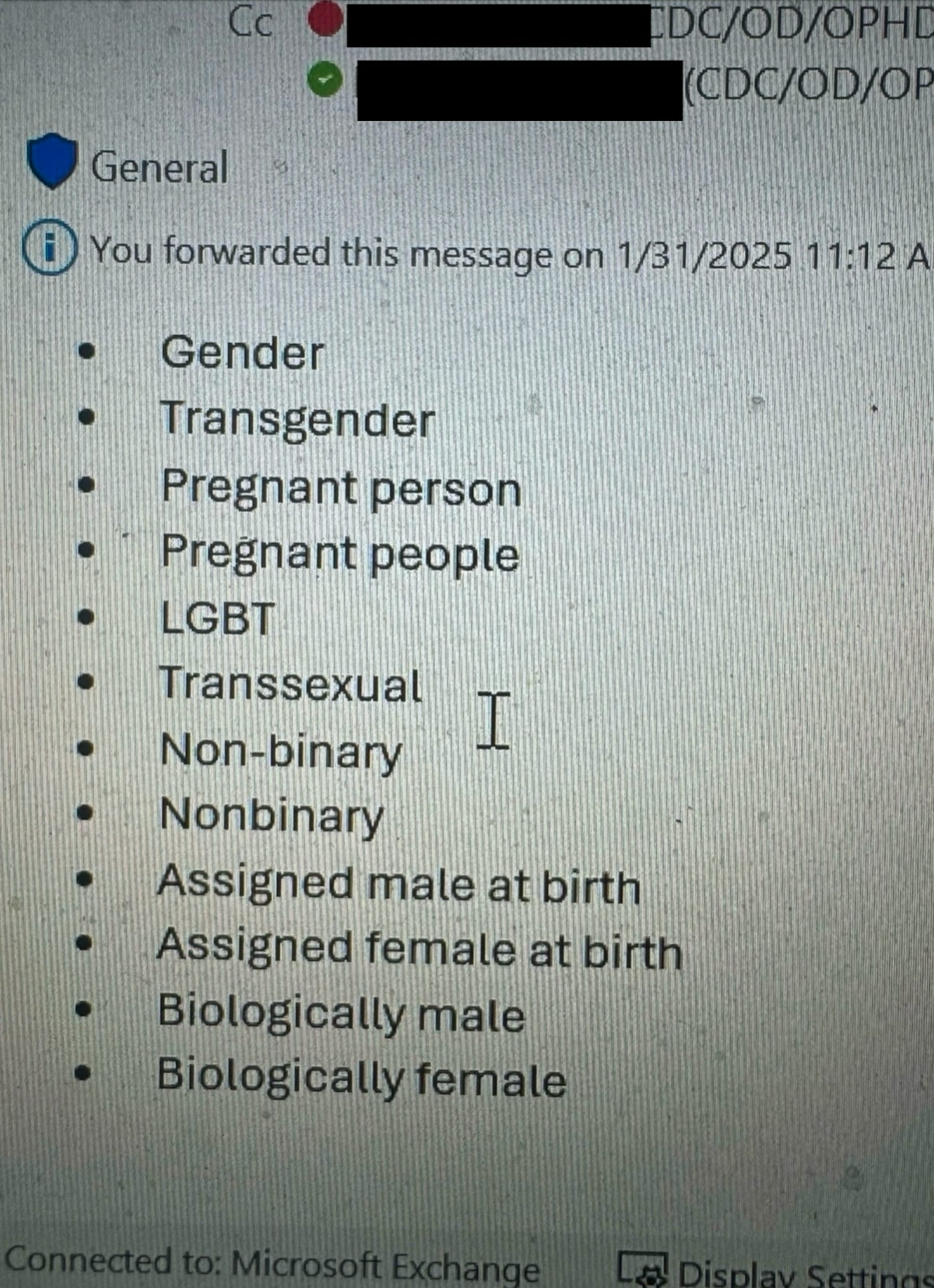
Before the inauguration of Trump, The New York Review of Books invited me to write about his education agenda. I read three important documents in which his views and goal were spelled out: the education chapter in Project 2025; Agenda 47, Trump’s campaign document; and the website of the America First Policy Institute, the organization led by Linda McMahon, Trump’s choice for Secretary of Education. The three documents overlap, of course. Trump intends to privatize education; he despises public schools. He wants to eliminate the Department of Education. He and his supporters are obsessed with “radical gender ideology,” and they blame public schools for the very existence of transgender students. The election of Trump, it was clear, would mean the end of civil rights protections for LGBT students and a determined effort to defund and destroy public schools.
I posted the article yesterday.
The NYRB invited me to participate in an interview.
This article is part of a regular series of conversations with the Review’s contributors; read past entries here and sign up for our e-mail newsletter to get them delivered to your inbox each week.
In “‘Their Kind of Indoctrination,’” published on the NYR Online shortly before Donald Trump’s second inauguration, Diane Ravitch writes about the troubling future of American public education. Referring to the president’s infamous remark from his first campaign—“I love the poorly educated”—Ravitch warns that his second term is likely to lead to “more of them to love.”
A historian of education, Ravitch worked on education policy in both George H. W. Bush’s and Bill Clinton’s administrations. She has spent her career analyzing the national and state policies that reshape public schools, like laws that implement high-stakes testing or that divert taxpayer money to charter schools. In addition to writing nearly two dozen books—including The Troubled Crusade: American Education, 1945–1980 (1983), Reign of Error: The Hoax of the Privatization Movement and the Danger to America’s Public Schools (2013), and, most recently, Slaying Goliath: The Passionate Resistance to Privatization and the Fight to Save America’s Public Schools (2020)—Ravitch posts regularly about American education policy on her widely read blog. Her memoirs will be published later this year by Columbia University Press.
I reached out to Ravitch to discuss the current state of American education, the forces threatening it, and her vision for how public schools can better fulfill their democratic promise.
Regina Martinez: How did you start writing about education? Were you influenced by your time in public schools in the South?
Diane Ravitch: I started writing about education when I was in college. The first paper I ever wrote was for a political science class in my freshman year at Wellesley in 1956. It was about the politics of the Houston public school system in the early 1950s, when I was a student there. Voters elected a new school board every two years, and control went back and forth between a group of far-right extremists, who saw Communists lurking everywhere, and moderates who just wanted to make sure that the schools were running well. At one point, books about Russia were removed from the high school library’s shelves. Under the moderates, we heard assembly speakers who spoke of racial and religious tolerance; under the Minute Women, the female wing of the John Birch Society, we were warned to beware of Communist influence. Also, while I was attending them, the schools were racially segregated.
In “Their Kind of Indoctrination,” you write, “One can only imagine the opprobrium that will be visited upon teachers who are not certified as patriots.” How do you imagine this will impact the teaching profession? What might it mean for teacher recruitment in the future?
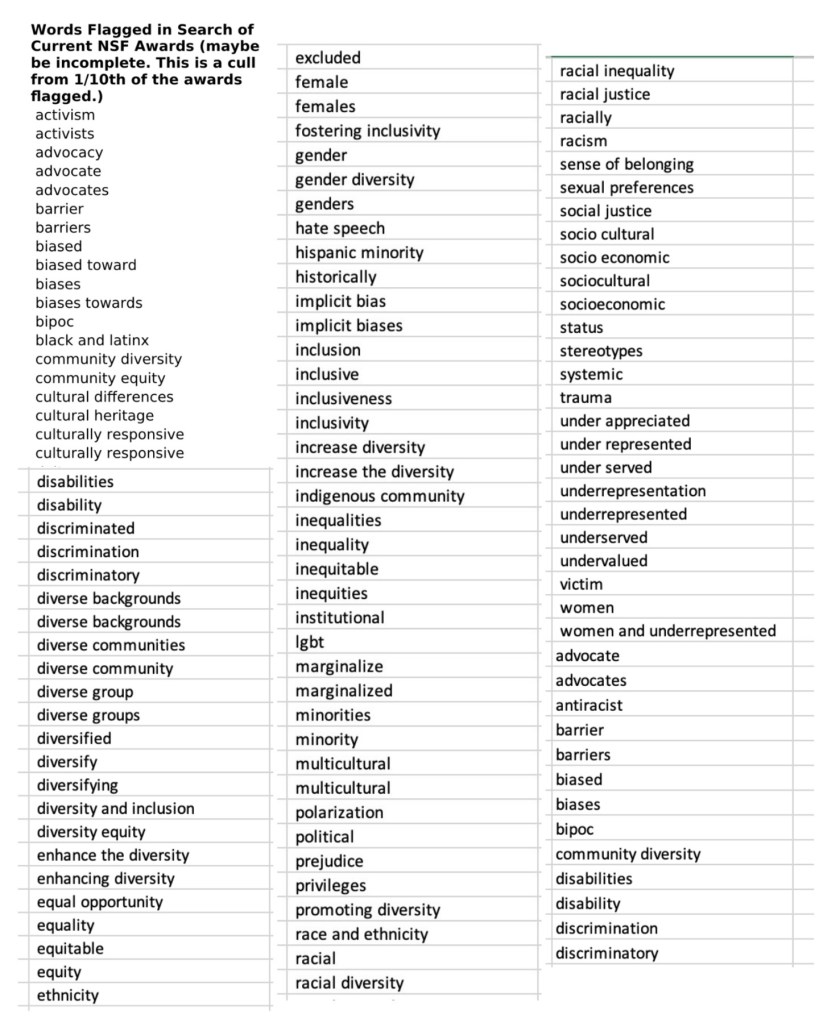
The threat of political surveillance is chilling, as it would be in every profession. In many states, especially “red” states, teachers have to be careful about what they teach, what reading they assign, and how they handle topics related to race and gender. Trump recently issued an executive order stating that he would cut off the funding of schools that “indoctrinate” their students by teaching about “radical gender ideology” and racism. His effort to impose thought control is illegal but that hasn’t stopped him from trying.
This sort of political censorship is happening in K–12 schools but also in higher education. The number of people choosing to prepare to be teachers plummeted in the wake of the Bush-Obama emphasis on standardized testing. The threat of political loyalty screening can only make matters worse.
One of President Trump’s recent executive orders reauthorized federal agents to detain children at schools. What actions if any can schools, families, and students take to resist the incursion of the security state into schools?
The determination of the Trump administration to raid schools is terrifying for children and for their teachers, whose job it is to protect their students. Imagine a child being arrested in his or her classroom. It is indeed frightening. Many districts have urged teachers to get legal advice from the district legal officers. At the very least, educators should demand to see a warrant. If ICE agents are armed, resistance may be futile. Elected leaders will have to develop contingency plans, if they have not done so already.
You worked on education policy under both President George H. W. Bush and President Bill Clinton. What, if anything, was different about your work between a Republican and a Democratic administration? How do you think the Department of Education—and federal education policy more generally—has changed since the early 1990s?
I served as assistant secretary for education research and improvement under President Bush. Then President Clinton appointed me to the national testing board, known as the National Assessment Governing Board. There was a continuity of policy from the first President Bush to Clinton, and then from Clinton to the second President Bush to President Obama.
The first President Bush wanted to reform American education through voluntary measures. He convened a meeting of the nation’s governors in 1989, and they agreed on a set of six goals for the year 2000. He thought that the goals could be reached by exhortation, at no cost. The goals were indeed aspirational (they hoped, for example, that American students would be first in the world in mathematics and science by the year 2000), but no one had a plan for how to reach them, nor was there any new funding. President Clinton got credit for drafting them, so he and Bush shared that commitment. He was willing to spend real money to help states improve their schools, and added two more goals (one about teacher training, another about parent participation). He also believed that the nation should have national standards and tests. None of the goals was reached by the year 2000, except for having 90 percent of students graduate from high school. But that goal was a matter of definition. If it meant that 90 percent should graduate high school in four years, we did not meet that goal. If you counted the students who graduated in five or even six years, we surpassed it.
Since you launched your education blog in 2012, it has become a popular forum for discussions about education and democracy. Looking back, are there any positions you’ve shared on the blog that you would reconsider or approach differently today? Are there positions you took or predictions you made that you’re particularly proud of?
I started blogging two years after publication of The Death and Life of the Great American School System: How Testing and Choice Have Undermined Education. In that book, I renounced views that I had advocated for decades: competition between schools, relying on standardized testing as the measure of students, merit pay, and many other policies connected to accountability and standardization.
What I have learned in the past fifteen years has made me even more alarmed than I was then about the organized efforts to destroy public education. That book has a chapter about “The Billionaire Boys Club.” I focused on the venture philanthropy of the Bill and Melinda Gates Foundation, the Eli and Edythe Broad Foundation, and the Walton Family Foundation. These billionaires used their philanthropy strategically to fund privately managed charter schools, high-stakes standardized testing, and a system that evaluates teachers by the test scores of their students and closes schools where students got low scores. I opposed all of these measures, which were endorsed by both the second Bush administration and the Obama administration. I demonstrated in that book and subsequent books that these strategies have been failures and are enormously demoralizing to teachers. They also turned schools into testing factories, crushing creative thinking and the joy of teaching and learning.
In the years since, I have learned that “the Billionaire Boys Club” is far larger than the three families that I mentioned. In my last book, Slaying Goliath, I tried to make a list of all the billionaires and the foundations that support charter schools and vouchers, and it was long indeed. Even now, I continue to come across billionaires and foundations that should be added to the list. What I suspected was that charter schools paved the way for vouchers by treating schooling as a consumer good, not a civic responsibility. What I did not realize was that the voucher movement is even more powerful than the charter movement. Its constituency is not just right-wing billionaires like the Koch brothers and the DeVos family, but Christian nationalists, white supremacists, extremist organizations like the Alliance Defending Freedom and the American Legislative Executive Council, affluent parents who want the state to subsidize their private school tuition, and Catholic leaders who have always believed that the state should underwrite Catholic schools.
There has been a lot of discourse recently about declining rates of literacy due to AI, the pandemic, phones, or a host of other causes. How significant do you think this risk is? What might be done to reverse the trend?
I too am concerned about declining rates of literacy, as well as declining interest in literature. In my field of study, I believe that standardized testing has been a culprit in shortening the attention span of children of all ages. Students are expected to read short snippets, then to answer questions about those limited passages. In the early decades of the twentieth century, the College Board sponsored college entrance examinations in which students were assigned works of literature in advance, then asked to write about what they had read. Teachers and professors read their essays and graded them. Now the exam answers may be read by a machine or by a person hired off Craigslist to read swiftly, giving only a minute or two to each written answer.
In my dreams, I would change expectations and ask high school teachers to assign books that are worth reading, then require students to write three or four pages about why they did or did not like the book.
While I welcome the expansion of the canon to include works by women and by people of color, I would also welcome a revival of interest in the great works that were once considered the classics of Western literature. In too many high schools, the classics have not just been marginalized, they have been ousted. That is as grave an error as ignoring the works of those who are not white men.
Given the increasing momentum behind the privatization of education, how do you envision the next generation advancing public school advocacy? What do you anticipate will be their greatest challenge?
Public schools are one of the most important democratic institutions of our society. In many states, they enroll 90 percent of all students. They have always enabled children and adolescents to learn together with others who come from backgrounds different from their own. There is a major movement today, funded by right-wing billionaires, to destroy public schools and to replace them with religious schools, private schools, and homeschooling. It is called “school choice,” but the schools choose, not the students or families. Private schools are allowed to discriminate on any grounds and are not bound by federal laws that prohibit discrimination and that protect those with disabilities. Racial and religious segregation will increase. More students will attend schools whose purpose is indoctrination, not building a democratic society.
The greatest challenge facing those who believe in the value of public education is that the money behind privatization is enormous, and it is spent strategically to win political allies. To my knowledge, there is no billionaire funder for public education as there are for privatization. In the world of public education advocacy, there are no equivalents to the Koch money, the DeVos money, the Walton money, the Texas evangelical billionaires Tim Dunn and Farris Wilks, the Pennsylvania billionaire Jeff Yass. I have been president of an organization called the Network for Public Education since 2013, and our annual budget is a pittance compared to the privatizers’ organizations. One pro–school choice organization spent as much on their annual dinner party as our entire annual budget.
The other side of this struggle to save public education is the reality that important Democrats still believe that school choice helps poor Black and Hispanic kids, despite overwhelming evidence that this claim is not true and is in fact part of the hustle. Representative Hakeem Jeffries, Senator Cory Booker, Governor Jared Polis, and Senator Michael Bennett are a few of the Democrats who have dampened the interest of their party in fighting for public schools.
What makes me hopeful is that the reality is becoming clearer with every passing day: those who are concerned for the common good must support public schools, not undertake to pay the tuition of every student who chooses not to attend public schools. Privatization benefits some, not all, not even most. Public money should pay for public schools. Private money should pay for private schools.

 Diane Ravitch's blog