Archives for category: Economy

Social media was ablaze yesterday and today with videos of ICE agents grabbing farm workers as they did their jobs in the fields and arriving at hotels and other places of employment to arrest undocumented workers.

Trump must have been bombarded with calls from farmers and business owners, outraged that their long-time workers were seized. Who will pick the fruits and vegetables? Who will clean the hotel rooms? Who will staff the kitchen and bus tables?

These were his supporters. They wanted the illegals deported, but not their workers. How would they function without their staff and their laborers?

Trump heard them. Late Friday he issued an order to ICE to avoid farms, restaurants, hotels, and meat packing facilities.

Maybe it suddenly occurred to him that removing the workforce from so many basic industries would be bad for the economy. Maybe Stephen Miller was out of town and turned off his cell phone.

The New York Times reported on his sudden change of plans:

The Trump administration has abruptly shifted the focus of its mass deportation campaign, telling Immigration and Customs Enforcement officials to largely pause raids and arrests in the agricultural industry, hotels and restaurants, according to an internal email and three U.S. officials with knowledge of the guidance.

The decision suggested that the scale of President Trump’s mass deportation campaign — an issue that is at the heart of his presidency — is hurting industries and constituencies that he does not want to lose.

The new guidance comes after protests in Los Angeles against the Trump administration’s immigration raids, including at farms and businesses. It also came as Mr. Trump made a rare concession this week that his crackdown was hurting American farmers and hospitality businesses.

The guidance was sent on Thursday in an email by a senior ICE official, Tatum King, to regional leaders of the ICE department that generally carries out criminal investigations, including work site operations, known as Homeland Security Investigations.

“Effective today, please hold on all work site enforcement investigations/operations on agriculture (including aquaculture and meat packing plants), restaurants and operating hotels,” he wrote in the message.

The email explained that investigations involving “human trafficking, money laundering, drug smuggling into these industries are OK.” But it said — crucially — that agents were not to make arrests of “non-criminal collaterals,” a reference to people who are undocumented but who are not known to have committed any other crime.

Democratic leaders asked the nonpartisan, highly respected Congressional Budget Office to evaluate the consequences of the Trump tax plan. In brief, the bill would widen the gap between haves and have nots and would increase the number in poverty.

The Financial Times reported:

Donald Trump’s landmark tax bill would make the most prosperous Americans $12,000 richer each year, while wiping $1,600 off the disposable income of the nation’s poorest, Congress’s fiscal watchdog said on Thursday. 

Trump’s “one big beautiful bill” narrowly passed the House of Representatives last month, extending tax cuts introduced during the US president’s first term in the White House in 2017. 

The Congressional Budget Office said in a letter that the top 10 per cent of Americans by income would, on average, see their resources rise by $12,000 a year, or 2.3 per cent of their projected income, should Trump’s “one big beautiful bill” pass the Senate in broadly the same form that it passed the House. 

“The changes would not be evenly distributed among households,” said CBO director Phillip Swagel in the letter addressed to Democrat lawmakers Brendan Boyle and Hakeem Jeffries, who had requested the analysis. 

“The agency estimates that, in general, resources would decrease for households towards the bottom of the income distribution, whereas resources would increase for households in the middle and the top of the income distribution.” 

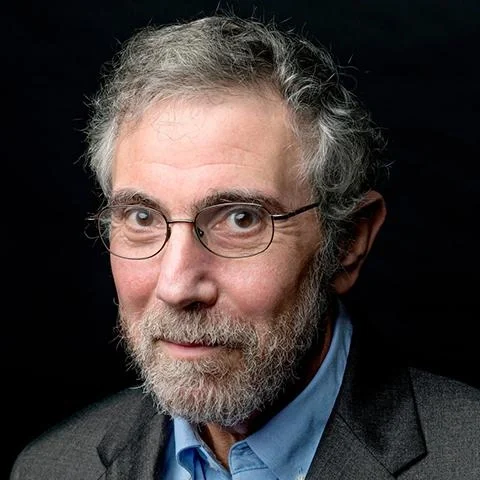
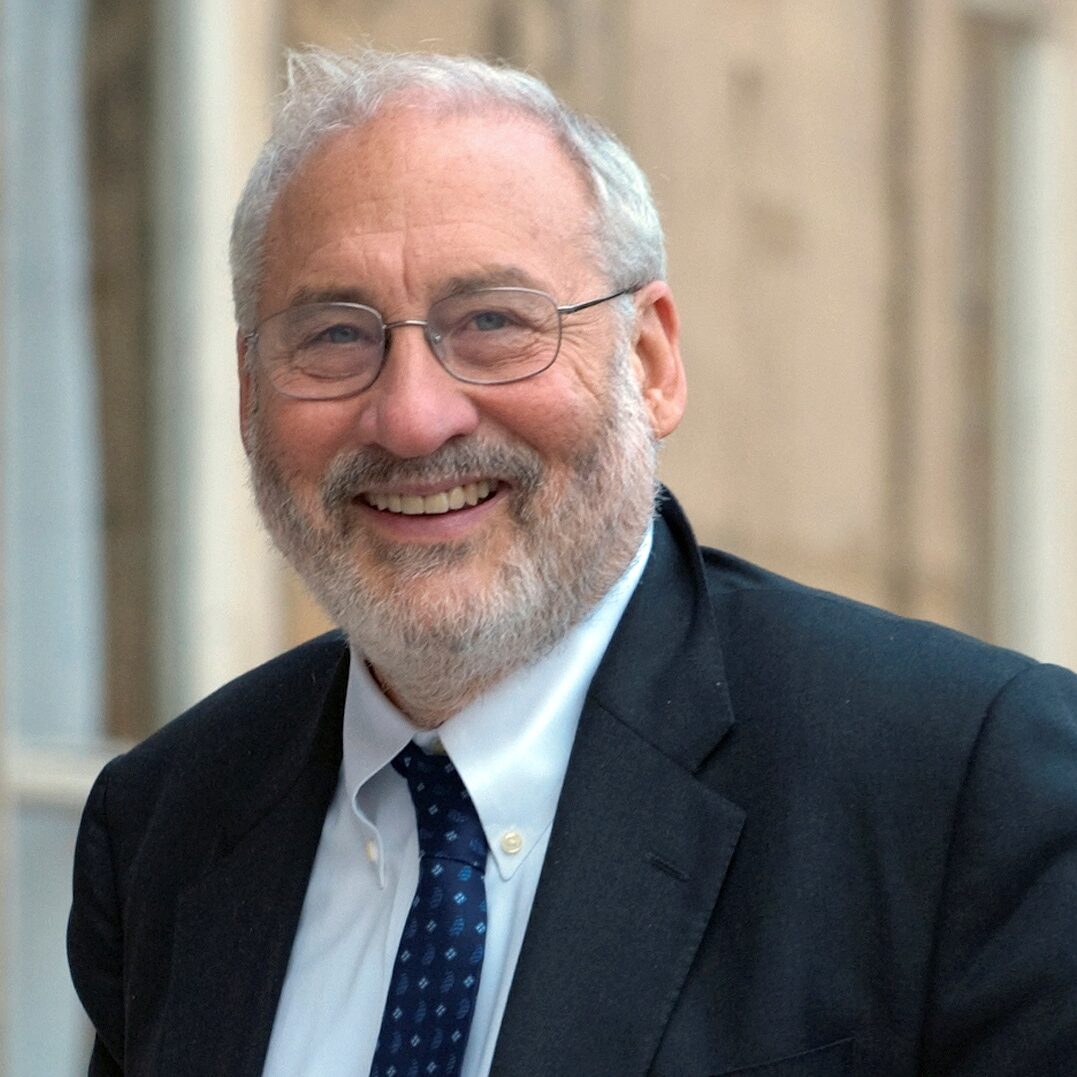
The Economic Policy Institute issued an open letter to the American people, written and co-signed by six economists who won the Nobel Prize.

They wrote:

As economists who have devoted our careers to researching how economies can grow and how the benefits of this growth can be translated into broadly shared prosperity and security, we have grave concerns about the budget reconciliation bill passed by the U.S. House of Representatives on May 22, 2025.

The most acute and immediate damage stemming from this bill would be felt by the millions of American families losing key safety net protections like Medicaid and Supplemental Nutrition Assistance Program (SNAP) benefits. The Medicaid cuts constitute a sad step backward in the nation’s commitment to providing access to health care for all. Proponents of the House bill often claim that these Medicaid cuts can be achieved simply by imposing work reporting requirements on healthy, working-age adults. But healthy, working-age adults are by definition not heavy consumers of health spending, so achieving the budgeted Medicaid cuts will obviously harm others as well.

Medicaid provides health insurance coverage for low-income Americans, but this includes paying out-of-pocket health costs for low-income retired Medicare recipients and providing nursing home and in-home care services for elderly Americans. Medicaid also covers 41% of all births in the United States, including over 50% of all births in Louisiana, Mississippi, New Mexico, and Oklahoma. Work reporting requirements will obviously yield no savings from these Medicaid functions.

Besides providing affordable health care to families, Medicaid is also crucial to state budgets and hospital systems throughout the country—particularly in rural areas. In 2023, the federal government sent $615 billion to state governments to cover Medicaid spending; this federal contribution accounted for over 75% of total state Medicaid spending in more than 19 states. Rural hospitals in states that accepted the Medicaid expansion that was part of the Affordable Care Act were 62% less likely to close than rural hospitals in non-expansion states.

In addition to Medicaid, the House bill also significantly cuts SNAP. These steep cuts to the social safety net are being undertaken to defray the staggering cost of the tax cuts included in the House bill, including the hidden cost of preserving the large corporate income tax cutpassed in the 2017 tax law. But even these sharp spending cuts will pay for far less than half of the tax cuts (not even including the cost of maintaining the corporate income tax cuts of the 2017 law).

U.S. structural deficits are already too high, with real debt service payments approaching their historic highs in the past year. The House bill layers $3.8 trillion in additional tax cuts ($5.3 trillion if all provisions are made permanent) on top of these existing fiscal gaps—and these tax cuts are overwhelmingly tilted toward the highest-income households. Even with the safety net cuts, the House bill leads to public debt rising by over $3 trillion in coming years (and over $5 trillion over the next decade if provisions are made permanent rather than phasing out). The higher debt and deficits will put noticeable upward pressure on both inflation and interest rates in coming years.

The combination of cuts to key safety net programs like Medicaid and SNAP and tax cuts disproportionately benefiting higher-income households means that the House budget constitutes an extremely large upward redistribution of income. Given how much this bill adds to the U.S. debt, it is shocking that it still imposes absolute losses on the bottom 40% of U.S households(if some of the fiscal cost is absorbed in future bills with extremely high and broad tariffs, the share of households seeing absolute losses will increase rapidly).

The United States has a number of pressing economic challenges to address, many of which require a greater level of state capacity to navigate—capacity that will be eroded by large tax cuts. The House bill addresses none of the nation’s key economic challenges usefully and exacerbates many of them. The Senate should refuse to pass this bill and start over from scratch on the budget.

Daron Acemoglu
MIT Economics

Peter Diamond
MIT Economics

Oliver Hart
Harvard University

Simon Johnson
MIT Sloan School of Management

Paul Krugman
Graduate Center, City University of New York

Joseph Stiglitz
Columbia University

Tim O’Brien is senior executive editor of Bloomberg Opinion News. He writes here about why it is dangerous to call Trump “TACO Trump,” a moniker given to him by Robert Armstrong of the Financial Times.

TACO means “Trump Always Chickens Out.” It refers to his brash statements about draconian tariffs, followed by his usual backing down and deferring them. It happened on “Liberation Day,” April 2, it happened with his shakedown of Canada and Mexico, then his latest occurred when he announced 50% tariffs on the EU and the very next day, postponed them until July 9.

O’Brien writes about Trump’s huge and fragile ego. Although he evaded the draft when he was draft-eligible, he needs to be perceived as strong, tough, fearless, and fierce. A super-hero. A warrior. A man with nerves of steel.

O’Brien has a long history with Trump. In 2006, he wrote a book about Trump called TrumpNation. In the book, he said that Trump was not a billionaire, that he was worth only $150-200 million. Trump sued him for $10 billion for defamation. The suit was tossed out in 2009.

Being called “chicken” makes Trump very angry, O’Brien says.

“That’s a nasty question,” he told a reporter who asked about the TACO moniker at a White House press briefing on Wednesday. “Don’t ever say what you said. That’s a nasty question. … To me, that’s the nastiest question.”

Trump, who fashions himself a brilliant dealmaker and strategist despite ample evidence to the contrary, is, of course, always going to bristle at the notion that he is a chicken — and a predictable one at that. He also routinely peddles himself as an infallible winner, so the nastiest question is also one that speculates about whether he’s mired in a losing streak. His tariff policy, unleashed on allies and competitors alike, has been rolled out on a seesaw and riddled with economically damaging ineptitude.

O’Brien says we must prepare for a Trumpian show of force. He must show the world that he is no chicken. Not Putin’s puppet! Not a chicken! Tough! Strong! Never chicken!

It’s hard to say what is the very worst thing Trump has done in the first few months of his second term.

Here’s my candidate: the cancellation of vast numbers of grants for medical research. There is simply no rationale for the way he has laid waste to scientific research–to those seeking the causes and cures for deadly diseases that afflict the lives of millions of people.

The New York Times provided a public service by creating a database of the medical research that has been terminated.

This link is a gift article, so you should be able to open it.

It contains interactive features that I cannot duplicate.

Thousands of grants have been canceled or put in indefinite hold. They include research about effective vaccines. The search for cures for different types of cancer.

In his first months in office, President Trump has slashed funding for medical research, threatening a longstanding alliance between the federal government and universities that helped make the United States the world leader in medical science.

Some changes have been starkly visible, but the country’s medical grant-making machinery has also radically transformed outside the public eye, a New York Times analysis found. To understand the cuts, The Times trawled through detailed grant data from the National Institutes of Health, interviewed dozens of affected researchers and spoke to agency insiders who said that their government jobs have become unrecognizable.

In all, the N.I.H., the world’s premier public funder of medical research, has ended 1,389 awards and delayed sending funding to more than 1,000 additional projects, The Times found. From the day Mr. Trump was inaugurated through April, the agency awarded $1.6 billion less compared with the same period last year, a reduction of one-fifth. (N.I.H. records for May are not yet comparable.)

The impacts extend far beyond studies on politically disfavored topics and Ivy League universities like Columbia or Harvard. The disruptions are affecting research on Alzheimer’s, cancer and substance use, to name just a few, and studies at public institutions across the country, including in red states that backed Mr. Trump.

Why? What is the rationale? Whose interest does this serve?

Did the voters give Trump a mandate to destroy medical research?

Rosa DeLauro (D-Connecticut) is one of the most effective members of Congress. She is pro-labor and pro-public schools.

Watch as she rips into Russ Vought, director of the powerful Office of Management and Budget and primary author of Project 2025.

Heather Cox Richardson demonstrates the negative effects of Elon Musk’s DOGS, which protected his interests and saved little, if any, money. With Trump’s “big, beautiful” tax plan, the deficit will increase by $4-5 trillion, so Musk’s chainsaw contributed nothing but demoralization and destruction of the federal workforce. She also summarizes the multiple ways in which Trump is sabotaging the rule of law. She includes footnotes, as usual. Subscribe to her blog to see them.

She writes:

In July 2024, according to an article published today by Kirsten Grind and Megan Twohey in the New York Times, billionaire Elon Musk texted privately about his concerns that government investigations into his businesses would “take me down.” “I can’t be president,” he wrote, “but I can help Trump defeat Biden and I will.”

After appearing on stage with Trump on October 5, Musk texted a person close to him: “I’m feeling more optimistic after tonight. Tomorrow we unleash the anomaly in the matrix.” About an hour later, he added: “This is not something on the chessboard, so they will be quite surprised. “‘Lasers’ from space.”

Musk invested about $290 million in the 2024 election and, when Trump took office, became a fixture in the White House, heading the “Department of Government Efficiency.” It set out to kill government programs by withholding congressionally approved funds, a practice that courts have ruled unconstitutional and Congress expressly prohibited with the 1974 Impoundment Control Act.

Musk vowed that his “Department of Government Efficiency” would cut $2 trillion from the U.S. budget, but he quickly backed off on those numbers. In the end, DOGE claimed savings of $175 billion, but that claim is unverifiable and CNN’s Casey Tolan says it’s probably wrong: less than half of it is backed up with any documentation.

Instead, as CNN’s Zachary B. Wolf reported today, since DOGE cut staffing at the enforcement wing of the Internal Revenue Service, for example, and cut employees at national parks, which also generate revenue, its cuts may well end up costing money. Max Stier, who heads the Partnership for Public Service, suggests DOGE cuts could cost U.S. taxpayers $135 billion because agencies will need to train and hire replacements for the workers DOGE fired. Stier called DOGE’s actions “arson of a public asset.”

Grind and Twohey reported that Musk’s drug consumption during the campaign—they could not speak to his habits in the White House, although he appeared high today at a White House press conference—was “more intense than previously known.” He was a chronic user of ketamine, took Ecstasy and psychedelic mushrooms, and traveled with a box that held about 20 pills for daily use. Those in frequent contact with him worried about his frequent drug use, erratic behavior, and mood swings. As a government contractor, Musk should receive random drug tests, but Grind and Twohey say he received advance warning of those tests.

It was never clear that Musk’s role at DOGE was legal, and the White House has tried to maintain that he was only an advisor, despite Trump’s February 19 statement, “I signed an order creating [DOGE] and put a man named Elon Musk in charge.” On Tuesday, U.S. District Judge Tanya Chutkan ruled that 14 states can proceed with their lawsuit against billionaire Elon Musk and the “Department of Government Efficiency,” saying the states had adequately supported their argument that “Musk and DOGE’s conduct is ‘unauthorized by any law.’”

Trump posted today on social media: “This will be his last day, but not really, because he will, always, be with us, helping all the way. Elon is terrific!” In a press conference today, Trump reiterated that Musk “is not really leaving.”

Musk’s time at the helm of DOGE might not have saved taxpayer money, but it has changed the world in other ways. Musk has used his time in the government to end investigations into his companies, score government contracts, and get the government to press countries to accept his Starlink communications network as a condition of tariff negotiations. According to John Hyatt of Forbes, Musk’s association with Trump has made him an estimated $170 billion richer.

The implications of DOGE’s actions for Americans are huge. DOGE operatives are now embedded in the U.S. government, where they are mining Americans’ data to create a master database that can sort and find individuals. Former Ohio Democratic Party chair David Pepper called it “a full-scale redirection of the government’s digital nervous system into the hands of an unelected billionaire.”

Today, Sheera Frenkel and Aaron Krolik of the New York Times reported that Musk put billionaire Peter Thiel’s Palantir data analysis firm into place across the government, where it launched its product Foundry to organize, analyze, and merge data. Thiel provided the money behind Vice President J.D. Vance’s political career. Wired and CNN had previously reported how the administration was using this merged data to target undocumented immigrants, and now employees are detailing their concerns with how the administration could use their newly merged information against Americans more generally.

Internationally, Musk’s destruction of the United States Agency for International Development, slashing about 80% of its grants, is killing about 103 people an hour, most of them children. The total so far is about 300,000 people, according to Boston University infectious disease mathematical modeller Dr. Brooke Nichols. Ryan Cooper of The American Prospect reported today that about 1,500 babies a day are born HIV-positive because Musk’s cuts stopped their mothers’ medication.

In the New York Times today, Michelle Goldberg recalls how Musk appeared uninterested in learning what USAID actually did—prevent starvation and provide basic healthcare—and instead called it a “radical-left political psy-op,” and reposted a smear from right-wing provocateur Milo Yiannopoulos calling USAID “the most gigantic global terror organization in history.” Goldberg also recalls Musk’s tendency to call people he disdains “NPCs,” or non-player characters, which are characters in role-playing games whose only role is to advance the storyline for the real players.

Aside from DOGE, the focus of Trump’s administration—other than his own cashing in on the presidency—has been on tariffs and immigration. Like the efforts of DOGE, those show a disdain for the law in favor of concentrating power in the executive branch.

During the campaign, Trump fantasized that constructing a high tariff wall around the U.S. would force other countries to fund the national deficit, enabling a Republican Congress to extend Trump’s 2017 tax cuts for the wealthy and corporations. In fact, domestic industries and consumers bear the costs of tariffs. Trump’s high tariffs, many of which he imposed by declaring an economic emergency and then using the 1977 International Emergency Economic Powers Act (IEEPA), created such havoc in the stock and bond markets that he backed off.

Yesterday, Sayantani Ghosh, David Gaffen, and Arpan Varghese of Reuters reported that although most of the highest tariffs have yet to go into effect, Trump’s trade war has cost companies more than $34 billion in lost sales and higher costs.

Trump has changed tariff policies at least 50 times since he took office, and traders have figured out they can buy stocks cheaply when markets plummet after a dramatic tariff announcement, and sell when Trump changes his mind. This has recently given rise to Trump’s nickname “TACO,” for “Trump Always Chickens Out.”

This moniker has apparently irritated Trump so much he has taken to social media to defend his abrupt dropping of tariffs on China, saying he did it to “save them” from “grave economic danger,” although in fact, China turned to other trading partners to cushion the blow of U.S. tariffs. Trump went on to suggest China did not live up to what he considered its part of the bargain, and he would no longer be “Mr. NICE GUY!”

On Wednesday a three-judge panel at the U.S. Court of International Trade ruled that President Donald J. Trump’s sweeping “Liberation Day” tariffs based on the IEEPA are illegal. The Constitution gives to Congress, not to the president, the power to levy tariffs. Trump launched a social media rant in which he attacked the judges, insisted that “it is only because of my successful use of Tariffs that many Trillions of Dollars have already begun pouring into the U.S.A. from other Countries,” and said that he could not wait for Congress to handle tariffs because it would take too long—in fact, most of Congress does not approve of the tariffs—and that following the Constitution “would completely destroy Presidential Power.” “The President of the United States must be allowed to protect America against those that are doing it Economic and Financial harm.”

Yesterday the U.S. Court of Appeals for the Federal Circuit paused that ruling until at least June 9, when both parties will have submitted legal arguments about whether the stay should remain in place as the government appeals the ruling that the tariffs are illegal. White House senior counsel for trade and manufacturing Peter Navarro, the key proponent of Trump’s trade war, said: “Even if we lose, we’ll do it another way.”

Today Trump said he will double the tariff on steel imports from 25% to 50%.

The other major focus of the administration has been expelling undocumented immigrants from the U.S. During the 2024 campaign, Trump whipped up support by insisting that former President Joe Biden had permitted criminals to walk into the U.S. and terrorize American citizens. Trump vowed to launch the “largest domestic deportation operation in American history” and often talked of deporting the estimated 11 million undocumented immigrants in the U.S., although his numbers have ranged as high as 21 million without explanation.

The administration has hammered on immigration to promote the idea that it is keeping Americans safe. But its first target of arresting at least 1,200 individuals a day has fallen far short. In Trump’s first 100 days, Immigration and Customs Enforcement says it arrested an average of about 660 people a day.

On Wednesday, White House deputy chief of staff Stephen Miller, who along with Secretary of Homeland Security Kristi Noem is the face of the administration’s immigration policy, told the Fox News Channel that the administration is now aiming for “a minimum of 3,000 arrests…every day.” Administration officials hope to deport a million people in Trump’s first year in office.

CNN reported yesterday that those officials are putting intense pressure on law enforcement agencies to meet that goal. This means that hundreds of FBI agents have been taken off terror threats and espionage cases involving China and Russia to be reassigned to immigration duties. Some FBI offices are offering overtime pay if agents help with “enforcement and removal operations.” Officers from other agencies, including the Bureau of Alcohol, Tobacco, Firearms, and Explosives (ATF) have also been deployed against immigrants in place of their regular duties.

Steven Monacelli of The Barbed Wire noted today that local law enforcement and state troopers have also been diverted to immigration, using a national network of cameras that read license plates. Joseph Cox and Jason Keobler of 404 Media reported yesterday that a Texas sheriff used the same system over the course of a month to look for a woman whom he said had a self-administered abortion, saying her family was worried about her safety.

Their attempt to appear effective has led to very visible arrests and renditions of undocumented migrants to prisons in third countries, especially the notorious CECOT terrorist prison in El Salvador. The administration has deliberately flouted the right of persons in the United States to due process as guaranteed by the Constitution. The administration has met court orders with delay and obfuscation, as well as by attacking judges and the rule of law.

The administration continues to insist those it has arrested are dangerous criminals who must be deported without delay, but more and more reporting says that many of those expelled from the country had no criminal convictions. Today, ProPublica reported that the Trump administration’s own data shows that officials knew that “the vast majority” of the 238 Venezuelans it sent to CECOT had not been convicted of crimes in the U.S. even as it deported them and called them “rapists,” “savages,” “monsters,” and “the worst of the worst.”

ICE has increasingly met quotas by arresting immigrants outside of immigration check-ins and courtrooms: yesterday Dina Arévalo of My San Antonio reported that ICE arrested five immigrants, including three children, outside of an immigration court after a judge had said they were no longer subject to removal proceedings. The officers used zip ties on all five individuals.

At stake is the turn of the United States away from democracy and toward the international right wing. Yesterday the U.S. State Department notified Congress that it intends to use the Bureau of Democracy, Human Rights, and Labor to promote “Democracy and Western Values.” On Tuesday a senior advisor for that bureau, Samuel Samson, who graduated from college in 2021, explained that the State Department intends to ally with the European far right to protect “Western civilization” from current democratic governments.

It also plans to turn the Bureau of Population, Refugees, and Migration, which manages the flow of people into the U.S., into an “Office of Remigration” to “actively facilitate” the “voluntary return of migrants” to other countries and “advance the president’s immigration agenda.”

“Remigration” is a term from the global far right. As Isabela Dias of Mother Jones notes, its proponents call for the “mass expulsion of non–ethnically European immigrants and their descendants, regardless of immigration status or citizenship, and an end to multiculturalism.” Of the congressional report, a person who works closely with the State Department told Marisa Kabas of The Handbasket: “All of it is pretty awful with some pieces that definitely violate existing law and treaties. But institutionalizing neo-Nazi theory as an office in the State Department is the most blatantly horrifying.”

This concept is behind not only the expulsion of undocumented immigrants, but also the purge of foreign scholars and lawful residents. The Supreme Court blessed this purge today when, during the period that litigation is underway, it allowed the administration to end immigration paroles for about 500,000 people from Cuba, Haiti, Nicaragua, and Venezuela admitted under a Biden-era program, instantly making them undocumented and subject to deportation.

The court decided the case on the shadow docket, without briefings or explanation. In a dissent joined by Justice Sonia Sotomayor, Justice Ketanji Brown Jackson wrote: “[S]omehow, the Court has now apparently determined…that it is in the public’s interest to have the lives of half a million migrants unravel all around us before the courts decide their legal claims.”

Jackson added a crucial observation. The court, she wrote, “allows the Government to do what it wants to do regardless [of the consequences], rendering constraints of law irrelevant and unleashing devastation in the process.”

Oliver Darcy is a media expert who reports on the media at his blog called Status. He here writes about the unwarranted jubilation of rightwing pundits who believe that their relentless attacks on Biden’s cognition were correct after all. This turns out to be a useful topic for them right now as Trump is hoovering up all the cash he can handle from his profitable dealings in real estate, bitcoin, cryptocurrency, and other lucrative deals.

When you compare the two, it’s clear that Biden’s presidency was unblemished by corruption or scandal. The unemployment rate was low, inflation was dropping, and relationships with our allies in Europe, Canada, Mexico, and Asia were strong. The Economist said that the American economy was “the envy of the world.”

Now we are locked, as Rahm Emanuel wrote in The Washington Post, in a state of chaos, corruption, and cruelty. Every government agency has been ripped apart by Elon Musk’s DOGS, and our democracy is turning into an imperial presidency. Trump has assembled a Cabinet of billionaires and FOX News personalities. From day to day, we wonder which government responsibility will be cast aside.

I don’t know what Biden’s mental state was. But I liked his government far more than Trump’s cruel autocracy.

Darcy writes:

For years, right-wing media pushed a warped narrative of Joe Biden as a brain-dead puppet controlled by sinister, shadowy forces. Now they’re demanding vindication—but they do not deserve it.

Over the last week, Jake Tapper and Alex Thompson’s new book, “Original Sin,” has landed with a flurry of attention-grabbing headlines—not just for the reporting, but for what Tapper has said during the press tour. In an interview with Megyn Kelly on Tuesday, Tapper declared that “conservative media was right and conservative media was correct” about Joe Biden’s mental state. 

But that’s not quite true. Or rather, it simplifies a much more nuanced media and political reality. While it’s fair to argue that the press should have covered Biden’s age with greater urgency—and to acknowledge that Biden clearly lost a step during his presidency—that’s a far cry from validating the deeply irresponsible narrative right-wing media spun for years: that the president of theUnited Stateswas a mentally incapacitated puppet with dementia, unaware of his own surroundings, and propped up by a “shadow government” running the country in his name. 

That was never journalism. It was propaganda. Full stop.

Since the early days of the 2020 campaign, MAGA Media figures—particularly on Fox News—lobbed increasingly absurd claims about Biden’s mental faculties. They painted him as a senile old man who didn’t know what day it was, who couldn’t walk unaided, and who spent his presidency dozing off while Barack Obama or Ron Klain or some other shadowy liberal elite force secretly ran the country behind closed doors.

This wasn’t grounded in evidence. It wasn’t the result of deep reporting or careful observation. It was pure narrative warfare—an attempt to delegitimize Biden not just as a candidate but as a commander-in-chief. And the coverage became so cartoonish at times that no amount of fact-based reporting about Biden could pierce the right-wing media bubble.

None of this is to deny that Biden was aging. He was. By the end of his term, it was obvious to those around him—and to many voters—that he lacked the energy he once had. Even Democratic operatives privately acknowledged that he didn’t have his fastball anymore. But there’s a world of a difference between an 80-something president, who has always been prone to gaffes, showing his age and a man secretly suffering from debilitating dementia or worse. And conflating the two, as Fox News and its allies routinely did, wasn’t just misleading—it was malicious.

Yes, Biden’s debate performance on CNN was troubling. Yes, the press should have been more aggressive in scrutinizing his capacity to serve a second term. But reporters who refrained from joining the right-wing media hysteria were not negligent or part of a cover-up—they were simply cautious. They understood the weight of diagnosing a president with a serious neurodegenerative disorder without hard evidence. And they understood the cost of being wrong, particularly asDonald Trump ran on an authoritarian-like platform that he is now implementing in office.

MAGA Media’s goal was never honest diagnosis. It was political demolition. They weaponized Biden’s verbal gaffes, his slower gait, and his lower-energy demeanor to manufacture the idea that he was mentally vacant. Never mind that Biden managed the job without the chaos and confusion that has markedTrump’s second term. No matter what Biden did—whether it was biking, traveling, or delivering speeches—the same echo chamber smeared him with the same predictable attacks.

That wasn’t journalism. It was performance. And it came from people like Kelly and Sean Hannity, who weren’t doing reporting at all. They weren’t gathering facts. They were throwing mud, hoping some of it would stick. And in many corners of the country, it did.

That’s what makes the current revisionism so maddening. Now, with Tapper and Thompson’s book pointing to Biden’s visible decline, MAGA Media figures are claiming vindication. They’re demanding apologies from journalists who didn’t amplify their dementia narrative—insisting, once again, that they were “right all along.” 

It’s reminiscent of how right-wing media rewrote history around Robert Mueller’s Russia probe or the COVID-19 pandemic: flattening complexity, cherry-picking facts, and pretending their worst-faith speculation was truth from the start.

But they weren’t right. They were irresponsible. They didn’t try to understand what was happening behind the scenes—they invented a version of it that was politically convenient. And just because Biden aged, and struggled in the final days of his presidency, doesn’t make their years of bad-faith character assassination suddenly noble. Notably, while they maligned Biden, they let Trump—a man prone to deranged rants and wild conspiracy theories—off the hook entirely.

Biden didn’t have a perfect presidency, and his age became an unavoidable liability. But he was not an empty shell of a man, either. He governed. He made decisions. He passed legislation. And he did it while under constant attack from a media machine that acted not as a watchdog—but as an attack dog.

No one owes that dishonest machine an apology.

Trump is a petty man who is filled with rage, grievance, and a passion for retribution. His current target is Harvard University because the nation’s most prestigious university told him no. Harvard’s President Alan Garber said it would not allow the federal government to control its curriculum, its admissions, and its hiring policies. No.

Every Cabinet department has pulled research grants to Harvard. Now he warns he might turn the billions that were going to medical and scientific research and hand it over to trade schools.

He would rather stop researchers who are trying to find cures for cancer, tuberculosis, Alzheimer’s, multiple sclerosis, and other diseases than back down on his efforts to stifle academic freedom and his vendetta against Harvard.

I don’t know about you, but I would rather see the federal government fund the search for a cure for MS than withdraw the funding. If he wants to fund trade schools, why should he do so at the expense of crucial research?

He wrote on Truth Social yesterday:

“I am considering taking Three Billion Dollars of Grant Money away from a very antisemitic Harvard, and giving it to TRADE SCHOOLS all across our land,” Trump said in a post on social media. “What a great investment that would be for the USA, and so badly needed!!!”

Meanwhile, Trump dreamed up another way to harass Harvard during the hours when he couldn’t get to sleep. He demanded that Harvard give him a list containing the names and countries of origin of all its foreign students. Harvard has nearly 7,000 foreign students. Why? What will he do with those names? Will he say they are spies and try again to expel them? Funny thing is he already has all their names and countries. They were registered when they applied for a visa. It’s all a campaign of endless vengeance by a petty, bitter man.

If someone asked you which of Trump’s policies was the most catastrophic, what would you say? His personal attacks on law firms that had the nerve to represent clients he didn’t like? His unleashing of ICE to threaten and arrest people who have committed no crime? His efforts to intimidate the media? His assault on free speech, freedom of the press, and academic freedom? His blatant disregard for the Constitution?

All of these are horrible, despicable, and vile.

Yet one of his grievances burns deeper than the other. This is his contempt for science.

His first show of irrational hatred for science was his selection of the utterly unqualified Robert F. Kennedy Jr. as Secretary of Health and Human Services. He is a conspiracy theorist with no experience in science or medicine. RFK has been a one-man wrecking crew.

Then he used his authority to close down university research centers. These centers are working on cures for the most intractable diseases: cancer, ALS, Alzheimer’s, and more.

Why does Trump hate science? Is it another facet of his ongoing hatred for knowledge, the arts, culture?

Fareed Zakaria of CNN gives a good overview.

Watch.