Archives for category: Democracy

I am reposting this news because the earlier version did not have a link. I added additional information about the decision and the Judge.

This decision blocks all efforts to ban diversity, equity, and inclusion programs in the state of Mississippi. If ever there was a state that needs DEI to heal from the burden of a racist history, it’s Mississippi.

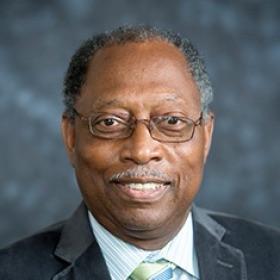
The Mississippi Free Press reported that Federal District Judge Henry Wingate blocked the implementation of the state’s ban on diversity, equity, and inclusion programs in public schools.

Mississippi’s ban on diversity, equity and inclusion programs in public schools remains blocked after a federal judge granted the plaintiffs’ request for a preliminary injunction in an Aug. 18 decision.

The U.S. District Court for the Southern District of Mississippi also denied the defendants’ requests to dismiss the case, calling the defendants’ points “moot.”

“This Court generally agrees with Plaintiffs’ view of the challenged portions of (House Bill 1193).

It is unconstitutionally vague, fails to treat speech in a viewpoint-neutral manner, and carries with it serious risks of terrible consequences with respect to the chilling of expression and academic freedom,” U.S. District Court Judge Henry Wingate wrote in the Court’s decision.

The law, which the Mississippi Legislature approved and Gov. Tate Reeves signed in April, prohibits Mississippi public schools and institutions of higher learning from teaching, creating or promoting diversity, equity and inclusion programs. The Republican-backed law also bans schools from requiring diversity statements or training during hiring, admission and employment processes in educational institutions.

Public institutions are also not allowed to teach or “endorse divisive concepts or concepts promoting transgender ideology, gender-neutral pronouns, deconstruction of heteronormativity, gender theory (or) sexual privilege,” the law says.

H.B. 1193 would prohibit public schools from requiring diversity statements or training in hiring, admission and employment processes at educational institutions.

Preliminary injunctions are dependent upon four qualities: “a substantial likelihood of success on the merits; the irreparable injury to the movants if the injunction is denied; whether the threatened injury outweighs any damage that the injunction might cause the defendant; and the public interest.”

Wingate Highlights Threat to Academic Freedom

Judge Wingate also granted the plaintiffs’ request to add class action claims to the lawsuit, meaning the injunction will apply to teachers, professors and students across the state. The plaintiffs’ lawyers sought the addition after a U.S. Supreme Court ruling in June limited the ability of federal judges to grant sweeping injunctions.

Judge Wingate was born in Jackson, Mississippi. He graduated from Grinnell College in Iowa and received his law degree from Yale Law School. He was appointed as a federal district judge by President Ronald Reagan.

Justice Henry Wingate

The far-right has always hated bilingual education. They think everyone should speak English, and those who don’t should be deported.

The Trump administration is setting the stage to eliminate bilingual education. This move is of a piece with their plan to deport millions of hard-working, honest immigrants who strengthen the economy.

Their goal is to restore a nation that is dominated by white straight Christian men, with a few white Christian women like Pam Bondi in leadership roles, and to banish any programs that help people improve their lot. That’s what MAGA means: a return to the “good old days” when power was in the hands of people like Trump.

The Washington Post reported:

The Trump administration has quietly rescinded long-standing guidance that directed schools to accommodate students who are learning English, alarming advocates who fear that schools will stop offering assistance if the federal government quits enforcing the laws that require it.

The rescission, confirmed by the Education Department on Tuesday, is one of several moves by the administration to scale back support for approximately 5 million schoolchildren not fluent in English, many of them born in the United States. It is also among the first steps in a broader push by the Trump administration to remove multilingual services from federal agencies across the board, an effort the Justice Department has ramped up in recent weeks.

The moves are an acceleration of President Donald Trump’s March 1 order declaring English the country’s “official language,” and they come as the administration is broadly targeting immigrants through its deportation campaign and other policy changes. The Justice Department sent a memorandum to all federal agencies last month directing them to follow Trump’s executive order, including by rescinding guidance related to rules about English-language learners.

Since March, the Education Department has also laid off nearly all workers in its Office of English Language Acquisition and has asked Congress to terminate funding for the federal program that helps pay for educating English-language learners. Last week, education advocates noticed that the guidance document related to English learning had a new label indicating it was rescinded and remains online “for historical purposes only.”

On Tuesday, Education Department spokeswoman Madi Biedermann said that the guidance for teaching English learners, which was originally set forth in 2015, was rescinded because it “is not in line with Administration policy.” A Justice Department spokesman responded to questions by sending a link to the July memorandum and said he had no comment when asked whether the guidance would be replaced.

For decades, the federal government has held that failing to provide resources for people not proficient in English constitutes discrimination based on national origin under Title VI of the Civil Rights Act.

In rescinding the guidance, the Trump administration is signaling that it may stop enforcing the law under that long-standing interpretation. The Education and Justice departments have been responsible for enforcing the law….

“The Department of Education and the Department of Justice are walking away from 55 years of legal understanding and enforcement. I don’t think we can understate how important that is,” said Michael Pillera, an attorney who worked at the Education Department’s Office for Civil Rights for 10 years and now directs the Educational Opportunities Project at the Lawyers Committee for Civil Rights.

Without pressure from the federal government to comply with the law, it is possible that some school districts will drop services, Pillera said, particularly as many districts struggle with financial pressures.

Please watch. I am sorry this clip appears on Instagram. If anyone can find an independent link, please add. It is a powerful speech that reminds me what it’s like to have an intelligent, articulate national leader. That makes me sad.

https://www.instagram.com/reel/DNiok7rx5sW/?igsh=OWkyZ294NHRoM3Zs

In this post, Peter Greene continues his coverage of a teacher in West Ada, Idaho, who got into trouble for putting up a poster that showed different colored hands in the air and said “Everyone is Welcome Here.” District leaders said the poster was unwelcome because it violated federal guidelines that banished DEI, and had to be removed. Some didn’t object to the sentiment but objected to the portrayal of nonwhite hands.

Greene wrote:

Sarah Inama has put her poster up in a new classroom.

Inama, you may recall, is the 6th grade world history teacher told by her district bosses at West Ada School District that her “Everyone Is Welcome Here” poster, complete with hands of many human shades, would not be tolerated in the district.  (I’ve been following this here, here, and here). West Ada is the largest district in Idaho, but their treatment of Inama has been spectacularly awful, both from an Awful Display of Racism standpoint, a Grotesque Mistreatment of Staff standpoint, and a Boneheaded PR Management standpoint. 

Inama went to local news and the story blew up, delivering the shame that West Ada so richly deserved. We know a lot more thanks to some stellar reporting by Carly Flandro and the folks at Idaho Ed News, who FOIAed 1200 emails surrounding this and showcasing the board’s stumbling response. You should read the resulting stories (here and here). 

The day after Inama was on the Today show, the district issued a memo entitled “Ensuring a Consistent and Supportive Learning Environment.” They decided to go with sports analogies. The Chief Academic Officer is a like a referee who enforces rules “to ensure a fair and level playing field.” And there’s this howler–

If one player decided to wear a different uniform, use a different-sized ball, or ignore the rules, the game would lose its structure, creating confusion and imbalance.

Then a report from BoiseDev that the Board of Trustees is considering making every teacher put up an “Everyone is welcome” poster– just without those multi-colored hands. Responding to BoiseDev, a district spokesperson explained:

Regarding the Everyone is Welcome Here posters, the district determined that while the phrase itself is broadly positive, certain design elements have been associated over time with political entities and initiatives that are now subject to federal restriction.

Inama told Idaho EdNews, “That’s appeasing not a political view, but a bigoted view that shouldn’t even be considered by a public school district.”

Inama was told the poster was divisive, that it was “not neutral,” that the problem was not the message, but the hands of v arious skin tones. Teachers shouldn’t have political stuff in the classroom. Inama nails the issue here

“I really still don’t understand how it’s a political statement,” she said. “I don’t think the classroom is a place for anyone to push a personal agenda or political agenda of any kind, but we are responsible for first making sure that our students are able to learn in our classroom.”

Some parents and students showed up at school to make chalk drawings in support. And yet many folks within and outside the district saw this as a divisive issue. How could anyone do that? Meet district parent Brittany Bieghler, who was dropping her kids off the day that parents were chalking the “Everyone is welcome here” message on the sidewalks.

“The ‘Everyone is Welcome’ slogan is one filled with marxism and DEI, there is no need for those statements because anyone with a brain knows that everyone is welcome to attend school, so there is no need to have it posted, written or worn on school grounds,” she wrote. “My family and I relocated here from a state that did not align with our beliefs and we expected it to be different here, but it seems as time goes by, its becoming more like our former state, which is extremely disheartening.”

“Anyone with a brain” might begin to suspect that everyone is not welcome here under these circumstances. And the school board itself couldn’t decide what to respond, drafting an assortment of emails that tried to show conciliation to those that were defiant and defensive, including one complaining in MAGA-esque tones that Inama was naughty for going to “new media.”

Imana resigned from her position, and by June the word was out that she was a new hire at Boise Schools. She told Idaho Ed News, 

I’m so grateful to be able to work within a district that knows the beauty of inclusion and diversity and doesn’t for a second consider it an opinion but embraces it. As an educator, it’s an amazing feeling to know your (district’s) officials, board, and administrators fully uphold the fundamentals of public education and (have) the dignity to proudly support them. I really feel at home knowing we are truly all on the same team … and that’s a team that is rooting on all of our students.

Damned straight. And just last week, as reported by KTVB news, Inama posted video of herself putting up an “Everyone is welcome here” poster in her new classroom.

(To see the video, open the link.)

So the story ends well for Inama, and that’s a great thing. This is the sort of boneheaded administrative foolishness that can drive teachers out of the profession. The unfortunate part of the story is that up the road in West Ada schools, the administration, board and a non-zero number of parents think that challenging racism is bad and saying that students of all races are welcome in school is just one person’s opinion that shouldn’t be expressed openly in a school. Shame on West Ada.

Thom Hartmann is outraged. Trump proclaimed that he would issue an executive order banning mail-in voting. Why? Because Putin told him that mail-in voting caused him to lose the 2020 election. Republicans know that they will lose control of the House and possibly the Senate unless they can suppress the vote or redistrict, as they are in Texas, drawing lines that squeeze out Democrats.

Hartmann wrote:

Yesterday, Donald Trump crossed another line that no president in our history has ever dared p to touch. With the echo of Vladimir Putin’s whisper in his ear, in front of President Zelenskyy and seven other European leaders, Trump announced he’s preparing an executive order to ban mail-in ballots and even outlaw voting machines across America ahead of the 2026 midterm elections. 

Sitting in front of the Chancellor of Germany and the Prime Minister of Great Britain, — both nations that allow and even encourage mail-in voting — Trump said:

“Mail-in ballots are corrupt mail-in ballots. You can never have a real democracy with mail-in ballots, and we as a Republican Party are gonna do everything possible that we get rid of mail-in ballots. We’re gonna start with an executive order that’s being written right now by the best lawyers in the country to end mail-in ballots because they’re corrupt. And, you know that we’re the only country in the world, I believe, I may be wrong, but just about the only country in the world that uses it because of what’s happened.”

This is not just a partisan maneuver. It’s an open assault on the Constitution, a grotesque power grab, and a direct threat to the foundation of democracy itself. And it’s happening in real time, in broad daylight, with a criminally compliant Republican Party cheering him on. 

Republicans hate mail-in voting for multiple reasons.

First, for people who’re paid by the hour, mail-in voting increases participation because they can fill out their ballots at the kitchen table after work. Republicans don’t want people to vote, and have introduced over 400 pieces of legislation in the past three years nationwide to make voting more difficult. 

Second, mail-in voting makes voters better informed and less vulnerable to sound-byte TV ads because, while perusing that ballot at the kitchen table, they can look up candidates on their laptops and get more detail and information. Republicans hate informed voters and rely heavily on often-dishonest advertisements to swing voters. 

Third, mail-in ballots — because they arrive in the mail weeks before the election — give voters an early chance to discover if they’ve been the victim of Republican voter-roll purges, one of their favorite tactics to pre-rig elections. 

Fourth, mail-in ballots end the GOP trick of understaffing and underresourcing polling places in minority neighborhoods, leading to hours-long lines. Hispanic voters generally wait 150% longer than white voters, and Black voters must endure a 200% longer wait; mail-in ballots put an end to this favorite of the GOP’s voter suppression efforts. 

Trump, knowing all this, couldn’t help himself yesterday, finally blurting out his real reason for wanting to end mail-in voting in America:

“We got to stop mail-in voting, and the Republicans have to lead the charge. The Democrats want it because they have horrible policy,” Trump proclaimed. “If you [don’t] have mail-in voting, you’re not gonna have many Democrats get elected. That’s bigger than anything having to do with redistricting, believe me.”

Once again, Trump is ignoring the law and the Constitution, which explicitly delegates the administration of elections to the states and Congress, not presidential executive orders.

That’s not some vague norm or debatable tradition: it’s written into the very DNA of our system of government. States set the rules, unless Congress — not the president — overrides them. States decide how their citizens vote, as the Constitution’s Article I, Section 4, Clause 1 dictates:

“The Times, Places and Manner of holding Elections for Senators and Representatives, shall be prescribed in each State by the Legislature thereof; but the Congress may at any time by Law make or alter such Regulations, except as to the Places of chusing Senators.”

Yet here we have a president declaring that he alone will dictate the terms of elections nationwide, in direct violation of two centuries of law and precedent. This is not only unconstitutional, it’s tyrannical. 

When a president asserts powers he does not have, with the full knowledge that they aren’t his to wield, he’s announcing to the country that the rule of law no longer constrains him. That’s the definition of dictatorship.

And what makes this even more obscene is the source of Trump’s inspiration. According to multiple reports, Trump’s sudden rant on mail-in ballots followed a private conversation with Vladimir Putin, who reportedly told him that mail-in voting was the reason he lost in 2020.

The man occupying the Oval Office is now taking advice about how to rig American elections from the very dictator who has spent his career poisoning journalists, jailing opponents, and staging sham referendums to annex entire countries. 

It’s bad enough that Trump has always been Putin’s toady, but now we see the Kremlin effectively writing U.S. election law. If Jefferson, Madison, or Lincoln were alive to hear this, they would spit.

Mail-in voting is not a scam. It’s not a trick. It’s how tens of millions of Americans — Republicans, Democrats, independents — exercise their right to vote. 

Seniors rely on it. People with disabilities rely on it. Military service members overseas rely on it. Hourly workers who can’t take a day off rely on it. Parents with young children rely on it. Rural voters, who often live miles from polling places, rely on it. 

And every study, every audit, every bipartisan commission has found mail-in voting to be secure, safe, and reliable. Five states do it exclusively; we’ve had it more than two decades here in Oregon with nary a single scandal or problem. To call it fraudulent is a lie. To ban it is voter suppression on a scale this country has never seen.

And voting machines? Trump is openly declaring that he’ll return us to mind-numbingly slow hand-counting of ballots, a tactic straight from the authoritarian playbook designed to create chaos, delays, and endless opportunities to dispute the results in 2026 and 2028. 

I’ve had concerns about voting machines and Windows-based tabulators for decades, but my solution isn’t to end them. Instead, we should use machines owned by the government itself, generating paper ballots and operating transparently on open-source software with every election subject to sample audits. 

Instead of trying to make elections more secure, Trump’s laying the groundwork for election theft in plain sight. This isn’t subtle: it’s the loud declaration of a man preparing to overturn the will of the voters, with the blessing of a foreign adversary, and with a Republican Party too craven to object.

If Trump succeeds in outlawing mail-in ballots and voting machines, millions of Americans will simply not be able to vote. Seniors in nursing homes, service members abroad, people with disabilities, single parents, rural citizens: they will all be disenfranchised overnight. And make no mistake: that’s the point. 

This is not about integrity. This is not about security. This is about shrinking the electorate to a size that Republicans believe will guarantee them victory forever.

Republicans know they can’t win free and fair elections in much of America. They know their policies are unpopular. They know their agenda is toxic. 

So they cheat. They gerrymander districts into grotesque shapes that make a mockery of representative government. They purge voters from the rolls. They criminalize voter registration drives. They intimidate voters at the polls. 

And now, at Trump’s command and Putin’s urging, they want to ban the very methods by which millions of Americans vote. This is not politics as usual. This is the slow-motion strangulation of democracy.

Every American who believes in self-government must rise up against this. Governors must prepare to defy such an executive order in court and in practice. State legislatures must assert their constitutional authority. 

Attorneys general must be ready to sue. And ordinary citizens must take to the streets, the phones, the ballot box, and every civic space available to declare that this will not stand. Because if it does, we’ll have surrendered the very essence of the American experiment.

We’ve been here before in spirit if not in form.

Reagan’s campaign cut a deal with the Iranian Ayatollahs to hang onto the hostages until after the election. Richard Nixon tried to sabotage our democracy by killing LBJ’s peace negotiations with Vietnam and followed-up with burglaries and cover-ups when he thought Democrats were onto him. He was forced to resign. George W. Bush and the GOP stopped the counting of votes in Florida and handed the presidency to themselves. That assault has scarred our politics for decades. 

But never — not once in 250 years — has a president openly declared that he will strip states of their constitutional right to run elections, end mail-in voting, and ban voting machines altogether. This is unprecedented, authoritarian, and it must be stopped.

It’s also just one in a broad spectrum of attacks Republicans have launched against your right to vote, with the SAVE Act — which will prevent women from voting if their birth certificate and drivers’ license have different names on them and they’ve never had an official change-of-name in the courts — teed up in the US Senate. All while millions are being purged from the voting rolls as you read these words.

This is the moment when the American people must decide whether they still believe in democracy. If we shrug, if we accept this as just more noise from a corrupt and broken con man, we will lose it. If we wait for someone else to act, we will lose it. If we tell ourselves the courts will save us, we may be bitterly disappointed. 

The survival of democracy has never been guaranteed. It has always required vigilance, courage, and action. Now it requires all three from each of us.

Trump’s promised executive order is not just a legal maneuver. It’s a declaration of war against the American people. It’s the dream of every tyrant: to control who votes and who does not, to dictate the rules of elections so that the outcome is predetermined. 

What Putin and Trump are proposing is not democracy. It’s not freedom. It’s not America.

And the Republicans who are enabling this treachery are as guilty as Trump himself. They’re betraying their oaths, their constituents, and our country. History will remember them not as conservatives or patriots, but as the gravediggers of our Republic.

This is the line. This is the moment. We cannot let Trump and his cronies bulldoze democracy into the ground at Putin’s command. Every patriot, every progressive, every independent, every honest conservative who still believes in the Constitution must join together and say no. 

No to dictatorship. No to disenfranchisement. No to treason.

If we fail now, there may not be another chance.
Oliver Darcy is a media insider who left CNN to write his own blog, Status. There he posts the scoop on what is happening behind the headlines.

Darcy writes that the latest discouraging developments at The Washington Post. Once a force for courageous and independent journalism, its owner Jeff Bezos is transforming it, and not in a good way. The exodus of its best journalists, editorial writers, and opinion writers has been sad.

It’s getting worse.

The Post’s slogan is: “Democracy dies in darkness.” The lights are going out in the newsroom.

Darcy reports:

Last month, as The Washington Post weathered an exodus of staffers opting for buyouts, Karen Attiah logged on to X with an observation: “So… officially, I’m the last Black staff columnist left in the Washington Post’s opinion section,” the award-winning journalist wrote. (Technically, Keith Richburg and Theodore Johnson remain as contributing columnists.) At the time, Attiah was still deciding whether to accept The Post’s voluntary exit package or remain at the embattled Jeff Bezos–owned newspaper. 

Soon after, I’m told that Attiah sat down with Adam O’Neal, The Post’s newly installed opinion editor. As Status previously reported, O’Neal had been holding similar one-on-one meetings with columnists, delivering what sounded to many like a human resources–approved talking point: their work didn’t align with his vision for the section and they should consider taking the buyout. 

O’Neal likely assumed Attiah would follow the path of most colleagues who heard the same pitch and head for the door. Attiah, for her part, may have been hoping for the opposite, that he’d affirm her value and express a desire to keep her. In any case, neither scenario materialized. The meeting, I’m told, was tense and went poorly, to put it mildly.

Ultimately, Attiah declined the buyout. Just last week, she published a column on how she gained 20 pounds of muscle, framing bodybuilding as a “deeply feminine act of self-consciousness.” Still, her future at The Post looks uncertain. As O’Neal indicated during their meeting, her work seems at odds with its emerging editorial direction, and it’s hard to imagine she’s long for his world.

Indeed, while O’Neal’s vision for the newspaper’s opinion arm has been remarkably opaque, this week delivered a few clues about the direction he seeks to take it. On Tuesday, O’Neal published two pieces from Trump administration officials. The first, by National Institutes of Health director Jay Bhattacharya, argued that the Health and Human Services decision to “wind down its mRNA vaccine development activities” was a “necessary” move—a stance that I’m told triggered reader blowback.

The second was more eyebrow-raising. Amid alarm over Donald Trump’s seizure of Washington, D.C.’s police force, O’Neal published an op-edfrom former Fox News host–turned–district attorney Jeanine Pirro, touting “the fight to make D.C. safe and beautiful.” The piece effectively justified Trump’s militarization of the capital and painted the city as a crime-infested area. While not quite as incendiary as Tom Cotton’s infamous New York Times op-ed calling to “send in the troops,” its timing and framing were jarring for a paper that still claims “Democracy Dies in Darkness.”

The Post’s own editorial board followed up with a curious piece that largely took Trump’s stated intentions at face value. It noted that crime in the city can’t be solved “from the Oval Office or by swarming the city’s streets with Humvees,” but offered no real condemnation of Trump’s power grab. Instead, it effectively argued that Trump’s action would not work as a permanent solution because it “will be temporary” and “long-term solutions will be needed.” Further, the piece framed Trump as merely delivering on a “law-and-order message” to voters—again, a tone in line with the posture O’Neal appears to favor.

“They are turning The Post into a mouthpiece for the Trump administration,” one former opinion editor commented to me Wednesday evening, adding that such editorials would not have been published under previous section chiefs.

Beyond the editorials, O’Neal’s internal standing is murky, according to people familiar with the matter. He’s pushed out much of the previous leadership and a number of marquee columnists, but the people familiar have told me that many of those remaining still view him with skepticism. The sentiment is unsurprising, given that during his brief stint at The Dispatch, his abrasive leadership style prompted staffers at the conservative magazine to complain within weeks of his appointment to management. In fact, I’ve since learned that he was instructed at The Dispatch to undergo leadership training to address concerns about his management style.

Of course, Bezos is unlikely to care how the existing staff responds to O’Neal, just as he hasn’t seemed bothered by how much disdain there is for publisher Will Lewis within the newspaper’s K Street halls. For now, staffers like Attiah now face a stark choice: adapt to O’Neal’s vision or risk their future in the opinion section. Either way, The Post’s opinion pages are headed for certain transformation.

What a betrayal of the legacy of the Graham family, especially Kathryn Graham, who considered the Post a sacred trust and believed that Bezos would be a responsible steward of its integrity.

A Trump-appointed judge overturned the Trump administration’s ban on policies of diversity, equity and inclusion in schools and colleges, according to Collin Binkley of the AP. Will her ruling stand?

WASHINGTON (AP) – A federal judge on Thursday struck down two Trump administration actions aimed at eliminating diversity, equity and inclusion programs at the nation’s schools and universities.

In her ruling, U.S. District Judge Stephanie Gallagher in Maryland found that the Education Department violated the law when it threatened to cut federal funding from educational institutions that continued with DEI initiatives.

The guidance has been on hold since April when three federal judges blocked various portions of the Education Department’s anti-DEI measures.

The ruling Thursday followed a motion for summary judgment from the American Federation of Teachers and the American Sociological Association, which challenged the government’s actions in a February lawsuit.

The case centers on two Education Department memos ordering schools and universities to end all “race-based decision-making” or face penalties up to a total loss of federal funding. It’s part of a campaign to end practices the Trump administration frames as discrimination against white and Asian American students.

The new ruling orders the department to scrap the guidance because it runs afoul of procedural requirements, though Gallagher wrote that she took no view on whether the policies were “good or bad, prudent or foolish, fair or unfair.”

Gallagher, who was appointed by President Donald Trump, rejected the government’s argument that the memos simply served to remind schools that discrimination is illegal.

“It initiated a sea change in how the Department of Education regulates educational practices and classroom conduct, causing millions of educators to reasonably fear that their lawful, and even beneficial, speech might cause them or their schools to be punished,” Gallagher wrote.

Democracy Forward, a legal advocacy firm representing the plaintiffs, called it an important victory over the administration’s attack on DEI.

“Threatening teachers and sowing chaos in schools throughout America is part of the administration’s war on education, and today the people won,” said Skye Perryman, the group’s president and CEO.

The Education Department did not immediately comment on Thursday.

The conflict started with a Feb. 14 memo declaring that any consideration of race in admissions, financial aid, hiring or other aspects of academic and student life would be considered a violation of federal civil rights law.

The memo dramatically expanded the government’s interpretation of a 2023 Supreme Court decision barring colleges from considering race in admissions decisions. The government argued the ruling applied not only to admissions but across all of education, forbidding “race-based preferences” of any kind.

“Educational institutions have toxically indoctrinated students with the false premise that the United States is built upon ‘systemic and structural racism’ and advanced discriminatory policies and practices,” wrote Craig Trainor, the acting assistant secretary of the department’s Office for Civil Rights.

A further memo in April asked state education agencies to certify they were not using “illegal DEI practices.” Violators risked losing federal money and being prosecuted under the False Claims Act, it said.

In total, the guidance amounted to a full-scale reframing of the government’s approach to civil rights in education. It took aim at policies that were created to address longstanding racial disparities, saying those practices were their own form of discrimination.

The memos drew a wave of backlash from states and education groups that called it illegal government censorship.

In its lawsuit, the American Federation of Teachers said the government was imposing “unclear and highly subjective” limits on schools across the country. It said teachers and professors had to “choose between chilling their constitutionally protected speech and association or risk losing federal funds and being subject to prosecution.”

Trump and Putin are meeting Friday in Alaska to discuss Ukraine. Ukrainian leader Zelensky was not invited, nor were any representatives of Europe. Trump will hear Putin’s grievances and claims. He will hear no other. After Russia intensified its drone bombing of Ukrainian civilian targets, Trump demanded a ceasefire. Putin ignored him. He gave his a deadline of 50 days (!) to stop the attacks. Putin intensified the attacks. Then Trump said the deadline was 10-12 days. That was two weeks ago. Putin got a face-to-face meeting with Trump on American soil, and his war against Ukraine goes on.

Timothy Snyder is one of the nation’s pre-eminent historians of Europe. He taught at Yale University for many years, but decided to accept an offer to teach at the University of Toronto after Trump was re-elected in 2024. He is the author of many books, including the national bestseller On Tyranny.

Snyder writes:

In the ancient world, people spoke of “Ultima Thule,” a mythical land in the extreme north, the end of the earth.

By venturing north to Alaska to meet Vladimir Putin, Donald Trump reaches his own Ultima Thula, the arctic endpoint of a foreign policy dreamworld.

The premise of Trump’s foreign relations is that foreign leaders can be dealt with like Americans, with fantastic promises and obnoxious bullying.

The fantasies do not function beyond America’s borders. The empty offer of a “beautiful” future does move dictators who commit crimes for their own visions, or affect people who are defending their families from a criminal invasion.

Ukraine has been resisting Russia’s full-scale invasion for three and a half years. Ukrainians fight because Russians invade their land, steal their wealth, kidnap their children and raise them as Russians, torture civilians in basements, murder people with any sort of association with politics or civil society, and destroy their sovereignty.

Putin, for that matter, has his own vision of a beautiful future, and no reason to prefer Trump’s to his own. Putin’s utopia is one of a Ukraine with no government, with a population cowed by torture, with children stolen and brainwashed, with patriots murdered and buried in mass graves, with resources in Russian hands.

Like Trump’s fantasizing, Trump’s bullying also does not work abroad. To be sure, many Americans are afraid of Trump. He has purged his own political party through stochastic violence. He is deploying the US military as a police force, first in California and then in Washington DC.

But foreign enemies apprehend these intimidation tactics differently. In Moscow, deployments of soldiers inside the United States look like weakness. Trump is signalling that he sees the task of the US military as to oppress unarmed Americans. The very move that shocks Americans delights America’s foes.

The tough talk may resonate in America, where we confuse words with actions. But for Russian leaders it covers a weak foreign policy. Trump has made extraordinary concessions to Russia in exchange for nothing at all. Russia has repaid him by continuing the war and seeking to win it — and by laughing at Trump on state-controlled television.

What are those concessions? Just by meeting Putin in Alaska, Trump gives the Russian dictator a chance to spread his own story of his invasion of Ukraine, both to the Americans around Trump and to the American press. By shaking hands with an indicted war criminal, Trump signals that the killings, the tortures, the kidnapings do not matter. 

Even the choice of Alaska is a concession, and an odd one. Russians, including major figures in state media, routinely claim Alaska for Russia. As one of Putin’s special envoys put it, Putin’s journey to Alaska is a “domestic flight.”

Inviting people who claim your territory inside your main military base on that territory to discuss a war of aggression they started without any participation of the country they invaded — well, that is just about as far as a certain logic of fantasy can go. It is Ultima Thule.

It is Ultima Thule, the very end, because Trump has already conceded the more fundamental issues. He does not speak of the need for justice for Russian war criminals, or of the need for Russia to pay reparations. The Trump administration grants that Russia can determine Ukraine’s and America’s foreign policy on the crucial point of NATO membership. They have accepted that Russia’s invasions should lead not only to de facto but also de jure changes in sovereign control over territory.

It would take a longer essay to explain how senseless these concessions are. Accepting that invasion can legally change borders undoes the world order. Granting Russia the right to decide the foreign policy of others encourages further aggression by Russia. Dropping the obvious legal and historical responses to criminal wars of aggression — reparations and trials — encourages war in general.

Trump speaks loudly and carries a small stick. The notion that words alone can do the trick has led Trump to the position that Putin’s words matter, and so he must go to Alaska for a “listening exercise.” Trump’s career has been full of listening to Putin, and then repeating what Putin says.

Trump and Putin are moved by the future perception of their greatness. Putin believes that this can be achieved by war, and an element of this war is the manipulation of the American president. Trump believes that this can achieved by being associated with peace, which, so long as he is unwilling to make policy himself, puts him in the power of the warmaker.

northern lights

Putin is not moved to end the war when his own propaganda is repeated by the president of the United States. He cannot be enticed by a vague vision of a better world, since he has in mind his own very specific atrocity.

In Alaska, Trump reaches his personal Ultima Thula, the limits of his own personal world of magical talk. 

He faces a very simple issue: will Putin accept an unconditional ceasefire or not.

Putin has refused any such thing. The Russians propose an obviously ridiculous and provocative counter: that Ukraine should now formally concede to Russia territory that Russia does not even occupy, lands on which Ukraine has built its defenses. And then Russia can of course attack again, from a far better position. 

Putin knows that Trump wants the Nobel Peace Prize. And so Putin’s obvious move is to suggest to Trump that war will end someday, and Trump will get the credit, if the two of them just keep talking (and while Russia keeps bombing).

If Trump leaves Alaska without Putin having agreed to an unconditional ceasefire, there are two paths that Trump can take. He can continue the fantasy, though it will become ever more obvious, even to his friends and supporters, that the fantasy is Putin’s.

Or Trump can make the policy that will make the war harder for Putin, and thereby bring its end closer.

The United States has not formalized its outlandish concessions to Russia, and could take them back in one press conference. The United States has the policy instruments to change the direction of the war in Ukraine, and could employ them.

Trump has threatened “serious consequences” if Putin does not accept an unconditional ceasefire. Those are words, and thus far the consequences of Trump’s words, for Russia, have been more words. This all becomes clear now, at Ultima Thule, clear to everyone. 

When Trump reaches the border of his fantasy world, what is his next step? Where will he go after Ultima Thule?

Jess Piper lives on a farm in rural Missouri. She taught English literature for 16 years, then decided to run for the legislature even though her district is ruby-red. Since then, she has been organizing, agitating, encouraging Democrats to run for office in every district. It annoys her that Democrats don’t even put up candidates in districts, so many voters have no choice. She was a speaker at the last conference of the Network for Public Education in Columbus, Ohio, and she was wonderful. Oh, yes, she’s a big presence on TikTok.

She wrote on her blog:

Have you ever seen a bucket with live crabs in it? It’s fascinating to watch. I’ve seen it a few times when I visited the coast and stood to watch fishermen on the piers.

A fisherman can pull up crabs all day long and leave them in a bucket. He won’t have to babysit the bucket. 

The crabs won’t let any of their own escape. As soon as one starts to find a place to pull itself up, another crab will grab it and pull it back down into the bucket. The creatures are stuck there not because there is no way out, but because they won’t let another crab try to get out.

No matter how long you watch in amazement and horror, the crabs are caught in a game that never stops. One crab gets high enough to grab the outer part on the bucket only to be pulled back by the others.

Like a circle of hell…round and round for eternity. Dante style.

It turns out, some people aren’t much better than crabs.

You have likely heard of the crab in the bucket mentality, but if you haven’t, here’s the gist: it’s the mindset of people who try to prevent others from gaining a favorable position, even if attaining such position would not directly impact those trying to stop them. 

Every crab for itself. It’s jealousy and envy and spite.

If I can’t have it, neither can you. And if you try to get it, I will pull you back down.

The GOP mindset in two sentences.

It used to be a little less pronounced than it is now — I don’t know many Trump supporters who are happy these days even though they got every thing they’ve ever wanted and more. The crabs in a bucket mentality has only gotten worse. 

Bitterness and cruelty are the point. The resentment Republicans show to people who aren’t like them is so ingrained in the party, that I don’t know that I need to expand on that point. They hate with a viciousness that seems to have no bounds.

A Trump supporter yells at counter-protesters outside of the U.S. Supreme Court during the Million MAGA March in Washington. Credit: Caroline Brehman.

Trump supporters, and most Republicans, have a problem with others getting ahead or even making progress. Look at the way the regime is dismantling public education and civil rights and women’s healthcare and even programs for the most oppressed and marginalized groups. 

Attacks on public education are meant to keep poor kids off the playing field. The fact that states like Missouri have defunded schools for so many years that 33% of schools are running a 4-day week is evidence. Almost every 4-day week school district is in a defunded rural area. 

The fact that my state is now 50th in educational funding while finding millions in taxpayer money to send to private religious schools is another piece of evidence.

If you try to better yourself through education, they will attempt to pull you back down into the bucket. 

The crab mentality.

Why would I care if someone is gay and wants to marry? What has that got to do with me or my marriage? Nothing. Why would I ever interfere with the love two other people have for each other? Why would I stand in the way? 

I wouldn’t, but many Republicans would. It would seem they think letting others get married keeps them down…in the bucket.

If a person feels they were born the wrong gender and wants to express their own gender differently, why would I have anything to say about that? It’s not my body and it’s not my business. Why would I stand in the way of trans rights or anyone’s ability to get the healthcare that helps them realize their happiness?

I wouldn’t, but many Republicans would. It would seem like letting a trans kid play soccer makes them uncomfortable and keeps them down…in the bucket.

If someone is religious, and it’s not my religion, what would that have to do with me? If they worship in a church or a synagogue or a mosque, why would I have any say about that and how in the world would that impose any restrictions on my own religion or non-religion?

It wouldn’t, but many Republicans think it does. It would seem letting other people make up their own minds about their own faith makes them feel less than and keeps them down…in the bucket.

This mentality is not contained to one party, though. Democrats do it as well. 

Ask me how I know…

I ran for office in ‘22. I called the party to ask for help, they told me, “you can’t win.” Okay, I know I am not at all likely to flip a seat that no Democrat has won in three decades, but why is “you can’t win” the first thing the party would tell a rural person standing up in a red district?

I wonder if this quip has caused others to decide against running?

I ran anyway. I ran hard. I did everything I could to at least show up for the people, listen to folks, and make a difference. I raised almost 275K in a ruby red district. That’s nearly unheard of.

I signed up to walk in parades and have booths at fairs. My team knocked over 1,000 doors and we called about that many numbers. We cleaned up the VAN data that had not been recorded for years.

That was work I did for free for the party, but I was getting too much attention and some of the crabs weren’t happy. I needed to be pulled back down into the bucket.

From Missouri Democratic politico Jeff Smith:

Others might argue that Jess Piper’s energetic state House campaign in northwest Missouri, which has already raised over a quarter million dollars this cycle, is another counterexample showing Democrats’ commitment to branching out beyond the two major metros.

That’s an extraordinary fundraising haul for any rural House candidate, especially a Democrat in an un-winnable district. Piper has leveraged all available social media tools by tweeting, Tik Tok-ing and Instagramming her way to raise more than any other Democratic House candidate.

In fact, the last two fundraising reports show Piper with more cash on hand than the entire House Democratic Campaign Committee.

But, I suspect, instead of deploying a significant portion of her financial haul in large chunks to 4 or 5 swing districts where she could have a decisive impact and help her party gain seats — perhaps even helping position herself to chair the party next cycle — she’ll instead spend it to close her margin from 30 to perhaps 20 points.

See what he did there? 

How dare I run in a rural race and expect to win? How dare I circumvent the party’s expectations? How dare I raise money in a red district because it’s not worth it and I can’t win anyway. How dare I not send donor money to the party or to others who might win an easier race in an easier district.

How dare I attempt to get out of the bucket and pull my community out with me?

We can easily recognize the crabs in the other party, but we need to examine what we do as well. We need to step away from jealousy and greed and pride and spite. 

We can’t make progress by pulling others down. We can’t win by keeping others from rising above their condition.

Help those pulling themselves up and they will reach back down and help the others still stuck. 

It’s the only way.

~Jess

Donald Trump hates higher education. He hates education. He loves “the poorly educated.” Of course. It is the poorly educated who believe his lies. They vote against their self-interest when they vote for him. The poorly educated vote for a tax break for billionaires. The poorly educated vote to eliminate their own health insurance.

Trump’s vendetta against elite universities punishes them and extracts huge fines, which were asserted, never proven. He is swaggering about his ability to bring down universities that would never have admitted him.

Where is the money going? The Boston Gkobe reports:

With Harvard University’s negotiations with the Trump administration still underway, the White House’s recent deals with other elite institutions suggest the nation’s oldest university may have to pay a large sum of money to make its problems go away.

Columbia University and Brown University in the last month both came to arrangements with the White House that involved paying millions of dollars and making a wide swath of changes in order to restore billions in lost research funding and end ongoing investigations and lawsuits. 

The Trump administration proposed a $1 billion settlement with UCLA, several news outlets reported Friday, after freezing more than $500 million in federal funds to the school last week.

Both deals with the Ivy League schools came as they faced complaints they had allowed antisemitism to proliferate on campus during protests against the war in Gaza, as well as allegations they had discriminated against students via diversity-related policies and programs. 

Neither Brown nor Columbia in their agreements admitted any wrongdoing — something Harvard has indicated in court fights with the federal government it is also unwilling to do.

The measures the schools adopted to get the government off their backs differ wildly.

Both Columbia and Brown are paying millions to resolve their disputes

Columbia agreed to pay about $200 million to the US Treasury Department over the next three years, as well as another $21 million to address alleged civil rights violations of its Jewish employees. 

Congress will then have the power to appropriate those funds — though it’s unclear what they will be used for.

In exchange, Columbia will receive many of the research grants the government had previously canceled as early as March, and resolve violations of the law alleged by the federal government. The administration had frozen “the majority” of the school’s $1.3 billion in federal funding, Columbia’s president said.

Brown, meanwhile, pledged to give $50 million to state workforce development organizations in Rhode Island that are “operating in compliance with anti-discrimination laws” over the next 10 years, avoiding making a direct payment to the Trump administration. 

In exchange, the federal government would restore Brown’s funding — the government had put about $510 million on hold — and close all pending investigations over Brown’s compliance with anti-discrimination laws.

The schools agreed to other changes

Columbia agreed to implement an outside monitor to oversee whether it was complying with the changes it had promised the government, such as to reform disciplinary measures for student protesters and remove diversity-related policies.

Brown said it would not perform gender-affirming surgeries on minors — which Brown’s medical school has never done — or prescribe puberty blockers. It adopted the Trump administration’s definitions of “male” and “female,” sparking outrage among current and former students who say that change harms transgender and nonbinary students who are excluded from those definitions.

The two schools also took different approaches to addressing antisemitism: Columbia’s measures included adopting a controversial definition of antisemitism and a review of its programs related to the Middle East. Brown, meanwhile, said it would commit resources to support programs related to Jewish students, as well as conduct a campus climate survey in 2025 that would include information about the climate for Jewish students on campus.

Both schools also said they would share admissions data about applicants’ standardized test scores and grade point averages, as well as demographic data such as their race. On Thursday, the administration made that a requirement of all schools that receive federal aid.

Neither agreement, however, appeared to place any restrictions on what or how the school teaches, avoiding infringement on academic freedom many critics of the Trump administration had feared.

The schools negotiated under different circumstances

Many critics of Trump’s war on higher education viewed Brown’s agreement to invest in local education as more aligned with its mission as a university, rather than simply paying a fine for the government to use as it sees fit. Some have also voiced concerns the implementation of an outside monitor at Columbia could allow the federal government to infringe on its independence, despite the deal they had reached.

The arrangements reflect differences in the amount of pressure the administration had applied to each school, down to the number of pages in the deal — Columbia’s deal was 22 pages long, while Brown’s was nine.

Columbia had seen among the most high-profile protests against the war in Gaza and was the first institution to face government sanctions, beginning in March with the cancellation of more than $400 million in funding. The federal government has since found it in violation of civil rights law for allegedly acting with “deliberate indifference” to harassment of Jewish students.

The administration’s investigation into Brown’s alleged civil rights violations, however, was ongoing at the time the deal was struck.

What the Trump deals could mean for Harvard

The Trump administration has quickly touted each agreement as a victory. Secretary of Education Linda McMahon called the Columbia settlement a “roadmap for elite universities” and President Trump declared on Truth Social “woke is officially DEAD at Brown” after announcing that deal.

Still, some worry any agreement with the administration only opens the door to further coercion if the federal government finds something else it doesn’t like at any of the schools it is dealing with.

Trump and his allies have long seen Harvard, the nation’s wealthiest university, as its best opportunity to influence higher education and have aimed to force an agreement by canceling more than $3 billion in funding, threatening international students’ statuses, and levying a number of civil rights complaints against the school. 

In response, the school has put up the most forceful legal and public relations fight against the federal government, meaning any agreement it reaches could reverberate further than that of its peers.