Archives for category: Curriculum

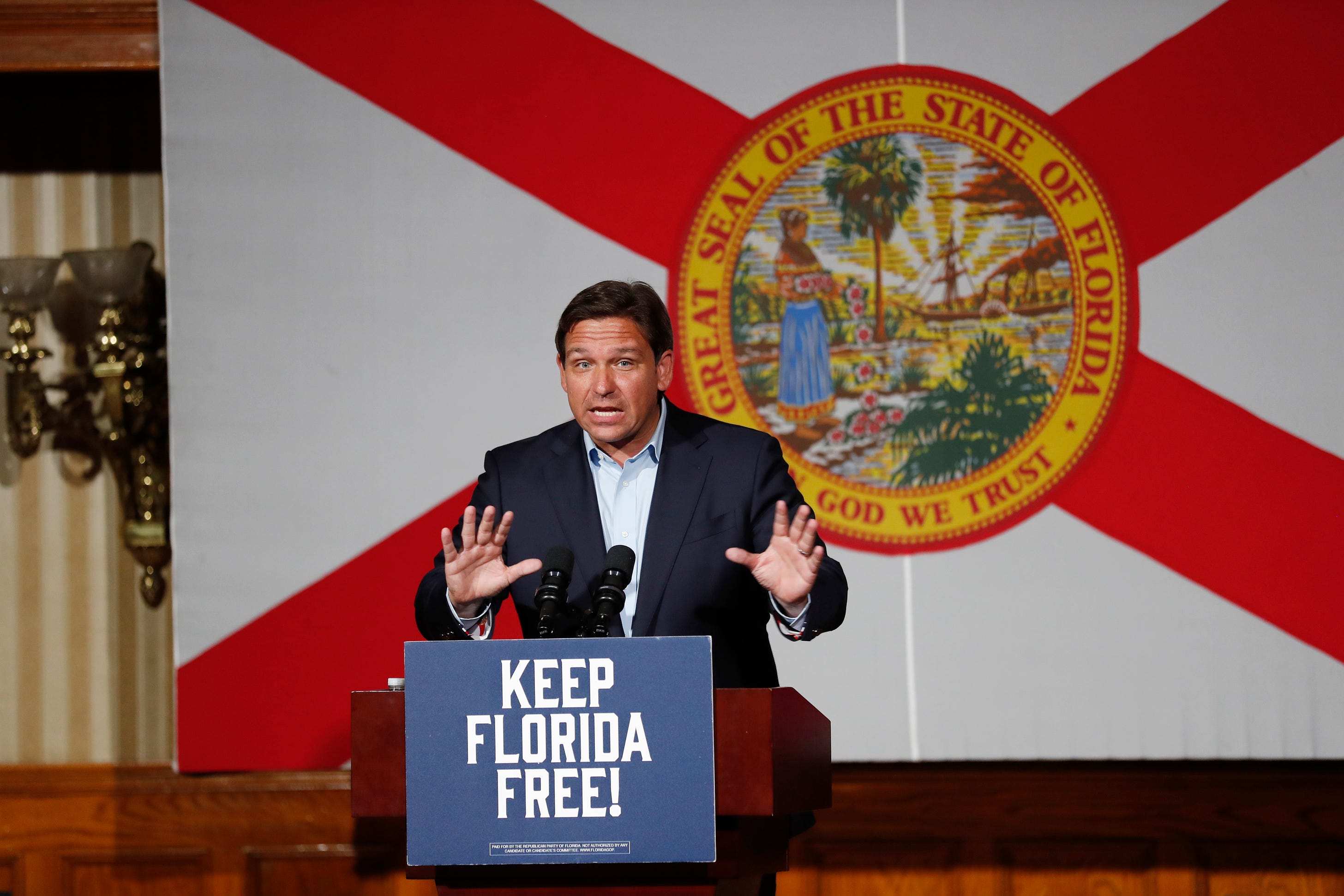
I wrote today’s 9 a.m. post about the College Board capitulating to conservative critics. I wrote it without seeing the revised curriculum because I was in an airplane all day. Late last night, I opened an email and discovered that Michael Hiltzik of the Los Angeles Times had written a similar but more informative column, because he was able to do the comparison that I had not done. He pointed out that the rightwing attacks on the AP African American Studies course began in September, and the very names and topics that the right and DeSantis had condemned were either excised or made optional in the revised course.

He wrote:

One might have expected a leading national educational institution to have the gumption to push back against right-wingers like Florida Gov. RonDeSantis when they try to stick their noses into decisions about how to teach important subjects.

Sadly, no.

On Wednesday, the College Board issued its final curriculum for what should have been a ground-breaking high school course in African American studies. The College Board called the course “an unflinching encounter with the facts and evidence of African American history and culture.”

The final curriculum appears suspiciously to have been tailored to objections raised by DeSantis, Florida’s culture warrior Republican governor, and other right-wingers, after the board issued a draft version in December.

DeSantis, through his secretary of Education, called the draft “inexplicably contrary to Florida law” and forbade its use in Florida schools. The state’s education secretary, Manny Diaz Jr., attacked it for being “filled with Critical Race Theory and other obvious violations of Florida law.”

The arch-conservative National Review labeled the course part of “a new and sweeping effort to infuse leftist radicalism into America’s K–12 curriculum.”

The curriculum is part of College Board’s Advanced Placement program, which gives college-bound high schoolers exposure to university-level coursework.

The board says AP courses are “aimed at enabling students to develop as independent thinkers and to draw their own conclusions.”

To be fair, the board’s actions related to the African American Studies course are as good a workshop in allowing students to draw their own conclusions as one might hope. Any reasonably bright AP student is likely to see this affair as a demonstration of abject cowardice.

Disgustingly, the College Board released the final curriculum on the first day of Black History Month, as though trawling for praise for its unflinching devotion to truth. The board took pains to deny that the alterations in the draft curriculum had anything to do with criticism from DeSantis, the National Review or the right wing generally.

“No states or districts have seen the official framework that is released, much less provided feedback on it,” the board said. “This course has been shaped only by the input of experts and long-standing AP principles and practices.”

Raise your hand if you believe the College Board. Me neither.

The board said the final version had been completed in December. DeSantis issued his rejection of the course on Jan. 19. But criticism of the course outline had been circulating in conservative quarters for months — the National Review’s attack, for instance, was published on Sept. 12.

A preliminary, unflinching examination of the differences between the draft and the final version can only raise suspicions that the College Board refashioned the African American studies course to assuage the conservatives.

State Senator Manny Diaz Jr. posted a tweet on January 20 listing the state’s concerns about the AP course.

As a template, let’s use the list of “concerns” issued by Diaz on Jan. 20.

Diaz complained about the inclusion in the draft curriculum of writers and social activists Kimberlé Crenshaw, Angela Davis, Roderick Ferguson, Leslie Kay Jones, bell hooks , and Robin D.G. Kelley. Every single one of them has been excised from the final version.

Diaz’s list objected to the treatment, or even inclusion, of topics including the reparation debate, movements such as Black Lives Matter, Black Queer studies and “intersectionality,” which places racism and discrimination in a broadly social context.

Those topics have all been downgraded from required topics to “sample project topics” — that is, optional topics that fall outside requirements and won’t appear on the AP test. Those topics, the curriculum says, “can be refined by states and districts.”

Here’s a safe bet: None of them will be taught in Florida schools.

DeSantis has made no secret of his determination to turn Florida education into a shallow pool redolent of white supremacy by avoiding any hint that American society and politics have been infused with racism and class discrimination.

The shame of the College Board’s rewriting of its AP course is that it effectively places DeSantis and his henchmen in the position of dictating educational standards to the rest of the country.

There was scant political pushback against DeSantis when he rejected the draft curriculum, other than a letter from Illinois Gov. JB Pritzker, a Democrat, warning the College Board that his state would “reject any curriculum modifications designed to appease extremists like the Florida Governor and his allies.”

Pritzker observed, properly, that “ignoring and censoring the accurate reporting of history will not change the realities of the country in which we live.” (Like DeSantis, Pritzker is being talked up as a potential presidential candidate in 2024.)

Now that the final curriculum has been published and its dilutions can be closely scrutinized, perhaps the scope of the College Board’s capitulation will become clearer.

But the College Board has already flunked this all-important test of character. As we’ve noted before, acts of cowardice in the face of DeSantis’ goonish bullying won’t appease him, but will only encourage him.

As he works to destroy the independence and quality of the Florida K-12 and university systems, parents elsewhere around the country can take perverse satisfaction in knowing that students will emerge from Florida schools without the skill to compete with their own kids in intelligent society.

But if institutions like the College Board continue to let DeSantis transmit his virus of ignorance beyond Florida’s borders, no one will be safe from the contagion.

When I first had a chance to read the College Board’s AP African American Studies syllabus, I predicted that the College Board was likely to beat a hasty retreat if its bottom line was jeopardized. I have not yet seen the revised edition, but the media is reporting that certain hot topics and prominent names were deleted to make the course palatable to Ron DeSantis and other conservative governors.

The New York Times reported:

After heavy criticism from Gov. Ron DeSantis, the College Board released on Wednesday an official curriculum for its new Advanced Placement course in African American Studies — stripped of much of the subject matter that had angered the governor and other conservatives.

The College Board purged the names of many Black writers and scholars associated with critical race theory, the queer experience and Black feminism. It ushered out some politically fraught topics, like Black Lives Matter, from the formal curriculum.

And it added something new: “Black conservatism” is now offered as an idea for a research project.

This last addition was a direct concession to criticism from the conservative National Review, which assailed the AP course as Neo-marxist indoctrination that left out the voices of African American conservative writers and scholars.

The Times’ story continues:

But the study of contemporary topics — including Black Lives Matter, incarceration, queer life and the debate over reparations — is downgraded. The subjects are no longer part of the exam, and are simply offered on a list of options for a required research project.

And even that list, in a nod to local laws, “can be refined by local states and districts.”

The expunged writers and scholars include Kimberlé W. Crenshaw, a law professor at Columbia, which touts her work as “foundational in critical race theory”; Roderick Ferguson, a Yale professor who has written about queer social movements; and Ta-Nehisi Coates, the author who has made the case for reparations for slavery. Gone, too, is bell hooks, the writer who shaped discussions about race, feminism and class.

After the curriculum was released, Professor Crenshaw said that even if her name and others had been taken out of the curriculum because secondary sources — theorists or analysts — were being eliminated in favor of facts and lived experience, the decision sent a troubling message. “I would have made a different choice,” she said. “Even the appearance of bowing to political pressure in the context of new knowledge and ideas is something that should not be done.”

But she said she was also disappointed because she had believed the course would capitalize on a hunger of young students to learn “ways of thinking about things like police brutality, mass incarceration and continuing inequalities.”

Instead, she said, “the very same set of circumstances that presented the need for the course also created the backlash against the content that people don’t like.”

David Blight, a professor of American history at Yale University, said Wednesday that he had written an endorsement of the new curriculum, at the College Board’s request, and that he believed it had much to offer not just about history but also about Black poetry, art and the origins of the blues, jazz and hip-hop. But he withdrew his endorsement on Wednesday, after learning that some sections had been cut.

“I withdrew it because I want to know when and how they made these decisions to excise these people, because that’s also an attack on their academic freedom,” Dr. Blight said.

PEN America, a free speech organization, echoed that concern. While the College Board had said the changes were not political, the board “risked sending the message that political threats against the teaching of particular types of content can succeed in silencing that content,” said Jeremy C. Young, senior manager of free expression and education at PEN America…

Dr. Gates, who was a consultant to the curriculum, said he was “sorry that the College Board’s policy is not to require secondary sources in its curricula.” He teaches Harvard’s introduction to African American studies, “and academic subjects such as ‘Intersectionality’ and critical race theory, the 1619 Project, reparations for slavery, Black homophobia and antisemitism are fair game, of course, for such a class,” he said in an email. The 1619 Project is an initiative by The New York Times.

The College Board insists it made its changes in December before DeSantis denounced the syllabus.

But the conservative attack on the syllabus began last September, when Stanley Kurtz received a leaked copy and wrote a scathing critique in The National Review called “Neo-Marxing the College Board with AP African American Studies.”

He wrote in September:

A new and sweeping effort to infuse leftist radicalism into America’s K–12 curriculum has begun. The College Board — the group that runs the SAT test and the Advanced Placement (AP) program — is pilot-testing an AP African American Studies course. While the College Board has withheld the course’s curriculum framework from the public, I have obtained a copy.

Although K–12 teachers and academic consultants working with the College Board have publicly denied that AP African American Studies (APAAS) either pushes an ideological agenda or teaches critical race theory, those denials are false. APAAS clearly proselytizes for a socialist transformation of the United States, although its socialism is heavily inflected by attention to race and ethnicity. Even if there were no laws barring such content, states and local school districts would have every right to block APAAS as antithetical to their educational goals. In any case, APAAS’s course content does run afoul of the new state laws barring CRT. To approve APAAS would be to gut those laws.

Kurtz followed with additional articles in The National Review lambasting the course as radical leftist indoctrination that violated state laws prohibiting the teaching of critical race theory. He applauded DeSantis’s attack on the course.

Although the College Board insisted that it’s revisions had nothing to do with the conservative pushback and was completely nonpolitical, Kurtz laughed:

Here’s the reality. The College Board is in a panic. Its repeated attempts to keep the APAAS curriculum secret have failed. That curriculum has now been widely published, and the teacher’s guide has been exposed here at NRO as well. My sources tell me that at least one other red state is seriously considering pulling out of the course. More red states are likely doing the same. The College Board knows that if it doesn’t stop the bleeding, the red states will be lost.

The College Board knew it had a problem months before DeSantis condemned the course. Could it take the risk of offering a course that would be rejected by red states that had already banned “critical race theory?”

The Times pointed out:

Acceptance for the new curriculum is important to the College Board, a nonprofit, because A.P. courses are a major source of revenue. The board took in more than $1 billion in program service revenue in 2019, of which more than $490 million came from “AP and Instruction,” according to its tax-exempt filing.

The College Board is a nonprofit but it pays hefty salaries. According ito Forbes, its Chief Executive Officer David Coleman (the architect of the Common Core standards) was paid $1.8 million in salary in 2018 (the last year that figures were available), and its president received more than $1 million. The company holds over $1 billion in assets.

Could they risk publishing a course that might be rejected by every red state? Maybe. But would they? Clearly, it was decided that it was easier to drop the controversial names and topics than to offend powerful conservative figures who might hurt their revenues.

Keith Benson is a teacher in Camden, New Jersey. He is also President of the Camden Educators Association, an author, and a member of the board of the Network for Public Education. He wrote the following article for the Newark Star-Ledger. He reminds us that when Republican governors and ideologues talk about “parental rights,” they assume that only white parents have parental rights. Black parents too have parental rights, and black and white and Latino and Asian students—all students— have the right to learn accurate, factual history.

To make sense of America’s fixation with the (non)existence of critical race theory (CRT) in schools and the ways by which CRT became a partisan flashpoint, we must consider this phenomenon as a contemporary manifestation of what Emory University professor Carol Anderson calls, “white rage.”

With corporate news media refusing to unequivocally point out that CRT, a complex legal theory, is not taught in K-12 schools but is taught in some graduate schools of education and law schools, allowed predominantly white grievants and Republican politicians to shapeshift CRT into anything American history-adjacent that offended their whitewashed sensibilities.

Republican lawmakers like Ron DeSantis and Glen Youngkin, along with a host of conservative pundits, Greg Abbott (Texas), and Sarah Huckabee Sanders (Arkansas), and astroturf “parent groups,” don’t want American children – which does include Black children – to learn, and in some cases making it illegal to be taught this history at all.

The decrying of CRT is part of a long American tradition of white backlash that is aided by a well-funded conservative messaging apparatus skilled in amplifying white rage for political gain based on misinformation in efforts to protect whiteness and the societal benefits it provides white Americans.

By exhaustively covering anti-CRT rallies at suburban school board meetings following President Joe Biden’s convincing defeat of Donald Trump in 2020, mass media platformed white grievance in response to an imaginary issue.

A complicit media apparatus, however, is not the only bad actor advancing CRT propaganda. As the organized effort attacking CRT is also bolstered by some of the same education reform advocates who champion school choice as the answer for, ironically, urban Black parents to receive a “better” education.

White backlash, the concept that greater equity achieved through increased political representation or economic opportunity for non-white ethnic groups results in a loss of social status among white Americans, has been ubiquitous throughout our nation’s history.

The passing of the Second Amendment, the amendment conservatives hold so dear – that they are willing to sacrifice the lives of students and school staff to preserve it in its entirety – was passed to pacify slave states by permitting them to arm militias consisting exclusively of white men, to crush efforts by enslaved Black people, if they chose to fight for their freedom as exhibited in the Stono Rebellion (1739) and Haitian Revolution (1791).

The enacting of Black Codes immediately following Emancipation and the formation of the Ku Klux Klan, the nation’s first terrorist organization, founded soon after Black Americans gained access to the franchise; the establishment of school choice resulting from the Brown (1954) decision where white parents refused to integrate southern public schools, and instead began an alternative schooling system in protest of white tax dollars going toward educating Black children are not examples of CRT, but historic examples of how white rage impacts our society today.

In its place, Republican lawmakers are calling for the teaching of white supremacist “classical” “patriotic” history and social studies curriculum that uncritically celebrates American history that lionizes the “founding fathers,” and uncritically champions capitalism.

Aside from conservatives and lawmakers’ commitment to derail students’ understanding of history, is the collection of individual groups like the Center on Educational Excellence, National Charter School Alliance, and National Parents Union who supported those Republican governors’ rise to power in advocacy, or in their silence against lawmakers’ campaign of miseducation

For decades, education reform advocates, consisting primarily of wealthy ideologues and representatives from the business community, publicly lamented the shortcomings in public education as evidenced by test scores and graduation rates.

They argued that privatizing education in the form of school vouchers, charter schooling, online education, and now homeschooling are answers to “underperforming” public schools — a message targeted principally toward Black parents.

While much could be unpacked regarding the nonsensical nature of that argument, through massive funding of “think tanks” and foundations, combined with sustained lobbying of lawmakers of both parties, the goal of shifting collective responsibility of educating all of America’s children through its public schools to that of a private endeavor where parents focus only on what impacts their child directly, has been achieved.

Significant expanses of the country see their public institutions deliberately dismantled and replaced with more voucher and corporate charter schools.

Where is the prominent pushback from the reform community from the likes of KIPP, Teach For America, the Broad Foundation, Democrats for Education Reform, and National Charter Schools Conference, to the deliberate miseducation of America’s students, including the Black students to whom these organizations appealed for decades?

As Republican lawmakers endeavor to pass more choice legislation while simultaneously mandating the whitewashing of American history, we have to ask: Do Black parents have a choice in the type of history their child will learn, or is the concern for Black parents’ choice matter only to conservatives and reformers when weaponized to attack public education?

Keith E. Benson is the author of Education Reform and Gentrification in the Age of #CamdenRising: Public Education and Urban Redevelopment in Camden, NJ (2018) available on Peter Lang Publishing at www.peterlang.com. He is the President of the Camden Education Association, a board member of the Network for Public Education and co-founder of Working Together, LLC.

The College Board has not released the syllabus for the AP African-American Studies course that the state of Florida wants to ban because, they say, it has “no educational value” and violates state law by invoking “critical race theory.”

But the syllabus was released by NBC News and is easily found on the internet.

And here is the syllabus.

I suggest that you read it for yourself.

Stanley Kurtz, a conservative academic, wrote a scathing critique in National Review, where he blasted the AP course as “Neo-Marxist” and intent on propagating a socialist-Marxist-Communist mindset. Google and you will find follow-up articles by Kurtz.

I taught the history of American education, and I wrote books that specifically included the history of the education of Black Americans. To write about the history, I read many of the authors cited in the AP course. None of those authors, like Frederick Douglass or Carter Woodson or W.E.B. DuBois or Booker T. Washington, should be excluded from a course like this.

I will say without hesitation that the course is not, as Florida officials claim, “leftwing indoctrination.” Very few Americans know anything about African history, so my guess is that 99% of that history will be new to every reader. I am not sure why DeSantis is upset by “intersectionality.” A reporter should ask him to define it. I saw no problem in the mention of the Black Lives Matter movement or the reparations movement, because they are part of history; they exist. Why ban them? The DeSantis team wants the AP course of study to be upbeat; to show the celebratory rightwing view of American history; to exclude authentic African American thinkers, like Kimberlé Crenshaw and Michelle Alexander.

True there is a topic on “Black Queer Studies” that must drive Ron DeSantis and his allies crazy. I doubt that any students will be turned gay by learning about the topic. But this topic alone will be sufficient to get the course banned in DeSantis’ state and probably other red states. It might get axed by the College Board, which is alert to its bottom line. If the pushback hurts revenue, the College Board is likely to beat a hasty retreat.

Kurtz is right on one count. He wrote that “A stunningly large portion of the APAAS curriculum is devoted to the history of black studies.” This is true. Students will learn a lot about the leading scholars of the field and their contributions. Much of the scholarship is about the scholarship. And much, rightly, is about the brutal exploitation and degradation of African peoples.

In discussions with students about their expectations for the course, students said there should be an “unflinching look at history and culture.” Of course. They don’t want a sanitized history. They also said “Emphasis should be placed on joy and accomplishments rather than trauma.” They felt that they had learned about slavery every year, and “students feel they have been inundated with trauma.” In this course, it’s hard to find the “joy and accomplishments” that students are hoping to learn about. It is unlikely that they will learn much about barrier-breaking individuals like Dr. Charles Drew; LBJ’s Housing Secretary Robert Weaver; Guy Bluford (the first Black astronaut) or Mae Jamison (the first Black female astronaut); Ralph Bunche (the first African American to win a Nobel Prize for his diplomacy); Leontyne Price, the great international opera star, born in Laurel, Mississippi, or the newest international opera star Michelle Bradley, born in Versailles, Kentucky; or even the first Black President, Barack Obama. Of the hundreds and thousands of African Americans who have achieved their dreams, not much is said. The students say they know a lot about Dr. King, Malcolm X, and Rosa Parks; they want more. And they should have the pleasure of learning the inspiring stories of African-Americans who shattered stereotypes and made history.

The College Board says this is a preliminary version of the ultimate AP exam. It’s a good start. Let’s see if it can survive the political maelstrom.

Yesterday, Governor Ron DeSantis was sworn in for a second term. He promised to continue battling WOKE ideas and people. This includes expunging any teaching or curriculum that suggests that racism persists today in American society. He will also stand strong against the dangerous possibility of recognizing that LGBT people exist or have the same rights as others. And he promises to drive drag queens out of Florida because they violate his sense of “normalcy.”

Gov. Ron DeSantis reiterated his pledge to combat the “woke mob” and touted his achievements over the last four years during his inauguration in Tallahassee on Tuesday. In front of the steps of the Old Capitol and before thousands of politicians, lobbyists, donors and the public, DeSantis gave a mostly boilerplate denunciation of “woke” ideology. “We seek normalcy, not philosophical lunacy,” he said. “We will never surrender to the woke mob. Florida is where woke goes to die.”

These are clearly the issues that are most important to the state of Florida. Expect him to present these as national issues when he throws his hat into the ring for 2024.

Read more at: https://www.miamiherald.com/article270560297.html#storylink=cpy

Start the New Year right with constructive, common sense ideas from Nancy Bailey. Nancy is a retired teacher with more knowledge in the smallest digit of her smallest finger than the average “reformer.” Unlike the reform sloganeers, she truly puts children first.

Nancy starts with a few sensible suggestions of things you can do, then proceeds to identify what matters most in building good schools that meet the needs of children.

She opens:

As we approach 2023, let’s make this the year to unite for the common good to reestablish and promote public education for all our children.

A public school system relies on a country that values education for all its children no matter family religious beliefs, the color of one’s skin, gender identity, sexual orientation, or disability. Americans collectively fund public education because those schools belong to us. They reflect the never-ending societal changes that make us better people.

In your community, look to see how you can serve the students in your public school. Get to know your local schools and their difficulties by attending school boards. Seek to support not break down the school.

  • Volunteer to help a teacher
  • Tutor a child
  • Attend a school function like a school play or sports event
  • Ask what skills you might have that could be useful for the school or children
  • Be a part of career day and explain your work
  • See if you can support sports, the band, or other extracurricular activities
  • Seek to shore up your local school by helping fund a school initiative if possible
  • Attend school board meetings seeking to show support
  • Brainstorm ways you and others can get behind your public schools

We care about everybody’s child through public education. We know that the annoying teen next door may grow up to discover a cure for diseases, or they could be the plumber who fixes our pipes during a winter freeze. As a nation, we believe that all our children matter, not just for what they will someday do for us, but because they are our children!

There are many reasons for Americans from both political parties to hold hands regarding their public schools because we all want our children to get the best education possible.

Open the link to read her list of the necessities of a good school.

If crazy extremists are showing up at your local school board meetings, participate and protect your local schools. Consider running for the board yourself.

Jan Resseger, as always wise and compassionate, reviews the impact of the billionaire-funded culture wars on children and families. The particular focus on erasing the histories of children of color and demonizing LGBT families is harmful to them.

She writes:

Conversations about public schooling have been utterly sidetracked this year by fights about Critical Race Theory, “Don’t say gay!” laws, and whether somebody is “grooming” children at school? Where did these culture wars come from?

A NY Times analysis earlier this week tracks book banning in public schools as part of an epidemic of culture war disruption: “Traditionally, debates over what books are appropriate for school libraries have taken place between a concerned parent and a librarian or administrator, and resulted in a single title or a few books being re-evaluated, and either removed or returned to shelves. But recently, the issue has been supercharged by a rapidly growing and increasingly influential constellation of conservative groups. The organizations frequently describe themselves as defending parental rights. Some are new, and others are longstanding, but with a recent focus on books. Some work at the district and state level, others have national reach. And over the past two years or so, they have grown vastly more organized, interconnected, well funded — and effective. The groups have pursued their goals by becoming heavily involved in local and state politics, where Republican efforts have largely outmatched liberal organizations in many states for years.”

The reporters track research from PEN America: “(T)here are at least 50 groups across the country working to remove books they object to from libraries. Some have seen explosive growth recently: Of the 300 chapters that PEN tracked, 73 percent were formed after 2020. The growth comes, in part, from the rise of ‘parental rights’ organizations during the pandemic. Formed to fight COVID restrictions in schools, some groups adopted a broader conservative agenda focused on opposing instruction on race, gender and sexuality, and on removing books they regard as inappropriate.”

How is the culture war uproar affecting public schools? In a recent newsletter, the National Education Policy Center (NEPC) trackedresearch concluding: “Preparing students to participate in civil and respectful ways in our diverse democracy has long been a core mission of public schools.” Today, “U.S. high schools are struggling to fulfill this mission as they increasingly encounter hyper-partisan efforts. Those efforts have sought to spread misinformation, to encourage harassment of LGBTQ+ students, and to limit opportunities for productively discussing controversial topics. Such challenges are particularly pervasive in politically diverse areas where one party does not dominate.” The researchers surveyed 682 public high school principals and subsequently followed up by interviewing 32 of those principals. NEPC reports:

  1. “Public schools increasingly are targets of political conflict. Nearly half of principals (45 percent) reported that the amount of conflict in their community was higher during the 2021-2022 school year than it was pre-pandemic… Teaching about race and racism was the area where principals were most likely to report challenges from community members, followed closely by LGBTQ+ content.”
  2. “Political conflict undermines the practice of respectful dialogue. A majority of high school principals report that students have made demeaning or hateful remarks toward classmates for expressing either liberal or conservative views and that strong differences of political opinion among students have created more contentious classroom environments.”
  3. “Conflict makes it harder to address misinformation. Misinformation—much of it tied to partisan organizations and causes—makes it more challenging to encourage productive and civil dialogue. After all, it is difficult to develop a shared sense of how to move forward when different people are working from different sets of ‘facts.’ Nearly two thirds of principals (64 percent) say parents or community members have challenged information used by teachers at their schools. The share of principals saying parents or community members challenged teachers’ use of information three or more times nearly doubled between 2018 and 2022.”
  4. “Conflict leads to declines in support for teaching about race, racism, and racial and ethnic diversity. High schools increasingly struggle to teach students about the full spectrum of American experiences and histories, especially when it comes to issues related to racism and race… ‘My superintendent told me in no uncertain terms that I could not address issues of race and bias etc. with students or staff this year,’ said a principal in a red community in Minnesota. ‘We could not address the deeper learning.'”
  5. “Principals report sizable growth in harassment of LGBTQ+ youth. The survey results also suggest that schools are increasingly facing challenges related to teaching students to treat one another with dignity and respect… Fewer than half of principals said school board members or district leaders made statements or acted to promote policies and practices that protected LGBTQ+ student rights.”

“Parents’ rights” are the rallying cry for many of today’s culture warriors who want to protect the dominant culture and shield their children from uncomfortable controversy. But in a recent and very personal Washington Post column, “When Children Ask About Race and Sex, We Have No Choice But to Answer,” Danielle Allen, a political theorist and the Director of the Edmond and Lily Safra Center for Ethics at Harvard University, and an African American mother, explains the point of view of many other parents and children. Allen examines why it is so urgently important for teachers to be able to respond to children’s own observations and questions when the students themselves initiate conversation about the same fraught subjects the NEPC researchers describe organized parents trying to ban from the schools.

Allen describes a conversation her own two-year-old daughter launched about race, while the child sat in seat of the grocery store cart as they were in the midst of shopping. The child declared, “Mommy, I think it’s not good to be Black.”

Allen reflects upon what her toddler had already observed about race in America: “My daughter’s statement was a question. Its subtext went like this: ‘I’ve noticed something, Mommy. It seems like it’s not good to be Black. But can that be right? You’re Black. I love you. How can these things fit together? And what does this mean for me?'”

Allen continues: “What I can assure you of is that even before any of our kids, of any racial or ethnic background, get to school, every Black family in the United States is having to teach its children about race and the history of enslavement and stories of overcoming that have played out generation after generation. The same must be true for kids raised in LGBTQ families, with regard to the history and contemporary experience of gender and sexuality… This means that the only way you can keep knowledge and questions about these histories, experiences and perspectives out of the school curriculum in early grades is to keep Black people or members of LGBTQ families out of school.”

Or, according to NEPC’s research, many school districts are enrolling Black and Brown children and children from LGBTQ families while the school districts may be imposing policies to silence such children, to make their realities invisible to other students, and to refuse to help them answer their own hard questions.

Public schools are required by law to serve all the children whatever their race, ethnicity, religion, or sexual orientation. It is not the business of school board members, school superintendents, school principals, or teachers to cater to any one group of parents’ rights advocates, no matter how well organized or well funded is their lobby.

Here, writing for The Progressive, is retired high school teacher, Peter Greene, who understands educators’ obligation to protect the interests of all the students who fill our nation’s public school classrooms: “Schools must balance the needs and concerns of all of their many stakeholders. Parents absolutely have rights when it comes to public schools, but so do non-parents, taxpayers and other community stakeholders. It’s up to the school district to balance all of these concerns, while also depending on the professional judgment of its trained personnel. It is a tricky balance to maintain, requiring nuance and sensitivity. It is correct to argue that ‘schoolchildren are not mere creatures of the state.’ But framing the issue as parents versus school has served some folks with a very specific agenda.”

Politico reports that there was no sweep for partisans of the culture war issues. We can expect to see more attacks on teachers, students, and school boards in the next election, based on hyped-up falsehoods about race and gender. Support from rightwing conservative foundations—the usual suspects—will keep alive the battles and the fake organizations leading them. (Expect a special report soon from the Network for Public Education on these front groups attacking school boards, written by an authority on Dark Money).

Juan Perez Jr. of Politico writes:

THE DIVIDED CLASSROOM — In case you missed it amid the advertising noise and campaign spending avalanche of November’s midterms, 2022 proved to be an incredibly busy — and contentious — year for education elections.

Fifteen states and the District of Columbia held state school board or education superintendent races this year. Roughly 1,800 local board seats across some 560 districts in 26 states were also up for grabs on Nov. 8, according to the nonpartisan nonprofit Ballotpedia.

Who came out on top? Nobody. Neither Democrats nor Republicans managed a clean sweep.

This means the state of education in the United States remains divided sharply along partisan lines — and the education wars are likely to continue unabated in 2023 and beyond.

The bitter differences between the two sides and lack of consensus between the poles of both parties — over everything from teaching about slavery and gender identity to childhood vaccinations – offer little incentive for either side to back down.

“We are stopping Critical Race Theory from being taught, stopping access to obscene pornography in our schools, and ending the tenure of radicalism and indoctrination of our kids because the left is waging a civil war in our classrooms,” newly-elected Oklahoma State Superintendent Ryan Walters recently wrote in the Daily Caller.

Candidates who supported having race and sex-related curricula or Covid-19 safety requirements in schools won about 40 percent of the roughly 1,800 local board elections tallied by Ballotpedia this year, and tended to win in counties President Joe Biden carried in the 2020 election. Candidates with opposing views won about 30 percent of their elections, often doing so in counties held by former President Donald Trump.

Nearly one-third of incumbent school board members also lost to their challengers on Nov. 8.

“People didn’t feel listened to. Parents felt they lost agency and power over their kids’ education,” Randi Weingarten, president of the American Federation of Teachers labor union, recently told Nightly. “My concern is that we can’t have two countries. This is one United States of America, and we have an obligation to help kids — regardless of whether they’re in South Carolina, Tennessee, New York or California — to learn how to critically think.”

As they turn toward 2023, Democrats take solace in battleground state victories for governor, successful education-related ballot measures and local school board races where moderate incumbents defeated far-right challengers in Louisville, Ky., the suburbs of Austin, Texas, and other places.

Sure, conservatives lost plenty of races. But they won more than enough to show their brand of culture-based education politics thrives in areas controlled by the party faithful. Trump seems to have this on his mind, too. The former president promised schools would lose their federal funding if they don’t get rid of critical race theory, and what he described as “radical civics and gender insanity,” when he announced his reelection bid.

No state school boards with elections this year flipped partisan control, according to the National Association of State Boards of Education. But majority parties did expand their influence on boards in Colorado, Kansas and Utah while conservative incumbents often lost primary challenges.

Candidates endorsed by two upstart GOP-aligned political committees also won roughly half of their midterm elections.

Candidates backed by Moms for Liberty, a group formed by a former Florida school board member to fight school Covid-19 mask requirements and controversial library books, won about half of their 2022 elections, according to the organization. The 1776 Project PAC, a group opposed to the critical race theory academic framework that examines how race and racism have become ingrained in American institutions, saw a similar win-loss ratio.

Open the link to read more.

Steve Hinnefeld reports that the voters of Indiana did not buy the anti-CRT baloney in important school board races. Indiana is a solid red state where Republicans swept every statewide race. But parents mostly like their school boards.

He begins:

School board elections are the quintessential local elections. In most states, including Indiana, they are nonpartisan. Voters make their choices based on the pros and cons of candidates, not parties. Issues matter, but candidates with strong networks of friends and supporters are likely to do well.

That makes it hard to draw conclusions from the school board elections that took place across the state last week. But it appears that conservative culture warriors didn’t do as well as they had hoped.

In some school districts, candidates vowed to take on “critical race theory” and “wokeness” in the schools. Those folks won and now have a majorityin Hamilton Southeastern, an affluent suburban district north of Indianapolis where white parents protested the hiring of the district’s first Black superintendent last year. In the New Albany-Floyd County district, two candidates backed by Liberty Defense, a PAC that supports Republicans, were among four winners.

But in Carmel and Noblesville, suburban districts that are demographically and politically similar to Hamilton Southeastern, they gained a seat but remained a minority. In Zionsville and Avon, also Indy suburbs, supporters of teachers and administrators won all contested seats. Zionsville conservatives who wanted to rewrite curriculum, and one who made national news when he said “all Nazis weren’t bad,” fell short. In Northwest Allen Schools, a suburban Fort Wayne district, incumbents held off a challenge by conservatives, including one endorsed by U.S. Rep. Jim Banks, R-Ind.

One disturbing result was in Lafayette, where a winning candidate said he looked forward to scouring classrooms for “gay and lesbian flags, that sort of thing.” But he’s one board member. He can make an ass of himself, but he can’t dictate policy, much less curriculum.

Open the link and keep reading.

The Boston Globe wrote about the activities of a Dark Money group called Parents Defending Education, which has filed lawsuits against the public schools in Wellesley and Newton in their quest to ban books and cleanse the schools of teaching about racism and gender.

Maurice Cunningham wrote a letter to the Globe explaining the reason for the harassment. He thinks their goal is intimidation. He’s right. But there is more. I think their goal is to undermine confidence in public schools and build support for privatization.

He wrote:

LETTERS

In its challenges to schools, group’s object lesson is intimidation

Updated November 18, 2022, 2:30 a.m.

Moms for Liberty, represented at an event last month in Vero Beach, Fla., is among the groups associated with Parents Defending Education, which has been promoting conservative values in education and challenging school districts in court.

Re “Schools wary as nonprofit targets teaching: Right-leaning group’s complaints cite bias in lessons on gender, race, sexuality” (Page A1, Nov. 15): Parents Defending Education is an obedient franchise of right-wing interests, including Charles Koch and the Council for National Policy, that are working to destroy public education.

Legal actions such as Parents Defending Education’s civil rights complaint against the Newton Public Schools and its lawsuit against Wellesley Public Schools are meant to generate publicity and foster intimidation. As the Globe has reported previously, the group’s civil rights “complaints likely will go nowhere.” The lawsuit settled on terms favorable to Wellesley.


However, Parents Defending Education isn’t after legal recourse; it’s after harassment. Wellesley School Superintendent David Lussier said he has received “obscene” and “awful” e-mails from people connected to the group. In December 2021, the Globe reported that two Black school principals in Newton had received “racist and confrontational” messages after the right-wing publisher Breitbart published an article misrepresenting how the principals’ schools were handling lessons about the verdicts in the trials of Kyle Rittenhouse and the men convicted of killing Ahmaud Arbery. Breitbart’s story was framed by Parents Defending Education.

Racist and obscene messages menacing educators are not an unfortunate consequence of Parents Defending Education’s machinations; they are entirely foreseeable.

Maurice T. Cunningham

Cambridge

The writer is the author of “Dark Money and the Politics of School Privatization.” He is a retired associate professor at the University of Massachusetts Boston and a former state assistant attorney general in Massachusetts.