Archives for category: Cruelty

Newsweek reports that a rightwing group called “Accuracy in Media” or AIM has been surreptitiously filming educators as they explain how they evade state laws banning discussions of “critical race theory” and other controversial topics.

Their goal appears to be to smear public schools and educators, which advances the privatization agenda.

One educator talks of how a ban on teaching critical race theory could be skirted. Another boasts of how parents can be “tricked” over what goes in the school syllabus.

Both were recorded on hidden cameras by a conservative group that has been releasing videos periodically on the internet—and noting the fact that the videos have sometimes caused concerned parents to flood school board meetings.

As school battles take a central role at the grassroots of America’s culture wars over race, gender, language, COVID-19 rules and more, the group is going all out to draw attention to what progressives are saying, sometimes prompting accusations of unethical behavior with its recordings made under false pretenses….

“We’ll keep doing it until school officials stop lying. Public school administrators are not entitled to a monopoly on deception,” AIM President Adam Guillette, who joined from Project Veritas three years ago, told Newsweek…

AIM has been focusing largely on schools.

In January, it released a tranche of hidden-camera interviews. In Ohio, for example, there has been a so-far unsuccessful effort to ban the teaching of critical race theory and transgender issues to schoolchildren.

Critical race theory (widely known as CRT) is an academic framework based on the idea that there is systemic racism in U.S. institutions. It has become a hot issue for conservatives, who say it is divisive, while progressives say the controversy was stirred up by the right…

Progressives similarly take issue with conservative efforts to stop the teaching of young children about transgender issues in the name of child protection, saying that by doing so the LGBTQ community is being targeted.

Guillette says that AIM’s cameras recorded school employees suggesting that they’ll teach whatever they like, regardless of what laws are passed.

In one video, Matthew Boaz, the executive director of diversity, equity and inclusion for Upper Arlington Schools says to undercover AIM activists: “You can pass a bill that you can’t teach Critical Race Theory in a classroom, but if you didn’t cover programming, or you didn’t cover extracurricular activities, or anything like that, that message might still get out. Oops! There will be a way.”

Upper Arlington Schools did not respond to Newsweek’s emailed request for comment. An automated message from Boaz’s email said “I have requested leave and will be away from my office and email”.

Guillette wouldn’t say who he and others at AIM pretend to be when speaking to their subjects. “It would be a lot more difficult if they knew our tactics. I can confirm that the camera was not behind the salt shaker,” he said.

That said, a day after the AIM video hit the Internet, an email sent to parents from Upper Arlington Interim Superintendent Kathy Jenney said, in part, “We know the video was recorded with a hidden camera and under false pretenses by a man and woman who claimed to be interested in enrolling a student. The couple guided the conversation to focus on the topic of critical race theory.”

The video dropped in mid January, and at the following school board meeting about 40 people spoke on the matter, about 15 of whom were upset about what they had seen while the rest were there to support Boaz….

Open the link to read the article in full.

.

.
Writing in the London Daily, Nate White explains why the British don’t like Donald Trump. It’s not his politics; the Brits have elected conservative politicians repeatedly. It’s him they don’t like: his character, personality, and essence.

White writes:

A few things spring to mind. Trump lacks certain qualities which the British traditionally esteem. For instance, he has no class, no charm, no coolness, no credibility, no compassion, no wit, no warmth, no wisdom, no subtlety, no sensitivity, no self-awareness, no humility, no honour and no grace – all qualities, funnily enough, with which his predecessor Mr. Obama was generously blessed. So for us, the stark contrast does rather throw Trump’s limitations into embarrassingly sharp relief. 

Plus, we like a laugh. And while Trump may be laughable, he has never once said anything wry, witty or even faintly amusing – not once, ever. I don’t say that rhetorically, I mean it quite literally: not once, not ever. And that fact is particularly disturbing to the British sensibility – for us, to lack humour is almost inhuman. But with Trump, it’s a fact. He doesn’t even seem to understand what a joke is – his idea of a joke is a crass comment, an illiterate insult, a casual act of cruelty. 

Trump is a troll. And like all trolls, he is never funny and he never laughs; he only crows or jeers. And scarily, he doesn’t just talk in crude, witless insults – he actually thinks in them. His mind is a simple bot-like algorithm of petty prejudices and knee-jerk nastiness. 

There is never any under-layer of irony, complexity, nuance or depth. It’s all surface. Some Americans might see this as refreshingly upfront. Well, we don’t. We see it as having no inner world, no soul. And in Britain we traditionally side with David, not Goliath. All our heroes are plucky underdogs: Robin Hood, Dick Whittington, Oliver Twist. Trump is neither plucky, nor an underdog. He is the exact opposite of that. He’s not even a spoiled rich-boy, or a greedy fat-cat. He’s more a fat white slug. A Jabba the Hutt of privilege.

And worse, he is that most unforgivable of all things to the British: a bully. That is, except when he is among bullies; then he suddenly transforms into a snivelling sidekick instead. There are unspoken rules to this stuff – the Queensberry rules of basic decency – and he breaks them all. He punches downwards – which a gentleman should, would, could never do – and every blow he aims is below the belt. He particularly likes to kick the vulnerable or voiceless – and he kicks them when they are down.

So the fact that a significant minority – perhaps a third – of Americans look at what he does, listen to what he says, and then think ‘Yeah, he seems like my kind of guy’ is a matter of some confusion and no little distress to British people, given that:

• Americans are supposed to be nicer than us, and mostly are.

• You don’t need a particularly keen eye for detail to spot a few flaws in the man. 

This last point is what especially confuses and dismays British people, and many other people too; his faults seem pretty bloody hard to miss. After all, it’s impossible to read a single tweet, or hear him speak a sentence or two, without staring deep into the abyss. He turns being artless into an art form; he is a Picasso of pettiness; a Shakespeare of shit. His faults are fractal: even his flaws have flaws, and so on ad infinitum. God knows there have always been stupid people in the world, and plenty of nasty people too. But rarely has stupidity been so nasty, or nastiness so stupid. He makes Nixon look trustworthy and George W look smart. In fact, if Frankenstein decided to make a monster assembled entirely from human flaws – he would make a Trump.

And a remorseful Doctor Frankenstein would clutch out big clumpfuls of hair and scream in anguish: ‘My God… what… have… I… created?’ If being a twat was a TV show, Trump would be the boxed set.

Seventeen high school students in Georgia marked the 70th anniversary of the Brown decision by writing an article calling on the state’s political leaders to fully fund public schools, instead of funding vouchers. They are members of the Georgia Youth Justice Coalition.

They wrote in the Atlanta Journal-Constitution:

As young Georgians, we share the belief that all children should have the freedom to pursue their dreams and that our futures depend on receiving a great education. To get there, we must equip every public school with the resources to deliver a quality education for every child, no matter their color, their ZIP code or how much money their parents make.

Unfortunately, we find ourselves in yet another moment of massive resistance to public education with increasingly aggressive efforts on behalf of the state of Georgia to privatize our public schools and return us to a two-tiered system marked by racial segregation. As public school students in high schools across Georgia, we believe that the 70th anniversary of Brown v. Board of Education is not just a cause for celebration but an invitation to recommit ourselves to the promise of a public education system that affirms an essential truth: Schools separated by race will never be equal.

Even as our country celebrates the anniversary of Brown this month, we know that our state actively worked to obstruct desegregation, which did not meaningfully take place for another 15 years. Seven years after the Supreme Court’s ruling that separating children in public schools on the basis of race was unconstitutional, the Georgia General Assembly revoked its school segregation law in 1961. Another 10 years later, a court-ordered desegregation plan finally took effect — in 1971.

In 2024, educators across Georgia, from Albany to Atlanta, from Valdosta to Vinings, from Dalton to Dublin, and everywhere in between, are working hard to provide students like us with a quality education, empowering us to build a brighter future in Georgia for all. Yet politicians in the Georgia Capitol seem dedicated to resegregating and privatizing our public schools by taking tax dollars meant to support all of the students in our communities and giving it to unaccountable voucher programs that favor the wealthiest few.

The long and shameful history of vouchers is something that politicians who forced them to become law this year don’t want us to know. In many cities, public education funding was funneled to private “segregation academies” where white children received better resources than children of color. Instead of making our public schools stronger and moving us all forward together, these politicians are defunding our public schools by more than $100 million and working to drag us backward to the days when Georgia was still resisting court-ordered desegregation.

We want our leaders to get serious about what works: fully funding our public schools so that we can improve our neighborhood schools. That’s where 1.7 million public school students in Georgia learn and grow, and where we all can have a say. Research all across the country shows that voucher programs will not improve student outcomes in Georgia, but we know what will best serve students.

Young Georgians like us need investments in our public schools so we have the opportunity to learn and thrive. Gov. Brian P. Kemp has $16 billion of unspent public funds — enough to cover the costs of funding our schools and investing in our communities. Georgia has one of the highest overall rates of child poverty in the nation. Yet our state is one of only six states that provides schools with no specific funding to support children living in poverty. By refusing to give our schools what they need, we are setting our schools and our students up for failure.

Politicians brag about Georgia’s teachers being among the highest paid in the South even though they know they have created a crisis around public education that puts our teachers, our parents and students like us in an impossible position. Right now, nearly every school district in Georgia operates with a waiver to avoid adhering to classroom size restrictions because they cannot afford to hire enough teachers. And though the American School Counseling Association recommends a counselor-to-student ratio of 1:250, Georgia mandates a counselor-to-student ratio of 1:450 students. Many schools cannot even meet that ratio because of a lack of funding. All of that is by design because politicians have refused to update Georgia’s school funding formula for nearly 40 years.

This year, as we celebrate 70 years since Brown v. Board of Education, we invite every Georgian to join us in our call for fully funded neighborhood public schools so that every Georgia student has an inviting classroom, a well-rounded curriculum, small class sizes and the freedom to learn.

The writers are members of the Georgia Youth Justice Coalition. Nia G. Batra is a sophomore at Decatur High School. Hunter Buchheit is a senior at Walton High School. Ava Bussey is a senior at Marietta High School. Keara Field is a senior at McDonough High School. Saif Hasan is a junior at Lambert High School. Jessica Huang is a senior at Peachtree Ridge High School. Shivi Mehta is a junior at the Alliance Academy for Innovation. Bryan Nguyen is a senior at the Gwinnett School of Mathematics, Science, and Technology. Rhea Sethi is a senior at North Gwinnett High School. Maariya Sheikh is a senior at Campbell High School. Harrison Tran is a junior at Jenkins High School. Sharmada Venkataramani is a sophomore at South Forsyth High School. Thomas Botero Mendieta is a junior at Archer High School. Kennedy Young is a senior at Campbell High School.

Robyn Dixon and other staff of The Washington Post wrote a stunning account of the “new Russia” that Putin is determined to create. It’s worth subscribing to read it in full. The “new Russia” is militaristic; dissent is forbidden; women are encouraged to have eight children; LGBT people and symbols are stigmatized; Stalin is revered.

Here are some excerpts from an important and upsetting article:

Vladimir Putin is positioning Russia as America’s most dangerous and aggressive enemy, and transforming his country in ways that stand to make it a bitter adversary of the West for decades to come.

Over more than six months, The Washington Post examined the profound changes sweeping Russia as Putin has used his war in Ukraine to cement his authoritarian grip on power.

The Russian leader is militarizing his society and infusing it with patriotic fervor, reshaping the education system, condemning scientists as traitors, promoting a new Orthodox religiosity and retrograde roles for women, and conditioning a new generation of youth to view the West as a mortal enemy in a fight for Russia’s very survival…

Russia’s leader-for-life is working to restore his country’s global power of the Soviet era — not as a Communist bulwark but as a champion of Orthodox Christian values and an opponent of liberal freedoms in permanent conflict with the West, in a world redivided by big powers into spheres of influence where authoritarianism is an accepted alternative to democracy. Flouting global norms and thumbing his nose at international institutions, Putin is forging military partnerships with other totalitarian regimes that also view the United States as a threat, including China, Iran and North Korea.

The new Russia claims to defend Orthodox values against Western cultural influences.

In November 2022, Putin signed a decree defining Orthodox values, puritanical morality and the rejection of LGBTQ+ identity as crucial to Russia’s national security. Putin has outlined a messianic mission to save the world from what he calls a decadent, permissive West, an approach he hopes will resonate in socially conservative nations in the Global South. The highly politicized judicial system and media heavily controlled by the Kremlin are being used to crack down on nightclubs and parties, and new patriotic mandates are being imposed on artists, filmmakers and cultural institutions.

The new Russia is militarizing society and indoctrinating a new generation of patriots.

Harnessing the war in Ukraine, Putin has engineered a deeply militarized society, rewarding war veterans and their children with places in higher education; introducing military training in schools; and elevating those involved in the war into leadership roles. Telegram channels tell women how to be good soldiers’ wives (by not complaining or crying); schoolchildren make drone fins, trench candles and custom socks for soldiers with amputed limbs. The education system has been imbued with patriotic fervor. Liberal humanities programs are shut down in favor of programs that promote nationalist ideology, and partnerships with Western schools have been canceled.

The new Russia is glorifying Stalin and rewriting history to whitewash Soviet crimes

Some people who had close contact with Putin in his early years as president described his fervent mission to rebuild Russia as a superpower and his admiration not only for imperial czars but also for the Soviet dictator and wartime leader Joseph Stalin, who engineered the Great Terror, the purges of the mid-to-late 1930s, sent millions to the gulag system of prisons and forced labor camps, and had about 800,000 people executed for political reasons. At least 95 of the 110 Stalin monuments in Russia were erected during Putin’s time as leader.

The new Russia is crushing all dissent and restricting personal freedoms.

Putin has squashed the political opposition in Russia making protests illegal, criminalizing criticism of the war, and designating liberal nongovernmental organizations and independent media, journalists, writers, lawyers and activists as foreign agents, undesirable organizations, extremists or terrorists. Hundreds of political activists have been jailed. Tens of thousands of Russians have fled in a historic exodus, with some worried they would be cut off from the world by sanctions, some afraid of being conscripted and sent to the front, and others fearing they would be persecuted for opposing Putin or the war.

Robyn Dixon goes into detail in another article that is part of the series “Remastering Russia.”

MOSCOW — As Vladimir Putin persists in his bloody campaign to conquer Ukraine, the Russian leader is directing an equally momentous transformation at home — re-engineering his country into a regressive, militarized society that views the West as its mortal enemy.

Putin’s inauguration on Tuesday for a fifth term will not only mark his 25-year-long grip on power but also showcase Russia’s shift into what pro-Kremlin commentators call a “revolutionary power,” set on upending the global order, making its own rules, and demanding that totalitarian autocracy be respected as a legitimate alternative to democracy in a world redivided by big powers into spheres of influence…

To carry out this transformation, the Kremlin is:

  • Forging an ultraconservative, puritanical society mobilized against liberal freedoms and especially hostile to gay and transgender people, in which family policy and social welfare spending boost traditional Orthodox values.
  • Reshaping education at all levels to indoctrinate a new generation of turbo-patriot youth, with textbooks rewritten to reflect Kremlin propaganda, patriotic curriculums set by the state and, from September, compulsory military lessons taught by soldiers called “Basics of Security and Protection of the Motherland,” which will include training on handling Kalashnikov assault rifles, grenades and drones.
  • Sterilizing cultural life with blacklists of liberal or antiwar performers, directors, writers and artists, and with new nationalistic mandates for museums and filmmakers.
  • Mobilizing zealous pro-war activism under the brutal Z symbol, which was initially painted on the side of Russian tanks invading Ukraine but has since spread to government buildings, posters, schools and orchestrated demonstrations.
  • Rolling back women’s rights with a torrent of propaganda about the need to give birth — young and often — and by curbing ease of access to abortions, and charging feminist activists and liberal female journalists with terrorism, extremism, discrediting the military and other offenses.
  • Rewriting history to celebrate Joseph Stalin, the Soviet dictator who sent millions to the gulag, through at least 95 of the 110 monuments in Russia erected during Putin’s time as leader. Meanwhile, Memorial, a human rights group that exposed Stalin’s crimes and shared the 2022 Nobel Peace Prize, was shut down and its pacificist co-chairman Oleg Orlov, 71, jailed.
  • Accusing scientists of treason; equating criticism of the war or of Putin with terrorism or extremism; and building a new, militarized elite of “warriors and workers” willing to take up arms, redraw international boundaries and violate global norms on orders of Russia’s strongman ruler.

“They’re trying to develop this scientific Putinism as a basis of propaganda, as a basis of ideology, as a basis of historical education,” said Andrei Kolesnikov, a senior fellow at the Carnegie Russia Eurasia Center. “They need an obedient new generation — indoctrinated robots in an ideological sense — supporting Putin, supporting his ideas, supporting this militarization of consciousness.”

Kolesnikov, speaking in an interview in Moscow, added: “They need cannon fodder for the future…”

As he fractures global ties and girds his nation for a forever war with the West, riot police in Russia are raiding nightclubs and private parties, beating up guests and prosecuting gay bar owners. Russians have been jailed or fined for wearing rainbow earrings or displaying rainbow flags. Dissidents who were imprisoned in Soviet times are once again behind bars — this time for denouncing the war.

The Kremlin has defended the crackdown as responding to popular demand…

“In Russian families, many of our grandmothers and great-grandmothers had seven or eight children, and even more. Let’s preserve and revive these wonderful traditions,” Putin said in a November speech dedicated to “a thousand-year, eternal Russia.”

The emphasis is on a special and powerful state dominated by Putin, on centuries-old Russian self-reliance and stoicism, and the sacrifice of individual rights to the regime. Men give their lives in war or work. Women should give their bodies by birthing children.

Dana Milbank wrote recently about the latest foibles of Trump: his endless verbal gaffes; his inability to stay awake at his trial in New York City; his endless lies about everything.

But the main point of his article is that the students protesting against Israel and calling Biden “Genocide Joe” are helping to elect Trump.

Trump will be far harsher towards student protestors than Biden and far closer to Netanyahu. Trump promises to use the National Guard to crack down on student protestors and to ban Muslims from entering the U.S.

He wrote that Trump:

….said he would change the law to reverse “a bias against White” people: “I think there is a definite anti-White feeling in this country and that can’t be allowed.” He walked away from his previous support for a Palestinian state, saying “I’m not sure a two-state solution anymore is going to work.” And he said he wouldn’t hesitate to use the National Guard against pro-Palestinian protesters while also leaving open the possibility of using the broader U.S. military against them.

Those last Trump positions — the restoration of white power, the rejection of a Palestinian homeland, the willingness to mobilize troops against peaceful demonstrators — show how deeply misguided those on the far left are as they protest Biden’s policies on Gaza. Their frustration with the president’s support for Israel is understandable. But in making Biden the enemy, including with chants of “Genocide Joe,” the plans to trash the Democratic National Convention in Chicago and the proliferation of vows of the “uncommitted” never to vote for Biden, they are in effect working to elect Trump. This isn’t principled protest; it’s nihilism.

They are working to help return to office an authoritarian who just last week said the neo-Nazi violence in Charlottesville was “like a peanut compared to the riots and the anti-Israel protests that are happening all over our country.” In recent months, Trump said Israel should be allowed to “finish the job” in Gaza and boasted about cutting off aid to Palestinians. And he has vowed, if elected, to reimpose his travel ban on predominantly Muslim countries and “expand it even further.”

For those student protesters too young to remember, this is the guy who led the anti-Muslim “birther” campaign against President Barack Obama; who claimed thousands of Muslims in New Jersey cheered the 9/11 terrorist attacks; who said “Islam hates us” and employed several anti-Muslim bigots in his administration; who wanted to have police surveillance of U.S. mosques; who called for a “complete and total shutdown of Muslims entering the United States”; who retweeted anti-Muslim propaganda videos by a white supremacist; and who told figures such as Palestinian American Rep. Rashida Tlaib (D-Mich.) and Somali American Rep. Ilhan Omar (D-Minn.) to “go back” to the “totally broken and crime infested places from which they came.”

So it’s entirely consistent that, in Wisconsin on Wednesday, he said that he’s “restoring the travel ban, suspending refugee admissions and keeping terrorists the hell out of our country.” He went on: “We’ve seen what happened when Europe opened their doors to jihad. Look at Paris, Look at London. They’re no longer recognizable.”
Trump, on Hannity’s show this week, called the demonstrators at Columbia “paid agitators” and “brainwashed.” At his Wisconsin rally, he condemned the “raging lunatics and Hamas sympathizers at Columbia and other colleges.” He called for authorities to “vanquish the radicals,” many of whom “come from foreign countries.”

None of this should be surprising, either, for this is the same guy who called thousands of National Guard troops to Washington and federal police to Oregon to combat racial-justice demonstrators after the George Floyd killing; who held a Bible-wielding photo op in Lafayette Square after authorities cleared a peaceful demonstration with tear gas; who, according to his own former defense secretary, suggested to military leaders that they shoot demonstrators; who calls the free press the “enemy of the American people”; who defended the “very fine people” among the Nazis in Charlottesville and who called those convicted of attacking the Capitol “hostages.”

Yet the pro-Palestinian activists, through their actions, would return the author of this ugliness to the White House. They must have been doing for the last eight years what Trump has been doing in court the last three weeks: napping.

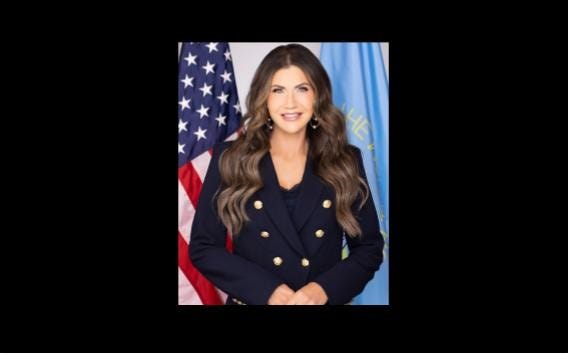
Carl J. Petersen is a parent in Los Angeles who writes here about a politician who is mean enough and dumb enough to kill a 14-month dog. Cricket didn’t obey her orders so she took him to the bottom of a gravel pit and shot him in the head. Governor Kristi Noem of South Dakota justly earned national scorn for her act of animal cruelty.

Next to holding a baby at a campaign rally, nothing does more to humanize a political candidate than a video of them frolicking with the family dog. The love of man’s best friend is bipartisan with dog owners “just as likely to come from either side of the political spectrum.” A Pew Research Center survey found that 97% of pet owners consider their pets part of their family.

Like everything else that has changed since Trump descended his golden escalator to announce his first candidacy, a dog’s status on the campaign trail is now threatened. As part of her campaign to become Trump’s running mate, Kristi Noem, the governor of one of the Dakotas, is set to release an autobiography where she brags about killing two of her family’s pets.

Governor Kristi Noem (CC BY 4.0)

As a dog lover, I have made the wrenching decision to help faithful companions cross the rainbow bridge. It is always difficult, but we owe it to our pets to allow ourselves to let go rather than let them suffer. I held each of them as the doctor injected the fatal shot, making sure that they left us knowing the answer to “Who is a good dog?”

Noem provided no such comfort to her dog. According to her account, Cricket was dragged to a gravel pit and shot dead in front of a startled construction crew. Like a serial killer discovering pleasure in taking a life, she then set her sites on one of the family’s goats. The goat did not fare as well as Cricket and did not die with the first shot. Noem had to “run back to her truck for more ammo to finish off the wounded animal….

According to Trump’s first wife, Ivana (the one he cheated on with his second wife Marla), “Donald was not a dog fan” and was hostile to her poodle, Chappy. Like most Americans, she was perplexed by this hostility; “How can you not love a dog that acts like he’s won the lottery for life just because he sees you walk through the door?

The Trumps were the first modern First Family not to have any pets when they were in the White House. James K. Polk and Andrew Johnson were the only other Presidents without pets while they were in office. Many people are saying that this is an example of Trump’s narcissism. It is hard to have unconditional love for another creature when you are too busy admiring the greatness of the man in the mirror.

John Thompson, historian and retired teacher, reports on the cruelty of Oklahoma’s new crackdown on test scores.

He writes:

I wonder how most teachers responded to Nuria Martinez-Keel’s Tulsa Public Schools Ups the Intensity to Prepare for High Stakes Testing. I’m confident that few educators would be surprised by the language used by those who are implementing Oklahoma State Superintendent Ryan Walters’ teach-to-the-test program.  But, how many would believe that fellow educators really believe it will work? 

Martinez-Keel reports that “Angie Teas, a Tulsa Public Schools (TPS) instructional leadership director spoke positively about “a renewed focus on both academic standards and preparing students to take the standardized exams.” I was struck, however, by Teas’ words, “state tests are ‘part of our lives’ every year in public schools, but this testing season is ‘important for its own outside reasons.’” 

It seems likely that the “outside reasons” she cites are Superintendent Walters’ threats to takeover the TPS, as well as his order to immediately “elevate 12 of its schools off of the ‘F’ list.” In response to this seemingly impossible target, “the district provided high-dosage tutoring to 470 fourth and fifth graders, launched a campaign to combat chronic absenteeism and focused on credit-deficient seniors at struggling high schools to boost graduation rates, among other initiatives district leaders highlighted.” (A total of 1,125 elementary students will be served in a district with more than 33,000 enrollees.) 

I suspect that most educators would be supportive of efforts to assist small numbers of students if those policies were disconnected from test results, and they did not have the potential to undermine meaningful teaching and learning in the district as a whole. I find it hard to believe that teachers  who saw the harm inflicted by No Child Left Behind (NCLB) and Race to the Top (RttT) on students would not recognize why this new, stress-driven approach is also doomed to fail.

The narrative of educators in the story about upping the intensity of high-stakes testing is interesting, and it reminds me of the scripts my administrators would use as my colleagues repeatedly shouted back when ordered to do what virtually everyone saw as educational malpractice.  As Martinez-Keel reported:

Burroughs Elementary is one of the schools identified for improvement. Principal Dee Tisdale said the school has added academic rigor, focused on testing data and added extra resources, and it “all ties back” to individualized, small-group instruction between students and their teacher.

With state testing only days away, the mentality at Burroughs is “now it’s showtime.”

“I think in terms of the big championship game,” Tisdale said. “We’re just preparing, and we’re hoping that all of our practices will give us the trophy in June or July when the results come back.”

And as the TPS instructional leadership director Angie Teas said:

It’s nerve-wracking to feel the pressure of, ‘Oh my God, it feels like the world is watching,’ yeah,” … “But it’s also exciting to recognize that we’ve had an opportunity, like with OTEP (Oklahoma Teacher Empowerment Program) to be more all-parts-equal to the entire whole. We all see our part in the district that in a way I don’t think we have in a really long time.”

Martinez-Keel also cited an elementary teacher:

She felt ‘a little bit of pressure’ to make academic gains in only six small-group sessions. [Charity] Hargrave teaches fourth grade at Skelly but, through the OTEP program, was assigned 27 fifth graders at her school for extra instruction.

She said she had a ‘very short period of time’ to review benchmark test scores for each student, group them based on their performance level and plan lessons for each session.

But the experience has been positive, she said, and she hopes it will continue in the future.

Similarly, Asriel Teegarden said “Sometimes, there’s a little bit of fear about the unknown.” After a “30-minute lesson – featuring a space-themed reading comprehension exercise,” she asks her students “how did they feel about the ‘big test’ next week?” Then, “Teegarden said there’s a ‘different intensity level’ ahead of the most important testing period of her career.” But then she concluded: 

Usually, I would be nervous for these children, but I’ve gone about it like, ‘I’m excited you’re going to take this because you’re going to all do great,’… ‘Everything has got to be positive, giving them a lot of positive feedback. I think they’re going to do excellent.’

Of course, that sounds like wishful thinking to me. But I used to engage in a forced optimism in order to remain in the classroom and serve my students. Being an award-winning, veteran teacher who was successfully engaged in meaningful, challenging instruction, I was able to negotiate compromises with my principals who knew I would not participate in teach-to-the-test. I even agreed to an experiment in teaching a class in a way that would raise test scores without undermining my students’ meaningful learning. We produced the school’s highest History test results, but despite our best efforts, the stress overtook both my students and me. I swore to never again let testing influence our lessons.

Holistic instruction became more difficult over the years when my students from the poorest elementary schools volunteered that they had been “completely robbed of an education” by test prep.

Then, I came back from retirement to teach at an alternative charter school that was like my first school which served students with felony convictions. But then the top administrator ordered the principal to order me to focus solely on the few who had a chance to pass the Common Core high stakes tests. My principal asked me to briefly comply while she tried to persuade the district administration to cancel that plan. She said that they didn’t understand that this year’s end-of-instruction-exam was just a pilot, and thus wasn’t a graduation requirement. She was confident she could persuade them to withdraw the order to just assign most students worksheets, and focus solely on 3, 4, or 5 students per class.

Of course, my students were horrified by the new system, but they trusted me to not follow those rules except for a brief time.  However, when my principal apologized and said that the new system had to become permanent, she knew I’d resign, and I did.

So, I won’t criticize the 45 teachers who are each trying to help 25 or so students in the hope that they will benefit. I also appreciate journalists who are reporting on the stress being inflicted on teachers, and whether the data-driven, rushed interventions will somehow produce more good than harm. But I hope students will be their new priority as they review the research and the history of the failure of these sorts of mandates. And above all, I hope we will listen to our kids as the stress of test-prep is added to the stress of poverty, and attending high-poverty schools that are under attack by Ryan Walters.   

Jan Resseger explains how young people are injured when adults censor what they read and teach them inaccurate history.

She writes:

Public schools, which serve more than 50 million of our nation’s children and adolescents are perhaps our society’s most important public institution. Unlike private schools, public schools guarantee acceptance for all children everywhere in the United States, and they protect the rights of all children by law. And unlike their private school counterparts, public schools are also required to provide services to meet each child’s educational needs, even children who are disabled or who are learning the English language.

Today’s culture war attacks on public education drive fear of “the other” and attempt to frighten parents about exposing their children to others who may come from other countries, from other cultures, from a different race or ethnicity, from a different religion, or from a gay or lesbian family.

The idea of insulating children is, however, counter to the whole philosophical tradition that is the foundation for our system of public schooling.

More than a century ago, education philosopher John Dewey declared: “What the best and wisest parent wants for his own child, that must the community want for all of its children… Only by being true to the full growth of all the individuals who make it up, can society by any chance be true to itself,” (The School and Society, p. 5)

For Dewey, however, educating all children together without insulating them was important as more than an abstract principle. Dewey believed that the experience of school was itself a way of learning to live in a broader community: “I believe that the school is primarily a social institution. Education being a social process, the school is simply that form of community life… I believe that much of present education fails because it neglects… the school as a form of community life… I believe that… the best and deepest moral training is precisely that which one gets through having to enter into proper relations with others in a unity of work and thought.” (My Pedagogic Creed, January 1897)

A hundred years later, in 1998, the political philosopher Benjamin Barber defended the idea of public schools as a microcosm of the community: “America is not a private club defined by one group’s historical hegemony. Consequently, multicultural education is not discretionary; it defines demographic and pedagogical necessity.  If we want youngsters from Los Angeles whose families speak more than 160 languages to be ‘Americans,’ we must first acknowledge their diversity and honor their distinctiveness.”( Education for Democracy,” in A Passion for Democracy: American Essays, p.231).

And in the same year, another philosopher of education, Walter Feinberg explained that in public school classrooms students should learn to tell their own stories, to listen and respect the stories of others, and through that process prepare for democratic citizenship: “That there is an ‘American story’ means not that there is one official understanding of the American experience but, rather, that those who are telling their versions of the story are doing so in order to contribute to better decision making on the part of the American nation and that they understand that they are part of those decisions. The concept is really ‘Americans’ stories.’” (Common Schools: Uncommon Identities, p. 232) (emphasis in the original)

Today, of course, the culture wars attacks on public education seek to reshape the curriculum, silence controversial discussion, and ban books.

Massachusetts political science professor Maurice Cunningham explains that well-funded advocates for reshaping school curricula—including the Heritage Foundation, the Manhattan Institute, the Council for National Policy and a number of dark money groups—are spending millions of dollars to fan the fears of parents by supporting local advocates in organizations like Moms for Liberty and Parents Defending Education. The goal is to agitate against overly “woke” public school curricula and to frighten parents by telling them that teachers are frightening children by including the nation’s sins as well as our society’s virtues as part of the American history curriculum, and by encouraging children to listen to the voices of people who have traditionally been marginalized.  There is, however, no evidence that our children have been personally or collectively frightened when they learn about slavery as the cause of the Civil War or when they learn about gender identity as part of a high school human sexuality curriculum. Accurate and inclusive curricula and open class discussion where all voices are heard and considered are essential for truly public education.

Robert Samuels’ When Your Own Book Gets Caught Up in the Culture Wars profoundly explains the damage wrought by book banning, Samuels, a Washington Post reporter and his colleague Toluse Olorunnipa, had just won the 2023 Pulitzer Prize for General Nonfiction last fall when they were invited to a Memphis high school to discuss their new book, His Name Is George Floyd: One Man’s Life and the Struggle for Racial Justice.  Samuels describes why he wanted to share his book with the Memphis high school students: “I had once been told that the answer to anything could be found in a book… One day, during my senior year, I was browsing an airport bookstore when I saw Stokely Carmichael’s autobiography, “Ready for Revolution.” A whole chapter was devoted to Bronx (High School of) Science, which he had also attended. I was riveted. It started with an officer hassling him on the street, only to be stunned when Carmichael shows him a book with the school’s logo. Although our time there was separated by four decades, we both had the same confusion upon discovering that white classmates had grown up reading an entirely different set of material….  We were both surprised by how little dancing there was at white classmates’ parties. ‘It was at first a mild culture shock, but I adapted,’ he wrote. I, too, had to learn to adapt, to not be so self-conscious about getting stereotyped because of my speech, my clothes, my interests. It was the first time I had ever truly felt seen in a book that was not made for children.”

Samuels and Olorunnipa received a call just before their Memphis visit warning them they could not read from the book and that the school could not distribute copies to students. And during their visit, it became evident that students’ questions had even been carefully edited by their teachers.  Then, in the weeks after the visit, the Memphis-Shelby County school staff and event sponsoring organization stepped all over themselves trying to apologize to Samuels and Olorunnipa.  It became evident that school staff had been frightened and intimidated by school district regulations; the penalties were severe while the rules themselves remained unclear.

Samuels describes what happened: “(T)he spokesperson for the school district e-mailed… to apologize for the miscommunication and misinformation ‘surrounding your recent visit’… (She) defended prohibiting the book itself, on the ground that it was not appropriate for people under the age of eighteen… (She) then admitted that no one involved in the decision had actually read it. The district’s academic department didn’t have time… A staff person in the office searched for it in a library database, noting that the American Library Association had classified it as adult literature.” There was one positive result of the whole fiasco:  with a donation from Viking Books, the publisher, a Memphis community development group, promised any student from Whitehaven High School a free copy of His Name is George Floyd: One Man’s Life and the Struggle for Racial Justice.

Philosophers of education, academic researchers, educational psychologists, and the students in America’s classrooms all tell us that young people are hurt when the school is forced to remove the books that tell students’ own stories.

Young people are made invisible when state laws suppress accurate teaching about all the strands of the American story including slavery, and what happened during the Civil War, Reconstruction, and the Civil Rights Movement. Children who are gay or lesbian learn that they should withdraw and hide when the words that describe them are banned. Experts also tell us that the other children in the classroom are not frightened when, for example, a classmate shares the challenges his or her family faced as immigrants trying to find a place to feel welcome.

Please open the link and finish reading this important article.

This article in The Washington Post by Hanna Natanson and Anymita Kaye provides a national review of states that are trying to stop book censorship and protect librarians and states that not only ban books for sexual and racial content but threaten jail time for librarians who dispense such books. The state-by-state descriptions on the legal status of librarians is valuable. Open the link if you can to see where your state ranks and what actions it is taking to protect or threaten librarians.

Sam Lee, a leader of the Connecticut Library Association, heads to work these days torn between hope and fear.

She’s encouraged because legislators in her state proposed a bill this year making it harder for school boards to ban library books. But she’s fearful because Connecticut, like America, is seeing a sustained surge in book challenges — and she wonders if objectors will see the legislation as a reason to file more complaints.
“I would like to be optimistic,” Lee said. “But having been in my position for the last few years … I don’t know, it really feels like it’s been forever. And I am worried the book banners are just going to be emboldened.”

The bill in Connecticut, pending before an education committee, is one of a raft of measures advancing nationwide that seek to do things like prohibit book bans or forbid the harassment of school and public librarians — the first such wave in the country, said John Chrastka, director of library advocacy group EveryLibrary.

Legislators in 22 mostly blue states have proposed 57 such bills so far this year, and two have become law, according to a Washington Post analysis of state legislative databases and an EveryLibrary legislative tracker.

But the library-friendly measures are being outpaced by bills in mostly red states that aim to restrict which books libraries can offer and threaten librarians with prison or thousands in fines for handing out “obscene” or “harmful” titles. At least 27 states are considering 100 such bills this year, three of which have become law, The Post found. That adds to nearly a dozen similar measures enacted over the last three years across 10 states.

Lawmakers proposing restrictive bills contend they are necessary because school and public libraries contain graphic sexual material that should not be available to children. Some books’ “sole purpose is sexual gratification,” said West Virginia Del. Brandon Steele (R), who introduced a bill that would allow librarians to be prosecuted for giving obscene titles to minors.
“It is strictly about pornography,” Steele said. “On that limited basis, this isn’t going to have the chilling effect people think it’s going to.”

But other lawmakers say bills like Steele’s are ideologically driven censorship dressed up as concern for children. They note that, as book challenges spiked to historic highs over the past two years, the majority of objections targeted books by and about LGBTQ people and people of color…

The protective library laws being pushed around the country run the gamut: From increasing funding to adding school librarians to campuses to forbidding “discrimination” in choosing which books to stock…

Some restrictive library bills give parents more power over book selection, for example requiring schools obtain parental sign-off before providing children sexually explicit content. Another common move is to require that libraries post lists of their books for parental review.

But the majority of the bills work the same way. They eliminate long-established exemptions from prosecution for librarians — sometimes teachers and museum employees, too — over obscene material. Almost every state adopted such carve-outs decades ago to ensure schools, museums and libraries could offer accurate information about topics such as sex education.

Removing the exemption means librarians, teachers and museum staffers could face years of imprisonment or tens of thousands in fines for giving out books deemed sexually explicit, obscene or “harmful” to minors. For example, an Arkansas measure passed last year says school and public librarians can be imprisoned for up to six years or fined $10,000 if they hand out obscene or harmful titles.

The law protects children and doesn’t harm librarians unless they’re doing something awful, bill sponsor Sen. Dan Sullivan (R) said at the time: “If they don’t knowingly violate [the law], they’re free and clear.”

Seventeen states are weighing some version of this measure, The Post found. That comes after at least eight states enacted such laws between 2021 and last year, although two were later vetoed and one was blocked by the courts.

The Post could not find an instance in which a librarian has been charged under these laws. But Peter Bromberg of the Utah Library Association pointed out several recent cases in which police were called to schools or launched investigations over books — in Missouri, Texas and South Carolina…

Tara White was appointed Elkhart Community Schools’ director of literacy in 2015. For the first several years, she never fielded a book challenge — until 2021, when community members objected to 60 titles, she said. When she defended the books, a conservative website claimed she was fighting for porn in school.

Then last year, Indiana passed a law declaring school employees can face criminal prosecution — leading to a possible $10,000 fine or 2½ years of jail time — for handing out sexual material that is “harmful to minors.”

White resigned.

“I loved being a librarian and … helping every student find themselves in a book,” White said. But while certain she wasn’t actually “breaking the law, nobody wants to go through that process.”

Nobody wants to go to jail, she said, for giving children books.

Since the Florida Supreme Court released dual decisions about abortion, there’s been some confusion. Five of the seven justices were appointed by DeSantis.

One decision upheld a fifteen-week ban on abortion, with the understanding that it would be superseded on May 1 by a six-week ban, already signed into law by Governor DeSantis. A six-week ban is the equivalent of a total ban, since few (if any) women realize they are pregnant at that point. The ban was approved by a vote of 6-1.

The second decision allowed a referendum this November that would guarantee the protection of abortion rights in the state constitution. This decision was approved by a vote of 4-3.

Are these two decisions in conflict? Well, yes. And there is a catch. The state constitution includes a guarantee that “all natural persons’ have a right to life and liberty.” Are fetuses “natural persons?” Some of Florida’s Supreme Court justices think so.

Our reader Democracy espies a scheme behind the scene:

In the oral arguments over the Florida abortion amendment to the state constitution, the chief justice of the Florida Supremes – Carlos G. Muñiz – asked specifically about fetal rights. As Bloomberg reported,

“Florida Supreme Court Chief Justice Carlos G. Muñiz asked during Feb. 7 oral arguments on an amendment that would protect abortion in the state whether the Florida Constitution’s guarantee that all ‘natural persons’ be ‘equal before the law’ can apply to fetuses. Muñiz questioned whether justices must first decide this before determining whether the proposed amendment protecting abortion until fetal viability was misleading.”

Meredith L. Sasso, a DeSantis appointee, raised the issue of fetal rights in voting NOT to allow the amendment on the ballot.  Renatha Francis, another DeSantis appointee, did the same.

Jamie R. Grosshans, ALSO appointed by DeSantis, wrote the opinion finding that in Florida privacy does NOT apply to abortion, also said this when voting AGAINST the abortion amendment’s placement on the ballot:

“The voter may think this amendment results in settling this issue once and for all. It does not.”

Is it too cynical to believe that the Florida Supreme Court would approve a referendum that they intend to invalidate?