Nancy Flanagan, retired teacher of music in Michigan, writes here about how “school choice” has damaged the perception of public schools, turning them from a valued public good to just another consumer choice. when she started teaching, public schools were the glue of the community. Now they are forced to compete with multiple private choices, which claim to be better although they are not.

She explains why we could have good public schools in every community, but we have lost the will to pursue that goal. instead we have pursued a series of demonstrably failed ideas, wasting money and lives, while disintegrating the will to improve our public schools.

She writes:

The only contentious thing I ever talk about, at holiday hang-outs or on Facebook (our new town square), is education policy. I will talk to just about anybody—persistently and passionately—about schools, and what it would take to make our public education system not merely workable, but beneficial for all kids in the United States.

This is, by the way, a goal that could largely be accomplished. We have the human capital, the resources and the technical knowledge to transform public education over a generation. What we lack is the public will to do so—for children other than our own, at least.

This represents a sea change in our 20th century national approach to public education, that post-war America where the GI Bill and the Baby Boom made tan, rectangular brick elementary schools spring up like mushrooms in the 1950s. Teachers were in high demand, and state universities were adding a new dormitory every year. Education was going to lift us up, make us (here it comes) the greatest nation on earth.

We don’t think that way anymore.

Somewhere in between our rush to put a man on the moon and the advent of computers in all our classrooms, we lost our “public good” mojo, the generous and very American impulse to stir the melting pot and offer all children, our future citizens, a level playing field, educationally. Lots of edu-thinkers trace this to 1983 and the Nation at Risk report, but I think that the origins of losing that spirit of unity are deeper and broader than that.

Recently, I posted an article from American Prospect on my Facebook page—The Proselytizers and the Privatizers: How religious sectarian school voucher extremists made useful idiots of the charter movement (Katherine Stewart). You can read divergent articles on charter schools (the most obvious and deceptive signal of the loss of our sense of “public good” in education) everywhere, but this was a particularly good piece, honest without being accusatory, damning but cautious:

A wing of the charter movement that is ideologically or religiously opposed to “government schools” was present at the charter movement’s creation, and has grown to comprise a sizable segment of the charter universe. With the election of Donald Trump and the appointment of Betsy DeVos as education secretary, it is presently empowered as never before. Public confusion about vouchers and charters continues to create opportunities. A lightly regulated charter school industry could achieve many of the same goals as voucher programs. They could drain funding from traditional public schools, deregulate the education sector, and promote ideological or religious curricula—all without provoking the kind of resistance that vouchers received.

I posted the article because it was true and thoughtful.

I live in Michigan, where charters took root over two decades ago. Like a handful of other states, we now know what happens to public education, including healthy districts, when charter schools damage the perceived desirability of one—thriving, publicly supported—school for all children. It’s happened all over our state, first in the urban and rural districts, struggling to maintain programming and viability, and now in Alpha districts, as their budgets are diminished and their student populations lured to schools that are “safer” (read: whiter).

After I posted the article, the online conversation was revealing. Teachers (and a lot of my Facebook friends are educators) contributed positive commentary. But there was also a fair amount what Stewart calls public confusion.

  • A sense that charter schools are, somehow, de facto, better than public schools—simply by the virtue of the fact that they’re not public, but selective and special.
  • Assertions that public schools (schools I know well, and have worked in) are attended by children who haven’t learned how to behave properly.
  • Blaming teacher unions for doing what unions do: advocating for fairness, serving as backstop for policy that prioritizes the community over individual needs or wants.

None of these things is demonstrably true. The conversation illustrated that many parents and citizens are no longer invested in public education, emotionally or intellectually. School “choice” is seen as parental right, not something that must be personally paid for. There is now agreement with an idea once unthinkable in America: corporations also have a “right” to advertise and sell a for-profit education, using our tax dollars.

Education is a major major public good where we tax the rich in order to provide a public benefit that you get just by right of being a citizen. When they talk about needing to do away with the entitlement mentality, the most problematic entitlement for them is not Medicare or Social Security. It’s education. Education is even more of a problem for them because teachers are trying to encourage kids to think they can do more. And that’s dangerous.

The core of the public confusion around schooling has been carefully cultivated for decades.

It’s worth talking about—the uniquely American principle of a free, high-quality education for every single child—even if the dialogue is heated. We’re in danger of losing the very thing that made us great. 

The chaos continues in the Houston school district, under the addled leadership of Mike Miles, the state-appointed superintendent. Another principal was pushed out, along with several staff members. No reason was given. Several hundred teens and parents demonstrated outside the school to protest the sudden dismissals of tested school leaders.

Sam Gonzalez Kelly wrote in The Houston Chronicle:

Families and staff at Eastwood Academy High School were informed Tuesday that their principal and several other staff members were pulled from the East End school after an investigation by the district into “incidents at the campus.”

Principal Ana Aguilar’s removal was announced in an automated phone call from HISD Central Division Superintendent Luz Martinez, who said that the change was being made to “ensure a high-quality education environment.” A district spokesman added in a statement that “HISD takes student safety in our schools very seriously,” and that Aguilar and other staffers were removed “after an investigation into incidents at the campus.”

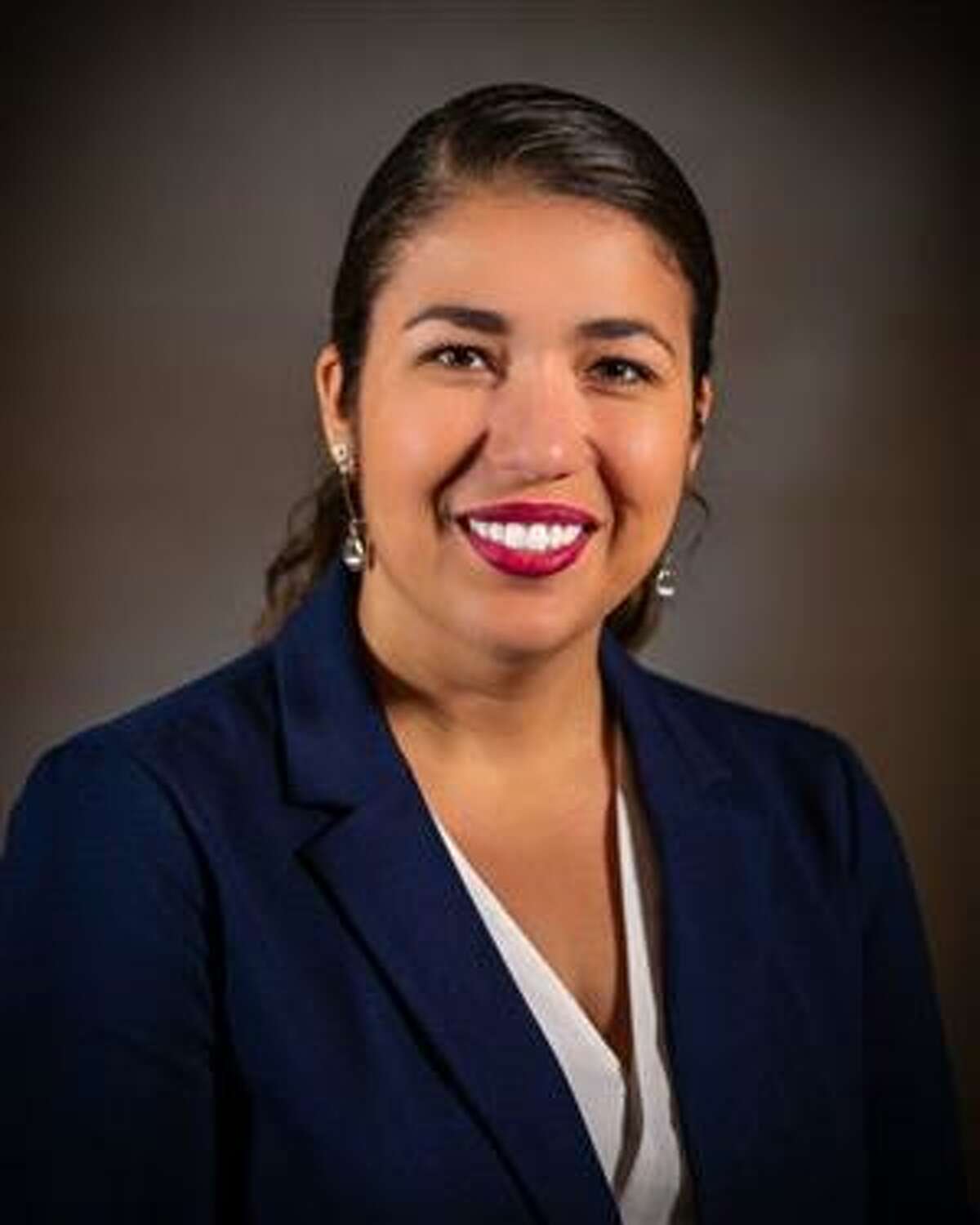
Ana Aguilar

An assistant principal, a counselor and a librarian were also relieved of their duties, according to one teacher at Eastwood, who asked to remain anonymous for fear of retribution. An HISD spokesman declined to elaborate on the “incidents” in question or provide further comment.

The news immediately sent waves of outrage and confusion rippling through the tight-knit Eastwood community, whose members were unaware of any incidents that would spark their principal’s removal. Aguilar did not immediately respond to a request for comment.

“It’s very frustrating, Eastwood is a wonderful school,” said Miranda Gonzales, a parent of an Eastwood student. “There’s no reason for the principal to be removed, Eastwood isn’t (in Miles’ New Education System). It’s ridiculous, it’s insanity and none of us know what’s going on.”

Eastwood, a school of fewer than 400 students in Houston’s East End, received an A rating from the Texas Education Agency on its latest evaluations. Aguilar joined the campus in 2022 after spending three years as principal at Robinson Elementary School, where she won a First Year Principal of the Year Award at what was an Achieve 180 campus in the east region of the district.

Aguilar’s removal is the latest in a string of shakeups at HISD schools, where at least nine other principals have been replaced without much in the way of explanation given to families or staff. The principal at Middle College High School at Houston Community College’s Felix Fraga campus, also in HISD’s Central Division, was removed less than a week ago. The principal at Cage Elementary and Project Chrysalis Middle School, many of whose students go on to attend Eastwood Academy, was replaced during the first week of school this year.

Yesterday the new Miles leadership removed the principal of Wisdom High School and most of its top administrators. Wisdom’s students are mostly non-English-speakers.

How to explain the radicalization of the Republican Party? It just chose a defender of the Big Lie as Speaker of the House. Dan Rather and Elliott Kirschner explain:

The drama around a speakerless House of Representatives has come to an end, at least for the moment. It has been a sad spectacle, to be sure, but the means by which it was resolved, and what it augurs for the future, offer no reason to celebrate.

Quite the contrary.

If the elevation of Louisiana Representative Mike Johnson to the speaker’s gavel with unanimous Republican support counts as compromise within the party’s caucus, it reinforces what we already knew — this nation faces grave threats to its constitutional order, because one of our two major political parties has embraced autocratic extremism.

This is not hyperbole. The person who rallied his party to make him second in line to the presidency was a cheerleader for the end of American democracy. There should be no normalization of this fact.

In the wake of President Biden’s victory in the 2020 election, the vast majority of the Republican Party fell in line behind Donald Trump’s attempts to destroy one of the most sacrosanct features of American democracy: the peaceful transfer of power. We all know what came next, including a violent attempted coup that swarmed the Capitol on January 6. On that day, 139 Republican members of the House of Representatives (including Johnson) voted not to certify the election. It marked arguably the greatest threat to the continuation of the republic since the Civil War.

The new speaker of the House might not be well known by the American public. But he was an influential leader of the movement to deny the will of the people and their selection of president. In late 2020, Johnson pushed House members to sign on to a lawsuit, filed by Texas, that would have thrown out the votes in key battleground states — in essence disenfranchising millions of Americans. To call this ridiculous legal maneuver “fringe” is insufficient. This wasn’t just “out there.” This was the legal equivalent of orbiting Pluto. Even the reactionary right-wing Supreme Court refused to hear the case.

But the purpose of the lawsuit wasn’t just to deny Biden the presidency. It was to delegitimize a legitimate election. And all you have to do to understand how successful this movement has been is to see Mike Johnson now sitting in the speaker’s chair.

It should be noted that Johnson holds the speakership despite espousing extremely radical views on issues like abortion and same-sex marriage. He also seems to be following Trump’s lead in wanting to stymie U.S. support for Ukraine in its war with Russia. That these views were not disqualifying for a single Republican member — including those purported “moderates” who come from districts Biden won — shows how the party marches in lockstep with radicalism and in the opposite direction of where a majority of Americans want the nation to go.

In the days before Republican elected officials crowned an architect of authoritarianism to lead the House, several of the Trump lawyers who helped orchestrate the specious legal rationale for the coup were busy pleading guilty in the conspiracy case of election interference in Georgia. Georgia, it turns out, was one of the states where Speaker Johnson wanted votes to be thrown out.

In their plea deals, the Trump lawyers had to admit what was obvious from the beginning: All the attempts to steal the election were built on lies. The rule of law seems to be closing in on Trump. And it is being fueled by the truth.

Yet the Big Lie continues to fuel Republicans outside of the courtroom, and especially in the halls of Congress. This puts our nation in peril. We are at a point where the very thing that should most disqualify someone from political leadership in America — the desire to destroy our democracy — has become the litmus test for the speaker of the House.

The Republicans in the House of Representatives finally united to elect Rep. Mike Johnson as the new Speaker of the House. Johnson was elected to Congress in 2016. He was a leading figure in the effort to overturn the election in 2020. He gathered signatures among his colleagues to support an appeal by the Texas Attorney General to the U.S. Supreme Court to disqualify the votes cast in contested states. The Court didn’t hear the case, ruling that Texas did not have standing to reverse the results in other states.

So, yes, Johnson is an election denier. Less well known are his deeply conservative views on social issues. He opposes abortion and gay marriage. As a representative of oil country, he dismisses claims that fossil fuels contribute to climate change.

Politico wrote about Johnson:

BROADCAST NEWS — It’s finally over. After more than three weeks without a leader, House Republicans came together to unanimously select Rep. Mike Johnson (R-La.) as the 56th Speaker of the House of Representatives. Johnson served as a consensus pick among the numerous factions, appeasing both the right flank of the party that tossed out former Speaker Kevin McCarthy and moderates. While he’s served as vice chair of the Republican Conference, he has served just four terms in Congress and remains little-known within Washington.

What’s clear, however, is that Johnson is a social conservative’s social conservative — the most culturally conservative lawmaker to ascend to the speakership in decades, if not longer.

He has longstanding ties to the evangelical activist group Family Research Council — which could one day prove discomfiting to members from swing districts or of a more secular orientation.

His first brush with national prominence came in April 2015, when Johnson, then a Louisiana state legislator, proposed a bill called the Louisiana Marriage and Conscience Act that would have prevented “adverse treatment by the State of any person or entity on the basis of the views they may hold with regard to marriage.” Critics called it legalized discrimination against married gay couples, and the bill failed, but the media attention got him on the radar of the influential FRC and its president, fellow Louisiana native Tony Perkins.

Perkins, who hosts a national radio show called Washington Watch, began tapping Johnson to guest host. Johnson, a constitutional lawyer, appeared to be a natural — by December 2015, local Shreveport, La. ABC affiliate KTBS said he “may have a budding second career on the airwaves.”

The FRC and Perkins are political lightning rods among non-evangelicals — some of Perkins’ stances, like his argument that natural disasters are divine punishments for homosexuality, don’t sit well with broad swaths of the electorate. But Johnson’s political and religious beliefs dovetail with Perkins’ views. In a 2004 op-ed, Johnson argued that “homosexual relationships are inherently unnatural… society cannot give its stamp of approval to such a dangerous lifestyle.”

When he ran for Congress in 2016, Johnson placed his faith at the center of his campaign, telling the Louisiana Baptist Message, “I am a Christian, a husband, a father, a life-long conservative, constitutional law attorney and a small business owner in that order.”

His connection with Perkins — and his interest in evangelical radio as a political tool — continued after he was elected to the House in 2016. As a freshman lawmaker, Johnson announced his bid to lead the Republican Study Committee, a conservative caucus that currently counts 156, on Washington Watch with Perkins. He won the election.

Johnson used the skills he sharpened on talk radio and in televised FRC interviews to start a weekly podcast in 2022 with his wife, called “Truth be Told with Mike and Kelly Johnson.”

During the first episode in March 2022, entitled “Can America be Saved?” Johnson says that “we’ll review current events through the lens of eternal truth,” and noted that in each podcast they intended to incorporate a themed scripture because “the word of God is, of course, the ultimate source of all truth.” Guests have included Rep. Jim Jordan (R-Ohio), Charlie Kirk and Jordan Peterson.

On occasion, Kelly Johnson will tee up her husband for an answer. “Why are we the freest, most powerful, most successful, most benevolent nation in the history of the world, and why does every other nation on the planet look to us for leadership and even expect it of us?” she asks in one episode. Her husband responds explaining that America is the only country in the world founded upon a creed, or a “religious statement of faith.”

As a matter of fact, Kelly Johnson is wrong. The Constitution of the United States does not include a creed or a “religious statement of faith.” It specifically mandates freedom of religion and prohibits the establishment of any religion. It also bars any religious test for officeholders.

Mike Johnson is an evangelical Christian whose strong personal views are bound to affect his political views and actions.

James Talarico is a state legislator in Texas who stands up for public schools. He is a Democrat who supports gun control and expanded health care (he calls it “health care for y’all)”). He graduated from public schools in Round Rock, Texas, then earned his BA at the University of Texas and his MA in education policy at Harvard. He joined Teach for America and taught at a middle school in San Antonio, where his class had 45 students.

I’m usually skeptical about TFA teachers, but knowing Gary Rubinstein—an early TFA corps member—has taught me not to be so judgmental.

Talarico is a phenomenon. He’s an effective, outspoken opponent of vouchers. If you are still on Twitter (aka X), watch his powerful debunking of voucher myths. Vouchers are not “school choice,” because schools choose, and they can discriminate against anyone they want, for any reason.

Talarico recently co-sponsored a bill called “Fully Fund Our Schools,” which increases funding for the state’s public schools and provides a $15,000 raise for every teacher. Texas can afford it; the state has a $33 billion budget surplus.

Politico wrote about Talarico a few months ago and suggested that he might be the Democrat who is able to win a statewide office. He might run against Greg Abbott for governor in 2026. Talarico Represents a better future for Texas.

Talarico is a devout Christian. As the Politico story explains, he is taking classes at a seminary and hopes to be ordained as a pastor. He is steeped in Biblical knowledge, and he can respond to bigoted evangelicals and fundamentalists with the sense of love, hope, kindness, and charity that represents progressive Christian thought.

For his leadership, for his determined support for the public schools attended by 5 million students, for his enlightened support for progressive values, I am pleased to add James Talarico to the honor roll of this blog.

Hatred is corrosive. It dehumanizes its perpetrators, as well as its victims. The Israel Defense Forces collected the contents of body cameras worn by terrorists on October 7. It showed these videos to journalists. One who saw the display was Graeme Wood of The Atlantic. I hope and pray that Israel does not invade Gaza. The bloodshed on all sides would be horrendous. I pray for Netanyahu’s ouster. I pray for peace. The Biden administration has been pursuing negotiations in order to free the hostages and avert a wider war. I pray for the President’s success and am glad that he is in charge of our foreign policy at this woeful moment.

Wood describes what he saw:

This afternoon, at a military base north of Tel Aviv, the Israel Defense Forces held a grisly matinee screening of 43 minutes of raw footage from Hamas’s October 7 attack. Members of the press were invited, but cameras were not allowed. Hamas had the opposite policy on cameras during the attack, which it documented gleefully with its fighters’ body cams and mobile phones. Some of the clips had been circulating already on social media in truncated or expurgated form, with the footage decorously stopped just before beheadings and moments of death. After having seen them both in raw and trimmed forms, I can endorse the decision to trim those clips. I certainly hope I never see any of the extra footage again.

It was, as IDF Major General Mickey Edelstein told the press afterward, “a very sad movie.” Men, women, and children are shot, blown up, hunted, tortured, burned, and generally murdered in any horrible manner you could predict, and some that you might not. The terrorists surround a Thai man they have shot in the gut, then bicker about what to do next. (About 30,000 Thais live in Israel, many of them farmworkers.) “Give me a knife!” one Hamas terrorist shouts. Instead he finds a garden hoe, and he swings at the man’s throat, taking thwack after thwack.

The audience gasped. I heard someone heave a little at another scene, this one showing a father and his young sons, surprised in their pajamas. A terrorist throws a grenade into their hiding place, and the father is killed. The boys are covered in blood, and one appears to have lost an eye. They go to their kitchen and cry for their mother. One of the boys howls, “Why am I alive?” and “Daddy, Daddy.” One says, “I think we are going to die.” The terrorist who killed their father comes in, and while they weep, he raids their fridge. “Water, water,” he says. The spokesman was unable to say whether the children survived.

The videos show pure, predatory sadism; no effort to spare those who pose no threat; and an eagerness to kill nearly matched by eagerness to disfigure the bodies of the victims. In several clips, the Hamas killers fire shots into the heads of people who are already dead. They count corpses, taking their time, and then shoot them again. Some of the clips I had not previously seen simply show the victims in a state of terror as they wait to be murdered, or covered with bits of their friends and loved ones as they are loaded into trucks and brought to Gaza as hostages. There was no footage of rape, although there was footage of young women huddling in fear and then being executed in a leisurely manner.

Edelstein said that the IDF chose to show the footage out of necessity. It is not every day that snuff films of Jews are shown at an IDF screening hall. (The original site of the screening was a commercial theater, which would have been even worse.) “What we shared with you,” Edelstein said, searching for words, “you should know it.” And he said he struggled to understand how some journalists could present the IDF and Hamas as comparable. This footage would refute that false equivalence.

“We are not looking for kids to kill them,” he said. “We have to share it with you so no one will have an idea that someone is equal to another.”

To me the most disturbing section was not visual at all. Like the clip of the father and his boys hunted in their pajamas, it was upsetting in part because it showed a relationship between parent and child. The clip is just a phone call—placed by a terrorist to his family back in Gaza. He tells his father that he is calling from a Jewish woman’s phone. (The phone recorded the call.) He tells his father that his son is now a “hero” and that “I killed 10 Jews with my own hands.” And he tells his family, about a dozen times, that they should open up WhatsApp on his phone, because he has sent photographs to prove what he has done. “Put on Mom!” he says. “Your son is a hero!”

His parents, I noticed, are not nearly as enthusiastic as he is. I believe that the mom says “praise be to God” at one point, which could be gratitude for her son’s crimes or pure reflex, indicating her loss for words to match her son’s unspeakable acts. They do not question what their son has done; they do not scold him. They tell him to come back to Gaza. They fear for his safety. He says, amid rounds of “Allahu akbar,” that he intends “victory or martyrdom”—which the parents must understand means that he will never come home. From their muted replies I wonder whether they also understand that even if he did come home, he would do so as a disgusting and degraded creature, and that it might be better for him not to.

Graeme Wood is a staff writer at The Atlantic and the author of The Way of the Strangers: Encounters With the Islamic State.

I received a fund-raising appeal from a group giving money to MAGA school board candidates. It’s called the 1776 Project PAC, and its goal is to elect conservatives to local school boards. Be aware of them. They have this loopy idea that local school boards are controlled by Marxists. Ah, the good old days of 1776, when women couldn’t vote, and most Blacks were enslaved.

“So you’re trying to offset what George Soros has been doing for 30 years by influencing local elections?”

“Maybe you should stop and consider writing a check to Ryan Girdusky, [Founder of the 1776 Project PAC]”

– Tucker Carlson

“I am a fairly large donor to the 1776 Project PAC, which focuses on school board races and has shifted over 100 school board races in the last year…They’re doing an excellent job.”

– Ben Shapiro

Help is on the way from a new political action committee called the 1776 Project PAC!

“All politics is local… This is how you win back the country!”

– Laura Ingraham

All three candidates won their race… And they were endorsed by the 1776 Project PAC.

– Glenn Beck

“Now there’s a way for patriots like you and me to fight back.

Allow me to introduce you to the 1776 Project PAC”

“No other organization is doing what Ryan Girdusky and the 1776 Project PAC are doing”

– Ann Coulter

“That’s why the 1776 Project PAC’s mission is so important.

For the first time ever, conservatives have a true grassroots organization, fueled by patriots like you, to fight back against shady leftist billionaires in schools.”

– Liz Wheeler

“That’s why the 1776 Project PAC is different from any other group out there…”

– Donald Trump Jr. 

“That’s why I believe we need to fight back TODAY by investing in local school board races across the country. This is where my friend, Ryan Girdusky, founder of the 1776 Project PAC comes in.”

– Rep. Jim Banks

“I’m grateful that 1776ProjectPac helps elect pro-parent and pro-family candidates for school board. These seats are critical. And there’s no more important fight than keeping Marxism out of schools.”

– Sen. Tom Cotton

The 1776 Project PAC is the most successful conservative school board PAC in the country, taking back our schools from the radical left one race at a time…

We’ve already tallied over 130 victories nationwide. Flipping schools boards from LIBERAL TO CONSERVATIVE…

Now our biggest election day EVER is one month away on November 7, 2023 and we need your help to support over 120 brave conservative school board candidates.

Michael McDonough retired last year after more than 30 years as a teacher, principal and administrator in the Houston Independent School District. He has spoken to many of his former colleagues, and they have described a “culture of fear” created by state-imposed Superintendent Mike Miles. McDonough is speaking out because he is free to do so. He can’t be fired. This article appeared in The Houston Chrinicle.

McDonough writes:

For over 30 years, I served the Houston Independent School District in a variety of capacities, including teacher, coach and administrator. I worked as a secondary principal for 18 years across three different campuses Pin Oak Middle School, and Westside and Bellaire High Schools and was recognized for excellence in leadership multiple times. I retired from HISD last year, before the state takeover, after a public disagreement with the previous administration.

I still care deeply, though, for the district and its students and teachers. As a resident of the district, I had hoped for the best with our new superintendent, Mike Miles. But that’s not what I’m seeing.

One of the most important leadership lessons I’ve learned is that an organization is in trouble when its most passionate people grow quiet. Through my conversations with former HISD colleagues, it has become clear to me that under Miles, a culture of fear prevents them from speaking up about valid concerns…

The current state of the district is not sustainable. In addition to HISD’s documented financial challenges, it’s short on an even more critical commodity: human capital. Similar to other districts, we simply do not have enough great people.

You can’t fire your way to improvement, and causing employees to flee isn’t much better. Instead, we should commit our scarce resources toward growing and strengthening our best people, and make our decisions based on what serves them. That is the surest path to excellence and a high-performance culture.

Experience has taught me that to keep our best people, a fair salary is a must. But that’s not enough. The leader we need now must understand all the facets of a high-performance culture, one that empowers teachers to create a safe, inclusive, and supportive environment for students. This same high-performance culture provides spaces for teachers to experiment, innovate, and reflect on their practice so they can continue to develop. The current administration’s one-size-fits-all approach fails in each of these areas.

Jan Resseger is a dedicated supporter of public schools. She has a deep understanding of the role that public schools play in building community and strengthening democracy. she is coming to the Network for Public Education conference in D.C. this weekend. There is still time for you to register!

Jan Resseger writes:

Many of us will be traveling to Washington, D.C. next weekend for the 10th Anniversary Conference of the Network for Public Education. We will have an opportunity to greet friends and colleagues, listen to experts examine today’s attack on public schooling, and strategize about confronting the opponents of our society’s historic system of free and universal public education.

As well-funded interests like Moms for Liberty try to invade local school boards, as the Heritage Foundation, EdChoice, the Bradley Foundation, Koch and Walton money, and Betsy DeVos’s American Federation for Children support a school voucher revolution across the state legislatures, and as state legislators in many places obsess over test scores without grasping the human work teachers and students must accomplish together, we will gather to strategize about strengthening support for the public schools that remain the central institution in most American towns and neighborhoods.

There will be keynotes from Gloria Ladson-Billings, former chair of urban education at the University of Wisconsin, Madison; Becky Pringle, President of the NEA; Randi Weingarten, President of the AFT; Diane Ravitch, and several other prominent speakers. Participants will also be able to choose from among more than 40 workshops:

  • sessions exploring strategies and messaging to fight school privatization—including reports from Indiana, Florida and Arizona on vouchers; sessions on problems with charter schools in Pennsylvania and Texas; and a workshop on constitutional issues around religions charter school;
  • workshops addressing the need to overcome far-right attempts to hijack school boards including the fake grassroots parents’ groups funded by far-right philanthropy; reports on advocates working in a number of communities to engage parents as local school board advocates; and several Florida school board members sharing their experiences as their school boards were taken over and politicized;
  • discussions exploring the long impact of test-and-punish school reform including workshops examining state takeovers in several districts including this year’s state seizure of the Houston, Texas Public Schools; and a session about efforts to rid the Denver Public Schools of Portfolio School Reform;
  • conversations helping advocates support the retention and recruitment of teachers in these difficult times when, after COVID, many have blamed teachers for test scores and discipline problems, and when teachers’ autonomy has been undermined and their salaries remain low;
  • sessions to develop skills for coalition building, one of them from California stressing the need to build joint parent-teachers union coalitions; another from Wisconsin on statewide parent organizing; and other workshops emphasizing coalition building with communities of faith to preserve the Constitutional protections for religious liberty;
  • conversations helping advocates better frame and articulate an agenda to undermine racism, protect a diverse curriculum, and focus on students’ needs;
  • workshops celebrating full-service, wraparound Community Schools and strategizing to expand the number of Community Schools; and
  • discussions of specific issues: support for early childhood education, the need to protect student privacy, and the danger of outsourcing the work of education support professionals to private contractors.

As a blogger and an Ohio resident who worries about the diversion of public school funding to our state’s new universal vouchers, however, I am also looking for some broader help than any one of these specific workshops can provide. While it is possible to identify the forces unraveling support for public education, I struggle to find adequate language to articulate why the public schools we have taken for granted for generations are so important. I will be grateful at this conference to listen as experts name the essential role of the public schools in our diverse, democratic society. I will be listening as presenters and advocates emphasize these core principles.

Here are three examples of people writing about or speaking about what public schooling can accomplish. First from the late political theorist Benjamin Barber is a rather complex but also important declaration about school privatization as an expression of radical individualism in contrast with public education as an institution in which the public can protect citizens’ rights: “Privatization is a kind of reverse social contract: it dissolves the bonds that tie us together into free communities and democratic republics. It puts us back in the state of nature where we possess a natural right to get whatever we can on our own, but at the same time lose any real ability to secure that to which we have a right. Private choices rest on individual power… personal skills… and personal luck. Public choices rest on civic rights and common responsibilities, and presume equal rights for all… With privatization, we are seduced back into the state of nature by the lure of private liberty and particular interest; but what we experience in the end is an environment in which the strong dominate the weak… the very dilemma which the original social contract was intended to address.” (Consumed, pp. 143-144)

Second, William Ayers updates John Dewey’s 1899 declaration in The School and Society: “What the best and wisest parent wants for his own child, that must the community want for all of its children.” Here is how, in an essay in the 2022, Public Education: Defending a Cornerstone of American Democracy, Ayers defines the kind of public education that every American child today ought to have: “Every child has the right to a free, high-quality education. A decent, generously staffed school facility must be in easy reach for every family. This is easy to envision: What the most privileged parents have for their public school children right now—small class sizes, fully trained and well compensated teachers, physics and chemistry labs, sports teams, physical education and athletic fields and gymnasiums, after-school and summer programs, generous arts programs that include music, theater, and fine arts—is the baseline for what we want for all children.” (Public Education: Defending a Cornerstone of American Democracy, p. 315)

Third, Jitu Brown, the Chicago community organizer who now leads the national Journey4Justice Alliance, will be a presenter again at this year’s Network for Public Education conference. My notes from one of the earlier conferences quote Brown rephrasing in another way Dewey’s formulation about what public schooling must accomplish: “We want the choice of a world class neighborhood school within safe walking distance of our homes. We want an end to school closings, turnarounds, phase-outs, and charter expansion.”

I am looking forward to next week’s conference. In addition to all the practical strategy sessions and great keynotes, I hope we will actively be sharing our continued confidence in the foundational values represented by our American system of public schools—publicly funded, universally available and accessible, and guaranteed by law to meet each child’s needs and protect all children’s rights. School privatization cannot move our society closer to these goals. Although we will need to work doggedly to ensure greater equality of opportunity and to continue to improve our public schools, they remain the optimal educational institution for the investment of our efforts and tax dollars.


https://janresseger.wordpress.com/2023/10/24/why-i-am-looking-forward-to-next-weekends-network-for-public-education-conference/

New College is the honors college of the state university system. It cared too much about race and gender, so Governor Ron DeSantis grabbed control by appointing hard-right conservatives to the New College board of trustees. The new board fired the President, a respected scholar who earned $350,000 a year and replaced her with politician Richard Corcoran, who served as Speaker of the House and State Commissioner of Education. He has no experience in higher education, but is an enthusiastic proponent of charters and vouchers, as well as DeSantis’ ally in fighting “woke,” liberalism and progressivism.

His charge is to turn this small bastion of progressivism into a small bastion of conservatism.

The New College Board voted to give him a five-year compensation package of salary and bonuses that may total $1.3 million, equal to that of the president of the University of Florida, which enrolls 61,000 students. New College has about 800.

So far, Corcoran has succeeded in driving out one-third of the faculty and has abolished diversity, equity, and inclusion programs, as well as gender studies. He has established athletic teams and is recruiting athletes.

Mel Brooks said in his film “A History of the World, Part 1,” that “It’s good to be the king.” In Florida today, it’s good to be a crony of DeSantis.