Thom Hartman explains how Trump managed to devour the Republican Party, leaving nothing but an empty shell, without a platform or a philosophy. The internal collapse of the GOP started half a century ago….

He writes:

The Republican presidential debate wasn’t encouraging: Trump’s hold on the GOP appears stronger than ever. And that’s bad news for America.


In Robert Hubbell’s excellent Today’s Edition Newsletter on Substack, he made the point… that Trump’s relationship to the GOP is like that of one of those parasitic wasps that puts an egg into a caterpillar or spider and when the wasp larvae hatches it eats its host, leaving behind only a husk.


I’d take the metaphor a step farther: there’s a fungus, cordyceps, that infects ants and seizes control of their brains to alter their behavior ooto the fungus’ advantage. Another example is the toxoplasma parasite that’s often spread by cats: when mice are infected with the parasite, they no longer fear the smell of cats (and sometimes even want to play with them!), thus becoming easy prey. Scientists call it “fatal attraction.”


What Trump has done to the GOP is really quite impressive, worthy of either cordyceps or toxoplasma. And, frankly, it’s amazing that they didn’t even see it coming or try to stop him. (More on that in a moment.)


A registered Democrat and donor to the Democratic Party his entire life, Trump appropriated much of Bernie Sanders’ platform in 2016 to ingratiate himself with working class Americans.


He promised universal healthcare “cheaper than Obamacare,” taxes so high on the morbidly rich that “my friends won’t speak to me,” said he would bring America’s factories back home from overseas, and pledged to strengthen and expand Social Security and Medicare.


All, it turns out, were lies, although most in his base believe to this day that he did or nearly did all those things.


Having used Bernie’s policy positions (and a healthy dose of dog-whistle racism, essential for the Republican base) to win office in 2016, he proceeded to step into, take over, and then — like cordyceps or toxoplasma — alter top-to-bottom the behavior of the GOP.


Trump’s no idiot. He saw how the GOP was weakened, first by the Nixon scandals, then by Reagan’s neoliberalism that gutted the middle class, then by Bush and Cheney lying us into two unnecessary and illegal wars. The party was in a state of crisis when the nation elected our country’s first Black president, which gave Trump his opening.


Fifty years earlier, Nixon had injected the first “egg” of racism and white supremacy into the GOP with his “silent majority” and “war on drugs.”
The former was an explicit shout-out to white racists abandoned by the Democrats in 1964/1965 when LBJ pushed through and signed the Civil Rights and Voting Rights Acts, the latter an explicit technique to disrupt the Civil Rights and anti-war movements. Abandoning all subtlety, Nixon called it his “Southern Strategy.”


A decade later, Reagan pulled southern racists even deeper into the GOP by kicking off his 1980 election campaign with a speech about “states’ rights” to an all-white audience at an obscure Mississippi county fair near the site where three Civil Rights workers were brutally slaughtered in June, 1964. While most Americans — and all major American newspapers and TV networks — missed the significance of the event, southerners heard the whistle loud and clear.


Reagan amplified it with his “welfare queen” comments and his sympathy for white people offended by a “strapping young buck” using food stamps to “buy a T-Bone steak,” while “you were waiting in line to buy hamburger.”


With the ground laid by Nixon and Reagan, that singular event of Obama’s presidency gave Trump the lever he needed to inject the larvae of his sociopathy into the moribund GOP.


He began with his claim that Obama wasn’t even a US citizen but had been born in Kenya, as clear a reference to race as his assertion earlier this week that the Black prosecutor Fani Willis and the Black judge Tanya Chutkan are both “Riggers.”


But Trump was only able to finally take over the GOP in 2016 because a group of corrupt politicians and rightwing billionaires got there first, setting up the party’s faithful to believe absurd lies and step into alternate realities.


It started with Nixon claiming he had a “secret plan” to end the Vietnam War when, in fact, he’d reached out to the Vietnamese and scuttled an actual peace treaty that LBJ had negotiated in the summer of 1968.


When President Johnson called Republican Senator Everett Dirksen to tell him about it just days before the election, Dirksen accused Nixon of “treason.”
Reagan then convinced America’s Republican voters that if they’d just cut taxes on the morbidly rich, prosperity would “trickle down” to average middle class people because it would “unleash” the “job creators.”


His cutting the top tax bracket from 74 percent to 27 percent unleashed them, all right: it unleashed them to buy thousands of politicians at both the state and federal level; to flip more radio stations, TV stations, and newspapers hard right; to purchase yachts and mansions around the world, and even to build their own spaceships.


Reagan told Republicans if they stopped enforcing the anti-trust laws that Republicans had fought for in the 1890s and Republican presidents Teddy Roosevelt and Robert Taft had used, prices would drop and America’s small towns would prosper. Instead, the average American family pays $5,000 a year more than citizens of countries that still enforce their anti-monopoly laws and small-town America has been gutted, with literally millions of local retailers and small employers put out of business by Big Box stores.


Reagan sold Republicans (and a few Democrats) on the idea that “free trade” would lower costs for Americans and, to some extent, it did: our stores were quickly filled with cheap, disposable junk. But the price we paid was 50,000+ factories and over 16 million good-paying union jobs moving to Asia and Mexico.


Reagan promised us if we’d just follow Milton Friedman’s advice (when he was secretly being paid off by the real estate lobby) and end rent controls, cut home mortgage subsidies like those through the FHA and VA, and throw our housing markets open to unrestrained speculation and both corporate and foreign ownership, every American could live the American Dream.


Instead, foreign investors and massive hedge funds run by Wall Street billionaires are buying up America’s housing stock and turning it into rental properties, both exploding the price of houses and rents. The clear and measurable result is an epidemic of homelessness and tent cities.
Reagan promised us if we’d just end “oppressive regulations” — designed to keep our food supply safe, our drugs affordable, clean up our air and water, and protect our children from death by firearms — the “magic of the free market” would provide all those things in spades.


Instead, our food supply is filled with chemicals, microplastics, and heavily processed faux foods that have produced two generations of obesity and related metabolic disorders in children along with an explosion of cancer, birth defects, and other once-rare diseases.
Reagan promised us if we’d just stop funding public schools and stop teaching civics and instead direct that money to private for-profit or church-run voucher and charter schools it would grow the levels of literacy, civic engagement, and healthy political dialogue.
Instead, about half of all American adults cannot read a book written at an eighth-grade level, according to the U.S. Department of Education and the National Institute of Literacy. Only 39 percent of Americans can name all three branches of government, leaving our nation vulnerable to racist white nationalists and fascists wanting to transform the democratic experiment our Founders began with our American republic.


The next Republican president, George W. Bush, nakedly lied to America about the “threat” presented by Saddam Hussein and Iraq to justify a war that cost our nation dearly in both blood and treasure, just to enrich the failing Halliburton (former CEO: Dick Cheney) and other oil companies in Bush and Cheney’s orbit.


Bush also pushed through a plan to clear-cut forests he called the “Healthy Forests Initiative,” and a plan to deregulate pollution controls he called the “Clear Skies” legislation.


By 2010, Republican voters were primed to believe pretty much anything party politicians told them. That was the year the billionaires really got busy taking control of the party’s base.


They started by funding the Tea Party, theoretically a response to President Obama’s effort to provide affordable healthcare for all Americans. Tri-cornered hats and bizarre signs saying things like “Keep Your Government Hands Off My Medicare” popped up all over America, as the billionaires’ Astroturf movement rented high-end busses to bring gullible retired boomers to staged media events across the nation.


That morphed into the “freedom agenda,” branding everything in sight with the word. From trashing queer people, to calls for more tax cuts for billionaires, intimidation of teachers and librarians, massive Red-state-by-Red-state voter purges, legalizing open carry of assault weapons, criminalizing abortion, and a campaign to end the teaching of Black History, “freedom” has spread across the GOP.


This week we even learned that the billionaire-funded Freedom Caucus in the House intends to try to crash the US economy just in time for the election (knowing Biden will get the blame) by refusing to fund the government for the 2024 fiscal year.


Republicans have taken their “freedom agenda” to such extremes that they’re actively suppressing dissent to promote it. When a group of moms of children who died or barely survived a mass shooting at the Covenant Elementary School wanted to testify before the Tennessee General Assembly, they were escorted out by state police the Republican leader, Rep. Lowell Russell, had called.


In today’s GOP, fully in the thrall of Donald Trump and his authoritarianism, dissent is not allowed. Just ask Justin Amash or Liz Cheney.


Trump has done his work, and the Republican Party is no longer a legitimate political party. Like a cat with a toxoplasma-infected mouse, he’s eaten the party whole.


It has no platform, no moral compass, and no loyalty to the Constitution or America’s historic ideals. Instead, it does whatever the billionaires who own it tell it to do (with the ability to bribe given them by five Republicans on the Supreme Court who legalized political bribery in Citizens United).


This grift, started by Richard Nixon’s treason and lies and exploited over the years by the morbidly rich, has now so completely absorbed the party that it’s hard to see it returning to the conservative-but-willing-to-compromise entity it was during the Eisenhower presidency. Hell, most Republican voters today don’t even remember Eisenhower, much less venerate him.


As the esteemed Republican activist and constitutional scholar J. Michael Luttig told CNN a few weeks ago:

“A political party is a collection and assemblage of individuals who share a set of beliefs and principles and policy views about the United States of America. Today, there is no such shared set of beliefs and values and principles or even policy views as within the Republican party for America.”

Mourning the loss of the party he was once proud to be part of, Luttig added:

“American democracy simply cannot function without two equally healthy and equally strong political parties. So today, in my view, there is no Republican Party to counter the Democratic Party in the country. And for that reason, American democracy is in grave peril.”

A return to some semblance of normalcy in theGOP is essential to restoring a normal, functioning government to our nation, as Luttig points out. Odds are, however, it’s first going to take a widespread destruction of that party — provoked by huge Democratic wins in 2024 — to come about.

And, given the bizarre spectacle we witnessed in the Republican presidential debate, that can’t come soon enough.


Members of Support Our Schools Nebraska turned in over 117,000 signatures on their petition to put a new state voucher law on the state ballot in November 2024!

Supporters of the petition needed 60,000 signatures, which must now be verified by the Secretary of State. They collected far more than was necessary in case some were not valid. If they had collected 200,000 names, the law would have been suspended but that was an impossible goal.

Vouchers have never won a state referendum.

This is a wonderful challenge to privatization.

The governor vowed to keep fighting for private school funding no matter what happens in the referendum.

In a statement, Gov. Jim Pillen said the petition drive failed to suspend the law, and it will go into effect.

“We should not be fighting this fight. With the support of the Legislature, I provided the largest funding increase in the State’s history for public education. The signatures collected will now have to be certified by the Secretary of State. If this initiative makes it onto the 2024 ballot, I can promise you the fight will not be over. I have confidence in education, both public and private. I will continue to make sure each student in Nebraska has the educational freedom to choose where they want to attend school. We will never give up on our kids,” Pillen said in a statement.

Organizers took the podium Wednesday in Lincoln, discussing the results of their petition drive against LB 753, which commits public dollars into tax credits for scholarships to kids across Nebraska.

But these advocates said this law doesn’t help children at all.

They want public schools to be better funded, as Nebraska ranks 49th in the nation in state aid to public schools.

“The future of Nebraska is the future of our children. All children, not just some children, all children,” one organizer said.

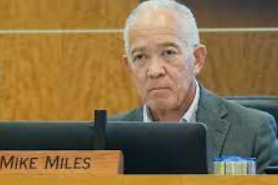
Mike Miles doesn’t think children need recess. As a military man, he thinks recess is a waste of time. But he backed down to parent pressure to allow recess. Great to have an authoritarian superintent who makes all decisions (not). Satisfying to see that at least once, he listened to parents.

Houston ISD Superintendent Mike Miles announced on Tuesday that he is changing the recess schedule at schools under the New Education System to allow for more unstructured play time for kids in response to a push from parents.

All students in pre-K through fifth grade classrooms in the 85 NES and NES-aligned schools will now have a single 30-minute recess period each day, according to the district, an increase compared to a former schedule that included two shorter breaks for the lower grades and no recess in fifth grade.

LATEST NEWS: HISD superintendent dissolves autism support team under special education restructuring plan

“Teachers shared that they believe these modifications will limit lost learning time and maximize high-quality instruction, and we’ve heard from many families that they value unstructured free play time for their students,” Miles said in a statement. “We were able to make these changes without sacrificing high-quality instruction time and we believe this will enhance the environment in our schools and support student achievement.”

The change marks a big win for an HISD parent advocacy group called Free Play Houston, whose members have written letters, met with administrators and orchestrated an email campaign in recent weeks in an effort to push for more recess time for NES students, pointing out that shortening recess time may stand in violation of state law and HISD board policies.

“We are overjoyed that a child’s right to play will be respected and valued this school year,” the organization said in a statement on Tuesday, thanking those who emailed HISD leadership about the issue. “Houstonians have long known that all children need an unstructured play time during their school day. Decades of research shows that recess not only promotes social and emotional skills that become fundamental learning tools, but that recess also benefits students by improving their memory, attention, and concentration.”

Before these changes, the latest version of the NES master schedule allowed for one 15-minute recess in the morning and one 15-minute break in the afternoon for kindergarden through fourth grade students, with no additional time built in for getting students to and from the playground, according to Brooke Longoria, co-founder of Free Play Houston and an HISD parent.

Additionally, the former schedule included no recess for fifth grade students, with district administrators saying their physical movement needs would be met through Dyad programming like martial arts, dance and spin bikes, along with PE class.

SCHOOL SAFETY: Houston-area schools struggle to comply with new law requiring armed officer at every campus

The modification appears to be the first time the new state-appointed superintendent has responded to community pushback by changing course.

Stephen Dyer is a former Ohio legislator who keeps track of education policy in his state. He reports frequently on scandals in charter schools, Cybercharters, and voucher schools. Every state should have a watchdog like him.

In his latest post, he writes about the failure of most of Ohio’s charter schools. Remember, they were supposed to “save” students from low-performing public schools? Instead, they offer an inferior choice, which coincidentally defunds higher-performing public schools. Who will save the children of Ohio from failing charter schools?

He writes:

In its latest national rankings, U.S. News & World Report pointed out that generally, charter schools around the country are disproportionately doing well on their national ratings. “Charters show up in disproportionately high rates among the top schools,” according to the report. And I’m sure charter proponents will take off and run with that.

But that ain’t happening in Ohio.

According to the rankings released today, only 5 of 44 ranked Ohio Charter Schools rate outside the bottom 25 percent nationally. U.S. News doesn’t rank high schools lower than 13,261st. They just put the worst performers in a single band.

And only 5 Ohio Charter High Schools are NOT in that band.

Saying that nearly 9 in 10 Ohio Charter High Schools rank in the bottom 25 percent of all High Schools in the country is a terrible black eye for our state. Especially as the Ohio General Assembly continues to dump more than $1 billion a year into these schools.

And even the 5 that do better than the bottom 25 percent nationally still don’t do awesome.

For example, the top ranked school — KIPP Columbus — ranked lower than two Akron Public Schools, two Cincinnati Public Schools, three Cleveland Municipal schools, a Columbus City school, and a Dayton City school.

That’s not great, especially when Charter Schools were promised as rescue vehicles for kids in urban public schools.

House Bill 2 was supposed to save Ohio’s Charter Schools from being the “wild, wild west” of the nation’s charter schools. But clearly it’s not working. If only 5 of Ohio’s 44 ranked Charter High Schools are not ranked in the bottom 25% nationally, then perhaps it’s time to re-examine our $1 billion a year commitment to these privately run, publicly funded schools.

Just saying.

Heather Cox Richardson, a historian, analyzed the controversial Florida social studies curriculum and explains how they attempt to minimize racism and slavery. Their fault lies not in one or two sentences but in their central ideas. The influence of Hillsdale College is blatant in the document’s apologetics. Richardson posted this keen analysis on July 22, but I missed it. I’m pleased to share it now.

She wrote:

The Florida Board of Education approved new state social studies standards on Wednesday, including standards for African American history, civics and government, American history, and economics. Critics immediately called out the middle school instruction in African American history that includes “how slaves developed skills which, in some instances, could be applied for their personal benefit.” (p. 6). They noted that describing enslavement as offering personal benefits to enslaved people is outrageous.

But that specific piece of instruction in the 216-page document is only a part of a much larger political project.

Taken as a whole, the Florida social studies curriculum describes a world in which the white male Founders of the United States embraced ideals of liberty and equality—ideals it falsely attributes primarily to Christianity rather than the Enlightenment—and indicates the country’s leaders never faltered from those ideals. Students will, the guidelines say, learn “how the principles contained in foundational documents contributed to the expansion of civil rights and liberties over time” (p. 148) and “analyze how liberty and economic freedom generate broad-based opportunity and prosperity in the United States” (p. 154).

The new guidelines reject the idea that human enslavement belied American principles; to the contrary, they note, enslavement was common around the globe, and they credit white abolitionists in the United States with ending it (although in reality the U.S. was actually a late holdout). Florida students should learn to base the history of U.S. enslavement in “Afro-Eurasian trade routes” and should be instructed in “how slavery was utilized in Asian, European, and African cultures,” as well as how European explorers discovered “systematic slave trading in Africa.” Then the students move on to compare “indentured servants of European and African extraction” (p. 70) before learning about overwhelmingly white abolitionist movements to end the system.

In this account, once slavery arrived in the U.S., it was much like any other kind of service work: slaves performed “various duties and trades…(agricultural work, painting, carpentry, tailoring, domestic service, blacksmithing, transportation).” (p. 6) (This is where the sentence about personal benefit comes in.) And in the end, it was white reformers who ended it.

This information lies by omission and lack of context. The idea of Black Americans who “developed skills” thanks to enslavement, for example, erases at the most basic level that the history of cattle farming, river navigation, rice and indigo cultivation, southern architecture, music, and so on in this country depended on the skills and traditions of African people.

Lack of context papers over that while African tribes did practice enslavement, for example, it was an entirely different system from the hereditary and unequal one that developed in the U.S. Black enslavement was not the same as indentured servitude except perhaps in the earliest years of the Chesapeake settlements when both were brutal—historians argue about this— and Indigenous enslavement was distinct from servitude from the very beginning of European contact. Some enslaved Americans did in fact work in the trades, but far more worked in the fields (and suggesting that enslavement was a sort of training program is, indeed, outrageous). And not just white abolitionists but also Black abolitionists and revolutionaries helped to end enslavement.

Taken together, this curriculum presents human enslavement as simply one of a number of labor systems, a system that does not, in this telling, involve racism or violence.

Indeed, racism is presented only as “the ramifications of prejudice, racism, and stereotyping on individual freedoms.” This is the language of right-wing protesters who say acknowledging white violence against others hurts their children, and racial violence is presented here as coming from both Black and white Americans, a trope straight out of accounts of white supremacists during Reconstruction (p. 17). To the degree Black Americans faced racial restrictions in that era, Chinese Americans and Japanese Americans did, too (pp. 117–118).

It’s hard to see how the extraordinary violence of Reconstruction, especially, fits into this whitewashed version of U.S. history, but the answer is that it doesn’t. In a single entry an instructor is called to: “Explain and evaluate the policies, practices, and consequences of Reconstruction (presidential and congressional reconstruction, Johnson’s impeachment, Civil Rights Act of 1866, the 13th, 14th, and 15th Amendments, opposition of Southern whites to Reconstruction, accomplishments and failures of Radical Reconstruction, presidential election of 1876, end of Reconstruction, rise of Jim Crow laws, rise of Ku Klux Klan)” (p. 104).

That’s quite a tall order.

But that’s not the end of Reconstruction in the curriculum. Another unit calls for students to “distinguish the freedoms guaranteed to African Americans and other groups with the 13th, 14th, and 15th Amendments to the Constitution…. Assess how Jim Crow Laws influenced life for African Americans and other racial/ethnic minority groups…. Compare the effects of the Black Codes…on freed people, and analyze the sharecropping system and debt peonage as practiced in the United States…. Review the Native American experience” (pp. 116–117).

Apparently, Reconstruction was not a period that singled out the Black population, and in any case, Reconstruction was quick and successful. White Floridians promptly extended rights to Black people: another learning outcome calls for students to “explain how the 1868 Florida Constitution conformed with the Reconstruction Era amendments to the U.S. Constitution (e.g., citizenship, equal protection, suffrage)” (p. 109).

All in all, racism didn’t matter to U.S. history, apparently, because “different groups of people ([for example] African Americans, immigrants, Native Americans, women) had their civil rights expanded through legislative action…executive action…and the courts.”

The use of passive voice in that passage identifies how the standards replace our dynamic and powerful history with political fantasy. In this telling, centuries of civil rights demands and ceaseless activism of committed people disappear. Marginalized Americans did not work to expand their own rights; those rights “were expanded.” The actors, presumably the white men who changed oppressive laws, are offstage.

And that is the fundamental story of this curriculum: nonwhite Americans and women “contribute” to a country established and controlled by white men, but they do not shape it themselves.

Notes:

https://www.fldoe.org/core/fileparse.php/20653/urlt/6-4.pdf

The National Education Policy Center announced that it would no longer post on Twitter, nor would it open an account on Threads. I refuse to refer to Twitter as X because is a letter, not a name. NEPC is a trustworthy source of research about education.

I have faced the same dilemma. I have opened an account on several of the alternative social media sites but stayed with Twitter because I have almost 150,000 followers there. When they retweet, my posts go further.

This is what NEPC announced:

The decision to close the @NEPCtweet account was straightforward but not easy.

We truly valued NEPC’s 13 years on Twitter, sharing our work with our 7,500 followers and engaging in often-interesting discussions. Yet after the company’s change in ownership and shift in policies, our continued presence on Twitter (now “X”) became impossible. Disinformation and conspiracy theories, as well as bigotries of all sorts, have moved from tolerated to celebrated.

NEPC cannot, at this point, find a sensible alternative. We may still decide to open a Mastodon or Bluesky account, but their current limited reach and other constraints mean that active participation will have minimal benefits.

Meta’s new platform, Threads, presents a unique set of concerns. Because Threads is attached to Instagram, the Meta privacy policy is the Threads privacy policy. And it’s a “privacy nightmare”–the privacy policy is so weak that Meta can’t launch Threads in the EU.

We remain concerned that Threads and other Meta platforms are used by school-aged children and accordingly raise the sorts of privacy harms that NEPC has long investigated and condemned. NEPC has, for example, recently published analyses of the Summit Learning Platform and the Along platform, both of which are associated with Meta and the Chan Zuckerberg Initiative.

NEPC is committed to working with top scholars to provide a bridge between high-quality research and public deliberations about education policy and practice. Our mission statement reads in part: We are guided by the belief that the democratic governance of public education is strengthened when policies are based on sound evidence and support a multiracial society that is inclusive, kind, and just. The social platform now known as “X” is the antithesis of these values.

Please visit us at nepc.colorado.edu. And if you haven’t yet done so, we hope you’ll sign up to receive our newsletters and publication announcements at https://nepc.colorado.edu/newsletter-signup

Emma Brown and Peter Jamison wrote in The Washington Post about Michael Farris, the conservative Christian lawyer who led the campaign to spend tax dollars on home schooling and prevailed. The reporters got hold of a recorded phone call in which Farris told his funders that the time has come to take down public education. The recording was obtained by an organization called “Documented.”

The message Michael Farris had come to deliver was a simple one: The time to act was now.

For decades, Farris — a conservative Christian lawyer who is the most influential leader of the modern home-schooling movement — had toiled at the margins of American politics. His arguments about the harms of public education and the divinely endowed rights of parents had left many unconvinced.

Now, speaking on a confidential conference call to a secretive group of Christian millionaires seeking, in the words of one member, to “take down the education system as we know it today,” Farris made the same points he had made in courtrooms since the 1980s. Public schools were indoctrinating children with a secular worldview that amounted to a godless religion, he said.

The solution: lawsuits alleging that schools’ teachings about gender identity and race are unconstitutional, leading to a Supreme Court decision that would mandate the right of parents to claim billions of tax dollars for private education or home schooling.

“We’ve got to recognize that we’re swinging for the fences here, that any time you try to take down a giant of this nature, it’s an uphill battle,” Farris said on the previously undisclosed July 2021 call, a recording of which was obtained by the watchdog group Documented and shared with The Washington Post. “And the teachers union, the education establishment and everybody associated with the education establishment will be there in full array against us — just as they were against home-schoolers.”

“We’ve got to recognize that we’re swinging for the fences here, that any time you try to take down a giant of this nature, it’s an uphill battle,” Farris said on the previously undisclosed July 2021 call, a recording of which was obtained by the watchdog group Documented and shared with The Washington Post. “And the teachers union, the education establishment and everybody associated with the education establishment will be there in full array against us — just as they were against home-schoolers.”

The 50-minute recording, whose details Farris did not dispute in a series of interviews with The Post, is a remarkable demonstration of how the ideology he has long championed has moved from the partisan fringe to the center of the nation’s bitter debates over public education.

A deeply religious evangelical from Washington state, Farris began his career facing off with social workers over the rights of home-schoolers and representing Christian parents who objected to “Rumpelstiltskin” being read in class.

In recent years, he has reached the pinnacle of the conservative legal establishment. From 2017 to 2022, he was the president and chief executive of the Alliance Defending Freedom (ADF), a powerhouse Christian legal groupthat helped draft and defend the restrictive Mississippi abortion law that led to the overturning of Roe v. Wade. ADF and its allieshave filed a flurry of state and federal lawsuits over the past two years alleging that public schools are violating parental and religious rights.

Yet it is outside the courtroom that Farris’s influence has arguably been most profound. No single figure has been more instrumental in transforming the parental rights cause from an obscure concern of Christian home-schoolers into a GOP rallying cry.

When former president Donald Trump called for a federal parental bill of rights in a 2023 campaign video, saying secular public school instruction had become a “new religion,” he was invoking arguments Farris first made 40 years ago. The executive order targeting school mask mandates that Virginia Gov. Glenn Youngkin (R) signed on his first day in office cited a 2013 state law guaranteeing “fundamental” parental rights that Farris helped write.

In Florida, a home-schooling mom introduced Farris’s ideas to a state lawmaker, setting in motion the passage of the state’s Parents’ Bill of Rights in 2021. The law, repeatedly touted by Gov. Ron DeSantis (R) on the presidential campaign trail, laid the groundwork for the state’s controversial Parental Rights in Education Act, dubbed by its critics the “don’t say gay” bill.

“He is our hero,” Patti Sullivan, the home-schooler involved in Florida’s 2021 law, said of Farris. “He is the father of the modern movement in parental rights.”

Fundamental parental rights measures have been proposed or enacted this year in more than two dozen other states, according to a Post analysis using the legislation-tracking database Quorum, and in March, a federal parents’ bill of rights passed the Republican-controlled House.

Farris has not been personally involved in pushing the most recent bills, which have been fueled by anger over covid-19 mask mandates and how schools are handling Black history, sexual orientation and gender identity. Tiffany Justice, co-founder of the right-wing groupMoms for Liberty, which has become a powerful force in the parental rights movement since its launch less than three years ago, said it would be a mistake to overemphasize the impact of conservative Christian home-schoolers on the battles now playing out across the country.

Justice said she has met Farris but that the arguments he was making in the 1980s haven’t strongly influenced her organization, whose members have pushed to remove some books with LGBTQ+ themes from schools and to restrict what teachers can say about race and gender.

“It’s 2023,” she said. “There are a lot of things that people thought 40 years ago.”

Yet to those who have followed Farris’s career, the adoption of his arguments by so many families unconnected to home schooling is a measure of his success. In the eyes of his critics, he has masterfully imported an extreme religious agenda into the heart of the nation’s politics through the seemingly unobjectionable language of parents’ rights. Some argue that it has always been the goal of the most radical Christian home-schoolers not merely to opt out of the public schools but to transform them, either by diverting their funding or allowing religion back into the classroom.

“Everyone should be aware of Michael Farris and his influence on the Christian right,” said R.L. Stollar, a children’s rights advocate who was home-schooled and has long warned of the conservative home-schooling movement’s political goals. “To Farris’s credit, he is really good at what he does. He is really good at taking these more extreme positions and presenting them as if they are something that would just be based on common sense.”

The story continues in extensive detail about Farris’s battles to win acceptance and public funding for home schooling.

He tried but failed to criminalize gay sex. His biggest victories have been in his demands to expand home schooling. He and his wife have 10 children. They enrolled her in a public school, bur removed her after two months. They put her in a Christian school but withdrew her after concluding she was being influenced by other 6-year-olds.

Farris wrote that public schools are “a godless monstrosity.”

And he wrote that by their very nature, public schools indoctrinate:

“Inculcation of values is inherently a religious act,” he said. “What the public schools are doing is indoctrinating your children in religion, no matter what.”

My view: public schools unite us as a nation, a people, and a democracy. While there are some highly-educated people like Michael Farris who homeschool their children, many uneducated people are following their lead and their children will be indoctrinated into their religion and be poorly educated.

Thom Hartmann is one of the best political bloggers in the nation and a superb journalist. This is a very important article. In 2016, I pleaded with readers not to vote third party because Trump was clearly unhinged and ignorant. Jill Stein siphoned off enough votes to elect him. I’m still haunted by the infamous photo of Jill Stein sitting at Putin’s table with Michael Flynn before the election.


We can’t afford any more George W. Bush’s or Donald Trump’s, who were both brought to us by Democratic-leaning voters thinking they were doing the right thing by voting for third party candidates…

One of the most fashionable statements these days among progressive-leaning voters who pretend to great political insight is:

“I want to vote for the person I like themost, not some party or candidate that I only half-agree with.”

Its corollary is:

“You’re just trying to get me to vote Democratic because you support that party’s corruption. I won’t be intimidated: I’m going to vote for the best person to run the country!”

Often these types of statements are followed by:

“People in France and Israel can vote for any one of a dozen parties and nobody complains that they’re ‘throwing away their vote.’ This is America: we’re even better! So, I should be able to vote for anybody I want!”

Some people pushing this line simply don’t understand the difference between thepolitical systems of France/Israel and theUS. 

Others are cynical hustlers (this is true mostly of the talk-show and YouTube hosts trying to differentiate themselves by pushing this), trying to grab and hold an audience by being “edgy,” “iconoclastic,” or “a rebel with a cause.”

So, let’s review some political basics.

Whatever its genesis, this opinion — that ignoring our two-party system and “voting for the best candidate is a good thing” — is widespread. After all, intuitively it seems to make perfect sense. 

In a rational world, who would want to vote for anyone less than the best candidate? Unfortunately, though, America’s political system is not as rational as that of countries with proportional representation or ranked choice voting.

A 2022 Pew poll found people’s unfavorable view of both parties has gone from 6 percent in 1994 to 27 percent today. Similarly, 38 percent of Americans “wish there were more political parties to choose from in this country” and may be persuaded to vote for a third-party candidate.

So why is it that third parties don’t work in America, but they do in France?

The United States, in 1789, became the first modern democratic republic founded on thenotion of the leaders of a government, through elections, “deriving their just powers from theconsent of the governed.”

The Framers of the Constitution had never heard of proportional representation or themodern parliamentary system (more on that in a minute), so they went with a simple strategy that’s today referred to by political scientists as “first-past-the-post winner-take-all” (FPTP) or, sometimes, as “majoritarian” or “plurality” election systems.

Whoever gets the most votes becomes theelected politician, and everybody else gets nothing. If you voted with the majority, you’re represented; if not, you’re not at all represented by a person or party that shares your view.

America was an English-speaking country and, as a result, this system spread mostly throughout the English-speaking world and in former British or American colonies. Majoritarian FPTP systems like ours are used in Canada, the UK, India, Jamaica, Liberia, Singapore, Philippines, Pakistan, Australia, New Zealand, Ireland and Bangladesh.

As a result, most all of these countries are dominated by two parties who tend to pass control of the nation back-and-forth over time. (Australia, New Zealand, and Ireland use Ranked Choice Voting, an even more recent innovation which allows for more political parties; more on that in a moment.)

In such a system, third parties almost always act as spoilers, drawing votes away from the major party to which they’re most closely aligned. People who vote Green, for example, generally would have voted Democratic, thus reducing that party’s vote; people who vote Libertarian would have voted Republican with the same effect.

For example, in Florida in 2000, Ralph Nader on the Green Party’s ticket got 97,488 votes, while George W. Bush “won” Florida by 537 votes. 

It strains credulity to assert that the majority of Nader’s voters would have either voted for Bush or not voted at all, which is why when David Cobb ran for president on the Green Party ticket in 2004, he explicitly told people in swing states not to vote for him but to cast their ballots for John Kerry instead.

Jill Stein had no such moral compunction with her Green Party candidacy in 2016. Michigan, Pennsylvania, and Wisconsin provided Trump’s margin of victory in theElectoral College over Hillary Clinton, and, in each of those states, Stein pulled more votes than Trump’s margin.

(In Michigan she got 51,463 votes and Trump won by 10,704; in Pennsylvania she won 49,678 versus Trump’s margin of 46,765; and in Wisconsin Stein carried 31,006 votes but Trump only won by 22,177.)

In other words, had liberals not voted for Ralph Nader in Florida in 2000, Al Gore would have become president and we never would have been lied into a war; had people in Michigan, Pennsylvania, and Wisconsin not voted for Jill Stein in 2016, Hillary Clinton would have become president and America would have been spared thetrauma of 500,000 unnecessary Covid deaths and the ongoing assault to our democracy.

This is apparently not lost on sour-grapes Jill Stein, by the way; she’s reportedly helping run Cornell West’s 2024 Green Party candidacy. It’s also not lost on the Democrat-hating folks at No Labels, who have pledged to put up a candidate for president (presumably Joe Manchin) in 2024.

In the 1950s, French sociologist Maurice Duverger published several papers on this odd quirk of FPTP systems and the way they turn aligned third-party candidacies into agents for the opposition party.

This simple reality — apparently unknown to those who advocate third party candidates — has since come to be known as Duverger’s Law.

So, why can France have so many political parties without damaging their political system but here in America third parties harm those they’re most closely aligned with?

This goes to the invention of what’s called “proportional representation.”

It wasn’t until the year the Civil War started, 1861, that British philosopher John Stuart Mill published a how-to manual for multi-party parliamentary democracies in his book Considerations On Representative Government.

It was so widely distributed and read that nearly all of the world’s democracies today — all of them countries that became democracies after the late 1860s — use variations on Mill’s proportional representation parliamentary system.

In Mill’s system, if a political party gets, say, 12 percent of the vote then they also get 12 percent of the seats in that country’s congress or parliament. A party that pulls 34 percent of the vote gets 34 percent of the seats, and so on. 

The result is a plethora of parties representing a broad range of perspectives and priorities, all able to participate in thedaily governance of their nation. Nobody gets shut out.

Governing becomes an exercise in coalition building, and nobody is excluded. If you want to get something done politically, you have to pull together a coalition of parties to agree with your policy.

Most European countries, for example, have political parties represented in their parliaments that range from the far left to theextreme right, with many across the spectrum of the middle. There’s even room for single issue parties; for example, several in Europe focus almost exclusively on the environment or immigration.

The result is typically an honest and wide-ranging discussion across society about the topics of the day, rather than a stilted debate among only two parties. 

It’s how the Greens became part of today’s governing coalition in Germany, for example, and are able to influence the energy future of that nation. And because of that political diversity in the debates, the decisions made tend to be reasonably progressive: look at thepolitics and lifestyles in most European nations.

In our system, though, if a party gets 12 percent of the vote — or anything short of 50 percent plus one — they get nothing. Whoever gets 50-percent-plus-one wins everything and everybody else gets nothing, which is why we always end up with two parties battling for thehigher end of that 50/50 teeter-totter.

Pretty much every democracy in the world not listed above under the FPTP label are using Mill’s proportional representation. But we don’t, which is why we’re stuck with a two-party system.

Australia and New Zealand have diminished the damage third parties can do to themain, established parties, by using a voting system called ranked choice voting. In a system like that I could have voted for Ralph Nader as my first choice in 2000, with Al Gore as my second choice. When it becomes apparent that Nader isn’t going to make it, my first choice is discarded by thesystem and my vote for Gore becomes theone that gets counted.

Over 300 communities in America are now using ranked choice voting (including Portland, Oregon) and it works great. Moving from FPTP to proportional representation would require amending the Constitution, though, so that’s not going to happen any day soon: ranked choice voting is a nearly-as-good alternative.

At the national level, though, the best way to solve the problem of some Democratic politicians not being as progressive as we’d like is to get active by joining theDemocratic Party and becoming a force for positive change within it. To stand up for public office and elect more progressives, something that can only be done within theDemocratic Party.

To not “throw away your vote,” but to help rebuild the institution that brought America Social Security, the minimum wage, the right to unionize, Medicare, Medicaid, free college, regulatory agencies that defend and protect the environment and working class people, support for people in poverty, and that built America’s first real middle class.

Yes, there are corrupt and bought-off politicians within the Democratic Party. Ever since the Supreme Court fully legalized political bribery with their Citizens Uniteddecision and its predecessors, there have been more than a few Democrats who have enthusiastically put their hands out. The most obvious and cynical ones call themselves corporate “Problem Solvers.” 

But voting for a third-party candidate and thus handing elections to Republicans won’t solve that problem: if anything it will make it worse, because the entire GOP has committed itself to being on the take and, as we saw with Nader and Stein, third-party candidacies often simply hand more power to the GOP. 

Try to find, for example, even one Republican who isn’t benefiting from the billions in oil dollars that have flowed through the Koch network over the years and is thus willing to do something about climate change. Republican governance and their fealty to the fossil fuel industry is literally destroying America.

This is why real progressives like Bernie Sanders, Alexandria Ocasio Cortez, and Pramila Jayapal stay and work within theDemocratic Party. For progressives to take over the country, we must first take over the DNC.

In other words, get inside the Party and take it over! It’s what hard-core conservatives did with the GOP over the past 20 years, starting with the Tea Party movement, and it’s what progressives must do with the Democratic Party.

Cornell West is a great guy, but with our FPTP election system a vote for him for president in a swing state is effectively a vote for theRepublican nominee. No third-party candidate has ever won the White House, and none ever will until we have nationwide ranked choice voting.

So, the next time somebody tells you how they’re going to only vote for “the best candidate,” you may want to give them this little Civics 101 lesson, along with the phone number, website, or email address for their local Democratic Party. And get behind themovement to bring ranked choice voting to national elections.

We can’t afford any more George W. Bush’s or Donald Trump’s, who were both brought to us, in part, by Democratic-leaning voters thinking they were doing the right thing by voting for third party candidates

Josh Cowen, professor of education policy at Michigan State University, summarizes the latest research on vouchers for the Brown Center Chalkboard, a publication of the Brookings Institution.

He finds several salient points:

  • In 2023 alone, seven states passed new school voucher programs and nine expanded existing plans—highlighting a push that is largely coming from red states.
  • The last decade of achievement studies have shown negative voucher impacts, with more mixed or inconclusive results on attainment.
  • Data from traditional voucher programs has indicated that the larger the program, the worse the results tend to be.
  • Most students who use vouchers never attended public schools.
  • Many private schools raise their tuition to take advantage of voucher funding.
  • Many pop-up schools of dubious quality are created to receive voucher money.

Please open the link and read the rest of the article.

Mercedes Schneider summarizes the checkered career of Mike Miles, who was put in charge of the Houston Independent School District by State Commissioner Mike Morath, who was appointed by hard-right Republican Governor Greg Abbott. Abbott wants to punish Houston for not voting for him. What better punishment than to install Mike Miles as superintendent?

Schneider writes:

In June 2023, the Houston Independent School District (HISD) became the latest major school district to experience a top-down, ed-reform tactic that largely ignores community investment and fail to deliver on promised academic gains: the state takeover of a school district.

On June 01, 2023, the Texas Education Agency (TEA) appointed Mike Miles as the new HISD superintendent.

Miles is the golden-child product of market-based, ed-reform leadership. As reported in his LinkedIn bio, Miles holds no college degrees in teaching (engineering; slavic languages and literature; international affairs and policy). He has never been a classroom teacher, never a site-based administrator, yet he was a district superintendent in Colorado for six years (2006-11) and superintendent of Dallas ISD for three.

Though he does not mention it in his LinkedIn bio, Miles was a member of the Class of 2011 at the Broad Superintendents Academy A 2011 EdWeek article on Broad superintendents includes the criticism that they “use corporate-management techniques to consolidate power, weaken teachers’ job protections, cut parents out of decisionmaking, and introduce unproven reform measures.”

Indeed.

In 2015, Miles abruptly resigned from Dallas ISD amid being, as WFAA.com states, “at the center of controversy since he took the position nearly three years ago,” which apparently included questions about misdirecting funding intended for at-risk students and the subsequent exit of the Dallas ISD budget director. (Also calling Miles “a lightening rod for controversy,” WFAA.com offers this timeline of Miles’ unsettling tenure in Dallas.)

Despite all of his Dallas ISD controversy, TEA– which is no stranger to stepping into its own controversy— chose to hire Miles to lead its newly-state-snatched HISD.

Following his Dallas ISD exit, in 2016, he founded a charter school chain, Third Future Schools, which has locations in Colorado, Texas, and Louisiana. For two years (2017-19), Miles was a senior associate in an education consulting firm, FourPoint Education Partners.

And according to his LinkedIn bio, Miles is/was on a number of ed-reform organization boards, including Teach for America (TFA) Colorado (2017-20); National Council on Teacher Quality (NCTQ) (2013-present), and Chiefs for Change (2015-present).

Please open the link to finish reading the post.