Ukrainian President Zelensky offered a path to peace, trying to mend the rupture with the U.S. He rejected the previous deal presented by Trump because it was negotiated by the U.S. and Russia, without the participation of Ukraine, and it contained no security guarantees, no protection for Ukraine if Putin decided to renew the war.
President Volodymyr Zelensky of Ukraine on Tuesday offered a course of action that he said could end the war, while trying to assure the Trump administration that his government was dedicated to peace.
“Our meeting in Washington, at the White House on Friday, did not go the way it was supposed to be,” Mr. Zelensky wrote on X. “It is regrettable that it happened this way. It is time to make things right.”
The Ukrainian leader said he was ready to release Russian prisoners of war, stop long-range drone and missile strikes aimed at Russian targets, and declare a truce at sea immediately — moves that he said would help establish a pathway to peace.
Only, however, “if Russia will do the same,” he added.
Mr. Zelensky’s proposal seemed clearly designed to shift the burden for ending the war onto Russia, which launched its invasion three years ago. The White House has claimed that the Ukrainian leader is the main obstacle to peace.
In his post, Mr. Zelensky offered effusive praise for American support, noting specifically “the moment when things changed when President Trump provided Ukraine with Javelins.”
“We are grateful for this,” he wrote. “Ukraine is ready to come to the negotiating table as soon as possible to bring lasting peace closer,” he added. “My team and I stand ready to work under President Trump’s strong leadership to get a peace that lasts.”
There was no immediate reaction from the Kremlin to Mr. Zelensky’s proposal. Despite the ferocity of the fighting, President Vladimir V. Putin of Russia has shown a willingness to do side deals with Ukraine. The two countries have conducted numerous prisoner-of-war exchanges, and Russia and Ukraine had been set to participate in talks in Qatar last August about halting strikes on each other’s energy infrastructure. Moscow pulled out of the meeting after Ukraine’s incursion into Russia’s Kursk region.
In recent weeks, however, Mr. Putin has offered no hint of being willing to de-escalate the war before winning major concessions from the West and Ukraine — like ruling out Ukrainian NATO membership, reducing the alliance’s footprint in Europe, limiting the size of Ukraine’s military, and giving Russia influence over Ukraine’s domestic politics.
“There is no evidence that Russia would be prepared to accept a deal, and what that would be,” said Malcolm Chalmers, deputy director general of the Royal United Services Institute, a research group in London. He said the decision by the United States to pause military aid would only encourage Putin to ask for more — including Ukrainian demilitarization and neutrality.”
Mr. Zelensky sought to strike a careful balance in his statement. Aware of Mr. Trump’s stated desire to get a quick deal, he said Ukraine was “ready to work fast to end the war.”
At the same time, he suggested a staged process, similar to an idea raised by the French government, that could start immediately.
“We are ready to work fast to end the war, and the first stages could be the release of prisoners and truce in the sky — ban on missiles, long-ranged drones, bombs on energy and other civilian infrastructure — and truce in the sea immediately, if Russia will do the same,” he wrote. “Then we want to move very fast through all next stages and to work with the US to agree a strong final deal.”
The article goes on to expressions of dismay by Ukrainians who are disappointed that it was their strongest ally, the U.S., that betrayed them.
Former entertainment entrepreneur Linda McMahon is now U.S. Secretary of Education. She released her first statement, reiterating Trump’s attacks on “diversity, equity, and inclusion,” as well as “gender ideology” (I.e. recognizing the existence of ONLY the male-female binary and not recognizing those who are LGBT, such as Secretary of the Treasury Scott Bessent, who is openly gay).
McMahon’s views are closely aligned with those of Moms for Liberty. Check out the website of the America First Policy Forum, where McMahon was chair of the board.
This statement was released by the department’s press office.
When I took the oath of office as Secretary of Education, I accepted responsibility for overseeing the U.S. Department of Education and those who work here. But more importantly, I took responsibility for supporting over 100 million American children and college students who are counting on their education to create opportunity and prepare them for a rewarding career.
I want to do right by both.
As you are all aware, President Trump nominated me to take the lead on one of his most momentous campaign promises to families. My vision is aligned with the President’s: to send education back to the states and empower all parents to choose an excellent education for their children. As a mother and grandmother, I know there is nobody more qualified than a parent to make educational decisions for their children. I also started my career studying to be a teacher, and as a Connecticut Board of Education member and college trustee, I have long held that teaching is the most noble of professions. As a businesswoman, I know the power of education to prepare workers for fulfilling careers.
American education can be the greatest in the world. It ought not to be corrupted by political ideologies, special interests, and unjust discrimination. Parents, teachers, and students alike deserve better.
After President Trump’s inauguration last month, he steadily signed a slate of executive orders to keep his promises: combatting critical race theory, DEI, gender ideology, discrimination in admissions, promoting school choice for every child, and restoring patriotic education and civics. He has also been focused on eliminating waste, red tape, and harmful programs in the federal government. The Department of Education’s role in this new era of accountability is to restore the rightful role of state oversight in education and to end the overreach from Washington.
This restoration will profoundly impact staff, budgets, and agency operations here at the Department. In coming months, we will partner with Congress and other federal agencies to determine the best path forward to fulfill the expectations of the President and the American people. We will eliminate unnecessary bureaucracy so that our colleges, K-12 schools, students, and teachers can innovate and thrive.
This review of our programs is long overdue. The Department of Education is not working as intended. Since its establishment in 1980, taxpayers have entrusted the department with over $1 trillion, yet student outcomes have consistently languished. Millions of young Americans are trapped in failing schools, subjected to radical anti-American ideology, or saddled with college debt for a degree that has not provided a meaningful return on their investment. Teachers are leaving the profession in droves after just a few years—and citing red tape as one of their primary reasons.
The reality of our education system is stark, and the American people have elected President Trump to make significant changes in Washington. Our job is to respect the will of the American people and the President they elected, who has tasked us with accomplishing the elimination of bureaucratic bloat here at the Department of Education—a momentous final mission—quickly and responsibly.
As I’ve learned many times throughout my career, disruption leads to innovation and gets results. We must start thinking about our final mission at the department as an overhaul—a last chance to restore the culture of liberty and excellence that made American education great. Changing the status quo can be daunting. But every staff member of this Department should be enthusiastic about any change that will benefit students.
True change does not happen overnight—especially the historic overhaul of a federal agency. Over the coming months, as we work hard to carry out the President’s directives, we will focus on a positive vision for what American education can be.
These are our convictions:
Parents are the primary decision makers in their children’s education.
Taxpayer-funded education should refocus on meaningful learning in math, reading, science, and history—not divisive DEI programs and gender ideology.
Postsecondary education should be a path to a well-paying career aligned with workforce needs.
Removing red tape and bureaucratic barriers will empower parents to make the best educational choices for their children. An effective transfer of educational oversight to the states will mean more autonomy for local communities. Teachers, too, will benefit from less micromanagement in the classroom—enabling them to get back to basics.
I hope each of you will embrace this vision going forward and use these convictions as a guide for conscientious and pragmatic action. The elimination of bureaucracy should free us, not limit us, in our pursuit of these goals. I want to invite all employees to join us in this historic final mission on behalf of all students, with the same dedication and excellence that you have brought to your careers as public servants.
This is our opportunity to perform one final, unforgettable public service to future generations of students. I hope you will join me in ensuring that when our final mission is complete, we will all be able to say that we left American education freer, stronger, and with more hope for the future.
During his Senate confirmation hearings, Robert F. Kennedy Jr. tried to downplay his decades-long reputation as an opponent of vaccines. He even persuaded a Republican physician, Senator Bill Cassidy of Louisiana, that he would be guided by science, not his ideology. Why Senators believe nominees who try to disown their past is a mystery.
Dr. Paul Offit is a pediatrician who specializes in communicable diseases, vaccine research, and immunology. He teaches at the University of Pennsylvania. In this piece, he chastises RFK Jr. for his indifference to the death of a child because of his failure to get vaccinated.
On February 26, 2025, a school-aged child in West Texas died from measles. This marked the first child death in the US from the disease since 2003. The death was part of a larger outbreak in this Mennonite community that included 146 people, 20 of whom were hospitalized. The outbreak wasn’t an isolated event. Additional cases of measles had been reported in Alaska, California, Georgia, Kentucky, New Jersey, New Mexico, New York City, and Rhode Island. Measles is a winter-spring disease. We still have at least three months to go before the end of a typical measles season.
At a White House meeting on February 27th, the newly installed Secretary of Health and Human Services, Robert F. Kennedy Jr., responded to the events in Texas. Failing to immediately acknowledge the tragedy of a preventable death, he said that “measles outbreaks are not unusual” and that they happen every year. In truth, measles had been eliminated from the United States by 2000. At that time, due to a high level of population immunity, the virus wasn’t transmitted from one American child to another even after people with measles from other countries entered the United States. Unfortunately, owing to unfounded fears about measles vaccine safety, a critical percentage of parents have now chosen not to vaccinate their children, dropping immunization rates below the level required for herd immunity.
RFK Jr. also tried to dismiss the nearly two dozen hospitalizations in West Texas by claiming that they were “mainly for quarantine,” when in fact children were hospitalized for severe measles pneumonia. RFK Jr. apparently doesn’t understand that children exposed to measles are quarantined at home, not in the hospital. Indeed, the last place you would want to quarantine a child would be in a hospital filled with a vulnerable population of children, many of whom are particularly susceptible to the disease.
RFK Jr.’s dismissal of the Texas outbreak as “nothing to see here” was even more disheartening in that perhaps no one has contributed more to the perception that the measles-mumps-rubella (MMR) vaccine is dangerous than him. For 20 years, he and his organization, Children’s Health Defense, has claimed that the MMR vaccine causes autismdespite studies showing that it doesn’t.
The West Texas measles outbreak wasn’t RFK Jr.’s first experience with a Mennonite community. On July 31, 2021, in the middle of the Covid pandemic, RFK Jr. stood in front of 1,500 people in Lancaster County, Pennsylvania, home to one of the largest Mennonite communities in the United States, and talked about his experiences with measles as a child. The transcript from his talk later surfaced:
He said that “the cure for measles is chicken soup and vitamin A.” In other words, measles is no big deal. Two years earlier, RFK Jr. had traveled to Samoa before an outbreak of measles that had caused 5,600 cases and 83 deaths, mostly in children less than four years old. Despite this experience, he was still capable of dismissing the disease as a trivial, harmless infection of children.
RFK Jr.’s comments at the White House the day after the measles death were most remarkable for what he didn’t say. He didn’t say that the death was especially tragic because it was entirely preventable. And he didn’t say loudly and clearly that under-vaccinated communities in the United States needed to get vaccinated to avoid a similar tragedy. And that they needed to do it soon. This wasn’t surprising. For RFK Jr. to have spoken forcefully about the importance of vaccines in the face of a growing epidemic would have gone against everything that he had said and done for the last 20 years.
Anti-vaccine activists don’t change their stripes. Even when they’re given the enormous responsibility of protecting the nation’s children.
Elon Musk’s hatchet kids have been at work at the Social Security Administration, firing people, terminating leases. Democrats are worried that service will deteriorate, which will encourage Republicans to call for privatization. As we well know, privatization means some huge corporation must make a profit, so workers will be paid less and services will deteriorate.
The Social Security Administration in recent days has initiated a flurry of actions aimed at decimating its workforce and that Democrats warn are an effort to sabotage the agency and prepare to privatize its functions.
After a rash of abrupt retirements of senior leadersacross the agency last week, the agency on Friday confirmed that it is seeking to shed 7,000 employees, which would bring its workforce down to 50,000 people. Last fall, the agency hit a 50-year staffing low after congressional Republicans refused to agree to append the agency’s funding to account for fixed cost increases as part of a continuing resolution to keep agencies open.
With that came an announcement that the agency will consolidate its current 10 regional offices down to four, as well as reorganize headquarters. And Elon Musk’s DOGE operatives have cancelled the leases for 45 field offices across the country, as well as the Office of Hearings Operations in White Plains, N.Y.
Story Continues Below Sponsor Message
null
And though the agency’s frontline workforce had previously been spared from most of the Trump administration’s early workforce initiatives, including the deferred resignation program, early retirement offers and the purge of recently hired, promoted or transferred federal workers, on Friday leadership said all agency employees are eligible for Voluntary Early Retirement Authority or Voluntary Separation Incentive Payments, provided they have served long enough to qualify.
Further adding to the confusion was an agency-wide announcement Monday that all non-bargaining unit employees must cease teleworking and commute five days per week beginning Wednesday.
“We understand that this transition will require an adjustment to employee work/life arrangements,” the agency wrote. “Supervisors should be liberal with the approval of leave over the next four weeks to accommodate the changes.”
In a rambling message to employees obtained by Government Executive, Acting Commissioner Leland Dudek suggested the rapid changes were actually the fault of the previous administration….
At a press conference Monday, Senate Democrats accused the administration and Musk of sabotaging the agency as the first step in an effort to strip Americans of their earned benefits and sell off the agency’s functions to private industry.
“If you take the system today, with these superb statistics that 99.7% of retirement benefits are paid accurately and on-time, and you start hollowing it out, which is essentially what they’re doing, and then they’ll say, ‘Oh my goodness, we need the private sector here, or we won’t have a program,’” said Sen. Ron Wyden, D-Ore. “This is kind of the history of these kinds of efforts. It’s a prelude to privatization.”
Sen. Patty Murray, D-Wash., called Trump and Musk’s actions at SSA as akin to “taking a wrecking ball” to the agency and its services.
This article appeared in The New York Review of Books. As daily newspapers have shrunk or abandoned their book reviewing, the NYRB stands out as the nation’s leading journal of literature, the arts, and politics. It takes books seriously. This is an essay-review about the history of vouchers. I reviewed Josh Cowen’s outstanding book The Privateers, about the cabal that engineered the expansion of vouchers. I hope you will consider subscribing to the New York Review of Books and reading Josh Cowen’s important book.
For decades, the term “school choice”—and the programs it signifies, which divert public money to private schools—was widely and rightly dismissed as racist. Now it’s the law in thirty-three states.
Minnijean Brown, Thelma Mothershed, and Melba Pattillo, three of the first Black students to attend Little Rock Central High School, with Arkansas NAACP president Daisy Bates (third from left), 1957
Donald Trump promised that he will make public funds available to private as well as religious schools in every state, and this is what his party wants, too. Over the past quarter-century, Republicans have assailed America’s public schools by supporting vouchers, which divert money from public education systems to subsidize tuition at private and religious schools.
But most voters today do not favor vouchers. In fact, since 1967 no state referendum on vouchers has ever passed. In 2024 three states had referenda on the ballot, and vouchers were again defeated. Voters in two of those three states, Kentucky and Nebraska, cast ballots overwhelmingly for Trump—and in both states public funding for private schools was decisively rejected. The story of how Republican politicians have twisted this widespread popular opposition to vouchers into pervasive education policy across the country is one that requires a deeper historical view.
This opposition to public funding for private schools changed on May 17, 1954, when the Supreme Court ruled, in the Brown v. Board of Education decision, that de jure racial segregation in public schools was unconstitutional. The Court’s decision had little to do with school funding, but it set off a frantic search among white elected officials in the South to find, or create, a legal mechanism through which to protect racial segregation. The overwhelming majority of southern whites considered the prospect of racial integration repugnant, and their elected officials were determined to block it.
Until the mid-1950s most Americans believed that the government should not underwrite the cost of private and religious schooling. Catholic organizations had periodically sought public subsidies for their schools on grounds of fairness; as taxpayers, they said their schools were entitled to receive the same funds as public schools. But they were repeatedly rebuffed by Congress, the courts, and state legislatures; most state constitutions explicitly prohibited the use of public funds for religious school tuition.
Southern governors and legislators found the rationale and language they sought in the writings of Milton Friedman, a prominent libertarian economist at the University of Chicago, who in 1955 published an essay called “The Role of Government in Education.” The paper argued in favor of parents’ rights to choose any school they wanted, as well as educational freedom, the right for a child not to attend a neighborhood school—music to the ears of segregationists. Friedman said that the government should finance schools but should not be expected to administer them. He recommended that government distribute money—in the form of what he called vouchers—to parents for each of their school-age children, and that parents should be free to spend this allotment at any institution, whether its operations were for-profit or nonprofit, religious or secular, so long as the school met certain minimum educational standards defined by the local government.
If Black parents wanted their children to attend a segregated Black school, Friedman said, or if white parents wanted their children to attend a segregated white school, or if parents wanted their children to attend an integrated school—all should be equally free to do so. Competitive private enterprise and parental choice, he asserted, would promote a “healthy variety of schools” while making teachers’ salaries “responsive to market forces.” He predicted that private schools would “spring up to meet the demand.”
Southern governors used Friedman’s rhetoric and arguments to fight the implementation of the Brown decision. They adopted his endorsement of “freedom of choice” as well as his belief that private schools would provide a better education than “government schools”; indeed, advocates of vouchers began to refer to “public schools” as “government schools,” a term of derision that continues to appear in our ongoing debates about “school choice” today. As the historian Nancy MacLean demonstrated in “How Milton Friedman Exploited White Supremacy to Privatize Education,” a 2021 paper posted by the Institute for New Economic Thinking, Friedman taught southern leaders that the best way to protect Jim Crow schools was to use “race-neutral arguments” and to “embrace both an anti-government stance and a positive rubric of liberty, competition, and market choice.” As a result, seven states—Alabama, Mississippi, Louisiana, Virginia, North Carolina, South Carolina, and Georgia—enacted laws to subsidize the private school tuition of families fleeing the prospect of desegregated public schools.
In the following decades, existing private schools for white students expanded, and new private schools opened—“white flight academies” or “segregation academies”—to enroll students whose parents opposed racial integration. Often the enrollment of a single Black student in a previously all-white public school was enough to spur an exodus of white families. This happened in New Orleans in 1960 when six-year-old Ruby Bridges enrolled at the William Frantz Elementary School. She had to be escorted into the school each day by federal marshals, on the direct orders of the federal judge J. Skelly Wright. Each day Ruby withstood the screaming of angry white parents at the schoolhouse doors. And Ruby was the only child in her classroom; only a handful of white students remained in the school.
As late as 1965, less than 3 percent of Black children in the South attended schools with white children. Until then southern states engaged in a strategy of “massive resistance” to school integration, blocking the implementation of the Brown decision by providing “tuition tax credits” (a form of vouchers) so that white students could go to all-white private schools, by intimidating Black students so that they would not apply to attend white public schools, or by closing public schools altogether.
Virginia was at the forefront of this “massive resistance.” In 1959 its general assembly repealed the compulsory school attendance law and allowed localities to close their public schools. Prince Edward County was ordered by two courts to integrate its schools but chose instead to shutter its entire public school system. Officials provided tuition grants (vouchers) for white students to attend all-white private schools but made no such arrangements for Black children. Some Black families organized makeshift schools, but for five years there were no public schools for Black students in Prince Edward County. It wasn’t until 1968 that the Supreme Court outlawed Virginia’s tuition grants to private all-white schools.
After the passage of the Civil Rights Act in 1964 and the Elementary and Secondary Education Act in 1965, which made federal funding available to public schools, the federal government had the legal and financial tools to end resistance to integration. Federal courts across the South struck down laws authorizing public funding for vouchers and private schools, as well as any other state laws intended to block racial desegregation. The US Office of Education informed school districts across the South that they would not receive federal funding unless they desegregated promptly. Because of this well-known history, the term “school choice” was so closely associated with resistance to the Brown decision that it was widely and rightly dismissed as racist. It fell into disrepute for decades.
Now, seventy years after Brown, vouchers have not only been rehabilitated, since the 1990s they have been enacted in various forms in thirty-three states and the District of Columbia. Some of these programs are euphemistically called “education scholarships” or “tuition tax credits” or “education savings accounts,” but the fundamental principle is the same in all of them: public money pays for private school, even—in fact, most often—for religious schools. Republican-controlled legislatures in states such as Florida and Arizona enacted voucher programs that started small (in 1999 and 2011, respectively), intending to “save poor kids trapped in failing public schools” or supposedly only for children with disabilities. Over time these programs expanded, increasing the number of eligible students. Now both states have removed all limits, and every student, regardless of family income, is eligible for a tuition subsidy, at a cost to taxpayers that is expected to rise to $1 billion a year in Arizona and $4 billion in Florida.
Josh Cowen, a professor of education policy at Michigan State University, explains this remarkable turnaround of voucher policy in his superb book The Privateers: How Billiionaires Created a Culture War and Sold School Vouchers. Cowen has researched vouchers for most of his career. He worked with teams of academics who received millions of dollars in federal and philanthropic funds to study the results of voucher programs in different cities and states. Like many of his fellow researchers, he hoped that vouchers would provide better education for low-income students. But three years ago he published an article in The Hechinger Report, a nonpartisan education journal, in which he bluntly declared that vouchers were a failure.
Cowen explained that his initial enthusiasm for vouchers cooled as the evaluations were released. He participated in a study of Milwaukee’s vouchers from 2005 to 2010 that concluded that “there was very little difference on test scores” between students in public schools and carefully matched students in voucher schools. Furthermore, when low-income and Black students left voucher schools and returned to public schools, their academic performance in reading and math improved. At the same time that the Milwaukee study ended, a new report showed “shockingly bad early test score results for students in the Louisiana voucher program in the years following Hurricane Katrina.” Those poor results persisted and were replicated by studies in Ohio and Indiana.
The Privateers tells the story of how and why public policy on funding private and religious schools changed. As the consistent failure of state referenda shows, vouchers were never a popular idea; it was the politicians’ dependence on big campaign donors that made school choice a staple of Republican rhetoric. The widespread adoption of vouchers, Cowen explains, was basically a policy coup staged by billionaires who were libertarians or religious zealots or both. Cowen explains
how a small band of interconnected and insular groups of conservative advocates, tightly networked to some of the wealthiest and most influential players in right-wing US politics, invented a rationale for school privatization largely from nothing and out of nowhere.
He describes the agenda of that “network of scholars, lawyers, donors, and activists” as religious nationalism.
The main organizations in this movement to break down the wall of separation between church and state were two right-wing philanthropies, the John M. Olin Foundation and the Lynde and Harry Bradley Foundation, which funded both the Harvard professor of government Paul Peterson and the libertarian lawyer Clint Bolick. The Bradley Foundation, based in Milwaukee, supported the creation of the nation’s first publicly funded voucher program in that city in 1990 and played a crucial part in funding the three pillars of the voucher movement: research, policy advocacy, and litigation. Peterson became the point person for voucher research and advocacy; he also mentored a cohort of graduate students at Harvard who became the nation’s most prominent evaluators of voucher projects.
Bolick, who ran the libertarian Institute for Justice (funded by the billionaire Koch brothers), oversaw litigation and appeared on behalf of the Milwaukee and Cleveland voucher programs in state and federal courts. When more money was needed for research or litigation, members of a secretive right-wing group called the Council for National Policy were available to help; the CNPincluded the Koch brothers and the DeVos family, who used their fortune from the multilevel marketing company Amway to fund conservative candidates and think tanks and deployed their philanthropy to advance public funding of religious schools. Reviewing the players and their strategy, Cowen concludes that “there is nothing in education policymaking today that comes close to the conservative political apparatus accessed by and…even driving, at times, the creation of evidence on behalf of school vouchers.”
In 1990 the political scientists John Chubb and Terry Moe published Politics, Markets, and America’s Schools, in which they asserted that school choice would heal American education; the book was funded by the Olin and Bradley Foundations. Many seemed to have forgotten the racist origins of school choice. Chubb and Moe argued that small-d democratic politics was a handicap for public schools because it kept them in the grip of vested interests, like teachers’ unions and associations of school superintendents. The result of this stasis, they claimed, was poor academic performance. They maintained that “reformers would do well to entertain the notion that choice is a panacea.” School choice “all by itself,” they claimed, could transform American education. The book was a sensation in the education world because it offered a simple solution to complex problems and, of course, gave ideological and scholarly weight to the growing movement for charter schools and vouchers.
That same year, the Milwaukee voucher program started at the behest of the local Black leaders Howard Fuller, a militant social worker who became Milwaukee’s school superintendent, and Polly Williams, a state legislator. Fuller and Williams were disappointed by the academic performance of Black students in public schools. The Bradley Foundation, which was eager to see a demonstration of the success of vouchers in its hometown, quickly provided funding. The Milwaukee Parental Choice Program began as a project that enrolled 341 low-income students in seven private schools. By 1994 it had increased to 830 students in twelve schools.
The legislation authorizing the voucher program required that the students take a state test and that the results be evaluated by an independent researcher. The state superintendent, who opposed vouchers, appointed John Witte, a professor from the University of Wisconsin, to conduct the evaluation. When Witte eventually concluded that the program had minimal impact on students’ academic outcomes or attendance and that voucher recipients returned to public schools at high rates, voucher advocates denounced him as biased. Cowen says that Witte was fair and that his study was accurate.
The loudest voice deploring the negative evaluation of the Milwaukee voucher program was that of Peterson, who wrote a letter to TheNew York Times eviscerating the Witte study for minimizing the academic gains of the students and the importance of parental satisfaction. Cowen points out that Peterson was a political scientist with minimal experience in statistical evaluation. Peterson worked with his then graduate student Jay P. Greene on a study, funded by the Bradley and Olin Foundations, of the Milwaukee program. They concluded that, contrary to the state evaluation, vouchers produced significant academic benefits. The voucher system produced these positive results, they wrote, despite legislative burdens such as income limitations and the exclusion of religious schools.
Peterson and Greene’s favorable review persuaded the Republican-controlled Wisconsin legislature to renew and expand the voucher program in 1995 by including religious schools and increasing the number of participants to 15,000. The inclusion of religious schools led to a court battle that voucher advocates eventually won, litigated by Bolick and the high-powered lawyer Kenneth Starr, who later became famous for his part in the investigation of President Bill Clinton. The Bradley Foundation underwrote his firm’s fee of $300,000 for one month of work, Cowen writes.
Meanwhile the voucher push shifted to Ohio, where the Republican governor wanted Cleveland to be a model for the nation. The program was designed for low-income students, but—unlike in Milwaukee—it did not exclude religious schools; nearly all of the fifty-two participating schools were Catholic. The official evaluator, the Indiana University professor Kim Metcalf, found “few overall differences in student achievement,” but once again Peterson and Greene dismissed the official evaluation and produced their own report—this time funded by the Walton Family Foundation in addition to the Olin Foundation—which showed “large gains” for voucher students. Cowen notes that Peterson’s work was typically reported in newspaper editorials (usually the pro-voucher Wall Street Journal), not in peer-reviewed scholarly journals.
Cowen points out that Peterson’s research findings were more clearly directed toward the Supreme Court than toward other scholars: he filed an affidavit on behalf of the Cleveland program in the crucial 2002 case Zelman v. Simmons-Harris, which concerned the legality of public funding of religious schools. The Court decided 5–4 in favor of including religious schools in the voucher program—a significant reversal of numerous decisions upholding the separation of church and state. Justice Sandra Day O’Connor cited Peterson and Greene’s work in her concurring opinion.
Since that Supreme Court decision, vouchers have been sold to the public as a way to “save poor kids from failing schools.” School choice has been described as “the civil rights issue of our time” by Betsy DeVos, Ted Cruz, and Donald Trump. Republican elected officials adopted school choice as party dogma, and state after state enacted laws authorizing vouchers, despite a distinct lack of public support. Voters in Utah rejected vouchers in 2007, voters in Florida rejected vouchers in 2012, and voters in Arizona rejected vouchers in 2018, but the Republican leaders in all three states ignored the referenda and continued to expand voucher programs. Republican legislatures and state courts have also ignored explicit provisions in state constitutions that forbid the public funding of religious schools, claiming that the voucher goes to the parents, not to the religious schools where they pay for tuition. Where there’s a will, partisans find a way.
Voucher advocates continually promised academic gains, especially for the poorest students, but after 2010, as the voucher programs grew in scale, the academic results turned sharply negative. Cowen realized that poor kids were actually harmed by using them. Low-income students did not use vouchers to enroll in elite private schools, which mostly did not accept these students—either because they were behind academically or because the voucher was worth far less than the school’s tuition—but to enroll in religious schools whose teachers were uncertified or in pop-up private schools created to capture the government money. When the outcomes were disappointing, the right-wing foundations and Republican officials promoting vouchers moved the goalposts: test scores didn’t matter, they said, but graduation rates and parental satisfaction did. When the test scores and the graduation rates were surpassed by local public schools, the pro-voucher foundations, elected officials, and researchers shifted to a different rationale, one that was “always the underlying goal,” Cowen argues: to satisfy the “values” of parents. Just as segregationists in the 1950s invoked “the right of parents” to avoid integration, voucher advocates in the twenty-first century believe that parents “have the express right to use public dollars to self-segregate.”And these advocates claim that parents have the right to receive taxpayer support for their children to attend religious schools; denying them that “right,” they argue, infringes on religious freedom.
Cowen describes how he came to this understanding. From 2013 to 2016 two teams of researchers—one from MIT and another from the Walton-funded Department of Educational Reform at the University of Arkansas—reached the same dire conclusions about vouchers in Louisiana: they “caused unprecedented large, negative impacts on student achievement.” The Louisiana voucher students were mostly Black and low-income. They entered voucher schools at the fiftieth percentile in math; after a year in private school, they dropped to the twenty-sixth percentile. They improved in the second year but remained behind their peers in public schools. This was solid evidence from two separate groups of researchers “that voucher interventions actually caused damage” to the poor students they were supposed to help. Voucher advocates insisted that the experiment needed more time and that it was overregulated by the state.
The bad results kept rolling in: from Indiana, where independent evaluators documented negative outcomes in 2015; from Ohio in 2016, in a study funded by a conservative think tank; and from Washington, D.C., where evaluators found poor results in 2017 and 2018. Cowen concludes that
no explanation then or now has fully explained the learning loss displayed in locations so different as Louisiana, Indiana, Washington, and Ohio as does the simplest one: that for all of Milton Friedman’s purported brilliance, and for all the millions of dollars pumped into the effort by Betsy DeVos, Charles Koch, and the Bradley Foundation, the idea simply did not work. The bigger and more recent the voucher program is, the worse the results have been.
Republican-led states simply ignored the evidence that low-income students who used vouchers fell behind their peers in public schools, and they continued to enact the policies, thanks to large contributions from right-wing billionaires to the campaigns of like-minded state officials. Furthermore, several of the Republican-dominated states removed income restrictions and other limitations, thus abandoning the rhetoric of “saving poor kids from failing schools.” A dozen states currently have “universal” voucher programs, meaning that any family may apply for a voucher, without regard to their income. Tennessee enacted universal vouchers only weeks ago. Other states are likely to follow their lead.
Cowen reports that, with or without income restrictions, the majority of applicants to voucher programs were not trying to leave public schools; they were already attending private schools. This is the case in every state with vouchers. Right now between 65 and 80 percent of students who claim vouchers are using them to pay the tuition of private schools where they were already enrolled. Vouchers are also used in many states to pay the expenses of parents who teach their children at home. In Arizona, according to reports in The Arizona Republic and ProPublica, parents have used their “education savings accounts” to buy trampolines, swing sets, expensive Lego sets, horseback riding lessons, kayaks, trips to Disney World, chicken coops, skiing trips, cowboy roping lessons, and ice-skating lessons. Republican governor Doug Ducey led the campaign to make public funds available to all students in the state. His successor, Katie Hobbs, a Democrat, predicted in 2023 that the state’s voucher program could cost nearly $1 billion, with over 53 percent of all new funding paying for 8 percent of Arizona’s students.
Just as troubling to Cowen as the academic results of the voucher project is the publicly funded discrimination that these schools make possible. Right-wing rage in response to the pandemic enabled the eruption of the so-called culture wars over masking, vaccines, and teaching about race and sexuality in schools, as well as the presence of these topics in library books. In 2022 Christopher Rufo, the right-wing provocateur who first raised an alarm about “critical race theory” in public schools (few public school teachers had ever heard of the term; it refers to a course usually taught in law schools, if at all), called on conservatives in a speech at Hillsdale College to promote universal distrust in public schools in order to arrive at “universal school choice.” This distrust was fueled by right-wing groups, which made wild accusations about teachers allegedly “grooming” their students to be gay or Marxist, and about the curriculum allegedly turning students against their own country.
Vouchers appeal to those who want to escape lessons about racism, diversity, or gender equality. Religious and private schools that receive publicly funded vouchers are not bound by civil rights laws, and many openly bar the admission of LGBTQ+ students and the hiring of LGBTQ+ staff. Some bar students with disabilities. Some religious schools accept only students who are members of their own religion.
Trump issued an executive order on January 29 titled “Expanding Educational Freedom and Opportunities for Families,” which called for the diversion of federal funds to underwrite tuition at private and religious schools. He claimed that “rigorous research demonstrates that well-designed education-freedom programs improve student achievement and cause nearby public schools to improve their performance,” which according to Josh Cowen’s book The Privateers is not true. Trump issued the order on the same day as the release of the latest national test scores by the National Assessment of Educational Progress. Florida, which has a robust voucher program, experienced a sharp decline in its scores, the state’s lowest in twenty years on this test.
Cowen considers the manipulation of culture-war issues like race and gender to be a feature of vouchers, not a bug. Groups like Moms for Liberty and Parents Defending Freedom use the clarion call of “parents’ rights” to condemn the discussion of race and LGBTQ+ issues, as well as access to books about these subjects, in public schools. Such groups want to censor what is taught to all children, even those whose parents disagree with them and want their children to learn about race, gender, and sexuality. Imagine teachers in a segregated Black school being told by the state that they cannot teach accurate Black history. Why should those parents have no rights?
Cowen writes that the learning loss of poor children who used vouchers was larger than the learning loss caused by the pandemic, and at this point the evidence against their efficacy is overwhelming. Yet more states adopted vouchers in 2022 and 2023 than in any previous legislative sessions. Texas is the only large Republican-controlled state that has not enacted legislation to implement them, owing to the combined opposition of parent groups, Democrats, religious leaders who believe in the separation of church and state, and rural Republicans defending their district’s only public school. Yet Governor Greg Abbott has said that vouchers are his highest priority. He received millions of dollars from billionaires to defeat many of the rural Republicans who opposed vouchers. The issue will soon come to a vote in the legislature.
The reality is that when states offer charter schools and vouchers, public schools lose. Each time students leave for private alternatives, public schools must reduce their teaching staff, increase class sizes, and cut back on curricular offerings. States cannot afford to pay for three different school systems. Is the goal to eliminate public schools? That argument seems inherent to some who share Friedman-style thinking.
What does Cowen recommend?
Fund public schools. It really is that simple…. The more money we spend on schools, the better off children are, not simply academically, but in later-life outcomes like higher wages and fewer encounters with the criminal justice system.
Wealthy parents spend amply to educate their children—to make sure that they have certified teachers, small classes, a well-supplied library, and a curriculum that includes the arts and sciences as well as physical education and time for play. And, of course, wealthy children never go without food or medical care. We should give the same to all children.
On January 29, Trump signed two executive orders about schools: one was intended to turn federal funding into block grants to states to expand school choice, the other was intended to suspend federal funding to public schools unless they ended “radical indoctrination” about race and gender.
The administration wanted to stop all teaching about racism and sexuality. Their allies claimed that teaching about racism was racist and discriminatory. Trump’s executive order said that the schools should teach a “patriotic education,” by which it meant suppress difficult facts about our history and our society.
At the time, it was clear that the “indoctrination” order violated federal law, which explicitly bans any federal interference in curriculum. The federal law PL 103-227 General Education Provisions Act, Section 438 [20 USC-1232a] says: “No provision of any applicable program shall be construed to authorize any department, agency, officer, or employee of the United States to exercise any direction, supervision, or control over the curriculum, program of instruction, [or] administration…of any educational institution…or over the selection of library resources, textbooks, or other printed or published materials…”
That section of the law is titled PROHIBITION AGAINST FEDERAL CONTROL OF EDUCATION.
On February 21, a federal district court in Maryland overturned the order on free speech grounds.
Usually the administration ignores adverse court orders, appeals, and keeps going.
But this time the Department of Education took a step back. It just issued a statement watering down Trump’s angry and illegal executive order.
The Education Department is retreating from some of the most incendiary suggestions it made last month in a sweeping directive threatening to pull federal funding from any college or K-12 school district that considers race in hiring, programming, scholarships and virtually every other aspect of student and campus life.
A new question-and-answer document, posted online late Friday, clearly states that by law the federal government cannot dictate curriculum. It also notes that cultural celebrations and events celebrating Black History Month are legally permitted as long as they are open to people of all races.
It also narrows the definition of which types of diversity, equity and inclusion programs might draw scrutiny. The new directive adheres more closely to traditional court doctrines and interpretation of civil rights law, experts said Saturday.
“I see it as a significant retrenchment back towards more established case law,” said Ray Li, an attorney who worked on these issues in the Office for Civil Rights during the Biden administration. “It reads as if written by someone different.”
“A lot of the most unsupported claims made” in the original letter, he said, “have been walked back.”
The original guidance suggested, for instance, that teaching that the United States was built upon “systemic and structural racism” would be unlawful. A lawsuit challenging the directive questioned how any school could teach a complete history without including examples of systemic racism such as slavery, Jim Crow segregation laws and the incarceration camps Japanese Americans were sent to during World War II.
“It’s certainly better supported by law and more neutral in tone” than the original letter, agreed Jon Fansmith, senior vice president of government relations at the American Council on Education, a lobbying group for colleges and universities.
Since taking office, President Donald Trump and his administration have signaled an eagerness to investigate school districts and colleges that are out of step with conservative legal theories and his priorities regarding how schools handle questions of race and gender.
Glenn Kessler is a professional fact-checker at The Washington Post. I hope Jeff Bezos doesn’t fire him because he does a great job documenting Trump’s lies.
“Here are some of the flagrant scams that, as an example, they’ve spent money on … $520 million for a consultant … you know, when I hired consultants, and they just take advantage of you, it’s a horrible thing to watch. I give them $25,000. I feel I’m overpaying. These guys got $520 million [for] environmental, social governance and investments in Africa.”
“Here are just some of the things that we’ve paid, and we’ve stopped, and we’ve gotten the money back: $520 million for a consultant to do ESG, that’s environmental, social and governance investments in Africa.”
Kessler cites more of the many times Trump has made an example of this “consultant” who was given a $520 million contract.
But here’s the truth, that is, the fact-based truth:
Almost daily lately, President Donald Trump complains about what he claims is an egregious contract that the U.S. Agency for International Development gave to “a consultant” for work in Africa — $520 million for what he calls “environmental, social and governance.”
Sometimes he might mention investments, but not always. And sometimes he riffs about the outrageous fee this consultant received, compared with the $25,000 or $50,000 in fees he would dole out to consultants when he was in business. Once, he described it as “an environmental study.”
We’ve debunked many claims the White House has made about USAID funding, from condoms for Gaza (not true) to a transgender opera in Colombia (also not true). But this is an especially glaring error — the money was directed toward supporting a program launched in the first Trump presidency.
The Facts
First of all, while Trump suggests that the $520 million contract has been terminated and “we’ve gotten the money back,” not even the website for the U.S. DOGE Service — the organization overseen by billionaire Elon Musk to carry out government firings and spending cuts — makes this claim. While the DOGE website lists a $520 million contract with DAI Global, it pegs the value recovered as about $159 million.
Meanwhile, the USA Spending website says DAI Global has received $128 million in outlays and $361 million has been obligated.
In other words, much of the contract has already been awarded, so Trump can’t brag about getting back $520 million.
The contract is with DAI Global, a global development company founded in 1970 with 350 people at its headquarters in Bethesda, Maryland, plus staff at a dozen offices around the world. According to its website, DAI implements “programs funded by international donors, national governments, private corporations, or major philanthropies.” (DAI declined to comment.)
A White House official defended the president’s use of the phrase “a consultant” because DAI, among its many services, provides social sector and nonprofit consulting. But that’s just a small part of its business.
As for the $520 million contract, it established something called the Prosper Africa Trade and Investment Activity. “The purpose of this Activity is to mobilize enterprise-driven solutions that increase trade and investment in Africa, including North and sub-Saharan Africa,” the contract language said. “It will strengthen Africa’s markets by developing new trade and investment relationships, particularly between the U.S. and Africa.”
Prosper Africa, ironically, was launched in 2019, during Trump’s first term.
“Prosper Africa is a Trump Administration initiative intended to foster U.S.-African trade and commercial ties,” according to the Congressional Research Service. “The initiative seeks to double U.S.-Africa trade, spur U.S. and African economic growth, and — as U.S. officials have stated — ‘demonstrate the superior value proposition of transparent markets and private enterprise for driving growth.’” The idea was to harmonize the existing programs of 16 U.S. agencies and departments in a cohesive, coordinated manner to promote sales and investment by American companies — as a way to counter China’s growing influence in Africa.
“The President is criticizing the contract, not necessarily Prosper Africa,” the White House official said.
So how does a program designed to bolster a first-term Trump initiative get twisted into something negative (ESG!) and worthy of termination? Through some creative cherry-picking.
The White House official noted that DAI, on its website, uses words such as “social” and “governance.” For instance, “We tackle fundamental social and economic development problems caused by inefficient markets, ineffective governance, and instability. … We are committed to shaping a more livable world.”
None of that, of course, is part of the contract, which is focused on investment.
The official also pointed to a DAI blog post that mentioned that “inadequate access to reliable electricity remains a critical constraint to the social and economic growth prospects of 580 million people in Africa,” providing an investment opportunity for U.S. businesses, particularly exports of U.S. clean technologies. The project would “increase U.S. clean energy exports to Africa and close at least $350 million worth of cleantech energy deals by 2026,” the blog post said.
As far as we could tell, clean energy is only a piece of the Prosper Africa Trade and Investment Activity — and, in any case, the goal was to boost American business.
We should note that earlier this month, House Foreign Affairs Committee Chairman Brian Mast (R-Florida) described the contract as “$520 million to pay consultants to teach people in Africa about climate change” — which is also wrong. His staff did not respond to repeated requests for comment.
The Pinocchio Test
Trump’s claim is based on a series of misunderstandings. • $520 million is not being saved. • The contract is not with a consultant, but a company that, among its many services, offers some consulting. • The contract was to promote investment and American business, under a program started by Trump. • Social and governance activities are not in the contract, though (horror!) it would promote sales of U.S. clean energy exports.
The Americans claim that their attempt to humiliate the Ukrainian president in the White House yesterday was about peace. On that premise, nothing they said makes any sense.
The attempted mugging of a visiting president was about the world war that Elon Musk, Donald Trump, and JD Vance have chosen. If we attend to what Vance and Trump said yesterday, we can work our way to the unreason of American policy, and to the chaos that will follow.
JD Vance opened hostilities against Volodymr Zelens’kyi with a claim about negotiations with Russia, treating them as a formula that will magically end the war. Zelens’kyi had said, calmly and correctly, that negotiations with Russia have been tried before and have not worked. The Russians have betrayed every truce and every ceasefire since their first invasion in 2014. And that first invasion of course violated a number of treaties between Ukraine and Russia, as well as the basic principles of international law. Zelens’kyi ran for president in 2019 as the peace candidate, promising to negotiate with Putin to end what was then a war that had been ongoing for five years. Russia did not respond to these overtures, except with contempt, and then with the full-scale Russian invasion of Ukraine in February 2022.
During and after the Oval Office meeting yesterday, Americans suggested that all that had happen was a unilateral Ukrainian ceasefire, and that then the end of the war would automatically follow. Americans indicated that Zelens’kyi was too stupid to understand this. Zelens’kyi’s quite reasonable point was that a ceasefire would have to be followed by efforts to strengthen Ukraine, or the war would simply start again. The evidence is on his side. Even during Trump’s ostensible peace campaign these last six weeks, Russian authorities have never said that they would end the war. The Russians keep committing war crimes every day. Yesterday Russia was attacking hospitals in Kharkiv. The Russians have only said that they would talk to Americans, which is not the same thing as agreeing to take part in a peace process. From the Russian perspective, a ceasefire is an opportunity to halt external support for Ukraine and demobilize the Ukrainian army, preparatory to the next attack. Even were this not obvious from Russian statements and actions, no responsible Ukrainian leader could simply accept the American premise that a ceasefire itself is all that is necessary, or simply take Americans at their word that all would be well afterwards.
After yesterday’s confrontation in the Oval Office, Trump made clear just how unstrategic the American approach had been. He claimed that the real problem had been that Zelens’kyi had wanted to speak about Putin. Russia, of course, is the aggressor. It does not make sense to demand that the country under attack cease to defend itself, and to pretend that this in itself will bring peace. Had the United States under Trump been interested in peace in Ukraine, American power would have been engaged to deter Russia from continuing the war. There was never any meaningful sign of a willingness to do this, and certainly no new American policy, under Trump, to do this. On the contrary, the United States lifted Russia from its international isolation and accepted in advance most Russian demands. But even had that not been the case, the American position would have been illogical. During an ongoing war of aggression, the aggressor cannot simply be humored, as Trump proposes, during a process that aims at peace.
In the emotion of the White House, however, it was evident that the situation was psychological rather than strategic. In Zelens’kyi’s presence, Trump confessed his fundamental sympathy for Putin. In Trump’s view, he and Putin “had gone through a lot together.” The grievance on display here was so capacious that not everyone could grasp what Trump meant. Trump said that he had been the victim of a “hoax,” because people thought that Putin assisted Trump’s presidential campaigns. But Putin, Trump claimed, rather extraordinarily, was also the victim of the “hoax.” And indeed, according to Trump, this had been a very meaningful bonding experience between the two men. This casts some light on the one of the regular conversations between Putin and Trump these last few years. It reflects, though, an emotional commitment based upon a carefully curated unreality. There was, of course, no hoax. Putin supported Trump in all three of his presidential campaigns, right down to Russian bomb threats against predominantly Democratic districts last election day. But the emotional connection between the two men, as Trump revealed, real. For Trump, the imagined wound of ego to his friend Putin was the pertinent reality. The real wounds that real Russians have inflicted on real Ukrainians are not.
In the White House, Zelens’kyi asked Vance whether he had ever been to Ukraine, which is a reasonable question. Vance had issued one of his typically ex cathedra pronouncements. He speaks with great confidence about the war, telling security experts and Ukrainians alike that he is “right” and they are “wrong.” Indeed, one of the most striking moments yesterday was Vance yelling at Zelens’kyi that Zelens’kyi is “wrong.” Vance makes judgements on the basis of numbers, without any knowledge of how the battlefield looks or works. He also ignores the human factor, treating war as a math problem in which big numbers always win — which, as a historical matter, is mistaken. Did the numerically stronger side win the Revolutionary War? Since 1945, it has been normal for the smaller, colonized country to defeat the larger, colonizing power. Vance’s analysis also evades responsibility, as though it does not matter which side the United States took. Where his arrogance leads is the path he has in fact taken: the country that he personally thinks is stronger should win the war because that is what he thinks; if this is not happening, American power should be added to the side that he believes should be winning: Russia. His actions yesterday certainly furthered such a goal.
Also telling was the way Vance responded to Zelens’kyi’s question. Vance took the position that it was better to look at the internet than to learn things in person. He started with the weird idea that Zelens’kyi was to blame for Vance’s failure to visit Ukraine, because Zelens’kyi just took people on “propaganda tours.” This is very illogical. It is true that Ukrainian governments accompany foreign visitors to killing sites, especially Bucha. No doubt those visits have an effect on people. But the mass killing at Bucha did in fact take place. When Vance attaches “propaganda” to the custom of visiting it, he falls painfully close to the Russian claim that the mass killing did not happen at all, and that the signs of it were staged. Because Bucha is a Kyiv suburb, and so relatively accessible for foreign delegations, it serves as a representative example of what are, sadly, many similar cases of the mass shootings of civilians. And that war crime, the mass killing of civilians, has in its turn to stand for many others, including torture, rape, and the kidnaping of children. Had Vance decided to go to Ukraine, he could have visited Bucha with or without Ukrainians, as he preferred. He could also have talked to people in Kyiv, or indeed ventured beyond, to other cities. He could have spoken to soldiers and officers in the Ukrainian armed forces. Nothing stopped him from doing so. He was, after all, a United States Senator, and then the Vice-President of the United States. He could have planned the journey as he liked, and others would have made the arrangements for him.
There is a reason that Vance will not go to Ukraine. He is an online person. Last year at the Munich Security Conference, he refused to meet Zelens’kyi, on the justification that he knew everything he needed to know already. Then he spent time on the internet in his hotel room and posted about certain adolescent concerns. This year at the Munich Security Conference it was made known that Vance would only see Zelens’kyi if the Ukrainians first signed a deed ceding much of the Ukrainian economy to the United States in exchange for nothing. When did meet Zelens’kyi, he did so surrounded by others. In the White House, yesterday, he broadcast the same fear of confronting something real. Yelling across the room to a visiting guest that “you’re wrong, you’re wrong” is not a sign of confidence or wisdom. Vance takes the safe course of dismissing other people rather than admitting that he might have something to learn. More important than visiting Ukraine, said Vance in the White House, was “seeing stories.” It is better to take in information, as he has said, from his own “sources,” those that confirm what he already thinks, than actually engaging with another country or with its people. Vance’s “sources” have led him to repeat claims that originated very specifically as Russian propaganda and have been documented as such, for example the an entirely untrue claim that American aid goes to pay for yachts. Vance helped to spread this lie.
Kharkiv under Russian bombing, March 2022.
Perhaps sensing the awkwardness of his position, Vance then shifted to yelling at Zelens’kyi that he needed to thank President Trump. Zelens’kyi obsessively thanks American and other foreign leaders for their support of Ukraine. He did so during this visit to the United States as well. What Vance seemed to mean is that Zelens’kyi needed to express his thanks then and there, whenever Vance wanted, indeed right at the moment when Vance was yelling at him, and because Vance was yelling at him. Vance was demanding that Zelens’kyi thank Trump for aid that the Biden administration gave to Ukraine, and which the Trump people were threatening to take away — and indeed at that point had almost certainly already decided to take away. The Trump policy to Ukraine, as of yesterday, was something like the following: meet with Russia without Ukraine; concede to every significant Russian demand in advance of any Russian concession and without asking Ukrainians; claim that Russia and Ukraine were jointly responsible for the war; refer to Zelens’kyi as a dictator without condemning Putin; vastly overstate the extend of previous American aid; claim Ukrainian resources as compensation for that aid. In this setting, the compulsive demand for ceaseless gratitude on demand is not only unreasonable: it shifts into the abuser’s need to be portrayed by the victim as the great benefactor.
Even the press mockery of Zelens’kyi’s clothing, perhaps the depths of yesterday’s grotesquerie, reveals a similar disconnect from what is actually happening in the world. The implicit notion is that the people who wear suits and ties are the real heroes, because heroism consists, somehow, in always knowing how to adapt to the larger power structure and to blend it. But in history there do arrive moments when unexpected things happen and behaviors, including symbolic ones, must be adjusted. Zelens’kyi decided three years ago not to wear suits not, as was insultingly suggested yesterday, because he does not own one; and not, as was ridiculously suggested, because he does not understand protocol. Three years ago he decided that he would dress as appropriate to register solidarity with a people at war, his own people at war. This is, frankly, something that Americans should already know, rather than an appropriate subject for a question at the White House, let alone a mocking one. But it is the mockery itself that reveals an American illogic, or worse. Some Americans want to think that the most important thing is conformity, that sneering at human difference shows our own courage. Once we knew better. When Ben Franklin went to the French to ask for support during the Revolutionary War, he wore a coonskin cap, which was not comme il fallait. When Winston Churchill visited the White House during the Second World War, he wore a wartime outfit that not unlike the one that Zelens’kyi wore yesterday.
Trump similarly derided human courage when he demanded that Zelens’kyi accept that Ukraine would have immediately collapsed without American arms. That makes the Americans the heroes and Ukrainians the ones who must thank Americans on demand. It is true, of course, that American weapons have been very important, and that Ukrainians will now suffer from Trump’s decision to shift American power to the Russian side of the war. But all the weapons that had been delivered by February 2022, by both the first Trump and then the Biden administrations, were obviously insufficient for the kind of full-scale land invasion that Russia mounted. The Ukrainians got weapons after February 2022 precisely because they resisted anyway.
Almost all Americans believed when the full-scale invasion began that Ukraine would immediately collapse under Russian might, and that Zelens’kyi would flee the country. But he did not. His physical courage in remaining in Kyiv, an echo of the physical courage shown by millions of Ukrainians, changed the overall situation. Because Ukrainians resisted, western arms began to flow. The courage of Ukrainians made possible an American and European policy to hold back Russian aggression. That same Zelens’kyi, the man who was brave enough to stay and lead his country when the Russians were approaching the capital and the assassination squads were already there, was yesterday made the subject of a public attempt at humiliation by Americans. No doubt Ukrainians should express their thanks to Americans. As they do. But it is illogical, to say the least, for Americans not to thank Ukrainians, or to treat their courageous president as an object of contempt. The coercive ritual of gratitude hides from Americans the basic reality of what has happened these last three years.
During this war, Ukraine has delivered to the United States strategic gains that the United States could not have achieved on its own. Ukrainian resistance gave hope to people defending democracies around the world. Ukrainian soldiers were defending the basic principle of international law, which is that states are sovereign and that borders should not be changed by aggression. Ukraine in effect fulfilled the entire NATO mission, absorbing a full-scale Russian attack essentially on its own. It has deterred Chinese aggression over Taiwan, by showing how difficult offensive operations can be. It has slowed the spread of nuclear weapons, by proving that a conventional power can resist a nuclear power in a conventional war. Throughout the war, Russia has threatened to use nuclear weapons against Ukraine, and the Ukrainians have resisted the nuclear bluff. Should they be allowed to be defeated, nuclear weapons will spread around the world, both to those who wish to bluff with them, and those who will need them to resist the bluff.
Yesterday Vance and Trump repeated familiar Russian propaganda. One example was Trump’s claim that it was the Ukrainians who, by resisting Russia, were risking “World War Three.” The truth is exactly the opposite. By abandoning Ukraine, Trump is risking a terrible escalation and, indeed, a world war. Everything that Ukraine has done these last three years can be reversed. Now that the Trump administration has chosen to throw American power to Russia’s side, Russia could indeed win the war. (This was always Russia’s only chance, as the Russians themselves well knew, and openly said.) In this scenario of an American-backed Russian victory, opened yesterday by American choices in the American capital, the horrible losses extend far beyond Ukraine. Zelens’kyi quite sensibly made the point that the consequences of the war could extend to Americans. This was, in a sense, overly modest: Ukrainian resistance has thus far spared Americans such consequences. He said so very gently, and was yelled at for it — which is itself quite telling. The Americans have a sense of what they are unleashing upon the world by allying with Russia, and they made noise to disguise that.
The expansion of Russian power in Ukraine would mean more killing, more rape, more torture, more kidnaping of children inside Ukraine. But it would also mean that all of the strategic gains become strategic losses. Russia, rather than being prevented by Ukraine from fighting other wars, is encouraged to start new ones. China, rather than seeing an effective coalition to halt aggression, is emboldened to start wars. American endorsement of wars of aggression leads to global chaos. And everyone who can builds nuclear weapons. That is an actual scenario for a third world war, authored by the people who scripted yesterday’s attempted mugging in the White House.
If one starts from the premise that the United States was engaged in a peace process, then what we saw Americans do yesterday makes no sense. The same goes if we begin from the assumption that present American leadership is concerned about peace generally, or cares about American interests as such. But it is not hard to see another logic in which yesterday’s outrages do come into focus.
It would go like this: It has been the policy of Musk-Trump from the beginning to build an alliance with Russia. The notion that there should be a peace process regarding Ukraine was simply a pretext to begin relations with Russia. That would be consistent with all of the publicly available facts. Blaming Ukraine for the failure of a process that never existed then becomes the pretext to extend the American relationship with Russia. The Trump administration, in other words, ukrainewashed a rapprochement with Russia that was always its main goal. It climbed over the backs of a bloodied but hopeful people to reach the man that ordered their suffering. Yelling at the Ukrainian president was most likely the theatrical climax to a Putinist maneuver that was in the works all along.
This, of course, might also seem illogical, and at an even higher level. The current American alliance system is based upon eighty years of trust and a network of reliable relationships, including friendships. Supporting Russia against Ukraine is an element of trading those alliances for an alliance with Russia. The main way that Russia engages the United States is through constant attempts to destabilize American society, for example through unceasing cyberwar. (It is telling that yesterday the news also broke that the United States has lowered its guard against Russian cyber attacks.) Russian television is full of fantasies of the destruction of the United States. Why would one turn friends into rivals and pretend that a rival is a friend? The economies of American’s present allies are at least twenty times larger than the Russian economy. And Russian trade was never very important to the United States. Why would one fight trade wars with the prosperous friends in exchange for access to an essentially irrelevant market? The answer might be that the alliance with Russia is preferred for reasons that have nothing to do with American interests.
In the White House yesterday, those who wished to be seen as strong tried to intimidate those they regarded as weak. Human courage in defense of freedom was demeaned in the service of a Russian fascist regime. American state power was shifted from the defense of the victim to the support of the aggressor. All of this took place in a climate of unreason, in which actual people and their experiences were cast aside, in favor of a world in which he who attacks is always right. Knowledge of war was replaced by internet tropes, internalized to the point that they feel like knowledge, a feeling that has to be reinforced by yelling at those who have actually lived a life beyond social media. A friendship between Donald Trump and Vladimir Putin, a masculine bond of insecurity arising from things that never happened, became more important than the lives of Ukrainians or the stature of America.
There was a logic to what happened yesterday, but it was the logic of throwing away all reason, yielding to all impulse, betraying all decency, and embracing the worst in oneself on order to bring out the worst in the world. Perhaps Musk, Trump, and Vance will personally feel better amidst American decline, Russian violence, and global chaos. Perhaps they will find it profitable. This is not much consolation for the rest of us.
Thinking about… is a reader-supported publication. To receive new posts and support my work, consider becoming a free or paid subscriber.
If you are thinking today about how to help Ukrainians, here are some possibilities: Come Back Alive, a Ukrainian NGO that supports soldiers on the battlefield and veterans; United 24, the Ukrainian state platform for donations, with many excellent projects); RAZOM, an American NGO, tax-deductible for US citizens, which cooperates with Ukrainian NGOS to support civilians; and BlueCheck Ukraine, which aims for efficient cooperation with Ukrainian groups and is also tax-deductible.
Erin Reed is a transgender activist who tracks the attacks on people like her on her blog “Erin in the Morning.” Erin has a lot of ground to cover, as Trump launches a firestorm of hate towards transgender people, joined by extremist state legislatures, occasionally slowed down by court rulings. Do trans people have any rights? As American citizens, shouldn’t they be able to live the life they choose? Why does Trump try to erase their existence? Why are Republicans so fearful of this tiny minority of people?
Trans people are a perfect scapegoat.
As long as Republicans can keep their base focused on the nonexistent danger of trans people, they won’t notice that Trump is undermining healthcare and chopping up social programs that benefit his base, while cutting the taxes of billionaires and corporations.
Nazi Book-Burning
Erin Reed writes:
Nearly a century ago, Nazis raided the Institut für Sexualwissenschaft—the Institute of Sexology—a pioneering research institution and clinic founded by Magnus Hirschfeld, a forefather of transgender research. The institute housed tens of thousands of books, research notes, and data documenting the first decades of scientific study on transgender and queer people. Long before the labor camps and mass killings, the Nazis identified Hirschfeld as a primary enemy, targeting his work in the early rise of fascism. That night, in Berlin’s Bebelplatz Square, they burned his institute’s collection in a now-infamous spectacle, immortalized in history books yet often stripped of the context of who, exactly, was targeted. Now, President Trump is doing the same—digitally burning records of transgender people and pressuring nonprofits to follow suit.
And those digital fires have spread. Within days of Trump’s anti-trans executive orders, the word “transgender” was erased from nearly every government website where it once appeared. CDC data on transgender health was stripped from its pages. The Stonewall National Monument—dedicated to the LGBTQ+ people who fought back against oppression, led by transgender activists—was purged of any mention of transgender people online. Even institutions and nonprofits serving LGBTQ+ communities, particularly those receiving federal funding, have been pressured into scrubbing “transgender” and “gender identity” from their materials. The Nazis would envy the speed and efficiency with which it was done.
As a transgender journalist dedicated to documenting these events and helping people grasp the broader context of attacks on queer and trans communities, I feel the weight of this moment. The sacking of the institute was not met with uproar; there was little popular resistance. At the time, no journalists spoke with sympathy about those who sought care there—much less transgender journalists who might have needed that care themselves. If only alarm had spread then, or even earlier, when the very people receiving treatment at the institute were first being demonized.
And like today’s digital fires, those flames were not lit without years of prior hate. Four years before the book burnings, one of the earliest editions of Der Stürmer—the Nazi propaganda publication that fueled fascism’s rise—accused Hirschfeld of “grooming” youth, echoing today’s attacks on LGBTQ+ people. Hitler notoriously called Hirschfeld “the world’s most dangerous Jew.” Trans and queer people were the canaries in the coalmine of atrocity. Similarly, just a few years ago, the “groomer” slur ignited online, feeding a growing trans panic that has only escalated since.
Early edition of Der Stürmer accusing Hirschfeld of grooming youth.
I don’t know where we are heading as a country, or what future you see when you stare into today’s fires. But I do know that the transgender and queer readers I write for every day see the signs—and fear the worst. Trans people, in mass numbers, have rushed to secure passports—some too late, as the administration has tightened restrictions on gender marker changes, in some cases even confiscating documents. Anyone active in this space knows people who have already left. And yet, despite this fear, so many cisgender people I speak to—including journalists covering stories that implicate our rights—seem unaware of the full scope of what is happening. I even had one reporter recently express surprise and dismay at hearing trans people were removed from Stonewall, something widely reported on in recent weeks.
People should pay attention. Court battles are already raging, with rulings blocking the administration from stripping funding from hospitals that provide transgender care. In another case, a judge appears poised to halt Trump’s attempt to expel trans service members from the military. As Trump and his allies openly float the idea of ignoring court rulings, the risk of a brazen defiance of judicial authority looms, and transgender rights could be an early test case. The way this administration treats transgender people may foreshadow how it treats all those it seeks to silence—a potential step toward consolidating totalitarian power.
Trump’s digital erasure of transgender people is more than policy—it is a declaration that the very existence of certain human beings is unwelcome in the official record. This is not a hallmark of a democratic leader respecting courts and laws; it is the move of someone intent on atrocity. When you eliminate all traces of a people’s identity, it surpasses mere ideology and becomes an act of “salting the earth,” ensuring their name and their history cannot be seen. Such an action must be recognized and resisted by every voice capable of protest. We are witnessing the dark echo of “first they came for…” in our own time, and we must understand that after they come for us transgender people, they will not simply stop with us.
Saturday Night Live opened its show last night with a hilarious parody of the cringeworthy meeting where Trump and Vance berated Zelensky for not being sufficiently deferential.
The high point of the skit was the surprise appearance of Elon Musk, looking and acting deranged, along with his “Big Balls” helper.


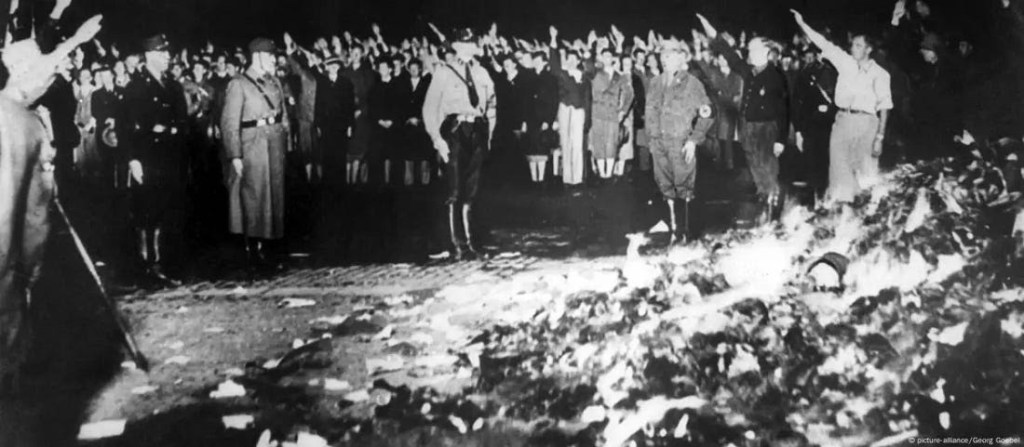


 Diane Ravitch's blog