Archives for category: State Takeover

Peter Greene weighs in on Mike Petrilli’s article in the New York Times.

He writes:

Mike Petrilli, head honcho of the right-tilted Fordham Institute thinky tank, made it into the New York Times today to do some chicken littling about Learning Loss and suggest a bold solution. Don’t have a NYT subscription? That’s okay– let me walk you through the highlights of this festival of Things We Can Stop Saying About Education Right Now, Please.

Let’s start by invoking general Learning Loss panic. Petrilli points out that students “lost significant ground” during covid, and now NWEA says that students continue “backsliding” and “falling further behind.” People, in Petrilli’s view, are not panicking enough about “America’s massive learning loss.”

First, let’s use some more precise language, please. In all discussions of learning loss, we are actually talking about scores on a Big Standardized Test of reading and math going down. We will never, ever know how much of the slippage in tests scores is the result of students going a year or two without practicing for the BS Test. But in the meantime, it would be great if we stopped talking about test scores as if they were infallible equivalents of learning and achievement.

Second, “learning loss” is a misnomer. I’m willing to bet that verrrrrrry tiny number of students in this country actually lost learning. I’m equally certain that the vast majority of students did not learn as much as they would have in a non-pandemic year, but that’s not the same. 

Think of it this way. It’s budget time, and the Mugwumps’ proposed budget increases spending on widgets from $500 to $600. The Wombats say, “Let’s only increase widget spending to $550.” That gets us to the part where the Mugwump talking point is “The Wombats want to cut spending on widgets.” When in fact everybody wants widget spending to go up.

That’s where we are. During the pandemic, learning occurred–just not as much as might have been expected in a normal-ish year. And this looks most like a crisis if you think of test scores like stock prices and focus on data rather than individual human students. (Petrilli does not invoke the baloney about impact on future earnings, so we’ll not go there right now.)

And, it should also be pointed out, it is where we were for a decade before covid even hit.

Having sounded the alarm, Petrilli bemoans the surfeit of leaders willing to make alarmy noises.The country is in desperate need of leaders who will speak the truth about what’s happening in our K-12 schools, and are willing to make the hard choices to fix it. Simply put, we need to bring some tough love back to American education.

Tough love? Back? Petrilli doesn’t really explain how the pandemic led to a loss of tough love in education. But that’s the dog we’re going to try to hunt with.

He cites Michael Bloomberg, who is ceaselessly alarmed about anything going on in public schools. Bloomberg wants a plan from Washington, a joint session of Congress, a Presidential address. 

Ah, says Petrilli–you know when politicians were on the same page about education, presumably flinging tough love around with wild abandon.

We’re talking, of course, about the golden days of No Child Left Behind. 

Petrilli remembers it fondly, citing how we saw “significant progress” which of course means “test scores went up,” which they did, at first, for a few years. Anyone who was in a classroom, especially a math or reading classroom, can tell you why. Within a couple of years, schools figured out what test prep would be most effective. Then they targeted students who were teetering on the line between High Enough Scores and Not High Enough Scores, especially the ones in special subgroups, and test prepped the hell out of those kids. At which point scores started stagnating because schools had done all they could do. 

The Average Yearly Progress requirements were set up as a bomb that would go off during the next administration. Again, if you were working in a school at the time, you remember that chart, showing a gentle upward glide for a bit before jutting upward to 2014, the magical year in which 100% of students were to score above average on the BS Test. Oh, Congress will fix that before it happens, we were told. They did not. By the early 20-teens, there were two types of school districts–those that were failing, and those that were cheating. 

Petrilli claims maybe success probably, saying NCLB “likely contributed” to graduation rates (no, schools just learned how to game those), college attainment rates (eh, maybe, but correlation is not causation) and “possibly” future real-life outcomes (absolutely not a shred of evidence–even reformster Jay Greene said as much).”It’s true that No Child Left Behind was imperfect,” says Petrilli. No. It stunk. But Petrilli has quite the tale here.There were fierce debates over “teaching to the test” and “drill and kill” instruction; about closing low-performing schools versus trying to fix them; and about the link between student achievement and family poverty. But once the law’s shortcomings became apparent, policymakers responded by adopting common standards and improving standardized tests, so as to encourage higher-level teaching. They poured billions into school turnarounds, invested in stronger instructional materials and started grading schools on how much progress their kids made from year to year, rather than focusing on one snapshot in time — an approach that is markedly fairer to high-poverty campuses. Still, the bipartisan effort that was No Child Left Behind ultimately fell apart as our politics fractured.

That’s quite the load. There was no debate about teaching to the test or drill and kill, because nobody was in favor of it except shrugging administrators who were staring at 2014. Petrilli also forgets that “teach to the test” ended up meaning “cut out any other classes–or recess–that does not appear on the test.” Arts slashed. History and science cut (at least for those teetering students). Closing low-performing schools was, in fact, the quickest way for a district to free itself of the low scores; who knows how many districts were restructured to put predictably low 8th grade scores under the same roof as better scores from lower or higher grades. And yes, poverty affects scores, despite all the No Excusing in the world.

What came next did not address any of these issues, The Common Core was an amateur hour fiasco. Were standardized tests improved? Not really (as witnessed by the fact that states dumped the SBA and PARCC as quickly as they could)–but it made a lucrative contract for some test manufacturers. Including progress in scores is great–unless you’re teaching kids who are already scoring at the top. School turnarounds have consistently failed (e.g. Tennessee’s failed Achievement School District). 

But he’s right that Trump’s election and appointment of Betsy DeVos hurt the reformster alliance (despite the fact that DeVos had long been part of the club). But then, so was the increasing split between the social justice wing of reform and the free marketeer AEI-Fordham wing. 

But look– NCLB and the sequel, Race to the Top, were just bad. They started from bad premises: 1) US education is failing because 2) teachers either don’t care or don’t know what they’re doing. They rest on a foundation of using a mediocre BS Test as an unquestioned proxy for student learning and teacher effectiveness, creating a perfect stage on which to conduct a national field test of Campbell’s Law (when you make a measure a proxy for the real thing, you encourage people to mess with the measure instead of the real thing, and it gets worse if the measure isn’t very good). And none of the “policymakers” who championed this mess ever came up with a single solitary idea of how to Fix Things that actually worked on either a local or macro scale.

The pandemic did not help anything in education. But it did lead to some flaming prose, like Petrilli’s assertion that “here we are, with decades of academic progress washed away and achievement trends still moving in the wrong direction.” This kind of overheated rhetoric is nothing new from the folks who gave us The Pandemic Erased Two Decades of Progress in Math and Reading as a headline. But what does it even mean? Washed away to where? Did knowledge dribble out of students’ heads? Did the learning of the past several years retroactively vanish with former students waking up across America feeling a little bit dumber somehow? Did teachers forget everything they knew about how to teach students, so they have to start over? Or do we just mean “test scores are down”?

Petrilli breaks this down to some other issues. His first point starts out fine– there’s an attendance problem right now. But he tries to set that beside an alleged nationwide move to lower standards. I’m not sure what basis there is for that assertion. He points to the “no zeros” rule used in some schools, but that rule existed in many places (like my old district) for ages. Maybe it’s letting slackers slide through in other places, but my own experience with no zeros policy is that it merely kept students working who would otherwise have given up–kind of the opposite of encouraging slacking. 

But then he’s slicing NCLB-style baloney again:Virtually all schools and districts have enjoyed a vacation from accountability. Almost nobody is worried about state officials shutting their campuses because of low performance, or forcing district schools to replace their principals or teachers.

You say that like it’s a bad thing, Mike. 

Embedded here are many of the same bad assumptions that have driven ed reform for decades. Teachers and schools have no motivation to do their jobs unless they have some kind of threat of punishment hanging over their heads. This isn’t just bad education policy–it’s bad management. As management which W. Edwards Deming pointed out often, fear should be driven out of the workplace. But NCLB and RttT were always all stick, no carrot, always starting out with the worst possible assumptions about the people who had chosen education as their life’s work (assumptions made largely by people who had never actually worked in a school). 

And even if you don’t dig Deming, there’s another thing to consider–none of the stuff Petrilli misses actually worked (which was Deming’s point). He points out that the kind of thing being done in Houston right now has become rare, to which I say “Good,” because Houston is a nightmare and it will end just like all the other similar attempts–no actual success, but lots of disruption and dismay and upheaval of children’s education.

Petrilli will now argue for NCLB 3.0. We need “action at scale,” but we can’t ignore “the support and assistance schools require.” Holding schools accountable wasn’t enough because– wait for it– if NCLB failed it was because schools lacked the expertise and know-how to do it right. And now Petrilli almost–but not quite–gets it.“Teaching to the test” and other problems with No Child Left Behind stemmed from schools resorting to misguided practices to meet requirements. Under pressure to boost scores, but without the training to know what to do, some educators engaged in endless practice testing, and stopped instruction in any subject that was unlikely to be on the state assessment. In a few places, educators even resorted to outright cheating. They likely felt they had no choice, because they hadn’t been given the tools to succeed.

Nope. Close but no cigar. No, the reason all those things happened was because, as NCLB 1.0 and 2.0 were designed, those things were the tools to “succeed.” Because “success” was defined as “get maximum number of kids to score well on a poorly-designed multiple-choice math and reading test.” Granted, when most of us think about “success” in education, we have a whole list of other things in mind–but none of those things were valued by NCLB or RttT.

But we’re rolling up to the finish now. But after a decade of building capacity, offering helping hands and adding funds, it’s time once again to couple skill-building with will-building.

That is a great line. But what capacity-building? More seats in unregulated charters and voucher-accepting schools? Which helping hands? And exactly whose will needs to be built? Parents? Children? Teachers? Policymakers? I’m seriously asking, because I think a hell of a lot of will was involved in slogging through the last couple of years. 

Petrilli calls on schools to spend their “federal largesse” to “catch their kids up”–and I think the call to accelerate education is one of the most infuriating calls of the last few years. Sure– because all along teachers have known how to educate children faster but they just haven’t bothered to do it, but hey, now that we have certified lower test scores, teachers will all bust the super-secret Faster Learning plans out of their file cabinets. 

Petrillii says we don’t actually need to bring back NCLB, though he seems to have been talking about nothing else– just let’s get out those big sticks and get back to (threats of) “tough interventions for persistent underperformance,” because that has totally worked in the past. No, wait. It hasn’t actually worked ever. 
Kids, too, should know that it’s time to hit the books again. We need to rethink our lax grading policies, make clear to parents that their children need to be at school and bring back high school graduation exams and the like to ensure that students buckle down.

Also, get those kids off our lawns. And while you’re making sure parents know their kids should be in school, maybe talk to all the reform crowd that has been working hard to build distrust of public schools and deepen disrespect of educators.

And the big finish:Education matters. Achievement matters. We need leaders who are willing to say so, and educators who are willing to act like these simple propositions are true.

This seems straightforward enough, though if you replace “achievement matters” with “standardized test scores matter,” which is what he really means, it doesn’t sound quite as compelling. And it’s insulting as hell to suggest that the ranks of educators are filled with people who are unwilling to act as if education matters. 

Well, the piece is completely on brand for the New York Times, and it certainly echoes the refrain of that certain brand of reformster whose response to their own policy failures has been, “Well, get in there and fail harder.” No Child Left Behind failed, and it not only failed but left some of its worst policy ideas embedded in the new status quo, continuing to do damage to public education right through today. 

The pandemic did many things, and one thing it did was panic the testing industry, which faced an existential threat that everyone might realize that school without the BS Test, or NWEA’s lovely test-prep tests, might actually be okay. It’s no wonder that they feel a special nostalgia for the days when the entire weight of the government reinforced their importance. So here we are, painting low reading and math tests scores as an educational crisis whose only solution is to get more fear, more threats, and especially more testing back into schools. 

I’m sorry if this assessment of some reformsters, their policies, and their motives seems harsh, but, you know– tough love.
Mike Petrilli, president of the Thomas B. Fordham Institute, published an article in the New York Times yesterday in which he lamented the “learning loss” caused by the pandemic and called for a new national effort, like No Child Left Behind, to instill rigor and accountability, which he says will raise test scores. Time to bring back tough love, he wrote.

I have a hard time criticizing Mike Petrilli because I like him. When I was on the board of the Thomas B. Fordham Foundation/Institute, I got to know Mike, and he’s a genuinely good guy. But when I left the board of the TBF Institute in 2009, it was because I no longer shared its beliefs and values. I concluded as early as 2007 that No Child Left Behind was a failure. I wrote an article in the conservative journal EdNext in 2008 about NCLB, saying “End It,” paired with an article by the late John Chubb saying, “Mend It.”TBF sponsored charter schools in Ohio—a move I opposed because think tanks should be evaluating policy, not implementing it; also, during the time I was on the board, the charters sponsored by TBF failed.

By the time I left, I had concluded that the NCLB emphasis on high-stakes standardized testing was a disaster. It caused narrowing the curriculum, gaming the system, cheating, excessive test prep, and squeezed the joy of teaching and learning out of classrooms.

Furthermore, the very idea that Congress and the U.S. Department of Education were stigmatizing schools as failures and closing them was outrageous. I worked in the US ED. There are many very fine career civil servants there, but very few educators. In Congress, the number of experienced educators is tiny. Schools can’t be reformed or fixed by the President, Congress, and the Department of Education.

NCLB and Race to the Top were cut from the same cloth: Contempt for professional educators, indifference to the well-established fact that test scores are highly correlated with family income, and a deep but misguided belief that punishing educators and closing schools were cures for low test scores. Both the law (NCLB) and the program (RTTT) were based on the assumption that rewards and punishments directed at teachers and principals would bring about an educational renaissance. They were wrong. On the day that the Obama administration left office, the U.S. Department of Education quietly released a study acknowledging that Race to the Top, having spent billions on “test-and-punish” strategies, had no significant impact on test scores.

And as icing on the cake, Mike Petrilli wrote an article in 2017 about the latest disappointing NAEP scores, lamenting “a lost decade.” That “lost decade” was 2007-2017, which included a large chunk of NCLB and RTTT. In addition, the Common Core standards, released in 2010, were a huge flop. TBF was paid millions by the Gates Foundation both to evaluate them and to promote them. The NAEP scores remained flat after their introduction. Please, no more Common Core.

I wrote two books about the failure of NCLB and RTTT: The Death and Life of the Great American School System: How Testing and Choice Are Undermining Education (2010) and Reign of Error: The Hoax of the Privatization Movement and the Danger to America’s Public Schools.

Mercedes Schneider and I both wrote posts commending Mike Petrilli in 2019 when he wrote about the “dramatic achievement gains” of the 1990s and early 2000s before NCLB kicked in. He attributed those gains to improving economic conditions for families and declining child poverty rates. I wanted to give him a big kiss for recognizing that students do better in school when they are healthy and well-nourished.

So, what did No Child Left Behind and Race to the Top produce? A series of disasters, such as the Tennessee Achievement School District and Michigan’s Educational Achievement Authority, both gone. A landscape of corporate charter chains, for-profit charters, for-profit online charters, and now vouchers, in which red states commit to pay the tuition of students in religious schools and fly-by-night private schools. A national teacher shortage; a sharp decline in people entering the teaching profession.

Please, no more tough love. No more punishment for students, teachers, principals, and schools. Let bad ideas die.

School started in the Houston Independent School District, and many teachers were stunned by the extent to which their actions were constrained by a script. The new superintendent Mike Miles has be never been a teacher but he thinks he knows everything about teaching. He laid down strict rules, and teachers must comply without hesitation. Miles is the kind of leader who, if put in charge of a hospital, would tell surgeons how to conduct surgeries. This story appeared in the Houston Chronicle and was written by staff writer Anna Bauman.

As she prepared for the start of a new school year in Houston ISD, a fifth-grade reading teacher stripped much of the colorful personality from her classroom, including motivational posters, student art projects, several bins of books and a social-emotional learning nook with comfy furniture.

She wiped away tears and, earlier this week, started teaching at a school under the New Education System, a wholesale reform model introduced by Superintendent Mike Miles, who was appointed in June by the Texas Education Agency to run the largest school system in Texas.

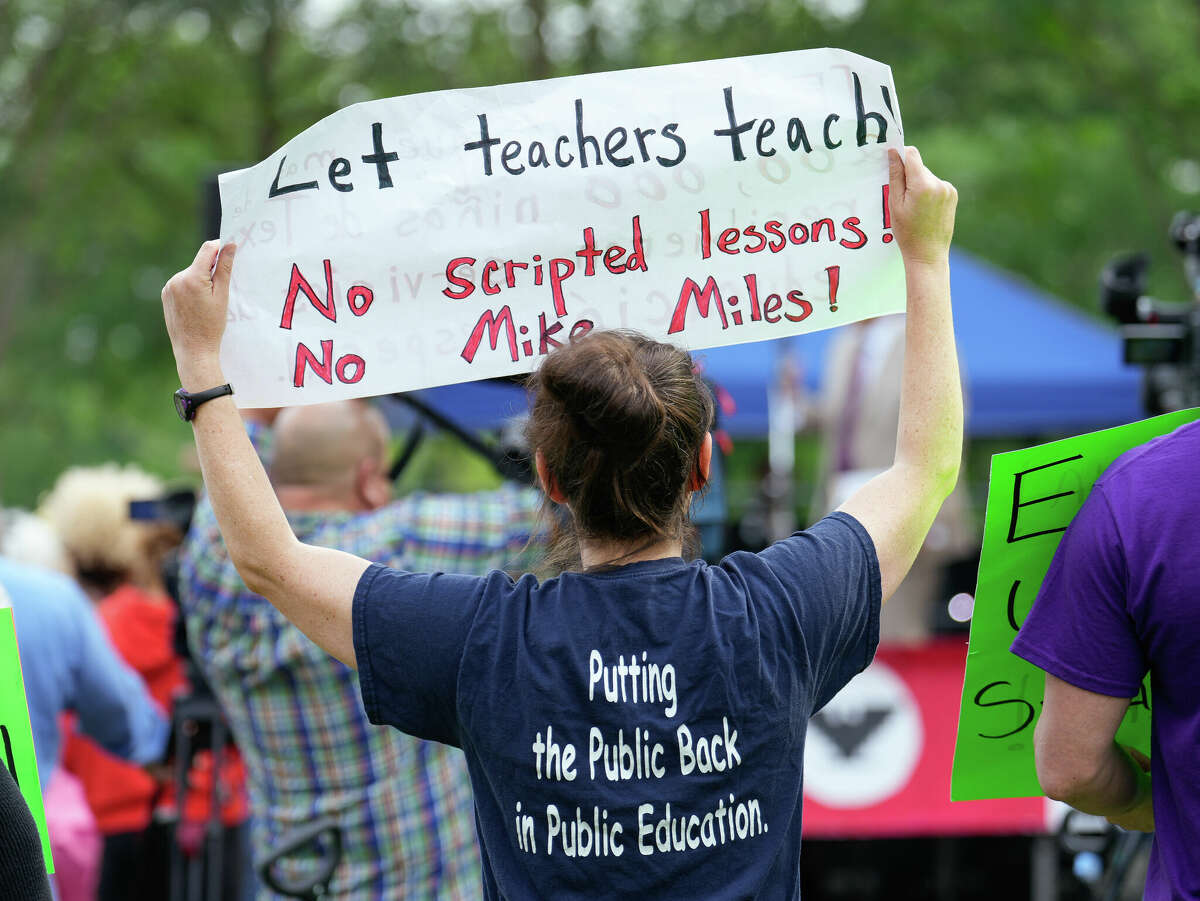
HISD teacher Sarah Rivlin participates in a rally hosted by The Greater Houston Justice Coalition and other community groups to speak against the state takeover of HISD Friday, March 31, 2023, at Cesar Chavez High School in Houston.

While parents and students may have noticed few of the changes, educators from a wide swath of schools in HISD say they feel micromanaged and stressed in their first week under new district leaders, who are reportedly enforcing strict guidelines and conducting frequent classroom observations that have sparked frustration, fear and low morale among teachers at both NES and non-NES schools.

“I feel like they are not allowing me to do what’s in the best interest of the children,” said the reading teacher. “Every day I go to work, I’m crying. Every day I leave from work, I’m crying.”

The superintendent, meanwhile, said he has been pleased with what he has seen while collecting a “baseline” at NES schools in the first week.

“I was very impressed with their progress, even in one day, but also their preparation for the beginning of the school year,” Miles said. “Teachers were teaching well, they were following the instructional model, and it was pretty good. It shows that the schools and the teachers have been preparing hard for the first day, second day of school.”

The district is laying the groundwork for a pay-for-performance evaluation system geared toward measuring the quality of a teacher’s instruction, although a Harris County judge has temporarily blocked HISD from implementing the system.

“The high-quality instruction, there’s a clear rubric for that, there’s a clear spot observation form, because we have to train teachers,” Miles said. “We can’t just do what we’ve always done, which is go into a classroom every three weeks or three months and think we’re going to see something that is effective teaching, and just rely on, ‘Oh, I’ll know it when I see it.’”

This year, all principals will be evaluated under a new system that requires them to give instructional feedback and spend significant time coaching teachers in classrooms. Principals will be graded in part based on the quality of instruction at their school. Meanwhile, teachers will also be measured with a new evaluation system this year, although those who do not work in the schools targeted for reform may ask for a waiver.

District leaders trained teachers in recent weeks on the evaluation system and new classroom expectations. For example, one slideshow presented during teacher training listed some “common practices that we want to generally avoid,” including stream of consciousness writing, rooms with dim lighting and worksheets that are not purposeful. The training materials also discouraged teachers from showing entire films, letting kids “earn” free time and allowing “poor readers” to read aloud during class.

The slideshow instructed teachers to post a “lesson objective” on the board before the start of each class, avoid wasting time on transitions between activities, teach “bell to bell,” teach grade-level content to “every student every day” and use a timer to guide pacing of the lesson. Teachers should use a “multiple response strategy,” an activity that engages and checks the understanding of all students, every four minutes, according to a sample spot observation form.

On the first day, teachers said they were expected to skip introductions and get-to-know-you games, instead jumping right away into instructional material.

“I don’t even know who my kids are because we haven’t been able to get to know them,” said the fifth-grade reading teacher. “They still call me ‘teacher’ because they can’t remember my name.”

She has struggled to stay on pace with the timed lessons and was scolded for bringing in additional materials to help students, many of whom are Spanish speakers who cannot read on grade level. When she raised concerns about the fast pace, a district official told a campus administrator that the teacher was “moving too slow.”

“We’re not allowed to give them work on a level they understand. Most of the time, they sit there confused,” the teacher said. “I’ve had students crying since day two, saying they’re overwhelmed.”

Meanwhile, Jessica Waligorski, a special education support teacher at Isaacs Elementary School, said she appreciates the rigor, high expectations and organization of the NES model. Administrators are supportive and easily accessible at her NES campus, she said. Teachers lift each other up when doubts creep in and students have taken to the new model “like sponges,” she said.

“Everyone is holding each other to a standard and we’re not wavering,” she said. “We have set the tone, we have set expectations, we have set goals … and our kids have been engaged, learning. They don’t have a minute to misbehave because there’s so many things they’re learning.”

Miles has said there is no directive from the district mandating that teachers at non-NES schools teach with a specific curriculum or follow a certain instructional model. In reality, however, many of the new rules and expectations seem forced on campuses across the district, including high-performing schools that do not fall under NES.

Some of the rules seem to have been taken to an extreme. One teacher said she asked for an accommodation to use lamps instead of florescent lights in her classroom due to a serious medical condition. District officials denied her request and suggested another option: Wear sunglasses.

The teacher has already started getting headaches from the bright lights.

“I have all my lights on,” she said. “I’m trying to get through the day.”

In addition to turning on lights, the teacher, who works at a non-NES middle school, has made several other changes this year, including removing bean bag chairs from her classroom, keeping the classroom door open and following the new instructional techniques outlined on the evaluation rubric.

District staff have been observing classrooms almost every day this week, she said. The teacher said she was nervous to sit down while taking attendance or interrupt a lesson to tell a funny story during class.

“We all feel afraid to step out of line,” she said.

One teacher at a non-NES campus said she was observed by appraisers three times on Monday, creating a climate of fear and nerves even at a top-ranked campus. She loves having visitors in her classroom — “I’m a really good teacher and I’m proud of what I do” — but it feels different when “someone’s sitting there, ticking boxes,” especially on the first day of class.

“People are having trouble sleeping because they’re on edge,” she said. “It’s the constant anxiety that we’re going to be caught and that we’re going to be dinged. … I think you’re going to see a mass exodus of teachers at the end of this year, if this continues.”

One teacher at a different non-NES campus said he and other educators were chastised for spending the first day on introductions, logistics and relationship building with students rather than teaching content.

The teacher stayed three hours late that night to adjust his lesson plans for the second day, and his principal checked in first thing the next morning to make sure that he was prepared to teach a full-blown lesson, as expected by the appraiser in his classroom.

The new expectations and frequent classroom observations from district administrators this week has created a sense of frustration and anxiety on campus, according to the teacher, who said he was ready to quit even though he feels “called” to the profession.

“There’s no grace, there’s no empathy, there’s no treating people as people,” he said. “We are not encouraged to move forward — we’re pushed off the cliff and told to fly. And if you don’t fly, you fail.”

Many of the teachers at his top-rated campus have decades of experience, he said.

“I work at a really special school. … We should not be the target,” he said. “We were hoping that we’d be so far under the radar that we’d be left alone, but that’s not the case.”

Mercedes Schneider summarizes the checkered career of Mike Miles, who was put in charge of the Houston Independent School District by State Commissioner Mike Morath, who was appointed by hard-right Republican Governor Greg Abbott. Abbott wants to punish Houston for not voting for him. What better punishment than to install Mike Miles as superintendent?

Schneider writes:

In June 2023, the Houston Independent School District (HISD) became the latest major school district to experience a top-down, ed-reform tactic that largely ignores community investment and fail to deliver on promised academic gains: the state takeover of a school district.

On June 01, 2023, the Texas Education Agency (TEA) appointed Mike Miles as the new HISD superintendent.

Miles is the golden-child product of market-based, ed-reform leadership. As reported in his LinkedIn bio, Miles holds no college degrees in teaching (engineering; slavic languages and literature; international affairs and policy). He has never been a classroom teacher, never a site-based administrator, yet he was a district superintendent in Colorado for six years (2006-11) and superintendent of Dallas ISD for three.

Though he does not mention it in his LinkedIn bio, Miles was a member of the Class of 2011 at the Broad Superintendents Academy A 2011 EdWeek article on Broad superintendents includes the criticism that they “use corporate-management techniques to consolidate power, weaken teachers’ job protections, cut parents out of decisionmaking, and introduce unproven reform measures.”

Indeed.

In 2015, Miles abruptly resigned from Dallas ISD amid being, as WFAA.com states, “at the center of controversy since he took the position nearly three years ago,” which apparently included questions about misdirecting funding intended for at-risk students and the subsequent exit of the Dallas ISD budget director. (Also calling Miles “a lightening rod for controversy,” WFAA.com offers this timeline of Miles’ unsettling tenure in Dallas.)

Despite all of his Dallas ISD controversy, TEA– which is no stranger to stepping into its own controversy— chose to hire Miles to lead its newly-state-snatched HISD.

Following his Dallas ISD exit, in 2016, he founded a charter school chain, Third Future Schools, which has locations in Colorado, Texas, and Louisiana. For two years (2017-19), Miles was a senior associate in an education consulting firm, FourPoint Education Partners.

And according to his LinkedIn bio, Miles is/was on a number of ed-reform organization boards, including Teach for America (TFA) Colorado (2017-20); National Council on Teacher Quality (NCTQ) (2013-present), and Chiefs for Change (2015-present).

Please open the link to finish reading the post.

John Thompson, retired teacher and historian in Ohlahoma, keeps us up to date on the battle between Tulsa Public Schools and Ryan Walters, Oklahoma’s far-right MAGA Secretary of Education.

He writes:

Who won the latest battle between Oklahoma Superintendent of Public Instruction Ryan Walters and the Tulsa Public Schools (TPS)?

Walters had promised to fire TPS Superintendent Deborah Gist, and drive “Diversity, Equity, and Inclusion” (DEI) out of the classes, as well as mandating his ideology-driven curriculums. Then, Walters said at a Moms for Liberty event, “Tulsa Public Schools is getting money from the Chinese communist government,” He said, “They funneled it through a nonprofit — I mean, money-laundered it through a nonprofit in Texas.”

But Walters’ assault on the TPS accelerated further when Walters said he “had been in regular communication with Houston [HISD] about their school takeover.” And according to HTUL news, he has said “there’s currently a standards team and textbook committee to gather information on possible vendors like Hillsdale College and PragerU.” It thus became clear to Tulsans that the survival of their schools (and Oklahoma schools in general?) was at stake.

Walters’ promised to reveal his plan during the Oklahoma State Board of Education (OSDE) meeting on August 24. So, TPS board member, Jennettie Marshall, warned “during the board’s 90-minute discussion of the district’s accreditation status. ‘We are under attack. If you’re not keeping up with Houston, … if we continue the course we’re on, that’s where we’re headed. That shouldn’t be.’”

The day before the OSDE meeting, Deborah Gist resigned in the hope that Walters wouldn’t take over the state’s largest school system. And at the meeting, the World also explained that Walters “praised the local school board for ‘rooting out a cancer in the district that caused so many problems,’ referring to the Tulsa school board’s formal agreement approved Wednesday evening to part ways with Tulsa Superintendent Deborah Gist.” But “he also vowed to give the local Tulsa school board ‘a very short rope,’ saying he would return and ask for additional authority from the state Board of Education if he does not see adequate progress made within a few months.”

In response, the TPS Board Chairperson, Stacey Woolley, criticized Walters’ misstatements about the system’s student outcomes. She also said, “Antics and rhetoric must stop. We had two bomb threats at schools in the city of Tulsa because of rhetoric.” she said. “I do look forward to going forward and continuing the work and accelerating that work.”

Similarly, “Rep. Regina Goodwin, D-Tulsa, told the state board Walters has been ‘fostering an atmosphere of intimidation’” and protested, “When you talk about Black and brown children in Tulsa, Oklahoma, there are issues that go on in larger cities that have to be addressed. You don’t just say ‘You better perform better in three or four months!’ What kind of plan is that?”

Almost certainly, pushbacks by TPS supporters, and private communications, produced this outcome. It is too soon to know which side won the battle. Or, should I say lost less?

Unless Walters is correct and the TPS is secretly plotting with China to bring our democracy down, or violence erupts, I believe that the most important aspect of the battle could be the way that educators and journalists (especially at the Tulsa World) issued fact-based rebuttals to the extremists. Then, the Schusterman and the Kaiser foundations publicly opposed Walters’ takeover threats. Mayor G.T. Bynum finally came out against the takeover. And on the day of the OSDE meeting, Booker T. Washington H.S. students walked out.

The resistance even reached the point where the World editorialized, “conservative lawmakers must speak up.” And also, Gov. Kevin Stitt distanced himself from Walters who he appointed and then repeatedly supported. The World reported that Stitt said he “believes the State Board of Education will not overreact when considering accreditation for Tulsa Public Schools.” Stitt now says, “I don’t know what takeover is, what they are talking about. I believe in local control. I think the local board needs to address that.”

Secondly, the battle wasn’t over Deborah Gist. It was about the future of public education, and defending our democracy.

Thirdly, the former-teacher Rep. John Waldron (D) explained what we now know, “A far-right media source spread a doctored video suggesting a librarian was spreading a ‘woke agenda,’“ causing a Tulsa Union elementary school and the librarian to receive a bomb threat. (By the way, Waldron noted that the librarian’s actual agenda was promoting “reading and kindness.”)

Then, Walters reposted it, leading to two more bomb threats. NPR’s Beth Wallis reported that the first threat included, “I’m not going to stand as you bastards continue to indoctrinate and prey on our children.” And it also warned the librarian, “We know where you live.” Walters’ response was, “Woke ideology is real and I am here to stop it.” Another threat said:

“We placed a bomb at [the librarian’s elementary school address] and inside the Residence of [the librarian]. You will stop pushing this woke ideology or we will bomb every school in the union district.”

At the time that Wallis published the story, Walters had not removed his “repost of the altered video.”

Perhaps we will someday learn the behind the scenes discussions that prompted Walters to pull back from his most extreme threats. Who knows, perhaps this mayhem will prompt Republicans who are appalled by Walters to come out in support of public education and against the dangerous politics of hate. However, Rep. Mark McBride, R-Moore, the chair of the Oklahoma House subcommittee on education funding who has frequently challenged Walters, complained to the Oklahoman that “he was unable to sit in the conference room during the board meeting, despite requesting a seat along with multiple other lawmakers for several weeks.”

Finally, the other issues pushed by Walters at the OSDE meeting are a recipe for dysfunction and chaos. As Nondoc’s Bennett Brinkman reported, the board unanimously approved Walters’ demand for a “a report of ‘foreign government contributions to Oklahoma schools,’” and “a report regarding district policies and informal guidance for ‘student pronouns in Oklahoma schools.’” 

Moreover, Walters’ mandates, such as teacher training in the science of reading, can’t be rushed into place. As Linda-Darling Hammond explains, school improvement can only “move at the speed of trust.” Moreover, will teachers be expected to focus on phonics, or will the TPS be allowed to bring back the science and history instruction that is required to build the background knowledge that is needed for reading for comprehension? 

Sadly, we’re likely to learn more fake news over the next few months about what Walters sees as student outcomes, and a passing grade for high-challenge schools. Across the nation, we have seen the disastrous effects of rushed, test-driven instruction that was forced on high-poverty schools. Also, I sure hope we don’t see violence. But, even though Walters warned the TPS, “Do not test me,” I expect that the defenders of schools in Tulsa and elsewhere will continue to push back diplomatically but firmly. For better or for worse, we’re likely to see in the next few months what the TPS will face.

In true Broadie style, Houston Superintendent Mike Miles removed two elementary principals only days before the start of school. He started his job of “reforming” the Houston public schools in June, so he obviously did not observe either of them. This is disruption to the max. Teachers and parents learned about this abrupt action through an automated phone call.

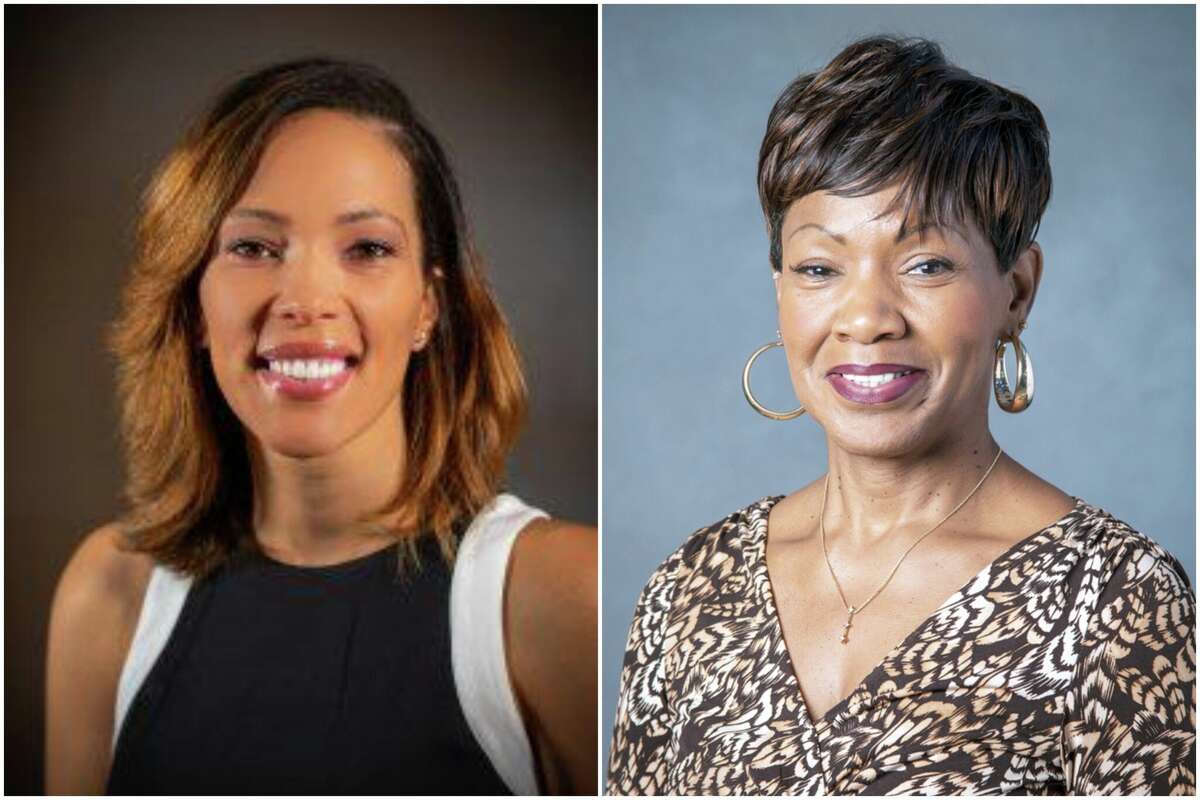
Erin Trent (left), principal at Stevens Elementary School, and Linda Bellard, principal at Garcia Elementary School, were both removed from their positions Aug. 23, 2023. 

Erin Trent (left), principal at Stevens Elementary School, and Linda Bellard, principal at Garcia Elementary School, were both removed from their positions Aug. 23, 2023. Houston ISD

Parents and teachers at Stevens say they were “blindsided” by the announcement, which was made via an automated phone call.

“This unexpected and impersonal communication from the district caused immediate anxiety, confusion and fear, not just for me personally but among hundreds of parents,” said Adam Chaney, the parliamentarian for Stevens’ Parent Teacher Community Organization.

“Our community deserves clarification immediately. We are two days away from ‘Meet the Teacher,’ the whole campus is going to be present, and then Monday morning is the start of school,” Chaney said. “It’s become increasingly difficult to avoid interpreting this chaotic situation through the lens of this controversial takeover.”

HISD officials declined to comment further or provide a reason for the reassignments, saying that the district cannot comment on ongoing personnel matters. The call Stevens parents received Wednesday acknowledged that “the change may feel abrupt,” but that it had “become clear that this change is necessary to ensure Stevens Elementary students start the year off well with access to high-quality instruction on day one that meets their needs and supports increased academic outcomes on the campus…”

Trent’s abrupt removal has led members of the Stevens community to speculate that she was reassigned because she did not opt in to Superintendent Mike Miles’ New Education System earlier this summer.

One teacher, who asked to remain anonymous for fear of retaliation, said Trent resisted pushes from the HISD central office to become an NES-aligned school, which would have seen many of Miles’ most sweeping and controversial reforms implemented at Stevens.

Miles also disbanded the HISD team of autism specialists who served schools throughout the district.

The State Secretary of Education in Oklahoma Ryan Walters has been threatening to take control of the Tulsa public schools, replace the elected school board and fire the district superintendent. State takeovers have a long history of failure. Tulsa Mayor G.T. Bynum wrote a strongly worded letter to the Oklahoma State Board of Education and told its members in no uncertain terms, “hands off our public schools and our elected board!”

It’s a terrific letter. Open the link and read it. If only every city had leadership who stood up for their public schools like Mayor Bynum did!

Of course, Houston’s Mayor opposed the state takeover of HISD but Governor Abbott and his state Commissioner Mike Morath were determined to destroy democracy in Houston because the people there vote Democratic.

Speaking of Houston, the state-imposed Superintendent Mike Miles celebrated his arrival with a splashy musical performance, while teachers sat obediently in their seats at the NRG Arena.

The Texas Observer reported:

Hundreds of Houston’s teachers gathered at the NRG Center early morning Wednesday, where they were directed to wear school colors, wave school banners, and shake sparkly pom poms. Facilitators started the Harlem Shuffle dance in the aisles. And then, as the teachers were motioned back into their seats, the room turned dark and silence fell.

A single spotlight shined on a student performer in an aisle belting the lyrics to West Side Story’s “Something’s Coming”:

Something’s comin’, something good
If I can wait!
Something’s comin’, I don’t know what it is
But it is
Gonna be great!

The stage lit up to reveal a 1950s diner with red and white checkered tablecloth tables and red rubber stools. In walked new district superintendent Mike Miles, playing “Mr. Duke,” owner of the joint who doubles as a counselor who listens to the teachers’ and students’ grievances.

Since March, when the Texas Education Agency seized control of the Houston Independent School District (HISD), citing the failure to meet state standards at one high school, Houston’s teachers and parents have seen the battle with the state-appointed school board and superintendent play out in community meetings and in the press. Now, during a week of district-mandated conferences at the NRG Center, teachers were watching the takeover play out on stage. Miles directed the script—an hour-long musical that took six weeks to prepare, depicting how the new superintendent will rekindle the extinguished spirits of burnt-out teachers, give hope to hopeless students, and bestow a visionary plan to save public education.

“We are lost as a profession,” a teacher said on stage.

“My dreams are getting smaller and smaller,” a student later echoed.

“Well, maybe that new guy—you know, super … super …”

“You mean Superintendent Miles?”

“Maybe Superintendent Miles will make things better for us.”

Maybe.

But teachers who spoke to the Texas Observer said Miles’ performance wasted the district’s time and money and mocked their professional experience and concerns.

“For him to turn our concerns into satire is really insulting,” HISD teacher Melissa Yarborough said. “It reeks of propaganda.”

“He wasted our time when we could be in our classrooms preparing our lesson plans before school starts,” said Chris, an elementary school teacher who asked only to be identified by his first name.

Jessica, who has been teaching for 24 years, told the Observer Miles’ musical “was very condescending. The message was that we don’t know what we’re doing. And he’s coming in to show us how to do it right.”

The Houston Chronicle also reviewed Miles’ musical event.

A few fine arts teachers who spoke to the Chronicle said Miles is hypocritical for spreading his message through a musical theater production even after disrespecting fine arts teachers, who at NES schools will be paid far less than their peers teaching reading, math or science.

“He claims reading and math are the forefront and he wants to get rid of fine arts. Yet he used fine arts to promote his ideologies,” said one fine arts teacher, who called the production a “slap in the face.”

Another fine arts teacher said it was “the very definition of irony.”

“The fact he used HISD fine arts teachers and students in his presentation, the day after saying in his evaluation sessions that we are not as essential … creates a sense of rage and despair I cannot even describe,” said the teacher, who was told they could be fired for making negative public statements about the district.

Only staff from NES campuses attended the live event at NRG, while educators from other schools watched convocation remotely from their own campuses following a last-minute scheduling change.

Funnily enough, Miles also staged a splashy musical with him as the star when he began his tenure in Dallas in 2012. All of the district’s 18,000 teachers were summoned to watch. The video has been removed from the internet. But The Texas Observer ran a great story about the event, with a photo of him dancing with students. At that performance, he laid out his vision for making DISD the best urban district in the nation by 2020 using ideas he learned at the Broad Superintendents Academy. He was, he said, a believer in disruptive change, like Arne Duncan. “Miles epitomizes today’s school reform movement, convinced that anything worth doing in a classroom can be measured.” But three years later, he was gone.