Archives for category: Privatization

The National Education Policy Center at the University of Colorado invited scholar Chris Lubienski of Indiana University to review a recent publication of EdChoice (the new name of the Milton and Rose Friedman Foundation), which summarizes what voucher advocates believe about the efficacy of vouchers. The publication is titled “The 123s of School Choice: What the Research Says About Private School Choice Programs, 2023 Edition.”

Not surprisingly, EdChoice concludes that vouchers are effective. Lubienski, however, is critical of the studies they include and those they exclude. In short, EdChoice engages in cherry-picking to bolster its cause.

While the report confidently asserts that school choice works, Lubienski says that the authors ignore recent studies that show the opposite to be true. For many students, vouchers are harmful.

If your district or state is under pressure to endorse vouchers, be sure to read this review.

The New Republic convened a meeting to discuss Trump, book banning and the culture wars. Randi Weingarten described the attack on schools as a coordinated strategy to destroy public schools and promote vouchers. Edith Olmsted of The New Republic interviewed her. None of this is new to readers of this blog, but the American public needs to hear this message. Again and again.

Book Bans Are a Conservative Plot to Destroy Public Schools, Says Randi Weingarten, The teachers union head denounced the “extremist strategy,” which also includes voucher campaigns and manufactured outrage over critical race theory.

DANIEL BOCZARSKI/GETTY IMAGES FOR MOVEON

Teachers union head Randi Weingarten says that the campaign by conservatives to ban books isn’t about the books at all, but part of a broader strategy to destroy public schools—one that was supercharged by the pandemic.

“You take the agita and the anxiety that people had at Covid, that fear, and you combine it with a right wing who has wanted to kill public schools for years and take that money for vouchers, and you have the scenario we have,” Weingarten, the president of the American Federation of Teachers, said Wednesday at The New Republic’s Stop Trump Summit.

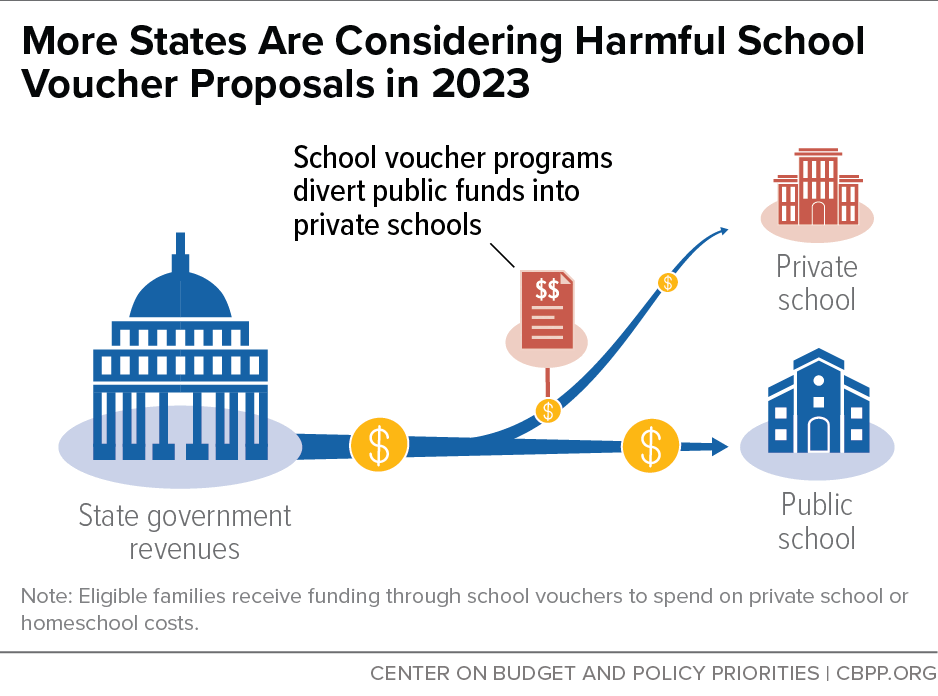
Vouchers, which use public education dollars to fund private and religious school attendance, are just one pillar of the conservative campaign to “undermine, destroy, and defund” public schools, she said. The other two are book banning and manufactured outrage over critical race theory.

Weingarten pointed to conservative activist Chris Rufo and a comment he made at Hillsdale College, a Christian nationalist school, in which he admitted that focusing on these issues was all part of a master plan to promote universal vouchers: “To get to universal school choice, you really need to operate from a premise of universal public school distrust.”

In an interview with TNR after the event, Weingarten explained the “extremist strategy” Rufo and other conservatives have used to defund public schools. “The hook was trust. If you really create as much distrust as possible in public schooling, then parents will look at privatization as an option,” she said.

That’s where critical race theory comes in.

“[Rufo] tried to make a term that nobody knows so toxic, so that you can weaponize it and make fear,” she said. “Conversations about hard subjects became weaponized as indoctrination. Which is patently ridiculous, and dangerous.”

Race, as well as gender, is the subject conservatives have focused on in their campaigns to ban books in public schools and libraries.

“What [Republican Governor Ron] DeSantis is doing in the so-called ‘war on woke,’ is exactly part of their playbook—to make people afraid of books, and afraid of what we do in school,” Weingarten said. According to Pen America, Florida passed 15 “educational intimidation” bills in the last two and a half years.

The “parents’ rights” movement is made up of a loud minority, Weingarten said, and actively undermines what most parents want. “What we see in Florida is that 60 percent of the book banning has been done by 11 people,” she said.

The AFT has partnered with The New Republic in fighting back against such bans. TNR’s Banned Books Tour has been delivering thousands of banned books across the country this month, most recently in Florida.

The Texas Tribune reports on the blatant hypocrisy of State Commissioner of Educatuon Mike Morath. He used a sledgehammer on the Houston Independent School District because of one low-rated school (whose rating improved before Morath acted). But he allows failing charter schools to expand with no corrective action. His heart belongs to Governor Greg Abbott and the charter industry. His hostility to public schools, attended by 90% of Texas students, is obvious. The takeover of HISD was vengeful and partisan, motivated by politics, not the well-being of students.

The story was written by Kiah Collier and Dan Keenahill on behalf of THE TEXAS TRIBUNE AND PROPUBLICA.

In June, Texas Commissioner of Education Mike embarked on the largest school takeover in recent history, firing the governing board and the superintendent of the Houston Independent School District after one of its more than 270 schools failed to meet state educational standards for seven consecutive years.

Though the state gave Houston’s Wheatley High School a passing score the last time it assigned ratings, Morath charged ahead, saying he had an obligation under the law to either close the campus or replace the board. He chose the latter.

Drastic intervention was required at Houston ISD not just because of chronic low performance, he said, but because of the state’s continued appointment of a conservator, a person who acts as a manager for troubled districts, to ensure academic improvements.

When it comes to charter school networks that don’t meet academic standards, however, Morath has been more generous.

Since taking office more than seven years ago, Morath has repeatedly given charters permission to expand, allowing them to serve thousands more students, even when they haven’t met academic performance requirements. On at least 17 occasions, Morath has waived expansion requirements for charter networks that had too many failing campuses to qualify, according to a ProPublica and Texas Tribune analysis of state records. The state’s top education official also has approved five other waivers in cases where the charter had a combination of failing schools and campuses that were not rated because they either only served high-risk populations or had students too young to be tested.

Only three such performance waivers had been granted prior to Morath, who declined numerous requests for comment. They had all come from his immediate predecessor, according to the Texas Education Agency.

One campus that opened because of a waiver from Morath is Eastex-Jensen Neighborhood School, which is just 6 miles north of Wheatley High School. Opened in 2019, Eastex didn’t receive grades for its first two years because the state paused all school ratings due to the adverse impacts of the pandemic. In 2022, the last time the state scored schools, Eastex received a 48 out of 100, which is considered failing under the state’s accountability system. The state, however, spared campuses that received low grades from being penalized for poor performance that year.

“The hypocrisy here seems overwhelming,” said Kevin Welner, an education policy professor at the University of Colorado Boulder. “This is the same education commissioner who justified taking over the entire Houston school district based largely on one school’s old academic ratings.”

Open the link to read more about Mike Morath’s hypocrisy. Texas Republicans are determined to turn the state into a playground for edupreneurs. If only the parents of public school students voted against them, they would all be out of office. Governor Abbott and his appointees take instructions from the evangelical billionaires, Farris Wilks and Tim Dunn.

Governor Greg Abbott really, really wants vouchers. The State Senate agrees with him. The House of Representatives is controlled by Republicans but it thus far has refused to pass them. Rural Republicans in the House have allied with urban Democrats because both know that vouchers will harm their community public schools.

But Abbott is pulling out all the stops. He even refused to raise teachers’ salaries or increase public school funding until he gets a voucher bill.

The Texas Observer comments:

Governor Greg Abbott has called lawmakers back to a special legislative session starting this coming Monday, October 9. His message to them: Pass school vouchers—or else.

“There’s an easy way to get it done, and there’s a hard way,” Abbott said during a September 19 tele-town hall. “If we do not win in that first special session, we will have another special special session and we’ll come back again. And then if we don’t win that time … We will have everything teed up in a way where we will be giving voters in a primary a choice.”

From bullying legislators to “co-opting” churches and religious services, Abbott “wants to force a voucher at all costs,” said Patty Quinzi, legislative director of the Texas American Federation of Teachers. Pulling the purse strings of Abbott’s voucher campaign are a handful of billionaires who have invested millions to weaponize far-right culture war propaganda to fund what the governor has branded as “school choice” for parents.

Meanwhile, many public school districts started this school year with a budget deficit after the Senate refused to use the state’s $33 billion budget surplus to increase school funding without the condition of passing universal vouchers.

During the regular session, the House twice rejected proposals for vouchers or “an educational savings account,” citing constituent concerns that voucher programs would siphon money from public schools. When the Senate attempted to force the House to accept universal vouchers in return for passing its school funding proposal, its author, Representative Ken King, pulled the bill.

“In the end, the Senate would not negotiate at all. It was a universal ESA or nothing,” King wrote in his public statement. “I am committed to protecting the 5.5 million school kids in Texas from being used as political hostages. What the Governor and the Senate [have] done is inexcusable, and I stand ready to set it right and continue to work for the best outcome for our students and schools.”

In early August, the House’s 15-member committee on Educational Opportunity and Enrichment issued its interim report, signaling some members’ willingness to compromise on school vouchers if they were limited to students with special needs and if the money to fund a voucher program came out of the state general revenue instead of the Permanent School Fund. Earlier this year, the Observer revealedhow limited voucher programs in other states served as a trojan horse for larger, universal voucher programs, leaving public schools with large deficits and a loss of federal civil rights protections for parents who took their children out of public schools.

“We are $40 billion below the national average for school funding, so we have no business talking about any kind of program that takes more money out of our public schools,” said Representative Gina Hinojosa, who serves on the committee but declined to endorse its recommendations.

Greg Abbott has vowed to keep calling special sessions until the Legislature passes a voucher bill.

The National Education Policy Center issued a report about the likely fiscal impact of vouchers, which finds that vouchers are a risky venture with no proven benefits. NEPC is noted for its peer-reviewed reports.

An NEPC Review funded by the Great Lakes Center

Key Takeaway: Tax-credit scholarship programs probably incur more costs than savings for state and school districts, placing financial strain on state budgets and driving the need for future budget cuts.

GRAND RAPIDS, MI (September 26, 2023) – A recent report from the Georgia Department of Audits and Accounts examines the monetary costs and benefits of the state’s Qualified Education Expense Tax Credit (QEEC), a voucher policy that provides a public subsidy for families to pay for private school tuition. A review of the report, however, contradicts its claim that the policy provides a net fiscal benefit to the state budget.

David Knight of the University of Washington reviewed Qualified Education Expense Tax Credit: Economic Analysis, and he found several methodological challenges that undermine the report’s conclusions and its usefulness.

One key claim in the report is that the tax credit results in $81 million of forgone state tax revenue per year. Another key claim is that the vouchers incentivize almost 20,000 students per year to choose private schools instead of public, thus removing the cost of educating those students from state and local budgets. Based largely on these two claims, the report concludes that QEEC provides a net fiscal benefit for Georgia’s state budget.

Professor Knight points to a lack of data about how many students per year do actually switch from public to private schools because of the voucher subsidy and incentive. In fact, existing private-school families have extremely strong incentives to accept the public subsidies. And if most of the vouchers are provided to support these students who were already planning to attend a private school, then the policy only subsidizes private school students with funding that could otherwise be returned to taxpayers or invested in the state’s public education system, which is open to all students.

While these calculations are all necessarily grounded in some speculation because of the unregulated elements of the voucher policy and the resulting lack of hard data, the most likely result of tax credit scholarship programs like QEEC is that the state and school districts incur more costs than savings, placing financial strain on state budgets that could require future cuts.

Because the report relies on unrealistic assumptions, its suggestion that program benefits outweigh costs is tenuous and risks misleading state education leaders. Instead, state leaders should invest educational dollars in policies that have a positive return on investment and therefore help, rather than harm, state and local budgets.

Find the review, by David Knight, at:
https://www.greatlakescenter.org

Find Qualified Education Expense Tax Credit: Economic Analysis, written by Greg S. Griffin and Lisa Kieffer, and published by the Georgia Department of Audits and Accounts, at:
https://www.audits.ga.gov/ReportSearch/download/29827

NEPC Reviews (https://nepc.colorado.edu/reviews) provide the public, policymakers, and the press with timely, academically sound reviews of selected publications. NEPC Reviews are made possible in part by support provided by the Great Lakes Center for Education Research and Practice: https://www.greatlakescenter.org

James Talarico is a former teacher who was elected to the Texas State Legislature in 2018. Republicans tried to push him out by redistricting, but he moved to another district and was handily re-elected. He is a staunch supporter of public schools and serves on the House Public Education Committee. In this tweet, he announces his collaboration with Moms Against Greg Abbott. The good MAGA works tirelessly to evict the tyrant Greg Abbott, who boasts about his cruelty and is determined to defund public education in Texas. Governor Abbott has vowed to call as many special sessions as necessary to get vouchers. Of course he must know that most vouchers will be claimed by students already enrolled in private schools. This gambit is a way he can reward his religious voters, the evangelical and Catholic voters who would like to have a public subsidy for their private school tuition.

This is the only post today. Read as much of it as you have time for. The report is a valuable reminder that Ed-tech is oversold and even dangerous. It has its uses, for sure. But it should never replace teachers or parents.

UNESCO released a major blockbuster report warning about the dangers of relying too much on education technology. The author of the report was Mark West. The title of the report is An Ed-Tech Tragedy? Educational Technologies and School Closures in the Time of COVID-19.

An alternate link: https://teachertaskforce.org/sites/default/files/2023-09/2023_UNESCO_An-ed-tech-tragedy_Educational-technologies-and-school-closures-in-the-time-of-COVID19_EN_.pdf

The puzzle at the heart of the document is the clash between learned experience and the imperatives of greed. We learned during the pandemic about the risks of becoming dependent on ed-technology as the main driver of instruction. As we reflect on the period from March 2020 to now, we can discern the damage that occurred to students when their teachers were replaced by virtual instruction: boredom, learning loss, mental health issues, loneliness, lack of socialization with their peers, lack of personal interaction with teachers.

Yet with most people believing that the pandemic (or the worst of it) lies in the past, ed-tech corporations are focused on selling more of what has already failed. Why would we want to expand what has demonstrably proved inadequate and harmful to students?

You probably will take a long while to read the full report, but do read the summary and conclusions to whet your appetite. The overview concludes that the global reliance on ed-tech was necessary in the circumstances, but was a tragedy. Children need human teachers. They need people who look them in the eye and encourage them. Education is not a mechanical process; people are not widgets.

The UNESCO report reviews the global evidence of the harm caused by dependence on ed-tech:

[The report] exposes the ways unprecedented educational dependence on technology often resulted in unchecked exclusion, staggering inequality, inadvertent harm and the elevation of learning models that place machines and profit before people.

The summary says:

An Ed-Tech Tragedy? documents how widespread school closures and the hard pivot to remote learning with connected technology during the COVID-19 pandemic resulted in numerous unintended and undesirable consequences.

Although connected technology supported the continuation of education for many learners, many more were left behind. Exclusion soared and inequities widened. Achievement levels fell, even for those with access to distance learning. Educational experiences narrowed. Physical and mental health declined. Privatization accelerated, threatening education’s unique standing as a public good and human right. Invasive surveillance endangered the free and open exchange of ideas and undermined trust. Automation replaced human interactions with machine-mediated experiences. And technology production and disposal placed new strains on the environment.

Visions that technology could form the backbone of education and supplant school-based learning – in wide circulation at the outset of the health crisis – had promised better outcomes. Ed-tech proponents held that the immense challenges of school closures could be met with technology and that deeper technology integration would transform education for the better. But these high hopes and expectations unraveled when ed-tech was hurriedly deployed to maintain formal education as COVID-19 tore across countries.

An Ed-Tech Tragedy? recounts this tumultuous period, documenting the actions and decisions taken by governments, schools and technology companies. The publication contrasts the promises of ed-tech with the realities of what ed-tech delivered as a response to school closures that impacted over 1.6 billion learners and stretched intermittently from the beginning of 2020 to the end of 2022. The evidence and analysis highlight trends observed across countries and zoom in on the specificities of local experiences, creating a global mosaic of what students, teachers and families experienced when connected technology was elevated as a singular portal to teaching and learning.

Aimed at general and specialist audiences alike, this publication shows how the abrupt and deep changes brought about by the recourse to remote digital learning during the pandemic continue to ripple through the education sector even as schools have fully reopened. It questions whether more and faster integration of technology is desirable for learners, teachers and schools and if ed-tech is, as it is often billed, a key ingredient of educational resilience.

An Ed-Tech Tragedy? posits that new principles are needed to forge more humanistic directions for ed-tech development and use. In-person schooling and teaching should be guaranteed even as technologies improve and connectivity becomes more ubiquitous. Governments need to anchor this guarantee in the legal architecture upholding the right to education, especially for young learners. Moreover, future applications of ed-tech must show greater concern for holistic student well-being. While academic learning is central to education, it is not the only component. Ed-tech needs to support the multiple individual and collective purposes of education, from socio-emotional and personal development, to learning to live together, with the planet, as well as with technology.

In detailing what happened when ed-tech was deployed in response to pandemic school closures, as well as questioning why ed-tech was often elevated as a singular solution, this publication clarifies how the education community can move beyond merely reacting to technological change and instead play a more assertive role steering the digitalization of education towards the more holistic goals of education to shape inclusive, just and sustainable futures.

The future of education needs to be a humanistic one. The lessons extracted from what is premised here as an ed-tech tragedy illuminate the ways technology can better foster education that teaches and revitalizes human values, strengthens human relationships and upholds human rights.

Ed-tech was supposed to solve a problem but it created other problems.

An Ed-Tech Tragedy? examines the many ways that the hurried embrace of technology solutionism steered responses to a global education challenge directly towards ed-tech. Along the way, the logic of technology solutionism changed understandings of educational problems to be solved. The analysis presented here helps reveal, for example, how technological solutions deployed during school closures took a narrow view of education and focused almost exclusively on furthering the academic progress of students in pared-down curricular subjects. This meant that little attention was paid to other education goals, such as fostering curiosity and inquiry and supporting physical health, mental well-being and social and emotional learning. This analysis also shows how ed-tech, originally cast as a solution to maintain learning continuity in the face of widespread disruptions to schooling, has more recently been positioned as a tool to help reverse learning loss. This ‘loss’, however, grew out of the deficiencies of technology-dependent remote learning to preserve the pace of academic learning that would have been typical without school closures stemming from the pandemic. The problem that ed-tech initially set out to solve morphed from assuring the continuity of learning to remedying lost learning. The way the problem was reframed while maintaining connected technology as the centrepiece of the solution is an example of technology solutionism at work.

Recognizing the chaotic pivot from in-school learning to technology-facilitated distance learning as having a tragic arc provides a forceful rebuttal to a growing consensus that the education sector somehow ‘advanced’, ‘leapfrogged’, ‘catapulted’ or ‘disrupted’ itself to a better future when it deployed technology on a massive scale as an interim measure to confront a crisis. The evidence overwhelmingly points in the opposite direction: education became less accessible, less effective and less engaging when it pivoted away from physical schools and teachers and towards technology exclusively. ‘Tragedy’ in this sense signals regression – a denigration of the status quo,rather than a desired evolution. The narrative that ed-tech should be or must be a central component of ‘building education back better’ warrants new scrutiny after a careful examination of the experiences during the pandemic.

The invocation of tragedy also facilitates awareness that connected technologies, despite their growing reach, power and potential, remain tools in a repertoire of many others to construct stronger, more agile and more flexible education systems that can respond and adapt to disruption. Other tools include strengthened teacher training and support; enhanced school leadership and pedagogical management of schools; curricular renewal; smaller class sizes; and improved physical resources and infrastructure for schools and classrooms. Crises that necessitate the prolonged closure of schools and demand heavy or total reliance on technology have been exceedingly rare historically. Future crises may present entirely different challenges. The trauma of the pandemic has, in many circles, functioned to elevate technology as an almost singular solution to assure educational resilience by providing flexibility in times of disruption. Investments to protect education wrongly shifted away from people and towards machines, digital connections and platforms. This elevation of the technical over the human is contradictory to education’s aim to further human development and cultivate humanistic values. It is human capacity, rather than technological capacity, that is central to ensuring greater resilience of education systems to withstand shocks and manage crises.

Overall, the pandemic is a case study in how technology in its current iterations is not yet a suitable foundation for actualizing the diverse goals that communities assign to education. Expectations that technology may, in time, help further increase the reach, improve the quality and strengthen the agility of education are valid. For now, though, the experiences since early 2020 have shown it to be an alarmingly brittle solution – one incapable of effectively responding to widespread and extended school shutdowns. For far too many students, it was a solution that either never started in earnest or quickly broke down. The sudden shift to ed-tech also accelerated a concerning transfer of authority away from teachers, schools and communities and towards private, for-profit interests. Additionally, the censorship, data extraction, advertising, top-down control, intimidation and surveillance that so often characterize current models of digital transformation have made education less free and, arguably, less capable of facilitating critiques of and positive changes to the status quo. [emphasis added by DR.]

Countries made massive investments to digitalize education through much of the COVID-19 pandemic. But it remains far from clear whether these investments will improve education over the longer term and make it an engine of just, inclusive and sustainable development, especially when compared with conventional school-based and teacher-facilitated education. The digital transformation of education may yet be a force for beneficial change. But the logic of technological solutionism and its associated business models currently steering this transformation, led largely by the commercial technology entities that are remaking so many aspects of society, tend to treat education and knowledge as private commodities and not as global public goods that provide collective as well as individual benefits.

It is hoped that this analysis and its use of tragedy as a metaphor might moderate the discourse and popular view that the pandemic has ‘unshackled’ education systems and ‘launched’ them into desirable futures characterized by greater technology use. Documenting the severity and scope of the many negative consequences of ed-tech responses during the health crisis inverts the triumphalist narratives that accompany many descriptions of technology deployments to address the educational disruption caused by school closures. A critical examination of the assumptions of technology solutionism and a review of the existing evidence provide a corrective and a counterargument to notions that more, deeper and accelerated use of technology is uniformly positive for education…

Throughout the review that follows, considerable evidence illustrates how the rush to distance and remote learning with ed-tech accelerated the privatization of education in many contexts. While some countries and localities managed a shift to digital learning with limited privatization of the educational experience, a defining characteristic of the technology-centric response to the educational disruptions of the pandemic tended to be the elevation of for-profit, private ed-tech companies. In addition to considering the ways reliance on ed-tech impacted educational inclusion, equity and quality, this publication also explores the complex and often symbiotic links between ed-tech and the privatization of education during the pandemic.The rush to distance and remote learning with ed-tech accelerated the privatization of education.

Most such reports tend to summarize the status quo. This one challenges it. It’s time to take stock before the Ed-tech industry takes control of our most precious asset: our children.

After I first listened to Chris Rufo’s infamous speech at Hillsdale College, something clicked. I saw the plan for the demolition of public education. Rufo spelled it out. He is a proponent of universal school choice, and he says the way to reach that goal is to create universal distrust of public schools. This is why we hear blarney about public school teachers “grooming” their students and indoctrinating them. It’s all part of the plan to create “universal distrust.” It’s a plan to privatize public education by disseminating lies and defaming teachers.

Peter Greene listened to Rufo’s speech and analyzes it closely. Please read to see the master plan, the hoax about “critical race theory,” and the rightwing plot to privatize public funding for education.

And though Peter says he summarized the speech to save you time, I urge you to listen to it. It’s scary.

NBCT high school teacher Justin Parmenter frequently tweets (X’s) about politics and schools in North Carolina. He has been reviewing the religious schools that take vouchers. Here is the latest.

Fayetteville Christian got $1.3m NC taxpayer dollars this year. They deny admissions to non-Christians and LGBTQ (whom they refer to as “deviate and perverted”).

I don’t want my public dollars going to institutions that can discriminate this way. #nced #ncga #ncpol

His Twitter handle is his name.

Justin Parmenter, an NBCT-certified teacher in North Carolina, has been posting interesting facts on Twitter (X) about religious schools in North Carolina that accept voucher students. That is, the public is paying most or all of their tuition.

Here is the latest:

NC requires public school teachers to hold a license.

Durham, NC’s Mt. Zion Christian Acad receives public $ for vouchers. They require their teachers to demonstrate their relationship w/the Holy Spirit by speaking in tongues.

A license is optional. #nced #ncpol #ncga

@justinparmenter