Archives for category: Ohio

As I wrote earlier, a 2-year-old in North Carolina picked up a gun and pulled the trigger, killing his pregnant mother.

A reader sent me a story from an Ohio newspaper: the same thing happened in Ohio in January. A 2-year-old killed his pregnant mother in Norwalk, Ohio.

“Nothing can be done about limiting access to guns,” says only country where gun violence is the leading cause of death among children and teenagers. “Nothing can be done about limiting access to guns,” says only country where gun massacres have become part of the daily news cycle.

Some countries require gun owners to have safety training before buying a gun. Sone require gun owners to have a locked storage box for their deadly weapons.

Not us! We’re special! If toddlers kill their mothers, tough luck!

Ohio is very pro-life and very pro-gun. Are they?

William Phillis, founder of the Ohio Coalition for Equity and Adequacy, reports on the evolution of vouchers. Initially, they were sold as a way to “save poor kids from failing schools.” but now they are a subsidy for upper-income families.

Darrel Rowland, ABC6 (WSYX6) and Fox28 News tweets about vouchers

Darrel Rowland, a former Columbus Dispatch reporter, public affairs editor and senior editor, gleaning data from Howard Fleeter’s June 2023 Policy Brief on Vouchers in Ohio, in a series of Tweets, sheds light on the trend in income level of voucher users. The data show that the percentage of low-income EdChoice voucher users has dropped from 32% in 2014 to 15% in 2023. The State Budget for fiscal years 2023-2024 and 2024-2025 will ratchet-up EdChoice voucher expansion. In the future, EdChoice voucher users will be mostly in the higher income brackets. Low-income students were exploited by voucher advocates to get the voucher foot-in-the-door. Universal vouchers will result in higher private school tuition, which will eliminate voucher participation for nearly all low income students….

School-funding numbers cruncher extraordinaire Howard Fleeter looks at Ohio’s vouchers Two main findings:

1. Originally intended to help students at low-performing public schools ‘escape,’ vouchers are now benefiting a growing number of students already attending private schools

2. Percentage of low-income students assisted through these programs has significantly declined while more students in wealthy families are accessing vouchers Fleeter, consultant for public schools groups, concludes that recent GOP legislative changes “reflect a pronounced “change in the focus of Ohio’s voucher programs from one of expanding opportunity to one where the state simply pays for vouchers for students whose families have already demonstrated that they have the means to afford private school”

In FY 2014, 35% of one (Cleveland-style) voucher program’s recipients were from low-income backgrounds, but by FY 2023, this number had decreased to 7%. For another (EdChoice), the percentage of low-income students receiving vouchers dropped from 32% in FY 2014 to 15% in FY 2023

Learn about EdChoice Vouchers: An Existential Threat to Public Schools

Like us on Facebook: https://www.facebook.com/OhioEandA

VOUCHERS HURT OHIO

William L. Phillis | Ohio Coalition for Equity & Adequacy of School Funding | 614.228.6540 |ohioeanda@sbcglobal.net| http://ohiocoalition.org

Paul Cobaugh is a military veteran who retired as a Chief Warrant Officer who worked in special operations in communications and narrative strategies. He writes a blog about national security called “Truths About Threats.”

He wrote here about the loathsome Ohio Congressman Jim Jordan.

Cobaugh writes:

This is a short TAT. After all, it is the weekend. This morning, a friend posted on LinkedIn, a copy of the letter Jim Jordan sent to AG, Merrick Garland. That is what pushed me to my keyboard before resuming chores. Endless words will be written after the historical indictment of a former president. I will bring you a very different perspective on that indictment that very few will address, as I wade into this national security nightmare the beginning of next week. In the meantime… please consider my brief thoughts below, not for my sake but for all of ours. “All politics are local.”

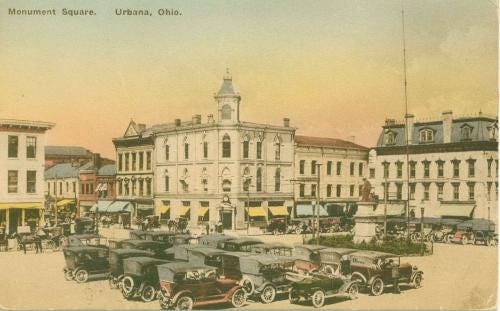
The public square in Urbana, Champaign County, Ohio

Okay, I admit that I have a special disgust for Congressman, Jim Jordan. I will though be fair in this short post.

From a political perspective, any honest and well-informed person knows that Jordan was and in some ways, still is a Seditionist and enabler of the Jan 6th armed rebellion. He is also the Rep for the small Ohio town, where I attended 7th grade thru high school graduation. In my view, one of the finest small towns in the nation. Urbana, Ohio, the county seat of Champaign County numbered around 9000 people at the time, the biggest town in the county.

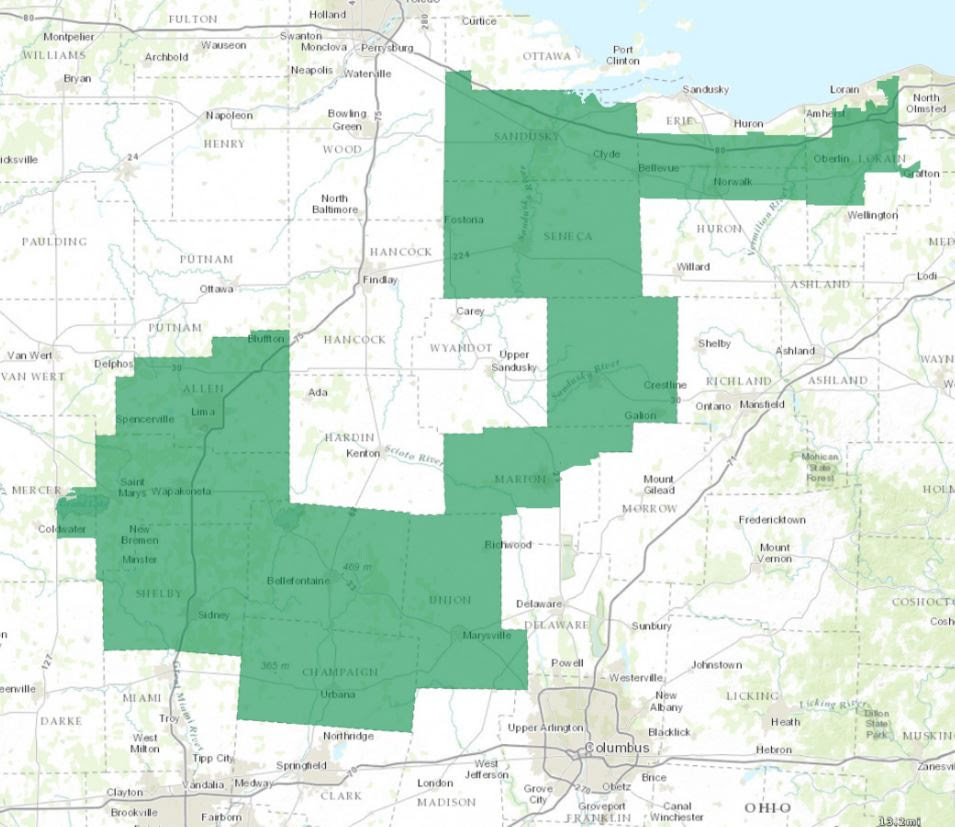
Now Jordan, is the rep of one of the most gerrymandered districts in the country. When I lived in Urbana, Ohio in the late 60’s and early 70’s, our local congressman was exceptionally well liked and respected. Clarence, “Bud” Brown represented what the Republican Party could have been, had they not deviated to scorched earth politics under the leadership and tutelage of Newt Gingrich. America has never been the same since. Don’t see this as an endorsement of the so-called, “other side” but as a statement of clear-eyed facts.

Jim Jordan’s, Ohio 4th Congressional District

This letter by Jordan to the AG, Merrick Garland shows in detail and Jordan’s own hand, the level of false narratives and utter dishonesty that keeps today’s MAGA-controlled GOP afloat. For those who have been warning about this and other indictments based on reality, research, and the opinions of elite experts, this is just another “hail Mary”, mis/ disinformation campaign designed to empower those who’ve proved that they will believe anything, if it suits their political identity. My personal and professional opinion of Jordan sees him as one of the most unethical and dangerous members of Congress.

What I once knew as a community of hardworking mostly rural Ohioans with remarkable grace, compassion and honesty, is now burdened by the weight of being sold snake oil by traitors and conmen who can’t even spell, “American values.” They largely operate on the traitorous narratives of FOX news. Fortunately there is still a solid core of great Americans in my home town but sadly, they are a minority. Even the Trumpists are some of the nicest people you will ever meet. The manipulation of their political identity by unethical, professional influencers, some domestic and some foreign, has resulted in Seditionists like Jordan and his ilk, leading the worst threat to our democracy since the Civil War.

The pain I feel for my hometown, is being played out all across America in small and large towns. The extraordinary work by U.S. Department of Justice, has thrown a hand grenade into their political identity. Now, with DOJ’s meticulously assembled public case being the news of the day, Jordan is launching a full-scale mis and disinformation campaign to support a known traitor. Not one person in Urbana would have tolerated this in my youth, despite being in one of the most reliable Republican Congressional districts in the nation.

Yes, I would also love to scream the words, “I told you so” but that will not heal America. Many Americans who were victimized by foreign and domestic malign influencers, are beginning to realize that they have been badly duped. Give them an open invite back into reality without the derision. They are family, friends and colleagues. Tragically, those who resist reality will likely never recover, because the level of indoctrination that leads to public displays of extremism, more often than not, is like rabies, mostly incurable.

It’s time for all Americans to realize that our fellow citizens are not enemies because they have different beliefs. Our Constitution, based on our founding principles, guarantees our right to our own beliefs, false or not. It’s really up to those who are willing to debate over facts and reality, to heal this nation for America’s sake, not a politcal party. It will be those who adhere to what it means to be a truly patriotic American, left, right or otherwise to put our nation, back on the path of progress, respectability and strength.

Truism: If you vote for honesty, integrity and our true American, founding principles… folks like Jim Jordan would never be in office. However you vote, we can never again allow any extremist movement to have so much say in our government, that they can once again threaten what so many have died to preserve.

Wishing everyone the most enjoyable weekend,

Paul

Denis Smith, a former advisor to the Ohio State Department of Education, explains the important role that public schools play in a diverse, democratic society.

He writes in the Ohio Capital Journal:

In 2011, on the 150th anniversary of the outbreak of the Civil War, the New York Times initiated a series of essays entitled “Disunion“ about a conflict the newspaper described as the time when “Americans went to war with themselves.” The series ran periodically for four years as an attempt to mirror what the paper characterized as “America’s most perilous period.”

Those who pay attention to prevailing norms and the constitutional health of our society might update those two phrases to serve as a warning for describing the present.

If Ohio residents have read the opinions of Republicans ranging from state Senators Matt Huffman and Sandra O’Brien about educational vouchers, that ominous word disunion might inevitably come to mind. In the campaign to destroy our public education system by using public funds to finance private and religious schools through vouchers, these politicians disingenuously throw out such terms as “choice” and “freedom,” seemingly innocuous words that instead have the potential to fracture our national unity.

Yet when the subject is choice and freedom, however disingenuously those words might be used, we don’t need to look any further for guidance in identifying the glue that keeps us in a state of union rather than the disunion a profligate use of public funds will bring if educational voucher legislation is approved.

That glue is the public school, whose importance is enshrined in the language of Article VI, Section 2 of the Ohio Constitution:

The General Assembly shall … secure a thorough and efficient system of common schools throughout the state; but no religious or other sect, or sects, shall ever have any exclusive right to, or control of, any part of the school funds . …

Lest we be confused by politicians spouting their favorite hyperbolic buzzwords like choice and freedom, our constitution contains clear language, including the use of the singular form: a system of common schools, not systems. It is one educational system that the state is mandated to support, not thousands of private and religious schools that clearly aren’t eligible for public support through vouchers or other means.

Such a scheme to support private and religious schools with public funds might also be construed as socialism, as another Ohio senator, Andrew Brenner, disingenuously described public education in 2014, a classic statement that gained him national attention – and notoriety.

More than twenty years ago, one observer described the dangers of fragmenting the delivery of education in a society, as a universal educational voucher scheme would achieve. Dr. Kenneth Conklin, a professor of philosophy and educational theory, provided this warning that should be heeded by Republicans like Hoffman, O’Brien, and Brenner:

If an educational system is altered, its transmission of culture will be distorted. The easiest way to break apart a society long-term without using violence is to establish separate educational systems for the groups to be broken apart.

Note the use of the plural: systems.

Conklin provides some additional advice for us to consider as Ohio and other red states make plans to fracture the public school system, satisfy their ideological yen and garner a twofer by also destroying public employee unions in the process. He also considers the importance of culture in providing societal cohesion:

A society’s culture can survive far longer than the lifespan of any of its members, because its educational system passes down the folkways and knowledge of one generation to subsequent generations. A culture changes over time, but has a recognizable continuity of basic values and behavioral patterns that distinguishes it from other cultures. That continuity is provided by the educational system.

Note the use of the singular: system.

Make no mistake. The educational voucher scheme, fueled by dark money groups like the American Legislative Exchange Council (ALEC), which itself helps to fuel astroturf groups nationwide that are intent on undermining public education, has enabled the pro-voucher and school privatization movement to achieve critical mass in the last few years. Currently, at least 15 states have some type of voucher program in place, and the number is expected to rise dramatically in the next few months as red state legislatures also bundle together other extreme measures, including abortion bans and voting restrictions, to further erode democracy and one of its symbols, our neighborhood public school.

If we are to continue as one society (note again the singular form), we must have one publicly funded educational system, and not thousands of other types of schools similarly funded. After all, this nation’s motto is e pluribus unum – from many, one. The Republican voucher scheme violates that very motto, in addition to not ensuring oversight and accountability for how scare public funds are spent in the task of investing in the future. Common civic values and traditions ensure the continuity of this republic as one people, with a common heritage provided by the common school.

In an essay, Senator O’Brien asks: “Why can’t parents spend their tax dollars at the school they choose for their children?”

Really? The answer is quite simple.

It’s about the constitution. It’s about the meaning of a “system” of common schools,” of e pluribus unum. It’s about democracy, where we elect our neighbors to oversee our public schools and ensure that public funds are spent for public, and not for individual, private purposes, as vouchers are purposely designed to accomplish.

Republicans: it should not be about disunion. But your promotion of educational vouchers and the erosion of the common school, the symbol and glue that brings together each community, will have that effect.

The basketball superstar LeBron James grew up in Akron. He wanted to help children in Akron, so he funded a school. It is not a charter school. It is a community school that operates as part of the Akron public schools. Unlike most charter schools, it doesn’t choose the top-performing kids; it chooses the kids who need help the most, those with the lowest scores. It provides a range of services for them and their families. It offers a food pantry for families, for instance.

Now the LeBron James Family Foundation is reaching out to offer services to the entire community. This family foundation has some valuable lessons for the Walton Family Foundation, which uses its billions to destroy public schools and communities; it could teach lessons to the Bill & Melinda Gates Foundation, which has imposed a series of failed programs on schools, dreamed up by consultants who never asked students, parents, or school staff what they wanted or needed.

Now, in a story told by Tawney Beans of the Akron Beacon Journal, the Lebron James program is expanding to offer job training and other services for community members.

It was quite the opening day for House Three Thirty.

The space, formerly home to Tangier restaurant, has almost concluded its two-year transformation into a retail, dining and event community center spearheaded by the LeBron James Family Foundation.

After the complex opened at 6 a.m. Thursday, a steady trickle people made their way through the space. Some simply wanted a hot cup of joe from the first-of-its kind Starbucks Community Store, others couldn’t wait to peek inside and scope out where to have their next church event, and still more came to see just how much impact a self-proclaimed “kid from Akron” could really have.

Some of the first visitors included LeBron James’ mother, Gloria, as well as former St. Vincent-St. Mary basketball teammate and LeBron James Family Foundation employee Willie McGee.

While touring the space, Gloria spoke about her pride in her son for creating House Three Thirty.

“I’m really proud of this venture, especially because it opens the doors to so many opportunities for our community — job training, employment, [Chase] bank being here and helping our community with their banking needs,” she said. “Then a huge ball area where lifelong memories can be made like weddings and receptions and birthday parties, bar mitzvahs and all that goes with that.”

McGee shares that pride and hopes that the new facility, coupled with the nearby I Promise School, I Promise Village and soon to be HealthQuarters, will have a substantial impact on the Akron community.

“We’re offering them the ability to come into a safe space where they feel comfortable, that they can receive resources,” he said. “We’re trying to build something to where whatever you need, you’re able to get in this area, and by being centrally located we want all of Akron to be able to come and join in.”

DeLondia Feaster of Akron had her 45th birthday party in Tangier and was pleased to see that the foundation kept much of the historic building’s integrity. One detail she admired were the picture frames in the main hallway, which were once adorned with photos and posters of entertainers who performed at the previous Akron restaurant and cabaret.

“I feel like I’m in Vegas, somewhere where you can go in somewhere and everything is in one shop,” she said. “It should bring some pride. A kid from the projects bringing something like this to a city is huge, you know, it’s really huge for the city, and I just hope people take advantage of that.”

Another spectator, Karon Boston of Akron, enjoyed the history within House Three Thirty — specifically, the portions depicting James’ progression from his time at St. Vincent-St. Mary to the NBA.

Highland Square resident Barbara Kemper and friend Cheryl Renick took in the new space from its sitting area near Starbucks.

“It’s nice to have something in this area besides bars,” Kemper said.

Sundae Davinport, a barista at House Three Thirty’s Starbucks, said that the family atmosphere of the place has given her a reason to wake up in the morning and be happy to go to work.

Davinport is the mother to a previous I Promise Program student and has spent the last eight weeks training in the facility’s kitchens. She’s learned everything from how to properly cut chicken and fish to ways to cook steaks and vegetables.

“We learned a lot,” she said. “I never knew there was 100 or more ways to cook an egg.”

That happiness to go into work was also influenced by the support she has received from the foundation, even something small like getting her hair braided for free at House Three Thirty’s in-house barber and beauty shop.

Contact Beacon Journal reporter Tawney Beans at tbeans@gannett.com and on Twitter @TawneyBeans.

Jan Resseger foresees that the Republican-dominated Ohio legislature is determined to expand vouchers for private and religious schools.

They are determined to divert more money and students away from public schools despite the compelling evidence that vouchers are harmful to students, most of whom will attend schools that are lower in quality than their public school.

Jan explains why public education is essential to our democracy, not as a consumer good, but as a civic responsibility:

If you are a supporter of public education, and in your state you face proposed legislation for school vouchers, you are unlikely to convince conservative Republicans to vote against vouchers.

The issue has become purely ideological—a matter of core belief. The late political theorist Benjamin Barber almost perfectly characterizes the divide between supporters of public institutions and the radical marketplace individualists:

“Privatization is a kind of reverse social contract: it dissolves the bonds that tie us together into free communities and democratic republics. It puts us back in the state of nature where we possess a natural right to get whatever we can on our own, but at the same time lose any real ability to secure that to which we have a right. Private choices rest on individual power… personal skills… and personal luck. Public choices rest on civic rights and common responsibilities, and presume equal rights for all. Public liberty is what the power of common endeavor establishes, and hence presupposes that we have constituted ourselves as public citizens by opting into the social contract. With privatization, we are seduced back into the state of nature by the lure of private liberty and particular interest; but what we experience in the end is an environment in which the strong dominate the weak… the very dilemma which the original social contract was intended to address.” (Consumed, pp. 143-144)

Maureen Reedy is a former Ohio Teacher of the Year and Upper Arlington City School District Teacher of the Year, retired after a 30-year career as a public-school teacher. She wrote this article for the Columbus Dispatch.

The “public” must be put back into public education in Ohio.

Instead of pushing current legislation like Senate Bill 11 that could take one billion dollars from public schools to fund private and religious school vouchers, Ohio’s lawmakers need uphold Ohio’s constitutional promise to keep public tax dollars out of private schools.

We Ohioans love our public schools.

Most of us attended neighborhood public schools, which continue to be the schools of choice for our children and grandchildren. Our public schools are community hubs that educate over 90% (1.7 million) of Ohio’s children; students come together from all backgrounds to learn and build understanding and acceptance of others.

Public education in Ohio is a 172-year-old promise, created on the constitutional belief that public schools are the fundamental foundation for the public good; a necessary tool to build an educated democracy and sustainable futures for our children in these challenging times.

Why then, are Ohio lawmakers churning out private school voucher legislation that takes hundreds of millions of public-school tax dollars per year from our neighborhood schools to pay for private and religious school education?

School vouchers violate the Ohio Constitution. That is why over 210 public school districts have filed the “Vouchers Hurt Ohio” lawsuit challenging EdChoice Vouchers for their unconstitutional use of state school funds for private school tuition.

Public dollars should not fund private and religious school tuition.

Ohio’s constitution has some of the strongest language in the country specifying that state funds are for public (common) schools only.

“The General Assembly … will secure a thorough and efficient system of common schools throughout the state; but no religious or other sect, or sects, shall ever have any exclusive right to, or control of, any part of the school funds of this state,” Article VI, Section 2 of the Ohio Constitution reads.

Just as Ohio’s founders intended, there is not one single word in the Ohio Constitution that allows the use of state dollars for private and religious school tuition.

Ohio’s first attempt at school vouchers began as a temporary pilot in 2006, and is now a refund and rebate school privatization program that reimburses families who never intended to send their children to public schools.

Runaway train must be stopped

Private school vouchers have ballooned out of control, initially taking away $42 million of public-school funding in 2008 and expanding to $350 million in 2022.

Senate Bill 11 has been introduced to make every child in Ohio eligible for a private EdChoice school voucher, which could immediately take a billion dollars out of the finite supply of state school funds for over 90% of Ohio’s children whose families choose public schools.

When we let vouchers siphon funds from our public schools, our kids do not have the resources they need to succeed, and that hurts us all. EdChoice Vouchers for private schools means more school levies and higher property taxes. State funding for private schools is not only unconstitutional, it is unsustainable for Ohio taxpayers.

This brings us full circle to the crucial choice for the future of public education in Ohio. Public schools open their doors to children of all ability levels; welcoming students from diverse religions, cultures and nationalities.

Overall, Ohio’s public schools continue to outperform private voucher schools.

Public schools mirror the rising challenges of society today. Teachers are not just teaching, but also taking care of rising numbers of children in crises with mental and physical health challenges, which prevent them from learning. Instead of divesting in public education, Ohio needs to re-invest in our public schools.

Let’s face it. The only way to stop this runaway school voucher train is through a lawsuit.

Thousands of Ohio citizens have tried to get legislators to put the brakes on EdChoice vouchers and fulfill their oath to the state’s constitution: state school funding is solely for Ohio’s public-school districts.

The majority of Ohio’s legislators continue to steer our children and families in the wrong direction.

Vouchers hurt Ohio. The numbers are growing.

The movement is strong.

Maureen Reedy is a founding member of Public Education Partners, the largest nonprofit, all-volunteer Public Education advocacy group in Ohio.

Donald Cohen, executive director of “In the Public Interest” and author of The Privatization of Everything discovered an important insight about public attitudes. Many people assume that private business is invariably more efficient than the public sector. But, as he shows here, the private sector’s highest goal is profit, and the pursuit of profit leads to cost-cutting that is inefficient and actually, in the case of a train derailment in East Palestine, Ohio, dangerous.

Here is an excerpt:

Let’s dig into the basic “mathematics of efficiency.” It’s about spending or doing less to get the same or better (cost/time + efficiency = same or better.) In that formula, “efficiency” could either be “smarter” or “cheaper.”

The problem is that far too often it equals cheaper. Efficiency could mean fewer workers than are needed to ensure high quality or safe production on the shop floor. Efficiency could mean lower wage workers. Efficiency could be using lower-quality supplies and equipment. And sometimes, efficiency means fewer inspectors and less monitoring of safety protocols.

Sometimes “same or better” means outsized profits, expensive stock buybacks, high-dividend payments, and high executive compensation packages–in other words, the fruits of high productivity built upon a package of “efficiencies.”

So, I’ve come up with a new term. When efficiency means cutting corners for increased profits, we should call it: “Extractive Efficiency.”

That’s what happened in East Palestine and could happen again if the underlying extractive efficiency isn’t dealt with. In fact, over the last few years, all the railroad companies have focused on efficiency to increase profits, cheering Wall Street, but not the residents of East Palestine. Less than two weeks before the derailment, it was reported that Norfolk Southern, the train operator, had improved the average speed of its trains from 17.5 miles per hour to 20.7 between the second and fourth quarter of 2022, and by January was at 22.2 miles per hour.

Here are a few of Norfolk Southern’s “efficiencies.”

Fewer workers: Norfolk Southern removed a senior type of inspector from the track division that runs through East Palestine, making more work for signal maintainers. Over the past five years, employment among the nation’s largest freight rail carriers has fallen about 18 percent. With fewer workers doing more work, they may miss telltale signs of safety failures.

Harder work and more hours per worker: The industry, including Norfolk Southern, implemented “Precision Scheduled Railroading” that, according to The American Prospect“means no excess engines, no track not under constant use, no downtime in the yards, no employees not busy driving the trains or maintaining the tracks, and never have three one-mile-long trains when one three-mile-long train can be assembled.” Shockingly, railroad workers get no paid sick days.

The people who live near the derailment are paying the price of Norfolk Southern’s “efficiencies.” They will be dealing with the consequences of the toxic spill for years to come, affecting their health, the value of their homes, and the quality of their water.

But the railroad is returning handsome profits to its top executives and shareholders.

Steve Dyer is a veteran analyst of Ohio education issues, as a former legislator and think tank budget expert. He writes here about the latest expansion of Ohio’s failed voucher program. When an independent evaluation of the Ohio voucher program was previously carried out, it concluded that kids who leave public school to use a voucher lose ground academically. The evaluation was sponsored by the Fordham Institute. Do not be fooled by the misleading summary written by Fordham staff.

In this post, he shows where the money is coming from and where it’s going:

Now that the Ohio Legislative Service Commission has officially costed out the so-called “Backpack Bill”, we know for certain that this bill has nothing to do with “rescuing” kids from “failed” public schools. It’s all about publicly subsidizing the adults who can already afford to send their kids to private school.

The LSC analysis proves definitively that the bill would instantly provide public funding to about 90,000 Ohio students who do not currently receive it. It would be through vouchers, education savings accounts, homeschoolers (including those being taught Nazi ideology) and other various devices all adding up to an additional $1.13 billion. All while the legislature is talking about massive tax cuts and continues to short-change the needs of the 90% of students in Ohio’s public schools.

These are not students who are leaving public schools. These are students who are already in private schools, whose parents can already afford private schools and who attend schools that are not audited by the state to ensure they are actually educating a single student we’re paying them to educate.

Sounds like a great idea to me! I mean, Ohio’s never had an issue with privately run schools billing the state for millions of dollars to educate kids they never actually had, right? Oh yeah, except for the ECOT scandal that was about 40% bigger than the biggest public bribery case ever brought in the state.

It would be one thing if Ohio’s private schools were doing an awesome job. However, we know that about 90% of the time, kids in Ohio’s public schools test better than students attending private schools in the same cities. We also know that the students taking vouchers are significantly more white than the communities they are from.

At this point on the post, Dyer adds the data from different counties.

This Universal Voucher bill would put an additional $1.13 billion into a program that would provide taxpayer subsidies to adults who send their kids to unaccountable schools that perform markedly worse than Ohio’s public schools all while further segregating our kids and communities by race.

Open the link to finish the post and see the data.

Josh Cowen, professor of education policy at Michigan State University, reviewed a new Ohio voucher report by the Thomas B. Fordham Institute, a conservative think tank that has a very large influence over education policy in Ohio. People who already support vouchers will like it, but it won’t change minds, Cowen concludes. Fordham previously sponsored an independent review by David Figlio and colleagues that concluded that children who used vouchers in Ohio fell behind their peers in public schools.

Cowen’s summary:

A report considers the chief concerns associated with Ohio’s voucher program: the harm to public school student outcomes through competition, the affect on district financial resources, and increased racial segregation. Finding that Ohio vouchers have had few such harmful impacts, the report concludes that it has effectively dismissed the primary concerns of voucher critics. Yet, while the report is broadly methodologically sound for the narrow questions it poses, the questions it asks are out-of-date with respect to current issues raised by voucher critics, which focus on substantially decreased student achievement among students using vouchers. Thus, the report does little to assuage the primary concerns of those dedicated to serving children through community-based public education.

The overview:

BOULDER, CO (February 21, 2023)—A recent report from the Thomas B. Fordham Institute considers the impacts of vouchers as related to competition in Ohio public schools, increased racial segregation, and local district financial resources. It presents these three issues as the chief concerns of voucher critics and finds few harmful impacts.

In Michigan State University professor Joshua Cowen’s review of The Ohio EdChoice Program’s Impact on School District Enrollments, Finances, and Academics, he finds that the questions it asks are far too limited. While the report is methodologically sound for the narrow questions it poses, Professor Cowen contends that they are outdated with respect to current concerns raised by voucher critics, which focus on substantially decreased student achievement among students using vouchers.

The report also relies on more permissive standards for statistical inference than peer-reviewed articles would typically allow. Moreover, the Foreword, written by Fordham staff, gives the clear impression that the report is merely an effort to provide new data for privatization advocates, rather than to respond to legitimate concerns raised by voucher critics. The Foreword dismisses criticisms as “Chicken Little” and “sky-is-falling” histrionics, and in doing so undermines the work of the authors it hired to write the study.

Ultimately, Professor Cowen concludes, those who are ideologically predisposed to embrace voucher policies will doubtless find much to appreciate in this report. It does little, however, to assuage the primary concerns of those dedicated to serving children through community-based public education, and thus has little value in the debate over the use of vouchers as a public policy tool to improve education.

Find the review, by Joshua Cowen, at:
https://nepc.colorado.edu/thinktank/edchoice

Find The Ohio EdChoice Program’s Impact on School District Enrollments, Finances, and Academics, written by Stéphane Lavertu and John J. Gregg and published by the Thomas B. Fordham Institute, at:
https://fordhaminstitute.org/sites/default/files/publication/pdfs/edchoice-impact-report-12-14-22-web-final.pdf