Archives for category: Libraries

PEN America released a report documenting that book bans had increased sharply over the past year, with the largest number of books banned reported in Florida, followed by Texas.

The freedom to read is under assault in the United States—particularly in public schools—curtailing students’ freedom to explore words, ideas, and books. In the 2022–23 school year, from July 1, 2022, to June 31, 2023, PEN America recorded 3,362 instances of book bans in US public school classrooms and libraries. These bans removed student access to 1,557 unique book titles, the works of over 1,480 authors, illustrators, and translators. Authors whose books are targeted are most frequently female, people of color, and/or LGBTQ+ individuals. Amid a growing climate of censorship, school book bans continue to spread through coordinated campaigns by a vocal minority of groups and individual actors and, increasingly, as a result of pressure from state legislation.

The Miami Herald reviewed what had happened in Florida.

One example in Florida is the expanded “Parental Rights in Education” law, signed into law by Gov. Ron DeSantis last year and dubbed by critics the “Don’t Say Gay” bill as it prohibits discussions of sexuality and gender identity from kindergarten through third grade.

In this year’s session, state lawmakers expanded the restrictions through the eighth grade. The expanded law, which DeSantis signed, also allows a parent or community member to object to instructional material or library books, and requires a school to remove the book or books within five days of a challenge and remain off library shelves until the review is completed.

The process is a “guilty until proven innocent policy” that leads to the removal of more books for more time, said Raegan Miller, director of development at the Florida Freedom to Read Project, a nonprofit that advocates for school libraries being accessible to all students.

Moreover, she said, books are expensive to purchase and public libraries are not accessible to all students — especially young students whose parents are unable to accompany them.

Governor DeSantis insists that there is no book banning:

Desantis, who has championed the bills, has called the “whole book ban thing” a “hoax.” Florida Gov. Ron DeSantis called book banning in Florida a ‘hoax.’

During his May 24 presidential campaign launch on Twitter Spaces, he said, “there’s not been a single book banned in the state of Florida. You can go buy or use whatever book you want.”

Read more at: https://www.miamiherald.com/news/local/education/article279568719.html#storylink=cpy

Mercedes Schneider summarizes the checkered career of Mike Miles, who was put in charge of the Houston Independent School District by State Commissioner Mike Morath, who was appointed by hard-right Republican Governor Greg Abbott. Abbott wants to punish Houston for not voting for him. What better punishment than to install Mike Miles as superintendent?

Schneider writes:

In June 2023, the Houston Independent School District (HISD) became the latest major school district to experience a top-down, ed-reform tactic that largely ignores community investment and fail to deliver on promised academic gains: the state takeover of a school district.

On June 01, 2023, the Texas Education Agency (TEA) appointed Mike Miles as the new HISD superintendent.

Miles is the golden-child product of market-based, ed-reform leadership. As reported in his LinkedIn bio, Miles holds no college degrees in teaching (engineering; slavic languages and literature; international affairs and policy). He has never been a classroom teacher, never a site-based administrator, yet he was a district superintendent in Colorado for six years (2006-11) and superintendent of Dallas ISD for three.

Though he does not mention it in his LinkedIn bio, Miles was a member of the Class of 2011 at the Broad Superintendents Academy A 2011 EdWeek article on Broad superintendents includes the criticism that they “use corporate-management techniques to consolidate power, weaken teachers’ job protections, cut parents out of decisionmaking, and introduce unproven reform measures.”

Indeed.

In 2015, Miles abruptly resigned from Dallas ISD amid being, as WFAA.com states, “at the center of controversy since he took the position nearly three years ago,” which apparently included questions about misdirecting funding intended for at-risk students and the subsequent exit of the Dallas ISD budget director. (Also calling Miles “a lightening rod for controversy,” WFAA.com offers this timeline of Miles’ unsettling tenure in Dallas.)

Despite all of his Dallas ISD controversy, TEA– which is no stranger to stepping into its own controversy— chose to hire Miles to lead its newly-state-snatched HISD.

Following his Dallas ISD exit, in 2016, he founded a charter school chain, Third Future Schools, which has locations in Colorado, Texas, and Louisiana. For two years (2017-19), Miles was a senior associate in an education consulting firm, FourPoint Education Partners.

And according to his LinkedIn bio, Miles is/was on a number of ed-reform organization boards, including Teach for America (TFA) Colorado (2017-20); National Council on Teacher Quality (NCTQ) (2013-present), and Chiefs for Change (2015-present).

Please open the link to finish reading the post.

The Texas legislature passed a law in its last session requiring booksellers to rate any books they sell to public schools for its sexual content. And to rate any book they have ever sold in the past to public schools or to teachers.

The law threatens the survival of some 300 independent bookstores across the state. “And by April of next year, every bookseller in the state is tasked with submitting to the Texas Education Agency a list of every book they’ve ever sold to a teacher, librarian or school that qualifies for a sexual rating and is in active use. The stores also are required to issue recalls for any sexually explicit books.”

Small bookstores, like Blue Willow in Houston, may be bankrupted if they are compelled to comply. Blue Willow has two full-time employees and 12 part-time employees. It sells books to 21 school districts. Sales to schools comprises about a fifth of the store’s business.

The law is set to take effect on September 1.

Blue Willow has joined a lawsuit to block the bill. The lawsuit was filed by Austin’s BookPeople, the American Booksellers Association, the Association of American Publishers, the Authors Guild and the Comic Book Legal Defense Fund. “The lawsuit argues booksellers will suffer financial damage if they lose school-related business. Koehler estimates that a fifth of Blue Willow’s business is with schools.”

The legislature doesn’t care about the financial impact on small bookstores like Blue Willow.

Let’s see if the courts do.

There is one good reason to subscribe to Esquire: to read Charles Pierce, one of the most perceptive writers of our time. Pierce writes about education on occasion, and he’s always on target. In this column, he skewers the casual cruelty of Texas Governor Greg Abbott , who seized control of the Houston public schools on the flimsiest of pretexts, and Houston’s new superintendent Mike Miles, who’s pushing his top-down ideas without regard to anyone else’s views. Miles is a military man who learned about education at the Broad Academy, where one of the central teachings was to ignore public opinion, as well as the views of local teachers.

Pierce writes:

This week, something altogether remarkable, and not in a good way, happened in the city of Houston in the state of Texas. On June 1, the state of Texas, which is wholly governed by Greg Abbott and a compliant, and heavily gerrymandered state legislature, took over the Houston Independent School District. The pretext was flimsy, as so many of Abbott’s pretexts are, where he even bothers to provide them. (That legislature again.) The decision was, well, unpopular. From Texas Monthly:

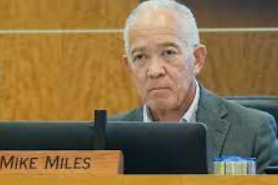
Mike Miles, the state-appointed superintendent of the Houston Independent School District, might be the most hated person in Harris County. At last week’s school board meeting—the first since Miles was officially hired—residents crowded HISD headquarters, in northwest Houston, to oppose the state’s takeover of the school district. One speaker compared Miles, who is the son of a Black father and a Japanese mother, to a Grand Wizard of the Ku Klux Klan. Another described the state’s recent seizure of HISD, which serves a student population that is 62 percent Hispanic and 22 percent Black—as an “act of racial violence.” Larry McKinzie, an educator and former State Board of Education candidate, appeared to make a physical threat against Miles: “Realize this: you’re safe at forty-four-hundred West Eighteenth”—the location of the board meeting—“but you’ll have to go back [home].” Not one of the 33 attendees who gave public comments had anything good to say about their new superintendent.  It was hard to gauge Miles’s reaction to the criticism, because he spent the entire public-comment period in a back room, watching the meeting on TV.

A meeting the night before this one had dissolved into chaos, so the new HISB rescheduled the meeting for the next night, using a plan that had the lovely tang of East Germany to it.

 In an apparent effort to keep order, the board allowed only 35 members of the public into last week’s meeting room, which can accommodate more than 300. The remaining 100 or so attendees were relegated to an overflow room. Several attempted to force their way into the main room, only to be turned back by armed police officers. One teacher who had registered to speak at the meeting was arrested for criminal trespassing and spent the night in jail. 

Houston officials tried to fight the takeover, and they even got it stalled for four years. But the puppet show that is the government of Texas has many fail-safe devices and they all work.

Houston leaders overwhelmingly opposed the takeover, citing HISD’s overall B rating from the state and strong financial position. In 2019 the district sued the state, delaying the takeover for four years. The legal battle ended in January, when the Texas Supreme Court—whose nine members are all Republicans—sided with the TEA. 

Miles beta-tested his sophisticatedly named New Education System in Dallas, where it proved to be a matter of long-term pain for short-term gain. This week, its implementation in Houston was widely interpreted as equally ominous. From Texas Public Media:

Librarian and media specialist positions are being eliminated at 28 campuses designated to be part of Miles’ New Education System (NES), which entails premade lesson plans for teachers, classroom cameras for disciplinary purposes and a greater emphasis on testing-based performance evaluations, among other initiatives. The libraries at those schools will continue to include books that can be read or checked out by students but are otherwise being reimagined as “team centers” where special programming will be held and disruptive students will be sent so as not to interfere with their classmates’ learning, according to HISD spokesperson Joseph Sam. The library-related changes also could be coming to the 57 schools where principals elected to be NES-aligned campuses, with Sam saying that would be determined on a campus-by-campus basis.

If this seems extreme, that’s only because it is — homogenized lesson plans, surveillance in the classroom, “special programs” for “disruptive students.” And libraries turned into “discipline centers,” which, truth be told, are not as dungeon-adjacent as their name might imply, although their name so clearly implies it that the NES folks like to call them “team centers.”

That most of the affected students will be from low-income communities of color should be obvious from jump, which means god alone knows what the NES definition of “disruptive” in practice is going to be. (In some places, “disruptive” students have drawn the attention of the local police. So maybe things are looking up.) What is also obvious is that any complaints will go into a political meat-grinder that is rigged in such an ironclad fashion that an fair outcome is nearly impossible. And around and around it goes.

The Texas Department of Education decided to take over Houston, one of the largest school districts in the nation, because one high school was not improving fast enough for state commissioner Mike Morath. The state ousted the elected school board and replaced a strong superintendent with military man Mike Miles, who had a rocky tenure when he led Dallas schools a decade ago.

Miles has launched a campaign of disruption—the signature move of “reformers,” especially Broadies, and he is offering what he calls a New Education System (NES). The details are not yet fully developed, but here is one aspect: 28 of the schools that are part of Miles’s NES will close their libraries and use them for other purposes. One such purpose is to serve as a “discipline center” for students who act out.

Houston Independent School District will be eliminating librarian positions at 28 schools this upcoming year and converting the libraries into ‘Team Centers” where kids with behavioral issues will be sent, the district announced.

This comes as part of the new superintendent Mike Miles reform program, New Education System (NES). Currently, there are a total of 85 schools that have joined Miles’ program, and of those, 28 campuses will lose their librarians. The district said they will have the opportunity to transition to other roles within the district.

The remaining 57 NES schools’ librarians will be assessed on a case-by-case basis, according to the district.

Retired HISD Teacher in Charge of Library, Lisa Robinson, believes the library is full of some of the greatest stories ever told.

“It was such a joy to help them find the perfect book,” said Robinson.

She said those stories are now ripped to shreds.

“My heart is just broken for these children that are in the NES schools that are losing their librarians,” said Robinson.

Librarian positions have been an ongoing debate in HISD. Robinson said the former superintendent, Millard House II, made efforts to keep library staff.

“The mandate for librarians had been put back in place. With one swipe of a pen that has been destroyed,” said Robinson.

Superintendent Mike Miles said students are behind on reading levels, especially in 4th grade.

Former HISD Librarian and Manager of Library Services, Janice Newsum believes eliminating librarian positions could hurt reading performance even more.

“When students engage in reading as an activity of choice, they are not only building that reading muscle, but they are also developing their vocabulary they are understanding a bit about the world that exists outside their block radius,” said Newsum.

Mayor Sylvester Turner believes the move is unacceptable.

“You don’t close libraries in some of the schools in your most underserved communities, and you’re keeping libraries open in other schools,” said Turner.

What’s the logic here? Many students are not reading well, therefore eliminate the librarians who might find books that interest them?

Leslie Postal of the Orlando Sentinel reports that the Orange County school district has removed classic literature in its efforts to comply with state laws.

She writes:

The classic novels “A Room With a View” and “Madame Bovary” and the epic poem “Paradise Lost” — published in England more than 350 years ago — have been at least temporarily rejected by Orange County Public Schools for sexual content that educators fear runs afoul of a new Florida law.

Novels that in past years were frequently taught in OCPS high school classes, such as “The Color Purple,” “Catch-22,” “Brave New World,” and “The Kite Runner” have been put on the rejected lists, too, as have novels by Toni Morrison and Ayn Rand and popular, turned-into-movies books like “Into the Wild,” and “The Fault in Our Stars.”

The lists of books rejected and approved for OCPS classrooms are not finalized yet as district media specialists continue their summer work of reviewing all books in classroom libraries, said several people familiar with the process.

Some books rejected earlier this summer, among them “The Scarlet Letter” and Shakespeare’s “A Midsummer Night’s Dream,” have since been approved, according to the lists shared with the Orlando Sentinel by a district teacher and by an advocacy group that obtained a rejection list through a public records request. Other books have been approved but only for certain grades.

Four plays by William Shakespeare, including “A Midsummer Night’s Dream,” are currently listed as approved for grades 10 through 12 only, as is Truman Capote’s “In Cold Blood” and Tennessee Williams’ “A Streetcar Named Desire,” the lists show.

For many of the books, the reason for at least a temporary rejection is sex. “Depicts or describes sexual conduct (not allowed per HB 1069-2023,” reads the explanation, referencing a new state law passed by the Republican-dominated Florida Legislature and signed into law by Gov. Ron DeSantis.

The new law makes book challenges easier and, if the concern is sexual content, requires the books to be removed from the shelves within five days and remain inaccessible to students while being reviewed. Republican lawmakers said they passed it to make sure pornography and books that depict sexual activity are kept from children.

But critics say the effort has wrongly labeled many books pornographic, when state law says, in part, that books with sexual content or nudity are considered pornography only if they are “without serious literary, artistic, political, or scientific value.”

This could be a clever plot to entice teens to read forbidden books. (“Come over to my house, I have ‘Paradise Lost!’”) But Florida’s legislators and state education officials are not clever. They are narrow minded bigots.

Mitchell Robinson is a professor of music education at Michigan State University who was recently elected to the Michigan State Board of Education. He shared a resolution that he introduced and that was passed by the State Board. Are there books that are not age-appropriate? Yes. Can we trust teachers and librarians to select the right books for the children in their care? The Michigan State Board of Education thinks we can. Michigan law already forbids pornography in schools.

Robinson sent the following to me:

Proud to introduce the “Freedom to Read” resolution yesterday. The State Board of Education respects the professional judgement of teachers and librarians when it comes to selecting learning materials that support the curriculum in their classrooms, and respects the rights of parents and caregivers to determine the developmental appropriateness of books and other materials for their children.

Teachers and parents are natural partners in the education of our children, and attempts to drive a wedge between schools and families by creating outrage over fabricated “crises” will simply not work.

“Board Of Ed Adopts Resolution Supporting ‘Freedom To Read'”

A resolution to support K-12 students reading whichever books they like as book bans continue to sweep the country was adopted by the State Board of Education Tuesday.

Board member Mitchell Robinson (D-Okemos) introduced the Freedom to Read Resolution. Robinson cited in the resolution that PEN America’s Index of School Book Bans listed 1,477 instances of individual books banned.

The resolution said in the first six months of 2023, 30 percent of the unique titles banned were books about race, racism, or feature characters of color and 26 percent of the unique titles banned had LGBTQ characters or themes.

On Monday, Illinois Governor J.B. Pritzker signed a law that deems Illinois public libraries ineligible for state funding if the library restricts or bans materials because of “partisan or doctrinal disapproval.”

“Closer to home, the Michigan Civil Rights Commission has asked the Attorney General for an official legal ruling on book banning as discrimination in respect to the Elliott Larsen Civil Rights Act that has expanded to include…LGBTQ+ communities,” Robinson said.

During public comment, several parents and organizations, including Moms for Liberty, spoke out against the resolution. They argued that none of their members were in favor of banning books but did not want their children to read what they deemed as inappropriate and pornographic content.

Board member Tiffany Tilley (D-West Bloomfield) introduced an amendment to the resolution supporting parents in their right to choose age appropriateness of material for their child and rights to make “critical decisions with their local schools.”

Tilley said as a child, she read several pieces of literature, including Shakespeare’s “Romeo and Juliet” that included content that some would say was “racy.”

“I got to a certain age, and I realized we were talking about a 16-year-old boy, 13-year-old girl and they both committed suicide,” Tilley said. “I’m not for banning books. My mom allowed me to read those things. I think that made my life richer, but for some parents, they may not be ready for their children to read about something.”

Tilley emphasized that her amendment would signal to parents that the state is not trying to make decisions for them, but also the state is not trying to ban certain books for everyone. If a parent reads a book and decides they do not want their child to read it, then they need to make that decision with their local school district, she added.

Superintendent of Public Instruction Michael Rice said this amendment was similar to resolutions the board supported previously. In February 2022, the Resolution on Sex Education included language that allowed for parents and legal guardians to opt-out of sex education classes without penalty.

Board member Tom McMillin (R-Oakland Township) wanted wording included that would make clear the board was stating pornography should not be allowed in schools. Board member Marshall Bullock (D-Detroit) jumped in, saying that there are already laws forbidding pornography in school. He asked McMillin how he defined pornography, saying his definition may lead to the banning of other subject matter such as the teaching of human anatomy in a biology course.

In the end, the board voted to approve the resolution 6-2, with McMillin and board member Nikki Snyder (R-Dexter) voting no.
In contrast to Florida, Texas, and other red states, Illinois has taken action to protect librarians and the right to read. The legislature passed a law promoting the banning of books for partisan and personal reasons. And Governor J.B. Pritzker signed it. No book banning in Illinois!

SPRINGFIELD, IL — Banned books will soon be a thing of the past at public libraries in Illinois now that the Library Freedom Act has been signed into law. Gov. J.B. Pritzker signed the bill Monday at the Harold Washington Library in Chicago.

Under the new law, public libraries must reject outside attempts at banning books for reasons that are partisan or doctrinal, to retain their eligibility for Illinois state grants.

The law allows Illinois to withhold state funding from public libraries and schools that remove books from their shelves and do not follow the American Library Association’s “Bill of Rights,” which states that books “should not be removed or restricted because of partisan or personal disapproval.”

“Here in Illinois, we don’t hide from the truth, we embrace it,” Gov. Pritzker said in a statement. “Young people shouldn’t be kept from learning about the realities of our world; I want them to become critical thinkers, exposed to ideas that they disagree with, proud of what our nation has overcome, and thoughtful about what comes next. Everyone deserves to see themselves reflected in the books they read, the art they see, the history they learn. In Illinois, we are showing the nation what it really looks like to stand up for liberty.”

NBC News reports that Arkansas librarians have filed suit to overturn a state law that puts them in jeopardy.

A group of public libraries and book publishers in Arkansas is pushing back against a growing movement to restrict what children are allowed to read.

Arkansas is one of four states that recently passed laws that make it easier to prosecute librarians over sexually explicit books, a designation conservatives often use to target books with descriptions of gender identity and sexuality. On Friday, a coalition led by the Central Arkansas Library System, based in Little Rock, filed a federal lawsuit it hopes will set a precedent about the constitutionality of such laws.

The Central Arkansas Library System argued in a filing in U.S. District Court for the Western District of Arkansas that Act 372 violates the First Amendment by making it a misdemeanor for libraries to give children access to materials that are “harmful to minors.” The term — which means any depiction of nudity or sexual conduct meant to appeal to a prurient interest that lacks serious artistic, medical or political value and which contemporary community standards would find inappropriate for minors — is too broad, the suit contends. For example, the law would prohibit 17-year-olds from viewing materials deemed too explicit for 7-year-olds.

The complaint also alleges that the law violates residents’ due process rights by allowing local elected officials to overrule librarians’ decisions about book challenges without providing explanations or permitting appeals from those who disagree.

“There’s enormous angst and anxiety on the part of librarians in the state,” said Nate Coulter, the executive director of the Central Arkansas Library System, which has 17 branches in seven cities. “Because not only do they feel like people in the state government don’t respect their integrity, but they’re seen as a hostile party. They’ve been called groomers. They’ve been accused of being pedophiles. They’re basically targeted by a very divisive, angry group of people who are vocal about believing that somehow the library is the problem in our community.”

It’s unclear how prosecutors or judges would handle such criminal cases, but violations of Act 372’s “harmful to minors” provision could result in maximum jail sentences of one year. The law also eliminates protections for librarians and teachers who distribute material “that is claimed to be obscene” as part of their job, a felony punishable by up to six years in prison; the lawsuit isn’t challenging that part of the law.

A reader who signs in as CarolMalaysia described the latest education-related laws passed in Indiana:

She writes:

These are some of the new Indiana laws that will take effect on Saturday. [Indiana is run by the GOP and they have NO respect for public schools or teachers.] Gary is a poverty area and they cannot vote for their school board members. 87% of Hoosier children attend public schools and they are continuously underfunded.

Book bans — Every public school board and charter school governing body is required to establish a procedure for the parent of any student, or any person residing in the school district, to request the removal of library materials deemed “obscene” or “harmful to minors.” School districts must also post a list of the complete holdings of its school libraries on each school’s website and provide a printed copy of the library catalogue to any individual upon request. (HEA 1447)

Charter schools — The proceeds of each new voter-approved school funding referendum in Lake County must be shared with local charter schools in proportion to the number of children living in the school district who attend charter schools. Beginning July 1, 2024, all incremental property tax revenue growth at Lake County school districts must be shared on a proportional basis with local charter schools. (SEA 391, HEA 1001)

Gary schools — A five-member, appointed school board is reestablished for the Gary Community School Corp. to eventually replace the Indiana Distressed Unit Appeals Board as the governing body for the formerly cash-strapped school district. Gary’s mayor and the Gary Common Council appoint one member each, and the three others are chosen by the Indiana secretary of education, including at least one Gary resident, one resident of Gary or Lake County, and a final member from anywhere. (SEA 327)