Archives for category: Iowa

Eugene Robinson, a columnist for the Washington Post, watched the Iowa debate between Ron DeSantis and Nikki Haley, sparing the rest of us of that burden. He reported on their despicable dodge about the recent killing of a sixth grade student in the school cafeteria.

He wrote:

Ron DeSantis and Nikki Haley did not just lose Wednesday night’s debate. They have lost their way.

At Perry High School in Iowa last week, 17-year-old Dylan Butler shot and killed a sixth-grader, wounded five other students and staff, and then killed himself. Surely, the Republican presidential candidates discussed the tragedy during their debate in Des Moines, right?

Wrong. Neither said a word about a school shooting that had happened just days earlier and barely 40 miles away.

Anyone still searching for a meaningful difference between today’s Democratic Party and the GOP need only take note of their very different reactions to this latest tragedy.

Deadly shootings, even in our schools, are an inevitable feature of our daily lives — according to the Republican Party. In comments and appearances before the debate, the leading GOP candidates all reacted to the Perry shooting by washing their hands of any duty to act. And, of course, by offering thoughts and prayers.

DeSantis, the Florida governor, said during an interview with NBC News and the Des Moines Register that while officials have a responsibility to guarantee safety at our schools, the federal government “is probably not going to be leading that effort.” As though to underscore the point, he later said, according to Reuters, that as president he would sign a bill eliminating the Bureau of Alcohol, Tobacco, Firearms and Explosives.

Haley posted her condolences on X, formerly known as Twitter, shortly after the shooting, saying in part that, “My heart aches for the victims of Perry, Iowa and the entire community.” Later that day, the former U.N. ambassador and South Carolina governor said that “we have to deal with the cancer that is mental health,” called for more security officers at schools and went ahead with her campaign schedule.

Meanwhile, former president Donald Trump — expected to trounce DeSantis, Haley and all other comers in Monday’s Iowa caucuses — addressed school violence during a campaign stop on Friday.

The callousness was breathtaking, even for Trump.
“I want to send our support and our deepest sympathies to the victims and families touched by the terrible school shooting yesterday in Perry, Iowa,” he said in Sioux City. “It’s just horrible, so surprising to see it here. But we have to get over it, we have to move forward.”

Get over it. Imagine the comfort that must have brought to the family of 11-year-old Ahmir Jolliff, who was killed in the shooting.

The Republican Party’s lack of empathy after a tragedy such as this gives the country a real chance to see why that matters for our country’s leadership — and what a real difference the Democrats offer.

On Thursday, the day after Republicans’ dismal debate, Vice President Harris visited a middle school in Charlotte to join a roundtable discussion on gun violence with Education Secretary Miguel Cardona. That’s where she announced the administration’s plan to invest a new round of funding ($285 million) for schools to find and train mental health professionals, per a White House official.

Harris shared her reaction to the Perry shooting on X the day it occurred, highlighting some of the proposals Democrats have been trying to pass:
“As we begin a new year, we must resolve to finally end this epidemic of gun violence that has become the leading cause of death for children in America. We know the solutions: making background checks universal, passing red flag laws, and renewing the assault weapons ban. Now, Congress and state legislators across the country must have the courage to act.”

Open the link to read the rest of the column.

In this post, Jan Resseger discusses Marilyn Robinson’s essay about the new cruel politics in Iowa, which appeared in the New York Review of Books. Iowans are “free” to work for less. Their children are “free”to attend religious schools at public expense and “free” to work at dangerous jobs. This new definition of freedom risks a future of harm to children and general ignorance.

Resseger encourages everyone to learn about the Iowa regression:

In Dismantling Iowa, in the November 2, 2023 New York Review of Books, Marilynne Robinson examines Governor Kim Reynolds’ Iowa as the microcosm of the conservative Republican attack on the rights of children and on the promise of K-12 and university education. Robinson is a novelist and retired professor of creative writing at the University of Iowa; she has been an artist-in-residence at a number of other colleges. Her style contrasts with the writing of policy wonks, but she comes to the same conclusions. Her comments are about today’s politics in Iowa but at the same time reflect on the politics of other states like Florida and Wisconsin and Ohio.

Robinson begins with a bit of history—the sudden rightward turn of states once known for their progressivism. She defines a “liberal” education, the foundational principle of progressive colleges established in the nineteenth century by abolitionists across the Midwest: “American higher education is of the kind historically called liberal, that is, suited to free people, intended to make them independent thinkers and capable citizens. ‘Liberal’ comes from the Latin word liber, meaning ‘free.’ Aristotle, a theorist on this subject of incalculable influence until recently, considered education a natural human pleasure, essential to the perfecting of the self, which he says it is in our nature to desire. Obviously when he taught there was no thought of economic utility that would subordinate learning to the purposes of others, to the detriment of individual pleasure or self-perfection. Training in athletics, music, then philosophy were to be valued because they are liberating.” “(W)e are in a period when the value of education is disputed. Regrettably, it has become expensive enough to be regarded by some as a dubious investment of time and money. Its traditional form and substance do not produce workers suited to the present or the future economy—as these are understood and confidently imagined by its critics.”

At the K-12 level, Robinson prefers free public education to school privatization exemplified by Iowa’s new publicly funded private school tuition vouchers. She examines the provision of education through the lens of equality, one of the principles our society has historically endorsed, but which Robinson believes Governor Reynolds and her legislature have sacrificed: “The governor has been very intent on achieving equality as she understands it for Iowa students. She and her legislature have provided a grant of public money for every child who is approved by the state to attend a private school, the money to be released when the child is accepted there… It should be noted that ‘private’ in this context can mean religious in some—or any—sense of the word. The constitutional issues that might arise from this use of public money seem to be of no concern. As for the character of these schools… the implicit promise seems to be that contact with ideas and people some find problematic can be avoided, that they can be and will be excluded on what are called religious grounds. So public money will be used to deprive some children of the kind of education the governor deems beneficial while other children are deprived of the education that comes with encountering a world not yet structured around polarization.”

Will the state protect the rights of students receiving state support for private school? “State governments can intervene in public schools, hector, threaten, and substantially control them. Private schools are too disparate to be the objects of sweeping denunciation…Now that state money will come into such private schools as there are in Iowa—forty-one of the ninety-nine counties don’t have even one—it will be interesting to see if the governor and her like have a comparable interest in interfering with them. These schools can be selective, which is a positive word now, though the honor and glory of public education is that it does not select… An element in all this is the fact that we have let the word ‘public’ seem to mean something like ‘second-rate.’ This is very inimical to the open and generous impulses that make a society democratic.”

Robinson explores some other legislative actions Iowa has undertaken supposedly to provide freedom from regulation for Iowa’s parents and children: “Consistent with this current ‘conservative’ passion for dismantling things, including gun laws… the governor and the legislature of Iowa are stripping away legal limits on child labor… All this is being done in the name of freedom. It is always fair to ask when rights are being claimed whether they impinge on others’ rights. The question certainly arises here. We know that the employment of children does not reliably bring out the best in employers… Migrant children, unprotected or worse, work under sometimes intolerable conditions… (I)t is jarring that Iowa children will… do work previously prohibited as dangerous, at hours previously prohibited as incompatible with their schooling. They are making the most of a new opportunity, according to the governor, to ‘develop their skills in the workforce.’ Not incidentally, they will also be easing the labor shortage from which the state suffers. The minimum wage in Iowa is $7.25. In Illinois it is $13.00, in Missouri $12.00, in South Dakota $10.80. Surely these figures suggest another possible solution to the shortage of workers, a better way to compete with surrounding states than to expose children to the possibility of injury, or to the costly lack of a high school diploma. There is much talk about choice in Iowa, but many children will find that, for them, important possibilities have been precluded.”

What about the culture wars in public schools? “(T)he Iowa governor and her legislature have launched a campaign to embarrass the public grade schools. Of course there is now great perturbation about what can or cannot be included in their libraries. This intrusion of the state government on traditionally more or less autonomous communities has the tenor of a moral crackdown. New laws have been enacted to bring unruly librarians to heel. Educational standards for new librarians have been lowered. The governor says, of course, that the legislation ‘sets boundaries to protect Iowa’s children from woke indoctrination.’ It is as if parents zipping up their five-year-old’s jacket feel a qualm of fear because of potential classroom exposure to sinister ideas, not because their state now allows permitless concealed and open carry.”

Please open the link to finish the article.

With only one exception, I have never before posted two articles by the same person on one day. The exception occurred several years back, when I discovered the brilliant teacher-blogger Peter Greene and devoted an entire day to his insightful, humorous writings. Heather Cox Richardson stands alone as a historian who posts a timely commentary almost every day. Consider subscribing to her blog. You will be glad you did.

Heather Cox Richardson wrote this post to recognize the historical roots that link contrasting visions of slavery and labor. We live in a society now that has no slavery yet has crippled organized labor and tolerates horrible working conditions. Some states, notably Arkansas and Iowa, have weakened child labor laws, so young teens are permitted to toil in dangerous jobs. Parental rights, you know. Texas legislators recently declined to pass a law requiring employers to provide 15 minutes for water breaks for employees working outdoors in a historic heat wave.

On March 4, 1858, South Carolina senator James Henry Hammond rose to his feet to explain to the Senate how society worked. “In all social systems,” he said, “there must be a class to do the menial duties, to perform the drudgery of life.” That class, he said, needed little intellect and little skill, but it should be strong, docile, and loyal.

“Such a class you must have, or you would not have that other class which leads progress, civilization and refinement,” Hammond said. His workers were the “mud-sill” on which society rested, the same way that a stately house rested on wooden sills driven into the mud.

He told his northern colleagues that the South had perfected this system by enslavement based on race, while northerners pretended that they had abolished slavery. “Aye, the name, but not the thing,” he said. “[Y]our whole hireling class of manual laborers and ‘operatives,’ as you call them, are essentially slaves.”

While southern leaders had made sure to keep their enslaved people from political power, Hammond said, he warned that northerners had made the terrible mistake of giving their “slaves” the vote. As the majority, they could, if they only realized it, control society. Then “where would you be?” he asked. “Your society would be reconstructed, your government overthrown, your property divided, not…with arms…but by the quiet process of the ballot-box.”

He warned that it was only a matter of time before workers took over northern cities and began slaughtering men of property.

Hammond’s vision was of a world divided between the haves and the have-nots, where men of means commandeered the production of workers and justified that theft with the argument that such a concentration of wealth would allow superior men to move society forward. It was a vision that spoke for the South’s wealthy planter class—enslavers who held more than 50 of their Black neighbors in bondage and made up about 1% of the population—but such a vision didn’t even speak for the majority of white southerners, most of whom were much poorer than such a vision suggested.

And it certainly didn’t speak for northerners, to whom Hammond’s vision of a society divided between dim drudges and the rich and powerful was both troubling and deeply insulting.

On September 30, 1859, at the Wisconsin State Agricultural Fair, rising politician Abraham Lincoln answered Hammond’s vision of a society dominated by a few wealthy men. While the South Carolina enslaver argued that labor depended on capital to spur men to work, either by hiring them or enslaving them, Lincoln said there was an entirely different way to see the world.

Representing an economy in which most people worked directly on the land or water to pull wheat into wagons and fish into barrels, Lincoln believed that “[l]abor is prior to, and independent of, capital; that, in fact, capital is the fruit of labor, and could never have existed if labor had not first existed—that labor can exist without capital, but that capital could never have existed without labor. Hence they hold that labor is the superior—greatly the superior of capital.”

A man who had, himself, worked his way up from poverty to prominence (while Hammond had married into money), Lincoln went on: “[T]he opponents of the ‘mud-sill’ theory insist that there is not…any such things as the free hired laborer being fixed to that condition for life.”

And then Lincoln articulated what would become the ideology of the fledgling Republican Party:

“The prudent, penniless beginner in the world, labors for wages awhile, saves a surplus with which to buy tools or land, for himself; then labors on his own account for another while, and at length hires another new beginner to help him. This, say its advocates, is free labor—the just and generous, and prosperous system, which opens the way for all—gives hope to all, and energy and progress, and improvement of condition to all.”

In such a worldview, everyone shared a harmony of interest. What was good for the individual worker was, ultimately, good for everyone. There was no conflict between labor and capital; capital was simply “pre-exerted labor.” Except for a few unproductive financiers and those who wasted their wealth on luxuries, everyone was part of the same harmonious system.

The protection of property was crucial to this system, but so was opposition to great accumulations of wealth. Levelers who wanted to confiscate property would upset this harmony, as Hammond warned, but so would rich men who sought to monopolize land, money, or the means of production. If a few people took over most of a country’s money or resources, rising laborers would be forced to work for them forever or, at best, would have to pay exorbitant prices for the land or equipment they needed to become independent.

A lot of water has gone under the bridge since Lincoln’s day, but on this Labor Day weekend, it strikes me that the worldviews of men like Hammond and Lincoln are still fundamental to our society: Should our government protect people of property as they exploit the majority so they can accumulate wealth and move society forward as they wish? Or should we protect the right of ordinary Americans to build their own lives, making sure that no one can monopolize the country’s money and resources, with the expectation that their efforts will build society from the ground up?

PEN America is very busy trying to keep abreast of the states banning books. Thanks to reactionary Governor Kim Reynolds, Iowa has taken the lead in banning classics as well as books about sexuality and race.

Earlier this week, the Urbandale, Iowa, school district ordered its educators to remove a list of nearly 400 titles if found in district schools and classrooms. After public pressure including an open letter from PEN America, the district dropped its objections to many of the titles and released a new list of 65 books it identified in its libraries that it said violate state law, according to documents obtained by the Iowa anti-censorship group Annie’s Foundation.

Those books include Margaret Atwood’s The Handmaid’s Tale, John Green’s The Fault in Our Stars, Zora Neale Hurston’s Their Eyes Were Watching God, Aldous Huxley’s Brave New World, James Joyce’s Ulysses and dozens of others. This is still a jaw-dropping number of titles to be ordered removed from schools, with serious questions about how these titles were chosen and evaluated.

See the list of 65 books from the Urbandale, Iowa, school district.

The original PEN America article:

PEN America has sent an open letter to an Iowa school district calling on district leaders to reverse an order to remove a list of nearly 400 titles if found in district schools and classrooms.

Urbandale Community School District releaseda list of nearly 400 titles deemed to be in potential violation of newly enacted state legislation, Senate File 496. The list includes classics like The Catcher in the Rye by J.D. Salinger, Catch-22 by Joseph Heller, and The Bluest Eye by Toni Morrison; children’s books like Mayor Pete, an illustrated biography of Pete Buttigieg by Rob Sanders; several YA novels like The Hate U Give by Angie Thomas and Looking for Alaska by John Green; and other texts from authors as celebrated and as far-ranging as James Baldwin, James Joyce, and Albert Camus.

While not every book on the list is necessarily currently available in Urbandale schools, those that are must be removed, and, seemingly, cannot be assigned or purchased.

WHICH BOOKS WERE BANNED FROM SCHOOLS IN URBANDALE, IOWA?

According to a report in the Des Moines Register, nearly 400 books have been identified for removal from Urbandale schools. The list includes:

  • Literary classics like The Catcher in the Ryeby J.D. Salinger, Ulysses by James Joyce, I Know Why the Caged Bird Sings by Maya Angelou, As I Lay Dying by William Faulkner,Maus by Art Spiegelman, Are You There God?, It’s Me Margaret by Judy Blume, The Handmaid’s Tale by Margaret Atwood,Madame Bovary by Gustave Flaubert, 1984by George Orwell, Brave New World by Aldous Huxley, A Farewell to Arms by Ernest Hemingway, and Catch 22 by Joseph Heller.
  • Children’s picture books like Mayor Pete, about the U.S. Secretary of Transportation Pete Buttigieg, Sharice’s Big Voice, about U.S. Rep. Sharice Davids, The Adventures of Honey & Leon, about actor Alan Cumming’s two dogs and books about families likeEverywhere Babies by Susan Meyers, The Family Book by Todd Parr, and Old MacDonald Had A Baby by Emily Snape.
  • Contemporary young adult books by award-winning authors such as The Hate U Give by Angie Thomas, I Am Not Your Perfect Mexican Daughter by Erika Sánchez, The Sun and Her Flowers by Rupi Kaur, Looking for Alaska, The Fault in Our Stars, and Paper Towns by John Green, Last Night at The Telegraph Club by Malinda Lo, All Boys Aren’t Blue by George Johnson, and Gender Queer by Maia Kobabe.
  • Works by renowned authors James Baldwin, Charles Baudelaire, Albert Camus, Nikki Giovanni, Toni Morrison, Henry Miller, Robert Cormier, Neil Gaiman, Roxane Gay, Zora Neale Hurston, Khaled Hosseini, Alice Walker, and Tony Kushner.

See the full list of books flagged for removal from Urbandale, Iowa, school libraries under the new law.

WHAT IS IOWA’S SENATE FILE 496?

Iowa Gov. Kim Reynolds signed Senate File 496into law in May 2023. The law has numerous provisions, based on a requirement that schools adopt what it calls an “age appropriate, multicultural and gender-fair approach” by schools and school districts.

The law includes:

  • A “Don’t Say Gay” provision, modeled on legislation passed in Florida in 2022, that applies to Kindergarten to 6th grade: “A school district shall not provide any program, curriculum, test, survey, questionnaire, promotion, or instruction relating to gender identity or sexual orientation to students in kindergarten through grade six.”
  • A directive to include “age appropriate” materials in classrooms and libraries. The law defines “age-appropriate” as “topics, messages, and teaching methods suitable to particular ages or age groups of children and adolescents, based on developing cognitive, emotional, and behavioral capacity typical for the age or age group.” The law also states that “’Age-appropriate’ does not include any material with descriptions or visual depictions of a sex act as defined in section 702.17.” This is a reference to Iowa criminal code, including a definition of sex acts and sexual activity that was not originally written to apply to written or visual materials.
  • A mandate for districts to develop policies for parents/guardians to to review all instructional materials, to file objections to challenge these materials, and a public listing of all books in school district libraries
  • A prohibition on students from serving on review committees that “determine, or provide recommendations related to, whether a material in a school library should be removed” after it has been challenged. Additionally, parents and guardians who challenge a book or library material are guaranteed confidentiality.
  • The potential for disciplinary action against educators found in violation of its provisions, particularly concerning “age appropriate” materials in school libraries, including the possibility of losing their licenses.

WHY WERE BOOKS BANNED FROM SCHOOLS IN URBANDALE, IOWA?

In the absence of state guidance on how to implement the new law, the Urbandale Community School has taken what it calls thebroadest possible interpretation of the law, in order to protect educators from disciplinary action. But in doing so, they have threatened the freedom to read for the district’s 4,000+ students.

Per the district’s statement, the list of books was curated from “a review of quarantined books from other states who had passed similar laws.” The district noted that the list is not “all-inclusive” nor represents books available in the district’s schools and classrooms.

One senior at Urbandale High Schooldescribed to a local NBC affiliate that the bans would impact her ability to complete her coursework. “I’m involved in a lot of AP and college-level courses and so for me, I was in AP Lit[erature] last year and so I read some amazing books…going forward [I’m] taking Advanced Comp[osition] this year. And so I won’t be able to study 1984 or The Color Purple and a lot of those books that are so important and so critical for those curriculums.”

The list, and the law that prompted it, comes amid a national wave of book bans andeducational gag orders that limit what can be said in the classroom, especially about race and LGBTQ+ topics.

WHAT CAN BE DONE?

PEN America invites the public to send its letter to school district officials, calling on them to reverse the policy, and to retain all reading materials so students can begin the school year with full access to literature in their classrooms.

The letter is also intended to signal to other school districts, parents, educators, librarians, and students that the government overreach stemming from Gov. Reynolds’ legislation is an affront to students’ bedrock rights.

Send the PEN America letter to Urbandale school officials

Iowa recently enacted legislation that rolls back the clock on child labor laws. The Economic Policy Institute reports on the Republican-led effort to put young children to work in hazardous industries, which conflicts with federal law.

What a disgrace these laws are! Are the red states lowering the age of employment because they don’t have enough immigrants to take these jobs? Are they ready to sacrifice the well-being of their children to keep immigrants out? All of the jobs opening for children under 18 appear to be the kind that are usually filled by minimum-wage adult workers.

EPI writes:

Last Friday, this concerted attack on child labor safeguards further expanded. Iowa Governor Kim Reynolds signed an expansive bill enacting numerous changes to the state’s child labor laws, including:

  • allowing employers to hire teens as young as 14 for previously prohibited hazardous jobs in industrial laundries or as young as 15 in light assembly work;
  • allowing state agencies to waive restrictions on hazardous work for 16–17-year-olds in a long list of dangerous occupations, including demolition, roofing, excavation, and power-driven machine operation;
  • extending hours to allow teens as young as 14 to work six-hour nightly shifts during the school year;
  • allowing restaurants to have teens as young as 16 serve alcohol; and
  • limiting state agencies’ ability to impose penalties for future employer violations.

Multiple provisions in the new state law conflict with federal Fair Labor Standards Act (FLSA) prohibitions on “oppressive child labor”involving hazardous conditions or excessive hours that interfere with teens’ schooling or health and well-being.

In Arkansas, Governor Sarah Sanders signed a law in March that eliminated youth work permits. Under the law, 14- and 15-year-olds will no longer need an employment certificate from the state Division of Labor verifying proof of their age and parental consent to work.

At a moment when exploitative child labor is on the rise, such changes are dangerous, removing an important paper trail intended to provide “proof that the companies that hire children at least acknowledge—in writing—that they’re following the law.”

In intervening weeks, the U.S. Department of Labor has cited employers for hundreds more serious child labor violations, while additional state legislatures have advanced proposals to weaken child labor standards…

Iowa’s extreme new child labor law violates federal prohibitions on hazardous occupations and excessive work hours

Iowa labor unions and their allies organized significant opposition to weakening the state’s child labor laws, compelling lawmakers to remove some of the original bill’s most egregious proposals—including language allowing teens to work in some areas of meatpacking plants and granting employers blanket immunity from liability for deaths or injuries caused by negligence while employing teens in “work-based learning programs.”

Yet even after several amendments, the final bill(passed with only Republican support) remains one of the most dangerous rollbacks of child labor protections in decades.

Many aspects of the newly enacted Iowa law contradict federal child labor law. In a May 10 letter to Iowa lawmakers, U.S. Department of Labor (DOL) Solicitor of Labor Seema Nanda and Wage and Hour Division Principal Deputy Administrator Jessica Looman clarify that “the FLSA establishes federal standards with respect to child labor, and states cannot nullify federal requirements by enacting less protective standards.”

Because most employment situations are covered by the FLSA, employers who follow weaker new state rules in Iowa will be violating federal child labor law. Enforcing federal standards that the state no longer maintains will, however, now be solely up to the federal government.

In their letter, Nanda and Looman report that “the Department currently has over 600 child labor investigations underway nationwide, including in Iowa” and detail the ways in which Iowa’s proposed bill (most of which has now been enacted) contradicts prohibitions on hazardous work or excessive work hours considered “oppressive” forms of child labor under federal law.

Federal law generally prohibits the employment of children in hazardous occupations. The new Iowa law allows several forms of hazardous child labor that are expressly prohibited under DOL regulations on work permitted for 14–15-year-olds or are banned for all youth under 18 under “Hazardous Occupations Orders” (HOs). These are specific types of work the DOL prohibits based on National Institute for Occupational Safety and Health findings that certain jobs have proven particularly dangerous for teens.

The article lists the details of the Iowa law, showing the age at which children as young as 14 are allowed to work in previously forbidden jobs.

The Washington Post revealed the organization promoting the dilution of child labor laws. Iowa and Arkansas, both solid red states, were first to remove protections for children to meet the needs of employers.

To learn more about the gutting of child labor law in Iowa, watch this chilling video, thanks to reader Greg B.

Remember, the GOP is the party that loves the unborn but disdains the born. They value life in the womb but not actual children.

Investigative reporter Jacob Bogage of the Washington Post wrote:

When Iowa lawmakers voted last week to roll back certain child labor protections, they blended into a growing movement driven largely by a conservative advocacy group.
At 4:52 a.m., Tuesday, the state’s Senate approved a bill to allow children as young as 14 to work night shifts and 15 year-olds on assembly lines. The measure, which still must pass the Iowa House, is among several the Foundation for Government Accountability is maneuvering through state legislatures.
The Florida-based think tank and its lobbying arm, the Opportunity Solutions Project, have found remarkable success among Republicans to relax regulations that prevent children from working long hours in dangerous conditions. And they are gaining traction at a time the Biden administration is scrambling to enforce existing labor protections for children.
The FGA achieved its biggest victory in March, playing a central role in designing a new Arkansas law to eliminate work permits and age verification for workers younger than 16. Its sponsor, state Rep. Rebecca Burkes (R), said in a hearing that the legislation “came to me from the Foundation [for] Government Accountability.”
“As a practical matter, this is likely to make it even harder for the state to enforce our own child labor laws,” said Annie B. Smith, director of the University of Arkansas School of Law’s Human Trafficking Clinic. “Not knowing where young kids are working makes it harder for [state departments] to do proactive investigations and visit workplaces where they know that employment is happening to make sure that kids are safe.”

That law passed so swiftly and was met with such public outcry that Arkansas officials quickly approved a second measure increasing penalties on violators of the child labor codes the state had just weakened.
In Missouri, where another child labor bill has gained significant GOP support, the FGA helped a lawmaker draft and revise the legislation, according to emails obtained by The Washington Post.
The FGA for years has worked systematically to shape policy at the state level, fighting to advance conservative causes such as restricting access to anti-poverty programs and blocking Medicaid expansion.


But in February, the White House announced a crackdown on child labor violators in response to what activists have described as a surge in youths — many of them undocumented immigrants — working at meat packing plants, construction sites, auto factories and other dangerous job sites.
The administration’s top labor lawyer called the proposed state child labor laws “irresponsible,” and said it could make it easier for employers to hire children for dangerous work.
“Federal and state entities should be working together to increase accountability and ramp up enforcement — not make it easier to illegally hire children to do what are often dangerous jobs,” Labor Solicitor Seema Nanda said. “No child should be working in dangerous workplaces in this country, full stop.”
Congress in 1938 passed the Fair Labor Standards Act to stop companies from using cheap child labor to do dangerous work, a practice that exploded during the Great Depression….

On the surface, the FGA frames its child worker bills as part of a larger debate surrounding parental rights, including in education and child care. But the state-by-state campaigns, the group’s leader said, help the FGA create openings to deconstruct larger government regulations.
Since 2016, the FGA’s Opportunity Solutions Project has hired 115 lobbyists across the country with a presence in 22 states, according to the nonpartisan political watchdog group Open Secrets.
“The reason these rather unpopular policies succeed is because they come in under the radar screen,” said David Campbell, professor of American democracy at the University of Notre Dame. “Typically, these things get passed because they are often introduced in a very quiet way or by groups inching little by little through grass-roots efforts.”
Minnesota and Ohio have introduced proposals this year allowing teens to work more hours or in more dangerous occupations, such as construction. A bill in Georgia would prohibit the state government from requiring a minor to obtain a work permit.

The FGA-backed measures maintain existing child labor safety protections “while removing the permission slip that inserts government in between parents and their teenager’s desire to work,” Nick Stehle, the foundation’s vice president, said in a statement.
“Frankly, every state, including Missouri, should follow Arkansas’s lead to allow parents and their teenagers to have the conversation about work and make that decision themselves,” said Stehle, who is also a visiting fellow at the Opportunity Solutions Project.
The FGA declined to make Stehle and other representatives available for interviews.
It’s one of several conservative groups that have long taken aim at all manner of government regulations or social safety net programs. The FGA is funded by a broad swath of ultraconservative and Republican donors — such as the Ed Uihlein Family Foundation and 85 Fund, a nonprofit connected to political operative Leonard Leo — who have similarly supported other conservative policy groups.
The youth hiring or employment bills, as they are often titled, represent growing momentum among conservatives who contend that parents and not government policy should determine whether and where 14- and 15-year-olds should work.
“When you say that a bill will allow kids to work more or under dangerous conditions, it sounds wildly unpopular,” Campbell said. “You have to make the case that, no, this is really about parental rights, a very carefully chosen term that’s really hard to disagree with….”

Supporters of the child worker proposals say they reduce red tape around the hiring process for minors. A spokeswoman for Arkansas Gov. Sarah Huckabee Sanders, a rising Republican star, said her state’s law relieved parents of “obsolete” and “arbitrary burdens.”
“The main push for this reform didn’t come from big business,” Stehle, the FGA vice president, wrote in an essay for Fox. “It came from families like mine, who want more of the freedom that lets our children flourish…”

Tarren Bragdon, a former Maine state legislator, founded the FGA in 2011 with a focus on cutting social safety net and anti-poverty programs. It quickly tapped into conservative political fundraising networks and grew from $50,000 in seed funding to $4 million in revenue by its fourth year, according to tax filings and the group’s promotional materials.

In 2020, the most recent year for which the FGA and its funders’ full financial disclosures are available, more than 70 percent of its $10.6 million in revenue came from 14 conservative groups.

The FGA joined the State Policy Network, a confederation of conservative state-level think tanks that practice what leaders call the “Ikea model” of advocacy, its president said during the group’s 2013 conference. Affiliates such as the FGA display prefabricated policy projects for state officials, then provide the tools — including research and lobbying support — to push proposals through legislative and administrative processes.
In 2021, for example, Arkansas legislators passed 48 measures backed by the FGA, according to the foundation’s end-of-year report. It identified Arkansas, Missouri and Iowa among its five “super states” where it planned to increase its advocacy presence.
In 2022, the FGA claimed 144 “state policy reform wins,” including 45 related to unemployment and welfare, across a slew of states.
“Success in the states is critical for achieving national change, as it often opens the door to federal regulatory reform,” Bragdon wrote in the group’s 2021 report. “Once enough states successfully implement a reform, we can use the momentum and proven results to build pressure for regulatory change.”
Yet even legislators who support the FGA’s policies expanding child labor have found their limits.
Missouri’s bill was amended to require a parental permission form for children aged 14 to 16 who want to take a job. The original legislation, edited by the FGA, did not contain any such provision.

This is a story I don’t understand, so I’m sharing and hoping someone can explain my questions. Iowa is a red state. The legislature is about to make it harder for poor people to gain access to federal aid for food, a program called SNAPor . Supplemental Nutrition Assistance Program, the federal government’s most effective food assistance pipeline. The legislature knows that about 300,000 Iowans rely on SNAP to feed themselves and their family. But they think that Iowa can save money by reducing SNAP beneficiaries, also that getting food aid reduces the incentive to work.

So here are my questions:

How can people be so cruel?

Why do these legislators get re-elected?

As a reader of this blog, you will not be surprised to see which billionaires are behind this effort to take food access away from hungry families.

Kyle Swenson of the Washington Post reported:

The state legislature, with the support of the Republican supermajority, was poised to approve some of the nation’s harshest restrictions on SNAP. They include asset tests and new eligibility guidelines. By the state’s own estimate, Iowa will need to spend nearly $18 million in administrative costs during the first three years — to take in less federal money. The bill’s backers argue the steps would save the state money long term and cut down on “SNAP fraud.”

The measure is part of a broader national crackdown on SNAP, the federal program at the heart of the nation’s welfare system. The proposed legislation was not a homegrown effort but the product of a network of conservative think tanks pushing similar SNAP restrictions in Kentucky, Kansas, Wisconsin and other states. But experts say Iowa’s represents the boldest attack yet on SNAP, and Republicans in Congress have signaled a similar readiness to impose limits on federal food assistance.


“There are pockets where you are seeing a movement toward more restrictions to kick people off SNAP,” said Diane Schanzenbach, a professor at Northwestern University’s School of Education and Social Policy. “But the SNAP program is really well-designed. It’s effective and efficient, and it does a tremendous amount of good. Generally, proposals to change it usually are going to make it worse…”

Iowa’s food bank operators say any new restrictions on food stamps are likely to fuel a surge in demand. But they are not sure whether they can absorb it because they are still reeling from a decision last year to scale back SNAP benefits.


When the coronavirus pandemic started in 2020, the federal government temporarily raised its allotment of SNAP dollars for the 41 million Americans in the program. Then in April 2022, Iowa Gov. Kim Reynolds (R) decided to end those emergency SNAP benefits a year early, leaving the 286,874 Iowans with less money each month for food.


Nonprofits also felt the impact when the federal money disappeared. Data collected by the food banks show the smaller SNAP payouts drove more Iowas to seek their help than at any point during the pandemic emergency. After April 2022, the 15 food banks that fall under the umbrella of the Des Moines Area Religious Council (DMARC) began seeing “numbers that we hadn’t seen for the past two years,” said Daniel Beck, the network’s data coordinator.


“When people get more SNAP, they don’t need food pantries as much,” Beck said. “That just a fact…”

Iowa ended 2022 with a general-fund budget surplus of $1.91 billion. But at the start of the 2023 legislative session, Republicans made clear that limiting access to SNAP was a priority because of cost concerns.


“It’s these entitlement programs,” House Speaker Pat Grassley (R), grandson of Sen. Charles E. Grassley (R), told reporters in January. “They’re the ones that are growing within the budget, and are putting pressure on us being able to fund other priorities. And so I think it’s time for us to take a serious look at what they are.”
If budget concerns were not driving the legislation, political opportunity was. In November 2022, Republicans expanded their majorities in both statehouse chambers.


In January, 39 Republican House members sponsored a bill that would require an asset test, meaning families and individuals are barred from accessing SNAP, Medicaid, and other assistance programs if the value of their cars, farm equipment or other items are too high. The measure would also create more paperwork for recipients, and ban those using SNAP from buying candy and soda, as well as fresh meat, white bread, baked beans or American cheese, among other items. None of the 39 legislators, including Grassley, responded to requests for comment.

The proposal’s backers argued that SNAP assistance de-incentivized families from working or from taking on more hours at the jobs they already had. They also pressed the case that the current program would eliminate “SNAP fraud.”
Republican supporters point to Iowa’s SNAP error rate of 11.81 percent in 2019, which the state was fined for, even though it was in line with the national standard in 2021. (The Agriculture Department warns that the error rate is “not a fraud rate” because it also includes underpayments and eligibility mistakes.)

Northwestern’s Schanzenbach noted that other states are moving toward fewer eligibility requirements, not more, because around 40 percent of SNAP recipients nationally are either elderly or disabled. “They have stable incomes then, so there is just not really much of an upside to having them certify more often,” she said.
Eventually, Iowa legislators stripped the food restrictions from the SNAP bill after a number of prominent players in state business — including the Iowa Beverage Association, the Iowa Association of Business and Industry and Tyson Foods — lobbied against the bill.


But the version of the proposal that the legislature would later vote on kept the assets test, tasked the state with contracting with a third-party vendor to conduct rigorous identity verification and authentication on recipients, raised the monthly income threshold of SNAP participants to 160 percent of the federal poverty level for households and gave recipients only 10 days to respond to paperwork mistakes or discrepancies before they are cut from the program.

Enacting the bill is expected to cost Iowa more than $17 million in the first three years, far more than the $2.2 million the state spends each year to administer SNAP. (The federal government funds SNAP and splits administrative costs 50-50 with the state. Last year, Iowa received $60.4 million in federal SNAP funds).


Most of that amount would go toward hiring workers and installing systems to process, authenticate and monitor compliance.
Opponents in the Iowa Capitol and beyond wonder if the expense is really necessary to police the rolls of a federal program that for many recipients is still not enough to live on….

As the SNAP bill wove through the statehouse, a long list of interest groups came out against it, including the Iowa Grocery Industry Association, the Iowa Catholic Conference, and the Iowa Farmers Union.


Its biggest proponent was the Opportunity Solutions Project, a Florida think tank that has successfully shepherded similar bills through other statehouses.


The nonprofit says it shares “high-quality research and data analysis with state lawmakers to ensure new laws are carefully crafted to expand opportunity and freedom for all.” According to OpenSecret, the group had registered 57 active lobbyists in 22 states in 2022.


The OSP is the lobbying arm of the Foundation for Government Accountability. Both groups are run by Maine state legislator Tarren Bragdon, who started the FGA in 2011 with three employees and less than $60,000 in the group’s bank account. According to tax records, that money was a grant from the State Policy Network, a major funder for right-wing think tanks and organizations that has been linked to conservative superdonors such as Charles Koch and the DeVos family. OSP did not respond to calls for comment.
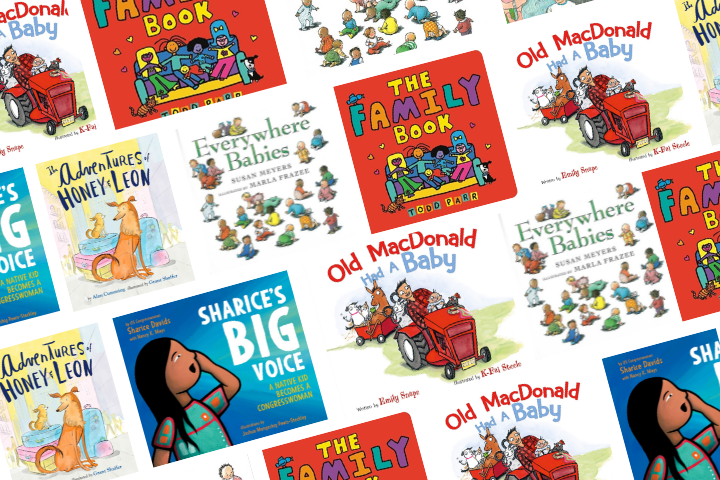
This post appeared on the Network for Public Education blog. It shows the common theme of vouchers in other states: They subsidize the students who are already enrolled in private schools. The legislation was signed into law by Governor Kim Reynolds.

Ed Tibbetts: Few Iowa families will have more choices with GOP ‘school choice’ plan

Ed Tibbetts substacks at Along the Mississippi. In this op-ed for the Iowa Capital Dispatch, he looks at the true cost of Kim Reynolds’ voucher plan.

He writes:

Iowa Gov. Kim Reynolds says her plan to use taxpayer money to pay for private schooling gives people a choice to educate their kids where they want.

But that’s not what her plan says. Just look at the details: Only certain families with kids in public schools will get that choice.

What this plan really does is pay people who already are sending their kids to private schools.

Like many voucher programs, this one really sticks it to rural taxpayers.

Forty-one counties in Iowa have no private schools, according to the group Common Good Iowa. Another 23 counties only have one private school.

What choice do those kids and their parents have?

Not much.

What Reynolds’ plan really does is take their tax money and send it to families who live somewhere else.

But while this program may have an impact on taxpayers, its impact on students will be meager.

Rural or urban, though, even the governor’s own proposal acknowledges relatively few people will get this money. About 33,000 Iowa kids go to private schools now, and the governor says when her plan is phased in, that number will nudge up to about 38,000.

That’s not much of a change: Just 5,000 kids.

Meanwhile, approximately 500,000 Iowa kids will remain in underfunded public schools.

Do the math: Her plan only pays for 1% of Iowa kids to go from public to private school, but the costs balloon to roughly $340 million a year when phased in – or 9% of the basic state aid going to public schools now.

And like the several voucher plans being rocketed through red state legislatures right now, the Iowa plan is being fast-tracked–quick, before the voters notice!

The plan also is being moved quickly. That’s because the governor knows the longer this lingers, the better people will be able to grasp the consequences. The longer a light is shined on it, the more people realize this plan isn’t supposed to enable them to make a choice, but to pay for people who already have made it.

In the meantime, it sucks money away from the vast majority of public-school students who will remain in classrooms where districts already struggle with rising costs while the state turns a blind eye; in schools where our state spends less per pupil than most other states in the country; in schools where teachers whose salaries lag will eventually go to places where their skills are better rewarded and they aren’t scorned in service of the culture wars.

Read the full piece here. 

You can view the post at this link : https://networkforpubliceducation.org/blog-content/ed-tibbetts-few-iowa-families-will-have-more-choices-with-gop-school-choice-plan/

Republicans in the Iowa Legislature want to limit the foods that people who are on food stamps may purchase. They don’t think poor people deserve to eat well. They also want to lower the threshold for eligibility so that fewer people can get food assistance.

What can you say about such cruelty? Why does anyone vote for them? People without the milk of human kindness in their bodies.

Salon reports:

Iowa House Republicans introduced a bill that would place restrictions on the state’s Supplemental Nutrition Assistance Program (SNAP) benefits, limiting who qualifies for food assistance and what foods they can buy.

The new bill, House File 3, dictates what the more than 250,000 Iowans who rely on SNAP can or cannot buy at grocery stores, Luke Elzinga, spokesperson for local food nonprofit DMARC told Axios Des Moines.

HF3 also targets several other public assistance programs, such as Medicaid, and reduces the income level Iowans need to qualify for the program…

Some of the proposed restrictions mean that low-income, older, and disabled Iowans who rely on SNAP benefits would not be able to purchase items like fresh meat, white bread, or sliced cheese.

The bill dictates that people can only purchase 100% whole wheat bread, brown rice and 100% whole wheat pasta — no white grains allowed.

Also on the “do not buy list” are baked, refried or chili beans. Instead, recipients must purchase black, red, and pinto beans. Cooking oil, spices, and salt and pepper would have to be crossed off the shopping list, along with soup, and canned vegetables and fruit.

Fresh meats are off the table, as Iowans would only be able to purchase canned products like canned tuna or salmon. Sliced, cubed, crumbled, and American cheese would also be eliminated from SNAP food purchases….

“I don’t think the 39 co-sponsors of this bill know just how restrictive this is, and that it would ban meat,” he said. “Under this bill, no ground beef, no chicken, no pork in the state of Iowa. I just can’t believe that they knew that was what it was when the bill was introduced.”

Do Republicans believe in freedom? Or control?

Pieper Lewis was 15 when she ran away from the home of her adopted mother. She slept in the lobby of an apartment building. She was befriended by a man who then gave her to other men in exchange for drugs or money. One man raped her repeatedly. In a fit of rage, she stabbed him repeatedly and killed him in 2020. After more than two years in detention, she came before a judge who gave her five years of probation, instead of 20 years in prison. He also required this homeless teen to pay $150,000 to the rapist’s family in accordance with Iowa law.

One of Pieper’s high school teachers stepped in to help her by creating a GoFundMe to pay her debt. Leland Schipper, her former math teacher, hoped to raise $150,000, enough to pay what she owed plus some money to help her get a fresh start. He has so far raised over $400,000 so that the child will be able to go to college or start a business. She said in a statement that she wants to help other girls like her who were victims of sex trafficking.

This was Pieper Lewis’ statement at her sentencing hearing.

Thank you to Leland Schipper for giving this young woman, this child, a chance to start over.

Quite a story.