Trump wants to close the U.S. Department of Education. He thinks the Department of Education has been indoctrinating Americans to accept DEI and “radical gender ideology.” He’s wrong.
Trump’s education goals were laid out in Project 2025. During the campaign, Trump pretended he knew nothing about Project 2025, but he was lying. Of course. The organizer of Project 2025, Russell Vought, was recently confirmed as Trump’s Budget Director (Office of Management and Budget).
Trump and his Secretary of Education-designate Linda McMahon think that the Department of Education is a hotbed of DEI and that it is imposing “woke” policies on the nation’s schools.
As someone who served in the Department of Education in the administration of President George H.W. Bush, I can state without qualification that they are wrong.
The career civil servants at the Department of Education are not educators, although there might be a few exceptions. They review and process grants and contracts. They organize peer reviews. They supervise authorized activities. They have multiple responsibilities, but writing curriculum is not one of them.
The Department of Education does not tell schools what to teach. It is illegal for any officer of the government to attempt to influence the curriculum of the nation’s schools. It has been illegal to do so since 1970.
The law states: “No provision of any applicable program shall be construed to authorize any department, agency, officer, employee, of the United States to exercise any direction, supervision, or control over the curriculum, program of instruction, [or] administration…of any educational institution…or over the selection of library resources, textbooks, or other printed or published instructional materials.“
The law is P.L. 103-33, General Education Provisions Act, section 438.
The ideas of diversity, equity, and inclusion are generally and broadly accepted by the public. They were not hatched by the Department of Education. They are baked into our American ideals of fairness and justice and opportunity for all.
The fact is that our nation is diverse. Banning the word doesn’t change the reality. We are a nation whose population includes people of every race, religion, and ethnicity. We are a nation of men and women, as well as people who are LGBT. Yes, we do have transgender men and women, and not even Trump can erase them.
Equity is a necessity if we are serious about reducing the vast economic and social gaps in our society. Here is one definition of equity, as compared to equality, as offered by the Annie E. Casey Foundation:
Well-meaning people often use the terms “equity” and “equality” interchangeably when discussing matters related to race and social justice. While both terms have to do with “fairness,” there are key differences as the application of one over the other may lead to drastically different outcomes. Equality requires that everyone receives the same resources and opportunities, regardless of circumstances and despite any inherent advantages or disadvantages that apply to certain groups. Equity, on the other hand, considers the specific needs or circumstances of a person or group and provides the types of resources needed to be successful.
Equality assumes that everybody is operating at the same starting point and will face the same circumstances and challenges. Equity recognizes the shortcomings of this “one-size-fits-all” approach and understands that different levels of support must be provided to achieve fairness in outcomes.
A highly circulated image seeks to provide a visual illustration of the differences between equality and equity. The image depicts three people standing behind a fence, watching a baseball game. The three individuals are all different heights, with the tallest of the three being able to see over the fence without any help. The other two are not tall enough to see over. Equality provides each of these people with identical boxes to stand on to peer over the fence. The tallest person, who didn’t need the box in the first place, now stands even higher, continuing to enjoy a perfect view of the game. The second person can now see over the fence, and the third person, even with the help of the box, is still too short to see over.
The image also depicts what equity would look like in this same scenario. In the equity version, the tallest person does not receive a box and is still able to enjoy the game. The second person is given one box to stand on, and the third person is given two boxes to stand on. Now, all three can enjoy the same view of the game.
The most classic definition of equity in my lifetime was contained in a speech that President Lyndon B. Johnson gave at Howard University in 1965.
He said:
Freedom is not enough. You do not wipe away the scars of centuries by saying: Now you are free to go where you want, and do as you desire, and choose the leaders you please.
You do not take a person who, for years, has been hobbled by chains and liberate him, bring him up to the starting line of a race and then say, “you are free to compete with all the others,” and still justly believe that you have been completely fair.
Thus it is not enough just to open the gates of opportunity. All our citizens must have the ability to walk through those gates.
This is the next and the more profound stage of the battle for civil rights. We seek not just freedom but opportunity. We seek not just legal equity but human ability, not just equality as a right and a theory but equality as a fact and equality as a result.
For the task is to give 20 million Negroes the same chance as every other American to learn and grow, to work and share in society, to develop their abilities–physical, mental and spiritual, and to pursue their individual happiness.
To this end equal opportunity is essential, but not enough, not enough. Men and women of all races are born with the same range of abilities. But ability is not just the product of birth. Ability is stretched or stunted by the family that you live with, and the neighborhood you live in–by the school you go to and the poverty or the richness of your surroundings. It is the product of a hundred unseen forces playing upon the little infant, the child, and finally the man.
The speech was written by LBJ’s White House aide, Daniel Patrick Moynihan. A brilliant Harvard professor, he later was Ambassador to the UN and elected to the US Senate in New York.
As for “inclusion,” it’s a word that means nothing more nor less than all. We commonly speak of equal opportunity for all, not for some. The Pledge of Allegiance refers to “liberty and justice for all,” not for some. All means all. All means inclusion.
Pete Hegseth recently said, “Diversity is not our strength.” What a stupid thing for the Secretary of Defense to say in light of the diversity of our military. Does he want to oust everyone from the military except white nen?
When the U.S. team walks into the Olympic Stadium, it is the most diverse team in the world. I feel proud when I see them.
The fact is, my friends, we are led by a team of idiots. They are simpletons who want to turn the clock back many decades, at least to the 1950s, when the country was run by straight white men. Many barriers have fallen, allowing the rise of people who are not straight white men. (Trump actually has an out gay man in his Cabinet, the Secretary of the Treasury, but he is most certainly an outlier). Trump wants to restore the barriers that kept women and nonwhites out of leadership roles.
We have to push back every day. Don’t let Trump’s seething hatred and bigotry become normalized. Don’t let him wipe out 60 years of civil rights legislation.
At a reader’s suggestion, here is an even better graphic to define “equity.”
Here is what Trump has wrought: He has made it acceptable for people to be as bigoted and stupid in public as they want, with no sense of shame attached to their bigotry or their stupidity. When Trump attacks DEI, he is openly avowing his racism and misogny. When he rants about immigrants, he doesn’t mean white immigrants, he means nonwhite immigrants.
Thanks to Trump’s malign influence, we get a story like the following, which appeared in the New York Daily News. Bryce Mitchell is a mixed martial arts “star” who flaunts his bigotry and ignorance and belittles the schools that tried to educate him and inculcate a sense of human decency.
“I honestly think Hitler was a good guy, based upon my own research, not my public education and indoctrination,” the 30-year-old fighter said in the first episode.
“He fought for his country, he wanted to purify it by kicking the greedy Jews out who were destroying his country and turning them all into gays,” he added. “Was Hitler perfect? No, but he was fighting for his people. He wanted a pure nation.”
After co-host Roli Delgado countered that genocide was bad, Mitchell then denied the Holocaust.
“That’s what your public education will tell you Roli, because you believe your public education because you haven’t done your own research. When you realize there’s no possible way they could’ve burned and cremated 6 million bodies, you’re gonna realize the Holocaust ain’t real,” he said.
Mitchell, who competes in UFC’s featherweight division, was roundly denounced by others in the fighting community following his comments.
“It just continues to baffle me at how unbelievably stupid — not to mention bigoted — some of the people in the sport or associated with the sport can be,” Helwani concluded.
“That’s the reason I’m going to home-school Tucker, because I don’t want him to be a communist,” he said in an Instagram video while holding up his son. “I don’t want him to worship Satan. I don’t want him to be gay.”
It’s time to rehabilitate Richard Nixon’s reputation. True, he had a bunch of inept burglars break into the Denocratic National Committee’s headquarters. True, he had an enemies’ list. True, he appointed an ally to lead the Justice Department.
Nixon resigned before he could be impeached. Republicans in Congress were as angry as Democrats.
Nixon had a sense of shame. He resigned rather than be impeached. Trump has no sense of shame.
But all that pales compared to what is happening now. Trump has nominated a long list of completely unqualified people to run major Departments of the federal government. He has started a purge of the FBI, intending to oust anyone who participated in investigating him or the January 6 insurrection.
He has given free access to Elon Musk to enter every Department, copy its files, and fire any career employee who stands in his way.
Bill Kristol, once a conservative stalwart and editor of The Weekly Standard, now writes for The Bulwark, which sees Trump as the sociopath he is.
In disregard of the rule of law, he knowingly misused the executive power by interfering with agencies of the executive branch, including the Federal Bureau of Investigation . . . in violation of his duty to take care that the laws be faithfully executed.
In all of this, Richard M. Nixon has acted in a manner contrary to his trust as President and subversive of constitutional government, to the great prejudice of the cause of law and justice and to the manifest injury of the people of the United States.
Article II, section 5, of the Articles of Impeachment Adopted by the House of Representatives Committee on the Judiciary, July 27, 1974
Half a century ago Congress, the courts, other key institutions within and outside of the government, and the American public, faced an assault launched by President Richard Nixon and his henchmen to the constitutional order and the rule of law.
They defeated it.
Today, we face a crisis greater than Watergate.
Are we up to dealing with it?
We’re going to find out.
The crisis is multi-faceted and fast-moving. President Donald Trump and his sidekick Elon Musk—nominated for no federal office, employed by no federal agency, accountable to no one—are racing on several fronts to undermine laws, procedures, and norms that would constrain their arbitrary exercise of power. But the assault on the rule of law seems centered on the Federal Bureau of Investigation.
It began with the nomination of Trump apparatchik and defender of the January 6th rioters Kash Patel to be FBI director. Patel tried to reassure Senators during his confirmation hearing last Thursday that “all FBI employees will be protected from political retribution.”
But the next day, Emil Bove, Trump’s former defense lawyer, who is now acting deputy attorney general and in charge of the Justice Department, ordered the removal of at least six top FBI career executives. Bove also requested the names of all FBI agents who worked on January 6th cases.
All seemed on track for Trump’s efforts to purge the agency and remake it in his own image.
But FBI officials may not permit their agency to go gentle into the dictatorial night.
Over the weekend, in a blizzard of activity (helpful reporting can be found here, and here, and here), FBI officials moved to resist the attempted coup.
Though he had carried out the order to decapitate the bureau’s top executives the day before, on Friday acting FBI Director Brian Driscoll reportedly refused to agree to fire certain agents involved with January 6th cases, and was trying to block a mass purge of such agents. In a message to staff Saturday, Driscoll reminded FBI agents of their rights to “due process and review in accordance with existing policy and law,” and emphasized “That process and our intent to follow it have not changed.”
The FBI Agents Association sent a memo to employees over the weekend to remind them of their civil service protections. The memo urged them not to resign or to offer to resign, and recommended that agents respond to one question in the survey they’ve been instructed to answer: “I have been told I am ‘required to respond’ to this survey, without being afforded appropriate time to research my answers, speak with others, speak with counsel or other representation.”
And in a remarkable letter, obtained by The Bulwark, the president of the Society of Former FBI Agents—a group that seeks to stay out of politics—said the following:
The obvious disruption to FBI operations cannot be overstated with the forced retirement of the Director, Deputy Director, and now all five Executive Assistant Directors. Add in the immediate removal of a number of SACs [Special Agents in Charge] and the requests for lists of investigative personnel assigned to specific investigations and you know from your experience that extreme disruption is occurring to the FBI—at a time when the terrorist threat around the world has never been greater.
Then on Sunday the top agent at the FBI’s New York field office, James Dennehy, wrote in an email to his staff: “Today, we find ourselves in the middle of a battle of our own, as good people are being walked out of the F.B.I. and others are being targeted because they did their jobs in accordance with the law and F.B.I. policy. . . . Time for me to dig in.”
It’s surely time for many others to dig in. Especially the United States Congress, which authorizes FBI activities, appropriates its funds, and before whom Kash Patel’s nomination is pending.
It’s pointless to ask President Trump to recall the oath he took two weeks ago, to “faithfully execute the Office of President of the United States” and to “preserve, protect and defend the Constitution of the United States.”
But members of Congress also take an oath to “support and defend the Constitution of the United States against all enemies, foreign and domestic.” As it was fifty years ago, so it is today: The fact that the Constitution’s enemies now include the president of the United States does not relieve members of Congress of their responsibility to that oath.
The FBI is supposed to be a nonpolitical agency, although every FBI director chosen by every president was a Republican.
Over the past four years, the FBI was assigned the job of identifying and arresting those who planned and participated in the January 6, 2021, invasion of the U.S. Capitol. The mob was incited by Trump; its goal was to stop the certification of the 2020 election. The insurrection was an attempt to overthrow the Constitution and give Trump a position he lost in the 2020 elections.
The investigation of the January 6 insurrection was the largest in the history of the FBI.
Now Trump’s minions are asking FBI agents whether they were part on the investigation of January 6 or part of the investigation of Trump’s theft of classified documents.
Those who were will be fired because they can’t be trusted to faithfully execute Trump’s agenda.
Understand that the FBI agents who worked in these investigations were carrying out their duties. Understand that in no sane world is it right to send an angry mob to ransack the U.S. Capitol and to disrupt Congress in performing its prescribed duties.
Trump wants to rewrite history. He wants to make it official that the prosecution of the January 6 mob should never have happened. It was, he says, “a day of love.” The mob that beat up and bludgeoned police officers defending the Capitol and members of Congress were “patriots.”
Historians will ignore his lies. The criminal actions of Trump’s mob are well documented.
How can the FBI save itself from a mass purge?
Simple. Every single member of the FBI should sign a statement saying that they were part of the January 6 investigation. Every. Single. Member.
This is a true statement because who investigated the largest single attack in the Capitol were chosen at random. They were not there as volunteers or Trump-haters. They were there because FBI agents take their assignments seriously and execute them with fidelity.
To defend the FBI, sign your name. They can’t fire everyone. That might even offend the sombolent Republicans in Congress. Most were there on January 6. No matter what they say now, they know that their lives were in danger then. Will they sit by silently and let Trump eliminate the entire FBI? Not likely.
Trump signed an Executive Order threatening to cut off federal funding from schools that “indoctrinate” students on issues related to race and gender. The order is titled “Ending Radical Indoctrination in K-12 Schooling.”
Let’s start by acknowledging that this order is in direct violation of a law that was passed in 1970 to prevent the federal government from imposing any curriculum on the nation’s schools. This provision has been repeatedly renewed. Neither party wanted the other to impose its views on the schools, which is what Trump seeks to do.
The law says:
“No provision of any applicable program shall be construed to authorize any department, agency, officer, or employee of the United States to exercise any direction, supervision, or control over the curriculum, program of instruction, [or] administration…of any educational institution…or over the selection of library resources, textbooks, or other printed or published instructional materials.” P.L. 103-33, General Education Provisions Act, Section 432.
What Trump ordered is illegal.
Trump is expressing the views of far-right extremist groups, like “Moms for Liberty,” who hate public schools for teaching honest accurate history about racism. They want teachers to say that there was racism long, long ago, but not any more. They vehemently oppose any discussion of systemic racism (they call such discussion “critical race theory,” which of course must never be mentioned).
Any discussion of the reality of racism is forbidden by this order.
Even more threatening to the extremists is what they call “radical gender ideology.” That would be any discussion that acknowledges that LGBT+ people exist. They believe that just talking about the existence of such people–widespread on television, movies, and the Internet–makes children turn gay or even transgender.
Trump’s executive order threatens to withhold federal funding from any school where yea gets “indoctrinate” their students to consider the existence of systemic racism or sexuality.
It is Trump’s hope that with the actions he take, non- binary people–that is, LGTB+–will cease to exist.
Trump’s friend Elon Musk posted yesterday a graphic showing that in the distant past, there were two genders; in the recent past there were “73 genders.” Starting in 2025, his post said, there will be only two genders. Musk is the father of a transgender daughter, who was originally named Xavier. With his gleeful tweet, he seems to be trying to erase his daughter.
The Founding Fathers were unequivocally opposed to creating a theocracy. The Constitutuon they wrote provided that there would be no religious tests for any government office. The First Amendment guaranteed freedom of religion and asserted that Congress would make no law to establish any religion. They did not want the new United States of America to be a Christian nation.
Yet there has always been a vocal minority that does want the U.S. to be a Christian nation.The more diverse we are, the more these extremists want to impose their religion on everyone.
Pete Hegseth, Trump’s new Secretary of Defense, is apparently a Christian nationalist. He has Christian nationalist tattoos. Too bad for non-Christians and atheists. He will probably assume that every woman and person of color I a high-ranking position is a DEI hire. Only straight white men, he assumes, are qualified. Like him.
In a series of newly unearthed podcasts, Pete Hegseth, Donald Trump’s pick for defense secretary, appears to endorse the theocratic and authoritarian doctrine of “sphere sovereignty”, a worldview derived from the extremist beliefs of Christian reconstructionism (CR) and espoused by churches aligned with far-right Idaho pastor Douglas Wilson.
In the recordings, Hegseth rails against “cultural Marxism”, feminism, “critical race theory”, and even democracy itself, which he says “our founders blatantly rejected as being completely dangerous”.
For much of the over five hours of recordings, which were published over February and March 2024, Hegseth also castigates public schools, which he characterizes as implementing an “egalitarian, dystopian LGBT nightmare”, and which the podcast host Joshua Haymes describes as “one of Satan’s greatest tools for excising Christ from not just our classrooms but our country”.
Elsewhere in the recordings, Hegseth expresses agreement with the principle of sphere sovereignty, which, in CR doctrine, envisions a subordination of “civil government” to Old Testament law, capital punishment for infringements of that law such as homosexuality, and rigidly patriarchal families and churches.
Julie Ingersoll, a professor and director of religious studies at the University of North Florida who has written extensively about Christian reconstructionism and Christian nationalism, told the Guardian: “When these guys say they believe in the separation of church and state, they’re being duplicitous. They do believe in separate spheres for church and state, but also in a theocratic authority that sits above both.”
Hegseth’s far-right beliefs have garnered attention as his nomination to lead the world’s largest military has proceeded. The former Fox News television star and US National Guard officer, decorated after deployments that included special operations in Iraq and Afghanistan, has also garnered negative attention over media reports on his allegedly excessive drinking and allegations of sexual assault.
On Hegseth’s probable assumption of a high-ranking cabinet position in the Trump administration, and how he might view his constitutional role, Ingersoll said: “These folks are not particularly committed to democracy. They’re committed to theocracy.”
She added: “If the democratic system brings that about, so be it. If a monarchy brings it about, that’s OK, too. And if a dictatorship does, that’s also OK. So their commitment is to theocracy: the government of civil society according to biblical law and biblical revelation.”
Logan Davis, a researcher, consultant and columnist from Colorado, grew up in a reformed Calvinist church similar to Pilgrim Hill Reformed Fellowship, which Hegseth now attends, and spent middle and high school in a classical Christian school affiliated to the one Hegseth’s children now attend.
In November he wrote a column entitled “Pete Hegseth and I know the same Christian Nationalists”.
Asked how Hegseth would understand his oath if sworn in as secretary of defense, Davis said: “Hegseth will be swearing to defend the constitution that he, to the extent he is aligned with Doug Wilson, does not believe includes the separation of church and state.”
Asked if Hegseth’s performance of his duties might be influenced by the belief that, as Wilson put it in a 2022 blogpost, “We want our nation to be a Christian nation because we want all the nations to be Christian nations,” Davis said: “I can tell you that the reformed leaders around him … are all sincerely hoping that that is how he will view his mandate.”
In October 2020, near the end of his first term, Trump imposed a new classification for career civil servants called Schedule F. It was intended to strip job security from career civil servants so they could be replaced by Trump loyalists. One of Joe Biden’s first actions was to eliminate Schedule F.
Trump pledged during his 2024 campaign to implement Schedule F. He calls the Civil Service “the deep state.” He believes that career bureaucrats slow-walked or impeded some of his most extreme ideas. And he is on his way, with full control of the Executive branch, both Houses of Congress, and (usually) the Supreme Court.
By implementing Schedule F, Trump would gain control of 50,000 jobs that are now held by civil servants. He and his deputies could replace them with MAGA loyalists.
The creation of the Civil Service was considered a very important reform and has been sacrosanct for more than a century. Before the Civil Service Commission was created in 1883, government jobs were handed out based on party affiliation. This was known as “the Spoils System.” The saying went “to the victor goes the spoils.” Win the election and appoint the people of your own party, who will be loyal to you.
Trump wants a return to the Spoils System, so he can appoint Trump loyalists. He wants to turn the clock back more than a century.
The first comprehensive merit-based civil service system was put in place by the Pendleton Civil Service Reform Act of 1883, which created the United States Civil Service Commission. The Act ended the Spoils System by specifying that merit – qualifications measured by testing – is the basis of hiring decisions. For the first time, appointments were open to all citizens, made based on merit, and were given to the best qualified applicants. The Act also protected incumbents from being thrown out of office simply because of a change in the Presidency, providing tenure protection for employees and ensuring their political neutrality. Initially, only about 10.5% of Federal jobs were included in the competitive civil service system. By the end of the century, approximately 42% were included; by the early 1900s, it was over 60%; and by 1952, over 90% of Federal jobs were included in the civil service system.
Merit-based civil service systems followed in the states and at the local level. The first state civil service law was enacted under the leadership of then-Assembly Member Theodore Roosevelt and then-Governor Grover Cleveland in New York in 1883. Teddy Roosevelt also served as a commissioner on the United States Civil Service Commission and was a staunch supporter of the civil service during his presidency, leading to a period of major government expansion and further reforms of the civil service system. Roosevelt is known as the “Father” of modern civil service….
After World War II, the rise of collective bargaining in the public sector and the civil rights movement affected the civil service system, bringing the ideas of Equal Employment Opportunity, affirmative action, and equal pay for equal work into the world of personnel administration. The Civil Rights Act of 1964, Equal Pay Act of 1963, Age Discrimination in Employment Act of 1967, Rehabilitation Act of 1973, and the Americans With Disabilities Act of 1990 all marked the growing inclusiveness of public personnel policies and procedures. These movements clearly spoke to the fundamental civil service ideal that appointments are based on merit established by competitive processes, not on any other factors.
By the 1970s, a new civil service reform movement began with the goal of making civil service more responsive to the personnel needs of executives and managers. While the first reforms begun in the late nineteenth century established the principles of competitiveness and merit, they also created a significant separation between management and personnel administration.
Managers had little control over personnel issues and their day to day operational needs were often stymied by overly restrictive civil service rules. Despite the decentralization of civil service systems during the Roosevelt era, personnel offices still retained significant control and managers continually found there were significant barriers to effectively attracting, retaining, evaluating, disciplining, rewarding, and terminating employees.
The Civil Service Reform Act of 1978 was designed to address these issues at the Federal level. The Act abolished the Civil Service Commission and created the Office of Personnel Management in its place. Agency chief executives were given direct policy control over personnel functions and the purpose of the civil service system moved from a regulatory function to a service orientation in order to better support organizational and leadership efforts.
Civil service processes were streamlined and simplified; the merit system restated and expanded to include an employee’s abilities, education, experience, and job performance; and the emphasis turned to recruitment, career advancement, performance based compensation, and performance appraisal. The Act also created the Senior Executive Service, which is designed to help attract and retain high level senior executives outside of the civil service system. Many of these changes were mirrored at the state and local levels.
This latest reform movement lost momentum under President Reagan during the early 1980s and many of the same concerns brought to light during the 1970s regarding the responsiveness of civil service systems continue to exist today.
The primary goal of the civil service system has been and continues to be to ensure that appointments to government jobs are based on merit and ability as determined through a competitive process. The principles of civil service specify that the most qualified person be appointed to the job; that appointments not be based on any other factors such as political activity or patronage; and that incumbents are protected from the political whims of elected officials. This primary purpose of civil service has remained constant throughout the various historical movements that have changed and shaped civil service over the last 200 years.
Adapted from the website for the U.S. Office of Personnel Management (www.opm.gov) and The New Public Personnel Administration by Nigro, Nigro, and Kelloug
Greg Olear is simply amazing. Read the post here and perhaps you will agree. He is wise, smart, learned, insightful, and inspiring. I know of no other writer who weaves together politics, literature, and history as seamlessly as Olear. He writes at Substack and charges no fee.
Dear Reader,
The great British historian Eric Hobsbawm wrote an indispensable series of books in which he divides the 20 decades after the French Revolution into historical “ages.” The period from the 1789 storming of the Bastille to the uprisings sweeping across Europe in 1848 he termed the Age of Revolution. Eighteen forty-eight until the end of the Great Boom circa 1875 is the Age of Capital. The Age of Empire spanned from the mid-1870s until the start of the Great War in 1914. And the “short twentieth century,” a term he coined, was dubbed the Age of Extremes, and ran from the assassination of the archduke until 1991.
Ever since I discovered his books in 2012, the year of his death, I’ve often wondered what Hobsbawm would have called the fifth historical “age”—the one that began in 1991. That was the year of the first Gulf War, and the banishment from Saudi Arabia of Osama bin Laden that kickstarted his Al Qaeda movement; the mysterious death of Robert Maxwell—friend to the British royal family, mentor to Jeffrey Epstein, business partner of the Russian mobster Semion Mogilevich, and Israeli spy—who fell off his yacht off the coast of the Canary Islands; the repeal of the apartheid laws in South Africa, where Errol Musk made his fortune; the rollout of the WorldWideWeb; and the breakup of the Soviet Union—on Christmas, no less, capitalism’s holiest of holy days.
Today, a mere 24 hours and change before we hand the federal government off to a hateful confederacy of Nazis, mobsters, Opus Dei weirdos, white Christian nationalists, and billionaire dorks, I think I know not only the name of the period after the Age of Extremes, but also its termination date. As I type this, we are living in the last few hours of the Age of Unreality. It ends tomorrow at noon.
Something else happened in 1991, you see—something that likely eluded Eric Hobsbawm. Producers at MTV were developing a TV show that would begin filming in February of 1992. It was called The Real World: New York. It was the first reality TV show—or, at least, the seminal reality TV show of the subsequent reality TV explosion. Riding the reality TV wave was a British producer named Mark Burnett, who would give us Survivor in 2000, and, four years later, what wound up being the most historically significant reality TV show of all time, The Apprentice.
Although I confess to having enjoyed a few seasons of The Surreal Life, back when our eldest son was a baby—Flavor Flav does not disappoint!—I have never liked reality TV shows, encouraging, as they often do, the very worst of human behavior. I don’t like meanness. I don’t like ruthlessness. I don’t like watching anyone being voted off the island. I don’t like when people are fired. I don’t like talentless humans. I don’t like Kardashians. Most of all, I don’t like the unscripted-but-very-much-scripted fluff that has replaced actual shows written by actual writers. By encouraging us to believe in a heavily-retouched fictional universe presented as the real world—or, I suppose, The Real World—reality TV has left us more susceptible to Russian disinformation, to deep fakes, to conspiracy theories, to manufactured media narratives, to tech-bro charlatans, to pseudo-scientific arguments against vaccines, and to mendacious politicians who have supercharged lying to a form of warfare.
I have often grumbled, half in jest, that reality TV would bring about the end of Western civilization. I did not think it would also bring about the end of Western democracy. To paraphrase Don DeLillo: Reality TV has given us Joe Rogan; that alone warrants its doom.
(Is this the real life? Is this just fantasy? Freddie Mercury died in—when else?—1991.)
One of the most significant, world-altering events in this Age of Unreality was, of course, 9/11. In response to the WTC attacks, the FBI shifted its focus from transnational organized crime, which was already operating in the United States and growing more powerful by the day—a genuine threat to our society—to Islamic extremist terrorism, which involved not very many crazy people mostly living in caves far, far away from New York. In response to 9/11, we have to subject ourselves to TSA search before boarding an airplane. In response to 9/11, Bush and Cheney launched a long and expensive war on Saddam Hussein, who had nothing whatsoever to do with the attacks, while simultaneously cutting taxes for their wealthy benefactors—two actions that, in tandem, starved the U.S. treasury and put the country so far into the red that it may never recover. In Britain, meanwhile, Tony Blair’s blind loyalty to Bush—a foreshadowing, perhaps, of Joe Biden’s blind loyalty to Bibi Netanyahu—paved the way for BREXIT and the series of hapless prime ministers that followed the disastrous decision to LEAVE.
Five days after 9/11, Anthony Lane, the New Yorker’s savagely witty film critic, published what remains one of the finest pieces of writing on the attacks, a short essay called “This Is Not a Movie.” I go back and revisit it every once in a while, when the mood strikes me. Reading it now, I see that Lane perfectly articulates the paradox of the Age of Unreality, the uneasy blur between fact and fiction, when he comments on “the degree to which people saw—literally saw, and are continuing to see, as it airs in unforgiving repeats—that day”—that is, September 11, 2001—“as a movie.” He notes that the elapsed time between the initial hijackings and the collapse of the north tower was “a little over two hours;” the length of a summer blockbuster disaster film.
Lane writes:
We are talking…of the indulgence that will always be extended to an epoch blessed with prosperity—one that has the leisure, and the cash, to indulge its fancies, not least the cheap thrill of pretending that the blessing could be wiped out. What happened on the morning of September 11th was that imaginations that had been schooled in the comedy of apocalypse were forced to reconsider the same evidence as tragic. It was hard to make the switch; the fireball of impact was so precisely as it should be, and the breaking waves of dust that barrelled down the avenues were so absurdly recognizable—we have tasted them so frequently in other forms, such as water, flame, and Godzilla’s foot—that only those close enough to breathe the foulness into their lungs could truly measure the darkening day for what it was.
There are echoes of this in the fires that have ravaged Los Angeles. Looking at those horrific images, it is impossible not to describe the fiery scenes as something from a movie—or, rather, a limited series, because, unlike with 9/11, the L.A. fires did not confine themselves to a movie-length running time. They began last Tuesday, almost two full weeks ago, and are still ongoing. If 9/11 was, as Lane suggests, a disaster film come to life, the fires are a combination of disaster film and horror movie: not just the fires themselves but the hundred-mile-an-hour winds and the dread of the fires spreading. Only those close enough to breathe the foulness into their lungs could truly measure the darkening days for what they are. My heart breaks for everyone in L.A., even as I know I can never fully understand their ordeal.
The fires are not a movie, just like 9/11 was not a movie. The fires are all too real.
As a country, we have not even begun to comprehend the extent of the damage, or its impact on all those hundreds of thousands if not millions of people in the Pacific Palisades and Altadena and beyond, much less the effect the fires will have nationally, culturally, societally—not least because the recovery will ultimately be overseen by an incoming administration not much known for its compassion, its competence, or its love for Hollywood.
The last paragraph of Lane’s essay is achingly, hauntingly beautiful. Many, many people wrote about 9/11 in the days that followed it, and it always struck me as both unlikely and somehow appropriate that a film critic would offer the purest take:
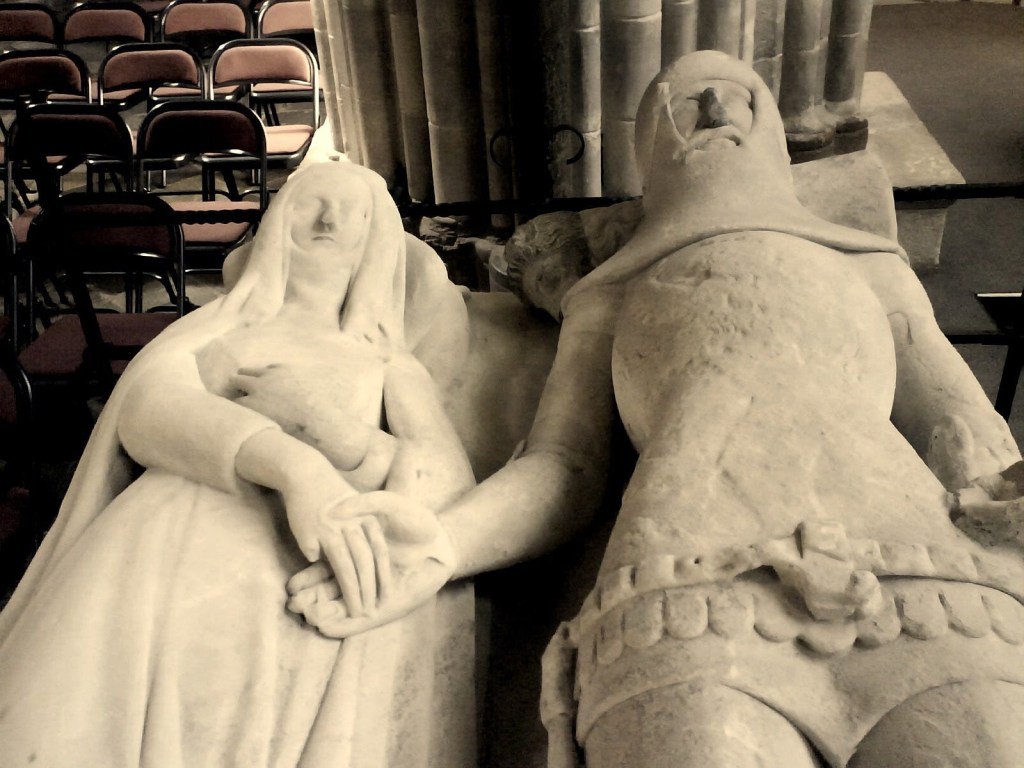
To be forced to disdain the ideal in favor of the actual is never a pleasant process. Even at its worst, however, it can deliver a bitter redemption. We gazed upward, or at our TV screens, and we couldn’t believe our eyes; but maybe our eyes had been lied to for long enough. Thousands died on September 11th, and they died for real; but thousands died together, and therefore something lived. The most important, if distressing, images to emerge from those hours are not of the raging towers, or of the vacuum where they once stood; it is the shots of people falling from the ledges, and, in particular, of two people jumping in tandem. It is impossible to tell, from the blur, what age or sex these two are, nor does that matter. What matters is the one thing we can see for sure: they are falling hand in hand. Think of Philip Larkin’s poem about the stone figures carved on an English tomb, and the “sharp tender shock” of noticing that they are holding hands. The final line of the poem has become a celebrated condolence, and last Tuesday—in uncounted ways, in final phone calls, in the joined hands of that couple, in circumstances that Hollywood should no longer try to match—it was proved true all over again, and, in so doing, it calmly conquered the loathing and rage in which the crime was conceived. “What will survive of us is love.”
Larkin, the poet who wrote that line—and who is, like Lane, British—was not at all a sentimental sort. His stuff is gloomy, sourpuss, almost defeatist. Throughout his poems we see a struggle between, on the one hand, recognizing the futility of life, and on the other, being paralyzed by the fear of death. It is his poem “This Be The Verse,” about how our parents “fuck us up,” that the pub owner quotes, somewhat incongruously, in Ted Lasso:
Man hands on misery to man. It deepens like a coastal shelf. Get out as early as you can, And don’t have any kids yourself.
Sunny stuff, right? Larkin’s entire worldview is neatly encapsulated in this line from “Aubade,” a title that indicates this is a poem about the dawn:
And so it stays just on the edge of vision, A small unfocused blur, a standing chill That slows each impulse down to indecision. Most things may never happen: this one will, And realisation of it rages out In furnace-fear when we are caught without People or drink. Courage is no good: It means not scaring others. Being brave Lets no one off the grave. Death is no different whined at than withstood.
The antecedent of the “it” in the first line is “death.” But we may just as well substitute “Trump,” and the lines work just as well: the standing chill, the furnace-fear and the rage, the necessity of other people and a good stiff drink, the futility of courage.
The poem that Lane quotes is called “An Arundel Tomb.” At Arundel, a medieval British town, is the tomb of Richard FitzAlan, the tenth Earl of Arundel, who died in 1371, and that of his second wife, Eleanor of Lancaster, who predeceased him by a few years. The tomb is capped by stone statues of the couple, who are, surprisingly, holding hands:
Side by side, their faces blurred, The earl and countess lie in stone,
Larkin, a dour librarian and bemoaner of the decline of civilization who seems not to have believed in love (even as he juggled three women for most of his adult life), calls bullshit on this romantic display:
They would not think to lie so long. Such faithfulness in effigy Was just a detail friends would see: A sculptor’s sweet commissioned grace
In other words, while the holding of stony hands has stood the test of time, the love it represents was probably a figment of the artist’s rosy imagination. (Note the double meaning of “lie.”)
How soon succeeding eyes begin To look, not read. Rigidly they
Persisted, linked, through lengths and breadths Of time. . .
Until,
Now, helpless in the hollow of An unarmorial age. . . Only an attitude remains:
Time has transfigured them into Untruth. The stone fidelity They hardly meant has come to be Their final blazon, and to prove Our almost-instinct almost true: What will survive of us is love.
Larkin is saying that what the statues represent isn’t real—that our “almost-instinct” is to believe in the much-ballyhooed power of love, and that the “stone fidelity” of the earl and his wife is so compelling as to make said love-power “almost true.” Almost true is not true; almost true is AI true—a lie we want badly to believe in. The entire poem is him expressing his deep, nasty cynicism. The oft-quoted last line is intended to be ironic—a fitting epitaph for our Age of Unreality.
Even so, what survives of Larkin is “What will survive of us is love.” And I like to think, as Lane does, that, whatever the poet’s intention, the Arundel sentiment is real.
The Age of Unreality began in 1991, when all the ingredients of the historical cocktail were thrown into the shaker: the fall of the Soviet Union, the rise of the Russian mafia, the ascendance of Jeffrey Epstein, the dawn of reality TV, the end of apartheid, and the last time that a coalition of Western democracies repulsed an attempt by a despot to invade a sovereign nation—thus upholding the tenets of the Westphalian order. Out of that cocktail shaker, cold as ice, was poured Jeffrey Epstein and Semion Mogilevich, Elon Musk and Peter Thiel, Vladimir Putin and Donald Trump.
Tomorrow, that mindfuck age draws to a close, and a new one begins. What it has in store for us is anyone’s guess. Will the last barriers between fantasy and reality be worn away, or, as Lane poetically puts it, have our eyes been lied to for long enough? Will democracy really die, as the fascism scholars have been warning us for years, or will the Trump power-grab finally wake up the American people and restore our love of liberty? Will generative AI destroy all art, or will a new analog artistry emerge? What will happen to our beloved Hollywood, to which Trump has named meathead Sylvester Stallone, rightwing wacko Jon Voigt, and radical Catholic weirdo Mel Gibson his MAGA “ambassadors?”
I take some small solace in knowing that we’ve been here before. As Hobsbawm notes in The Age of Capital, the United States in the late nineteenth century—the America Trump wants us to return to—was marked by
the total absence of any kind of control over business dealings, however ruthless and crooked, and the really spectacular possibilities of corruption both national and local—especially in the post-Civil War years. There was indeed little that could be called government by European standards in the United States, and the scope for the powerful and unscrupulous rich was virtually unlimited. In fact, the phrase ‘robber baron’ should carry its accent on the second rather than the first word, for, as in a weak medieval kingdom, men could not look to the law but only to their own strength—and who were stronger in a capitalist society than the rich? The United States, alone among the bourgeois world, was a country of private justice and armed forces….
Our current crop of robber barons is orders of magnitude worse than its forebears—but maybe the abject awfulness of these despicable people will make their reigns shorter, their fall more humiliating, and their historical impact less profound.
Even so, for all my optimistic tendencies, I fear tomorrow as surely as Larkin feared death, which he describes as
The sure extinction that we travel to And shall be lost in always. Not to be here, Not to be anywhere, And soon; nothing more terrible, nothing more true.
Death is permanent and absolute, but dictatorships are neither; moreover, Donald isn’t a dictator yet, and may well never be. Even as I have witnessed the poltroonish capitulation of our political leaders, our robber barons, our media figureheads, even our Snoop Doggs, I have faith that we will somehow find a better way, that we will repulse this ugly MAGA incursion, that the moral arc of the universe will bend towards justice, that the better angels of our nature will prevail. My faith will be tested, surely. But it will remain.
Nothing more true than this: What will survive of us is hope.
Laurence Tribe and Kathleen Sullivan report in The Contrarian on a momentous event that was ignored by the media: The U.S. Constitution has a new amendment. In one of his last acts as President, Joe Biden made the Equal Rughts Amendment official.
Critics claimed that the time limit for the ERA had passed, but Tribe and Sullivan explain why the critics were wrong.
With three days left in his presidency, Joseph R. Biden ensured that the United States Constitution, the oldest on earth, would finally include an explicit guarantee of sex equality. In truth, the Equal Rights Amendment should have been recognized as part of our Constitution nearly half a dozen years ago, when Virginia became the 38th state to ratify it on January 27, 2020.
By proclaiming, in effect, “Yes, Virginia, you have made history by repairing a glaring omission in our most fundamental law,” President Biden made official a reality that many Americans failed to recognize at the time: that Article V of the Constitution expressly makes any proposed Amendment to that document “Part of this Constitution, when ratified by the Legislatures of three fourths of the several States.” Nothing in Article V makes the Constitution’s binding contents depend on any further official action by any branch of the federal government, whether Congress or the Judiciary or indeed the Executive.
What makes this action controversial is, of course, the decades that have elapsed since Congress saw fit to propose the ERA to the states for ratification in 1972. But there is no legal basis for treating the ERA as having expired when the arbitrary time limits of 7 and then 10 years set by the House and Senate for the ratification process had run out. The Constitution’s arduous process for amending the document makes it the hardest in the world to revise, with the result that an 18th and 19th century sensibility casts too long a shadow There is no justification for making a uniquely difficult amendment process more difficult by grafting onto it a requirement that amendments must be ratified speedily, a requirement nowhere to be found in the Constitution’s text .
Nor can any such requirement be extrapolated from the history of the amendment process as we have employed it over the years. The most recently ratified amendment, the 27th, was finally approved by the Legislature of Michigan in May 1992, more than two centuries after it was proposed by the First Congress in September 1789. But because its text – unlike that of the 18th, 20th, 21st, and 22nd Amendments – contained no language making it “inoperative unless ratified” by enough states “within seven years of its submission” or indeed within any specified time, that long percolation period made no difference.
So too with the ERA. Congress knew by the date of its submission to the States, March 22, 1972, precisely how to include a shelf date in the text of the amendment , but instead included a time limit only in the advisory resolution . That makes all the difference, because such a resolution is not a binding law, and is not a part of the amendment the States vote whether or not to ratify. Congress recognized as much when it extended that limit by three years in 1982 through a resolution of the two houses.
The Supreme Court, in a case that one of us (Tribe) presented to that court over four decades ago, National Organization For Women v. Idaho, similarly treated the time limit in the resolution as non-binding. And, although five states – Idaho, Kentucky, Nebraska, South Dakota, and Tennessee – attempted to rescind their state legislatures’ earlier ratifications of the ERA between 1972 and 1982, nothing in the Constitution provides for any such turnabout nor tolerates the chaotic and unpredictable legal situation that would be created by permitting states to reverse course as the process proceeds. Ratification is rightly understood as a one-way ratchet.
After careful consideration and consultation with constitutional experts, President Biden – like the American Bar Association last year – concluded that the ERA had met all the requirements for inclusion in the Constitution. He decided that the Oath of Office he took upon assuming the presidency – the Oath to “preserve, protect and defend the Constitution of the United States” – meant that he should formally announce that conclusion to the world.
We welcome debate on the political and moral pros and cons of keeping the ERA alive rather than letting it fade from memory until Congress is again willing to propose similar language for the states to consider – a wait that could be many decades long. And others can debate the implications for the Biden legacy and even the eventual outcome of the multifaceted litigation likely to ensue. Faithful to his Oath and to his duty to execute the laws, this president did not flinch from acting in accord with simple, straightforward, legally impeccable principle.
For that, he deserves our undying gratitude. It is not necessary for the National Archivist to publish the ERA in order for it to be adopted according to the provisions of the Constitution. The President avoided triggering a clash with the Archivist, who recently announced her intention to defy her statutory, and purely ministerial, duty to publish the ERA. The only reason Congress gave the Archivist such a duty nearly a century ago was to ensure that the Nation got word that an amendment was in force, enabling officials at all levels of government to conform their actions to it. In our modern age of broadcast, cable and internet communication, the President’s announcement itself performed that function.
Accordingly, our Constitution now demands that “equality of rights under the law cannot be denied or abridged by the United States or any state on account of sex.”
It’s long past time!
Laurence H. Tribe is Carl M. Loeb University Professor of Constitutional Law Emeritus at Harvard University.
Kathleen M. Sullivan is former Dean of Stanford Law School and professor of law at Harvard and Stanford.




 Diane Ravitch's blog