Archives for category: Fascism

PEN America released a report documenting that book bans had increased sharply over the past year, with the largest number of books banned reported in Florida, followed by Texas.

The freedom to read is under assault in the United States—particularly in public schools—curtailing students’ freedom to explore words, ideas, and books. In the 2022–23 school year, from July 1, 2022, to June 31, 2023, PEN America recorded 3,362 instances of book bans in US public school classrooms and libraries. These bans removed student access to 1,557 unique book titles, the works of over 1,480 authors, illustrators, and translators. Authors whose books are targeted are most frequently female, people of color, and/or LGBTQ+ individuals. Amid a growing climate of censorship, school book bans continue to spread through coordinated campaigns by a vocal minority of groups and individual actors and, increasingly, as a result of pressure from state legislation.

The Miami Herald reviewed what had happened in Florida.

One example in Florida is the expanded “Parental Rights in Education” law, signed into law by Gov. Ron DeSantis last year and dubbed by critics the “Don’t Say Gay” bill as it prohibits discussions of sexuality and gender identity from kindergarten through third grade.

In this year’s session, state lawmakers expanded the restrictions through the eighth grade. The expanded law, which DeSantis signed, also allows a parent or community member to object to instructional material or library books, and requires a school to remove the book or books within five days of a challenge and remain off library shelves until the review is completed.

The process is a “guilty until proven innocent policy” that leads to the removal of more books for more time, said Raegan Miller, director of development at the Florida Freedom to Read Project, a nonprofit that advocates for school libraries being accessible to all students.

Moreover, she said, books are expensive to purchase and public libraries are not accessible to all students — especially young students whose parents are unable to accompany them.

Governor DeSantis insists that there is no book banning:

Desantis, who has championed the bills, has called the “whole book ban thing” a “hoax.” Florida Gov. Ron DeSantis called book banning in Florida a ‘hoax.’

During his May 24 presidential campaign launch on Twitter Spaces, he said, “there’s not been a single book banned in the state of Florida. You can go buy or use whatever book you want.”

Read more at: https://www.miamiherald.com/news/local/education/article279568719.html#storylink=cpy

The Orlando Sentinel reported that the DeSantis administration used federal funds to create a new office to network with rightwing school boards, headed by Terry Stoops. DeSantis wants to stamp out anything he thinks is “woke,” that is, any instruction about racism, sexism, homophobia, or any other form of injustice or bigotry.

Leslie Postal writes:

A new Florida Department of Education employee who’s reaching out to conservative school board members makes $126,000 a year, a salary funded by a federal grant designed to boost “well-rounded educational opportunities,” health and safety and effective use of technology.

Terry Stoops was tapped in April to head the department’s new office of Academically Successful and Resilient Districts. Most of his contacts during his first months on the job were to school board members who’d been endorsed by Gov. Ron DeSantis and representatives of conservative groups, his emails and calendar show.

In April, for example, he met several school board members at a “Learn Right” summit in Sarasota spearheaded by a founder of Moms for Liberty, the conservative group launched in Florida and focused on schools.

He emailed more than a dozen school board members endorsed by the governor in the 2022 election cycle and others who had the backing of Moms for Liberty, including Alicia Farrant, elected to the Orange County School Board in November.

And in May, Stoops met with the Herzog Foundation; its goal is “Advancing Christian Education.”

Apolitical school boards have not been contacted.

DeSantis, who is running for president, told Fox News in June that if elected he would try to abolish the federal education department and other agencies. If Congress would not approve doing that, “I’m going to use those agencies to push back against woke ideology and against the leftism we see creeping into all institutions of American life,” he said in that interview on June 28…

Stoops also met with people who were not school board members but seemed to share his political views. For example, he attended a virtual meeting about American Birthright, a blueprint for how to teach students social studies that embraces “the ideals of conservative Americans.”

Stoops, who spent nearly two decades in North Carolina mostly working on education policy for the conservative John Locke Foundation, was on the executive committee that helped devise American Birthright, which was released last year.

Hundreds of radical rightwingers are working on something called Project 2025, a detailed plan to dismantle the federal government and establish an Imperial Presidency if Trump wins the 2024 election. If Republicans win, they will fire tens of thousands of federal employees, turn thousands more into political appointments instead of apolitical civil servants, and centralize authoritarian power in the White House.

The planning is led by the Heritage Foundation. Its plan echoes what Trump advisor Steve Bannon called “destroying the administrative state.” What they really want is to diminish all checks and balances, destroy norms, and place all power in the President’s hands. Their plan sounds like what has happened in several red states, where Republicans have gerrymandered districts to exercise complete control, and if Democrats win a statewide election, the legislature reduces the Democrat’s powers before he or she takes office.

The Los Angeles Times reported:

WASHINGTON — With more than a year to go before the 2024 election, a constellation of conservative organizations is preparing for a possible second White House term for Donald Trump, recruiting thousands of Americans to come to Washington on a mission to dismantle the federal government and replace it with a vision closer to his own.


Led by the long-established Heritage Foundation think tank and fueled by former Trump administration officials, the far-reaching effort is essentially a government-in-waiting for the former president’s return — or any candidate who aligns with their ideals and can defeat President Biden in 2024.


With a nearly 1,000-page “Project 2025” handbook and an “army” of Americans, the idea is to have the civic infrastructure in place on Day One to commandeer, reshape and do away with what Republicans deride as the “deep state” bureaucracy, in part by firing as many as 50,000 federal workers.


“We need to flood the zone with conservatives,” said Paul Dans, director of the 2025 Presidential Transition Project and a former Trump administration official who speaks with historical flourish about the undertaking….

The unprecedented effort is being orchestrated with dozens of right-flank organizations, many new to Washington, and represents a changed approach from conservatives, who traditionally have sought to limit the federal government by cutting federal taxes and slashing federal spending.

Instead, Trump-era conservatives want to gut the “administrative state” from within, by ousting federal employees they believe are standing in the way of the president’s agenda and replacing them with like-minded officials more eager to fulfill a new executive’s approach to governing.

The goal is to avoid the pitfalls of Trump’s first years in office, when the Republican president’s team was ill-prepared, his Cabinet nominees had trouble winning Senate confirmation and policies were met with resistance — by lawmakers, government workers and even Trump’s own appointees who refused to bend or break protocol, or in some cases violate laws, to achieve his goals.

While many of the Project 2025 proposals are inspired by Trump, they are being echoed by GOP rivals Ron DeSantis and Vivek Ramaswamy and are gaining prominence among other Republicans.
And if Trump wins a second term, the work from the Heritage coalition ensures the president will have the personnel to carry forward his unfinished White House business.

“The president Day One will be a wrecking ball for the administrative state,” said Russ Vought, a former Trump administration official involved in the effort who is now president at the conservative Center for Renewing America.


Much of the new president’s agenda would be accomplished by reinstating what’s called Schedule F — a Trump-era executive order that would reclassify tens of thousands of the 2 million federal employees as essentially at-will workers who could more easily be fired.


Biden had rescinded the executive order upon taking office in 2021, but Trump — and other presidential hopefuls — now vow to reinstate it.
“It frightens me,” said Mary Guy, a professor of public administration at the University of Colorado Denver, who warns the idea would bring a return to a political spoils system.

Experts argue Schedule F would create chaos in the civil service, which was overhauled during President Carter’s administration in an attempt to ensure a professional workforce and end political bias dating from 19th century patronage.


As it now stands, just 4,000 members of the federal workforce are considered political appointees who typically change with each administration. But Schedule F could put tens of thousands of career professional jobs at risk.

“We have a democracy that is at risk of suicide,” Guy said. “Schedule F is just one more bullet in the gun.”


The ideas contained in Heritage’s coffee-table-ready book are both ambitious and parochial, a mix of long-standing conservative policies and stark, head-turning proposals that gained prominence in the Trump era.


There’s a “top to bottom overhaul” of the Department of Justice, particularly curbing its independence and ending FBI efforts to combat the spread of misinformation. It calls for stepped-up prosecution of anyone providing or distributing abortion pills by mail.

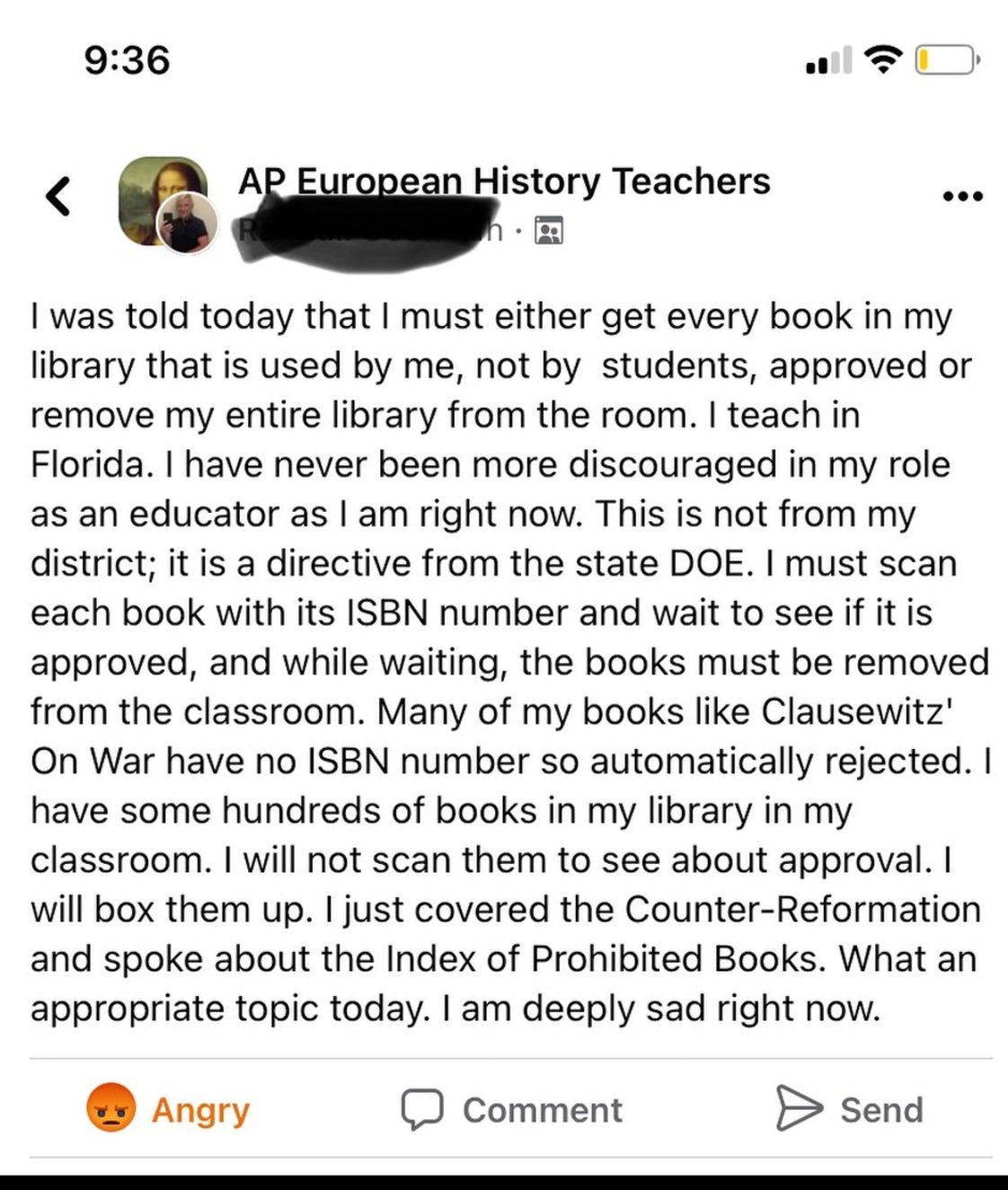
Please, don’t make make America Florida! Fascism starts with book censorship. In this case, a world history must remove his personal books because they are not on the state’s approved list. A book without an ISBN number can’t be in the list. We may assume that The Constitution, the Bible, and The Federalist Papers do not have ISBN numbers.

Timothy Snyder, a professor at Yale who writes often about European history and the fate of democracy, wrote a letter from Kyiv. Ukrainians, he says, are determined not to be conquered by Russia. And he notes the strange rules of this war, where Russia can strike civilian targets in Ukraine at will but Ukrainians are not supposed to strike back outside their own territory.

He wrote:

Greetings from Kyiv.  I have spent the last several days in Ukraine, here in the capital, and in the southerly regions of Odesa, Mykolaïv, and Kherson, trying to get a sense of the state of the war.  I will write more about the experience, but I thought that it might be a good time to share my most general sense.  

It is a crucial moment, partly because of what is happening, and partly because of our own sense of time. One and a half years is an awkward period for us.  We might like to think that it can be brought to a rapid conclusion, with this or that offensive or weapon.  When the war does not quickly end, we jump  to the idea that it is a “stalemate,” which is a situation that lasts forever.  This is false, and serves as a kind of excuse not to figure out what is going on.  This is a war that can be won, but only if we are patient enough to see the outlines and the  opportunities.

Russia’s gains in this invasion were made almost entirely during its first few weeks, in February and March 2022.  Those gains were largely possible thanks to the fact that Russia had seized the Crimean Peninsula in its earlier invasion of Ukraine in 2014.  Over the course of 2022, Ukraine won the battles of Kyiv, Kharkiv, and Kherson, and took back about half of the territory Russia gained. 

In the first half of 2023, Russia undertook an offensive that gained almost nothing but the city of Bakhmut.  In the second half of this year Ukraine has undertaken a counter-offensive which has taken far more territory than did the Russian offensive, but which has not (yet) changed the overall strategic position (but could).  In Russia, a military coup was attempted by Yevgeny Prigozhin, the leader of the mercenary group that took Bakhmut.  He and Putin made a deal, after which Putin killed him.  In a related development, Sergei Surovikin, probably the most capable Russian general, has been relieved of his command.  Russia now has no meaningful offensive potential. Its strategy is to continue terror against civilians until Ukrainians can endure no longer.  This, judging from my experience anyway, is not a tenable approach.  On the other hand, Russia has had time to extensively fortify a long long of defense in the east and south, and to prepare for Ukrainian offensives. This makes Ukrainian offensives very difficult. 

Ukraine did want to press forward last year, before the fortifications were built.  It lacked the necessary weapons, and Elon Musk chose to cut Ukraine off from communications.  That move likely extended the war. Because Musk’s decision was based on his internalization of Russian propaganda about nuclear war, and was accompanied by his repetition of that propaganda, he made a nuclear war more likely.  If powerful men convey the message that just talking about nuclear war is enough to win conventional wars, then we will have more countries with nuclear weapons and more conventional wars that can escalate into nuclear ones. Ukraine has been resistant to this line of Russian fearmongering, fortunately for us all.

Ukraine did not have the arms it needed last year in part for the same reason: Americans allowed Russian propaganda to displace strategic calculation. By now, though, the American side has generally understood that Russia’s nuclear threat was a psychological operation meant to slow weapons deliveries.  The United States and European partners have delivered arms to Ukraine, which has been absolutely indispensable. Hhistorically speaking, though, the pace is slow.  Fighter planes are coming, but a year late for the current offensive.  So Ukrainians are now trying an offensive in conditions that American staff officers would find challenging.  Americans take for granted economic superiority, prior destruction of logistics, and air supremacy, none of which describe the Ukrainian position.  Ukrainians do not even have numerical superiority, let alone of the 3-1 or 5-1 variety that would be standard advice for an offensive.

The fighting this summer has been very hard and very costly for Ukraine, harder and costlier, I think, than it had to be.  I visited wounded soldiers in a rehabilitation center earlier today; among the many feelings this aroused was some guilt that my people could have done more to protect these people. (If you want to protect them, consider a gift to Come Back Alive or United24 or Unite with Ukraine).

Kherson oblast, Ukraine, September 2023, TS

That said, Ukrainian territorial advances this summer have been sufficient to trigger a barrage of calls for a cease-fire from Kremlin-friendly voices.  Given the way or media seems to work, these calls (rather than the events on the ground) sometimes seem to be the news.  Pro-Kremlin op-eds smuggle in the assumption that Ukraine is not advancing, when in fact it is. The Kremlin allies make their case in terms of Ukrainian suffering, but never cite Ukrainians, nor the polling data that shows overwhelming support for the war.

There is zero reason to believe that the Kremlin would actually feel constrained by such an agreement in any place; it did not even begin to hold to the terms of the agreement after its last invasion, and in invading again Moscow has violated all of its agreements with Ukraine (while making clear that it does not consider Ukraine a state).  Russian propagandists talking to Russian audiences do not hide that the goal is the destruction of the Ukrainian nation, and that a ceasefire would just be meant to buy time. Now that the nuclear bluff has largely worn itself out, Moscow has changed its approach, trying instead to make people believe that nothing is happening on the battlefield.  Moscow’s hope is to motivate Ukraine’s allies to restrain Ukraine long enough for Russia to shift the balance of forces in its favor.  

Ukraine is deploying its own long-range strike capability to destroy airplanes and logistics in Russian territory, which is a necessary condition for winning the war.  This is an awkward development, since western partners don’t always think through how a war like this can be brought to an end.  It ends when one side wins.  The questions are who wins and under what conditions. 

The American allies take the correct view that Ukraine to win must break through the Russian lines.  But there are just not that many Ukrainians to throw into surges, and from a Ukrainian perspective those lives should be put at risk when the battlefield has been shaped.  The notion of a breakthrough is also too narrowly defined.  Even setting aside the value of life, which is what this war is all about, military history does show that battlefield victories are the final stage of a larger process that begins with logistics.  

This war has brought an entirely new theory of what a defensive war means: fighting only on one’s own territory.  This does not correspond to international law and has never made any sense.  It is a bit like rooting for a basketball team but believing it should play without ever taking the ball past halfcourt, or rooting for a boxer but claiming he is not allowed to throw a punch after his opponent does.  Had such a notion been in place in past wars, none of Ukraine’s partners would ever have won any of the wars they are proud of winning.  

The voiced concern is that Russia could “escalate.”  This argument is a triumph of Russian propaganda.  None of Ukraine’s strikes across borders has done anything except reduce Russian capacity.  None has led Russia to do things it was not already doing.  The notion of “escalation” in this setting is a misunderstanding.  In trying to undo Russian logistics, Ukraine is trying to end the war.  Ukraine will not do in Russia most of the things Russia has done in Ukraine.  It will not occupy or seize territory, it will not execute civilians, it will not build concentration camps and torture chambers.  What it must be allowed to do, to have some chance of stopping those Russian practices in Ukraine, is to have the capacity to win the war. With every village that Ukraine takes back, we see the most important de-escalation: away from war crimes and genocide, towards something more like a normal life.

Victory will be difficult, but it is the relevant concept.  I don’t know any Ukrainians at this point who have not lost a friend or a family member in this war.  My friends now tend to have a certain dark circle around the eyes and a tendency to look into the middle distance.  And yet the level of determination is very, very high. In the few days I have been here there have been missile attacks in or near both cities where I spent the night, a murderous Russian strike on a market, and a Russian attempt to cut off Ukrainian grain exports with missiles and drones.  This is daily life — but it is Ukrainian daily life, not ours.  The Ukrainians are doing all of the fighting; we are doing part of the funding.  What Ukrainian resistance protects, though, extends far beyond Ukraine.

The Ukrainians are defending the legal order established after the Second World War.  They have performed the entire NATO mission of absorbing and reversing an attack by Russia with a tiny percentage of NATO military budgets and zero losses from NATO members. Ukrainians are making a war in the Pacific much less likely by demonstrating to China that offensive operations are harder than they seem.  They have made nuclear war less likely by demonstrating that nuclear blackmail need not work.  Ukraine is also fighting to restore its grain exports to Africa and Asia, where millions of people have been put at risk by Russia’s attack on the Ukrainian economy.  Last but not least, Ukrainians are demonstrating that a democracy can defend itself.

Ukrainians are delivering to us kinds of security that we could not attain on our own.  I fear that we are taking these security gains for granted.  (In my more cynical moments, I fear that some of us, perhaps even some presidential candidates, resent the Ukrainians precisely for helping us so much.)  

This war will not end because of one sudden event, but nor will it go on indefinitely.  When and how it ends depends largely on us, on what we do, on how much we help. Even if we did not care at all about Ukrainians (and we should), getting this war to end with a Ukrainian victory would be by far the best thing Americans could do for themselves. Indeed, I do not think that, in the history of US foreign relations, there has ever been a chance to secure so much for Americans with so little effort by Americans. I do hope we take that chance.

TS Kyiv 7 September

Rob Rogers created an excellent TikTok video that shows where Chris Rufo fits into the war on public schools. Rufo invented the “critical race theory” hysteria out of whole cloth. He’s proud of his malicious role in “laying siege to the institutions.” Of course, Ron DeSantis appointed him to the board of New College as part of a rightwing takeover of that once highly esteemed liberal arts college that welcomed free-thinkers. To people like DeSantis and Rufo, free thinking is anathema.

To get the full Rufo treatment, watch his speech at Hillsdale College from April 2022.

I try to imagine a world in which everyone thought as Rufo wants them to: ban the artists, the creatives, the innovators, the dissenters, the dreamers, the people who think differently. I don’t want to live in that world. It feels like North Korea.

Michael Hiltzik, columnist for the Los Angeles Times, finds a pattern in the Republican attacks on the schools and universities. Their hostility to teaching Black history, their encouragement of book banning, their strategic defunding of higher education, their treatment of teaching about race, gender, and climate change as “indoctrination”—together point to a goal: the dumbing down of American young people.

Republicans say they want to get rid of “indoctrination” but they are busily erasing free inquiry and critical thinking. What do they actually want? Indoctrination.

He reminds us of the immortal words of former President Donald J. Trump: “I love the uneducated.” Republicans do not want students to think critically about racism or the past. They do not want them to reflect on anything that makes them “uncomfortable.” They want to shield them from “divisive concerns.” They want them to imbibe a candy-coated version of the past, not wrestle with hard truths.

He writes:

For reasons that may not be too hard to understand, Republicans and conservatives seem to be intent on turning their K-12 schools, colleges and universities into plantations for raising a crop of ignorant and unthinking students.

Donald Trump set forth the principle during his 2016 primary campaign, when he declared, “I love the poorly educated.”

In recent months, the right-wing attack on public education has intensified. The epicenter of the movement is Florida under Republican Gov. Ron DeSantis, where the faculty and course offerings of one of America’s leading liberal arts colleges, New College, have been eviscerated purportedly to wipe out what DeSantis calls “ideological indoctrination.”

The state’s K-12 schools have been authorized to supplement their curricula with animated cartoons developed by the far-right Prager University Foundation that flagrantly distort climate science and America’s racial history, the better to promote fossil fuels, undermine the use of renewable energy and paint a lily-white picture of America’s past.

Then there’s West Virginia, which is proposing to shut down nearly 10% of its academic offerings, including all its foreign language programs. The supposed reason is a huge budget deficit, the harvest of a systematic cutback in state funding.

In Texas, the State Library and Archives Commission is quitting the American Library Assn., after a complaint by a Republican state legislator accusing the association of pushing “socialism and Marxist ideology.”

In Arkansas, state education officials told schools that they may not award credit for the Advanced Placement course in African American history. (Several school districts said they’d offer students the course anyway.) This is the course that Florida forced the College Board to water down earlier this year by alleging, falsely, that it promoted “critical race theory.”

I must interject here that I’m of two minds about this effort. On the one hand, an ignorant young electorate can’t be good for the republic; on the other, filling the workforce with graduates incapable of critical thinking and weighed down by a distorted conception of the real world will reduce competition for my kids and grandkids for jobs that require knowledge and brains.

Let’s examine some of these cases in greater depth.

Prager University, or PragerU, isn’t an accredited institution of higher learning. It’s a dispenser of right-wing charlatanism founded by Dennis Prager, a right-wing radio host. The material approved for use in the schools includes a series of five- to 10-minute animated videos featuring the fictional Leo and Layla, school-age siblings who travel back in time to meet historical figures.

One encounter is with Frederick Douglass, the Black abolitionist. The goal of the video is to depict “Black lives matter” demonstrations as unrestrained and violent — “Why are they burning a car?” Leo asks while viewing a televised news report. The animated Douglass speaks up for change achieved through “patience and compromise.”

This depiction of Douglass leaves experts in his life and times aghast. Douglass consistently railed against such counsel. Of the Compromise of 1850, which brought California into the union but strengthened the Fugitive Slave Act — arguably the most detested federal law in American history — he stated that it illustrated how “slavery has shot its leprous distillment through the life blood of the nation.” In 1861, he thundered that “all compromises now are but as new wine to old bottles, new cloth to old garments. To attempt them as a means of peace between freedom and slavery, is as to attempt to reverse irreversible law.”

Patience? The video depicts Douglass quoting from an 1852 speech to a Rochester anti-slavery society in which he said “great streams are not easily turned from channels, worn deep in the course of ages.”

But it doesn’t include lines from later in the speech, reproaching his audience for prematurely celebrating the progress of abolition: “Your celebration is a sham; your boasted liberty, an unholy license; your national greatness, swelling vanity; … all your religious parade and solemnity, … mere bombast, fraud, deception, impiety, and hypocrisy — a thin veil to cover up crimes which would disgrace a nation of savages.”

Another video in the series parrots the fossil fuel industry’s talking points against wind and solar power: Standing over the corpse of a bird supposedly slain by flying into a wind turbine, the schoolkids’ interlocutor states, “Like many people … you’ve been misled about renewable energy, and their impact on the environment…. Windmills kill so many birds, it’s hard to track how many…. Wind farms and solar farms disrupt huge amounts of natural habitat.”

Acid rain, pollution, global warming — those consequences of fossil fuel energy aren’t mentioned. The video ends with a pitch for nuclear power, never mind the unsolved question of what to do with its radioactive waste products.

PragerU’s sedulous attack on renewables perhaps shouldn’t be much a surprise: Among its big donors is the Wilks family, which derives its fortune from fracking and which approved “future payment” of $6.25 million to PragerU in 2013.

As for New College, its travails under the DeSantis regime have been documented by my colleague Jenny Jarvie, among many others.

In a nutshell, the Sarasota institution possessed a well-deserved reputation as one of the nation’s outstanding havens for talented, independent-minded students. Then came DeSantis. He summarily replaced its board of trustees with a clutch of right-wing stooges including Christopher Rufo, known for having concocted the panic over critical race theory out of thin air and then marketed it as a useful culture war weapon to unscrupulous conservative politicians, including DeSantis.

Rufo and his fellows fired the university president and installed a sub-replacement-level GOP timeserver, Richard Corcoran, in her place. Faculty and students have fled. Students who stayed behind and were in the process of assembling their course schedules for the coming year are discovering at the last minute that the courses are no longer offered because their teachers have been fired or quit.

Instead of ambitious scholars committed to open inquiry, Corcoran has recruited athletes to fill out the student body, even though the college has no athletic fields for many of them to play on. According to USA Today, New College now has 70 baseball players, nearly twice as many as the University of Florida’s Division I NCAA team.

More to the point, the average SAT and ACT scores and high-school grade point averages have fallen from the pre-Corcoran level, while most of the school’s merit-based scholarships have gone to athletes. New College, in other words, has transitioned from a top liberal arts institution into a school that places muscle-bound underachievers on a pedestal. DeSantis calls this “succeeding in its mission to eliminate indoctrination and re-focus higher education on its classical mission.”

Finally, West Virginia University. Under its president, Gordon Gee — who previously worked his dubious magic at Brown Universityand Ohio State University, among other places — the school built lavish facilities despite declining enrollments. The construction program at the land grant university contributed to a $45-million deficit for the coming year, with expectations that it would rise to $75 million by 2028.

But the main problem was one shared by many other public universities — the erosion of public funding. As the West Virginia Center on Budget and Policy points out, “if West Virginia lawmakers had simply kept higher education funding at the same levels as a decade ago, West Virginia University would have an estimated additional $37.6 million in state funding for [fiscal year] 2024, closing the majority of this year’s budget gap.”

The decision on which programs to shutter at WVU points to a shift in how public university trustees see the purpose of their schools, trying to align them more with economic goals set by local industries rather than the goal of providing a well-rounded education to a state’s students. Trustees in some states, including North Carolina and Texas, have injected themselves into academic decisions traditionally left to administrators, often for partisan political reasons.

When it comes to interference in educational policies by conservatives, such as what’s happened in Florida, Texas and Arkansas, there’s no justification for taking these measures at face value — that is, as efforts to remove “indoctrination” from the schools. The truth is that the right-wing effort serves the purposes of white supremacists and advocates of anti-LGBTQ+ discrimination — they’re moving to inject indoctrination that conforms more to their own ideologies.

Take the attack on critical race theory, or at least the version retailed by Rufo and his ilk. “The right has reduced CRT to an incendiary dog whistle,” the Black scholar Robin D.G. Kelley of UCLA has observed, by caricaturing a four-decade-long scholarly effort to analyze “why antidiscrimination law not only fails to remedy structural racism but further entrenches racial inequality” into “a racist plot to teach white children to hate themselves, their country, and their ‘race.’”

(The inclusion of Kelley’s work in the AP African American Studies course was cited as a “concern” by Florida officials in their rationale for rejecting the course; Kelley’s work was suppressed by the College Board in its effort to make the course more acceptable to the state Department of Education.)

These attacks are couched in the vocabulary of “parents’ rights” and student freedom, but they don’t serve the students at all, nor do they advance the rights of parents interested in a good, comprehensive education for their children, as opposed to one dictated by the most narrow-minded ideologues in their state.

Where will it end? Florida’s ham-fisted educational policies won’t produce graduates with the intellectual equipment to succeed in legitimate universities, much less in the world at large. The only university many will be qualified to attend will be Prager U, and that won’t be good for anyone.
Katherine Stewart has written several important books about the insidious Right and their radical, racist views. In this article in The New Republic, she looks at an influential reactionary organization, the Claremont Institute, and traces its ideological forebears. From crackpots to intellectual gurus, she traces the Right’s fascination with manliness, racism, anti-Semitism, and its longing for a world led by a new Caesar, a strong man who will protect other men from rapacious women and immigrants.

It’s a long read but worth your time. Stewart looks at the Fascist underbelly of conservatism, and it’s repulsive.

PEN America is very busy trying to keep abreast of the states banning books. Thanks to reactionary Governor Kim Reynolds, Iowa has taken the lead in banning classics as well as books about sexuality and race.

Earlier this week, the Urbandale, Iowa, school district ordered its educators to remove a list of nearly 400 titles if found in district schools and classrooms. After public pressure including an open letter from PEN America, the district dropped its objections to many of the titles and released a new list of 65 books it identified in its libraries that it said violate state law, according to documents obtained by the Iowa anti-censorship group Annie’s Foundation.

Those books include Margaret Atwood’s The Handmaid’s Tale, John Green’s The Fault in Our Stars, Zora Neale Hurston’s Their Eyes Were Watching God, Aldous Huxley’s Brave New World, James Joyce’s Ulysses and dozens of others. This is still a jaw-dropping number of titles to be ordered removed from schools, with serious questions about how these titles were chosen and evaluated.

See the list of 65 books from the Urbandale, Iowa, school district.

The original PEN America article:

PEN America has sent an open letter to an Iowa school district calling on district leaders to reverse an order to remove a list of nearly 400 titles if found in district schools and classrooms.

Urbandale Community School District releaseda list of nearly 400 titles deemed to be in potential violation of newly enacted state legislation, Senate File 496. The list includes classics like The Catcher in the Rye by J.D. Salinger, Catch-22 by Joseph Heller, and The Bluest Eye by Toni Morrison; children’s books like Mayor Pete, an illustrated biography of Pete Buttigieg by Rob Sanders; several YA novels like The Hate U Give by Angie Thomas and Looking for Alaska by John Green; and other texts from authors as celebrated and as far-ranging as James Baldwin, James Joyce, and Albert Camus.

While not every book on the list is necessarily currently available in Urbandale schools, those that are must be removed, and, seemingly, cannot be assigned or purchased.

WHICH BOOKS WERE BANNED FROM SCHOOLS IN URBANDALE, IOWA?

According to a report in the Des Moines Register, nearly 400 books have been identified for removal from Urbandale schools. The list includes:

  • Literary classics like The Catcher in the Ryeby J.D. Salinger, Ulysses by James Joyce, I Know Why the Caged Bird Sings by Maya Angelou, As I Lay Dying by William Faulkner,Maus by Art Spiegelman, Are You There God?, It’s Me Margaret by Judy Blume, The Handmaid’s Tale by Margaret Atwood,Madame Bovary by Gustave Flaubert, 1984by George Orwell, Brave New World by Aldous Huxley, A Farewell to Arms by Ernest Hemingway, and Catch 22 by Joseph Heller.
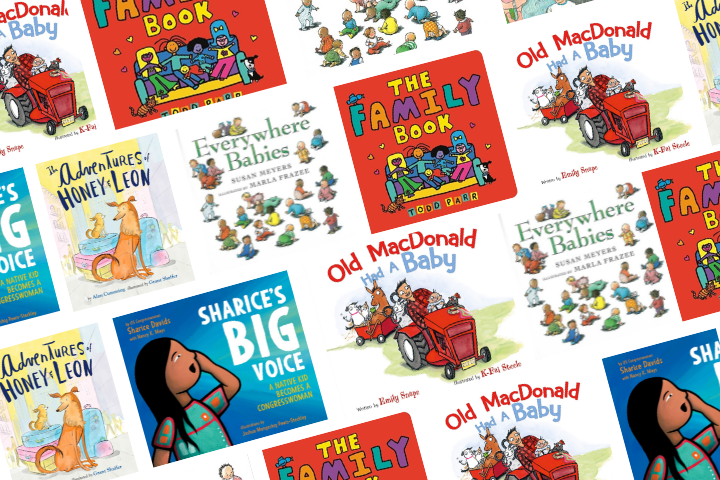
  • Children’s picture books like Mayor Pete, about the U.S. Secretary of Transportation Pete Buttigieg, Sharice’s Big Voice, about U.S. Rep. Sharice Davids, The Adventures of Honey & Leon, about actor Alan Cumming’s two dogs and books about families likeEverywhere Babies by Susan Meyers, The Family Book by Todd Parr, and Old MacDonald Had A Baby by Emily Snape.
  • Contemporary young adult books by award-winning authors such as The Hate U Give by Angie Thomas, I Am Not Your Perfect Mexican Daughter by Erika Sánchez, The Sun and Her Flowers by Rupi Kaur, Looking for Alaska, The Fault in Our Stars, and Paper Towns by John Green, Last Night at The Telegraph Club by Malinda Lo, All Boys Aren’t Blue by George Johnson, and Gender Queer by Maia Kobabe.
  • Works by renowned authors James Baldwin, Charles Baudelaire, Albert Camus, Nikki Giovanni, Toni Morrison, Henry Miller, Robert Cormier, Neil Gaiman, Roxane Gay, Zora Neale Hurston, Khaled Hosseini, Alice Walker, and Tony Kushner.

See the full list of books flagged for removal from Urbandale, Iowa, school libraries under the new law.

WHAT IS IOWA’S SENATE FILE 496?

Iowa Gov. Kim Reynolds signed Senate File 496into law in May 2023. The law has numerous provisions, based on a requirement that schools adopt what it calls an “age appropriate, multicultural and gender-fair approach” by schools and school districts.

The law includes:

  • A “Don’t Say Gay” provision, modeled on legislation passed in Florida in 2022, that applies to Kindergarten to 6th grade: “A school district shall not provide any program, curriculum, test, survey, questionnaire, promotion, or instruction relating to gender identity or sexual orientation to students in kindergarten through grade six.”
  • A directive to include “age appropriate” materials in classrooms and libraries. The law defines “age-appropriate” as “topics, messages, and teaching methods suitable to particular ages or age groups of children and adolescents, based on developing cognitive, emotional, and behavioral capacity typical for the age or age group.” The law also states that “’Age-appropriate’ does not include any material with descriptions or visual depictions of a sex act as defined in section 702.17.” This is a reference to Iowa criminal code, including a definition of sex acts and sexual activity that was not originally written to apply to written or visual materials.
  • A mandate for districts to develop policies for parents/guardians to to review all instructional materials, to file objections to challenge these materials, and a public listing of all books in school district libraries
  • A prohibition on students from serving on review committees that “determine, or provide recommendations related to, whether a material in a school library should be removed” after it has been challenged. Additionally, parents and guardians who challenge a book or library material are guaranteed confidentiality.
  • The potential for disciplinary action against educators found in violation of its provisions, particularly concerning “age appropriate” materials in school libraries, including the possibility of losing their licenses.

WHY WERE BOOKS BANNED FROM SCHOOLS IN URBANDALE, IOWA?

In the absence of state guidance on how to implement the new law, the Urbandale Community School has taken what it calls thebroadest possible interpretation of the law, in order to protect educators from disciplinary action. But in doing so, they have threatened the freedom to read for the district’s 4,000+ students.

Per the district’s statement, the list of books was curated from “a review of quarantined books from other states who had passed similar laws.” The district noted that the list is not “all-inclusive” nor represents books available in the district’s schools and classrooms.

One senior at Urbandale High Schooldescribed to a local NBC affiliate that the bans would impact her ability to complete her coursework. “I’m involved in a lot of AP and college-level courses and so for me, I was in AP Lit[erature] last year and so I read some amazing books…going forward [I’m] taking Advanced Comp[osition] this year. And so I won’t be able to study 1984 or The Color Purple and a lot of those books that are so important and so critical for those curriculums.”

The list, and the law that prompted it, comes amid a national wave of book bans andeducational gag orders that limit what can be said in the classroom, especially about race and LGBTQ+ topics.

WHAT CAN BE DONE?

PEN America invites the public to send its letter to school district officials, calling on them to reverse the policy, and to retain all reading materials so students can begin the school year with full access to literature in their classrooms.

The letter is also intended to signal to other school districts, parents, educators, librarians, and students that the government overreach stemming from Gov. Reynolds’ legislation is an affront to students’ bedrock rights.

Send the PEN America letter to Urbandale school officials

The Miami Herald published an editorial describing the climate of fear that’s descended on the classrooms of Florida. That’s exactly what Republicans want, says the editorial board. Once people start self-censoring, the battle for censorship is won.

The editorial board wrote:

The fear is the point.

Schools in Florida have been canceling — and then, in some cases, reinstating — Advanced Placement psychology courses for high school students because they’ve been told by the College Board, or simply believe, the classes would violate the state’s ban on lessons involving sexual orientation and gender identity.

The worry is understandable — and a bonus for a state intent on waging culture wars in schools and crushing any dissent. If you can get people to self-censor, you’ve pretty much won the battle.

School districts in Miami-Dade and Broward counties announced Wednesday that they would be among those offering the course, although in Broward it will be require parents to “opt-in.” The districts’ decisions came after Education Commissioner Manny Diaz Jr., who is from Miami and once taught in the public schools here, said the class could be taught.

But the fact that school districts have to publicly announce their intent to teach a class that has been around since 1993 is indicative of the problem. Under Florida Gov. Ron DeSantis and his lockstep Legislature, fear has seeped into schools. Teachers and school districts are rightfully worried about violating the Parental Rights in Education Act, the “Don’t say gay” law that outlawed sexual orientation and gender identity teachings. The penalties for a violation are potential career-enders, teaching licenses suspended or revoked..

This all happened after the College Board, the New York City-based nonprofit that manages AP courses in the United States, said last week that it wouldn’t recognize Florida’s AP psychology course and — critically — wouldn’t give students college credit for it because the state wanted any mention of sexual orientation and gender identity stripped out. Any course that censors required content cannot be labeled “AP” or “Advanced Placement,” the board said. Students applying for college rely on AP credits as a plus on their applications.

And school is about to start — next week in Miami-Dade and the following week in Broward.

So now the state says it’s OK to teach the course, but the education world is jittery, with good reason. Can the state be trusted?

In Leon County, where Tallahassee is located, Superintendent Rocky Hanna said the district would offer the class, but he is clearly wary. On Twitter, he wrote: “Our teachers have some concerns but we are going to take the commissioner of education’s word when he says that Advanced Placement Psychology may be taught in its entirety,” Hanna said.

He added that he has told the staff to “respect the law and follow the law but not to fear the law.”

This is where we are in Florida: Instead of supporting our public school teachers, we are instilling fear and worry. Instead of celebrating their hard work, we are threatening them with license suspensions if they dare to cross the power of the mighty state.

Teaching has always required courage. In Florida, it now requires a whole new brand of bravery.