Trump announced on Saturday that he intends to send the military to Portland to restore safety and to protect ICE agents.
The Mayor of Portland says the city is safe. He doesn’t want troops. The Governor of Oregon agrees. But Trump has a fixation with that city. He hates Portland because there was a protest and riot there against him a few days after Trump won the election of 2016. The riot went on for days; stores were vandalized, windows smashed. Over 100 people were arrested. Almost nine years later, Trump still wants to punish Portland, and no one can stop him.
President Donald Trump said Saturday that he will send troops to Portland, Oregon, and to immigration detention facilities around the country, authorizing “Full Force, if necessary” and escalating a campaign to use the U.S. military against Americans that has little modern precedent.
Trump said in a social media post that he was directing Defense Secretary Pete Hegseth to provide troops to what he dubbed “War ravaged Portland” as well as “any of our ICE Facilities under siege from attack by Antifa, and other domestic terrorists.”
Saturday’s announcement appeared likely to set up a first test for a White House effort targeting left-wing protest groups. It came just days after Trump signed an executive order directing the nation’s full counterterrorism apparatus against domestic political opponents despite long precedent restricting such a move.
Right-wing politicians have long criticized Portland for the way it has handled racial-justice protests as well as its homeless population, tolerating encampments in the central part of the city. But Trump will again encounter the dynamic he faced when he deployed the National Guard in Los Angeles — a military activation in a state run by a Democratic governor who objects to the decision and could have grounds to fight it in court.
Trump’s announcement, which was posted on Truth Social while the president was at his private golf club in Northern Virginia, appeared to have come as a surprise to the Pentagon, with several officials saying they know little more than what the president included in his post.
One official familiar with the discussion Saturday said defense officials were seeking clarity on what Trump desires. The official, like others in this article, spoke on the condition of anonymity to speak frankly about private planning. The Pentagon released a statement a few hours later, saying defense officials “stand ready to mobilize U.S. military personnel in support of DHS operations in Portland at the President’s direction.”
The statement, by spokesman Sean Parnell, said the “Department will provide information and updates as they become available.”
Another person familiar with ongoing discussions said midday Saturday that some Pentagon officials had discussed troops being sent to Portland at some point but were scrambling to make sense of what’s next.
“You know what I know,” that person said, alluding to the president’s announcement on social media.
Among the uncertainties, it was not immediately clear whether Trump plans to deploy active-duty troops or National Guard members, or both, to Portland. As is the case in similar discussions with other cities, there are legal limits to how he can do so.
There was also no clarity about the timing of any potential deployment.
Asked for more details about the potential deployment, the White House did not answer questions but responded with a list of incidents that had recently taken place outside Portland’s ICE field office, including federal charges of arson, assaulting a police officer and resisting arrest.
“Despite the crime and neighborhood pushback caused by the months-long protest, Oregon Democrats still refuse to do anything about it,” the White House said in a statement.
Protesters have been demonstrating for weeks at an ICE processing center in the city in objection to Trump’s immigration enforcement efforts. The Department of Homeland Security on Friday said that “rioters in Portland, Oregon have repeatedly attacked and laid siege” to the facility.
Protests outside the facility reignited this June, with the Portland Police Bureau declaring a riot after demonstrators blocked the driveway and threw objects like rocks and bricks at the facility and federal agents, according to local news media accounts and social media videos. Portland police arrested more than 20 people connected to the protests after multiple federal officers were injured.
But on Saturday, the streets outside the Portland ICE facility remained largely empty in the hours after Trump made his announcement. Two homeless men slept on the sidewalk. A handful of passersby took photographs of the building, and a few talked to each other about how their experiences felt nothing like the “war-ravaged” city described….
Oregon Gov. Tina Kotek (D) was one of 19 Democratic governors who signed a letter to Trump last month opposing his deployment of the National Guard over governors’ objections. At a Saturday afternoon news conference, Kotek said she learned of Trump’s plan to deploy troops from social media and spoke to the president afterward.
“Portland’s doing just fine, and I made that very clear to the president this morning,” Kotek said. “Our city is a far cry from the war-ravaged community that he has posted about on social media, and I conveyed that directly to him.” Kotek said she doesn’t believe Trump has the authority to deploy federal troops on state soil: “I’m coordinating with Attorney General Dan Rayfield to see if any response is necessary, and we will be prepared to respond if we have to.”
Both local and state-elected Oregon officials rejected Trump’s plan.
“The number of necessary troops is zero, in Portland and any other American city. Our nation has a long memory for acts of oppression, and the president will not find lawlessness or violence here unless he plans to perpetrate it,” Portland Mayor Keith Wilson (D) said in a statement. Wilson was elected last year on a platform of moving homeless Portland residents into a temporary shelter.
Wilson said at a news conference Friday evening that the city had seen a “sudden influx” of federal agents in recent hours, including armored vehicles, which Wilson called a “big show.” Wilson was flanked by other city and state officials, who said it wasn’t clear which agency the federal authorities were from but urged the public stay calm and refuse to “take the bait.”
U.S. Sen. Jeff Merkley (D-Oregon), who has criticized Trump’s domestic military deployments, said Saturday on X that the president “wants to stoke fear and chaos and trigger violent interactions and riots to justify expanded authoritarian control. Let’s not take the bait! Portland is peaceful and strong and we will take care of each other.”
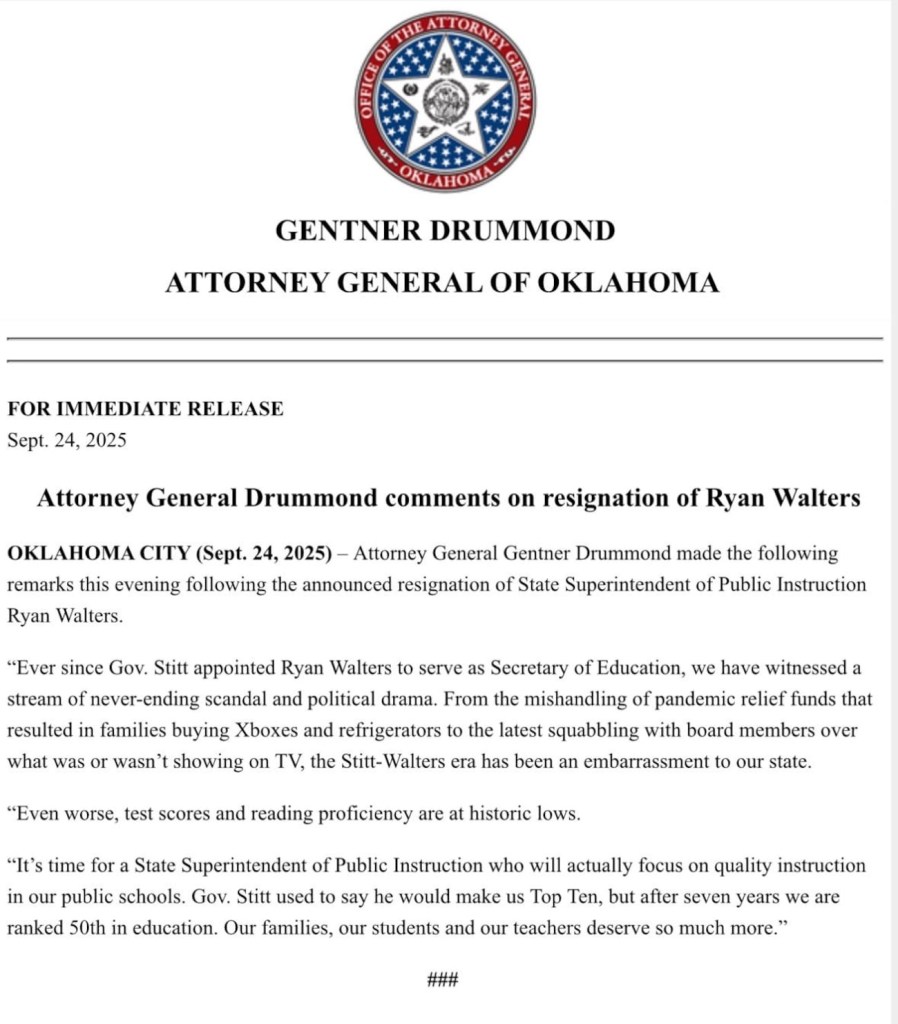
After raising a national profile by taking MAGA ideas to absurd extremes, Ryan Walters resigned yesterday, going out in a blaze of ignominious display.
John Thompson explains:
For months, I’ve been hearing predictions that State Superintenent Ryan Walters would not serve out his term. Originally, the rumors had to do with the questionable legality of his actions. Recently they have focussed on the Republicans, who once supporteded him, but who are now fed up with his antics.
Since I submitted this piece, yesterday, Walters said “he is ‘excited’ to step down and accept his new position. He said his goal is to ‘destroy the teachers unions.’”
Walters announced he will become the CEO of the Teacher Freedom Alliance (which says it has 2,748 teachers enrolled.) He proclaimed: “For decades, union bosses have poisoned our schools with politics and propaganda while abandoning parents, students, and good teachers. That ends today. We’re going to expose them, fight them, and take back our classrooms,” said Walters in a press release. “At the Teacher Freedom Alliance, we’re giving educators real freedom, freedom from the liberal, woke agenda that has corrupted public education. We will arm teachers with the tools, support, and freedom they need, without forcing them to give up their values. This is a battle for the future of our kids, and we will not lose.”
Below is background information on how Walters got to this point.
What’s been happening to American public schools lately is different: more coordinated, more creative, and blanketing the nation. Pressure on what kids learn and read is coming from national parents’ movements, the White House, the Supreme Court.
Rosin further explains that Ryan Walters “has pushed the line further than most.”
Walters recently announced an ideology test for new teachers moving to Oklahoma from “places like California and New York.” And, although the Oklahoma Supreme Court has issued a temporary stay on Walters’ standards, he’s “tried to overhaul the curriculum, adding dozens of references to Christianity and the Bible and making students ‘identify discrepancies in 2020 elections results.’”
The first of two podcasts review how Walters has “already succeeded in helping create a new template for what public schools can be.” Part two will go even deeper into how “Walters and a larger conservative movement seem to be trying to redefine public schools as only for an approved type.” As he said, “If you’re going to come into our state … don’t come in with these blue-state values.”
Rosin starts with Walters’ “Office of Religious Liberty and Patriotism,” and his claim, “For too long in this country, we’ve seen the radical left attack individuals’ religious liberty in our schools. We will not tolerate that in Oklahoma.” He said this in a video sent to school administrators who were supposed to play it for every student and every parent.
This mandate, however, is the opposite of his approach when he was an award-winning “woke” middle school teacher. Rosin interviewed two of Walters students, Shane and Starla, about his “parodies,” that were called, “little roasts.”
Shane, a male conservative, compared Walters’ “little roasts,” such as “Teardrops on My Scantron,” to those of Jimmy Kimmel.
Starla, a lesbian. said of her teacher, “He was woke! (Laughs.) He was a woke teacher.” And she praised his teaching about the civil rights movement.
Rosin reported that today’s Ryan Walters is “unrecognizable” in comparison to the teacher they knew. And, “Shane compared it to how you’d feel about your dad if he remarried a woman you didn’t like.”
In 2022 , when running for State Superintendent, pornography was Walters’ issue. He strongly supported HB 1775, which was a de facto ban on Critical Race Theory. It forbid teaching things like, “an individual, by virtue of his or her race or sex, is inherently racist, sexist or oppressive, whether consciously or unconsciously.”
Walters’ top target was a high school teacher, Summer Boismier, who, in response, covered her bookshelves with butcher paper. But she also posted a QR code for a Brooklyn library, which had books that Walters said were pornography. Boismier resigned, but Walters successfully asked the Oklahoma State Board of Education to revoke her teaching certificate. He said, “There is no place for a teacher with a liberal political agenda in the classroom. Ms. Boismier’s providing access to banned and pornographic material to students is unacceptable and we must ensure she doesn’t go to another district and do the same thing.”
After being labeled a pedophile, Boismier started to get serious threats. Then the Libs of TikTok started a campaign against alleged gay teachers who were supposedly “groomers,” prompting bomb threats.
Then, as Rosin explained, “state Democrats called for an impeachment probe, and Walters leaned in harder.” For instance, Walters ramped up his campaign against teachers unions who he called a “terrorist organization.”
Walters also claimed that a “civil war” was being fought in our schools.
Rosin reported on how Walters gained a lot of attention “when he said teachers could cover the 1921 Tulsa Race Massacre, where white Tulsans slaughtered hundreds of Black people, but they should not, quote, ‘say that the skin color determined it.””
Then, “Walters accused the media of twisting his words. He said that “kids should never be made to feel bad or told they are inferior based on the color of their skin.”
Trump responded on Truth Social, “Great job by Oklahoma State Superintendent Ryan Walters on FoxNews [sic] last night. Strong, decisive, and knows his ‘stuff.’” And, “I LOVE OKLAHOMA!”
There was pushback when it was learned that “one of the few Bibles that met Walters’ criteria is the “God Bless the USA Bible.” It was “endorsed by Lee Greenwood and President Trump. It sells for $59.99.”
As the first part of the podcast came to an end, it reviewed Walters’ recent setbacks.
The U.S. Supreme Court stopped Oklahoma’s plan for the nation’s first publicly funded religious charter school. The Oklahoma Supreme Court has paused the Bible plan. And the special test by Prager U. for teachers from California, New York, and other “woke” states, faces legal challenges.
And Walters was lambasted after sexually explicit images of naked women were seen on a screen inside his office.
Part two will give Walters a chance to tell his side of the story. Rosin previews his response by quoting him: “Yeah, they’re outrageous liars.”
John Merrow was the education correspondent for the PBS Newshour for many years. He writes here about the insane insults hurled at our nation’s teachers by MAGA.
The US has nearly 3.6 million K-12 teachers, and another 1.5 million college teachers. One-third of 5.1 million is 1.7 million. Who knew that we have 1,700,000 terrorists in our classrooms!
I certainly had no idea things were that bad, and I’m kicking myself for not knowing. After all, I spent more than 67 years in American classrooms, as a student, a teacher, a parent, and a reporter. I must have interviewed and maybe even socialized with thousands of these terrorists, and I didn’t have a clue.
My 4th grade teacher yelled a lot and banged desks (and some ears too), so I supposed she “terrorized” us, but I don’t think that’s what the accuser had in mind.
I can think of one other possible example of ‘terrorism’ in the classroom: My 10th grade English teacher, Mr. McKinley, would deliberately make mistakes when he wrote stuff on the blackboard and then erupt in (faux) fury if we failed to catch his flubs. Somehow, I don’t think that’s what the accuser had in mind.
Are you questioning the accuracy of the accusation? OK, it came from President Donald Trump’s buddy Steve Bannon, who opened his mouth while in Arizona to pay tribute to Charlie Kirk, the assassinated leader of Turning Point. The podcast host was saying to Bannon that Kirk’s ideas about marrying early and having lots of children were actually not popular with young people, which prompted Bannon to blame teachers for brain-washing their students. Here’s what he said:
“…..those kids — look, from kindergarten all the way up, they are essentially, you know, a third of the teachers are terrorists that are trying to form them.”
Predictably, the right-wing podcaster didn’t challenge Bannon’s wild accusation or even ask him what he meant by ‘terrorist,’ so I’m going to go out on a limb and suggest that Bannon meant that teachers were teaching values that Bannon disapproves of, like tolerance and cooperation. I have seen lots of teachers work hard to inculcate such values, and, if that’s ‘terrorism,’ I approve.
Mocking Bannon is a woefully insufficient response, however, because his blatant teacher-bashing is part of the right wing’s persistent, harsh, and (unfortunately) often successful campaign to bring down public education.
And Bannon’s not even a field general in this war. He’s clearly outranked by Oklahoma’s State Superintendent of Education Ryan Walters, who in January reacted to violence at the Mardi Gras in New Orleans. You may recall that, early on New Year’s Day an army veteran carrying an ISIS flag drove his pickup truck down Bourbon Street and killed 14 people and injured dozens more before the police killed him. It was labeled a possible terrorist incident, prompting Mr. Walters to go off: “We also have to take a look at how are these terrorists coming from people that live in America. …. You have schools that are teaching kids to hate their country, that this country is evil. You have the teachers’ unions pushing this on our kid (sic).”
Mocking the hyperbole of school critics like Walters and Bannon is ineffective, because culture warriors are immune to humor. Instead, they are seriously opposed to just about everything that some of us believe is in the public interest, such as public education, public transportation, public libraries, public parks, public health, and so on. They recognize that public education is a cornerstone of our democracy, and they are going after it, with sledgehammers and other implements of destruction, including lies and absurd accusations from the likes of Bannon and Walters.
(They are anti-public-everything, acronym APE. Don’t be an APE!)
Early in September, the New York Times reporter Dana Goldstein did a deep dive into the impact of vouchers, education savings accounts, tax credit scholarships, and other programs that divert funds from public schools to non-public schools. The entire article is well worth your time.
The number of students whose parents are using these programs has doubled since 2019, nearly all in Republican-led states. Five years ago, only about 20,000 students had education savings accounts (ESA), which allow deducting any ‘educational’ expense from one’s taxes; today, more than 500,000 families have ESA’s.
In the past, eligibility for most of these programs was means-tested because the stated goal was to help low income families. That’s changed, and in the new programs, any family can take advantage, regardless of income.
This ain’t cheap. Indiana’s program, for example, is costing more than $600 million dollars a year, dollars that might have gone to public education.
Joining the 14 states with voucher-type programs is your federal government, because the “Big Beautiful Bill” passed by Congress earlier this year includes a $5,000 voucher.
Do these voucher programs work? The evidence is mixed, at best.
Are they popular with voters? Here the answer is crystal clear: NO! In the 17 opportunities that voters have had to weigh in on vouchers since 1970, they’ve said NO, including three votes in Republican-led states in 2024.
For a critical view of what’s going on, read David Osborne’s analysis here.
If you support public education, begin by thanking teachers. Take a minute to picture the teachers who had changed your lives for the better…and then to ask yourselves if you ever said ‘Thank you’ to those women and men. If it’s too late to connect directly with them, you might write something about them and share it with others.
That’s only the first step. Consider attending school board meetings, perhaps even running for election to your local school board. You might join the parent-teacher organization, or volunteer as a tutor. You might contribute supplies, or help with school fund-raising efforts. Let your elected officials at all levels know that you support public education. If you’re a public school parent, move beyond ‘involvement’ to ‘engagement,’ by getting to know your children’s teachers.
It’s not pie-in-the-sky idealism to believe that a strong public education system is the road to equality and citizenship, or that the real safeguard of democracy is education. Those insights came from FDR and Martin Luther King, Jr., among others.
Please make certain that you are registered to vote, and that your friends and neighbors are as well. This attack on public education is serious, folks. Don’t take our democracy for granted.
Walters spent most of his energy promoting evangelical Christianity in the public schools. He wanted Bible-based lessons, the Ten Commandments in every classroom, and prayer in the schools. He was an outspoken MAGA guy and tried to insert doubts about the 2020 election in the social studies curriculum.
The final straw may have been the time recently when Walters conducted a meeting with members of the State Board of Education in his office and two attendees saw pornography on his television screen. Walters meanwhile had been ranting about pornography in school libraries.
Mike DeGuire is a veteran educator in Denver. He says it’s time to take stock and assess the damage that “reform” has inflicted on students and public schools in Denver.
Is public education a public or a private good? This issue is at the heart of the school choice debate sweeping the country.
Advocates for school choice are advancing policies that move us toward the privatization of our schools, treating our children’s futures as commodities rather than community investments. This well-funded bi-partisan coalition promotes privatization through charter school expansion, vouchers, tax credits, and education savings accounts. Republicans use the words “parental rights, freedom and competition,” while neoliberal Democrats brand it as “innovation and expanding opportunity.”
Public education is one of the last shared institutions that binds us together across race, class, and geography; when we weaken it, we weaken democracy itself.
The result is the same for communities when privatization becomes a reality in red states with vouchers or in blue cities where most charter schools are located. Vouchers segregate schools by class and race, diminish the importance of community, and severely limit funding for public schools.
Charter schools operate like private schools, create competition for students, often have unelected boards. Additionally, the charter schools, not the community, get to determine who enrolls, who stays, and what kind of learning takes place. As marketplace ideology takes over, public dollars and democratic control move from local neighborhood schools to private boards and political operatives.
Denver Public Schools (DPS) shows how this movement works in a blue city, and why it matters now in Trump’s vision of America’s education system.
Different slogans, same destination
On the right, and in most Republican-led states, legislatures enacted policies to privatize education with vouchers and education savings accounts (ESAs) designed to route public funds to private and/or religious schools. Often, these tactics originate with model bills written and promoted by the American Legislative Council (ALEC) and their allies. The goal is to let public dollars “follow the child,” which means diverting them away from democratically governed school districts.
On the neoliberal Democratic side, the mechanism is the charter-centric “portfolio model.” Local school boards often elected with large amounts of pro-reform money approve policies to close or “restart” neighborhood schools. Then they open new charters, bring in “operators” deemed to be “effective,” and the district “manages” the schools and their networks like an investment portfolio.
This storyline was supercharged under the Obama administration’s Race to the Top, which rewarded states for removing barriers to charter growth and for aggressively initiating school “turnarounds.”
The overlap with Republicans and Democrats is structural. Both sides define schooling as a marketplace and shift authority from elected school boards to private actors, like charter boards, appointed authorities, and national nonprofits. In their book, “Wolf At the Schoolhouse Door,” Jack Schneider and Jennifer Berkshire describe “how Republicans and Democrats joined to support failed policies whose ultimate goal was to eliminate public education and replace it with a free-market approach to schooling.”
Charles Siler, who worked as a lobbyist for the libertarian Goldwater Institute, told the Washington Post that “Charter schools are part of the incremental march towards full privatization. In many ways, charter schools are the gateway to total public-school dismantling.” Since vouchers are unpopular with the public and some lawmakers, Siler continued, “privatizers have to engage in incrementalism, and they use different names to create a sort of moving target.”
Both camps sell the public on privatization by claiming that “failing test scores” prove neighborhood schools, especially those serving Black and Brown students, are broken beyond repair. They argue the racial achievement gap is proof that these schools must be shut down and replaced with charters through “school choice.”
This narrative is deeply misleading. First, decades of research show that standardized test scores mostly measure socioeconomic status and neighborhood inequality, not the quality of individual schools. Poverty, housing insecurity, and systemic racism drive disparities, not the mere fact of attending a district school.
Second, the research demonstrates that replacing schools with charters has not closed achievement gaps. Denver Public Schools illustrates the point: after years of churn, closures, and huge charter expansion, racial disparities in achievement persist. Black and Latino students continue to score lower on state tests than white peers — not because they are “trapped in failing schools,” but because privatization has siphoned resources from their neighborhoods, destabilized communities, and ignored root causes.
Bipartisan funding for similar goals
The funding networks and foundations knitting these free-market agendas together are deep-pocketed and bipartisan. For instance, the conservative Walton Family Foundation underwrites charter startups and charter facilities nationwide, spending well over $1 billion on this effort. The majority of their political spending goes to Republican causes, with over 2/3 of their PAC money going to Americans for Prosperity, founded by the Koch brothers.
In his book, “Kochland: The Secret History of Koch Industries and Corporate Power in America,” journalist Christopher Leonard describes how the American Legislative Exchange Council (ALEC), a Koch-funded right-wing group, creates model legislation which can be introduced in state legislatures. Many of these bills aim towards privatizing schools by implementing voucher programs.
City Fund raised millions, largely from Netflix founder Reed Hastings and hedge fund manager John Arnold, to spread charter schools in over 40 cities through portfolio management systems and by bankrolling local political action groups. While Hastings supports Democratic causes, he is opposed to teacher unions and believes that local school boards should be abolished. Arnold, also a Democrat, gifted the KIPPcharter network millions, and like many billionaires today, is seen as cozying up to the Trumpadministration for influence.
The Bradley Foundation and ALEC financed the policy and political infrastructure for vouchers and ESAs for decades. The Bradley Foundation, the Colorado-based Coors family, and the Koch foundation were three of the six billionaire families that funded Project 2025, which has been the playbook for Trump since he took office in January.
Many of these same philanthropic and political dollars fund both a Republican voucher push and a Democratic-branded charter expansion — two lanes of the same privatizing highway.
Denver: a “portfolio” laboratory
Denver is often cited by education reformers as a national model as it implemented unified enrollment, systematic school closures, and rapid charter school growth. But the backstory behind who paid for these policies is less sanguine. A Network for Public Education report details how Denver Public Schools became a neoliberal “experiment,” using a web of nonprofits and political groups to expand charters and restructure the school district.
Both Republicans and Democrats contributed large amounts of money in Denver school board elections to promote corporate reforms, such as teacher pay for performance, school choice systems, and enrollment zones. In the 2017 DPS school board election, billionaires gave huge sums to the Denver candidates favoring charter school expansion. According to a report from the Network for Public Education Action, these included “Colorado billionaires Phillip Anschutzand Kenneth Tuchman, and out-of-state billionaires John Arnold of Texas and the Alice, Jim and Stuart Waltons of Arkansas.”
Both sides define schooling as a marketplace and shift authority from elected school boards to private actors, like charter boards, appointed authorities, and national nonprofits.
Meanwhile, years of churn and school closures left communities reeling. Even reform-friendly analyses concede that the “portfolio model” era meant opening lots of charters and closing or “replacing” dozens of neighborhood schools. Researchers studying this model have cited significant concerns with the efficacy of the model, including equity issues, narrow reliance on test scores, instability and churn, tensions among schools, and loss of democratic control and community voice.
In a 2016 article, progressive education advocate David Osborne documented that “Since 2005 [Denver] has closed or replaced 48 schools and opened more than 70, the majority of them charters.”
The billionaires’ money helped maintain a pro-charter majority school board until 2019 when teacher union-backed candidates were elected because of organized community backlash to the reforms and unrest after a teacher-led strike that year. That shift caused alarm bells among the billionaire backers of the pro-charter movement. They moved quickly to expand their funding to two political action groups in Denver.
RootED and Denver Families for Public Schoolsreceived over $38 million from Reed Hastings’ City Fund organization, which they used to promote their pro-charter agenda through grants to charter schools, local think tanks, and other community groups. Their efforts paid off in the 2023 school board election, when three of their endorsed candidates won their elections after Denver Families Action spent nearly $1 million to promote their campaign.
Outside spending has transformed Denver board elections into major dark money funding events, with the 2023 election hitting $2.2 million, just shy of the 2019 record of $2.3 million.
In an op-ed for Charter Folks, Clarence Burton and Pat Donovan, leaders for Denver Families for Public Schools, described their plans to repeat the 2023 wins in the upcoming November 2025 school board election. They may spend some of their vast resourcesfrom City Fund to sway voters.
In the next four years, DPS faces continued enrollment declines, and district leaders seem inclined to approve more closures to rebalance finances. That is the portfolio playbook’s endgame: when money is scarce, close neighborhood schools and expand privately run options. If successful in electing their endorsed candidates, Denver Families Action is poised to help that happen.
Do charters drain district resources? What the evidence says
District leaders and parents feel the fiscal squeeze when enrollment flows to charters. Fixed costs don’t disappear just because 5% or 10% of students leave. Research consistently warns that losses to enrollment can trigger costs that are not fully “variable” — you can’t cut 1/20th of a teacher or 1/10th of a bus route. Studies from New York and other locales estimate significant per-pupil losses in host districts as charter school share rises.
A policy brief from the National Education Policy Center summarizes the structural mechanisms that occur with fixed costs, diseconomies of scale, and shifting student composition. The brief describes how “a network of philanthropists and wealthy donors have reshaped the political economy of school finance, advocating for school voucher policies, charters, and privatization in the face of declining public-school enrollments.”
Pro-charter think tanks argue the picture is “mixed,” especially longer-term if districts close schools and cut staffing, the very things communities have fought against. But even those reviews concede there are short-term inefficiencies and significant harms. In practice, these policies mean closures, layoffs, and program cuts in neighborhood schools.
This bipartisan push undermines neighborhood schools, deepens inequality, and places corporate interests above the common good.
Trump-world raises the stakes
Under President Trump’s second term, privatization is not just encouraged; it’s federal policy. A January 29, 2025, White House directive ordered the Education Department to steer states toward using federal formula funds to support K-12 “choice” initiatives, which was a direct push for vouchers and related schemes.
Trump’s “Agenda47” likewise spotlights universal school choice as a signature plank, tied to dismantlingprior civil-rights guidance and reshaping federal oversight. Plans to weaken or abolish the Education Department are framed as clearing the path for parental choice.
Trump’s Education Secretary Linda McMahon increased the federal department budget for charter schools by $60 million to a historic record of $500 million. At the closing session of the National Democratic Governors Association meeting, McMahonstressed to the governors they should open charterand micro-schools to promote more competition. This is the Republican Lane, wide open.
The Heritage Foundation’s Project 2025 promoted federal tax credits for vouchers, which are now approved federal legislation. The CEO of Democrats for Education Reform is pushing Democratic governors to use these new federal vouchers to expand learning opportunities for economically disadvantaged students or lose “free federal money.”
The policy highway already built by the neoliberal Democrats (charter growth, closures, portfolio management) has made it easier for a voucher-first administration to push public taxpayer dollars out of democratically governed systems. That’s the interlock: Democrats normalized the market; Trump-world aims to privatize the whole store.
The bottom line
Denver is not an outlier — it’s a warning. A bipartisan coalition normalized the idea that public education should be run like an investment portfolio, where schools are opened, closed, and “reconstituted” based on technocratic dashboards and political spending. The Trump administration’s voucher agenda, promoted for decades by the Koch brothers and other conservatives accelerates the same logic, now directs federal policy to help states route public dollars out of public governance altogether.
If we believe education is a public good — funded equitably, governed democratically, and accountable locally — the public must see charter expansion and vouchers as two halves of the same privatization project. When education is treated as a public good, it is essential for democracy, civic participation, economic stability, and social cohesion.
Every child deserves an equal chance in life. Therefore, education must remain a public good — not a marketplace where opportunity is limited to the school’s choice of selecting students. The question isn’t whether our schools should be run like private businesses. It’s whether we are willing to fight for education as a right, not a privilege.
And, if the public cares about our children’s future,they need to vote, organize, and promote legislation accordingly.
Mike DeGuire, Ph.D., is the vice chair of Advocates for Public Education Policy. He has been a teacher, district level reading coordinator, executive coach, and a principal in the Denver metro area for most of his education career. He also worked as a leadership consultant for several national education organizations, and as an educator effectiveness specialist with the Colorado Department of Education. His writing is also featured on a4pep.org.
Joe Perticone of The Bulwark describes the committee that has been created by House Republicans to recast what happened on January 6, 2021. They aim to show that it was mostly staged by anti-Trump provocateurs, with substantial help from the FBI. And at the same time, despite what everyone saw with their own eyes, it was “a day of love,” because Trump said so.
Frankly, I can’t make sense of it. Why would Trump praise a large group of people driven and controlled by anti-Trump forces?
A new House subcommittee has been established to finally, at long last, give the January 6th attack on the U.S. Capitol the investigation Donald Trump thinks it deserves. Two weeks ago, Republicans tucked its formation into a rule vote that, among other things, approved a resolution expressing support for the House Oversight Committee’s Jeffrey Epstein investigation. The new subcommittee’s Republican members, appointed by House Speaker Mike Johnson, have all held conspiratorial views about what transpired at the Capitol that day.
Atop the subcommittee will be Rep. Barry Loudermilk (R-Ga.). The other Republicans joining him will be:
Rep. Morgan Griffith (R-Va.)
Rep. Troy Nehls (R-Texas)
Rep. Clay Higgins (R-La.)
Rep. Harriet Hageman (R-Wyo.)
Democrats, for their part, put their more pugnacious members on the subcommittee as a counterbalance of sorts. The list includes Reps. Eric Swalwell (D-Calif.), Jasmine Crockett (D-Texas), and Jared Moskowitz (D-Fla.).
Loudermilk had been advocating for the formation of this panel for quite some time, saying over the summer that setting it up was a high priority for Trump. The nature and extent of the proposed subcommittee’s jurisdiction had been debated for months before Loudermilk introduced the resolution establishing it in July. The Capitol riot has been a consistent focus of Loudermilk’s throughout the 119th Congress and even before it was convened: Back in December, he oversaw the publication of a report that downplayed January 6th by emphasizing—as the lawmaker put it in a prefatory letter—“that there was not just one single cause for what happened at the U.S. Capitol . . . it was a series of intelligence, security, and leadership failures at several levels and numerous entities.”
The committee structure is unique. Loudermilk will have unilateral subpoena authority, allowing him to go through with decisions that even a majority of subcommittee members might oppose.
But I don’t think Loudermilk need worry much about being stymied in his quest to uncover the real truth behind January 6th. The new subcommittee is stacked with lawmakers who have peddled baseless conspiracy theories about that day.
Loudermilk himself claimedwidespread voter fraudleading up to the attack and voted againstestablishing the original January 6th Committee that then-Speaker Nancy Pelosi put together.
Over the years, Higgins’s conspiracy theories have proliferated like daisies in an unmowed field. He claimed that “ghost buses” had provided transportation to many of the rioters, by which he meant that the buses were most likely non-MAGA plants being used to cause trouble for Trump.¹ His evidence for the “ghost buses” claim, which he presented on blown-up posters in a hearing with former FBI Director Christopher Wray, consisted of photographs showing that there were many buses parked at Union Station on the day of the attack. (Union Station hosts more than 2.6 million intercity bus riders per year.)
The FBI was not only involved in actions on January 6th from within. They had, I suspect, over two-hundred agents embedded within the crowd, including agents—or as they would call [them], “human assets”—inside the Capitol dressed as Trump supporters before the doors were opened.
Higgins has also claimed a large portion of the January 6th crowd consisted of actual FBI agents. As he told Newsmax in 2023:
Along with Higgins, Nehls has spread the “fedsurrection” conspiracy theory that the FBI was behind the attack, elevating claims that wedding planner Ray Epps was one of the government’s plants. Epps, a two-time Trump voter who became a central character in a wild yarn of conspiraciesaround that day, later pleaded guilty to January 6th–related charges. He was ultimately pardoned by Trump as part of the mass absolution on the first day of the new administration.
Hageman, who defeated Rep. Liz Cheney (R-Wyo.) in a Republican primary after Cheney worked on the original January 6th Committee, has cosponsored legislation claiming Trump didn’t engage in any wrongdoing with regard to the attack. Hageman also signed on to an October 2024 letter to then–Attorney General Merrick Garland demanding he not withhold any evidence that could show how the FBI may have been involved in January 6th.
“The American people deserve to know those federal employees involved in formulating and carrying out the events on January 6th,” Hageman said in a statement accompanying the letter. “With today’s weaponized federal government, led in no small part by an FBI that continues to target conservatives, we should take every measure to ensure the truth is revealed.”
And while Griffith hasn’t openly promoted conspiracy theories in the way that Nehls and Higgins have, he did, like the others, vote against the 2020 election certification.
If you’re wondering why Republicans feel there is a need to relitigate the findings of the original January 6th Committee, the simplest explanation is purely political. The new subcommittee is meant to downplay the events of the attack, shift blame to the Democratic lawmakers and staff who hid behind locked doors while Trump watched television footage of the mob roaming the hallways of the Capitol, and—perhaps most importantly—to validate the president’s longstanding delusion that January 6, 2021, was a “day of love” for all involved.
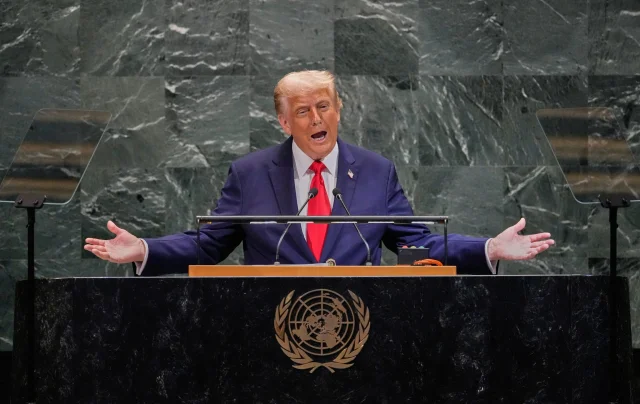
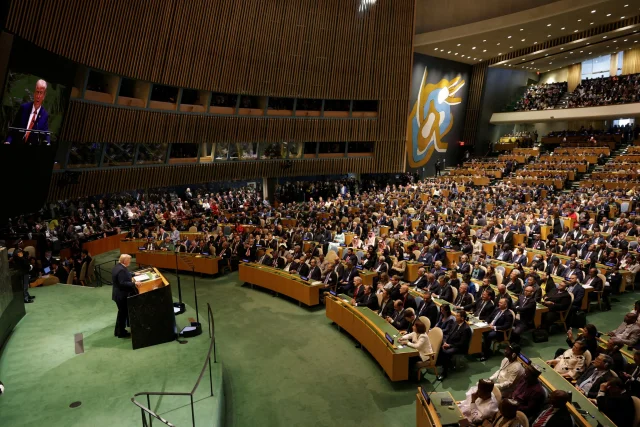
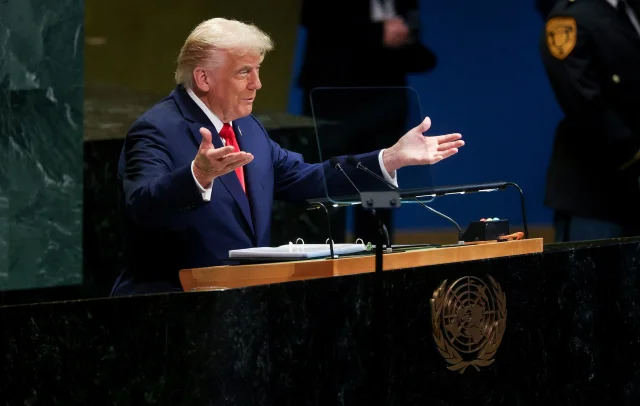
President Donald Trump delivered a combative speech to the United Nations General Assembly on Tuesday morning, lambasting the international body while touting the work of his administration.
Trump spared no criticism in the hourlong address, beginning with his predecessor former President Joe Biden before taking aim at world leaders on everything from migration to the Russia-Ukraine war.
“One year ago, our country was in deep trouble. But today, just eight months into my administration, we’re the hottest country anywhere in the world, and there is no other country even close,” he said at the top of his remarks.
Trump touted the U.S. as having the “strongest” borders, military and relationships around the world.
The president then turned his attention the United Nations, accusing it of not living up to its promise and even accused it of bringing on more problems.
“What is the purpose of the United Nations?” Trump asked. “It has such tremendous, tremendous potential. But it’s not even coming close to living up to that potential. For the most part, at least for now, all they seem to do is write a really strongly-worded letter and then never follow that letter up. It’s empty words and empty words don’t solve war. The only thing that solves war and wars is action.”
Trump accused the organization of ignoring conflicts around the world that he says he solved, casting himself as a peacemaker.
“Everyone says that I should get the Nobel Peace Prize for each one of these achievements,” Trump said. “But for me, the real prize will be the sons and daughters who lived to grow up with their mothers and fathers because millions of people are no longer being killed in endless and inglorious wars.”
Richard Drew/AP – PHOTO: President Donald Trump addresses the 80th session of the United Nations General Assembly, in New York City, Sept. 23, 2025.
Trump threatens Russia sanctions, but says Europe must do more
Trump said the United States is prepared to enforce a “very strong round of powerful tariffs” on Russia should Moscow not be ready to make a peace deal.
But he said other countries need to pull back on buying Russian oil and energy products “otherwise we’re all wasting a lot of time.”
“Europe has to step it up. They can’t be doing what they’re doing. They’re buying oil and gas from Russia while they’re fighting Russia. It’s embarrassing to them,” Trump said.
Trump also took a moment to criticize China and India, calling them the main sponsors of the war in Ukraine because of their purchases of Russian oil.
The president has threatened for months to impose harsher economic penalties on Russia but has yet to do so. He didn’t say on Tuesday what it would take for him to determine Russia doesn’t want peace, though he said the war is “not making Russia look good, it’s making them look bad.”
Jeenah Moon/Reuters – PHOTO: President Donald Trump addresses the 80th session of the United Nations General Assembly, in New York City, Sept. 23, 2025.
Trump bashes world leaders on migration, green energy
Trump said other countries should be modeling the U.S. on the issue of immigration.
“Not only is the U.N. not solving the problems it should, too often it’s actually creating new problems for us to solve,” Trump said. “The best example is the No. 1 political issue of our time, the crisis of uncontrolled migration. It’s uncontrolled. Your countries are being ruined.”
To leaders gathered in the conference hall, Trump said: “Your countries are going to hell.”
He also encouraged leaders to reject policies geared toward fighting climate change and global warming, calling climate change “the greatest con job ever” and touting his administration’s withdrawal from the Paris Agreement.
“If you don’t get away from this green scam, your country is going to fail,” Trump said.
Shannon Stapleton/Reuters – PHOTO: President Donald Trump addresses the 80th United Nations General Assembly at U.N. headquarters in New York City, September 23, 2025.
Trump demands Hamas release hostages, disagrees on Palestinian statehood
On Israel’s war against Hamas in Gaza, Trump said the world has to “come together” to “end the war in Gaza.” He reiterated that he wanted to see the hostages released immediately, but offered no clear path forward on progressing negotiations.
Trump continued to express his disagreement with countries moving to recognize Palestinian statehood. Several key U.S. allies, most recently France, have announced they are recognizing a Palestinian state.
“Now, as if to encourage continued conflict, some of this body is seeking to unilaterally recognize a Palestinian state. The rewards would be too great for Hamas terrorists for their atrocities,” Trump said.
Trump instead called for a united message from the body for Hamas to release hostages.
“Those who want peace should be united with one message: release the hostages now. Just release the hostages now. Thank you,” Trump said.
Trump also boasted about his poll numbers, which he said were the highest ever. His approval rating is 37%.
Disney announced that it was bringing back the Jimmy Kimmel show, starting tomorrow.
He was suspended for saying that the killer of Charlie Kirk was a MAGA adherent. He was wrong. No one knows the motive of Tyler Robinson, who had not been identified or arrested when Kimmel spoke.
If everyone who made a mistake was suspended from the screen, not many people would be left. The news could be announced by robots using AI. Comedians would disappear.
Disney released this statement:
“Last Wednesday, we made the decision to suspend production on the show to avoid further inflaming a tense situation at an emotional moment for our country,” the Walt Disney Company, ABC’s parent company, said in a statement.
“It is a decision we made because we felt some of the comments were ill-timed and thus insensitive,” the statement said. “We have spent the last days having thoughtful conversations with Jimmy, and after those conversations, we reached the decision to return the show on Tuesday.”
The outcry against Kimmel’s suspension was so loud that Disney backed down. His removal was seen as a test of the guarantee of free speech in the First Amendment to the Constitution.
Public protest mattered!!
Now what about the teachers, members of the military, and others who have been suspended or fired for not saying the “right” words about the murder of Charlie Kirk? The suppression of speech has been widespread and over-the-top, based on political passions and prejudice.
Charlie was an unrepentant white supremacist. He was a male chauvinist who believed that a woman’s place was in the home, raising children and deferring to the authority of her husband. He was a proud and unrepentant bigot. He should not have been murdered. Political violence is poison to a democracy, which should rely on persuasion, not repression, censorship, or violence.
Coates reminds us that if Charlie’s views prevailed, we would abandon the rights of everyone who was not a straight white Christian male. That’s a majority of us.
Coates wrote:
Before he was killed last week, Charlie Kirk left a helpful compendium of words—ones that would greatly aid those who sought to understand his legacy and import. It is somewhat difficult to match these words with the manner in which Kirk is presently being memorialized in mainstream discourse. New York Times columnist Ezra Kleindubbed Kirk “one of the era’s most effective practitioners of persuasion” and a man who “was practicing politics in exactly the right way.” California governor Gavin Newsom hailed Kirk’s “passion and commitment to debate,” advising us to continue Kirk’s work by engaging “with each other, across ideology, through spirited discourse.” Atlantic writer Sally Jenkinssaluted Kirk, claiming he “argued with civility” and asserting that his death was “a significant loss for those who believe engagement can help bridge disagreements.”
The mentions of “debate” and “engagement” are references to Kirk’s campus tours, during which he visited various colleges to take on whoever come may. That this aspect of Kirk’s work would be so attractive to writers and politicians is understandable. There is, after all, a pervasive worry, among the political class, that college students, ensconced in their own bubbles, could use a bit of shock therapy from a man unconcerned with preferred pronouns, trigger warnings, and the humanity of Palestinians. But it also shows how the political class’s obsession with universities blinds it to everything else. And the everything-else of Kirk’s politics amounted to little more than a loathing of those whose mere existence provoked his ire.
It is not just, for instance, that Kirk held disagreeable views—that he was pro-life, that he believed in public executions, or that he rejected the separation of church and state. It’s that Kirk reveled in open bigotry. Indeed, claims of Kirk’s “civility” are tough to square with his penchant for demeaning members of the LGBTQ+ community as “freaks” and referring to trans peoplewith the slur “tranny.” Faced with the prospect of a Kamala Harris presidency, Kirk told his audience that the threat had to be averted because Harris wanted to “kidnap your child via the trans agenda.” Garden-variety transphobia is sadly unremarkable. But Kirk was a master of folding seemingly discordant bigotries into each other, as when he defined “the American way of life” as marriage, home ownership, and child-rearing free of “the lesbian, gay, transgender garbage in their school,” adding that he did not want kids to “have to hear the Muslim call to prayer five times a day.” The American way of life was “Christendom,” Kirk claimed, and Islam—“the sword the left is using to slit the throat of America”—was antithetical to that. Large “dedicated” Islamic areas were “a threat to America,” Kirk asserted, and New York mayoral candidate Zohran Mamdani was a “Mohammedan,” with Kirk supposing that anyone trying to see “Mohammedism take over the West” would love to have New York—a “prior Anglo center”—“under Mohammedan rule.”
Kirk habituallyrailed against “Black crime,” claiming that “prowling Blacks go around for fun to go target white people.” He repeated the rape accusations against Yusef Salaam, a member of the exonerated Central Park Five who is now a New York City councilman, calling him a “disgusting pig” who had gotten away with “gang rape.” Whatever distaste Kirk held for Blacks was multiplied when he turned to those from Haiti. Haiti was, by Kirk’s lights, a country “infested with demonic voodoo,” whose migrants were “raping your women and hunting you down at night.” These Haitians, as well as undocumented immigrants from other countries, were “having a field day,” per Kirk, and “coming for your daughter next.” The only hope was Donald Trump, who had to prevail, lest Haitians “become your masters.”
The point of this so-called mastery was as familiar as it was conspiratorial—“great replacement.” There was an “anti-white agenda,” Kirk howled. One that sought to “make the country more like the Third World.” The southern border was “the dumping ground of the planet,” he claimed, and a magnet for “the rapists, the thugs, the murderers, fighting-age males.” “They’re coming from across the world, from China, from Russia, from Middle Eastern countries,” he said, “and they’re coming in and they’re coming in and they’re coming in and they’re coming in…”
You can probably imagine where this line of thinking eventually went.
“Jewish donors,” Kirk claimed, were “the number one funding mechanism of radical open-border, neoliberal, quasi-Marxist policies, cultural institutions, and nonprofits.” Indeed, “the philosophical foundation of anti-whiteness has been largely financed by Jewish donors in the country.”
Kirk’s bigotry was not personal, but extended to the institution he founded, Turning Point USA. Crystal Clanton, the group’s former national field director, once texted a fellow Turning Point employee, “I HATE BLACK PEOPLE. Like fuck them all … I hate blacks. End of story.” One of the group’s advisers, Rip McIntosh,once published a newsletter featuring an essay from a pseudonymous writer that said Blacks had “become socially incompatible with other races” and that Black culture was an “un-fixable and crime-ridden mess.” In 2022, after three Black football players were killed at another college, Meg Miller, president of Turning Point’s chapter at the University of Missouri, joked (“joked”) in a social media message, “If they would have killed 4 more n-ggers we would have had the whole week off.”
Kirk subscribed to some of the most disreputable and harmful beliefs that this country has ever known. But it is still chilling to think that those beliefs would be silenced by a gunshot. The tragedy is personal—Kirk was robbed of his life, and his children and family will forever live with the knowledge that a visual record of that robbery is just an internet search away. And the tragedy is national. Political violence ends conversation and invites war; its rejection is paramount to a functioning democracy and a free society. “Political violence is a virus,” Klein noted. This assertion is true. It is also at odds with Kirk’s own words. It’s not that Kirk merely, as Klein put it, “defended the Second Amendment”—it’s that Kirk endorsed hurting people to advance his preferred policy outcomes…
Mere weeks before his death, Kirk reveled in Trump’s deployment of federal troops to DC. “Shock and awe. Force,” he wrote. “We’re taking our country back from these cockroaches.” And in 2023, Kirk told his audience that then president Joe Biden was a “corrupt tyrant” who should be “put in prison and/or given the death penalty for his crimes against America.”
What are we to make of a man who called for the execution of the American president, and then was executed himself? What are we to make of an NFL that, on one hand, encourages us to “End Racism,” and, on the other, urges us to commemorate an unreconstructed white supremacist? And what of the writers, the thinkers, and the pundits who cannot separate the great crime of Kirk’s death from the malignancy of his public life? Can they truly be so ignorant to the words of a man they have so rushed to memorialize? I don’t know. But the most telling detail in Klein’s column was that, for all his praise, there was not a single word in the piece from Kirk himself.
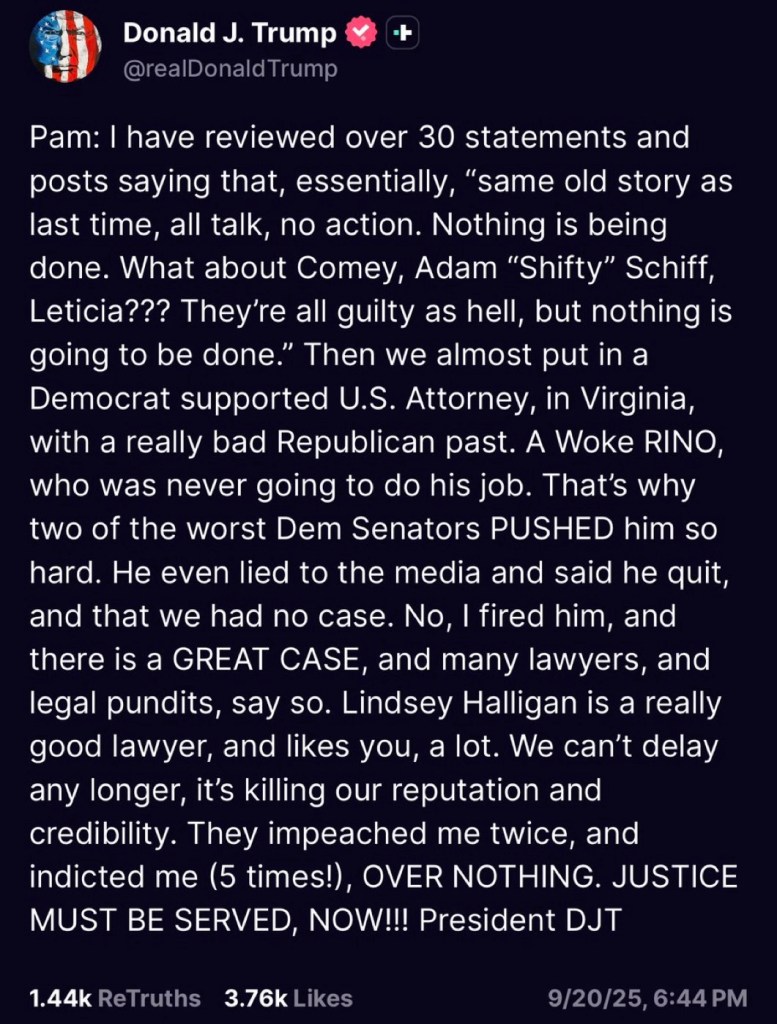
The New Republic tells the shameful story of Trump’s decision to fire Eric Siebert, the U.S. Attorney for the Eastern District of Virginia for his failure to find evidence to indict New York State Attorney General Letitia James.
Trump has said repeatedly that he wants to bring retribution on his enemies. His Attorney General Pam Bondi has protected and obliged him, not only by not releasing the unredacted Epstein files, but by firing any lawyers who worked on Trump investigations while he was out of office.
Trump is determined to prosecute Letitia James, the New York Attorney General, James Comey, and Adam Schiff.
He assigned Erik Siebert, the U.S. Attorney for the Eastern District of Virginia, the job of prosecuting Letitia James. Trump hoped to get her criminally prosecuted for mortgage fraud, for having obtained a mortgage on a vacation home, getting a favorable rate by claiming it as her home. Unfortunately, the case fell apart when evidence emerged that she had not claimed her second home as her primary residence.
Trump was furious at Siebert.
Siebert announced that he had resigned since the President didn’t want him. Trump quickly contradicted him and said Siebert had not resigned, he was fired. Trump promptly announced a replacement, a conservative Republican, Mary “Maggie” Cleary.
Trump is set to remove Erik Siebert, the U.S. attorney for the Eastern District of Virginia, for being faithful to facts, evidence, and guidelines governing good prosecutorial conduct, rather than fully corrupting his office to target Trump’s enemies.
That’s not a rhetorical cheap shot. It’s what Trump is actually doing, per ABC:
President Donald Trump is expected to fire the U.S. attorney for the Eastern District of Virginia after his office was unable to find incriminating evidence of mortgage fraud against New York Attorney General Letitia James, according to sources.
Federal prosecutors in Virginia had uncovered no clear evidence to prove that James had knowingly committed mortgage fraud when she purchased a home in the state in 2023, ABC News first reported earlier this week, but Trump officials pushed U.S. Attorney Erik Siebert to nevertheless bring criminal charges against her, according to sources.
Nixon tried to hide his plots against his enemies. Trump says the quiet parts out loud.
What are they guilty of? Criticizing Trump and–in the case of Schiff and James– trying to hold him accountable.