NPR reported that a significant number of pages were withheld when the Epstein files were released. Some of those pages referred to Trump and his interaction with minors.
This is the original report by Roger Sollenberger that spurred additional questions about the FBI redactions.
The Justice Department has withheld some Epstein files related to allegations that President Trump sexually abused a minor, an NPR investigation finds. It also removed some documents from the public database where accusations against Jeffrey Epstein also mention Trump.
Some files have not been made public despite a law mandating their release. These include what appears to be more than 50 pages of FBI interviews, and notes from conversations with a woman who accused Trump of sexual abuse decades ago when she was a minor.
NPR reviewed multiple sets of unique serial numbers appearing before and after the pages in question, stamped onto documents in the Epstein files database, FBI case records, emails and discovery document logs in the latest tranche of documents published at the end of January. NPR’s investigation found dozens of pages that appear to be catalogued by the Justice Department but not shared publicly.
The Justice Department declined to answer NPR’s questions on the record about these specific files, what’s in them, and why they are not published. After publication, the Justice Department reached out to NPR, taking issue with how its responses to questions were framed. Justice Department spokeswoman Natalie Baldassarre reiterated DOJ’s stance that any documents not published are because they are privileged, duplicates or relate to an ongoing federal investigation.
Other files scrubbed from public view pertain to a separate woman who was a key witness for the prosecution in the criminal trial of Epstein’s co-conspirator, Ghislaine Maxwell, who is serving a 20-year prison sentence for sex trafficking. Maxwell is seeking clemency from Trump.
Some of those documents were briefly taken down and put back online last week, while others remain hidden, according to NPR’s comparison of the initial dataset from Jan. 30 with document metadata of those files currently on the Justice Department website.
NPR does not name victims of sexual abuse.
When asked for comment about the missing pages and the accusations against the president, a White House spokeswoman told NPR that Trump “has done more for Epstein’s victims than anyone before him.”
“Just as President Trump has said, he’s been totally exonerated on anything relating to Epstein,” White House spokeswoman Abigail Jackson told NPR in a statement. “And by releasing thousands of pages of documents, cooperating with the House Oversight Committee’s subpoena request, signing the Epstein Files Transparency Act, and calling for more investigations into Epstein’s Democrat friends, President Trump has done more for Epstein’s victims than anyone before him. Meanwhile, Democrats like Hakeem Jeffries and Stacey Plaskett have yet to explain why they were soliciting money and meetings from Epstein after he was a convicted sex offender.”
The White House has previously pointed to a statement from the Justice Department that says the Epstein files contain “untrue and sensationalist claims” about the president.
In a letter to members of Congress on Feb. 14 first reported by POLITICO, Attorney General Pam Bondi and Deputy Attorney General Todd Blanche insist that no records were withheld or redacted “on the basis of embarrassment, reputational harm, or political sensitivity, including to any government official, public figure, or foreign dignitary.”
In the last two weeks, as lawmakers have begun to view unredacted copies of Epstein files, members of both parties have criticized the way the Trump administration has handled the release of the files. They have also continued to accuse the Justice Department of violating the law and operating without transparency in redacting information.
First woman accuses Trump of sexual abuse
According to the newly released files, the FBI internally circulated Epstein-related allegations that mention Trump in late July and early August 2025. The list, collected from the FBI’s National Threat Operations Center, included numerous salacious allegations. Agents marked most of the accusations as unverifiable or not credible.
But one lead was sent to the FBI’s Washington Office with the purpose of setting up an interview with the accuser. The lead was included in an internal PowerPoint slide deck detailing “prominent names” in the Epstein and Maxwell investigations last fall.
The woman who directly named Trump in her abuse allegation claimed that around 1983, when she was around 13 years old, Epstein introduced her to Trump “who subsequently forced her head down to his exposed penis which she subsequently bit. In response, Trump punched her in the head and kicked her out.”
Out of more than three million pages of files released by the Justice Department in recent months, this specific allegation against Trump only appears in copies of the FBI list of claims and the DOJ slideshow.
But a review of FBI case file logs and discovery documents turned over to Maxwell and her attorneys in the criminal case against her point to one place the claim could have come from — and how serious investigators took it.
The FBI interviewed this Trump and Epstein accuser four times. That is according to an FBI “Serial Report” and a list of Non-Testifying Witness Material in the Maxwell case that were also released under the Epstein Files Transparency Act.
Only the first interview, conducted July 24, 2019, is in the public database. That interview does not mention Trump.
Of 15 documents listed in a log of the Maxwell discovery material for this first accuser, only seven are in the Epstein files database. Those missing also include notes that accompany three of the interviews. The discrepancy in the file for the Trump accuser was first reported by independent journalist Roger Sollenberger.
According to NPR’s review of three different sets of serial numbers stamped onto the files, there appear to be 53 pages of interview documents and notes missing from the public Epstein database.
In the first interview document, the woman discussed ways Epstein abused her as a girl and, in identifying him to investigators, showed a cropped photo of the disgraced financier. Her attorney said it was cropped because she “was concerned about implicating additional individuals, and specifically any that were well known, due to fear of retaliation.”
The FBI agents noted it was a “widely distributed photograph” of Epstein with Trump.
A woman whose biographical details and description of Epstein’s abuse found in the FBI interview also line up with details from a victim lawsuit. In the December 2019 filing, “Jane Doe 4” does not mention Trump, and the woman voluntarily dismissed her claims against Epstein’s estate in December 2021.
Attorneys for this accuser declined to comment.
Elsewhere in the released Epstein files, someone in the FBI wrote on July 22, 2025, before the list and slide presentation were compiled, that Trump’s name was in the larger case files and that “one identified victim claimed abuse by Trump but ultimately refused to cooperate.”
Second accuser says she met Trump at Mar-a-Lago
The other woman whose mention of Trump made the DOJ’s presentation appears in Maxwell discovery files released last month in what’s known as a Testifying Witness 3500 material list.
In the first interview of six with the FBI conducted between Sept. 2019 and Sept. 2021, the second woman detailed how Epstein and Maxwell’s abuse began while she was around 13 years old attending the Interlochen Center for the Arts and described how, at one point, Epstein took her to Trump’s Mar-a-Lago club to meet him.
“EPSTEIN told TRUMP, ‘This is a good one, huh.,'” the interview report reads.
In a 2020 lawsuit against Epstein’s estate and Maxwell, the second woman added that both men chuckled and she “felt uncomfortable, but, at the time, was too young to understand why.”
That interview was removed from the DOJ’s public files some time after initial publication on Jan. 30 and was republished Feb. 19, according to document metadata.
The Justice Department told NPR the only reason any file has been temporarily removed is because it had been flagged by a victim or their counsel for additional review.
Multiple FBI interviews with other people refer to the second woman’s meeting with Trump while she was a minor and being abused by Epstein. One interview with a fleeting mention of Trump was removed from the public database and subsequently restored last week, while another interviewwith the woman’s mother is still offline. After publication, the Justice Department said the file required additional redactions and will be reposted soon.
In that conversation, the mother recalled hearing that “a prince and DONALD TRUMP visited EPSTEIN’s house” which made her “think that if they are there then how could EPSTEIN be a criminal,” according to NPR’s copy of the file that was first published.
The possible omission of files that mention these women’s particular allegations against the president come as the Justice Department has warned about other documents it has published in full that includes what it calls “untrue and sensationalist claims” about Trump.
At the same time, the Justice Department has removed and reuploaded thousands of pages in recent weeks to fix improperly redacted victim names. That includes documents related to the allegations from these two women, who separately say they were around 13 years old when Epstein first abused them.
Robert Glassman, who represents the woman who testified against Maxwell, sharply criticized the Justice Department’s handling of the Epstein files.
“This whole thing is ridiculous,” he told NPR. “The DOJ was ordered to release information to the public to be transparent about Epstein and Maxwell’s criminal enterprise network. Instead, they released the names of courageous victims who have fought hard for decades to remain anonymous and out of the limelight. Whether the disclosures were inadvertent or not—they had one job to do here and they didn’t do it.”
Joyce Vance is a former federal prosecutor who explains legal issues to the lay public. Her writing is clear, concise, and free of legalese..
She writes here about Judge Aileen Cannon, who has almost single-handedly protected Trump from facing criminal prosecution by her tactics and rulings.
Her post is titled, “If DOJ Is Trump’s Law Firm, Aileen Cannon Is His Judge.” I have heard speculation that if Alito or Thomas should retire, Trump may well replace him with Cannon because she saved him from trial and ignominy.
In her latest ruling, a few days ago, she barred the public release of special prosecutor Jack Smith’s report about Trump and his retention of classified documents after leaving office. As Vance says, the public release of such reports is routine. But Judge Cannon saw something in the report that might be embarrassing for Trump, so she blocked their release.
Hopefully, a higher court will overrule her or some anonymous person who has the report will post it on the Internet.
I am not pasting Vance’s commentary in full. I urge you to open the link and finish reading.
Vance writes:
South District of Florida federal Judge Aileen Cannon has history with Donald Trump. He appointed her to the bench in May 2020. She was confirmed that November. Then came the June 2023 indictment of Trump by federal prosecutors. It landed on her desk.
Some judges would have recused. There is no precedent, because no former president had been indicted previously. But a reasonable jurist might have thought that the public wouldn’t have confidence in the objectivity of a judge sitting on a criminal case against the president who appointed her. It would have been the safe bet for someone concerned about the integrity of the judicial branch of government. Judge Cannon did not recuse.
To be fair, the government didn’t ask her to. That turned out to be a miscalculation.
From the earliest moments of the case, even before it was indicted, Cannon’s decisions were questionable. Mar-a-Lago was searched on August 8, 2022, well before Trump’s indictment and Jack Smith’s appointment as special counsel. Cannon was asked to consider the unusual motion Trump’s lawyers filed to restrict the Justice Department’s ability to use evidence seized during the search. It was an attempt to impose an unprecedented (back when that word still had meaning) constraint on the government’s ability to investigate a criminal case.
But Cannon agreed with Trump’s position, assigning a special master to review seized documents. Her decision dramatically slowed the progress prosecutors were able to make. On December 1, shortly after Jack Smith’s appointment in November, the Eleventh Circuit Court of Appeals reversed Cannon. The per curiam order did not mince words: “This appeal requires us to consider whether the district court had jurisdiction to block the United States from using lawfully seized records in a criminal investigation. The answer is no.”
The manifestly unmeritorious decision she made in Trump’s favor pre-indictment was a harbinger of everything that was to come. The case was indicted on June 8, 2023. There is no way to know how much the loss of four months in giving prosecutors full access to the evidence against Trump contributed to the ultimate demise of the case, which was dismissed without going to trial on Smith’s own motion, once Trump was reelected.
Once Trump and his co-defendants were charged, Judge Cannon ruled in their favor at virtually every opportunity. She ruled for them on pretrial motions, like this one, after delaying. She rejected a request by prosecutors, a fairly routine one, to protect witness identities pre-trial. A timeline of her rulings and the delays they engendered is set out at length in this ABC report. Ultimately, Smith’s request to dismiss the case went to the Eleventh Circuit because Cannon had dismissed the prosecution in July 2024, accepting the highly questionable defense theory that Jack Smith’s appointment was unlawful. That decision was on appeal when Trump was elected.
We discussed Cannon’s decision in this post, where I noted that “Until today, every federal judge that considered the issue—all eight of them—unanimously found that attorneys general have the constitutional authority to appoint a special counsel. But Judge Aileen Cannon disagrees. In a 93-page opinion, nicely timed for the first day of the Republican convention … she dismissed the entire indictment.”
But pursuant to DOJ rules that prohibit the prosecution of a sitting president, Smith had little choice but to ask the Eleventh Circuit to dismiss the case as to Trump. When he did so, he wrote: “This outcome is not based on the merits or strength of the case against the defendant.”
That catches us up, more or less, to what happened today, when Judge Cannon ruled on what she characterizes as two “unopposed” motions, one by Trump, one by his co-defendants, both designed to prevent release of Volume II of Jack Smith’s special counsel report, the one covering the Mar-a-Lago case. If it weren’t such a serious matter, “unopposed” would be funny—these motions preventing the routine release of a special counsel’s report are only unopposed because the Attorney General, who should have filed an opposition, lives in Trump’s hip pocket. Cannon has managed to hold up the release of Volume II for over a year at this point.
Please open the link to finish this valuable analysis.
This is an excerpt from Heather Cox Richardson’s latest dispatch. The beginning, which I skipped, is about other countries’ holding important men accountable: former Prince Andrew, for his association with Jeffrey Epstein; and the former President of South Korea, who was sentenced to life in prison, for leading an insurrection to take control of the government.
There’s an implicit lesson here about accountability and lack thereof. None of the powerful men who are named in the Epstein Files have been prosecuted in this country. The Department of Justice redacted many or most of their names to be sure they would not be held to account. Those who led the insurrection of 2021 were never held accountable. Its foot soldiers were tried and convicted, but have since been pardoned by the leader of the insurrection.
The part that I thought you would find interesting are the latest examples of Trump’s vaingloriouness.
Today Trump’s Commission of Fine Arts swore in two new members, including Chamberlain Harris, Trump’s 26-year-old executive assistant, who has no experience in the arts. Then the commission, now entirely made up of Trump appointees, approved Trump’s plans for a ballroom where the East Wing of the White House used to stand, although the chair did note that public comments about the project were over 99% negative.
According to CNN’s Sunlen Serfaty, Harris said the White House is the “greatest house in [the] world. We want this to be the greatest ballroom in the world.” Trump says the ballroom is being funded by private donations through the Trust for the National Mall, which is not required to disclose its donors.
Today workers hung a banner with a giant portrait of Trump on the Department of Justice building.
On Air Force One as Trump traveled to Georgia this afternoon for a speech on the economy, Peter Doocy of the Fox News Channel asked Trump about the arrest of Mountbatten-Windsor. “Do you think people in this country at some point, associates of Jeffrey Epstein, will wind up in handcuffs, too?”
Trump answered: “Well, you know I’m the expert in a way, because I’ve been totally exonerated. It’s very nice, I can actually speak about it very nicely. I think it’s a shame. I think it’s very sad. I think it’s so bad for the royal family. It’s very, very sad to me. It’s a very sad thing. When I see that, it’s a very sad thing. To see it, and to see what’s going on with his brother, who’s obviously coming to our country very soon and he’s a fantastic man. King. So I think it’s a very sad thing. It’s really interesting ‘cause nobody used to speak about Epstein when he was alive, but now they speak. But I’m the one that can talk about it because I’ve been totally exonerated. I did nothing. In fact, the opposite—he was against me. He was fighting me in the election, which I just found out from the last three million pages of documents.”
In fact, Trump has not been exonerated.
When he got to Georgia, Trump’s economic message was that “I’ve won affordability.” More to the point was his focus on his Big Lie that he won the 2020 election and that Congress must pass the Safeguard American Voter Eligibility (SAVE) America Act to secure elections. In fact, in solving a nonexistent problem, the law dramatically restricts voting. Republicans in the House have already passed it. If the Senate passes it, Trump told an audience in Rome, Georgia, “We’ll never lose a race. For 50 years, we won’t lose a race.”
Why did she say he was not exonerated? She may have been referring to this case or to the many photos of Epstein and Trump together, in some photos with young girls.
Andy Borowitz is America’s humorist. More than that, he is incisive and brilliant. He used to write for The New Yorker, but now has his own Substack blog called The Borowitz Report. I subscribe, and I recommend that you do so as well.
In this post, he gives insight into our notorious Attirney General, Pam Bondi, who has turned the Department of Justice into Trump’s personal law firm.
It’s important to remember that she was Attorney General of Florida from 2011 to 2019. She claimed that human trafficking was her #1 issue but somehow overlooked Jeffrey Epstein. As Attorney General, she is still shielding his crimes. Could it be that she is doing this to protect Trump?
Her obnoxious, aggressive, pugnacious appearance before the House Judiciary Committee showed the real Pam Bondi.
Can the attorney general of the United States go to prison?
The answer, of course, is yes: John Mitchell, who served under Richard M. Nixon, later served 19 months behind bars for crimes related to the Watergate cover-up.
Will the toxin known as Pam Bondi follow in his footsteps?
It’s worth considering in light of her appearance before Congress on Wednesday, a performance that Kimberly Guilfoyle might call “too shouty.”
Her testimony was unquestionably obnoxious. But was it criminal?
When you examine the evidence, it doesn’t look good for Pam.
This was the pivotal moment: responding to a question from California Rep. Ted Lieu about the Epstein scandal, Bondi snapped, “There is no evidence that Donald Trump has committed a crime. Everyone knows that.”
Lieu, who must have been tickled that Bondi was dumb enough to step into the weasel trap he set for her, responded that the attorney general might have just committed perjury. Which, as every Watergate superfan knows, is exactly what earned her Republican predecessor, John Mitchell, a trip to the pokey.
When the Trump shitshow is finally over, two things must happen. First, there must be a solid month of dancing in the streets. Second, there must be a reckoning: ideally, Nuremberg-style trials of the corrupt quislings who enabled this unprecedented crime spree. With those enjoyable tribunals in mind, let us now consider the case of Pam Bondi.
Remember when Trump nominated Matt Gaetz to be attorney general? We were so much younger then—although, it should be added, not young enough for Matt Gaetz.
At the time, I observed that Gaetz’s nomination was not what QAnon had in mind when they said they wanted to bring pedophiles to justice. In the end, Matt turned out to be as reckless with Venmo as he was about the age of consent, and Trump quickly withdrew his name.
Pundits claimed that Trump never expected Gaetz to pass muster with the Senate. By their reckoning, he was a “sacrificial lamb”—an odd way to describe a man who, in his personal life, had consistently behaved like a wolf. But by shitcanning Gaetz, the theory went, Trump was sending a signal to his Senate toadies that they’d better confirm all his other nominees, no matter how idiotic, incompetent, or drunk. When it came to Pete Hegseth, Robert F. Kennedy, Jr., Tulsi Gabbard, Dr. Oz, Kash Patel, and myriad other passengers in Trump’s clown Cybertruck, the gambit seemed to pay off.
Matt Gaetz, peering into the gates of Hell. (Erin Scott-Pool via Getty Images)
As for the job of attorney general, Democrats and Republicans alike seemed relieved that it would not be filled by a summer-stock version of Jeffrey Epstein. Surely, whoever Trump named as Gaetz’s replacement would be an improvement.
Instead, Trump picked Pam Bondi.
In 2016, when she was Florida attorney general, Bondi secured her place in Trump’s heart with a speech at the Republican National Convention. Her bloodcurdling attack on Hillary Clinton inspired the GOP mob to break into a familiar chant, which prompted Bondi to comment, “Lock her up? I love that.” And so, by approving the incarceration of a woman who had never been charged with a crime, Bondi displayed an attitude towards due process that would someday serve her splendidly as the nation’s top law enforcement officer.
She would, of course, have another opportunity to assert her preference for imprisoning innocent people with the case of Kilmar Armando Abrego Garcia. On April 14, 2025, El Salvador’s President Nayib Bukele, Trump’s accomplice in the world’s most notorious administrative error, joined him in the Oval Office, receiving a much warmer welcome there than was offered Ukrainian President Volodymyr Zelenskyy. After chummily congratulating each other on the abduction and deportation of a non-criminal, the two men started workshopping how their brilliant strategy might be applied to innocent American citizens.
“The homegrowns are next, the homegrowns,” Trump told Bukele, who calls himself “the world’s coolest dictator”—a stroke of branding so cringe, it’s amazing it didn’t come from Elon Musk. “You’ve got to build about five more places,” Trump advised him.
Where did America’s attorney general stand on this flagrant nullification of a basic right enshrined in the Constitution? Trump added, “Pam is studying. If we can do that, it’s good.”
Pam, apparently, is a quick study. On Fox that evening, she was all in on Trump’s blatantly illegal idea, asserting, “These are Americans who he [Trump] is saying who have committed the most heinous crimes in our country, and crime is going to decrease dramatically.”
It’s not that Bondi is bad at her job—it’s that she’s outstanding at the exact opposite of her job, that is, using the DOJ to subvert justice whenever possible. Bondi’s Department of Injustice, a mutant creation worthy of George Orwell and Lewis Carroll, has proven inhospitable to career DOJ lawyers, who have struggled in court to defend the indefensible.
One such staffer, senior immigration attorney Erez Reuveni, committed what Bondi apparently considers a cardinal sin: uttering a truthful statement within earshot of a judge. After acknowledging what was obvious to any thinking person (but seemingly elusive to Messrs. Trump and Bukele)—that Abrego Garcia’s deportation was a mistake—Reuveni was put on indefinite leave and then fired.
Meanwhile, Liz Oyer, a longtime DOJ pardon attorney, was fired for refusing to restore gun rights to the actor Mel Gibson, who lost them after pleading no contest to domestic battery charges in 2011. Apparently, Trump believes Mel Gibson needs lethal weapons more urgently than Ukraine.
We shouldn’t be surprised to see Trump standing up for the rights of domestic abusers, since a sizable number of the January 6 rioters he pardoned fit that description. He doubled down on his support for this cohort by appointing a crony accused of domestic violence, Herschel Walker, ambassador to the Bahamas.
But what makes the Mel Gibson case particularly rich is that Trump has repeatedly claimed he is punishing universities for their “failure to combat antisemitism.” If Trump is serious about spanking antisemites, he need look no further than his pal Mel.
After the actor’s 2006 drunk driving arrest in Malibu, the police report indicated, “Gibson blurted out a barrage of anti-semitic remarks about ‘fucking Jews’. Gibson yelled out: ‘The Jews are responsible for all the wars in the world.’ Gibson then asked: ‘Are you a Jew?'”
Mel Gibson after his 2006 drunk driving arrest (L) and his 2011 domestic violence arrest (R).
In the upside-down world of Pam Bondi, highly regarded DOJ lawyers are fired and Mel Gibson is rearmed. But do such perversions of justice make Bondi a candidate for worst attorney general ever? They most certainly do, when one considers how decisively and repeatedly she has violated her oath of office:
“I will support and defend the Constitution of the United States against all enemies, foreign and domestic; that I will bear true faith and allegiance to the same; that I take this obligation freely, without any mental reservation or purpose of evasion; and that I will well and faithfully discharge the duties of the office on which I am about to enter. So help me God.”
Rather than defend the Constitution, Bondi has used her time in office to tirelessly protect pedophiles—which should come as no surprise to anyone familiar with her tenure as Florida’s AG. The following campaign ad from that era, in which she vowed to “put human trafficking monsters where they belong—behind bars,” hasn’t aged well:
As Bloomberg’s Mary Ellen Klas wrote, “Bondi kept her distance from the state’s most prominent sex-trafficking case, even as Epstein’s victims pleaded with the courts to invalidate provisions of his non-prosecution agreement and filed lawsuits alleging that he abused them when he was on work release from jail.”
I am confident that Bondi’s misdeeds—including but not limited to her role in the Epstein cover-up—have more than earned her a Nuremberg-style tribunal. I am not, however, suggesting we chant, “Lock her up.” Unlike our current attorney general, I believe in due process.
Robert Reich shared Jesse Jackson’s speech to the Democratic National Convention on July 19, 1988. At that time, Jackson sounded like a radical to some people. He spoke forthrightly, succinctly, and plainly.
Today, nothing in his speech sounds remotely radical. It sounds like common-sense, like the words that you expect to hear from every Democratic candidate and even some Republicans.
He was, at the time, a visionary.
And yet today, the bedrock ideas he espoused are under challenge by the Trump administration. Trump wants to roll the clock backwards, back to the 1920s, when white men ran everything.
Jesse Jackson looked forward and saw a better America coming into view.
Now it’s up to us to recapture and restore that better vision of America, one where everyone can live in dignity.
Jesse Jackson said:
Tonight, we pause and give praise and honor to God for being good enough to allow us to be at this place, at this time. When I look out at this convention, I see the face of America: Red, Yellow, Brown, Black and White. We are all precious in God’s sight – the real rainbow coalition.
(Applause)
All of us – all of us who are here think that we are seated. But we’re really standing on someone’s shoulders. Ladies and gentlemen, Mrs. Rosa Parks. (Applause) The mother of the civil rights movement. [Mrs. Rosa Parks was brought to the podium.]
I want to express my deep love and appreciation for support my family has given me over the past months. They have endured pain, anxiety, threat and fear. But they have been strengthened and made secure by our faith in God, in America, and in you. Your love has protected us and made us strong. To my wife Jackie, the foundation of our family; to our five children whom you met tonight; to my mother, Mrs. Helen Jackson, who is present tonight; and to our grandmother, Mrs. Matilda Burns; to my brother Chuck and his family; to my mother-in-law, Mrs. Gertrude Brown, who just last month at age 61 graduated from Hampton Institute – A marvelous achievement. (Applause)
I offer my appreciation to Mayor Andrew Young who has provided such gracious hospitality to all of us this week.
And a special salute to President Jimmy Carter. (Applause) President Carter restored honor to the White House after Watergate. He gave many of us a special opportunity to grow. For his kind words, for his unwavering commitment to peace in the world, and for the votes that came from his family, every member of his family, led Billy and Amy, I offer special thanks to the Carter family.
(Applause)
My right and my privilege to stand here before you has been won, won in my lifetime, by the blood and the sweat of the innocent.
Twenty-four years ago, the late Fannie Lou Hamer and Aaron Henry – who sits here tonight from Mississippi – were locked out into the streets in Atlantic City; the head of the Mississippi Freedom Democratic Party.
But tonight, a Black and White delegation from Mississippi is headed by Ed Cole, a Black man from Mississippi; 24 years later. (Applause)
Many were lost in the struggle for the right to vote: Jimmy Lee Jackson, a young student, gave his life; Viola Liuzzo, a White mother from Detroit, called nigger lover, had her brains blown out at point blank range; [Michael] Schwerner, [Andrew] Goodman and [James] Chaney – two Jews and a Black – found in a common grave, boddies riddled with bullets in Mississippi; the four darling little girls in a church in Birmingham, Alabama. They died that we might have a right to live.
Dr. Martin Luther King Jr. lies only a few miles from us tonight. Tonight he must feel good as he looks down upon us. We sit here together, a rainbow, a coalition – the sons and daughters of slavemasters and the sons and daughters of slaves, sitting together around a common table, to decide the direction of our party and our country. His heart would be full tonight.
As a testament to the struggles of those who have gone before; as a legacy for those who will come after; as a tribute to the endurance, the patience, the courage of our forefathers and mothers; as an assurance that their prayers are being answered, their work have not been in vain, and hope is eternal; tomorrow night my name will go into nomination for the Presidency of the United States of America.
We meet tonight at the crossroads, a point of decision. Shall we expand, be inclusive, find unity and power; or suffer division and impotence?
We’ve come to Atlanta, the cradle of the old South, the crucible of the new South. Tonight, there is a sense of celebration, because we are moved, fundamentally moved from racial battlegrounds by law, to economic common ground. Tomorrow we will challenge to move to higher ground.
Common ground! Think of Jerusalem, the intersection where many trails met. A small village that became the birthplace for three religions – Judaism, Christianity and Islam. Why was this village so blessed? Because it provided a crossroads there different people met, different cultures, different civilizations could meet and find common ground. When people come together, flowers always flourish – the air is rich with the aroma of a new spring.
Take New York, the dynamic metropolis. What makes New York so special? It’s the invitation of the Statue of Liberty, “Give me your tired, your poor, your huddled masses who yearn to breathe free.” Not restricted to English only. (Applause) Many people, many cultures, many languages – with one thing in common, they yearn to breathe free. Common ground!
Tonight in Atlanta, for the first time in this century, we convene in the South; a state where Governors once stood in school house doors; where Julian Bond was denied a seal in the State Legislature because of his conscientious objection to the Vietnam War; a city that, through its five Black Universities, has graduated more black students than any city in the world. (Applause) Atlanta, now a modern intersection of the new South.
Common ground! That’s the challenge of our party tonight. Left wing. Right wing.
Progress will not come through boundless liberalism nor static conservatism, but at the critical mass of mutual survival – not at boundless liberalism nor static conservatism, but at the critical mass of mutual survival. It takes two wings to fly. Whether you’re a hawk or a dove, you’re just a bird living in the same environment, in the same world.
The Bible teaches that when lions and lambs lie down together, none will be afraid and there will be peace in the valley. It sounds impossible. Lions eat lambs. Lambs sensibly flee from lions. Yet when even lions and lambs will find common ground. Why? Because neither lions nor lambs can survive nuclear war. If lions and lambs can find common ground, surely we can as well – as civilized people. (Applause)
The only time that we win is when we come together. In 1960, John Kennedy, the late John Kennedy, beat Richard Nixon by only 112,000 votes – less than one vote per precinct. He won by the margin of our hope. He brought us together. He reached out. He had the courage to defy his advisors and inquire about Dr. King’s jailing in Albany, Georgia. We won by the margin of our hope, inspired by courageous leadership.
In 1964, Lyndon Johnson brought wings together – the thesis, the antithesis, and the creative synthesis – and together we won.
In 1976, Jimmy Carter unified us again, and we won. When do we not come together, we never win.
In 1968, the vision and despair in July led to our defeat in November. In 1980, rancor in the spring and the summer led to Reagan in the fall.
When we divide, we cannot win. We must find common ground as the basis for survival and development and change, and growth. (Applause)
Today when we debated, differed, deliberated, agreed to agree, agree to disagree, when we had the good judgment to argue a case and then not self-destruct, George Bush was just a little further away from the White House and a little closer to private life. (Applause)
Tonight I salute Governor Michael Dukakis. (Applause) He has run – He has run a well-managed and a dignified campaign. No matter how tired or how tried, he always resisted the temptation to stoop to demagoguery.
I’ve watched a good mind fast at work, with steel nerves, guiding his campaign out of the crowded field without appeal to the worst in us. I have watched his perspective grow as his environment has expanded. I’ve seen his toughness and tenacity close up. I know his commitment to public service. Michael Dukakis’ parents were a doctor and a teacher; my parents a maid, a beautician and a janitor. There’s a great gap between Brookline, Massachusetts and Haney Street in the Fieldcrest Village housing projects in Greenville, South Carolina. (Applause)
He studied law; I studied theology. There are differences of religion, region, and race; differences in experiences and perspectives. But the genius of America is that out of the many we become one.
Providence has enabled our paths to intersect. His foreparents came to America on immigrant ships; my foreparents came to America on slave ships. But whatever the original ships, we’re in the same boat tonight. (Applause) Our ships could pass in the night– if we have a false sense of independence– or they could collide and crash. We could lose our passengers. But we can seek a high reality and a greater good.
Apart, we can drift on the broken pieces of Reagonomics, satisfy our baser instincts, and exploit the fears of our people. At our highest we can call upon noble instincts and navigate this vessel to safety. The greater good is the common good.
As Jesus said, “Not My will, but Thine be done.” It was his way of saying there’s a higher good beyond personal comfort or position.
The good of our Nation is at stake. It’s commitment to working men and women, to the poor and the vulnerable, to the many in the world.
With so many guided missiles, and so much misguided leadership, the stakes are exceedingly high. Our choice? Full participation in a democratic government, or more abandonment and neglect. And so this night, we choose not a false sense of independence, and our capacity to survive and endure. Tonight we choose interdependency, and our capacity to act and unite for the greater good.
Common good is finding commitment to new priorities to expansion and inclusion. A commitment to expanded participation in the Democratic Party at every level. A commitment to a shared national campaign strategy and involvement at every level.
A commitment to new priorities that insure that hope will be kept alive. A common ground commitment to a legislative agenda for empowerment, for the John Conyers bill– universal, on-site, same-day registration everywhere. (Applause) A commitment to D.C. statehood and empowerment– D.C. deserves statehood. (Applause) A commitment to economic set-asides, commitment to the Dellums bill for comprehensive sanctions against South Africa. (Applause) A shared commitment to a common direction.
Common ground! Easier said than done. Where do you find common ground? At the point of challenge. This campaign has shown that politics need not be marketed by politicians, packaged by pollsters and pundits. Politics can be a moral arena where people come together to find common ground.
We find common ground at the plant gate that closes on workers without notice. We find common ground at the farm auction, where a good farmer loses his or her land to bad loans or diminishing markets. Common ground at the school yard where teachers cannot get adequate pay, and students cannot get a scholarship, and can’t make a loan. Common ground at the hospital admitting room, where somebody tonight is dying because they cannot afford to go upstairs to a bed that’s empty waiting for someone with insurance to get sick. We are a better nation than that. We must do better. (Applause)
Common ground. What is leadership if not present help in a time of crisis? So I met you at the point of challenge. In Jay, Maine, where paper workers were striking for fair wages; in Greenville, Iowa, where family farmers struggle for a fair price; in Cleveland, Ohio, where working women seek comparable worth; in McFarland, California, where the children of Hispanic farm workers may be dying from poisoned land, dying in clusters with cancer; in an AIDS hospice in Houston, Texas, where the sick support one another, too often rejected by their own parents and friends.
Common ground. America is not a blanket woven from one thread, one color, one cloth. When I was a child growing up in Greenville, South Carolina my grandmama could not afford a blanket, she didn’t complain and we did not freeze. Instead she took pieces of old cloth – patches, wool, silk, gabardine, crockersack – only patches, barely good enough to wipe off your shoes with. But they didn’t stay that way very long. With sturdy hands and a strong cord, she sewed them together into a quilt, a thing of beauty and power and culture. Now, Democrats, we must build such a quilt.
Farmers, you seek fair prices and you are right – but you cannot stand alone. Your patch is not big enough. Workers, you fight for fair wages, you are right – but your patch of labor is not big enough. Women, you seek comparable worth and pay equity, you are right – but your patch is not big enough. (Applause)
Women, mothers, who seek Head Start, and day care and prenatal care on the front side of life, relevant jail care and welfare on the back side of life – you are right – but your patch is not big enough. Students, you seek scholarships, you are right – but your patch is not big enough. Blacks and Hispanics, when we fight for civil rights, we are right – but our patch is not big enough.
Gays and lesbians, when you fight against discrimination and a cure for AIDS, you are right – but your patch is not big enough. Conservatives and progressives, when you fight for what you believe, right wing, left wing, hawk, dove, you are right from your point of view, but your point of view is not enough.
But don’t despair. Be as wise as my grandmama. Pull the patches and the pieces together, bound by a common thread. When we form a great quilt of unity and common ground, we’ll have the power to bring about health care and housing and jobs and education and hope to our Nation. (Standing ovation)
We, the people, can win!
We stand at the end of along dark night of reaction. We stand tonight united in the commitment to a new direction. For almost eight years we’ve been led by those who view social good coming from private interest, who view public life as a means to increase private wealth. They have been prepared to sacrifice the common good of the many to satisfy the private interests and the wealth of a few.
We believe in a government that’s a tool of our democracy in service to the public, not an instrument of the aristocracy in search of private wealth. We believe in government with the consent of the government with the consent of the governed, “of, for and by the people.” We must now emerge into a new day with a new direction.
Reaganomics. Based on the belief that the rich had too little money and the poor had too much. That’s classic Reaganomics. They believe that the poor had too much money and the rich had too little money so they engaged in reverse Robin Hood – took from the poor and gave to the rich, paid for by the middle class. We cannot stand four more years of Reaganomics in any version, in any disguise.(Applause)
How do I document that case? Seven years later, the richest 1 percent of our society pays 20 percent less in taxes. The poorest 10 percent pay 20 percent more. Reaganomics.
Reagan gave the rich and the powerful a multibillion-dollar party. Now the party’s over, he expects the people to pay for the damage. I take this principal position, convention, let us not raise taxes on the poor and the middle-class, but those who had the party, the rich and the powerful must pay for the party. (Applause)
I just want to take common sense to high places. We’re spending $150 billion a year defending Europe and Japan 43 years after the war is over. We have more troops in Europe tonight than we had seven years ago. Yet the threat of war is ever more remote.
Germany and Japan are now creditor nations; that means they’ve got a surplus. We are a debtor nation. It means we are in debt. Let them share more of the burden of their own defense. Use some of that money to build decent housing. Use some of that money to educate our children. Use some of that money for long-term health care. Use some of that money to wipe out these slums and put America back to work! (Applause)
I just want to take common sense to high places. If we can bail out Europe and Japan; if we can bail out Continental Bank and Chrysler– and Mr. Iaccoca, makes $8,000 an hour, we can bail out the family farmer. (Applause)
I just want to make common sense. It does not make sense to close down 650,000 family farms in this country while importing food from abroad subsidized by the U.S. Government. Let’s make sense.(Applause)
It does not make sense to be escorting all our tankers up and down the Persian Gulf paying $2.50 for every $1 worth of oil we bring out, while oil wells are capped in Texas, Oklahoma and Louisiana. I just want to make sense.(Applause)
Leadership must meet the moral challenge of its day. What’s the moral challenge of our day? We have public accommodations. We have the right to vote.
We have open housing. What’s the fundamental challenge of our day? It is to end economic violence. Plant closings without notice– economic violence. Even the greedy do not profit long from greed– economic violence.
Most poor people are not lazy. They are not black. They are not brown. They are mostly White and female and young. But whether White, Black or Brown, a hungry baby’s belly turned inside out is the same color– color it pain, color it hurt, color it agony.
Most poor people are not on welfare. Some of them are illiterate and can’t read the want-ad sections. And when they can, they can’t find a job that matches the address. They work hard everyday. I know, I live amongst them. They catch the early bus. They work every day. They raise other people’s children. They work everyday.
They clean the streets. They work everyday. They drive dangerous cabs. They change the beds you slept in in these hotels last night and can’t get a union contract. They work everyday. (Applause)
No, no, they’re not lazy. Someone must defend them because it’s right and they cannot speak for themselves. They work in hospitals. I know they do. They wipe the bodies of those who are sick with fever and pain. They empty their bedpans. They clean out their commodes. No job is beneath them, and yet when they get sick they cannot lie in the bed they made up every day. America, that is not right (Applause) We are a better Nation than that! (Applause)
We need a real war on drugs. You can’t “just say no.” It’s deeper than that. You can’t just get a palm reader or an astrologer. It’s more profound than that.(Applause)
We are spending $150 billion on drugs a year. We’ve gone from ignoring it to focusing on the children. Children cannot buy $150 billion worth of drugs a year; a few high-profile athletes– athletes are not laundering $150 billion a year– bankers are.(Applause)
I met the children in Watts who unfortunately, in their despair, their grapes of hope have become raisins of despair, and they’re turning on each other and they’re self-destructing. But I stayed with them all night long. I wanted to hear their case.
They said, “Jesse Jackson, as you challenge us to say no to drugs, you’re right; and to not sell them, you’re right; and to not use these guns, you’re right.” And by the way, the promise of CETA; they displaced CETA– they did not replace CETA. “We have neither jobs nor houses nor services nor training; no way out.
“Some of us take drugs as anesthesia for our pain. Some take drugs as a way of pleasure, good short-term pleasure and long-term pain. Some sell drugs to make money. It’s wrong, we know, but you need to know that we know. We can go and buy the drugs by the boxes at the port. If we can buy the drugs at the port, don’t you believe the Federal government can stop it if they want to?” (Applause)
They say, “We don’t have Saturday night specials anymore. They say, We buy AK47’s and Uzi’s, the latest make of weapons. We buy them across the along these boulevards.”
You cannot fight a war on drugs unless until you’re going to challenge the bankers and the gun sellers and those who grow them. Don’t just focus on the children, let’s stop drugs at the level of supply and demand. We must end the scourge on the American Culture! (Applause)
Leadership. What difference will we make? Leadership. We cannot just go along to get along. We must do more than change Presidents. We must change direction.
Leadership must face the moral challenge of our day. The nuclear war build-up is irrational. Strong leadership cannot desire to look tough and let that stand in the way of the pursuit of peace. Leadership must reverse the arms race. At least we should pledge no first use. Why? Because first use begets first retaliation. And that’s mutual annihilation. That’s not a rational way out.
No use at all. Let’s think it out and not fight it our because it’s an unwinnable fight. Why hold a card that you can never drop? Let’s give peace a chance.
Leadership. We now have this marvelous opportunity to have a breakthrough with the Soviets. Last year 200,000 Americans visited the Soviet Union. There’s a chance for joint ventures in space– not Star Wars and war arms escalation but a space defense initiative. Let’s build in space together and demilitarize the heavens. There’s a way out.
America, let us expand. When Mr. Reagan and Mr. Gorbachev met there was a big meeting. They represented together one-eighth of the human race. Seven-eighths of the human race was locked out of that room. Most people in the world tonight– half are Asian, one-half of them are Chinese. There are 22 nations in the Middle East. There’s Europe; 40 million Latin Americans next door to us; the Caribbean; Africa– a half-billion people.
Most people in the world today are Yellow or Brown or Black, non-Christian, poor, female, young and don’t speak English in the real world.
This generation must offer leadership to the real world. We’re losing ground in Latin America, Middle East, South Africa because we’re not focusing on the real world. That’s the real world. We must use basic principles, support international law. We stand the most to gain from it. Support human rights; we believe in that. Support self-determination, we’re built on that. Support economic development, you know it’s right. Be consistent and gain our moral authority in the world. I challenge you tonight, my friends, let’s be bigger and better as a Nation and as a Party! (Applause)
We have basic challenges – freedom in South Africa. We have already agreed as Democrats to declare South Africa to be a terrorist state. But don’t just stop there. Get South Africa out of Angola; free Namibia; support the front line states. We must have a new humane human rights consistent policy in Africa.
I’m often asked, “Jesse, why do you take on these tough issues? They’re not very political. We can’t win that way.”
If an issue is morally right, it will eventually be political. It may be political and never be right. Fanny Lou Hamer didn’t have the most votes in Atlantic City, but her principles have outlasted the life of every delegate who voted to lock her out. Rosa Parks did not have the most votes, but she was morally right. Dr. King didn’t have the most votes about the Vietnam War, but he was morally right. If we are principled first, our politics will fall in place. “Jesse, why do you take these big bold initiatives?” A poem by an unknown author went something like this: “We mastered the air, we conquered the sea, annihilated distance and prolonged life, but we’re not wise enough to live on this earth without war and without hate.”
As for Jesse Jackson: “I’m tired of sailing my little boat, far inside the harbor bar. I want to go out where the big ships float, out on the deep where the great ones are. And should my frail craft prove too slight for waves that sweep those billows o’er, I’d rather go down in the stirring fight than drowse to death at the sheltered shore.”
We’ve got to go out, my friends, where the big boats are. (Applause)
And then for our children. Young America, hold your head high now. We can win. We must not lose to the drugs, and violence, premature pregnancy, suicide, cynicism, pessimism and despair. We can win. Wherever you are tonight, now I challenge you to hope and to dream. Don’t submerge your dreams. Exercise above all else, even on drugs, dream of the day you are drug free. Even in the gutter, dream of the day that you will be up on your feet again.
You must never stop dreaming. Face reality, yes, but don’t stop with the way things are. Dream of things as they ought to be. Dream. Face pain, but love, hope, faith and dreams will help you rise above the pain. Use hope and imagination as weapons of survival and progress, but you keep on dreaming, young America. Dream of peace. Peace is rational and reasonable. War is irrational in this age, and unwinnable.
Dream of teachers who teach for life and not for a living. Dream of doctors who are concerned more about public health than private wealth. Dream of lawyers more concerned about justice than a judgeship. Dream of preachers who are concerned more about prophecy than profiteering. Dream on the high road with sound values.
And then America, as we go forth to September, October, November and then beyond, America must never surrender to a high moral challenge.
Do not surrender to drugs. The best drug policy is a “no first use.” Don’t surrender with needles and cynicism. (Applause) Let’s have “no first use” on the one hand, or clinics on the other. Never surrender, young America. Go forward.
America must never surrender to malnutrition. We can feed the hungry and clothe the naked. We must never surrender. We must go forward.
We must never surrender to inequality. Women cannot compromise ERA or comparable worth. Women are making 60 cents on the dollar to what a man makes. Women cannot buy meat cheaper. Women cannot buy bread cheaper. Women cannot buy milk cheaper. Women deserve to get paid for the work that you do. (Applause) It’s right and it’s fair. (Applause)
Don’t surrender, my friends. Those who have AIDS tonight, you deserve our compassion. Even with AIDS you must not surrender.
In your wheelchairs. I see you sitting here tonight in those wheelchairs. I’ve stayed with you. I’ve reached out to you across our Nation. Don’t you give up. I know it’s tough sometimes. People look down on you. It took you a little more effort to get here tonight. And no one should look down on you, but sometimes mean people do. The only justification we have for looking down on someone is that we’re going to stop and pick them up.
But even in your wheelchairs, don’t you give up. We cannot forget 50 years ago when our backs were against the wall, Roosevelt was in a wheelchair. I would rather have Roosevelt in a wheelchair than Reagan and Bush on a horse. (Applause) Don’t you surrender and don’t you give up. Don’t surrender and don’t give up!
Why I cannot challenge you this way? “Jesse Jackson, you don’t understand my situation. You be on television. You don’t understand. I see you with the big people. You don’t understand my situation.”
I understand. You see me on TV, but you don’t know the me that makes me, me. They wonder, “Why does Jesse run?” because they see me running for the White House. They don’t see the house I’m running from. (Applause)
I have a story. I wasn’t always on television. Writers were not always outside my door. When I was born late one afternoon, October 8th, in Greenville, South Carolina, no writers asked my mother her name. Nobody chose to write down our address. My mama was not supposed to make it, and I was not supposed to make it. You see, I was born of a teen-age mother, who was born of a teen-age mother.
I understand. I know abandonment, and people being mean to you, and saying you’re nothing and nobody and can never be anything.
I understand. Jesse Jackson is my third name. I’m adopted. When I had no name, my grandmother gave me her name. My name was Jesse Burns until I was 12. So I wouldn’t have a blank space, she gave me a name to hold me over. I understand when nobody knows your name. I understand when you have no name.
I understand. I wasn’t born in the hospital. Mama didn’t have insurance. I was born in the bed at [the] house. I really do understand. Born in a three-room house, bathroom in the backyard, slop jar by the bed, no hot and cold running water.
I understand. Wallpaper used for decoration? No. For a windbreaker. I understand. I’m a working person’s person. That’s why I understand you whether you’re Black or White.
I understand work. I was not born with a silver spoon in my mouth. I had a shovel programmed for my hand.
My mother, a working woman. So many of the days she went to work early, with runs in her stockings. She knew better, but she wore runs in her stockings so that my brother and I could have matching socks and not be laughed at at school. I understand.
At 3 o’clock on Thanksgiving Day, we couldn’t eat turkey because momma was preparing somebody else’s turkey at 3 o’clock. We had to play football to entertain ourselves. And then around 6 o’clock she would get off the Alta Vista bus and we would bring up the leftovers and eat our turkey– leftovers, the carcass, the cranberries– around 8 o’clock at night. I really do understand.
Every one of these funny labels they put on you, those of you who are watching this broadcast tonight in the projects, on the corners, I understand. Call you outcast, low down, you can’t make it, you’re nothing, you’re from nobody, subclass, underclass; when you see Jesse Jackson, when my name goes in nomination, your name goes in nomination. (Applause)
I was born in the slum, but the slum was not born in me. (Applause) And it wasn’t born in you, and you can make it. (Applause)
Wherever you are tonight, you can make it. Hold your head high, stick your chest out. You can make it. It gets dark sometimes, but the morning comes. Don’t you surrender. Suffering breeds character, character breeds faith. In the end faith will not disappoint.
You must not surrender. You may or may not get there but just know that you’re qualified. And you hold on, and hold out. We must never surrender. America will get better and better.
Keep hope alive. (Applause) Keep hope alive. (Applause) Keep hope alive. On tomorrow night and beyond, keep hope alive! (Applause)
I love you very much. (Applause) I love you very much. (Standing ovation and spontaneous demonstration)
I’ve been a pediatrician for 20 years. When I learned how to take a pediatric patient’s history, I was taught to ask parents: “Are your child’s immunizations up to date?” At the beginning of my career I’d already be writing down the answer “yes,” without hesitation or uncertainty. Now when I ask that question, I brace myself.
Right now, a measles outbreak is surging in my home state of South Carolina, where there are already more than 900 confirmed cases, most of them unvaccinated children, with hundreds in quarantine and more exposures being reported daily.
That’s hundreds of parents missing work. Kids missing weeks of school. Newborns, seniors and the immunocompromised being forced to gamble their health on their neighbors’ choices. Hospitals and health centers bracing for what comes next.
This was all preventable, and we need to be honest about how we got here.
We have an incredibly safe and effective vaccine for measles. One of the reasons scientists worked with urgency to develop the measles vaccine was because of how contagious the virus is, far more contagious than the flu or Covid-19. Every person with measles infects 20 other people, on average. Someone with measles can walk into a room, cough and leave, and the virus can still be alive in that room for hours. This is why measles doesn’t “fade out” on its own. It spreads like wildfire when community immunity drops.
So no, measles doesn’t spread like this just because a virus is good at its job. It spreads when the systems meant to protect families get replaced with noise, doubt, lies and deliberate confusion.
At the highest levels of our federal government, we have watched medical expertise get shoved aside while conspiracy theories get promoted. The message Americans keep getting is that expertise is suspect, that doubt is bravery and that your Facebook feed is just as good as your doctor’s advice. When the people at the top signal that science is subjective, confusion becomes contagious.
That message has consequences. It becomes the air people breathe. It shapes what a parent believes about vaccinations as they scroll their social media feed in the preschool pickup line. It erodes trust in medicine and threatens the fabric of our nation’s public health system.
The outbreak isn’t the fault of Health and Human Services Secretary Robert F. Kennedy Jr. alone, but we’re kidding ourselves if we pretend leadership doesn’t matter.
Kennedy has been a leading voice in the anti-vaccine movement for decades, which has led communities across the country to slip below the herd immunity threshold for the prevention of outbreaks of infections like measles. Even if you replaced the name on the door at HHS tomorrow (which a responsible Congress would do), trust doesn’t snap back like a rubber band. It takes years to build and minutes to burn.
And the burn is not theoretical. Just this month, the United States withdrew from the World Health Organization, stepping away from the very kind of coordination that helps countries spot outbreaks early and stop them before they spread. Meanwhile, the world is looking back at us: a nation on the brink of losing elimination status for measles, a disease we fully eliminated in 2000.
We are flirting with the return of an old killer, not because the science changed, not because the virus itself changed, but because our politics did.
I didn’t set out to become a politician. I’m a pediatrician and mom of three, which means I understand deeply what it feels like to be responsible for a tiny human you’d do anything to protect. I know how heavy it is to make decisions in a world that feels more chaotic and less trustworthy by the day. And I understand that when politics is injected into public health, parents’ jobs get harder and children suffer. That is why I stepped up to fight on behalf of America’s children and the families who love them.
So here’s my plea, doctor to country, mother to community.
Stop letting politicians play games with public health. Put scientific expertise back where it belongs: in government, in policy and in the language we use when the stakes are life and death.
If you want to stop measles, you should get vaccinated.
If you want to stop the next iteration of this, you stop rewarding people who profit from confusion. You stop letting unserious leaders turn public health into a culture war. You put serious, qualified people back in the rooms where decisions are made.
Measles doesn’t care who you voted for. It cares whether we protect each other. And we still can.
“I will commit to not firing anybody who’s doing their job.”
“I support vaccines. I support the childhood schedule.”
“My approach to HHS, as I said before…, is radical transparency.”
“I’m pro-good science.”
Health experts say Kennedy has made sweeping reversals on these statements. His HHS tenure has seen the U.S. childhood vaccine program reduce the number of recommended shots to protect against 11 diseases instead of 17, thousands of public servants (many of them scientists) have been fired, standard-setting scientific practices at the Centers for Disease Control and Prevention, Food and Drug Administration and National Institutes of Health have been replaced with “gold-standard” dictates that scientists call dishonest, and judges have blocked funding cuts as illegal. Kennedy and HHS officials did not respond to requests for comment.…”
The secretary has spoken broadly about his goals this year to Congress and the public. In September, before a Senate panel, he described his “big-picture” mission as “enacting a once-in-a-generation shift from a sick care system to a true health care system that tackles the root causes of chronic disease.” His “Make America Healthy Again” (MAHA) agenda, now wedded to President Donald Trump’s “Make America Great Again” movement, puts Kennedy atop a new, unorthodox American political coalition. It unites a partisan distrust of science with a deep-rooted skepticism of medicine and the food industry. Roughly four in 10 parents are supporters of the MAHA movement, according to a KFF survey.
“Who can argue with the foundational goal of ‘Making America Healthier Again’? We want parents to want healthier lives for their children,” says Washington University in St. Louis School of Public Health dean Sandro Galea, author of the book Within Reason: A Liberal Public Health for an Illiberal Time. Many of the goals of the MAHA movement—including increasing stalled U.S. life expectancies, bettering childhood health and addressing overmedicalization—are shared by public health experts.
“It would be great to see MAHA be a force for good,” Galea says. “But some of its ideas, frankly, will end up hurting people.” Notably, Kennedy’s decisions on vaccines will inevitably lead to outbreaks, Galea says, and the return of preventable infectious diseases such as measles. “We really haven’t seen an HHS tenure like this in our lifetimes.”
HHS is largely the national social insurance arm of the U.S., with a sideline in medical research and public health. It oversees the massive Social Security, Medicare and Medicaid programs, as well as the FDA, CDC and NIH. In many ways, the colossal agency today continues to function as normal: Social Security checks, Supplemental Security Income or both still lands in nearly 75 million mailboxes every month, one in five Americans receives Medicaid coverage, and the Affordable Care Act that the department administers still covers more than 24 million people nationwide despite Trump administration cuts to health insurance and food assistance. On February 2 Kennedy announced a $100 million pilot program to fund outreach, medical treatment and other support for homeless people and those with substance use disorders in eight cities—in the kind of bipartisan response to the overdose crisis long sought in the public health world.
This kind of tumult is now standard fare at HHS. In his first year, Kennedy fired his own handpicked CDC chief, linked Tylenol to autism with little evidence and urged farmers to let bird flu “run through” their flocks (an idea that could blow chicken prices skyward and spur spread of the virus, experts say). All told, the agency lost more than 17,000 civil servants through firings and resignations in 2025—including many scientific leaders at the FDA, CDC and NIH. An HHS spokesperson defended Kennedy’s cuts to “bloated bureaucracies that were long overdue” to ProPublica in August.
In the September Senate hearing, Kennedy accused one critical lawmaker of “crazy talk” and took out his phone and began scrolling through it while another spoke. “We’re denying people vaccine,” said senator Bill Cassidy of Louisiana, the physician chair of the Senate health committee. “You’re wrong,” Kennedy replied to Cassidy, who provided a crucial Republican vote last February for Kennedy’s confirmation.
Kennedy “comes across as a privileged rich guy with an air of entitlement,” says American Public Health Association executive director Georges Benjamin, whose organization called for Kennedy to resign in April after the mass layoffs at the CDC, FDA and other health agencies. “He’s completely in over his head at this job, has no experience, no training in areas of health he’s affecting and is causing a lot of harm.”
VACCINES
Kennedy has a long history of vaccine opposition. He joined the board of the antivaccine nonprofit Children’s Health Defense in 2015, when it was known as the World Mercury Project (and resigned from his position as chairman in 2024); the organization led numerous lawsuits against vaccine makers. The move from environmental lawyer to antivaccine activist turned out to be well timed for postpandemic politics; attacking COVID vaccines wooed Republican voters. At his confirmation hearing, Kennedy refused to disavow links between vaccines and autism, a favorite theory of outfits spurring vaccine hesitancyamong parents, though numerous studies have found no connection. “News reports have claimed that I am antivaccine or anti-industry,” Kennedy said at his confirmation hearing. “I am neither; I am pro-safety.” What Kennedy meant then by safety has since become clear, Benjamin says: his own judgment.
The FDA’s top vaccine official, Peter Marks, resigned in March, writing of Kennedy, “truth and transparency are not desired by the secretary, but rather he wishes subservient confirmation of his misinformation and lies.” During the pandemic, Marks had famously withstood political pressure to approve COVID shots without safety testing. Now he is out. An HHS official told NPR that Marks “has no place at FDA” because of his opposition to the secretary “restoring science to its golden standard and promoting radical transparency” at the agency.
Kennedy later claimed Monarez had told him she wasn’t “trustworthy”; in Senate testimony, she denied doing so. “The question before us is whether we will keep faith with our children and grandchildren—ensuring they remain safe from the diseases we fought so hard to defeat: polio, measles, diphtheria, whooping cough and many others,” Monarez said at the September 17 Senate hearing. “Undoing that progress would not only be reckless—it would betray every family that trusts us to protect their health.”
In December Kennedy’s reconstituted vaccine panel voted to stop recommending that all newborns be vaccinated for hepatitis B, a disease that contributed to the deaths of 1.1 million people worldwide in 2022. HHS next reduced the number of U.S. childhood vaccine shots so that they protected against 11 diseases instead of 17, basing the decision on the rules of Denmark, a country with a relatively small and homogenous population and publicly funded health care for all. Most recently, the chair of the vaccine panel, a cardiologist, told POLITICO that its focus this year will be on examining vaccine side effects rather than on its longstanding mission of gauging vaccine effectiveness.
WELLNESS
“I walk through the airports today…, and I see these kids that are just overburdened with mitochondrial challenges,” Kennedy said in August at a Texas “Make America Healthy Again” state-law-signing ceremony. Ashish Jha, formerly the Biden administration’s pandemic response czar, called this airport diagnosis “wacky, flat-earth voodoo stuff” on X (formerly Twitter).
“I think what we’re seeing is a mutual partnership between RFK, Jr., and what he says he values and the existing MAHA values and ideals,” says Mariah L Wellman of Michigan State University, a wellness industry scholar. Kennedy’s rhetoric reflects a common ground with influencers like Means, she adds. “I absolutely think there are deep ties between how the wellness industry exists [and] is talked about on social media right now and RFK, Jr.’s beliefs.”
In May, at a Senate Finance Committee hearing, Kennedy called for an end to genetic research on the causes of autism, instead suggesting that “environmental toxins” were the source. Kennedy often claims there that there is an autism “epidemic,” but improved diagnosis largely explains the recent rise in cases.
A MAHA commission report released by HHS in September reflected the movement’s signature mixture of concern over real problems, such as rising childhood obesity and illness, with Kennedy’s “pet peeves and half-baked science that doesn’t really get at the root causes of poor health in children,” says Peter Lurie of the Center for Science in the Public Interest. Alongside calls for research on cell-phone-signaleffects on health and vaccine injuries, the report went light on investigating pesticides and the food industry, disappointing some environmental figures.
In September Kennedy joined Trump in suggesting that Tylenol use during pregnancy causes autism—another belief taken up by the wellness industry—based on weak evidence. Scientists, however, say that if the medicine is linked with autism—a connection that’s not yet clear—it could be the fevers and infections the Tylenol was meant to address, and not the pills themselves, that drives increased autism risk. Nevertheless, HHS started the process for an FDA warning to be added to the pain reliever’s label.
The recommendations fit a pattern of Kennedy’s, Benjamin says. “I see him as a sort of environmental purist of sorts,” he says, rejecting medicine just as he once opposed pollution as an environmental lawyer. Fatty “real” foods, even if they are linked to heart disease, look less threatening to a worldview shaped by fears of something “artificial” causing harm, even if (unnatural) prescription drugs such as statins actually reduce the risk of heart disease. “He is an advocate, and he sees the world as a place for advocacy, not [for] the balanced perspective of a scientist or physician,” Benjamin says.
Antidepressants and heart disease medications are now in MAHA’s sights. Kennedy has claimed that medications such as these are overprescribed as a result of what he says is corruption that has affected medical studies—a charge that echoes his environmental movement rhetoric.
POLITICS
“Don’t you want a president that is going to make America healthy again?” Kennedy said at an August 23, 2024, campaign rally in Glendale, Ariz., in which he endorsed Trump. At the event, as Trump was introducing Kennedy to his supporters, he announced his intention to release the assassination files of Kennedy’s uncle John F. Kennedy…
“RFK, Jr., certainly has his own goals and ideology that overlap with Trump’s and are also distinct,” says Pamela Herd of the University of Michigan’s Gerald R. Ford School of Public Policy. “But at the end of the day, it is the Trump administration, and he will be limited to what it is, or isn’t, comfortable with.”
At a December campaign rally-style briefing from the first-floor stage of HHS’s headquarters at the Hubert H. Humphrey Building in Washington, D.C., Kennedy announced sweeping plans to restrict gender-affirming care for U.S. minors. Kennedy recognized political activists and conservative politicians in his opening remarks. Gender-affirming care has not been a historical preoccupation of Kennedy or the wellness industry but rather one “where the [Republican] party sees an advantage,” POLITICO observed.
“I think the MAHA and MAGA [movements] are intersecting circles in a Venn Diagram,” says political scientist David Lewis of Vanderbilt University. Right now, the two movements form a political coalition held together by Trump, he says.
Overall, the most significant effect of Kennedy’s tenure at HHS, Herd says, is his firing of scientific leaders and replacing expertise with political activism, most notably in upending the childhood vaccine schedule. The politicization genie won’t easily go back in the bottle, she says. “I think this this is a much more kind of radical change and one that’s difficult to pull back.”
MAHA and MAGA are now inextricably linked. In February Kennedy spoke at the right-wing Heritage Foundation’s event “One Year of Making America Healthy Again,” attended by political activists and Senator Tommy Tuberville. There Tony Lyons, president of the political group MAHA Action, described the group’s commitment to backing Republican candidates endorsed by Trump, a sign that the political coalition forged in the 2024 election will hold into the midterms. “It’s a joy to work for [Trump],” Kennedy said onstage. “He lets me do stuff that I don’t think anybody else would ever let me do.”
DAN VERGANO is senior editor, Washington, D.C., at Scientific American. He has previously written for Grid News, BuzzFeed News, National Geographic and USA Today. He ischair of the New Horizons committee for the Council for the Advancement of Science Writing and a journalism award judge for both the American Association for the Advancement of Science and the U.S. National Academies of Sciences, Engineering, and Medicine.
It’s Time to Stand Up for Science
If you enjoyed this article, I’d like to ask for your support. Scientific American has served as an advocate for science and industry for 180 years, and right now may be the most critical moment in that two-century history.
I’ve been a Scientific American subscriber since I was 12 years old, and it helped shape the way I look at the world. SciAm always educates and delights me, and inspires a sense of awe for our vast, beautiful universe. I hope it does that for you, too.
If you subscribe to Scientific American, you help ensure that our coverage is centered on meaningful research and discovery; that we have the resources to report on the decisions that threaten labs across the U.S.; and that we support both budding and working scientists at a time when the value of science itself too often goes unrecognized.
I was not a friend of the Reverend Jesse Jackson. I had a brief, one-day experience with him. It was an important day for me.
Several years ago, I received an invitation to speak at Jesse Jackson’s church.
At first, I was ambivalent because I had a negative feeling about him. I remembered that he had long ago referred to New York City as “hymietown.” That was blatantly anti-Semitic, and it made me think of him as bigoted against Jews.
But I was interested in meeting him so I accepted the invitation.
When I arrived at his church in Chicago, the congregants were engaged in prayer.
An assistant brought me to meet Rev. Jackson, and he greeted me enthusiastically and warmly.
About 30 minutes later, he invited me to the pulpit to speak. I spoke for about 30 minutes and talked about the threat to privatize public schools and the importance of public schools. His congregation listened intently and applauded the message.
Then Rev. Jackson took me under his wing. He walked me around, introduced me to people, walked me to the meal in the churchyard, filled my plate, and sat to talk with me.
I felt enveloped in his warmth and kindness.
That night, he took me to dinner at a celebrated Chicago steakhouse along with some of his associates and one of his sons. In the hubbub of the restaurant, I strained to hear what he was saying. He spoke so low that I didn’t understand most of what he said. What pearls of wisdom was I missing, I wondered. I would never find out.
But by the time I left, I felt a genuine love for this man.
He was kind, thoughtful, generous, and warm. The people around him basked in his warmth. Briefly, so did I.
A blogger who calls himself “This Will Hold” wrote a startling post about Jeffrey Epstein’s Zorro Ranch in New Mexico. The sprawling ranch was bought by a Trump ally. Unlike Epstein’s other properties, Zorro Ranch was never searched by the FBI. Why not?
In 2023, four years after Jeffrey Epstein suspiciously died in federal custody, one of the most controversial properties in modern criminal history quietly changed hands.
Zorro Ranch, Epstein’s sprawling New Mexico estate in southern Santa Fe County, was sold to San Rafael Ranch LLC, a limited liability company created just one month before the purchase. The final sale price has not been publicly disclosed. The property was originally listed for $27.5 million before the price was reduced to $18 million.
Public records have revealed that San Rafael Ranch LLC is tied to the family of Don Huffines, a Trump-aligned former Texas state senator and current candidate for Texas Comptroller. Tax protest filings obtained through a public records request list Huffines’ wife as an owner of the ranch and son Colin Huffines, as manager.
According to the Santa Fe New Mexican, in those filings the family sought to reduce the property’s taxable valuation to approximately $13.4 million, citing the “notoriety” of the estate as a factor affecting its value.
What remains less clear is why Zorro Ranch—unlike Epstein’s other properties—was never subjected to a federal search.
The Allegations That Should Have Triggered an Excavation
In November 2019, months after Epstein’s arrest and death, the U.S. Department of Justice documented an email that, if credible, should have required immediate forensic action.
The email, included in newly released DOJ files, was sent from an encrypted ProtonMail account by someone identifying themselves as “a former staff at the Zorro.” The sender attached six videos of sexual abuse by Jeffrey Epstein and alleged that “two foreign girls were buried on orders of Jeffrey and Madam G” in the hills outside Zorro Ranch.
The email claimed the girls “died by strangulation during rough, fetish sex.”
“Madam G” is widely understood to refer to Ghislaine Maxwell, who is currently serving a 20-year federal sentence for sex trafficking. It’s noted that one of the videos is a suicide attempt confession from a girl in the Bay Area.
A note on another of the videos: 7 mins 31 secs underage girl (Matthew Mellon video).
Matthew Mellon, yet another billionaire in the Epstein class, dined with Donald Trump in March of 2018 before flying to Mexico in April to check into a rehabilitation clinic. But the 54-year-old banking heir never made it to the treatment facility—according to one report, Mellon was experimenting with ayahuasca, a hallucinogenic drink, and died from a heart attack after taking it.
Matthew Mellon isn’t the first member of the Mellon family to appear in the Epstein files. As we previously reported, Paul Mellon showed up on Epstein’s flight logs—and Timothy Mellon, his son, donated $126 million to Trump’s 2024 campaign. Perhaps to protect the family name?
The allegations in the email—involving sex crimes against minors and claims that girls were buried on the property—remain unsubstantiated, which is not surprising given that the ranch was never subjected to a forensic search.
How Thoroughly the Other Properties Were Searched
The absence becomes more striking when compared to the aggressive and highly visible searches conducted elsewhere.
The contrast is stark.
Across nearly two decades—from the original Palm Beach investigation through the 2019 federal case—Epstein’s other properties were searched extensively.
Palm Beach Mansion
Epstein’s waterfront Palm Beach estate was the epicenter of the original criminal investigation that began in 2005.
Palm Beach Police conducted a months-long investigation that included:
Computers and records were seized as part of international cooperation efforts. The federal investigative net extended across state lines and international borders.
And stopped at the state lines of New Mexico.
The Property at the Center of the Silence
The estate spans nearly 8,000 acres of high desert terrain, plus an additional 1,200 acres leased from the State of New Mexico. It includes:
A private airstrip
Multiple residences and guest houses
Remote hills and open desert land
Secure entry structures
DOJ files include photographs labeled “Zorro Aug 2002,” showing unidentified young women with their faces redacted at the ranch. Flight logs show hundreds of trips to the ranch over two decades and survivor testimony places abuse there.
In August 2019, multiple survivors addressed the court during a hearing against Jeffrey Epstein before the case was dismissed following his death.
Chauntae Davies testified that she was flown to Zorro Ranch both on a commercial flight and on Epstein’s private plane on at least two occasions. She stated that she was raped both times.
Virginia Roberts Giuffre alleged in a lawsuit—later settled—that she was trafficked to the ranch as a minor. In her memoir, she recalled that Epstein brought in “foreign girls who couldn’t communicate in English,” and that “Epstein laughed about the fact they couldn’t really communicate, saying that they are the ‘easiest’ girls to get along with.”
As scrutiny of Epstein intensified, the ranch itself drew attention. In August 2018, Zorro Ranch was burglarized. A gun safe reportedly containing 30–40 firearms was removed.
According to reports at the time, the perimeter fence had been cut, and the intruders appeared to know the precise location of the safe. In addition to the weapons, a small number of antique lamps were also taken.
Several structures can be seen in aerial photo and video of the property, including what appears to be an industrial-grade landfill. In 2019 an FBI tip from a retired New Mexico State Police officer who lived near the ranch reported a newly constructed “suspicious barn” with what appeared to be a “sally port” (double-door entry system used in prisons) and a chimney.
He was “concerned the property could potentially have an incinerator concealed within the barn.”
A crematorium?
Individually, each detail might have explanation—but collectively, they form a series of investigative leads.
None resulted in a forensic search.
Political Proximity
Epstein purchased Zorro Ranch in 1993 from former New Mexico Governor Bruce King. His son, Gary King, later served as New Mexico’s Attorney General.
The late Governor Bill Richardson appears on Epstein flight logs, in victim depositions, and in DOJ communications referencing the ranch. And internal DOJ emails show Epstein’s continued communication with Richardson following his 2008 Florida conviction.
Virginia Giuffre, who sued Maxwell for defamation, provided photos of herself at the ranch in a 2015 court document. Giuffre said that Epstein trafficked her to powerful men at the ranch, including the late Bill Richardson, who served as New Mexico governor from 2003 to 2011.
After his 2008 conviction, Epstein was not required to register as a sex offender in New Mexico and the state continued leasing him public land attached to the ranch.
These are documented facts.
Does Epstein’s proximity to political elites explain the absence of a federal search?
When federal authorities brought excavation equipment to Little St. James and catalogued evidence floor by floor in Manhattan, why was nearly 8,000 acres of New Mexico desert left untouched?
If nothing is there, a search would settle it.
If something is there, the land holds the answer.
For now, Zorro Ranch remains the only major Epstein property tied to survivor testimony that has never been publicly examined with the same rigor.
And that distinction continues to raise questions.
Last night Rep. Jamie Raskin posted a comment on Twitter about his visit to a nearby ICE facility:
I just exercised my right as a Member of Congress to conduct an unannounced oversight visit of the ICE field facility in Baltimore. The staff I met with respected my right to visit, but what I saw was disgraceful. Kristi Noem has a budget of $75 billion she could use to ensure humane conditions, but we saw 60 men packed into a room shoulder-to-shoulder, 24-hours-a-day, with a single toilet in the room and no shower facilities. They sleep like sardines with aluminum foil blankets. Whether it’s for three days or seven days, nobody would want a member of their family warehoused there. The room set aside for dangerous criminals and violent offenders was empty. We’re demanding immediate answers and action.
What kind of a person treats other human beings this way?


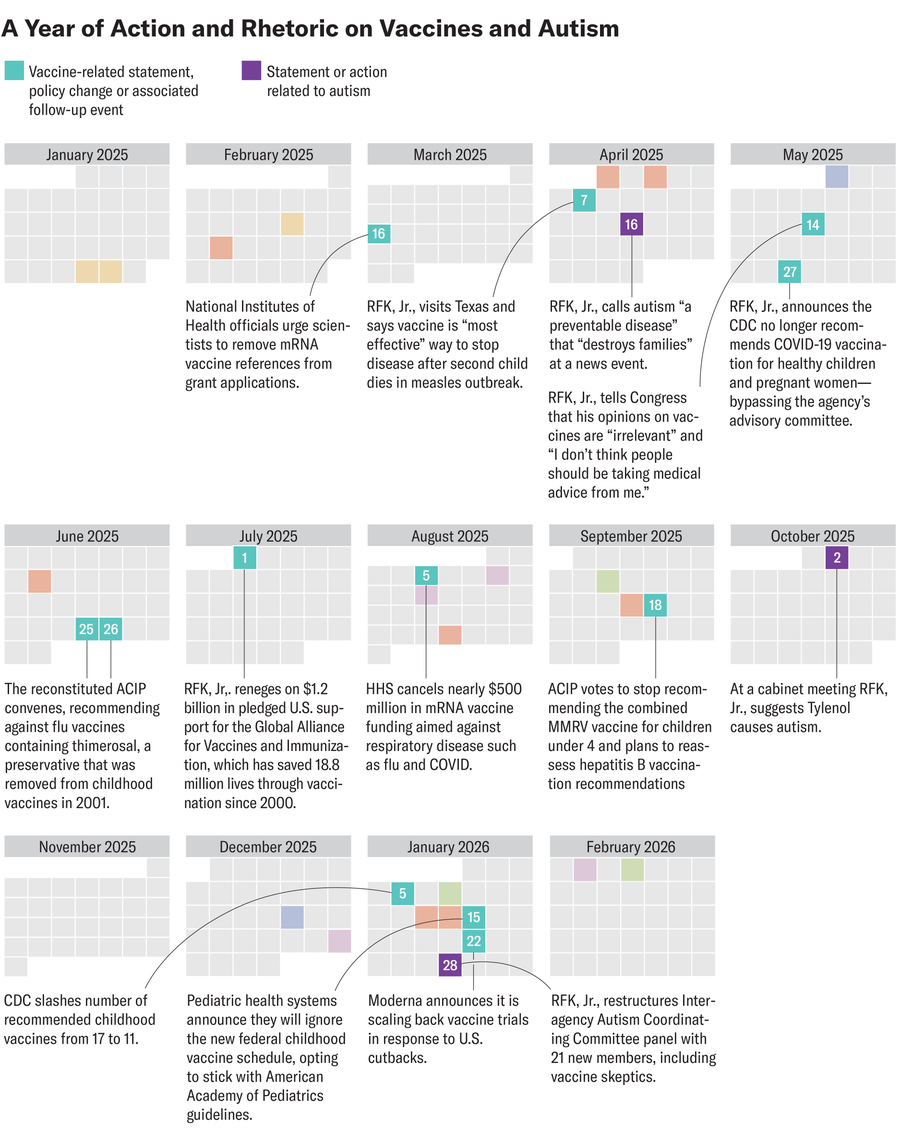
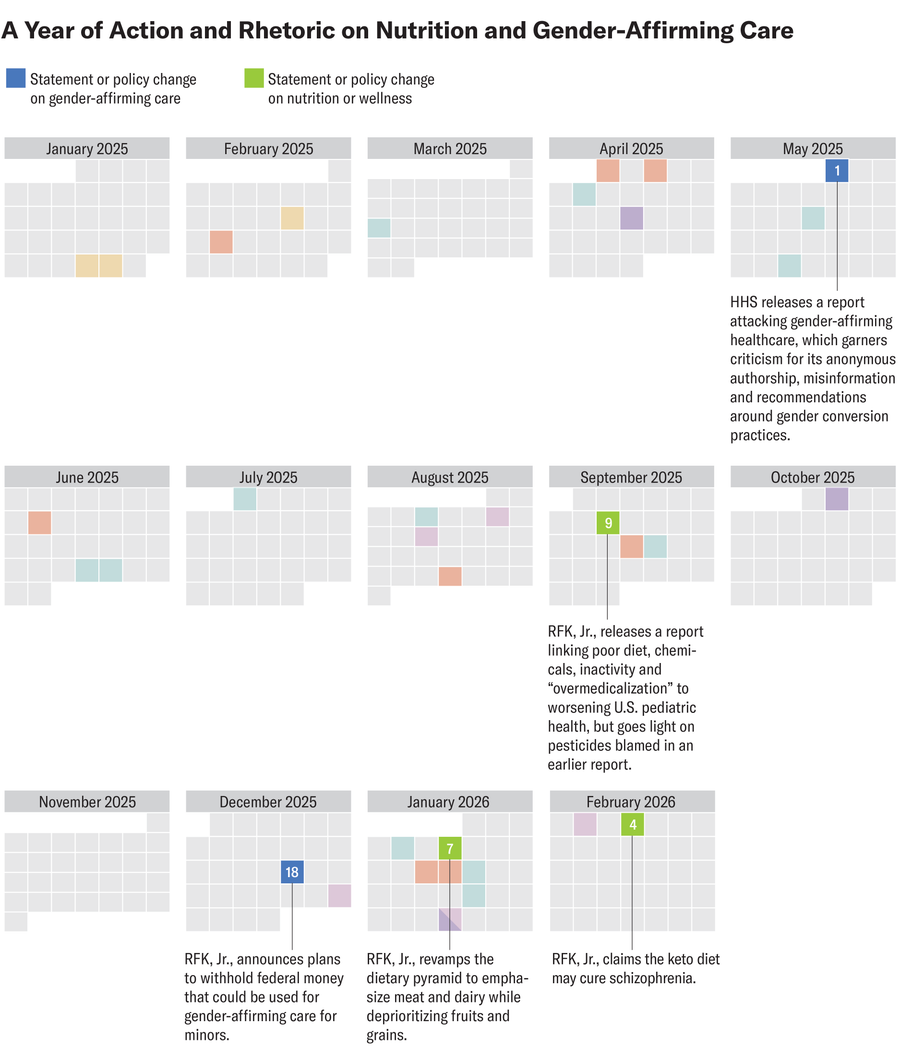



 Diane Ravitch's blog