This is an important development. Our nation needs at least two sensible political parties. A two-party system with vigorous third parties is healthy for our democracy.
When one of our two major parties is captured by an extremists cult, it’s a very bad sign. When that cult revels in cutting ties with our historic allies, in brutalizing immigrants and even citizens who look like immigrants (brown skin color), in sending troops to American cities, in killing people on boats that might or might not be transporting drugs instead interdicting them, in abandoning civil rights laws, and in treating the president as a king to be obeyed and worshipped, that cult is not a normal participant in American politics because it is not bound by the Constitution.
Thus, in my opinion, it is very good news that sane conservatives are abandoning the Heritage Foundation–whose leader was the architect of Project 2025–and joining forces with Mike Pence.
Pence is a conservative through and through, and I disagree with him on most issues. But in 2020, he refused Trump’s direct order to join the insurrection by refusing to certify Biden’s election. Pence certified Biden’s election and was reviled by MAGA for following the Constitution, not Trump. They chanted “Hang Mike Pence” on January 6, 2021, and even built a scaffold outside the U.S. Capitol. Trump shrugged with indifference, and the mob searched for Pence.
More than a dozen staffers at The Heritage Foundation are leaving the conservative think tank to join a nonprofit led by former Vice President Mike Pence as the embattled organization continues to reel from ongoing turmoil.
Advancing American Freedom — founded by Pence in 2021 “to defend liberty and advance policies that build a stronger America” — announced Monday that three senior officials who led the legal, economic and data teams at Heritage would be joining the group next year, along with several members of their teams.
This is good news for the conservative Republican Party and good news for our democracy. Genuine conservatives can’t abide the extremism of MAGA.
I’ll be watching to see what Liz Cheney and Adam Kinzinger do in the future.
It’s typical in American politics that the party that wins the Presidency usually loses the mid-term elections two years later. The other party picks up seats, sometimes enough seats to dominate one or both Houses, enough to stymie the President’s agenda and enough to hold investigations that embarrass the President.
With Trump’s low standing in the polls, the rising cost of living, the backlash against tariffs, and the evident cruelty of ICE, Republicans have worried about an electoral wipeout in November 2026.
Some clever Republican strategist devised a plan to protect the Republican dominance in the House of Representatives. Simple. Persuade red states to redistrict (gerrymander) their Congressional maps, creating more Republican seats while eliminating Democratic seats. This was out of the ordinary, because states usually redistrict every ten years, after the latest census.
Texas Governor Greg Abbott, a loyal MAGAT, was first to act. He pushed through a new map that split up Democratic districts and created five new Republican seats. The U.S. Supreme Court supported the Trump goal, as usual, and approved the Texas gerrymander.
Governor Gavin Newsom of California was quick to respond. He called a referendum that would redistrict the state and produce five new Democratic seats. Newsom’s new map is being changed in the Supreme Court, but it’s difficult to see the Court approving the Texas gerrymander while rejecting California’s.
The administration began pressuring other red state governors to follow the lead of Texas. Some Democratic states set about redrawing their maps.
Indiana is a deep-red state with a Republican supermajority in both houses of the legislature. Republicans hold seven Congressional districts, Democrats only two. Trump wanted those two seats.
The Trump operatives thought the state leaders would quickly fall in line. When they didn’t, the Trump operatives decided to unleash their usual tools: bullying, pressure, threats, intimidation, even death threats. At least 14 Republican state senators received death threats.
INDIANAPOLIS — As the redistricting battle began to pick up steam in Indiana last month, state Sen. Jean Leising’s grandchildren were receiving odd text messages.
Ads from little-known outside groups had spliced the longtime Republican lawmaker’s image next to prominent Democrats like New York Rep. Alexandria Ocasio-Cortez, Illinois Gov. JB Pritzker and California Gov. Gavin Newsom. Some of the messaging was sloppy, referring to Leising as “him.”
A conservative and supporter of President Donald Trump, Leising, 76, was furious. Following months of conversations with her constituents, she felt they were generally opposed to redrawing Indiana’s congressional map ahead of the 2026 midterm elections — even though such an effort would favor her party and was backed by her president. So in mid-November, she fired off a statement making it official: She wouldn’t support it.
“The negative campaigning just put me over the top,” she said in an interview with 13WTHR in Indianapolis, an NBC News affiliate, at the time. “He may wonder why Indiana is struggling to get on board. Well, it’s probably the antics they used.”
It was a sign of things to come. Ultimately, the months of pressure applied by Trump and his supporters from outside of Indiana to pass a redrawn map that would split up the state’s two Democratic districts backfired. On Thursday, Leising joined a majority of Republicans in the state Senate in voting to sink the map in the face of potential future primary challenges, a flurry of online attacks — and in some cases, violent threats.
The result was one of the biggest rejections that Trump, who has otherwise largely ruled over the GOP with an iron fist, has faced since returning to office, and it could cost the party in its bid to preserve its narrow House majority….
“You have to know Hoosiers. We can’t be bullied, we don’t like it,” GOP state Sen. Sue Glick said after voting against the map.
Despite intense lobbying by Trump, JD Vance, and Mike Johnston, Republican leaders in the state were not enthusiastic. They resented the pressure.
When Rodric Bray, the leading Republican in the State Senate, warned that there were not enough votes to pass the new map, Trump lashed out at him. He threatened to run an opponent to Bray, but Bray didn’t tremble because he’s not up for re-election until 2028.
Trump wrote on Truth Social:
“In the entire United States of America, Republican or Democrat, only Indiana ‘Republican’ State Senator Rod Bray, a Complete and Total RINO, is opposed to redistricting for purposes of gaining additional Seats in Congress,” Trump wrote in one Truth Social post of the well-liked Republican leader in the Senate. “The Rod Brays of Politics are WEAK and PATHETIC.”
When the vote shifted to the State Senate, the map was resoundingly defeated, 19-31, with 21 Republicans voting against it.
Trump lost the vote of one State Senator when he called Tim Walz “retards.” The State Senator has a child with Down Syndrome. Others said they would not be bullied.
Trump wants to prove that the election was rigged, despite numerous investigations that concluded it was fair.
He lost. In his mind, he never loses so he will pursue every path that might prove that he won.
The 2020 election was not close.
Biden won 306 electoral votes to Trump’s 232.
Biden won 81,283,501 votes.
Trump won 74,223,975 votes.
The Washington Post reported:
The Justice Department has filed a lawsuit against Fulton County, Georgia, over records related to the 2020 election, escalating the Trump administration’s efforts to boost the president’s false claims that his loss to Joe Biden was rigged.
Citing a need to investigate “compliance with federal election law,” the lawsuit demands Georgia election officials turn over “all used and void ballots, stubs of all ballots, signature envelopes, and corresponding envelope digital files from the 2020 General Election in Fulton County.”
Fulton County officials previously told the Justice Department that those records are sealed and cannot be produced without a court order, according to the lawsuit.
The Justice Department’s lawsuit comes amid increased pressure by President Donald Trump for members of his administration to find evidence of widespread voter fraud in the 2020 election, despite those claims having been repeatedly debunked and dismissed in dozens of cases by the courts over the past five years.
In a statement Friday, Harmeet K. Dhillon, assistant attorney general of the Justice Department’s civil rights division, indirectly and without evidence accused Georgia officials of “vote dilution.”
“States have the statutory duty to preserve and protect their constituents from vote dilution,” Dhillon said. “At this Department of Justice, we will not permit states to jeopardize the integrity and effectiveness of elections by refusing to abide by our federal elections laws. If states will not fulfill their duty to protect the integrity of the ballot, we will.”
Fulton County election officials did not immediately respond to requests for comment. The lawsuit against Fulton County is also in line with Trump’s years-long fixation on voting results in Georgia, where Biden became the first Democrat to win the state since 1992. In January 2021, Trump urged Georgia Secretary of State Brad Raffensperger (R) in a phone call to “find” enough votes to reverse Biden’s win in the state. “All I want to do is this. I just want to find 11,780 votes, which is one more than we have. Because we won the state,” Trump told Raffensperger then.
One evidence of character is the ability to concede loss gracefully.
Trump is a SORE LOSER.
Trump will spend the rest of his life insisting that he won in 2020 despite losing over 60 appeals to courts, which found no evidence of fraud.
His revenge tour is also faltering. James Comey seems to be out of Trump’s reach because the statute of limitations has run out.
Letitia James was indicted for “mortgage fraud” in her first trial, but the indictment was thrown out because of errors by Trump’s hand-picked prosecutor Lindsay Galligan, who previously was Trump’s personal lawyer.
Yesterday a jury in Alexandria, Virginia, refused to indict James.
ProPublica dug up evidence that Trump himself had signed mortgages on two homes next to Mar-a-Lago, claims both as his primary residence, when they were not.
We will see whether the Justice Department goes after a third indictment against New Tork State Attorney General James.
And then there are Senator Adam Schiff and Rep. Eric Swalwell, who are also at the top of Trump’s enemies list.
“It’s not whether you win or lose, it’s how you play the game” is a famous quote often attributed to American sportswriter Grantland Rice, emphasizing that sportsmanship, integrity, character, and effort matter more than the outcome, focusing on fair play and respect for opponents.
When G. Elliott Morris of Strength in Numbers asked ChatGPT to fact-check an article for him yesterday, the chatbot couldn’t get its head around modern America. It told him there were “multiple factual impossibilities” in his article, including his statements that “[t]he current Secretary of Defense is a former talk show host for Fox News,” “[t]he Deputy Director of the FBI used to guest-host Sean Hannity’s show,” and “Jeanine Pirro is the U.S. District Attorney for DC.”
“Since none of these statements are true,” it told Morris, “they undermine credibility unless signposted as hyperbole, fiction, or satire.”
But of course, Morris’s statements were not “factual impossibilities.” In the United States of America under President Donald J. Trump, they are true.
Trump has always been a salesman with an instinctive understanding of the power of media. That sense helped him to rise to power in 2016 by leveraging an image Republicans had embraced since the 1980s: that the reason certain white Americans were being left behind in the modern world was not that Republican policies had transferred more than $50 trillion from the bottom 90% of Americans to the top 1%, but that lazy and undeserving Black and Brown Americans and women were taking handouts from the government rather than working.
When he got his disheartening fact-check from ChatGPT, Morris was preparing an article, published today, exploring “how cable news fueled the culture war and broke U.S. politics.” The article notes that most people care about and interact with the government through economic or affordability issues—prices, jobs, health care, social programs, and taxes—and that most laws are also about these issues. But, he points out, political rhetoric overwhelmingly focuses on issues like race, crime, immigration, LGBTQ+ rights, and guns: the so-called culture war.
Morris highlights a new academic paper by Shakked Noy of the Massachusetts Institute of Technology and Aakaash Rao of Harvard that links America’s culture war to changes in the media in the 1980s. Their research shows that “a distinctive business strategy” in cable news led it to emphasize culture over economic issues. Noy and Rao found that cable emphasizes culture because it “attracts viewers who would otherwise not watch news,” and attracts more viewers than an outlet can find by poaching viewers from other networks that emphasize economic issues. Cable channels have an incentive to produce culture war content, which in turn influences politics, as “constituencies more exposed to cable news assign greater importance to cultural issues, and politicians respond by supplying more cultural ads.”
“In other words,” Morris writes, “when cable news producers decide to cover an issue more, voters subsequently say it is more important to them, and that issue is more predictive of how they’ll vote. TV news coverage, and cable in particular, has the power to choose which issues are most ‘salient’ for upcoming elections.” He notes that “this effect is almost entirely, or maybe even entirely, driven by Fox News,” and that right-wing politicians benefit most from it. Democrats get their highest marks from voters on issues not covered by cable news.
Morris concludes that “more than the Republicans or Democrats, left or right, it’s the companies that abuse our attention for profit that are the real winners of American politics.”
This conclusion echoes a 2006 conversation a reporter for Financial Times held with Fox News Channel founder Rupert Murdoch and chief executive officer Roger Ailes. In that conversation, when asked if running the Fox News Channel was “like running a political campaign,” Ailes responded: “No more than running a Dairy Queen. You have a customer, you have to market it to help them get to your product, the product has to be good, you can’t drop too many on the floor or in the sprinkles or you’ll lose money. All business is basically about customers and marketing and making money and capitalism and winning and promoting it and having something someone really wants.”
Ailes came to the Fox News Channel from his work packaging presidential candidate Richard Nixon in 1968. One Nixon media advisor explained how they could put their candidate over the top by transforming him into a media celebrity. “Voters are basically lazy,” the advisor told reporter Joe McGinnis. “Reason requires a high degree of discipline, of concentration; impression is easier. Reason pushes the viewer back, it assaults him, it demands that he agree or disagree; impression can envelop him, invite him in, without making an intellectual demand…. When we argue with him, we…seek to engage his intellect…. The emotions are more easily roused, closer to the surface, more malleable.”
Ailes presented Nixon in carefully curated televised “town halls” geared to different audiences, in which he arranged the set, Nixon’s answers to carefully staged questions, Nixon’s makeup, and the crowd’s applause. “Let’s face it,” he said, “a lot of people think Nixon is dull. Think he’s a bore, a pain in the ass.” But, carefully managed, television could “make them forget all that.”
Ailes found his stride working for right-wing candidates, selling the narrative that Democrats were socialists who wanted to transfer wealth from hardworking white Americans to undeserving minorities and women. He produced the racist “Willie Horton” ad for Republican candidate George H.W. Bush in 1988, and a short-lived television show hosted by right-wing shock jock Rush Limbaugh in 1992. It was from there that he went on to shape the Fox News Channel after its launch in 1996.
Ailes sold his narrative with what he called the “orchestra pit theory.” He explained: “If you have two guys on a stage and one guy says, ‘I have a solution to the Middle East problem,’ and the other guy falls in the orchestra pit, who do you think is going to be on the evening news?”
This is a theory Trump has always embraced, and one that drives his second term in office. He has placed television personalities throughout his administration—to the apparent disbelief of ChatGPT—and has turned the White House into, as media ally Steve Bannon put it, a “major information content provider.” What Trump does “is the action, and we just happen to be one of the distributors,” Bannon told Drew Harwell and Sarah Ellison of the Washington Post. The administration has replaced traditional media outlets with right-wing loyalists and floods the social media space with a Trump narrative that is untethered from reality. Communications director Steven Cheung says their goal is to create “FULL SPECTRUM DOMINANCE.”
Their attempt to convince Americans to accept their version of reality is showing now in Trump’s repeated extreme version of the old Republican storyline that the economy under him is great and that the country’s problems are due to Democrats, minorities, and women.
Since voters in November elections turned against the Republicans, citing their concerns about the economy, Trump has doubled down on the idea that the idea of “affordability” is a “Democrat con job.” In an interview yesterday with Politico’s Dasha Burns, Trump said he would grade his economy “A-plus-plus-plus-plus-plus.” Any problems with it, he and his loyalists say, stem from former president Joe Biden’s having left them an economy in shambles. But in fact, in October 2024, The Economist called the American economy “the envy of the world.”
As news cycles have turned against his administration on the economy—as well as the Epstein files, immigration sweeps, strikes on small boats in the Caribbean, and his mental acuity—Trump has tried to regain control of the narrative by diving into the orchestra pit. He has turned to an extreme version of the racism, sexism, and attacks on Americans who use the social safety net that have been part of Republican rhetoric for decades. He has gone out of his way to attack Somali Americans as “garbage,” to attack female reporters, and to use an ableist slur against Minnesota governor Tim Walz, whose son has a nonverbal learning disability, prompting imitators to drive by the Walz home shouting the slur.
The fight to control the media narrative is on display this week in a fight over a media merger. As Josh Marshall explained in Talking Points Memo yesterday, the media conglomerate Warner Bros. Discovery, which used to be called Time Warner and includes news division CNN, had agreed to be acquired by Netflix. But, as the deal was moving forward, Paramount Skydance launched a hostile takeover to get Warner Bros. Discovery for itself.
David Ellison, son of right-wing billionaire Larry Ellison, who co-founded software giant Oracle, bought Paramount over the summer and appears to be creating a right-wing media ecosystem dominated by the Trumps. Part of the financing for his purchase of Warner Bros. Discovery would come from the investment company of Trump son-in-law Jared Kushner, as well as from Saudi and Qatari sovereign wealth funds. Paramount told Warner Bros. Discovery shareholders they should accept its offer because Trump would never allow the Netflix deal to happen, and as Marshall notes, Trump appeared yesterday to agree with that suggestion.
The Paramount merger gave Ellison control of CBS, which promptly turned rightward. At stake now is CNN, which Netflix doesn’t particularly want but Paramount does, either to neuter it or turn it into another version of Fox News. Joe Flint, Brian Schwartz, and Natalie Andrews of the Wall Street Journal reported that Ellison told Trump he would make “sweeping changes” to CNN if Paramount acquires Warner Bros. Discovery. The Wall Street Journal reporters note that “Trump has told people close to him that he wants new ownership of CNN as well as changes to CNN programming.”
During the Gilded Age, a similar moment of media consolidation around right-wing politics, a magazine that celebrated ordinary Americans launched a new form of journalism. S.S. McClure, a former coffee pot salesman in the Midwest, recognized that people in small towns and on farms were interested in the same questions of reform as people in the cities. He and a partner started McClure’s Magazine in 1893 and in 1903 published a famous issue that contained Ida Tarbell’s exposé of the Standard Oil Company, Lincoln Steffens’s exposé of the corruption of the Minneapolis municipal government, and Ray Stannard Baker’s exposé of workers’ violence during a coal strike.
Their carefully detailed studies of the machinations of a single trust, a single city, and a single union personalized the larger struggles of people in the new industrial economy. Their stories electrified readers and galvanized a movement to reform the government that had bred such abuses. McClure wrote that all three articles might have been titled “The American Contempt of Law.” It was the public that paid for such lawlessness, he wrote, and it was high time the public demanded that justice be enforced.
“Capitalists, workingmen, politicians, citizens—all breaking the law, or letting it be broken. Who is left to uphold it?” McClure asked. “The lawyers? Some of the best lawyers in the country are hired, not to go into court to defend cases, but to advise corporations and business firms how they can get around the law without too great a risk of punishment. The judges? Too many of them so respect the laws that for some ‘error’ or quibble they restore to office and liberty men convicted on evidence overwhelmingly convincing to common sense. The churches? We know of one, an ancient and wealthy establishment, which had to be compelled by a Tammany hold-over health officer to put its tenements in sanitary condition. The colleges? They do not understand.”
“There is no one left,” McClure wrote, “none but all of us.”
On the bad side, the U.S. Supreme Court overruled a lower court, which had paused Texas’s disgusting gerrymander of the state’s Congressional districts. The party that wins the Presidency usually loses seats in the midterm election. To avoid that happening, Trump asked red state governors to redraw their districts, something that usually happens every ten years, after the latest census.
Texas Governor Greg Abbott was quick to respond to Trump’s request. The MAGA legislature drew a racially gerrymandered map intended to produce five new Republican seats by sacrificing districts that are currently represented by Black or Hispanic members of Congress.
A lawsuit to block the gerrymander lost in the District Court, won in the Appeals Court, which saw the ploy for what it was: a racial gerrymander. Yesterday the U.S. Supreme Court overruled the Appeals Court, finding nothing wrong with a racially gerrymandered redistricting, produced only five years after the last census.
The high court proved once again that it is an extension of Trump-MAGA, lacking in any principles or in fidelity to the Constitution or prior decisions.
We wait to see what they do to California’s gerrymander–not racially motivated–but produced to nullify Texas’ gerrymander.
There is also good news.
As is well known, Trump directed his Attorney General Pam Bondi to prosecute his political enemies–starting with James Comey, Letitia James (Attorney General of New York), and Senator Adam Schiff.
The first indictment of Comey and James was thrown out because the U.S. Attorney, Lindsey Halligan, was unqualified.
Charges were promptly refiled against James, claiming that she committed mortgage fraud, by saying that a home she purchased in Virginia was her first home, when it was really a second home, enabling her to pocket $18,000 because of a lower borrowing rate. Coming from an administration whose leaders have pocketed billions, this is funny.
The first prosecutor thought the case was so flimsy that he refused to bring charges. Trump installed Lindsey Halligan, one of his many personal attorneys, as U.S. Attorney. Galligan got a grand jury to indict James, but a judge threw out the indictment because Halligan was unqualified and made many errors.
When the charges against Tish James were brought to another grand jury, they refused yesterday to indict James.
Trump will no doubt continue to harass his enemies, but he’s running low on personal attorneys.
Maybe I’m fascinated in this meeting because I live in NYC, but mostly I’m fascinated for what this meeting shows about Mamdani and Trump.
Jonathan Larsen wrote on his Substack blog (whose name is unprintable on this blog):
It was built up as the next Rumble in the Jungle. The Ado on Pennsylvania Avenue, or something. But CNN ended up calling it “bizarrely chummy.” Or, in British speak, “surprisingly cordial,” as the BBC put it.
It actually wasn’t bizarre. Professional journalists shouldn’t have been surprised and should be embarrassed to admit they were. After all, New York City Mayor-elect Zohran Mamdani asked for Friday’s meeting with Pres. Donald Trump.
Trump, obviously, agreed. Setting the meeting without being open to cordiality and chumminess is what would be bizarre and surprising. But even with that in mind, the extent of Trump’s cordial chumminess was, admittedly, remarkable.
Trump ended up beaming in pictures with Mamdani on the same day he gave Rep. Marjorie Taylor Greene (R-GA) a kick in the ass as she headed out the door.
“It was a great honor meeting Zohran Mamdani, the new Mayor New York City!” Trump posted afterward, erasing still Mayor Eric Adams.
On point after point — communism, Israel, crime — Trump without a second thought brushed off right-wing and centrist-Democratic priorities and fear-mongering and even his past bellicosity.
Along the way, Trump explicitly tossed a Republican ally under the bus, essentially saying she’s lying about Mamdani because, hey, campaigning, amirite?
The meeting itself was peppered with more Trump positivity than any one media account conveyed, so I broke down all the Trump love for Mamdani into categories1:
Defending Mamdani
On Mamdani calling him a despot: “I’ve been called much worse than a despot, so it’s not, it’s not that insulting, but maybe — I think he’ll change his mind after we get to working together.” The whole exchange is worth watching:
•“That’s another thing I think we have in common, we want to see peace in the Middle East.”
•Trump: “You said a lot of my voters actually voted for him and—: Mamdani: “One in ten.” Trump: “—and I’m OK with that.”
•“He may have different views, but in many ways, you know, we were discussing when [Sen.] Bernie Sanders [I-VT] was out of the race. I picked up a lot of his votes and people had no idea because he was strong on not getting ripped off in trade. And lots of the things that I’ve practiced and been very successful on — tariffs, a lot of things — Bernie Sanders and I agreed on … But no, I feel very comfortable, I would be, I would feel very, very comfortable being in New York [under Mayor Mamdani] and I think much more so after the meeting.”
•“I think you’re going to have hopefully a really great mayor. The better he does, the happier I am.”
•“We had some interesting conversation and some of his ideas really are the same ideas that I have.”
•Q: “Would you feel comfortable living in New York City under a Mamdani administration?”
Trump: “Yeah, I would. I really would, especially after the meeting, absolutely. …We agree on a lot more than I would have thought.”
•“I think he’s different, all right? I think he’s different and that can be a very positive way. But I think he’s different than — you know, your typical guy; runs, wins, becomes mayor maybe and nothing exciting — because he [Mamdani] has a chance to really do something great for New York. New York is at a very critical point and he does need the help of the federal government to really succeed and we’re going to be helping him. But he’s different than, you know, your average candidate. He came out of nowhere. I said — he has a great campaign manager standing over there — he came out of, he came out of nowhere. What did you start off at, one or two? And then — I watched, I said, who is this guy? — he was at one, then he was at three, then he was at five, then he was at nine. Then he went up to 17. I said, that’s getting a little bit interesting, right? And then all of a sudden he wins the primary that nobody expected he was going to win. It’s a great, a great tribute. I mean, it’s an amazing thing that he did.”
That last one is where you can really see one of the pillars on which Trump’s obvious affection for Mamdani lies. He won. He beat the insiders, the ones who care about norms and tribal alliances.
It’s hard not to suspect that Trump’s affection for Mamdani was heightened by the fact that Mamdani beat disgraced former Gov. Andrew Cuomo (D-NY) even after Cuomo’s last-minute endorsement from Trump himself. Rejecting Media Bullshit
While Mamdani frequently ignored or instantly pivoted from questions premised on Let’s You and Him Fight, Trump, too, swatted away questions to avoid areas of conflict. Look at the previous exchange about being a despot. Trump rescued Mamdani by stipulating that the media don’t get it.
Q: “Are you affirming that you think President Trump is a fascist?” Mamdani: “I’ve spoken about—” Trump: “That’s OK. You could just say yes.” Mamdani: “OK.” Trump: “It’s easier — it’s easier than explaining it. I don’t mind.”
Later, again, Trump refused to take the bait and handed off to Mamdani, who immediately ran with it, where he wanted to go. Amazingly, this question was about Trump’s opinion on Mamdani vowing to arrest Israeli Prime Minister Benjamin Netanyahu to face the international charges against him, something of huge importance to much of Trump’s base.
Since I’m tired of copying what Larsen wrote, I urge you to open the link.
The best part is that Larsen points out that Trump stabbed Elise Stefanik in the back. Stefanik is running for Governor against Kathy Hochul. Hochul endorsed Mamdani. Neither Chuck Schumer nor Hakeem Jeffries did, to avoid offending orthodox Jewish voters or the Wall Street crowd and powerful corporate interests.
Stefanik has been running TV ads based on terrifying voters about Mamdani, portraying him as a Muslim who will impose Sharia law and do all the horrible things to Jews and women that terrorists do.
But Trump really liked him! They have a bromance going.
Stefanik should join the Marjorie Taylor Greene club. Another MAGA woman tossed aside like a squeezed lemon.
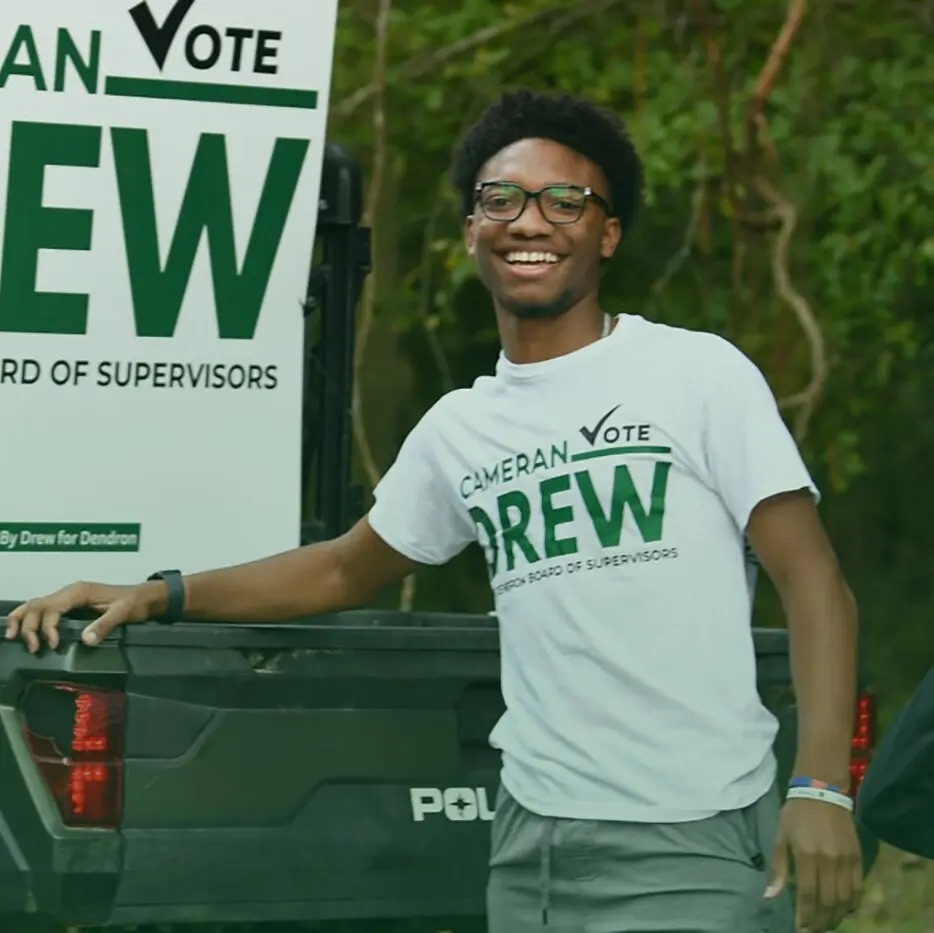
In the recent election in Virginia, 19-year-old Cameron Drew ran for a seat on the Surry County Board of Supervisors and won by a mere 10 votes. Even more interesting, the candidate he beat was his high school teacher of civics, history, and government.
Drew won 345 votes. His former teacher, Kenneth Bell, received 335.
The New York Times wrote:
The election, to represent the Dendron district, wasn’t contentious. In fact, Mr. Drew said he remained “very close” with his former teacher, fondly recalling that Mr. Bell twice took him to Richmond to shadow lawmakers. Mr. Bell, for his part, said he was “over the moon” when he found out who he would be running against.
“He’s the type of student that if teachers could have a little cloning machine in their classrooms to duplicate, he would be all over the place,” Mr. Bell said.
Surry County, with a population of about 6,500, is in a rural area of southeastern Virginia between Richmond and Norfolk. The five members of the county board serve four-year terms.
A seat opened up in July when a board member resigned, and both Mr. Bell and Mr. Drew raised their hands for an interim appointment. The board seated Mr. Bell. Mr. Drew then gathered the 125 signatures needed to get on the ballot for Tuesday’s special election.
Kenneth Bell was appointed to a vacant seat on the Surry County Board of Supervisors earlier this year.Credit…Kenneth Bell
“I saw that the youth wasn’t always taken care of or just appreciated, so I was like, ‘Hey, it’s time for me to step up,’” said Mr. Drew, who is studying business administration at Virginia Peninsula Community College in Hampton, Va.
He made direct-to-camera appeals to voters on Instagram, dressed in a suit and positioning himself as someone “who’s looking to move Surry forward, while retaining our rural charm,” as he put it in one post…
Mr. Bell said that, because of his affection for Mr. Drew, he didn’t campaign aggressively.
Mr. Drew reported spending $2,295 on his campaign, according to the Virginia Public Access Project, a nonpartisan group that tracks voting data. Mr. Bell spent nothing.
Mr. Bell and Mr. Drew, neither of whom ran on a party line, largely agreed on the issues and held just one joint town hall-style forum. Describing himself as a philanthropist, Mr. Drew told the audience, “It’s time to bring young minds to the table.”
The campaign centered on local issues, though some, such as affordable housing, have resonated nationally. Mr. Drew focused particularly on how to incentivize young people to stay in the area.
On election night, Mr. Drew was at a watch party for a mentor of his, Kimberly Pope Adams, who flipped a seat in the House of Delegates, helping Democrats increase their majority.
On the Virginia elections website, Mr. Drew saw that he had eked out a victory — a moment he called “surreal.” Mr. Bell called to concede. They had a pleasant five-minute conversation.
“He was like, ‘If you ever need anything from me, just let me know,’” Mr. Drew said. “He was, once again, still the supportive person he has always been.”
Mr. Bell said there was “not a sad bone in his body” that he lost.
“I have found that is not the answer people in our community want me to give,” Mr. Bell said. “I think everybody wants me to be in a depression and sad. It’s because I know Cameran and I know the quality of a person that he is. And so I can’t be sad.”
Ohio’s public schools have been victimized repeatedly by its Republican legislatures and governors. Charter schools, online schools, and vouchers have ripped off taxpayers and siphoned funds from public schools.
Last week, public school voters said enough.
At the national level, the 31 candidates field by the rightwing Moms for Liberty were defeated. Every one of them.
In cities large and small around Ohio, conservative incumbents who ran for school boards on culture war agendas lost re-election. Outside candidates struggled as well. While off-year elections are quirky, some see ebbing political strength in anti-LGBTQ+ politics.
It was a very good day for public schools in Ohio!
Josh Cowen is a prominent scholar of education policy. He spent 20 years as a voucher researcher and eventually concluded that vouchers are a failure. In every state that adopted and expanded vouchers, he found, the overwhelming majority of vouchers were claimed by parents whose children were already enrolled in private and religious schools or home-schooled. The small proportion of students who transferred from public schools to nonpublic schools experienced academic decline.
In his new Substack newsletter, Josh interviewed Gina Hinojosa, who is running for Governor of Texas in the Democratic primary. She has broad support in the party. Whoever wins will face Greg Abbott, who is running for an unprecedented fourth term. Abbott is a Trump man whose only goal is to cut taxes and enrich his billionaire pals, while ignoring the general welfare of the state’s people.
Here is the interview.
Today we’re launching a special feature of this newsletter—a series of spotlight interviews with political candidates, authors, and other public figures across the country. These interviews are going to be in a short, 5-Question format that I hope lets you get to know each person in a way that makes you want to know more.
First up: Gina Hinojosa. Rep. Hinojosa is a five-term state legislator in Texas, and the frontrunner for the Democratic nomination to take on Governor Greg Abbott.
I’m doing this interview just after Abigail Spanberger and Mikie Sherrill won huge margins in their race for the governorships in Virginia and New Jersey, respectively. Both—and especially Spanberger—made renewing and reinvesting in public schools a central piece of their campaigns, to go alongside affordability and health care as major issues in their states.
A recent poll by the Texas Politics Project at UT-Austin, shows Gina Hinojosa poised to join them: Governor Abbott’s approval ratings are at a dismal 32%, with 36% of Texas saying the state is headed in the wrong direction.
Over the weekend, Gina appeared with California Governor Gavin Newsom at a Houston rally to celebrate the passage of Proposition 50 in Newsom’s state—a direct response to Abbott’s redistricting scheme in Texas.
Rep. Hinojosa has been endorsed by a vast array of Democrats and other community leaders across Texas, including both her colleague Rep. James Talarico and former Congressman Colin Allred, who are competing against each other for the Democratic nomination for the U.S. Senate.
Here’s why Gina Hinojosa is running to reverse three decades of GOP control in Texas, and why 2026 is the year for her to do it.
State Rep. Gina Hinojosa (D) is running for governor in Texas (photo: Rep. GinaHinojosa).
1.) Hi Rep. Hinojosa. Thanks for taking a few minutes here. You’re running for governor of Texas. Obviously you’re running to serve Texans, but what do think people everywhere ought to know about who you are and why you’re running?
I never wanted to run for office. In fact, I made my husband promise to never run for office before we got married. But when my son was in kindergarten, his school was threatened for closure. I got angry. Several other inner-city schools were also on the chopping block. As part of a movement to save our schools, I ran for my local school board and won. We saved our schools for the moment. On the school board, I realized that schools would be under constant threat of closure so long as the state kept withholding funding from our neighborhood schools. So I ran for the Texas House, and I won. Once there, I was able to lead on negotiations to win a substantial increase in school funding–but that happened only because Governor Abbott was forced to focus on the real needs of Texans after a 2018 wave election for Democrats. After the 2020 election when Democrats underperformed, the priorities shifted back to the monied interests and schools came under increased pressure, culminating with the passage of a $1 billion school voucher bill this year. It’s no coincidence that Governor Abbott received a $6 million campaign contribution from an out-of-state billionaire who supports privatization. I realized that we would never have the Texas we deserve so long as we have a governor who can be bought. Texas needs a Governor who is for the people, not the billionaire class.
2.) You and I met when I came to Texas during the voucher fight—Governor Abbott took a bunch of money from out-of-state billionaires to ram school vouchers into your state. You were a leader in the fight to stop him, and although they were able to finally force voucher onto Texas families, I think there’s a lot for political candidates to learn from the success you did have standing up to Abbott and those billionaires for so long. What lessons did you take away from that fight?
We beat back Governor Abbott’s voucher scam in 2023 and that fight taught me that we can have powerful cross-party alliances when we focus on what is most important, our kids. I was proud to work with Texans from all parts of the state, both Democrats and Republicans, to beat back Governor Abbott’s voucher scam. We formed strong alliances that persist to this day. One night in a meeting that went late, I was talking to a Republican woman who had travelled to Washington on January 6th in support of President Trump. We came to the realization that we were being divided by culture wars and social issues that were a distraction from the real issue: the taking of our taxpayer dollars to line the pockets of the well-connected, rich elite. Once you see this, you can’t unsee it.
3.) Folks across Texas and all over the country also know your name from the redistricting fight—which Abbott started almost as soon as he was done pushing vouchers through. You and your colleagues had to leave the state at one point to try to stop him. Was there ever a point you wanted to just give up, go home, leave the fight to someone else?
I will admit feeling a certain frustration and exhaustion after 5 terms in the Texas House and in the trenches on every big, state fight that has mattered in the last 10 years. But rather than give up, I have shifted my focus and my fight to this run for governor. For me it’s not about giving up, but about finding my place. In this moment in history, many of us are trying to find our highest, best use. Once you find it, I believe the work gives energy rather than depletes.
4.) Like we do in my home state of Michigan, Texas has a big governor’s race and key campaigns like a tough Senate contest. I worry that there’s kind of an information overload right now for ordinary folks. How do you want voters—and frankly, donors—to think about which campaigns they should be paying attention to, and why the Texas governor’s race is one of them?
Great question. Here’s why our race for governor in Texas in 2026 should be the priority for every American. By the end of this decade, in a little more than 4 years, the Brennan Center predicts that Texas will gain 4-5 new congressional seats because of population growth that is expected to be reflected in the 2030 Census. Texas will be taking those congressional seats from Democratic-majority states like California. What this means is if Texas doesn’t flip blue by the end of the decade, there will not be Democratic control of Congress for a generation. And because congressional seats equate to electoral votes, the same is true for the presidency. If Texas does not flip blue before the end of the decade, there will not be a Democratic United States President for a generation. That’s just math. A Democratic governor of Texas can insist on fair maps and veto any maps aimed to silence the will of the voters. Recent history tells us that this midterm after Trump’s re-election is our best chance to make gains for Democrats. The 2018 midterm after Trump was elected the first time, Democrats swept in Texas. Democrats won 12 seats in the Texas House and made additional gains across the state without national “battleground” funding. This time we must be ready. The fate of the Union depends on it.
5.) What didn’t I ask about you, or your campaign, that you’d like folks in Texas and across the country to know heading into 2026?
We are in a moment in history. Not of our choosing, but it chose us. This moment doesn’t care that we are tired or scared. What happens in our country at this moment will determine whether or not our children inherit a country where they will live free and be able to pursue their dreams and happiness. The stakes couldn’t be higher and there is no escaping from that reality. What we can do is find and join collective efforts dedicated to meeting the moment. We can find support and camaraderie in these efforts. We are very fortunate that there are so many dedicated to doing what is good and right. In fact, I still believe that most Americans are committed to the greater good. (Ignore social media!) Get out there! Meet each other. There is power when we come together and there is peace of mind in asserting that power.
Bonus question: I don’t know any candidates with time to watch TV these days, but give this a shot: which show have you seen or streamed lately that you’re excited about—or can’t wait to check out one day ?
I love The Diplomat on Netflix! My favorite character is Hal.
For the record: I also love The Diplomat, though my favorite character is Todd.
In addition, Colorado’s Governor Jared Polis is an enthusiastic supporter of charter schools, having opened two himself. Michael Bennett, one of the state’s U.S. Senators, is also a champion of charters, a former superintendent of the Denver public schools, and plans to run for governor. The mayor of Denver, Mike Johnston, is a former Teach for America activist and state legislator, who supports charter schools and authored a harsh teacher evaluation bill.
Mike DeGuire, former principal in Denver Public Schools, uncovered the dark money supporting the “reform” candidates. They include billionaires Philip Anschutz, the richest man in Colorado, Reed Hastings of Netflix, and John Arnold, former Enron trader.
Despite this lineup of big money and political heavyweights, the public in key districts chose their public schools.
She writes:
Swoosh — that’s the sound of money flushed down the toilet by Denver Families Action on their expensive-but-weak candidates for Denver Public Schools Board of Education. Bravo — that’s the sound of praise from Denver voters for Denver’s public-school teachers.
The mission of Denver Families Action led by Clarence Burton and Pat Donovan was to flip the Denver Board to a pro-choice, pro-charter majority. Many experts in the public-education sector see pro-choice advocacy as a lead-in to school vouchers.
In Denver, charter schools essentially serve the purposes of private school voucher programs. These schools and networks get tax dollars to operate their schools but have private, unelected school governance. The oversight of hundreds of millions of public dollars spent by these charters is at stake. Wealthy elite donors plunk down additional millions of dollars to support these education programs with accompanying tax write-offs.
Meanwhile, DPS had to close neighborhood schools recently due to low population and dropping revenues. The disruption from these school closures played out in Xochitl Gaytán’s southwest District 2. Gaytán was the only incumbent endorsed by the Denver Classroom Teachers Association. She is on record as rejecting future neighborhood school closures. She defeated her Denver Families’ opponent 57% to 42%, a big number with a big message.
Amy Klein-Molk ran against former district employee Alex Magaña in a head-to-head for the at-large board seat. Magaña had an ongoing dispute with DPS Superintendent Alex Marrero over the administration of Beacon innovation network of middle schools. Marrero found mismanagement and acted to dissolve the network. Beacon sued the district and lost. Klein-Molk crushed Magaña 55% to 44%, a nice 11-point spread.
Further confounding school district elections, Douglas County voters turned out its conservative majority. The “community not chaos” slate will seek to refocus the district away from contentious political issues, of which there are many and good luck with that. The slate emphasized teacher recruitment and retention based on a stable, positive work environment. Like other metro area districts, declining enrollment in older neighborhoods and increasing populations in newer neighborhoods create important, bottom-line challenges around opening and closing schools.
Pueblo County put up a split decision in its hotly contested school board races pitting public teacher-backed, public school-supporting candidates against parents rights, Christian education-oriented conservatives. In District 60, one candidate from each side won. In District 70, two public-school supporting candidates won and one non-aligned candidate took a seat.
In resounding support for providing good nutrition for school children, voters across the state supported propositions LL and MM. State residents on the high end of income, $300,000-plus, will contribute more tax dollars to the food-for-all school meals program by reducing state income tax deductions. This change will produce $95 million to fill the funding gap in the nutrition program.
What’s interesting about this result is 785,000 voters said NO to the tax increase in MM, or 35%. About 8% of Colorado taxpayers earn more than $300,000 per year, so quite a few people voted to allow wealthier individuals to keep their charitable contributions at the higher level. That’s the base of people against any tax increases for any reason.
Based on these overall results, several implications emerge where public education connects with taxation and the 2026 governor election connects to public education policy.
Great Ed Colorado and other groups will seek to offer a tax initiative of some sort to bring more money into the state’s school finance budget. The school nutrition vote put 65% of voters into the “we will nourish the kids with food” camp. It’s unknown whether nourishing kids with food also extends to nourishing kids with learning.
The governor’s race between U.S. Sen. Michael Bennet and Attorney General Phil Weiser contains the public education and tax increase intersection. The Taxpayer’s Bill of Rights, TABOR, creates much of Colorado’s taxation and state finance problems. The federal government’s animus to our state politics puts another kink into how Colorado can fund Medicaid, public schools, and an array of other needs adequately.
Sen. Bennet has received gobs of campaign money from wealthy east coast and west coast money-people who support school choice, charters and probably vouchers. Their preference is for public schools to turn charter or, better yet, private. Sen. Bennet will have to explain exactly how that will work in Colorado. Does he want more than $10 billion in public tax dollars to move to oversight by unelected charter boards with schools presenting curriculum that doesn’t meet state standards? Will he support changes to TABOR to bring in more tax dollars for school finance?
Attorney General Weiser will have to address the same questions with concrete offers. Right now, he supports a “livable wage” for teachers and down-payment assistance for teachers to live where the teach. He will “stand strong” for public schools and against privatizing. But will he go after TABOR reform and counter lack of transparency in charter-school governance?
This election gives hints. Voters supported the public in public schools and providing students with nourishment to flourish in school. The next election will decide whether public schools will flourish in teaching and learning as well.
Paula Noonan owns Colorado Capitol Watch, the state’s premier legislature tracking platform.



 Diane Ravitch's blog