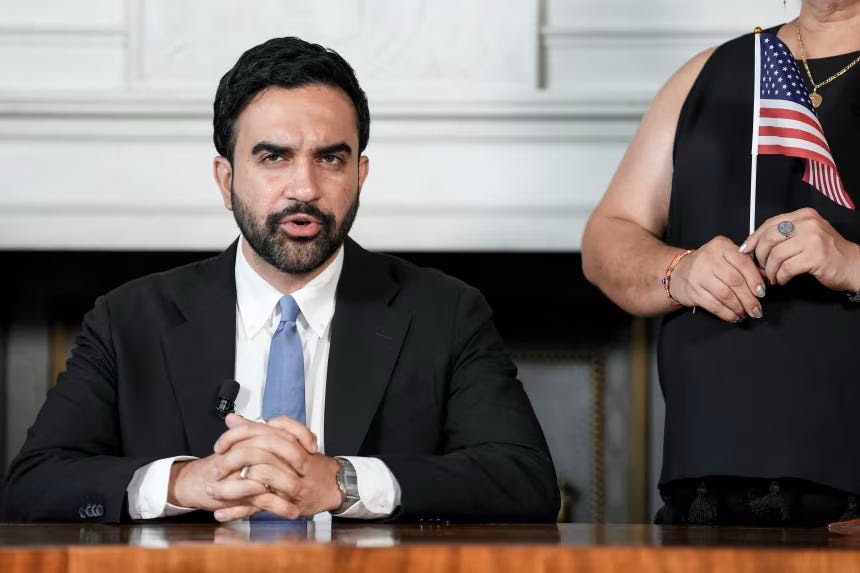
On this day in 2022, Vladimir Putin launched an unprovoked invasion of the sovereign state of Ukraine. He expected to encounter token resistance, but the Ukrainians fought back fiercely. For four years, the brave Ukrainians have held back the Russian onslaught.
Russia aimed its barrage of missiles and drones at apartment buildings, schools, hospitals, train stations, shopping centers, power plants–all civilian targets. The Russian onslaught conquered territory but at a high price in Russian men (about one million) and vast amounts of tanks, airplanes, weapons, and supplies.
Writing on Substack, Marius Didziokas disparaged the view that Russia is winning:
Imagine that, four years after invading Poland, Hitler’s troops were bogged down fighting over unnamed villages 80 kilometres from the border. The Bismarck and half of the German navy would be lying at the bottom of the Baltic Sea. Polish drones and missiles would be raining down on Berlin’s refineries and weapons factories throughout the Reich. This is Russia today.
Some victory!
Paul Krugman is also skeptical about Russia’s “success.” As he notes, Biden made a terrible miscalculation in limiting Ukraine only to defensive measures, not permitting them to strike back at Russian targets. Putin’s threats of nuclear retaliation were a bluff.
Vladimir Putin invaded Ukraine on February 24, 2002. Putin expected a quick Russian triumph — reports are that he expected the Ukrainians to fold in days. He never said “three days,” but this meme has become shorthand for his belief that it would be a walkover. Western military analysts who had bought into propaganda about Russia’s military strength shared his assessment.
U.S. right-wingers were especially enthralled with what they perceived as the toughness, masculinity, and anti-wokeness of Russian soldiers.
But Putin’s dream of a short, victorious war has turned — as such dreams usually do — into a long nightmare of blood, destruction and humiliation. Ukrainian courage and Russian incompetence — combined with the effectiveness of British and American man-portable weapons — ensured that the attempt to seize Kyiv became an epic debacle. The three-day war is about to enter its fifth year.
I am not a military expert. But I pay attention to those who are — especially Phillips O’Brien, who has been far more right about this war than anyone else I know. Furthermore, the future of the war will depend greatly on an issue I do know something about, Europe’s ability to provide Ukraine with the support it needs. So I thought I would use the fourth anniversary of the beginning of the war to talk about where we are right now.
First, about the military situation. The maps at the top of this post show how the area of Ukraine under Russian control — shaded pink — has changed over the past year. You may ask, whatchange? Exactly. The Ukraine war isn’t like World War II, in which breakthroughs could be exploited by armored columns sweeping into the enemy’s rear. It’s a war in which the battlefield is swarming with drones, where there isn’t even a well-defined front line, and the “kill zone” within which even armored vehicles are basically death traps is many kilometers wide.
Some observers still don’t understand how the reality of war has changed. Thus there have been breathless reports about the danger Ukraine would face after Russia seized the “strategic city” of Pokrovsk since July 2024. Russian forces finally entered Pokrovsk late last year and may now occupy most of the rubble. But it made no difference.
This reality shows how idiotic it is for the U.S. Department of Defense — sorry, Department of War — to decide that its mission is to embrace a “warrior ethos.” Bulging biceps and macho posturing won’t help you prevail in modern war, while bombastic stupidity is a good way to get many soldiers killed.
So if modern technology has turned war on the ground into a bloody stalemate — much bloodier for Russia than for Ukraine, but still indecisive — what will determine victory and defeat? The answer, which has been true in most wars, is that it will come down to resources and logistics.
If this were purely a conflict between Russia and Ukraine, the Ukrainians, for all their heroism, would be doomed. Russia, after all, has four times Ukraine’s population and ten times its GDP.
But Ukraine has powerful friends.
For the first three years of the war, the United States was the most important of these friends. Indeed, Ukraine wouldn’t have been able to resist Russia without U.S. aid.
Unfortunately, top Biden officials were too cautious. They didn’t want Putin to win, but they clearly lost their nerve at the prospect of outright Russian defeat. So they slow-walked aid and kept putting restrictions on the use of U.S. weapons. Without those restrictions, Ukraine would have been able to hammer Russian rear areas, and this war might well have ended in its first year.
As it was, Ukraine was able to hang on but not triumph. And now we have a U.S. president who clearly wants to see a Russian victory. He’s unwilling or unable to openly throw America’s weight behind Putin, but he has effectively cut off all U.S. aid to Ukraine. That’s not hyperbole. Here are the numbers:
This is a betrayal of everything America used to stand for. We’re witnessing a war between freedom and tyranny, between an imperfect but decent government and a monstrous mass murderer — and the U.S. government is de facto backing the tyrannical monster.
Yet despite Trump’s pro-Putin policy, Ukraine is still standing, while Russia’s year-long offensive has been a bloody failure. While Trump may have thought that he could discreetly hand Ukraine over to Putin, it turns out that he didn’t have the cards.
Crucially, as you can see from the chart above, Europe has for the most part stepped up to the plate, replacing most of the lost aid from the United States. True, some of the military aid takes the form of U.S. weapons purchased by European nations and transferred to Ukraine. In particular, there is still no good alternative to Patriot air defense systems. And the Trump administration has been stalling some military deliveries even though Europe is paying.
But European — and, increasingly, Ukrainian — arms production has been ramping up. One indicator of European potential for arms manufacturing is that U.S. officials have gone ballistic over proposed buy-European provisions in Europe’s ongoing military buildup and threatened retaliation. This is quite rich: America in effect reserves the right to use its control over weapon systems to hobble other countries’ military efforts — on behalf of dictators the president likes — but is furious at any attempt to reduce dependence on those systems.
But does Europe have the resources to ensure Ukrainian victory without the United States? Mark Rutte, a Dutch politician who is currently secretary-general of NATO, made waves last month when he told people who believe that Europe can defend itself against Russia without the United States to “keep on dreaming.” One sees similar declarations of helplessness from some other Europeans. But it’s really difficult to see where this defeatism is coming from. Combined, the economies of the European nations that have strongly supported Ukraine are vastly larger than Russia’s:
Source: International Monetary Fund
It’s true that Europe has in the past had great difficulty acting like the superpower it is. But that may be changing.
So, how will this war end? Russia’s strategy now appears to be to terror-bomb Ukraine into submission, but as far as I know that has never worked. The more likely outcome is that European aid and Ukraine’s own growing prowess in arms production will gradually shift the military balance in Ukraine’s favor, and that Russia’s war effort will eventually collapse.
I hope that’s how it turns out. But even if it does, shame on America, for betraying a valiant ally.
Robert Reich shared Jesse Jackson’s speech to the Democratic National Convention on July 19, 1988. At that time, Jackson sounded like a radical to some people. He spoke forthrightly, succinctly, and plainly.
Today, nothing in his speech sounds remotely radical. It sounds like common-sense, like the words that you expect to hear from every Democratic candidate and even some Republicans.
He was, at the time, a visionary.
And yet today, the bedrock ideas he espoused are under challenge by the Trump administration. Trump wants to roll the clock backwards, back to the 1920s, when white men ran everything.
Jesse Jackson looked forward and saw a better America coming into view.
Now it’s up to us to recapture and restore that better vision of America, one where everyone can live in dignity.
Jesse Jackson said:
Tonight, we pause and give praise and honor to God for being good enough to allow us to be at this place, at this time. When I look out at this convention, I see the face of America: Red, Yellow, Brown, Black and White. We are all precious in God’s sight – the real rainbow coalition.
(Applause)
All of us – all of us who are here think that we are seated. But we’re really standing on someone’s shoulders. Ladies and gentlemen, Mrs. Rosa Parks. (Applause) The mother of the civil rights movement. [Mrs. Rosa Parks was brought to the podium.]
I want to express my deep love and appreciation for support my family has given me over the past months. They have endured pain, anxiety, threat and fear. But they have been strengthened and made secure by our faith in God, in America, and in you. Your love has protected us and made us strong. To my wife Jackie, the foundation of our family; to our five children whom you met tonight; to my mother, Mrs. Helen Jackson, who is present tonight; and to our grandmother, Mrs. Matilda Burns; to my brother Chuck and his family; to my mother-in-law, Mrs. Gertrude Brown, who just last month at age 61 graduated from Hampton Institute – A marvelous achievement. (Applause)
I offer my appreciation to Mayor Andrew Young who has provided such gracious hospitality to all of us this week.
And a special salute to President Jimmy Carter. (Applause) President Carter restored honor to the White House after Watergate. He gave many of us a special opportunity to grow. For his kind words, for his unwavering commitment to peace in the world, and for the votes that came from his family, every member of his family, led Billy and Amy, I offer special thanks to the Carter family.
(Applause)
My right and my privilege to stand here before you has been won, won in my lifetime, by the blood and the sweat of the innocent.
Twenty-four years ago, the late Fannie Lou Hamer and Aaron Henry – who sits here tonight from Mississippi – were locked out into the streets in Atlantic City; the head of the Mississippi Freedom Democratic Party.
But tonight, a Black and White delegation from Mississippi is headed by Ed Cole, a Black man from Mississippi; 24 years later. (Applause)
Many were lost in the struggle for the right to vote: Jimmy Lee Jackson, a young student, gave his life; Viola Liuzzo, a White mother from Detroit, called nigger lover, had her brains blown out at point blank range; [Michael] Schwerner, [Andrew] Goodman and [James] Chaney – two Jews and a Black – found in a common grave, boddies riddled with bullets in Mississippi; the four darling little girls in a church in Birmingham, Alabama. They died that we might have a right to live.
Dr. Martin Luther King Jr. lies only a few miles from us tonight. Tonight he must feel good as he looks down upon us. We sit here together, a rainbow, a coalition – the sons and daughters of slavemasters and the sons and daughters of slaves, sitting together around a common table, to decide the direction of our party and our country. His heart would be full tonight.
As a testament to the struggles of those who have gone before; as a legacy for those who will come after; as a tribute to the endurance, the patience, the courage of our forefathers and mothers; as an assurance that their prayers are being answered, their work have not been in vain, and hope is eternal; tomorrow night my name will go into nomination for the Presidency of the United States of America.
We meet tonight at the crossroads, a point of decision. Shall we expand, be inclusive, find unity and power; or suffer division and impotence?
We’ve come to Atlanta, the cradle of the old South, the crucible of the new South. Tonight, there is a sense of celebration, because we are moved, fundamentally moved from racial battlegrounds by law, to economic common ground. Tomorrow we will challenge to move to higher ground.
Common ground! Think of Jerusalem, the intersection where many trails met. A small village that became the birthplace for three religions – Judaism, Christianity and Islam. Why was this village so blessed? Because it provided a crossroads there different people met, different cultures, different civilizations could meet and find common ground. When people come together, flowers always flourish – the air is rich with the aroma of a new spring.
Take New York, the dynamic metropolis. What makes New York so special? It’s the invitation of the Statue of Liberty, “Give me your tired, your poor, your huddled masses who yearn to breathe free.” Not restricted to English only. (Applause) Many people, many cultures, many languages – with one thing in common, they yearn to breathe free. Common ground!
Tonight in Atlanta, for the first time in this century, we convene in the South; a state where Governors once stood in school house doors; where Julian Bond was denied a seal in the State Legislature because of his conscientious objection to the Vietnam War; a city that, through its five Black Universities, has graduated more black students than any city in the world. (Applause) Atlanta, now a modern intersection of the new South.
Common ground! That’s the challenge of our party tonight. Left wing. Right wing.
Progress will not come through boundless liberalism nor static conservatism, but at the critical mass of mutual survival – not at boundless liberalism nor static conservatism, but at the critical mass of mutual survival. It takes two wings to fly. Whether you’re a hawk or a dove, you’re just a bird living in the same environment, in the same world.
The Bible teaches that when lions and lambs lie down together, none will be afraid and there will be peace in the valley. It sounds impossible. Lions eat lambs. Lambs sensibly flee from lions. Yet when even lions and lambs will find common ground. Why? Because neither lions nor lambs can survive nuclear war. If lions and lambs can find common ground, surely we can as well – as civilized people. (Applause)
The only time that we win is when we come together. In 1960, John Kennedy, the late John Kennedy, beat Richard Nixon by only 112,000 votes – less than one vote per precinct. He won by the margin of our hope. He brought us together. He reached out. He had the courage to defy his advisors and inquire about Dr. King’s jailing in Albany, Georgia. We won by the margin of our hope, inspired by courageous leadership.
In 1964, Lyndon Johnson brought wings together – the thesis, the antithesis, and the creative synthesis – and together we won.
In 1976, Jimmy Carter unified us again, and we won. When do we not come together, we never win.
In 1968, the vision and despair in July led to our defeat in November. In 1980, rancor in the spring and the summer led to Reagan in the fall.
When we divide, we cannot win. We must find common ground as the basis for survival and development and change, and growth. (Applause)
Today when we debated, differed, deliberated, agreed to agree, agree to disagree, when we had the good judgment to argue a case and then not self-destruct, George Bush was just a little further away from the White House and a little closer to private life. (Applause)
Tonight I salute Governor Michael Dukakis. (Applause) He has run – He has run a well-managed and a dignified campaign. No matter how tired or how tried, he always resisted the temptation to stoop to demagoguery.
I’ve watched a good mind fast at work, with steel nerves, guiding his campaign out of the crowded field without appeal to the worst in us. I have watched his perspective grow as his environment has expanded. I’ve seen his toughness and tenacity close up. I know his commitment to public service. Michael Dukakis’ parents were a doctor and a teacher; my parents a maid, a beautician and a janitor. There’s a great gap between Brookline, Massachusetts and Haney Street in the Fieldcrest Village housing projects in Greenville, South Carolina. (Applause)
He studied law; I studied theology. There are differences of religion, region, and race; differences in experiences and perspectives. But the genius of America is that out of the many we become one.
Providence has enabled our paths to intersect. His foreparents came to America on immigrant ships; my foreparents came to America on slave ships. But whatever the original ships, we’re in the same boat tonight. (Applause) Our ships could pass in the night– if we have a false sense of independence– or they could collide and crash. We could lose our passengers. But we can seek a high reality and a greater good.
Apart, we can drift on the broken pieces of Reagonomics, satisfy our baser instincts, and exploit the fears of our people. At our highest we can call upon noble instincts and navigate this vessel to safety. The greater good is the common good.
As Jesus said, “Not My will, but Thine be done.” It was his way of saying there’s a higher good beyond personal comfort or position.
The good of our Nation is at stake. It’s commitment to working men and women, to the poor and the vulnerable, to the many in the world.
With so many guided missiles, and so much misguided leadership, the stakes are exceedingly high. Our choice? Full participation in a democratic government, or more abandonment and neglect. And so this night, we choose not a false sense of independence, and our capacity to survive and endure. Tonight we choose interdependency, and our capacity to act and unite for the greater good.
Common good is finding commitment to new priorities to expansion and inclusion. A commitment to expanded participation in the Democratic Party at every level. A commitment to a shared national campaign strategy and involvement at every level.
A commitment to new priorities that insure that hope will be kept alive. A common ground commitment to a legislative agenda for empowerment, for the John Conyers bill– universal, on-site, same-day registration everywhere. (Applause) A commitment to D.C. statehood and empowerment– D.C. deserves statehood. (Applause) A commitment to economic set-asides, commitment to the Dellums bill for comprehensive sanctions against South Africa. (Applause) A shared commitment to a common direction.
Common ground! Easier said than done. Where do you find common ground? At the point of challenge. This campaign has shown that politics need not be marketed by politicians, packaged by pollsters and pundits. Politics can be a moral arena where people come together to find common ground.
We find common ground at the plant gate that closes on workers without notice. We find common ground at the farm auction, where a good farmer loses his or her land to bad loans or diminishing markets. Common ground at the school yard where teachers cannot get adequate pay, and students cannot get a scholarship, and can’t make a loan. Common ground at the hospital admitting room, where somebody tonight is dying because they cannot afford to go upstairs to a bed that’s empty waiting for someone with insurance to get sick. We are a better nation than that. We must do better. (Applause)
Common ground. What is leadership if not present help in a time of crisis? So I met you at the point of challenge. In Jay, Maine, where paper workers were striking for fair wages; in Greenville, Iowa, where family farmers struggle for a fair price; in Cleveland, Ohio, where working women seek comparable worth; in McFarland, California, where the children of Hispanic farm workers may be dying from poisoned land, dying in clusters with cancer; in an AIDS hospice in Houston, Texas, where the sick support one another, too often rejected by their own parents and friends.
Common ground. America is not a blanket woven from one thread, one color, one cloth. When I was a child growing up in Greenville, South Carolina my grandmama could not afford a blanket, she didn’t complain and we did not freeze. Instead she took pieces of old cloth – patches, wool, silk, gabardine, crockersack – only patches, barely good enough to wipe off your shoes with. But they didn’t stay that way very long. With sturdy hands and a strong cord, she sewed them together into a quilt, a thing of beauty and power and culture. Now, Democrats, we must build such a quilt.
Farmers, you seek fair prices and you are right – but you cannot stand alone. Your patch is not big enough. Workers, you fight for fair wages, you are right – but your patch of labor is not big enough. Women, you seek comparable worth and pay equity, you are right – but your patch is not big enough. (Applause)
Women, mothers, who seek Head Start, and day care and prenatal care on the front side of life, relevant jail care and welfare on the back side of life – you are right – but your patch is not big enough. Students, you seek scholarships, you are right – but your patch is not big enough. Blacks and Hispanics, when we fight for civil rights, we are right – but our patch is not big enough.
Gays and lesbians, when you fight against discrimination and a cure for AIDS, you are right – but your patch is not big enough. Conservatives and progressives, when you fight for what you believe, right wing, left wing, hawk, dove, you are right from your point of view, but your point of view is not enough.
But don’t despair. Be as wise as my grandmama. Pull the patches and the pieces together, bound by a common thread. When we form a great quilt of unity and common ground, we’ll have the power to bring about health care and housing and jobs and education and hope to our Nation. (Standing ovation)
We, the people, can win!
We stand at the end of along dark night of reaction. We stand tonight united in the commitment to a new direction. For almost eight years we’ve been led by those who view social good coming from private interest, who view public life as a means to increase private wealth. They have been prepared to sacrifice the common good of the many to satisfy the private interests and the wealth of a few.
We believe in a government that’s a tool of our democracy in service to the public, not an instrument of the aristocracy in search of private wealth. We believe in government with the consent of the government with the consent of the governed, “of, for and by the people.” We must now emerge into a new day with a new direction.
Reaganomics. Based on the belief that the rich had too little money and the poor had too much. That’s classic Reaganomics. They believe that the poor had too much money and the rich had too little money so they engaged in reverse Robin Hood – took from the poor and gave to the rich, paid for by the middle class. We cannot stand four more years of Reaganomics in any version, in any disguise.(Applause)
How do I document that case? Seven years later, the richest 1 percent of our society pays 20 percent less in taxes. The poorest 10 percent pay 20 percent more. Reaganomics.
Reagan gave the rich and the powerful a multibillion-dollar party. Now the party’s over, he expects the people to pay for the damage. I take this principal position, convention, let us not raise taxes on the poor and the middle-class, but those who had the party, the rich and the powerful must pay for the party. (Applause)
I just want to take common sense to high places. We’re spending $150 billion a year defending Europe and Japan 43 years after the war is over. We have more troops in Europe tonight than we had seven years ago. Yet the threat of war is ever more remote.
Germany and Japan are now creditor nations; that means they’ve got a surplus. We are a debtor nation. It means we are in debt. Let them share more of the burden of their own defense. Use some of that money to build decent housing. Use some of that money to educate our children. Use some of that money for long-term health care. Use some of that money to wipe out these slums and put America back to work! (Applause)
I just want to take common sense to high places. If we can bail out Europe and Japan; if we can bail out Continental Bank and Chrysler– and Mr. Iaccoca, makes $8,000 an hour, we can bail out the family farmer. (Applause)
I just want to make common sense. It does not make sense to close down 650,000 family farms in this country while importing food from abroad subsidized by the U.S. Government. Let’s make sense.(Applause)
It does not make sense to be escorting all our tankers up and down the Persian Gulf paying $2.50 for every $1 worth of oil we bring out, while oil wells are capped in Texas, Oklahoma and Louisiana. I just want to make sense.(Applause)
Leadership must meet the moral challenge of its day. What’s the moral challenge of our day? We have public accommodations. We have the right to vote.
We have open housing. What’s the fundamental challenge of our day? It is to end economic violence. Plant closings without notice– economic violence. Even the greedy do not profit long from greed– economic violence.
Most poor people are not lazy. They are not black. They are not brown. They are mostly White and female and young. But whether White, Black or Brown, a hungry baby’s belly turned inside out is the same color– color it pain, color it hurt, color it agony.
Most poor people are not on welfare. Some of them are illiterate and can’t read the want-ad sections. And when they can, they can’t find a job that matches the address. They work hard everyday. I know, I live amongst them. They catch the early bus. They work every day. They raise other people’s children. They work everyday.
They clean the streets. They work everyday. They drive dangerous cabs. They change the beds you slept in in these hotels last night and can’t get a union contract. They work everyday. (Applause)
No, no, they’re not lazy. Someone must defend them because it’s right and they cannot speak for themselves. They work in hospitals. I know they do. They wipe the bodies of those who are sick with fever and pain. They empty their bedpans. They clean out their commodes. No job is beneath them, and yet when they get sick they cannot lie in the bed they made up every day. America, that is not right (Applause) We are a better Nation than that! (Applause)
We need a real war on drugs. You can’t “just say no.” It’s deeper than that. You can’t just get a palm reader or an astrologer. It’s more profound than that.(Applause)
We are spending $150 billion on drugs a year. We’ve gone from ignoring it to focusing on the children. Children cannot buy $150 billion worth of drugs a year; a few high-profile athletes– athletes are not laundering $150 billion a year– bankers are.(Applause)
I met the children in Watts who unfortunately, in their despair, their grapes of hope have become raisins of despair, and they’re turning on each other and they’re self-destructing. But I stayed with them all night long. I wanted to hear their case.
They said, “Jesse Jackson, as you challenge us to say no to drugs, you’re right; and to not sell them, you’re right; and to not use these guns, you’re right.” And by the way, the promise of CETA; they displaced CETA– they did not replace CETA. “We have neither jobs nor houses nor services nor training; no way out.
“Some of us take drugs as anesthesia for our pain. Some take drugs as a way of pleasure, good short-term pleasure and long-term pain. Some sell drugs to make money. It’s wrong, we know, but you need to know that we know. We can go and buy the drugs by the boxes at the port. If we can buy the drugs at the port, don’t you believe the Federal government can stop it if they want to?” (Applause)
They say, “We don’t have Saturday night specials anymore. They say, We buy AK47’s and Uzi’s, the latest make of weapons. We buy them across the along these boulevards.”
You cannot fight a war on drugs unless until you’re going to challenge the bankers and the gun sellers and those who grow them. Don’t just focus on the children, let’s stop drugs at the level of supply and demand. We must end the scourge on the American Culture! (Applause)
Leadership. What difference will we make? Leadership. We cannot just go along to get along. We must do more than change Presidents. We must change direction.
Leadership must face the moral challenge of our day. The nuclear war build-up is irrational. Strong leadership cannot desire to look tough and let that stand in the way of the pursuit of peace. Leadership must reverse the arms race. At least we should pledge no first use. Why? Because first use begets first retaliation. And that’s mutual annihilation. That’s not a rational way out.
No use at all. Let’s think it out and not fight it our because it’s an unwinnable fight. Why hold a card that you can never drop? Let’s give peace a chance.
Leadership. We now have this marvelous opportunity to have a breakthrough with the Soviets. Last year 200,000 Americans visited the Soviet Union. There’s a chance for joint ventures in space– not Star Wars and war arms escalation but a space defense initiative. Let’s build in space together and demilitarize the heavens. There’s a way out.
America, let us expand. When Mr. Reagan and Mr. Gorbachev met there was a big meeting. They represented together one-eighth of the human race. Seven-eighths of the human race was locked out of that room. Most people in the world tonight– half are Asian, one-half of them are Chinese. There are 22 nations in the Middle East. There’s Europe; 40 million Latin Americans next door to us; the Caribbean; Africa– a half-billion people.
Most people in the world today are Yellow or Brown or Black, non-Christian, poor, female, young and don’t speak English in the real world.
This generation must offer leadership to the real world. We’re losing ground in Latin America, Middle East, South Africa because we’re not focusing on the real world. That’s the real world. We must use basic principles, support international law. We stand the most to gain from it. Support human rights; we believe in that. Support self-determination, we’re built on that. Support economic development, you know it’s right. Be consistent and gain our moral authority in the world. I challenge you tonight, my friends, let’s be bigger and better as a Nation and as a Party! (Applause)
We have basic challenges – freedom in South Africa. We have already agreed as Democrats to declare South Africa to be a terrorist state. But don’t just stop there. Get South Africa out of Angola; free Namibia; support the front line states. We must have a new humane human rights consistent policy in Africa.
I’m often asked, “Jesse, why do you take on these tough issues? They’re not very political. We can’t win that way.”
If an issue is morally right, it will eventually be political. It may be political and never be right. Fanny Lou Hamer didn’t have the most votes in Atlantic City, but her principles have outlasted the life of every delegate who voted to lock her out. Rosa Parks did not have the most votes, but she was morally right. Dr. King didn’t have the most votes about the Vietnam War, but he was morally right. If we are principled first, our politics will fall in place. “Jesse, why do you take these big bold initiatives?” A poem by an unknown author went something like this: “We mastered the air, we conquered the sea, annihilated distance and prolonged life, but we’re not wise enough to live on this earth without war and without hate.”
As for Jesse Jackson: “I’m tired of sailing my little boat, far inside the harbor bar. I want to go out where the big ships float, out on the deep where the great ones are. And should my frail craft prove too slight for waves that sweep those billows o’er, I’d rather go down in the stirring fight than drowse to death at the sheltered shore.”
We’ve got to go out, my friends, where the big boats are. (Applause)
And then for our children. Young America, hold your head high now. We can win. We must not lose to the drugs, and violence, premature pregnancy, suicide, cynicism, pessimism and despair. We can win. Wherever you are tonight, now I challenge you to hope and to dream. Don’t submerge your dreams. Exercise above all else, even on drugs, dream of the day you are drug free. Even in the gutter, dream of the day that you will be up on your feet again.
You must never stop dreaming. Face reality, yes, but don’t stop with the way things are. Dream of things as they ought to be. Dream. Face pain, but love, hope, faith and dreams will help you rise above the pain. Use hope and imagination as weapons of survival and progress, but you keep on dreaming, young America. Dream of peace. Peace is rational and reasonable. War is irrational in this age, and unwinnable.
Dream of teachers who teach for life and not for a living. Dream of doctors who are concerned more about public health than private wealth. Dream of lawyers more concerned about justice than a judgeship. Dream of preachers who are concerned more about prophecy than profiteering. Dream on the high road with sound values.
And then America, as we go forth to September, October, November and then beyond, America must never surrender to a high moral challenge.
Do not surrender to drugs. The best drug policy is a “no first use.” Don’t surrender with needles and cynicism. (Applause) Let’s have “no first use” on the one hand, or clinics on the other. Never surrender, young America. Go forward.
America must never surrender to malnutrition. We can feed the hungry and clothe the naked. We must never surrender. We must go forward.
We must never surrender to inequality. Women cannot compromise ERA or comparable worth. Women are making 60 cents on the dollar to what a man makes. Women cannot buy meat cheaper. Women cannot buy bread cheaper. Women cannot buy milk cheaper. Women deserve to get paid for the work that you do. (Applause) It’s right and it’s fair. (Applause)
Don’t surrender, my friends. Those who have AIDS tonight, you deserve our compassion. Even with AIDS you must not surrender.
In your wheelchairs. I see you sitting here tonight in those wheelchairs. I’ve stayed with you. I’ve reached out to you across our Nation. Don’t you give up. I know it’s tough sometimes. People look down on you. It took you a little more effort to get here tonight. And no one should look down on you, but sometimes mean people do. The only justification we have for looking down on someone is that we’re going to stop and pick them up.
But even in your wheelchairs, don’t you give up. We cannot forget 50 years ago when our backs were against the wall, Roosevelt was in a wheelchair. I would rather have Roosevelt in a wheelchair than Reagan and Bush on a horse. (Applause) Don’t you surrender and don’t you give up. Don’t surrender and don’t give up!
Why I cannot challenge you this way? “Jesse Jackson, you don’t understand my situation. You be on television. You don’t understand. I see you with the big people. You don’t understand my situation.”
I understand. You see me on TV, but you don’t know the me that makes me, me. They wonder, “Why does Jesse run?” because they see me running for the White House. They don’t see the house I’m running from. (Applause)
I have a story. I wasn’t always on television. Writers were not always outside my door. When I was born late one afternoon, October 8th, in Greenville, South Carolina, no writers asked my mother her name. Nobody chose to write down our address. My mama was not supposed to make it, and I was not supposed to make it. You see, I was born of a teen-age mother, who was born of a teen-age mother.
I understand. I know abandonment, and people being mean to you, and saying you’re nothing and nobody and can never be anything.
I understand. Jesse Jackson is my third name. I’m adopted. When I had no name, my grandmother gave me her name. My name was Jesse Burns until I was 12. So I wouldn’t have a blank space, she gave me a name to hold me over. I understand when nobody knows your name. I understand when you have no name.
I understand. I wasn’t born in the hospital. Mama didn’t have insurance. I was born in the bed at [the] house. I really do understand. Born in a three-room house, bathroom in the backyard, slop jar by the bed, no hot and cold running water.
I understand. Wallpaper used for decoration? No. For a windbreaker. I understand. I’m a working person’s person. That’s why I understand you whether you’re Black or White.
I understand work. I was not born with a silver spoon in my mouth. I had a shovel programmed for my hand.
My mother, a working woman. So many of the days she went to work early, with runs in her stockings. She knew better, but she wore runs in her stockings so that my brother and I could have matching socks and not be laughed at at school. I understand.
At 3 o’clock on Thanksgiving Day, we couldn’t eat turkey because momma was preparing somebody else’s turkey at 3 o’clock. We had to play football to entertain ourselves. And then around 6 o’clock she would get off the Alta Vista bus and we would bring up the leftovers and eat our turkey– leftovers, the carcass, the cranberries– around 8 o’clock at night. I really do understand.
Every one of these funny labels they put on you, those of you who are watching this broadcast tonight in the projects, on the corners, I understand. Call you outcast, low down, you can’t make it, you’re nothing, you’re from nobody, subclass, underclass; when you see Jesse Jackson, when my name goes in nomination, your name goes in nomination. (Applause)
I was born in the slum, but the slum was not born in me. (Applause) And it wasn’t born in you, and you can make it. (Applause)
Wherever you are tonight, you can make it. Hold your head high, stick your chest out. You can make it. It gets dark sometimes, but the morning comes. Don’t you surrender. Suffering breeds character, character breeds faith. In the end faith will not disappoint.
You must not surrender. You may or may not get there but just know that you’re qualified. And you hold on, and hold out. We must never surrender. America will get better and better.
Keep hope alive. (Applause) Keep hope alive. (Applause) Keep hope alive. On tomorrow night and beyond, keep hope alive! (Applause)
I love you very much. (Applause) I love you very much. (Standing ovation and spontaneous demonstration)
Trump is determined to punish states and cities that didn’t vote for him. So he sent large numbers of masked ICE agents to bully, beat, harass, and intimidate people in blue places, while recklessly killing two protestors.
He unleashed his fury on Minneapolis, sending in 3,000 ICE agents. They must have been trained to act like Brown Shirts because they do. They don’t just arrest people. They grab them, throw them to the ground, punch them, kick them, ziptie them, toss them into a van, picking up people who “look like” immigrants, and disappear them.
The people of Minneapolis resisted. They resisted with such determination that they forced Trump to back down. DHS announced that it will pull its occupying force out of Minneapolis. Everyone is waiting to see if ICE is really leaving. They will believe it when they see it.
Other cities and communities can learn from Minneapolis. The ICE bullies may soon be sent to your city, your community.
The resistance began immediately. People set up an alarm system, letting others know where ICE was operating. People protected their neighborhoods and communities. They turned out to blow whistles, to film ICE actions on their cell phones, and peacefully protest by their presence
Wherever ICE went, volunteers documented what they did. These videos proved to be powerful evidence of ICE brutality and lies.
Renee Good was murdered at one such protest. The White House and Department of Homeland Security called her a domestic terrorist and said she tried to run over an ICE agent, but multiple videos proved that they were lying.
Alex Pretti was murdered when he tried to help a fellow protestor who had been knocked on her back by ICE goons. He was filming with his cellphone. They called him a terrorist and an assassin, but again they were lying.
The people of Minneapolis treated each other as friends and neighbors and organized a powerful resistance. Volunteers organized to deliver food to people afraid to leave home. They drove people who were afraid to take public transit.
Schools protected their students as best they could. Many children from immigrant families were afraid to leave home. The schools went online to keep them learning. Schools stockpiled food for students and their families; volunteers delivered it. Teachers made home visits to check on students.
Columbia Academy, a middle school in Columbia Heights, a Minneapolis suburb, became “a food bank, a counseling hotline, a missing persons task force, an immigration resource center and a refuge.”
Leslee Sheri, the principal of the school in Columbia Heights, a five-school district, said:
“We are the first call,” said Sherk, a first-year principal who has worked in the district for two decades. “They don’t call the police. They don’t even sometimes call their neighbors or different organizations. They call the school.”
Neighbors helped neighbors. Neighbors helped strangers. The people of Minneapolis reacted with surprising solidarity in opposition to the aggressive militarization of their city.
They stood up, often in bitter cold, spoke out, protected the vulnerable, and demonstrated what democracy, courage l, and compassion looks like.
Julian Vasquez Heilig watched the half-time performance of Bad Bunny at the NFL’s Suprrbowl and was moved to tears.
Here is why:
Some of us watched the halftime show and cried. Others changed the channel. That difference tells you everything.
If you were scrolling through Facebook or other media after the Super Bowl, what you saw depended entirely on your sphere of inclusion. Some timelines were full of joy, pride, and tears. Others filled instantly with the familiar chorus: worst halftime show ever, too political, too foreign, controversial, divisive, not for “real Americans.” Algorithms did what they always do, amplifying outrage in some spaces and celebration in others.
What struck me most wasn’t the criticism itself, but how ready so many were to dismiss what they hadn’t even tried to feel, while others were overwhelmed by recognition. For many Latino viewers, that split wasn’t shocking at all, because it echoed a lifetime of us being told we belong in some rooms but not others, sometimes whispered, sometimes shouted, often disguised as concern, taste, or tradition.
What made this rejection cut deeper is that it didn’t begin after the performance ended. It began weeks before the game, when commentators openly questioned whether this show would “connect,” a word that so often means conform, flatten, or assimilate. No one ever wondered aloud whether Kid Rock was American enough, even when his music is built on grievance, exclusion, and nostalgia for a past that never belonged to everyone. His belonging was assumed. His presence never put on trial.
At the same time, Latino culture was quietly framed as foreign, no matter how many generations it has lived here, worked here, fought here, and died here. Our music was treated like a visitor, our language like an interruption, our joy like something that needed justification. The stage was never neutral. The judgment was never waiting for the music. It had already been made, long before the lights came up. But what unfolded on that field at the Super Bowl refused to ask for permission.
So let’s talk about what I noticed.
Sugarcane as the Opening Wound
Bad Bunny did not open with spectacle. He opened with a field covered in sugarcane, not just a backdrop, but a world presented on the field. The plants stood tall, swaying as if carried by an unseen breeze, but what most people didn’t realize in the moment is that nearly 400 humans were carefully costumed as sugarcane, blending into the scene with astonishing precision. Tall. Quiet. Unflinching. Heavy with memory. Sugarcane is how so many people of color came to the Caribbean, through chains and colonial economies that fed empires while consuming lives. It is the crop that reordered entire islands around extraction, turning land into profit and people into labor, and normalizing suffering as an economic necessity.
In Puerto Rico, sugarcane marks the moment when native Taíno worlds were shattered, not faded, not replaced, but violently erased. Declared “extinct,” even as their descendants lived on in bodies, in words, in bloodlines history tried to deny. To begin with sugarcane was to begin with truth instead of fantasy. It was to say our joy has a history, and that history was paid for with survival, endurance, and refusal to disappear.
From Fields to the Streets
The performance moved from the sugarcane fields into a different kind of economy altogether. From the fields into the cultural economy of the streets. Tacos on griddles, fruit drinks poured by hand, small businesses that exist because families willed them into being to suppor their families. What once took everything now gave way to spaces that feed people and keep memory alive through work that is chosen, not imposed. It was a quiet but powerful shift, from wealth taken to culture made, from plantations to livelihoods, from what was stolen to what was built and shared.
The Casita
From extraction to shelter. From labor to life. From history imposed to culture chosen. The Casita was not nostalgia placed on the field for sentiment. It was survival made visible, a place where memory rests without apology. I recognized it instantly because The Casita is a central feature of Bad Bunny’s current DeBÍ TiRAR MáS FOToS world tour, and I saw it myself at his concert in Mexico City in December 2025.
When it appears during the concert and now the Super Bowl, the entire feeling of the space changes. The arena stops feeling like something meant to be consumed and starts feeling like a neighborhood gathering, like a block party where everyone knows why they’re there. Ricky Martin, Jessica Alba, Karol G and Cardi B and Pedro Pasqual were spotted on The Casita porch at the Super Bowl. For a song, the focus shifted inward, toward intimacy, memory, and shared recognition rather than outward toward scale or spectacle.
Familia Without Age Limits
Then there was a wedding, and everything softened. Children stood beside elders, small hands near hands worn smooth by time. Adults moved between them, linking generations without needing to explain why. No one was ornamental. No one was hidden or pushed to the margins. This was not a beauty showcase designed for perfection and polish. It was a life showcase: messy, intimate, and unmistakably real.
After the vows a salsa performance broke out in the wedding party. In Latino culture, dance moves through generations like inheritance, passed the way names and recipes are passed. Young people hear rhythm before they speak, absorbing belonging before language. Grandparents hum songs older than memory, melodies tied to places they left, places they carry, places that never really let them go. Teenagers take those sounds and bend them toward the future, making something new without breaking what came before. When that wedding appeared on the field, it wasn’t spectacle. It was continuity. It was culture saying, softly but firmly, we are still here together, and we are not done loving.
Spanish Without Apology
Bad Bunny sung and spoke Spanish the entire performance. He did not translate. The screen did not translate either. In fact, my TV screen didnt even get the Spanish lyrics right. And still, the message landed. For Latino families, this moment felt deeply familiar, because they translate everything else every day. At school. At work. In hospitals. In courtrooms. In moments where clarity is demanded of us but rarely offered in return.
This time, the burden was not on us. It wasn’t defiance. It was dignity. It was a reminder that our language does not need permission to exist, and that when language is treated as a threat, the issue is not understanding. It is whose comfort has been prioritized for far too long.
Bad Bunny at the Album of the Year grammy
Then Bad Bunny paused one of the biggest stages in the world to do something profoundly delicate and human. In the middle of a performance steeped in Latino/a history, memory, and pride, he handed one of his recently won Grammy Awards to a five-year-old child actor. The gesture was quiet, unhurried, and unmistakably intentional. It was meant to represent a younger version of himself, but it also reached far beyond biography. In that moment, the Grammy became a symbol of possibility placed gently in the hands of the future.
For many watching, that was the first moment the tears came. Not because it was sentimental, but because it felt like restoration. In communities where so much has been taken—land, labor, language, and often the right to dream publicly—the act of handing something earned to a child carried enormous weight. It said that success does not have to end with one generation, that recognition can be shared, and that pride can be inherited.
When the Flags Rose
And then it happened. The moment that broke something open. Flags from across the Americas rose, and the field turned into a family reunion. Bad Bunny spoke the names of them all. Music, movement, and memory collided in a fiesta on a field, joy too big to hold only 100 yards of field. You could feel it traveling living room to living room, chest to chest.
This wasn’t spectacle. It was release. It was the sound of people recognizing themselves all at once, across borders, accents, and histories that have always been connected.
Daring and Well Executed
Some viewers said they didn’t understand what was being said. That, in itself, is a statement about whose histories we teach and whose we erase in this nation. Nothing about this performance was accidental. It was layered, intentional, and deeply rooted in memory, lineage, and love.
So no, this wasn’t the safest halftime show ever, and it certainly wasn’t the worst. It was one of the most daring because it chose truth over comfort and belonging over approval. It trusted that love, memory, and pride could fill a stadium without asking permission.
And for families watching together, something special happened. Memories. Parents thought of grandparents who never saw themselves reflected on this stage. Representation. Children saw peers performing and honored. Wisdom. Elders watched their roles honored.
For a few luminous minutes, the biggest stage in America felt like a home open to everyone, a casa abierta. And when Bad Bunny held out a football and the words appeared—“Together we are America”… it wasn’t a slogan. It was a recognition. Across a record 135,000,000 living rooms and kitchens, across generations gathered on couches and around tables, there may not have been a dry eye at all. There was only the quiet certainty that we are still here, still together, still carrying one another forward—together—on a stage that, for one night, felt unmistakably like the Benito Bowl.
Bad Bunny holds football with message of unity
Julian Vasquez Heilig is a Bad Bunny fan who believes that music is one of the most powerful archives of social truth. A nationally recognized policy scholar and education advocate, he examines culture not as entertainment alone but as a lens through which people understand belonging, resistance, and possibility. From his first encounter with “Vete” in a late-night Puerto Rican lounge at La Concha on Friday, December 6, 2019, to standing inside a packed Mexico City arena during the DeBÍ TiRAR MáS FOToS World Tour, observing how crowd energy, memory, and identity move together, he approaches Bad Bunny’s work with the same curiosity he brings to public policy. For him, these moments are not just concerts or cultural events; they are data points of feeling and meaning, asking the same enduring question that guides his scholarship: What does this moment reveal about who we are, who gets to belong, and who we are becoming together?
Some years back–actually it was 2019–I read an article that gladdened my heart. It was written in The Atlantic by gazillionaire Nick Hanauer. It was titled “Better Schools Won’t Fix America.”
Nick is an interesting guy. He is an entrepreneur in Seattle. He works alongside other successful venture capitalists, and for a time, partnered with Bill Gates to persuade the Washington legislature to endorse charter schools as a remedy to replace “failing” public schools.
But somewhere along the way, he had a change of mind and heart. He realized that the basic problem in the U.S. was income inequality, not “failing schools.”
He began his 2019 article:
Long ago, I was captivated by a seductively intuitive idea, one many of my wealthy friends still subscribe to: that both poverty and rising inequality are largely consequences of America’s failing education system. Fix that, I believed, and we could cure much of what ails America.
This belief system, which I have come to think of as “educationism,” is grounded in a familiar story about cause and effect: Once upon a time, America created a public-education system that was the envy of the modern world. No nation produced more or better-educated high-school and college graduates, and thus the great American middle class was built. But then, sometime around the 1970s, America lost its way. We allowed our schools to crumble, and our test scores and graduation rates to fall. School systems that once churned out well-paid factory workers failed to keep pace with the rising educational demands of the new knowledge economy. As America’s public-school systems foundered, so did the earning power of the American middle class. And as inequality increased, so did political polarization, cynicism, and anger, threatening to undermine American democracy itself.Great public schools are the product of a thriving middle class, not the other way around.
Taken with this story line, I embraced education as both a philanthropic cause and a civic mission. I co-founded the League of Education Voters, a nonprofit dedicated to improving public education. I joined Bill Gates, Alice Walton, and Paul Allen in giving more than $1 million eachto an effort to pass a ballot measure that established Washington State’s first charter schools. All told, I have devoted countless hours and millions of dollars to the simple idea that if we improved our schools—if we modernized our curricula and our teaching methods, substantially increased school funding, rooted out bad teachers, and opened enough charter schools—American children, especially those in low-income and working-class communities, would start learning again. Graduation rates and wages would increase, poverty and inequality would decrease, and public commitment to democracy would be restored.
But after decades of organizing and giving, I have come to the uncomfortable conclusion that I was wrong. And I hate being wrong.
What I’ve realized, decades late, is that educationism is tragically misguided. American workers are struggling in large part because they are underpaid—and they are underpaid because 40 years of trickle-down policies have rigged the economy in favor of wealthy people like me. Americans are more highly educated than ever before, but despite that, and despite nearly record-low unemployment, most American workers—at all levels of educational attainment—have seen little if any wage growth since 2000.
To be clear: We should do everything we can to improve our public schools. But our education system can’t compensate for the ways our economic system is failing Americans. Even the most thoughtful and well-intentioned school-reform program can’t improve educational outcomes if it ignores the single greatest driver of student achievement: household income.
Hanauer recognized that the hollowing out of the middle class was harming our entire society:
In short, great public schools are the product of a thriving middle class, not the other way around. Pay people enough to afford dignified middle-class lives, and high-quality public schools will follow. But allow economic inequality to grow, and educational inequality will inevitably grow with it.
Hanauer’s turnaround resonated with me. He was boldly breaking ranks with his peers. I doubt he suffered ostracism, because many of the elites toy with education; it is not a vital interest to them. In my limited experience, watching the uber-rich participate on behalf of charter schools, it appeared that many were going along with the crowd, while some thought that privatization was a miracle cure.
Hanauer understood that children need a good start in life and they need a stable, secure home life to do their best in school. He understood that economic inequality undermined many children’s interest in school, which was less important than survival or a warm winter coat or medical care. He even understood that the decades-long efforts to stamp out unions contributed to economic inequality.
We spoke on the phone. I did a podcast with him. I was impressed by his keen intellect and independence of mind.
With each book I wrote about privatization, I insisted that schools are vital institutions in educating children, but they can’t do it alone. In Reign of Error, I spelled out what I considered a life-course approach to improving the chances of giving children the education they need and deserve.
In the competition between public schools and charter schools, the only measure that outsiders considered was test scores. But I knew that was not right. For many young people, it’s miraculous when they manage to show up for school. They chose to go to school, not to babysit a younger sibling, not to take a part-time job delivering to customers, not to hang out in the local park.
What kind of a school was that? I came to understand that the closest approximation of a school that I imagined was a community school. Community schools provide wraparound services to students and their parents.
I thought of canceling my subscription to The Washington Post when Jeff Bezos blocked the editorial board from endorsing Kamala Harris for President in 2024.
But I didn’t because there were so many writers whose work I appreciated, both opinion writers and news reporters. .
I have a special connection to The Washington Post.
I worked as a copyboy for The Post in the summer between my junior and senior years in college. It was a menial job but I loved it. It was a badge of honor (in my mind) to work there.
When my book The Death and Life of the Great American School System: How Testing and Chiice Are Undermining Education was published, Valerie Strauss of The Post decided to give the book maximum exposure. First, she interviewed me for Book TV, then she wrote a glowing review.
I read The Post everyday and enjoyed the reporting, the editorials, and the opinions.
But now, it is impossible to remain a subscriber after Jeff Bezos cut the heart out of the paper. Since he realized how vengeful Trump is, he became Trump’s sycophant. He hired a Murdoch guy as publisher. He hired a conservative as editor. He fired 1/3 of the news writers. He laid off bureau chiefs all over the world. His focus now is politics and national security.
As one ex-staffer put it, he murdered The Post. What was once was a great liberal (but not leftwing) newspaper is now a conservative paper. No more investigative reporting if the kind that toppled Nixon. No more deeply researched reporting from other nations.
He cut the heart out of the newspaper I loved to read for decades.
Jeff Bezos left a loyal reader like me no alternative. I canceled. There are so many other sources of news today that I don’t need to read a newspaper that sold out its principles.
The Republican-sponsored SAVES act has been passed by the House but not the Senate. It would cancel online registration. It requires voters to present a birth certificate or a passport. Millions of American citizens do not have either. Women, in particular, would be disadvantaged because the name on their birth certificates do not match their married names. .
Like me, you probably read that the FBI raided the office of the Fulton County voting headquarters in an effort to prove that the 2020 election was rigged. Just another evidence of Trump’s paranoia.
No, say the authors. That’s a cover story. The truth, they say, is that the raid was intended to rig the elections of 2026 and 2028. It was part of the GOP’s long-running effort to cancel the votes of Blacks and students, groups that favor Democrats.
Palast and Hartmann write:
For god’s sake, let’s get to the REAL agenda behind Wednesday’s-FBI raid on the Fulton County elections office. IT’S NOT ABOUT THE 2020 ELECTION. The warrant says the FBI wants the envelopes from the 2020 election to hunt for crimes. But that’s just the legal excuse for the storm trooping.
This is NOT, as the media seems to think, about Trump’s attempt to prove he won the 2020 race, as if he’s some political Captain Ahab was trying to chase the Moby Dick of 2020 revenge.
This is all about 2026 and 2028. Look at a map. Fulton County is the heart of “Blacklanta.” And Atlanta is the electoral heart of Georgia. And Georgia is the swingiest of swing states. If Republicans don’t cut down the Black vote in Atlanta, they lose the crucial seat now held by Democratic Sen. Jon Ossoff. And in 2028, the GOP, if they don’t suppress the vote in Fulton, they lose the White House. Fulton was the fulcrum of Trump’s loss in 2020 and could spell doomsday for Republicans in 2028.
So, how exactly do you stop Fulton County Black folk (and the LGBTQ community and the hipsters who left rural Georgia because they hate their parents) from voting? The answer is in one word: DROP-BOX.
Surveillance footage of a drop box in Atlanta, used in the film 2000 Mules as evidence of a “mule” whom filmmaker Dinesh D’Souza claimed was paid to stuff this and 26 other ballot boxes. According to D’Souza, this was “the smoking gun! O.J. Simpson…leaving the scene of a crime!” But it doesn’t show anything more than a Black man voting.
Follow me on this.
First, let me explain to my White readers a fact about African-Americans: In the majority, they vote early, having suffered the cruel absurdity of six-hour lines on Election Day. (And remember, it’s a FELONY crime in Georgia to give an elderly voter standing in line, thirsty a bottle of water). From long, sad experience, Black voters have learned to use early voting opportunities, especially mail-in ballots that can be placed in a drop-box.
For example, in the election run-off following the 2020 vote, which put two Georgia Democrats into the US Senate, over a million mail-in ballots (1,084,021) were cast, mainly in drop-boxes, mostly in Fulton/Atlanta.
Republicans took note. So, in a bill signed by GOP Governor Brian Kemp, the infamous SB202, the state declared all-out war on early voting, especially early votes placed in secure drop-boxes.
Early voting days, when you can use the drop box, were cut from 60 to just seven (!). And drop boxes — meant to serve voters who can only vote when they get off work at night — were sealed up at night in state office buildings.
The result, not reported by a single US outlet (except, God bless him, Thom Hartmann) was that the number of mail-in ballots cast dropped by 83% — 83%! — from over a million to 0.2 million (191,286) by the run-off of 2022.
Why? It goes back to what Donald Trump calls, correctly, one of the most influential documentaries of all time: 2000 Mules. The film, premiered by Trump at Mar-a-Lago, accused 2000 Black men of taking $10 from George Soros, Mark Zuckerberg and Stacey Abrams to stuff drop-boxes with tens of thousands of fraudulent ballots, especially in Fulton County. It was the perfect Sturm for the right, a stimulating concoction of racism and anti-Semitism.
There wasn’t a bit of evidence, of course, but it looked convincing to MAGA-nauts. Every single drop-box in Georgia has a video camera over it to prevent fraud, and the videos are public. So, the Trump front called True the Vote, showed videos of Black men “stuffing” the drop boxes with extra ballots.
Except it wasn’t true. The “star” criminal was a Black man accused of “running from the scene of crime like OJ Simpson.” In fact, the Georgia Bureau of Investigation, which is Republican controlled, ran all over the state to arrest each Black alleged ballot stuffer (a felony crime) — but found that every one, EVERY ONE, was a legal voter. The man accused of thievery was Mark Andrews, who is a Verizon executive who legally dropped his family’s ballots in the drop box. But, as LaTosha Brown, co-founder of Black Voters Matter says, “He was seen guilty of a crime because he was Black.” That, literally, was the only “evidence” of the crime.
Note: I want you to see Mark Andrews, supposed Black “criminal” supposedly caught in the act of VWB, Voting While Black. Next Thursday, February 5, at 6:30pm Central time (4:30pm Pacific), chapters of Indivisible will host a special online showing of my film, Vigilantes Inc., America’s New Vote Suppression Hitmen, which rips Trump’s True the Vote a new one. If you’re in the Chicago area, you can attend the live showing with Q&A to follow.
Early voting, mail-in voting and casting an early vote in a drop were the keys to Joe Biden’s victory in 2020, key to a huge surge in minority and student votes nationwide.
And massive suppression of early, mail-in and drop-box votes were key to Trump’s triumphant return. (Did anyone note that, seen from the Oval, the demolition of the East Wing only leaves the Right Wing.)
Following the 2020 election, over 20 Red States passed laws eliminating or restricting drop-boxes. And in every single case, legislators cited the bullshit “evidence” of 2000 Mules. Fact check: The state of Georgia recounted and reviewed every single Fulton County drop-box and mail in ballot and didn’t find one single forged ballot. Every vote had an identified, verified vote. Not ONE ballot.
White Democrats don’t seem to understand how important early drop-off votes mean to Black and student communities. But the Republicans understand it completely. In fact, GOP Texas Attorney General Ken Paxton said that, had he not gone to court and stopped Houston from mailing out absentee ballots to all voter, “Donald Trump would have lost Texas.” Texas! (Note: Houston has the largest number of Black voters of any city in America.
By seeking every envelope from drop-box and absentee voters, Attorney General Pam Blondi is saving her job by saving the GOP from the voters’ wrath. The game is to force a state (i.e. Republican) takeover of Fulton County voting (possible under SB 202). And you can’t separate the invasion of Atlanta voting offices from the Purge’n General Blondi’s demand that Minnesota hand over its voter rolls.
The underlying purpose of Blondi’s seizure of Minnesota’s voter files is the restoration of two other racially poisonous vote suppression tricks. One is the return of the “Interstate Crosscheck” purge program and its sister, the purge of “aliens” from the rolls. Interstate Crosscheck cost nearly one million voters their registrations in 2016, key to Trump’s first election. Crosscheck was ruled illegal through a grassroots campaign led by the Rev. Jesse Jackson, Sen. Bernie Sanders and litigation brought by PUSH, the NAACP and the ACLU based, I’m proud to say, on the evidence presented to the courts by the Palast Investigative Fund. But. now, Crosscheck is BAAAACK! Want to know about Crosscheck. Read my investigation for Rolling Stone.
And there’s the canard of allegedly MILLIONS of alien voters swimming the Rio Grande just to vote for Democrats. When Florida used the ICE lists to purge 187,000 (!) voters from the rolls, mostly Hispanics, it turns out only ONE was an illegal alien: A Republican from Austria.
But that’s a story for another day — and for our film, Vigilantes Inc.Grab some popcorn and save America.
The Palast team is preparing to launch a full-scale, national investigation of vote suppression in coordination with PUSH, Black Voters Matter Fund, the NAACP and the Transformative Justice Coalition. But dammit, we can’t do it without funding. We don’t need a lot, but if you don’t stand up and help, who will?
Greg Palast Investigates is a reader-supported publication. To receive new posts and support our work, consider becoming a free or paid subscriber.
Investigative journalist and author of the NY Times bestsellers Armed Madhouse + The Best Democracy Money Can Buy. See my latest film at: https://WatchVigilantesInc.com
Italia Fittante is a high school literature teacher in Minneapolis. This essay was published by Education Week. Trump promised during his campaign to deport “the worst of the worst,” criminals, rapists, murderers. Instead he has put a target on the back of every immigrant, no matter how long they have lived here, no matter how much they have contributed to society. Our children are experiencing a reign of terror.
One of my seniors walked into my classroom after school yesterday. He needed an extension on his final project, and I could see he’d been working up the nerve to ask me.
His parents haven’t left the house in over a week for fear of being stopped by immigration agents, which means someone has to work. At 17, that someone is him. After school every weekday and all day on weekends, every week, because the bills don’t stop.
He carries his U.S. passport everywhere now, tucked in his pocket, transferred from his jeans to his school uniform and back again, refusing to let it out of his sight even in my classroom. He’s been stopped twice on his walk home from work by masked men and women in unmarked cars, demanding he prove his right to exist in the country where he was born.
He wants to go to medical school; he’s always dreamt of being a doctor. He told me about the university in Mexico holding a spot for him, the contingency plan he never thought he’d need. Just in case things get worse here and he has to follow his parents across the border, just in case his future is decided by policy instead of potential.
I told him to forget the deadline.
Another one of my seniors came to me early Tuesday morning before class started, her eyes hollowed out and bloodshot from lack of sleep. She was concerned about making up a reading quiz she had missed the day before.
In tears, she explained to me that she was working the register at a fast-food restaurant over the weekend when ICE agents burst through the doors midshift. They pushed past her, forced their way into the back of the restaurant, and violently detained two of her co-workers. Nobody knows where they went, when they’re coming back, or if they’re coming back at all.
She told me she hadn’t slept since the raid. This student, who immigrated with her family to the United States just three years ago, described being paralyzed with fear.
I told her to forget the quiz.
The past few weeks in Minnesota have been marked by relentless federal immigration operations. Agents operate openly and without restraint. This week alone, ICE detained multiple students from a neighboring district, one as young as 5 years old. Children and teenagers have been taken on their way to school, from driveways and from cars. My students live with the constant awareness that anyone they love could be taken at any moment. They themselves could be next.
What we’re asking these kids to do seems impossible. Show up. Focus. Read about the American Dream in Advanced Placement Literature while you wonder if your father will be deported before graduation. Solve for x while you’re solving how to pay the electric bill. Write your college application essay about overcoming adversity while doubting you’ll survive it.
They already come to school knowing they might die there. We’ve made peace with that somehow. Lockdown drills and barricading doors are routine. My students can tell you the difference between shots fired in the building versus shots fired nearby. At the beginning of the school year, two elementary students were killed during mass at a Catholic school just miles from us. Before the media even covered it, my students were calling their parents. I could hear them crying in the halls, in my classroom.
Some of them knew the victims. Now, they come to school and know which corner of each room has the best cover. They are 17 years old and fluent in survival tactics.
My students carry U.S. passports in their pockets like keys to a house where the locks keep changing, navigating their own city like it’s hostile territory. Their walks to and from school are haunted by the persistent possibility that they’ll come home to silence, their parents taken by masked strangers who leave no forwarding address.
We’re creating a generation of students from immigrant families who understand exactly how little this country values their safety.
They’re learning the lesson we’re teaching, even if it’s not the one we claim to be giving. They understand the message we’re sending when we demand their labor and their silence and their gratitude, all while treating their existence as conditional and their families as disposable. How can we expect them to love their country when those in power have made it clear their country doesn’t love them back?
The curriculum is clear. Documentation determines dignity, and borders determine which families matter. Authority needs no accountability, not when violence can be rebranded as policy if it advances “our” goals.
My students understand what’s happening because they’re living it. The stakes are clearer to them than to most adults I know. They don’t need explanations or sympathy or platitudes or extensions. They need safety without surveillance, because this country is theirs, too. No child should have to carry identification to prove their right to exist.
What sort of nation terrorizes children and calls it enforcement? That demands loyalty while offering nothing but fear? My students already know the answer. They learned it the moment they started carrying passports in their pockets.
All my life I have heard Republicans lecture about the importance of small government. They said that government should not try to control people, other than protecting their rights. A Republican named William Weld ran for Governor of Massachusetts on a pledge to get government out of our wallets and out of our bedrooms. For decades, Southern Republicans complained about the federal government intruding into “internal” issues like segregation.
How things have changed!
Under today’s Republican Party, the federal government assumes the power to snoop on you at all times.
A blogger who calls herself @JofromJerz posted the following sage observation on Substack:
Republicans want to decide what books you can read, what history your kids can learn, which medicines you’re allowed to take, what surgeries you can have, what gender you’re permitted to be, what sports you can play, which bathroom you can use, who you can love, and who you can marry.
They want to tell you how many dolls and pencils your kids can have and how much food they can eat.
They want to own your library, your classroom, your hospital bed, your bedroom, your remote control, your kitchen table, and your front door.
They want the right to break into your home, disappear your neighbor, take your children, beat you, execute you in the street, and then tell you—despite the evidence of your own eyes and ears—that what you saw is not what you have seen.
They want you afraid: afraid to record, to document, to criticize, to stand up, to speak out, to organize, to protest, to protect, to utter words they don’t like. They want to own the page, the pill, the joke, the chant, the kiss, the very pronoun in your mouth and the weapon on your waist. They want to decide where you can go, what you can say, and which of your rights they can take away.
They want the power to take your life and then lie about it.
They want to play judge, jury, and executioner and they want you to shut up about it or you’ll be next.
This is tyranny failing miserably to masquerade as order.
But sure—tell me how it’s the liberals who are “coming for your freedoms,” won’t you.
Dan Rather, the much-admired journalist who had a stellar career at CBS News, was outraged by the arrest of Don Lemon and Gloria Fort, two journalists who were arrested for doing their job in Minneapolis.
Journalist Don Lemon outside the federal courthouse in Los Angeles after his arrest. Credit: Getty Images
Rather writes on his blog at Substack:
If you dispatch two dozen federal law enforcement officers to arrest a single journalist, you’re doing more than apprehending a suspect, you’re sending a message. The message is this: no journalist is safe in America, no journalist can freely report without fear of retribution.
We have crossed yet another red line with Donald Trump. In case there was any doubt, this weekend’s actions against former CNN anchor Don Lemon confirm we are now living under an increasingly authoritarian regime.
If we don’t have the right to freely and independently gather information and report the truth as we see it, then we might as well crumple up the Constitution, along with the Bill of Rights, and toss them in the trash. This is not just about Lemon, a longtime professional with whom I have worked, know well, and respect. This is about a foundational American freedom that was just kicked to the curb.
The president has long hated Lemon because he was on to Trump from the jump. But he also checks a lot of the wrong boxes for Trump and his rabid MAGA base. He is gay, black, and a mainstream journalist — three strikes in Trumpworld. So in this time of ceaseless retribution and revenge, why not make an example of him?
Lemon wasn’t the only one arrested. Another journalist, freelance reporter Georgia Fort of Minneapolis, was also charged.
This all stems from a demonstration at a church in Minneapolis by anti-ICE protesters. Why were the protesters in a church? One of the pastors is an ICE official. The government claims Lemon and Fort were participants in the protest, not journalists covering the event.
Three federal judges didn’t think there was enough evidence presented by Trump’s Department of Justice to make a case. It took persuading a federal grand jury to finally bring charges.
Lemon and Fort will have their day in court. Abbe Lowell, a renowned defense attorney, is Lemon’s lawyer.
In a statement, Lowell said, “Instead of investigating the federal agents who killed two peaceful Minnesota protesters, the Trump Justice Department is devoting its time, attention, and resources to this arrest, and that is the real indictment of wrongdoing in this case. This unprecedented attack on the First Amendment and transparent attempt to distract attention from the many crises facing this administration will not stand.”
Trump pulls stunts like this because he doesn’t care about norms, never mind the Constitution. He wants to throw a bone to his base while unnerving those dedicated to finding the truth, a notion the president believes is not just unnecessary but a hindrance to his despotic agenda.
When Fort was released from jail in Minneapolis, she said in a statement, “Do we have a Constitution? That is the pressing question.”