Archives for category: Cruelty

Andy Borowitz is America’s humorist. More than that, he is incisive and brilliant. He used to write for The New Yorker, but now has his own Substack blog called The Borowitz Report. I subscribe, and I recommend that you do so as well.

In this post, he gives insight into our notorious Attirney General, Pam Bondi, who has turned the Department of Justice into Trump’s personal law firm.

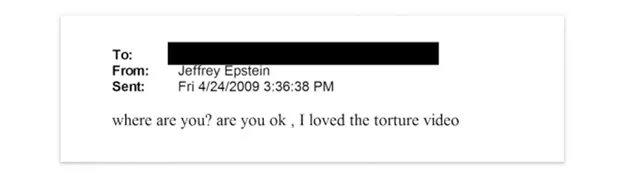
It’s important to remember that she was Attorney General of Florida from 2011 to 2019. She claimed that human trafficking was her #1 issue but somehow overlooked Jeffrey Epstein. As Attorney General, she is still shielding his crimes. Could it be that she is doing this to protect Trump?

Her obnoxious, aggressive, pugnacious appearance before the House Judiciary Committee showed the real Pam Bondi.

Borowitz writes:

Win McNamee/Getty Images

Can the attorney general of the United States go to prison? 

The answer, of course, is yes: John Mitchell, who served under Richard M. Nixon, later served 19 months behind bars for crimes related to the Watergate cover-up. 

Will the toxin known as Pam Bondi follow in his footsteps? 

It’s worth considering in light of her appearance before Congress on Wednesday, a performance that Kimberly Guilfoyle might call “too shouty.” 

Her testimony was unquestionably obnoxious. But was it criminal? 

When you examine the evidence, it doesn’t look good for Pam. 

This was the pivotal moment: responding to a question from California Rep. Ted Lieu about the Epstein scandal, Bondi snapped, “There is no evidence that Donald Trump has committed a crime. Everyone knows that.”

Lieu, who must have been tickled that Bondi was dumb enough to step into the weasel trap he set for her, responded that the attorney general might have just committed perjury. Which, as every Watergate superfan knows, is exactly what earned her Republican predecessor, John Mitchell, a trip to the pokey. 

When the Trump shitshow is finally over, two things must happen. First, there must be a solid month of dancing in the streets. Second, there must be a reckoning: ideally, Nuremberg-style trials of the corrupt quislings who enabled this unprecedented crime spree. With those enjoyable tribunals in mind, let us now consider the case of Pam Bondi.


Remember when Trump nominated Matt Gaetz to be attorney general? We were so much younger then—although, it should be added, not young enough for Matt Gaetz.

At the time, I observed that Gaetz’s nomination was not what QAnon had in mind when they said they wanted to bring pedophiles to justice. In the end, Matt turned out to be as reckless with Venmo as he was about the age of consent, and Trump quickly withdrew his name.

Pundits claimed that Trump never expected Gaetz to pass muster with the Senate. By their reckoning, he was a “sacrificial lamb”—an odd way to describe a man who, in his personal life, had consistently behaved like a wolf. But by shitcanning Gaetz, the theory went, Trump was sending a signal to his Senate toadies that they’d better confirm all his other nominees, no matter how idiotic, incompetent, or drunk. When it came to Pete Hegseth, Robert F. Kennedy, Jr., Tulsi Gabbard, Dr. Oz, Kash Patel, and myriad other passengers in Trump’s clown Cybertruck, the gambit seemed to pay off.

Matt Gaetz, peering into the gates of Hell. (Erin Scott-Pool via Getty Images)

As for the job of attorney general, Democrats and Republicans alike seemed relieved that it would not be filled by a summer-stock version of Jeffrey Epstein. Surely, whoever Trump named as Gaetz’s replacement would be an improvement.

Instead, Trump picked Pam Bondi.

In 2016, when she was Florida attorney general, Bondi secured her place in Trump’s heart with a speech at the Republican National Convention. Her bloodcurdling attack on Hillary Clinton inspired the GOP mob to break into a familiar chant, which prompted Bondi to comment, “Lock her up? I love that.” And so, by approving the incarceration of a woman who had never been charged with a crime, Bondi displayed an attitude towards due process that would someday serve her splendidly as the nation’s top law enforcement officer.

She would, of course, have another opportunity to assert her preference for imprisoning innocent people with the case of Kilmar Armando Abrego Garcia. On April 14, 2025, El Salvador’s President Nayib Bukele, Trump’s accomplice in the world’s most notorious administrative error, joined him in the Oval Office, receiving a much warmer welcome there than was offered Ukrainian President Volodymyr Zelenskyy. After chummily congratulating each other on the abduction and deportation of a non-criminal, the two men started workshopping how their brilliant strategy might be applied to innocent American citizens.

“The homegrowns are next, the homegrowns,” Trump told Bukele, who calls himself “the world’s coolest dictator”—a stroke of branding so cringe, it’s amazing it didn’t come from Elon Musk. “You’ve got to build about five more places,” Trump advised him.

Where did America’s attorney general stand on this flagrant nullification of a basic right enshrined in the Constitution? Trump added, “Pam is studying. If we can do that, it’s good.”

Pam, apparently, is a quick study. On Fox that evening, she was all in on Trump’s blatantly illegal idea, asserting, “These are Americans who he [Trump] is saying who have committed the most heinous crimes in our country, and crime is going to decrease dramatically.”

It’s not that Bondi is bad at her job—it’s that she’s outstanding at the exact opposite of her job, that is, using the DOJ to subvert justice whenever possible. Bondi’s Department of Injustice, a mutant creation worthy of George Orwell and Lewis Carroll, has proven inhospitable to career DOJ lawyers, who have struggled in court to defend the indefensible.

One such staffer, senior immigration attorney Erez Reuveni, committed what Bondi apparently considers a cardinal sin: uttering a truthful statement within earshot of a judge. After acknowledging what was obvious to any thinking person (but seemingly elusive to Messrs. Trump and Bukele)—that Abrego Garcia’s deportation was a mistake—Reuveni was put on indefinite leave and then fired.

Meanwhile, Liz Oyer, a longtime DOJ pardon attorney, was fired for refusing to restore gun rights to the actor Mel Gibson, who lost them after pleading no contest to domestic battery charges in 2011. Apparently, Trump believes Mel Gibson needs lethal weapons more urgently than Ukraine.

We shouldn’t be surprised to see Trump standing up for the rights of domestic abusers, since a sizable number of the January 6 rioters he pardoned fit that description. He doubled down on his support for this cohort by appointing a crony accused of domestic violence, Herschel Walker, ambassador to the Bahamas.

But what makes the Mel Gibson case particularly rich is that Trump has repeatedly claimed he is punishing universities for their “failure to combat antisemitism.” If Trump is serious about spanking antisemites, he need look no further than his pal Mel. 

After the actor’s 2006 drunk driving arrest in Malibu, the police report indicated, “Gibson blurted out a barrage of anti-semitic remarks about ‘fucking Jews’. Gibson yelled out: ‘The Jews are responsible for all the wars in the world.’ Gibson then asked: ‘Are you a Jew?'”

Mel Gibson after his 2006 drunk driving arrest (L) and his 2011 domestic violence arrest (R).

In the upside-down world of Pam Bondi, highly regarded DOJ lawyers are fired and Mel Gibson is rearmed. But do such perversions of justice make Bondi a candidate for worst attorney general ever? They most certainly do, when one considers how decisively and repeatedly she has violated her oath of office:

“I will support and defend the Constitution of the United States against all enemies, foreign and domestic; that I will bear true faith and allegiance to the same; that I take this obligation freely, without any mental reservation or purpose of evasion; and that I will well and faithfully discharge the duties of the office on which I am about to enter. So help me God.”

Rather than defend the Constitution, Bondi has used her time in office to tirelessly protect pedophiles—which should come as no surprise to anyone familiar with her tenure as Florida’s AG. The following campaign ad from that era, in which she vowed to “put human trafficking monsters where they belong—behind bars,” hasn’t aged well:

As Bloomberg’s Mary Ellen Klas wrote, “Bondi kept her distance from the state’s most prominent sex-trafficking case, even as Epstein’s victims pleaded with the courts to invalidate provisions of his non-prosecution agreement and filed lawsuits alleging that he abused them when he was on work release from jail.”

I am confident that Bondi’s misdeeds—including but not limited to her role in the Epstein cover-up—have more than earned her a Nuremberg-style tribunal. I am not, however, suggesting we chant, “Lock her up.” Unlike our current attorney general, I believe in due process.

Trump is determined to punish states and cities that didn’t vote for him. So he sent large numbers of masked ICE agents to bully, beat, harass, and intimidate people in blue places, while recklessly killing two protestors.

He unleashed his fury on Minneapolis, sending in 3,000 ICE agents. They must have been trained to act like Brown Shirts because they do. They don’t just arrest people. They grab them, throw them to the ground, punch them, kick them, ziptie them, toss them into a van, picking up people who “look like” immigrants, and disappear them.

The people of Minneapolis resisted. They resisted with such determination that they forced Trump to back down. DHS announced that it will pull its occupying force out of Minneapolis. Everyone is waiting to see if ICE is really leaving. They will believe it when they see it.

Other cities and communities can learn from Minneapolis. The ICE bullies may soon be sent to your city, your community.

The resistance began immediately. People set up an alarm system, letting others know where ICE was operating. People protected their neighborhoods and communities. They turned out to blow whistles, to film ICE actions on their cell phones, and peacefully protest by their presence

Wherever ICE went, volunteers documented what they did. These videos proved to be powerful evidence of ICE brutality and lies.

Renee Good was murdered at one such protest. The White House and Department of Homeland Security called her a domestic terrorist and said she tried to run over an ICE agent, but multiple videos proved that they were lying.

Alex Pretti was murdered when he tried to help a fellow protestor who had been knocked on her back by ICE goons. He was filming with his cellphone. They called him a terrorist and an assassin, but again they were lying.

The people of Minneapolis treated each other as friends and neighbors and organized a powerful resistance. Volunteers organized to deliver food to people afraid to leave home. They drove people who were afraid to take public transit.

Schools protected their students as best they could. Many children from immigrant families were afraid to leave home. The schools went online to keep them learning. Schools stockpiled food for students and their families; volunteers delivered it. Teachers made home visits to check on students.

Columbia Academy, a middle school in Columbia Heights, a Minneapolis suburb, became “a food bank, a counseling hotline, a missing persons task force, an immigration resource center and a refuge.”

Leslee Sheri, the principal of the school in Columbia Heights, a five-school district, said:

“We are the first call,” said Sherk, a first-year principal who has worked in the district for two decades. “They don’t call the police. They don’t even sometimes call their neighbors or different organizations. They call the school.”

Neighbors helped neighbors. Neighbors helped strangers. The people of Minneapolis reacted with surprising solidarity in opposition to the aggressive militarization of their city.

They stood up, often in bitter cold, spoke out, protected the vulnerable, and demonstrated what democracy, courage l, and compassion looks like.

They won.

Last night Rep. Jamie Raskin posted a comment on Twitter about his visit to a nearby ICE facility:

I just exercised my right as a Member of Congress to conduct an unannounced oversight visit of the ICE field facility in Baltimore. The staff I met with respected my right to visit, but what I saw was disgraceful. Kristi Noem has a budget of $75 billion she could use to ensure humane conditions, but we saw 60 men packed into a room shoulder-to-shoulder, 24-hours-a-day, with a single toilet in the room and no shower facilities. They sleep like sardines with aluminum foil blankets. Whether it’s for three days or seven days, nobody would want a member of their family warehoused there. The room set aside for dangerous criminals and violent offenders was empty. We’re demanding immediate answers and action.

What kind of a person treats other human beings this way?

Is cruelty its own reward?

John Thompson, historian and retired teacher in Oklahoma, reviews the big concerns that will preoccupy the Republican Governor and Legislature in 2026.

He writes:

As Oklahoma’s legislative session begins, commentators are reminding us of the absurdities that will come. The Oklahoma Voice’s Janelle Stecklein’s Welcome to the 2026 Edition of Welcome to Oklahoma’s Political Silly Season. Here are Some Bills Worth Mocking, reported on: 

A proposed deregulation bill that would result in alligators taking over our wetlands; the bill to ban Sharia Law; the “doubly criminalizing the stealing of shopping carts,” and the bill which claims “condensation trails left in our atmosphere by airplanes are actually chemical agents designed to interfere with the sun, [and] weather or are a nefarious way to psychologically manipulate us.”

And, former Speaker of the House, Cal Hobson’s, “Hide the Children. Lock the Door. The ’26 Session Draws Near, summarized  the bill to require universities to build structures honoring the assassinated Charlie Kirk.

Then came Governor Kevin Stitt’s address to the legislature.

Seven years ago, Stitt promised  to make us a “Top Ten” state,” by creating a business-friendly environment by cutting “red tape,” reducing regulations, as well as pushing school choice, and other free-market policies. 

But, according to CNBC, Oklahoma is now ranked 41th for business, 48th in education, and 49th in life, health and inclusion.

According to the U.S. News and World Report, we’re ranked 46th in economic opportunity, and 42th overall.

But Stitt told the legislature:

We’ve proven to the world that Oklahoma is second to none – it’s a state that promotes innovation, champions freedom, and creates opportunity for its people.

Oklahoma wasn’t built by government planners or bureaucrats. …

Oklahoma was built by entrepreneurs, risk-takers and innovators who believe in free markets and the American Dream – that if you work hard, take risks and create value, you should be rewarded.

Actually, Oklahoma was founded on populist principles, such as empowering voters to pass initiative petitions and amendments to the constitution. After the voters legalized medical marijuana, and voted for the expansion of Medicaid, Republicans have attempted to undermine those rights. And, now, Stitt is calling for the repeal of those two laws, and passing two other petitions that are the opposite of what voters supported.  

Stitt’s most destructive attack could be on Medicaid expansion, known as SoonerCare, which reduced the state’s uninsured rate from 17.6% in 2019 to 13.9 % in 2024. But, now it needs almost $500 million to maintain the federally mandated level of service and to administer new mandates and to more efficiently manage the system.

And Oklahoma’s recent privatization of Medicaid campaign “moved thousands of patients to other insurance providers.” And, it has “resulted in lower reimbursement rates and increased denials for services.”

Medicaid provides coverage for one in four Oklahomans. It provided coverage for more than ½ of the state’s child births. While half of its recipients are children, it helps out many low-income seniors and persons with disabilities.

But, Stitt told the legislature, “Nobody feels sorry for an able-bodied male that should be working between the ages of 25 to 65, and we should not be giving them free healthcare.”

Stitt bragged about his cuts in income taxes, which were “the Path to Zero income tax;” He called them a step towards “one of our greatest budget reform wins in history.”

Due to spending cuts, Oklahoma saved over $5.5 billion dollars. Those funds could be used to address $692 million shortfall for this year, as well as $1.5 billion in increased funding that state agencies have requested.

Instead, he wants to amend the constitution to place a 3% annual cap on recurring spending growth.

The third state question Stitt suggested to lawmakers would be to freeze property taxes for “all levels.” Property taxes are a major funding source for public schools, CareerTech, and county level programs. 

And he would like to expand the $249 million per year tax credits for private schools.

And Stitt repeated his calls to reverse the U.S. Supreme Court’s ruling and limit tribal sovereignty in Oklahoma.

Of course, Stitt praised Trump and Ronald Reagan. He challenged the legislators to read Reagan’s speech, “A Time for Choosing.” He then said Reagan was “the last best hope of man on earth;” without him we would have taken “the last step into a thousand years of darkness.”

He then bragged about freeing Oklahomans from Covid lockdowns, protecting them from vaccine mandates, and, in the name of protecting individual liberties and religious freedom, preventing boys from playing in girls’ sports.

After boasting about his success in limiting the freedom of transgender students, he called for the elimination of the Oklahoma Secondary School Activities Association (OSSAA) for not promoting the open transfer of student athletes.

And Stitt concluded:

Oklahoma is not just part of this American Dream. We are its purest expression. And this spirit is what has always defined Oklahoma.

Oklahoma is where bold dreams are possible.

I believe these last seven years have been the greatest in state history

Of course, Stitt’s “commitment to limited government and protecting the Oklahoma way of life,” also required cooperation with rightwing legislators; together, they share credit for making “our state … the best in the country.”

Italia Fittante is a high school literature teacher in Minneapolis. This essay was published by Education Week. Trump promised during his campaign to deport “the worst of the worst,” criminals, rapists, murderers. Instead he has put a target on the back of every immigrant, no matter how long they have lived here, no matter how much they have contributed to society. Our children are experiencing a reign of terror.

One of my seniors walked into my classroom after school yesterday. He needed an extension on his final project, and I could see he’d been working up the nerve to ask me.

His parents haven’t left the house in over a week for fear of being stopped by immigration agents, which means someone has to work. At 17, that someone is him. After school every weekday and all day on weekends, every week, because the bills don’t stop.

He carries his U.S. passport everywhere now, tucked in his pocket, transferred from his jeans to his school uniform and back again, refusing to let it out of his sight even in my classroom. He’s been stopped twice on his walk home from work by masked men and women in unmarked cars, demanding he prove his right to exist in the country where he was born.

He wants to go to medical school; he’s always dreamt of being a doctor. He told me about the university in Mexico holding a spot for him, the contingency plan he never thought he’d need. Just in case things get worse here and he has to follow his parents across the border, just in case his future is decided by policy instead of potential.

I told him to forget the deadline.

Another one of my seniors came to me early Tuesday morning before class started, her eyes hollowed out and bloodshot from lack of sleep. She was concerned about making up a reading quiz she had missed the day before.

In tears, she explained to me that she was working the register at a fast-food restaurant over the weekend when ICE agents burst through the doors midshift. They pushed past her, forced their way into the back of the restaurant, and violently detained two of her co-workers. Nobody knows where they went, when they’re coming back, or if they’re coming back at all.

She told me she hadn’t slept since the raid. This student, who immigrated with her family to the United States just three years ago, described being paralyzed with fear.

I told her to forget the quiz.

The past few weeks in Minnesota have been marked by relentless federal immigration operations. Agents operate openly and without restraint. This week alone, ICE detained multiple students from a neighboring district, one as young as 5 years old. Children and teenagers have been taken on their way to school, from driveways and from cars. My students live with the constant awareness that anyone they love could be taken at any moment. They themselves could be next.

What we’re asking these kids to do seems impossible. Show up. Focus. Read about the American Dream in Advanced Placement Literature while you wonder if your father will be deported before graduation. Solve for x while you’re solving how to pay the electric bill. Write your college application essay about overcoming adversity while doubting you’ll survive it.

They already come to school knowing they might die there. We’ve made peace with that somehow. Lockdown drills and barricading doors are routine. My students can tell you the difference between shots fired in the building versus shots fired nearby. At the beginning of the school year, two elementary students were killed during mass at a Catholic school just miles from us. Before the media even covered it, my students were calling their parents. I could hear them crying in the halls, in my classroom. 

Some of them knew the victims. Now, they come to school and know which corner of each room has the best cover. They are 17 years old and fluent in survival tactics.

My students carry U.S. passports in their pockets like keys to a house where the locks keep changing, navigating their own city like it’s hostile territory. Their walks to and from school are haunted by the persistent possibility that they’ll come home to silence, their parents taken by masked strangers who leave no forwarding address.

We’re creating a generation of students from immigrant families who understand exactly how little this country values their safety. 

They’re learning the lesson we’re teaching, even if it’s not the one we claim to be giving. They understand the message we’re sending when we demand their labor and their silence and their gratitude, all while treating their existence as conditional and their families as disposable. How can we expect them to love their country when those in power have made it clear their country doesn’t love them back?

The curriculum is clear. Documentation determines dignity, and borders determine which families matter. Authority needs no accountability, not when violence can be rebranded as policy if it advances “our” goals.

My students understand what’s happening because they’re living it. The stakes are clearer to them than to most adults I know. They don’t need explanations or sympathy or platitudes or extensions. They need safety without surveillance, because this country is theirs, too. No child should have to carry identification to prove their right to exist.

What sort of nation terrorizes children and calls it enforcement? That demands loyalty while offering nothing but fear? My students already know the answer. They learned it the moment they started carrying passports in their pockets.

The state of Minnesota asked a federal judge to stop the federal militarization in Minneapolis. In a much-anticipated ruling, she said no. The judge, appointed by Biden, said that a previous ruling about federal tactics had been overturned, and she thought it was a signal that any ruling favoring the state would be overturned.

Politico reported:

A federal judge has rejected a bid by state and local officials in Minnesota to end Operation Metro Surge, the Trump administration’s massive deployment of thousands of federal agents to aggressively enforce immigration laws.

In a ruling Saturday, U.S. District Court Judge Katherine Menendez found strong evidence that the ongoing federal operation ”has had, and will likely continue to have, profound and even heartbreaking, consequences on the State of Minnesota, the Twin Cities, and Minnesotans.”

“There is evidence that ICE and CBP agents have engaged in racial profiling, excessive use of force, and other harmful actions,” Menendez said, adding that the operation has disrupted daily life for Minnesotans — harming school attendance, forcing police overtime work and straining emergency services. She also said there were signs the Trump administration was using the surge to force the state to change its immigration policies — pointing to a list of policy demands by Attorney General Pam Bondi and similar comments by White House immigration czar Tom Homan.

But the Biden-appointed judge said state officials’ arguments that the state was being punished or unfairly treated by the federal government were insufficient to justify blocking the surge altogether. And in a 30-page opinion, the judge said she was “particularly reluctant to take a side in the debate about the purpose behind Operation Metro Surge.”

The surge has involved about 3,000 federal officers, a size roughly triple that of the local police forces in Minneapolis and St. Paul. However, Menendez said it was difficult to assess how large or onerous a federal law enforcement presence could be before it amounted to an unconstitutional intrusion on state authority.

“There is no clear way for the Court to determine at what point Defendants’ alleged unlawful actions…becomes (sic) so problematic that they amount to unconstitutional coercion and an infringement on Minnesota’s state sovereignty,” she wrote, later adding that there is “no precedent for a court to micromanage such decisions.”

Menendez said her decision was strongly influenced by a federal appeals court’s ruling last week that blocked an order she issued reining in the tactics Homeland Security officials could use against peaceful protestersopposing the federal operation. She noted that the 8th Circuit Court of Appeals lifted her order in that separate lawsuit even though it was much more limited than the sweeping relief the state and cities sought.

“If that injunction went too far, then the one at issue here—halting the entire operation—certainly would,” the judge said in her Saturday ruling.

Minnesota Attorney General Keith Ellison signaled his team would continue fighting to end the federal operation, writing in a statement that “this case is in its infancy and there is much legal road in front of us.”

“We know that these 3,000 immigration agents are here to intimidate Minnesota and bend the state to the federal government’s will,” he said. “That is unconstitutional under the Tenth Amendment and the principle of equal sovereignty. We’re not letting up in defending our state’s constitutional powers.”

Attorney General Pam Bondi on X called the decision “another HUGE” win for the Justice Department in its Minnesota crackdown and noted that it came from a judge appointed by former President Joe Biden, a Democrat.

“Neither sanctuary policies nor meritless litigation will stop the Trump Administration from enforcing federal law in Minnesota,” she wrote.

Minneapolis has been rocked in recent weeks by the killings of two protesters by federal immigration enforcement, triggering public outcry and grief – and souring many Americans on the president’s deportation agenda.

Minnesota Gov. Tim Walz and Minneapolis Mayor Jacob Frey have both called for federal agents to leave the city as the chaos has only intensified in recent weeks.

“This federal occupation of Minnesota long ago stopped being a matter of immigration enforcement,” Walz said at a press conference last week after two Customs and Border Patrol agents shot and killed 37-year-old nurse Alex Pretti. “It’s a campaign of organized brutality against the people of our state. And today, that campaign claimed another life. I’ve seen the videos from several angles. And it’s sickening.”

Backlash from Pretti’s killing has prompted Trump to pull back on elements of the Minneapolis operation.

Two CBP agents involved in the shooting were placed on administrative leave. CBP Commander Greg Bovino was sidelined from his post in Minnesota, with the White House sending border czar Tom Homan to the state in an effort to calm tensions. Officials also said some federal agents involved in the surge were cycling out of state, but leaders were vague about whether the size of the overall operation was being scaled back.

“I don’t think it’s a pullback,” Trump told Fox News on Tuesday. “It’s a little bit of a change.”

Former President Barack Obama and his wife Michelle Obama released a statement about the murder of Alex Pretti.

Will we hear from former President George W. Bush?

The video is startling. Between 3-6 armed, masked ICE agents surround a man, wrestle him to the ground, throw punches at him while he seems to be completely immobilized.

Then shots ring out, and the detainee is dead.

The Department of Homeland Security says he was armed and dangerous. The ICE agents killed him while defending themselves.

The sheriff said he was 37 years old. He believes the victim was an American citizen.

Yesterday, Minnesota held a general strike to protest the military occupation of Minneapolis. There were no incidents of violence.

Some Minneapolis businesses have opened their doors to help people who need to get out of the tear gas or pepper spray.

State and local officials have demanded that the federal government pull ICE out of Minneapolis.

Trump has prepared 1,500 US military to join the 3,000 ICE agents currently in Minneapolis, to subdue protestors. .

Is this America or Germany in 1933?

Dr. King’s “Letter from a Birmingham Jail” was written in April 1963. Dr. King wrote in response to a public statement by Birmingham religious leaders who called on Dr. King to be patient and not to engage in demonstrations that would provoke resistance.

This context in which he wrote the letter appears on the website of The Martin Luther King, Jr. Research and Education Institute at Stanford University.

In April 1963 King and the Southern Christian Leadership Conference (SCLC) joined with Birmingham, Alabama’s existing local movement, the Alabama Christian Movement for Human Rights (ACMHR), in a massive direct action campaign to attack the city’s segregation system by putting pressure on Birmingham’s merchants during the Easter season, the second biggest shopping season of the year. As ACMHR founder Fred Shuttlesworth stated in the group’s “Birmingham Manifesto,” the campaign was “a moral witness to give our community a chance to survive” (ACMHR, 3 April 1963). 

The campaign was originally scheduled to begin in early March 1963, but was postponed until 2 April when the relatively moderate Albert Boutwell defeated Birmingham’s segregationist commissioner of public safety, Eugene “Bull” Connor, in a run-off mayoral election. On 3 April the desegregation campaign was launched with a series of mass meetings, direct actions, lunch counter sit-ins, marches on City Hall, and a boycott of downtown merchants. King spoke to black citizens about the philosophy of nonviolence and its methods, and extended appeals for volunteers at the end of the mass meetings. With the number of volunteers increasing daily, actions soon expanded to kneel-ins at churches, sit-ins at the library, and a march on the county building to register voters. Hundreds were arrested. 

On 10 April the city government obtained a state circuit court injunction against the protests. After heavy debate, campaign leaders decided to disobey the court order. King declared: “We cannot in all good conscience obey such an injunction which is an unjust, undemocratic and unconstitutional misuse of the legal process” (ACMHR, 11 April 1963). Plans to continue to submit to arrest were threatened, however, because the money available for cash bonds was depleted, so leaders could no longer guarantee that arrested protesters would be released. King contemplated whether he and Ralph Abernathy should be arrested. Given the lack of bail funds, King’s services as a fundraiser were desperately needed, but King also worried that his failure to submit to arrests might undermine his credibility. King concluded that he must risk going to jail in Birmingham. He told his colleagues: “I don’t know what will happen; I don’t know where the money will come from. But I have to make a faith act” (King, 73). 

On Good Friday, 12 April, King was arrested in Birmingham after violating the anti-protest injunction and was kept in solitary confinement. During this time King penned the Letter from Birmingham Jail” on the margins of the Birmingham News, in reaction to a statement published in that newspaper by eight Birmingham clergymen condemning the protests. King’s request to call his wife, Coretta Scott King, who was at home in Atlanta recovering from the birth of their fourth child, was denied. After she communicated her concern to the Kennedy administration, Birmingham officials permitted King to call home. Bail money was made available, and he was released on 20 April 1963. 

In order to sustain the campaign, SCLC organizer James Bevel proposed using young children in demonstrations. Bevel’s rationale for the Children’s Crusade was that young people represented an untapped source of freedom fighters without the prohibitive responsibilities of older activists. On 2 May more than 1,000 African American students attempted to march into downtown Birmingham, and hundreds were arrested. When hundreds more gathered the following day, Commissioner Connor directed local police and fire departments to use force to halt the demonstrations. During the next few days images of children being blasted by high-pressure fire hoses, clubbed by police officers, and attacked by police dogs appeared on television and in newspapers, triggering international outrage. While leading a group of child marchers, Shuttlesworth himself was hit with the full force of a fire hose and had to be hospitalized. King offered encouragement to parents of the young protesters: “Don’t worry about your children, they’re going to be alright. Don’t hold them back if they want to go to jail. For they are doing a job for not only themselves, but for all of America and for all mankind” (King, 6 May 1963). 

In the meantime, the white business structure was weakening under adverse publicity and the unexpected decline in business due to the boycott, but many business owners and city officials were reluctant to negotiate with the protesters. With national pressure on the White House also mounting, Attorney General Robert Kennedy sent Burke Marshall, his chief civil rights assistant, to facilitate negotiations between prominent black citizens and representatives of Birmingham’s Senior Citizen’s Council, the city’s business leadership. 

The Senior Citizen’s Council sought a moratorium on street protests as an act of good faith before any final settlement was declared, and Marshall encouraged campaign leaders to halt demonstrations, accept an interim compromise that would provide partial success, and negotiate the rest of their demands afterward. Some black negotiators were open to the idea, and although the hospitalized Shuttlesworth was not present at the negotiations, on 8 May King told the negotiators he would accept the compromise and call the demonstrations to a halt. 

When Shuttlesworth learned that King intended to announce a moratorium he was furious—about both the decision to ease pressure off white business owners and the fact that he, as the acknowledged leader of the local movement, had not been consulted. Feeling betrayed, Shuttlesworth reminded King that he could not legitimately speak for the black population of Birmingham on his own: “Go ahead and call it off … When I see it on TV, that you have called it off, I will get up out of this, my sickbed, with what little ounce of strength I have, and lead them back into the street. And your name’ll be Mud” (Hampton and Fayer, 136). King made the announcement anyway, but indicated that demonstrations might be resumed if negotiations did not resolve the situation shortly. 

By 10 May negotiators had reached an agreement, and despite his falling out with King, Shuttlesworth joined him and Abernathy to read the prepared statement that detailed the compromise: the removal of “Whites Only” and “Blacks Only” signs in restrooms and on drinking fountains, a plan to desegregate lunch counters, an ongoing “program of upgrading Negro employment,” the formation of a biracial committee to monitor the progress of the agreement, and the release of jailed protesters on bond (“The Birmingham Truce Agreement,” 10 May 1963). 

Birmingham segregationists responded to the agreement with a series of violent attacks. That night an explosive went off near the Gaston Motel room where King and SCLC leaders had previously stayed, and the next day the home of King’s brother Alfred Daniel King was bombed. President John F. Kennedy responded by ordering 3,000 federal troops into position near Birmingham and making preparations to federalize the Alabama National Guard. Four months later, on 15 September, Ku Klux Klan members bombed Birmingham’s Sixteenth Street Baptist Church, killing four young girls. King delivered the eulogy at the 18 September joint funeral of three of the victims, preaching that the girls were “the martyred heroines of a holy crusade for freedom and human dignity” (King, “Eulogy for the Martyred Children,” 18 September 1963). 

Footnotes

“The Birmingham Truce Agreement,” 10 May 1963, in Eyes on the Prize, ed. Carson et al., 1991. 

Douglas Brinkley, “The Man Who Kept King’s Secrets,” Vanity Fair (April 2006): 156–171.

Eskew, But for Birmingham, 1997. 

Hampton and Fayer, with Flynn, Voices of Freedom, 1990. 

King, Address delivered at mass meeting, 6 May 1963, FRC-DSI-FC

King, Eulogy for the Martyred Children, 18 September 1963, in A Call to Conscience, ed. Carson and Shepard, 2001.

King, Shuttlesworth, and Abernathy, Statement, “For engaging in peaceful desegregation demonstrations,” 11 April 1963, BWOF-AB.

King, Why We Can’t Wait, 1964.

Shuttlesworth and N. H. Smith, “Birmingham Manifesto,” 3 April 1963, MLKJP-GAMK. Back to Top

Stanford

The Martin Luther King, Jr. Research and Education Institute

Paul Krugman, a Nobel Prize winner in economics, wrote regularly for The New York Times. Now he writes a blog at Substack. In this post, he characterizes the deepening dysfunction of our president, Donald Trump.

Things are not going well politically for Donald Trump. The polls show him underwater on every major issue. And while he insists that these are fake, it’s clear that he knows better. He recently lamented that the Republicans will do badly in the midterms and even floated the idea that midterms should be canceled.

And as January 6th 2021 showed, Trump simply can’t stand political rejection. He will do anything, use any tool or any person at his disposal, to obliterate the sources of that rejection.

So as we head into the 2026 midterm season, the best way to understand U.S. policy is that it’s in the pursuit of one crucial objective: Propping up Trump’s fragile ego.

What was the motivation for the abduction of Nicolás Maduro? It wasn’t about drugs, which were always an obvious pretense. By Trump’s own account it wasn’t about democracy. Trump talks a lot about oil, but Venezuela’s heavy, hard-to-process oil and its decrepit oil infrastructure aren’t big prizes. The Financial Timesreports that U.S. oil companies won’t invest in Venezuela unless they receive firm guarantees. One investor told the paper, “No one wants to go in there when a random fucking tweet can change the entire foreign policy of the country.”

The real purpose of the abduction, surely, was to give Trump an opportunity to strut around and act tough. But this ego gratification, like a sugar rush, won’t last long. Voters normally rally around the president at the beginning of a war. The invasion of Iraq was initially very popular. But the action in Venezuela hasn’t had any visible rally-around-the-flag effect. While Republicans, as always, support Trump strongly, independents are opposed:

And now the story of the moment is the atrocity in Minneapolis, where…an ICE agent killed Renee Nicole Good by shooting her in the head.

Trump and his minions responded by flatly lying about what happened. But their accounts have been refuted by video evidence which show an out-of-control ICE agent gunning down a woman who was simply trying to get away from a frightening situation. Yes, MAGA loyalists will fall into line, preferring to believe Trump rather than their own lying eyes. But public revulsion over Good’s murder and Trump’s mendacity are high and growing.

A president who actually cared about the welfare of those he governs would have taken Good’s killing as an indication that his deportation tactics have veered wildly and tragically off course. He would have called for a halt of ICE actions and made sure there would be an objective and timely federal investigation into this national tragedy.

But for Trump, ICE’s violent lawlessness is a feature, not a bug. Sending armed, masked, poorly trained, masked and out-of-control armed thugs into blue cities is, in effect, a war on Americans, just as January 6thwas a war on American institutions. In effect, Trump would rather savage his own people than be held accountable for his actions.

So in Trump’s mind, Renee Nicole Good’s murder is at most collateral damage, in service to his insatiable need to dominate and feel powerful — so insatiable that he is attempting to create an alternate reality, claiming that that Good ran over an agent although there is irrefutable video evidence that she didn’t.

And when one set of lies doesn’t work, he switches tactics – changing the topic, deflecting, and spouting even more lies. Thus, just hours after Good’s death, Trump proclaimed that he was seeking a huge increase in military spending:

It’s a near certainty that Trump’s assertion that he arrived at an immediate 50% increase in the military budget after “long and difficult negotiations” is yet another lie. There’s been no indication whatsoever that a massive increase in defense spending was on anyone’s agenda before he suddenly posted about it on Truth Social.

So what was that about? Given the timing, it’s clear that Trump’s announcement was yet another exercise in self-aggrandizement, as well as an attempt to grab the headlines away from Good’s killing. But what’s also important to realize from Trump’s announcement is that he is now clearly conflating the size of the US military with his ego. Evidently the sugar rush of Maduro’s capture has left him wanting more and more military validation, particularly as his poll numbers tank.

So here’s a warning to the US military: if you continue to indulge the sick fantasies of this man, he will drag this country into more and deeper international morasses to feed his need for glory. Do what Admiral Alvin Holsey, an honorable man, did – stand down and refuse an illegal order. Here’s a warning to the Republicans: if you continue to allow this man to perpetrate war against his own people with impunity through the actions of ICE, you will be remembered as cowards and hypocrites. Here’s a warning to all his other enablers: if you do not do something to stop this madman, you will go down in history as traitors to this country.

And here’s a warning to those directly perpetrating Trump-directed atrocities: He will not be in power forever, and I expect and hope that you will be held accountable, personally, and prosecuted to the full extent of the law.