Think about how to take seriously Jesus’s teachings about kindness, mercy, love, compassion. Feed the hungry, comfort the afflicted, welcome the stranger.
Trump is a performer who plays the part of a businessman. In New York City, he was known for his high-flying lifestyle, his frequent appearances at nightclubs, and his escapades with beautiful women. A businessman? He declared bankruptcy six times. His credit rating was so poor that no American bank would lend him money.
MAD magazine published this Trump cartoon in 1992:
Nancy Flanagan is a retired veteran teacher. Her blogs are always insightful because she sees the issues from the perspective of her long career in the classroom. In this post, she explains why some conferences work and some don’t. She wrote it after returning home from the Network for Public Education conference.
She writes:
I am just back from the Network for Public Education conference, held this year in Columbus, Ohio. Columbus is an eight-hour drive from my house, and we arrived at the same time as ongoing flood warnings. But—as usual—it was well worth the time and effort expended.
For most of my career—35 years—I was a classroom teacher. Garden-variety teachers are lucky to get out of Dodge and attend a conference with their peers maybe once a year. Teachers don’t get airfare for conferences in other states and often end up sharing rides and rooms, splitting pizzas for dinner. They go with the intention of getting many new ideas for their practice toolboxes—lesson plans, subject discipline trends and tips, cool new materials—and to connect with people who do what they do. Be inspired, maybe, or just to commiserate with others who totally get it.
In the real world (meaning: not schools), this is called networking. Also in the real world—there’s comp time for days missed at a weekend conference, and an expense form for reimbursements. Conversely, in schools, lucky teachers get a flat grant to partially compensate for registration, mileage, hotel and meals. In many other schools, nobody goes to a conference, because there’s just not enough money, period.
When you hear teachers complaining about meaningless professional development, it’s often because of that very reason—there’s not enough money to custom-tailor professional learning, so everyone ends up in the auditorium watching a PowerPoint and wishing they were back in their classrooms.
Back in 1993, when Richard Riley was Secretary of Education, his special assistant, Terry Dozier, a former National Teacher of the Year, established the first National Teacher Forum. (In case you’re wondering, the Forums lasted just as long as the Clinton administration, and Riley, were in the WH.) Teachers of the Year from all 50 states attended. The purpose of the conference was to engage these recognized teachers in the decision-making that impacted their practice. In other words, policy.
It was probably the most memorable conference I ever attended. I took nothing home to use in my band classroom, but left with an imaginary soapbox and new ideas about how I could speak out on education issues, engage policymakers, and assign value to my experience as a successful teacher. The National Teacher Forum literally changed my life, over the following decades.
But—the idea that teachers would start speaking out, having their ideas get as much traction as novice legislators’ or Gates-funded researchers, was a hard sell. Education thinkers aren’t in the habit of recognizing teacher wisdom, except on a semi-insulting surface level. In the hierarchy of public education workers, teachers are at the lowest level of the pyramid, subject to legislative whims, accrued data and faulty analyses, and malign forces of privatization.
Which is why it was heartening to see so many teachers (most from Ohio) at the NPE conference. The vibe was big-picture: Saving public education. Debunking current myths about things like AI and silver-bullet reading programs. Discussing how churches are now part of the push to destabilize public schools. New organizations and elected leaders popping up to defend democracy, school by school and state by state. An accurate history of how public education has been re-shaped by politics. The resurgence of unions as defenders of public education.
Saving public education. A phrase that has taken on new and urgent meaning, in the last three months. Every single one of the keynote speakers was somewhere between on-point and flat-out inspirational.
Here’s the phrase that kept ringing in my head: We’re in this together.
The last two speakers were AFT President Randi Weingarten and MN Governor Tim Walz. I’ve heard Weingarten speak a dozen times or more, and she’s always articulate and fired-up. But it was Walz, speaking to his people, who made us laugh and cry, and believe that there’s hope in these dark times.
He remarked that his HS government teacher—class of 24 students, very rural school—would never have believed that Tim Walz would one day be a congressman, a successful governor and candidate for Vice-President. It was funny—but also another reason to believe that public schools are pumping out leaders every day, even in dark times.
In an age where we can hear a speaker or transmit handouts digitally—we still need real-time conferences. We need motivation and personal connections. Places where true-blue believers in the power of public education can gather, have a conversation over coffee, hear some provocative ideas and exchange business cards. Network.
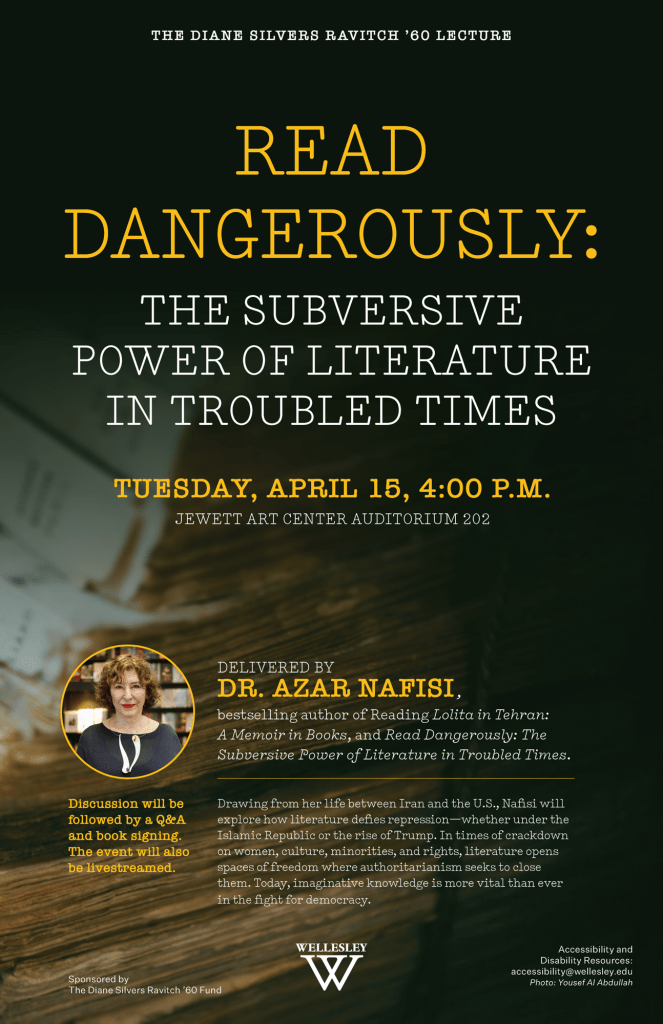
Dr. Azar Nafisi, author of the mega-bestseller Reading Lolita in Tehran, will speak at Wellesley College on April 15 at Wellesley College at 4 p.m. in the Jewett Arts Center. Admission is free.
Please mark the date on your calendar. She is speaking in a lecture series that I endowed several years ago. The lecture will be available eventually on the archive website of the College.
The book, which was a sensation upon its publication for its depiction of life under the mullahs, has recently been made into a film.
This review of the film was published by The Atlantic and written by Arash Azizi. At present, the film can be seen only at film festivals.
He wrote:
The past few years may well be remembered as the nadir of Iranian-Israeli relations, and the first occasion when the two countries attacked each other directly. But they were also a golden period for Iranian-Israeli collaboration in cinema. In 2023, Tatami was the first-ever film to be co-directed by an Israeli (Guy Nattiv) and an Iranian (Zar Amir). And in 2024 came Reading Lolita in Tehran, directed by Eran Riklis, who is Israeli, and adapted from a book by an Iranian author, with an almost entirely Iranian cast. The film premiered at the Rome Film Fest last year and is now starting to tour the United States.
Anyone old enough to remember cultural life at the beginning of this century will know the book. Azar Nafisi’s memoir came out in 2003, spent 36 weeks on the New York Times best-seller list, and quickly developed a cult following. A reviewer for The Nation confessed to missing a dental appointment, a business lunch, and a deadline just because she couldn’t put the book aside.
Literary scholars—Nafisi is an English professor—are not known for their page-turning thrillers. But Nafisi’s story and prose are captivating. She’d gone to Iran shortly after the 1979 revolution in the hope of putting her American education to use by teaching English at a university. Instead, she was hounded out of the classroom by authorities hostile to Western literature. She wound up holding clandestine seminars for young women in her living room, delving into the masterpieces that the Islamic Republic forbade: the Vladimir Nabokov novel that gives the memoir its name, alongside the works of Henry James and Jane Austen, as well as one of Nafisi’s favorites, F. Scott Fitzgerald’s The Great Gatsby. Nafisi brings these classics into dialogue with the real-life stories of young Iranians in the heady decades following the 1979 revolution. Her book isn’t just about reading and teaching literature under a repressive regime, but about how literature in and of itself could serve as an antidote to all that the regime stood for.
Despite its global fame and translation into 32 languages, Reading Lolita in Tehran was never turned into a film before now, mostly because Nafisi didn’t like the proposals she’d received. Then, seven years ago, Riklis came around, as he recounted to a New York audience on January 13, after a special screening of the film. The Israeli director managed to convince Nafisi of his vision—and then to secure the funding, assemble a suitable Iranian cast, and settle on Rome as the shooting location, given that Tehran was not an option.
When the book was initially released in 2003, the American zeitgeist, shaped by 9/11 and the Bush administration’s global War on Terror, was rife with debates about the representations of Muslim women and life in the Middle East. Nafisi’s was one of several popular memoirs by Iranian women published during this period, including Firoozeh Dumas’s Funny in Farsi (2003) and Marjane Satrapi’s Persepolis series (2000–03). And perhaps inevitably, given its success, Nafisi’s book became the subject of political scrutiny, much of it bearing little relation to the book’s content. Although Nafisi opposed the Iraq War, some critics lumped her in with neoconservatives because she portrayed the travails of Iranians under an anti-American regime. One scholar even proclaimed that he saw no difference between her and American soldiers convicted of abusing prisoners in Iraq.
More than 20 years later, Riklis’s loyal adaptation has opponents just as the book did, and even more so because of the nationality of its director. In Tehran, the regime media have denounced the film as furnishing a “pretext for attacking Iran” and called its Iranian actors “traitors working with Zionists.” One outlet claimed that the film peddled a “violent, anti-culture, anti-art, and anti-human view of Iran and Iranians.”
The idea that Reading Lolita in Tehran is anti-Iranian because of its portrayal of the Islamic Republic, and of the life of women under its rule, was always patently ridiculous. The claim bears up particularly poorly in 2024, two years after women-centered protests rocked Iran under the slogan “Women, Life, Freedom.” What Nafisi does best, and the reason her work has endured, is precisely to refuse cartoonish portrayals and basic morality plays.
In Riklis, known for his empathetic depiction of Israelis and Palestinians in films such as Lemon Tree and Dancing Arabs, her book finds an able interpreter who has stayed true to its ethos. The film isn’t neutral. It vividly tells the story of how puritanical Islamist goons attacked universities in the early years after 1979, imposed mandatory veiling on women, and banned books they didn’t like. But neither is it a simple story of scary Islamists versus heroic women resisters.
The film captures the atmosphere of Iran in the 1980s and ’90s remarkably well for having been shot in Italy and directed by an Israeli who has never set foot in the country. The dialogue is mostly in Persian, a language Riklis doesn’t speak; he was able to pull this off with the help of a carefully chosen cast of diasporic Iranians. Golshifteh Farahani, perhaps the best-known Iranian actor outside the country, is at her height as Nafisi, whom she plays as confident but humane, by turns brazen and vulnerable.
The young women of the clandestine class include Sanaz (Zar Amir), who has survived imprisonment and torture; Mahshid (Bahar Beihaghi, in one of the film’s most delightful performances), who, unlike most of her classmates, wore the Islamic veil even before the revolution and defends an ideal of modesty as virtue; and Azin (Lara Wolf), whose multiple divorces make her an object of fascination to the less experienced students, but who turns out to be suffering from domestic abuse.
In Nafisi’s apartment, the students are far from the prying eyes of the regime and also of men (even the professor’s husband is barred from their meetings). They construct for themselves, in that all-female room, a little literary republic that survives the years of war and revolution. In one memorable scene, Nafisi has the students practice a Jane Austen–era dance as part of their study of Pride and Prejudice, drawing parallels between the stifling rules of courtship in Victorian England and those of some contemporary families in Iran.
The film also ventures beyond that cloistered space. Bahri (Reza Diako), a devout 1979 revolutionary, is nevertheless an avid student in Nafisi’s class at the university before it is shut down. Despite their diametrically opposed politics, Nafisi and Bahri form a bond. Early in the story, she tells him his essay on Huckleberry Finn is the best she’s ever received from a student, even in America. The two reconnect when Bahri returns from the Iran-Iraq War of 1980–88, having lost an arm. He has used his family connections to the regime to obtain a surprise gift for his old professor: two tickets to The Sacrifice, by Andrei Tarkovsky, showing at the Tehran film festival. The connection between Nafisi and Bahri is presented with complexity and without sentimentality, neither papering over political differences nor caricaturing Bahri as a generic revolutionary.
In this way, both film and book avoid didacticism. And in doing so, they demonstrate exactly the point Nafisi explores with her students, which is the power of literature to stir empathy across seemingly unbridgeable divides. When the group discusses The Great Gatsby, Nafisi insists on understanding the forbidden love that Daisy Buchanan, the married socialite, has for Jay Gatsby as a true human feeling, not a symbol of Western perfidy, as some of her more revolutionary students claim it to be. The latter advocate banning the book. Nafisi organizes a mock trial for the novel in her class, with students divided into teams for and against.
Nafisi calls on students on both sides of the political divide to treat each other with humanity. When she catches some in her class expressing glee at the wartime deaths of pro-regime peers, she enjoins them not to become like their oppressors. And she is no dogmatic opponent of Islam, only of religiously inspired repressive government: At one point Nafisi tells Bahri, “My grandmother was the most devout Muslim I knew. She never missed a prayer. But she wore her scarf because she was devout, not because she was a symbol.” (I am not the only critic with a Muslim background who found this line powerful.)
The point here isn’t just to repeat the liberal platitude that “the problem isn’t with Islam but with its repressive enforcement.” Rather, Nafisi is rejecting the revolutionaries’ tendency to treat all that surrounds them as a field of symbols. People are worth more than that, she tells them and us, as though echoing the Kantian dictum to treat one another “as an end, never merely as a means.”
This message about the humane power of literature makes Reading Lolita in Tehran a work of art rather than an exercise in sloganeering. And the fact that now, more than two decades after the book’s release, and at a time of regional tension, an Israeli filmmaker has worked with Iranians to adapt Nafisi’s book to the screen gives the film a special power.
The audience at the screening I attended, at a Jewish community center on the Upper West Side, included American Jews, Israelis, and Iranians. What we had in common was the experience of being gripped by a story about the capacity of literature to reveal us to one another as ends rather than as means. The setup might sound mawkish. But I recommend avoiding the temptation of cynicism and embracing the film as truly one for these times.
Last weekend, the Network for Public Education hosted its conference in Columbus, Ohio. Since our first conference in 2013 in Austin, everyone has said “this is the best ever,” and they said it again on April 7.
The attendees included the newly re-elected State Superintendent of Schools in Minnesota, Jill Underly. The Democratic leader of the Texas House Education Committee, Gina Hinojosa. Numerous teachers of the year from many states. Parent leaders from across the nation.
The Phyllis Bush Award for grassroots organizing was won by the Wisconsin Public Education Network, a parent-led group, who have stood firm for their public schools.
The David Award for the individual or group who courageously stands up to powerful forces on behalf of public schools and their students was won by Pastor Charles Johnson of Pastors for Texas Children, whose organization has fought against Governor Greg Abbott and the billionaires who want to impose vouchers, despite their failure everywhere else and the harm they will wreak on rural schools.
The last speaker was Tim Walz, Governor of Minnesota and former Democratic candidate for Vice President in 2024. He was warm, funny, and inspiring.
Nearly 400 educators attended the conference from all across the nation, and everyone stayed to hear Governor Walz, who was wonderful. In time, I will post videos of the main presentations, including his. April 7 was his birthday, and it was too late to get a birthday cake. But two veteran educators left the hotel to find a bakery and returned with a cake.
I introduced Randi Weingarten and reminded the audience that Mike Pompeo had called her “the most dangerous person in the world,” which she should wear as a badge of honor.
Randi gave a rip-roaring speech that brought the audience to its feet. She presented Governor Walz with his birthday cake and everything sang “Happy birthday.”
He was fabulous. He was supposed to slip away at the end of his speech, through a private back door but someone caught up with him and asked for a selfie. Of course, he obliged. Within minutes, it appeared that at least 250 or more people were standing in line for a selfie. He did not leave. He signed autographs and posed for selfies with everyone who wanted one.
He is humble, self-effacing, has a crackling dry wit, and is most definitely a people person.
In the opening session on Friday night, I engaged in a Q & A with Josh Cowen about his recent book: The Privateers: How Billionaires Created a Culture War and Sold School Vouchers. Again, the room was overflowing. Josh was excellent at explaining the terrible results of vouchers and how they turned into a subsidy for wealthy families. Why do politicians continue to promote them. The billionaire money is irresistible.
The panels were fabulous. I participated in one about the close link between public schools and democracy. The room was packed, and we had people lining the walls. A panel led by Derek Black, law professor at the university of South Carolina, and Yohuru Williams, dean of the University of Saint Thomas in St. Paul, talked about the history of Black education, inspired by Derek’s new book Dangerous Learning: The South’s Long War on Black Literacy.
Public schools are in the crosshairs of the Trump Administration. The fact that they have failed matters not at all to religious zealots and libertarians. The fact that they bust state budgets doesn’t matter. The fact that they are a subsidy for rich families doesn’t matter. Those rich families will vote for the politicians who gave them a gift.
The urgency of standing up for public schools, defending their teachers, protecting their students, and fighting censorship of books and curriculum has never been more important than now.
The Network for Public Education is committed to stand up for kids, teachers, public schools, and communities. .
As you know, Trump took control of The Kennedy Center and named himself chairman of the board. He kicked all Democrats off the board and named Trumpers to replace them.
Some artists cancelled, some continued to perform. Trump’s new director, Richard Grennel, canceled the national tour of a children’s show called “Finn,” because it promoted love, kindness, and tolerance.
A band called Guster was performing at The Kennedy Center on March 29, and the band leader talked about the cancellation of “Finn.” Then he invited the cast of “Finn” to join him onstage and the audience went wild.
Michael R. Bloomberg is a billionaire who made his fortune in technology. He produced a computer with a double screen that is called “the Bloomberg,” with each screen focused on different topics. I don’t know enough about technology to explain why this machine was a big success but it was. Bloomberg is now the most generous of the billionaire set, with the likely exception of McKenzie Scott, who has dedicated her time to giving away the fortune she got when she divorced Jeff Bezos.
Bloomberg was mayor of New York City for 12 years. When he was first elected, I was very enthusiastic about his prospects for reforming the city’s sclerotic school system but became disenchanted when I saw him adopt the “move fast and break things” mode of the tech industry and disrupt the system.
Although I was critical of his disruptive changes, I always liked the man, with whom I had several delightful conversations.
Thus it was a great surprise and delight to encounter the following article, in which he warns about the overuse of technology in the classroom:
Over the past two decades, school districts have spent billions of taxpayer dollars equipping classrooms with laptops and other devices in hopes of preparing kids for a digital future. The result? Students have fallen further behind on the skills they most need to succeed in careers: the three R’s plus a fourth — relationships.
Today, about 90% of schools provide laptops or tablets to their students. Yet as students spend more time than ever on screens, social skills are deteriorating and test scores are near historic lows.
Just 28% of eighth graders are proficient in math and 30% in reading. For 12th graders, the numbers are similarly dismal (24% in math and 37% in reading, according to the most recently available scores). And US students have also fallen further behind their peers in other countries.
The push for laptops in classrooms came from technologists, think tanks and government officials, who imagined that the devices would allow for curricula to be tailored around student needs, empowering them to learn at their own pace and raising achievement levels. It hasn’t worked.
The push also came from another source: computer manufacturers. However well-intentioned they may be, they have a financial interest in promoting laptops in classrooms and have profited handsomely from it.
When Google released its inexpensive, utilitarian Chromebook in 2011, the company quickly capitalized on schools’ new emphasis on computer use. Why should children learn the quadratic equation, a Google executive asked, when they can just Google the answer? Today, the same executive might ask: Why should children learn to write an essay — or even a sentence — when they can ask a chatbot to do it for them?
The answer to both questions is that mastering the three R’s is the first step toward the true goal of education: critical thinking and problem-solving.
As someone who built a company by developing a computer at the dawn of the digital age, I never believed that computers in the classroom were the cure to what ails schools. Some of the most powerful educational interactions occur when a caring, well-trained teacher can look into a student’s eyes and help them see and understand new ideas. Machines often don’t have that power.
Think back on your own education. Most of us can remember teachers who challenged and inspired us. Now imagine that you had spent less time listening to those teachers and more time staring at a screen. Would you be better or worse off today?
While moderate use of computer devices can have academic benefits, especially when they are used at home, intensive use is often correlated with diminishing performance.
For example: A post-pandemic survey found that more than a quarter of students spend five hours of class time daily on screens, often practicing skills on games that rarely lead to mastery. At the same time, some traditionally interactive classes — art, music, foreign languages — have moved increasingly online.
Studies have found that time-tested methods of learning — such as reading and writing on a page— are superior to screen-based approaches. One reason is simply a matter of time management. As a review of two decades of academic research concluded, children using laptops are easily distracted — and distracting to their peers. As kids might say: Well, duh.
One study found it can take students up to 20 minutes to refocus after engaging in a nonacademic activity. Put another way: Playing one video game three times a day costs an hour of learning.
Some of the online diversions that students find involve disturbing and inappropriate content that slips through schools’ filters, warping developing minds. Making matters worse: Downtime in classrooms — which might have been spent reading, drawing, imagining or playing with classmates, thereby building crucial social skills — is now frittered away on screens.
By reorienting so much class time around screens, schools have unwittingly been promoting an increasingly isolated childhood experience, which has been correlated with rising anxiety and depression — and can come with tragic and even deadly consequences.
As some school districts finally awake to the benefits of banning smartphones during school hours, they should also reconsider their policies around in-class computers, which can be as problematic as phones. For instance: Storing laptops in locked classroom carts would enable more limited, purposeful use. Schools should also provide parents more transparency about the amount of time their children are spending on devices.
The soaring promise of technology in the classroom has failed to deliver results while imposing great costs on children and taxpayers. Superintendents, principals and teachers ought to lead the way in adopting what has become a radical idea: having students spend more classroom time picking up books and pens than powering up laptops and tablets.
Trump doesn’t understand the arts. There is no evidence that he has ever been interested in the arts. He doesn’t understand that the arts by their nature are cutting-edge. They take us to imaginative worlds we knew nothing about. They expand our horizons. We can see and love Beethoven, Bach, and Shakespeare, but artists today are living in the 21st century and they express what they think and feel now. They introduce us to new worlds.
Trump took control of the Kennedy Center in D.C., one of the greatest venues for the arts in the world. He had to because every year at the awards ceremony, the artists laughed at him. They ridiculed him. They treated him as an enemy, which indeed he was.
Now that Trump appointed himself as chair of the board, he changed the composition of the board. What was once a bipartisan board, divided equally among Democrats and Republicans, is now 100% all-Trump.
The only way he could stifle those annoying artists was to make himself the chair of the board! No more laughing at Trump! With Trump in charge, no drag shows! Nothing about race or gender! Nothing transgressive! Trump has a track record of destroying whatever he touches. He may destroy the Kennedy Cenrer. Just for spite.
Trump is a vulgarian. He despises artistic freedom. He hates drag shows. He despises WOKE culture. Art is often woke. Ibsen was woke. Most artists are woke.
The President of the Kennedy Center, Deborah Rutter, saw the handwriting on the wall. She resigned, as of December 31, 2025. She will leave sooner now that Trump runs her agency.
She did not understand the tsunami about to hit the Kennedy Center.
Playbill (the Broadway publication) tells the story. If you care about artistic freedom, it’s horrifying.
President Donald Trump has been elected as chairman of the board at the Kennedy Center, after replacing board members appointed by former President Joe Biden with his own loyalists. The board members took a vote and named Trump chair in a meeting held Wednesday afternoon. In response, Kennedy Center President Deborah Rutter has announced that she is stepping down from the organization effective immediately. Rutter announced two weeks ago that she would stay in her position until the end of the year, but it seems the recent turmoil at the Washington, D.C. arts organization led to her early departure.
Trump has named loyalist Richard Grenell as interim Kennedy Center President. Grenell, currently the special presidential envoy for special missions, does not appear to have any background in the arts or arts administration. The role of president is typically tasked with the institution’s programming choices, while the chair and the board usually acts in an advisory capacity (though that will likely no longer be the case considering Trump’s strong language for what he plans for the organization).
Rutter, who had held her position since 2014, released a statement before she departed, about the importance of artistic freedom: “Much like our democracy itself, artistic expression must be nurtured, fostered, prioritized, and protected. It is not a passive endeavor; indeed, there is no clearer sign of American democracy at work than our artists, the work they produce, and audiences’ unalienable right to actively participate.”
Trump, who in previous statements vowed to ban drag shows from the venue, wrote on Wednesday on Truth Social: “It is a great honor to be chairman of The Kennedy Center, especially with this amazing Board of Trustees. We will make The Kennedy Center a very special and exciting place!” Historically, the Kennedy Center’s board had been made up of an equal number of Democrats and Republicans. The new board is made up entirely of Trump appointees—including Trump’s chief of staff, Susie Wiles and Usha Vance, the wife of Vice President JD Vance. There are 14 new members, with 31 total members.
According to CBS news, Trump also plans to ban “woke culture” from the Kennedy Center.
“Throughout our history, the Kennedy Center has enjoyed strong support from members of congress and their staffs—Republicans, Democrats, and Independents,” reads a statement from The Kennedy Center released on news of the board members’ termination last week. “Since our doors opened in 1971, we have had a collaborative relationship with every presidential administration. Since that time, the Kennedy Center has had a bi-partisan board of trustees that has supported the arts in a non-partisan fashion.”
Though it is a non-profit institution, only a small portion of the Kennedy Center’s budget comes from the federal government. As the venue’s previous statement shares, the institution “is supported by federal annual appropriations for upkeep and maintenance of the building as a federal memorial, or approximately 16% of the total operating budget.” Its artistic programming, on the other hand, is maintained through “ticket sales, donations, rental income, and other revenue sources.”
Since his return to the White House, Trump has taken a more controlling approach to the arts. He has also eliminated the Presidential Committee on the Arts and the Humanities, a Reagan-era advisory body that had been disbanded during Trump’s first term and then restarted in 2022 by the Biden administration. Executive orders targeting the trans community and DEI efforts have also thrown federal arts funding into chaos, following updated guidelines from the NEA.
Greg Olear is simply amazing. Read the post here and perhaps you will agree. He is wise, smart, learned, insightful, and inspiring. I know of no other writer who weaves together politics, literature, and history as seamlessly as Olear. He writes at Substack and charges no fee.
Dear Reader,
The great British historian Eric Hobsbawm wrote an indispensable series of books in which he divides the 20 decades after the French Revolution into historical “ages.” The period from the 1789 storming of the Bastille to the uprisings sweeping across Europe in 1848 he termed the Age of Revolution. Eighteen forty-eight until the end of the Great Boom circa 1875 is the Age of Capital. The Age of Empire spanned from the mid-1870s until the start of the Great War in 1914. And the “short twentieth century,” a term he coined, was dubbed the Age of Extremes, and ran from the assassination of the archduke until 1991.
Ever since I discovered his books in 2012, the year of his death, I’ve often wondered what Hobsbawm would have called the fifth historical “age”—the one that began in 1991. That was the year of the first Gulf War, and the banishment from Saudi Arabia of Osama bin Laden that kickstarted his Al Qaeda movement; the mysterious death of Robert Maxwell—friend to the British royal family, mentor to Jeffrey Epstein, business partner of the Russian mobster Semion Mogilevich, and Israeli spy—who fell off his yacht off the coast of the Canary Islands; the repeal of the apartheid laws in South Africa, where Errol Musk made his fortune; the rollout of the WorldWideWeb; and the breakup of the Soviet Union—on Christmas, no less, capitalism’s holiest of holy days.
Today, a mere 24 hours and change before we hand the federal government off to a hateful confederacy of Nazis, mobsters, Opus Dei weirdos, white Christian nationalists, and billionaire dorks, I think I know not only the name of the period after the Age of Extremes, but also its termination date. As I type this, we are living in the last few hours of the Age of Unreality. It ends tomorrow at noon.
Something else happened in 1991, you see—something that likely eluded Eric Hobsbawm. Producers at MTV were developing a TV show that would begin filming in February of 1992. It was called The Real World: New York. It was the first reality TV show—or, at least, the seminal reality TV show of the subsequent reality TV explosion. Riding the reality TV wave was a British producer named Mark Burnett, who would give us Survivor in 2000, and, four years later, what wound up being the most historically significant reality TV show of all time, The Apprentice.
Although I confess to having enjoyed a few seasons of The Surreal Life, back when our eldest son was a baby—Flavor Flav does not disappoint!—I have never liked reality TV shows, encouraging, as they often do, the very worst of human behavior. I don’t like meanness. I don’t like ruthlessness. I don’t like watching anyone being voted off the island. I don’t like when people are fired. I don’t like talentless humans. I don’t like Kardashians. Most of all, I don’t like the unscripted-but-very-much-scripted fluff that has replaced actual shows written by actual writers. By encouraging us to believe in a heavily-retouched fictional universe presented as the real world—or, I suppose, The Real World—reality TV has left us more susceptible to Russian disinformation, to deep fakes, to conspiracy theories, to manufactured media narratives, to tech-bro charlatans, to pseudo-scientific arguments against vaccines, and to mendacious politicians who have supercharged lying to a form of warfare.
I have often grumbled, half in jest, that reality TV would bring about the end of Western civilization. I did not think it would also bring about the end of Western democracy. To paraphrase Don DeLillo: Reality TV has given us Joe Rogan; that alone warrants its doom.
(Is this the real life? Is this just fantasy? Freddie Mercury died in—when else?—1991.)
One of the most significant, world-altering events in this Age of Unreality was, of course, 9/11. In response to the WTC attacks, the FBI shifted its focus from transnational organized crime, which was already operating in the United States and growing more powerful by the day—a genuine threat to our society—to Islamic extremist terrorism, which involved not very many crazy people mostly living in caves far, far away from New York. In response to 9/11, we have to subject ourselves to TSA search before boarding an airplane. In response to 9/11, Bush and Cheney launched a long and expensive war on Saddam Hussein, who had nothing whatsoever to do with the attacks, while simultaneously cutting taxes for their wealthy benefactors—two actions that, in tandem, starved the U.S. treasury and put the country so far into the red that it may never recover. In Britain, meanwhile, Tony Blair’s blind loyalty to Bush—a foreshadowing, perhaps, of Joe Biden’s blind loyalty to Bibi Netanyahu—paved the way for BREXIT and the series of hapless prime ministers that followed the disastrous decision to LEAVE.
Five days after 9/11, Anthony Lane, the New Yorker’s savagely witty film critic, published what remains one of the finest pieces of writing on the attacks, a short essay called “This Is Not a Movie.” I go back and revisit it every once in a while, when the mood strikes me. Reading it now, I see that Lane perfectly articulates the paradox of the Age of Unreality, the uneasy blur between fact and fiction, when he comments on “the degree to which people saw—literally saw, and are continuing to see, as it airs in unforgiving repeats—that day”—that is, September 11, 2001—“as a movie.” He notes that the elapsed time between the initial hijackings and the collapse of the north tower was “a little over two hours;” the length of a summer blockbuster disaster film.
Lane writes:
We are talking…of the indulgence that will always be extended to an epoch blessed with prosperity—one that has the leisure, and the cash, to indulge its fancies, not least the cheap thrill of pretending that the blessing could be wiped out. What happened on the morning of September 11th was that imaginations that had been schooled in the comedy of apocalypse were forced to reconsider the same evidence as tragic. It was hard to make the switch; the fireball of impact was so precisely as it should be, and the breaking waves of dust that barrelled down the avenues were so absurdly recognizable—we have tasted them so frequently in other forms, such as water, flame, and Godzilla’s foot—that only those close enough to breathe the foulness into their lungs could truly measure the darkening day for what it was.
There are echoes of this in the fires that have ravaged Los Angeles. Looking at those horrific images, it is impossible not to describe the fiery scenes as something from a movie—or, rather, a limited series, because, unlike with 9/11, the L.A. fires did not confine themselves to a movie-length running time. They began last Tuesday, almost two full weeks ago, and are still ongoing. If 9/11 was, as Lane suggests, a disaster film come to life, the fires are a combination of disaster film and horror movie: not just the fires themselves but the hundred-mile-an-hour winds and the dread of the fires spreading. Only those close enough to breathe the foulness into their lungs could truly measure the darkening days for what they are. My heart breaks for everyone in L.A., even as I know I can never fully understand their ordeal.
The fires are not a movie, just like 9/11 was not a movie. The fires are all too real.
As a country, we have not even begun to comprehend the extent of the damage, or its impact on all those hundreds of thousands if not millions of people in the Pacific Palisades and Altadena and beyond, much less the effect the fires will have nationally, culturally, societally—not least because the recovery will ultimately be overseen by an incoming administration not much known for its compassion, its competence, or its love for Hollywood.
The last paragraph of Lane’s essay is achingly, hauntingly beautiful. Many, many people wrote about 9/11 in the days that followed it, and it always struck me as both unlikely and somehow appropriate that a film critic would offer the purest take:
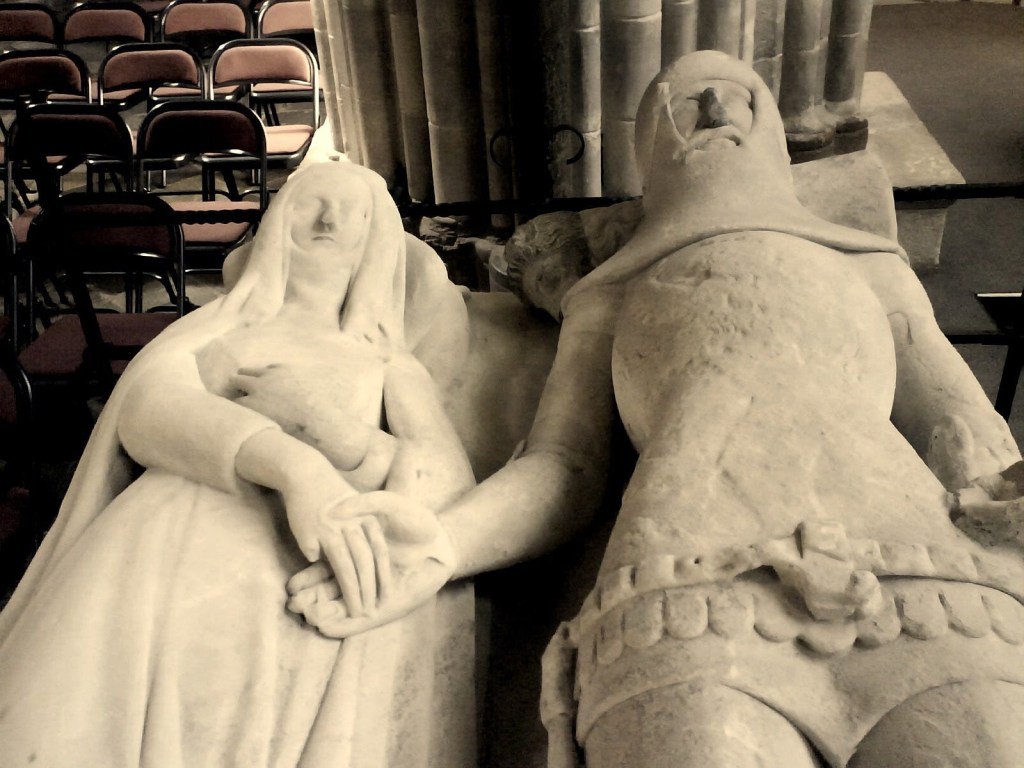
To be forced to disdain the ideal in favor of the actual is never a pleasant process. Even at its worst, however, it can deliver a bitter redemption. We gazed upward, or at our TV screens, and we couldn’t believe our eyes; but maybe our eyes had been lied to for long enough. Thousands died on September 11th, and they died for real; but thousands died together, and therefore something lived. The most important, if distressing, images to emerge from those hours are not of the raging towers, or of the vacuum where they once stood; it is the shots of people falling from the ledges, and, in particular, of two people jumping in tandem. It is impossible to tell, from the blur, what age or sex these two are, nor does that matter. What matters is the one thing we can see for sure: they are falling hand in hand. Think of Philip Larkin’s poem about the stone figures carved on an English tomb, and the “sharp tender shock” of noticing that they are holding hands. The final line of the poem has become a celebrated condolence, and last Tuesday—in uncounted ways, in final phone calls, in the joined hands of that couple, in circumstances that Hollywood should no longer try to match—it was proved true all over again, and, in so doing, it calmly conquered the loathing and rage in which the crime was conceived. “What will survive of us is love.”
Larkin, the poet who wrote that line—and who is, like Lane, British—was not at all a sentimental sort. His stuff is gloomy, sourpuss, almost defeatist. Throughout his poems we see a struggle between, on the one hand, recognizing the futility of life, and on the other, being paralyzed by the fear of death. It is his poem “This Be The Verse,” about how our parents “fuck us up,” that the pub owner quotes, somewhat incongruously, in Ted Lasso:
Man hands on misery to man. It deepens like a coastal shelf. Get out as early as you can, And don’t have any kids yourself.
Sunny stuff, right? Larkin’s entire worldview is neatly encapsulated in this line from “Aubade,” a title that indicates this is a poem about the dawn:
And so it stays just on the edge of vision, A small unfocused blur, a standing chill That slows each impulse down to indecision. Most things may never happen: this one will, And realisation of it rages out In furnace-fear when we are caught without People or drink. Courage is no good: It means not scaring others. Being brave Lets no one off the grave. Death is no different whined at than withstood.
The antecedent of the “it” in the first line is “death.” But we may just as well substitute “Trump,” and the lines work just as well: the standing chill, the furnace-fear and the rage, the necessity of other people and a good stiff drink, the futility of courage.
The poem that Lane quotes is called “An Arundel Tomb.” At Arundel, a medieval British town, is the tomb of Richard FitzAlan, the tenth Earl of Arundel, who died in 1371, and that of his second wife, Eleanor of Lancaster, who predeceased him by a few years. The tomb is capped by stone statues of the couple, who are, surprisingly, holding hands:
Side by side, their faces blurred, The earl and countess lie in stone,
Larkin, a dour librarian and bemoaner of the decline of civilization who seems not to have believed in love (even as he juggled three women for most of his adult life), calls bullshit on this romantic display:
They would not think to lie so long. Such faithfulness in effigy Was just a detail friends would see: A sculptor’s sweet commissioned grace
In other words, while the holding of stony hands has stood the test of time, the love it represents was probably a figment of the artist’s rosy imagination. (Note the double meaning of “lie.”)
How soon succeeding eyes begin To look, not read. Rigidly they
Persisted, linked, through lengths and breadths Of time. . .
Until,
Now, helpless in the hollow of An unarmorial age. . . Only an attitude remains:
Time has transfigured them into Untruth. The stone fidelity They hardly meant has come to be Their final blazon, and to prove Our almost-instinct almost true: What will survive of us is love.
Larkin is saying that what the statues represent isn’t real—that our “almost-instinct” is to believe in the much-ballyhooed power of love, and that the “stone fidelity” of the earl and his wife is so compelling as to make said love-power “almost true.” Almost true is not true; almost true is AI true—a lie we want badly to believe in. The entire poem is him expressing his deep, nasty cynicism. The oft-quoted last line is intended to be ironic—a fitting epitaph for our Age of Unreality.
Even so, what survives of Larkin is “What will survive of us is love.” And I like to think, as Lane does, that, whatever the poet’s intention, the Arundel sentiment is real.
The Age of Unreality began in 1991, when all the ingredients of the historical cocktail were thrown into the shaker: the fall of the Soviet Union, the rise of the Russian mafia, the ascendance of Jeffrey Epstein, the dawn of reality TV, the end of apartheid, and the last time that a coalition of Western democracies repulsed an attempt by a despot to invade a sovereign nation—thus upholding the tenets of the Westphalian order. Out of that cocktail shaker, cold as ice, was poured Jeffrey Epstein and Semion Mogilevich, Elon Musk and Peter Thiel, Vladimir Putin and Donald Trump.
Tomorrow, that mindfuck age draws to a close, and a new one begins. What it has in store for us is anyone’s guess. Will the last barriers between fantasy and reality be worn away, or, as Lane poetically puts it, have our eyes been lied to for long enough? Will democracy really die, as the fascism scholars have been warning us for years, or will the Trump power-grab finally wake up the American people and restore our love of liberty? Will generative AI destroy all art, or will a new analog artistry emerge? What will happen to our beloved Hollywood, to which Trump has named meathead Sylvester Stallone, rightwing wacko Jon Voigt, and radical Catholic weirdo Mel Gibson his MAGA “ambassadors?”
I take some small solace in knowing that we’ve been here before. As Hobsbawm notes in The Age of Capital, the United States in the late nineteenth century—the America Trump wants us to return to—was marked by
the total absence of any kind of control over business dealings, however ruthless and crooked, and the really spectacular possibilities of corruption both national and local—especially in the post-Civil War years. There was indeed little that could be called government by European standards in the United States, and the scope for the powerful and unscrupulous rich was virtually unlimited. In fact, the phrase ‘robber baron’ should carry its accent on the second rather than the first word, for, as in a weak medieval kingdom, men could not look to the law but only to their own strength—and who were stronger in a capitalist society than the rich? The United States, alone among the bourgeois world, was a country of private justice and armed forces….
Our current crop of robber barons is orders of magnitude worse than its forebears—but maybe the abject awfulness of these despicable people will make their reigns shorter, their fall more humiliating, and their historical impact less profound.
Even so, for all my optimistic tendencies, I fear tomorrow as surely as Larkin feared death, which he describes as
The sure extinction that we travel to And shall be lost in always. Not to be here, Not to be anywhere, And soon; nothing more terrible, nothing more true.
Death is permanent and absolute, but dictatorships are neither; moreover, Donald isn’t a dictator yet, and may well never be. Even as I have witnessed the poltroonish capitulation of our political leaders, our robber barons, our media figureheads, even our Snoop Doggs, I have faith that we will somehow find a better way, that we will repulse this ugly MAGA incursion, that the moral arc of the universe will bend towards justice, that the better angels of our nature will prevail. My faith will be tested, surely. But it will remain.
Nothing more true than this: What will survive of us is hope.
Sherrilyn Ifill is a law professor who holds an endowed chair at Howard University. She is a former president and director-counsel of the NAACP Legal Defense Fund.
In this post, she offers sage advice about how to recharge your batteries and re-engage in the struggle for a better society. She wrote this piece soon after the 2024 election. It’s good advice.
….But ours is a subtle strength Potent with centuries of yearning,
Of being kegged and shut away In dark forgotten places. We shall endure To steal your senses In that lonely twilight Of your winter’s grief.
-Pauli Murray, To the Oppressors (1939)
The truth is that things are going to get very bad. America has gone over the cliff’s edge. How hard we land in the ravine below remains to be seen. But we are one week in, and things are already quite dire. Trump’s first round of cabinet nominees, and his insistence that his picks be installed without a vote of Congress is a defining moment. It demonstrates that there will be no bottom with this Administration.
Donald Trump and his coterie of supporters are firmly in control of the most powerful and wealthy country in the world. And because they are in charge of this country – which perhaps undeservedly, has stood as an example throughout much of the world as a symbol of freedom, equality, ethics, the rule of law and democracy – other countries will fall in our wake.
I am saying this now because I have always tried to be honest in my writings and analysis about this country. I say all of this because I have been able over the years to encourage my clients, my colleagues, my staff, my family and community to believe that we can fight and win. I have infected other people with my unshakeable optimism about what we can accomplish to transform this country.
I am going to keep fighting. It’s what I do. But I do not want to lead you astray. Because I do think that many of us – especially those of us in communities likely to be targeted by this Administration – need to see this moment as one in which we are focused on surviving this difficult time. I have faced the fact that we will not be able to move much forward in the next few years. In fact, I expect things to become so dire over the next two years, that we will scarcely recognize the country we live in. I expect that fear and cruelty will become part of our daily diet. We will hear the frightening sound of silence, as those who speak out most boldly against the excesses of the incoming administration, against its policies, against Musk and against Russia, find themselves at cross-purposes with a vindictive and cruel administration with almost unimaginable power to control communications, law, and the sense of reality itself.
Perhaps it won’t be that bad. But we are here in some measure, because far too many failed to imagine that the worst could happen. I have written already about “the nadir,” and I believe we must face it.
And so, our goal now must be first and foremost to survive this dark period with as much of our values, dignity, integrity, work, financial stability and physical and mental health intact as possible. We must also work to protect our families and communities, and to hold in place our most trusted and needed institutions, a modicum of the rule of law, our constitutional commitment to equality and to free expression. As I have said in earlier pieces, this is “planting time.” Planting is work. That work must be aimed at building ideas, theories, paradigms, institutions, skills, practices, and alliances that we can seed now for a future harvest – a fulsome and lush democracy that will reflect the very best of us.
We are not “watching the Trump show” this time. We’ve seen it already. We can dip in every now and then, but we must not become paralyzed watching the train wreck. We will, of course, push back against injustice, and defend our rights and citizenship when necessary in the courts. We will demand that congressional representatives, our Governors and our Mayors, act to protect our democratic rights. Even when we know they will not stand up for what is right, we must not be silent. We must not make it easy for them to be cowards or to take our rights. We must still call, write and email our representatives and show up at town halls and meetings. Remember that those who have fought for us over these past years are tired too. Let them see us in these spaces and hear from us.
But our primary work must be first and foremost to work in our communities – both physical and ideological. To build them up and to share time and ideas with those committed to democracy and justice. We each need a curriculum of local service.
We also need a personal curriculum that will allow us to contribute to the building of the future we dream of for ourselves and our families. That means that our core work must be to commit during this time to do less watching, and more learning and more growing. We need to become better citizens for the democracy we want. That means we must dedicate time to expanding our thinking and our knowledge, and to building up our democratic imagination. That means our work is to imagine, to ally, to experiment, restore, befriend, study, read, write, serve, and create. Every one of us. Even as chaos swirls around us.
I encourage you to show your children and grandchildren real things – nature, animals, how things are built, how to cook from scratch. Teach them cursive writing, so that they have a signature all their own. Take them to live concerts and theater. Go on field trips. Infuse their lives with memories of things that are true and concrete.
If you teach, use primary documents in your teaching, take your students to historic sites, listen to audio of oral arguments and speeches so that they will feel confident in their understanding of history, and know that history was made by human beings not machines.
If you litigate, do it with the expectation that you will win. And act like it. Show out. Be excellent and remain confident. Those who can still feel shame – whether those at your opponents table or those on the bench – will feel it when you hold the standard high. And your clients will never forget it.
If you organize, never stop. Plant those seeds deep in our communities.
If you hold office. Hold it. Do not give up your power. Use your voice. Master every rule. Make a record. I repeat. Make a record–so that the truth might be known.
To protect ourselves and our loved ones, there are also pragmatic things we must do. I’ve thought of a few:
Save some cash. And keep enough in the house for gas and food for a week.
Let yourself imagine what you would do if you lost your job in terms of finding new employment, paying rent/mortgage for several months, and start building what you need to be able to meet that moment if it comes.
Get needed vaccinations in case new HHS policies result in changes or delays in their development or availability. Stock up on COVID tests, and get the most recent COVID booster. Purchase Plan B if it’s available in your area.
Think about tightening security on your electronic devices. Be more thoughtful about social media, and even return to making phone calls and writing letters in some instances. I know it’s old school, but actually memorize the phone numbers of at least two loved ones.
Gird yourself spiritually, through your faith or other meditative practices, as we are all likely to hear or confront many disturbing and ugly interactions. Experience art, go on walks, dance, play Spades, Dominoes, Scrabble. We need resilience.
Walk away when you need to walk away. Challenge when you need to. Try to always have back up.
Take the bystander training offered by groups https://righttobe.org/ so that when you see outrages committed against members of your community or against strangers, you will have practice in how you might intervene or respond.
Get an online subscription to a news service from another country so that you have a reliable sense of what’s going on in the world, and how this country is being perceived.
Are your taxes paid, or more importantly, filed?
Is your passport up-to-date?
If you have money to give – then give to your local library, the food pantry, homelessness services. But also give to cultural institutions. Get a library card and a membership to a museum. Give to organizations working to hold back the worst that this administration may dish out – the NAACP Legal Defense Fund, the ACLU, the National Women’s Law Center, and so many others.
I am going to write more in this space. I hope you’ll subscribe and even pay a nominal fee to sustain the writing. I’m right here, going through this with all of you. And for me there is beauty in our shared walk. Let’s do this together.




 Diane Ravitch's blog