The Contrarian will be a central hub for unvarnished, unbowed, and uncompromising reported opinion and analysis that exists in opposition to the authoritarian threat. Our pre-election warnings that Donald Trump posed an unprecedented threat to our democracy were often treated as alarmist. However, the election of an openly authoritarian figure who traffics in conspiracies, lies, unconstitutional schemes and un-American notions, has moved the United States to an inflection point. The future of our democracy, and what Lincoln called “the last best hope of earth” hangs in the balance. And yet corporate and billionaire media and too many in the political establishment persist in downplaying the threat and seeking to accommodate Trump and his radical agenda. We refuse to follow the herd.
Unlike most corporate or billionaire media, The Contrarian will not offer Trump the benefit of the doubt. We will not normalize him. We will not engage in false equivalence. We will not excuse enablers in the media, government or business. We will not infantilize his supporters nor treat them as victims; we will confront them with the consequences of their presidential pick.
Trump is no ordinary politician and will be no ordinary president so the response must be extraordinary. His insane pronouncements—be it a premature and utterly false declaration that the New Orleans terrorist had just come over the border or a threat to annex the Panama Canal and Greenland—cannot be ignored or treated as hyperbole. They reveal a warped mind and dangerous agenda that would take America down the road of other authoritarian states such as Viktor Orbán’s Hungary.
We will not be distracted by shiny objects or phony scandals. Instead, we will call out Trump and his fellow bad actors’ dangerous, unconstitutional and immoral actions and vile rhetoric. We will put them in the context of American history and international authoritarian movements. We will call on a range of experts from psychology, sociology, political science, international relations and other fields to inform the discussion and analysis.
We do not call Trump a dictator—yet. That is because a conscientious pro-democracy movement determined to expose, denounce and counteract Trump’s authoritarian impulses has time to act, to preserve our pluralistic democracy. The Contrarian seeks to be in the vanguard of that effort. To that end, we will summon the opponents of authoritarianism from all walks of life—the media, the arts, government, academia, business, sports, culture, labor and civil society—to join a grand coalition, a national front for freedom, decency, democracy, justice, self-determination, and diversity.
The urgency of the task before us cannot be overstated. We have already entered the era of oligarchy—rule by a narrow clique of powerful men (almost exclusively men). We have little doubt that billionaires will dominate the Trump regime, shape policy, engage in massive self-dealing, and seek to quash dissent and competition in government and the private sector. As believers in free markets subject to reasonable regulation and economic opportunity for all, we recognize this is a threat not only to our democracy but to our dynamic, vibrant economy that remains the envy of the world.
Although the task before us is deadly serious, we emphatically believe that joy, humor, and most of all community are essential to preserving a free people. We will offer all three. We also realize the danger of preaching to the choir and failing to reach outside our bubble. We will offer a platform that includes multi-generational, fresh voices from whatever venue or field who can contribute to our endeavor. We are building a community of passionate defenders of democracy who are fed up with equivocation, timidity, and resignation.
We could not be more excited to begin this journey. Our irreverence, candor and refusal to pull punches may offend establishment politicians, campaign insiders, and complicit media. We hope so. Throughout all our work, we pledge to live up to our credo: Not Owned by Anybody.
Jennifer Rubin explains why she gave up her column at The Washington Post, previously one of the most prestigious positions in American journalism. Billionaire Jeff Bezos, one of the richest men in the world, with assets exceeding $200 billion, has bent his knee to kiss the ring of Trump. To stay in Trump’s good graces, he has censored the editorial board, even an editorial cartoonist. The Post is hemorrhaging great journalists. Bezos bought one of the nation’s greatest newspapers and is destroying it.
Corporate and billionaire owners of major media outlets have betrayed their audiences’ loyalty and sabotaged journalism’s sacred mission — defending, protecting and advancing democracy.
The Washington Post’s billionaire owner and enlisted management are among the offenders. They have undercut the values central to The Post’s mission and that of all journalism: integrity, courage, and independence. I cannot justify remaining at The Post. Jeff Bezos and his fellow billionaires accommodate and enable the most acute threat to American democracy—Donald Trump—at a time when a vibrant free press is more essential than ever to our democracy’s survival and capacity to thrive.
I therefore have resigned from The Post, effective today. In doing so, I join a throng of veteran journalists so distressed over The Post’s management they felt compelled to resign.
The decay and compromised principles of corporate and billionaire-owned media underscore the urgent need for alternatives. Americans are eager for innovative and independent journalism that offers lively, unflinching coverage free from cant, conflicts of interest and moral equivocation.
Which is why I am so thrilled to simultaneously announce this new outlet, The Contrarian: Not Owned by Anybody. The Contrarian will offer daily columns, weekly features, podcasts and social media from me and fellow pro-democracy contrarians, many of whom have decamped from corporate media, others who were never a part of it. I am launching this endeavor with my cofounder, Norm Eisen. Founding contributors will include Joyce Vance, Andy Borowitz, Laurence Tribe, Katie Phang, George Conway, Olivia Julianna, Harry Litman (who recently resigned from the LA Times for reasons similar to mine for leaving the Post), and Asha Rangappa, among many other brilliant voices. We will provide fearless and distinctive reported opinion and cultural commentary without phony balance, euphemisms or gamified political punditry.
The need for upstart outlets has never been more acute. The contradiction between, on the one hand, the journalistic obligation to hold the powerful accountable and, on the other, the financial interests of billionaire moguls and corporate conglomerates could not be starker.
ThePost’s own headline last month warned: “Trump signals plans to use all levers of power against the media; Press freedom advocates say they fear that the second Trump administration will ramp up pressure on journalists, in keeping with the president-elect’s combative rhetoric.” And yet ThePost’s owner quashed a presidential endorsement for Trump’s opponent, forked over $1M for Trump’s inauguration through Amazon, and publicly lauded Trump’s agenda.
None of us could imagine Katharine Graham sending LBJ or Nixon a $1M check. It would have been, as it is now, a fundamental betrayal of a great American newspaper. Defense of the First Amendment is incompatible with funding or cheerleading for the very person who seeks to “drastically undermine the institutions tasked with reporting on his coming administration.”
ThePost’s downfall is hardly unique. ABC, Mark Zuckerberg’s Meta and corporate-owned cable TV networks (which have scrambled to enlist Trump-friendly voices) are catering to powerful interests, and have profound corporate conflicts. Instead of guarding their independence, they join financial leaders, politicians and other public figures currying favor with Trump and his orbit.
Through classic anticipatory obedience—a dangerous but all too familiar pattern—they normalize the authoritarian menace. If Trump has taken “attacks on the press to an entirely new level, softening the ground for an erosion of robust press freedom,” as The Post reported, it is because he finds insufficient resistance. Instead, owners whose outlets he targets quite literally rewarded him.
In closing, I want to reiterate that I have been honored to work for over fourteen years alongside the finest writers and editors in journalism. Above all, I was blessed to work for The Post under the Graham Family ownership and Fred Hiatt’s leadership of the editorial section. My admiration for their collective integrity, dedication to craft, courage, patriotism, and decency is boundless. But when new leaders sully the reputation of institutions entrusted to them and the fate of democracy is in the balance, we all must reevaluate our careers and our obligations to the world’s most essential nation.
History calls us all.
I treasure the readers who have stuck with me over the years. I invite them and all those interested in defeating authoritarianism as well as writers and content creators to join this exciting new venture in defense of democracy. Forward!
My first big assignment as a journalist was covering President Jimmy Carter’s 1995 visit to Rwanda, a doomed mission that brought him little acclaim.
Carter didn’t fight disease, promote democracy or negotiate peace to make headlines. He did the work quietly and diligently to make the world a better place. His life was a master class in a leadership style firmly out of fashion but will hopefully return.
I was in my third month as the Associated Press and Voice of America stringer in Kigali, Rwanda’s capital. A civil war between an ethno-fascist Hutu government and rebels from the Tutsi minority had culminated in the 1994 genocide that slaughtered 1 million people, most of them Tutsi civilians, in 100 days.
The Tutsi-led rebels drove the Hutu leadership and 1.2 million of their followers into neighboring Zaire, rnow known as Democratic Republic of the Congo. Insurgents from the Zairian refugee camps were still killing 300 people a week in Rwanda more than a year later.
I trailed Carter through Rwanda and the Zairian refugee camps. His Secret Service detail was minimal, yet he moved through these dangerous places with a confidence, kindness and humility that only comes from tremendous inner strength.
He spoke to political leaders, genocide victims, refugees and me with the same courtesy and respect. He knew Mobutu would probably never agree to a peace deal, but unlike most famous people, he didn’t allow the likelihood of failure to stop him from trying.
Carter wanted to negotiate a deal between the new Tutsi-led Rwandan government and Zaire’s dictator Mobutu Sese Seko, whose murderous misrule had made him a pariah.
“These leaders know that I’m their last chance to rejoin the international community,” Carter told me while driving to a church where the skeletons of the dead were displayed as a genocide memorial. He laughed and added, “If Jimmy Carter gives up on you, there’s no one else coming.”
Carter met with Mobutu, and he agreed to a summit with the Rwanda foreign minister. Diplomats knew Mobutu had cancer and hoped he might cut a deal to boost his legacy.
Carter’s staff asked me to join the trip to Mobutu’s palace in Gbadolite, Zaire. I watched Mobutu turn the summit into a farce. Eighteen months later, Rwanda overthrew him, installed a new president and forced the refugees home. The old dictator died in exile. Carter kept lobbying for world peace.
I saw the former president many more times over my 11 years in Africa. His foundation, the Carter Center, monitored elections and fought preventable diseases like river blindness, guinea worm and other neglected tropical diseases. Carter’s work saved tens of millions of people from suffering, but he never made a big deal out of it.
No one can accomplish so much without steely determination. Too often, I hear people describe Carter as the weak and bumbling caricature that President Ronald Reagan created to win the 1980 election. Folks should stop confusing courtesy for weakness.
After the Watergate scandal and the Vietnam debacle, Carter, in 1976, offered an alternative to Richard Nixon’s imperial presidency. He practiced what has become known as servant leadership, the theory that a leader’s primary duty is ensuring subordinates have the tools they need to accomplish their mission.
In the Army, my brigade commander instilled servant leadership in me when I joined his staff as a newly minted sergeant in 1986. He explained that junior enlisted members did not serve me because I outranked them; my rank meant I was responsible for their success, and the colonel promised to hold me accountable if they failed.
The term servant leadership is hackneyed, but it captures valuable techniques that have caught on in the business world. It emphasizes listening, empathy, persuasion, stewardship and community building while discouraging egotism and authoritarianism.
The greater good comes first, not any individual.
While president, Carter rejected much of the pomp at the White House. His speeches focused on addressing problems, not promoting himself. Despite attending the U.S. Naval Academy and serving in the nuclear navy, he was never a warrior-king style leader, which American voters tend to favor.
Humility does not do well in the current culture, where conspicuousness is valued. Politicians must constantly self-promote while denigrating their rivals. Compromise is considered a failure, and vulgarity is considered clever.
The strongest people I’ve encountered in the most difficult places don’t puff up their chests. They don’t need others to bow before them. People with inner strength don’t use cruelty to prove their power.
Here’s hoping kindness makes a comeback, courtesy becomes cool, and strength is demonstrated by lifting people up, not knocking them down.
Adam Kinzinger had a promising career in the Republican Party. A decorated veteran, he served in Iraq and Afghanistan. He was elected to Congress from Illinois in 2010 and left Congress in 2023. He was one of ten Republucans who voted to impeach Trump for his role in the insurrection. He was one of two Republican members of Congress who served on the January 6 Commission, along with Liz Cheney. Both of their political careers are over unless the GOP breaks free of Trumpism.
For four years, a massive machine of deception has worked tirelessly to transform the greatest political tragedy of our time — the bloody January 6 attack on the U.S. Capitol — into what Donald Trump now calls a “day of love.” As the machine’s chief operator, Trump is determined to make the truth the ultimate casualty of that tragedy. It is up to us to defend it.
No crime in history has been documented more thoroughly than the January 6 attack. More than 1,000 cameras captured the day’s events, and much of that footage was used to charge over 1,600 people with crimes related to the riot. Around 1,000 have been convicted.
As a member of the House committee that investigated the attack, I reviewed the key footage repeatedly and listened closely to the officers who fought against the mob. More importantly, the world watched the tragedy unfold in real time as news networks broadcast the events minute by minute. Since then, we have all seen the images of Trump supporters clad in helmets and tactical gear waging medieval combat against police officers. We’ve witnessed the assaults with our own eyes.
The truth of January 6 is so well established that even people who weren’t there have felt the moral injury of seeing their fellow citizens surge violently into the Capitol. Like September 11, January 6 was a national trauma. The key difference, however, is that this attack was incited by the sitting President of the United States and carried out by our own citizens.
Although the story is familiar, it must be repeated every time January 6 is mentioned. That day was the culmination of Trump’s months-long campaign of lies designed to convince the world that the 2020 election he lost had been rigged. He and his allies spread rumor after rumor, filed and lost lawsuit after lawsuit. Still, conspiracy theories flooded the media and the internet, stoking the anger of Trump’s most fervent supporters.
No evidence of widespread corruption was ever found. Nevertheless, Trump and his followers continued to push these lies in countless ways. Then, as Congress prepared to certify the election results, he summoned his supporters to Washington, D.C., and all but ordered the attack to disrupt the certification process. More than 140 officers were injured. Five people died.
In the immediate aftermath, only a handful of political extremists denied what had occurred. Even Trump, the King of Lies, initially called it a “heinous attack” and a “calamity,” warning that lawbreakers “will pay.” However, in the weeks that followed, false claims of leftist agitators began to spread. Fringe lawmakers described members of the mob as mere tourists who had been granted access to the Capitol. By March, Trump echoed the notion that rioters had been “ushered” into the building. By 2022, he began to express sympathy for those charged with crimes, and with his encouragement, his followers began portraying these attackers as martyrs.
Trump, the most brilliant and malicious propagandist in American history, relentlessly repeated the lie that January 6 wasn’t an attack but a “simple protest” gone wrong — not a violent attempt to disrupt the democratic process. Each statement advanced the falsehood in small, calculated increments. This is how reality is corrupted. Today, a majority of Republicans claim the people who stormed the Capitol were engaged in “legitimate civil discourse,” while one-third of Americans question whether Joe Biden won the 2020 election fairly.
In the tragic context of Trump’s potential return to power, we should expect him to fulfill his promise to pardon most, if not all, of those convicted for their actions on January 6. He will justify these pardons with even more lies, which millions will accept as truth.
Yet a greater number of us still believe in the facts captured on video, documented in the January 6 Committee’s report, and upheld in the courts. As rational citizens, we are obligated to speak out when lies are spread. We must continue to do so until the day Trump’s propaganda is obliterated and the truth prevails — as it will, in time.
Ann Tolnaes is a brilliant cartoonist who resigned from The Washington Post when her latest cartoon was cancelled. It depicted the media and tech oligarchs bowing and scraping to Trump, including the owner of The Washington Post, Jeff Bezos.
The editor of the opinion section said he killed the cartoon because the paper had run a story on the same topic, and the cartoon was repetitious. I found that hard to believe because cartoons typically comment on stories in the news; they don’t break news.
He also said she had been invited to return. We will see what happens. The whole episode was widely publicized and is a stain on the newspaper’s reputation, especially since Jeff Bezos intervened and canceled the paper’s endorsement of Kamala Harris in the closing days of the campaign.
For another telling of this important story, read the article by Mike Peterson in The Daily Cartoonist about the controversy and about Ann Tolnaes’s importance. He reprints several of her cartoons, explains how to order a book of her cartoons (bypassing Amazon), and suggests we show our support by subscribing to her Substack blog. I just subscribed.
Thanks to reader John Ogozalek for directing me to this insightful commentary.
In President Joe Biden’s tribute to President Jimmy Carter, there is an implicit contrast with the man who will be inaugurated as the 47th President of the United States. Just take every self-evident statement about Carter’s integrity, honor, and humanity, and flip it to its opposite extreme. You will have a portrait of 47: a man who never donned the uniform of his country; a man who never did an unselfish act for anyone else; a man whose business career was noted for bankruptcies, thousands of lawsuits, and unpaid bills; a man known for serial lies; a man who has been married three times and cheated on all his wives. A man whose name is synonymous with lying, cheating, greed, and selfishness.
Now, read about the other extreme: a man who devoted his life to his country and service to others. President Jimmy Carter. A man who had a lifelong devotion to his wife. A man who sent his only child Amy to public schools in D.C. when he was President.
President Biden released this statement:
Today, America and the world lost an extraordinary leader, statesman, and humanitarian.
Over six decades, we had the honor of calling Jimmy Carter a dear friend. But, what’s extraordinary about Jimmy Carter, though, is that millions of people throughout America and the world who never met him thought of him as a dear friend as well.
With his compassion and moral clarity, he worked to eradicate disease, forge peace, advance civil rights and human rights, promote free and fair elections, house the homeless, and always advocate for the least among us. He saved, lifted, and changed the lives of people all across the globe.
He was a man of great character and courage, hope and optimism. We will always cherish seeing him and Rosalynn together. The love shared between Jimmy and Rosalynn Carter is the definition of partnership and their humble leadership is the definition of patriotism.
We will miss them both dearly, but take solace knowing they are reunited once again and will remain forever in our hearts.
To the entire Carter family, we send our gratitude for sharing them with America and the world. To their staff – from the earliest days to the final ones – we have no doubt that you will continue to do the good works that carry on their legacy.
And to all of the young people in this nation and for anyone in search of what it means to live a life of purpose and meaning – the good life – study Jimmy Carter, a man of principle, faith, and humility. He showed that we are great nation because we are a good people – decent and honorable, courageous and compassionate, humble and strong (love this line).
To honor a great American, I will be ordering an official state funeral to be held in Washington D.C. for James Earl Carter, Jr., 39th President of the United States, 76th Governor of Georgia, Lieutenant of the United States Navy, graduate of the United States Naval Academy, and favorite son of Plains, Georgia, who gave his full life in service to God and country.
The death of President Jimmy Carter at age 100 reminds us of how far we have fallen as a nation. Where once we elected a man to lead the nation who was a model of honesty, integrity, humility, faith, and conviction, we just re-elected a man who lacks any principles and who lives to make more and more money. Where Carter spent his post-presidential years serving others, Trump spent four years whining and threatening revenge and retribution. Carter’s selflessness was legendary; no one has ever mentioned any selfless act ever performed by Trump.
Adam Kinzinger was one of the few Republican members of Congress who stood up to Trump. Along with Liz Cheney, he served on the Commission that investigated January 6, 2021. He left Congress and now writes a blog, commenting on current events. If the Republican Party ever breaks free of the dead hand of MAGA, Adam is one of the people who should lead it.
As I sit down to reflect on the passing of Jimmy Carter, my heart is heavy with both sorrow and profound gratitude. President Carter’s life was a testament to the power of humility, faith, and a commitment to serve others. He wasn’t just a former president; he was a moral compass for our nation, a reminder of the values that should guide us as Americans and as human beings.
Born into modest beginnings in Plains, Georgia, Jimmy Carter’s faith was a cornerstone of his life. A devout Christian, Carter lived out the teachings of his faith with quiet resolve. He taught Sunday school well into his 90s, often drawing crowds who came not only to hear his words but to witness the authenticity of a man who practiced what he preached. His commitment to human dignity and compassion wasn’t confined to words or sermons—it was demonstrated through decades of action.
After leaving the White House, Carter could have easily faded into a life of comfort and prestige. Instead, he chose a path of service that extended far beyond his presidency. Through the Carter Center, he fought tirelessly for human rights, free elections, and the eradication of preventable diseases. His work in global health alone saved countless lives, exemplifying what it means to leave the world better than you found it.
Perhaps one of the most visible symbols of his post-presidential legacy was his dedication to Habitat for Humanity. Even in his later years, you could find him with a hammer in hand, building homes for families in need. This was Jimmy Carter—a man who believed that faith without works is dead, who lived his life proving that service to others is the highest calling.
In a time when our nation often feels divided, President Carter’s life offers a blueprint for unity. He believed in the power of kindness and the necessity of justice. Whether championing peace in the Middle East or advocating for marginalized communities at home, Carter’s moral clarity reminded us that politics should serve the people, not the other way around.
The country is better because of Jimmy Carter. Not just because of his policies or achievements, but because of the example he set. He showed us what leadership grounded in humility and grace looks like. He reminded us that faith can be a force for good, that it should inspire us to build bridges and extend a helping hand.
As we mourn his loss, let us also celebrate the remarkable legacy he leaves behind. May we strive to embody the values he lived by—faith, service, and an unwavering belief in the potential for good in every person. Rest in peace, President Carter. You were a beacon of light in a world that often seems dark, and your impact will endure for generations to come.
Senator Joni Ernst of Iowa is a combat veteran. She retired from the army as a Lieutenant Colonel. She is also a sexual assault survivor. She is also hyper-conservative.
You would expect that she would have some problems with Pete Hegseth, Trump’s choice to lead the Department of Defense. Hegseth has been accused of assaulting women, of public drunkenness, of mismanaging two very small conservative veterans’ group. And he opposes women in combat.
Hegseth is not the kind of guy you would expect Ernst to support.
At first, on hearing of his nomination, she expressed her doubts. But then MAGA began to apply pressure. She comes up for re-election in 2026; it’s hard to imagine anyone running to her right, but who knows?
It’s remarkable how fast you can go from guest to entree at the big MAGA buffet.
Iowa U.S. Sen. Joni Ernst certainly knows.
Last week, she committed the grave offense of being a voice of reason. She told Real Clear Politics she had not made up her mind on Pete Hegseth’s nomination to become secretary of defense.
Ernst said she didn’t plan to campaign against Hegseth and wanted to see the confirmation process unfold. How unreasonable, a senator wanting to follow the Senate process before making a final decision. She’s a pivotal vote on the Armed Services Committee, which will be handling Hegseth’s confirmation.
But then, the MAGA warning light flashed, and all hell broke loose.
Fox News showed a series of X posts aimed at Ernst.
Donald Trump Jr pointed out Ernst had voted to confirm Joe Biden’s pick for defense secretary, Lloyd Austin. He suggested Ernst may be “in the wrong political party.”
Somebody called Wall Street Mav called Ernst a “neocon.” Gasp. And suggested she face a conservative primary opponent in 2026. Right-wing radio host Steve Deace bragged he could be the one to topple Ernst in that primary. Or maybe double Arizona failure Kari Lake could return to her Iowa roots. Sure.
Charlie Kirk of Turning Point USA (his turn signal blinking toward the abyss) accused Ernst of “leading the charge” against Hegseth.
Ernst is the first woman combat veteran elected to the U.S. Senate. Pete Hegseth is a Fox News personality who served in Iraq and Afghanistan. He’s also been overserved many times. He’s vowed to quit drinking if confirmed.
A woman has accused Hegseth of sexual assault. This, alongside multiple reports of sexual misconduct and mismanagement of veterans’ groups he led.
But MAGA has decided he’s the sort of strong, rugged, take-no-prisoners guy we need to make America tough again. He’ll fix the “woke” military, whatever that means.
Hegseth said women don’t belong in combat. Ernst is a combat veteran. He’s accused of sexual assault. Ernst is a sexual assault survivor. So, Ernst was supposed embrace this guy’s nomination? Be impressed by his raw manliness? Suddenly I could use a drink.
But by Monday, after a weekend of MAGA bludgeoning, Ernst took a step back. She met again with Hegseth, was encouraged and said the allegations against him won’t count unless victims step forward.
“As I support Pete through this process, I look forward to a fair hearing based on truth, not anonymous sources,” Ernst said.
But after that process, will you vote for him? She didn’t really go there. But it’s likely she’ll vote to confirm.
It’s disappointing, but not unexpected. I wish she would have said, “Pete Hegseth? I wouldn’t put that guy in charge of latrines. I wouldn’t hand him the keys to the nation’s military if he was the last man on earth. And that last man thing sounds pretty good right now.”
What Ernst said last week was spot on. If this guy wants to become secretary of defense, he’s going to have to show he’s capable. That’s what the confirmation process is for. Ernst wanting to wait and see the show makes sense.
Only one top Iowa Republican defended her, Rep. Ashely Hinson. But Hinson also had to do her duty and say Hegseth is a “strong pick.”
Yes, I know. Ernst played her own role in creating the MAGA monster. Now she got a glimpse of what happens when it turns on you. No loyalty and genuflecting before the dear leader can save you. Toe the MAGA line, or else. This is the party of freedom.
(319) 398-8262; todd.dorman@thegazette.com
The “party of freedom”? Yes, you are free to agree with Trump and free to praise him.
This is a beautiful essay on December 7, Pearl Harbor Day, and its meaning for us today. Please read it.
On the sunny Sunday morning of December 7, 1941, Messman Doris Miller had served breakfast aboard the USS West Virginia, stationed in Pearl Harbor, Hawaii, and was collecting laundry when the first of nine Japanese torpedoes hit the ship.
In the deadly confusion, Miller reported to an officer, who told him to help move the ship’s mortally wounded captain off the bridge. Unable to move him far, Miller pulled the captain to shelter. Then another officer ordered Miller to pass ammunition to him as he started up one of the two abandoned anti-aircraft guns in front of the conning tower.
Miller had not been trained to use the weapons because, as a Black man in the U.S. Navy, he was assigned to serve the white officers. But while the officer was distracted, Miller began to fire one of the guns. He fired it until he ran out of ammunition. Then he helped to move injured sailors to safety before he and the other survivors abandoned the West Virginia, which sank to the bottom of Pearl Harbor.
That night, the United States declared war on Japan. Japan declared war on America the next day, and four days later, on December 11, 1941, both Italy and Germany declared war on America. “The powers of the steel pact, Fascist Italy and National Socialist Germany, ever closely linked, participate from today on the side of heroic Japan against the United States of America,” Italian leader Benito Mussolini said. “We shall win.” Of course they would. Mussolini and Germany’s leader, Adolf Hitler, believed the Americans had been corrupted by Jews and Black Americans and could never conquer their own organized military machine.
The steel pact, as Mussolini called it, was the vanguard of his new political ideology. That ideology was called fascism, and he and Hitler thought it would destroy democracy once and for all.
Mussolini had been a socialist as a young man and had grown terribly frustrated at how hard it was to organize people. No matter how hard socialists tried, they seemed unable to convince ordinary people that they must rise up and take over the country’s means of production.
The efficiency of World War I inspired Mussolini. He gave up on socialism and developed a new political theory that rejected the equality that defined democracy. He came to believe that a few leaders must take a nation toward progress by directing the actions of the rest. These men must organize the people as they had been organized during wartime, ruthlessly suppressing all opposition and directing the economy so that businessmen and politicians worked together. And, logically, that select group of leaders would elevate a single man, who would become an all-powerful dictator. To weld their followers into an efficient machine, they demonized opponents into an “other” that their followers could hate.
Italy adopted fascism, and Mussolini inspired others, notably Germany’s Hitler. Those leaders came to believe that their system was the ideology of the future, and they set out to destroy the messy, inefficient democracy that stood in their way.
America fought World War II to defend democracy from fascism. And while fascism preserved hierarchies in society, democracy called on all men as equals. Of the more than 16 million Americans who served in the war, more than 1.2 million were African American men and women, 500,000 were Latinos, and more than 550,000 Jews were part of the military. Among the many ethnic groups who fought, Native Americans served at a higher percentage than any other ethnic group—more than a third of able-bodied men between the ages of 18 and 50 joined the service—and among those 25,000 soldiers were the men who developed the famous “Code Talk,” based in tribal languages, that codebreakers never cracked.
The American president at the time, Democrat Franklin Delano Roosevelt, hammered home that the war was about the survival of democracy. Fascists insisted that they were moving their country forward fast and efficiently—claiming the trains ran on time, for example, although in reality they didn’t—but FDR constantly noted that the people in Italy and Germany were begging for food and shelter from the soldiers of democratic countries.
Ultimately, the struggle between fascism and democracy was the question of equality. Were all men really created equal as the Declaration of Independence said, or were some born to lead the rest, whom they held subservient to their will?
Democracy, FDR reminded Americans again and again, was the best possible government. Thanks to armies made up of men and women from all races and ethnicities, the Allies won the war against fascism, and it seemed that democracy would dominate the world forever.
But as the impulse of WWII pushed Americans toward a more just and inclusive society after it, those determined not to share power warned their supporters that including people of color and women as equals in society would threaten their own liberty. Those reactionary leaders rode that fear into control of our government, and gradually they chipped away the laws that protected equality. Now, once again, democracy is under attack by those who believe some people are better than others.
Donald Trump and his cronies have vowed to replace the nonpartisan civil service with loyalists and to weaponize the Department of Justice and the military against those they perceive as enemies. They have promised to incarcerate and deport millions of immigrants, send federal troops into Democratic cities, silence LGBTQ+ Americans, prosecute journalists and their political opponents, and end abortion across the country. They want to put in place an autocracy in which a powerful leader and his chosen loyalists make the rules under which the rest of us must live.
Will we permit the destruction of American democracy on our watch?
When America came under attack before, people like Doris Miller refused to let that happen. For all that American democracy still discriminated against him, it gave him room to stand up for the concept of human equality—and he laid down his life for it. Promoted to cook after the Navy sent him on a publicity tour, Miller was assigned to a new ship, the USS Liscome Bay, which was struck by a Japanese torpedo on November 24, 1943. It sank within minutes, taking two thirds of the crew, including Miller, with it.
I hear a lot these days about how American democracy is doomed and the reactionaries will win. Maybe. But the beauty of our system is that it gives us people like Doris Miller.
Even better, it makes us people like Doris Miller.
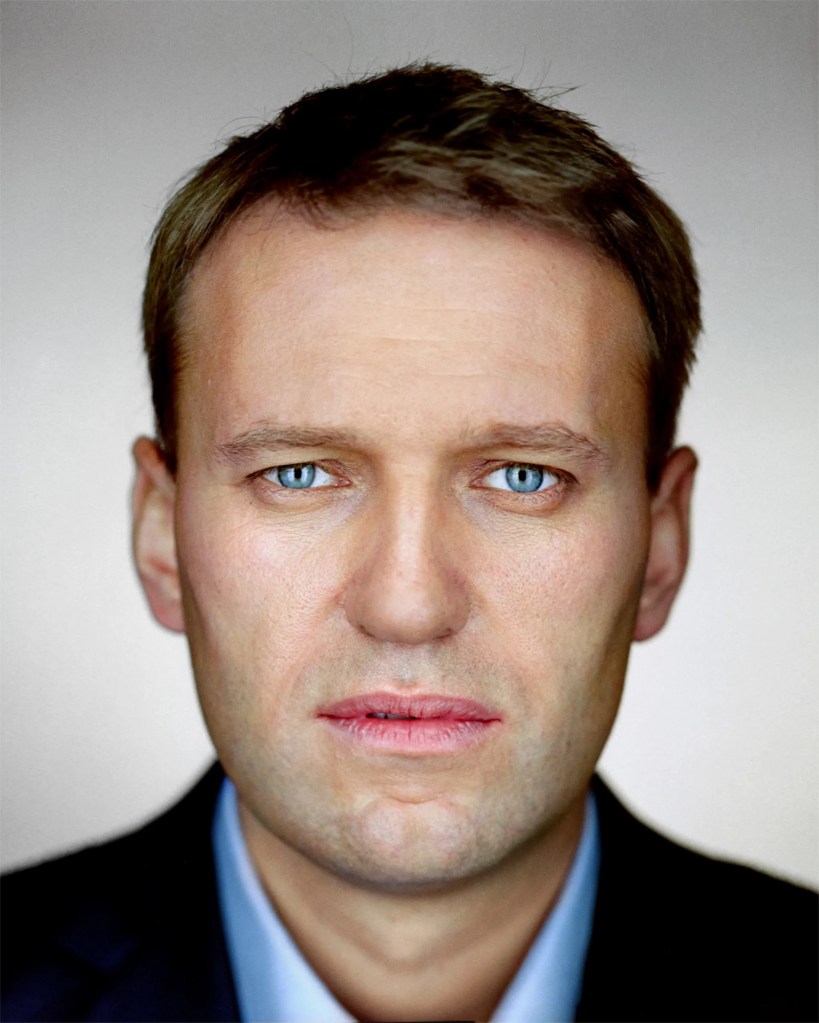
Alexei Navalny stood up to Putin. He did so with humor and joy. His documentary about Putin’s wealth and lavish lifestyle infuriated the dictator. After having been poisoned by Putin’s secret police, he was air-lifted to Germany, where doctors saved his life. He could have stayed in the West, but he insisted on returning to Russia, where he knew he would be arrested as soon as he exited his flight. He never lost his equanimity or his sense of humor. He refused to be depressed or show anger. His writings from prison were just published in a book titled Patriot. The New Yorker printed excerpts from the book. They are powerful.
Alexei Navalny
n August 20, 2020, during a flight from the Siberian city of Tomsk to Moscow, the Russian opposition leader and anticorruption campaigner Alexei Navalny thought he was dying––he was disoriented, and felt his body shutting down. The plane made an emergency landing in Omsk, and Navalny was hospitalized. Two days later, thanks to the persistence of his wife, Yulia Navalnaya, and international pressure, the Russian authorities allowed a German plane to take him to Berlin for treatment.
Navalny emerged from a coma on September 7th. A week later, he announced his intention to return soon to Russia, despite the obvious danger. Doctors concluded that Navalny had been poisoned with a deadly nerve agent called Novichok. While recovering in the German countryside, he began writing his memoir, “Patriot,” and investigating the attempt on his life. He had no doubt that it had been the decision of Vladimir Putin and the work of the F.S.B., the Russian security services, but he was determined to uncover the details. During an unforgettable telephone call, which was filmed for a documentary about his life, Navalny duped an F.S.B. agent into describing how agents had broken into his hotel room in Tomsk and dosed his clothing with the poison.
On January 17, 2021, Alexei and Yulia flew back to Moscow. Navalny was arrested at the airport. Despite international protests on his behalf, Navalny immediately entered a netherworld of trumped-up criminal charges (embezzlement, fraud, “extremism,” etc.), prison cells, and solitary confinement. By the end of 2023, he landed in the “special regime” colony known as Polar Wolf, north of the Arctic Circle. In captivity, he managed to keep a diary and even had his team post some entries on social media. In one Facebook post, he explained why he refused to live out his life in the safety of exile: “I have my country and my convictions. I don’t want to give up my country or betray it. If your convictions mean something, you must be prepared to stand up for them and make sacrifices if necessary.”
2022
January 17th
Exactly one year ago today I came home, to Russia.
I didn’t manage to take a single step on the soil of my country as a free man: I was arrested even before border control.
The hero of one of my favorite books, “Resurrection,” by Leo Tolstoy, says, “Yes, the only suitable place for an honest man in Russia at the present time is prison.”
It sounds fine, but it was wrong then, and it’s even more wrong now.
There are a lot of honest people in Russia—tens of millions. There are far more than is commonly believed.
The authorities, however, who were repugnant then and are even more so now, are afraid not of honest people but of those who are not afraid of them. Or let me be more precise: those who may be afraid but overcome their fear….
Having spent my first year in prison, I want to tell everyone exactly the same thing I shouted to those who gathered outside the court when the guards were taking me off to the police truck: Don’t be afraid of anything. This is our country and it’s the only one we have.
The only thing we should fear is that we will surrender our homeland to be plundered by a gang of liars, thieves, and hypocrites. That we will surrender without a fight, voluntarily, our own future and the future of our children….
I knew from the outset that I would be imprisoned for life—either for the rest of my life or until the end of the life of this regime…
I’m forty-five. I have a family and children. I’ve had a life to live, worked on some interesting things, done some things that were useful. But there’s a war on right now. Suppose a nineteen-year-old is riding in an armored vehicle, he gets a piece of shrapnel in his head, and that’s it. He has had no family, no children, no life. Right now, dead civilians are lying in the streets in Mariupol, their bodies gnawed at by dogs, and many of them will be lucky if they end up in even a mass grave—through no fault of their own. I made my choices, but these people were just living their lives. They had jobs. They were family breadwinners. Then, one fine evening, a vengeful runt on television, the President of a neighboring country, announces that you are all “Nazis” and have to die because Ukraine was invented by Lenin. The next day, a shell comes flying in your window and you no longer have a wife, a husband, or children—and maybe you yourself are also no longer alive….
I said it two years ago, and I will say it again: Russia is my country. I was born and raised here, my parents are here, and I made a family here; I found someone I loved and had kids with her. I am a full-fledged citizen, and I have the right to unite with like-minded people and be politically active. There are plenty of us, certainly more than corrupt judges, lying propagandists, and Kremlin crooks.
I’m not going to surrender my country to them, and I believe that the darkness will eventually yield. But as long as it persists I will do all I can, try to do what is right, and urge everyone not to abandon hope.
Russia will be happy!…
And now they’re trying me in a closed trial in a maximum-security penal colony.
In a sense, this is the new sincerity. They now say openly, We are afraid of you. We are afraid of what you will say. We are afraid of the truth.
This is an important confession. And it makes practical sense for all of us. We must do what they fear—tell the truth, spread the truth. This is the most powerful weapon against this regime of liars, thieves, and hypocrites. Everyone has this weapon. So make use of it….
I have my country and my convictions. I don’t want to give up my country or betray it. If your convictions mean something, you must be prepared to stand up for them and make sacrifices if necessary.
And, if you’re not prepared to do that, you have no convictions. You just think you do. But those are not convictions and principles; they’re only thoughts in your head.
Of course, this doesn’t mean that everyone who’s not currently in prison lacks convictions. Everyone pays their price. For many people, the price is high even without being imprisoned.
I took part in elections and vied for leadership positions. The call for me is different. I travelled the length and breadth of the country, declaring everywhere from the stage, “I promise that I won’t let you down, I won’t deceive you, and I won’t abandon you.” By coming back to Russia, I fulfilled my promise to the voters. There need to be some people in Russia who don’t lie to them.
It turned out that, in Russia, to defend the right to have and not to hide your beliefs, you have to pay by sitting in a solitary cell. Of course, I don’t like being there. But I will not give up either my ideas or my homeland.
My convictions are not exotic, sectarian, or radical. On the contrary, everything I believe in is based on science and historical experience.
Those in power should change. The best way to elect leaders is through honest and free elections. Everyone needs a fair legal system. Corruption destroys the state. There should be no censorship.
The future lies in these principles.
But, for the present, sectarians and marginals are in power. They have absolutely no ideas. Their only goal is to cling to power. Total hypocrisy allows them to wrap themselves in any cover. So polygamists have become conservatives. Members of the Communist Party of the Soviet Union have become Orthodox. Owners of “golden passports” and offshore accounts are aggressive patriots.
Lies, and nothing but lies.
It will crumble and collapse. The Putinist state is not sustainable.
One day, we will look at it, and it won’t be there. Victory is inevitable.
But for now, we must not give up, and we must stand by our beliefs.
I ordered the book. I can’t believe that I lived on the earth at the same time as a man like Navalny. Putin is a sadistic criminal