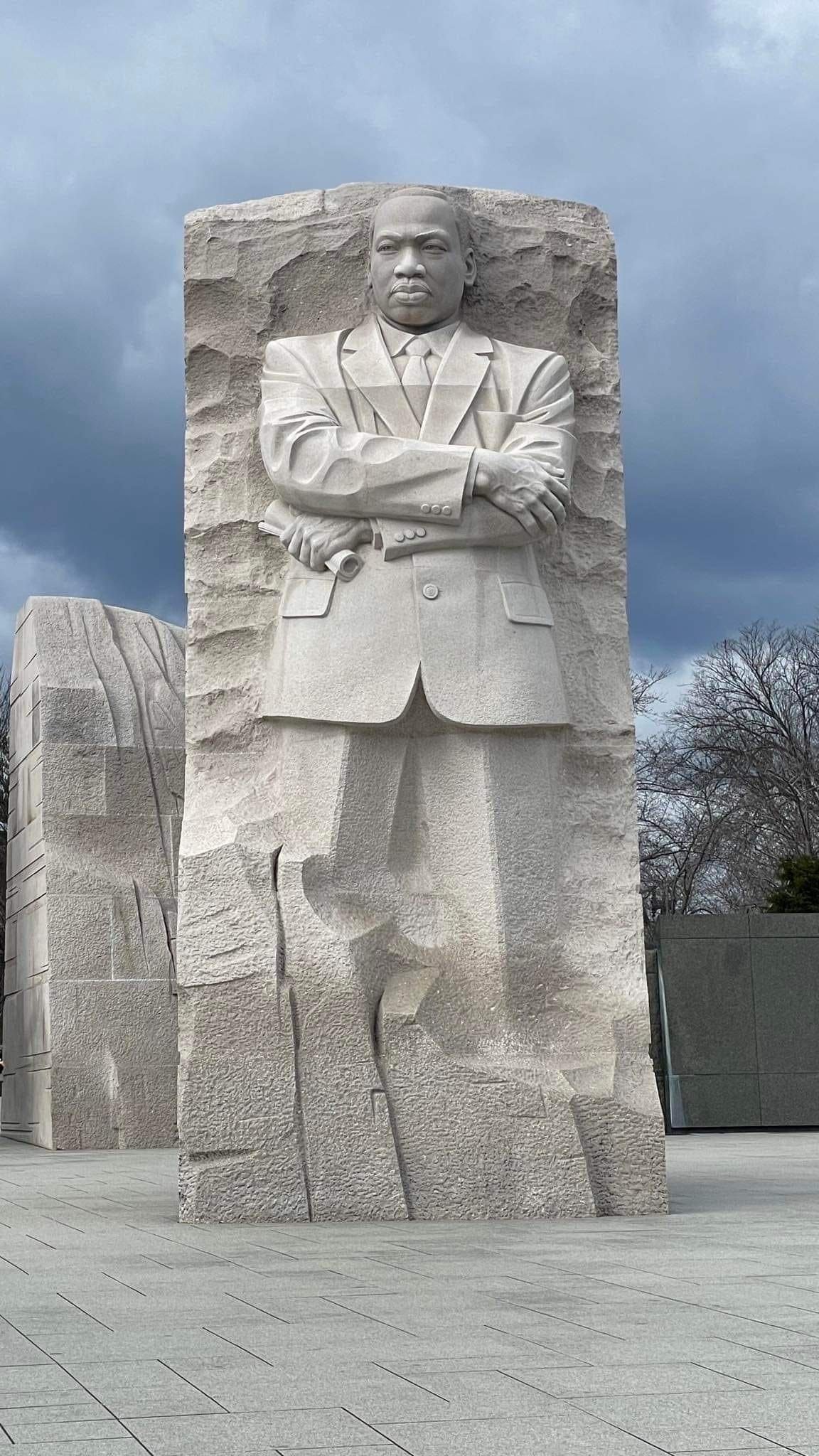
Archives for category: Civil Rights

If you missed the 10th annual conference of the Network for Public Education, you missed some of the best presentations in our ten years of holding conferences.

You missed the brilliant Gloria Ladson-Billings, Professor Emerita and formerly the Kellner Family Distinguished Professor of Urban Education in the Department of Curriculum and Instruction at the University of Wisconsin-Madison.

Ladson-Billings gave an outstanding speech that brought an enthusiastic audience to its feet. She spoke about controversial topics with wit, charm, wisdom, and insight.

Fortunately, her presentation was videotaped. If you were there, you will enjoy watching it again. If you were not there, you have a treat in store.

FOR IMMEDIATE RELEASE

From: Black Brown Dialogues on Policy co-founders: Angela Valenzuela, Ph.D. and

Gary Bledsoe, Esq. , Chair of the Texas NAACP


For more information, please contact Angela Valenzuela, Ph.D. at

blackbrownpolicy@gmail.com (512) 232-6008


In this moment of a dismantling of Diversity, Equity, and Inclusion (DEI) initiatives in Texas colleges and universities, along with toxic, polarizing battles in the Texas State Legislature and in local school boards throughout Texas, we invite you to the Inaugural Black Brown Dialogues on Policy Capitol Storytelling Event during the Texas Book Festival.

This in-person and online event takes place in the Member’s Lounge (E2.1002), at the Texas

State Capitol on Sunday, November 12, 2023 at 10:00 a.m. CST in partnership with National LULAC, the Texas NAACP, Mexican American Legislative Caucus, Latino Texas Policy Center, and the Texas Center for Education Policy.

Virtually, this event will be livestreamed and available live online at www.facebook.com/TeamBlackBrown.

Now, more than ever, we must come together as a Black and Brown community to amplify our collective power through community storytelling.Treat yourself on this day to oral stories of Black and Brown coalitional and partnership work that has been carried out throughout time in Texas. Author and Texas oral history researcher Dr. Max Krochmal will present from his book, Civil Rights in Black and Brown (University of Texas Press). UT History Professor Emilio Zamora and Texas NAACP President Gary Bledsoe will share instances in history when Black and Brown people worked together in solidarity. The Honorable Aicha Davis will discuss the importance of Black and Brown coalitional work at the Texas State Board of Education.

Former Ft. Worth ISD Board Member Dr. Jacinto “Cinto” Ramos, My Brother’s Keeper

Director Rickie Clark, Round Rock ISD’s Tiffanie Harrison will present on local school board struggles. Independent Scholar Martha P. Cotera will share her wealth of experience in Austin and enduring accomplishments by Austin’s Black and Brown working class community. A panel of students will close the event with their reflections of what was shared and how we move forward.

“Organizing this event is a dream come true,” says BBDP co-founder Gary Bledsoe. “It is to our own detriment if we fail to come together as a Black and Brown community to address matters of mutual concern.” This event is free and open to the public. We encourage community members, university faculty, students, advocates, and lawmakers to attend in person and online.

For more information about the town hall meeting, please contact Angela Valenzuela, Ph.D. at

blackbrownpolicy@gmail.com.

WHEN: Sunday, Nov. 12, 2023 at 10:00 a.m.

WHERE: Member’s Lounge (E2.1002), Texas State Capitol Annex Underground

Virtual: https://facebook.com/TeamBlackBrown

INTERVIEW OPPORTUNITY: Angela Valenzuela, Ph.D. and Gary Bledsoe, Esq.

Thom Hartmann is a remarkably well-informed journalist and blogger. In this article, he traces the history of the Republican war on one of our nation’s most important democratic institutions: its public schools.

He writes:

I remember when the USSR launched Sputnik, the first satellite to orbit the Earth. It was the fall of 1957, I was six years old, and my dad and I watched it arc over our house from our back yard one clear October night. My best friend’s father, a ham radio operator, let us listen on his shortwave radio to the “beep beep beep” it was emitting when it was over North America. I’d never seen my dad so rattled.

That dramatic technological achievement lit a major fire under the Eisenhower administration and Congress. In his January 27, 1958 State of the Union address, Republican President Eisenhower pointed to Sputnik and demanded Congress fund a dramatic transformation of America’s educational system:

“With this kind of all-inclusive campaign, I have no doubt that we can create the intellectual capital we need for the years ahead, invest it in the right places–and do all this, not as regimented pawns, but as free men and women!”

In less than a year Congress wrote and passed the National Defense Education Act that poured piles of money into our schools and rolled out programs for gifted kids.

I was lucky enough to be enrolled in one of those in 1959: by the time I left elementary school I was functioning at high school and college levels in math, science, and English. I’d had two years of foreign language and two years of experimental music instruction. IQ tests were all the rage: mine was 141 and my best friend, Terry, was 142, something he never let me forget.

Most all of those programs died over the following decades as a result of Reagan’s war on public schools, which began with his bringing private religious school moguls like Jerry Falwell and bigots like Bill Bennett into the White House.

Repudiating Eisenhower’s embrace of public education, Reagan put Bennett in charge of the Department of Education, which Reagan had campaigned on shutting down altogether. Bennett is probably best known for defending his proclamation that:

“If you wanted to reduce crime you could, if that were your sole purpose, you could abort every Black baby in this country, and your crime rate would go down.”

Much like Bennett back in the day, the catch phrase among white supremacists and their fellow travelers today is that “Western Civilization” is either under attack or at risk because we teach history, tolerance, and critical thinking skills in our public schools, which are often racially integrated. The answer, Republicans will tell you, is to defund our public schools.

When Reagan was elected in 1980, the federal share of total education spending in America was 12 percent; when he left office in disgrace in 1989 amid “Iran/Contra” rumors he’d cut a deal with the Iranians to keep the American hostages to screw Jimmy Carter, that share had collapsed to a mere 6 percent. (It’s 3 percent today.)

Reagan also wanted to amend the Constitution to allow mandatory school prayer, and unsuccessfully proposed a national tax credit — a sort of tax-system-based national voucher system — that parents could use to send their kids to religious schools like Falwell’s.

Ever since Reagan’s presidency, the core of Republican positions on public education have been five-fold:

1. Let white students attend schools that are islands of white privilege where they don’t have to confront the true racial history of America,
2. Use public money to support private, for-profit, and religious schools that can accomplish this (and cycle some of that money back to Republican politicians),
3. Destroy public schools’ teachers’ unions,
4. End the teaching of science, critical thinking, evolution, and sex ed, and,
5. Bring fundamentalist Christianity into the classroom.

Earlier this year, Republican Senator Marco Rubio called America’s public school system a “cesspool of Marxist indoctrination.”

“Dangerous academic constructs like critical race theory and radical gender theory are being forced on elementary school children,” Rubio wrote for the American Conservative magazine, adding, “We need to ensure no federal funding is ever used to promote these radical ideas in schools.”

There is no more powerful urge humans can experience than to protect and defend our children. For most people it beats hunger, sex, and money. So if you’re a politician looking for an issue to motivate voters, just tell them their children are under attack. It’s cynical, but effective.

In an interview for Semafor, Trump’s Secretary of State Mike Pompeo laid it out:

“I tell the story often — I get asked ‘Who’s the most dangerous person in the world? Is it Chairman Kim, is it Xi Jinping?’ The most dangerous person in the world is [American Federation of Teachers President] Randi Weingarten. It’s not a close call. If you ask, ‘Who’s the most likely to take this republic down?’ It would be the teacher’s unions, and the filth that they’re teaching our kids…”

Just a few months ago, Donald Trump laid out his plan to deal with the “major problem” America is facing: “[W]e have ‘pink-haired communists teaching our kids.’”

Turning the Constitution upside down and arguing the Founders intended to protect teaching schoolchildren religion, Trump elaborated, arguing that mixing religion, politics, and education was the intention of that document:

“The Marxism being preached in our schools is also totally hostile to Judeo-Christian teachings, and in many ways it’s resembling an established new religion. We can’t let that happen. For this reason, my administration will aggressively pursue intentional violations to the establishment clause and the free exercise clause of the Constitution.”

As Jonathan Chait wrote for New York magazine:

“More ominously, at every level of government, Republicans have begun to act on these beliefs. Over the past three years, legislators in 28 states have passed at least 71 bills controlling what teachers and students can say and do at school. A wave of library purges, subject-matter restrictions, and potential legal threats against educators has followed.”

This isn’t the first time elected officials have used public education as a political weapon. In 1844, 25 people died and over 100 were severely injured in riots in Philadelphia over whether there should be daily Bible readings in that city’s schools. Two churches and several city blocks of homes were burned to the ground.

The Scopes Monkey Trial of 1925 didn’t provoke riots, but was a major event in the history of public education. Tennessee high school teacher John Scopes was charged and convicted of the crime of teaching evolution. Mississippi and Arkansas joined Tennessee in passing laws making such instruction a crime that stood until the 1967 repeal of the Butler Act.

While Republican Glen Youngkin successfully rode a wave of white outrage about Critical Race Theory to the governor’s office in Virginia, polls suggest the issue is really only meaningful to a fragment of the American electorate: a subset of Republican voters. 

The annual PRRI American Values Survey found:

“Americans overwhelmingly favor teaching children history that includes both the good and bad aspects of our history so that they can learn from the past, versus refraining from teaching aspects of history that could make them feel uncomfortable or guilty about what their ancestors did in the past (92% vs. 5%).

“There are no substantial partisan differences, though Republicans favor excluding aspects of history slightly more (7%) than Democrats and Independents (both 4%). There are few differences across religious traditions or demographics. This consensus holds up across different levels of exposure to critical race theory: 92% of those who have heard a lot about critical race theory, 94% of those who have heard a little, and 93% of those who have heard nothing about it state that we should teach children the good and bad of history.”

Nonetheless, they note:

“[A] majority of Republicans (54%), compared with 27% of independents and only 7% of Democrats, believe that teachers and librarians are indoctrinating children.”

America spent $794.7 billion on primary education last year. For-profit private schools and churches that run schools look at that pile of money and drool. Republicans are committed to delivering as much of it to them as possible, regardless of the damage it does to our nation’s schoolchildren.

Their strategy for privatizing our public schools is pretty straightforward, and echoes the plan of action Republicans are using right now to replace real Medicare with the privatized Medicare Advantage scam.

First, they falsely claim that they’ll deliver a better product at a lower cost. In the education realm, we see this with Florida and several other Red states now offering vouchers that can be used at private or religious schools to every student in the state.

(Nearly 2,300 private schools in Florida accept vouchers, but “69 percent are unaccredited, 58 percent are religious, and nearly one-third are for-profit.”)

As more and more students use the vouchers to flee public schools, the public schools sink into deeper and deeper financial troubles. Those cut the quality of teaching and upkeep of the school buildings, causing even more students to use the vouchers.

Because the vouchers never cover the full cost of private school tuition (typically they pay for half to two-thirds), the truly poor can’t use them: the result is the public school system becomes ghettoized, leading to even more flight by middle- and upper-class (white) people.  

Once the public schools are dead and the state has transitioned entirely to private schools, the state will claim budget problems and begin to dial back the amounts available for vouchers. (The same will happen with Medicare Advantage once real Medicare is dead.)

This will widen the relationship between the educational and wealth divides; the racial and class cleavage will become so great that the state will have effectively gone back to a “separate but equal” educational system. Which, of course, is the GOP’s goal.

Republicans are generally convinced that when people have a good, well-rounded education they will vote for Democrats, who explicitly value science and egalitarian social values. Thus, keeping our kids ignorant and destroying one of America’s largest unions, all while helping their education and religion industry friends get rich, is a complete win-win.

As conservative commentator Benjamin Weingarten writes:

“Red states are increasingly engaging in a broad push to purge public institutions of a Wokeness antithetical to the values and principles of their constituents…

“Yet at root, it is the schools — where our children spend much of their waking hours — that have disproportionate influence over American society, seeding every other institution that has succumbed to left-wing ideological capture. …

“It is incumbent on lawmakers and their appointees to use every lever of power they can, within every educational institution under their purview, to combat the divisiveness and forcible conformity engendered by DEI, CRT, and the like and to replace it with a system rooted in the values and principles on which Western civilization is based.”

Much of this battle is playing out in state houses around the country, but there’s a huge and well-funded effort to take control of local school boards as well. David Pepper has a great post in his Pepperspectives Substack newsletter about how to spot the extremists and GOP shills at election time.

Bottom line: the Republican war on public education is real, and if we want to stop it we must get involved. 

Lobby your state legislators and either run for your local school board or support good people who are. 

Our children’s and grandchildren’s futures are literally at stake.

This story is fascinating. It’s about the quest to understand the origins of a painting of three white children that originally included a young slave. At some point, the enslaved youth was painted over and eliminated.

One determined art collector enlisted the help of art historians to identify the white children and the enslaved youth. The young man was named Bélizaire. The painting was held for decades in storage in a New Orleans art museum. It was just another family painting: three children. If you can open the video, please do (I don’t know if it is behind a pay wall).

Once the original painting was restored and its history documented, it was purchased by the Metropolitan Museum of Art, where it is prominently displayed.

How a Rare Portrait of an Enslaved Child Arrived at the Met” is a 10-minute film that touches on themes of race, art and history.

For many years, a 19th century painting of three white children in a Louisiana landscape held a secret. Beneath a layer of overpaint meant to look like the sky: the figure of an enslaved youth. But a 2005 restoration revealed him and now the painting has a new, very prominent home at the Metropolitan Museum of Art. Who was the enslaved child? Who covered over his figure? Why did the painting languish for decades in attics and a museum basement?

The Times further describes the journey of the painting:

To learn more, read “‘His Name Was Bélizaire’: Rare Portrait of Enslaved Child Arrives at the Met.” Alexandra Eaton writes:

One reason “Bélizaire and the Frey Children” has drawn attention is the naturalistic depiction of Bélizaire, the young man of African descent who occupies the highest position in the painting, leaning against a tree just behind the Frey children. Although he remains separated from the white children, Amans painted him in a powerful stance, with blushing cheeks, and a kind of interiority that is unusual for the time.

Since the Black Lives Matter movement, the Met and other museums have responded to calls to reckon with the presentation of Black figures. When the European Galleries reopened in 2020, the museum included wall texts to highlight the presence of African people in Europe and to call attention to issues of racism, previously unmentioned. In the American Wing, which had presented “a romanticized history of American art,” Kornhauser said, a presidential portrait was recast with the consciousness of the present: John Trumbull’s 1780 portrait of George Washington and his enslaved servant William Lee identified only the former president until 2020, when Lee’s name was added to the title. However, unlike Bélizaire, Lee is depicted at the margins, lacking in any emotion or humanity.

Jeremy K. Simien, an art collector from Baton Rouge, spent years trying to find “Bélizaire” after seeing an image of it online in 2013, following its restoration, that featured all four figures. Intrigued, he kept searching, only to find an earlier image from 2005, after the painting had been de-accessioned by the New Orleans Museum of Art and was listed for auction by Christie’s. It was the same painting, but the Black child was missing. He had been painted out.

“The fact that he was covered up haunted me,” Simien said in an interview.

Jeanne Kaplan was a tireless champion of public schools in Denver. She was elected to two terms on the Denver school board. She fought for better, more equitable, fully funded schools. She opposed charter schools because they drained funding from public schools. She was a long-time crusader for civil rights, and she appalled by the takeover of the Denver schools by charter interests, who flew a false flag, pretending to care about equity.

Jeannie learned that she had lung cancer last April. Her medical treatment did not slow the disease. She died yesterday. She was 78.

I met Jeannie in Denver in 2010 as I was traveling the country to promote my book The Death and Life of the Great American School System: How Testing and Choice Are Undermining Education. When I met her, we became fast friends. We were on the same page, and she told me about the damage that charter schools were doing to Denver’s public schools. Candidates for the Denver school board were funded by Dark Money, privatizers, and out-of-state billionaires. It was almost impossible for a parent to raise the money to be competitive with the corporate reform candidates.

Jeannie was a warm and caring person who inspired others to get involved, despite the odds crested by Big Money. She started her own blog called “Kaplan for Kids,” and I reposted some of them here.

I think the best way to honor her memory here is to post what seems to be her last commentary, which overflows with wisdom, candor, experience, and common sense. I humbly add her name to the honor roll of the blog.

Jeannie Kaplan wrote:

CHARTERS, CHOICE, and COMPETITION = CLOSURES, CHAOS, and CHURN Principles of Privatization

Posted on November 1, 2022 by Jeannie Kaplan

Reap what you sow and the chickens come home to roost. The elephant in the room.  Aphorisms appropriate to describe what is happening in public education in Denver. 

After 20 years,  more than 5  superintendents, and 11 different school boards, the results of education reform in Denver have become clear, and they aren’t pretty. After opening 72 charters in the last 20 years, 22 of which have closed, the declining enrollments in neighborhood schools have forced the prospect of school closures.  Who knew opening 26 privately run elementary charter schools in competition with district-run schools would ultimately force the district to make some hard financial decisions?  And who knew that ignoring its own 2007 data showing stagnant population growth would lead to less demand for elementary school seats in the 2020s?  Apparently, not those with the power for the last 20 years.  And, as an ironic aside, many of the same people who were the decision-makers in the past and who were unable to make substantive change then, have now decided they will somehow make these previously unattainable changes from their outside “oversight” committee, EDUCATE Denver. In fact one of the co-chairs, Rosemary Rodriguez, was a DPS board member when on March 16, 2017, a Strengthening Neighborhoods Resolution passed, stating:

NOW, THEREFORE, BE IT RESOLVED, that a citywide committee be formed to review changing demographics and housing patterns in our city and the effect on our schools and to make recommendations on our policies around boundaries, choice, enrollment and academic programs in order to drive greater socio-economic integration in our schools.

BE IT FURTHER RESOLVED, that in the face of the sharp decline in the number of school-aged children in gentrifying neighborhoods, the committee is also charged with how to think about school choice and school consolidation to ensure that our schools are able to offer high-quality, sustainable programs for our kids.

These former school board members and former and current civic leaders have formed a “shadow school board” to evaluate and oversee the current superintendent and school board.  Why?  It appears they don’t like what they are seeing being proposed by the current superintendent. What don’t they like?  It appears they have determined the current superintendent is not committed enough to their reform agenda.  You know – the one that has been in place when they were in power, the one that has produced the biggest gaps in the nation, more segregation, and more resource inequity.

As school closures have risen to the fore this week Chalkbeat disclosed these statistics:

“Over the past 20 years, Denver Public Schools has added a lot of schools. It has added students, too — but at a much slower rate.

  • The number of public schools in Denver grew 55% between the 2001-02 and 2021-22 school years, while the number of students grew just 12%.
  • Denver went from having 132 schools serving about 72,000 students in 2001-02 to 204 schools serving nearly 89,000 students in 2021-22.
  • The number of elementary schools in Denver grew 23% over the past 20 years, while the number of students grew just 4%.”

Through expensive marketing and often false narratives, charter schools have had free reign to prey on susceptible families resulting in DPS losing 7400 elementary school students who would have otherwise most likely attended a neighborhood school. Then add in:

  • a state law that prohibits a district from shutting down low enrollment charters, 
  • a district that has ignored demographic information predicting declining enrollment, 
  • a district that employs “attendance zones” and a secretive CHOICE system to often force place students into heavily marketed, often unwanted CHARTER SCHOOLS, and 
  • a competitive financial model called Student Based Budgeting (SBB – money follows the kid) to fund schools, depending on student needs, the goal of which is to close the achievement and resource gaps.  The 2010 Denver Plan/ Strategic Vision and Action Plan describes SBB this way:  
  • Established student-based budget formulas that increase dollars for middle and high school students, special education, English language learners, gifted and talented programs, and students living in poverty. Resource distribution is now more closely aligned with the costs of serving these students. p. 51
  • Refine Student-Based Budgeting formulas to ensure they are best meeting the needs of all of the district’s students. Continue to evaluate and adjust student-based budgeting formulas to 1) meet student needs, 2) make progress on closing the achievement gap, and 3) grow the number of high school graduates and college-ready students. p. 53

No one should be surprised the DPS superintendent is saying schools must be closed (new word is UNIFIED but it still means CLOSURE), given the quagmire he entered.  What would you expect to happen when 72 new charter schools are opened in a landscape of stagnant or declining population growth? Who should be held responsible for the chaos and churn caused by this over-expansion of new charter schools? 

I know, I know. One isn’t supposed to talk about charters any more. But it is the elephant in the room. Education “reformers” want you to believe charters are an irrevocable fact of life in public education, stare decisis if you will. But as we have recently witnessed, that precedent is non-binding. So let’s use it to the advantage of neighborhood school advocates. Let us not assume charters are inevitable, especially given the chaos and poor academic outcomes charters are producing. Denver isn’t the only place experiencing the madness of so many charters. Just this week lifelong educator Arthur Camins wrote:

It is time for Democrats–voters and the politicians who represent them–to abandon charter schools as a strategy for education improvement or to advance equity. Charter schools, whether for- or non-profit, drain funds from public schools that serve all students, increase segregation, and by design only serve the few.

It is worth repeating that in 20 years, DPS has added 72 charter schools, 22 of which have closed.  As students of public education repeatedly attest to, charters have been particularly harmful to neighborhood schools for they gut these schools of resources. Charters have also been disruptive to communities and have contributed to increasing inequity and segregation in our schools. It is not possible to have an honest conversation without addressing that elephant in the room.  Charter schools along with their partners – choice and competition – have had their chance in Denver and their biggest accomplishment has been to pressure neighborhood schools to close.

Let us not overlook the demographic projections DPS has been aware of since the mid 2000’s. 

“It’s really simple, we’ve seen a slow down in births,” said Elizabeth Garner, demographer for the state. “Starting back in 2007, that was our peak birth year, we’ve seen a slowing in births ever since. So with fewer kiddos, that means lower school enrollment.”

Let us not overlook who was supporting and approving this unchecked expansion.  DPS had strong indicators from as early as 2007 onward the population of the city and the number of school-age children was flattening, and yet the district with the strong support of many of the aforementioned  “oversight committee”, EDUCATE Denver, pushed for this proliferation of new charter schools without giving demographics its proper due.

Loss of students = loss of funding (SBB) = loss of programming and supports = closure

Superintendent Alex Marerro has been charged with improving student outcomes and reducing gaps by implementing his strategic plan.  School unifications are one way he has chosen to start this process.  He inherited a district suffering from years of “feel good” oversight from boards and the nonprofit world determined to paint a rosy picture of reform education success, a district more focused on good public relations stories than actual educational outcomes. Now he has to try to provide solutions to problems that have not been dealt with honestly for years. And yes, “unification” has raised as many questions as it has provided answers such as how transportation and language services will be provided and what will be done with these empty buildings. And there is the elephant in the room – again.  Charter schools. Why are they not included in his recommendations? Again, he has no authority to recommend closing them, even though several are also suffering from declining enrollment.  Given this reality, it will be interesting to see how he chooses to address this issue. In the end, how can the board fairly evaluate him according to measures both they and he just agreed on, if it rejects his operational ideas?

As for what neighborhoods these closures would most heavily affect – What would one expect to happen when new charters are opened in neighborhoods heavily populated by families of color and families struggling economically?  Why is there any surprise that most of the schools on the “unification” list affect these neighborhoods?  How could it be otherwise when these are the sites of uncontrolled, privately run options to public schools.  Sadly, it only makes sense that these are the neighborhoods that would suffer the highest impact of school closures.

Few like to close schools.  It is a heart-wrenching, disruptive, negative process. But given the lack of thoughtful planning and oversight for 20 years, what is the better option? Keeping schools open without the financial ability to provide necessary services and supports, or providing unified schools with the money to provide language support,  art, music, nurses, librarians, psychologists, speech therapists?  

Imagine a great school district that had paid attention to population warnings and  hadn’t opened so many charter schools over the last 20 years. Imagine all those charter school children filling those neighborhood schools.

The chickens have come home to roost.

Jeannie and I in Denver, 2013.

ProPublica researched the power of Leonard Leo, the man most responsible for the rightwing majority on the U.S. Supreme Court and other levels of the federal judiciary. Few people know who he is. Now you are among them.

ProPublica writes:

The party guests who arrived on the evening of June 23, 2022, at the Tudor-style mansion on the coast of Maine were a special group in a special place enjoying a special time. The attendees included some two dozen federal and state judges — a gathering that required U.S. marshals with earpieces to stand watch while a Coast Guard boat idled in a nearby cove.

Supreme Court Justice Clarence Thomas’ decadeslong friendship with real estate tycoon Harlan Crow and Samuel Alito’s luxury travel with billionaire Paul Singer have raised questions about influence and ethics at the nation’s highest court.

Caterers served guests Pol Roger reserve, Winston Churchill’s favorite Champagne, a fitting choice for a group of conservative legal luminaries who had much to celebrate. The Supreme Court’s most recent term had delivered a series of huge victories with the possibility of a crowning one still to come. The decadeslong campaign to overturn Roe v. Wade, which a leaked draft opinion had said was “egregiously wrong from the start,” could come to fruition within days, if not hours.

Over dinner courses paired with wines chosen by the former food and beverage director of the Trump International Hotel in Washington, D.C., the 70 or so attendees jockeyed for a word with the man who had done as much as anyone to make this moment possible: their host, Leonard Leo.

I can’t think of anybody who played a role the way he has.

– Richard Friedman, a law professor and historian at the University of Michigan

Short and thick-bodied, dressed in a bespoke suit and round, owlish glasses, Leo looked like a character from an Agatha Christie mystery. Unlike the judges in attendance, Leo had never served a day on the bench. Unlike the other lawyers, he had never argued a case in court. He had never held elected office or run a law school. On paper, he was less important than almost all of his guests.

If Americans had heard of Leo at all, it was for his role in building the conservative supermajority on the Supreme Court. He drew up the lists of potential justices that Donald Trump released during the 2016 campaign. He advised Trump on the nominations of Neil Gorsuch, Brett Kavanaugh and Amy Coney Barrett. Before that, he’d helped pick or confirm the court’s three other conservative justices — Clarence Thomas, John Roberts and Samuel Alito. But the guests who gathered that night under a tent in Leo’s backyard included key players in a less-understood effort, one aimed at transforming the entire judiciary.

Many could thank Leo for their advancement. Thomas Hardiman of the 3rd U.S. Circuit Court of Appeals had ruled to loosen gun laws and overturn Obamacare’s birth-control mandate. Leo had put Hardiman on Trump’s Supreme Court shortlist and helped confirm him to two earlier judgeships.

Kyle Duncan and Cory Wilson, both on the 5th U.S. Circuit Court of Appeals, both fiercely anti-abortion, were members of the Federalist Society for Law and Public Policy Studies, the network of conservative and libertarian lawyers that Leo had built into a political juggernaut. As was Florida federal Judge Wendy Berger, who would uphold that state’s “Don’t Say Gay” law. Within a year of the party, another attendee, Republican North Carolina Supreme Court Justice Phil Berger Jr. (no relation), would write the opinion reinstating a controversial state law requiring voter identification.

Duncan, Wilson, Berger and Berger Jr. did not comment. Hardiman did not comment beyond confirming he attended the party.

The judges were in Maine for a weeklong, all-expenses-paid conference hosted by George Mason University’s Antonin Scalia Law School, a hub for steeping young lawyers, judges and state attorneys general in a free-market, anti-regulation agenda. The leaders of the law school were at the party, and they also were indebted to Leo. He had secured the Scalia family’s blessing and brokered $30 million in donations to rename the school. It is home to the C. Boyden Gray Center for the Study of the Administrative State, named after the George H.W. Bush White House counsel who died this May. Gray was at Leo’s party, too.

A spokesperson for GMU confirmed the details of the week’s events.

The judges and the security detail, the law school leadership and the legal theorists — all of this was a vivid display not only of Leo’s power but of his vision. Decades ago, he’d realized it was not enough to have a majority of Supreme Court justices. To undo landmark rulings like Roe, his movement would need to make sure the court heard the right cases brought by the right people and heard by the right lower court judges.

Leo began building a machine to do just that. He didn’t just cultivate friendships with conservative Supreme Court justices, arranging private jet trips, joining them on vacation, brokering speaking engagements. He also drew on his network of contacts to place Federalist Society protégés in clerkships, judgeships and jobs in the White House and across the federal government.

He personally called state attorneys general to recommend hires for positions he presciently understood were key, like solicitors general, the unsung litigators who represent states before the U.S. Supreme Court. In states that elect jurists, groups close to him spent millions of dollars to place his allies on the bench. In states that appoint top judges, he maneuvered to play a role in their selection.

And he was capable of playing bare-knuckled politics. He once privately lobbied a Republican governor’s office to reject a potential judicial pick and, if the governor defied him, threatened “fury from the conservative base, the likes of which you and the Governor have never seen.”

To pay for all this, Leo became one of the most prolific fundraisers in American politics. Between 2014 and 2020, tax records show, groups in his orbit raised more than $600 million. His donors include hedge fund billionaire Paul Singer, Texas real estate magnate Harlan Crow and the Koch family.

Leo grasped the stakes of these seemingly obscure races and appointments long before liberals and Democrats did. “The left, even though we are somewhat court worshippers, never understood the potency of the courts as a political machine. On the right, they did,” said Caroline Fredrickson, a visiting professor at Georgetown Law and a former president of the American Constitution Society, the left’s answer to the Federalist Society. “As much as I hate to say it, you’ve got to really admire what they achieved.” Belatedly, Leo’s opposition has galvanized, joining conservatives in an arms race that shows no sign of slowing down.

Jan Resseger writes brilliantly about the importance of education in a democracy. She reads widely in the work of authors who understand why education should not be privatized and turned into a consumer good. You will enjoy reading this essay.

She writes:

I find myself struggling these days to understand how those of us who prize our U.S. system of public education seem to have lost the narrative. As I listen to the rhetoric of today’s critics of public schooling—people who distrust or disdain the work of school teachers and who believe test scores are the only way to understand education, I worry about the seeming collapse of the values I grew up with as a child in a small Montana town whose citizens paid so much attention to the experiences its public schools offered for the community’s children. The schools in my hometown provided a solid core curriculum plus a strong school music program, ambitious high school drama and speech and debate programs, athletics, a school newspaper, and an American Field Service international student every single year at the high school. While many of us continue to support our public schools, what are the factors that have caused so many to abandon their confidence in public education?

It is in this context that I found myself reading “Education and the Challenges for Democracy,” the introductory essay in the current issue of Education Policy Analysis Archives. In his essay, Fernando M. Reimers, a professor in the graduate school of education at Harvard University, explores the interconnection of public education and democracy itself. Reimers explains, for example, that the expansion of our democracy to include more fully those who have previously been marginalized is likely to impact the public schools in many ways and that these changes in the schools will inspire their own political response:

“(T)he expansion of political rights to groups of the population previously denied rights (e.g. women, members of racial or religious minorities) may lead to increased access for these groups to educational institutions and a curriculum that prepares them for political participation. These changes, in turn, feed back into the political process, fostering increased demands for participation and new forms of representation as a result of the new skills and dispositions these groups gained by educational and political changes. But these increases in representation may activate political backlash from groups who seek to preserve the status quo. These forces may translate into efforts to constrain the manner in which schools prepare new groups for political participation. In this way, the relationship between democratic politics and democratic education is never static, but in perpetual, dynamic, dialectical motion that leads to new structures and processes. The acknowledgement of this relationship as one that requires resolution of tensions and contradictions, of course, does not imply an inevitable cycle of continuous democratic improvement, as there can be setbacks—both in democracy itself, and in education for democracy.”

Reimers continues: “Democracy—a social contract intended to balance freedom and justice—is not only fluid and imperfect but fragile. This fragility has become evident in recent years… In order to challenge the forces undermining democracy, schools and universities need to recognize these challenges and their systemic impact and reimagine what they must do to prepare students to address them.” While Reimers explains that the goal of his article is not only, “to examine how democratic setbacks can lead to setbacks in democratic education, but also how education can resist those challenges to democracy,” he presents no easy solutions. He does, however sort out the issues to which we should all be paying attention—naming five specific challenges for American democracy:

“The five traditional challenges to democracy are corruption, inequality, intolerance, polarization, and populism… The democratic social contract establishes that all persons are fundamentally equal, and therefore have the same right to participate in the political process and demand accountability. Democracy is challenged when those elected to govern abuse the public trust through corruption, or capturing public resources to advance private ends… Democracy is also challenged by social and economic inequality and by the political inequalitythey may engender… One result of political intolerance is political polarization… Political intolerance is augmented by Populism, an ideology which challenges the idea that the interests of ordinary people can be represented by political elites.” (emphasis in the original)

Reimers considers how these threats to democracy endanger our public schools: “The first order of effects of these forces undermining democracy is to constrain the ability of education institutions to educate for democracy. But a second order of effects results from the conflicts and tensions generated by these forces….” As the need for schools and educators to prepare students for democratic citizenship becomes ever more essential, political backlash may threaten schools’ capacity to help students challenge the threats to democracy.

In their 2017 book, These Schools Belong to You and Me, Deborah Meier and Emily Gasoi articulate in concrete terms what Reimers explains abstractly as one of the imperatives that public schools must accomplish today: “(W)e need a means of ensuring that we educate all future citizens, not only to be well versed in the three Rs, and other traditional school subjects, but also to be able to see from multiple perspectives and to be intellectually curious and incisive enough to see through and resist the lure of con artists and autocrats, whether in the voting booth, the marketplace, or in their social dealings.” (These Schools Belong to You and Me, p. 25) Schools imagined as preparing critical thinkers—schools that focus on more than basic drilling in language arts and math—are necessary to combat two of the threats Reimers lists: corruption and populism.

But what about Reimers’ other threats? How can schools, in our current polarized climate, push back against intolerance, inequality, and polarization? Isn’t today’s attack on “diversity, equity and inclusion” in some sense an expression of a widespread desire to give up on our principle of equality of opportunity—to merely accept segregation, inequality and exclusion? This is the old, old struggle Derek Black traces in Schoolhouse Burning—the effort during Reconstruction to develop state constitutions that protect the right to education for all children including the children of slaves—followed by Jim Crow segregation—followed by the Civil Rights Movement and Brown v. Board of Education—followed by myriad efforts since then to keep on segregating schools. Isn’t the attempt to discredit critical race theory really the old fight about whose cultures should be affirmed or hidden at school, and isn’t this fight reminiscent of the struggle to eliminate the American Indian boarding schools whose purpose was extinguishing American Indian children’s languages and cultures altogether? Isn’t the battle over inclusion the same conflict that excluded disabled children from public school services until Congress passed the Individuals with Disability Education Act in 1975? And what about the battle that ended in 1982, when, in Plyler v. Doe, the U.S. Supreme Court protected the right to a free, K-12 public education for children of undocumented immigrants? Our society has continued to struggle to accept the responsibility for protecting the right to equal opportunity. As Reimers explains, action to address inequality has inevitably spawned a reaction.

Educators and political philosophers, however, have persistently reminded us of our obligation to make real the promise of public schooling. In 1899, our most prominent philosopher of education, John Dewey, declared: “What the best and wisest parent wants for his own child, that must the community want for all of its children… Only by being true to the full growth of all the individuals who make it up, can society by any chance be true to itself.” (The School and Society, p. 1)

In 1992, political theorist Benjamin Barber advocated for the very kind of public schooling Reimers would like to see today: “(T)he true democratic premise encompasses… the acquired virtues and skills necessary to living freely, living democratically, and living well. It assumes that every human being, given half a chance, is capable of the self-government that is his or her natural right, and thus capable of acquiring the judgment, foresight, and knowledge that self-government demands.… The fundamental assumption of democratic life is not that we are all automatically capable of living both freely and responsibly, but that we are all potentially susceptible to education for freedom and responsibility. Democracy is less the enabler of education than education is the enabler of democracy.” (An Aristocracy of Everyone, pp. 13-14)

In a 1998 essay, Barber declared: “America is not a private club defined by one group’s historical hegemony. Consequently, multicultural education is not discretionary; it defines demographic and pedagogical necessity. If we want youngsters from Los Angeles whose families speak more than 160 languages to be ‘Americans,’ we must first acknowledge their diversity and honor their distinctiveness. English will thrive as the first language in America only when those for whom it is a second language feel safe enough in their own language and culture to venture into and participate in the dominant culture. For what we share in common is not some singular ethnic or religious or racial unity but precisely our respect for our differences: that is the secret to our strength as a nation, and is the key to democratic education.” (“Education for Democracy,” in A Passion for Democracy: American Essays, p. 231)

These same principles are prophetically restated by William Ayers in his final essay in the 2022 book, Public Education: Defending a Cornerstone of American Democracy: “In a free society education must focus on the production—not of things, but—of free people capable of developing minds of their own even as they recognize the importance of learning to live with others. It’s based, then, on a common faith in the incalculable value of every human being, constructed on the principle that the fullest development of all is the condition for the full development of each, and conversely, that the fullest development of each is the condition for the full development of all… Schools don’t exist outside of history or culture: they are, rather, at the heart of each. Schools serve societies; societies shape schools. Schools, then, are both mirror and window—they tell us who we are and who we want to become, and they show us what we value and what we ignore, what is precious and what is venal.” (Public Education: Defending a Cornerstone of American Democracy, p. 315)

Please open the link to complete the reading.

Jamelle Bouie is an amazing columnist for the New York Times. if you sign up for his extended column, you get fascinating insights, plus a list of what he’s reading now and even a recipe. This column caught my eye because I was thinking about writing a post about how some counties in Texas are criminalizing travel on roads that lead to the airport or out of state if the traveler intends to get an abortion. They are planning to suspend freedom to travel in order to block abortions. But then I saw that Jamelle Bouie wrote about the same subject, noting that it extended beyond Texas, and drew a parallel with slavery, where different states had different laws regulating human bondage.

Bouie wrote:

One of the ironies of the American slave system was that it depended for its survival on a federal structure that left it vulnerable and unstable.

Within the federal union, the slave-dependent states had access to a national market in which they could sell the products of slave labor to merchants and manufacturers throughout the country. They could also buy and sell enslaved people, as part of a lucrative internal trade in human beings. Entitled to representation under the supreme charter of the federal union, slave owners could accumulate political power that they could deploy to defend and extend their interests. They could use their considerable influence to shape foreign and domestic policy.

And because the states had considerable latitude over their internal affairs, the leaders of slave-dependent states could shape their communities to their own satisfaction, especially with regard to slavery. They could, without any objection from the federal government, declare all Black people within their borders to be presumptively enslaved — and that is, in fact, what they did.

But the federal union wasn’t perfect for slaveholders. There were problems. Complications. Free-state leaders also had considerable latitude over their internal affairs. They could, for example, declare enslaved Black people free once they entered. And while leaders in many free states were unhappy about the extent of their free Black populations — in 1807, as the historian Kate Masur tells us in “Until Justice Be Done: America’s First Civil Rights Movement, From the Revolution to Reconstruction,” Ohio lawmakers passed a law requiring free Black migrants to register with the county clerk and have at least two white property owners vouch for their ability to support themselves — they ultimately could not stop the significant growth of free Black communities within their borders, whose members could (and would) agitate against slavery.

The upshot of all of this was that, until the Supreme Court’s decision in Dred Scott v. Sandford settled the matter in favor of slaveholders, the status of an enslaved Black person outside a slave state was uncertain. It was unclear whether property in man extended beyond the borders of states where it was authorized by law.

It was also unclear whether a slave state’s authority over an enslaved Black person persisted beyond its borders. And on those occasions when a free Black person was within the reach of slave-state law — as was true when free Black sailors arrived in Southern ports — it was unclear if they were subject primarily to the laws of their home states or the laws of the slave states. South Carolina assumed the latter, for example, when it passed a law in 1822 requiring that all “free Negroes or persons of color” arriving in the state by water be placed in jail until their scheduled departure.

One would have to conclude, surveying the legal landscape of slavery before Dred Scott, that federalism could not handle a question as fundamental as human bondage. The tensions, contradictions and conflicts between states were simply too great. As Abraham Lincoln would eventually conclude, “A house divided against itself cannot stand. I believe this government cannot endure, permanently half slave and half free. I do not expect the Union to be dissolved — I do not expect the house to fall — but I do expect it will cease to be divided. It will become all one thing or all the other.”

I want you to keep all this in mind while you read about the latest developments in state and local laws regarding abortion. On Monday, Steve Marshall, Alabama’s Republican attorney general, announced in a court filing that the state has the right to prosecute people who make travel arrangements for women to have out-of-state abortions. Those arrangements, he argued, amount to a “criminal conspiracy.”

“The conspiracy is what is being punished, even if the final conduct never occurs,” Marshall’s filing states. “That conduct is Alabama-based and is within Alabama’s power to prohibit.”

In Texas, anti-abortion activists and lawmakers are using local ordinances to try to make it illegal to transport anyone to get an abortion on roads within city or county limits. Abortion opponents behind one such measure “are targeting regions along interstates and in areas with airports,” Caroline Kitchener reports in The Washington Post, “with the goal of blocking off the main arteries out of Texas and keeping pregnant women hemmed within the confines of their anti-abortion state.”

Alabama and Texas join Idaho in targeting the right to travel. And they aren’t alone; lawmakers in other states, like Missouri, have also contemplated measures that would limit the ability of women to leave their states to obtain an abortion or even hold them criminally liable for abortion services received out of state.

The reason to compare these proposed limits on travel within and between states to antebellum efforts to limit the movement of free or enslaved Black people is that both demonstrate the limits of federalism when it comes to fundamental questions of bodily autonomy.

It is not tenable to vary the extent of bodily rights from state to state, border to border. It raises legal and political questions that have to be settled in one direction or another. Are women who are residents of anti-abortion states free to travel to states where abortion is legal to obtain the procedure? Do anti-abortion states have the right to hold residents criminally liable for abortions that occur elsewhere? Should women leaving anti-abortion states be considered presumptively pregnant and subject to criminal investigation, lest they obtain the procedure?

Laws of this sort may not be on the immediate horizon, but the questions are still legitimate. By ending the constitutional guarantee of bodily autonomy, the Supreme Court has fully unsettled the rights of countless Americans in ways that must be resolved. Once again, a house divided against itself cannot stand.

Heather Cox Richardson, as usual, has a sharp take on political developments. You should subscribe to her blog.

She writes:

On Saturday, President Joe Biden and First Lady Dr. Jill Biden went to Florida, where he surveyed the damage, praised the Federal Emergency Management Agency (FEMA), and told the people of Florida: “Your nation has your back, and we’ll be with you until the job is done.”

White House press secretary Karine Jean-Pierre reiterated, “It doesn’t matter if it’s a red state or a blue state, the president’s going to show up and be there for the community.” Florida governor Ron DeSantis declined to meet with the president, apparently fearing a backlash from anti-Biden primary voters, but Republican senator and former Florida governor Rick Scott did meet with Biden and praised his rapid response to the hurricane.

Biden’s promise to the Republican-dominated state of Florida even in the face of DeSantis’s pettiness was a striking contrast to former president Trump’s withholding of federal aid from Malden and Pine City, Washington, almost exactly three years ago, when a September 2020 wildfire destroyed 15,000 acres and 85% of the buildings, including 65 homes. Trump held up Washington governor Jay Inslee’s request for a disaster declaration, which frees up federal funds, for more than four months out of spite at the Democratic governor. 

It was Biden who finally approved the declaration days after taking office. According to Emma Epperly and Orion Donovan Smith of the Spokane, Washington, Spokesman-Review, when he heard the declaration was finally in place, Malden Mayor Dan Harwood teared up in relief. “Our citizens are going to be able to go forward now,” he said. “We’ve been waiting for this day for a long time. It’s a very, very good day.”

Yesterday the three most senior civilian officials in the Department of Defense responsible for their branches—Secretary of the Navy Carlos Del Toro, Secretary of the Air Force Frank Kendall, and Secretary of the Army Christine Wormuth—wrote in the Washington Post that Senator Tommy Tuberville (R-AL, though it turns out he lives in Florida) is actively eroding “the foundation of America’s…military advantage” with his blanket hold on military promotions. 

Tuberville says he launched the hold in protest of the military’s policy of ensuring that military personnel can obtain reproductive health care, including abortions, but as the authors of the Post op-ed say, his policy “is putting our national security at risk.” More than 300 of our critical posts have acting officials in place, and three of our five military branches—the Army, Navy, and Marine Corps—have no Senate-confirmed service chief. 

In defense of his position, Tuberville has begun to attack the military leaders whose promotions he is opposing, much as former Fox News Channel personality Tucker Carlson lashed out repeatedly at Joint Chiefs of Staff chair Mark Milley for his support for diversity and inclusion in the military. In their op-ed, the secretaries warned of the danger of politicizing our military and noted that the damage Tuberville is inflicting on the service will echo for years as today’s colonels and captains gather that their service is not valued by members of Congress. 

Tonight, Secretary of the Navy Del Toro, who was born in Cuba, said on CNN: “I would have never imagined that…one of our own senators would actually be aiding and abetting communist and other autocratic regimes around the world. This is having a real negative impact and will continue to have a real negative impact on our combat readiness. That’s what the American people truly need to understand.”

Today marked the start of Texas attorney general Ken Paxton’s impeachment trial in the Texas Senate, which has taken on a meaning far larger than the fate of a single state official and become a fight over the future of the Republican Party. 

Paxton is a hard-right Republican who has based his political career on his identity as a Christian conservative advancing evangelicals’ culture wars. He has pushed Texas rightward since he took office in 2015, first challenging President Barack Obama’s Affordable Care Act and immigration orders, then championing Trump, then celebrating his wins against “woke Biden administration rules” and defending states’ rights. 

Paxton supported Trump’s efforts to overturn the results of the 2020 election, filing a lawsuit drafted by the Trump campaign to challenge other states’ elections and then, when the Supreme Court declined to hear that case, criticizing both the court and other states when he spoke at the January 6 rally at the Ellipse that preceded the attack on the U.S. Capitol. 

But Paxton has been embroiled in scandals since being indicted for securities fraud just months after he took office as the state’s top law enforcement officer. That trial has yet to take place, but now he is embroiled in other scandals that have led the Republican-dominated Texas House of Representatives to pass 20 articles of impeachment against him by a vote of 121 to 23. The House started impeachment proceedings after Paxton asked for $3.3 million in state funds to pay a settlement to four whistleblowers who accused him of abuse of office and bribery in 2020 and who were fired within a month. 

But the impeachment charges center around his ties to his friend and donor Nate Paul. Paxton is accused of helping Paul in exchange both for gifts and for hiring Paxton’s mistress.

The Texas Senate will conduct the impeachment trial. There are 31 members of the Senate, but one of them is Paxton’s wife, whom the Senate banned from voting after she refused to recuse herself. So to convict him, it will take 21 of the 30 state senators who can vote (his wife’s presence makes the conviction threshold 21 rather than 20). If all 12 Democrats in the Senate vote to convict, it will require 9 of the 18 voting Republicans to convict him. 

Robert Downen and Zach Despart of the Texas Tribune yesterday reported that the impeachment trial is expected to focus on Paxton’s infidelity to his wife. He told his staff about the extramarital affair at the center of his relationship with Nate Paul in 2018, when he promised it was over and he was recommitting to his marriage. But, in fact, he didn’t. To hide the affair from his wife and his deeply religious constituents, impeachment managers say, Paxton worked with Paul to get a job for his girlfriend and hide the relationship, and then used his office to help Paul weather lawsuits and bankruptcy.  

The Republican Party in Texas is split over Paxton much as the country is split over former president Donald Trump. Some say that Paxton’s extraordinary behavior warrants impeachment and trial and that, after all, a majority of Republicans in the Texas House were so concerned they impeached him. 

But others insist that he is, as he claims, a victim of political persecution. They maintain that a flawed man can do God’s will, and they support Paxton no matter what his failings out of support for his political crusades on their behalf. J. David Goodman reported yesterday in the New York Times that right-wing donors have embarked on an expensive, high-pressure campaign to convince Republicans in the Texas Senate to vote against conviction, threatening to primary anyone who votes against Paxton.

Still, his approval rating among Republicans has dropped by 19 percentage points since April, while his disapproval rate has more than tripled since last December. 

In other court news, a Florida judge this weekend struck down a state congressional map pushed through the legislature by Florida governor Ron DeSantis, saying it violates the state constitution by diluting Black voting power. The state will automatically appeal. 

Today, three Republican-appointed federal judges struck down Alabama’s new congressional map after the state legislature ignored a court order to redraw the state map to include a second majority Black district since the state map put in place after the 2020 census likely violated the 1965 Voting Rights Act. 

The judges wrote that they were “disturbed” by the state legislature’s refusal to correct its illegal maps. “We are not aware of any other case in which a state legislature—faced with a federal court order declaring that its electoral plan unlawfully dilutes minority votes and requiring a plan that provides an additional opportunity district—responded with a plan that the state concedes does not provide that district.”

The court will appoint a special master to draw Alabama’s congressional map, but Alabama attorney general Steve Marshall, a Republican, has already appealed the decision to the U.S. Supreme Court. 

In Wisconsin, where Republicans have called for impeaching Supreme Court justice Janet Protasiewicz for violating ethics codes by calling the state’s congressional maps “unfair” and “rigged,” a state judiciary disciplinary panel has dismissed those complaints. Republicans drew the congressional map in Wisconsin so fully in favor of their party that in 2018, Democratic candidates for the state assembly won 54% of the popular vote but Republicans “won” 63 of the assembly’s 99 seats, only three seats short of a supermajority that would enable them to override a veto by the Democratic governor. 

And finally, U.S. district judge Tim Kelly sentenced former Proud Boys leader Enrique Tarrio today to 22 years in prison. This is the longest sentence handed down for any of the January 6 rioters, though far shorter than the 33 years prosecutors had requested. Kelly also handed down sentences significantly below the guidelines for the crimes Proud Boys leaders committed: Joseph Biggs was sentenced to 17 years; Zachary Rehl, 15 years; and Ethan Nordean, 18 years. Dominic Pezzola, who was found not guilty of seditious conspiracy but guilty of other crimes, received a 10-year sentence. 

Tarrio is the last of the gang to be sentenced and was not present at the January 6 attack, underscoring the wide reach of a conspiracy conviction

Under unrelenting pressure from major corporations, unions have experienced a precipitous decline in their numbers in recent decades. Only about 11.3% of workers belong to a union, and most work for government. Among the nation’s largest unions are the National Education Association and the American Federation of Teachers. Rightwing provocateurs have gone to the Supreme Court repeatedly to strip these unions of their power to defend the rights of their members.

Despite the decline in union membership, public opinion of unions is almost at the highest point ever at 71%, according to the latest Gallup poll.

Just in the last few days, unions won an important victory before the National Labor Relations Board. This victory was possible because Biden was elected in 2020, not Trump. Trump would have appointed people to squash unions like pesky bugs.

Harold Meyerson wrote about the ramifications of the latest NLRB decision:

Hot Labor Summer just became a scorcher.

Last Friday, the National Labor Relations Board released its most important ruling in many decades. In a party-line decision in Cemex Construction Materials Pacific, LLC, the Board ruled that when a majority of a company’s employees file union affiliation cards, the employer can either voluntarily recognize their union or, if not, ask the Board to run a union recognition election. If, in the run-up to or during that election, the employer commits an unfair labor practice, such as illegally firing pro-union workers (which has become routine in nearly every such election over the past 40 years, as the penalties have been negligible), the Board will order the employer to recognize the union and enter forthwith into bargaining.

The Cemex decision was preceded by another, one day earlier, in which the Board, also along party lines, set out rules for representation elections which required them to be held promptly after the Board had been asked to conduct them, curtailing employers’ ability to delay them, often indefinitely.

Taken together, this one-two punch effectively makes union organizing possible again, after decades in which unpunished employer illegality was the most decisive factor in reducing the nation’s rate of private-sector unionization from roughly 35 percent to the bare 6 percent at which it stands today.

In the Board’s press release outlining its 121-page decision in Cemex, it explained:

“… the revised framework represents an effort to better effectuate employees’ right to bargain through their chosen representative, while acknowledging that employers have the option to invoke the statutory provision allowing them to pursue a Board election. When employers pursue this option, the new standard will promote a fair election environment by more effectively disincentivizing employers from committing unfair labor practices.”

“This is a sea change, a home run for workers,” said Brian Petruska, an attorney for the Laborers Union who authored a 2017 law review article on how to effectively restore to workers their right to collective bargaining enshrined in the 1935 National Labor Relations Act, which was all but nullified by the act’s weakening over the past half-century. Taken together, Petruska added, last week’s decisions recreate “a system with no tolerance for employers’ coercion of their employees” when their employees seek their legal right to collective bargaining.

Petruska’s 2017 article explained how an attorney’s misstatement in a 1969 case before the Supreme Court (NLRB v. Gissel Packing Co.) led to the abandonment of a previous Board ruling in the case of Joy Silk Mills, which had required employers to recognize their workers’ union and enter into bargaining if they’d refused to recognize the union after a majority of workers had voted for affiliation. The article didn’t draw wide notice; at least, until President Biden’s appointee as the NLRB’s general counsel, Jennifer Abruzzo, sent out her initial memo to the 500 NLRB attorneys across the country whom she supervised. In the memo, Abruzzo laid out the kind of cases those attorneys could pursue, and suggested that they consider cases based on the long-forgotten Joy Silk standard, which she viewed as erroneously discarded, with demonstrably catastrophic consequences for workers’ right to unionize and bargain.

How catastrophic? In the profile I wrote of Abruzzo in the April 2022 print issue of the Prospect, I cited numbers from Petruska’s article that showed “in the five years before Joy Silk was struck down, charges of employer intimidation totaled about 1,000 cases a year. Once the softball remedies of Gissel became the standard, charges exploded to a peak of 6,493 in 1981, after which they fell along with unionization efforts generally.” As the new post–Joy Silk tolerance for employer coercion became the norm, interest in organizing withered.

By the time Abruzzo became general counsel, “even labor lawyers had forgotten about Joy Silk,” which had then been a dead letter for 52 years, UC Berkeley law professor Catherine Fisk told me for my Abruzzo profile. Abruzzo, however, had had a long career as an NLRB attorney and had also served as a special counsel for the Communications Workers of America (CWA), a consistently militant union. Even within the community of pro-labor attorneys, she was known for her exceptional dedication to worker rights and her knowledge of how the laws that once afforded them their rights could be revived and renewed. The brief she presented to the Board in the Cemex case promoted a ruling that differs in some respects from the standards promulgated in Joy Silk, but its effect is essentially comparable.

The Cemex decision secures Abruzzo’s place as the most important public official to secure American workers’ rights since New York Sen. Robert Wagner, who authored the NLRA in 1935 (the same year he authored the Social Security Act).

Since the days of Lyndon Johnson, every time that the Democrats have controlled the White House and both houses of Congress, they’ve tried to put some teeth back into the steadily more toothless NLRA. But they’ve never managed to muster the 60 votes needed to get those measures through the Senate. The Cemex ruling actually goes beyond much of what was proposed in those never-enacted bills.

Still, there’s one crucial element to restoring workers’ rights that has yet to be accomplished: Companies can still indefinitely refuse to agree on a contract. Some of the failed labor law reform bills included provisions mandating that an arbitrator impose a contract if no agreement has been reached after a specified period of time (say, 90 or 180 days). Absent such a provision, workers’ rights can still be thwarted, which we’re seeing happen in real time with the inability to complete a first contract at hundreds of Starbucks shops and Amazon’s warehouse in Staten Island.

Nonetheless, Cemex should open the door to more organizing campaigns than American labor has seen for decades, at least among those unions (SEIU, CWA, the Teamsters, National Nurses United, the private-sector wings of AFSCME, and the American Federation of Teachers, to name just some) that still have robust organizing departments. It could help the Steelworkers, the newly led United Auto Workers, and the Machinists to organize the federal incentive–driven factories springing up in the historically anti-union South.

One reason that these two landmark decisions came down last week was that the term of one of the three Biden appointees to the Board, Gwynne Wilcox, is about to run out. Board terms normally last for five years, but Wilcox was appointed for just two years to fill out the balance of the term of a member who had retired early. Once she’s off the Board, there will be just three members, since one of the Board’s Republican seats has now been vacant for nearly a year. (By mutual consent, the Board is composed of three members from the president’s party and two from the opposition.) And when it has only three members, the Board is forbidden from making decisions that change its rules.

The normal procedure for filling seats on the Board (like with many multimember commissions) is that an appointee from one party comes before the Senate for confirmation in tandem with an appointee from the other party. However, hoping to thwart the now Biden-dominated Board from making decisions like those of last week, the Republicans, backed by the U.S. Chamber of Commerce, have declined to put forth a nominee to fill the vacant Republican seat, plainly hoping that Democrats would adhere to the custom of not bringing up an unaccompanied Biden appointee for a vote. More precisely, they’ve wagered that the anti-worker duo of Sens. Manchin and Sinema would deny that nominee the 51st vote required for confirmation, using the fig leaf of the absence of a Republican nominee to justify their opposition.

The White House renominated Wilcox for a five-year term some time ago, and Bernie Sanders’s Senate Labor Committee has sent her nomination to the floor, with all the committee Democrats plus Alaska Republican Lisa Murkowski voting to do so. For whatever reason, however, both the Biden administration and Democratic Senate Majority Leader Chuck Schumer have put the floor vote on hold, perhaps in the vain hope that Senate Republicans will put forth their nominee, which Republicans have made obvious that they have no intention of doing. As a result, the Board is about to go down to three members, and become effectively inert.

Hence, the timing of last week’s one-two punch on the eve of Wilcox’s departure, even if just temporary. It will require the vote of any one of Manchin, Sinema, or Murkowski to restore the Board to its rulemaking authority.

Despite that drama, last week’s punch was historic. “Congress passed the NLRA to give workers the right to deal with their work issues immediately, not to have them delayed and denied by employers who feel free to violate the law,” says Jules Bernstein, the doyen of the D.C. union-side bar. “A ruling that restores that right—and that’s what the Cemex ruling does—is terrific, and long overdue.”