Archives for category: Citizenship

This is one of the best articles I have ever read in Education Week. It is not an opinion piece. It is a news article by veteran journalist Stephen Sawchuk.

He begins:

This was the week that American schools across the country closed their doors.

It was the week that our public schools—often dismissed as mediocre, inequitable, or bureaucratic—showed just how much they mean to American society by their very absence.

The unprecedented shutdown public and private schools in dozens of states last week has illuminated one easily forgotten truism about schools: They are an absolute necessity for the functioning of civic culture, and even more fundamentally than that, daily life.

Schools are the centers of communities. They provide indispensible student-welfare services, like free meals, health care, and even dentistry. They care for children while parents work. And all those services do much to check the effects of America’s economically stratified systems of employment and health care on young students.

These insights came into focus last week as the nation’s governors, in the absence of a coherent message from federal officials, took charge and shuttered tens of thousands of American schools, affecting tens of millions of students, in an effort to curb the menacing spread of the new coronavirus,or COVID-19.

Education historians and researchers struggled to come up with a historical precedent to this brave new school-less world. The only certainty, they said, is that the long-term impacts for students will be severe, and most likely long lasting.

Student learning will suffer in general—and longstanding gaps in performance between advantaged and vulnerable students will widen, they predicted, a combination both of weakened instruction and the other social consequences of the pandemic.

With tax revenues in free fall, schools and other public services will suffer when they eventually re-open.

With annual testing wiped away, at least for this year, accountability hawks are weeping, but teachers and students can dream of schools that prioritize teaching, not testing.

Parents are finding out how difficult it is to teach, even when they are in charge of only one, two, or three children. They marvel that teachers can do what they do with classes of 25 or 30 children. And they long for a resumption of school. Students miss their friends, their teachers, their teams, the rhythm of daily life in school.

For a few brief weeks, maybe longer, Americans have been reminded of the importance of their community’s public schools and their professional teachers.

Alan Singer posts here a brilliant speech that he delivered about Dr. Martin Luther King, Jr,. the civil rights movement, and Dr. King’s continuing legacy today. He reminds us that the issues that Dr. King addressed are still unresolved: racism, poverty, war, violence. He points out that when Dr.King was assassinated, he was helping low-wage sanitation workers in Memphis to organize a union to improve their wages, working conditions, and lives. The next time you hear a billionaire or right-winger claim that school choice is “the civil rights issue of our time,” ask him or her (or yourself) whether they are also fighting as Dr. King did to end racism, poverty, war, and violence.

Speaking recently at the Uniondale, New York, public library, Singer said (and this is an excerpt),

The traditional myth about the Civil Rights Movement, the one that is taught in schools and promoted by politicians and the national media, is that Rosa Parks sat down, Martin Luther King stood up, and somehow the whole world changed. But the real story is that the Civil Rights Movement was a mass democratic movement to expand human equality and guarantee citizenship rights for Black Americans. It was definitely not a smooth climb to progress. Between roughly 1955 and 1968 it had peaks that enervated people and valleys that were demoralizing. Part of the genius of Dr. King was his ability to help people “keep on keeping on” when hope for the future seemed its bleakest.

While some individual activists clearly stood out during the Civil Rights Movement, it involved hundreds of thousands of people, including many White people, who could not abide the U.S. history of racial oppression dating back to slavery days. It is worth noting that a disproportionate number of whites involved in the Civil Rights movement were Jews, many with ties to Long Island. In the 1960s, the Great Neck Committee for Human Rights sponsored an anti-discrimination pledge signed by over 1,000 people who promised not to discriminate against any racial or ethnic groups if they rented or sold their homes. They also picketed local landlords accused of racial bias. The Human Rights Committee and Great Neck synagogues hosted Dr. King as a speaker and raised funds for his campaigns on multiple occasions.

King and Parks played crucial and symbolic roles in the Civil Rights Movement, but so did Thurgood Marshall, Myles Horton, Fanny Lou Hammer, Ella Baker, A. Philip Randolph, Walther Reuther, Medger Evers, John Lewis, Bayard Rustin, Pete Seeger, Presidents Eisenhower and Johnson, as well as activists who were critics of racial integration and non-violent civil disobedience such as Stokely Carmichael, Malcolm X, and the Black Panthers.

The stories of Rosa Parks and Martin Luther King have been sanitized to rob them of their radicalism and power. Rosa Parks was not a little old lady who sat down in the White only section of a bus because she was tired. She was only 42 when she refused to change her seat and made history. In addition, Parks was a trained organizer, a graduate of the Highlander School where she studied civil disobedience and social movements, and a leader of the Montgomery, Alabama NAACP. Rosa Parks made a conscious choice to break an unjust law in order to provoke a response and promote a movement for social change. 

Martin Luther King challenged the war in Vietnam, U.S. imperialism, and laws that victimized working people and the poor, not just racial discrimination. When he was assassinated in Memphis, Tennessee, he was helping organize a sanitation workers union. If Dr. King had not be assassinated, but had lived to become an old radical activist who constantly questioned American policy, I suspect he would never have become so venerated. It is better for a country to have heroes who are dead, because they cannot make embarrassing statements opposing continuing injustice and unnecessary wars.

The African American Civil Rights Movement probably ended with the assassination of Dr. King in April 1968 and the abandonment of Great Society social programs by the Democratic Party, but social inequality continues. What kind of country is it when young Black men are more likely to be involved with the criminal justice system than in college, inner city youth unemployment at the best of times hovers in the high double-digits, and children who already have internet access at home are the ones most likely to have it in school? What kind of country is it when families seeking refuge from war, crime, and climate disruption are barred entry to the United States or put in holding pens at the border? These are among the reasons I am recruiting everyone to a movement for social justice. These are the things that would have infuriated Martin Luther King.

I promised I would share excerpts from four of Dr. King’s speeches. Everyone has the phrases and speeches that they remember best. Most Americans are familiar with the 1963 “I have a Dream” speech at the Lincoln Memorial in Washington DC and the 1968 “I’ve been to the Mountaintop” speech in Memphis just before he died. These are four other speeches that still resonate with me the most today.

The first speech I reference is one for local Uniondale, Long Island, and Hofstra pride. In 1965, Dr. King was honored and spoke at the Hofstra University graduation. It was less than one year after he received the Nobel Peace Prize and three years before his assassination. In the speech Dr. King argued “mankind’s survival is dependent on man’s ability to solve the problems of racial injustice, poverty and war” and that the “solution of these problems is . . . dependent upon man squaring his moral progress with his scientific progress, and learning the practical art of living in harmony.” I have no doubt that if Dr. King were alive today, he would be at the forefront of the Black Lives Matter movement, demands for gun control, climate activism, and calls for the impeachment of Donald Trump. 

In his Hofstra speech, Dr. King told graduates, families, and faculty, “we have built machines that think, and instruments that peer into the unfathomable ranges of interstellar space. We have built gigantic bridges to span the seas, and gargantuan buildings to kiss the skies . . . We have been able to dwarf distance and place time in chains . . . Yet in spite of these spectacular strides in science and technology, something basic is missing. That is a sort of poverty of the spirit, which stands in glaring contrast to our scientific and technological abundance. The richer we have become materially, the poorer we have become morally and spiritually. We have learned to fly the air like birds and swim the sea like fish. But we have not learned the simple art of living together as brothers.”

Read the rest of this powerful speech by Professor Singer about Dr. King’s relevance for us today.


Jan Resseger is a profound thinker and a clear writer. I love reading what she writes. Jan is one of the Resistance leaders in my new book SLAYING GOLIATH: THE PASSIONATE RESISTANCE TO PRIVATIZATION AND THE FIGHT TO SAVE AMERICA’S PUBLIC SCHOOLS.

In this post, she explains to Democratic candidates why they should not waffle in their support for public schools.

Her explanation is a rallying cry for educators and parents. Print it out and pin it on the bulletin board next to your computer or tape it to your filing cabinet. Read it over and think about it.

She writes:

Here are my seven reasons for believing Democrats running for President ought to express strong support for public schools and opposition to charter schools:

First:   The scale of the provision of K-12 education across our nation can best be achieved by the systemic, public provision of schools.  Rewarding social entrepreneurship in the startup of one charter school at a time cannot possibly serve the needs of the mass of our children and adolescents. In a new, September 2019 enrollment summary, the National Center for Education Statistics reports: “Between around 2000 and 2016, traditional public school, public charter school, and homeschool enrollment increased, while private school enrollment decreased… Traditional public school enrollment increased to 47.3 million (1 percent increase), charter school enrollment grew to 3.0 million students (from 0.4 million), and the number of homeschooled students nearly doubled to 1.7 million. Private school enrollment fell 4 percent, to 5.8 million students.”

Second:   Public schools are our society’s most important civic institution. Public schools are not perfect, but they are the optimal way for our very complex society to balance the needs of each particular child and family with a system that secures the rights and addresses the needs of all children. Because public schools are responsible to the public, it is possible through elected school boards, open meetings, transparent record keeping and redress through the courts to ensure that traditional public schools provide access for all children. While our society has not fully realized justice for every child in the public schools, it is by striving systemically to improve access and opportunity in the public schools that we have the best chance of securing the rights of all children.

Third:   Charter schools are parasites sucking essential dollars from the public school districts where they are located. The political economist Gordon Lafer explains that the expansion of charter schools cannot possibly be revenue neutral for the host school district losing students to charter schools: “To the casual observer, it may not be obvious why charter schools should create any net costs at all for their home districts. To grasp why they do, it is necessary to understand the structural differences between the challenge of operating a single school—or even a local chain of schools—and that of a district-wide system operating tens or hundreds of schools and charged with the legal responsibility to serve all students in the community.  When a new charter school opens, it typically fills its classrooms by drawing students away from existing schools in the district…  If, for instance, a given school loses five percent of its student body—and that loss is spread across multiple grade levels, the school may be unable to lay off even a single teacher… Plus, the costs of maintaining school buildings cannot be reduced…. Unless the enrollment falloff is so steep as to force school closures, the expense of heating and cooling schools, running cafeterias, maintaining digital and wireless technologies, and paving parking lots—all of this is unchanged by modest declines in enrollment. In addition, both individual schools and school districts bear significant administrative responsibilities that cannot be cut in response to falling enrollment. These include planning bus routes and operating transportation systems; developing and auditing budgets; managing teacher training and employee benefits; applying for grants and certifying compliance with federal and state regulations; and the everyday work of principals, librarians and guidance counselors.” “If a school district anywhere in the country—in the absence of charter schools—announced that it wanted to create a second system-within-a-system, with a new set of schools whose number, size, specialization, budget, and geographic locations would not be coordinated with the existing school system, we would regard this as the poster child of government inefficiency and a waste of tax dollars. But this is indeed how the charter school system functions.”

Fourth:   While some predicted the expansion of charter schools would improve academic achievement on a broad scale, children in traditional public schools and charter schools perform about the same.  According to the new report from the National Center for Education Statistics, “Academic Performance: In 2017, at grades 4 and 8, no measurable differences in average reading and mathematics scores on the National Assessment of Educational Progress (NAEP) were observed between students in traditional public and public charter schools.”

Fifth:   Opposing for-profit charter schools misses the point.  In most states, charter schools themselves must be nonprofits, but the nonprofit boards of directors of these schools may hire a for-profit management company to operate the school. Two of the most notorious examples of the ripoffs of tax dollars in nonprofit (managed-for-profit) charter schools were in my state, Ohio. The late David Brennan, the father of Ohio charter schools, set up sweeps contracts with the nonprofit schools managed by his for-profit White Hat Management Company.  The boards of these schools—frequently people with ties to Brennan and his operations—turned over to White Hat Management more than 90 percent of the dollars awarded by the state to the nonprofit charters. These were secret deals. Neither the public nor the members of the nonprofit charter school boards of directors could know how the money was spent; nor did they know how much profit Brennan’s for-profit raked off the top. Then there was Bill Lager, the founder of Ohio’s infamous Electronic Classroom of Tomorrow—technically a nonprofit.  All management of the online charter school and the design and provision of its curriculum were turned over to Lager’s privately owned, for-profit companies—Altair Management and IQ Innovations. ECOT was shut down in 2018 for charging the state for thousands of students who were not really enrolled. The state of Ohio is still in court trying to recover even a tiny percentage of Lager’s lavish profits.

Sixth:   Malfeasance, corruption, and poor performance plague charter schools across the states. Because charter schools were established by state law across the 45 states where charters operate, and because much of the state charter school enabling legislation featured innovation and experimentation and neglected oversight, the scandals fill local newspapers. The Network for Public Education tracks the myriad examples of outrageous fraud and mismanagement by charter schools.  Because neoliberal ideologues and the entrepreneurs in the for-profit charter management companies regularly donate generously to the political coffers of state legislators—the very people responsible for passing laws to regulate this out-of-control sector, adequate oversight has proven impossible.

Seventh:   The federal Charter Schools Program should be shut down immediately. Here is a brief review of the Network for Public Education’s findings in last spring’s Asleep at the Wheel report.  A series of federal administrations—Clinton, Bush, Obama, and Trump have treated the federal Charter Schools Program (part of the Office of Innovation and Improvement in the U.S. Department of Education) as a kind of venture capital fund created and administered to stimulate social entrepreneurship—by individuals or big nonprofits or huge for-profits—as a substitute for public operation of the public schools. Since the program’s inception in 1994, the federal Charter Schools Program (CSP) has awarded $4 billion in federal tax dollars to start up or expand charter schools across 44 states and the District of Columbia, and has provided some of the funding for 40 percent of all the charter schools across the country. The CSP has lacked oversight since the beginning, and during the Obama and Trump administrations—when the Department of Education’s own Office of Inspector General released a series of scathing critiques of the program—grants have been made based on the application alone with little attempt by officials in the Department of Education to verify the information provided by applicants. The Network for Public Education found that the CSP has spent over a $1 billion on schools that never opened or were opened and subsequently shut down: “The CSP’s own analysis from 2006-2014 of its direct and state pass-through funded programs found that nearly one out of three awardees were not currently in operation by the end of 2015.”

Last June in The American Prospect, Robert Kuttner defined the political philosophy known as neoliberalism and showed how this kind of thinking has driven privatization across many sectors previously operated, for the public good, by government: “Since the late 1970s. we’ve had a grand experiment to test the claim that free markets really do work best… (I)n the 1970s, libertarian economic theory got another turn at bat…  Neoliberalism’s premise is that free markets can regulate themselves; that government is inherently incompetent, captive to special interests, and an intrusion on the efficiency of the market; that in distributive terms, market outcomes are basically deserved; and that redistribution creates perverse incentives by punishing the economy’s winners and rewarding its losers. So government should get out of the market’s way.”

For three decades, neoliberalism has reigned in education policy. The introduction of the neoliberal ideal of competition—supposedly to drive school improvement—through vouchers for private school tuition and in the expansion of charter schools has become acceptable to members of both political parties.

The late political philosopher Benjamin Barber explains elegantly and precisely what is wrong with neoliberal thinking in general. I think his words apply directly to what has been happening as charter schools have been expanded to more and more states. The candidates running for President who prefer to waffle on the advisability of school privatization via charter schools ought to consider Barber’s analysis:

“Privatization is a kind of reverse social contract: it dissolves the bonds that tie us together into free communities and democratic republics. It puts us back in the state of nature where we possess a natural right to get whatever we can on our own, but at the same time lose any real ability to secure that to which we have a right. Private choices rest on individual power… personal skills… and personal luck.  Public choices rest on civic rights and common responsibilities, and presume equal rights for all.  Public liberty is what the power of common endeavor establishes, and hence presupposes that we have constituted ourselves as public citizens by opting into the social contract. With privatization, we are seduced back into the state of nature by the lure of private liberty and particular interest; but what we experience in the end is an environment in which the strong dominate the weak… the very dilemma which the original social contract was intended to address.” (Consumed, pp. 143-144)
 

This is one of the best of Jan Resseger’s many brilliant posts.

In it, she quotes a surprising source, who explains the importance, centrality, and  necessity of public schools as anchors of their communities.

As you may have guessed, I am a huge admirer of this insightful, wise woman.

Please print this out, email it, tweet it, put it on Facebook, share it with your friends.

I never quote a post in full. I want you to go to the source and add page views to the author. This is an exception because I can’t find a word to cut.

She writes:

The 2019-2020 school year is now underway, and in an ironic twist, in a business journal, the academic dean of the college of education at the for-profit University of Phoenix has penned a beautiful reflection on the meaning of public education. Dean Pam Roggeman understands the meaning for families and for communities of their public schools.

Roggeman writes: “This early fall, I’d like to honor the millions of parents who…  send their kids to school for the first time. Critics, possibly a bit removed from their neighborhood public schools, at times try to paint public education as a nameless, faceless bureaucratic institution that is riddled with faults. And like many other institutions, our public schools do have flaws. However, those of us rooted in our communities, with or without school-age kids, do not see our schools as faceless institutions. Rather, we associate our schools with our child’s talented teacher, or the principal greeting kids at the door, or the coach waiting for kids to be picked up after practice, or the mom who became this fall’s crossing guard, or the front office staff who commiserate with us as we deliver the forgotten lunch, and… also with the friendly bus-driver who will not move that bus until every child is safely seated. We rely on and embrace our neighborhood public schools as a community enterprise on which we deeply depend.”

Roggeman defines the reason public schools are one of our society’s best opportunities for establishing systemic justice for children: public schools are required by law to serve the needs and protect the rights of all children: “(T)here is one thing that our American public schools do better than any other schools in the country or even in the world: our public schools commit to addressing the needs of every single child. Our public schools are open to ALL children, without prejudice or pause. Our schools attempt to educate EVERYBODY. American students are students who are gifted, students with disabilities, students who need advanced placement, students who have experienced trauma, students who are learning English, students who are hungry, affluent students, students who live in poverty, students who are anxious, and students who are curious.”

Reading Roggeman’s reflection on public education as an essential civic institution caused me to dig out a Resolution for the Common Good, passed by the 25th General Synod of the United Church of Christ more than a decade ago, when I was working in the justice ministries of that mainline Protestant denomination. The resolution was passed unanimously in 2005, in the midst of a decade when an ethos of individualism was accelerating.

The values defined in the introduction to the resolution mesh with Roggeman’s consideration of public schools as the essence of community: “The Twenty-fifth General Synod calls upon all settings of the United Church of Christ to uphold the common good as a foundational ideal in the United States, rejects the notion that government is more unwieldy or inefficient than other democratic institutions, and reaffirms the obligation of citizens to share through taxes the financial responsibility for public services that benefit all citizens, especially those who are vulnerable, to work for more equitable public institutions, and to support regulations that protect society and the environment.”

The introduction of the resolution continues: “A just and good society balances individualism with the needs of the community. In the past quarter century our society has lost this ethical balance. Our nation has moved too far in the direction of promoting individual self interest at the expense of community responsibility. The result has been an abandonment of the common good. While some may suggest that the sum total of individual choices will automatically constitute the common good, there is no evidence that choices based on self interest will protect the vulnerable or provide the safeguards and services needed by the whole population. While as a matter of justice and morality we strive always to expand the individual rights guaranteed by our government for those who have lacked rights, we also affirm our commitment to vibrant communities and recognize the importance of government for providing public services on behalf of the community… The church must speak today about the public space where political processes are the way that we organize our common life, allocate our resources, and tackle our shared problems. Politics is about the values we honor, the dollars we allocate, and the process we follow so that we can live together with some measure of justice, order and peace.”

Recognizing “significant on-going efforts to privatize education, health care, and natural resources, and to reduce revenues collected through taxes as a strategy for reducing dependency on government services,” the delegates resolved “that the United Church of Christ in all its settings will work to make our culture reflect the following values:

  • that societies and nations are judged by the way they care for their most vulnerable citizens;
  • that government policy and services are central to serving the common good;
  • that the sum total of individual choices in any private marketplace does not necessarily constitute the public good;
  • that paying taxes for government services is a civic responsibility of individuals and businesses;
  • that the tax code should be progressive, with the heaviest burden on those with the greatest financial means; (and)
  • that the integrity of creation and the health and sustainability of ecological systems is the necessary foundation for the well-being of all people and all living things for all time.”

Since that resolution passed in 2005, we have watched an explosion of economic inequality, the defunding and privatization of public institutions including K-12 public education, the defunding of social programs; the growth of privatized and unregulated charter schools, the abuse of power by those who have been amassing the profits, and the abandonment of policies to protect the environment.

A just and good society balances the rights of the individual with the needs of the community. I believe that the majority of Americans embrace these values.  I wonder how we have allowed our society stray so far.


This is a powerful documentary about the Great Boatlift on 9/11/01.

Boats of every type and size converged on Lower Manhattan to rescue half a million people who were trapped after the Twin Towers fell.

It reminds us of the power of good that brings people together in common purpose.


A reader who goes by the sobriquet “speduktr” wrote:


I have never really understood the choice mantra. My taxes were not tuition for my children, and they certainly are not intended for someone’s individual use now that I have no children in the system. They were and are meant to support the education of every child in my community. Parents are not entitled to a chunk of that money to be used how they see fit. That money is for the common good. For me, I don’t even have to get into the discussion of charter machinations. They are beside the point.


Charles Foster Johnson, leader of Pastors for Texas Children, reflects on the meaning of citizenship:


America is not a geography. Or nationality. Or ethnicity. 
 
America is an idea. A truth. 
 
That idea, that truth, is this: “That all men are created equal and endowed by their Creator with certain inalienable rights, among them life, liberty, and the pursuit of happiness.”
 
Jefferson was right, that idea is “self-evident.”
 
So, let your life be the evidence. 
 
Do these things:
 
Vote. Register to vote, vote in every election, and get everyone in your family, at your work, and on your street to do the same. When you don’t, bad people win.
 
Read. Be informed. Take the daily newspaper and read it. All of it. Turn off all cable television news. It is all fake. It is designed to entertain you—not inform you. Do it today. When you don’t, bad people win.
 
Serve. Start with your neighborhood public school. It’s right down the street. Make an appointment with the principal and ask how you can help. Defend your neighborhood public school against its privatization. When you don’t, bad people win.
 
Worship. With your neighbors. With folks who know you, love you. Turn off all television and celebrity preachers. Do not listen to any preacher who does not know your name, your face, who will not hold your hand in prayer when you need it— and call you to do the same. When you don’t, bad people win.
 
This land is your land. This land is my land. This land was made for you and me. 
 
Let’s put the idea of America into action.
 
The truth of America is “self-evident.”
 
The evidence is you.


Fred Klonsky proclaims his agreements with NY Times columnist Thomas Friedman. 

“If Democrats can choose a nominee who speaks to our impending challenges, but who doesn’t say irresponsible stuff about immigration or promise free stuff we can’t afford, who defines new ways to work with business and energize job-creators, who treats with dignity the frightened white working-class voters who abandoned them for Trump,wrote Thomas L. Friedman in this morning’s New York Times.

I think this is good advice.

Well, except for that part about “frightened white working-class voters…”

As for promising free stuff we can’t afford? I’m down with that.

Of course, Friedman is probably talking about national health care and free college tuition.

I’m thinking of corporate giveaways and tax breaks to Amazon.

Billions and billions of tax giveaways to corporations. Outrageous.

Be a good corporate citizen. Pay your taxes.

Be a patriot. Pay your taxes.


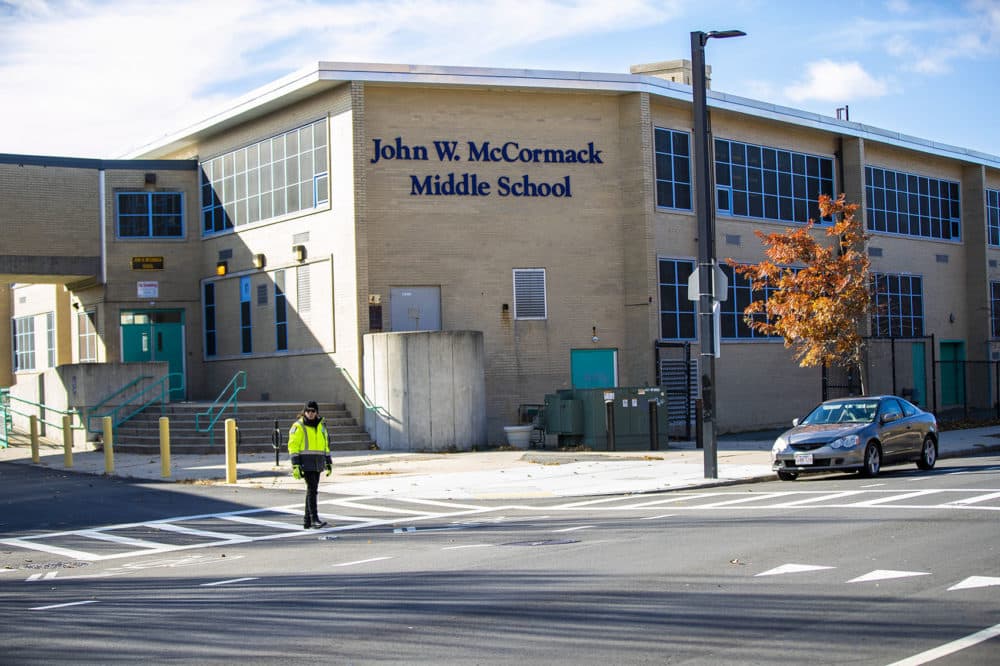
Neema Avashia learned that her middle school in Boston was going to close. She decided that she would stand and fight. She did. She is a true patriot. She made a difference. She defeated the powerful. She is a hero of the Resistance. She joins the honor roll of this blog.

She writes:

My gloves came off the day representatives of my school district told us they would be closing our school. Our students would be sent to a turnaround high school that had never taught middle school students. Recently arrived immigrant students in language-specific programs, which the high school did not offer, would be dispersed across the city. As for our staff, the representative from Human Capital glibly told us, “We have no plan for you.”

What does it mean when the school system that you’ve poured your heart into doesn’t have the decency to consider a thoughtful transition plan before making the decision to close your school?

It means they never saw you as human in the first place.

It means that your job, then, is to make it impossible for them to look away from your humanity.

I went home from work that afternoon and opened a Twitter account. Opponents of other district proposals had successfully used Twitter to shame city leadership into changing course.

The John W. McCormack Middle School on Columbia Point. (Jesse Costa/WBUR)

“I am a @McCormackMiddle teacher,” my first tweet read. “Today the district announced they will be closing my school, and I am left full of questions.”

Once I began, there was no stopping. I knew that if the McCormack closed, I would not be a teacher anymore. That the work it took to build these relationships, and this community, was not something I could take up a second time under the scepter of further closures.

On Twitter, I relentlessly poked holes in the plan: BuildBPS was founded on the premise of renovating pre-WWII buildings, yet our building was constructed in 1968. Multiple schools have failing heat systems and leaking roofs, but our building had received a new boiler, windows and roof within the last ten years. BuildBPS purported to prioritize the most vulnerable students, yet disrupted the education of our English Language Learners.

My recklessness knew no bounds. I went before the Boston School Committee and announced, “I’m here to give you a history lesson,” then reminded them that our students had merged with a turnaround previously — the elementary school next door — and that doing so had placed the elementary school under even higher scrutiny from the state.

Read her story. Hers is the kind of dedication that the corporate reformers and Disrupters can’t buy. She is a champion of children, not a billionaire’s lackey. She carries within her the spark of revolution that inspired patriots in the 18th century.  She is a patriot for our times, uncowed by  money and power.


In this comment, posted not long ago, reader Laura H. Chapman describes the Ohio view of education as workforce preparation. The pioneers of education had nobler goals. Above all, they considered the purpose of education to be preparation for citizenship in our emerging democracy. That meant literacy and numeracy but also character development with the hope of cultivating a commitment to democratic values and a readiness to participate in improving society on behalf of the community, not just oneself.

A resident of Ohio, Chapman describes the state’s narrow, utilitarian view of the goals of education. She notes that this goal was announced without any public discussion.

Several days ago, she wrote:


Today March 30, 2019, several Ohio newspapers had variations on the same announcement of a new non-profit headed by Lisa Gray, a long standing point person for the Bill and Melinda Gates Foundation. Gray is now the “founder” of Ohio Excels, a corporate-led non-profit intent of making evidence of job preparation the priority for all high school graduates . The mission statement also includes educational choice, a policy perfectly consistent with the view that early apprenticeships and career prep from preschool are the singularly important missions of Ohio’s public schools.

This set of policy and practice priorities, comes to us hard on after the State Board of Education published Each Child, Our Future. Ohio’s Strategic Plan for Education: 2019-2024 in June 2018. That plan also included a strong emphasis on workplace skills and early career education, notably with Lisa Gray participating in a “workgroup” on “ High School Success and Postsecondary Connections ” led by LEAH MOSCHELLA from JOBS FOR THE FUTURE (JFF) where Moschella is a senior program manager for the Pathways to Prosperity Network, a collaboration between the Harvard Graduate School of Education.

I judge that plan 2018 Ohio plan (a conceptual mishmash) left too many CEOs unhappy, so Ohio Excels will be putting a new plan is in place–one that is an offshoot of Jobs for the Future (JFF) and the Pathways to Prosperity Network.

I looked at the board of Ohio Excels and see lots of CEOs, many from activist positions in metro area business committees and civic and cultural groups. One is also on the board of Hillsdale College–a radical right school. I recognize another as a major supporter of the arts. Another was leading an initiative instigated by the MindTrust in Indianapolis, seeking more charter schools in Cincinnati with the usual patter about needing more “high quality seats.”

I am still unravelling the connections among all of these outfits, but so far I have discovered that JFF has received 35 grants for a total of about $122.5 million from the Bill and Melinda Gates Foundation dating from 2002. Early grants pushed the Common Core with “college and career” readiness, beginning in earnest in grade 9.

The Pathways to Prosperity Network has been funded within each member state (e.g., annual participation fee for California, $500,000) in addition to funds from the Carnegie Corporation of New York $450,000, the James Irvine Foundation (about $12 million, most in California), the Noyce Foundation (before it closed in 2015), and SAP an international Software company.

Jobs for the Future,appears to be inseparable from the Pathways to Prosperity Network. JFF has 18 projects in Ohio. All of these are designed to make Ohio education serve corporate interests. I have not yet done research on each of these projects.

Pathways to Prosperity Network (a project and all host to other efforts);
Center for Apprenticeship & Work-Based Learning;
Student-Centered Learning Research Collaborative;
Postsecondary State Network;
Student Success Center Network;
Nudging to STEM Success;
Early College;
Improved Reentry Education;
Jobs to Careers;
Counseling to Careers;
Middle-Skill STEM Pathways Initiative;
New Skills at Work;
Digital Career Accelerator;
Great Lakes College and Career Pathways Partnership;
Lumina Foundation Talent Hubs;
Google IT Support Professional Certificate;
Policy Leadership Trust, and the big surprise:
“Pay for Success in K–12 Education” wherein venture capitalists overtly hope to make money from turning K-12 education into a financial product with little or no public voice and oversight.

Jobs for the Future has “partners.” These are

GOOGLE,
California Endowment,
Salesforce.org (cloud computing, artificial Intelligence),
Educational Credit Management Corporation (ECMC) Foundation,
The James Irvine Foundation,
William and Flora Hewlett Foundation,
Social Finance (Pay for Success contracts), and yes–
US Department of LABOR and US Department of EDUCATION.

This national network of interlocking programs, foundations, and corporate groups has an agenda far removed from vocational eduction.

Ohio Excels, the new Ohio non-profit to be led by Lisa Gray has three staff and a policy agenda for public education that has not been shaped by public discussion. Our students are to part of the “talent pipeline” that CEOs say they want. Never mind what the life of our students may offer or require beyond getting a job and getting ready for a job beginning in Kindergarten. I hope to offer more detail about “Ohio Excels,” Jobs for the Future, and Pathways to Prosperity in another post.