Archives for category: Censorship

Arizona GOP legislators are introducing legislation that would carry criminal penalties for librarians who recommend sexually explicit books.

ArizonaCentral.com reports:

Children and teenagers’ access at public libraries could be significantly restricted if a bill at the Arizona Legislature were to become law.

Every year for the past four years, Republican lawmakers in Arizona have tried to build upon a 2022 law banning school employees from sharing material they defined as “sexually explicit” with anyone under 18.

The definition goes beyond the colloquial use of “sexually explicit” to include material that textually describes sexual intercourse or even touching someone’s “clothed … buttocks.”

The latest proposal would expand the ban to encompass every public library in Arizona, making it a Class 5 felony, punishable by up to 2.5 years in prison, for a librarian or library contractor to “refer” or “facilitate … access” to so-called sexually explicit material to minors. That penalty also would apply to public school employees.

A similar law in Idaho has resulted in adult-only libraries in some cities.

Legal experts have said the bill would apply to classics like “Romeo and Juliet,” the Bible or even the encyclopedia, likely in violation of the First Amendment. Plus, criminal penalties that wade into the speech of government employees, such as librarians, are likely unconstitutional, said First Amendment expert Eugene Volokh.

Republican Sen. Jake Hoffman of Queen Creek, the architect of the efforts, has described the effort as a common sense way to protect children’s innocence and claimed the bill’s criminal penalties are needed to force resistant government employees into compliance.

The Republican-majority House and Senate have multiple times advanced Hoffman’s bills to the governor’s desk. Democrat Katie Hobbs has vetoed them, calling them an “attack on public schools” and “little more than a thinly veiled effort to ban books.”

But the future of Hoffman’s library bill could change with a different governor. Hobbs faces re-election in 2026, and at least one of the Republican candidates for governor, U.S. Rep. Andy Biggs, already has told The Arizona Republic he would support the legislation, which he called “common sense” and “a smart way to protect our kids.”

If the Republican legislators think they are “protecting the innocence of children,” they are looking in the wrong places. They should turn their attention to the easily accessible content on television and the Internet, which may be far more salacious and far more graphic than the language in books. At least with books, kids are learning to read.

Ruth Marcus started her career at The Washington Post in 1984. She rose through the ranks and eventually became an editorial writer, a columnist, and deputy editor of the editorial page.

She wrote in The New Yorker about why she ultimately quit:

I stayed until I no longer could—until the newspaper’s owner, Jeff Bezos, issued an edict that the Post’s opinion offerings would henceforth concentrate on the twin pillars of “personal liberties and free markets,” and, even more worrisome, that “viewpoints opposing those pillars will be left to be published by others.” I stayed until the Post‘s publisher, Will Lewis, killed a column I filed last week expressing my disagreement with this new direction. Lewis refused my request to meet. (You can read the column in full below, but—spoiler alert—if you’re craving red meat, brace for tofu. I wrote the piece in the hope of getting it published and registering a point, not to embarrass or provoke the paper’s management.)

Is it possible to love an institution the way you love a person, fiercely and without reservation? For me, and for many other longtime staff reporters and editors, that is the way we have felt about the Post. It was there for us, and we for it. One Saturday night, in May, 1992, the investigative reporter George Lardner, Jr., was in the newsroom when he received a call that his twenty-one-year-old daughter, Kristin, had been shot and killed in Boston by an abusive ex-boyfriend. As I recall, there were no more flights that night to Boston. The Post’s C.E.O., Don Graham, chartered a plane to get Lardner where he needed to go. It was typical of Graham, a kindness that engendered the loyalty and affection of a dedicated staff.

Graham’s own supreme act of loyalty to the Post was his painful decision to sell the paper, in 2013, to Bezos, who made his vast fortune as the founder of Amazon. The Graham family was hardly poor, but in the new media environment—and under the relentless demands of reporting quarterly earnings—they were forced, again and again, to make trims, at a time when investment was needed. Instead of continuing to cut and, inevitably, diminish the paper that he loved, Graham carried out a meticulous search for a new owner with the resources, the judgment, and the vision to help the Post navigate this new era. Bezos—the “ultimate disrupter,” as Fortune had called him a year earlier—seemed the right choice.

For a long time, she writes, Bezos was a hands-off manager. During Trump’s first term, Bezos supported the newspaper’s editorial opposition to Trump’s 2016 election and its tough coverage of the chaotic Trump term.

She liked Bezos: In my experience of that time, Bezos came off as charming, smart, and unpretentious.

In 2020, the Washington Post endorsed Biden.

In 2024, Bezos stopped the editorial board from publishing its endorsement of Kamala Harris. The man Bezos selected as publisher was Will Lewis, a Brit who had worked in Rupert Murdoch’s media empire. Lewis defended the non-endorsement. Two opinion writers resigned, most signed a letter to Bezos objecting to his decision. Some 300,000 people cancelled their subscriptions.

After the election, Bezos seemed to fawn over Trump, defending him at every turn, donating to his inauguration fund. Two months after the election, Bezos offered Nelania $40 million to produce a documentary about her life in the White House. Many saw it as protection money.

Bezos defended his new view about Trump by saying that Trump had grown, was more deliberative since his last term. He told a reporter from The New York Times that Trump “is calmer than he was the first time and more confident, more settled.” Marcus said Bezos displayed “willful self-delusion.”

In early January, before the Inauguration, a cartoon by Pulitzer Prize-winning Ann Telnaes depicting the billionaires bowing to Trump was rejected by the editor David Shipley on grounds that it slduicated a column already published. Marcus thought this was an example of “obeying in advance,” that would not have happened if Bezos were not in charge.

Then came the order from Bezos on February 25, 2025, to editorial writers that The Post would publish only editorials and opinions that supported “free markets and personal liberties.” Those with opposing views would not appear in The Post.

No editorial writer had worked under these restrictions before. Marcus submitted a piece objecting to the restrictions; the publisher (Will Lewis) rejected it. She was stunned.

She tried to see him, but was told, “The decision is final.”

Marcus wrote:

So, too, was mine. I submitted my letter of resignation on Monday, to Bezos and Lewis. “Will’s decision to not run the column that I wrote respectfully dissenting from Jeff’s edict—something that I have not experienced in almost two decades of column-writing—underscores that the traditional freedom of columnists to select the topics they wish to address and say what they think has been dangerously eroded,” I wrote. “I love the Post. It breaks my heart to conclude that I must leave.”

The Washington Post that she had known and loved for forty-one years was dead.

All my life I have heard Republicans lecture about the importance of small government. They said that government should not try to control people, other than protecting their rights. A Republican named William Weld ran for Governor of Massachusetts on a pledge to get government out of our wallets and out of our bedrooms. For decades, Southern Republicans complained about the federal government intruding into “internal” issues like segregation.

How things have changed!

Under today’s Republican Party, the federal government assumes the power to snoop on you at all times.

A blogger who calls herself @JofromJerz posted the following sage observation on Substack:

Republicans want to decide what books you can read, what history your kids can learn, which medicines you’re allowed to take, what surgeries you can have, what gender you’re permitted to be, what sports you can play, which bathroom you can use, who you can love, and who you can marry.

They want to tell you how many dolls and pencils your kids can have and how much food they can eat.

They want to own your library, your classroom, your hospital bed, your bedroom, your remote control, your kitchen table, and your front door.

They want the right to break into your home, disappear your neighbor, take your children, beat you, execute you in the street, and then tell you—despite the evidence of your own eyes and ears—that what you saw is not what you have seen.

They want you afraid: afraid to record, to document, to criticize, to stand up, to speak out, to organize, to protest, to protect, to utter words they don’t like. They want to own the page, the pill, the joke, the chant, the kiss, the very pronoun in your mouth and the weapon on your waist. They want to decide where you can go, what you can say, and which of your rights they can take away.

They want the power to take your life and then lie about it.

They want to play judge, jury, and executioner and they want you to shut up about it or you’ll be next.

This is tyranny failing miserably to masquerade as order.

But sure—tell me how it’s the liberals who are “coming for your freedoms,” won’t you.

Heather Cox Richardson obtained a pamphlet written during World War II for our troops overseas. Its purpose was to explain the tactics of fascists: how they gain power, how they lie to distort reality, how they use hatred to divide and conquer.

The pamphlet is insightful, incisive, and remarkably relevant to the world we live in now.

What we are learning is that “It can happen here.” We must arm ourselves with knowledge to preserve our democracy.

She writes:

Beginning in 1943, the War Department published a series of pamphlets for U.S. Army personnel in the European theater of World War II. Titled Army Talks, the series was designed “to help [the personnel] become better-informed men and women and therefore better soldiers.”

On March 24, 1945, the topic for the week was “FASCISM!”

“You are away from home, separated from your families, no longer at a civilian job or at school and many of you are risking your very lives,” the pamphlet explained, “because of a thing called fascism.” But, the publication asked, what is fascism? “Fascism is not the easiest thing to identify and analyze,” it said, “nor, once in power, is it easy to destroy. It is important for our future and that of the world that as many of us as possible understand the causes and practices of fascism, in order to combat it.”

Fascism, the U.S. government document explained, “is government by the few and for the few. The objective is seizure and control of the economic, political, social, and cultural life of the state.” “The people run democratic governments, but fascist governments run the people.”

“The basic principles of democracy stand in the way of their desires; hence—democracy must go! Anyone who is not a member of their inner gang has to do what he’s told. They permit no civil liberties, no equality before the law.” “Fascism treats women as mere breeders. ‘Children, kitchen, and the church,’ was the Nazi slogan for women,” the pamphlet said.

Fascists “make their own rules and change them when they choose…. They maintain themselves in power by use of force combined with propaganda based on primitive ideas of ‘blood’ and ‘race,’ by skillful manipulation of fear and hate, and by false promise of security. The propaganda glorifies war and insists it is smart and ‘realistic’ to be pitiless and violent.”

Fascists understood that “the fundamental principle of democracy—faith in the common sense of the common people—was the direct opposite of the fascist principle of rule by the elite few,” it explained, “[s]o they fought democracy…. They played political, religious, social, and economic groups against each other and seized power while these groups struggled.”

Americans should not be fooled into thinking that fascism could not come to America, the pamphlet warned; after all, “[w]e once laughed Hitler off as a harmless little clown with a funny mustache.” And indeed, the U.S. had experienced “sorry instances of mob sadism, lynchings, vigilantism, terror, and suppression of civil liberties. We have had our hooded gangs, Black Legions, Silver Shirts, and racial and religious bigots. All of them, in the name of Americanism, have used undemocratic methods and doctrines which…can be properly identified as ‘fascist.’”

The War Department thought it was important for Americans to understand the tactics fascists would use to take power in the United States. They would try to gain power “under the guise of ‘super-patriotism’ and ‘super-Americanism.’” And they would use three techniques:

First, they would pit religious, racial, and economic groups against one another to break down national unity. Part of that effort to divide and conquer would be a “well-planned ‘hate campaign’ against minority races, religions, and other groups.”

Second, they would deny any need for international cooperation, because that would fly in the face of their insistence that their supporters were better than everyone else. “In place of international cooperation, the fascists seek to substitute a perverted sort of ultra-nationalism which tells their people that they are the only people in the world who count. With this goes hatred and suspicion toward the people of all other nations.”

Third, fascists would insist that “the world has but two choices—either fascism or communism, and they label as ‘communists’ everyone who refuses to support them.”

It is “vitally important” to learn to spot native fascists, the government said, “even though they adopt names and slogans with popular appeal, drape themselves with the American flag, and attempt to carry out their program in the name of the democracy they are trying to destroy.”

The only way to stop the rise of fascism in the United States, the document said, “is by making our democracy work and by actively cooperating to preserve world peace and security.” In the midst of the insecurity of the modern world, the hatred at the root of fascism “fulfills a triple mission.” By dividing people, it weakens democracy. “By getting men to hate rather than to think,” it prevents them “from seeking the real cause and a democratic solution to the problem.” By falsely promising prosperity, it lures people to embrace its security.

“Fascism thrives on indifference and ignorance,” it warned. Freedom requires “being alert and on guard against the infringement not only of our own freedom but the freedom of every American. If we permit discrimination, prejudice, or hate to rob anyone of his democratic rights, our own freedom and all democracy is threatened.”

Notes:

https://onlinebooks.library.upenn.edu/webbin/serial?id=armytalks

War Department, “Army Talk 64: FASCISM!” March 24, 1945, at https://archive.org/details/ArmyTalkOrientationFactSheet64-Fascism/mode/2up

Trump’s brazen appropriation of the John F. Kennedy Center for the Performing Arts was shocking. Its board has been bipartisan since its opening more than fifty years ago. Trump fired the board members named by Biden, replaced them with his loyal allies, named himself chairman of the board, then was shocked, shocked, when the board decided to put his name on the Center, now the Donald J. Trump & John F. Kennedy Center for the Performing Arts. The logo was designed before the vote.

The name-change was disrespectful of President Kennedy and typically self-aggrandizing for Trump.

The Center was first conceived as a “national cultural center” in 1955 during the Presidency of Dwight D. Eisenhower. In 1964, Congress named the Center as a living tribute to the assassinated President Kennedy, who was a lover of the arts and who helped raise money for the new Center. Only Congress can change its name.

It opened on September 9, 1971, with Leonard Bernstein’s controversial MASS, commissioned by Jacqueline Kennedy Onassis. Read its history here. The MASS was both anti-war and anti-establishment and was a mixture of styles and genres.

In Trump’s many years as a resident of New York City, he never showed any interest in the arts.

Two performers who were scheduled to appear at the Kennedy Center recently canceled their appearances. (Many others had previously canceled after Trump’s takeover, including the blockbuster show HAMILTON, which was supposed to run from March 3 to April 26, 2026.)

One was Chuck Redd, a musician, who had been host of the Center’s annual Christmas Eve Jazz Concert for nearly two decades. Redd objected to the name change and canceled his appearance, which canceled the event as well.

Richard Grennell, Trump’s choice to be president of the Center, sent a letter to Redd informing him that the Center would be suing him for $1 million.

Adele M. Stan wrote in The New Republic:

The grounds for the suit aren’t entirely clear. The thing is, the Kennedy Center lost zero dollars due to Redd’s cancellation; it was a free concert. The only people who lost money due to vibrophonist’s protest were Redd and likely the musicians who were scheduled to perform with him. And, of course, one could argue that Redd’s move actually saved the Kennedy Center money, on staff and heating and the like.

But that didn’t stop Kennedy Center president Richard Grenell from either lying about that or displaying ignorance in his letter threatening Redd: “Your dismal ticket sales and lack of donor support, combined with your last-minute cancellation has cost us considerably,” Grenell wrote to Redd in an undated letter released on December 26. “This is your official notice that we will seek $1 million in damages from you for this political stunt.”

How one has “dismal ticket sales” for a free concert is never explained. However, the Washington Post reports that sales for tickets that cost actual money, such as those for the National Symphony Orchestra or the ballet, have plummeted since Grenell took over the Kennedy Center, reaching their lowest levels since the pandemic.

A second performer who took umbrage at the politicization of the Kennedy Center was a country singer from Mobile, Alabama, named Kristy Lee.

You may or may not have heard of her (count me among the not), but she sure nailed it.

The Daily Beast reported:

The artist who pulled out of a performance at the Kennedy Center after Donald Trump slapped his name on the storied arts institution is being lauded by fans for her decision.

Kristy Lee, a folk singer from Mobile, Alabama, told fans in a statement that she couldn’t “sleep at night” if she went through with her performance at the former John F. Kennedy Memorial Center for the Performing Arts, which was scheduled for Jan. 14.

“When American history starts getting treated like something you can ban, erase, rename, or rebrand for somebody else’s ego, I can’t stand on that stage and sleep right at night,” Lee shared with her 42,000 Facebook followers on Monday.

As of publication, the independent folk singer received nearly 300,000 likes on her Facebook post, compared to her 42,000 followers. 

Her cancellation came after the White House announced Thursday that the John F. Kennedy Memorial Center for the Performing Arts would be renamed to include Trump’s name following a vote by the venue’s board, which is now stacked with MAGA loyalists.

“I won’t lie to you, canceling shows hurts. This is how I keep the lights on,” the independent artist wrote. “But losing my integrity would cost me more than any paycheck.”

After Lee made headlines for pulling out of the show, she said she was flooded with messages of support—and even monetary donations. The singer later announced she would perform a live show from home in response to the outpouring of love.”I believe in the power of truth, and I believe in the power of people,” Lee wrote on Facebook. Chad Edwards/Courtesy of Kristy Lee/Chad Edwards 

“I want to thank everyone who’s reached out, and especially those who sent a surprise Venmo,” she wrote. “That kind of kindness keeps gas in the tank and songs on the road, and I don’t take it lightly.”

A spokesperson for Lee told The Daily Beast that the singer cited “institutional integrity” as her primary reason for canceling her performance at the venue, where ticket sales have reportedly plummeted since Trump’s takeover.

“As an artist, Kristy believes publicly funded cultural spaces must remain free from political capture, self-promotion, or ideological pressure,” the spokesperson said, adding that her decision was not directed at any patrons, staff, or artists at the Center. 

“Performing under these circumstances would conflict with the values of artistic freedom, public trust, and constitutional principles that the Kennedy Center was created to uphold.”

Trump set his sights on the Center months ago and has repeatedly suggested, both in speeches and on social media, that it be renamed the Trump-Kennedy Center. The board now includes White House Chief of Staff Susie Wiles, Attorney General Pam Bondi, second lady Usha Vance, Deputy White House Chief of Staff Dan Scavino, and Allison Lutnick, the wife of Commerce Secretary Howard Lutnick.

A source told CNN that Trump phoned into Thursday’s board meeting ahead of the vote. A day later, the president’s name was swiftly and conspicuously added to the building, which now reads: “The Donald J. Trump and The John F. Kennedy Memorial Center for the Performing Arts.”

The Daily Beast has reached out to the Kennedy Center for comment.

Redd and Lee are the latest to cancel. Ticket sales have plummeted since Trump took control of the Kennedy Center in February.

The Washington Post reported:

In the weeks after the February board changes, at least 20 productions were canceled or postponed, with names such as comedian and actor Issa Rae pulling out of planned performances at the center, and musical artist Ben Folds and opera singer Renée Fleming saying they were stepping down as artistic advisers.

Dan Rather, legendary newsman, spent decades at CBS. Now, in retirement, he continues to have good sources at the network. In his blog “Steady,” he explains the back story of the censorship of the “60 Minutes” expose of inhumane conditions at the prison in El Salvador to which the Trump administration sent alleged terrorists.

He titled this piece “One Courageous Correspondent.”

CBS News “60 Minutes” correspondent Sharyn Alfonsi is walking the walk.

What she has done for journalism in the last two days is about as important, and courageous as it gets. With her cherished journalistic institution threatened, and her career on the line, Alfonsi is sounding the alarm that “60 Minutes” is sliding further into an increasingly irretrievable and dark place.

The Steady team spoke to sources inside the broadcast today to find out exactly what happened when the new CBS News boss, Bari Weiss, spiked a highly promoted piece at the last minute.

On background, we learned that Alfonsi and producer Oriana Zill de Granados had for months been working on a story about the Trump administration’s illegal deportations of Venezuelan migrants to CECOT, a maximum-security prison in El Salvador.

They interviewed former inmates about the brutal and torturous conditions inside the notorious prison. This is the place where Trump sent hundreds of Venezuelans he alleged were terrorists with gang ties. Human Rights Watch found that the 252 men were subject to “arbitrary detention and enforced disappearance.”

As part of the reporting, they repeatedly asked the White House, the Department of Homeland Security, and the State Department for comment, but received no response. That is no surprise since this story would be another black mark on Trump’s draconian immigration agenda.

Last Thursday, after the story had been fully fact-checked and legally vetted by CBS lawyers and its Standards and Practices team, the piece was screened for a fifth and final time for CBS News executives. Weiss was supposed to attend but did not.

She did, however, screen the story several hours later. At 11:50 p.m. Thursday, Weiss emailed the broadcast’s executive producer, Tanya Simon, outlining a few issues she had with the piece that she called “incredibly powerful.”

On Friday morning, Alfonsi made several changes to the script to address Weiss’s concerns, believed it was ready for air, and recorded her in-studio introduction 

The listing of Sunday night’s “60 Minutes” pieces was released, which included Alfonsi’s “Inside CECOT.” Promos began to air, including on social media. The “Inside CECOT” clip on Instagram quickly racked up 4 million views, significantly more than usual.

But by Saturday morning, something changed. In an unprecedented move, Weiss reached out to Simon again. Her biggest issue now was the lack of response from the Trump administration. It was the first time she raised this concern.

“I realize we’ve emailed the DHS spox, but we need to push much harder to get these principals on the record,” Weiss wrote. She even provided phone numbers for Stephen Miller, the architect of Trump’s immigration policies, and border czar Tom Homan.

Not long after, Weiss killed the story, though promos kept running and the piece was still listed as airing.

Late on Sunday afternoon, just three hours before air time, “60 Minutes” posted an editor’s note on social media: “The broadcast lineup for tonight’s edition of 60 Minutes has been updated. Our report ‘Inside CECOT’ will air in a future broadcast.”

Within two hours, Alfonsi sent an email to her fellow correspondents and the production team that worked on the piece. “Our story was screened five times and cleared by both CBS attorneys and Standards and Practices. It is factually correct. In my view, pulling it now — after every rigorous internal check has been met — is not an editorial decision, it is a political one,” she wrote.

She continued, “Our viewers are expecting it. When it fails to air without a credible explanation, the public will correctly identify this as corporate censorship. We are trading 50 years of ‘gold standard’ reputation for a single week of political quiet.”

Alfonsi then addressed Weiss’s issue with the administration’s decision not to respond. “Government silence is a statement, not a VETO. Their refusal to be interviewed is a tactical maneuver designed to kill the story. If the administration’s refusal to participate becomes a valid reason to spike a story, we have effectively handed them a ‘kill switch’ for any reporting they find inconvenient.”

Alfonsi is the definition of courage. Kudos to her for speaking truth to power. The hard-won reputation of America’s most trusted television news program, and a big-time money maker for Paramount, is suddenly on the line.

During the CBS News morning editorial call on Monday, Weiss defended her decision. “I held a ‘60 Minutes’ story because it was not ready… We need to be able to get the principals on the record and on camera.”

Nothing happens in a vacuum in Trump World. The killing of the CECOT piece is no exception.

In August, David Ellison, the scion of Oracle founder and Trump supporter Larry Ellison, purchased CBS parent company Paramount. The acquisition by Ellison’s Skydance needed administration approval, which Trump’s regulators signed off on to the deep-pocketed Ellisons.

They signed off only after CBS agreed to settle a specious lawsuit in which Trump accused the network of deceitfully editing a “60 Minutes” interview with Vice President Kamala Harris during the presidential campaign.

As per usual, Trump’s warm and fuzzy feelings toward his sycophants was fleeting.

“For those people that think I am close with the new owners of CBS, please understand that 60 Minutes has treated me far worse since the so-called ‘takeover,’ than they have ever treated me before,” Trump posted on social media last week.

Friday night, at a rally in North Carolina, Trump said, “I love the new owners of CBS. Something happens to them, though. ‘60 Minutes’ has treated me worse under the new ownership… they just keep hitting me, it’s crazy.”

How Trump feels about the Ellisons is especially important right now as Paramount Skydance attempts a hostile takeover of another media giant, Warner Bros. Discovery. And once again, the Ellisons, who have been major donors to Trump, need governmental approval.

The president’s hatred of the revered news magazine seems to have been rekindled by a recent Lesley Stahl interview with the president’s newest nemesis, Rep. Marjorie Taylor Greene.

Right after that interview aired, he posted, “THEY ARE NO BETTER THAN THE OLD OWNERSHIP. Since they bought it, 60 Minutes has actually gotten WORSE!”

Not coincidentally, “Bari Weiss got personally involved,” with stories about politics after the Greene interview, a “60 Minutes” insider told CNN.

This brings us back to Alfonsi’s piece, which had the unfortunate luck of being scheduled to air the evening before David Ellison upped his bid for Warner Bros. Discovery. Staying in Trump’s good graces is, well, paramount at the moment.

The day Skydance bought Paramount was a dark day for CBS News and journalism as a whole. When Weiss, with no television reporting or news production experience, was installed as CBS News editor-in-chief, my heart sank again.

If the Trump administration doesn’t want to comment, they won’t, and didn’t. It happens dozens of times a day, every day to every journalist trying to cover this facts-adverse administration. No amount of wishing, or asking, or begging will make it happen. Weiss’s knee-jerk reaction was just an excuse. 

The day has been filled with talk of journalists walking away from “60 Minutes.” As one insider told us, we have got nothing left but our integrity.

What happened to Alfonsi’s piece is no less hard to take even though anyone could see it coming. The barbarians are no longer at the gate. They have breached the walls and are now running the show.

As has been widely reported, CBS’ “60 Minutes” announced that it would release a program about the notorious prison in El Salvador– CECOT–where the U.S. sent migrant prisoners, who were allegedly hardened criminals, “the worst of the worst.”

The program interviews released prisoners, who describe torture, beatings, and inhumane conditions that would never be permitted in U.S. prisons. It also reviewed records and concluded that few of those sent to CECOT were hardened criminals or terrorists.

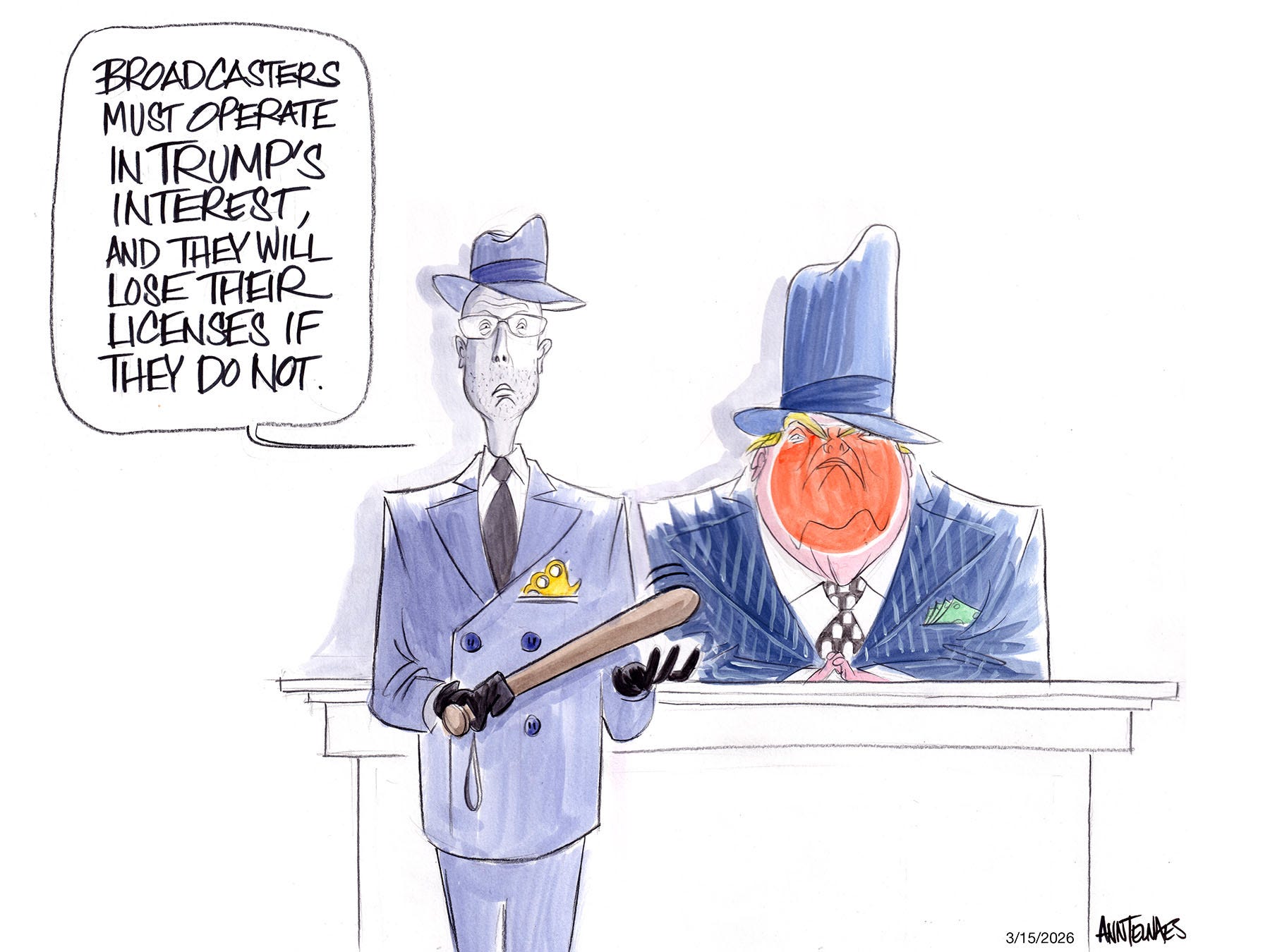
Bari Weiss, the editor-in/chief of CBS News, stopped the release of the segment because no one in the Trump administration agreed to respond to it. Critics said that if that was legitimate grounds for blocking a story, the Trump administration could block all critical coverage by refusing to comment.

After CBS was sold to the Ellison billionaires, David Ellison hired Bari Weiss to be editor-in-chief and bought her website “The Free Press” for $150 million. Weiss has no experience in the broadcast industry.

Apparently the show aired in Canada, where a viewer copied it and posted it on Reddit.

Here is the link on Reddit. Decide for yourself whether Weiss was right to stop the show until someone from the Trump administration commented.

“Go to ProgressiveHQr/ProgressiveHQ13h agoCrystalVibes52

The 60 minutes interview that was not aired in the US was aired and recorded in Canada and posted on YouTube. It has since been taken down. No worries though, I screen recorded it.

See it before it is taken down.

It was originally posted on YouTube but was taken down.

Many powerful people have a vested interest in making sure that the public never sees what and who is in the Epstein files. Democrats, Republicans, powerful corporate leaders. They prefer to keep the files under lock and key.

But didn’t Congress just pass a law requiring the release of those files? Didn’t Trump sign the legislation? Even though no legislation was needed, because Trump always had the power to release the files.

Ethan Faulkner, who blogs at Substack as the “Common Sense Rebels,” says that the files that are released will be carefully redacted and curated. Most, he writes, will never be released. Who used Epstein’s services? The names the public wants to know will be blacked out.

He writes:

Everyone imagines a government cover-up as a team of men in suits throwing files into a furnace.

That’s fiction.
The real cover-up is boring. It’s procedural. It’s legal.
And it works.
The United States doesn’t destroy evidence. It manufactures delays.
It fabricates uncertainty.
It deploys exemptions instead of fire.
The truth isn’t burned.
It’s redacted.
And the machinery that performs this ritual — the system that is right now digesting the Epstein files — is something I’m calling:
The Redaction Engine.
Once you understand this machine, the Transparency Act stops looking like a win and starts looking like a transmission belt feeding secrets into a shredder that no one touches by hand.

  1. The Architecture of Obscurity
    FOIA was sold as a “Right to Know” law.
    What Congress actually built is a filtration system — and one that agencies quickly learned how to weaponize.
    Inside the FOIA framework sits a set of exemptions that function like hardware components in an industrial shredder. The Redaction Engine uses them as gears.
    According to the technical audit in The Redaction Engine: National Security Information Control Architectures , the most powerful of these gears are:
    Exemption 1 — The National Security Black Hole
    Everything “classified” stays sealed.
    But classification isn’t an objective fact — it’s a prediction.
    The law only requires a “reasonable expectation” of harm.
    Speculation becomes legal justification.
    Courts almost never challenge it. They review whether the stamp was applied correctly — not whether the classification itself is absurd. That is not oversight. That is choreography.
    Exemption 3 — The Files That Don’t Exist
    This one is an entire legal universe.
    Statutes like the CIA Information Act let agencies designate “Operational Files” that don’t even have to be searched. They can legally pretend an entire category of documents has left the physical plane.
    The public can’t request what the government asserts is not real.
    Exemption 5 — The “Embarrassment Privilege”
    The “Deliberative Process” clause was meant to protect drafts and brainstorming.
    Instead, agencies use it to hide:

*evidence of wrongdoing

*internal dissent

*contradictory analysis

-*early warnings that were ignored

It’s the single most abused exemption in the system.
And then there’s the Mosaic Theory.
This is the government’s favorite intellectual cheat code.
It says:
Even harmless information must be hidden, because it might complete a larger secret picture.
Meaning they can withhold anything, because everything is theoretically meaningful.
This is the neural network of the Redaction Engine.
A legal philosophy that transforms silence into law.

2. The “Active Investigation” Loophole

If the national-security exemptions are the shield, Exemption 7(A) is the sword.
This single exemption — explained in The Active Investigation Shield in Federal Information Law — is the most devastating transparency-killer in the entire system.
It says the government can withhold any record if releasing it could reasonably be expected to interfere with an enforcement proceeding.
Notice that phrase again:
Could. Reasonably. Be expected.
Before 1986, the government had to prove disclosure would interfere.
Then Congress changed one word —
and agencies gained the power to hide anything under the logic of “maybe.”

This birthed the most sinister creature in federal information law:


3. The Zombie Investigation.

An investigation that:

*is technically open

*is not being actively worked

*has no timeline

*and can remain “pending” for decades

Jimmy Hoffa’s file?

Withheld for twenty years because “new leads could theoretically emerge.”

This is not oversight.

This is a loophole weaponized into a vault.

Once an investigation is declared “active,” the Redaction Engine locks the file indefinitely.

At this point, open the link and read the rest for yourselves!

Trump said he would close the Department of Education, and he’s well on the way to closing a Congressionally-authorized Department without asking Congress for permission.

He and wrestling entrepreneur Linda McMahon have decided that the Department is responsible for stagnant test scores. Nothing could be stupider but what would one expect from people who look with contempt on education. Especially public schools.

I cannot explain their thinking but know this: Trump wants to destroy research into science and medicine. He wants to control the curriculum and to ban teaching about race, ethnicity and gender.

As Forrest Gump’s mother taught him: “Stupid is as stupid does.”

Michael C. Bender of The New York Times wrote:

The Trump administration announced on Tuesday an aggressive plan to continue dismantling the Education Department, ending the agency’s role in supporting academics at elementary and high schools and in expanding access to college.

Those responsibilities will instead be largely taken over by the Labor Department.

Additional changes include moving a child care grant program for college students and foreign medical school accreditation to the Health and Human Services Department, and transferring Fulbright programs and international education grants to the State Department. The Interior Department will take over the Indian Education Office.

Shifting duties away from the Education Department aligns with President Trump’s goal of eventually closing the agency, a move opposed by teachers’ unions and student rights groups and one that can only be accomplished with an act of Congress.

Less clear was how moving programs to other agencies aligned with Mr. Trump’s reason for closing the Education Department, which he has said was to give states more power in shaping school policies. A senior official at the Education Department said the changes would streamline bureaucracy so that “at the end of the day, it means more dollars to the classroom.”

“Cutting through layers of red tape in Washington is one essential piece of our final mission,” Education Secretary Linda McMahon said in a statement, adding that the changes were an attempt to “refocus education on students, families and schools.”

The plan drew some immediate blowback from Republicans, including Representative Brian Fitzpatrick of Pennsylvania, who said in a statement that the “department’s core offices are not discretionary functions.”

“They are foundational,” Mr. Fitzpatrick said. “They safeguard civil rights, expand opportunity, and ensure that every child, in every community, has the chance to learn, grow and succeed on equal footing.”

Kevin Carey, the vice president for education and work at New America, a nonpartisan think tank in Washington, said the changes were “wasteful, wrong and illegal.”

“Secretary McMahon is creating a bureaucratic Rube Goldberg machine that will waste millions of taxpayer dollars by outsourcing vital programs to other agencies,” Mr. Carey said. “It’s like paying a contractor double to mow your lawn and then claiming you’ve cut the home maintenance budget. It makes no sense.”

Administration officials have pointed to the recent federal shutdown to justify the moves, noting that schools remained open and students continued to be taught despite nearly all of the Education Department’s staff having been furloughed.

The department has posted several social media memes making such a point. In an X post last week, the department announced that federal workers were returning to the office, adding, “But let’s be honest: did you really miss us at all?”

Liz Huston, a White House spokeswoman, said the administration was committed to shrinking the agency “while still ensuring efficient delivery of funds and essential programs.”

“The Democrat shutdown made one thing unmistakably clear: Students and teachers don’t need Washington bureaucrats micromanaging their classrooms,” Ms. Huston said.

Republicans in charge of the House and Senate in Washington have signaled little enthusiasm for voting on a bill to close the department, which was created by an act of Congress in 1979.

Mr. Trump has also shown little interest in collaborating with Congress in his bid to reshape the federal government, and his administration has continued to seek ways to diminish the Education Department.

“We’re going to shut it down, and shut it down as quickly as possible,” Mr. Trump said in March after signing an executive orderthat directed Education Secretary Linda McMahon to start razing the department.

Ms. McMahon’s first act after joining Mr. Trump’s cabinet this year was to instruct the department’s staff to prepare for its “final mission” of shuttering the agency. The following week, Ms. McMahon fired 1,315 of those workers.

The layoffs decimated the department’s Office for Civil Rights, which was created to enforce Congress’s promise of equal educational opportunity for all students, and eliminated the agency’s research armdedicated to tracking U.S. student achievement, which for many students is at three-decade lows.

In July, after the Supreme Court cleared the way for mass layoffs at the department, the administration moved adult education, family literacy programs and career and technical education to the Labor Department.

In Pennsylvania school board races, extremists who provoked battles over culture war issues were ousted. One winner said that parents looked forward to the days when school board meetings were “boring,” not divisive.

Pittsburgh’s NPR station WESA reported:

A slate of Democratic candidates won four seats on the Pine-Richland school board last night and unseated one incumbent with ties to a statewide movement of conservative education leaders.

The sweep capped an Election Day marked by Democratic victories in school board races statewide.

Pine-Richland electee Randy Augustine and his peers on the Together for PR slate won over voters with slogans like “excellence over extremism.”

“School board positions are theoretically supposed to be non-partisan, non-political positions,” Augustine said. “A number of the school board members were trying to push a political agenda, focusing on culture war issues, not focusing on the students.”

The Republican-led school board initiated policies that gave board members the final say over which books were included in school libraries and challenged books with LGBTQ characters. The district’s teachers union issued a vote of no confidence in the majority of school board members this spring.

“ It was becoming toxic, and the turmoil, I think, was spreading,” said fellow Together for PR winner Melissa Vecchi. “People just wanted to see it back to boring.”