Conservative Hillsdale College in Michigan has a chain of charter schools that use its “classical” curriculum. One of its affiliate schools, the Tallahassee Classical Charter School, made headlines last week when the principal was fired after a teacher showed the statue of Michelangelo’s “David” to an art class.
A Michigan college has ended its relationship with the Florida charter school whose principal was pressured to resign after parents complained that her Renaissance art syllabus, which included a picture of Michelangelo’s David, was inappropriate for sixth-graders.
The Tallahassee Classical School, which was licensed to use Hillsdale College’s classical education curriculum, is no longer affiliated with the small, Christian college, Hillsdale spokesperson Emily Stack Davis said in a statement to MLive.com.
“This drama around teaching Michelangelo’s David sculpture, one of the most important works of art in existence, has become a distraction from, and a parody of, the actual aims of classical education,” Davis said. “Of course, Hillsdale’s K-12 art curriculum includes Michelangelo’s Davidand other works of art that depict the human form.”
The chair of the board of the school explained that children should see only parts of the statue, depending on their age.
“Showing the entire statue of David is appropriate at some age,” said Bishop.
“We’re going to figure out when that is,” he added. “And you don’t have to show the whole statue! Maybe to kindergartners we only show the head. You can appreciate that. You can show the hands, the arms, the muscles, the beautiful work Michelangelo did in marble, without showing the whole thing.”
Drag queens dressed in colorful gowns hold a mock wedding to raise money for a local Black church.
At a Miami club, a popular drag king entertains hordes of people.
Local newspaper editorials call for an end to LGBTQ discrimination.
And queer couples fall in love.
These aren’t stories of Miami today. They’re glimpses of Miami’s Black LGBTQ history dating back to the 1940s.
“Give Them Their Flowers,” a new exhibition at the Little Haiti Cultural Center Art Gallery, displays and celebrates Miami’s under-documented Black LGBTQ community at a time when Florida’s government has become increasingly hostile toward Black and LGBTQ representation.
The project, on view until April 23, is the most relevant exhibition in Miami right now.
“This is a space that celebrates, honors and makes visible what has always been here,” said Nadege Green, the exhibition’s co-curator and founder of historical storytelling platform Black Miami-Dade.
“There’s something that happens, especially around LGBTQ+ folks, where sometimes you feel like you remain invisible, and this fully rejects that.”
Since the show was years in the making, it wasn’t meant to be a response to the current political moment, said Marie Vickles, the curator-in-residence at the Little Haiti Cultural Center who co-curated the show with Green. Still, Vickles said, the show underscores the importance of researching Black, queer Floridian history….
“We’re here, we’re queer, we’re Black in Miami,” she added. “And that is a story worth telling.”
The principal of the Classical Charter School in Tallahassee was told to resign or be fired after a parent complained that a sixth grade art class saw a “pornographic” photograph of a sculpture. It was a picture of Michelangelo’s masterpiece “David.” Considered one of the greatest sculptures in the world, “David” is a massive piece of marble that is the centerpiece of the Accademia Gallery of Florence (Galleria dell’Accademia di Firenze) in Florence, Italy.
The Tallahassee Classical Charter School follows the Hillsdale College curriculum, supposedly based on the classics. The “David” is certainly a great classical work of art.
I tend to think of a classical education as being the mode in the 17th, 18th century, where you study the Greeks and Romans, and Western civilization is central. A tutor or teacher is the expert, and that teacher drives the curriculum. You’re describing something where it seems the parents drive the curriculum. How does your classical education differ from the classical education as I think of it?
What kind of question is that, Dan? I don’t know how they taught in the 17th, 18th century, and neither do you. You live in New York?
Virginia.
You’ve got a 212 number. That’s New York.
I lived in New York when I got the cellphone, many years ago. Now I live in Virginia.
Well, we’re Florida, OK? Parents will decide. Parents are the ones who are going to drive the education system here in Florida. The governor said that, and we’re with the governor. Parents don’t decide what is taught. But parents know what that curriculum is. And parents are entitled to know anytime their child is being taught a controversial topic and picture.
Parents choose this school because they want a certain kind of education. We’re not gonna have courses from the College Board. We’re not gonna teach 1619 or CRT crap. I know they do all that up in Virginia. The rights of parents, that trumps the rights of kids. Teachers are the experts? Teachers have all the knowledge? Are you kidding me? I know lots of teachers that are very good, but to suggest they are the authorities, you’re on better drugs than me.
Please read the full interview.
I would like to give credit for the meme below. I found it on the Twitter feed of “Trump is Putin’s Puppet.” The person who posted it said was time to add Art to the list of bans.
Hannah Natanson of the Washington Post wrote about the rapidly spreading censorship that is casting a pall over many classrooms. State legislatures in red states have passed scores of laws describing in vague terms what teachers are not allowed to teach, even if it is factually accurate. Imagine a teacher told he must not say that slavery was wrong. Teachers comply rather than be fired. Some quit. And people wonder why there are teacher shortages!
She writes:
Excerpts from Mary Wollstonecraft’s “A Vindication of the Rights of Woman.” Passages from Christopher Columbus’s journal describing his brutal treatment of Indigenous peoples. A data set on the New York Police Department’s use of force, analyzed by race.
These are among the items teachers have nixed from their lesson plans this school year and last, as they face pressure from parents worried about political indoctrination and administrators wary of controversy, as well as a spate of new state laws restricting education on race, gender and LGBTQ issues.
“I felt very bleak,” said Lisa Childers, an Arkansas teacher who was forced by an assistant principal, for reasons never stated, into yanking Wollstonecraft’s famous 1792 polemic from her high school English class in 2021.
The quiet censorship comes as debates over whether and how to instruct children about race, racism, U.S. history, gender identity and sexuality inflame politics and consume the nation. These fights, which have already generated at least 64 state laws reshaping what children can learn and do at school, are likely to intensify ahead of the 2024 presidential election. At the same time, an ascendant parents’ rights movement born of the pandemic is seeking — and winning — greater control over how schools select, evaluate and offer children access to both classroom lessons and library books.
In response, teachers are changing how they teach.
A study published by the Rand Corp. in January found that nearly one-quarter of a nationally representative sample of 8,000 English, math and science teachers reported revising their instructional materials to limit or eliminate discussions of race and gender. Educators most commonly blamed parents and families for the shift, according to the Rand study.
The Washington Post asked teachers across the country about how and why they are changing the materials, concepts and lessons they use in the classroom, garnering responses from dozens of educators in 20 states.
Here are six things some teachers aren’t teaching anymore.
“Slavery Is Wrong”
Greg Wickenkamp began reevaluating how he teaches eighth-grade social studies in June 2021, when a new Iowa law barred educators from teaching “that the United States of America and the state of Iowa are fundamentally or systemically racist or sexist.”
That fall, Wickenkamp repeatedly sought clarification from the Fairfield Community School District about what he could say in class, according to emails obtained by The Post. He sent detailed lists of what he was teaching and what he planned to teach and asked for formal approval, drawing little response. At the same time, Wickenkamp was fielding unhappy emails and social media posts from parents who disliked his enforcement of the district’s masking policy and his use of Reynolds and Kendi’s text. A local politicianalleged that Wickenkamp was teaching children critical race theory, an academic framework that explores systemic racism in the United States and a term that has become conservatives’ catchall for instruction on race they view as politically motivated.
Finally, on Feb. 8, 2022, at 4:05 p.m., Wickenkamp scored a Zoom meeting with Superintendent Laurie Noll. He asked the question he felt lay at the heart of critiques of his curriculum. “Knowing that I should stick to the facts, and knowing that to say ‘Slavery was wrong,’ that’s not a fact, that’s a stance,” Wickenkamp said, “is it acceptable for me to teach students that slavery was wrong?”
Noll nodded her head, affirming that saying “slavery was wrong” counts as a “stance.”
“We had people that were slaves within our state,” Noll said, according to a video of the meeting obtained by The Post. “We’re not supposed to say to [students], ‘How does that make you feel?’ We can’t — or, ‘Does that make you feel bad?’ We’re not to do that part of it.”She continued: “To say ‘Is slavery wrong?’ — I really need to delve into it to see is that part of what we can or cannot say. And I don’t know that, Greg, because I just don’t have that. So I need to know more on that side.”
As Wickenkamp raised his eyebrows and pursed his lips, she added, “I’m sorry, on that part.”Wickenkamp left the Zoom call. At the close of the year, he left the teaching profession.
Contacted for comment, Noll wrote in a statement that “the district provided support to Greg with content through a neighboring school district social studies department head.” She did not answer a question asking whether she thinks teachers should be permitted to tell children that slavery was wrong.
I haven’t been to the Metropolitan Opera in years, due to the pandemic. In the past, I went once or twice a year. It’s a great treat.
In early January, Mary and I took our 16-year-old grandson to see Aida. He had never seen an opera. What a thrill for him and us.
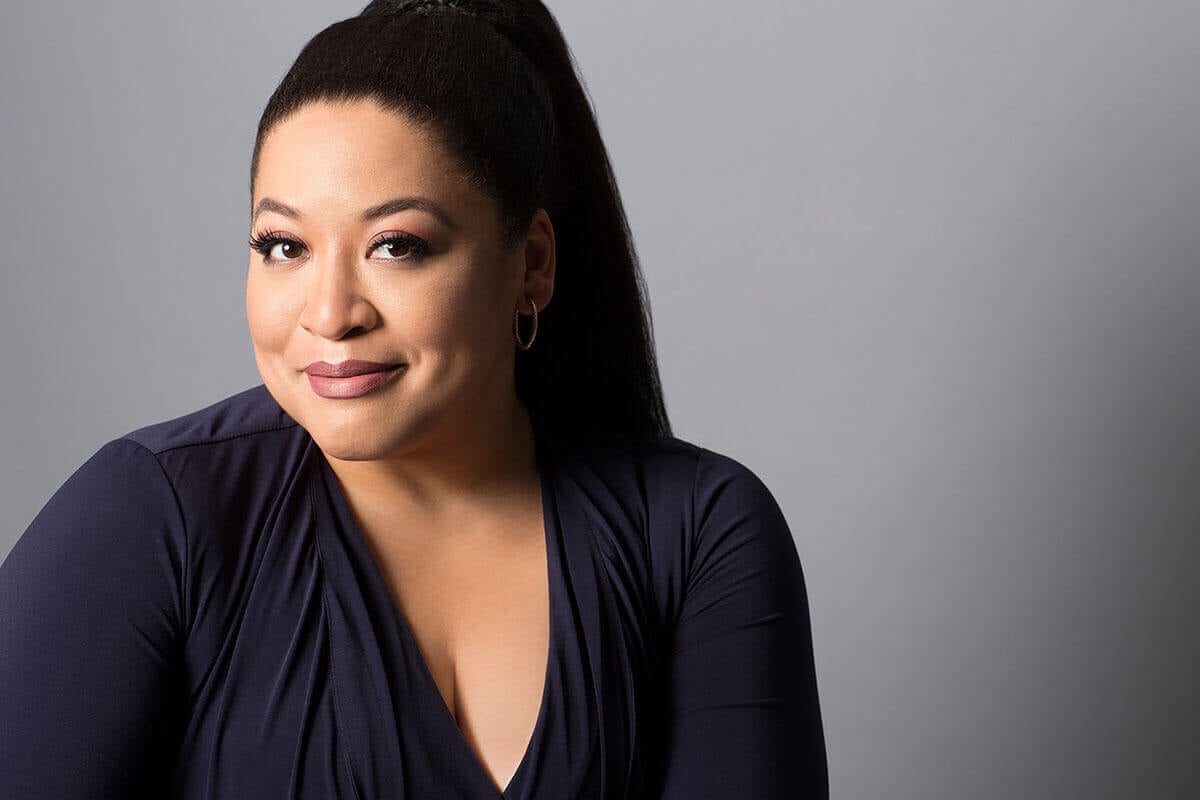
The role of Aida was performed by Michelle Bradley. She is a newcomer but is already a huge star on the international opera circuit. She is African American. She was born in Versailles, Kentucky, a town of 10,000 or fewer people. She graduated from Woodford County High School, then graduated from Kentucky State University, then studied vocal performance at Bowling Green State University.
The town of Versailles, small as it is, used to have three high schools. One of them was for Blacks only, even though the town’s Black population is tiny, about 6%. After the Brown decision, the three merged, and the Woodford County High School opened in 1963.
At school, she was the girl with the crooked teeth, the one the other kids teased and taunted. To spare herself the bullying, she kept her mouth shut.
“I didn’t talk at all until I got home,” soprano Michelle Bradley explains. “I was getting picked on a lot at school. And so I just stopped talking. Until I could get braces, I just didn’t talk in public.”
But in the afternoons, before her parents returned from work, Bradley would retreat into her sanctuary: her bedroom’s walk-in closet. There, with the door closed, Bradley would sing, without fear that anyone would hear her or judge her.
One day, though, her singing would no longer be a secret. One day, it would grace stages around the world, making her one of today’s most buzzed-about up-and-coming opera stars.
Growing up in Versailles, Kentucky, Bradley remembers her mother received free CDs in the mail, with songs from Aretha Franklin, Diana Ross, and The Clark Sisters, a gospel group from Detroit. Bradley loved them all. But there was one singer who inspired her the most: superstar Whitney Houston.
“She was my idol. That’s who I was trying to be as a little girl,” Bradley says.
In those early years, she would tally the ways she and Houston were alike—they shared a birth month, a Zodiac sign—just to feel a little closer to the superstar. And when the movie The Bodyguard came out, with Houston in the starring role, Bradley watched it over and over.
But trying to sing big, powerful ballads like Houston did in a closet made discretion difficult. Bradley had three brothers, two older and one younger. And like many a pesky sibling, Bradley’s younger brother was all too eager to spill the beans on his sister’s secret hobby.
“Mom, Dad, Tammy likes to sing in the closet! Tammy likes to sing in the closet,” she remembers him shouting, using the name she’s called at home.
Even with her parents, Bradley only spoke when spoken to. She was shy. Her parents could hardly believe she had a secret pastime singing. They called her into the living room and asked her to perform something. Naturally, Bradley chose a Houston song: “I Love the Lord” from The Preacher’s Wife.
“After that, my parents had me up singing at church services and everything else,” Bradley says. “It just started from there.”
Bradley had shown musical talent even from a young age. At Kmart, while her mother did the shopping, an 8-year-old Bradley would park herself in the aisle with all the musical equipment: “That was back when they had all the keyboards sitting out and had them all plugged up. Ooh, that was fun!”
She had no problem finding the keys to play the theme songs for kids’ shows like Sesame Street and Fraggle Rock. “I really don’t know how I did it,” Bradley says. “I loved my little cartoons, and so I would hear that and then I could sing it or play it. I just needed to hear it, and I had it.”
Neither of Bradley’s parents had studied music, but both loved to sing. They had met during the civil rights movement in the 1960s, two of the first Black students to integrate their Kentucky high school. Bradley’s father passed her mother a note that read, “I want to be your man.” They sang together in church choirs ever since they started dating.
It was with their help that Bradley started to overcome her shyness. Her father, a police officer, was a deacon at Polk Memorial Baptist Church. Her mother continued to sing in the church choir. Bradley started by learning to play services with the church pianist. By high school, she could carry a whole service.
And when, at age 14 or 15, she started singing in public, Bradley’s parents were always there, cheering her on. “Honestly, that’s who I would focus on when I was singing. I would look at them if I got nervous. So that helped me a lot. They helped me a lot.”
Soon, Bradley had the confidence to sing at school pep rallies and Christmas parties. “When I started doing that, when I started singing at school, people stopped picking on me. I was going from, ‘Hey, a crooked-tooth girl’ to ‘Hey, can you come sing for us?’”
It was the start of something great. Bradley would go on to graduate from the Metropolitan Opera’s prestigious Lindemann Young Artist Development Program. Her voice won her awards galore—from the Leonie Rysanek Award to the grand prize at the Marilyn Horne Song Competition—and she toured Europe, performing in great opera houses from Berlin to Vienna to Paris and beyond.
Now, she’s taking the U.S. by storm. This past fall, she starred as the heroine Liù in the Metropolitan Opera’s Turandot, and in March, she makes her debut with the Lyric Opera of Chicago as the title character in Tosca. Then, she joins San Francisco Opera for its Centennial Season, making her inaugural appearance in the company’s Dialogues of the Carmelites.
Bradley frequently visits Houston, because that’s where her voice teacher, Lois Alba, lives. When the pandemic closed down everything, including opera, she stayed with her family in Versailles for eight or nine months. She practiced at Kentucky State and the local church.
During that time, she got requests to sing virtually. She found that the best acoustics in the house was in the bathroom. So she would get dressed up in her regalia and sing at an angle that didn’t show the toilet.
When she was in high school, she thought she might one day be a music teacher or choir director. But in her freshman year at Kentucky State, her voice teacher, AndrewSmith, told her she had the voice to sing opera and encouraged her. She “just fell in love with it.” He showed her Turandot on a VHS, the first opera ever for her and she was immediately transfixed. Mr. Smith also gave her a CD of Leontyne Price, and Michelle was star struck.
It was like when I was a little girl listening to Whitney Houston, except this was an opera singer. I heard that voice and I don’t know what inside me said, “That’s me. I can do that.” But hearing one of the greatest voices of our time, I said, “I can do that too.” I still, to this day, don’t know where that came from. Or maybe I do know where it came from. But that was really my first thought: that I can do this. I can sound like that. It’s like I found a home.
From Versailles, Kentucky, to the Metropolitan Opera!
What a remarkable story, and what a wonderful voice!
But parents saw frightening symbols in it, such as a T-shirt that was a trans symbol, another that was a gay symbol, others graphics that were allegedly demonic or Satanic.
This country needs mental health services for adults who think that their children’s lives will be changed by seeing anything that offends parents. Do they object to textbooks showing the swastika? Really, there are many symbols to at could be interpreted in many ways.
Don’t they understand that children are shaped above all by their home environment?
We have seen plenty of movies about life in a dictatorship, but this video shows you the real thing. A well-known Russian pianist, Alexei Lubimov, announced a concert a few months ago. He planned to play a work by a famous Ukrainian composer, Valentin Silvestrov, and another by Schubert.
As he was playing, with great brilliance, the police arrived to stop the concert. The pianist insisted on finishing the piece he was playing. As the two policemen stood there, the audience applauded vigorously. Then the police told him they had reports of a bomb on the premises, and they had to stop the performance until bomb-sniffing dogs arrived. The dogs arrived two hours later.
We saw an off-Broadway show that we highly recommend. It’s a four-night only show. We saw the first. The others are May 19 and 25 at 7 pm. May 21 @2 pm.
“Margo & Juliette: A Dance on the Volcano in Weimar Berlin”
A two-woman cabaret of songs from the Weimar period. It’s risqué but no nudity.
It was wonderful!
The parallels to today are powerful, sometimes frightening.
It was akin to going to a cabaret during Weimar. Songs in English and in German. A simple production. Two beautiful singers and a piano.
In the end, very moving.
Only three more performances at the Triad Theatre on West 72 and Amsterdam in Manhattan.
Our friend Bob Shepherd shared this wonderful video of a musical group whose instruments (at least the strings) were made from garbage collected at a landfill in Paraguay. And the group is called the LandFillHarmonic.
Jack Hassard taught science teachers for many years at the Georgia State University. He now blogs frequently at The Art of Teaching Science. This post contains a fascinating perspective on teaching science. Hassard reviews a new book by a fellow science educator.
He writes:
The author of the book is Charles R. “Kip” Ault, Jr. Kip and I have collaborated over the Internet for several decades without actually meeting each other. Like many of you, the digital world of email and social media is the mode of communication that brings us together in personal and productive ways. Kip and I know each other from the science education research and writing we’ve done over the last 30 years. I’ve discovered that our career paths have crossed in several ways. We both taught high school and university courses in geology and the earth sciences, and designed science teacher education programs. Kip was professor of science education at Lewis and Clark University for 24 years. There he developed and directed the science teacher education program.
As Hassard explains, Ault wrote a book in 2015 criticizing the value of the national science standards.
In 2015, Kip published the book, Challenging Science Standards: A Skeptical Critique of the Quest for Unity. The Next Generation Science Standards (NGSS), which were developed in 1999, were uncritically endorsed and granted outright compliance by the National Science Teachers Association (NSTA), even though there has been a groundswell of teachers questioning these standards. And, very little criticism has been written from major research publications, until Kip Ault’s book Challenging Science Standards. If you haven’t read this book, you can use the link above to review it or read my review on my blog.
Kip’s New Book
So, now, in 2021, Dr. Ault has published a new bookgiving us an inside view of science teaching and learning. Instead of being about science teaching, this is a book for science teaching. If you are in a student in a science teacher education program, a practicing science teacher, or professor of science education, I think Kip’s book will augment your deep feelings about how students learn and why science teaching should be in the service of student’s lived experiences.
If you are science education researcher, this book will provide the theoretical rationale to design studies cutting across the spectrum of learning for all students. Kip’s four themes, Play, Art, Coherence, Community are big ideas from which studies can emerge.
If you are a classroom science teacher, I encourage you to apply any or all of Kip’s “stories” that form the substance of his book. He’s cast the stories into four themes: Play, Art, Coherence, and Community. You’ll find specific ideas that you can apply to your own classroom that I think you will find enthralling.
Hassard wrote the introduction to Ault’s new book. He wrote:
Kip’s book is a creative path to a new paradigm of science teaching and learning. His book is an amazing journey of stories and experiences in classrooms that will be familiar to you. The international science education community has embraced the importance of qualitative research. Descriptions of people, events and situations are hallmarks of qualitative methods. Kip has filled his book with playful, aesthetic, meaningful, and compelling stories about learning in which context and the needs of students reigns. Kip’s book is a qualitative treasure chest of new paradigm learning examples. His book is also fun to read. He names some of his stories Wavy Elephants, Binary Banjos, Skull Sockets and Crowned Molars, Hells Pig, Vivid Canyons, Flashy Plumage, Wicked Extinctions, and Caring Communities.
Ault connects his science thinking to that of Leonardo da Vinci:
When you read this book you are going to be immersed into the mind of a science education writer who’s thinking is drawn from the science of Leonardo da Vinci. Kip has created a new paradigm that is rooted in Leonardo’s mind. I wrote this in my forward about why I think there is a link between Leonardo and Kip Ault. I wrote:
On Beyond Science Standards describes a world view that is holistic and ecological which is, according to Fritjof Capra[1], not unlike Leonardo’s. Leonardo had developed a solid body of science. But his science could not be understood without his art, nor his art without science. Walter Isaacson[2] and Fritjof Capra wrote separate biographies of Leonardo. In their biographies, they explain that Leonardo’s scientific explorations informed his art. Capra says that for Leonardo “painting is both an art and a science—a science of natural forms, of qualities, quite different from the mechanistic science that would emerge two hundred years later.” For Kip Ault, paleontology cannot exist without illustration, and he shows how art can be the center of methodology. Art can be the center of learning science. And it doesn’t have to be only paleontology.
When I took science courses in high school and college, most of our time was spent memorizing facts about science. i didn’t get the point.
But Ault has a different vision of science:
Kip Ault believes that the purpose of education is to:
prepare citizens for lives of social responsibility in a democratically governed polity. Kip reaches out to the science education community to claim that our present practices of teaching and routines of selecting what to teach will not help our students achieve that end. He concludes that immersing students in “scientific diversity” can be a journey uncovering aspects of ourselves and the universe promising immense pleasure and joy. Kip Ault has written the book that I’ve been waiting for.