Archives for the month of: January, 2023

Ron DeSantis wants to prove he is more like Trump than Trump, to show he has even less humanity than the Master.

The Miami Herald reported:

A Leon County Circuit Court judge on Friday refused to dismiss a lawsuit against Ron DeSantis brought by a North Miami Beach state senator who has accused Florida’s governor of illegally using taxpayer funds to fly migrants from Texas to Martha’s Vineyard in Massachusetts last September.

Judge John C. Cooper set a Jan. 30 trial date to hear the constitutional challenge brought by Sen. Jason Pizzo, a Democrat who is suing in his capacity as a private citizen. Cooper rejected attempts by DeSantis’ lawyers to dismiss the case, although he did agree to release Chief Financial Officer Jimmy Patronis as a defendant. Pizzo argues that the 2022-23 state appropriations bill that financed the controversial flights improperly used the budget to create a substantial new program instead of authorizing it through a separate law. Under long-standing principles of the Florida Constitution, substantial policies and programs must be first authorized in a separate law so that they can be widely discussed and reviewed by lawmakers.

DeSantis signed the budget on June 8, including the provision that allocated $12 million in interest the state earned from COVID relief funds to pay for “relocation services” run by the Florida Department of Transportation “to facilitate the transport of unauthorized aliens from this state.” Records obtained by the Florida Center for Government Accountability, the Miami Herald, and other news organizations have shed light on the covert operation involving the governor’s staff, who worked with a politically connected vendor to wriggle around the budget requirement that Florida use the money to export Florida migrants — not those living in some other state.

Pizzo argues that in addition to violating the Constitution by using the budget language to create a new program, the Florida Department of Transportation violated another law when it created written “guidelines” for the contract, rather than requiring vendors to submit a sealed bid as is required by state law for contracts over $35,000. Pizzo also argues that the $1.5 million paid to Vertol Systems Company, Inc. , the Destin-based company whose CEO is a former legal client of the governor’s “public safety czar” Larry Keefe, “far exceed the $35,000 cost threshold triggering the competitive solicitation.” The money appears to be for payments of $650,000 and $950,000, although three purchase orders for $950,000 have been posted on the state contract disclosure web site. The Miami Herald learned that after Vertol coordinated two planeloads of migrants to Massachusetts from Texas on Sept. 14, it expected to conduct a second flight the next week bringing migrants from San Antonio to Delaware. But, after intense media scrutiny and an investigation by a Texas sheriff, that flight was called off.

State transaction records show that Vertol was paid in advance for both projects, including the flights that were never completed. Pizzo argued that Patronis should also be a defendant in the lawsuit because he “has failed to take action to recover any portion of those funds … for services which to date have not been performed.” He also accused Patronis of failing to demand information from FDOT to justify the expense and explain its contracting decisions. Patronis’ lawyer, Ty Jackson of the GrayRobinson law firm, argued that the CFO had no role in deciding how to spend state funds. Cooper agreed and dismissed him as a defendant in the case. “It’s not his baby,’’ Cooper concluded during the hearing Friday. “He’s not the one who decided to do it and says he’s going to do it again. The CFO cut a check.”

Nicholas Meros, deputy general counsel for DeSantis, argued that the governor and legislators “did not create a new program” when they inserted the authority to spend $12 million on migrant relocation services into state law. The reason, he said, is that the provision expanded on another law that prohibited the state from entering into a contract with anyone who transports “an unauthorized alien” into Florida except to detain or remove that person “from this state or the United States.” That provision became law through SB 1808, a bill that passed on March 9 but wasn’t signed by the governor until June 17. That was 15 days after the governor signed the budget and Section 185, the provision that included the $12 million in relocation funds.

Under questioning by Cooper, Meros did not appear to be aware that the law he argued the budget was modifying wasn’t on the books yet when legislators passed the budget. It was another example of the confusing arguments the governor and his staff have had to pursue to justify spending Florida money to relocate migrants arriving in Texas, not Florida.

Cooper noted that before DeSantis could say he was relocating migrants out of Florida, he had to pay to fly them in. “I don’t’ see anything … that says you can go to Texas and pick up people, bring them to Florida for a few minutes and then take them to another state under this program,’’ he said.

Records released in November, after the Florida Center for Government Accountability filed a lawsuit, show that the two planes carrying migrants from San Antonio to Martha’s Vineyard made a 30-minute pit stop in the Panhandle town of Crestview.

The flights have been denounced by the governor’s critics as a stunt, but they have also contributed to his stature as a conservative stalwart among Republican voters as he considers a run for president in 2024. The attention also put a spotlight on the immigration crisis along the southern border.

As Republicans accused President Joe Biden of not doing enough to stem the growing influx of migrants, DeSantis announced last week he would increase state resources aimed at the surge of migrants from Cuba and Haiti. His deputies said the effort will focus on using state airplanes to help the federal government’s efforts to interdict and return migrants to their countries of origin.

Pizzo is asking the court to declare the section of the budget that includes the $12 million in relocation funds unconstitutional, and to prohibit the governor from spending any more of the money. He also argues the state violates the Supremacy Clause of the U.S. Constitution because Congress gives the federal government exclusive power over immigration, and that by inserting itself into immigration enforcement, the state is violating the federal Constitution.

DeSantis’ lawyers argue, however, that the relocation program “does not regulate the flow of aliens into or out of the United States or determine anybody’s citizenship status.’’ Instead, they said in a motion filed last week that the state is only making funds available to “facilitate the transport of consenting unauthorized aliens from Florida to other states.”

Read more at: https://www.miamiherald.com/news/local/immigration/article271160202.html#storylink=cpy
Pennsylvania elected a Democrat as its new governor, Josh Shapiro, the former state attorney general. During his campaign against the Trumper candidate Doug Mastriano, Shapiro campaigned as a centrist Democrat and won handily. One worrisome detail is that Gov.-Elect Shapiro endorsed vouchers, despite their widespread failure and their affiliation with hardcore rightwingers. It is therefore somewhat reassuring that he selected an experienced education as the state superintendent. This article was republished by the Keystone Center for Charter Change of the Pennsylvania School Boards Association.

Pa. is getting a new education secretary: Lower Merion superintendent Khalid Mumin

Inquirer by Kristen A. Graham, January 9, 2023

Gov.-elect Josh Shapiro has named Khalid Mumin, currently superintendent of the Lower Merion School District, as his education secretary. Mumin, a Philadelphia native, has led the Montgomery County district for a little over a year. He came to Lower Merion from Reading, where he was named Pennsylvania’s Superintendent of the Year in 2021.

“During the past 15 months, I have grown to love Lower Merion, our inspiring students, exemplary staff, committed families and community members; however, Gov.-elect Shapiro has offered me a unique and exciting opportunity to reshape educational policy and practices across the Commonwealth, so all Pennsylvania students can experience the level of educational excellence our students enjoy and that all students deserve,” Mumin said in a letter to the Lower Merion community. The Secretary of Education job, he said, “was an offer I couldn’t refuse.”

Mumin is scheduled to be sworn in as Acting Secretary of Education on Jan. 17. “For over 25 years, I have served as a teacher, dean of students, principal, and school superintendent — and I know firsthand what it takes to move our education system forward,” Mumin said in a statement. “I look forward to working with the Gov.-Elect to fully fund our schools, make our students’ mental health a priority, and empower parents and guardians to ensure their children receive a quality education.”

Click here for more.

Though he currently runs one of the state’s best-funded school systems, Mumin has extensive experience in low-wealth districts, too. Prior to working in Lower Merion, Mumin was superintendent of Reading city schools, where he worked for six years. He also served as an administrator in Maryland.

We will keep a watchful eye on Governor Shapiro, as he chooses whether to fully find the state’s public schools or to waste money on vouchers to satisfy a campaign donor.

Twitter offered severance deals to laid-off employees that many found unacceptable. Hundreds are suing the company.

The Los Angeles Times reported:

After months of waiting, hundreds of Twitter employees laid off by Elon Musk in early November received their separation agreements by email Saturday morning.

The agreements offered one month of severance pay, but with a major catch — employees must sign away their right to ever sue the company, assist anyone in a legal case against the company unless required by law, or speak negatively about Twitter, its management or Elon Musk.

More striking is what the document omitted, said one former engineering manager who was laid off Nov. 4. The separation agreement does not include year-end bonuses, cash contribution for healthcare continuation, additional severance based on tenure, or the cash value of restricted stock units that are typically vested every quarter. These were all part of Twitter’s general severance package prior to Musk’s acquisition of the company in October, according to a previous companywide email….

Twitter, which no longer has a formal communications team, could not be reached for comment.

According to Business Insider, the budget-cutting has gone too far. Bathrooms in the Twitter headquarters are often out of toilet paper. Maintenance staff have been laid off, and bathrooms stink.

A billionaire skimping on toilet paper! That’s no way to run a business or a school.

That stinks!

Jess Piper lives in rural Missouri. She and her husband are farmers with five children. She taught American literature in the local public school. She describes herself as a “woke” progressive. When she added the history of slavery and African American literature to her classes, she said, none of her students (all white) felt embarrassed or uncomfortable. They identified with the abolitionists, not the slaveholders.

She ran for office when she realized that there were no Democrats, and she lost. But she wasn’t discouraged.

I am not a podcast person but I listened to Jess with close attention. On Twitter, she is @piper4Missouri.

You will enjoy listening to her podcast. She has a great voice and a great message.

Time for humor.

This video should give you a big smile.

Josh Cowen of Michigan State University is among the most experienced voucher researchers in the nation. He is a member of the inner circle of voucher researchers and has been for nearly two decades. He began the work believing that vouchers were promising. As the research accumulated over the years and converged, he realized that vouchers harm the students they are meant to help. I have invited Josh to contribute to this blog whenever he wishes.

He writes here about the claim that the offer of vouchers causes public schools to do better, known as “competitive effects.” Nonsense, he writes.

Over the last few months, as I’ve written here in this blog and elsewhere about how recent data and research show incredibly harmful school voucher impacts for kids, one question that some readers have asked me to address has been the issue of so-called “competitive effects” of vouchers and school choice.

The idea comes from economics, and basically holds that competition between two or more providers of a good or service lowers costs and ultimately provides greater value to consumers. In the economics of education world, the idea that school choice policy forces competition onto public schools to improve the “product” of education is summarized as “a rising tide lifts all boats.”

Before I give you the details, here’s the take-home point: academic research does show that the threat of school choice pressures do prompt upticks in public school test score achievements. That’s particularly true for schools that stand to lose financially from voucher enrollment.

Those tend to be the vulnerable schools with respect to both longstanding historical marginalization, and economic health.

So here’s what you should ask yourself: is that really the way we want to spend public dollars to improve academic outcomes?

Here’s what I mean.

Participant vs. Competitive Effects

First, some definitions. If you’re not in the weeds of school choice research or advocacy, it’s important to clarify the difference between participant and competitive effects because researchers and advocates point to both.

Participant effects are the impact of school vouchers on kids who use them to attend private school. Competitive effects are the impact of school vouchers on kids who stay behind in public classrooms.

It’s inarguable that school vouchers have devasting participant effects. Over the last decade, as voucher programs have gotten larger, we’ve seen impacts as high as twice the academic damage that the pandemic caused to test scores.

But as I wrote above, it’s also true that research shows modest, positive competitive impacts. That is to say: vouchers appear to genuinely pressure public schools to drive up test scores. But voucher advocates who point to that outcome rarely talk about academic drops for kids who use vouchers themselves. When they do, they use industry-funded positive research from groups like the Heritage Foundation or the Goldwater Institute to mask what independent analysts have found.

And as I’ve written both for this page and elsewhere, kids who leave public schools for vouchers tend to do so only temporarily. Their parents are what you might call “voucher curious.” They try a private school out, tend to have average academic declines that are as large as anything we’ve seen in the history of education policy research, and then go back to public schools. Thankfully their outcomes do improve after returning to public education. Studying those kids in Milwaukee, my co-authors and I called that return to academic progress “life after vouchers.”But because these are some of the most at-risk kids in our classrooms, these disruptions can cause long-term if not permanent damage.

So I never want to dismiss the children who temporarily move to voucher schools. They’re not lost to us and they need our help too. Which means it’s important not to talk about competitive effects on public schools without always remembering the horrible outcomes for kids who do leave for vouchers.

It’s “Settled:” Direct Investment in Public Education Works

But what if, despite all of that collateral damage vouchers cause, you’re still wondering about competitive impacts? Just as few voucher activists will cite harmful participant effects when advertising competition, most competition studies do not include analysis of which policy alternatives might be better.

Here’s the obvious alternative: simply spending more money on public schools in the first place.

When I was in graduate school in the early 00’s, the prevailing truism on public school spending was that additional increases in funding had limited value. This thinking was driven almost entirely by the remarkable influence of one man, the economist Eric Hanushek, who compared it to simply “throwing money” at a problem—a phrased used more recently by Betsy DeVos, among others.

Just like the research on voucher participant effects has been entirely upended by more recent evidence, that old work on school spending has been retired by more technically sophisticated statistical approaches and more finely grained data. When it comes to education, money matters—how much, and how it’s spent.

Northwestern economist and National Academy of Education member Kirabo Jackson, one of today’s leading authorities on the subject of school spending, describes the debate as “essentially settled:” direct investment in public education has had consistently large impacts on outcomes ranging from test scores, to graduation rates, to adult earnings later in life. Just a few months ago here in Michigan where I write, University of Michigan scholars released a study showing school finance improvements through our state’s equalization reforms even reduced local crime rates.

Remember that every time you see a conservative scholar point to competition as a policy lever to impact public schools. There may be some small short-term benefit on test scores, but it’s not a substitute for direct and sustained investments directly in schools, teachers and kids.

Just Because We Can, Doesn’t Mean We Should

So yes, research does tend to show that if states threaten public schools with the loss of revenue by implementing private school vouchers, public school test scores may improve somewhat.

Does that mean public schools are better off with vouchers? No. It simply means that so long as standardized tests are the coin of the realm for accountability and revenue, reasonable school leaders will have no choice but to react accordingly. It’s almost tautological: public schools need funding, and threatening to reduce their funding with vouchers is going to have some response—whether desirable or not. In states that have bans on reproductive rights for example in a post Roe v. Wade world, I’m sure we’re going to see the number of abortions drop drastically.

Does that mean eliminating Roe was good public health?

As a researcher who’s become a strong advocate for public schools by following the data and following simply the right thing to do, I put little stock in conservative arguments centered around competitive school voucher impacts simply because the same outcome—test scores—shows massive academic declines for kids who actually go to voucher schools. To me it’s the same argument as saying something like “sure this vaccine kills sick people to whom we administer it, but it doesn’t harm a perfectly healthy patient.”

That’s not public health. And it’s not public education either.

Finally a simple comment on identity and policy. I identify as a white male who is married to a woman. The vast majority of school voucher research comes from white men like me. Vouchers originated with a while male economist. I decline to accept the idea implied by school competition that there is something moral about setting low-income children and communities of color—as public schools threatened with voucher-induced funding loss often are serving—against each other to improve outcomes.

Research might show it can work, but just because we can does not mean we should.

Let’s just take the other research-supported route and spend more money on public education, period. One way or another, I don’t think a person needs to be a public school advocate to realize that threatening schools is hardly an optimal role for public policy. Not when there’s a more supportive way available simply by investing in schools as if our children’s lives and futures matter.

My thought: it’s possible to think of many policies that would lead to improved competitive effects, but would be horrible policies. As Josh says, just because you can doesn’t mean you should. Suppose your school or district threatened to horse whip children who misbehave; that would lead to better behavior, but only by inflicting inhumane punishments. Similarly, you could cut truancy by administering harsh punishments on those who are truant. There are all sorts of ways to induce competitive effects.

In the case of vouchers, it involves encouraging students to leave their public school to attend a voucher school where they will get an inferior schooling and likely return to their underfunded public school.

Ellie Honig and friends have a podcast called Cafe Insider. It offers insights into current politics. In this free edition, the question is why Attorney General Merrick Garland is moving so slowly to prosecute the planners of the 1/6 insurrection, one of the biggest federal crimes in U.S. history.

Note From Elie: DOJ and The Cost of Getting There Second

By ELIE HONIG

Featured Image

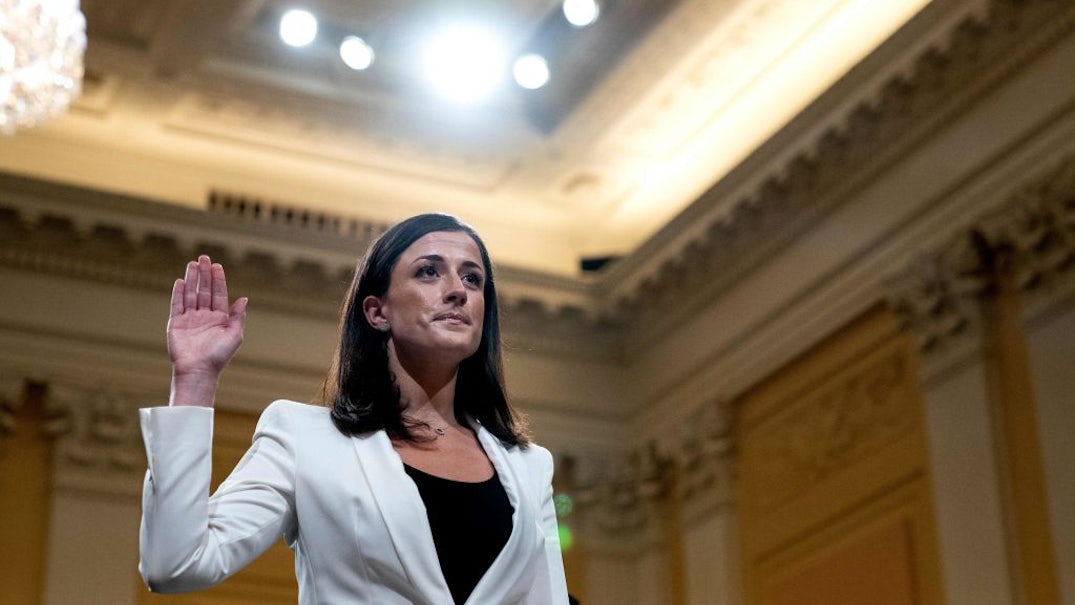
Cassidy Hutchinson is sworn in by the House Select Committee to Investigate the January 6th Attack on the US Capitol on June 28, 2022. (Photo by Stefani Reynolds / AFP)

Sign up free to receive the CAFE Brief in your inbox every Friday: cafe.com/brief

Become a member of CAFE Insider: cafe.com/insider

Dear Reader,

Cassidy Hutchinson is the perfect witness for a potential prosecution of Donald Trump. She had insider access as an aide to former White House Chief of Staff Mark Meadows; she was inside the West Wing during the frantic days leading up to January 6, and then as the Capitol attack went down that fateful afternoon, two years ago today. Her testimony is damning to Trump and others, and is corroborated in key respects by independent evidence. She is a compelling figure, at once likable, sympathetic, and believable. She is a prosecutor’s dream.

Also: Cassidy Hutchinson lied to federal investigators, under penalty of perjury.

This is not a matter of opinion or debate. It is a fact, openly admitted now by Hutchinson herself. And it’s not even Hutchinson’s fault, not entirely. I place much of the blame on Justice Department prosecutors who twiddled their thumbs for far too long and let themselves get beaten to the punch by the January 6 Committee. This is the cost of DOJ’s dilatory, meandering, hand-wringing approach to its investigation of the real power sources behind the coup attempt. This is the cost of getting there second.

During the first year-and-a-half or so after January 6, the Justice Department focused its prosecutorial efforts on the people who physically stormed the Capitol. Attorney General Merrick Garland vowed at his February 2021 confirmation hearing to “begin with the people on the ground and we work our way up.”

Of course, DOJ had to prosecute those who breached the Capitol and, for the most part, the feds have done an admirable job on these 900-plus cases.

The problem, however, was with Garland’s bureaucratic, bottom-up approach. Yes, prosecutors sometimes do start at ground level and work up the chain of command – but aggressive prosecutors know you don’t have to do it that way. In fact, circumstances sometimes give prosecutors a direct shot at the upper echelons of power, and there’s no reason to refrain from going after the bosses until after you’re done with the riff-raff. To put it in concrete terms: DOJ absolutely could have identified and talked to Hutchinson, Pat Cipollone, Marc Short, and other key White House insiders back in, say, mid-2021. The Justice Department has now spoken with all these folks, and other well-situated witnesses, but it didn’t get around to them until mid- to late-2022.

In the meantime, while DOJ was focused exclusively on the guys in face paint and rhino horns, the January 6 Committee – armed with less powerful investigative tools and resources– got to Hutchinson first. In February 2022 – before she gave her blockbuster, nationally broadcast testimony in June 2022 – she testified behind closed doors. The Committee asked Hutchinson whether she knew anything about a dispute on January 6 between Trump and Secret Service agents, who refused his command to take him to the Capitol. Hutchinson testified that she had heard of no such thing. At this point, Hutchinson was represented by a lawyer named Stefan Passantino, a former Trump White House ethics lawyer (yes: ethics) who was being paid by Trump’s “Save America” political action committee. (Put a pin in this; we’ll get back to Passantino in a bit).

This testimony by Hutchinson, given under penalty of perjury, was false. Months later, in June 2022, she testified publicly that she had heard that Trump had lashed out physically and verbally at Secret Service agents, at one point physically lunging for the steering wheel of the presidential SUV. In a subsequent deposition in September 2022, Hutchinson admitted that she had lied to the Committee the first time around. After her original false testimony, Hutchinson was racked with worry; she said to Passantino, “Stefan, I’m f****d. I just lied… I lied. I lied, I lied, I lied.” (That’s four “I lieds,” for those keeping count.)

There are perfectly understandable and defensible reasons why Hutchinson lied in her first deposition. As she later explained to the Committee, she was under enormous personal and financial pressure to hew to the party line and avoid testifying in any way that might harm Trump. According to Hutchinson, Passantino reinforced that perception, telling her that, “We just want to focus on protecting the President.” Worse, Hutchinson testified that when she told Passantino during prep sessions about the incident between Trump and the Secret Service, Passantino told her, “No, no, no, no, no… We don’t want to go there. We don’t want to talk about that.” (That’s five “nos,” for those keeping count.) Passantino said she could simply claim she did not recall, and there’s no way the Committee could know what she did or did not remember. Passantino contests Hutchinson’s account and starkly denies any wrongdoing.

While this was all going down, Garland was asleep at the wheel. When Hutchinson testified publicly in June 2022, federal prosecutors reportedly were “astonished” as they sat on their couches, watching on television along with the rest of us in the general public.

So here’s the problem now for DOJ (and the Fulton County DA). Hutchinson, as vital a witness as she is, is also damaged goods. She’s probably not fatally undermined but, make no mistake, defense lawyers will have a field day cross-examining her:

You lied to the Committee, didn’t you? (Yes)

You knew you were testifying to the United States House of Representatives, right? (I knew that)

And you knew you were testifying under penalty of perjury, right? (That’s right)

Just like you’re under penalty of perjury now at this trial? (Yes).

But you lied. (Correct)

You knew you could get prosecuted and go to federal prison if you lied, didn’t you? (I did)

Yet you lied, anyway. (Yes)

“I lied, I lied, I lied, I lied.” Those were your words. (Right)

By the way: you haven’t been prosecuted for perjury, have you? Even though you lied? (No, I haven’t)

These prosecutors did you a favor. They could have thrown you in prison, but they gave you a free pass, didn’t they? (Well, I guess I haven’t been charged with anything)

But you did commit perjury. (I suppose so)

Again: I find Hutchinson, on the whole, to be remarkably credible. I believe the substance of her testimony, and I believe that she lied only because of pressure applied by Passantino and others in Trumpworld. But there’s no denying it: this line of cross-examination will hurt.

Yes, Hutchinson has a plausible explanation why she originally lied to the Committee. I’ve seen plenty of witnesses in her situation, and it’s common and understandable for a person who feels financial or political or personal pressure to shade the truth. Prosecutors will surely make this argument if they ever call Hutchinson as a witness and need to rehabilitate her. But it’s an unforced error by DOJ. The Justice Department got beat to the punch, and now they needlessly have to fight a battle over Hutchinson’s credibility. By their inaction, Justice Department prosecutors have handed defense lawyers a gift.

Garland boosters sometimes argue: oh, but he is the humble tortoise, the slow but steady technician who lacks flash but wins the race in the end. Sounds reassuring, but this is apologist pablum. Speed absolutely matters. There’s a reason why prosecutors fight like mad to get to key witnesses first, and then protect them against having to testify in other settings: to prevent a Hutchinson-like scenario where, through no real fault of the witness herself, she winds up giving testimony that undermines her credibility down the line.

As I’ve noted many times in this space, prosecutors may still indict Trump, someday. But Garland’s own delay will make the ultimate job – securing a conviction – even more difficult than it needed to be.

Stay Informed,

Elie

This is one of the most heartening statements I have seen in a long time.

Statement of Support for Art Professor Fired from Hamline University

January 9, 2023MPAC

It is with great concern that the Muslim Public Affairs Council (MPAC) views the firing of an art professor, Erika López Prater, from Hamline University on the grounds of showing a fourteenth-century painting depicting the Prophet Muḥammad. We issue this statement of support for the professor and urge the university to reverse its decision and to take compensatory action to ameliorate the situation.

News sources report that the matter reached the university administration after a Muslim student complained to them about the professor showing the image in class. Subsequently, undergraduate students at the university received an email from the administration declaring the incident to be “undeniably inconsiderate, disrespectful and Islamophobic.” Because the professor was hired as an adjunct, her contract was not renewed and she was effectively fired. 

As a Muslim organization, we recognize the validity and ubiquity of an Islamic viewpoint that discourages or forbids any depictions of the Prophet, especially if done in a distasteful or disrespectful manner. However, we also recognize the historical reality that other viewpoints have existed and that there have been some Muslims, including and especially Shīʿī Muslims,  who have felt no qualms in pictorially representing the Prophet (although often veiling his face out of respect). All this is a testament to the great internal diversity within the Islamic tradition, which should be celebrated.  

This, it seems, was the exact point that Dr. Prater was trying to convey to her students. She empathetically prepared them in advance for the image, which was part of an optional exercise and prefaced with a content warning. “I am showing you this image for a reason,” stressed the professor:

There is this common thinking that Islam completely forbids, outright, any figurative depictions or any depictions of holy personages. While many Islamic cultures do strongly frown on this practice, I would like to remind you there is no one, monothetic Islamic culture.

The painting was not Islamophobic. In fact, it was commissioned by a fourteenth-century Muslim king in order to honor the Prophet, depicting the first Quranic revelation from the angel Gabriel. 

Even if it is the case that many Muslims feel uncomfortable with such depictions, Dr. Prater was trying to emphasize a key principle of religious literacy: religions are not monolithic in nature, but rather, internally diverse. This principle should be appreciated in order to combat Islamophobia, which is often premised on flattening out Islam and viewing the Islamic tradition in an essentialist and reductionist manner. The professor should be thanked for her role in educating students, Muslim and non-Muslim alike, and for doing so in a critically empathetic manner. 

In a time of rampant Islamophobia, highly offensive and racialized images of the Prophet Muḥammad abound on the internet and on social media. We consider these images to be inappropriate and not dissimilar to “black face” or Anti-Semitic cartoons; even if such images and their makers are protected by law, social opprobrium is due to them by all those who are reasonable and decent. As Muslims, of course, we must respond in a calm and graceful manner as befits our religion: 

 The servants of the Compassionate are those who walk humbly upon the earth, and when the ignorant address them [with insulting words], they respond, ‘peace.’ (Q 25:63)

Given the ubiquity of Islamophobic depictions of the Prophet Muḥammad, it hardly makes sense to target an art professor trying to combat narrow understandings of Islam. There is an unmistakable irony in the situation, which should be appreciated. Additionally, misusing the label “Islamophobia” has the negative effect of watering down the term and rendering it less effective in calling out actual acts of bigotry.

Finally, we stress the importance of education in the Islamic tradition. On the basis of our shared Islamic and universal values, we affirm the need to instill a spirit of free inquiry, critical thinking, and viewpoint diversity in the university setting.

Muslim Public Affairs Council


Jan Resseger keeps close tabs on education in Ohio, which is constantly under attack in the legislature. In this post, she reviews what happened in the past year. The “good” consists of bad things that didn’t happen. The Republican-dominated legislature is intent on constant privatization of public funds. Ohio is rife with failing charters and ineffective vouchers. The legislature wants more failure. The chair of the House Education Committee, Andrew Brenner, calls public schools “socialism.” The Ohio legislature deserves a spot on this blog’s Wall of Shame.

Jan Resseger wrote:

In the midst of the big 2022 Christmas week storm, a frozen sprinkler-system pipe burst at the Ohio Statehouse and flooded the state senate chamber. This year in Ohio’s gerrymandered, supermajority Republican legislature, democracy itself has been so severely threatened that many of us wondered if the event was an expression of cosmic justice.

As Ohio Supreme Court Chief Justice Maureen O’Connor retired due to the state’s mandated age limit,O’Connor—herself a Republican—condemned legislators who created one gerrymandered legislative and Congressional district map after another, O’Connor told the Associated Press: “My advice to them was, please review the Constitution and maybe go back to, what is it, fourth or fifth grade and learn about our institutions… And maybe, just maybe, review what it was like in Germany when Hitler intimidated the judiciary and passed those laws that allowed for the treatment of the Jewish population… This country cannot stand if the judiciary is intimidated.” The AP reports that, “In retirement, she has pledged to champion a constitutional amendment that fixes Ohio’s redistricting process…”

BAD THINGS THAT DID NOT HAPPEN IN 2022

The 134th Ohio General Assembly did not pass Ohio Senate Bill 178 to hollow out the Ohio State Board of Education and shift its primary responsibilities (including overseeing the Department of Education itself) to a new cabinet Department of Education and the Workforce under the Governor. Politics have already to some degree invaded the Ohio State Board of Education, because the governor already appoints 8 of its 19 members. And during the past two years there have been several legislative/gubernatorial interventions to gerrymander the districts of elected members to favor Republicans, and to fire unruly members and appoint new members who would be more faithful to Ohio Republicans’ priorities.

In 2022, the Ohio Senate passed SB 178 to move the important functions of the State Board of Education under the governor’s control, to insulate the state board from the will of the people, and to remove many of the State Board’s responsibilities. In December, during the last week of the legislative session, SB 178 was heard by the House Education Committee, but the bill never came up for committee vote and never was acted on by the Ohio House. At 2:30 AM, before the the 134th General Assembly permanently adjourned at 6:30 AM, Senate President Matt Huffman inserted the entire 2,144 page SB 178 into HB 151 to ban transgender girls from sports, inserted another amendment to ban school vaccine mandates, and sent the entire package back to the Ohio House, where it failed by 6 votes. Although this problematic bill failed in the 134th General Assembly, Senate President Matt Huffman has pledged another attempt during 2023 to politicize the State Board of Education in the 135th Ohio General Assembly.

A Mass of Culture War Bills Will Die Because They Never Came Up for a Vote (For details, see Honesty for Ohio Educationor the Northeast Ohio Friends of Public Education.)

  • HB 322, HB 327, and HB 616 to ban teaching and materials about divisive concepts including racism and sexual orientation.
  • HB 529 to demand that school curricula be posted online.
  • HB 454 to ban gender affirming care for minors.
  • HB 704 to affirm that gender identity is identifiable at birth according to DNA.
  • HB 722 to ban discussion of any ‘sexually explicit’ content and establish a ‘parents bill of rights.’
  • SB 361 to enable former military troops to become teachers with relaxed credentialing.
  • SB 365 to include curriculum about free market capitalism in educational standards.

HB 290, the “Backpack” universal education savings account voucher programnever came up for a vote in the 134th General Assembly. Most people expect, however, that a similar bill will be introduced in the 135th General Assembly, perhaps as part of the FY 2024-2025 biennial budget bill. For more information see here.

GOOD THINGS THAT DID NOT HAPPEN IN 2022

The Ohio Legislature did not pass HB 497 to eliminate the Third Grade Reading Guarantee. After HB 497 passed the Ohio House by a margin of 82-10 and after the bill was unanimously endorsed by the Ohio State Board of Education, HB 497 was never considered by the Ohio Senate Primary and Secondary Education Committee and never forwarded for a vote by the full Ohio Senate. The bill died with the end of the 134th Ohio General Assembly. The bill would have eliminated mandatory retention in third grade of any student who does not reach a proficient score on the state’s third grade achievement test. Research demonstrates that holding kids back in grade damages self esteem and makes it more likely that students will drop out of school before graduating from high school. For background see here.

BAD THINGS THAT HAPPENED IN 2022…

Keep reading to learn about the “Bad Things That Happened in 2022” and the One Good Thing That Happened.

Jan concluded her post:

There is no reason to believe that in 2023 the legislative majority of Ohio’s 135th General Assembly will be supportive of Ohio’s public schools. Persistence will be required as advocates press for the full six year phase-in of adequate school funding under the Cupp-Patterson Fair School Funding Plan. And, as Ohio Public Education Partners declares, we must demand that the Legislature “rejects the school privatization agenda, which includes school voucher schemes (and) charter schools….”

The Network for Public Education has released a new report on for-profit charters, which grew during the pandemic years. The report is titled Chartered for Profit II: Pandemic Profiteering. It builds on the findings of a report published by NPE in 2021. For-profit charters not only divert money away from the public schools, which enroll the vast majority of students in every state, but they skim off profits that should have been spent on students and teachers. The report details the nefarious deals that enrich the charter operators. Every citizen who cares about our future should be aware of the facts detailed in this report. We believe readers will be genuinely shocked by the findings in this report, which shows how scammers and grifters have gotten a stronghold in the charter industry, to the detriment of students, teachers, and taxpayers.

Here is the executive summary:

In March of 2021, the Network for Public Education published Chartered for Profit: The Hidden World of Charter Schools Operated for Financial Gain. In this follow-up report on the charter for-profit sector, we chronicle its expansion during the years of the Covid-19 pandemic by reporting growth in the number of schools, the number of for-profit corporations that run them, and student enrollment.

Acccording to our research, the for-profit sector dominated the charter school sector during the pandemic years. As the pandemic wore on – the percentage of charter schools run by for-profits jumped from 15 percent to 16.6 percent of the charter sector. This is a far greater percentage than is reported by the National Alliance for Public Charter Schools, which inexplicably does not report schools run by for-profit Education Management Organizations (EMOs) that control only one or two schools. These micro-EMOS comprise nearly half of all for-profit EMOs.

However, the number of schools run for profit underestimates the true growth of for-profit schooling during Covid 19. The percentage of students attending a charter school designed to produce a profit for its management company soared. According to the Common Core of Data of the National Center for Education Statistics, the total student enrollment in charter schools during the second year of the pandemic (the 2021-2022 school year) was 3,676,635. Student enrollment in for-profit-run charter schools jumped to 731,406 that year.

That means that 20 percent of all charter school students, 1 in 5, were enrolled in a charter school managed by a for-profit management corporation by the pandemic’s end.

More disturbing is that 27 percent of the students attending for-profit-run schools were enrolled in low-quality virtual charter schools that teach students either exclusively or primarily online. That was in 2021. During the prior year (2020) the number was even higher.

Those who defend for-profit charter schooling claim it is no different from public schools using vendors for transportation services or to purchase textbooks. However, as this report explains, for-profit chartering is very different from vendors who supply discreet products and services. We detail the various ways in which the owners of EMOs extract profit via a lack of oversight and regulation that fails to protect taxpayers from sweetheart deals, sweeps contracts, and related party transactions designed to enrich EMO owners, their friends and their family members. And we explain how the acquisition of real estate and exploitative lease and purchase agreements drive the expansion of for-profit-run charter schools and, in some cases, put the school at financial risk.

Chartered For-Profit II: Pandemic Profiteering makes a case for substantive state and national reform so that the best interests of students and taxpayers trump financial gain. Like our first report, it provides insight into the most controversial sector of the charter school world—charters operated for financial gain.