Taxpayers in Indiana should be irate that their property taxes will bolster the bank accounts of for-profit charter chains like National Heritage Academies and Accel.
I remember when the idea of charter schools was first discussed in the 1980s. The promise of charter advocates (and I was one at the time) was that they would be more accountable than public schools; that they would cost less than public schools; and they would have higher test scores than public schools. In the more than three decades since the first charter schools opened, the public has learned that none of those promises came true.
Charter schools on average do not produce higher test scores than public schools, unless they choose their students with care. Many charter schools—in states like Ohio—perform far worse than public schools. They are less accountable than public schools because they have private boards that answer to no one. Their finances are usually opaque since they are not subject to the same budgetary oversight as public schools. And now we know that they do not cost less than public schools; they want the same funding as public schools, and many are subsidized by outside philanthropists. And, unlike public schools, charter schools close with high frequency and little warning. They destabilize communities. And that is why I no longer support charter schools.
Steve Hinnefeld writes:
Indiana legislators are considering a significant change in Indiana school finance that would, for the first, time, require public school districts to share local property tax revenue with charter schools.
Senate Bill 398 is set for a hearing Tuesday in the Tax and Fiscal Policy Committee. A similar bill in the House hasn’t yet been scheduled for a hearing, but probably will be. House Bill 1607 goes further than SB 398 by also requiring school districts to share referendum funding with charter schools.
SB 398, authored by Sen. Linda Rogers, R-Granger, would require school districts to share revenue from their property tax-supported operations funds with charter schools. The money would be allocated according to the number of students who live in the school district and attend charter schools.
The measures follow a public advocacy campaign that may have pushed the issue of charter school funding onto lawmakers’ agendas. The campaign, which included TV and social media ads, focused on differences in funding between Indianapolis Public Schools and charter schools.
The bill would also make districts share property taxes with nearby public school districts to which their students transfer.
Under Indiana’s current school finance system, the state provides comparable per-pupil funding to district and charter schools. But districts can also levy local property taxes to pay off debt and for their operations funds, which pay for facility construction and maintenance and for transportation. The state gives charter schools an extra $1,250 per pupil to compensate for their lack of property taxes.
A Legislative Services Agency analysis says SB 398 would shift nearly $70 million a year from school districts to charter schools after a three-year phase-in. The biggest impact would be in Indianapolis and Gary, where more students attend charters or transfer than attend district schools.
Advocates for charter schools argue their students deserve the same funding as students who attend district schools. However, charter schools aren’t subject to the same requirements as district schools and aren’t overseen by elected school boards. It’s rare in Indiana for voters to have no local election mechanism to influence how their property taxes are spent.
The campaign for more charter school funding highlighted the difference in per-pupil funding between IPS schools and Indy charter schools that aren’t affiliated with the district. The ads were “endorsed” by the Indiana Student Funding Alliance, whose website has no contact information or details about who or what it is.
According to Facebook’s ad library, the ads on the platform were paid for by the Institute for Quality Education, an Indianapolis nonprofit that advocates for charter schools and private school vouchers. The group’s political action committee, Hoosiers for Quality Education, is a major donor to Republican politicians. In 2022, it gave $22,500 to Behning’s campaign and $5,500 to Rogers’ campaign.
During President Biden’s State of the Union address, he said that Republicans want to cut Social Security and Medicare, and the Republican side of the chamber erupted in jeers and shouts of “liar!” Two of those loudly jeering—Senators Rick Scott of Florida and Mike Lee of Utah—had explicitly made those proposals. Biden then masterfully got the Republican caucuses in both Houses to declare their support for both big entitlement programs.
Michael Hiltzik, business columnist for the Los Angeles, sets the record straight about the Republican stance on Social Security.
From left, GOP Sens. Rick Scott of Florida and Mike Lee of Utah jeer during the State of the Union address when President Biden accused Republicans of wanting to cut Social Security. Both senators have proposed exactly that.
(Andrew Caballero-Reynolds / AFP/Getty Images)
Hiltzik writes:
President Biden has congressional Republicans all asquirm as he conducts a post-State of the Union speech national tour.
Why? Because Biden has doubled down — or as Fox News has it, “tripled down” — on his assertion during the speech that the GOP has been planning to cut Social Security.
Not so, they say. Never happened. Sens. Mike Lee (R-Utah) and Rick Scott (R-Fla.) were even caught on camera during the speech wearing “Who, me?” expressions of injured innocence.
It will be my objective to phase out Social Security, to pull it out by the roots.
— Sen. Mike Lee (R-Utah), during his 2010 campaign for the Senate
Unfortunately for them, we have the evidence, as does Biden. Cutting Social Security along with Medicare has been part of the Republican platform for decades.
As I’ve reported before, they often hide their intentions behind a scrim of impenetrable jargon, plainly hoping that Americans won’t do the necessary math to penetrate their subterfuge.
Let’s take a jaunt through the GOP approach to Social Security and Medicare.
Start with their description of these programs as “entitlements,” which they’ve tried to turn into a dirty word. The truth is that they are entitlements, in the sense that most Americans have been paying into these programs for all their working lives, mostly through the payroll tax. So, yes, they’re “entitled” to receive benefits in return.
Republicans, including former Senate Majority Leader Mitch McConnell (R-Ky.), have consistently blamed the federal debt on “entitlements” — never mind that their 2017 tax cut for the wealthy has blown a multitrillion-dollar hole in the budget.
They know they’re on thin ice with the public when they talk about benefit cuts, which is why Sen. Joni Ernst (R-Iowa) once recommended discussing their ideas only “behind closed doors.”
Now we can turn to the specifics of Lee’s and Scott’s plans. In widely circulated videos from Lee’s first successful Senate campaign in 2010 he can be seen and heard stating as follows: “It will be my objective to phase out Social Security, to pull it out by the roots.” He said that was why he was running for the Senate, and added, “Medicare and Medicaid are of the same sort. They need to be pulled up.”
As for Scott, his 12-point “Rescue America” plan, issued last year, included a proposal to sunset all federal legislation after five years. “If a law is worth keeping, Congress can pass it again.” The implications for Social Security and Medicare, which were created by federal legislation, were unmistakable — so much so that the proposal made Republican officeholders’ skin crawl.
McConnell disavowed the proposal on the spot and has continued to do so, telling a home-state radio host after the Biden speech that the sunset provision is “not a Republican plan.That was the Rick Scott plan.”
That said, it’s a priceless foil for Biden. When Republicans brayed during his speech that he was lying about it, he offered to make Scott’s manifesto available to anyone who called his office for it. At one of his subsequent appearances, a copy of Scott’s plan was placed on every seat.
The GOP can’t easily wriggle away from its intentions. Let’s examine the fiscal 2023 budget proposal issued by the Republican Study Committee, a key policy body, last June under the title “Blueprint to Save America.”
This plan would increase the Social Security full retirement age, which today is 66 or 67 (depending on one’s year of birth), to 70 by 2040. According to Kathleen Romig, the Social Security expert at the Center on Budget and Policy Priorities, this would translate into a 20% cut in lifetime benefits compared with current law.
As I’ve reported before, raising the full retirement age is a Trojan horse that would affect all retirees across the board, but harm Black workers, lower-income workers and those in physically demanding jobs the most.
It would create particular hardships for those choosing to retire early and collect their benefits prior to their full retirement age.
Doing so exacts a lifetime reduction in monthly benefits, based on a formula aimed at equalizing the lifetime benefit among those who retire early, those who wait until their full retirement age, and those who defer collecting until that age (they receive a bump-up in benefits for every year they delay, topping out at age 70).
Raising the full retirement age to 70, Romig calculates, would mean that retirees who start collecting at the minimum age of 62 would receive only 57% of their full benefit….
The Republican Study Committee also would make it harder for disabled workers to qualify for benefits, and would lengthen the period before those who are disabled and younger than 65 qualify for Medicare to five years from two. This falls into the category of balancing the budget on the backs of the most vulnerable members of society.
As for Medicare, the Republican Study Committee proposes raising the eligibility age, currently 65, so it matches the Social Security retirement age. It also would transfer many more Medicare accounts to private insurance. The committee claims this would save money.
The rest of his incisive analysis is behind a paywall, unfortunately. He demonstrates beyond doubt that Republicans have wanted for years to put these big programs on the chopping block, which are lifelines for senior citizens. They have no objections, however, to cutting the taxes of the wealthiest. That was Trump’s biggest accomplishment: tax cuts for those with the most.
It would be easy to assume that charter schools are in the education business, but in fact, many charter school companies appear to be in the real estate business instead.
In its new report, “Chartered for Profit II,” the Network for Public Education lays out the techniques for running a charter for profit, even if it is nominally non-profit, including the use of real estate deals.
One of the most common techniques for running a charter school for profit is to have the non-profit company run by a for-profit charter management organization.
In some states, there is no need to keep those two companies strictly separate. For example, in North Carolina, the non-profit Torchlight Academy was led by principal Cynthia McQueen. The for-profit company hired to run the school was Torchlight Academy Schools, LLC, whose CEO was Don McQueen, Cynthia’s husband. In addition, McQueen’s daughter was hired as special education director, and their son-in-law was awarded the contract for cleaning services for the school.
Those kinds of insider deals can involve real estate as well; the left hand buys a building, and then rents it to the right hand. The NPE report outlines how Glenn Way, a former Utah legislator, set up a charter school empire in Arizona. He and his wife established the American Leadership Academy chain of charter schools. At the same time, Way ran several real estate outfits, including Schoolhouse Development, that built and developed charter school properties. Way, like many other real estate businessmen in the charter school business, was able to use his real estate business to collect rent from his charter school business—all of it paid with taxpayer dollars.
“When Craig Harris of the Arizona Republic asked Way if such profiteering from taxpayer dollars intended for children should be allowed, he responded, ‘It’s [charter schooling] no different than building a Walmart, CVS, or Walgreens.’”
Florida’s Academica is yet another example. The company is owned by real estate developer Fernando Zulueta, who opened his first charter school as part of a housing development he had constructed. He expressed no burning desire to get children a great education; he just figured a school would make the housing development more attractive.
Zulueta and his brother have launched what journalist Jessica Bakeman called “an empire of charter schools.” Their headquarters are the home address of over 100 active corporations linked to various family members. Within this maze of corporations, charter facilities are sold off in ways that allow one arm of the octopus to cash in on the sale while another arm keeps earning management fees for the school.
The Academica chain is rapidly expanding in Nevada and other states.
Please open the link and read the rest of this excellent review of an important study of charter profiteering.
Heather Cox Richardson’s post includes a story that has been under-reported about the train derailment in East Palestine, Ohio, that released massive toxic fumes. The Trump administration repealed an Obama regulation that imposed braking rules on trains carrying toxic materials. The trail industry lobbied to kill the regulation.
She writes:
President Joe Biden hit the road today to continue the push to highlight the successes of his administration’s investment in the economy. In Lanham, Maryland, at the International Brotherhood of Electrical Workers (IBEW) Local 26, he celebrated the economic plan that “grows the economy from the bottom up and the middle out, not the top down.”
He praised union labor and said that the nation’s investment in green energy would mean “good-paying jobs for electricians, plumbers, pipefitters, laborers, carpenters, cement masons, ironworkers, and so much more. And these good jobs you can raise a family on.” “It’s a stark contrast to our Republican friends, who are doubling down on the same failed politics of the past. Top-down, trickle-down economics is not much trickle down…to most kitchen tables in America,” he said.
He reiterated that he would lay out his budget on March 9 and that he expected the Republicans to lay out theirs, so people can compare the two. Biden maintains that his policy of investing in infrastructure and putting money in the hands of ordinary Americans will nurture the economy and reduce the deficit as growth brings in more tax dollars. Meanwhile, he said, the Republican tax cut of 2017 has already added $2 trillion to the federal deficit.
Good economic news is putting wind under Biden’s wings. The economy continues to perform better than expected in 2023. Retail buying increased 3% in January, and the job market remains strong. The administration today highlighted another series of large private sector investments in American manufacturing: Boeing announced that Air India has contracted to buy more than 200 aircraft; Ford announced it will build a $3.5 billion factory in Marshall, Michigan, to make advanced batteries for electric vehicles; and Texas Instruments announced it will build an $11 billion semiconductor plant in Lehi, Utah.
Biden emphasized that these investments would provide “good-paying jobs that [Americans] can raise a family on, the revitalization of entire communities that have often been left behind, and America leading the world again in the industries that drive the future.”
Biden accused the Republicans of proposing measures that would raise the deficit, which is already rising again. The Congressional Budget Office today projected a much higher deficit for 2023 than it did in May 2022 because of new laws, mandatory spending for Social Security and Medicare, and higher interest rates in place to combat inflation. The CBO notes that “spending substantially exceeds revenues in our projections even though pandemic-related spending lessens. In addition, rising interest rates drive up the cost of borrowing. The resulting deficits steadily increase the government’s debt. Over the long term, our projections suggest that changes in fiscal policy must be made to address the rising costs of interest and mitigate other adverse consequences of high and rising debt.”
This is precisely what Republicans have been complaining about with regard to the Democrats’ recent laws to rebuild infrastructure and invest in the economy, while ignoring that their own tax cuts have also added mightily to the deficit. Republicans want to address the rising deficit with spending cuts; Biden, with taxes on wealthy Americans and corporations.
Biden appears to be trying to turn the nation to a modern version of the era before Reagan, when the government provided a basic social safety net, protected civil rights, promoted infrastructure, and regulated business. Since the 1980s, the Republicans have advocated deregulation with the argument that government interference in the way a company does business interrupts the market economy.
But the derailment of fifty Norfolk Southern train cars, eleven of which carried hazardous chemicals, near East Palestine, Ohio, near the northeastern border of the state on February 3 has powerfully illustrated the downsides of deregulation. The accident released highly toxic chemicals into the air, water, and ground, causing a massive fire and forcing about 5,000 nearby residents in Ohio and Pennsylvania to evacuate. On February 6, when it appeared some of the rail cars would explode, officials allowed the company to release and burn the toxic vinyl chloride stored in it. The controlled burn sent highly toxic phosgene, used as a weapon in World War I, into the air.
Republican Ohio governor Mike DeWine has refused federal assistance from President Biden, who, he said, called to offer “anything you need.” DeWine said he had not called back to take him up on the offer. “We will not hesitate to do that if we’re seeing a problem or anything, but I’m not seeing it,” he said.
Just over the border, Pennsylvania governor Josh Shapiro, a Democrat, said that Norfolk Southern had botched its response to the accident. “Norfolk Southern has repeatedly assured us of the safety of their rail cars—in fact, leading Norfolk Southern personnel described them to me as ‘the Cadillac of rail cars’—yet despite these assertions, these were the same cars that Norfolk Southern personnel rushed to vent and burn without gathering input from state and local leaders. Norfolk Southern’s well known opposition to modern regulations [requires] further scrutiny and investigation to limit the devastating effects of future accidents on people’s lives, property, businesses, and the environment.”
Shapiro was likely referring to the fact that in 2017, after donors from the railroad industry poured more than $6 million into Republican political campaigns, the Trump administration got rid of a rule imposed by the Obama administration that required better braking systems on rail cars that carried hazardous flammable materials.
According to David Sirota, Julia Rock, Rebecca Burns, and Matthew Cunningham-Cook, writing in the investigative journal The Lever, Norfolk Southern supported the repeal, telling regulators new electronically controlled pneumatic brakes on high-hazard flammable trains (HHFT) would “impose tremendous costs without providing offsetting safety benefits.” Railroads also lobbied to limit the definition of HFFT to cover primarily trains that carry oil, not industrial chemicals. The train that derailed in Ohio was not classified as an HHFT.
Nonetheless, Ohio’s new far-right Republican senator J. D. Vance went on the Fox News Channel show of personality Tucker Carlson to blame the Biden administration for the accident. He said there was no excuse for failing infrastructure after the passage last year of the Bipartisan Infrastructure Bill, and said that the administration is too focused on “environmental racism and other ridiculous things.” We are, he said, “ruled by unserious people.”
He also issued a statement saying that “my office will continue to work with FEMA” over the issue, although FEMA, the Federal Emergency Management Agency, has not been mobilized because Ohio governor DeWine has not requested a federal disaster declaration.
The Texas Observer published a warning to the Texas legislature: Take a close look at the Arizona voucher programs. Don’t go there. Vouchers subsidize private school students while defunding the public schools that still enroll the vast majority of the state’s students.
Like many other typical teenagers, James’ favorite periods in school are P.E. and lunch. During our phone call, he turned the tables on me, politely asking about my children and work. A 15-year-old student who was born with a tumor and has autism, James actively seeks engagement with others, especially his peers. But for two years, he learned at home in isolation. Arizona’s voucher educational savings account program, called the Empowerment Scholarship Account (ESA), granted him $40,000 of public funds to pay private school tuition. But even with that money, private school after private school denied him admission.
“They first demanded all his files, his IEPs [Individualized Education Plan for students with special needs], but before they would grant an interview, they would give some excuse why his needs could not be met there,” James’ mom Pamela Lang said. “Some gave interviews and tours, and James would get excited. But then they would decline admittance saying they could not accommodate him.”
After every single Phoenix, Arizona Catholic school and a slew of secular private schools rejected James, Lang was finally able to find a school to address his needs. But now, she fears there won’t be enough state funds in the future to afford its costly tuition.
What started in Arizona in 2011 as a $2.5 million state voucher program for students with special needs has now ballooned to a universal voucher program for all of the state’s students, public or private.
“The state said the voucher was for kids with disabilities but it was just a way in to open the door,” Lang said. “Every single year since the state got the ESA, they just kept expanding it to more and more people, and now, it’s for everybody. We’re just hoping kids with disabilities aren’t going to have nothing left for them.”
In the first quarter of this school year, Arizona already blew through $300 million, awarding 80 percent of the funds predominantly to wealthy students already enrolled in private schools. This will leave a projected $4 million debt in the state’s education budget at the end of the 2022-2023 school year, a debt that public school advocates fear will deplete public school funds further.
Critics say Arizona used vouchers for special needs students as a trojan horse for school privateers to divest, divert, and dismantle the state’s public education system, which now ranks in the bottom three among all U.S. states for per-pupil spending, teacher retention, and teacher pay.
Texas lawmakers are now poised to follow Arizona’s lead. But parents in Arizona are warning Texans to take heed. Their stories are a cautionary tale for our state, which plans during this legislative session to use special needs students to usher in multiple voucher programs.
Arizona’s voucher programs—and the Texas proposals—include both a universal education savings account and a tax-credit scholarship program, both of which would divert public education money from state coffers to enrich private schools, corporations, and wealthy families.
DIVEST
The country’s first public school education savings account started in Arizona in 2011. The ESA directly appropriates public education money and deposits it into an individual savings account or debit card for parents to use for private school tuition, tutoring, homeschooling, or therapy.
In its first year, $2.5 million of Arizona’s ESA money was directed toward students with special needs. But in subsequent years, expenditures and eligibility for the ESA program expanded to include children attending public schools that received a D or F rating, children in military families, in foster care, and on Native American reservations. Then in 2017, legislators attempted to pass universal vouchers for all students. The proposal was beaten back twice by public school advocates but passed in 2022.
Since its inception, Arizona’s ESA program has stripped more than $963 million from public school funds.
Texas House Bill 557, filed by Representative Cody Vasut, is a universal voucher program from the get-go. It would enable an unlimited number of students to receive reimbursements for up to $10,000 in private school tuition, the full per-pupil allotment in Texas. If all 309,000 private school students in Texas decided to apply for a voucher under this bill, public schools could lose $3 billion in state funding after one year alone. The impact could bankrupt a system in Texas which already ranks in the bottom 10 states in per-pupil funding.
Beth Lewis, director of Save our Schools Arizona, warns Texans that such a voucher program never gives back as much as it robs from public education.
“They sell it under the guise that the money’s following the child,” Lewis said. “But if you were already in a private school or a homeschool situation, that money’s not following you. It’s never been allocated to you. So in reality, it’s a subtraction from a student in the public school. Then, you’re never going to have an equitable system where every kid can access quality education.”
Besides the education savings account program, Arizona has a second type of voucher program that directly funnels public money to private schools—the tax credit scholarship program.
Open the link and read the rest of this important article. Vouchers are a reverse Robin Hood program: they take from everyone to pay the tuition of students already enrolled in private schools. As Professor Josh Cowennof Michigan State University has shown, kids who leave public schools to use vouchers fall behind their peers who remained in public school.
Jamelle Bouie is an opinion writer for the New York Times. He is brilliant. He writes essays about politics, philosophy, and culture. I subscribe to his opinion feed, where he writes about which books he is reading and what he’s cooking. I have never met him but I love him.
Over the past year, we have seen a sweeping and ferocious attack on the rights and dignity of transgender people across the country.
In states led by Republicans, conservative lawmakers have introduced or passed dozens of laws that would give religious exemptions for discrimination against transgender people, prohibit the use of bathrooms consistent with their gender identity and limit access to gender-affirming care.
In lashing out against L.G.B.T.Q. people, lawmakers in at least eight states have even gone as far as to introduce bans on “drag” performance that are so broad as to threaten the ability of gender-nonconforming people simply to exist in public.
Some of the most powerful Republicans in the country want to go even further. Donald Trump has promised to radically limit transgender rights if he is returned to the White House in 2024. In a video address to supporters, he said he would push Congress to pass a national ban on gender-affirming care for transgender youth and restrict Medicare and Medicaid funding for hospitals and medical professionals providing that care.
He wants to target transgender adults as well. “I will sign a new executive order instructing every federal agency to cease all programs that promote the concept of sex and gender transition at any age,” Trump said. “I will ask Congress to pass a bill establishing that the only genders recognized by the United States government are male and female, and they are assigned at birth.”
There is plenty to say about the reasoning and motivation for this attack — whether it comes from Trump, Gov. Ron DeSantis in Florida or Gov. Greg Abbott in Texas — but the important thing to note, for now, is that it is a direct threat to the lives and livelihoods of transgender people. It’s the same for other L.G.B.T.Q. Americans, who once again find themselves in the cross-hairs of an aggressive movement of social conservatives who have become all the more emboldened in the aftermath of the Supreme Court’s decision to overturn Roe v. Wade last year.
This is no accident. The attacks on transgender people and L.G.B.T.Q. rights are of a piece with the attack on abortion and reproductive rights. It is a singular assault on the bodily autonomy of all Americans, meant to uphold and reinforce traditional hierarchies of sex and gender.
Politicians and those of us in the media tend to frame these conflicts as part of a “culture war,” which downplays their significance to our lives — not just as people living in the world, but as presumably equal citizens in a democracy.
Democracy, remember, is not just a set of rules and institutions, but a way of life. In the democratic ideal, we meet one another in the public sphere as political and social equals, imbued with dignity and entitled to the same rights and privileges.
I have referred to dignity twice now. That is intentional. Outside of certain select phrases (“the dignity of labor”), we don’t talk much about dignity in American politics, despite the fact that the demands of many groups for dignity and respect in public life have been a driving force in American history since the beginning. To that point, one of the great theorists of dignity and democracy in the United States was none other than Frederick Douglass, whose experience in bondage gave him a lifelong preoccupation with the ways that dignity is either cultivated or denied.
Douglass observed “that although dignity seems to be woven into human nature, it is also something one possesses to the degree that one is conscious of having it,” the historian Nicholas Knowles Bromell writes in “The Powers of Dignity: The Black Political Philosophy of Frederick Douglass,” “and one’s own consciousness of having it depends in part on making others conscious of it. Others’ recognition of it then flows back and confirms one’s belief in having it, but conversely their refusal to recognize it has the opposite effect of weakening one’s confidence in one’s own dignity.”
Nicole Walker, a writer and editor, in “My Abortion at 11 Wasn’t a Choice. It Was My Life.”Read the guest essay.
“It’s important that the government is in sync with the public opinion, but I don’t think they are.”
“Sometime soon, I am going to meet a patient who has no ability to leave the state, and I am going to have to tell her that her baby has a lethal condition, and she is going to have to carry a pregnancy to term against her will.”
David N. Hackney, a maternal-fetal medicine specialist, in “I’m a High-Risk Obstetrician, and I’m Terrified for My Patients.”Read the guest essay.
“There are more of us than there are of them. That’s especially true if American men recognize that their way of life is also under attack. Men also have sex for pleasure. This is not just a women’s issue.”
“My fellow pro-lifers and I will also need to make the case to expectant mothers, and fathers too, that their unborn children are, like the rest of us, dependent and needy persons.”
Erika Bachiochi, a conservative legal scholar, in “What Makes a Fetus a Person?”Read the guest essay.
“The overturning of Roe v. Wade reveals the Supreme Court’s neglectful reading of the amendments that abolished slavery and guaranteed all people equal protection under the law. It means the erasure of Black women from the Constitution.”
It is easy to see how this relates to chattel slavery, a totalizing system in which enslaved Black Americans struggled to assert their dignity and self-respect in the face of a political, social and economic order that sought to rob them of both. But Douglass explored this idea in other contexts as well.
Michele Goodwin, a professor of law at the University of California, in “No, Justice Alito, Reproductive Justice Is in the Constitution.”Read the guest essay.
Writing after the Civil War on women’s suffrage, Douglass asked his readers to see the “plain” fact that “women themselves are divested of a large measure of their natural dignity by their exclusion from and participation in Government.” To “deny woman her vote,” Douglass continued, “is to abridge her natural and social power, and to deprive her of a certain measure of respect.” A woman, he concluded, “loses in her own estimation by her enforced exclusion from the elective franchise just as slaves doubted their own fitness for freedom, from the fact of being looked down upon as fit only for slaves.”
Similarly, in her analysis of Douglass’s political thought — published in the volume “African-American Political Thought: A Collected History” — the political theorist Sharon R. Krause shows how Douglass “clearly believed that slavery and prejudice can degrade an individual against his will” and generate, in his words, “poverty, ignorance and degradation.”
Although Douglass never wrote a systematic account of his vision of democracy, Bromell contends that we can extrapolate such an account from the totality of his writing and activism. “A democracy,” Douglass’s work suggests, “is a polity that prizes human dignity,” Bromell writes. “It comes into existence when a group of persons agrees to acknowledge each other’s dignity, both informally, through mutually respectful comportment, and formally, through the establishment of political rights.” All of our freedoms, in Bromell’s account of Douglass, “are meanstoward the end of maintaining a political community in which all persons collaboratively produce their dignity.”
The denial of dignity to one segment of the political community, then, threatens the dignity of all. This was true for Douglass and his time — it inspired his support for women’s suffrage and his opposition to the Chinese Exclusion Act — and it is true for us and ours as well. To deny equal respect and dignity to any part of the citizenry is to place the entire country on the road to tiered citizenship and limited rights, to liberty for some and hierarchy for the rest.
Put plainly, the attack on the dignity of transgender Americans is an attack on the dignity of all Americans. And like the battles for abortion rights and bodily autonomy, the stakes of the fight for the rights and dignity of transgender people are high for all of us. There is no world in which their freedom is suppressed and yours is sustained.
As Governor Ron DeSantis stirs up passions over hot-button issues and declares his state the place “where WOKE goes to die,” African Americans in his state are determined not to let him bury their history.
Why is he so eager to suppress the teaching of Black history? His campaign against “woke” and against “diversity, equity, and inclusion” is not a thinly veiled attempt to hide the past. It is an egregious and blatant attempt to hide the past.
Unfortunately, his efforts to crush efforts to eliminate racism have been copied across the nation by other red states, which have passed laws banning the teaching of critical race theory, The 1619 Project, “divisive concepts,” and anything that would make some students feel “uncomfortable.” The language of the last phrase implies that teaching about atrocities by whites against blacks might make white students feel “uncomfortable,” so skip those events. Ignore them. Don’t teach them. Bury the past.
Dr. Marvin Dunn is the leading scholar of Black history in Florida. He is an emeritus professor at Florida International University. I just read his book A History of Florida Through Black Eyes, and I urge you to do the same.
For starters, I learned that the first Black people to arrive in what was later the continental United States arrived with Spanish explorer Ponce deLeon in 1513–not in Virginia as slaves in 1619. Every subsequent Spanish explorer brought Black men with them, sometimes as slaves, sometimes as free men with needed skills. Because Florida was controlled by Spain until 1821, it became a haven for escaped slaves from other states. White troops frequently came into Florida in search of the escapees. Free blacks joined with the Seminoles to resist the invaders. When the Seminoles were deported west, some of their Black allies left with them.
Florida did not acquire statehood until 1845.
Black people in Florida, whose population was about the same as whites after Florida became a state, were subject to harsh discrimination as in other southern states. They were treated as chattel and “owned in the same manner as one owned horses or cows.” Manumission was expensive and rare.
During the Civil War, large numbers of Blacks, slave and free, joined the Union Army and fought for their freedom. After the War, Black men entered political life, but their success outraged whites, who murdered Blacks and engaged in violence to prevent Blacks from voting and assuming full citizenship. Voting was dangerous for Blacks. After Reconstruction, whites regained political power and re-established their dominance over Blacks. Northern whites ignored the betrayal of Blacks across the South, who returned to a state of subservience barely different from slavery.
The southern press, Dunn writes, regularly wrote of Blacks as “lusting beasts” who were a threat to the social order, “particularly to the safety of white women.” Many of the most notorious lynchings (which whites called “a necktie party”) were instigated by a claim or rumor that a Black man had raped or violated a white woman by a remark, a letter, or any sort of familiarity.
The history of lynching casts a dark shadow over the state’s history, and it is so brutal, so vile, so shameful that white state officials never wanted it to be told in school textbooks.
An underlying, persistent theme in lynchings of Blacks was sexual. Whites not only murdered Black men, they mutilated their penises and other parts of their bodies. On the occasions when mobs lynched whites for murder or rape or cattle rustling, they were not sexually mutilated.
The most celebrated atrocity in Florida occurred in a small black community named Rosewood. A white woman alleged that she had been assaulted and robbed by a black man. Word spread fast, and a mob of white men began scouring Rosewood for the alleged assailant. A black woman who worked for the white “victim” said that she had gotten into a fight with her white lover while her husband was at work at the lumber mill, but only other Blacks believed her.
The mob was intent on finding a Black man and punish him. As suspicion went from one Black man to another, the mob besieged the home of a Black family, and shots were exchanged. Both Blacks and whites were killed. The mob responded by burning every home in Rosewood to the ground, extinguishing the community.
Some survivors escaped by fleeing through the swamp. In the 1990s, the few remaining survivors sued the state for failing to protect their homes and won reparations. Dr. Dunn bought five acres in what was once Rosewood; he unearths and preserves relics of what was once a thriving community.
Dunn describes many lynchings, each horrible, but the one that stands out is the lynching of Claude Neal in 1934 in Marianna, Florida.
The story begins when the body of a young white woman was discovered under a log. She had been raped and beaten to death with a hammer. A young farmhand, Claude Neal, was accused and signed a confession; Dunn thinks he may have been coerced. Without a trial, there’s no way of knowing. The police took him into custody and moved him from jail to jail to keep him away from the mob.
Neal ended up in a jail in Brewton, Alabama, 130 miles from the scene of the crime. But a mob found him and brought him back to Jackson County, Florida.
The mob was led by a “Committee of Six” that announced its intention to lynch Neal. An AP reporter was on hand, and the news of the lynching was broadcast through radio and newspapers.
Given the advance notice, some groups issued appeals to Governor David Scholtz and federal agencies to step in and stop the lynching. The governor couldn’t be reached, and the federal agencies denied they had jurisdiction even though he had been kidnapped and taken across state lines.
When the time came for the well-advertised lynching, some 4,000 whites had gathered for the spectacle.
The leaders of the mob were concerned by the large, unruly crowd, so they postponed the lynching. Instead, they took Neal to the Chipola River to kill him. Before he was killed, they cut off his penis and made him eat it. Then they cut off his testicles, made him eat them and say that he liked doing so. Then they tortured him with knives, slicing his stomach and arms, cutting off fingers, then applying red hot irons to burn him. As the torture proceeded, they strung him up, then let him down, and continued the torture.
After he was dead, the whites tied his mangled body to the front bumper of a car, as a deer would be tied, and brought it to the scene of the crime. They dumped his body on the ground, and women and children savaged it some more with sharpened sticks.
Eventually the mangled body was strung up on a tree in front of the Jackson County Courthouse. Pictures were taken of it, made into postcards, and sold as souvenirs. Bystanders continued to mutilate the corpse. The sheriff cut it down the next day. That made the mob angry, and the governor sent in the National Guard to restore order.
As Dunn notes in various places in the book, on the occasions when whites were arrested and tried for crimes against blacks, the charges were always dismissed by an all-white jury. Little wonder that mobs could commit vicious crimes without fear of prosecution.
Dunn points out that he usually found evidence of whites who opposed the mob violence, sometimes at risk to themselves. During the Rosewood frenzy, the white owner of the general store told his white clerk to hide the ammunition and tell anyone who asked that they were sold out.
This brutality is hard to read. It is hard to comprehend. It is obscene. Would it make students uncomfortable? Yes, it would and it should.
DeSantis doesn’t want this history to be taught because he doesn’t want to upset students. But it is factual history. Should it be suppressed? It’s not appropriate to expose very young children to these historical events. They might have nightmares. But high school students should learn this history because they are mature enough to think about it and consider its root cause: racism.
Is it “woke” to learn the truth? I don’t think so.
The only people who would react to this history with a sense of guilt and shame are those who identify with the oppressors.
Most people, I think, would identify with those who were brutalized, commiserating with them as fellow human beings subjected to inhumane treatment.
The whites who want to hide, purge, and suppress this history identify with the oppressors.
Stephen Owens is an evangelical Christian who has thought deeply about the importance of public schools in our society. He has a Ph.D. In education policy from the University of Georgia and is Director of Education at the Georgia Budget and Policy Institute. His blog is called “Common Grace, Common Schools.”
Let’s begin my argument for public schooling by making the familiar strange. There are aspects of public schooling that you do not see in any other facet of American life that need to be evaluated to better understand the institution’s value. Our familiarity with them takes away their novelty, but they are unique nonetheless. I think of us like a child who has Kelly Clarkson as an aunt. Just because she thinks of the singer as “Aunt Kelly” doesn’t mean we all have aunts who can sing like an angel.
Not only are parts of American public schooling unique, but reflect central tenets of the Christian faith. I want to explore three of them in the next few posts: inclusion, equity and accountability.
To put it concisely: I believe in the American cultural and political environment the public school is best situated to offer the highest quality service for all and, most specifically, the poor. I believe this is known, in my faith tradition, as common grace.
Now when I say the “poor” I’m not just talking about those who have more needs than resources, but a more generalized group of people that, for one reason or another, have structural obstacles to academic success. Students with disabilities and children who speak a language other than English at home are two perfect examples. Further, I don’t mean to imply that the state of a family’s bank account should be conflated with a child’s worth. Being “poor” in this sense cannot mean a person has less intrinsic value. The poor in this blog instead denotes a looser title for those children for which a neutral bystander might say, “good for them!” if the child were to perform a task common to the ruling class such as graduating from college.
I believe public schools are most valuable as a tool to lessen human suffering on the poor–one of the primary, and possibly only, ends of good governance—but that is not to say that its benefits end with this group. In fact, with few exceptions, I’m convinced that public schools are a service that have shown to support allpeople groups in our country. Foundational to this belief is the fact that public schools are required to provide services to every single child that arrives.
Inclusion. Public schools (in their current state) are for everyone. The road to the schools I attended in the 90s is paved with hard-fought legal protections for children that the majority culture would rather not teach. Throughout American history school leaders had to be forced to educate women, immigrants, Black people, students with disabilities and undocumented students via government compulsion. Each of these groups had to wait for laws to be changed to gain the advantages that white, rich, Protestant males shared since before our country was founded. This is not ancient history. My mom was a junior in high school when disabled kids got the right to a public education (1975). Undocumented children were guaranteed the same right two years before I was born (1982).
Inclusion, at least by this definition, has required blood, sweat and tears. It would be foolish to assume that inclusion is natural. In fact, inclusion is so unnatural to the way we consider schooling that its inverse remains a feature of excellence in the public mind. Consider elite schools’ relationship to exclusion: the ability to reject applicants based on test scores or income signals quality in a way that other schools could never replicate with performance alone. Post-secondary education is our best example here. Rejection rates for the Ivy Leagues not only “prove” their superiority but create it. For how could Harvard do poorly as a school if they’re allowed to choose to only educate the top seven percent of all those that apply?
It is only the common, or public, school which is left to teach all who enter her doors and, once inside, compelled to provide basic opportunities to each by threat of legal action. Inclusion, since it has been won, can be demanded.
Here I need to be explicit: inclusion is a good thing. Too often advocates for public schools treat inclusion as a burden to bear—“we can’t turn away students like private schools…”—instead of their greatest strength. Inclusion at some level acknowledges dignity in every person; Christians ought to be familiar with the concept via imago dei (the image of God). Early in Genesis the reader learns that God created humans in His image, bearing His likeness. Theologians have explained this concept differentiates humans from any other created thing by our spiritual/moral/missional similarity to the Creator. There is nothing that can remove this distinction, so every person you and I have ever met “looks” like God in some form. I’m convinced that this concept should be celebrated as the starting place for who is allowed where.
Now consider: where else is this the case? Think about your daily life, what physical spaces are compelled to not only accept everyone, but to give them foundational services? The other day a family came into a coffee shop where I was working and just sat. I will admit to being surprised. They didn’t buy anything, just sat on a couch near me while the kids looked at their iPads. I’m so used to private spaces that I did not think those people belonged until they bought something. This belief did not come out of thin air, many of the places that we imagine as public are only available if we have money, genius, status or some other item to trade. Outside of government programs (public parks, public transit, etc.) it’s hard to imagine a comparable institution to public schools besides hospitals. While I believe there are several similarities between schools and hospitals (nurses and teachers have long seen commonalities between how they are treated, for example), two major differences are apparent: 1) hospitals don’t exist in many rural communities and 2) no one has gone into debt because of the services provided by public schools.
I am, as I hope I’ve made clear up to this point, big on inclusion. But what are the public schools forced to include all children to? What occurs in the inner circle that has for generations been open only to the few? The generally-accepted answer to this question, and more broadly the question of “what is the purpose of education” usually falls into two categories–socialization and skill acquisition. When I describe the need for public schools to include all people it is with the latter purpose in mind. Poor children have been historically kept from learning the skills that are needed to earn living wages. A strong school system can help ensure higher wages, better health outcomes and decreased likelihood of entering the criminal justice system. On the path to living wages (and therefore less human suffering) there are few hurdles higher than failing to graduate high school and college.
The need for public education, and the majority-culture’s attempt to restrict it to the few, has a long history in our country. Tunis Campbell, the father of public education in Georgia, recognized a strong education as necessary to support formerly-enslaved people in post-Civil War Georgia. Without the ability to read, Campbell knew that freed men would continue to be subject to, among other racist practices, predatory labor contracts. Rev. Campbell spent the years following Sherman’s march setting up schools for freed people and is as responsible as any person for the state constitution’s inclusion of a right to public education for all children. He believed education sat alongside land ownership, a just court system and community service as necessary keys to a good life for Black Georgians.
Bringing it back to the present, I will put socialization to the side for now and will describe how the very nature of common schools supports poor families more than their richer neighbors. There are many facets of public schooling which we take for granted but that are frankly unbelievable. Every morning a transit system crawls cities, towns and rural counties to pick up any child that arrives to the stop on time and take them to their school. This service is provided at no additional cost to the child’s family whether they live one mile from the building or 30. In a country that tends to require the ownership and maintenance of a personal-transport vessel as the price for admission to society, the school bus itself is a marvel. It’s far from the only one. Health care, multiple meals and career guidance are all things that richer families can pay for but are often out of reach for the poor. In the public school each (via school health clinics, free food and school counseling) are provided part and parcel to poor public school children. If any one of these services were not already a part of schooling in America, it is impossible to imagine them being created and, more importantly, paid for with public funds. It is services like these that do not neatly fit into a definition of schooling but have become a pivotal safety net for struggling families in our nation. To ignore the role of public schools as welfare is convenient but unhelpful.
To ignore the role of public schools as welfare is convenient but unhelpful.
I’d go as far as to say that the true measure of a school is their support for the poor. The brutal truth of schooling in the U.S. is that parental income is strongly predictive of educational outcomes. While we like to imagine a true meritocracy, the real difference is whether your parents have enough money to provide 1) security (food and housing), 2) accountability, 3) targeted support and 4) social capital. So, any time I come across the “conventional wisdom” of the superiority of private schools it sounds like someone bragging that Georgia beat Vanderbilt in football. Duh: Kirby and…whomever is coaching Vandy… are dealing with two qualitatively different pools of players. If we’re really going to provide the measure of a school, look to the services provided to those that the Bible refers to as “the least of these.”
When you compare the test performance of wealthy Americans to other nations it’s clear we are on par with, or outperforming, every other country in the world. What makes our system “mediocre” is our treatment of poor children. Generations of white supremacist policies have ensured that wealth is concentrated in white families. So, the limitations of our public school system cannot be separated from our nation’s original sin. The good news is that income does not have to equal destiny. Research has shown that investment in public schools can and does level the playing field, but the investments have to go to the schools and/or children that need them the most. Another word for this is equity. I will write about equity in the next post.
State Senator Ryan Mishler is having serious misgivings about Indiana’s voucher program after trying to resolve parents’ complaints about bullying. He met with the school leadership and found them to be unresponsive to his concerns and indifferent to the parents. He had met previously with many public school leaders and had found them to be respectful and responsive. He was shaken, and he published this statement:
He began:
An Open Letter to District 9 on Voucher SchoolsI feel obligated to share my experience with a voucher school so parents are aware of the weight that has been on the families in a particular community. This buyer’s remorse is the consequence of repeated deficiencies and the effects that they are having on some of the school’s students and families. I hope that families heed my candor, but if nothing else, let this serve as a transparent record of my time with the school.
My first encounter was when the school reached out to me, wanting to “tweak” the current voucher program, which I did. Soon after, a parent contacted me stating their child had been suspended for five athletic games for consensually kissing a girl in school. At the parent’s request, I followed up about the reprimand with the principal, and voiced my opinion that the penalty did not fit the crime, and there seemed to be little due process for the student. I asked how they would have treated him if the student didn’t play a sport and was told that the school had been waiting on a response from the girl’s mother before deciding on any punishment. However, the principal made it clear that the student was held to a higher standard than his peers because he was an athlete. The suspension ended after two and a half games. When the single, minority mother and her child went in front of the school’s “disciplinary” board, they were told that he had not suffered enough.
About a year later, I ran into a parent who expressed their worry about how a student was being treated by a staff member. Over several months, many more contacted me with the same concern, regarding the same staff member and student. I discovered the staff member was previously fired for similar behavior at a public school. I felt I could go directly to this staff member in question to resolve the issue. During this meeting, I shared the information the parents brought to me, and the first comment made was, “I don’t care what parents think,” a worrisome start to the conversation. I mentioned we all make mistakes, but we need to learn from them, and correct our behavior. I was basically given the “there is nothing you can do about it” attitude.
After the unproductive confrontation, I looked to the parents who came to me to see how they wanted to proceed. Their suggestion was that I reach out to the superintendent. I made the call, and his advice was that I speak to the staff member and principal directly, which I had already done to no avail. The superintendent said in a phone conversation that he would be happy to meet with the concerned families. In a later email, he stated full confidence in the leadership at the school. They would investigate fully, give me a copy of the bullying policy, and he will be praying for me. The parents had put me in touch with a family who had previously gone to the administration for the same situation with the same staff member. Their story was that of neglect and humiliation. At that point, the Superintendent lost all credibility.
As a last resort, the parents agreed to a meeting with the principal, so I went ahead and scheduled. When we arrived, the principal met us at the door, but told us that he would not meet with us as a group, only one at a time. Each parent had to schedule their own meeting, and since I had scheduled the present one, he met with me. The others were asked to leave. I requested they stay to talk to me afterward, and the principal said they could, so long as they waited outside of the building. I petitioned for the parents, stating that they pay tuition so there was no way they were going to wait outside. After which, they were permitted to stand in the hall.
The meeting consisted of myself, the principal, and one other administrator. There, I shared the parent’s concerns again, as I had voiced them previously to the principal over the phone. They claimed it was the first they had heard of anything and that they didn’t understand why no one had come forward. When I mentioned the family that had brought forward the concerns, they admitted to meeting with them, and had some less-than-kind words to say about the family. I guess they didn’t count. I asked if they knew about the incident with the staff member in question at the previous school. The answer was yes.
I asked what procedures they had put in place so that the previous incident might not happen again. Their answer was they didn’t have to because it was public knowledge. At this point in the conversation, the other administrator in the room unloaded. I haven’t been spoken to like that in my twenty years of representing my community. Now, I did throw a few choice words back. The overall attitude seemed to be, who are you to interfere with our business. I must admit that I was very disturbed! I can see why the parents were so uncomfortable to come forward and speak with administration. This school received $2.87 million dollars in state tuition subsidy last year. That alone gave me every right to ask the questions. Plus, I had an obligation to those families I represent who turned to me when their children were being bullied and mistreated.
The parents scheduled their respective meetings, where they were told that the administration would look into the matter and meet with the students and other staff members. Several weeks passed and not a single student had a meeting. When asked why, the principal replied that they did not have the time. It was mentioned that if no action is taken, these parents will lose any trust they may have had in the school, and the response from the principal was that the school would have to take that chance. Many more weeks passed without any conversations held, which left the parents with no real answers to this urgent concern. I did receive a copy of an email sent from the principal to a parent acknowledging that the student did have an unfavorable experience at the school. During this silence, some parents reached out the Department of Education, only to be told the state agency had limited authority over voucher schools.
As this was going on, there was an altercation between another student and the staff member in question, resulting in the student leaving the school and even the student’s home. The only reason the family knew of the incident was because another staff member was so appalled, he personally reached out to the family and informed them what had taken place. Fortunately, an intervention brought the student home and back to school after a few weeks. No one from the school even bothered to reach out. Yet another minority family disregarded!
During this time frame, allegations of similar behavior emerged regarding yet another staff member. The parents discovered this employee also had a recent DUI. The school’s response for the DUI was that it occurred outside of work “on their own time.” Apparently, higher standards only applied to student athletes and not staff members. Eventually, this individual cut ties with the school, a decision that had been long overdue.
What really surprised me most is that it had been made public that some of these organizations had been abusing kids for over 50 years. One would think this kind of history would lead to these allegations being taken seriously and followed up on, but no such reform occurred. Now, I understand how they got away with that kind of behavior for so many years! Upon discovering there is no accountability for these schools, I began working with the chairman of the Senate Education Committee to help me put some procedures in place. I made a pledge to those parents that I would not support one additional dollar spent on the voucher program until there are policies put in place that protect these kids from abusive behavior and mistreatment. This is the most disgusting situation I have encountered in my 20 years in the Senate. I am appalled that this behavior continues to happen repeatedly.
I have worked with public schools from all over the state. When issues have come up, the administrators have always been proactive, looking into the matters brought into question, and responding promptly. That is the leadership that I am accustomed to and expect to see in the institutions responsible for instructing our children. When I see such blatant avoidance, I cannot help but believe that these administrators are knowingly hiding something more. I would not call that leadership!
Since this all unfolded, several of the families relocated so they could send their children to the public school of choice. I would advise families looking at voucher schools to be aware that they are on their own at this point and time. They should strongly consider an alternative to the blemished and blatantly flawed procedures of accountability when choosing a school for their child. We need to hold the schools to the same high level of accountability they expect from the students and their parents.
The Houston Chronicle is shining a bright light on some of the shadiest real estate deals that enrich charter school operators. What could be better than to get a charter, buy property, rent it to the charter at rates of their choosing, get the property made tax-exempt, and make a bundle using taxpayer dollars? In some charter schools, the superintendent owns the properties and pays himself rent.
Just over two years ago, Universal Academy, a Texas charter school with two campuses in the Dallas area, made a surprising move.
In November 2020, a nonprofit foundation formed to support the school bought a luxury horse ranch and equestrian center from former ExxonMobil Chairman Rex Tillerson. The 12-building complex features a show barn “designed with Normandy-style cathedral ceilings,” a 120,000 square foot climate-controlled riding arena and a viewing pavilion with kitchen and bathrooms.
The Cosmopolitan condominium building at 1600 Post Oak Blvd where Accelerated Learning Academy purchased a 1,119-square-foot condo unit, claiming they needed the space for storage, photographed Thursday, Jan. 19, 2023, in Houston.Jon Shapley/Staff photographer
Just over two years ago, Universal Academy, a Texas charter school with two campuses in the Dallas area, made a surprising move.
In November 2020, a nonprofit foundation formed to support the school bought a luxury horse ranch and equestrian center from former ExxonMobil Chairman Rex Tillerson. The 12-building complex features a show barn “designed with Normandy-style cathedral ceilings,” a 120,000 square foot climate-controlled riding arena and a viewing pavilion with kitchen and bathrooms.
Last summer the Texas Education Agency granted Universal Academy permission to create a new elementary campus on the horse property’s manicured grounds. It will offer students riding lessons, according to a brochure, for $9,500.
School board President Janice Blackmon said Universal hopes to use the facility to start a 4H chapter and Western-style horsemanship training, among other programs that take advantage of its rural location. “We’re trying to broaden the students and connect them to their Texas roots,” she said.
Splashy purchases like the horse arena are receiving increasing public scrutiny as charter schools continue toexpand aggressively across Texas. Under state law, charter schools are public schools — just owned and managed privately, unlike traditional school districts.
An analysis by Hearst Newspapers found cases in which charter schools collected valuable real estate at great cost to taxpayers but with a tenuous connection to student learning. In others, administrators own the school facilities and have collected millions from charging rent to the same schools they run.
In Houston, the superintendent and founder of Diversity, Roots and Wings Academy, or DRAW, owns or controls four facilities used by the school, allowing him to bill millions to schools he oversees. DRAW’s most recent financial report shows signed lease agreements to pay Fernando Donatti, the superintendent, and his companies more than $6.5 million through 2031.
In an email, superintendent Donetti at DRAW said the property transactions were ethical, in the best interest of DRAW’s students and properly reported to state regulators. He said his school was “lucky” he was able to purchase the property because of challenges charters can face finding proper facilities.
Also in the Houston area, at ComQuest Academy Charter High School, the superintendent and her husband also own the company to which the school pays rent.
And Accelerated Learning Academy, a charter school based in Houston, is still trying to get a tax exemption on one of the two condominiums it bought just over a decade ago in upscale neighborhoods in Houston and Dallas. The school claims it has used the condos for storage, despite a nearby 9,600 square foot facility.
The battles between school districts and charter networks have become increasingly pitched, as they are locked in a zero-sum battle for public dollars.
Last year in Houston, about 45,000 students transferred from the ISD to charter schools, resulting in a loss to the district of a minimum of $276 million. That figure includes only the basic allotment received by the districts, excluding special education funding or other allotments.
In San Antonio, the two largest school districts are Northside ISD and North East ISD. More than 12,000 Northside students transferred to charter schools in the 2021-2022 school year, as did just under 8,000 from North East ISD. That means Northside lost at least $75 million, while North East lost $50 million, using the same basic allotment figures.
Each side cries foul about the other’s perceived advantages: charters are able to operate with less government and public scrutiny, while school districts benefit from zoning boards and can lean on a local tax base for financing.
Georgina Perez, who served on the State Board of Education from 2017 until this year, noted arrangements such as these would never be permitted at traditional school districts.
“If it can’t be done in (school districts), they probably had a good reason to disallow it,” she said. “So why can it be done with privately managed charter franchises?”
Lawmaker: ‘Sunshine’ is best cure
The largest charter network in Texas was a catalyst for the increased public scrutiny of charter school spending.
IDEA Public Schools faces state investigation for its spending habits, including purchases of luxury boxes at San Antonio Spurs games, lavish travel expenditures for executives, the acquisition of a boutique hotel in Cameron County for more than $1 million, plans to buy a $15 million private jet and other allegations of irresponsible or improper use of funds. The allegations date back to 2015 and led to the departure of top executives — including CEO and founder Tom Torkelson, who received a $900,000 severance payment.
Over the years lawmakers have steadily tightened rules for charter governance. A 2013 bill included provisions to strengthen nepotism rules; a 2021 law outlawed large severance payments. That bill was sponsored by Rep. Terry Canales, a South Texas Democrat whose district has some of the highest rates of charter school enrollment in the state.
“There’s a lot of work to be done for the people of Texas when it comes to charter schools,” Canales said. “Sunshine is the best cure for corruption. And the reality is it seems to be sanctioned corruption in charter schools.”
Considering the increased scrutiny, “It’s a myth that charter schools today are unregulated,” said Joe Hoffer, a San Antonio attorney who works on behalf of many charter schools. “Every session, more and more laws get passed.” If anything, he said, charter schools often have to jump through more regulatory hoops than local schools.
Yet acquiring property remains a gray area.
Charter schools that can’t purchase their own property typically must lease it and pay taxes. A 2021 state law authored by Rep. Barbara Gervin-Hawkins, a San Antonio Democrat who operates a charter, made such arrangements tax-free. But the Texas Supreme Court later blocked parts of the law, and it has been applied differently by counties across the state.
It’s unusual for school districts to lease their facilities; typically they are publicly owned or constructed. Local school districts are governed by nonpartisan elected boards, and when the board decides to purchase real estate, it must notify the public of the contract and voters can petition the district to block it. If a project requires bonding or new taxes, it must be put on the ballot.
At charters, by comparison, the governing board is appointed, not elected, so it does not answer to local voters. The main public scrutiny comes later, when the information about the sale must be disclosed in annual required filings with the Texas Education Agency.
The state education agency has the authority to review charter real estate transactions and sometimes does. In Dallas, Golden Rule Charter School is under state investigation for a real estate deal and possible nepotism. The school declined to release details because the investigation is pending.
But such reviews are often cursory, if they happen at all.
When charters report a real estate transaction to the education agency, Hoffer said, they typically just receive a letter back saying it has been recorded, with a clause reminding the schools that state regulators have the authority to return for an audit or demand the deal be re-done.
Critics say it isn’t enough. “The problem that a lot of us have had with charters is that they are considered public schools and they are taxpayer-funded, but they don’t have taxpayer scrutiny,” said state Rep. Donna Howard, an Austin Democrat and former trustee at Eanes ISD. “It’s a real lack of accountability.”
Some deals benefit administrators
According to its website, Horizon Montessori Public School operates four campuses in the Rio Grande Valley, one on Sugar Cane Drive in Weslaco. Until recently, records show, the property and its two commercial buildings were owned by Superintendent Alim Ansari.
Hidalgo County appraisal records showAnsari also apparently lived in a 4,800-square-foot home at the back of the 2.85-acre parcel, a portion of which was granted a homestead limitation on its taxes.
In addition to serving as Ansari’s home, records from the Texas Education Agency show that between 2015 and 2020, the superintendent leased his Weslaco property to Horizon for classroom and office space, collecting $118,000 a year in rent during the period. In 2020, Ansari-the-landlord signed a new five-year contract with his school for the property, for $168,000 annually, according to education agency records.
A home can be seen on the same piece of property as the Horizon Montessori Public School on Sugarcane Drive in Weslaco on Thursday, Jan. 19, 2023. The home belonged to the superintendent of the public charter school who leased his Weslaco property to Horizon for classroom and office space, collecting $118,000 a year in rent from 2015-2020. State and local records show Ansari sold the campus and residence last June. The buyer was a nonprofit organization called South Texas Educational Technologies, which according to its tax records conducts business as Horizon Montessori. Ansari is its chairman. State and local records show the foundation purchased the property from Ansari for $1.9 million, or more than twice the $840,000 at which Hidalgo County appraised it. Records show the foundation used a private appraiser to value the parcel.James Hord/Contributor
State and local records show Ansari sold the campus and residence last June. The buyer was a nonprofit organization called South Texas Educational Technologies, which conducts business as Horizon Montessori, according to its tax records. Ansari is its chairman.
State and local records show Ansari’s foundation purchased the property from Ansari for $1.9 million — or more than twice the $840,000 at which Hidalgo County appraised it. The foundation used a private appraiser to value the parcel.
Ansari did not respond to multiple phone and email messages. James Hayes, a CPA who sits on Horizon’s board and who also is paid $48,000 a year by the charter for accounting services, declined to comment.
Related-party arrangements are rare among modern charters, said Hoffer, the attorney who represents some of them. In some cases, he said, new schools might be forced to make such deals temporarily because they did not have the creditworthiness to borrow money to purchase facilities.
Pioneer Technology and Arts Academy, which has several campuses in the Dallas area, paid about $5 million in rent in the 2021 fiscal year to two companies, one a nonprofit and one a for-profit. Records show Superintendent Shubham Pandey has stakes in both.
Just under $3.5 million went to the nonprofit controlled by two board members of Pioneer, including Pandey. Another $1,296,418 went to Pandey’s for-profit business, PNC Partners, with more than $3 million total reported in the previous three years.
In an email, Pandey said that Pioneer’s goal all along wasto transfer the school buildings from his for-profit ownership to a nonprofit. Three campuses were taken over by the nonprofit in 2019, while three others were transferred last year. Future campuses will be owned by the nonprofit, he said, and he no longer collects rent checks from the school.
But the nonprofit did not exist when Pioneer was given its charter, and its initial application did not mention future plans to transfer assets to a nonprofit.
At ComQuest Academy Charter High School, the Houston-area charter, Superintendent Tanis Stanfield and her husband, Glenn, said they don’t earn a profit from the rent it pays their company, Peachwood Station LLC
Peachwood collected $91,000 in rent in 2021. Documents also say the company provided an additional $117,000-worth of rent for free.
Tanis Stanfield said the couple followed the law and provided the needed space at a steep discount to the school she ran. “State charter funding for facilities was not available for the campus acquisition,” the superintendent wrote in an email.
School-owned condos?
In 2017, the Chronicle reported on Accelerated Learning Academy’s purchase of a 1,119-square-foot condo unit in the 22-story Cosmopolitan, a glassy high rise near Memorial Park, for $427,000. The school then bought a 1,340-square-foot condo in downtown Dallas’s Metropolitan Club the same year, appraisal records show.
The school claimed both of the residential units were needed for storage space. The Dallas Appraisal District accepted that explanation, though the school already had a 9,600-square-foot, nearly empty campus in nearby Lancaster, and granted the condo a full property tax exemption. Records show Accelerated sold the condo in 2021.
The Cosmopolitan condominium building at 1600 Post Oak Blvd where Accelerated Learning Academy purchased a 1,119-square-foot condo unit, claiming they needed the space for storage, photographed Thursday, Jan. 19, 2023, in Houston.Jon Shapley/Staff photographer
Harris County appraisal officials have been more skeptical about the school’s use of the unit for educational purposes: “Personally, I cannot imagine that the state of Texas would allow the use of state funds to purchase this property,” the agency’s exemptions coordinator wrote in 2013, noting the Cosmopolitan’s deed restrictions prohibited condos from being used for businesses.
Accelerated has continued to seek a tax exemption. The appraisal district’s 2018 field inspection showed some plastic totes scattered throughout the unit.
“Very nice condo with granite and hardwoods,” the inspector noted. The exemption was again denied because the property did “not meet the tests prescribed by the tax code.” Records show Accelerated paid about $9,000 in property taxes on the unit last year.
Another example is the A.W. Brown Leadership Academy, which has two campuses in the Dallas area that serve about 1,000 students. Property records show it owns eight properties, several worth millions that have sat unused — even as taxpayer money has gone to repay the loans used to buy them.
Records show A.W. Brown’s real estate holdings include nearly 50,000 of commercial office space purchased with bonds in 2017. Appraised at more than $4 million, the property has been tax-free since 2018 and is vacant. Taxpayers pay for the bonds. A.W. Brown spokesman Charles Roberts said the school is still deciding how to use it.
The charter also owns a 3,400-square-foot house with an in-ground pool on 6 acres in Duncanville, identified as an office and valued at $630,000, plus 99 acres next to it, valued at more than $4 million by the appraisal district. Those were purchased more than a decade ago from professional basketball player Larry Demetric Johnson, records show.
The school has paid no taxes on either since 2014, according to appraisal records. In the fall of 2022, the school announced its plan to turn the more-than 100 acres of land into a community garden and farm for students “to learn more about agriculture and entrepreneurship,” said Roberts, the school spokesman.
In response to questions from Hearst, Roberts said the charter would be starting “an internal audit of facility purchases.” He declined to comment further.
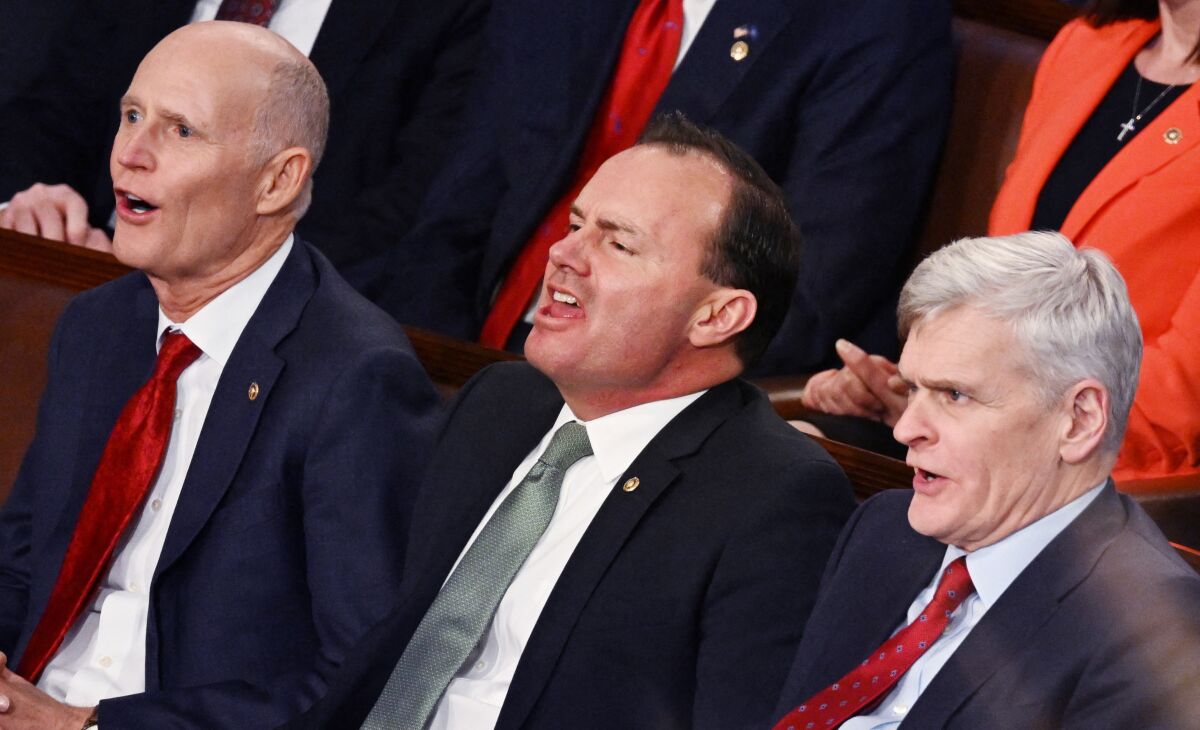


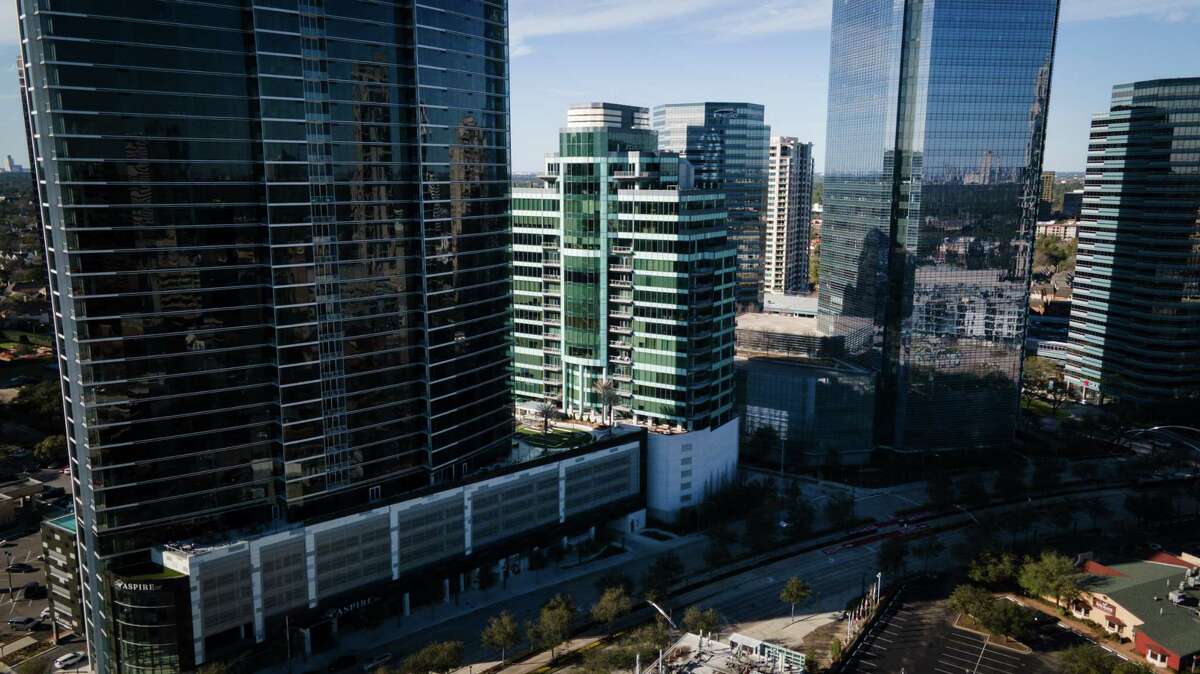

 Diane Ravitch's blog