A fascinating discussion was recently published, involving Richard Delgado, Aja Martinez, and Victor Ray, all of whom have written about critical race theory.

Richard Delgado coordinated the conversation.

It begins:

Three authors of books out on Critical Race Theory—Richard Delgado, Aja Martinez, and Victor Ray—discuss the cultural and legal landscape in a post-2020 world. From receiving hate mail, to fielding calls to ban teaching CRT in schools, these authors’ experiences and research offers insight into current debates around teaching race in America.

Lit Hub: You have all recently published books about Critical Race Theory. Right around the time your books came out, white nationalists responded to calls by the previous president and others to destroy the movement. Have you experienced personal backlash from anti-Crit forces on the right?

Richard Delgado: In the early years of the movement, the late eighties and early nineties, I received very little. And that which I did receive was relatively polite and scholarly, as with an article in Stanford Law Review that charged me and other race-crits with undermining rationality and the search for truth and replacing them with stories and personal reflections.

Around the time that the fourth edition of Jean’s and my book went under production, we started receiving a lot of hate mail, most of it from people who had apparently not read the book in any of its editions but knew what they thought about it because Fox News told them so. Some of the hate mail was vicious and personal. One anonymous emailer informed Jean that she was a traitor to the white race for sleeping with me.

Aja Martinez: Similar to Richard, when I was a graduate student starting out with my work as a CRT scholar with a dissertation on CRT’s storytelling methodology, counterstory, the majority of the backlash I received was from liberal academics who said one of two things: 1) “why are you studying race and racism? Obama is President”; or 2) “CRT and counterstory isn’t real/rigorous research.” That’s pretty much the steady resistance and backlash I received for the most of my career.

Everything changed in 2020. My book, Counterstory: The Rhetoric and Writing of Critical Race Theory was published in May 2020; in September, President Trump issued his “Executive order on Combating Race and Sex Stereotyping.” This ban effectively shined a national (and even international—I was asked to speak on this topic with Lithuanian Public Radio!) spotlight on CRT and in many ways placed targets on those of us who are identifiable culprits responsible for supposedly pushing CRT’s “different vision of America.” That vision (also supposedly) teaches Americans to hate America.

Please read this interesting conversation among three scholars who dared to challenge conventional wisdom and found their work at the center of a national maelstrom.

This article was written by Margaret McMullan, an author and former professor of creative writing. She lives in Pass Christian, Mississippi. It appeared in the Washington Post. She recalls when she invited Supreme Court Justice Sonia Sotomayer to speak at the Mississippi Book Festival, no expenses paid. It was a long shot.

She wrote:

One rainy day in April 2019, my phone buzzed and the caller ID lit up with “Supreme Court.” I stared at the two words for a moment. Was I in trouble?

Then I remembered.

A few months earlier, I’d sent Supreme Court Justice Sonia Sotomayor a letter inviting her to speak at the Mississippi Book Festival, which runs every August. Our offer was the same as it had been for other authors: a $250 stipend, a ride to and from the airport and a large, appreciative audience. In addition, we would purchase 1,500 copies of Sotomayor’s books to give to students. Could the justice please travel to Jackson, Miss., to talk to kids for two days? In the hottest time of the year?

Sotomayor’s “Turning Pages,” aimed at children ages 4 to 8, had come out in 2018. In her 2013 memoir suitable for young adults, “My Beloved World,” Sotomayor wrote about reading and the importance of education in her life, as well as her challenges with diabetes. I was sure that both books would resonate with Mississippi students. During our call, Le said the offer was interesting; the justice had never been to Mississippi. I outlined the potential impact Sotomayor would have on students, noting our state’s high poverty rate and its problem with childhood diabetes.

Le said she would get back to me.

And she did, with a few more questions — details about flight connections, book-signing and so on. I said we would be happy to upgrade her flight. Nope, the publisher was handling her flight. I said we’d be happy to upgrade her hotel room. Nope, the justice was fine with a Marriott, plus her security detail was familiar with the layout.
So far, so good.

Subsequent emails and phone conversations were similar. No, Le said, the justice did not need us to provide lunch or dinner. No, she could not accept the $250 stipend.

Did Le urge me to buy more books? No. She did ask whether we wanted any of the copies of “My Beloved World” to be in Spanish. In fact, we did, and I hadn’t thought to order them.

When Sotomayor came to Jackson, we had her speaking in the sanctuary at Galloway Memorial United Methodist Church, the church where Eudora Welty once worshiped. Backstage, Sotomayor smiled when she saw my clipboard of questions. She helped me with my tote bag full of books. She then clapped her hands together and said something like, “Okay. Here’s what we’re going to do.”

In addition to our planned onstage interview, she said, she wanted the freedom to go off-script. “They’re children,” I recall her saying. “I want to be sure I get to their questions.”

“Perfect,” I said.

So the justice took a seat in one of the side pews and watched as Dav Pilkey, the author and illustrator of “Captain Underpants,” entertained a delighted audience of about a thousand students, drawing cartoons as he spoke. Then, it was our turn on the stage. I asked my clipboard questions and Sotomayor answered. Afterward, she got up and spoke from the heart, walking up and down the aisles.

In answer to the students’ questions, she told them about growing up in Puerto Rico, eating mangoes off the tree, going away to college for the first time and working in a male-dominated court system.
She talked to these kids. She asked them their names, what they liked in school, what they wanted to do with their lives. She hugged them and posed for pictures with them. After she finished, she signed their books and took more pictures.

“My success came about because I read,” she told them.

The following morning, we did it all over again for another packed sanctuary, with Sotomayor telling even more personal stories about her life and talking about a civics program she and Justice Neil M. Gorsuch work on. She also gave us homework: Go out and make friends with someone who doesn’t look like you.

My only regret is that we ran out of books. I wish we had ordered more.

There very well might be a culture of poor ethical conduct in the Supreme Court, but there is no moral equivalency between justices accepting rides on private jets to vacation with friends who had cases before the court and Sotomayor talking about her books and her life to a crowd of mesmerized young readers.

The standard royalty rate for authors is less than 10 percent of the sales price. I don’t know anything about Sotomayor’s deal with her publishers, but 10 percent would make her cut of the 1,500 books our foundation purchased approximately $2,250 — for which she had to fly to Mississippi and give two presentations. During the hottest month of the year.

Was that a bribe? You be the judge.

West Virginia is one of the poorest states in the nation, yet it has a billionaire governor (Jim Justice) and a billionaire senator (Joe Manchin), who pretend to serve their constituents by doing nothing for them. It is a deep red state. The legislature authorized charter schools and vouchers; the governor promised to veto both but he didn’t. Manchin continually blocks Biden programs that would help his constituents (like the Child Tax Credit) but protects the coal industry.

West Virginia University recently announced deep cuts to its programs and faculty, and students are angry.

Inside Higher Education reported:

MORGANTOWN, W.Va.—West Virginia University’s proposal to eliminate nearly a 10th of its majors and 169 full-time faculty positions from its flagship campus led hundreds of students to protest Monday, as a student union’s organizing power added volume to the online employee protestations and national media coverage that’s been buffeting the institution for more than a week.

Pressure on the administration to reverse its recommended cuts is growing as the WVU Board of Governors’ Sept. 15 vote on the proposals nears. The suggested cuts—not the first in recent years at West Virginia—were discussed around the end of the spring and through the summer, but WVU’s big reveal of how extensive the proposed layoffs and degree reductions would be didn’t come until Aug. 11.

“Stop the Cuts!” was students’ first chant outside the Mountainlair student union Monday, followed by “Hey hey, ho ho, Gordon Gee has got to go!”

Multiple chants, signs and a flame-bedecked “Fire Gee” banner that students held in front of the entrance to the Stewart Hall administration building all targeted Gee, the university’s two-time president whose current run has lasted nearly a decade. Chants and signs said, “Stop the Gee-llotine!” while other signs said, “Gee can take home 800K but we can’t take Spanish?” and “Cut Gee’s Pay, Not Our Programs!…”

WVU has proposed axing, among other degree offerings, its Ed.D. in higher education administration; Ph.D. in higher education; master of public administration; Ph.D. and master’s in math; bachelor’s in environmental and community planning; bachelor degree in recreation, parks and tourism resources; doctor of musical arts in composition; master of music in composition; and master’s in jazz pedagogy, acting and creative writing.

The university’s enrollment has declined 10 percent since 2015, far worse than the national average. In April, WVU leaders, projecting a further 5,000-student plunge over the next decade, said they needed to slash $75 million from the budget.

The university has pointed to low enrollments in certain programs to justify cuts, including a lightning rod proposal to eliminate the entirety of the department of world languages, literatures and linguistics. But Lisa Di Bartolomeo, a teaching professor of Russian studies at West Virginia, has retorted that WVU isn’t counting all students who are double majoring in languages.

“Cost-to-deliver is one of the metrics considered in the preliminary recommendations,” Kaull wrote in an email. “The data reflect students’ primary majors as they are the best reflection of the cost-to-deliver. Dual majors and minors don’t generate revenue like primary majors. Further, the cost and effort of supporting students (e.g., advising) is typically carried by the primary major.” 

WVU’s Aug. 11 news release announcing the proposed cuts said it was “exploring alternative methods of delivery” for languages, “such as a partnership with an online language app.” A sign on Monday called the university “Duolingo U,” complete with the green bird mascot of that phone app.

“We’re pissed,” Sadler said. “We’re losing languages; we’re losing departments; we’re losing faculty and friends.”

Gee told Inside Higher Ed Friday, “What we’re doing is that we’re really looking at the numbers and we realize that our students have spoken to us. And our students have said that offering languages the way that we are is just not something that they want.” 

Asked about the calls to reduce his salary, which were happening online before Monday’s protest, Gee said he contributes about 15 percent of his salary every year to student scholarships. 

John Fox, who just started his master’s degree in creative writing, one of the programs to be cut under the proposal, carried water bottles for the protesters. He’s from Morgantown.

“We’re losing out on the culture of West Virginia,” he said, “like a voice to the culture of West Virginia.”

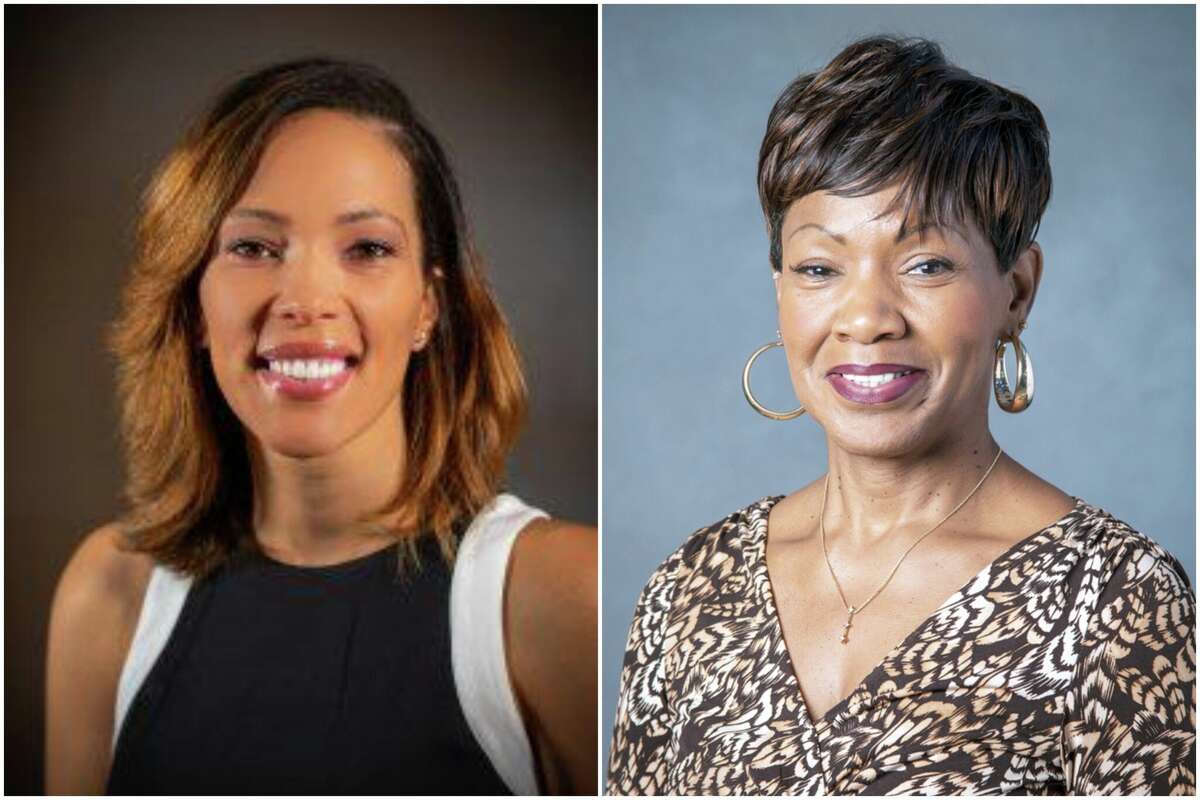
In true Broadie style, Houston Superintendent Mike Miles removed two elementary principals only days before the start of school. He started his job of “reforming” the Houston public schools in June, so he obviously did not observe either of them. This is disruption to the max. Teachers and parents learned about this abrupt action through an automated phone call.

Erin Trent (left), principal at Stevens Elementary School, and Linda Bellard, principal at Garcia Elementary School, were both removed from their positions Aug. 23, 2023. 

Erin Trent (left), principal at Stevens Elementary School, and Linda Bellard, principal at Garcia Elementary School, were both removed from their positions Aug. 23, 2023. Houston ISD

Parents and teachers at Stevens say they were “blindsided” by the announcement, which was made via an automated phone call.

“This unexpected and impersonal communication from the district caused immediate anxiety, confusion and fear, not just for me personally but among hundreds of parents,” said Adam Chaney, the parliamentarian for Stevens’ Parent Teacher Community Organization.

“Our community deserves clarification immediately. We are two days away from ‘Meet the Teacher,’ the whole campus is going to be present, and then Monday morning is the start of school,” Chaney said. “It’s become increasingly difficult to avoid interpreting this chaotic situation through the lens of this controversial takeover.”

HISD officials declined to comment further or provide a reason for the reassignments, saying that the district cannot comment on ongoing personnel matters. The call Stevens parents received Wednesday acknowledged that “the change may feel abrupt,” but that it had “become clear that this change is necessary to ensure Stevens Elementary students start the year off well with access to high-quality instruction on day one that meets their needs and supports increased academic outcomes on the campus…”

Trent’s abrupt removal has led members of the Stevens community to speculate that she was reassigned because she did not opt in to Superintendent Mike Miles’ New Education System earlier this summer.

One teacher, who asked to remain anonymous for fear of retaliation, said Trent resisted pushes from the HISD central office to become an NES-aligned school, which would have seen many of Miles’ most sweeping and controversial reforms implemented at Stevens.

Miles also disbanded the HISD team of autism specialists who served schools throughout the district.

Linda Darling-Hammond is a prominent professor at Stanford and president of The Learning Policy Institute. She has been a public school teacher, a researcher, and president of the California State Board of Education. In this essay, she explains why the community school model may be the best path forward for school reform.

She writes:

“Kasserian ingera”—the traditional greeting of Masai warriors—asks: “And how are the children?” It is still a greeting among the Masai, acknowledging the high value they place on their children’s well-being. The traditional answer, “All the children are well,” means that the safety and welfare of the young are protected by their communities.

Unfortunately, in the United States, we know that all of our children are not well. Indeed, by any measure, children and youth in the United States are struggling. The aftermath of the pandemic has brought with it an epidemic of mental health issues, from anxiety and depression to suicidal ideation. A Centers for Disease Control and Prevention report from 2022 found that 44% of adolescents said they felt sad or hopeless most of the time during the spring of 2021, and 20% seriously considered suicide. During that time, 29% had an adult in their household lose a job and 24% went hungry; 55% said they were exposed to harsh verbal or physical treatment at home.

Many report continuing to feel disconnected from school. Among high school students from 95 districts surveyed by Youth Truth in 2021–22, a minority (40%) reported feeling like part of their school community or enjoying coming to school, and just 39% reported having an adult at school they could talk with when they feel “upset, stressed, or having problems.” (See figure below.) These proportions are even lower for students of color, LGBTQ+ students, and students in large schools.

It is in this context that a diverse and growing chorus of educators, students, families, and policymakers are calling for a reimagining of our schools. They are highlighting the need to center relationships, belonging, and community; to create structures and practices to support relevant and engaging learning; and to organize resources, supports, and opportunities in ways that mitigate the pernicious effects of structural racism and decades of disinvestment in low-income communities of color.

As Learning Policy Institute Senior Fellow in Residence Jeannie Oakes noted recently, “We need to have schools really change the way they operate to compensate for deficiencies, not in the kids, but in our social safety net.”

Responding to the uniquely challenging moment we’re in, many districts and states are making big bets on community schools—both to address the tattered social safety net Oakes refers to, as well as to provide a catalyst for the deeper cultural and practice changes needed to better serve students and adults alike.

These initiatives are underway in large urban districts like Albuquerque, Baltimore, Chicago, Los Angeles, New York City, and Oakland, as well as in smaller rural communities in California, Kentucky, New Mexico, New York, and Vermont. A number of states have also established funding and supports for community schools. Maryland established the Concentration of Poverty grant program to provide annual community school personnel grants to eligible schools, along with additional per-pupil grant funding for each eligible student. New York created a community schools set-aside in its school funding formula for high-need districts and funded three regional technical assistance centers for community schools. California, for its part, has leveraged multiyear budget surpluses in 2021 and 2022 to make a historic $4.1 billion investment in planning, implementation, and coordination grants—as well as technical assistance—for the state-funded California Community Schools Partnership Program. This investment is intended to provide sufficient resources for every high-poverty school in California to become a community school within the next 5 to 7 years.

Community schools are a place-based strategy deeply rooted in their local context—the needs, assets, hopes, and dreams of students, families, educators, and community partners. They leverage a complex web of partnerships and relationships, like those at Mendez High School in East Los Angeles, to support and engage students and families. By integrating access to services—from medical care to housing and other supports—and making them available to students and families on school campuses, community schools provide a much-needed alternative to the fragmented and bureaucratic social services gauntlet that families in need are typically required to navigate. As we have seen time and again during the COVID-19 pandemic, these services and supports—provided in the context of trusting and caring relationships—can be life changing and can mean the difference between academic success and struggling students and families.

At Mendez, because of the infrastructure created through its community schools approach, the school and its partners were able to provide vital services to students and families as soon as schools shut down in 2020. A mobile clinic that already served the school began COVID-19 testing for the community; mental health providers already in place conducted regular mental health check-ins with students via devices or at a safe physical distance. Other partners created care packages with food, toilet paper, electronic benefit transfer cards, and other essentials, and teachers organized to provide Wi-Fi hot spots to families before the district had the capacity to do so.

But to achieve the transformation our students need and the times demand, community schools must be about much more than providing an efficient structure for integrated student supports (or wraparound services, as they are sometimes called). Transformation requires that we also address the structural barriers to student well-being and academic success that are encompassed by the other foundational elements of community schools: a culture of belonging, safety, and care; community-connected classroom instruction; expanded and enriched learning opportunities; empowered student and family engagement; and collaborative leadership. Foundational to all of this is a grounding in whole childeducation.

When implemented well, community schools are guided by principles for equitable whole child practices that are grounded in the science of learning and development. This whole child framework is at the center of the community schools initiative in California, where the State Board of Education has thus far approved $1.5 billion in planning and implementation grants from a larger initiative that is intended to reach one third of the state’s schools in high-need communities.

The key elements of a whole child framework should be foundational to our vision of transformational community schools:

  • Structures and practices to foster positive developmental relationships and ensure that students are known and supported. Examples include looping in the elementary grades, where a teacher stays with the class for more than one year, and utilizing advisory systems in middle and high school, which create small family units that offer personal attention, space for sharing needs and feelings, and family connections that support each student.
  • Supportive and caring school communities where students feel a strong sense of belonging and are safe to bring their full selves, without fear of being bullied by peers or stereotyped or negatively judged by students or adults at school.
  • Culturally affirming social and emotional learning that is infused throughout the school day and includes skill-building, as well as educative and restorative approaches to classroom management and discipline, so that children and young people learn responsibility for themselves and their community.
  • Rich learning experiences that support inquiry, motivation, competence, self-efficacy, and self-directed learning.
  • Integrated student supports that remove academic and non-academic barriers to learning by providing health and social services as needed, tutoring and other academic supports, and a focus on children’s individual talents and needs.

Move at the “Speed of Trust”

Just as we need to rethink how students are engaged and supported in schools, we also need to reimagine adult interactions—among families and educators, as well as among school staff. That means treating families as trusted partners in their students’ well-being and academic success and intentionally supporting their capacity building and leadership development.

As importantly, it also means investing in educators and school staff, so they have the necessary tools, agency, and support—including support for their mental health and emotional well-being—to shift practices in ways that expand the capacities of students and adults alike. This includes enabling new teachers’ success with strong induction and mentoring, while providing leadership opportunities for more experienced teachers. It means providing the collaboration time essential to advancing meaningful and engaging instruction and supporting teacher-led professional development. And, just as with students and families, it means nurturing trust and collaborative leadership among staff and with school and district leaders.

Open the link to read the rest of this article and to see the graphs.

While browsing through some old posts, I stumbled upon this one, which is a story that appeared in the Dallas Morning News in 2012, shortly after Mike Miles took charge of the Dallas public schools. It gives valuable insight into Mike Miles’ thinking. Miles was appointed to lead the Houston Independent School District by State Commissioner Mike Morath after the state of Texas took control of Houston, fired its elected board and their superintendent. Miles is a military man who learned about education at the Broad Academy. Military men give orders; so do Broadies.

Please note that nothing in Miles’ goals addresses early childhood education, class size, medical clinics, or nutrition. Miles believes in metrics, the coin of the conservative, neoliberal realm.

Matthew Haag and Tawnell D. Hobbs wrote this story for the Dallas Morning News. It appeared May 10, 2102.

Dallas ISD Superintendent Mike Miles outlines ambitious plan to help make district one of the nation’s best

Mike Miles not only wants to boost graduation rates but also wants to see more high school graduates go straight into the workforce. To achieve that, he wants to create a “career-ready” certificate that would give eligible students priority for entry-level jobs at area businesses.


Dallas ISD Superintendent Mike Miles on Thursday unveiled a slew of ambitious goals, proposals and recommendations designed to turn around the school district and make it one of the nation’s best.

In his first presentation to trustees as the district’s new leader, Miles spent nearly two hours laying out his vision for the district in a presentation that both excited and overwhelmed the board members.

Under the plan, teachers would be under more scrutiny. Principals would have one year to prove their worth. And the business community would be asked to step up.

If the road map is followed, Miles said, Dallas ISD is bound to become a premier school district.

“We are going to raise expectations for our staff,” said Miles, who earned a reputation for disrupting the status quo in the school district he will soon leave in Colorado Springs, Colo. “If you cannot tell that from the presentation, you have to know it from what you heard about me.”

He said DISD will begin rolling out some changes next school year, while other changes will span several years. The most immediate change, he said, will be a philosophical one. The district must embrace a vision and mission of raising academic achievement, improving instruction and not accepting excuses.

“We cannot just post it and market it and put it in little brochures. We have to practice this,” said Miles, adding that he wants 80 percent of DISD employees to be “proficient” on those beliefs in a year.

Many of the changes Miles laid out Thursday mirror those he implemented while in Harrison School District 2 in Colorado Springs.

A seemingly small change he suggested — one he said stirred outrage among teachers in Harrison — is to keep classroom doors open all day.

With the doors open, principals and administrators can move freely into classrooms to observe teachers. Under Miles’ plan, every Dallas teacher would be observed up to 10 times a year. In three years, those observations will contribute to teachers’ grades and factor into their salaries, as part of a pay-for-performance evaluation system.

Rena Honea, president of the teachers group Alliance-AFT, said “people are going to be in shock” with Miles’ proposals. “I envision it will be very different from what DISD has seen and experienced,” she said.

Miles has said change will be hard, but it’s necessary.

“If you cannot raise student achievement or have high quality of instruction, you cannot be a teacher in Dallas,” he said Thursday.

90% grad rate by 2020.

If the changes are successful, Miles said, the district will see skyrocketing graduation rates and achieve goals former superintendents promised but failed to reach.

Only three-quarters of DISD students currently graduate in four years of high school — a number Miles wants to see hit 90 percent by 2020. He also wants student SAT scores to jump nearly 30 percent over that time.

“Even if the district was in the best position possible, we would have to change things,” Miles said. “There is growing belief that children need more education after high school. High school is not the end point anymore.”

Throughout Miles’ presentation, trustees said little as they absorbed details of the 29-page plan and asked only a handful of questions. At one point, trustee Nancy Bingham, who appeared in favor of the goals, said Miles had caused her heartburn. Other trustees wondered how he would pay for everything.

Miles told trustees that he will spend the next few weeks finding money to cover new programs and initiatives. He said he would have to cut elsewhere to make room for his plans.

Miles’ plan would allow principals more control over their campuses, but they would also be required to meet higher expectations, such as improving communication with parents and the community. If the principals fail, others will be waiting for their jobs.

Starting next school year, Miles wants to create a leadership academy for 50 or 60 educators who want to become principals. They would spend the entire year in training and will vie for open positions.

The idea brought nods and smiles from some board members, but trustee Carla Ranger questioned the program. She hinted that the people who go through the yearlong training lab would have an unfair advantage to land the jobs over existing principals.

“If the notion is that there is an unfair advantage, welcome to principalship,” Miles told her. “You have to compete. That’s the way the world works.”

Miles said he will be open to tweaking his action plan, called “Destination 2020,” but remained unapologetic about his ambitious goals and plans.

Previous downfalls

Lofty expectations for DISD have been mentioned before.

Former DISD Superintendent Michael Hinojosa rolled out an ambitious reform plan when he arrived in 2005. A major component was to reach a 90 percent passing rate on state exams by 2010 for all student groups.

The ultimate goal, Hinojosa said, was for Dallas to be the top urban district in the nation within five years, culminating by winning the coveted Broad Prize for Urban Education. While test scores improved under Hinojosa’s watch, DISD did not come close to winning the Broad Prize.

Hinojosa also set goals for the district’s graduation rate. Before his arrival, the graduation rate was 81 percent in 2003-04. He had set a 93 percent graduation rate goal for 2009-10. But the goal wasn’t met. The Class of 2010 had a graduation rate of about 75 percent.

Miles not only wants to boost graduation rates but also wants to see more high school graduates go straight into the workforce. To achieve that, he wants to create a “career-ready” certificate that would give eligible students priority for entry-level jobs at area businesses.

Starting next school year, Miles wants 1,000 entry-level jobs for students with the certificates. And he wants the certificate program to grow in the coming years — with 3,000 jobs by 2015.

Miles said he will go to the business community, ask for their support and urge them to focus their efforts on helping DISD students. He said he also wants the business community to help define what it means to be career-ready.

“Let’s let them put their money where their mouth is,” he said.

At a glance: The superintendent’s plan

In his first presentation to the Dallas ISD trustees, new Superintendent Mike Miles unveiled “Destination 2020,” a plan that sets goals for the district. Here are parts of that plan.

STUDENT ACHIEVEMENT GOALS FOR 2020

Graduation: 90 percent of students will graduate on time. [The Class of 2010 had a graduation rate of about 75 percent, which is the percentage of ninth-graders who graduated in four years, according to Texas Education Agency records.]

Test scores: 60 percent of students will receive a 21 or higher composite score on the ACT out of a possible score of 36, or 1110 on the reading and math portions of the SAT out of a possible score of 1600. [For the Class of 2010, the average ACT score was 17.1; the average SAT score was 860, according to Texas Education Agency records.]

Workplace ready: 80 percent of student will be proficient on the “Year 2020 workplace readiness assessments.” According to the plan, “These assessments will be designed by the business and nonprofit communities and will include critical thinking, communications, teamwork, information literacy, technology skills, and worth ethic.”

College and careers: 90 percent of students will enter college, the military or a “career-ready job” right out of high school. A career-ready certificate will be created for students who meet certain goals. Businesses will be asked to commit to providing entry jobs for those students.

AREAS OF FOCUS

Some areas of focus for the next three years:

Effective teachers: “While teachers in DISD are working hard and are committed to children, a quick review of instruction and discussions with instructional leaders in Dallas reveals that the quality of instruction is inconsistent and that good instruction is not pervasive in many schools.”

Effective principals: “While we will provide the best support and professional development any principal in the state could hope to receive, they will have only one year to demonstrate that they have the capacity and what it takes to lead change and to improve the quality of instruction.”

Professional and high-functioning central office: “The entire central office system will be designed to support schools as teachers and principals try to accomplish three main goals: 1) Improve the quality of instruction; 2) Raise student achievement; 3) Create a positive school culture and climate.”

Engaging parents and the community: “We will be much more purposeful in helping community supporters work in reinforcing ways. … We cannot have 100 different partners spraying reform initiative on our schools. That would diffuse the efforts and take us off our direction. Thus, we will help channel the support and ensure the major educational initiatives work in reinforcing ways.”

KEY TARGETS FOR AUGUST 2015

At least 75 percent of the staff and 70 percent of community members agree or strongly agree with the direction of the district.

At least 80 percent of all classroom teachers and 100 percent of principals are placed on a pay-for-performance evaluation system.

At least 60 percent of teachers on the pay-for-performance evaluation system and 75 percent of principals agree that the system is “fair, accurate and rigorous.”

Create a rubric to assess the professional behavior and effectiveness of each major central office department.

For 90 percent of new hires, the maximum length of the hiring process will be less than five weeks.

The community provides 3,000 jobs for graduates who have “career-ready” certificates.


SOURCES: Destination 2020; Texas Education Agency

Miles started in Dallas with a five-year contract. He resigned after three years.
Charlie Sykes is a leading Never Trumper who writes at “The Bulwark.” This is part of his take on last night’s debate. I like to read The Bulwark because I think of its writers as the sane remnant of the GOP.

Donald Trump’s fourth perp walk, Rudy’s mugshot, and another assassination by Vladimir Putin.

But let’s talk about last night, shall we?

The Fox News hosts began the presidential debate by asking candidates to react to a country song, ended with a question about UFOs, and struggled mightily to avoid mentioning the orange elephant not in the room.

Along the way, millions of Republicans were introduced to the Tracy Flick of post-Trump right wing politics.

Vivek Ramaswamy, who seems to have won the Elon Musk primary, was the night’s break-out star. “Ramaswamy Seizes Spotlight,” The New York Times declared, describing the first GOP debate as “The Ramaswamy show.”

My colleague Mona Charen spoke for many of us when she said last night that “I guess if I react with visceral disgust to Vivek, it’s probably a sign that the base loves him.”

Well, exactly.

Vivek is a facile, clownish, shallow, shameless, pandering demagogue, but he is exactly what GOP voters crave these days. So, he will likely get a bump in the polls, at least in the short-run.

Last night, Vivek was Trumpier than Trump. He touched all the erogenous zones of the MAGAverse with a fluency and zeal unmatched by anyone on the stage, from his anti-Ukraine memes to his fawning praise of the absent God King.

Trump himself loved it, posting a video clip of Vivek declaring him “the BEST president of the 21st century, and thanking him: “This answer gave Vivek Ramaswamy a big WIN in the debate because of a thing called TRUTH. Thank you Vivek!”

For most of the night, Vivek seemed to dominate the debate.

Until he was utterly and thoroughly gutted by Nikki Haley.

**

Nikki

Last year, I wrote about “The Unbearable Lightness of Nikki,” but last night, the former South Carolina governor impressively overperformed. On issue after issue — spending, abortion, Ukraine, and Trump’s electability — she was serious, sober, and substantive. If Vivek won the MAGA primary debate; Haley, arguably, won the Normie/Donor debate — and she’s likely to get a serious second look.

On spending:

“The truth is that Biden didn’t do this to us. Our Republicans did this to us too. When they passed that $2.2 trillion Covid stimulus bill, they left us with 90 million people on Medicaid, 42 million people on food stamps,” argued Haley. “You have Ron DeSantis, you’ve got Tim Scott, you’ve got Mike Pence, they all voted to raise the debt and Donald Trump added 8 trillion to our debt and our kids are never gonna forgive us for this.”

**

On Trump:

“It is time for a new generational conservative leader. We have to look at the fact that three-quarters of Americans don’t want a rematch between Trump and Biden. And we have to face the fact that Trump is the most disliked politician in America. We can’t win a general election that way.”

**

Vivisecting Vivek

The highlight of her performance was her merciless critique of Vivek’s global surrender tour. “He wants to stop funding for Israel. He wants to stop funding for Ukraine,” Haley said. “You are choosing a murderer.”

“Ukraine is the first line of defense for us. And the problem that Vivek doesn’t understand is he wants to hand Ukraine to Russia,” Haley declared. “He wants to let China eat Taiwan. He wants to go and stop funding Israel. You don’t do that to friends. What you do instead is you have the backs of your friends.”

“You have no foreign policy experience and it shows!”

Until that moment, Vivek owned the hall in Milwaukee. But as Nikki turned on him, the change in mood was palpable. My colleague Sonny Bunch:

**

Jim Hightower, an outspoken liberal voice in Texas, posts a warning about the Republicans’ strategy to wipe out environmental regulations if they regain the presidency in 2025. Despite the climate disasters occurring all over the world and in every corner of this nation, the GOP puts greed over survival.

Hightower writes:

When your political opponents push extremist public policies that would be disastrous for America, should you wring your hands in dread… or applaud?

Consider “Project 2025,” put together by former Trump officials and the Koch brothers’ network of billionaire plutocrats. Their strategy is to win the presidency next year by demonizing all environmental protections and promising to halt all national efforts to cope with the obvious crises of climate change. Their proposals include repealing regulations that curb fossil fuel pollution, terminating our nation’s transition to renewable energy, shutting down all environmental protection agencies, encouraging more oil and gas drilling and use, and promoting the deadly delusion that global warming is not a real problem.

Moreover, they intend to implement Project 2025 in the first 180 days of a right-wing Republican’s presidential term – obviously anticipating that Donald Trump will be that president. “We are not tinkering at the edges,” brags a far-out right-wing group that instigated the scheme, “We are writing a battle plan and we are marshalling our forces.” They’ve already drawn up a list of agencies and policies they’ll begin eliminating on Day One, and they’ve readied a list of some 20,000 right-wing henchmen to put on the federal payroll immediately to enforce their plan.

If this sounds ludicrous, it is. But it’s actually happening, for the Republican Party has decided to be ludicrous. As the director of Project 2025 told the New York Times, “[This is] where the conservative movement sits at this time.”

Maybe, but it damn sure won’t sit well with the American people, who’re presently suffering the hellish ravages of our rapidly overheating climate. Indeed, here’s a great chance for Democrats to demonstrate their bipartisan spirit by doing all they can to publicize the Republicans’ let-it-burn global warming policy.

The Miami Herald reported that restaurants, hotels, construction, and other industries are experiencing a severe labor shortage due to Governor DeSantis’ crackdown on undocumented immigrants. Not only has he feuded with the state’s biggest employer, Disney, but he’s undermined the state’s tourist industry.

Richard Gonzmart, the fourth-generation owner of the iconic Columbia Restaurant chain based in Tampa, says it’s time for politicians to start listening on immigration. When federal immigration authorities arrived at his Sand Key restaurant in Clearwater to find outdated and noncompliant work documents for 19 of his employees, he was forced to fire them all — including seven people who had worked with his family for decades.

“With 2,000 employees, it becomes very difficult to monitor it,’’ Gonzmart said in an interview. “We think they’re legal but, when we had to check, we found seven people who have been with me 30 years — paying taxes, had children, grandchildren — and we were required to terminate them.” Immigration and Customs Enforcement officials in Tampa would not comment on the case, and Gonzmart said he was still negotiating a resolution to the conflict. But the incident underscores the double scrutiny many businesses face as a new state law layers new immigration enforcement policies to existing federal rules in a way that is exacerbating worker shortages.

It’s a scenario that’s playing out across Florida with restaurants, construction companies and farms searching for workers as the political rhetoric over immigration is clanging up against a tight labor market and expanding population. Gonzmart is the great-grandson of Casimiro Hernandez Sr., the founder of the historic Ybor City restaurant that is the chain’s anchor. Since its opening in 1905, the company has treated employees as part of the restaurant family, paying them above market wages and benefits, he said….

It’s a scenario that’s playing out across Florida with restaurants, construction companies and farms searching for workers as the political rhetoric over immigration is clanging up against a tight labor market and expanding population. Gonzmart is the great-grandson of Casimiro Hernandez Sr., the founder of the historic Ybor City restaurant that is the chain’s anchor. Since its opening in 1905, the company has treated employees as part of the restaurant family, paying them above market wages and benefits, he said….

It’s a scenario that’s playing out across Florida with restaurants, construction companies and farms searching for workers as the political rhetoric over immigration is clanging up against a tight labor market and expanding population. Gonzmart is the great-grandson of Casimiro Hernandez Sr., the founder of the historic Ybor City restaurant that is the chain’s anchor. Since its opening in 1905, the company has treated employees as part of the restaurant family, paying them above market wages and benefits, he said….

Many of his employees, especially those working in the kitchens and “back of the house” are fathers, sons and brothers, Gonzmart said. So when immigration officials told him the I-9 forms of his most loyal employees were not in compliance and he would have to fire them, he resisted. “I told them I wouldn’t let them go and they threatened to arrest me,’’ he recalled. “I said, ‘That’s a good idea. Why don’t you all come and arrest me? But let me know when, so I can have cameras here!’ Then, they sent me a $500,000 fine, and I let them go…”

Meanwhile, Gonzmart said the incident “almost put us out of business,’’ and while customer demand has rebounded from the pandemic, the inability to find enough new staff has forced him to suspend his catering services and reduce restaurant hours.

Carol Dover, president and CEO of the more than 10,000-member Florida Restaurant & Lodging Association, said that Gonzmart is not alone. Hotels are not opening all rooms because they don’t have enough housekeepers, restaurants that used to be open for breakfast, lunch and dinner are now open for just lunch and dinner, and existing staff puts in extra hours, she said. “Everybody’s having to get creative with their thinking.”

Read more at: https://www.miamiherald.com/news/local/immigration/article278161652.html#storylink=cpy

The New York Times published a startling article about the increasing global dominance of one man. He may be the richest man in the world, but that’s not why he is the most dangerous man in the world. He currently is launching satellites into orbit on a weekly basis. He owns almost 5,000 satellites now, and the number in orbit increases regularly. If you can open the article, you will see graphic visualizations of the thousands of satellites owned by one man and unregulated by any government. That man is Elon Musk.

The article begins:

On March 17, Gen. Mark A. Milley, the chairman of the Joint Chiefs of Staff, and Gen. Valeriy Zaluzhnyi, the leader of Ukraine’s Armed Forces, dialed into a call to discuss Russia’s invasion of Ukraine. Over the secure line, the two military leaders conferred on air defense systems, real-time battlefield assessments and shared intelligence on Russia’s military losses.

They also talked about Elon Musk.

General Zaluzhnyi raised the topic of Starlink, the satellite internet technology made by Mr. Musk’s rocket company, SpaceX, three people with knowledge of the conversation said. Ukraine’s battlefield decisions depended on the continued use of Starlink for communications, General Zaluzhnyi said, and his country wanted to ensure access and discuss how to cover the cost of the service.

General Zaluzhnyi also asked if the United States had an assessment of Mr. Musk, who has sprawling business interests and murky politics — to which American officials gave no answer.

Mr. Musk, who leads SpaceX, Tesla and Twitter, has become the most dominant player in space as he has steadily amassed power over the strategically significant field of satellite internet. Yet faced with little regulation and oversight, his erratic and personality-driven style has increasingly worried militaries and political leaders around the world, with the tech billionaire sometimes wielding his authority in unpredictable ways.

Since 2019, Mr. Musk has sent SpaceX rockets into space nearly every week that deliver dozens of sofa-size satellites into orbit. The satellites communicate with terminals on Earth, so they can beam high-speed internet to nearly every corner of the planet. Today, more than 4,500 Starlink satellites are in the skies, accounting for more than 50 percent of all active satellites. They have already started changing the complexion of the night sky, even before accounting for Mr. Musk’s plans to have as many as 42,000 satellites in orbit in the coming years.

A global satellite network

There are over 4,500 Starlink satellites orbiting Earth. What appear to be long lines here are recently launched satellites approaching their place in orbit.

An animation showing circles that represent Starlink satellites orbiting Earth as it rotates. Most of the satellites are spaced out and move in a gridlike formation between Earth’s poles, while a few are closely clustered and move together in lines. [You must open the link to see the animations that show the global reach of Starlink satellites.]

The power of the technology, which has helped push the value of closely held SpaceX to nearly $140 billion, is just beginning to be felt.

Starlink is often the only way to get internet access in war zones, remote areas and places hit by natural disasters. It is used in Ukraine for coordinating drone strikes and intelligence gathering. Activists in Iran and Turkey have sought to use the service as a hedge against government controls. The U.S. Defense Department is a big Starlink customer, while other militaries, such as in Japan, are testing the technology.

But Mr. Musk’s near total control of satellite internet has raised alarms.

A combustible personality, the 52-year-old’s allegiances are fuzzy. While Mr. Musk is hailed as a genius innovator, he alone can decide to shut down Starlink internet access for a customer or country, and he has the ability to leverage sensitive information that the service gathers. Such concerns have been heightened because no companies or governments have come close to matching what he has built.

In Ukraine, some fears have been realized. Mr. Musk has restricted Starlink access multiple times during the war, people familiar with the situation said. At one point, he denied the Ukrainian military’s request to turn on Starlink near Crimea, the Russian-controlled territory, affecting battlefield strategy. Last year, he publicly floated a “peace plan” for the war that seemed aligned with Russian interests.

At times, Mr. Musk has openly flaunted Starlink’s capabilities. “Between, Tesla, Starlink & Twitter, I may have more real-time global economic data in one head than anyone ever,” he tweeted in April.

Mr. Musk did not respond to requests for comment. SpaceX declined to comment.

Worried about over-dependence on Mr. Musk’s technology, Ukrainian officials have talked with other satellite internet providers, though they acknowledged none rival Starlink’s reach.

“Starlink is indeed the blood of our entire communication infrastructure now,” Mykhailo Fedorov, Ukraine’s digital minister, said in an interview.

At least nine countries — including in Europe and the Middle East — have also brought up Starlink with American officials over the past 18 months, with some questioning Mr. Musk’s power over the technology, two U.S. intelligence officials briefed on the discussions said. Few nations will speak publicly about their concerns, for fear of alienating Mr. Musk, said intelligence and cybersecurity officials briefed on the conversations.

U.S. officials have said little publicly about Starlink as they balance domestic and geopolitical priorities related to Mr. Musk, who has criticized President Biden but whose technology is unavoidable.

The federal government is one of SpaceX’s biggest customers, using its rockets for NASA missions and launching military surveillance satellites. Senior Pentagon officials have tried mediating issues involving Starlink, particularly Ukraine, a person familiar with the discussions said.

The Defense Department confirmed it contracts with Starlink, but it declined to elaborate, citing “the critical nature of these systems.”

Other governments are wary. Taiwan, which has an internet infrastructure that could be vulnerable in the event of a Chinese invasion, is reluctant to use the service partly because of Mr. Musk’s business links to China, Taiwanese and American officials said.

China has its own concerns. Mr. Musk said last year that Beijing sought assurances that he would not turn Starlink on inside the country, where the internet is controlled and censored by the state. In 2020, China registered with an international body to launch 13,000 internet satellites of its own.

The European Union, partly driven by misgivings about Starlink and Mr. Musk, also earmarked 2.4 billion euros, or $2.6 billion, last year to build a satellite constellation for civilian and military use.

“This is not just one company, but one person,” said Dmitri Alperovitch, a cybersecurity expert who co-founded the Silverado Policy Accelerator think tank and has advised governments on satellite internet. “You are completely beholden to his whims and desires.”

The graphics in the article are powerful. Please open the link if you can.

As I read the article, I could not help thinking of the super-villains in James Bond movies who wanted to control the world.