After the Dobbs decision overturning Roe v. Wade, some 16 Republican-dominated states have imposed near-total bans on abortion. In response, access to abortion pills has grown.
In this article in VOX, veteran journalist Rachel M. Cohen describes the numerous organizations that provide telehealth sessions with doctors who provide prescriptions, as well as supplying abortion pills. In addition, several Democrat-dominated states have passed shield laws to protect doctors in their state who advise women in red states.
A network of like-minded groups have filled the gap created by the Dobbs decision, making these pills easily available and inexpensive.
Taking a combination of mifepristone and misoprostol within the first 12 weeks of a pregnancy was already the most common method for abortion in the United States before the Dobbs decision, partly due to its safety record, itslower cost, diminished access to in-person care, and greater opportunities for privacy. The popularity of medication abortion has only grown since then:A poll released in March found majorities of Americans support keeping medication abortion legal and allowing women to use it at home to end an early-stage pregnancy. Another survey found 59 percent of voters disapprove of overturning the FDA’s approval of abortion medication, including 72 percent of Democrats, 65 percent of independents, and 40 percent of Republicans.
Immediately after Dobbs, the only way to obtain the pills by mail was through international sources, which took weeks to arrive. Now, however, the pills are available by mail in the U.S. and will arrive in days.
The e-commerce marketplace for abortion medication has expanded, and the cost for pills has fallen dramatically
Outside of telemedicine options, there are over two dozen e-commerce websites that sell and ship medication abortion to the US. This international supply chain has grown significantly since Dobbs and most of these sites do not require prescriptions and do not require people to upload their IDs or have medical consultations. Plan C has vetted 26 of these sites, including testing their pills to ensure they’re “real products of acceptable quality.”
The cost of the pills has dropped significantly, some for as little as $42-47.
Volunteer groups have sprung up, with some offering the pills for free.
Community support groups, also known as “companion networks,” have grown since the overturn of Roe v. Wade and now actively provide free abortion pills to people living in states with bans on reproductive health care. These groups, some of which can be found on sites like Plan C and Red State Access, mail medication abortion and offer doula support.
But what happens if the Supreme Court limits access to mail-order abortion pills?
While abortion advocates doubt the justices will go so far as to pull mifepristone off the market, as a federal judge in Texas attempted to do earlier in 2023, they are bracing for the possibility that the court might reimpose medically unnecessary restrictionson access, like bans on prescribing mifepristone via telemedicine.
Even if that happens, though, most of the aforementioned options for accessing medication abortion would remain intact. It’s not clear if the FDA would even abide by such a Supreme Court ruling, but if it did, providers using shield laws could still legally ship misoprostol to patients in banned states.
“A Supreme Court ruling wouldn’t affect the community-based networks, ProgressiveRx, or the e-commerce websites that sell pills at all, and so there would still be ways of getting mifepristone and misoprostol in the mail,” Wells said. “The Supreme Court could affect services like Aid Access and Abuzz, but they could also switch to misoprostol-only abortions and that’s what they’re planning to do.”
The rapid growth in the number of ways to access abortion pills and the planning to protect access in the future demonstrate that Dobbs will prove to be like prohibiting the sale or consumption of liquor. When the population has grown accustomed to consuming alcohol or getting an abortion legally, it will be impossible to ban it.
In 1986, Congress enacted a law that requires hospitals that receive Medicare reimbursements to provide medical care to patients having a medical emergency without regard to their ability to pay. The law is called the Emergency Medical Treatment and Active Labor Act of 1986 (EMTALA).
Two weeks after the U.S. Supreme Court’s Dobbs decision reversing Roe v. Wade, the federal Centers for Medicare and Medicaid released “guidance” reminding hospitals that they were obliged to perform abortions under the EMTALA Act, if the pregnant woman’s life was put at risk by her pregnancy. EMTALA, the guidance said, pre-empted state laws banning abortions.
Both the District Court in Texas and the Fifth Circuit Court of Appeals ruled that doctors and hospitals were not required to perform abortions by EMTALA and that federal law and guidance do no supercede Texas’s rigid ban on abortion. It further ruled that the pregnant woman and her unborn fetus had equal rights and that the woman “does not have an unqualified right…to abort her child.”
Thus, even if the mother’s life is in danger and even if an abortion is necessary to save her life, the doctor decides—not the woman—whether to perform an abortion. Doctors who perform abortions in Texas are subject to harsh penalties, including loss of their medical license and steep fines.
To hell with the women, they essentially said: we have to do everything possible to rescue those innocent, virginal fetuses who are as-yet uncontaminated by sin.
The Republican judges even refused to refer to a fetus as a fetus, instead calling it a “child” and claimed that, as a “child,” it’s entitled to an equal level of life-saving care as is provided to the woman carrying it.
In other words, do everything possible to stabilize and thus save the fetus, even if that further endangers the life of the mother.
Their rationale was that fetuses aren’t mentioned in EMTALA, so therefore they must be children, and “children” are just as worthy saving as mom.
This decision will cause the deaths of women whose pregnancies endanger their lives. Yrs, women do die in childbirth, but not so often in civilized societies. These women may have other children who love them and depend on them, but the white guys in judicial robes concluded: Save the fetus above all.
You may recall Katie Cox, the 31-year-old pregnant mother in Dallas who sought court permission to have an abortion when she learned that her fetus had a rare condition called trisomy 18. Her doctors told her that the fetus might die in her womb or within minutes, hours or days after it was born. She might not be able to give birth in the future. The court gave her permission to obtain an abortion but State Attorney General Ken Paxton said any doctor who performed an abortion for Mrs. Cox would be prosecuted to the full extent of the law. Paxton didn’t need to act, however, because the Texas Supreme Court ruled that she was eligible to have an abortion. Katie Cox left Texas and had an abortion in New Mexico.
What’s clear from all this is that the provision in the Texas law that allows an abortion in dire circumstances , such as the danger to a woman’s life, is inactive, meaningless, moot.
Billionaire vs. billionaire. The clash of a feminist titan with a neo-Nazi sympathizer! Get your popcorn and enjoy the tale of how Mackenzie Scott managed to infuriate super-pig Elon Musk. Granted, he’s the richest man in the world–worth $300-400 billion, while she has only $32 billion or so.
But she has made a practice of giving generously to worthwhile nonprofits while he gives away as little as possible.
Billionaires are mostly despicable Montgomery-Burns type people. But then there’s MacKenzie Scott, one of the few ultra-rich who doesn’t deserve to get tarred and feathered in the coming revolution! She’s the third-wealthiest woman in the United States, 38th in the world, and has now given away $19.25 billion (with a B!) in 2,524 charitable gifts, with a focus on racial equality, LGBTQ+ equality, democracy, and climate change.
She and her small team seek out nonprofits operating in communities facing high food insecurity, high measures of racial inequity, high local poverty rates, and low access to philanthropic capital. And then she gives away the money with no strings attached. Which is unusual in philanthropy! Also unusual, she’s pretty quiet about it. She has a web site that shows what she has donated to, but there’s no MacKenzie Scott ribbon cuttings, or buildings with her name on them when she drops a check. She donates, then she dips. And she plans to “keep at it until the safe is empty.”
Elon Musk warned that she is destroying Western civilization.
Thanks to blogger Billy Townsend, I learned about the Florida Center for Government Accountability and its publication, The Florida Trident. This organization shines a bright light on government corruption. I am sending a donation to encourage their great work.
Just when Florida’s forces of gross grift seem to enjoy total impunity, the Florida Center for Government Accountability takes down the Zieglers, beats DeSantis in court, and becomes a new sheriff.
FCGA uncovered the scandalous Ziegler family threesome, which led to Christian Ziegler being forced out as state chair of the GOP and caused some embarrassing moments for his wife Bridget, a co-founder of Moms for Liberty and an outspoken critic of gays.
FCGA recently posted about the state’s deceptive marketing to women who search for abortion providers on the Internet. If they choose an “abortion center” funded by the state, they will fall into the clutches of anti-abortion zealots, likely evangelicals, who will try to persuade them not to have an abortion.
An image from a state-funded anti-abortion center website.
When Abby learned she was pregnant, the first thing she did was look online for support. As a college student in a small town in northwest Florida, she thought the Internet was her best hope to find help for her unplanned pregnancy with a boyfriend who had become abusive.
Sifting through Google’s search results, she stumbled on an online-chat providing support for people in need of abortion care. The chat operator stressed the importance of a pregnancy test and referred her to a nearby pregnancy center in Deland called the Grace House.
The center’s website welcomed people like Abby who didn’t have insurance and asked to remain anonymous due to safety concerns. She scheduled a visit for the following day – a day she said she’ll never forget.
The horrific visit ended with Abby sobbing as center employees systematically pressured her to continue her pregnancy, prayed over her belly, and promised her free baby care products if she would come back for more “counseling.”
“I deserved legitimate medical care and compassion,” said Abby. “But I know in that room, they didn’t see me or my future. They just saw a positive pregnancy test.”
The staffers at Grace House were not there to help her receive abortion care, but instead to convince her and all others who enter the center for care to complete their pregnancy and be saved by Christianity in the process.
“I was fooled by this facility in a moment of vulnerability and desperation and trusting the wrong people,” Abby said.
The same “wrong people” are funded by the state’s Florida Pregnancy Support Services Program, which provides taxpayers’ money to more than 100 anti-abortion “crisis pregnancy centers (CPCs)” around the state. The stated goal of the program is to convince clients to carry their pregnancies to term rather than having abortions.
As previously reported in an ongoing Florida Trident investigative series, the centers, including Grace House, are Christian-based organizations and often identify themselves as “ministries” and “missions.” Several legal experts have said the program runs afoul of the U.S. and Florida constitutions, the latter of which expressly forbids the state from aiding religious organizations.
Despite its inherent problems, the program is now bursting at the seams in Florida. Its annual budget has ballooned from $4 million to $25 million a year, an increase written into the controversial six-week abortion ban legislation signed by Gov. Ron DeSantis in April.
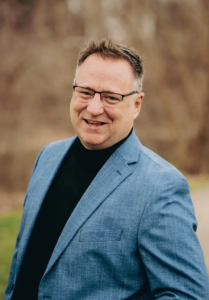
Kurt Filla is leading the state’s anti-abortion ad campaign.
Included in that funding explosion is a quadrupling of the program’s advertising budget to nearly $1 million a year, according to state records, paid out via the Florida Pregnancy Care Network, the non-profit tasked with administering the program for the state.
Kurt Filla, owner of the Michigan-based company, Filla Life Media, snared the state-funded advertising contract. Filla, who didn’t respond to requests for comment, is an outspoken conspiracy theorist who has backed false QAnon and vaccine tropes on the Internet and has written that the 2020 election was stolen, that God sends him angels and he’s heard the devil talk in his head, and that “global elites” are secretly trying to make people “impotent and immobile.”
Jenifer McKenna, an activist with the Reproductive Health Accountability Fund at Hopewell, said the steep funding hike and hiring of ideologically radical companies like Filla Life are part of a trend in “abortion-hostile” states like Florida to divert tax dollars to CPCs and “ramp up targeted digital marketing to track down pregnant people, talk them out of abortion, and collect their sensitive data.”
“Researchers are calling the post-Roe landscape an ‘abortion infodemic’ with CPCs playing a leading role,” said McKenna, adding that the centers use “extensive digital strategies to intercept pregnant people seeking care, sow confusion, spread disinformation and obstruct access.”
After an initial visit, which at some clinics includes an ultrasound where individual center staffers pray for the fetus, clients are urged to return for “counseling” and parenting classes. In fact, while the state bills the centers as health care providers, a whopping 87.5% of program reimbursements go for counseling and classes, a Trident analysis of state records found. A significant portion of the new $20 million in annual spending will fund a doubling of the amount the state reimburses the centers for counseling from $75 an hour to $150 an hour, state records show.
To put the $150 hourly rate in perspective, the state reimburses registered nurses – who actually have formalized education and training for the critical work they do – only $32.07 per home health care visit, according to the Florida Agency for Health Care Administration. Home health aides, who lack the RN’s credentials, are reimbursed a scant $18.04 per visit by the state.
When told of that increase, Amy Weintraub, who serves as reproductive rights director for the non-profit Progress Florida, called it “atrocious.” She noted that the “counselors” at the centers have no training or education requirements and are often hired based largely on their Christian faith.
“The fact that [state-funded pregnancy centers] are even allowed to use the word ‘counselor’ is such an affront because … they are not trained counselors,” said Weintraub.
That’s something Abby said she found out the hard way.
“Oh, She’s Abortion-Minded”
A random online search for abortion in Fort Lauderdale turns up a website for the Hope Women’s Centers, which received $100,000 in state funding last year. Its website promises “free abortion information” and “consultations on abortion pills, surgical abortion procedures, and emergency contraceptives.”
Yet like all other state-funded pregnancy crisis centers, Hope, which is strongly aligned with the Rio Vista Church, has two goals: to dissuade clients from having an abortion and to try to save their souls. None of that is mentioned in the online material.
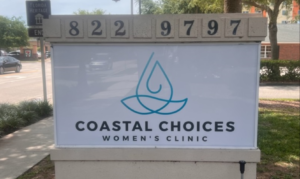
It was the same in Abby’s case when she went to Grace House, which recently changed its name to Coastal Choices Women’s Clinic, a moniker that belies the fact that it vehemently opposes choice and isn’t a bona fide health clinic. The Trident left a detailed message for comment with a receptionist at Coastal; a promised return call was not received prior to publication.
“There is no Planned Parenthood in my county, so I thought it was a smaller version of it,” said Abby. “And they said if you were considering abortion to come on in, so I felt that was an invitation.”
Once inside, she was given a form to fill out with questions about her faith, her intimate relationships, even what her college grades looked like. It was the first clue she was inside a Christian ministry instead of a bona fide health clinic.
“That gave me a little bit of a pause,” Abby said. “But it wasn’t until the actual counseling session that I deeply regretted walking in the doors.”
She’d written in the form that she wanted an abortion.
“I watched a group of maybe three staff or volunteers crowd around my paper,” she said. “And I hear them say something to the effect of, ‘Oh, she’s abortion-minded, I’ll take her.’”
In the counseling session that followed, which she attended with her partner, Abby took a pregnancy test that was kept hidden while staff pressed her for 40 minutes about her personal life. She said the staffers told her she was in no position to make the decision about an abortion for herself.
When her partner was out of the room, Abby confided that she was in an abusive relationship. She said the counselor advised her to stay with her partner because the baby would give her purpose and help him step up as a man, and urged him, when Abby was outside the room, to stop her from getting an abortion because the procedure could kill her.
After the test came back positive, Abby was handed her due date and a small replica of a fetus. A staffer asked her what she might name the baby. Distraught, Abby began sobbing.
“There was so much talking over me when I was clearly having a breakdown,” Abby recalled. “[One staffer] starts praying over my stomach, she’s touching my stomach the whole time, and saying that I can start right away taking their parenting classes to earn baby bucks for their boutique to get baby clothes. And all the while I’m just so terrified.”
The experience was a far cry from the online promises, a contrast Weintraub said is common. The most fundamental deception in the advertising is the centers’ posing as health clinics when they don’t actually offer comprehensive reproductive health care services, she said.
“They strip their web sites of anti-abortion lingo so that the intended victims will not realize that the place they are visiting is an anti-abortion center,” said Weintraub. “All kinds of tricky language is used to cloak their true intention.”
Now Filla Life Media, under the leadership of its extremist owner, is set to receive $1 million a year from Florida taxpayers for its marketing prowess.
Tax-Payer Funded Anti-Abortion Marketing Agencies
Filla Life Media is a member of a national network called the Pro-Life Marketing Ethics Council made up of “unified Christ-centered and holistically pro-life” companies dedicated to promoting marketing strategies “grounded in biblical principles and informed by cutting-edge best practices.”
A key strategy of the Florida program is to boost its anti-abortion clinics in Google search results and place ads on social media platforms like Facebook, Instagram and TikTok. State documents show the aim of the campaign is to “generate leads and inquiries” from pregnant people and that it uses “marketing strategies … with the goal of enabling her to carry the pregnancy to term and choose parenting or adoption.”
The new Filla Life marketing campaign is set to be the most aggressive to date, targeting women aged between 18 and 44 years old across Florida. Many of the ads specifically target teens and the uninsured.
The campaign will employ the latest in tracking technology and will leverage behavioral data—like what people are or are not doing in an app, on a website, or how they interact with campaigns—to personalize the message.
FPCN ads that appear at the top of Google searches for “unplanned pregnancy” or “pregnancy test” promise “Compassionate Counseling,” “Judgement-Free Pregnancy Support” and ”Pregnancy Pill Help.” Of 134 Google ads purchased this year by marketing companies on behalf of the state program reviewed by the Trident, only three explicitly warned the centers don’t provide abortions.
While the new ad campaign is super-charged, it’s nothing new. For years, Floridians’ tax dollars have gone to anti-abortion marketing agencies with little to no transparency. Before Filla Life, an Illinois-based company called Caledon, and its subdivision Choose Life Marketing, held the advertising contract.
The digital tactics promoted by Choose Life, alongside other anti-abortion marketing agencies, sparked a congressional investigation in 2022 that cited a number of the company’s tactics, including geofencing strategies, which use sensitive data from abortion seekers to facilitate government surveillance, harassment, intimidation and even violence. The company also featured prominently in a report issued by the Center for Countering Digital Hate, which exposed the deceptive tactics of several anti-abortion marketing agencies.
Those marketing strategies also involved so-called “right-brain research” peddled by the Vitae Foundation, an anti-abortion research organization. Vitae uses extensive interviews with previously pregnant people involving repetition and relaxation techniques to “access the emotional mind and uncover deeply seated emotional needs and barriers,” according to its promotional materials.
“By studying the right side of the brain, which controls the emotional, intuitive and creative aspects of the person, Vitae was able to focus on women’s hidden, emotional response to pregnancy, abortion and motherhood,” the foundation explained in a report.
A key finding of the foundation is that “women carry an unwanted pregnancy to term when guilt wins out over shame,” a concept used by pro-life marketing agencies to craft their messaging to “abortion-minded women.”
To continue reading the article, open the link. It’s shameful that the state of Florida spends millions to tell women that they should not get an abortion, no matter how much they want one.
Ron DeSantis likes to boast about “freedom” in Florida, but apparently you are not free unless you agree with him.
Teachers of Black history are not free to teach the truth. Librarians are not free to use their professional judgment about books. Gays and trans kids are not free to live their lives. Drag queens are not free to perform their acts.
Women in Florida are not free to make major decisions about their own lives.
Pro-choice groups in Florida have gathered enough signatures to put a referendum on the ballot in November. But the hyper-conservative state Supreme Court must give its approval before the referendum can go forward. There have already been suggestions that the measure may be stricken because it says abortion should be legal until the fetus reaches “viability,” and critics say that the term is vague. Keep watching.
The high school student killed an 11-year-old sixth grader and wounded several others, then killed himself.
Mr. Marburger gave his life to save the lives of students.
In this country, “gun rights” have more protection than the lives of students, teachers, and principals. Don’t believe those politicians who say they protect “life” but oppose gun control. This is a contradiction or outright hypocrisy. Anyone who values life must demand gun control.
Governor Kim Reynolds ordered state flags to be flown at half-mast. Surely, she also offered thoughts and prayers. Maybe. Don’t count on her to inquire why a high school student had a deadly weapon or to act to make sure that buyers of guns undergo background checks, take training in gun safety, are required to own gun safes, and are subject to red flag laws. But none of that will happen. Expect that she will propose arming teachers and other adults in the school. Metal detectors. Probably, she’ll spend some money on mental health.
Heather Cox Richardson wrote this beautiful tribute to Dr. King. I knew I had to share it with you. Please subscribe. I read that she has a million paying subscribers. She deserves her good fortune.
You hear sometimes, now that we know the sordid details of the lives of some of our leading figures, that America has no heroes left.
When I was writing a book about the Wounded Knee Massacre, where heroism was pretty thin on the ground, I gave that a lot of thought. And I came to believe that heroism is neither being perfect, nor doing something spectacular. In fact, it’s just the opposite: it’s regular, flawed human beings choosing to put others before themselves, even at great cost, even if no one will ever know, even as they realize the walls might be closing in around them.
It means sitting down the night before D-Day and writing a letter praising the troops and taking all the blame for the next day’s failure upon yourself, in case things went wrong, as General Dwight D. Eisenhower did.
It means writing in your diary that you “still believe that people are really good at heart,” even while you are hiding in an attic from the men who are soon going to kill you, as Anne Frank did.
It means signing your name to the bottom of the Declaration of Independence in bold print, even though you know you are signing your own death warrant should the British capture you, as John Hancock did.
It means defending your people’s right to practice a religion you don’t share, even though you know you are becoming a dangerously visible target, as Sitting Bull did.
Sometimes it just means sitting down, even when you are told to stand up, as Rosa Parks did.
None of those people woke up one morning and said to themselves that they were about to do something heroic. It’s just that, when they had to, they did what was right.
On April 3, 1968, the night before the Reverend Doctor Martin Luther King Jr. was assassinated by a white supremacist, he gave a speech in support of sanitation workers in Memphis, Tennessee. Since 1966, King had tried to broaden the Civil Rights Movement for racial equality into a larger movement for economic justice. He joined the sanitation workers in Memphis, who were on strike after years of bad pay and such dangerous conditions that two men had been crushed to death in garbage compactors.
After his friend Ralph Abernathy introduced him to the crowd, King had something to say about heroes: “As I listened to Ralph Abernathy and his eloquent and generous introduction and then thought about myself, I wondered who he was talking about.”
Dr. King told the audience that, if God had let him choose any era in which to live, he would have chosen the one in which he had landed. “Now, that’s a strange statement to make,” King went on, “because the world is all messed up. The nation is sick. Trouble is in the land; confusion all around…. But I know, somehow, that only when it is dark enough, can you see the stars.” Dr. King said that he felt blessed to live in an era when people had finally woken up and were working together for freedom and economic justice.
He knew he was in danger as he worked for a racially and economically just America. “I don’t know what will happen now. We’ve got some difficult days ahead. But it doesn’t matter…because I’ve been to the mountaintop…. Like anybody, I would like to live a long life…. But I’m not concerned about that now. I just want to do God’s will. And He’s allowed me to go up to the mountain. And I’ve looked over. And I’ve seen the promised land. I may not get there with you. But I want you to know tonight, that we, as a people, will get to the promised land!”
People are wrong to say that we have no heroes left.
Just as they have always been, they are all around us, choosing to do the right thing, no matter what.
Wishing you all a day of peace for Martin Luther King Jr. Day 2024.
[Image of the Martin Luther King Jr. Memorial in Washington, D.C., by Buddy Poland.]
Today, we honor Dr. King by paying attention to the well-being of children and the protection of working people. He strongly believed in unions. When he was murdered in Memphis, he was there to support the Black men who were sanitation workers in their fight for a living wage and their demand for a union.
Since his death, powerful politicians have rolled back collective bargaining in many industries and have sought to eviscerate unions altogether. Now these same red states that ban unions are abandoning their child labor laws. These laws were passed over the last century to protect children, to limit the age at which they are allowed to work, to keep them in school so that they could be educated, to prevent them from working in hazardous industries.
Republicans in many red states are looking at children as a source of low-wage workers. Many industries need workers—especially since some states don’t want migrant workers—and they care whether they are 14 or 15.
Our regular readers Christine Langhoff wrote Cc this comment about Indiana, where employers are eager to hire child labor.
On Monday, the opening day of Indiana’s legislative session, Republican Rep. Joanna King filed a bill that would allow kids as young as 14 to effectively drop out of school following 8th grade and go to work full-time on a farm. If the teenager “has been excused from compulsory school attendance after completing grade 8” and obtains their parents’ permission, they can work up to 40 hours a week all year round, including during school hours.
One of the big under-covered stories of 2023 was the rolling back of child labor laws.
The major restrictions on child labor were part of the Fair Labor Standards Act of 1938, and from there the states passed their own versions of protections for children. Many of these laws distinguish between agricultural labor and other sorts, in part so that junior could work on the family farm without getting Ma and Pa fined or arrested. But the idea was that maybe putting children in harm’s way or depriving them of the chance to get an education was a Bad Thing and maybe as a nation we should knock it off.
We didn’t get those laws easily. Lots of folks thought that child labor was double plus good. Opponents of the laws denied the existence of a problem, argued that work was good for the young ‘uns. “I am really tired of seeing so many big children ten years old playing in the streets,” was a real thing that a real “prominent lady citizen” said in opposition to child labor laws. And of course the ever-popular complaint– “How can we stay in business and remain profitable if you pass these rules?”
Camella Teoli went to work in a Lawrence, MA mill at the age of 11. Early on in her career, a machine used to twist cotton into thread caught her hair and ripped off part of her scalp. At the age of 14, she was standing in front of Congress in March 1912. The conditions in the mill were famously horrific; low wages and a life expectancy of 39.6 years, with one third of workers dying before age 25. If your workforce is going to die off in their twenties, of course you need to start them young.
Teoli was in front of Congress in March because in January, a new law had reduced the legal hours for women and children from 56 to 54 per week. The pissed off mill owners responded by speeding up the machines; so harder work, less pay. That kicked off the Great Lawrence Textile Strike, in which adults and children walked off the job.
The strike got ugly. Workers sent their children out of town, both for safety and as a publicity move, and the city officials decided to counter the bad publicity by deploying police and soldiers at the railroad station to keep children from getting in trains out of town, ultimately physically attacking the group of children. And Congress called a hearing, and Camella Teori, a 14 year old Italian immigrant testifying before First Lady Helen Taft, who invited Camella and other child laborers to lunch at the White House and contributed to the strike fund. Teoli became a national sensation, the face of our labor problem.
Massachusetts passed some child labor laws that were aimed not so much at the inhumane conditions of the work, but at the fact that child workers were being deprived of any chance for education. But the states (particularly the southern ones) dragged their feet hard, because for a huge part of US history, lots of people have been okay–even more than okay–with child labor, as long as it’s Those People’s Children.
Teoli went back to work in the mill. She was never promoted. She never told her own children about her role in labor history, even as her daughter had learned to help her arrange her hair to cover a large bald spot.
So here we are again
My point? The desire to use young bodies as part of the industrial machinery of our country is not particularly new, nor has it always been obvious that children should not be required to work in dangerous conditions or to the detriment of their own education.
In 2023, around a dozen states rolled their child labor protections back.
Some, like Arkansas, teamed up the gutting of child labor protections with laws set to kneecap public schools. Iowa removed protections that kept young workers out of more physically dangerous jobs while expanding the hours they could be asked to work. Missouri similarly shotfor increasing working hours for teens. Minnesota said yes to teens working in heavy construction.
Many off these rollbacks have especially troubling features. Arkansas removed the requirement for age verification. Many of the states have eliminated the requirement for a work permit. The work permit is dismissed as a piece of troublesome paperwork, but it is also the checkpoint at which the school or some other responsible adult can say, “I’m not sure this is such a great idea for this particular teen.”
In some cases like Arkansas, the permits had a requirement for parents to sign off, but now Arkansas doesn’t care to give parents a voice in this particular decision. Ohio’s Senator Bill Reineke expressed a similar concern over child labor, arguing that kids who really want to work shouldn’t be hampered because “they can’t get their parents to cooperate with them.” Parents–they only matter sometimes.
Please open the link and finish the rest of this excellent article.
Federal law bars anyone under 18 from roofing because it’s so dangerous. But across the U.S., migrant children do this work anyway.
They call themselves “ruferitos” on social media. In videos like these, they talk about being underage and pose on rooftops and ladders, often without the required safety gear.
One slip could be fatal.
The New York Times spoke with more than 100 child roofers in nearly two dozen states, including some who began at elementary-school age. They wake before dawn to be driven to distant job sites, sometimes crossing state lines. They carry heavy bundles of shingles that leave their arms shaking. They work through heat waves on black-tar rooftops that scorch their hands.
The rise of child roofers comes as young people are crossing the southern border alone in record numbers. Nearly 400,000 children have come to the United States since 2021 without their parents, and a majority have ended up working, The New York Times has reported in a series of articles this year.
The most common job for these children is under-the-table work in roofing and construction, according to teachers, social workers, labor organizers and federal investigators. Roofing is plentiful and pays better than many of the other jobs these children can get.
In New Orleans, Juan Nasario said he had been replacing roofs during 12-hour shifts nearly every day since he arrived from Guatemala four years ago, when he was 10. He would like to go to school or at least join a soccer team, but he needs to pay rent to his older cousin.
In Dallas, Diego Osbaldo Hernández started roofing at 15, after coming to the United States from Mexico last year to live with an older friend…
Children working on construction sites are six times as likely to be killed as minors doing other work, according to the National Institute for Occupational Safety and Health. Roofing is particularly risky; it is the most dangerous job for minors other than agricultural work, studies show.
Labor organizers and social workers say they are seeing more migrant children suffer serious injuries on roofing crews in recent years.
A 16-year-old fell off a roof in Arkansas and shattered his back. A 15-year-old in Florida was burned all over after he slipped from a roof and onto a vat of hot tar. A child in Illinois stepped through a skylight and fractured his spine….
Juan Ortiz, 15, was installing metal roofing at a plant in Alabama in 2019 when this patch of insulation gave way and he fell onto a concrete floor.
After his death, the federal Occupational Safety and Health Administration found that the employer had “nine laborers on the crew, but only six harnesses.”
Public Schools First NC is a parent-led organization that has consistently fought the North Carolina General Assembly, which has done everything possible to harm public schools and public school teachers since the Tea Party took control in 2010. The Republican majority introduced charters and vouchers. It has consistently underfunded public schools and ignored a court decision requiring equitable funding (the Leandro decision). Once, long ago, the public schools of North Carolina were considered the most progressive in the South. No more.
Public Schools First NC released this statement:
The United States has changed dramatically in the nearly 56 years since Martin Luther King, Jr. was assassinated. If he were still alive today to celebrate his 95th birthday, what would he have to say about where we are as a nation?
The answer to what MLK, Jr. would say is best left to the creative minds of MLK, Jr. historians, his friends, and family. But what we can do is document what MLK, Jr. would see if he were still alive.
He would see that although tremendous gains were made after the 1964 Civil Rights Act was signed into law and the U.S. Supreme Court ruled in Green v. County School Board of New Kent County (1968) that school integration plans must meaningfully reduce segregation, schools are now more segregated by race than they were in 1968.
According to a 2020 report from from the UCLA Civil Rights Project, in 1968, 77% of Black students across the nation attended majority non-white schools. That number dropped to 62% (55% in the South) by 1976 under the influence of desegregation efforts but rose again to 81% by 2018, the latest year available.
He would see that the gains in school integration were hard-fought, eventually beaten back by racism and northern Whites calling for the “freedom to choose” their schools when challenged with the reality of school desegregation.
In North Carolina, he would see how the U.S. Supreme Court’s decision in Swann v. Charlotte-Mecklenburg Bd. of Education (1971) motivated the district to launch an ambitious desegregation plan that made it a national leader in school integration and closing achievement gaps.
He would also see how the Fourth Circuit Court of Appeals decision in 2001 to prohibit consideration of race in school assignments led to Charlotte-Mecklenburg schools steadily resegregating. A 2022 report by the NC Justice Center named Charlotte-Mecklenburg the most segregated district in the state.
He would see the growing school choice movement and the declining investment in public schooling across the United States. The irony of cutting funds to schools and then citing failing schools as a reason to pay for other options would not be lost on MLK, Jr.
In North Carolina, he would see that segregation academies could become state-funded charter schools. He would see the emergence of vouchers pulling even more dollars away from public schools despite lack of evidence of their benefit to students.
He would see the stubborn resistance to funding public schools exemplified by the Leandro case. Brought by five poor, rural school districts and parents (Cumberland, Halifax, Hoke, Robeson, and Vance) in 1994, the nearly thirty years of subsequent legislation have revealed statewide failures in education funding. Cumberland County, with a school district still fighting for adequate funding, is now distinguished by having more private school voucher recipientsthan any other county in the state.
He would see resistance so entrenched that legislative leaders refused to follow a North Carolina Supreme Court ruling to fund the schools. They appealed the ruling and now the Leandro case is back before the North Carolina Supreme Court on February 22, 2024. (Learn more here.)
Would Martin Luther King Jr. be there to hear oral arguments? Will you? How can we all honor Martin Luther King Jr.’s legacy?
What Would Martin Luther King, Jr. Say?
The United States has changed dramatically in the nearly 56 years since Martin Luther King, Jr. was assassinated. If he were still alive today to celebrate his 95th birthday, what would he have to say about where we are as a nation?
The answer to what MLK, Jr. would say is best left to the creative minds of MLK, Jr. historians, his friends, and family. But what we can do is document what MLK, Jr. would see if he were still alive.
He would see that although tremendous gains were made after the 1964 Civil Rights Act was signed into law and the U.S. Supreme Court ruled in Green v. County School Board of New Kent County (1968) that school integration plans must meaningfully reduce segregation, schools are now more segregated by race than they were in 1968.
According to a 2020 report from from the UCLA Civil Rights Project, in 1968, 77% of Black students across the nation attended majority non-white schools. That number dropped to 62% (55% in the South) by 1976 under the influence of desegregation efforts but rose again to 81% by 2018, the latest year available.
He would see that the gains in school integration were hard-fought, eventually beaten back by racism and northern Whites calling for the “freedom to choose” their schools when challenged with the reality of school desegregation.
In North Carolina, he would see how the U.S. Supreme Court’s decision in Swann v. Charlotte-Mecklenburg Bd. of Education (1971) motivated the district to launch an ambitious desegregation plan that made it a national leader in school integration and closing achievement gaps.
He would also see how the Fourth Circuit Court of Appeals decision in 2001 to prohibit consideration of race in school assignments led to Charlotte-Mecklenburg schools steadily resegregating. A 2022 report by the NC Justice Center named Charlotte-Mecklenburg the most segregated district in the state.
He would see the growing school choice movement and the declining investment in public schooling across the United States. The irony of cutting funds to schools and then citing failing schools as a reason to pay for other options would not be lost on MLK, Jr.
In North Carolina, he would see that segregation academies could become state-funded charter schools. He would see the emergence of vouchers pulling even more dollars away from public schools despite lack of evidence of their benefit to students.
He would see the stubborn resistance to funding public schools exemplified by the Leandro case. Brought by five poor, rural school districts and parents (Cumberland, Halifax, Hoke, Robeson, and Vance) in 1994, the nearly thirty years of subsequent legislation have revealed statewide failures in education funding. Cumberland County, with a school district still fighting for adequate funding, is now distinguished by having more private school voucher recipientsthan any other county in the state.
He would see resistance so entrenched that legislative leaders refused to follow a North Carolina Supreme Court ruling to fund the schools. They appealed the ruling and now the Leandro case is back before the North Carolina Supreme Court on February 22, 2024. (Learn more here.)
Would Martin Luther King Jr. be there to hear oral arguments? Will you? How can we all honor Martin Luther King Jr.’s legacy?
Gregg Abbott, the Governor of Texas, is winning the competition among red-state governors to prove that he is the meanest of all. He wants to secure the border but he won’t work with the Biden administration to do it. Now, as a result of his orders, three migrants drowned. Does he have blood on his hands? I wonder if he laughed when he heard about it.
WASHINGTON — Three migrants — a woman and two children — drowned in the Rio Grande near Eagle Pass Friday night after Texas National Guard soldiers blocked Border Patrol agents from reaching them, U.S. Rep. Henry Cuellar said Saturday.
State officials had seized a 2.5-mile stretch of the border earlier this week, an unprecedented state takeover that the Department of Justice says prevents Border Patrol agents from reaching even migrants in need of emergency assistance.
Cuellar said Border Patrol learned Friday night of a group of six migrants in distress as they were trying to cross the Rio Grande near the area. Border Patrol attempted to contact Texas National Guard and Department of Public Safety officials to alert them by phone, but were unable to reach them. They then alerted soldiers at the entrance of a public park that the state had fenced off and prevented federal authorities from entering.
“The Texas Military Department and the Texas National Guard did not grant access to Border Patrol agents to save the migrants,” Cuellar wrote on social media. “This is a tragedy and the state bears responsibility.”
The Texas Military Division and Department of Public Safety did not immediately respond to a request for comment Saturday. Neither did Gov. Greg Abbott’s office. The Department of Homeland Security and Customs and Border Protection also did not respond to a request for comment.
Cuellar said the Texas National Guard denied Border Patrol entrance, “even in the event of an emergency,” and said they would send state soldiers to investigate. Three bodies were recovered Saturday morning by Mexican authorities, Cuellar said.
Cuellar, who does not represent Eagle Pass, is a Laredo Democrat who has represented a nearby border district for two decades. He is the top Democrat on a House subcommittee overseeing funding for the Department of Homeland Security, which includes Border Patrol.
Open the link to read more.
The Houston Chronicle editorial board thought that Abbott’s behavior was cruel and callous. The editorial board blamed Congress for failing to enact legislation to fix a broken immigration system. No one wants an open border. Abbott was recently interviewed on a rightwing talk show by Dana Loesch, former spokesperson for the NRA, and he boasted that he was doing everything to stop the immigrants except murdering them.
The editorial began:
“The only thing that we’re not doing is we’re not shooting people who come across the border, because of course the Biden administration would charge us with murder.”
– Texas Gov. Greg Abbott
That’s our governor talking, folks. Yessir, he’s one tough son of a gun. Or, at least, he sounds like one. We would suggest, though, that he’s not tough at all. We would suggest that he’s a coward, not to mention an ongoing embarrassment to this state.
Despite his big talk, it is a small man who leaches power and satisfaction from the mistreatment and mockery of the vulnerable. It is a small man who refuses to consider the dangerousness of his tough talk and his callous policies. While clumsily evoking the murder of migrants could incite another El Paso massacre, his rogue, unrelenting policing of the border is endangering lives.
Indeed, on Saturday, U.S. Rep. Henry Cuellar, D-Laredo, announcedthat the bodies of three migrants — a woman and two children — were found floating in the Rio Grande near an Eagle Pass park that Texas DPS troopers have seized. Cuellar said Texas authorities wouldn’t grant access to U.S. Border Patrol agents trying to respond to migrants in distress and agreed only to send a soldier to assess the situation.
“This is a tragedy, and the state bears responsibility,” Cuellar said in a statement.
If Abbott fears the criminal penalty for shooting migrants, does he fear any kind of consequences for letting them drown?…
Abbott’s intemperate remarks about guns and shooting people are merely of a piece with his immigration stunts – busing migrants to northern cities, stringing razor wire along the Rio Grande, arresting asylum seekers. The governor is afraid to dig in and look for real solutions to a complex problem — solutions that might mean collaborating with political opponents. When we made a similar criticism of Abbott in a recent editorial, the governor noted on X that we neglected to mention the letter he had hand-delivered to President Biden a year ago in El Paso.
That letter, antagonistic in tone and political in motive, demanded Biden get busy on border wall construction and make pandemic-era immigration policies permanent long after the pandemic ended. It wasn’t about solving anything. It was the same performative politics we’ve come to expect from a self-aggrandizing politician who’s not Texas-tough enough to do what’s right. Or even, at times, what’s human.
Dr. Martin Luther King Jr. was a brilliant speaker and a deeply educated thinker. He began his quest for understanding and meaning early in life. One of his earliest writings was published in 1947 in the campus newspaper at Morehouse College, where he was a student. It appears on the website of the Martin Luther King Jr. Research and Education Institute at Stanford University. Please be sure to read footnote #2. It might make you believe in divine intervention.
The editor wrote this introduction:
Writing in the campus newspaper, the Maroon Tiger, King argues that education has both a utilitarian and a moral function.1 Citing the example of Georgia’s former governor Eugene Talmadge, he asserts that reasoning ability is not enough. He insists that character and moral development are necessary to give the critical intellect humane purposes. King, Sr., later recalled that his son told him, “Talmadge has a Phi Beta Kappa key, can you believe that? What did he use all that precious knowledge for? To accomplish what?” 2
Young Martin Luther King Jr. wrote:
As I engage in the so-called “bull sessions” around and about the school, I too often find that most college men have a misconception of the purpose of education. Most of the “brethren” think that education should equip them with the proper instruments of exploitation so that they can forever trample over the masses. Still others think that education should furnish them with noble ends rather than means to an end.
It seems to me that education has a two-fold function to perform in the life of man and in society: the one is utility and the other is culture. Education must enable a man to become more efficient, to achieve with increasing facility the ligitimate goals of his life.
Education must also train one for quick, resolute and effective thinking. To think incisively and to think for one’s self is very difficult. We are prone to let our mental life become invaded by legions of half truths, prejudices, and propaganda. At this point, I often wonder whether or not education is fulfilling its purpose. A great majority of the so-called educated people do not think logically and scientifically. Even the press, the classroom, the platform, and the pulpit in many instances do not give us objective and unbiased truths. To save man from the morass of propaganda, in my opinion, is one of the chief aims of education. Education must enable one to sift and weigh evidence, to discern the true from the false, the real from the unreal, and the facts from the fiction.
The function of education, therefore, is to teach one to think intensively and to think critically. But education which stops with efficiency may prove the greatest menace to society. The most dangerous criminal may be the man gifted with reason, but with no morals.
The late Eugene Talmadge, in my opinion, possessed one of the better minds of Georgia, or even America. Moreover, he wore the Phi Beta Kappa key. By all measuring rods, Mr. Talmadge could think critically and intensively; yet he contends that I am an inferior being. Are those the types of men we call educated?
We must remember that intelligence is not enough. Intelligence plus character—that is the goal of true education. The complete education gives one not only power of concentration, but worthy objectives upon which to concentrate. The broad education will, therefore, transmit to one not only the accumulated knowledge of the race but also the accumulated experience of social living.
If we are not careful, our colleges will produce a group of close-minded, unscientific, illogical propagandists, consumed with immoral acts. Be careful, “brethren!” Be careful, teachers!
1. In 1925, the Maroon Tiger succeeded the Athenaeum as the campus literary journal at Morehouse. In the first semester of the 1947–1948 academic year, it won a First Class Honor Rating from the Associated Collegiate Press at the University of Minnesota. The faculty adviser to the Maroon Tiger was King’s English professor, Gladstone Lewis Chandler. King’s “The Purpose of Education” was published with a companion piece, “English Majors All?” by a fellow student, William G. Pickens. Among the many prominent black academicians and journalists who served an apprenticeship on the Maroon Tiger staff were Lerone Bennett, Jr., editor of Ebony; Brailsford R. Brazeal, dean of Morehouse College; S. W. Garlington, city editor of New York’s Amsterdam News; Hugh Gloster, president of Morehouse College; Emory O. Jackson, editor of the Birmingham World; Robert E. Johnson, editor of Jet; King D. Reddick of the New York Age; Ira De A. Reid, chair of the Sociology Department at Atlanta University; and C. A. Scott, editor and general manager of the Atlanta Daily World. See The Morehouse Alumnus, July 1948, pp. 15–16; and Edward A. Jones, A Candle in the Dark: A History of Morehouse College (Valley Forge, Pa.: Judson Press, 1967), pp. 174, 260, 289–292.
2. Martin Luther King, Sr., with Clayton Riley, Daddy King: An Autobiography (New York: William Morrow, 1980), p. 143. In an unpublished autobiographical statement, King, Sr., remembered a meeting between Governor Eugene Talmadge and a committee of blacks concerning the imposition of the death penalty on a young black man for making improper remarks to a white woman. King, Sr., reported that Talmadge “sent us away humiliated, frustrated, insulted, and without hope of redress” (“The Autobiography of Daddy King as Told to Edward A. Jones” [n.d.], p. 40; copy in CKFC). Six months before the publication of King’s article, Georgia’s race-baiting former governor Eugene Talmadge had declared in the midst of his campaign for a new term as governor that “the only issue in this race is White Supremacy.” On 12 November, the black General Missionary Baptist Convention of Georgia designated his inauguration date, 9 January 1947, as a day of prayer. Talmadge died three weeks before his inauguration. See William Anderson, The Wild Man from Sugar Creek: The Political Career of Eugene Talmadge (Baton Rouge: Louisiana State University Press, 1975), pp. 226–237; Joseph L. Bernd, “White Supremacy and the Disfranchisement of Blacks in Georgia, 1946,” Georgia Historical Quarterly 66 (Winter 1982): 492–501; Clarence M. Wagner, Profiles of Black Georgia Baptists (Atlanta: Bennett Brothers, 1980), p. 104; and Benjamin E. Mays, Born to Rebel: An Autobiography (Athens: University of Georgia Press, 1987), pp. 221–223.









 Diane Ravitch's blog