Archives for category: Teachers

Linda Darling-Hammond is a prominent professor at Stanford and president of The Learning Policy Institute. She has been a public school teacher, a researcher, and president of the California State Board of Education. In this essay, she explains why the community school model may be the best path forward for school reform.

She writes:

“Kasserian ingera”—the traditional greeting of Masai warriors—asks: “And how are the children?” It is still a greeting among the Masai, acknowledging the high value they place on their children’s well-being. The traditional answer, “All the children are well,” means that the safety and welfare of the young are protected by their communities.

Unfortunately, in the United States, we know that all of our children are not well. Indeed, by any measure, children and youth in the United States are struggling. The aftermath of the pandemic has brought with it an epidemic of mental health issues, from anxiety and depression to suicidal ideation. A Centers for Disease Control and Prevention report from 2022 found that 44% of adolescents said they felt sad or hopeless most of the time during the spring of 2021, and 20% seriously considered suicide. During that time, 29% had an adult in their household lose a job and 24% went hungry; 55% said they were exposed to harsh verbal or physical treatment at home.

Many report continuing to feel disconnected from school. Among high school students from 95 districts surveyed by Youth Truth in 2021–22, a minority (40%) reported feeling like part of their school community or enjoying coming to school, and just 39% reported having an adult at school they could talk with when they feel “upset, stressed, or having problems.” (See figure below.) These proportions are even lower for students of color, LGBTQ+ students, and students in large schools.

It is in this context that a diverse and growing chorus of educators, students, families, and policymakers are calling for a reimagining of our schools. They are highlighting the need to center relationships, belonging, and community; to create structures and practices to support relevant and engaging learning; and to organize resources, supports, and opportunities in ways that mitigate the pernicious effects of structural racism and decades of disinvestment in low-income communities of color.

As Learning Policy Institute Senior Fellow in Residence Jeannie Oakes noted recently, “We need to have schools really change the way they operate to compensate for deficiencies, not in the kids, but in our social safety net.”

Responding to the uniquely challenging moment we’re in, many districts and states are making big bets on community schools—both to address the tattered social safety net Oakes refers to, as well as to provide a catalyst for the deeper cultural and practice changes needed to better serve students and adults alike.

These initiatives are underway in large urban districts like Albuquerque, Baltimore, Chicago, Los Angeles, New York City, and Oakland, as well as in smaller rural communities in California, Kentucky, New Mexico, New York, and Vermont. A number of states have also established funding and supports for community schools. Maryland established the Concentration of Poverty grant program to provide annual community school personnel grants to eligible schools, along with additional per-pupil grant funding for each eligible student. New York created a community schools set-aside in its school funding formula for high-need districts and funded three regional technical assistance centers for community schools. California, for its part, has leveraged multiyear budget surpluses in 2021 and 2022 to make a historic $4.1 billion investment in planning, implementation, and coordination grants—as well as technical assistance—for the state-funded California Community Schools Partnership Program. This investment is intended to provide sufficient resources for every high-poverty school in California to become a community school within the next 5 to 7 years.

Community schools are a place-based strategy deeply rooted in their local context—the needs, assets, hopes, and dreams of students, families, educators, and community partners. They leverage a complex web of partnerships and relationships, like those at Mendez High School in East Los Angeles, to support and engage students and families. By integrating access to services—from medical care to housing and other supports—and making them available to students and families on school campuses, community schools provide a much-needed alternative to the fragmented and bureaucratic social services gauntlet that families in need are typically required to navigate. As we have seen time and again during the COVID-19 pandemic, these services and supports—provided in the context of trusting and caring relationships—can be life changing and can mean the difference between academic success and struggling students and families.

At Mendez, because of the infrastructure created through its community schools approach, the school and its partners were able to provide vital services to students and families as soon as schools shut down in 2020. A mobile clinic that already served the school began COVID-19 testing for the community; mental health providers already in place conducted regular mental health check-ins with students via devices or at a safe physical distance. Other partners created care packages with food, toilet paper, electronic benefit transfer cards, and other essentials, and teachers organized to provide Wi-Fi hot spots to families before the district had the capacity to do so.

But to achieve the transformation our students need and the times demand, community schools must be about much more than providing an efficient structure for integrated student supports (or wraparound services, as they are sometimes called). Transformation requires that we also address the structural barriers to student well-being and academic success that are encompassed by the other foundational elements of community schools: a culture of belonging, safety, and care; community-connected classroom instruction; expanded and enriched learning opportunities; empowered student and family engagement; and collaborative leadership. Foundational to all of this is a grounding in whole childeducation.

When implemented well, community schools are guided by principles for equitable whole child practices that are grounded in the science of learning and development. This whole child framework is at the center of the community schools initiative in California, where the State Board of Education has thus far approved $1.5 billion in planning and implementation grants from a larger initiative that is intended to reach one third of the state’s schools in high-need communities.

The key elements of a whole child framework should be foundational to our vision of transformational community schools:

  • Structures and practices to foster positive developmental relationships and ensure that students are known and supported. Examples include looping in the elementary grades, where a teacher stays with the class for more than one year, and utilizing advisory systems in middle and high school, which create small family units that offer personal attention, space for sharing needs and feelings, and family connections that support each student.
  • Supportive and caring school communities where students feel a strong sense of belonging and are safe to bring their full selves, without fear of being bullied by peers or stereotyped or negatively judged by students or adults at school.
  • Culturally affirming social and emotional learning that is infused throughout the school day and includes skill-building, as well as educative and restorative approaches to classroom management and discipline, so that children and young people learn responsibility for themselves and their community.
  • Rich learning experiences that support inquiry, motivation, competence, self-efficacy, and self-directed learning.
  • Integrated student supports that remove academic and non-academic barriers to learning by providing health and social services as needed, tutoring and other academic supports, and a focus on children’s individual talents and needs.

Move at the “Speed of Trust”

Just as we need to rethink how students are engaged and supported in schools, we also need to reimagine adult interactions—among families and educators, as well as among school staff. That means treating families as trusted partners in their students’ well-being and academic success and intentionally supporting their capacity building and leadership development.

As importantly, it also means investing in educators and school staff, so they have the necessary tools, agency, and support—including support for their mental health and emotional well-being—to shift practices in ways that expand the capacities of students and adults alike. This includes enabling new teachers’ success with strong induction and mentoring, while providing leadership opportunities for more experienced teachers. It means providing the collaboration time essential to advancing meaningful and engaging instruction and supporting teacher-led professional development. And, just as with students and families, it means nurturing trust and collaborative leadership among staff and with school and district leaders.

Open the link to read the rest of this article and to see the graphs.

Peter Greene writes with outrage about the firing of a teacher in Georgia whose crime was to read a book to her fifth-grade students. One parent objected to the book.

He writes:

The story of  Katherine Rinderle has dragged out over the summer and has now come to a predictable and yet unjustifiable conclusion. This is just wrong.

The short version of the story is that Rinderle read Scott Stuart’s “My Shadow Is Purple” to her fifth graders, after they selected it for their March book. A parent complained. The Cobb County School District suspended her and the superintendent announced a recommendation to terminate her. A tribunal appointed by the board recommended that she not be fired. The board just fired her anyway.  

This is a bullshit decision.

Was this one of those graphic books with blatant displays of sex stuff? No. This is the most bland damn thing you could hand a kid. I would read it to my six year olds without hesitation. 

A child plays with action figures and dolls, likes dancing and sports and ponies and planes and trains and glitter, and, in the climactic event, wants to go to the school dance in an outfit that has a suit-ish top and a skirt-ish bottom. Discouraged by the insistence that they must choose either blue or pink at the dance, the purple-shadowed child decidesd to leave, but then an assortment of friends declare their shadows are a wide variety of colors, and a happy ending ensues. “No color’s stronger and no color’s weak.”

That’s it. That’s the book. (I’ve attached a read-aloud video at the bottom so you can see for yourself.) There’s nothing about sex, barely a mention of gender, and the message is simply that there are other ways to be beyond stereotypical male or female roles. 

That’s the book that this woman lost her job over. 

Georgia has, of course, a “divisive concepts” law with appropriately vague language so that teachers can live in fear that they could lose their jobs over anything that some parent thinks is divisive and disturbing. Meanwhile, the boardwas trying to argue its bullshit decision, by hinting that Rinderle is a big old troublemaker:

Without getting into specifics of the personnel investigation, the District is confident that this action is appropriate considering the entirety of the teacher’s behavior and history. However, as this matter is ongoing, further comment is unavailable. The District remains committed to strictly enforcing all Board policy, and the law.

Sure. So Georgia’s teachers have been sent a clear message about staying in line and not bringing up anything remotel;y controversial ever.

And now the children of Cobb County in particular and Georgia in general have been sent an important message– if you’re different, that’s not okay, and if someone suggests that it’s okay, well, that’s illegal. Shame on Cobb County’s school board. Shame on the state of Georgia. And if you’re so sure that these kind of reading restrictions are only about protecting children from graphic pornography, take a look at this and think again.

Open the link to see the read-aloud video.

The State Secretary of Education in Oklahoma Ryan Walters has been threatening to take control of the Tulsa public schools, replace the elected school board and fire the district superintendent. State takeovers have a long history of failure. Tulsa Mayor G.T. Bynum wrote a strongly worded letter to the Oklahoma State Board of Education and told its members in no uncertain terms, “hands off our public schools and our elected board!”

It’s a terrific letter. Open the link and read it. If only every city had leadership who stood up for their public schools like Mayor Bynum did!

Of course, Houston’s Mayor opposed the state takeover of HISD but Governor Abbott and his state Commissioner Mike Morath were determined to destroy democracy in Houston because the people there vote Democratic.

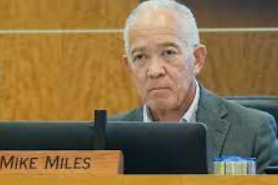
Speaking of Houston, the state-imposed Superintendent Mike Miles celebrated his arrival with a splashy musical performance, while teachers sat obediently in their seats at the NRG Arena.

The Texas Observer reported:

Hundreds of Houston’s teachers gathered at the NRG Center early morning Wednesday, where they were directed to wear school colors, wave school banners, and shake sparkly pom poms. Facilitators started the Harlem Shuffle dance in the aisles. And then, as the teachers were motioned back into their seats, the room turned dark and silence fell.

A single spotlight shined on a student performer in an aisle belting the lyrics to West Side Story’s “Something’s Coming”:

Something’s comin’, something good
If I can wait!
Something’s comin’, I don’t know what it is
But it is
Gonna be great!

The stage lit up to reveal a 1950s diner with red and white checkered tablecloth tables and red rubber stools. In walked new district superintendent Mike Miles, playing “Mr. Duke,” owner of the joint who doubles as a counselor who listens to the teachers’ and students’ grievances.

Since March, when the Texas Education Agency seized control of the Houston Independent School District (HISD), citing the failure to meet state standards at one high school, Houston’s teachers and parents have seen the battle with the state-appointed school board and superintendent play out in community meetings and in the press. Now, during a week of district-mandated conferences at the NRG Center, teachers were watching the takeover play out on stage. Miles directed the script—an hour-long musical that took six weeks to prepare, depicting how the new superintendent will rekindle the extinguished spirits of burnt-out teachers, give hope to hopeless students, and bestow a visionary plan to save public education.

“We are lost as a profession,” a teacher said on stage.

“My dreams are getting smaller and smaller,” a student later echoed.

“Well, maybe that new guy—you know, super … super …”

“You mean Superintendent Miles?”

“Maybe Superintendent Miles will make things better for us.”

Maybe.

But teachers who spoke to the Texas Observer said Miles’ performance wasted the district’s time and money and mocked their professional experience and concerns.

“For him to turn our concerns into satire is really insulting,” HISD teacher Melissa Yarborough said. “It reeks of propaganda.”

“He wasted our time when we could be in our classrooms preparing our lesson plans before school starts,” said Chris, an elementary school teacher who asked only to be identified by his first name.

Jessica, who has been teaching for 24 years, told the Observer Miles’ musical “was very condescending. The message was that we don’t know what we’re doing. And he’s coming in to show us how to do it right.”

The Houston Chronicle also reviewed Miles’ musical event.

A few fine arts teachers who spoke to the Chronicle said Miles is hypocritical for spreading his message through a musical theater production even after disrespecting fine arts teachers, who at NES schools will be paid far less than their peers teaching reading, math or science.

“He claims reading and math are the forefront and he wants to get rid of fine arts. Yet he used fine arts to promote his ideologies,” said one fine arts teacher, who called the production a “slap in the face.”

Another fine arts teacher said it was “the very definition of irony.”

“The fact he used HISD fine arts teachers and students in his presentation, the day after saying in his evaluation sessions that we are not as essential … creates a sense of rage and despair I cannot even describe,” said the teacher, who was told they could be fired for making negative public statements about the district.

Only staff from NES campuses attended the live event at NRG, while educators from other schools watched convocation remotely from their own campuses following a last-minute scheduling change.

Funnily enough, Miles also staged a splashy musical with him as the star when he began his tenure in Dallas in 2012. All of the district’s 18,000 teachers were summoned to watch. The video has been removed from the internet. But The Texas Observer ran a great story about the event, with a photo of him dancing with students. At that performance, he laid out his vision for making DISD the best urban district in the nation by 2020 using ideas he learned at the Broad Superintendents Academy. He was, he said, a believer in disruptive change, like Arne Duncan. “Miles epitomizes today’s school reform movement, convinced that anything worth doing in a classroom can be measured.” But three years later, he was gone.

Jennifer Mangrum is an intrepid warrior for public schools. She ran for public office twice, first challenging the most powerful man in the General Asembly, then ran for state commissioner of education and nearly won. She’s now signed on with the AFT to organize a state teachers’ union. Jen Mangrum is fearless.

Long odds don’t discourage Jennifer Mangrum.

Mangrum, an associate professor of teacher education at UNC-Greensboro, ran unsuccessfully against the state’s most powerful Republican, state Senate leader Phil Berger in 2018.. She followed that long-shot effort with an unsuccessful run in 2020 for North Carolina superintendent of public instruction, where she drew 48 percent of the vote.

Now the Democratic go-getter is embarked on a new mission: She wants to unionize the state’s public school teachers.

“I couldn’t make politics work. After both losses, I felt discouraged,” Mangrum, a former teacher, told me this week. ”But I had teachers reaching out to me saying, ‘Can you help me with this?’ “

As one person, she can’t help them all, but maybe a union could.

After two years of pushing unionization as a volunteer, Mangrum has taken a part-time, paid consulting role with the American Federation of Teachers (AFT), the nation’s second largest teachers union with 1.7 million members. Her job is to explore the union’s potential to organize a significant share of the state’s 94,000 public school teachers.

“We have members across the state,” Magnum said. “Two years ago we didn’t have any.” Just how many, she wouldn’t say, but she allowed that it’s more than 100.

The North Carolina Association of Educators, an affiliate of the National Education Association, currently advocates for teachers and other school employees, but it is an association, not a union.

The need for united action is clear. North Carolina’s average teacher pay ranks 34th nationally and 46th for beginning teacher pay. In K-12 spending in 2022, North Carolina ranked 45th.

Along with low pay and lack of resources, teachers have endured disrespect by the Republican-controlled General Assembly. They’ve been accused of indoctrinating students with progressive values and told how to teach about the role of race in the nation’s past and present. Extra pay for teachers with master’s degrees and other higher degrees was eliminated a decade ago.

But there are obstacles to translating teachers’ frustration and anger into unionizing. The highest barriers are that North Carolina is a right-to-work state – workers can’t be compelled to join a union or pay dues in a unionized workplace – and state law bars collective bargaining by public employees.

In addition, the legislature’s beating down of teachers has weakened their will to fight back. Many are leaving teaching – the state had more than 4,400 teacher vacancies at the start of the last school year. Older teachers are counting down to retirement and don’t want to join an uphill struggle. Others are intimidated by school boards and administrators and fear losing their jobs if they join a union…

Once union chapters take root, Mangrum said, the next move would be to push for legislation allowing collective bargaining. Teachers in Virginia achieved that goal in 2020, ending the state’s prohibition on collective bargaining for local government workers.

Nationally, union organizing is growing. Given the abuse of North Carolina’s teachers, it’s time that that power came here. If Democrats regain control of the legislature, organized teachers may be able to turn North Carolina from a right-to-work state to one where teachers – and their students – regain the right to thrive.

Go, Jen, Go!!

Gary Rubinstein teaches at Stuyvesant High School in New York City. In this post, he questions whether the math taught in school is “useful” and concludes that it is not. This is the beginning of a series of posts in which he explains why he is disappointed in the usual school math and what he thinks should take its place.

Gary writes:

I’ve dedicated my life to teaching a subject I love and have loved since I was a small child.

This country, and throughout the world really, a lot of resources are dedicated to teaching students math. From Kindergarten to 12th grade almost every student takes math and in many elementary schools math is taught for ninety minutes a day. And then in college students often have to take some math, sometimes a Calculus class, as part of their degree, even when the degree is in something like business. And for all the time and money that are put into math in this country, when it is all done very few adults remember anything about math. Maybe they know a little about percentages and vaguely something about how the angles of a triangle add up to 180 degrees.

Yes, the same could be said about some of the other subjects, like how much Chemistry or Physics do most adults remember from high school, but the difference is that math is done for 13 years so you would think that more of it would be retained. Fo all that we invest into math in this country, we are not getting the ‘bang for our buck.’ I think I know why this is. I think about this on a daily basis since it is my life’s work and I’m so bothered by it. I’ve written about this before but I want to go deeper into this and explain what the issues are, what it would take to fix the problem, what the obstacles would be in improving math instruction, and whether or not it might be better to diminish the obsession that we have in this country with math instruction.

Part of my evolution in thinking about these ideas comes from watching my own kids who are now 15 and 12 go through the standard math curriculum. They have had decent teachers throughout the years and have always gotten 4s on the New York State tests so you would think that I’m thrilled but when I look at the things that they learned (because they were part of the curriculum) and the things that they have not learned (because they were not part of the curriculum) it frustrates me. Many parents who are not math teachers might feel the same way when they look at what their children are learning in math but they don’t dare question it. It reminds me of The Emperor’s New Clothes, nobody wants to seem like they aren’t smart enough to know why we have to learn how to multiply mixed numbers with different denominators. But as a math teacher who thinks about things like ‘what is the goal in learning this concept?’, ‘Is this concept needed to learn a more difficult concept?’, ‘Does this topic provide opportunity for the students to have ‘aha’ insights for themselves?’, I am constantly critiquing what I see my children learning about. And within my own teaching I am always trying to teach whatever topics are in the curriculum in a way that gives my own students an experience where they get to use their reasoning skills and not just blindly follow an algorithm.

The title of this series is: Is most school math useless? Depending on what you think ‘useless’ means, you will have different answers to this question. There are different ways to define ‘useless’ but the most straight forward way is to say that something is ‘useful’ if you will one day have an opportunity to ‘use’ it for something in your life or your job. We hear all the time that if you don’t know math you won’t be able to compare two competing cell phone plans or you won’t know how big of a ladder to buy so that when you put it at an angle it still reaches the height you need it to. We are told that math is ‘useful’ in this way and while it is true that some math is useful in this way (like knowing the difference between a loan that has a 2% interest rate vs a 20% interest rate, for example), the vast majority of the math that is taught in school is absolutely not useful.

To follow Gary’s thoughtful reasoning, open the link and read the rest of his post.

The Texas legislature passed a law in its last session requiring booksellers to rate any books they sell to public schools for its sexual content. And to rate any book they have ever sold in the past to public schools or to teachers.

The law threatens the survival of some 300 independent bookstores across the state. “And by April of next year, every bookseller in the state is tasked with submitting to the Texas Education Agency a list of every book they’ve ever sold to a teacher, librarian or school that qualifies for a sexual rating and is in active use. The stores also are required to issue recalls for any sexually explicit books.”

Small bookstores, like Blue Willow in Houston, may be bankrupted if they are compelled to comply. Blue Willow has two full-time employees and 12 part-time employees. It sells books to 21 school districts. Sales to schools comprises about a fifth of the store’s business.

The law is set to take effect on September 1.

Blue Willow has joined a lawsuit to block the bill. The lawsuit was filed by Austin’s BookPeople, the American Booksellers Association, the Association of American Publishers, the Authors Guild and the Comic Book Legal Defense Fund. “The lawsuit argues booksellers will suffer financial damage if they lose school-related business. Koehler estimates that a fifth of Blue Willow’s business is with schools.”

The legislature doesn’t care about the financial impact on small bookstores like Blue Willow.

Let’s see if the courts do.

Mike Miles is asking the Texas Education Agency to allow him to recruit uncertified teachers, principals, and deans. This move follows the Broadie playbook that education experience doesn’t matter. Broadies are known for their love of TFA. Miles may be reaching even lower since uncertified teachers do not require a college degree.

Houston ISD is seeking board approval this month for a waiver from the Texas Education Agency to hire uncertified deans and assistant principals for the next three years.

This follows the district asking for state approval to have an uncertified superintendent and uncertified teachers.

HIRING HUNDREDS HISD to seek TEA approval to hire uncertified teachers to fill classroom vacancies

The HISD Board of Managers is set to meet Thursday evening for a work session, where they’ll discuss the agenda for the board’s regular Aug. 10 meeting. Next week, the board is expected to vote on whether to approve an application for a certification waiver to employ assistant principals and deans without a certification through the 2025-2026 school year.

To be an assistant principal in Texas, an educator must have a certificate as an administrator, assistant principal, mid-management administrator, principal or superintendent.

Texas no longer issues an assistant principal certification, but the requirements for a principal certification in Texas include a master’s degree, a valid classroom teaching certificate, two years of teaching experience, and completion of a principal educator preparation program and two principal certification exams.

According to the TEA, districts can request a teacher certification waiver for someone to serve as a principal or assistant principal if an education does not currently hold a state certification. The request needs board approval before it is submitted to TEA for review and approval.

The board’s Thursday agenda also includes the topics of teacher vacancies and teacher certification waivers. In addition to a waiver for principals and deans, the district is seeking to waive Texas certification requirements for teachers to reduce vacancies on campuses before the school year begins.

The following article from The Texas Observer was posted by the Texas Observer. Journalist Josephine Lee reports that teachers are under pressure to pledge their support for the sweeping plans of Broad-trained Superintendent Mike Miles. Miles was appointed city superintendent by the State Commissioner Mike Morath. Neither is an educator.

Houston is the site of yet another doomed takeover of a local school district by an anti-public ed activist with little real education expertise.

Mike Miles has a vision of a district that is narrow and meager, a system where teachers read from scripts developed by a charter chain that Mile happens to own. New schedules. New job assignments. 

Miles insists that Houston teachers are excited, that Houston parents are pumped. But reporter Josephine Lee went out and actually talked to them, and–surprise–it appears that Miles is blowing smoke.

“Our hours will change. Our schedules will change. Our curriculum will change. But we have no input in it,” said Michelle Collins, a teacher at DeZavala Elementary School. “Neither do parents.”

Texas requires a shared decision making committee that includes all stakeholders. Miles appears to be ignoring that.

While Miles has publicly asked principals to obtain school input, SDMC committee members from five schools in the program confirmed with the Observer that they never met to discuss the issue. SDMC members and teachers from other schools reported that even when they did meet, they did not have a vote in the decision. One teacher said their staff voted not to opt in, but then later saw their school’s name included in the list of 57 schools in the news.

In an audio recording of Wainwright Elementary School’s SDMC meeting held July 10 and shared with the Observer, Principal Michelle Lewis told committee members, “If you’re not willing to dive in and do this with us, then this is not the campus for you.” No teacher representatives attended the meeting.

Revere Middle School Principal Gerardo Medina did not consult with the school’s SDMC committee or with teachers. In lieu of discussion, he sent out an email on June 29 to campus employees informing them of his decision to join Miles’ NES-aligned program.

“If you decide this is not something you want to commit to, you will be allowed to transfer,” Medina wrote.

This gave teachers only a few days before this Friday to decide if they want to continue to work within the district. To avoid losing their state teaching certification, they have up to 45 days before the first day of school to withdraw from their contract.

Meanwhile, Houston doesn’t have enough teachers to fill the openings it has.

State takeovers virtually never work. This deep dive lets us see the Houston takeover start to unravel from the beginning. Read the full article here. 

You can view the post at this link : https://networkforpubliceducation.org/blog-content/josephine-lee-teachers-strong-armed-to-get-on-board-with-houston-schools-takeover/

The National Education Policy Center recently posted a study of how teachers choose their workplace. The study was conducted in San Antonio, where about one quarter of students attend charter schools. Why do some teachers choose to teach in public schools while others prefer charter schools?

School choice involves different choosers—students, their parents, and of course the schools themselves. But teachers choose too when they decide where to work. Increasingly, this process involves deciding whether to work or not to work in the charter sector.

A recently published study by Andrene J. Castro of Virginia Commonwealth University, NEPC Fellow Huriya Jabbar of the University of Southern California, and Sebastián Núñez Miranda of the University of Texas at Austin takes a closer look at this process via interviews with 23 prospective or new-to-the-profession teachers and 22 current educators about their job searches in San Antonio, Texas, where about a quarter of the students attend charters. The semi-structured interviews were conducted pre-pandemic, during the 2016-17 school year. The study was published last summer in Education Policy Analysis Archives, a peer-reviewed, open-access journal.

The goal of the research was to examine “how choice policy contexts alter teachers’ professional identities as they search for jobs,” a topic that had received only limited attention from researchers. The researchers describe how:

[T]he job search is not separate or isolated from teachers’ professional identity, rather it is a critical juncture where teachers evaluate their professional identity as they make choices about the sector—charter or TPSs [traditional public schools]—and/or school organizations that best align with their professional beliefs and values.

Teachers, the researchers write, “largely construct professional identities to match positions in the primary sector, that is, jobs in TPSs, which typically offer greater stability, higher salaries, and predictable career paths.” These qualities of TPSs appealed to most of the interviewees.

As one interviewee noted,

Even though they [charter schools] tell you that you’re going to get paid more, in all reality once you sign the contract, the pay is not what you’re told at the beginning of signing the contract. It’s a little more frustrating because I feel like you have to fight more . . . I think it’s more of a challenge now than working at the regular big public schools.

Some interviewees also indicated that charter schools were not in line with their professional identities or values. “I’m not really interested in charter schools,” one job seeker said. “I feel like the public schools, there’s a lot of areas that we need to improve. That’s where I feel like I can do the most good.”

For these and other reasons, the interviewees in this study typically turned to charters as a last resort, explaining that charters tended to pay less, offer temporary contracts, and lack transparency. But some interviewees embraced a charter school career, responding to a different professional identity.

Teach for America participants emerged as a group favoring charters over TPSs. They perceived that the values of TFA aligned with the missions of specific charter management organizations. Also, a few younger teachers who were interviewed felt more comfortable at charters because they tended to have younger staffs, with many teachers who were new to the profession.

Teachers also applied to charters because they believed that those charters provided higher levels of autonomy, better opportunities to learn a lot in a short period of time, and the chance to receive pay raises and promotions more rapidly than might be possible in the traditional public school system. One interviewee noted:

You can be stuck in the same teaching position for seven years [at a TPS] as opposed to [charter school] where if you’re really just doing a rock-solid job at what you’re doing now you can be within mid-management principal-ship within five, 10 years.

One additional finding from the study has clear policy implications for those hoping for cross-fertilization and sharing of ideas and experiences between the sectors: Prospective teachers were more open to switching sectors than were current teachers seeking to change jobs.

“To some extent, we found these segmented identities led to sector entrapment, constraining teachers’ notions, both individually and collectively, regarding what it means to be a teacher in either sector, rather than the profession at large,” the researchers conclude.

NEPC Resources on Charter Schools ->

Carol Hillman was a teacher for many years in Pennsylvania, and she ran a consulting service that encouraged rural youth to attend college. When she and her husband Arnold retired (he is also an educator), they moved to South Carolina. They must have expected to lead a quiet life, but they immediately became involved with rural high schools, where the students are Black and impoverished. They worked tirelessly to help students set their sights on going to college.

Carol wanted to share some of her life’s lessons with other teachers.

She wrote:

To teachers everywhere……..

Regardless of what subject we teach we share the responsibility to help our students prepare for their futures. Middle school students need to begin to think about, and high school students must further explore, the ways in which they shape their futures through their own actions.

Each of these prompts provide a topic you might invite your students to consider. Students will appreciate the opportunity to share their own opinions and need to learn to consider the opinions of their peers. In examining these ideas students will be using abstract thinking and higher orders of thinking.

You can limit discussion to a set day and/or time or invite students to address concepts in a journal you are willing to read.

If you have a school newspaper or yearbook you might include student comments on different topics.

Do they agree that a particular idea is valuable? If so, why or why not?

Class discussion will help students give examples of how the concepts apply to real life.

•Enjoy change because it’s the only thing we can predict.

•Have the courage to face new challenges.

•Accept that you can control your own behavior.

•Surround yourself with people who value you.

•Embrace diversity so you can enjoy other people, places and things.

•Understand that the world needs good followers and good leaders.

•Define and redefine your personal goals.

•Know when to accept help and when to say, “I can do this myself.”

•Show that you value others so you can keep old friends and make new ones.

•Know the joy of celebrating small accomplishments as they are the building blocks of a good life.

•Welcome new experiences to expand your knowledge and interests.

•Cooperate so you can become a constructive member of your community.

•Keep your promises so people can trust you.

•Understand that successful people know when to quit and move on.

•Take pride in your accomplishments.

•Accept that while you can’t always control what happens to you, you can control how you react to it.

•Understand that the best motivation comes from within.

•Recognize that you can make the world a better place.

If you have questions about these prompts and how to present them, feel to contact me at carol@scorsweb.org

Thank you,

Carol Hillman