Archives for category: Supporting public schools

Vouchers are a big issue in Texas. Governor Greg Abbott recently announced he would promote them. Lt. Gov. Dan Patrick—the Rush Limbaugh of Texas—is a voucher fanatic. Senator Ted Cruz said that school choice is the most important issue of our time.

But vouchers have died every time they are introduced in the legislature. Legislators from rural communities stand firm against vouchers. Jay Leeson explained why in the Dallas Morning News.

He wrote:

Vouchers are unpopular in places where public schools are the lifeblood of community.

With Gov. Greg Abbott’s announcement that he’ll pursue “school choice” in the upcoming Legislature, there’s political math to be done.

The governor’s proposal is pencil whipping his previously reliable rural voting base, presuming that rural communities will stick with him as he looks past the November match-up against Beto O’Rourke, and moves to the next problem of Florida Gov. Ron DeSantis, a probable 2024 presidential foe. But in rushing to check off another box on the national GOP purity exam, questionable work has been submitted.

Out where rural public schools constellate expansive Lone Star landscape, out where the real Texas economic miracle of food, fuel, and fiber is produced, there’s pencil scratching being done.

Rural folks know school choice will come at their expense. Almost like the same-old bait (moral convictions) and switch (economic interests) over and over. It’s been that way for more than 30 years, since the GOP came to power promising term limits and local control — and how has that gone?

We’ve voted for plenty of slippery-as-slop-jar scenarios, like numerous federal officials who vote against subsidies for the state’s $25 billion annual agriculture industry. In 2018, cotton had fallen out of a federal funding program to help producers break even, and it was Abbott who single-handedly stalled restoration from Austin. We’ve closed 26 hospitals since 2010. Now just 163 hospitals provide care for 85% of the state’s geography, many with limited services. We’ve incrementally upped local property taxes to fill state budget holes over three decades. And Abbott’s routing of state infrastructure, including pivotal rural telecommunications by his commissioned appointees, could make Santa Anna blush.

But the missing variable in the slippery school choice proposal is the importance of public schools to respective rural communities — and the pillars of community within those schools. I know because I attended them.

Gid Adkisson, a gargantuan man, long in kindness as he was physique, was a retired school superintendent in Abernathy (population 2,904, about 25 miles north of Lubbock) with a bad lifelong cotton farming habit. He’d head out from his homestead to the high school for Gid Night Lights to voluntarily tutor us in algebra on Mondays and Thursdays, so we could play under the Friday Night Lights.

Children, even deviant teenagers like I was, know goodness when they see it. When I first think of Gid, I don’t picture him physically; I think of his heart. The physical trait I most remember is the big dent on his forehead that shone in the lights of Ms. Hardin’s classroom.

Bettie Hardin was a petite, put-together woman — pristine white perm, horn-rimmed glasses, mock turtleneck. She played the Methodist piano every Sunday morning with the same precision she expected from our math during the week.

Sports were our world. And Ms. Hardin could end that world with the swipe of a red pen.

But Gid came to the rescue, helping us understand it all. The first time I figured out ratio and proportion equations, Gid was right there, two huge knuckles on the desk behind me, affirming and encouraging me as my mind translated through pencil what Hardin and he had worked so hard to cultivate. When the problem was solved, the huge knuckles rose above the suspenders past the dent and to the lights, “Good, golly. You got it.”

I don’t today use an acquired high school skill — from on or off the field — more frequently than that equation.

Sitting in Wayne Riley’s 6th Grade Sunday School with half a dozen others was the first time I ever first-hand witnessed a grown man weep; we’d know him later as Coach Riley, our varsity basketball coach.

When my grandmother passed, I was destroyed and my band teacher Harold Bufe took a knee and consoled me about the loss of my world and his longtime friend.

When Gid died, many of us learned what we didn’t know all along: he’d been rescuing people for a long time. He led the 317th Regiment, 80th Infantry Division up Utah Beach where dented-head man earned, but later refused, a Purple Heart. Too many missing human variables under his command for him to accept such an award.

Public education gave us a tutor who defeated Hitler, coaches who earned our respect, and band teachers who helped us outside the notes. And Ms. Hardin who played Amazing Grace as the soundtrack.

My story isn’t uncommon, which is the point.

We’ll vote against ourselves on a myriad of issues, but not our schools.

Add to it all, rural folks know a little grammar as well.

“Choice” is a political synonym for “consolidation” and “consolidation” is another way of saying “closing” our communities — and our organists, Purple Hearts, and Sunday school teachers.

The political math for Abbott and statewide Republicans is they desperately need rural Texas votes to overcome deficits in the likes of Dallas, Tarrant, Travis, and Harris Counties. Their campaign commercials running longer loops every four years are evidence.

And while Oltons, Borgers, Ballingers, Floydadas, Abernathys, and the 85% of Texas geography won’t become Beto O’Rourke Country anytime soon, if ever, these places might just not vote.

Pull the lever, do your duty, get the sticker, but leave the gubernatorial box left open.

The collective rural Republican state representative silence on the governor’s initiative is already telling. Silence from electeds who backed Abbott’s $118 million for pre-K public education funding in 2015, only to have Abbott abdicate in subsequent far-right primary challenges.

Mr. O’Rourke may well come for some of our guns, but that’s highly unlikely with a legislative and judicial GOP stronghold.

But Abbott’s open threat is against the lifeblood of our communities: our schools. And he’s making it with a three-branch majority.

That’s Abbott’s math now. And Gid’s currently unavailable to tutor.

Jay Leeson is a freelance writer and artist in Lubbock. He wrote and illustrated this for The Dallas Morning News.
Tom Ultican, retired teacher of advanced mathematics and physics in California, is now a significant chronicler of the Destroy Public Education movement. He attended the recent national conference of the Network for Public Education in Philadelphia and recapitulates the excitement we shared at being in person after a 2-year hiatus.

After every conference, attendees say, “This was the best one yet.” They enjoy meeting people who are doing the same work to fight privatization of their public schools. By the end of the conference, attendees say they feel energized, hopeful, and happy to know that they are not alone.

I urge you to read Tom’s post. You will get a sense of the embarrassment of riches available to attendees.

I should add that the Nebraska Save Our Schools group shared the Phyllis Bush Award for Grassroots Activism. Nebraska is one of the few states that has managed to protect its public schools and keep out both charters and vouchers, despite being a Red State.

The Pastors for Texas Children, a co-winner of the award, has repeatedly blocked vouchers in the Texas Legislature and has consistently fought for funding for public schools. PTC has opened chapters in other Red states, where they mobilize clergy to support public schools.

A high point for me was interviewing “Little Stevie” Van Zandt, a legendary rock star and actor (“The Sopranos”), who is dedicated to getting the arts into schools, not as an extra, but across the curriculum. we had a wonderful conversation. He has funded lesson plans based on rock and roll, available free at his website TeachRock.

All of the general sessions were taped. I will post them when they become available.

This is “national charter school week,” aka “national school privatization week.” The charter lobby—the National Alliance for Public Charter Schools—has been fighting furiously to block proposed regulations by the U.S. Department of Education that would ban federal funding of for-profit charter schools and white-flight charters. They have received sympathetic editorials, repeating the falsehoods that these sensible regulations would harm all charter schools (they won’t). Their ads are even on national television (I saw one last night on a cable news station), falsely claiming that the regulations are a direct attack on charter schools (they are not).

Who knew that the charter trade association would resort to outright lies to protect low-quality for-profit charter operators and keep federal funding available to open new white-flight charters? The regulations have zero effect on existing charters. They affect only the federal funding spent to open new charters, $440 million a year, which has been recklessly spent on for-profit chains and on charters that never opened or closed soon after opening. Why waste federal money on grifters and entrepreneurs?

By their lies, you shall know them.

The charter movement is heavily subsidized by billionaires and supported by public school haters like Charles Koch and Betsy DeVos. A few Democratic Senators sent a letter to Secretary Miguel Cardona opposing the regulations that would ban for-profit charters and white-flight charters, including Cory Booker, Michael Bennett, and Dianne Feinstein. Shame on them.

The origins of school choice are well-known: resistance to the Brown decision. Derek Black in his great book Schoolhouse Burning established beyond doubt that the Founding Fathers anticipated the establishment of public schools when they wrote the Northwest Ordinances, which required new states to set aside a plot of land in every town for a public school.

A reader who calls him/herself Democracy posted the following comment:

As I’ve noted more than once previously, the Founders were advocates of PUBLIC education as the means to promote the common good, and democratic citizenship. It – the idea that public schools should teach democratic citizenship – stretches back to Aristotle:

In Book 8 of Politics, Aristotle explained the importance of public education to democratic governance. He points out the different foundational ethos of governments:

“the legislator should direct his attention above all to the education of youth; for the neglect of education does harm to the constitution The citizen should be molded to suit the form of government under which he lives. For each government has a peculiar character which originally formed and which continues to preserve it. The character of democracy creates democracy, and the character of oligarchy creates oligarchy; and always the better the character, the better the government.”

It’s worth repeating: “…the better the character, the better the government.”

What occurred from January 20, 2017 until January 20, 2021 was a steep and marked absence of democratic character in the Oval Office and the halls of Congress.

In fact, the Founders created the constitutional structure for a democratic society “in which the common good was the chief end of government.” They adopted John Locke’s view that the main purpose of government –– the reason people CREATE government –– is to protect their persons through, as historian R. Freeman Butts put it, a social contract that placed “the public good above private desires.”

The goal, then, was “a commonwealth, a democratic corporate society in which the common good was the chief end of government.” Public education was part and parcel of social contract, helping to develop and maintain the common good.

It’s precisely because of the importance of public schooling to civic education and democratic citizenship that Aristotle concluded this:

“education should be one and the same for all, and that it should be public, and not private- not as at present, when every one looks after his own children separately, and gives them separate instruction of the sort which he thinks best; the training in things which are of common interest should be the same for all. Neither must we suppose that any one of the citizens belongs to himself, for they all belong to the state, and are each of them a part of the state, and the care of each part is inseparable from the care of the whole.”

That’s worth repeating too: “…the care of each part is inseparable from the care of the whole.”

The democratic social contract – the guts of the American Republic – was under continued assault from January 20, 2017 until January 20, 2021, and was under DIRECT attack on January 6, 2021. Republican elected officials of all stripes, and Republican voters, were responsible. They refuse to take any personal responsibility; they try to evade and avoid accountability; and they redirected their efforts to undermine democratic values.

The current proxy is public schooling. At its core, the offensive against public education is an assault on democratic character and values, on the rule of law, and on equality and “liberty and justice for all.” And at its core, it relies on an ugly racism that casts whites as “the victims.”

The attack on public schools is NOT some spontaneous “parent rights” outburst. It’s orchestrated. It’s being funded and set into motion by right-wing “Christians” at the Council for National Policy, a far-right group that had tremendous influence with the Trump administration. Richard DeVos, husband of Betsy, has been president of CNP, twice. Ed Meese, who helped Reagan cover up the Iran-Contra scandal, has been president of CNP. So has Pat Robertson. And Tim LaHaye.

Current and former CNP members include Cleta Mitchell, the Trump lawyer who was on that call to the Georgia Secretary of State demanding that he find Trump more than 11,780 votes, and Charlie Kirk, head of Turning Point USA who bragged about bussing tens of thousands of people to the January 6th ‘Stop the Steal’ rally and insurrection. Two of the top people at the Federalist Society, Eugene Meyer and Leonard Leo, are also CNP members. Ginni Thomas, the wife of Supreme Court Justice Clarence Thomas, is a member.

You can read about Ginni Thomas here:

“The claim that the Justices’ opinions are politically neutral is becoming increasingly hard to accept, especially from Thomas, whose wife, Virginia (Ginni) Thomas, is a vocal right-wing activist. She has declared that America is in existential danger because of the ‘deep state’ and the ‘fascist left’… on January 6, 2021 she cheered on the supporters of Donald Trump who had gathered to overturn Biden’s election…”

You can read about Betsy DeVos here:

Right-winger Milton Friedman argued for returning to a pre-Aristotle era of schooling, saying, “In my ideal world, government would not be responsible for providing education.”

That’s what Republicans are dedicated to; destroying public schools, and stealing their funding.

My addendum: if they destroy our public schools, they will destroy public libraries, public lands, the right to vote and, in time, our democracy.

Pastors for Children made a short video to show in direct terms why people should beware of the “school choice” claims. Most people love their local schools and their teachers. “Friday Night Lights” are the lights on the high school football field. There are many more reasons to protect what belongs to the community, the public schools that welcome all children.

Watch it.

Have you lost faith in our elected officials? Let me introduce you to my personal hero. Rosa DeLauro. I have met with her several times, and she was always attentive and thoughtful. I love her values, and I love her too. It’s a very small tribute to this great woman, but I take this opportunity to add her to the blog’s honor roll for standing up forcefully to the bullying of the charter lobby.

Congresswoman Rosa DeLauro is one of the most powerful members of Congress. She is a Democrat from Connecticut. She is an outstanding liberal who fights for children and working people.

Please read her bio.

Rosa DeLauro is the Congresswoman from Connecticut’s Third Congressional District, which stretches from the Long Island Sound and New Haven, to the Naugatuck Valley and Waterbury. Rosa serves as the Chair of the House Appropriations Committee and sits on the Democratic Steering and Policy Committee, and she is the Chair of the Labor, Health and Human Services, and Education Appropriations Subcommittee, where she oversees our nation’s investments in education, health, and employment.

At the core of Rosa’s work is her fight for America’s working families. Rosa believes that we must raise the nation’s minimum wage, give all employees access to paid sick days, allow employees to take paid family and medical leave, and ensure equal pay for equal work. Every day, Rosa fights for legislation that would give all working families an opportunity to succeed.

Rosa believes that our first priority must be to strengthen the economy and create good middle class jobs. She supports tax cuts for working and middle class families, fought to expand the Child Tax Credit to provide tax relief to millions of families, and introduced the Young Child Tax Credit to give families with young children an economic lift.

Rosa has also fought to stop trade agreements that lower wages and ships jobs overseas, while also protecting the rights of employees and unions. She believes that we need to grow our economy by making smart innovative investments in our infrastructure, which is why she introduced legislation to create a National Infrastructure bank.

Rosa is a leader in fighting to improve and expand federal support for child nutrition and for modernizing our food safety system. She believes that the U.S. should have one agency assigned the responsibility for food safety, rather than the 15 different agencies that lay claim to different parts of our food system. Rosa fights against special interests, like tobacco and e-cigarettes, which seek to skirt our public health and safety rules.

As the Chair dealing with appropriations for Labor, Health, Human Services, and Education, Rosa is determined to increase support for education and make college more affordable for more American students and their families. She is also fighting to protect the Affordable Care Act so that all Americans have access to affordable care. Rosa strongly believes in the power of biomedical research and she is working to increase funding so that we can make lifesaving breakthroughs in science and medicine.

Rosa believes that we have a moral obligation to our nation’s veterans and their families, and her concern for these heroes extends to both their physical and mental well-being. Rosa supports a transformation in how the Department of Veterans Affairs is funded, including advanced appropriations for health services, to ensure its fiscal soundness; and she successfully championed legislation to guarantee that troops deploying to combat theaters get the mental health screening they need both before and after deployment, as well as championed legislation that now provides assistance to today’s Post-9/11 veterans choosing to pursue on-the-job training and apprenticeship programs.

Rosa belongs to 62 House caucus groups and is the co-chair of the Baby Caucus, the Long Island Sound Caucus, and the Food Safety Caucus.

Soon after earning degrees from Marymount College and Columbia University, Rosa followed her parents’ footsteps into public service, serving as the first Executive Director of EMILY’s List, a national organization dedicated to increasing the number of women in elected office; Executive Director of Countdown ’87, the national campaign that successfully stopped U.S. military aid to the Nicaraguan Contras; and as Chief of Staff to U.S. Senator Christopher Dodd. In 1990, Rosa was elected to the House of Representatives, and she has served as the Congresswoman from Connecticut’s Third Congressional District ever since.

Rosa is married to Stanley Greenberg. Their children—Anna, Kathryn, and Jonathan Greenberg—all are grown and pursuing careers. Rosa and Stan have six grandchildren, Rigby, Teo, Sadie, Jasper, Paola and Gus.

Download Congresswoman DeLauro’s Biography

Download Congresswoman DeLauro’s Official Photo

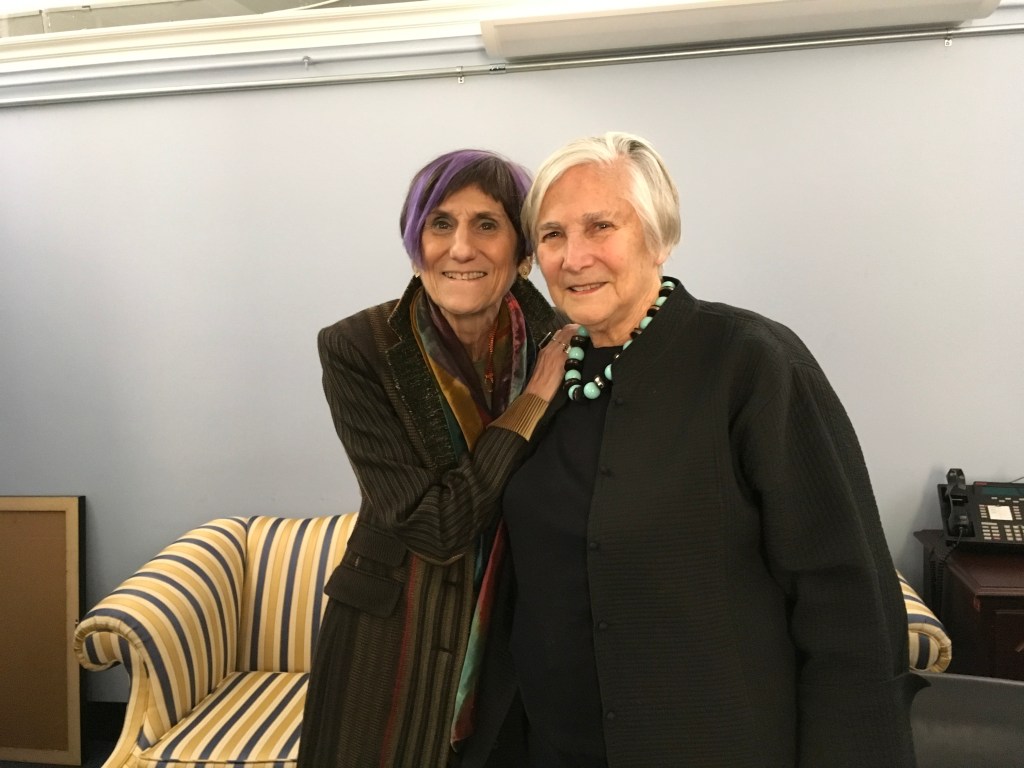
Congresswoman Rosa DeLauro and I in 2018: My hero.

Several years ago, I endowed a lecture series at my alma mater, Wellesley College, focused on education issues. This year’s lecture will be live-streamed on April 12, and the speaker is Helen Ladd, an emeritus professor at Duke University and one of the nation’s leading economists. I hope you will mark the event on your calendar and tune in.

The Diane Silvers Ravitch ’60 Lecture

How Charter Schools Disrupt Good Education Policy

Tuesday, April 12, 4 p.m. ET


LIVESTREAMED at www.wellesley.edu/live

Speaker: Helen F. Ladd ’67, Susan B. King Professor Emerita of Public Policy and Economics at Duke University

Ladd will draw on her many years of education research and discuss the four central requirements of good education policy in the U.S., and how charter schools, as currently designed and operated, typically do far more to interfere with, rather than to promote, good education policy in the U.S.

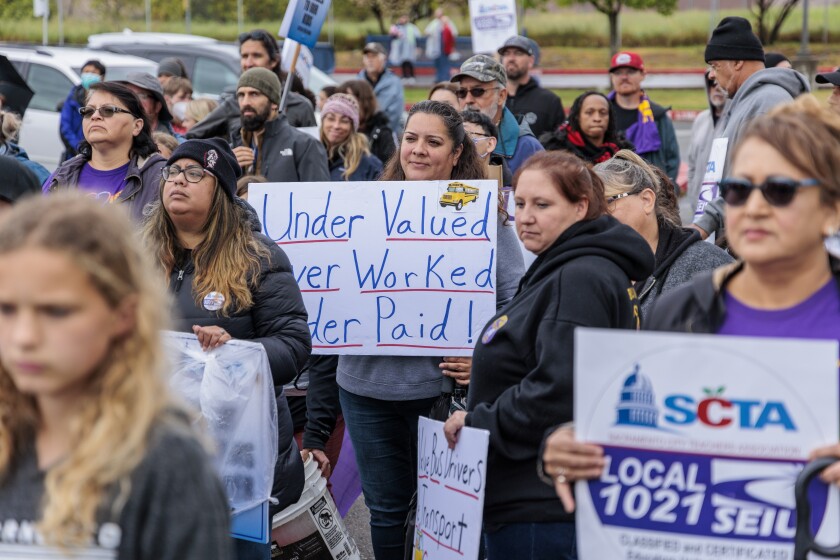
Sacramento City Unified School District teachers, school staff and supporters take part in a rally at Rosemont High School

Sacramento City Unified School District teachers, school staff and supporters take part in a rally at Rosemont High School on March 28 as they have been gone on strike due to the staffing crisis in the district . All SCUSD schools shut down and will remain closed for the duration of the strike.

I have read many articles about the shortage of teachers and school staff. I have read many that were laden with statistics. This is one of the best. It appeared in the Los Angeles Times.

BY ANITA CHABRIA COLUMNIST

A few weeks ago, Sacramento teacher Kacie Go had 56 kids for second period.

That day, there were 109 students at her eighth- through 12th-grade school who were without an instructor because of staff shortages. So she crammed the students into her room and made it work, but “it’s not sustainable,” she said.

No kidding.

Go told me the story standing with hundreds of other teachers and support staff Tuesday morning in the parking lot of an empty high school, as “We’re Not Gonna Take It” blared from speakers and the mostly female workers gathered for day five of a strike that has closed down schools in the Capitol City.

Like Go, these teachers, cafeteria workers, bus drivers and instructional aides are fed up with being asked to do more with less. It’s a problem that goes beyond the Sacramento City Unified School District, with 48,000 students in 81 schools. Frustration among teachers and school workers is rampant across California — pushed to a breaking point by the pandemic and a shortage of more than 11,000 credentialed teachers and thousands of support staff as the state tries to expand pre-kindergarten and bring 10,000 mental health counselors on campuses.

From school closure protests in Oakland to Sacramento’s all-in strike, those who work in our schools are telling us they cannot do this job under the conditions we are imposing. These include mediocre pay, sometimes vicious political blowback from COVID-19 safety measures, a witch-hunt-like scrutiny around hot-button topics, a mental health crisis, the reality of too few people doing the work, and the general disrespect of a society that swears it loves teachers and values education but does little to invest in it. Worrying about school shooters, once an urgent concern of educators and parents, doesn’t even make the top three problems anymore.

It’s the same story playing out in hundreds of other districts not just in California but across the country. Minneapolis teachers just ended a 14-day strike that shared some of the same issues of pay and support, underscored by the same teacher chagrin that we talk a good game about supporting public education but don’t always come through with actions. Minneapolis Federation of Teachers Chapter President Greta Callahan summed it up, sounding like she could be standing in Sacramento.

“We shouldn’t have had to [have] gone on strike to win any of these things, any of these critical supports for our students, but we did,” she said.

Go, who has been a teacher for 20 years and earned a master’s degree along the way — bringing her to the top of the district’s salary scale at just more than $100,000 a year — estimates she’s losing about $500 a day during the walkout.

But she’s more worried about support staff such as Katie Santora, a cafeteria worker who was also on the picket line.

Santora is the lead nutrition services worker at a high school, expected to churn out 1,500 meals a day between breakfast and lunch — with a staff of nine people (though they started the year with only five). Most are part-timers because the district doesn’t want to pay them benefits, and they make about minimum wage.

Santora, with 13 years at the district, makes $18.98 an hour for what is essentially a management role. She’s in charge of ordering, planning, receiving and keeping the joint running.

On the last day before the strike, that included making popcorn chicken bowls for lunch. What does that look like? Five 30-pound cases of chicken, oven-baked, 22 bags of potatoes, boiled and mashed, corn and gravy — all assembled after her staff finished making steak breakfast burritos and scrambled egg bowls. Did I mention every student is required to take a piece of fruit, which means washing somewhere along the lines of 1,700 apples?

Santora says high schoolers are the “most misunderstood” people on the planet, teetering between child and adult. Their well-being, she says, depends on being fed so “their bellies aren’t rumbling in class” and seeing a friendly face when they walk in her cafeteria. She loves delivering both.

“When they come through the line, I like to say, ‘Thank you for having lunch with me,’” she says.

But the money isn’t enough to pay her bills. Four or five nights a week, she gets about an hour at home before she heads to her second job loading grocery bags for delivery drivers at Whole Foods. She’s working two jobs just to pay for the privilege of doing the one she likes.

Go, the teacher, feels the hardships in other ways. One of her twin daughters recently had a “pretty severe concussion,” she said, but Go felt like she couldn’t stay home with her. If she did, one of her co-workers would likely be stuck with a jampacked classroom — and all the other unofficial jobs she has to do on a daily basis, from fill-in parent to police officer to relationship advisor when her teenage students’ hormones go into overdrive. Substitutes are hard to come by, she thinks, because the pay — $224 a day — isn’t competitive compared with other jobs with less stress.

“Subs don’t have an easy life,” Go said. “Why would you want to do that when you could go to In-N-Out and worry about if it’s animal-style or not for the same amount of money?”

The unions involved in the Sacramento strike contend that there are hundreds of open positions in the district in virtually every job. Nikki Milevsky, a school psychologist and vice president of the teachers union, puts it at 250 vacancies for teachers and 400 for classified staff — in a district with 2,069 teachers and 1,656 classified staff. That classified staff and teachers walked out together shows the depth of problems in Sacramento — it’s unusual for both to strike at the same time, and it has forced schools to shut down because there was no one left but administrators to watch kids.

Chris McCarthy, a first grade teacher in the Sacramento Unified School District, joined other teachers, parents, students and supporters, in the rain at a rally in support of their strike against the school district at Rosemont High School in Sacramento.

The teachers union says that 10,000 students lack a permanent instructor, and on some days, up to 3,000 don’t even have a substitute. About 547 kids who signed up for independent study haven’t been given a teacher yet, meaning they are learning nothing.

The district says it’s down 127 certificated staff and 293 classified positions. Take the difference as you will, but the district doesn’t dispute it’s in a staffing crisis.

Sacramento teachers want a pay raise to make the district more competitive in hiring. Right now, some surrounding districts pay more but have lesser benefit packages. (Please don’t make me tell you that healthcare is a right, not a privilege.) The teachers want the district to back off of a proposal to make current and retired teachers pay hundreds more to keep a non-HMO health plan. The district says it has made an offer of a pay increase and recruitment bonus and a one-year stipend to offset the health plan issue.

From there it turns contentious. Teachers reject the district’s offer as lowball and assert there is money available to do better, just not the will to invest it in staff. The district says the teachers need to compromise because it can’t afford all of their asks.

For days, there were no negotiations. State Supt. of Public Instruction Tony Thurmond tried to bring everyone to the table, only to be rebuffed by the district. Back home again instead of in the classroom, my eighth grader, a student in Sacramento schools, ate lots of chocolate chip pancakes and watched “Turning Red” on repeat.

There is no end in sight. Though negotiations with both unions have resumed, the shutdown is another blow to parents and families already anxious and stressed out. The last time my daughter had a normal school year, she was in fifth grade. So I understand the frustration, and even anger, of parents that schools are once again closed — and the resentment of parents across the state who are sick and tired of problems with schools, many of which predate the pandemic.

But I went to the strike line three times and I can tell you this — it’s not about the money for these teachers. You can roll your eyes at the unions all you want, but these teachers and support staff want their schools to work, for their students, for themselves, and for our collective future. Because democracy depends on an educated populace and education is a right. And because they are educators, and they’re invested in our kids.

Go doesn’t want to do anything else but teach, even if it means 56 kids sometimes. Even if it means losing $500 a day and striking. Even if it means making some people mad to make schools better.

“I freakin’ love it,” she said. “I do.”

Tuesday’s school board election in New Hampshire was a triumph for parents and citizens who love their public schools!

This must have shocked Republican Governor Chris Sununu, the Republican-controlled legislature, and State Commissioner Frank Edelblut, who home-schooled his own children and is pushing a sweeping voucher plan for the state.

AfterGlenn Youngkin was elected Governor of Virginia by pandering to parents angry about “critical race theory,” mask mandates, and eager to control what children learned and what books they read, the media bombarded us with stories predicting that Republicans would win next November by running against public schools.

New Hampshire families and citizens said on Election Day, “Not so fast! We love our public schools.”

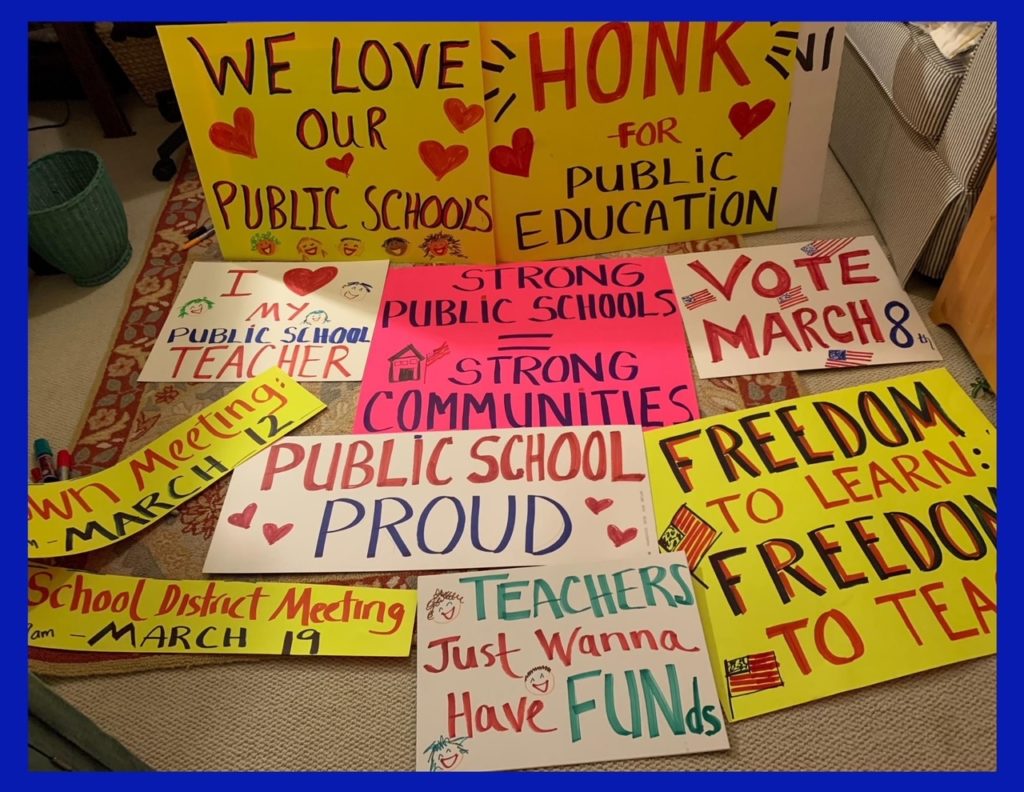
I Love Public Education Sign Visibility

In first town elections since onslaught of attacks on public education and a honest, accurate education, voters send clear message that they support strong public schools and a honest, accurate education

CONCORD, NH – In race after race across New Hampshire on Town Meeting Day, concerned parents and community members in communities large and small successfully organized to elect pro-public education candidates and reject those seeking to dismantle public education and censor history.

“These results should raise serious doubts about any Republican 2022 election strategy that is built around pitting parents against local public schools and educators,” said Zandra Rice Hawkins, Executive Director of Granite State Progress. “In nearly every school board race, Granite State voters chose out-spoken champions for public education and an honest, accurate, inclusive education. This is a big win for public schools and for our future. These leaders are committed to keeping our public schools strong and making sure every student’s history and experience is valued.”

The results from the election are all the more astounding for record-shattering voter turnout, and for the blatant differences between the candidates on everything from public education, COVID public health measures, and attempts to whitewash American history and censor educators. A priority list of school board results can be found here.

Key examples from around the state:

  • Merrimack Valley School District, home to some of the state’s most vocal anti-vaccine, anti-mask, and classroom censorship activists, experienced a 56% increase in voter turnout from 2019, and supported public education candidates while also defeating a classroom censorship/anti-equity warrant resolution.
  • Bedford experienced a 36% increase in voter turnout and elected pro-public education candidate and teacher Andrea Campbell with 2832 votes, compared to 1293 votes for Sean Monroe, a candidate supported by right-wing organization Defend Our Kids, and 856 for incumbent John Schneller; both of whom supported efforts to censor teachers and ban conversations about race and racism in public schools.
  • Londonderry elected pro-public education candidates Amanda Butcher and Kevin Gray, defeating vocal anti-masker Rachel Killian (seen here harassing school board members during a public meeting). Voters also rejected a warrant resolution to make masks completely optional and the sole decision of parents instead of school leaders and public health experts; a significant decision given Gov. Sununu’s recent decision to ban schools from enacting COVID public health measures like masks.
  • Governor Wentworth School District elected Republican State Rep. Brodie Deschaies over far-right activist Jessica Williams, who believes public schools are indoctrinating students and was arrested at a GWSD school board meeting on September 13, 2021.
  • Weare elected pro-public education candidates William “Bill” Politt and Alyssa Small, and passed full-day kindergarten; and Hollis elected pro-public education candidates Carryl Roy, Krista Whalan, and Holly Babcock.
  • Exeter and SAU 16 elected a full slate of pro-public education and honest education candidates, despite a nearly $20,000 effort by the opposition and months of voter mailings from those who oppose diversity, equity, and inclusion justice efforts in the school districts.

“We are in awe of how our communities have come together to protect and support public education,” said Sarah Robinson, Education Justice Campaign Director for Granite State Progress. “Parents, students, educators, and community leaders have been working for months to organize, recruit strong candidates, and support pro-public education campaigns. Watching the results come in and knowing that so many public education champions are going to be serving in these roles gives us all hope. Our schools have been under constant attack from privatization schemes, neo-Nazi’s, and of course Governor Sununu’s statewide ban on a honest education. We all know that serving on a school board right now is challenging, and we thank these leaders for stepping up for our students. We hope the folks at the State House are paying attention, because this showdown will play out again in November unless they stop the attacks on our public schools.”

President Biden’s choice for the U.S. Supreme Court is a graduate of a Florida public high school, where she was a member of the debate team. Justice Jackson has described her participation on the debate team as a crucial factor in her intellectual development. Debate taught her critical thinking skills, writing, speaking, and self-confidence. The school still exists but the Governor and Legislature have done everything possible to destroy the state’s public schools by favoring charters and vouchers and diverting billions of public school dollars to “choice.”

PINECREST, Fla. — Let Miami Palmetto Senior High School brag for a moment: It has a swoon-worthy alumni roster. Amazon founder Jeff Bezos, class of ’82. Dr. Vivek H. Murthy, the U.S. surgeon general, class of ’94. And Judge Ketanji Brown Jackson, the first Black woman nominated to the U.S. Supreme Court, class of ’88.

Decades have passed since Jackson, 51, was a stellar student at Palmetto, a large public school nestled among the palm trees of the South Florida suburbs. But the school held outsize importance in her life, thanks to a competitive speech and debate team led by a famed coach who molded her protégés into sharp-tongued speakers and quick critical thinkers.

“That was an experience that I can say without hesitation was the one activity that best prepared me for future success in law and in life,” Jackson said at a lecture in 2017.

From the tightknit and wonky debate team emerged accomplished professionals who remain unusually close 30 years later. (Jackson’s prom date? A guy who would become a U.S. attorney, the chief federal prosecutor in Miami.) Now the team offers a glimpse into how Jackson’s early life led to a Supreme Court nomination — and how her success is inspiring a new generation of debaters to dream big.

“I learned how to reason and how to write,” she said in the lecture, “and I gained the self-confidence that can sometimes be quite difficult for women and minorities to learn at an early age.”

One former teammate, Craig Tinsky, who is a visual artist in Washington, D.C., recalled Jackson delivering a powerful speech about confronting and overcoming fears, as well as a humorous interpretation of the Neil Simon play “Fools” that had the audience in stitches.

Jackson has spoken often, including in her 2013 swearing-in as a judge, about how much high school meant to her. She was the class president and has helped organize class reunions. But above all, she was a top debater.

Not everything was easy. As a 17-year-old, she sat on a panel discussion about race and ethnic relations and recounted having a drama teacher tell her she would not be able to win a role in a play because it was about a white family.
“If you don’t talk about it, you never deal with it,” she said of prejudice in the school, where the student body was 73% white, 16% Black and 11% Hispanic.

Jackson grew up in what she has described as a predominantly Jewish suburb of Miami, attending her friends’ bar and bat mitzvahs. At the time, Palmetto was in an unincorporated residential neighborhood known as East Kendall that is now the upscale village of Pinecrest.

Pastors for Texas Children have worked with a bipartisan coalition to support public schools and stop privatization. Rural Republicans have been an important part of the coalition that has repeatedly stopped voucher legislation and slowed charters.

Big Night for Pro-Texas Public School Legislative Candidates

GOP Candidates Again Rebuke Extremist Insurgents Financed By Ultra-Right-Wing Billionaires

Candidates that support Texas public schools celebrated significant victories in the Republican primary last night. On the eve of Texas Independence Day, these incumbents declared their independence from the deep pockets of right-wing extremists that are trying to destroy your neighborhood schools. We congratulate those candidates: Stan Lambert, Ken King, David Spiller, Gary VanDeaver, Travis Clardy, Reggie Smith, Ernest Bailes, Giovanni Capriglione.

“Yesterday’s primary elections proved decisively, in the reelection of pro-public education incumbents, that Texans overwhelmingly support their neighborhood and community public schools – and oppose the privatization of them through vouchers and charters,” said Reverend Charles Foster Johnson, founder and Executive Director of Pastors for Children. “These House seats cannot be bought by a couple of right-wing billionaires, no matter how many millions they put up.”

Pastors For Children will continue the fight in the upcoming May runoffs and launch an unprecedented pro-public education campaign for the November General Election.

Pastors For Children stands firm for the belief that there is a moral obligation before God to educate every school kid in Texas. We are also strong proponents of Article 7 in the Texas Constitution, which mandates the State Legislature to support and maintain a free public school system. It is the only way for the Texas economy to continue to outpace the rest of the country.

Pastors For Children is a 501c4 that engages parents, teachers, and all Texans to fight for Texas neighborhood public schools through their votes in the ballot box.

PO Box 471155, Fort Worth, Texas, 76147