Archives for category: Segregation

Trump selected Linda McMahon to be the next Secretary of Education. She is well known for making it rich in the world of wrestling entertainment, in partnership with her husband. Less well known is her role as Chair of the board of the America First Policy Institute (AFPI). Trump is close to AFPI, which promotes school choice and the “parental rights” movement, which promotes censorship of books and curriculum about racism and LGBT topics. They oppose any teaching that might make students “uncomfortable,” like learning about the history of racism, or that might teach students that LGBT exist.

The Nation published an article by Christopher Lewis and Jacob Plaza. The article tells the story of the think tank McMahon leads. It was launched after Trump’s loss in 2020 and its policy agenda defines Trump’s plans. To understand what Trump intends to do, learn more about AFPI.

Lewis and Plaza write:

Amid the incoming Trump administration’s flurry of unqualified, corrupt, and/or vengeance-driven cabinet nominees, it’s been easy to overlook Linda McMahon, Trump’s pick to head the US Department of Education. McMahon is best known for her role in running World Wrestling Entertainment (WWE) with her husband the longtime Trump crony Vince McMahon. Linda McMahon’s background in education is exceedingly thin; she served on the Connecticut Board of Education more than a decade ago, thanks to an appointment from another politically connected friend, then–Connecticut Governor Jodi Rell. McMahon has a teaching certificate but has never actually taught. Indeed, she was forced to resign her spot on the Connecticut board when the Hartford Courant reported that she’d lied on her résumé about having an education degree. Add in the alleged role of the WWE and its parent company in a sexual-abuse scandal involving “ring boys” for the wrestling league, and McMahon’s nomination, in any sanely administered political order, would be dead in the water. (McMahon and her husband both deny the abuse allegations in the pending WWE suit.)

Yet McMahon possesses one key credential for the next Trump administration—in addition, that is, to a proven track record to personal fealty to the president-elect, and a long string of Fox News appearances: She’s the former head of the America First Policy Institute (AFPI), the policy nerve center for MAGA governance. For all the attention focused on the Heritage Foundation and its Project 2025 policy agenda, AFPI has been Trumpworld’s principal policy network, serving as a haven for former Trump appointees during the Biden years. AFPI hands assembled a detailed blueprint for Trump’s return to power, including plans to make the Trump tax cuts permanent and purge the federal workforce of civil service workers deemed insufficiently MAGA. In addition to McMahon, Trump has tapped several senior AFPI figures for cabinet posts, including EPA nominee Lee Zeldin, Agriculture nominee Brooke Rollins (the think tank’s president and CEO), and its Georgia chapter chair, Doug Collins, Trump’s pick to head the Department of Veteran’s Affair

As education secretary, McMahon would be charged with administering a uniquely destructive suite of policies, even by the usual standards of Trump governance. That’s because the Department of Education has been a bête noire of the American right ever since Jimmy Carter founded the agency in 1979. By creating a layer of federal oversight over locally run schools, the DOE has, in the overheated imaginings of right-wing policy mavens, arrogated deep-state sovereignty over the rights of parents to preside over the best educational options and life chances for their children. And as the Education Department has sought to clarify and standardize anti-discrimination policy for LGBTQ+ students, it’s become a pet target for anti-trans culture warriors on the right.

McMahon probably won’t heed the growing chorus of conservative calls to abolish the DOE outright, but she can be counted on to aggressively pursue other key MAGA objectives in education policy. In line with her work at AFPI, McMahon will likely continue to promote the use of privately backed charter schools to defund public education—the most fundamental plank of right-wing education policy. In addition, she’ll probably resume her predecessor Betty DeVos’s campaign to deny basic Title IX protections to LGBTQ+ students. And it’s a safe bet that she’ll also re-up plans to promote Trump’s 1776 commission—MAGA’s agitprop answer to the 1619 Project, promoting a “patriotic” national curriculum to downplay and discourage honest discussion of America’s racial history in the schools.

Following the lead of billionaire right-wing donors, AFPI enthusiastically champions the charter-schools movement, while seeking to undermine the government’s role in providing quality public education. McMahon’s think tank has erected a whole policy infrastructure to promote charter schools, including direct public subsidies to them, the creation of education saving accounts (ESAs) for parents to enroll kids in charters, and proposals to weaken teachers’ unions in conjunction with the rise of open-shop charters. This agenda does more than harness the long-standing animus to government-backed education on the right—it advances the creation of a parallel education system for right-wing partisans. In this regard, as well as in its aggressive model of privatized education funding, the AFPI plan recalls the original role that neoliberal economics played in supporting the new ad hoc network of “segregation academies” launched in the American South after the 1954 Brown v. Board of Education ruling to desegregate the nation’s schools. The same basic dictum holds for today’s American right as it did then: If you can’t segregate with law, segregate with economics.

AFPI claims that charter school students have higher scores on standardized tests. In reality, the findings here follow what holds for better-funded public schools: namely, that well-funded charter schools tend to produce better test scores, while less well-off charters fare a bit worse, with some regional variations. Students in the competitive DC charter school system’s Opportunity Scholarships program, often cited as the gold standard by charter school advocates, actually performed worse on reading tests than those who did not attend the program.

School choice and voucher programs are a drain on the public’s coffers. For hard-right ideologues like the advisers at AFPI, that’s the whole point. Privatized education is part of the broader right-wing campaign to block the public sector’s ability to finance anything, especially if it would further racial equality. The National Education Association notes that voucher programs redirect scarce public funds toward unaccountable private school programs, and found zero evidence that these programs—which increase school segregation—improve students’ performance. In some cases, there are negative impacts.

What’s more, private management naturally leads to a focus on profit, financial self-sustainability, and expansion—mandates that typically lead to steep budget cuts in the schools, even if students suffer. According to the Network for Public Education, for-profit management companies run nearly one in seven charter schools.

AFPI has also endorsed federal legislation to create national education savings accounts. Like charter schools, ESAs seek to redirect public resources to market-driven gimmicks under the broad rubric of consumer choice. When parents open an ESA, they withdraw their children from the school district and receive a deposit of public funds in a savings account authorized by the government. Parents are then allowed to spend from that account on a range of educational expenses, including tutoring, therapy, or school supplies.

ESA plans create an obvious bind by forcing parents to navigate the education industry all on their own. The ESA scheme affords no safeguards for students whose parents made poor spending choices with the funds in their account. A report in Forbes recounted the story of a family using up its entire account before paying for a single English or math class. And like the broader charter model it upholds, the savings-account system reinforces, rather than weakens, the core inequalities of the US education system; it ensures that wealthier parents will be able to afford to send their children to the best schools.

For a bracing illustration of how charter and for-profit education schemes pillage publicly funded schools, consider Chicago’s experience. In 2013, the city closed 48 public schools to cover widening budget shortfalls. And Chicago’s public schools were going broke in no small part due to the rapid expansion of a parallel charter systemcaptained by ardent school privatizers. Since the insurgent charter schools operated outside traditional governance and accountability, they accumulated millions in debt while draining desperately needed funding away from public schools. Ultimately, 17,000 students were displaced, and Chicago was left with a more unequal and racially segmented school system than it had at the outset of the city’s charter-school fiasco.

To finish reading the article, open the link.
This article just appeared on the website of The New York Review of Books.

https://www.nybooks.com/online/2025/01/11/their-kind-of-indoctrination/

It is my review of Trump’s plans for K-12 education.

NYRB is the most distinguished literary-political journal in the nation. It has a huge readership. It reaches a different audience than education journals.

If you subscribe to NYRB, you can open it in full. If you don’t, it costs $10 for 10 issues. Or, if you wait, I will post it in full in a few weeks.

Repeat after me: The school choice movement began in response to the Brown Decision of 1954.

School choice was a euphemism for using public dollars to fund segregation academies for whites, to enable them to escape anticipated desegregated schools.

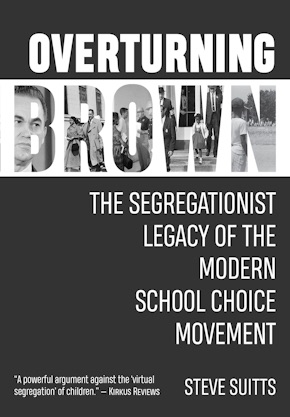
Steve Suitts wrote an excellent book about the history of school choice, called Overturning Brown: The Segregationist Legacy of the Modern School Chhoice Movement.

I reviewed the book in The New York Review of Books. The review was titled “The Dark History of School Choice.”

Now, ProPublica reports, southern states are using voucher money to fund the same segregation academies founded in the 1950s and 1960s.

The latest ProPublica report begins:

On May 14, the final day for submitting new bills in the Mississippi Legislature, a bold new package of them landed on the desks of Mississippi lawmakers. The plans called for the creation of a voucher program that paid for students to attend private schools.

A few weeks later, in the heat of mid-June, the governor urged lawmakers to support the $40 million program, promising it “will bear the sound fruit of progress for a hundred years after this generation is gone.” Public school support would continue, he assured. But vouchers would “strengthen the total educational effort” by giving children “the right to choose the educational environment they desire.”

It was 1964.

Key backers of the move included a group of white segregationists that had formed after the U.S. Supreme Court ruled state-mandated public school segregation unconstitutional.

Across the South, courts had already rejected or limited similar voucher plans in Alabama, Louisiana, Virginia and Arkansas. But Mississippi lawmakers plowed forward anyway and adopted the program. For several years, the state funneled money to white families eager for their children to attend new private academies opening as the first Black children arrived in previously all-white public schools.

Now, 60 years later, ProPublica has found that many of these private schools, known as “segregation academies,” still operate across the South — and many are once again benefiting from public dollars. Earlier this week, ProPublica reported that in North Carolina alone, 39 of them have received tens of millions in voucher money. In Mississippi, we identified 20 schools that likely opened as segregation academies and have received almost $10 million over the past six years from the state’s tax credit donation program.

At least eight of the 20 schools opened with an early boost from vouchers in the 1960s.

“The origins of private schools receiving public funds were with the segregation academies,” said Steve Suitts, a historian and the author of “Overturning Brown: The Segregationist Legacy of the Modern School Choice Movement.”

Most private schools receiving money from the voucher-style programs exploding across the country aren’t segregation academies. But where the academies operate, especially in rural areas, they often foster racial separation in schools and, as a result, across entire communities.

Despite the passage of decades, most segregation academies across Mississippi remain vastly white — far more so than the counties where they operate, federal private school surveys show. Mississippi is the state with the highest percentage of Black residents.

At 15 of the 20 academies benefiting from the tax credit program, student bodies were at least 85% white as of the last federal private school survey, for the 2021-22 school year. And among the 20, enrollments at five were more than 60 percentage points whiter than their communities. Another 11 were at least 30 percentage points whiter.

In 1964, the White Citizens’ Council was among those pushing for the voucher plan. The pro-segregation group was founded in the Mississippi Delta town of Indianola in the 1950s by Robert “Tut” Patterson, who sought to “save our schools if possible” from integration and “if that failed, to develop a system of private schools for our children.”

For Patterson, it was personal. His family, including a young daughter who would start school that fall, lived on what he called a “plantation” with 35 Black families. As he later told an interviewer, “We took care of them. We practically lived with them. We loved them. We tended to them, but I didn’t want to mingle my children with them.”

Vouchers. This is the education idea that Republicans have been pushing for 30 years. This is the policy that is now universal in half a dozen red states. This is the main policy idea of the next Trump regime.

Segregation returns, funded by the taxpayers.

Peter Greene reminds us of an important anniversary that we should have commemorated: the arrival of 6-year-old Ruby Bridges at the William Frantz Elementary School in New Orleans, where she was the first Black child. She had to walk through crowds of screaming whites, mostly women, who didn’t want her to integrate the school. She integrated the school, but the white children were gone. She was the only child in her class, and she developed a close relationship with her kind teacher.

He writes:

Things got busy here at the Institute this week, so I missed posting about this anniversary on Thursday. But I don’t want to overlook it for another year.

On November 14, Ruby Bridges was six years old, three months younger than the Supreme Court’s Brown v. Board of Education. Six years old.

She had attended a segregated kindergarten in New Orleans. The district gave Black children a test to see if they would be allowed to attend the all-white William Frantz Elementary School. Six passed. Two decided not to go through with it. The three other girls were sent to a different all-white school; Ruby Bridges would be the only Black student desegregating William Frantz.

Her father was not sure he wanted to put her through that. Her mother argued it had to be done for her daughter and “for all African-American children.”

This was three years after the Little Rock Nine were escorted into school by the National Guard. Conditions in the South had not improved. A crowd came out to hurl insults and threaten a six year old child. 

“What really protected me is the innocence of a child,” Bridges said at an event last Thursday.“Because even though you all saw that and I saw what you saw, my 6-year-old mind didn’t tell me that I needed to be afraid. Like why would I be afraid of a crowd? I see that all the time.”

But it is still shocking to see pictures of the protests. They made a picture of a coffin, with a Black baby in it, and paraded it around the school. Along with a cross. Bridges was the only child in her class– white parents pulled their children out, and many teachers refused to teach. The boycott was eventually broken by a Methodist minister, but Bridges still was shunned, her father fired, her family barred from some local businesses. 

It’s Ruby Bridges portrayed in the Norman Rockwell painting “The Problem We All Live With.” one of his first works after he left The Saturday Evening Post. It earned him sackfulls of angry mail, calling him, among other things, a “race traitor.”

This week, many schools celebrated a Ruby Bridges Walk To School Day in schools all around the country.  

There is a common narrative, that in the sixties we pretty much settled all the racial issues in this country and that demands for equity ever since have just been a political ploy to grab undeserved goodies. “We fixed that stuff,” the argument goes, “so we shouldn’t need to be talking about it now. You sure you don’t have some other reason for bringing it up?” It’s the narrative that brings us to a President-elect who claims that since we fixed racism in the sixties, it’s white folks who have been the victims, and who need reparations.

But here’s what I want to underline– Ruby Bridges is alive. Not even old lady alive, but just 70. Presumably most of the children gathered around that coffin and cross are also alive, probably a few of those adults as well (Bridges’s mother died in 2020). 

This is not some episode from the distant past. It’s not about some form of schooling that belongs to some dead-and-gone generation. The anniversary is a reminder to do better, to be better, a reminder that it really wasn’t very long ago that a whole lot of people thought it was okay to threaten a six year old child with abuse and violence. White folks don’t need to hang their heads in shame and embarrassment, but neither should they say, “That was people from another time, long ago and far away,” as a way to feel better about the whole business. It can happen here. It just happened here. Pay attention and do the work to make sure it isn’t happening tomorrow.

Public Schools First NC posted the following statement about the passage of additional funding for the state’s voucher program. The General Assembly has a veto-proof majority in both houses, thanks to the defection of one Tricia Cotham, who ran as a Democrat who opposed abortion and vouchers, then changed parties. The bill raises voucher spending to over $600 million this year and to nearly $1 billion annually in a decade.

Here is the statement:

This week the House and Senate majority passed House Bill 10 “Require ICE Cooperation & Budget Adjustments” in a process that allowed no adjustments to any part of the bill. The new bill added a number of budget items to the previous bill, including massive increases in North Carolina’s voucher programs

The bill added millions in OS vouchers and ESA+ vouchers, bringing the total for 2024-25 to $616.1 million. The new appropriations were made to ensure that all voucher applicants this year received a voucher regardless of their income. As described in our September 7 newsletter, the majority of OS applicants on the waitlist have incomes too high to have been eligible for vouchers before the income cap was removed this year

In 2024-25, the OS vouchers pay up to $7,468 toward the private school tuition for each student. The voucher amount is tied to state per-pupil funding and increases each year. 

The wealthiest applicants—those making more than $260,000/year for a family of four—will receive $3,360 per child from the state. 

The bill does not increase teacher pay, so veteran teachers in their 15th through 24th years of teaching will receive a raise of only $820 in 2024-25.

The bill also sets out additional increases for both voucher programs through 2032-33 and establishes spending “for each fiscal year thereafter.” The result, as shown in the chart, is a whopping $937.6 million scheduled to be spent in 2033-34 alone. This is stunning and a total disregard for our underfunded public schools.

North Carolina will have spent a total of nearly $9 billion on private school vouchers by 2033-34. Those dollars would have fully funded the Comprehensive Remedial Plan (Leandro) to provide a sound basic education for all public school students—and much more. In November 2022, the North Carolina Supreme Court ordered the legislature to appropriate funds according to the Leandro plan, but legislative leaders are still fighting the ruling. 

Taxpayers may wonder whether the billions spent on private schools are helping students learn. We do know, based on national data, that private schools do not outperform public schools. Taxpayers won’t get answers—at least not yet – about NC students since private schools are not required to publicly report information on student achievement, unlike traditional public schools and charter schools.

Last year’s budget bill required private schools to administer the ACT to 11th grade students whose tuition was at least partially funded by vouchers starting this school year (public school 11th graders already take the ACT). It also required the Superintendent of Public Instruction to recommend a test to be administered in 3rd and 8th grade to both public school students and private school voucher students. There has been no word yet on what test Superintendent Truitt recommended and whether it will be administered this spring. 

Governor Cooper has signaled that he will veto House Bill 10 this week due to the massive voucher increases and other provisions in the bill that he has previously come out against such as the ICE requirement. 

It’s NOT TOO LATE to take action to STOP HB 10!

Legislators will be back in session on October 9. Governor Cooper is expected to veto the bill this week. Legislators will then be asked to vote to override his veto. What can you do to make sure the veto holds?

  • Contact legislators to urge them to reject this voucher expansion.
  • Contact all other elected officials and local business leaders to let them know how harmful the voucher expansion is to communities. They should contact legislators too. 
  • Encourage your local school board to submit a resolution rejecting vouchers (see examples here).
  • Support your local PTA as they advocate for public schools.
  • Sign our petition urging legislators to reject HB 10 and support the VETO.

PSFNC’s Statement on Voucher Expansion

Legislators, when sworn in, pledge to uphold the NC state constitution to provide a free public education. They should not be sending nearly a billion dollars of our tax money to private school vouchers while starving our public schools as they ignore the NC Supreme Court’s ruling to fully fund Leandro. By adding school voucher funding to clear the voucher waitlist of mostly wealthy families, this bill gives our hard earned tax dollars to wealthy families who can afford to pay their own tuition bills. In contrast, salary increases for teachers with 5 or more years of experience were less than $950, which amounts to pay cuts given cost of living increases. 

This bill prioritizes private schools over public schools, urban families over rural families, and wealthy families over our teachers and the nearly 1.4 million children who attend our public schools. Now, with no income limits to determine eligibility and no prior public school attendance required, it has become a handout to wealthy families to underwrite their private school tuition. This is the wrong path for our state. It undermines the social and economic fabric of our state–a state that used to be known nationwide for putting our public schools first- we need to do it again.

Republican-controlled states have been on a crusade to enact vouchers, with the alone stimulus of billionaire lobbying dollars. We know from Michigan State University scholar Josh Cowen that most students who use vouchers were already enrolled in private schools. Thus, vouchers are a subsidy for people who can afford private schools, not for low-income students. Cowen also has demonstrated that the academic outcomes of vouchers are disastrous for kids who transfer from public schools (the evidence is contained in Cowen’s excellent new book: The Privateers).

The South Carolina State Supreme Court just overturned the state’s voucher program. Three judges recognized that the program violated the state constitution. Courts in other Republican-controlled states have decoded that the state constitution does not mean what it says.

Peter Greene writes in Forbes:

In many states, the challenge of creating a school voucher program is a constitutional requirement that public tax dollar are designated only for public schools. South Carolina’s legislature thought they had found a workaround; today the State Supreme Court said no.

The 3-2 decision came as a surprise. But the basis for the “relief granted in part” was straightforward.

The petitioners in the case make the claim that the voucher program violates Article XI, Section 4 of the South Carolina Constitution:

“No money shall be paid from public funds nor shall the credit of the State or any of its political subdivisions be used for the direct benefit of any religious or other private educational institution.”

The language is exceptionally direct and clear, but legislators thought they had created a workaround in the form of the Education Scholarship Trust Fund. The premise, seen in many taxpayer funded voucher programs in other states, is that once the money passes into the hands of a third party, it somehow sheds its public nature.

As the ruling puts it:

Respondents’ primary argument is that the funds start out as public funds but lose their public character once the Treasurer places the funds in the ESTF.

The court is unconvinced that the ESTF is a true trust. And the court points out that even if it is a trust, the nature of a trust is that the trustee holds legal title to the estate, and in this case, the trustee is the state. The court notes that “this is not the first time we have encountered an attempt to deploy a trust to avoid constitutional limits on the use of public funds” and cites O’Brien v. S. C. ORBIT.

The other argument by the state is that ESTF funds benefit the families, and do not provide “direct benefit” to the private schools. “[T]hey read our Constitution as allowing public funds to be directly paid to private schools as tuition as long as the funds are nudged along their path by the student.”

The state argues that this is not like the last time vouchers were struck down (Adams v. McMaster) because this time the vouchers can be used for private or public schools. Therefor the program does not provide direct benefits for private schools. However, responds the court, “just because the benefit is diffuse does not mean it is not direct.”

State Superintendent of Education Ellen Weaver responded to the ruling.

“Families cried tears of joy when the scholarship funds became available for their children, and today’s Supreme Court ruling brings those same families tears of devastation. The late timing of the initial filing and subsequent ruling on this case midway through the first quarter of the new school year wreaks havoc on the participating students and their families.”

The ruling is certainly inconveniently timed for those students who have already used the vouchers to start their new school year. It’s not clear what will happen to them.

Previously, Kentucky’s Supreme Court also struck down their state’s voucher program, arguing that the twists and turns built into the program did not conceal it’s fundamental nature—the use of public taxpayer dollars to fund private and religious schools in violation of the state constitution. In Kentucky, that has led to an attempt to rewrite the constitution. We’ll see what the South Carolina legislature tries next.

Peter Greene critiques the conservative idea that states should support public schools and all sorts of choice. Greene explains why this idea erodes the quality of public schools, which enroll the vast majority of the nation’s students. Conservatives blame teachers’ unions for whatever they dont like about pibkic schools, but Greene denonstrates that they are wrong. Open the link to read the full article.

He writes:

In the National Review, Michael Petrilli, Thomas Fordham Institute honcho and long-time reformster, poses the argument that folks on the right don’t need to choose “between expanding parental options and improving traditional public schools.” Instead, he asserts, they “can and should do both.”

On the one hand, it’s a welcome argument these days when the culture panic crowd has settled on a scorched earth option for public schools. As Kevin Roberts, Heritage Foundation president, put it in his now-delayed-until-after-it-can’t-hurt-Trump-election-prospects book, “We don’t merely seek an exit from the system; we are coming for the curriculums and classrooms of the remaining public schools, too.” For many on the right, the education policy goal is to obliterate public schools and/or force them to closely resemble the private christianist schools that culture panickers favor. 

Pertrilli is sympathetic to the “let’s just give parents the money and be done with it” crowd. 

We’ve inherited a “system” that is 150 years old and is saddled with layers upon layers of previous reforms, regulations, overlapping and calcified bureaucracies, and a massive power imbalance between employees and constituents, thanks to the almighty teachers unions.

Sigh. Reforms and regulations, sure, though it would be nice for Petrilli to acknowledge that for the last forty-ish years, those have mostly come from his own reformster crowd. And I am deeply tired of the old “almighty teachers unions” trope, which is some serious baloney. But his audience thinks it’s true, so let’s move on. 

Petrilli’s point is that conservatives should not be focusing on “school choice” alone, but should embrace an “all of the above” approach. Petrilli dismisses Democrats as “none of the above” because of their “fealty to the unions,” which is, again, baloney. Democrats have spent a couple of decades as willing collaborators with the GOP ; if they are “none of the above” it’s because they’ve lost both the ability and authority to pretend to be public education supporters. The nomination of Tim Walz has given them a chance to get on the public education team, but let’s wait and see–there’s no ball that the Democratic Party can’t drop.

Petrilli sits on a practical point here (one that Robert Pondiscio has made repeatedly over the years)– public schools are a) beloved by many voters, b) not going away, and c) still educate the vast, vast majority of U.S. students. Therefore, folks should care about the quality of public education.

Petrilli then floats some ideas, all while missing the major obstacle to his idea. There are, he claims, many reforms that haven’t been tried yet, “including in red states where the teachers unions don’t have veto power.” I believe the actual number of states where the union doesn’t have veto power is fifty. But I do appreciate his backhanded acknowledgement that many states have dis-empowered their teachers unions and still haven’t accomplished diddly or squat. It’s almost as if the unions are not the real obstacle to progress.

His ideas? Well, there’s ending teacher tenure, a dog that will neither hunt nor lie down and die. First of all, there is no teacher tenure. What there is is policy that requires school districts to follow a procedure to get rid of bad teachers. Behind every teacher who shouldn’t still have a job is an administrator who isn’t doing theirs. 

Tenure and LIFO (Last In First Out) interfere with the reformster model of Genius CEO school management, in which the Genius CEO should be able to fire anyone he wants to for any reason he conceives of, including having become too expensive or so experienced they start getting uppity. 

The theory behind much of education reform has been that all educational shortfalls have been caused by Bad Teachers, and so the focus has been on catching them (with value-added processing of Big Standardized Test scores), firing them, and replacing them with super-duper teachers from the magical super-duper teacher tree. Meanwhile, other teachers would find this new threatening environment inspirational, and they would suddenly unleash the secrets of student achievement that they always had tucked away in their file cabinet, but simply hadn’t implemented.

This is a bad model, a non-sensical model, a model that has had a few decades to prove itself, and has not. Nor has Petrilli’s other idea– merit pay has been tried, and there are few signs that it even sort of works, particularly since schools can’t do a true merit pay system and also it’s often meant as a cost-saving technique (Let’s lower base pay and let teachers battle each other to win “merit” bonuses that will make up the difference).

Petrilli also argues against increased pay for teacher masters degrees because those degrees “add no value in terms of quality of teaching and learning” aka they don’t make BS Test scores go up. He suggests moving that extra money to create incentives for teachers to move to the toughest schools. 

Petrilli gets well into weeds in his big finish, in which he cites the “wisdom of former Florida governor Jeb Bush” and the golden state of Florida as if it’s a model for all-of-the-above reform and not a state that has steadily degraded and undercut public schools in order to boost charter and private operations, with results that only look great if you squint hard and ignore certain parts(Look at 4th grade scores, but be sure to ignore 8th and 12th grade results). And if you believe that test results are the only true measure of educational excellence.

So, in sum, Petrilli’s notion that GOP state leaders should support public education is a good point. What is working against it?

One is that his list is lacking. Part of the reform movement’s trouble at this point is that many of its original ideas were aimed primarily at discrediting public education. The remaining core– use standardized tests to identify and remove bad teachers– is weak sauce. Even if you believe (wrongly) that the core problem of public education is bad teaching, this is no way to address that issue. 

Beyond bad teachers, the modern reform movement hasn’t had a new idea to offer for a couple of decades. 

Petrilli also overlooks a major challenge in the “all of the above approach,” a challenge that reformsters and choicers have steadfastly ignored for decades.

You cannot run multiple parallel school systems for the same cost as a single system. 

If you want to pay for public schools and charter schools and vouchers, it is going to cost more money. “School choice” is a misnomer, because school choice has always been available. Choicers are not arguing for school choice–they’re arguing for taxpayer funded school choice. That will require more taxpayer funds. 

You can’t have six school systems for the price of one. So legislators have been left with a choice. On the one hand, they can tell taxpayers “We think school choice is so important that we are going to raise your taxes to pay for it.” On the other hand, they can drain money from the public system to pay for charters and vouchers all while making noises about how the public system is totes overfunded and can spare the money easy peasy. 

I can offer a suggestion for conservatives who want to help public schools improve.

Get over your anti-union selves.

Please open the link to finish the article.

Leaders of the pro-public school organization called Public Schools First in North Carolina discovered that many public school parents and advocates are unaware that the state’s General Assembly has passed a budget that gives vouchers to the rich. They are distributing the following opinion piece from the Greensboro News to inform the public:

Our Opinion: Five words for GOP candidates: ‘And you’re OK with That?’

“And you’re OK with that?”

As Republican candidates for the state legislature begin to the make the rounds this fall, they should be hearing those five words over and over from constituents of all political stripes.

At every stop, on every stump, they should be pressed to give straight answers to that simple question on three issues:

Private-school vouchers

Even as they’ve increased taxpayer funding for private school tuition, adding wealthy families to the dole, many local public districts, including our own in Guilford and Forsyth counties, complain that they are seriously underfunded.

To be more specific, your party plans to plow hundreds of additional millions in taxpayer money into private school tuition assistance. Although 40% of that money ($96 million) would go to middle-class and working-class families earning between $57,721 to $115,440 a year (for a family of four), 44% (or $107 million) would go families earning $115,441 to $259,740.

And 16% (or $39 million) would go to those who need it the very least: wealthy families earning more than $259,741 annually.

One Democratic lawmaker likened it to asking low- and moderate-income taxpayers to help pay for a wealthy kid’s Porsche.

How do you square that with your rhetoric against “the welfare state” and profligate spending of other people’s money?

How do you square it with public school funding gaps throughout the state?

And how do you tell public schools no, that’s all we have to spend and then turn around and tell rich families y’all come. Who do we make the check out to?

Keeping secrets

Your party also slipped a provision into the state budget bill last fall that allows state lawmakers to decide for themselves whether they will make any of their documents accessible to the public. 

By law, they also get to choose whether to destroy or sell documents. They’re the decider. Which means they’re creating their own deep state right here and now on Tobacco Road.

What are they trying to hide and why?

And what gives them the right to membership in this exclusive club, but not others (the governor, the lieutenant governor, the attorney general and other North Carolina officials who are elected statewide need not apply)?

Easy money

Then there’s the provision the Republican-controlled legislature embedded within an (unnecessary) anti-masking bill that allows more “dark money” donations to political candidates in North Carolina.

As the current law stands, candidates must disclose the names of donors to their campaigns. They also are prohibited from taking donations from corporations, and contributions from individuals and political groups may not exceed $6,400.

This bill would change all that by making it legal for political parties in the state to take money from “Super PACs,” which are allowed to keep their donors secret and may receive unlimited amounts of money.

Those Super PACs would be able to collect the money and pass it on to the political parties, which could then funnel it to candidates, no questions asked.

At least your party has made no secret of the fact that it designed this new rule specifically with the GOP gubernatorial candidate in mind. Mark Robinson substantially trails his Democratic opponent, Josh Stein, in fundraising.

To recap, are you OK with:

Channeling taxpayer money to rich people as public schools go wanting?

Keeping documents and correspondence a secret from the public … unless you decide to share it?

And allowing anonymous cash to flow unfettered to candidates of both parties?

If the answer is yes, please explain how any of this benefits most North Carolinians and why we should vote for you anyway.

And how this in any way resembles government for, by and of the people.

Peter Greene, who taught for 39 years in Pennsylvania, wrote recently in The Progressive about Corey DeAngelis, who travels the nation to trash public schools and to advocate for vouchers. If you hate public schools and unions, he’s your guy. If you adore Betsy DeVos and her plans to destroy local communities and to get more children into discriminatory religious schools, he’s your guy.

Greene writes:

Corey DeAngelis is an influential, if not the most influential, voice in the rightwing campaign to demonize public schools and privatize public education. The guy’s résuméhits all the bases in the libertarian gameplan. After earning a doctorate at the University of Arkansas’s education reform program (funded bythe pro-school choice Walton family), DeAngelis helped found the Education Freedom Institute, became a senior fellow at the Reason Foundation, worked as an adjunct scholar at the CATO Institute, took up an appointment as a senior fellow at the Hoover Institution, and was hired on as a senior fellow at Betsy DeVos’s American Federation for Children.

He still holds all of those jobs, but his more common title is “school choice evangelist.” As the recent school voucher wave has surged in state after state, DeAngelis has been there to spread the word. While on tour in support of his new book, he distills the current pro-voucher argument.

In a recent talk at the Heritage Foundation, DeAngelis touched on most of the main arguments for vouchers (many of them false) and revealed a few truths about the pro-voucher strategy.

1. The Evil Unions and COVID

The villainy of the teachers union is a thread that runs through much of DeAngelis’s argument, especially related to the COVID-19 pandemic narrative. DeAngelis blames the unions (and American Federation of Teachers president Randi Weingarten) for “fear mongering” and accuses them of extorting ransom payments by holding schools hostage. The unions, he charged, used the pandemic to empower themselves and the “government schools” that he calls “a jobs program for adults.”

There’s no recognition that teachers had a legitimate fear during the pandemic or that hundreds of educators died of COVID-19. Nor did he mention the many private and non-union charter schools that also closed their doors. Every problematic decision that he cited from pandemic times is blamed on the union, with no mention that Betsy DeVos’s Department of Education provided little or no guidance to districts facing difficult decisions in an evolving situation.  

DeAngelis’s narrative argues that parents viewing Zoom school were appalled and awakened by what they saw. That oft-repeated tale stands in contrast to polls that show the vast majority of parents were satisfied with how their schools handled COVID-19. A 2022 Gallup poll found that, while the general public’s opinion of public schools is “souring,” parents’ favorable opinion of their own school matched pre-pandemic levels. The common sense conclusion to draw from this data is that people who don’t have first-hand experience with public schools are developing a low opinion of them based on some other source of information.

DeAngelis’s argument has other flaws. He claimed that the unions extracted a huge ransom from schools. But he also argued that pandemic relief funds given to schools never reached teachers and were, instead, soaked up by administrative bloat, which would seem to be a big tactical blunder on the unions’ part.

2. The Evil Unions and the Democratic Party

DeAngelis made the unusual claim that Democrats aren’t having kids, but Republicans are. But that, he said, won’t save conservatives because schools are fully “infiltrated by radical leftist union teachers.” The left uses schools as a way to control other people’s children. The Democratic Party, he added, is a fully owned subsidiary of the teachers’ union.

DeAngelis also repeated a false narrative of the National School Board Association’s supposed campaign to muzzle parents. In fall 2021, local school boards found their usually sleepy meetings had turned into wild, threatening, and even violent chaos. The NSBA turned to the Biden Administration for help, calling some of the actions “the equivalent of a form of domestic terrorism or hate crimes.” This was quickly and inaccurately cast as the Democratic administration calling parents domestic terrorists.

The resulting controversy caused the NSBA to lose some members, which DeAngelis seemed happy about. “Play stupid games, win stupid prizes,” he said.

This narrative that smears public school-friendly groups fits a general pattern of conservative attacks on groups seen as Democratic Party supporters.

Open the link to read more about the DeVos-funded public school hater who is spreading his propaganda across the nation.

Writing in The New Yorker, Jessica Winter deftly connects the spread of vouchers with deep-seated racism, phony culture war issues, and the war on public schools. Winter is an editor at The New Yorker.

She writes:

In October, 2018, on the night of a high-school homecoming dance in Southlake, Texas, a group of white students gathered at a friend’s house for an after-party. At some point, about eight of them piled together on a bed and, with a phone, filmed themselves chanting the N-word. The blurry, seesawing video went viral, and, days later, a special meeting was called by the board of the Carroll Independent School District—“Home of the Dragons”—one of the wealthiest and highest-rated districts in the state. At the meeting, parents of Black children shared painful stories of racist taunts and harassment that their kids had endured in school. Carroll eventually convened a diversity council made up of students, parents, and district staffers to address an evident pattern of racism in Southlake, although it took nearly two years for the group to present its plan of action. It recommended, among other things, hiring more teachers of color, requiring cultural-sensitivity training for all students and teachers, and imposing clearer consequences for racist conduct.

As the NBC reporters Mike Hixenbaugh and Antonia Hylton recounted in the acclaimed podcast “Southlake,” and as Hixenbaugh writes in his new book, “They Came for the Schools: One Town’s Fight Over Race and Identity, and the New War for America’s Classrooms,” Southlake’s long-awaited diversity plan happened to emerge in July, 2020, shortly after the murder of George Floyd by a Minneapolis police officer sparked Black Lives Matter protests against racism and police brutality across the United States. It was also the same month that a journalist named Christopher Rufo published an article in City Journal headlined “Cult Programming in Seattle,” which launched his campaign to make “critical race theory”—an academic discipline that examines how racism is embedded in our legal frameworks and institutions—into a right-wing panic button. A political-action committee called Southlake Families pac sprang up to oppose the Carroll diversity plan; the claim was that it would instill guilt and shame in white children and convince them that they are irredeemably racist. The following year, candidates endorsed by Southlake Families pac swept the local elections for school board, city council, and mayor, with about seventy per cent of the vote—“an even bigger share than the 63 percent of Southlake residents who’d backed Trump in 2020,” Hixenbaugh notes in his book. Some nine hundred other school districts nationwide saw similar anti-C.R.T. campaigns. Southlake, where the anti-woke insurgency had won lavish praise from National Review and Laura Ingraham, was the blueprint.

“Rufo tapped into a particular moment in which white Americans realized that they were white, that whiteness carried heavy historical baggage,” the education journalist Laura Pappano writes in her recent book “School Moms: Parent Activism, Partisan Politics, and the Battle for Public Education,” which also digs into the Southlake controversy. Whiteness could feel like a neutral default mode in many communities because of decades of organized resistance to high-density housing and other zoning measures—the bureaucratic backhoes of suburbanization and white flight. Today, the Carroll school district, though still majority white, has significant numbers of Latino and Asian families, but less than two per cent of the district’s students are Black.

In this last regard, Southlake is not an outlier, owing largely to persistent residential segregation across the U.S. Even in highly diverse metro areas, the average Black student is enrolled in a school that is about seventy-five per cent Black, and white students attend schools with significantly lower levels of poverty. These statistics are dispiriting not least because of ample data showing the educational gains that desegregation makes possible for Black kids. A 2015 analysis of standardized-test scores, for instance, identified a strong connection between school segregation and academic-achievement gaps, owing to concentrated poverty in predominantly Black and Hispanic schools. A well-known longitudinal study found that Black students who attended desegregated schools from kindergarten to high school were more likely to graduate and earn higher wages, and less likely to be incarcerated or experience poverty. Their schools also received twenty per cent more funding and had smaller classroom sizes. As the education reporter Justin Murphy writes in “Your Children Are Very Greatly in Danger: School Segregation in Rochester, New York,” this bevy of findings “lends support to the popular adage among desegregation supporters that ‘green follows white.’ ”

These numbers, of course, don’t necessarily reflect the emotional and psychological toll of being one of a relatively few Black kids in a predominantly white school. Other recent books, including Cara Fitzpatrick’s “The Death of Public School: How Conservatives Won the War Over Education in America” and Laura Meckler’s “Dream Town: Shaker Heights and the Quest for Racial Equity,” have also considered how those costs have been weighed against the moral imperative of desegregation. This is the axial force of a lineage that runs from the monstrous chaos that followed court-ordered integration in the nineteen-fifties and sixties and the busing debacles of the seventies to the racist slurs thrown around at Southlake. As my colleague Louis Menand wrote last year in his review of Rachel Louise Martin’s “A Most Tolerant Little Town: The Explosive Beginning of School Desegregation,” “It was insane to send nine Black teen-agers into Central High School in Little Rock with eighteen hundred white students and no Black teachers. . . . Desegregation was a war. We sent children off to fight it.” To Rufo and his comrades, there was no such war left to be fought; there were only the bitter-enders who hallucinate microaggressions in the wallpaper and whose books need to be banned from school libraries. A mordant irony of Rufo’s imaginary version of critical race theory is that Derrick Bell, the civil-rights attorney and legal scholar who was most closely associated with C.R.T., eventually came to be skeptical about school-integration efforts—not because racism was effectively over or because legally enforced desegregation represented government overreach, as the anti-C.R.T. warriors would hold today, but because it could not be eradicated. In a famous Yale Law Journal article, “Serving Two Masters,” from 1976, Bell cited a coalition of Black community groups in Boston who resisted busing: “We think it neither necessary, nor proper to endure the dislocations of desegregation without reasonable assurances that our children will instructionally profit…”

In the years before Brown v. Board of Education was decided, the N.A.A.C.P.—through the brave and innovative work of young lawyers such as Derrick Bell—had brought enough lawsuits against various segregated school districts that some states were moving to privatize their educational systems. As Fitzpatrick notes in “The Death of Public School,” an influential Georgia newspaper owner and former speaker of the state’s House declared, in 1950, “that it would be better to abolish the public schools than to desegregate them.” South Carolina, in 1952, voted 2–1 in a referendum to revoke the right to public education from its state constitution. Around the same time, the Chicago School economist Milton Friedman began making a case for school vouchers, or public money that parents could spend as they pleased in the educational marketplace. White leaders in the South seized on the idea as a means of funding so-called segregation academies. In 1959, a county in Virginia simply closed down its public schools entirely rather than integrate; two years later, it began distributing vouchers—but only to white students, as Black families had refused to set up their own segregated schools.

Despite these disgraceful origins, vouchers remain the handmaiden of conservative calls for “school choice” or “education freedom.” In the run-up to the 2022 midterms, Rufo expanded his triumphant crusade against C.R.T. into a frontal assault on public education itself, which he believed could be replaced with a largely unregulated voucher system. “To get universal school choice, you really need to operate from a premise of universal public-school distrust,” Rufo explained. He had been doing his best to sow that distrust during the previous two years.

Twenty states currently have voucher programs; five states launched universal voucher programs in 2023 alone. But reams of evidence show that vouchers negatively impact educational outcomes, and the money a voucher represents—around eight thousand dollars in Florida, sixty-five hundred in Georgia—is often not nearly enough to cover private-school tuition. In practice, then, vouchers typically act as subsidies for wealthy families who already send their children to private schools; or they pay for sketchy for-profit “microschools,” which have no oversight and where teachers often have few qualifications; or they flow toward homeschooling families. Wherever they end up, they drain the coffers of the public schools. Arizona’s voucher system, which is less than two years old, is projected to cost close to a billion dollars next year. The governor, Katie Hobbs, a Democrat and former social worker, has said that the program “will likely bankrupt the state.”

Back in Texas, Governor Greg Abbott has become the Captain Ahab of school choice—he fanatically pursued a voucher program through multiple special sessions of the state legislature, failed every time to sink the harpoon, and then tried to use the rope to strangle the rest of the education budget, seemingly out of spite. Abbott’s problem is not only that Democrats don’t support vouchers but that they’ve also been rejected by Republican representatives in rural areas, where private options are scarce and where public schools are major local employers and serve as community hubs. (Southlake’s state representative, a Republican with a background in private equity, supports Abbott’s voucher scheme—a bizarre stance to take on behalf of a district that derives much of its prestige, property values, and chauvinism from the élite reputation of its public schools.) White conservatives in Texas and elsewhere were roused to anger and action by Rufo-style hysteria. But many of them may have realized by now that these invented controversies were just the battering ram for a full-scale sacking and looting of public education.