Archives for category: Religion

Chris Tomlinson, a columnist for The Houston Chronicle, explained the origins of Project 2025, the extremist agenda for Trump’s second term. It was born in Texas, where it merged Republican thought with the demands of rabid white Christian nationalism.

He wrote:

What starts here changes the world, the University of Texas at Austin’s motto says, and one Longhorn’s plan for a second American Revolution, known as Project 2025, offers a return to white supremacy, patriarchy and theocracy.

Before Kevin Roberts became president of the Heritage Foundation and the impresario behind a radical agenda for a second Trump administration, he was a doctoral student in the UT history department and later head of the Texas Public Policy Foundation. Many of the ideas found in Project 2025 originated in the Lone Star State.

TPPF, with backing from Christian nationalist billionaires such as Tim Dunn, has long called for defunding public schools, banning abortion, repealing climate change legislation, deporting undocumented immigrants and imposing burdensome voting restrictions.

The Austin-based think tank is an official contributor to Project 2025. Many policies pioneered by TPPF in Texas appear in the 900-page roadmap officially known as the “2025 Presidential Transition Project.”

Heritage, founded in 1973, radically changed when Roberts took over in 2021. Roberts transformed the traditional country club conservative organization into a group committed to “institutionalizing Trumpism,” he told the New York Times. Heritage under Roberts is much closer to TPPF’s Christian fundamentalist politics than former President Ronald Reagan’s.

Disclosure: Roberts used his perch at TPPF to convince Lt. Gov. Dan Patrick to cancel a scheduled appearance by Bryan Burrough and me to discuss our book “Forget the Alamo: The Rise and Fall of an American Myth” at the Bullock State History Museum. Roberts has since deleted his Twitter posts, but his quotes condemning us and praising Patrick’s acquiescence live on.

In addition to the hot-button, culture-war issues, the plan drafted by 140 former Trump administration officials would overhaul the Department of Commerce to privatize the National Weather Service, slash the Census Bureau’s economic data gathering and restrict economic development programs.

At the Treasury Department, Project 2025 calls for shutting down Fannie Mae and Freddie Mac, government agencies that make most mortgages possible. Conservatives also want to end programs to fight discrimination in the banking and securities industries and efforts to address climate change.

Of particular interest to Texas businesses is the abolition of the Export-Import Bank. The federal agency has helped 938 businesses export $16 billion in products and services over the past decade. The bank guarantees financing when commercial banks will not with an almost perfect success rate.

Lastly, the most radical economic proposal is to end the Federal Reserve’s dual mandate to set interest rates in a way that will maximize employment while limiting inflation. Project 2025 proposes limiting the central bank to limiting inflation with no regard for unemployment rates. The game plan also limits the Fed’s authority to prevent bank failures.

Conservative deregulation of the banking and financial industries led to the Great Recession. If repealing civil rights and raising the Social Security retirement age don’t frighten you, Project 2025 would remove many economic guardrails designed to avoid another Great Depression.

Project 2025’s radical ideas put off most Americans, which is why Trump has recently distanced himself from it. But he was there at the inception and welcomed Heritage’s help drafting an agenda for his first 180 days in office.

“This is a great group, and they’re going to lay the groundwork and detail plans for exactly what our movement will do and what you’re movement will do when the American people give us a colossal mandate to save America,” he told a Heritage fundraiser in April 2022.

Trump’s choice for vice president, J.D. Vance, also praised Heritage and Project 2025 before polling showed it was poisonous to their campaign. He wrote the forward to Roberts’ new book “Dawn’s Early Light: Taking Back Washington to Save America.”

“Never before has a figure with Roberts’s depth and stature within the American Right tried to articulate a genuinely new future for conservatism,” Vance wrote. “We are now all realizing that it’s time to circle the wagons and load the muskets. In the fights that lie ahead, these ideas are an essential weapon.”

Texas has become a workshop to test conservative ideas, and Roberts’ ascendancy to Heritage Foundation president is only one example. If Trump is reelected, what started here will undoubtedly change the world, but not necessarily for the better.

Veteran journalist Garry Rayno wrote a passionate editorial about the destructive voucher program in New Hampshire, promoted by out-of-state billionaires. Ninety percent of the students in the state attend public schools, but Republicans have diverted taxpayer dollars to private and religious schools. Their goal is a universal voucher program, where every student in the state is eligible for a voucher, with no income limits.

Rayno wrote at InDepthNH.org:

America’s traditional institutions, the foundation for the greatest political experiment in history, are under attack from the social safety net to food regulations, and from the court system to environmental protection.

The drive to create doubt and even rejection of these long-standing pillars of our society is to eventually destroy the underpinnings of government to create a new order where the rich will flourish even more with all the advantages, while everyone else will fight over the crumbs of the plutocrats.

The current large target in this fight to turn democracy into an oligarchy is the public school system.

The first blow to the public school system in New Hampshire was the push for charter schools, which are still public schools but without the regulations and requirements traditional public schools must meet.

Charter schools have had to ask the state for more and more per pupil money to stay afloat, about double the per pupil adequacy grant amount for traditional schools.

The charter schools that found a niche have been successful, but many have fallen by the wayside over the years even with federal grant money approved during the Trump administration for start-ups and expansions.

And until recently, they have not strayed into the Christian Nationalist area that has been widely promoted by Hinsdale College in Michigan and adopted by some states.

Then came the voucher push sold as a way of helping low-income families find a more suitable education environment for students who do not do well in the public-school setting.

After several unsuccessful attempts, proponents, who include Education Commissioner Frank Edelblut and State School Board Chairman Drew Cline, lawmakers successfully approved the Education Freedom Account program as a rider to the 2022-2023 biennial operating budget after it failed to pass the House and was retained.

Since then attempts to expand the eligibility of parents by raising the income cap passed two sessions ago, but failed in the recently completed session.

Instead of helping the low-income families with educational options the program has largely been a subsidy program for parents with children who were already in religious or private schools and homeschooling. 

Only about 10 to 15 percent of the increasingly expensive draw on the Education Trust Fund have left public schools for alternative education programs.

What proponents ultimately seek is a “universal program” which would be open to any New Hampshire student regardless of his or her parents’ income, although a similar program has nearly bankrupted Arizona and put public education at risk in Ohio, where it is being litigated.

New Hampshire is not alone in the push to do away with public education as we know it.

A letter from many national figures seeking to privatize education like Betsy DeVos and Edward Bennett; the CEOs of organizations pushing for privatization; former federal and state governors; sitting governors from almost all southern states; two state education commissioners including Edelblut, and state elected officials most from Republican controlled states was sent to Republican Congressional leaders saying, “The task before the next Congress is clear and unambiguous: bring education freedom to millions of students across America who desperately need it!”

The letter also touts the GOP’s platform approved at its recent national convention “to cultivate great K-12 schools, ensure safe learning environments free from political meddling, and restore Parental Rights. We commit to an Education System that empowers students, supports families, and promotes American Values… Republicans believe families should be empowered to choose the best Education for their children. We support Universal School Choice in every State in America.”

The political meddling the platform contends is that “Lessons about American values have been displaced by political or cultural trends of the day,” without noting several states have recently required the Bible be taught in public schools. 

Children whose faith is Muslim or Buddhism or are Native Americans may believe those state’s Biblical requirement is political meddling.

What the proponents of universal vouchers seek is to have Congress do what some state legislators, including Texas, have failed to do and that is approve universal private or religious education on the public’s dime.

This push to do away with public education has attempted to tarnish what has always been the great equalizer, by saying schools are failing, teachers are indoctrinating students and withholding information from parents. 

You would think public schools are a far-reaching conspiracy to destroy family values, while ignoring the fact that 90 percent of students are in public schools and many are very successful.

New Hampshire public schools ranked sixth in the nation this year, down from the number two spots five years ago.

The number ranking was before the push to privatize education became successful with the help of Gov. Chris Sununu who put both Edelblut and Cline where they are, in charge of the public education system in the state, although both seek to diminish its reach.

Edelblut focuses on the learning disparity between well to do school districts and the poorly performing ones that lack the property values to support schools in the same way property wealthy communities do as the reason to seek alternatives.

Yet when the state education funding system is raised as a possible culprit for the disparity, Edelblut is quick to dismiss that as a different issue when it isn’t.

One of the major concerns about the Education Freedom Program, the Business Tax Scholarship Program and charter schools, is the lack of accountability.

How do taxpayers know their money is being used wisely if there is no way to determine those students are receiving “an adequate education,” as the state Supreme Court ruled?
Attempts to bring more accountability have failed in the Republican controlled legislature.

At the same time, Cline this week in his column “The Broadside” touts the state as doing pretty well for educational entrepreneurs according to a recent ranking.

“There’s more that can be done to make New Hampshire a freer state for education entrepreneurs looking to start small, decentralized, and unconventional educational environments, but so far the state is doing better than most,” according to Cline.

He cites the Education Entrepreneur Freedom Index released by the yes.every kid.foundation for the ranking.

It shouldn’t be surprising that according to Wikipedia,  “Yes. every kid. (YEK) is a 501(c)(4) advocacy group that is a part of the Koch Network. Launched by the Charles Koch-funded Stand Together in June of 2019, YEK supports the privatization of education. The organization is a proponent of the school choice movement, advocating for subsidized private school vouchers and charter schools.”
The Koch Foundation has long advocated for ending public education and installing a private education system where you pay for what you get. Not exactly the great equalizer.

Cline argues New Hampshire should be looking to encourage more private education.

“States with more relaxed homeschool and nonpublic school laws/regulations score higher, as entrepreneurs have an easier time getting started in these states,” he notes.

Cline and the Koch organization suggest relaxing state requirements for non-public schools and also zoning regulations to make it easier to locate educational facilities including child care businesses by allowing education in all zoning districts in a municipality.

“Though New Hampshire lost a point for rules requiring state approval for non-public schools, the state could become much more friendly to education entrepreneurs, the study’s authors conclude, primarily by relaxing some child-care rules and local regulations,” Cline writes.

Supporters of Education Freedom Accounts are fond of saying the best accountability is if parents are satisfied with the education their children receive, which you would hope is the case or why would you leave your child in an unsatisfactory educational environment?

But that is not what the state Supreme Court said in its Claremont I decision. It said the state has a responsibility to provide an adequate education to every student in the state and to pay for it. Parents have choices but the state defines an adequate education.

The state legislature has yet to live up to its responsibility and allowing a bypass through religious and private schools and homeschooling is not constitutionally fair to those children.

If you believe public education is failing in this state, you should begin looking at the top: the governor, the commissioner and to the state board of education chair.

Their priority is not public education.

Garry Rayno may be reached at garry.rayno@yahoo.com.

Blogger Steve Ruis notes that evangelical Christians are once again rallying behind Trump. He points out that Trump is not at all religious, in contrast to Kamala, who chose Christianity and practices her faith.

Open the link to see a great meme.

The following letter was sent to Vice President Kamala Harris by advocates for public schools from across the nation. They pointed out that public schools, attended by 50 million students, are being harmed by privatization programs, which force public schools to cut budgets, lay off teachers, and eliminate courses and activities. Voucher schools are allowed to discriminate against. Students they don’t want: students with disabilities, students with low test scores, LGBT, and students of a different religion. For the past decade, research concurs that vouchers actually harm poor kids, who lose academic ground. Most vouchers are amused by students who already attend private and religious schools.

They urged VP Harris to reject Pennnsylvania Governor Josh Shapiro because of his support for vouchers. They urged her to support someone with a strong record of opposing privatization, like Governor Roy Cooper of North Carolina, Governor Andy Beshear of Kentucky or Governor Tim Walz of Minnesota

Please read.

Real Democrats support real public schools.

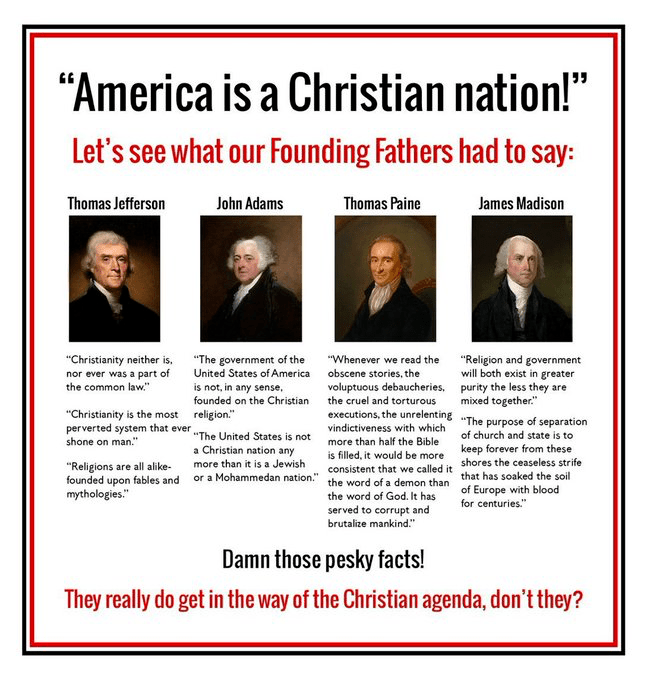
Jess Piper lives on a farm in Missouri, and she is a proud Democrat. In this post, she describes how the state has been taken over by Christian nationalists who don’t believe in separation of church and state. Senator Josh Hawley, as she shows, recently declared that he was a Christian nationalist. She has confronted state leaders, and they uniformly told her to move to another state. She describes a State Senator who holds prayer sessions in his government offices. And Jess reminds us that the guys who wrote the Constitution were not Christian nationalists. The First Amendment bars a government establishment of any religion and protects the free exercise of religion. If they had wanted a Christian state, they would have said so.

Christopher Mathias wrote on Huffington Post about the latest warning of rising extremism. Another hate group has appeared to blight our nation, according to the Southern Poverty law Center. There are so many of them. Just a week or so ago, Nazis marched through the streets of Nashville. They call themselves the “Parriotic Front.” Their faces were covered, of course. Apparently they don’t object to face masks when they are acting as Nazis. It’s hard to distinguish them from the Ku Klux Klan, except the Klan wore masks and dressed in white hoods.

Mathias writes:

A growing Christian supremacist movement that labels its perceived enemies as “demonic” and enjoys close ties to major Republican figures is “the greatest threat to American democracy you’ve never heard of,” according to a new report from the Southern Poverty Law Center. 

The SPLC, a civil rights organization that monitors extremist groups, released its “Year In Hate And Extremism 2023” report on Tuesday. A significant portion of the report, which tracked burgeoning anti-democratic and neo-fascist movements and actors across America, is devoted to the New Apostolic Reformation, “a new and powerful Christian supremacy movement that is attempting to transform culture and politics in the U.S. and countries across the world into a grim authoritarianism.” 

Emerging out of the charismatic evangelical tradition, the NAR adheres to a form of Christian dominionism, meaning its parishioners believe it’s their divine duty to seize control of every political and cultural institution in America, transforming them according to a fundamentalist interpretation of scripture. 

NAR adherents also believe in the existence of modern-day “apostles” and “prophets” — church leaders endowed by God with supernatural abilities, including the power to heal. In 2022, a handful of these “apostles,” the report notes, issued what they called the Watchman Decree, an anti-democratic document envisioning the end of a pluralistic society in America. 

The apostles claimed they had been given “legal power and authority from Heaven” and are “God’s ambassadors and spokespeople over the earth,” who “are equipped and delegated by Him to destroy every attempted advance of the enemy.”

And who’s the enemy? Basically anyone who does not adhere to NAR beliefs. NAR adherents see their critics as being literally controlled by the devil.

“There are claims that whole neighborhoods, cities, even nations are under the sway of the demonic,” the report states. “Other religions, such as Islam, are also said to be demonically influenced. One cannot compromise with evil, and so if Democrats, liberals, LGBTQ+ people, and others are seen as demonic, political compromise — the heart of democratic life — becomes difficult if not impossible.” 

This rhetoric has become increasingly widespread among Republican lawmakers, including former President Donald Trump, who last year referred to Marxists and atheists as “evil demonic forces that want to destroy our country.”

That Trump would use NAR-inspired rhetoric is unsurprising considering his relationship with Paula White-Cain, an NAR figure who delivered the invocation at Trump’s inauguration in 2017 and at the kickoff of his 2020 reelection campaign, as noted by Paul Rosenberg in Salon. White-Cain also delivered the invocation at Trump’s Jan. 6, 2021, “Stop the Steal” rally in Washington, D.C. — the event that eventually became the insurrection at the Capitol. 

The attack on the Capitol was largely inspired, the report suggests, by NAR’s theology of dominionism. “NAR prayer groups were mobilized at the Capitol on Jan. 6, 2021, as well as supporting prayer teams all over the country, to exorcise the demonic influence over the Capitol that adherents said was keeping Trump from his rightful, prophesized second term,” the report states. 

Major Republican figures took part in such events on or around the day of the attack. Mike Johnson, who is now the speaker of the House, joined the NAR’s “Global Prayer for Election Integrity,” which called for Trump’s reinstatement as president, in the weeks leading up to the attack on the Capitol. Johnson has also stated that Jim Garlow, an NAR leader, has had a “profound influence” on his life.

House Speaker Mike Johnson has ties to the extremist New Apostolic Reformation movement.
House Speaker Mike Johnson has ties to the extremist New Apostolic Reformation movement. 

Ultimately, the SPLC report is an attempt to ring the alarm bells about the NAR, ”the greatest threat to U.S. democracy that you have never heard of.

“It is already a powerful, wealthy and influential movement and composes a highly influential block of one of the two main political parties in the country,” the report continues. “So few people have heard of NAR that it is possible that, without resistance in our local communities, dominionism might win without ever having been truly opposed.” 

The SPLC’s report, according to a press release, also documents 595 hate groups and 835 antigovernment extremist groups in America, “including a growing wave of white nationalism increasingly motivated by theocratic beliefs and conspiracy theories.” 

“With a historic election just months away, this year, more than any other, we must act to preserve our democracy,” Margaret Huang, president and CEO of the Southern Poverty Law Center and SPLC Action Fund, said in a statement. “That will require us to directly address the danger of hate and extremism from our schools to our statehouses. Our report exposes these far-right extremists and serves as a tool for advocates and communities working to counter disinformation, false conspiracies and threats to voters and election workers.”

It’s one of the great ironies of our time that Trump—a completely irreligious man—is serving the interests of the most evangelical Christians. Ban abortion? Done. End LGBT rights? Certainly. Ban contraception? Soon. Crush unions? Soon. Eliminate any climate regulations? On the way. Defund public schools? Yes. Send public money to religious schools with no accountability? Yes.

Robert Reich describes Project 2025 and demonstrates that—no matter how much he pretends otherwise—it is Trump’s blueprint for the long-sought goals of far-right extremists.

Reich writes:

“Project 2025” is nothing short of a 900-page blueprint for guiding Donald Trump’s second term of office if he’s re-elected.

After the Heritage Foundation unveiled Project 2025 in April last year, when Trump was seeking the Republican nomination, he had no problem with it.

But now that the nation is turning its attention to the general election, Trump doesn’t want Project 2025 to draw attention. Its extremism is likely to turn off independents and moderates.

So Trump is now claiming he has “no idea who is behind” Project 2025.

This is another in a long line of Trump lies…

Trump has said he’d seek vengeance against those who have prosecuted him for his illegal acts. Project 2025 calls for the prosecution of district attorneys Trump doesn’t like, and the takeover of law enforcement in blue cities and states.

Project 2025 is, in short, the plan to implement what Donald Trump has said he wants to do if he’s re-elected.

Trump may want to distance himself from Project 2025 in order to come off less bonkers to independents and moderates, but he can’t escape it. The document embodies everything he stands for.

Blogger Aaron Rupar, writing at “Public Notice,sums up the goal of Project 2025, which is a lengthy tome describing the plans of the next Trump administration. The main goal, Rupar writes, is to abolish the 22nd Amendment—the one that sets limits for Presidents at two terms. Their hope: Trump for life. In recent days, Trump insisted that he knows nothing about Project 2025 or those who wrote it. That’s hard to believe since the authors served in his administration, and the project was sponsored by the Heritage Foundation. There’s a photo of Trump shaking hands with Kevin Roberts, the President of the Heritage Foundation, on the Heritage Twitter feed. Trump must have forgotten that he knows him.

Rupar writes:

Project 2025, the Republican plan to functionally annihilate not just the federal government but democracy as well if Trump wins in November, is an unceasing parade of horrors. 

Banning the abortion pill nationwide? Check. Rolling back protections for LGBTQ people? Check. Deporting literally millions of undocumented immigrants? Check. But amid each objectively horrible aim is an even more more insidious one: abolishing the 22nd Amendment, which limits presidents to two terms. It’s an unvarnished, right-out-in-the-open plan to keep Trump in office well past 2028. 

It’s not as if this is genuinely unexpected. By July 2019, Trump had “joked” at least six times about being president for life. Floating that as a possibility, as Peter Tonguette did last week over at The American Conservative, is a great opportunity to show fealty to a candidate who values loyalty over all else. 

The American Conservative is a “partner” of Project 2025, along with such luminaries as Stephen Miller’s America First Legal law firm (currently suing everyone over the mildest of diversity efforts) and the Claremont Institute, which gave us Christopher Rufo and Moms for Liberty.

As Media Matters notes, the reasoning in Tonguette’s piece is dubious at best, but that doesn’t really matter. Project 2025 doesn’t rest on solid law, respect for democracy, or an understanding of history. It rests only on the notion that Trump should be allowed to exhibit raw, vicious, and unchecked power. 

Tonguette’s piece doesn’t even bother with the pretense that getting rid of the 22nd Amendment would strengthen democracy overall. Instead, the piece is predicated on the utterly unfounded notion that when the amendment was passed, no one could have foreseen that a president would be elected to nonconsecutive terms.

While Tonguette does mention Grover Cleveland, who every schoolchild learns did indeed serve two nonconsecutive terms, he seems to think that people were perhaps unaware of him when the 22nd Amendment was passed in 1951. Tonguette handwaves away the existence of Cleveland by simply writing, “In modern times, it is virtually inconceivable that any of the ousted one-term presidents would have seriously thought of running anew against the same opponent (now the occupant of the White House) who had bested them four years earlier.” 

It’s also inconceivable that millions of Americans would line up for a candidate who incited an insurrection, is facing 91 criminal charges, was found liable for sexually abusing E. Jean Carroll, and was just recently rich-guy panhandling to pay his massive bond to appeal his civil fraud penalty in a different case, but here we are. 

Embracing autocracy … for this guy?

Like many other projects of the modern Republican Party, a newfound loathing of the 22nd Amendment is wildly hypocritical. 

Though there were multiple unsuccessful pushes for presidential term limits before the passage of the 22nd amendment, the GOP House majority prioritized the issue after Franklin Delano Roosevelt’s death in 1945. No Republicans broke the party line during key congressional votes on the amendment, but they were helped along by southern Democrats who were mad that President Harry Truman continued FDR’s liberal economic policies.

To be fair, vaguely kicking around the idea of a third term has been standard procedure for a lot of two-term presidents, with President Barack Obama saying he thought he would likely have won a third election and President Bill Clinton saying he would probably have run for a third term if possible. However, the only serious push for a third term came from President Ronald Reagan, who said in 1987 that he “would like to start a movement” to repeal the amendment because it interfered with the right to “vote for someone as often as they want to do.” Reagan said he didn’t want this for himself but would press for it going forward, but like many things he said, that was somewhat less than truthful, as Republicans fundraised off the possibility of a Reagan third term starting in 1986.

Returning to Tonguette’s argument, it rests largely on his assertion that Trump is incredibly, historically popular, so he should get a third term. This, of course, ignores the fact that Trump is not actually that popular. He lost the popular vote in both 2016 and 2020. In 2016, Hillary Clinton trounced him by 2.87 million votes, while in 2020, Biden bested him by over 7 million.

🚨 Subscribe to Public Notice 🚨

Project 2025 is about enshrining minority rule

Much of the post-2020 discussion from Republicans — the parts not about unhinged conspiracy theories — has centered around outrage that anyone could disregard Trump’s 74 million votes. It’s unclear what conservatives mean by that, save for that even when they have less support and don’t win elections, they should still run things. 

And that’s what Project 2025 is all about. Republicans want to permanently enshrine their minority policies into law despite the fact that what they want is broadly unpopular. Fifty-nine percent of Americans want abortion to be legal. Over half of registered and likely voters do not want to vote for someone who makes robbing transgender youth of health care their core issue. Nearly three-quarters of American adults want the government to take bold steps to fight climate change. 

Project 2025 is all about enacting minority rule in America immediately upon Trump’s election. To do so, Trump would first need to gut civil serviceprotections, which ensure that federal workers don’t have to adhere to the politics of any given president.

Trump tried this at the end of his term, issuing an executive order that would have made thousands of federal civil servants at-will employees. When he didn’t win a second term, he didn’t have time to implement it. Those apolitical employees — as many as 50,000 people — would be replaced with Trump loyalists. Power would be wholly consolidated in the executive branch. 

Of course, Republicans hate that the executive branch, currently led by a Democratic president, wields any power and have been engaged in a decades-long project to dismantle the administrative state. Conservatives on the Supreme Court are helping along nicely with this project. But that pendulum would swing the other way fast if Trump retakes power, at which point conservatives will again love consolidating all power in the executive branch because the administrative state will be completely beholden to Trump. 

Comparisons to historic fascist leaders once felt overblown, but with Trump declaring he’d be a dictator on day one of his presidency, those comparisons no longer seem so hyperbolic. However, Trump has much more modern analogs. Russia’s Vladimir Putin has thrashed that country’s nascent attempts at democracy, amending the constitution twice to allow him to stay in power as long as he wants. With his most recent victory last month in an election that was really no election at all thanks to widespread coercion and censorship, Putin may end up being ruler for life.

Then there’s Benjamin Netanyahu, Israel’s prime minister. In the summer of 2023, he forced a vote to curtail the power of Israel’s Supreme Court, a project his conservative government had been pursuing for months because the court doesn’t vote in lockstep with his goals. There’s also the fact that Netanyahu, like Trump, faces corruption charges and needs to be sure the courts can’t take action against him.

And finally, there’s Hungarian Prime Minister Viktor Orbán. Orbán has been the king of the culture wars in a way that Republicans can’t get enough of. In 2022, he gave a speech joking about gas chambers and warning against Europeans becoming “peoples of mixed race.” Unsurprisingly, this did not result in him getting disinvited to the Conservative Political Action Conference a short while later. Instead, Republicans loved his nationalist rhetoric so much that there is now a CPAC Hungary, where in 2023, Orbán complained about “the woke movement and gender ideology.” 

If you want a preview of what would happen in a second Trump term, look to Hungary, which now bans anything with LGBTQ content whatsoever being shared with minors, and where the constitution was amended in 2020 to define “family” only as “based on marriage and the parent-child relation. The mother is a woman, the father a man.” Orbán also hates migrants and refugees, saying that people fleeing from war in places like Syria are a threat to Christianity. He has said he will defend Hungary against “tens of millions” of immigrants. 

Trump’s vision for America is impossibly grim. It’s fueled by hate and disrespect for democracy, and the only way it can be stopped is at the ballot box in 2024, so that Project 2025 never comes to fruition.


Governor Sarah Huckabee Sanders and the Arkansas, which has a Republican supermajority, passed a voucher plan that allows the state’s voucher schools to evade the accountability required of public schools.

Outraged citizens have been gathering signatures for a referendum that would subject voucher schools to the same accountability as public schools. Today is the deadline to submit signatures. We will know soon if the rebellion against voucher schools’ freedom from accountability succeeded.

The Arkansas Times reported.

Organizers are racing to try to meet the signature threshold for an ambitious ballot initiative that would dramatically reorient the state’s K-12 education priorities and hold private schools receiving public funds to the same standards as those for public schools.

They still need thousands of signatures and face an uphill climb to meet the threshold by the July 5 deadline. We won’t know until the bitter end whether or not the group manages to get over the hump (more than a thousand volunteers are working at events across the state over the next 24 hours).

But I think it’s worth taking a moment to examine the stakes. The Arkansas Educational Rights Amendment would force the legislature to make real commitments to areas of educational need with a proven track record of improving learning outcomes. And it would force accountability on the governor’s voucher scheme, which is funneling tens of millions of dollars in taxpayer money into the pockets of private school families via a program with a long history of catastrophic failure in improving learning outcomes when states actually take the trouble to fairly measure and transparently report results at the private schools.

At a time when Republicans have total control of state government and Gov. Sarah Huckabee haughtily rules as if she has an infallible and possibly divine mandate, the education amendment would be the most comprehensive and far-reaching progressive policy victory in Arkansas since Medicaid expansion passed more than a decade ago.

Legislating by direct democracy

The education amendment is somewhat unusual for a ballot initiative, which usually present relatively straightforward “up-or-down” questions on issues like the minimum wage, casinos, weed, etc. The ballot initiative currently collecting signatures to reverse the state’s abortion ban is like that. Yes, there are details — abortions are allowed up to 18 weeks and for certain exceptions such as rape, incest and saving the life of the mother — but the fundamental issue is a yes-or-no question about whether or not abortion should be legal.

If someone wants to quibble with the headline above and say that the abortion initiative would be the biggest win in terms of liberal priorities in the state, I wouldn’t argue much. But it’s different in kind. The education amendment lays out a very broad-reaching slate of priorities and then would force the Legislature to act. It doesn’t articulate just how lawmakers should go about implementing it. It just establishes certain areas that are an absolute priority — required by law — tying lawmakers hands. The ripple effects through every aspect of the budget would be massive. It would steer the state toward a massive policy project that state leaders don’t want to do. The Legislature has prioritized vouchers and tax cuts skewed toward the wealthy and ignored issues like access to pre-k. If the public votes for this constitutional amendment, it would mandate that the Legislature make new tradeoffs.

This is why Arkansas Republican lawmakers are not fans of direct democracy. The overwhelming majority of voters in the state are going to back the candidate with an “R” by their name. But that doesn’t mean they share their narrow ideological obsessions. They will happily vote for minimum wage increases by huge majorities even if their elected officials hate it. With the advent of one-party rule, the state’s government is not responsive to issues that voters care about that don’t align with doctrinaire right-wing dogma. That’s why you’re seeing more expansive efforts to legislate from the bottom up via ballot initiative. Pre-k is popular; vouchers are not.

Equal standards and transparency for public and private schools getting vouchers

The push to put the education amendment before voters comes in the first year of Arkansas LEARNS, the education overhaul backed by Gov. Sarah Huckabee Sanders and passed by the Republican supermajority in the Legislature last year. Among the law’s most controversial provisions was the creation of a voucher program to help families cover the tuition and other costs of private schools. The program began this year and will be phased in until all K-12 students in the state are eligible to apply starting with the 2025-26 school year.

One curious feature of LEARNS is that the accountability measures it establishes for private schools accepting vouchers are not the same as those for public schools. The amendment would seek to reverse that, insisting on the same accreditation and testing for all schools receiving public funds, as well as public reporting by school of the results. This would allow citizens to see how well the voucher program is working as compared to public schools and help guide parents.

In the early days of voucher programs, advocates wanted to arrange apples-to-apples comparisons of student performance because they thought the voucher students would perform better. But once voucher programs scaled up to statewide efforts, the results were awful: Students who switched from public school to private school via voucher saw their test scores plummet to an unheard of degree — akin to the learning loss associated with a natural disaster like Hurricane Katrina or the COVID pandemic.

You might think such empirical results would give voucher advocates pause, but instead they shifted gears to trying to keep the test results secret or making comparisons impossible. Like many other new voucher programs in red states sweeping the country, Arkansas allowed private schools receiving boatloads of public money to arrange their own standards and tests, with none of the results made public. What could go wrong?

The irony here is that voucher advocates were often the ones screaming loudly about the need for accountability via testing in public schools, and pointing to those very results to disparage the quality of education in public schools. So you wind up with this very strange two-step: Voucher advocates will say something like, “these public school standards have led to lots of kids being below grade level in reading, let’s try something new.” But the measurement of how many kids are at grade level in reading is itself something we know via the standards, assessment and reporting! If voucher advocates claim to want to improve on these metrics, why wouldn’t we measure and report them at private schools, too?

I’ll let you know what happens. Republicans are terrified of voucher referenda: They always lose. To the extent that the public learns that voucher schools are actually worse than public schools and that the primary beneficiaries of vouchers are private school families whose children never attended public schools, the more likely that the public will oppose vouchers. Sending public money to private schools has never won a state referendum.

Peter Greene was not surprised to learn that Oklahoma’s State Superintendent Ryan Walters was angry at the state Supreme Court, which overturned a state-funded religious charter school. Even the Satanic Temple got into the act, proposing to open its own charter school to teach Satanism. And a Hindu leader insisted that the Bhagavad Gita should be posted in Louisiana classrooms right up there with the Ten Commandments.

Greene concludes:

Attempts to inject Christianity into the public school classroom can only end one of three ways–

1) All religions must be allowed to get their pitch into public school classrooms

2) The state will start requiring religions to receive official government recognition in order to be considered legitimate

3) The courts will rightly decide that no religions belong in public school classrooms

1 and 2 almost certainly go together. The correct choice is 3, a religion-neutral public school system that keeps religions from messing with schools and government from regulating religion. That is, in fact, the very best way to protect “Oklahomans’ constitutional, God-given right to express their religious belief.”