Archives for category: Funding

The adoption of voucher programs has been a boon for religious schools. Schools that were financially troubled are now thriving with public subsidies for their students as well as an influx of new students.

This article by reporter Holly Meyer on the Associated Press newswire describes the good fortune of religious schools but does not mention the copious research demonstrating the failure of vouchers.

The Miami Archdiocese’s superintendent of schools says Catholic education is increasingly in demand in South Florida, now that all K-12 students regardless of income are allowed to use taxpayer-funded programs to pay for private school tuition.

Against the backdrop of favorable decisions by the conservative-majority U.S. Supreme Court, Florida was among nine states that expanded school voucher programs last year. So many families have signed up for the taxpayer-funded tuition reimbursements, some states are already exceeding their budgets….

The movement gained momentum amid fallout from pandemic-era school restrictions, debates on how transgender students should participate in school life, and wars over books and curriculum related to race and LGBTQ+ issues….

Some long-running religious schools are now planning for a fuller future after the wave of policy wins for the so-called school choice movement. Others hope voucher expansion comes to their state.

“We are moving into growth mode,” said Jim Rigg, superintendent of the Miami Archdiocese’s 64 schools. Accelerated by the state’s private school scholarship program, enrollment has risen for the last four years, reaching its highest peak in over a decade, he said….

Nearly 80% of private school families choose religious ones, according to P. George Tryfiates, public policy and legal affairs vice president for the Association of Christian Schools International. The association represents about 2,200 U.S. schools.

In a statement, he said Christian schools are, among other things, “a refuge from the cultural wars over sexuality.”

Voucher programs do not include accountability measures nor do they ban discrimination. Religious Scholls are not required to comply with federal laws so they may ban students with disabilities and students of religions different from the sponsor.

Most vouchers are used by students already enrolled in religious schools.

The voucher movement is a not subtle way of gutting civil rights protections.

IDEA, the largest charter chain in Texas, was just placed under conservatorship by the state education agency because of ongoing financial transgressions, self-dealing and conflicts of interest.

The state of Texas gave more than $800 million last year to IDEA. The federal Charter Schools Program—which is rank with waste, fraud, and abuse—has gifted IDEA with $300 million. It was a favorite of Secretary of Education Betsy DeVos.

For years, both the state and the U.S. Department of Education have been aware of IDEA’s profligate spending. This is the charter chain that wanted to lease a 6-passenger private jet for $15 million for its executives. This is the chain that bought luxury box seats for the San Antonio Spurs basketball games. This is the chain that gave its founder a golden parachute of $900,000 when financial abuses forced him out.

When there is so much that is fraudulent in the chain’s spending, can you trust its reports about enrollment, grades, test scores, and graduation rates? Business leaders in San Antonio saw IDEA as a great replacement for public schools. They were hoodwinked.

The Texas Tribune reported:

Texas’ largest charter school network has been placed under conservatorship by the Texas Education Agency after a years-long investigation into improper spending within the system of 143 schools.

The arrangement, announced Wednesday, is part of a settlement agreement between IDEA Public Schools and the TEA. IDEA had been under investigation since 2021 following numerous allegations of financial and operational misconduct.

It was revealed that IDEA officials used public dollars to purchase luxury driver services as well as $15 million to lease a private jet, just two weeks after promising TEA it would be “strictly enforcing” new fiscal responsibility policies put in place in response to ongoing investigations, as reported by San Antonio Express-News.

The revelations led the district to conduct an internal investigation, resulting in the firing of JoAnn Gama, former superintendent and co-founder of IDEA. Gama later filed a lawsuit against IDEA claiming wrongful termination. IDEA came to a $475,000 settlement with Gama in January. This followed co-founder and CEO Tom Torkelson’s departure in 2020; he was given a $900,000 severance package.

The charter school district serves about 80,000 students in K-12. The schools are independently run but publicly funded with state dollars, having received about $821 million in state funding in 2023-2024 school year.

Under conservatorship, the conservators will have the authority to oversee and direct any action of the district, facilitate a needs assessment, conduct onsite inspections and support the creation of a plan to address corrective action concerns. They will also report back to the agency regarding the district’s progress in completing necessary corrective activities.

The conservators will not fully take over the governance of the district. But if the district doesn’t make the necessary corrective measures that the conservators outline for them, a takeover could be possible in the future…

The news follows the TEA takeover of Houston Independent School District in June following years of poor academic performance at a single campus within the district, among other factors.

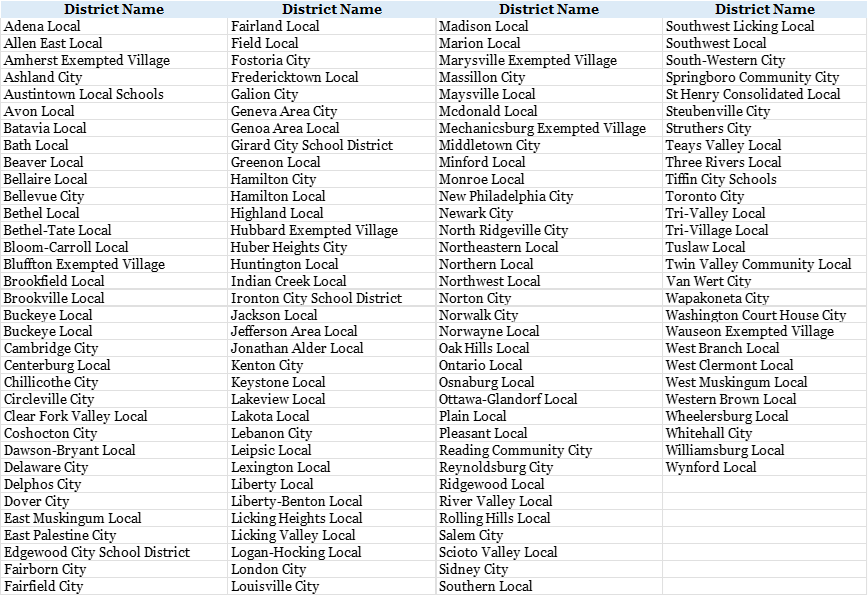
Jan Resseger reports that the wild expansion of vouchers in Ohio has worked as predicted: they confer public money on students who already attend private and religious schools. They do not benefit children who are poor. The claim that they would “help poor children escape failing schools” was a hoax.

Maybe voucher advocates believed it thirty years ago, when no one knew how vouchers would work. But now we know. The evidence from every state with vouchers shows the same result: the overwhelming majority of vouchers are used by students who never attended public schools. The more states expand vouchers, the more they subsidize affluent families. And the poor kids who take vouchers fall behind their peers in public schools.

She writes:

The Cleveland Plain Dealer placed Laura Hancock’s expose about Ohio’s wildly expanded school voucher program on the front page above the fold in Sunday’s paper. It is good to see this dangerous threat to public schooling—inserted into the state budget with minimal public discussion—receiving the attention it deserves.

Hancock’s message? Ohio isn’t helping poor kids in public schools, the original promise of Ohio’s first voucher program in Cleveland in the 1990s. Instead, the new vouchers are a gift to middle income and wealthy families whose children are already enrolled in private and parochial schools:

“The number of Cuyahoga County students (students in greater Cleveland) receiving state-funded scholarships to attend private schools has skyrocketed this year after state lawmakers expanded a voucher program, but state data suggests that doesn’t necessarily mean more kids have opted out of public schools. Across the county’s 31 districts, the number of students receiving tuition payments in the EdChoice-Expansion scholarship… has increased nearly four-fold, from 2,500 students last year to nearly 9,200 this year. Those districts, however, have not seen a corresponding loss in student population, indicating that most of the families newly benefiting from the vouchers were already enrolled in private schools rather than fleeing a school district.”

Hancock profiles, for example, three of Cleveland’s middle and upper income suburbs where the vouchers now serve as a tuition-reimbursement entitlement for families of students already paying private school tuition: “Enrollment in Rocky River City School District fell by just 22 students between last year and this year, even though the number of kids receiving vouchers shot up from 16 to 309. In Bay Village City School District, there are 30 fewer students despite a voucher jump from 13 to 229. Westlake City School District has 19 fewer students; vouchers in the district spiked from 41 to 581.”

Hancock lists the ten Ohio public school districts with the largest growth in students accepting a voucher under Ohio’s huge expansion of school vouchers this year.  Three are exurbs of Cleveland; one is a shared exurb of Cleveland and Akron; one is an exurb of Akron; one is an exurb of Columbus, and four are exurbs of Cincinnati. In every one of these districts, according to data from the Ohio Department of Education, the median income is far above the state’s median of $41,132.59. In Indian Hill, a Cincinnati suburb, the median income is $96,508.50. Median income in Hudson, part of suburban Cleveland and Akron, is $82,183.00, and in Olentangy, a Columbus exurb, median income is $79,892.50.

Why are the ten school districts with so many students taking vouchers for the first time all wealthy suburbs? Hancock explains: “because the legislature… removed income eligibility caps for EdChoice-Expansion. Last year, the cap was 250% of the federal poverty level for a scholarship, or $75,000 for a family of four. Now there are no income caps, although families only get partial scholarships when they earn above 450% of the poverty level, or above $135,000 for a family of four.”

Hancock adds that the state is giving away a whole lot of money in each voucher: $6,167 for grades K-8 and $8,407 for grades 9-12. Thomas S. Poetter, a professor at Miami University of Ohio, who recently edited the new Vouch for This!, adds that the vouchers are worth more than the state school funding formula has established as the base cost public schools are expected to spend per student—the amount that includes the state and local contributions required by the school funding formula. Poetter writes: “(T)he fact remains that the state will be spending more per pupil on individual children in private high schools with its voucher program… than it will for individual public school students across the state… That has been the case for nearly the entire life of the EdChoice ‘Scholarship’ program (it’s a voucher program) but it really hits home with the high figures coming at us in the new budget. And just think of all that could be done in our public schools to better our offerings… if we weren’t sending more than $1 billion a year into private hands to be used in ways that none of us would ever approve of in public education….” (Vouch for This!, pp. 130-131)

Hancock quotes Troy McIntosh from the Ohio Christian Education Network and the Center for Christian Virtue enthusing about the new voucher expansion. She quotes Senator Andy Brenner, Chair of the Ohio Senate Education Committee, explaining that families ought to get the vouchers because they are paying taxes and therefore ought to get a personal reward for their children. She adds that after the voucher expansion, “the Catholic Diocese of Columbus is looking to potentially build schools in areas that currently don’t have a Catholic school.”

Hancock’s article omits one urgently important issue with Ohio’s new voucher expansion: over half the state’s counties are rural and entirely lack a private school where students might potentially carry a voucher. The expansion of private school tuition vouchers will shift the distribution of money from the state’s school foundation budget away from the state’s rural school districts because private school tuition vouchers can be used only by students in areas where private schools exist—places with larger and more concentrated populations.  In a report last year for the Ohio League of Women Voters (You should scroll down and then download report.), Susan Kaeser explains: “Most of the public school population is concentrated in Ohio’s 8 largest urban counties, and so is the private school population. The 8 largest counties have 46% of the public school population and 71% of the private school students…  Public education is the only consistently available education choice in Ohio’s 46 small counties, those with less than 8,000 public school students… Private schools across these 46 counties serve a total of only about 7,000 students.” “Rural taxpayers underwrite private choice in the state—but not where they live.”

Hancock reminds readers that “over 130 public school districts… are suing the state over the constitutionality of the vouchers.”  Coincidentally on Sunday, the Plain Dealer also published a commentary by William Phillis, Executive Director of the Ohio Coalition for Equity and Adequacy of School Funding, which is a co-plaintiff with the public school districts in the Vouchers Hurt Ohio lawsuit.  Phillis provides the history, beginning in 1819, of Ohio’s efforts to establish and support public education.  Our system of public common schools, Phillis reminds us, is protected by the language of the 1851 Ohio Constitution in Article VI, section 2: “Convention delegates crafted language that required the legislature to secure, by taxation, a thorough and efficient system of common schools and clarified that religious sects or other sects shall not control any part of school funds of the state.”

The school voucher explosion for the wealthy that was slipped into Ohio’s FY 2024-2025 state budget last summer epitomizes what we were warned about last year in the conclusion to The School Voucher Illusion, edited by experts Kevin Welner, Gary Orfield, and Luis A. Huerta and published by the Teachers College Press: “As currently structured, voucher policies in the United States are unlikely to help the students they claim to support. Instead, these policies have often served as a facade for the far less popular reality of funding relatively advantaged (and largely White) families, many of whom already attended—or would attend—private schools without subsidies. Although vouchers are presented as helping parents choose schools, often the arrangements permit the private schools to do the choosing… Advocacy that began with a focus on equity must not become a justification for increasing inequity. Today’s voucher policies have, by design, created growing financial commitments of taxpayer money to serve a constituency of the relatively advantaged that is redefining their subsidies as rights—often in jurisdictions where neighborhood public schools do not have the resources they need.” (The School Voucher Illusion: Exposing the Pretense of Equity, p. 290)

Yesterday was a crucial election for the future of public schools in Texas. The Republican primaries pitted civic-minded Republicans against challengers committed to vouchers and endorsed by Governor Greg Abbott.

Abbott received the biggest single contribution in state history from Pennsylvania billionaire Jeff Yass. The gift came with a purpose: pass a voucher law.

Governor Abbott has been in charge since 2015 and until now, he never cared much about vouchers. But the money came pouring in from evangelical oil-and-gas billionaires like Tim Dunn and Farris Wilks, as well as out-of-state billionaires like Yass and Betsy DeVos. Suddenly, vouchers was the Governor’s top priority. He toured Christian schools around the state to promote them.

When the vote came in the Legislature, a bloc of rural Republicans in the House opposed vouchers. They said their community loved their public schools; they didn’t want to undermine them. Their public schools are the heart of their community and their local economy.

Abbott offered new money for public schools and teacher pay raises, but only if the Legislature approved vouchers. The rural Republicans (and every Democrat) said no.

Abbott said he would call special sessions until the House passed a voucher bill and he did. He called four special sessions. They said no to vouchers. He threatened to run primaries against them and to replace them with legislators who supported vouchers. They stood firm.

Yesterday some of those rural Republicans were defeated by Abbott and about $100 million in billionaire money. Some prevailed. Some are in run-offs.

Pastor Charles Johnson of Pastors for Texas Children (PTC) is a stalwart friend of public schools. He and his network of pastors across the state understand the importance of well-funded public schools and well-paid teachers.

PTC just released this update on the Republican primaries.

https://www.pastorsfortexaschildren.com/

Election Results

Dear Friends,

We have mixed emotions as we reflect on last night’s outcomes of the Texas House of Representatives races. While we may not have achieved the sweeping results we had hoped for, we are grateful for the victories your work and witness achieved!


Of the 16 House Republican primary races we focused on, we enjoyed six victories and suffered six losses. Four of our Republican friends face runoff elections.


The path to positive change is often fraught with challenges, and setbacks are an inevitable part of any endeavor. Though we may not have won every race last night, we are grateful for the re-election of six of our strongest Republican allies in the House and look forward to working hard to re-elect four more in the runoffs.


We find hope and encouragement in the upcoming May runoffs. These runoffs are crucial to fighting taxpayer-funded vouchers here in Texas. We will continue to fight to ensure that the Texas Public Schools voice we advocate for is heard loud and clear. Your continued support is crucial, and together, we will forge a brighter future for the children of Texas.

We want to express our gratitude for your unwavering support throughout this journey. We remain steadfast in our commitment to championing our Texas public schools, teachers, parents, and, of course, the 5.5 million children in our Texas public schools.


Let us stand united, resilient in the face of these challenges, and hopeful for the positive outcomes that the runoffs may bring. The journey may be long, but with your dedication and support, we can make a lasting impact on the lives of children and families in our beloved community.


Rev. Charles Foster Johnson, Executive Director

Pastors for Children

Donate to PTC

Governor Kathy Hochul has fashioned a state budget that will profoundly damage rural schools in New York. She had to trim the budget somewhere but why cut foundation aid to the state’s most important function: the education of its children?

North Country Public Radio reported that nearly half the school districts in rural upstate New York face steep cuts. Hochul has proposed the elimination of a “hold harmless” requirement that requires each year’s state aid to be no less than in the previous year. This guarantee has provided stable funding but Governor Hochul says it’s obsolete. The cuts, however, will disrupt planning and inflict damage on the schools’ programs and staffing.

Educators and lawmakers on both sides of the aisle are outraged over the way Governor Kathy Hochul is funding schools in her new budget plan.

Her proposed 2024-2025 education budget is for $35.3 billion, including a record $825 million increase for public schools. But it’s being distributed differently than in the past, and for the first time in years, many schools would actually lose funding.

Dozens of North Country districts face that scenario if the legislature doesn’t make changes.

Christopher Clapper is the superintendent of Alexandria Central School, a district of about 460 kids in Alexandria Bay, in Jefferson County.

With increases in state aid over the last few years (they got a 3% increase for two years from Foundation Aid being fully funded, and money from the American Rescue Plan Act) he says they’ve been able to do a lot.  

“That has included buying all student supplies, so that burden isn’t on parents. We’ve had free school lunch for all students since 2021,” said Clapper. They’ve also increased the number of college credit classes in the high school, and expanded their Future Farmers of America (FFA) program. 

But Clapper says he and other superintendents knew they couldn’t count on more increases. “We all assumed that that we would be dropped down to zero and there’d be no growth in foundation aid for ‘hold harmless’ districts,” said Clapper, following the two years of 3% increases. “And that [scenario] is kind of what my colleagues and I around the North Country have been budgeting for.”

Then Governor Hochul released her 2024-25 budget proposal.

“When we saw the numbers that came out, I mean, it was drastically different than a 0% increase,” said Clapper. Instead, it was a 13.2% decrease in aid, a reduction of about $517,000.

Clapper was shocked. He says “if that did come to pass, it would be absolutely catastrophic for this district.” 

The state responds that the new budget reflects declining enrollments in many rural districts.

In a recent op-ed, Blake Washington, Hochul’s Division of Budget Director, wrote: “Instead of asking the question, “how much more money are our schools getting?”; it should be “why do we have a formula that forces us to pay for students that don’t exist?”

He’s referring to the fact that New York school enrollment has declined by about 10% since 2014.

In many North Country school districts, enrollment declines have been more dramatic, as high as a 50% decline in student populations over the last decade. 

In Alexandria Central School District, public enrollment data shows about a 25% decrease in the student population since 2014, from roughly 620 to 460 kids.

But educating students doesn’t happen on a per-pupil basis, said Superintendent Chris Clapper. “If you have a kindergarten class of 20 students, and then that kindergarten class decreases to 17 students, it’s not as though there’s less cost of maintaining a classroom.” 

He says you can’t hire 75% of a teacher, you can’t heat part of a room.

Kristen Barron wrote in the Hancock Herald about the fight against Governor Hochul’s proposed cuts.

Leaders of the New York State United Teachers (NYSUT) came to Hancock to meet with teachers and students. The Hancock Teachers Association (HTA) has been organizing the Hancock community to protest the cuts. There will be a protest rally in Hancock on March 8. The town, the teachers, the parents and the students are wearing blue to show their opposition to the cuts and their support for their schools.

HCS stands to lose $1.2 million dollars in state aid if the proposed cuts are adopted in the 2024-2025 budget, which is due by April 1. 

“You’ve really stepped up here, and you have the best organized response that we’ve seen,” said Tim O’Brien, who oversees the Southern Tier for the state union. He noted the sea of blue t-shirts which were worn by students and staff on Friday as a sign of unity against the proposed aid cuts.

The HTA has also reached out in support of other area organizations facing proposed cuts such as the Delaware County ARC.

Of the twelve schools in Delaware County, 10 are getting cuts amounting to a loss of $4,919,401.00, according to a fact sheet compiled by HCS. Hancock and Franklin school districts, the smallest districts in the county, will receive the deepest losses, said Asquith during Friday’s meeting. 

HCS has around 317 students. 

Of the $4.9 million cut from the ten county districts, Hancock is shouldering $1.2 million or 24%, says the fact sheet. 

The neighboring Deposit Central School District, which operates a merged sports program with HCS, is facing a 7.4% cut in aid. Downsville Central School District is facing a 33.8 % loss and Sullivan West in neighboring Sullivan County confronts a 17.1 % loss in aid, according to an Albany Times Union map based on data compiled by the New York State Education Department and New York State United Teachers.  

Opposition to the cuts is bipartisan.

In an education budget of $35.3 billion, the cuts to rural districts look like a rounding error. And yet each cut represents lost jobs, lost courses, lost opportunities for rural students.

Jess Piper is an educator, a blogger, and a farmer in rural Missouri. In this post, she describes an extremist in the state legislature who wants to defund public libraries, Planned Parenthood, and public schools.

Now Rep. Cody Smith, chair of the House Budget Committee, is running for State Treasurer, and no Democrat is running against him. He can flourish as an extremist because he is unopposed.

She writes:

Uncontested seats are undemocratic. This is the story of one of those seats:

Last year, Missouri Representative Cody Smith, the House Budget Committee Chairman, proposed a motion to defund public libraries in the state? Why? Because lawmakers were trying to pass a bill to ban “pornography” in libraries. The bill would actually limit classic books and literature that may be offensive to some, but is literature none the less. 

So, the ACLU, the Missouri Association of School Librarians, and the Missouri Library Association sued the state. In retaliation, Rep Smith moved to strip public libraries from the state budget. To defund public libraries. He failed…

Now he’s going after Planned Parenthood, which no longer provides abortion services, but does offer women’s health services, like screening for breast cancer.

He also is promoting a universal school voucher program that would subsidize every student currently enrolled in private and religious schools. The cost might be as much as $1 billion a year.

Here is the worst part, friends. He’s running for State Treasurer…against two other Republicans. Not one Democrat has filed to run as of today.

We. Can’t. Win. When. We. Don’t. Run.

Representative Smith also ran unopposed in 2022. He just walked right into the Capitol and wrote bills to defund public libraries, public schools, and Planned Parenthood. He has been made near-invincible by the power to not have to answer to constituents. If he has no fear of opposition, he can be as extreme as his donors would like. And, that seems to be exactly what he’s doing.

Last year, 40% of Missouri House seats went unopposed. We let 66 Reps win by default, and friends, this is undemocratic. Most of these seats are in rural parts of the state…Rep Cody Smith is from Carthage, population 15K. Cody faced no opposition, won without any contest, and then wrote bills that could harm millions of folks in our state.

I work with Blue Missouri for this reason—I believe in running everywhere. Even in rural races. Even in places we know won’t flip for a few cycles. Robert Hubbell wrote about our organization a few days ago after hearing about what we are doing in Missouri…here it is. 

Run Everywhere. Contest every damn seat.

So many statehouse races have gone uncontested and unsupported. Democrats in these districts, especially rural Dems like those in my community feel abandoned, ignored…forgotten. Meanwhile, GOP nominees get free passes to the Capitol to do the business of extremist donors.

It doesn’t have to be this way. 

We can show up for Missouri’s Democrats, making sure no Democrat gets left behind. No Missouri voter is left without a choice. No Republican gets a free ride.

That’s the plan to deal with folks like Representative Smith. We take back our state seat by seat. We contest every single one of them on every ballot across the entire state.

The leadership of the Ohio legislature decided, without consulting the voters, to shift significant funding from public schools, which the overwhelming majority of students attend, to private schools, which are wholly unaccountable to the state.

It is an enduring puzzle as to why Republican-led legislatures in states like Ohio, Arizona, and Ohio demand strict accountability from public schools but no accountability from private schools that receive public money.

William Phillis, formerly a Deputy Commissioner of the Ohio Department of Education, puts a price tag on state subsidy of private schools: $1 billion.

One billion tax dollars per year will be going to private schools with no public audit.

In addition to non-public administrative cost reimbursement, auxiliary services, and student transportation services, the state will be providing a billion dollars per year for private school vouchers. There is no provision in Ohio law to audit private schools. Is this the way state government should treat taxpayers? Voucher expenditures will escalate year after year and the state is giving private schools an open checkbook without any financial accountability.

It gets worse. Some state officials are planning to authorize the use of tax funds for private school facilities with no public oversight. What are state officials thinking?

Ohio taxpayers need to wake up to chicanery concocted by state officials in Ohio.

Like us on Facebook: https://www.facebook.com/OhioEandA

vouchershurtohio.com

William L. Phillis | Ohio Coalition for Equity & Adequacy of School Funding | 614.228.6540 |ohioeanda@sbcglobal.nethttp://ohiocoalition.org

Public school parents and concerned citizens in North Carolina have hoped that the General Assembly (legislature) would fully fund the Leandro decision of 2022, which requires full funding of public schools. The original Leandro case was decided thirty years ago!

But the leaders of the General Assembly, which has a veto-proof majority, went to court to ask the new members of the court to overturn the Leandro decision.

The GOP majority is committed to charter schools and vouchers, not public schools, even though the vast majority of children in the state are enrolled in public schools.

The North Carolina Supreme Court is weighing whether to reverse a 2022 decision that allows judges to order the transfer of hundreds of millions — and potentially billions — of dollars to fund public schools. In November 2022, the Supreme Court’s former Democratic majority ruled that the courts can order state officials to transfer funds to try to provide students their constitutional right to a sound basic education. During oral arguments Thursday, an attorney for Republican legislative leaders Sen. Phil Berger and House Speaker Tim Moore asked the court’s current 5-2 GOP majority to overturn that 2022 ruling. “The court has recognized time and time again that if a decision is wrongly decided, if it conflicts with the constitution, if it conflicts with prior precedent …. then it should be overturned and corrected at the next possible moment,” said attorney Matthew Tilley. “This is the next possible.” WILL COURT OVERTURN PRECEDENT? But attorneys representing school districts, the State Board of Education and the state urged the justices to stand by the 2022 decision. “It has been the rule of this court for over 100 years that the court will not disturb its prior holding in the same case, even if it would have overturned that holding on a properly presented petition for rehearing,” said attorney Melanie Dubis. “We do not have a properly presented petition for rehearing in this case.

“Nevertheless, that is what the defendant-intervenors are blatantly asking this court to do, to go back and overturn Leandro IV, which is binding precedent cited merely 14 months ago.” That view was echoed Thursday at a rally held across the street from the court hearing and in statements from Democratic Gov. Roy Cooper and the state’s Democratic legislative delegation. “Public school children are at the most important crossroads in our history,” Cooper said in a statement Thursday. “Will our Supreme Court be courageous enough to protect those children, or will it once again protect the power of the politicians who would rather give billions in tax breaks and private school vouchers for the wealthy?” The court is expected to issue a ruling this year.

This week’s court hearing is the latest chapter in the now 30-year-old Leandro school funding lawsuit that was initially filed in 1994 by low-wealth school districts to get more state funding. Over the years, the state Supreme Court has ruled that the state constitution guarantees every child “an opportunity to receive a sound basic education” and that the state was failing to meet that obligation. In November 2021, Superior Court Judge David Lee ordered the state treasurer, controller and budget director to transfer $1.75 billion to fund the second and third years of an eight-year plan developed by a consultant. The plan is meant to try to provide every student with high-quality teachers and principals. The eight-year plan is estimated to cost at least $5.6 billion. Just days before the 2022 midterm elections flipped the court from Democratic to Republican control, the Supreme Court upheld Lee’s order. The Democratic justices said that the courts had deferred long enough for the state to implement a plan to provide a sound basic education. Soon after taking control, the court’s GOP majority blocked enforcement of Lee’s order.

Read more at: https://www.newsobserver.com/news/local/education/article285710266.html#storylink=cpy

Read more at: https://www.newsobserver.com/news/local/education/article285710266.html#storylink=cpy

Read more at: https://www.newsobserver.com/news/local/education/article285710266.html#storylink=cpy

The Network for Public Education released a report card today grading the states on their support for democratically-governed public schools. Which states rank highest in supporting their public schools? Open the report to find out.

Measuring Each State’s Commitment to
Democratically Governed Schools

EXECUTIVE SUMMARY


Neighborhood public schools remain the first choice of the overwhelming majority of Ameri-
can families. Despite their popularity, schools, which are embedded in communities and gov-
erned by elected neighbors, have been the target of an unrelenting attack from the extreme
right. This has resulted in some state legislatures and governors defunding and castigating
public schools while funding alternative models of K-12 education.

This 2024 report, Public Schooling in America: Measuring Each State’s Commitment to
Democratically Governed Schools
, examines these trends, reporting on each state’s commit-
ment to supporting its public schools and the children who attend them.

What We Measure

We measure the extent of privatization in each state and whether charter and voucher laws
promote or discourage equity, responsibility, transparency, and accountability. We also rate
them on the strength of the guardrails they place on voucher and charter systems to protect
students and taxpayers from discrimination, corruption and fraud.

Recognizing that part of the anti-public school strategy is to defund public schools, we rate
states on how responsibly they finance their public schools through adequate and equitable
funding and by providing living wage salaries for teachers.

As the homeschool movement grows and becomes commercialized and publicly funded,
homeschooling laws deserve public scrutiny. Therefore, we rate states on laws that protect
children whose families homeschool.

Finally, we include a new expansive category, freedom to teach and learn, which rewards
states that reject book bans, and the use of unqualified teachers, intolerance of LGBTQ stu-
dents, corporal punishment, and other factors that impinge on teachers’ and students’ rights.

How does your state rank?

READ NOW: Former President Trump and Speaker Mike Johnson discuss 2024 strategy during a meeting at Mar-a-Lago.
“Not only are we going to grow the majority in 2024, but with President Trump leading the charge, we are going to take back the White House too.” – Speaker Johnson
Read more about their plans here: 2024wave.org/4XUtM8

While Ukrainians are running low on ammunition, the House of Representatives has not passed the authorization to supply them with more arms to defend their nation. Speaker Johnson, who is part of the extrenist Freedom Caucus, says he will not bring the bipartisan Senate bill to a vote. If enough members of both parties vote for a discharge petition, the bill would be voted on and very likely passed.

Meanwhile, Speaker Johnson is having fun with his hero.