Archives for category: Freedom of the Press

The Department of Political Science at the University of Gothenburg in Gothenburg, Sweden, publishes an annual report on the state of democracy around the world. In the recently published report, the authors made clear that democracy in the world is in retreat. Nowhere has it declined as dramatically as in the United States.

A special section of the report is focused on the United States. Under Trump, democracy in the USA is under attack. The President has centralized power in his office. The Republican-dominated Congress has ceded almost all of its Constitutional powers to Trump. The word “almost” may be an overstatement, as it’s difficult to remember an issue when Congress said no to a Presidential power grab.

The V-DEM report begins its special section about the “autocratization” of power in the United States:

*Under Trump’s presidency, the level of democracy in the USA has fallen back to the same level as in 1965.

Yet the situation is fundamentally different than during the Civil Rights era. In 2025, the derailment of democracy is marked by executive overreach undermining the rule of law, along with far-reaching suppression and intimidation of media and dissenting voices.

*The speed with which American democracy is currently dismantled is unprecedented in modern history.

*Legislative Constraints – the worst affected aspect of democracy – is losing one-third of its value in 2025 and reaching its lowest point in over 100 years.

*Civil Rights and Equality before the Law are also rapidly declining, falling to late 1960s levels.

*Freedom of Expression is now at its lowest level since the end of WWII.

*Electoral components of democracy remain stable. Election-specific indicators are re-assessed only in electoral years, and the 2025 scores are based on the quality of the 2024 elections.

The scale and speed of autocratization under the Trump administration are unprecedented in modern times. Within one year, the USA’s LDI score has declined by 24%; its world rank dropped from 20th to 51st place out of 179 nations. The level of democracy on the LDI is dwindling to 1965 level – the year that most regard as the start of a real, modern democracy in the USA.

Yet the deficiencies of American democracy today are fundamentally different from that of the Civil Rights era. As the V-Dem data and other evidence below show, the autocratization now is marked by executive overreach, alongside attacks on the press, academia, civilliberties, and dissenting voices.

The Most Dramatic Decline in American History

In 2023, the USA scored 0.79 on the LDI – shortly before the 2024 election year when first deteriorations were registered. The scores plummeted to 0.57 in 2025 (Figure 22). With such a sharp drop on the LDI, the level of democracy at the end of 2025 is back to the 1965 level. Symbolically, that is the year that most analysts consider the USA began its transition to a real democracy.

Democracy in the USA is now at its worst in 60 years. We are not alone in this assessment. Professor Steven Levitsky at Harvard University says the regime in the USA is now some type of authoritarianism. The Century Foundation argues that “American democracy is already collapsing…”

By magnitude of decline on the LDI, the 2025 plunge is the largest one-year drop in American history going back to 1789 – that is, in the entire period covered by V-Dem data. Only Trump 1.0 compares, when the LDI in the USA fell from 0.85 to 0.73 in four years, bringing the country back to its 1976 level and far below the regional average (Figure 22). American democracy survived Trump 1.0 but did not recover fully.

One notable shift is the transformation of the Republican Party to endorsing a far-right, nationalist, and anti-pluralist agenda. Nationalist, anti-liberal, far-right parties and leaders have largely driven the “third waveof autocratization.” Yet the USA stands out as the only case where such movement seized control over one party in a rigid two-party system.

Please open the link and read the report to review the sources and to understand how dramatically democracy has been undercut during the first year of Trump’s second term.

The Founding Fathers thought they had written a Constitution that would prevent the rise of tyranny. They were wrong.

Brian Stelter of CNN is one of the very best reporters about the state of journalism. In his newsletter “Reliable Sources,” he reported Sunday morning that Secretary of Defense Pete Hegseth will appeal a ruling by a federal judge that prevents him from excluding mainstream journalists from covering the Pentagon. Hegeth wants to limit or ignore freedom of the press. He wants the Defense Department to be covered only by rightwing journalists.

Stelter writes at CNN:

Defense Secretary Pete Hegseth has been taking steps to thwart news coverage of the Pentagon for more than a year. Now he has finally met some resistance.

Friday’s ruling by a federal judge striking down Pentagon press limits was cheered by the news organization that sued over the policy, The New York Times, and by a wide range of First Amendment advocates.

“This is a great day for freedom of the press in the United States,” the Pentagon Press Association, which represents scores of journalists who regularly cover the military, said. “It is also hopefully a learning opportunity for Pentagon leadership, which took extreme steps to limit press access to information in wartime.”

Some beat reporters who were pushed out of the Pentagon complex last fall are now discussing how to get their credentials reinstated.

But Hegseth’s press office says, “We disagree with the decision and are pursuing an immediate appeal,” signaling that he will continue to pick fights with the news media.

At recent press briefings about the war in Iran, Hegseth has mirrored President Trump’s hyperbolic language about the media and made plainly false claims about news coverage.

More alarmingly, from the perspective of Pentagon correspondents, he has also hindered the free flow of information about the US military, in part through the restrictive press pass rules that The Times challenged in court.

The rules had the effect of replacing major news outlets like The Times and CNN with a handpicked group of relatively small and explicitly right-wing outlets.

But the rules veered into unconstitutional territory, senior US District Judge Paul Friedman wrote in Friday’s ruling.

The policy is “viewpoint discrimination,” Friedman wrote, “not based on political viewpoint but rather based on editorial viewpoint — that is, whether the individual or organization is willing to publish only stories that are favorable to or spoon-fed by department leadership.”

Tightening control over coverage

Governments routinely try to encourage favorable coverage, but Hegseth has gone much further since leaving Fox News for the Defense Department, which he has rebranded as the Department of War.

One of his first moves was to boot some news outlets, including CNN, from long-established media workspaces inside the Pentagon complex.

It was billed as a temporary “media rotation program,” boosting pro-Trump media outlets that never had a presence at the Pentagon before. For one year, Breitbart was meant to replace NPR, One America News Network to replace NBC News, and so forth.

But any argument about media diversity was undermined by the department’s inaccessibility.

Hegseth’s spokespeople declined to hold regular press conferences, effectively closed the Pentagon press briefing room, and made key parts of the Pentagon complex off-limits to journalists without an official escort.

By May 2025, the Pentagon Press Association was calling the restrictions “a direct attack on the freedom of the press and America’s right to know what its military is doing.”

It was apparent to many beat reporters that Hegseth wanted to prop up propagandistic outlets while punishing traditional media outlets.

He promoted himself on Fox, for instance, and gave access to right-wing content creators, while bashing what he called the biased “hoax press.”

In September, his press office circulated a new policy controlling the press credentials that grant physical access to the Pentagon complex.

The policy challenged the ability of reporters to freely gather information, for instance, through leaks from sources inside the military, by enabling the Pentagon to suspend or revoke credentials due to reporting.

Media lawyers said the revised rules criminalized routine reporting. So, rather than abide by the new policy, journalists from virtually every major American news outlet turned in their press passes en masse last October.

The Pentagon gave credentials to what it called “the next generation of the Pentagon press corps,” made up of staples of the MAGA media diet that are barely known to the rest of America.

Those media outlets were welcomed into the building’s workspaces, though the cubicles and offices are said to be largely empty nowadays. Before long, some of those outlets also began to complain about a lack of transparency from the Pentagon.

A handpicked ‘press corps’

When the US and Israel began strikes in Iran, and the Pentagon resumed somewhat regular press briefings, Hegseth called almost exclusively on MAGA-aligned outlets that were given front-row seats in the briefing room.

Representatives of bigger news outlets with decades of experience covering the US military — who were granted temporary access to the building — were seated in the back and generally ignored.

Furthermore, The Washington Post reported that the Pentagon “barred press photographers” from some briefings after the photographers published photos of Hegseth “that his staff deemed ‘unflattering.’”

Those photographers were allowed back inside for the most recent briefing on March 19.

But Hegseth added a new anti-media talking point to his repertoire that day, claiming that the “dishonest and anti-Trump press will stop at nothing — we know this, at this point — to downplay progress, amplify every cost, and call into question every step.”

He diagnosed them with “TDS,” short for Trump Derangement Syndrome, a favorite insult of MAGA loyalists.

Hegseth also said Iran wants “to put out fake AI-generated images, which, by the way, sometimes our press happens to fall for, like the Abraham Lincoln on fire.”

His assertion that the American press has fallen for the fake imagery is itself fake. As CNN’s Daniel Dale reported, “There is no evidence that mainstream US media outlets promoted fake videos of the Lincoln on fire.” In fact, several US outlets, including The Times, debunked the videos.

When it filed suit against the Defense Department last December, The Times said the press pass restrictions were “an attempt to exert control over reporting the government dislikes.”

When Friedman ruled in agreement on Friday, The Times treated it as front-page news, and a spokesperson said the ruling “enforces the constitutionally protected rights for the free press in this country.”

“Americans deserve visibility into how their government is being run, and the actions the military is taking in their name and with their tax dollars,” The Times said.

Julian Barnes, the Times reporter named as a plaintiff in the lawsuit, wrote on X, “This is a big win for the press, the public and the United States military, which fights better when observed by a robust press corps.”

Journalists at other news outlets are also monitoring the case closely. A CNN spokesperson said of the ruling, “This is an encouraging development and we are evaluating next steps and what this means for CNN.”

All the while, most original journalism about military matters has still been produced by the traditional outlets that lost access to the Pentagon complex last fall.

While Hegseth and his deputies have adopted a hostile approach toward the press corps, rank-and-file military officials have not.

When the ruling was handed down, beat reporters who had previously worked inside the Pentagon received messages from military personnel saying things like: “Does this mean we’ll see you Monday?”

Former KGB agent Vladimir Putin was hand-picked by Boris Yeltsin as his successor. Yeltsin was a drunk, and he miscalculated badly in picking Putin. Instead of building democratic norms and institutions, Putin embarked on a long-term plan to restore the USSR. After serving as president of Russia from 2000-2008, he was succeeded by a puppet (Dimitri Medvedev), then resumed the presidency in 2012. The national legislature extended his term to 2036. Anyone who seriously threatens him ends up in prison or dead.

In a startling development, one of Putin’s most strident sycophants abruptly turned against him. Ilya Remeslo, a lawyer, was known as a reliable lapdog for Putin. He regularly testified in trials against Alexei Navalny.

Pjotr Sauer wrote in The Guardian:

For years, Ilya Remeslo was a reliable pro-Kremlin operator, going after critics of the regime and smearing independent journalists, bloggers and opposition politicians.

Then the 42-year-old lawyer abruptly turned on the country’s most powerful man. Late on Tuesday, Remeslo posted a manifesto to his 90,000 Telegram followers titled: “Five reasons why I stopped supporting Vladimir Putin.”

In it, he accused the “illegitimate” Russian president of waging a “failing war” in Ukraine that had caused millions of casualties and wrecked the economy, and argued that Putin’s more than two decades in power illustrated how “absolute power corrupts”, calling on him to step aside….

Doubling down on his earlier remarks, he told the Guardian on Wednesday from his flat in St Petersburg: “Vladimir Putin should resign and be put on trial as a war criminal. His personalised, corrupt system is doomed to collapse, as we’re seeing now with the war in Ukraine and elsewhere.

“The army isn’t advancing in Ukraine, and the war is going nowhere. There are massive losses. We are fighting over tiny territories that will ultimately give Russia nothing.”

He went on to criticise Putin’s authoritarian rule, the state of the economy and Moscow’s recent push to shut down internet access. “This man [Putin] has destroyed everything he could lay his hands on. The country is literally falling apart,” Remeslo said.

Please open the link and finish reading this fascinating article.

Brendan Carr, selected as chairman of the Federal Communications Conmission, threatened to revoke the licenses of stations that were too negative in their coverage of the war in Iran.

Ann Telnaes was an editorial cartoonist for The Washington Post. She drew a cartoon showing billionaires bowing down to Trump. One of them was Jeff Bezos, owner of the Post. Her editor wouldn’t publish her cartoon. She resigned.

She now has her own blog on Substack where she is never censored.

It’s not the public interest Carr cares about

The FCC Chairman wants to make the boss happy

ANN TELNAES

Trump wants propaganda, not news coverage of his war and FCC Chairman Brendan Carr is making threats to get it. 

In a startling attack on freedom of the press, Brendan Carr–chairman of the Federal Communications Commission–threatened to revoke the licenses of broadcasters whose coverage of the war on Iran is negative. With Trump ally, the billionaire Ellison family, buying control of CBS and CNN, Carr’s threat is ominous. One of the first steps of fascist leaders is to gain control of or silence the media.

The job of the media in a democracy is to inform the public, not to serve as a propaganda arm of the government.

Clarissa-Jan Lim of MS NOW reported:

President Donald Trump’s Federal Communications Commission chairman is threatening to revoke the licenses of news broadcasters over their coverage of the Iran war.

Brendan Carr, the head of the agency, warned broadcast news organizations on Saturday to “correct course,” following the president’s rants over news coverage of his war with Iran, including stories about U.S. aircraft tankers sustaining damage in a strike.

“Broadcasters that are running hoaxes and news distortions – also known as the fake news – have a chance now to correct course before their license renewals come up,” Carr said in a post on X, without naming any media outlets. “The law is clear. Broadcasters must operate in the public interest, and they will lose their licenses if they do not.”

The FCC did not immediately respond to MS NOW’s request for comment.

Carr referenced a Truth Social post from Trump Saturday morning denying reports that five U.S. Air Force refueling planes were struck at a military base in Saudi Arabia. Trump directed his screed at the The Wall Street Journal, which first reported the news, The New York Times and “other Lowlife ‘Papers’ and Media,” claiming they “actually want us to lose the War.”

In his own social media post later in the day, Carr pointed to Trump’s 2024 election win as an example of the lack of trust in the media from the American people.

“When a political candidate is able to win a landslide election victory after in the face of hoaxes and distortions, there is something very wrong,” the FCC chairman said. [Editor’s note: Trump did not win a landslide victory in 2024. Trump won 49.8% of the popular vote, while Harris won 48.3%.]

Carr’s threat was met with immediate blowback from free speech advocates and political figures. 

California Gov. Gavin Newsom called the threat “flagrantly unconstitutional.” Former Rep. Adam Kinzinger, a frequent Trump critic on the right, condemned it as “unacceptable and unamerican.”

The Foundation for Individual Rights and Expression, a First Amendment advocacy group, called Carr’s statement an “authoritarian warning,” adding, “Again and again, Carr’s tenure as FCC chairman has been marked by his shameless willingness to bully and threaten our free press. But even by Carr’s standards, today’s hypocrisy is shocking — and dangerous….”

Carr, an author of Project 2025 whom Trump hand-picked to run the FCC, has sought to use his powerful position to bend media outlets — and late-night talk show hosts — to the Trump administration’s will. Under his watch, the FCC has opened investigations into multiple news outlets and threatened to strip the licenses of broadcasting companies deemed to have covered the administration and the president unfavorably.

But his latest missive took the administration’s assault on what the president routinely calls the “fake news” a step further. Sen. Brian Schatz, D-Hawaii, said in an X post, “This is a clear directive to provide positive war coverage or else licenses may not be renewed. This is worse than the comedian stuff, and by a lot. The stakes here are much higher. He’s not talking about late night shows, he’s talking about how a war is covered.”

Trump and members of his administration have repeatedly bemoaned the media coverage of the war. Earlier this month, Defense Secretary Pete Hegseth accused the press of being too focused on American troops’ deaths than the military’s successes.

But when a few drones get through or tragic things happen, it’s front-page news,” Hegseth said. “I get it; the press only wants to make the president look bad. But try for once to report the reality.”

He again criticized the press on Friday for reporting on the economic fallout of the war.

“Some in this crew, in the press, just can’t stop,” he said.

Late on Friday night, Trump railed against coverage of the war, saying on Truth Social: “The Fake News Media hates to report how well the United States Military has done against Iran.”

Glenn Kessler is the relentless fact-checker who spent many years at The Washington Post and now writes his own blog at Substack, still fact-checking.

He wrote recently about Jeff Bezos’s plan to lay off a large number of staff at the venerable newspaper. News of the impending cuts circulated for days. When it finally happened, journalists were shocked by the depth of the cuts. One third of the writers lost their jobs. The sports section was eliminated. Foreign coverage was slashed. Local reporting, a Post specialty, was cut hard.

As things now stand, one of America’s most consequential newspapers is in a death spiral, accelerated by Jeff Bezos. It is not often that we witness the destruction of a great institution by those entrusted with its care.

Ashley Parker, a former reporter for The Washington Post, wrote in The Atlantic about “The Murder of the Washington Post.”

Over recent years, they’ve repeatedly cut the newsroom—killing its Sunday magazine, reducing the staff by several hundred, nearly halving the Metro desk—without acknowledging the poor business decisions that led to this moment or providing a clear vision for the future. This morning, executive editor Matt Murray and HR chief Wayne Connell told the newsroom staff in an early-morning virtual meeting that it was closing the Sports department and Books section, ending its signature podcast, and dramatically gutting the International and Metro departments, in addition to staggering cuts across all teams. Post leadership—which did not even have the courage to address their staff in person—then left everyone to wait for an email letting them know whether or not they had a job. (Lewis, who has already earned a reputation for showing up late to work when he showed up at all, did not join the Zoom.)

The Post may yet rise, but this will be their enduring legacy.

Kessler wrote:

You’re right. I did lose a million dollars [on the newspaper] last year. I expect to lose a million dollars this year. I expect to lose a million dollars next year. You know, Mr. Thatcher, at the rate of a million dollars a year, I’ll have to close this place in…sixty years.”

—Charles Foster Kane, speaking to his ex-guardian, in Citizen Kane (1941)

[Diane’s note: if Jeff Bezos subsidized the Post at $100 million a year, he would run out of money in 2,500 years, or 4526, that is, assuming that he wasn’t growing his wealth at the same time.]

When Jeff Bezos bought The Washington Post in 2013, his net worth was about $25 billion. Now, as he prepares to order devastating layoffs at the newspaper, his net worth is about $250 billion — even after giving one-quarter of his Amazon shares to his ex-wife, MacKenzie Scott.

Bezos is a businessman, and the Washington Post is not a charity, so I understand the inclination to demand that losses be stemmed. The newsroom should be able to stand on its own feet. But even if the losses are still around $100 million a year — the figure announced a couple of years ago — for a person of Bezos’ wealth, that would mean he’d have to close the place in…2,500 years.

I don’t think the layoffs have much to do with saving money. Amazon, after all, just spent $75 million buying and promoting a documentary about Melania Trump. It’s about power and influence in Donald Trump’s second term.

After Trump won the first time in 2016, I was among a small group of reporters and editors invited to have lunch with Bezos. With a booming laugh and big smile, he said he wanted to hear war stories about covering the wild Trump-versus-Clinton campaign.

At one point, someone asked if he was concerned that Trump would seek retribution against his other businesses. (I’m writing this from memory, not notes, so I won’t use quotation marks.)
Bezos acknowledged that Trump would assume any negative story about him had been ordered up by Bezos, because that’s what Trump would do if he owned a newspaper. But he said that wasn’t our problem. We only had to write the best stories possible; he could handle the heat if Trump got mad.

Those were comforting words at the time. As far as I know, Bezos has never interfered with any news coverage during his 13 years as owner — even stories critical of Amazon or coverage of Bezos’s personal life, let alone politics. For many years, he didn’t even appear to get very involved with the editorial page, even though, as owner, he could dictate whatever opinion-page policy he wanted.

As Bezos predicted, Trump in his first term often fumed about the “Amazon Washington Post” — they are not connected — and his administration took actions that were costly to Bezos. The Pentagon gave a $10-billion cloud-computing contract to Microsoft, and Amazon sued in 2020, saying Trump intervened because of his anger at The Post. (In 2022, the Microsoft contract was scrapped, and the business was split among four firms, including Amazon.)

Yet Bezos was unbowed. He embraced and promoted a new slogan — Democracy Dies in Darkness — that seemed aimed directly at Trump’s administration. He boosted the size of the staff and increased the ambitions of The Post. He appeared to embrace the idea, dare I say, that he was the steward of a public trust.

Presidential-level threats disappeared with Trump’s defeat in 2020, though Joe Biden was no fan of the tech industry. But when Trump ran again and the Democrats were on the ropes, Bezos’s calculation changed. He could afford Trump’s first term; a second could be ruinous, especially as Elon Musk, his main rival in the space business, embraced Trump.

I used to think billionaires had enough “fuck-you” money to do what they pleased. But in Trump’s creeping autocracy, and with his campaign of retribution, billionaires have too much to lose.

Mark Zuckerberg of Meta spent $100 million to fund fact-checking around the globe. But once Trump was elected, Zuckerberg pulled the plug on funding U.S. fact-checkers, shutting many down. Bezos scrubbed a planned newspaper endorsement of Kamala Harris and announced a rightward shift in the opinion pages, leading hundreds of thousands of subscribers to cancel their subscriptions. That, of course, likely increased the losses.

If there was ever a time for a news organization to need help from a billionaire, it’s now — when AI is killing search traffic and new ways to attract readers are needed. This is when investments are required, not cutbacks.

Even before Trump re-emerged, Bezos appeared to have grown less interested in The Post. The New York Times capitalized on subscriber growth during Trump’s first term to make acquisitions that expanded its reach (The Athletic, Wordle). The Post made no such moves. Subscriber growth stalled, then slipped. Bezos lavished attention on his new love, Lauren Sánchez, whom he married last year in Venice in a $50-million extravaganza. He also spent $500 million on the most expensive superyacht in the world — twice what he paid for The Post.

Unlike Scott — who has given away more than $19 billion to 2,000 non-profit organizations— Bezos has set aside a pittance of his net worth for philanthropy. Many Post reporters hoped Bezos would simply give the newspaper to his ex-wife, believing she had a greater sense of social responsibility (and none of his corporate conflicts).

No longer engaged, Bezos appears to have embraced a crude calculus: laying off staff and trimming the sails of a once-great news organization sends a message to an audience of one at 1600 Pennsylvania Avenue, even if the decision ruins the lives of scores of talented reporters and editors.

After all, since the election Bezos has worked hard to ingratiate himself with Trump —making a $1 million donation (via Amazon) to the inaugural fund., dining at the White House, visiting Mar-a-Lago and, according to Trump, solving “a problem very quickly.” (Amazon had planned to list the cost of tariffs with products, but canceled that after Trump called Bezos.)

Trump views any news that is not favorable as “fake news.” He couldn’t have been happy with The Post’s aggressive coverage last year of the dismantling of the federal government, which led to an FBI raid on a reporter’s home in January.
But Trump views Bezos as trying to make the newspaper “more fair,” as he put it in a March interview with Clay Travis. “I think it’s great,” Trump gushed. “It’s such a difference between now and the first…He’s really trying to be more fair. But they actually did a couple of bad articles that everybody said, ‘This is crazy.’”

In another interview, with Sharyl Attkisson, Trump said, “I’ve gotten to know him and I think he’s trying to do a real job. Jeff Bezos is trying to do a real job with the Washington Post. And that wasn’t happening before.”

And so far in the second term, not once has Trump referred to the “Amazon Washington Post.”

Ruth Marcus started her career at The Washington Post in 1984. She rose through the ranks and eventually became an editorial writer, a columnist, and deputy editor of the editorial page.

She wrote in The New Yorker about why she ultimately quit:

I stayed until I no longer could—until the newspaper’s owner, Jeff Bezos, issued an edict that the Post’s opinion offerings would henceforth concentrate on the twin pillars of “personal liberties and free markets,” and, even more worrisome, that “viewpoints opposing those pillars will be left to be published by others.” I stayed until the Post‘s publisher, Will Lewis, killed a column I filed last week expressing my disagreement with this new direction. Lewis refused my request to meet. (You can read the column in full below, but—spoiler alert—if you’re craving red meat, brace for tofu. I wrote the piece in the hope of getting it published and registering a point, not to embarrass or provoke the paper’s management.)

Is it possible to love an institution the way you love a person, fiercely and without reservation? For me, and for many other longtime staff reporters and editors, that is the way we have felt about the Post. It was there for us, and we for it. One Saturday night, in May, 1992, the investigative reporter George Lardner, Jr., was in the newsroom when he received a call that his twenty-one-year-old daughter, Kristin, had been shot and killed in Boston by an abusive ex-boyfriend. As I recall, there were no more flights that night to Boston. The Post’s C.E.O., Don Graham, chartered a plane to get Lardner where he needed to go. It was typical of Graham, a kindness that engendered the loyalty and affection of a dedicated staff.

Graham’s own supreme act of loyalty to the Post was his painful decision to sell the paper, in 2013, to Bezos, who made his vast fortune as the founder of Amazon. The Graham family was hardly poor, but in the new media environment—and under the relentless demands of reporting quarterly earnings—they were forced, again and again, to make trims, at a time when investment was needed. Instead of continuing to cut and, inevitably, diminish the paper that he loved, Graham carried out a meticulous search for a new owner with the resources, the judgment, and the vision to help the Post navigate this new era. Bezos—the “ultimate disrupter,” as Fortune had called him a year earlier—seemed the right choice.

For a long time, she writes, Bezos was a hands-off manager. During Trump’s first term, Bezos supported the newspaper’s editorial opposition to Trump’s 2016 election and its tough coverage of the chaotic Trump term.

She liked Bezos: In my experience of that time, Bezos came off as charming, smart, and unpretentious.

In 2020, the Washington Post endorsed Biden.

In 2024, Bezos stopped the editorial board from publishing its endorsement of Kamala Harris. The man Bezos selected as publisher was Will Lewis, a Brit who had worked in Rupert Murdoch’s media empire. Lewis defended the non-endorsement. Two opinion writers resigned, most signed a letter to Bezos objecting to his decision. Some 300,000 people cancelled their subscriptions.

After the election, Bezos seemed to fawn over Trump, defending him at every turn, donating to his inauguration fund. Two months after the election, Bezos offered Nelania $40 million to produce a documentary about her life in the White House. Many saw it as protection money.

Bezos defended his new view about Trump by saying that Trump had grown, was more deliberative since his last term. He told a reporter from The New York Times that Trump “is calmer than he was the first time and more confident, more settled.” Marcus said Bezos displayed “willful self-delusion.”

In early January, before the Inauguration, a cartoon by Pulitzer Prize-winning Ann Telnaes depicting the billionaires bowing to Trump was rejected by the editor David Shipley on grounds that it slduicated a column already published. Marcus thought this was an example of “obeying in advance,” that would not have happened if Bezos were not in charge.

Then came the order from Bezos on February 25, 2025, to editorial writers that The Post would publish only editorials and opinions that supported “free markets and personal liberties.” Those with opposing views would not appear in The Post.

No editorial writer had worked under these restrictions before. Marcus submitted a piece objecting to the restrictions; the publisher (Will Lewis) rejected it. She was stunned.

She tried to see him, but was told, “The decision is final.”

Marcus wrote:

So, too, was mine. I submitted my letter of resignation on Monday, to Bezos and Lewis. “Will’s decision to not run the column that I wrote respectfully dissenting from Jeff’s edict—something that I have not experienced in almost two decades of column-writing—underscores that the traditional freedom of columnists to select the topics they wish to address and say what they think has been dangerously eroded,” I wrote. “I love the Post. It breaks my heart to conclude that I must leave.”

The Washington Post that she had known and loved for forty-one years was dead.

Dan Rather, the much-admired journalist who had a stellar career at CBS News, was outraged by the arrest of Don Lemon and Gloria Fort, two journalists who were arrested for doing their job in Minneapolis.

Journalist Don Lemon outside the federal courthouse in Los Angeles after his arrest. Credit: Getty Images

Rather writes on his blog at Substack:

If you dispatch two dozen federal law enforcement officers to arrest a single journalist, you’re doing more than apprehending a suspect, you’re sending a message. The message is this: no journalist is safe in America, no journalist can freely report without fear of retribution.

We have crossed yet another red line with Donald Trump. In case there was any doubt, this weekend’s actions against former CNN anchor Don Lemon confirm we are now living under an increasingly authoritarian regime.

If we don’t have the right to freely and independently gather information and report the truth as we see it, then we might as well crumple up the Constitution, along with the Bill of Rights, and toss them in the trash. This is not just about Lemon, a longtime professional with whom I have worked, know well, and respect. This is about a foundational American freedom that was just kicked to the curb.

The president has long hated Lemon because he was on to Trump from the jump. But he also checks a lot of the wrong boxes for Trump and his rabid MAGA base. He is gay, black, and a mainstream journalist — three strikes in Trumpworld. So in this time of ceaseless retribution and revenge, why not make an example of him?

Lemon wasn’t the only one arrested. Another journalist, freelance reporter Georgia Fort of Minneapolis, was also charged.

This all stems from a demonstration at a church in Minneapolis by anti-ICE protesters. Why were the protesters in a church? One of the pastors is an ICE official. The government claims Lemon and Fort were participants in the protest, not journalists covering the event.

Three federal judges didn’t think there was enough evidence presented by Trump’s Department of Justice to make a case. It took persuading a federal grand jury to finally bring charges.

Lemon and Fort will have their day in court. Abbe Lowell, a renowned defense attorney, is Lemon’s lawyer.

In a statement, Lowell said, “Instead of investigating the federal agents who killed two peaceful Minnesota protesters, the Trump Justice Department is devoting its time, attention, and resources to this arrest, and that is the real indictment of wrongdoing in this case. This unprecedented attack on the First Amendment and transparent attempt to distract attention from the many crises facing this administration will not stand.”

Trump pulls stunts like this because he doesn’t care about norms, never mind the Constitution. He wants to throw a bone to his base while unnerving those dedicated to finding the truth, a notion the president believes is not just unnecessary but a hindrance to his despotic agenda.

When Fort was released from jail in Minneapolis, she said in a statement, “Do we have a Constitution? That is the pressing question.”

Indeed.

The First Amendment to the Constitution protects freedom of the press, among other protected rights. Yet days ago, independent journalists Don Lemon and Georgia Fort were arrested in Minneapolis for committing an act of journalism.

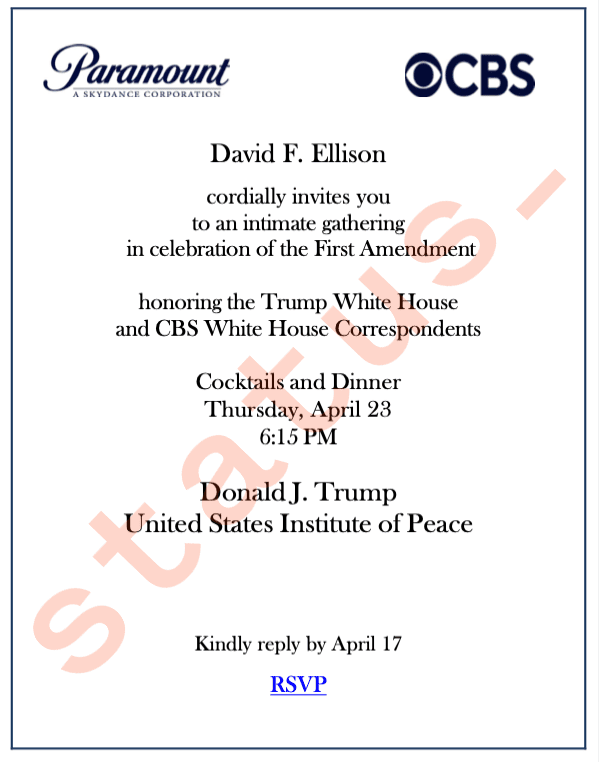
Arresting journalists for doing their job happens within a national context in which the major media are being bought up by billionaires and small-town media are struggling to survive. Late night comedians have been harassed , even canceled, because they dare to make fun of our Not-so-great leader. Trump’s erstwhile bestie Elon Musk bought and controls Twitter. His pals the billionaire Ellisons bought CBS.

What about those pesky independent journalists?

Dina Doll, an experienced attorney and a contributor to the blog MeidasTouch, wrote:

In a healthy democracy, journalists are not handcuffed for doing their jobs.
They are not dragged into courtrooms for showing up, asking questions, and bearing witness. They are not treated as threats simply because they point a camera toward power and refuse to look away.

Yet here we are.

This week, Don Lemon and Georgia Fort were arrested and charged under federal law with civil rights violations, including conspiracy to interfere with religious freedom and interfering with the exercise of First Amendment rights at a place of worship, while covering protests at a church in St. Paul, Minnesota. Not for committing violence. Not for inciting chaos. But for documenting what was happening, for talking to people on the ground, for doing exactly what journalism has always existed to do.

And that reality should stop us cold.

Because when a government begins going after journalists, history tells us something is deeply wrong.

We have only targeted journalists in this country during our most shameful chapters. During moments when fear outweighed principle. When those in power decided that controlling the narrative mattered more than the truth.

That is not coincidence. It is pattern.

Authoritarian systems do not begin by jailing everyone. They begin by isolating voices. They begin by making examples. They begin by teaching the public that speaking up carries a cost.

And journalists are always near the top of that list.

Why?

Because journalists give voice to the people.

They do not create dissent. They reveal it. They do not manufacture outrage. They document it. They do not invent injustice. They expose it.

When a journalist shows up, they bring sunlight. And sunlight makes lies harder to sustain.

Trump sees Don Lemon as a threat.

Not because Lemon suddenly changed who he is, but because his audience has changed.

Since leaving CNN, Lemon’s reach has exploded across social media. Younger people who never sat down to watch cable news are now watching his clips, sharing his reporting, and engaging with his long-form conversations. He is reaching people Trump cannot easily reach or control.

And Trump cannot shut Don Lemon down by calling his boss anymore.

The same is true for Georgia Fort.

They are independent.

They are not owned by a corporate parent that can be pressured behind closed doors. They cannot be silenced with a phone call.

The most threatening thing to an authoritarian regime is an independent reporter with a microphone.

The state is now alleging that Don Lemon interfered with parishioners’ right to worship.

But the truth runs in the opposite direction.

His presence protected that right.

Without reporters on the scene, there is no independent record of what happened. No documentation of how protesters were treated. No documentation of how parishioners were affected. No documentation of whether law enforcement actions were proportional or excessive.

Lemon did what journalists are supposed to do. He spoke with protesters. He also spoke with the pastor. He interviewed parishioners who were frustrated and hurt by the disruption. He allowed multiple sides to be heard in real time.

That is not interference.

That is accountability.
That is transparency.
That is how you protect rights, not undermine them.

Rights do not survive in darkness. They survive in public view.

Heather Cox Richardson obtained a pamphlet written during World War II for our troops overseas. Its purpose was to explain the tactics of fascists: how they gain power, how they lie to distort reality, how they use hatred to divide and conquer.

The pamphlet is insightful, incisive, and remarkably relevant to the world we live in now.

What we are learning is that “It can happen here.” We must arm ourselves with knowledge to preserve our democracy.

She writes:

Beginning in 1943, the War Department published a series of pamphlets for U.S. Army personnel in the European theater of World War II. Titled Army Talks, the series was designed “to help [the personnel] become better-informed men and women and therefore better soldiers.”

On March 24, 1945, the topic for the week was “FASCISM!”

“You are away from home, separated from your families, no longer at a civilian job or at school and many of you are risking your very lives,” the pamphlet explained, “because of a thing called fascism.” But, the publication asked, what is fascism? “Fascism is not the easiest thing to identify and analyze,” it said, “nor, once in power, is it easy to destroy. It is important for our future and that of the world that as many of us as possible understand the causes and practices of fascism, in order to combat it.”

Fascism, the U.S. government document explained, “is government by the few and for the few. The objective is seizure and control of the economic, political, social, and cultural life of the state.” “The people run democratic governments, but fascist governments run the people.”

“The basic principles of democracy stand in the way of their desires; hence—democracy must go! Anyone who is not a member of their inner gang has to do what he’s told. They permit no civil liberties, no equality before the law.” “Fascism treats women as mere breeders. ‘Children, kitchen, and the church,’ was the Nazi slogan for women,” the pamphlet said.

Fascists “make their own rules and change them when they choose…. They maintain themselves in power by use of force combined with propaganda based on primitive ideas of ‘blood’ and ‘race,’ by skillful manipulation of fear and hate, and by false promise of security. The propaganda glorifies war and insists it is smart and ‘realistic’ to be pitiless and violent.”

Fascists understood that “the fundamental principle of democracy—faith in the common sense of the common people—was the direct opposite of the fascist principle of rule by the elite few,” it explained, “[s]o they fought democracy…. They played political, religious, social, and economic groups against each other and seized power while these groups struggled.”

Americans should not be fooled into thinking that fascism could not come to America, the pamphlet warned; after all, “[w]e once laughed Hitler off as a harmless little clown with a funny mustache.” And indeed, the U.S. had experienced “sorry instances of mob sadism, lynchings, vigilantism, terror, and suppression of civil liberties. We have had our hooded gangs, Black Legions, Silver Shirts, and racial and religious bigots. All of them, in the name of Americanism, have used undemocratic methods and doctrines which…can be properly identified as ‘fascist.’”

The War Department thought it was important for Americans to understand the tactics fascists would use to take power in the United States. They would try to gain power “under the guise of ‘super-patriotism’ and ‘super-Americanism.’” And they would use three techniques:

First, they would pit religious, racial, and economic groups against one another to break down national unity. Part of that effort to divide and conquer would be a “well-planned ‘hate campaign’ against minority races, religions, and other groups.”

Second, they would deny any need for international cooperation, because that would fly in the face of their insistence that their supporters were better than everyone else. “In place of international cooperation, the fascists seek to substitute a perverted sort of ultra-nationalism which tells their people that they are the only people in the world who count. With this goes hatred and suspicion toward the people of all other nations.”

Third, fascists would insist that “the world has but two choices—either fascism or communism, and they label as ‘communists’ everyone who refuses to support them.”

It is “vitally important” to learn to spot native fascists, the government said, “even though they adopt names and slogans with popular appeal, drape themselves with the American flag, and attempt to carry out their program in the name of the democracy they are trying to destroy.”

The only way to stop the rise of fascism in the United States, the document said, “is by making our democracy work and by actively cooperating to preserve world peace and security.” In the midst of the insecurity of the modern world, the hatred at the root of fascism “fulfills a triple mission.” By dividing people, it weakens democracy. “By getting men to hate rather than to think,” it prevents them “from seeking the real cause and a democratic solution to the problem.” By falsely promising prosperity, it lures people to embrace its security.

“Fascism thrives on indifference and ignorance,” it warned. Freedom requires “being alert and on guard against the infringement not only of our own freedom but the freedom of every American. If we permit discrimination, prejudice, or hate to rob anyone of his democratic rights, our own freedom and all democracy is threatened.”

Notes:

https://onlinebooks.library.upenn.edu/webbin/serial?id=armytalks

War Department, “Army Talk 64: FASCISM!” March 24, 1945, at https://archive.org/details/ArmyTalkOrientationFactSheet64-Fascism/mode/2up