Florida used to have four Black members of Congress. Ron DeSantis took personal charge of redrawing the state’s districts and changed the lines to make them more Republican, eliminating three Black seats. A judge just tossed DeSantis’s map as unconstitutional. The decision will be appealed.
DeSantis had wagered the state’s Fair Districts Amendment against the U.S. Constitution, arguing mandatory protections for Black voters violated the Equal Protection Clause. Second Judicial Circuit Judge J. Lee Marsh flatly rejected that gamble, rendering a decision that could reverberate from the halls of Tallahassee to the streets of Jacksonville, paving the way for a new, Democratic district where Jacksonville’s Black voters have more influence.
Marsh refused to bite on DeSantis’ claim that the state’s Fair Districts Amendment violated the U.S. Constitution, saying DeSantis’ secretary of state and the Legislature didn’t even have standing to make such an argument…
DeSantis conceded that his map did not meet the state’s “non-diminishment” standard, which mandates that new districts must not undermine the voting power of racial minorities. The protection mirrors language in Section 5 of the Voting Rights Act, and the state argued Marsh should strike down that protection as violating the Equal Protection Clause of the 14th Amendment. At a hearing last month, Marsh questioned why Florida Attorney General Ashley Moody wasn’t defending the state’s Constitution in the case.
He also expressed sharp skepticism that he could make such an expansive ruling. Marsh said that if he ruled for the state, “this court will be the first in the country to say that even the Voting Rights Act is unconstitutional.” If the Florida Supreme Court sides with DeSantis, it could have national implications. It means the court, a majority of whom DeSantis appointed, would go further than the U.S. Supreme Court has in advancing a legal argument, pushed by many conservatives, that it’s inherently wrong to take race into account, even if it’s done to preserve the political voice of Black voters.
DeSantis’ veto of the initial map and the GOP-controlled Legislature’s decision to adopt his new one sparked an historic protest in the Florida House where Reps. Angie Nixon (D-Jacksonville) and Travaris McCurdy (D-Orlando) led a sit-in to disrupt the proceedings. After that protest, DeSantis vetoed all of Nixon’s appropriations in the current budget, and legislative leadership put her office in the basement of the Florida Capitol. [Bold added.]
Thom Hartmann is one of the best political bloggers in the nation and a superb journalist. This is a very important article. In 2016, I pleaded with readers not to vote third party because Trump was clearly unhinged and ignorant. Jill Stein siphoned off enough votes to elect him. I’m still haunted by the infamous photo of Jill Stein sitting at Putin’s table with Michael Flynn before the election.
We can’t afford any more George W. Bush’s or Donald Trump’s, who were both brought to us by Democratic-leaning voters thinking they were doing the right thing by voting for third party candidates…
One of the most fashionable statements these days among progressive-leaning voters who pretend to great political insight is:
“I want to vote for the person I like themost, not some party or candidate that I only half-agree with.”
Its corollary is:
“You’re just trying to get me to vote Democratic because you support that party’s corruption. I won’t be intimidated: I’m going to vote for the best person to run the country!”
Often these types of statements are followed by:
“People in France and Israel can vote for any one of a dozen parties and nobody complains that they’re ‘throwing away their vote.’ This is America: we’re even better! So, I should be able to vote for anybody I want!”
Some people pushing this line simply don’t understand the difference between thepolitical systems of France/Israel and theUS.
Others are cynical hustlers (this is true mostly of the talk-show and YouTube hosts trying to differentiate themselves by pushing this), trying to grab and hold an audience by being “edgy,” “iconoclastic,” or “a rebel with a cause.”
So, let’s review some political basics.
Whatever its genesis, this opinion — that ignoring our two-party system and “voting for the best candidate is a good thing” — is widespread. After all, intuitively it seems to make perfect sense.
In a rational world, who would want to vote for anyone less than the best candidate? Unfortunately, though, America’s political system is not as rational as that of countries with proportional representation or ranked choice voting.
A 2022 Pew poll found people’s unfavorable view of both parties has gone from 6 percent in 1994 to 27 percent today. Similarly, 38 percent of Americans “wish there were more political parties to choose from in this country” and may be persuaded to vote for a third-party candidate.
So why is it that third parties don’t work in America, but they do in France?
The United States, in 1789, became the first modern democratic republic founded on thenotion of the leaders of a government, through elections, “deriving their just powers from theconsent of the governed.”
The Framers of the Constitution had never heard of proportional representation or themodern parliamentary system (more on that in a minute), so they went with a simple strategy that’s today referred to by political scientists as “first-past-the-post winner-take-all” (FPTP) or, sometimes, as “majoritarian” or “plurality” election systems.
Whoever gets the most votes becomes theelected politician, and everybody else gets nothing. If you voted with the majority, you’re represented; if not, you’re not at all represented by a person or party that shares your view.
America was an English-speaking country and, as a result, this system spread mostly throughout the English-speaking world and in former British or American colonies. Majoritarian FPTP systems like ours are used in Canada, the UK, India, Jamaica, Liberia, Singapore, Philippines, Pakistan, Australia, New Zealand, Ireland and Bangladesh.
As a result, most all of these countries are dominated by two parties who tend to pass control of the nation back-and-forth over time. (Australia, New Zealand, and Ireland use Ranked Choice Voting, an even more recent innovation which allows for more political parties; more on that in a moment.)
In such a system, third parties almost always act as spoilers, drawing votes away from the major party to which they’re most closely aligned. People who vote Green, for example, generally would have voted Democratic, thus reducing that party’s vote; people who vote Libertarian would have voted Republican with the same effect.
For example, in Florida in 2000, Ralph Nader on the Green Party’s ticket got 97,488 votes, while George W. Bush “won” Florida by 537 votes.
It strains credulity to assert that the majority of Nader’s voters would have either voted for Bush or not voted at all, which is why when David Cobb ran for president on the Green Party ticket in 2004, he explicitly told people in swing states not to vote for him but to cast their ballots for John Kerry instead.
Jill Stein had no such moral compunction with her Green Party candidacy in 2016. Michigan, Pennsylvania, and Wisconsin provided Trump’s margin of victory in theElectoral College over Hillary Clinton, and, in each of those states, Stein pulled more votes than Trump’s margin.
(In Michigan she got 51,463 votes and Trump won by 10,704; in Pennsylvania she won 49,678 versus Trump’s margin of 46,765; and in Wisconsin Stein carried 31,006 votes but Trump only won by 22,177.)
In other words, had liberals not voted for Ralph Nader in Florida in 2000, Al Gore would have become president and we never would have been lied into a war; had people in Michigan, Pennsylvania, and Wisconsin not voted for Jill Stein in 2016, Hillary Clinton would have become president and America would have been spared thetrauma of 500,000 unnecessary Covid deaths and the ongoing assault to our democracy.
This is apparently not lost on sour-grapes Jill Stein, by the way; she’s reportedly helping run Cornell West’s 2024 Green Party candidacy. It’s also not lost on the Democrat-hating folks at No Labels, who have pledged to put up a candidate for president (presumably Joe Manchin) in 2024.
In the 1950s, French sociologist Maurice Duverger published several papers on this odd quirk of FPTP systems and the way they turn aligned third-party candidacies into agents for the opposition party.
This simple reality — apparently unknown to those who advocate third party candidates — has since come to be known as Duverger’s Law.
So, why can France have so many political parties without damaging their political system but here in America third parties harm those they’re most closely aligned with?
This goesto the invention of what’s called “proportional representation.”
It wasn’t until the year the Civil War started, 1861, that British philosopher John Stuart Mill published a how-to manual for multi-party parliamentary democracies in his book Considerations On Representative Government.
It was so widely distributed and read that nearly all of the world’s democracies today — all of them countries that became democracies after the late 1860s — use variations on Mill’s proportional representation parliamentary system.
In Mill’s system, if a political party gets, say, 12 percent of the vote then they also get 12 percent of the seats in that country’s congress or parliament. A party that pulls 34 percent of the vote gets 34 percent of the seats, and so on.
The result is a plethora of parties representing a broad range of perspectives and priorities, all able to participate in thedaily governance of their nation. Nobody gets shut out.
Governing becomes an exercise in coalition building, and nobody is excluded. If you want to get something done politically, you have to pull together a coalition of parties to agree with your policy.
Most European countries, for example, have political parties represented in their parliaments that range from the far left to theextreme right, with many across the spectrum of the middle. There’s even room for single issue parties; for example, several in Europe focus almost exclusively on the environment or immigration.
The result is typically an honest and wide-ranging discussion across society about the topics of the day, rather than a stilted debate among only two parties.
It’s how the Greens became part of today’s governing coalition in Germany, for example, and are able to influence the energy future of that nation. And because of that political diversity in the debates, the decisions made tend to be reasonably progressive: look at thepolitics and lifestyles in most European nations.
In our system, though, if a party gets 12 percent of the vote — or anything short of 50 percent plus one — they get nothing. Whoever gets 50-percent-plus-one wins everything and everybody else gets nothing, which is why we always end up with two parties battling for thehigher end of that 50/50 teeter-totter.
Pretty much every democracy in the world not listed above under the FPTP label are using Mill’s proportional representation. But we don’t, which is why we’re stuck with a two-party system.
Australia and New Zealand have diminished the damage third parties can do to themain, established parties, by using a voting system called ranked choice voting. In a system like that I could have voted for Ralph Nader as my first choice in 2000, with Al Gore as my second choice. When it becomes apparent that Nader isn’t going to make it, my first choice is discarded by thesystem and my vote for Gore becomes theone that gets counted.
Over 300 communities in America are now using ranked choice voting (including Portland, Oregon) and it works great. Moving from FPTP to proportional representation would require amending the Constitution, though, so that’s not going to happen any day soon: ranked choice voting is a nearly-as-good alternative.
At the national level, though, the best way to solve the problem of some Democratic politicians not being as progressive as we’d like is to get active by joining theDemocratic Party and becoming a force for positive change within it. To stand up for public office and elect more progressives, something that can only be done within theDemocratic Party.
To not “throw away your vote,” but to help rebuild the institution that brought America Social Security, the minimum wage, the right to unionize, Medicare, Medicaid, free college, regulatory agencies that defend and protect the environment and working class people, support for people in poverty, and that built America’s first real middle class.
Yes, there are corrupt and bought-off politicians within the Democratic Party. Ever since the Supreme Court fully legalized political bribery with their Citizens Uniteddecision and its predecessors, there have been more than a few Democrats who have enthusiastically put their hands out. The most obvious and cynical ones call themselves corporate “Problem Solvers.”
But voting for a third-party candidate and thus handing elections to Republicans won’t solve that problem: if anything it will make it worse, because the entire GOP has committed itself to being on the take and, as we saw with Nader and Stein, third-party candidacies often simply hand more power to the GOP.
Try to find, for example, even one Republican who isn’t benefiting from the billions in oil dollars that have flowed through the Koch network over the years and is thus willing to do something about climate change. Republican governance and their fealty to the fossil fuel industry is literally destroying America.
This is why real progressives like Bernie Sanders, Alexandria Ocasio Cortez, and Pramila Jayapal stay and work within theDemocratic Party. For progressives to take over the country, we must first take over the DNC.
In other words, get inside the Party and take it over! It’s what hard-core conservatives did with the GOP over the past 20 years, starting with the Tea Party movement, and it’s what progressives must do with the Democratic Party.
Cornell West is a great guy, but with our FPTP election system a vote for him for president in a swing state is effectively a vote for theRepublican nominee. No third-party candidate has ever won the White House, and none ever will until we have nationwide ranked choice voting.
So, the next time somebody tells you how they’re going to only vote for “the best candidate,” you may want to give them this little Civics 101 lesson, along with the phone number, website, or email address for their local Democratic Party. And get behind themovement to bring ranked choice voting to national elections.
We can’t afford any more George W. Bush’s or Donald Trump’s, who were both brought to us, in part, by Democratic-leaning voters thinking they were doing the right thing by voting for third party candidates
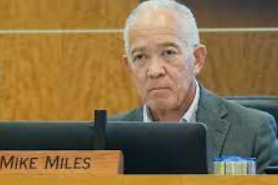
Mercedes Schneider summarizes the checkered career of Mike Miles, who was put in charge of the Houston Independent School District by State Commissioner Mike Morath, who was appointed by hard-right Republican Governor Greg Abbott. Abbott wants to punish Houston for not voting for him. What better punishment than to install Mike Miles as superintendent?
On June 01, 2023, the Texas Education Agency (TEA) appointed Mike Miles as the new HISD superintendent.
Miles is the golden-child product of market-based, ed-reform leadership. As reported in his LinkedIn bio, Miles holds no college degrees in teaching (engineering; slavic languages and literature; international affairs and policy). He has never been a classroom teacher, never a site-based administrator, yet he was a district superintendent in Colorado for six years (2006-11) and superintendent of Dallas ISD for three.
Though he does not mention it in his LinkedIn bio, Miles was a member of the Class of 2011 at the Broad Superintendents Academy A 2011 EdWeek article on Broad superintendents includes the criticism that they “use corporate-management techniques to consolidate power, weaken teachers’ job protections, cut parents out of decisionmaking, and introduce unproven reform measures.”
Indeed.
In 2015, Miles abruptly resigned from Dallas ISD amid being, as WFAA.com states, “at the center of controversy since he took the position nearly three years ago,” which apparently included questions about misdirecting funding intended for at-risk students and the subsequent exit of the Dallas ISD budget director. (Also calling Miles “a lightening rod for controversy,” WFAA.com offers this timeline of Miles’ unsettling tenure in Dallas.)
Following his Dallas ISD exit, in 2016, he founded a charter school chain, Third Future Schools, which has locations in Colorado, Texas, and Louisiana. For two years (2017-19), Miles was a senior associate in an education consulting firm, FourPoint Education Partners.
Florida Governor Ron DeSantis told a story during the GOP debate about a baby who survived multiple attempts to abort her, presumably to justify his near-total ban on abortions (after six weeks). But the Miami Herald reported the true story, which is very different from DeSantis’ version. The event occurred long before abortion was legal, and the person who tried to abort the baby with a coat hanger was the baby’s father.
The story was reported by Julie K. Brown with the aid of Sarah Blaskey, investigative reporters for the Miami Herald and was based on statements previously recorded by Penny Hopper, contemporaneous newspaper articles, public records and an interview with a family member who asked not to be identified. The DeSantis campaign did not respond to a request for comment.
At Wednesday’s Republican candidates debate, during a discussion of late-term abortion, Gov. Ron DeSantis told a horrific but puzzling story.
“I know a lady in Florida named Penny,” the GOP presidential candidate said. “She survived multiple abortion attempts. She was left discarded in a pan. Fortunately, her grandmother saved her and brought her to another hospital.”
Critics of the governor flocked to social media to suggest the “Penny” story was made up or wildly embellished. Supporters countered that liberals were triggered by an ugly truth.
Penny is real and her last name is Hopper. But DeSantis failed to note key details from her remarkable story: The person who tried to end Penny’s life in the womb was not a doctor or even an illegal abortion provider — it was her father. And his effort to abort his daughter with a coat hanger took place almost two decades before the Supreme Court’s seismic Roe v. Wade decision, which established a woman’s right to an abortion…
Miriam “Penny” Hopper’s story begins in 1955, in a hospital in Wauchula, a small farming town in Central Florida. News reports at the time described her as a miracle baby, born weighing 1 pound, 11 ounces. She was so tiny that the nurses initially had to feed her with a dropper.
Her now-deceased father, Charles Wesley Browder Sr., was a U.S. Army sergeant during World War II who served on the front lines in Europe when he was just 20. His family said he was a “scout” who performed advance reconnaissance missions before being wounded, captured and tortured by the Germans. Military records show he was discharged with honors in 1945 and was awarded four Bronze Stars in addition to a Purple Heart, a Good-Conduct Medal and the World War II Victory Medal.
Charles married Glenda Marie Pierce, and they settled in Wauchula, Florida, about 75 miles from Tampa.
In 1953, birth records show, Hopper’s parents had a son, Charles Browder Jr., who was born at Walker Memorial Hospital in nearby Avon Park. At the time of the 1950 census, Glenda worked as a receptionist in a doctor’s office, and Charles was a salesman. Hopper’s mother soon became pregnant with her second child, also a boy. In a video posted on YouTube several years ago by a group called “Florida Right to Life,” Hopper said that she learned later that her father had used the coat hanger to abort her mother’s second child. It is one of at least two videos on the Internet relating her story, although the videos differ on some details.
When her mother became pregnant a third time with her, Penny Browder said her father returned to the same method in an attempt to end the pregnancy, later explaining to his daughter that he was earning only $125 a week, which he felt wasn’t enough to support a larger family.
Browder’s mother developed complications during the coat-hanger procedure. The couple rushed to a nearby medical facility in the middle of the night, with her mother very ill and bleeding. In the video interviews, Hopper said her parents were met at the clinic by a doctor in his pajamas. He examined her mother — and concluded that the fetus had no heartbeat. He advised the couple to abort the baby, telling them the child would likely be stillborn.
“If it lives, it will be a burden on you your whole life,” the doctor allegedly said. He used saline and injected her mother with a drug, then left, instructing the nurse to “discard the baby dead or alive,” Hopper said in a video interview, a segment that was to be incorporated into a TV commercial by the anti-abortion group “Faces of Choice.” It can be found on YouTube.
When the baby arrived shortly after 3 a.m., the nurse wrapped her in a towel and placed her in a pan, Penny Hopper said one video. In the other, Hopper said her mother told her the baby was placed in a basket.
The following day, Glenda’s mother and aunt came to check on her at the clinic, where she was recuperating. They found the baby outside on a back porch, unwrapped her, and discovered she was alive, Hopper said.
“My grandmother was so upset she called the local police,” she said.
A news clipping incorporated into a video segment said the baby was transported from the medical facility in Wauchula to what was then Morrell Regional Hospital in Lakeland. The news clipping, which isn’t labeled, seems to partially contradict Hopper’s story, as it states that the doctors at the Wauchula facility “put forth greater efforts to keep the 1 pound, 11 ounce baby alive.” The story said the child was on the “brink of death” when she was transported to Lakeland, with a police escort that crashed on the way to the hospital.
The Tampa Tribune from Nov. 29, 1955, reported on the crash, saying the baby had been born premature that morning. The infant was placed in an incubator, where she remained for four months. Hopper, however, said that while she was in the hospital her father tried to disconnect her from the incubator because he was upset at how much the care was costing. The hospital summoned the police to restrain him, Hopper said in one of the interviews.
“He basically couldn’t stand the thought I was alive,” Hopper said.
In March 1956, she was finally strong enough to go home with her parents…
Anti-abortion groups use Penny Hopper’s story to demonstrate why abortion should be banned.
Pro-abortion groups use it to demonstrate why abortion should be safe and legal. Coat-hanger abortions will resume, and they endanger the life of the mother.
Michael Hiltzik, columnist for the Los Angeles Times, finds a pattern in the Republican attacks on the schools and universities. Their hostility to teaching Black history, their encouragement of book banning, their strategic defunding of higher education, their treatment of teaching about race, gender, and climate change as “indoctrination”—together point to a goal: the dumbing down of American young people.
Republicans say they want to get rid of “indoctrination” but they are busily erasing free inquiry and critical thinking. What do they actually want? Indoctrination.
He reminds us of the immortal words of former President Donald J. Trump: “I love the uneducated.” Republicans do not want students to think critically about racism or the past. They do not want them to reflect on anything that makes them “uncomfortable.” They want to shield them from “divisive concerns.” They want them to imbibe a candy-coated version of the past, not wrestle with hard truths.
He writes:
For reasons that may not be too hard to understand, Republicans and conservatives seem to be intent on turning their K-12 schools, colleges and universities into plantations for raising a crop of ignorant and unthinking students.
Donald Trump set forth the principle during his 2016 primary campaign, when he declared, “I love the poorly educated.”
In recent months, the right-wing attack on public education has intensified. The epicenter of the movement is Florida under Republican Gov. Ron DeSantis, where the faculty and course offerings of one of America’s leading liberal arts colleges, New College, have been eviscerated purportedly to wipe out what DeSantis calls “ideological indoctrination.”
The state’s K-12 schools have been authorized to supplement their curricula with animated cartoons developed by the far-right Prager University Foundation that flagrantly distort climate science and America’s racial history, the better to promote fossil fuels, undermine the use of renewable energy and paint a lily-white picture of America’s past.
In Texas, the State Library and Archives Commission is quitting the American Library Assn., after a complaint by a Republican state legislator accusing the association of pushing “socialism and Marxist ideology.”
In Arkansas, state education officials told schools that they may not award credit for the Advanced Placement course in African American history. (Several school districts said they’d offer students the course anyway.) This is the course that Florida forced the College Board to water down earlier this year by alleging, falsely, that it promoted “critical race theory.”
I must interject here that I’m of two minds about this effort. On the one hand, an ignorant young electorate can’t be good for the republic; on the other, filling the workforce with graduates incapable of critical thinking and weighed down by a distorted conception of the real world will reduce competition for my kids and grandkids for jobs that require knowledge and brains.
Let’s examine some of these cases in greater depth.
Prager University, or PragerU, isn’t an accredited institution of higher learning. It’s a dispenser of right-wing charlatanism founded by Dennis Prager, a right-wing radio host. The material approved for use in the schools includes a series of five- to 10-minute animated videos featuring the fictional Leo and Layla, school-age siblings who travel back in time to meet historical figures.
One encounter is with Frederick Douglass, the Black abolitionist. The goal of the video is to depict “Black lives matter” demonstrations as unrestrained and violent — “Why are they burning a car?” Leo asks while viewing a televised news report. The animated Douglass speaks up for change achieved through “patience and compromise.”
This depiction of Douglass leaves experts in his life and times aghast. Douglass consistently railed against such counsel. Of the Compromise of 1850, which brought California into the union but strengthened the Fugitive Slave Act — arguably the most detested federal law in American history — he stated that it illustrated how “slavery has shot its leprous distillment through the life blood of the nation.” In 1861, he thundered that “all compromises now are but as new wine to old bottles, new cloth to old garments. To attempt them as a means of peace between freedom and slavery, is as to attempt to reverse irreversible law.”
Patience? The video depicts Douglass quoting from an 1852 speech to a Rochester anti-slavery society in which he said “great streams are not easily turned from channels, worn deep in the course of ages.”
But it doesn’t include lines from later in the speech, reproaching his audience for prematurely celebrating the progress of abolition: “Your celebration is a sham; your boasted liberty, an unholy license; your national greatness, swelling vanity; … all your religious parade and solemnity, … mere bombast, fraud, deception, impiety, and hypocrisy — a thin veil to cover up crimes which would disgrace a nation of savages.”
Another video in the series parrots the fossil fuel industry’s talking points against wind and solar power: Standing over the corpse of a bird supposedly slain by flying into a wind turbine, the schoolkids’ interlocutor states, “Like many people … you’ve been misled about renewable energy, and their impact on the environment…. Windmills kill so many birds, it’s hard to track how many…. Wind farms and solar farms disrupt huge amounts of natural habitat.”
Acid rain, pollution, global warming — those consequences of fossil fuel energy aren’t mentioned. The video ends with a pitch for nuclear power, never mind the unsolved question of what to do with its radioactive waste products.
PragerU’s sedulous attack on renewables perhaps shouldn’t be much a surprise: Among its big donors is the Wilks family, which derives its fortune from fracking and which approved “future payment” of $6.25 million to PragerU in 2013.
In a nutshell, the Sarasota institution possessed a well-deserved reputation as one of the nation’s outstanding havens for talented, independent-minded students. Then came DeSantis. He summarily replaced its board of trustees with a clutch of right-wing stooges including Christopher Rufo, known for having concocted the panic over critical race theory out of thin air and then marketed it as a useful culture war weapon to unscrupulous conservative politicians, including DeSantis.
Rufo and his fellows fired the university president and installed a sub-replacement-level GOP timeserver, Richard Corcoran, in her place. Faculty and students have fled. Students who stayed behind and were in the process of assembling their course schedules for the coming year are discovering at the last minute that the courses are no longer offered because their teachers have been fired or quit.
Instead of ambitious scholars committed to open inquiry, Corcoran has recruited athletes to fill out the student body, even though the college has no athletic fields for many of them to play on. According to USA Today, New College now has 70 baseball players, nearly twice as many as the University of Florida’s Division I NCAA team.
More to the point, the average SAT and ACT scores and high-school grade point averages have fallen from the pre-Corcoran level, while most of the school’s merit-based scholarships have gone to athletes. New College, in other words, has transitioned from a top liberal arts institution into a school that places muscle-bound underachievers on a pedestal. DeSantis calls this “succeeding in its mission to eliminate indoctrination and re-focus higher education on its classical mission.”
Finally, West Virginia University. Under its president, Gordon Gee — who previously worked his dubious magic at Brown Universityand Ohio State University, among other places — the school built lavish facilities despite declining enrollments. The construction program at the land grant university contributed to a $45-million deficit for the coming year, with expectations that it would rise to $75 million by 2028.
But the main problem was one shared by many other public universities — the erosion of public funding. As the West Virginia Center on Budget and Policy points out, “if West Virginia lawmakers had simply kept higher education funding at the same levels as a decade ago, West Virginia University would have an estimated additional $37.6 million in state funding for [fiscal year] 2024, closing the majority of this year’s budget gap.”
The decision on which programs to shutter at WVU points to a shift in how public university trustees see the purpose of their schools, trying to align them more with economic goals set by local industries rather than the goal of providing a well-rounded education to a state’s students. Trustees in some states, including North Carolina and Texas, have injected themselves into academic decisions traditionally left to administrators, often for partisan political reasons.
When it comes to interference in educational policies by conservatives, such as what’s happened in Florida, Texas and Arkansas, there’s no justification for taking these measures at face value — that is, as efforts to remove “indoctrination” from the schools. The truth is that the right-wing effort serves the purposes of white supremacists and advocates of anti-LGBTQ+ discrimination — they’re moving to inject indoctrination that conforms more to their own ideologies.
Take the attack on critical race theory, or at least the version retailed by Rufo and his ilk. “The right has reduced CRT to an incendiary dog whistle,” the Black scholar Robin D.G. Kelley of UCLA has observed, by caricaturing a four-decade-long scholarly effort to analyze “why antidiscrimination law not only fails to remedy structural racism but further entrenches racial inequality” into “a racist plot to teach white children to hate themselves, their country, and their ‘race.’”
(The inclusion of Kelley’s work in the AP African American Studies course was cited as a “concern” by Florida officials in their rationale for rejecting the course; Kelley’s work was suppressed by the College Board in its effort to make the course more acceptable to the state Department of Education.)
These attacks are couched in the vocabulary of “parents’ rights” and student freedom, but they don’t serve the students at all, nor do they advance the rights of parents interested in a good, comprehensive education for their children, as opposed to one dictated by the most narrow-minded ideologues in their state.
Where will it end? Florida’s ham-fisted educational policies won’t produce graduates with the intellectual equipment to succeed in legitimate universities, much less in the world at large. The only university many will be qualified to attend will be Prager U, and that won’t be good for anyone.
Fox News aired the first GOP debate of the 2024 election cycle from Milwaukee on Wednesday night, featuring eight candidates. Not every candidate uttered facts that are easily fact-checked, but following is a list of 10 suspicious claims. As is our practice, we do not award Pinocchios when we do a roundup of facts in debates. These claims are examined in the order in which they were uttered.
“We all need to understand Joe Biden’s Bidenomics has led to the loss of $10,000 of spending power for the average family.”
This seems wildly overstated. In April we had checked a claim by House Speaker Kevin McCarthy (R-Calif.) that families have lost the equivalent of $7,400 worth of income. We tracked down the source of that statistic — E.J. Antoni, a research fellow in regional economics with the Heritage Foundation’s Center for Data Analysis. As of last week, he’d revised his estimate down to $6,800.
But, more to the point, economists we contacted were dubious about the math, which relied on a change in purchasing power and a change in borrowing power. The change in borrowing power relied on mortgage rates — and not every family is looking for a new home. As for Antoni’s reliance on average weekly wages, this measure does not follow the same workers across time, and consequently the economists said it was an imperfect basis for families’ income changing over time.
Several economists pointed to another metric — real disposable personal income per capita— as a better gauge. That figure is produced by the Bureau of Economic Analysis at the Commerce Department.
Per capita income, after inflation, was $46,790 in December 2020 and $46,795 in June 2023 — an increase of $5. That’s basically flat — but a far cry from a $10,000 decline.
“A 15-week ban is an idea whose time has come — it’s supported by 70 percent of the American people.” — Former vice president Mike Pence
Recent polling does not back up Pence’s claim of such support for banning all abortions after 15 weeks of pregnancy, when people are directly asked about it, though in general, polls have shown majority opposition to second-trimester abortions. A Washington Post-ABC News poll last year found that 36 percent supported and 57 percent opposed a law that would make abortions legal only in the first 15 weeks of pregnancy.
Last month, a Marquette Law School poll found that 47 percent of those surveyed favored a ban after 15 weeks, compared with 53 percent who said they would oppose it.
Also last month, an AP-NORC poll found that about half of Americans say abortions should be permitted at the 15-week mark.
A Fox News poll in April found that 54 percent supported such a ban, while 42 percent opposed it. But that is still well short of 70 percent.
“We’re better than what the Democrats are selling. We are not going to allow abortion all the way up till birth, and we will hold them accountable for their extremism.” — Florida Gov. Ron DeSantis
This is a common Republican talking point — that Democrats support nationwide abortion-on-demand up until the moment of birth. The implication is that late-term abortions are common — and that they are routinely accepted by Democrats.
The reality, according to federal and state data, is that abortions past the point of viability are extremely rare. When they do happen, they often involve painful, emotional and even moral decisions.
About two-thirds of abortions occur at eight weeks of pregnancy or earlier, and nearly 90 percent take place in the first 12 weeks, or within most definitions of the first trimester, according to estimates by the Guttmacher Institute, which favors abortion rights. About 5.5 percent of abortions take place after 15 weeks, with just 1.3 percent at 21 weeks or longer.
Increasingly, there is a period when premature births and late abortions begin to overlap. The CDC recorded almost 22,000 births between 20 and 27 weeks. Babies born before 25 weeks are considered extremely preterm, with vital organs such as heart, lungs and brain very immature. But the survival rate has climbed to 30 percent for 22-week babies and 55 percent for 23-week babies, according to a 2022 study.
Some states record whether a fetus was born alive during an abortion and whether efforts were made to save it. Seven were born alive in Florida in 2022, nine in Arizona in 2020, one in Texas in 2021 and five in Minnesota in 2021. A CDC study of 143 cases between 2003 and 2014 found that most died within hours, with only 4.2 percent surviving for more than 24 hours.
“Crime is at a 50-year low in Florida.” — DeSantis
This statement is based on incomplete data, according to the Marshall Project, an online journalism organization that focuses on criminal justice issues.
“About half of the agencies that police more than 40% of the state’s population are missing from figures the Florida Department of Law Enforcement (FDLE) used for a statewide estimation,” the news organization said.
Participation in national data collection is even lower, with less than eight percent of Florida’s police departments included in an FBI federal database. Many of the largest, such as the Miami Police Department, the Pinellas County Sheriff’s Office and the St. Petersburg Police Department, are missing from the national numbers.
It is impossible, then, to compare Florida’s crime rate with that of other states. And in any case, the crime rate in Florida has been steadily declining for three decades.
“We have a crime wave in this country.” — Entrepreneur Vivek Ramaswamy
This is a bit out of date. Crime spiked during the pandemic, and though rates are still higher than before the pandemic, homicides are dropping in dozens of major cities, including New York, Chicago, Philadelphia and Baltimore. Examining homicides in 30 cities that make homicide data readily available, an analysis by the Council on Criminal Justice found that the number of killings in the first half of 2023 fell by 9.4 percent compared with the first half of 2022.
Moreover, gun assaults (-5.6 percent), robberies (-3.6 percent), nonresidential burglaries (-5 percent), larcenies (-4.1 percent), residential burglaries (-3.8 percent) and aggravated assaults (-2.5 percent) fell in the first six months of this year compared with the same period last year. However, car thefts continued to increase.
FBI data shows that the nationwide violent crime rate peaked in 1991 with 758.2 crimes per 100,000 people; in 2020, the rate was 398.5. The nationwide homicide rate reached a high in 1991, at 9.8 per 100,000 population. By 2019, it had dropped to 5.1.
“Not only weaponization in the Department of Justice against political opponents, but also look at the parents who show up at school board meetings. They’re called, under this DOJ, domestic terrorists.” — Scott
This is a frequent GOP talking point but it’s false. Attorney General Merrick Garland has never equated parents to terrorists, and in fact he told Congress he “can’t imagine” a circumstance under which that would happen.
This all started with a Sept. 29, 2021, letter from the National School Boards Association (NSBA) that asked President Biden for federal resources to help monitor “threats of violence and acts of intimidation” against public school board members and other school officials. Five days later, Garland issued a memo addressed to FBI Director Christopher A. Wray and federal prosecutors. He called for action within 30 days to “facilitate the discussion of strategies for addressing threats” against school administrators, board members, teachers and staff.
Garland’s memo never mentioned domestic terrorism, but the NSBA letter that prompted it included a line that asserted “these heinous actions could be the equivalent to a form of domestic terrorism and hate crimes.” There was enough blowback to that language that on Oct. 22, the NSBA apologized for the letter, saying “there was no justification for some of the language included.” A new executive director for the association was installed, the letter was deleted from the NSBA website, and the association announced in February that it had launched an independent review of how the letter was created.
Nevertheless, the Justice Department never equated parents to domestic terrorists. When questioned by Republicans in congressional hearings, Garland and other top Justice officials have insisted that they do not think concerned parents are terrorists. “I can’t imagine any circumstance in which the Patriot Act would be used in the circumstances of parents complaining about their children, nor can I imagine a circumstance where they would be labeled as domestic terrorism,” Garland told the House Judiciary Committee.
“The Biden administration wanted to put 87,000 people in the IRS instead of giving the money we need to our own Border Patrol.” — North Dakota Gov. Doug Burgum
“Let’s fire the 87,000 IRS agents and hire or double the number of Border Patrol agents.” — Scott
This 87,000 figure is a common GOP talking point but it is wildly exaggerated to speak of “agents” as Scott did. When Congress passed a bill to provide the IRS with an additional $80 billion in funding over 10 years, that money was to be used in part to hire 86,852 full-time employees in the next decade. But many of those employees would not be enforcement “agents” but people hired to improve information technology and customer service. Treasury officials say that because of attrition, after 10 years of increasing spending, the size of the agency will have grown only 25 to 30 percent when the hiring burst is completed.
The administration’s strategic plan for the IRS, released in April, estimated that an additional 1,543 full-time employees would be hired for enforcement in 2023, or about 15 percent of newly hired staff. That would grow to 7,239 in 2024, or 37 percent of new staff.
Biden administration officials have pledged that enforcement efforts to collect unpaid taxes will concentrate on those earning more than $400,000.
“We secured the southern border and reduced illegal immigration by 90 percent.” — Pence
Ninety percent is a cherry-picked number, apparently comparing May 2019, the highest month for border apprehensions during the Trump administration, with April 2020, when apprehensions plunged because of lockdowns at the start of the covid pandemic. Another complicating factor is that U.S. Customs and Border Protection changed the way it counted apprehensions during the pandemic, making apples-to-apples comparisons difficult because the numbers were inflated by people who were expelled for health policy reasons, not just enforcement actions. But generally, annual apprehensions increased during the Trump administration.
“We eliminated critical race theory from our K through 12 schools.” — DeSantis
Critical race theory refers to an academic framework centered on the idea that racism is systemic, and not just demonstrated by individual people with prejudices. It is generally taught in higher education, such as law or graduate school, not at lower grade levels. So this is a bit of an empty boast. Educators, school officials and several Florida public school districts told PolitiFact that critical race theory wasn’t taught in Florida’s elementary, middle or high schools. PolitiFact rated DeSantis’s claim as “mostly false,” saying that at most the state under DeSantis “rejected prospective teaching materials in recent years that it claimed was related to CRT. But questions remain about its rationale in several cases.”
“I did not grow up in money.” — Ramaswamy
Earlier in the debate, Ramaswamy had said, “My parents came to this country with no money 40 years ago.” But then he went further later in the evening with the line “I did not grow up in money.” His parents did well enough, however, that in his book “Nation of Victims,” Ramaswamy wrote that by the time he was in sixth grade, he had a “comfortably middle-class family with two incomes.” His father worked for General Electric, which had a cost-cutting boss at the time, and he wrote that the fear of a layoff was ever present, so his father “tried to make himself indispensable” by becoming a patent attorney for the firm.
By the time he was 18, Ramaswamy had a stock portfolio significant enough that he earned $453 in dividends in 2002, according to his tax return. By his sophomore year in college, when he made about $3,500 in wage income, he earned $11,712 from dividends alone.
Charlie Sykes is a leading Never Trumper who writes at “The Bulwark.” This is part of his take on last night’s debate. I like to read The Bulwark because I think of its writers as the sane remnant of the GOP.
Donald Trump’s fourth perp walk, Rudy’s mugshot, and another assassination by Vladimir Putin.
But let’s talk about last night, shall we?
The Fox News hosts began the presidential debate by asking candidates to react to a country song, ended with a question about UFOs, and struggled mightily to avoid mentioning the orange elephant not in the room.
Along the way, millions of Republicans were introduced to the Tracy Flick of post-Trump right wing politics.
Vivek Ramaswamy, who seems to have won the Elon Musk primary, was the night’s break-out star.“Ramaswamy Seizes Spotlight,” The New York Times declared, describing the first GOP debate as “The Ramaswamy show.”
My colleague Mona Charen spoke for many of us when she said last night that “I guess if I react with visceral disgust to Vivek, it’s probably a sign that the base loves him.”
Well, exactly.
Vivek is a facile, clownish, shallow, shameless, pandering demagogue, but he is exactly what GOP voters crave these days. So, he will likely get a bump in the polls, at least in the short-run.
Last night, Vivek was Trumpier than Trump. He touched all the erogenous zones of the MAGAverse with a fluency and zeal unmatched by anyone on the stage, from his anti-Ukraine memes to his fawning praise of the absent God King.
Trump himself loved it, posting a video clip of Vivek declaring him “the BEST president of the 21st century, and thanking him: “This answer gave Vivek Ramaswamy a big WIN in the debate because of a thing called TRUTH. Thank you Vivek!”
For most of the night, Vivek seemed to dominate the debate.
Until he was utterly and thoroughly gutted by Nikki Haley.
**
Nikki
Last year, I wrote about “The Unbearable Lightness of Nikki,” but last night, the former South Carolina governor impressively overperformed. On issue after issue — spending, abortion, Ukraine, and Trump’s electability — she was serious, sober, and substantive. If Vivek won the MAGA primary debate; Haley, arguably, won the Normie/Donor debate — and she’s likely to get a serious second look.
On spending:
“The truth is that Biden didn’t do this to us. Our Republicans did this to us too. When they passed that $2.2 trillion Covid stimulus bill, they left us with 90 million people on Medicaid, 42 million people on food stamps,” argued Haley. “You have Ron DeSantis, you’ve got Tim Scott, you’ve got Mike Pence, they all voted to raise the debt and Donald Trump added 8 trillion to our debt and our kids are never gonna forgive us for this.”
**
On Trump:
“It is time for a new generational conservative leader. We have to look at the fact that three-quarters of Americans don’t want a rematch between Trump and Biden. And we have to face the fact that Trump is the most disliked politician in America. We can’t win a general election that way.”
**
Vivisecting Vivek
The highlight of her performance was her merciless critique of Vivek’s global surrender tour. “He wants to stop funding for Israel. He wants to stop funding for Ukraine,” Haley said. “You are choosing a murderer.”
“Ukraine is the first line of defense for us. And the problem that Vivek doesn’t understand is he wants to hand Ukraine to Russia,” Haley declared. “He wants to let China eat Taiwan. He wants to go and stop funding Israel. You don’t do that to friends. What you do instead is you have the backs of your friends.”
“You have no foreign policy experience and it shows!”
Until that moment, Vivek owned the hall in Milwaukee. But as Nikki turned on him, the change in mood was palpable. My colleague Sonny Bunch:
Tom Nichols of The Atlantic thinks that it’s great that Trump will not join the Republican debates. Nichols thinks Trump should not participate in any debates.
Donald Trump has decided to skip the Republican presidential debates. That’s just as well: Debating Trump is demeaning to everyone involved, and it serves no purpose.
Contempt for the Electoral Process
Donald Trump confirmed on Sunday that he’s skipping the Republican-primary debates, the first of which is tomorrow night. His decision makes political sense: A candidate who is crushing the entire field has little incentive to walk into a lion’s den and take on eight challengers. Of course, a candidate who cares about politics, policy, and the voters might want to show courage and respect for the electoral process—but this is Donald Trump we’re talking about, so those are not real considerations.
Strange as it may seem, I not only support Trump’s decision, but I think both parties should seize the opportunity to make it permanent for this election. I love debates and watch theattentively, and in a normal political year with a normal election and a normal candidate, I would be thumping the desk and saying that every candidate should respect our grand tradition of debate.
But this isn’t a normal year. It’s not a normal election. And Donald Trump is not, in any way, a normal candidate. To allow Trump onstage in either the primaries or the general election is bad politics, an insult to our electoral process, and corrosive to American democracy. All of the 2024 candidates, including President Joe Biden, have good reasons to embrace Trump’s refusal to debate and to shun any further interactions with him.
First, as we should have learned in 2016 and 2020, Trump has nothing but contempt for the electoral process. (I’ll get to his open attack on the process in 2021 in a moment.) Trump benefits from arenas where his opponents are constrained by rules that he himself ignores, and so he treats debates like performance art. He insults, interrupts, babbles, and pouts. In 2016 he stalked Hillary Clinton around the stage and suggested that he’d toss her in jail. In 2020, he tried to suck the oxygen out of the room—oxygen that Trump (according to his own chief of staff) knew was carrying his COVID infection and thus was a very real threat to Joe Biden’s health. Exasperated with Trump’s stream of blather, Biden spoke for many of us when he finally said: “Will you shut up, man?”
Second, to allow Trump on the stage is to admit that he is a legitimate candidate for public office. He is not.
I agree with—and this is quite the list—two lawyers who are members of the Federalist Society and the joint view of the conservative retired Judge J. Michael Luttig and the liberal law scholar Laurence Tribe when they argue that the Fourteenth Amendment bars Trump from office. I also agree, however, with my friend Charlie Sykes that the issue of constitutional disqualification is irrelevant: No one is going to take the measures needed (including, probably, a trip to the Supreme Court) to remove Trump from the ballot.
But as is the case with so much of our Constitution, the real check against someone like Trump is not black-letter law, but the inherent virtue and good sense of the American public. As James Madison long ago warned, if “there is no virtue among us” then “we are in a wretched situation,” and it is a continuing tragedy that millions of voters have failed to summon the basic decency to reject Trump and his assault on our values.
At the very least, the Republican Party (if it had a nanogram of spine left) would seize this moment to say that a candidate who bails out of the primary debates cannot run as a Republican and will get no assistance from the national party. The GOP under Ronna McDaniel (a woman who stopped using her family name of Romney professionally because of needling from Trump) is not going to take any such steps. But the failure of Republican voters and their cowardly leaders to exile Trump from their party—and from our public life—is no reason to treat Trump as if he is just another candidate.
Third, to allow Trump on a debate stage would, at this point, be an affront to the dignity of the Constitution and our republic. Trump’s antics would create yet another evening of both national and international humiliation and add more scar tissue to our already battered democratic norms. The United States—all of us—deserve better than to encourage such a demoralizing circus yet again.
I am, even now, somewhat amazed even to write those words, but here we are.
Remember, Trump does not deny many of the things he is accused of doing. He (and at least some of his alleged co-conspirators) instead claim that what they did was not technically illegal. But we do not need a conviction to reach the conclusion that Donald Trump is a threat to our freedoms and the rule of law. We can shun him in public spaces, including the debate stage, for all of the acts to which he’s already admitted.
Think for a moment what it would look like if Trump showed up for any of the debates. You might not think much of Mike Pence, but no national purpose is served by asking Pence to walk onstage and smile and shake the hand of the man who supported a mob that was trying to hang him. And although it might be satisfying to watch Chris Christie strip the bark off Trump, a shouting match between two of the most obnoxious politicians in America would not help the voters, nor would it be a moment worthy of our democracy.
Likewise, it is beneath the dignity of President Biden—or any president of the United States—to stand next to Trump and have to pretend that the other podium is occupied by just another political contender instead of the leader of a party that has degenerated into a violent, seditionist cult. America knows both of these men, and knows what they stand for. The real question is whether a pro-democracy coalition will finally defeat Trump and his authoritarian movement, and we don’t need pointless and destructive debates to settle that issue.
The Republican debates, starting tonight, will attack President Biden relentlessly. Thom Hartmann has compiled a list of Biden’s accomplishments to counter the lies and exaggerations of Republican contenders for the nomination.
He writes:
The first Republican debate of the 2024 election cycle is tonight, and while all the drama seems focused on whether or not anybody beyond Chris Christie will take a serious swing at Trump, odds are most of the evening’s time will be devoted to trashing President Joe Biden.
So, to help keep you sane through all the lies and BS — and the fog you may be in by the end of the debate if your drinking game involved the word “woke” — here’s a quick summary* of the things that Biden has accomplished (with a little help from Democrats in Congress) in his first two-and-a-half years in office.
First of all, Joe Biden has restored trust, confidence, and faith in the honesty, credibility, and integrity of America. He doesn’t suck up to dictators like Trump did, and doesn’t lie to Americans or our allies. He’s restored independence to the Department of Justice and funding and support to regulatory agencies like the EPA.
Over united Republican opposition, the Biden administration has succeeded in lowering most Americans’ cost of living. The Inflation Reduction Act has reduced inflation to a full point lower than it was when Reagan was running his “Morning in America” ads in 1984 (unemployment is several points lower, too!).
Because of that law, for the first time, Medicare is able to negotiate the price of certain high-cost drugs: a month’s supply of insulin for seniors is capped at $35, Medicare beneficiaries pay $0 out of pocket for recommended adult vaccines, and seniors’ out of pocket expenses at the pharmacy will be capped at $2,000 a year.
America has just completed the strongest two years of job growth in the history of our country. Nearly 11 million jobs have been created since President Biden took office — including 750,000 manufacturing jobs. The unemployment rate is at a 50-year low, and a record number of small businesses have started since Biden took office. Black Americans and Hispanic Americans have near record low unemployment rates and people with disabilities are experiencing record low unemployment.
We’re experiencing a boom in manufacturing and the construction of manufacturing facilities like we haven’t seen since before the Reagan Revolution began offshoring American factories and jobs. Companies have invested more than $300 billion in good jobs, many of them unionized, as America’s technical capabilities sharpen along with this job growth.
Biden has expanded services available to our veterans (after Trump cut them), including 31 new clinical sites and a comprehensive program to help the estimated 5 million veterans who, like President Biden’s son Beau, have been exposed to toxic chemicals as a result of their service to our country.
President Biden brought together Democrats and Republicans to pass the Bipartisan Safer Communities Act, the first major piece of gun safety legislation in three decades. The law will save lives by:
— requiring young people ages 18 to 21 to undergo enhanced background checks; —narrowing the “boyfriend loophole” to keep guns out of the hands of convicted dating partners; — funding crisis interventions, including extreme risk protection orders (“red flag”) laws; — making significant investments to address the mental health crisis in America, including in our schools; — clarifying who needs to register as a federally licensed gun dealer and run background checks before selling a single weapon; — and making gun trafficking and straw purchases distinct federal crimes.
Over ten years ago, President Biden announced his support for marriage equality, becoming the highest-ranking U.S. government official to do so. Building on his longstanding support and generations of civil rights advocacy, President Biden signed historic bipartisan legislation protecting marriage for same-sex and interracial couples.
And the President took historic steps to advance full equality for LGBTQI+ Americans, including reversing the discriminatory ban on transgender servicemembers in the military, strengthening non-discrimination protections in health care, housing, education, and employment, and ensuring that transgender Americans can access government support and services.
Biden has put a more diverse group of people on the federal judiciary than any president in history. Sixty-six percent of his nominees have been women and 65 percent were people of color, including the Supreme Court’s first Black woman justice, Ketanji Brown Jackson.
After Putin declared war on democracy and launched a terrorist invasion of Ukraine, targeting civilians and using rape as a weapon of war, President Biden has brought the world together to stand up to a fascist autocracy and defend Europe’s largest democracy.
Following Trump’s humiliating groveling before Putin and attacks on NATO, the European Union, and our democratic allies around the world, President Biden has rebuilt the American alliances that have, in some cases, stood for over two centuries. Sweden and Finland have joined NATO, and China appears to be re-thinking their belligerent attitude toward Taiwan after last week’s meeting and agreements between the leaders of the US, South Korea, and Japan.
After Trump unilaterally closed all but one of our air bases in Afghanistan to maliciously make his successor’s job more difficult, the Biden administration ended the war in Afghanistan that George W. Bush and Dick Cheney had lied us into. He’s also decapitated the leadership of ISIS and El Qaeda.
Ever since six Republicans on the Supreme Court gutted American women’s right to abortion (and multiple Republicans are now trying to ban birth control), President Biden has stood up for women’s healthcare rights. He’s signed several Executive Orders to protect access to reproductive healthcare (including for our military). When 19 Republican state attorneys general demanded the healthcare records of women who’ve sought abortions in more than thirty states, Biden signed an Executive Order strengthening patient privacy.
The Biden administration rolled out a plan to cut as much as $20,000 from the debt carried by America’s student borrowers (student debt of these proportions, the direct result of the Reagan Revolution, does not exist in any other nation on Earth). When a Republican lawsuit before the Supreme Court blocked his efforts, he announced a plan to provide millions of borrowers with more affordable monthly student loan payments through changes to income-driven repayment plans.
While Red states still put people in prison for years for possessing a single marijuana cigarette, President Biden pardoned allAmericans who’ve ever been convicted of a federal pot offense. He’s more recently initiated a multi-agency review of the drug’s Schedule 1 status, with an eye to decriminalizing it nationwide.
After centuries of police violence against Black people and other minorities, Biden signed a landmark executive order on safe, effective, and accountable policing that mandated federal reforms such as banning chokeholds, restricting no-knock entries, creating a national police accountability database, and restricting the transfer of military equipment to local police departments.
Through over a hundred executive actions and the Inflation Reduction Act, President Biden has finally put America on course to cut our emissions in half by 2030 and to get to net-zero by 2050. He also protected more lands and waters in his first year than any President since John F. Kennedy.
While Republicans continue to strip people off Red state Medicaid rolls in their pursuit of cruelty, Biden expanded the Affordable Care Act. Millions can now find healthcare for $10 a month or less, and most Americans will see an Obamacare saving of an average of $800 a year.
Since he took office, there has been a combined 50 percent increase in enrollment in states that use HealthCare.gov and the nation’s uninsured rate is historically low at 8 percent. Over 16 million Americans signed up for quality, affordable health coverage, the highest number ever produced in an Obamacare open enrollment period.
Perhaps the most important accomplishment of President Biden has been re-aligning the Democratic Party with its progressive base. Biden worked hand-in-hand with Senate Budget Committee Chair Bernie Sanders to put forward a sweeping progressive agenda involving an investment of over $5 trillion in America and American working people.
Although united opposition from Republicans and a handful of sellout Democrats (including Manchin, Sinema, and the “corporate problem solvers”) forced him to cut the program back, it is still revolutionary given the past 40 years of bipartisan embrace of neoliberalism.
Reversing the anti-organized-labor trend started by Reagan that continued through the Bush, Clinton, Bush, Obama, and Trump administrations, President Biden has aggressively promoted unions and unionization as essential to the future of working people in America.
President Biden also worked with and helped Nancy Pelosi pass through the House the For The People Act, which would have rolled back much of Citizens United and ended most Republican voter suppression by asserting Americans’ absolute right to vote. Had he not been betrayed by Manchin and Sinema, it would now be law.
The Congressional Progressive Caucus (founded by Bernie) has gone from the handful of members (fewer than 10) it was when I did fundraisers for them more than a decade ago to being one of the strongest and largest in Congress (104 members right now). While this isn’t Biden’s doing and much credit goes to its members, Biden is the first Democratic president since LBJ to fully embrace progressives in Congress and fast-track their legislation.
Biden has also:
— Set new policies to reduce super pollutants like HFCs and methane to protect communities and reduce emissions fueling climate change — Advanced cutting-edge research on cancer and other diseases through the ARPA-H initiative — Signed legislation to put more cops on the beat and invest in community policing — Signed the Electoral Count Act, which takes long overdue steps to protect the integrity of our elections — Lowered the cost of hearing aids by making them available over the counter — Created more manufacturing jobs in 2022 than in any single year in nearly 30 years — Signed an Executive Order to encourage competition across industries — Took action to lower energy costs for families — Lowered seniors’ health care expenses, including by capping out of pocket expenses on prescription drugs for seniors at $2,000 per year, ensuring that people enrolled in Medicare will not pay more than $35 for a month’s supply of insulin, and recipients will receive free vaccines — Accelerated adoption of electric vehicles by reducing costs for families, jumpstarted the first national EV charging network, and made historic investments into EV batteries and materials — Rejoined the Paris Agreement on day one to reassert the United States’ global leadership to combat the climate crisis — Jumpstarted the American offshore wind industry and convened the nation’s first federal-state offshore wind partnership — Set new policies to reduce super pollutants like HFCs and methane to protect communities and reduce emissions fueling climate change — Lowered the deficit with the single largest annual reduction in American history — Secured commitments from 20 leading internet providers to increase speeds and cut prices — Signed legislation to reauthorize and strengthen the Violence Against Women Act — Awarded the most ever federal contracting dollars to small businesses and disadvantaged small businesses — Reignited the Cancer Moonshot with the goal of cutting the cancer death rate by at least half over the next 25 years — Appointed a record number of women and people of color to serve in his Administration — Hosted the first White House Conference on Hunger, Nutrition, and Health in over 50 years and released a National Strategy to end hunger and reduce diet-related diseases and disparities by 2030 — Awarded more than $1 billion to initiate cleanup and clear the backlog of 49 previously unfunded Superfund sites, over $250 million to clean up hundreds of contaminated brownfield sites, and $725 million for abandoned mine lands — Restored protections for Bears Ears, Grand Staircase-Escalante, and Northeast Canyons and Seamounts National Monuments and designated Camp Hale-Continental Divide National Monument to conserve our lands and waters, honor our nation’s veterans, protect Tribal cultural resources, and support jobs and America’s outdoor recreation economy — Signed an Executive Order on Improving Public Safety and Criminal Justice for Native Americans and Addressing the Crisis of Missing and Murdered Indigenous People — Invested historic funding for Tribal governments and Native communities, and — Mailed over 740 million free COVID-19 tests directly to tens of millions of Americans
Below are a set of handy memes you can copy and paste into social media if any of these accomplishments resonate with you or you want to back up claims you’re making online. Just right-click and choose to save, copy, or download them: they’re copyright free.
Here’s to a fascinating (and, no doubt, infuriating) debate!
Something weird has happened to the Republican Party. It used to favor local control. Not any more. Now Republicans think it okay to seize control of school districts instead of helping them with resources, as happened in Michigan, Ohio and Texas. And Texas just passed a law called “the Death Star” that allows the state to cancel local laws. No more local control in Texas!
Why have Republicans doubled down on suppressing the vote, gerrymandering legislatures to crush opposition, and undermining democracy whenever possible?
On November 3, 2020, as America watched the first results of a fateful presidential contest roll in, voters in a North Texas suburb struck a blow for workers’ rights. Euless residents approved a proposition limiting some large companies’ ability to force employees to work overtime if they didn’t want to.
The “fair workweek” initiative, comparable to measures passed recently in a handful of other cities, was led in Euless by employees of LSG Sky Chefs, an airline catering giant and meal-supplier for American Airlines. These workers, unionized with Unite Here, said they were being overwhelmed with mandatory overtime hours, often announced at the last minute, as American Airlines, headquartered near the sprawling Dallas-Fort Worth airport, sought to dramatically increase flight volume.
“You can have a wife and children, and yet every day you are forced to stay at work, and you have no time to even go back and sit and relax and play and take care of children,” said Samuel Tandankwa, a Sky Chefs driver and Unite Here member, recalling the conditions in 2019 and leading up to the COVID pandemic.
Despite getting voters’ approval, the initiative faced legal troubles from the first. Some city officials doubted it could be enforced. Sky Chefs told the Texas Observer it didn’t apply to them since they maintain a national contract with Unite Here. And Texas Attorney General Ken Paxton had already written a letter stating the policy would violate a state law that bans cities from setting minimum wages. Nevertheless, Tandankwa told the Observer in July that since the campaign, the company actually has turned away from using mandatory overtime, freeing up workers to meet family obligations, and neither he nor local worker advocates want to lose the ordinance.
But Euless’ overtime measure is among the local ordinances that will be vaporized by Texas’ House Bill 2127, dubbed the “Death Star” bill by critics, which was signed by GOP Governor Greg Abbott last month and takes effect in September. It’s causing uproar around the state, as city officials, workers, and others try to figure out what parts of municipal law and regulation the bill will nullify.
The bill’s sweeping, alleged purpose is stated in its opening sections: “returning sovereign regulatory powers to the state where those powers belong.” However, closer examination suggests that the legislation’s real intent is both narrower and potentially more profound than just upending city ordinance-making powers. First, it is a laser beam aimed at a small group of progressive ordinances improving worker and tenant protections—local victories won through hard-fought campaigns over the course of more than a decade. Second, and more importantly, it’s a bid to permanently hamstring municipal democracy in Texas, especially in its big blue cities. Cities are where most Texans live; they are increasingly liberal, their populations often majority nonwhite, and they are the level of government most responsive to ordinary citizens. In essence, the Legislature decided there was too much Democracy afoot in Texas, so it did something about it.
“To me, that’s the will of the people being taken away,” said Tevita Uhatafe, a Euless resident who works for American Airlines and is also a vice president of the Texas AFL-CIO. “We voted for it … and here we are, we’re going to get it taken away because people who claim to hate big government are acting just like [it].”
“There is no precedent for what they did this time,” said Rick Levy, president of the Texas AFL-CIO. “It was not a measured response to a given policy that corporate interests didn’t like; it was a wholesale transfer of power from cities to politicians in Austin.”



 Diane Ravitch's blog