How did this happen? Public schools in many districts and states are underfunded, unable to meet the mandates imposed by state and federal government, yet business is booming for the edupreneurs!
Mannerheim expresses her outrage at the corruption and inequity that have flowed from the Swedish policy of privatization. Her articles are a warning to those of us in the United States, as many states are now considering legislation to copy the Swedish free-market model, allowing anyone–including for-profit enterprises–to supply educational services to student.
Politicians let schools sink into a swamp of corruption
Published 8 Feb 2021
High school teacher Filippa Mannerheim.
The Swedish Parliament.
Photo: OLLE SPORRONG
Teacher Filippa Mannerheim sparked a great debate with her indictment against Swedish parliamentary politicians about the market school.
All parties – except M and KD have responded – and Mannerheim is now writing her closing remarks.
This is a cultural article, where writers can express personal opinions and make assessments of works of art.
DEBT DEBATE.
There was once a farmer who was terribly hard of hearing, something he was ashamed of. One day, while standing carving on an ax handle, he saw the surveyor coming walking on the road. “First he probably asks what I do and then I answer ‘Ax handle'”, the old man thought. Then he asks if he can borrow my mare and then I say: “The riders have ridden her back off”. And when he asks about my old echo, I answer “She is completely ruined and holds neither weather nor water.”
– Good day! said the surveyor.
“Ax shaft,” replied the old man.
This story my father read to me when I was a child and I remember that we laughed a lot at the old man’s determined but damned answers. That the saga is now revived within me again, after 40 years, is no coincidence.
After reading the six (non) answers from our parliamentary parties after my article “I accuse…!”, I am saddened by school policy. What is positive is that our Riksdag politicians have answers to all my questions. What is negative is that their answers rarely have to do with the questions.
The Center Party proudly claims (after three months of reflection, while their formulations have gone back and forth between communicators and party leadership), that they at least want to increase freedom of choice and transparency in Swedish schools, but then make proposals that lead to the exact opposite – slippery as eels in their struggle to defend the corporations’ dividends. The Liberals write an answer so full of empty phrases that I have already forgotten what the message was. I think there was something about teachers being very important.
The Social Democrats and the Green Party agree with me in substance but unfortunately can do nothing, “very boring, really.” The Western Party is outraged, the Sweden Democrats, as usual, blame the immigrants and the
Moderates and Christian Democrats don’t bother to even put together an answer. Probably they have none.
– Swedish schools are in deep crisis! Politicians, you must act!
– Good day, ax handle, little friend.
What exactly is politics for our politicians? I ask myself. Is it a polished, trembling index finger in the air, or is it a sincere description of the problem and a long-term and well-thought-out vision of what Sweden can become, based on knowledge, a sense of responsibility and an honest will to improve our society?
Who knows? Not me anyway.
In another fairy tale I recently read with my
students, HC Andersen lets the little child
shout the obvious: “The emperor is naked!”
Many of us are shouting now, but without our
rulers hearing us.
Photo: CSABA BENE PERLENBERG /
But this is not a fairytale. This is 2021 in a small but extreme country in the north, where the majority of our parliamentary parties have made it clear to us voters that the Swedish school market, with its destructive consequences, will remain. The limited companies’ expansion at the expense of the municipal school, the unfair school choice system, the extreme and skewed construction of school fees that are running Swedish schools at the bottom, grade inflation, a rejected principle of openness and an increasingly segregated school system – all this we must continue to live with.
This was not what we thought of the free school reform!
Nevertheless, the majority of our political parties are determined to continue on the path that has led Swedish, tax-financed schools deeper and deeper into the dunes of corruption. The partners’ profits are too important to be legislated away. At the same time, meaningless messages are drummed out to voters as pale, Orwellian mantras: “All schools must be good!” “Free schools are good!”
– Good day, ax handle.
The fact remains: We are the only country in the world with this school model. No party, neither right-wing nor left-wing parties in the rest of the world, pushes the idea of free establishment for commercial companies, an almost unlimited profit, lack of democratic transparency about how tax money is used and free for profit companies to choose and reject which children to teach. The Swedish school system is rigged.
Several bourgeois opinion leaders and leading writers have happily begun to raise their voices against the market school. Even the Liberals have very recently expressed concern about venture capitalists as school owners. It gives a certain hope. But the fact that an overwhelming majority of our parliamentary parties cannot unanimously express that they are prepared to take responsibility and do something about the problems is nothing but outrageous. They simply do not want to stop being the only country in the world that prioritizes foreign venture capitalists over the country’s children.
But Swedish schools are not the private property of politicians or limited companies to milk money and power out of. The schools belongs to us. The Swedish people. We pay for the party.
In the 2022 election, we voters have the opportunity to use our votes wisely with the socially important school issue in focus. If we vote for a party that does not want to change the school system but only pretends to poke at it for the sake of visibility, the system will remain. And it will leave huge traces in our Swedish society.
Parliamentary politician: I have nothing more to add in the matter.
My accusation remains.
By Filippa Mannerheim
Filippa Mannerheim is a high school teacher of Swedish and history, as well as a writer and school debater.
The following article was written by Swedish high school teacher Filippa Mannherheim and translated by retired Swedish educator Sara Hjelm. It appeared in the Swedish publication Expressen. Sweden adopted a free-market system of schooling in the early 1990s, and the results have increased segregation without improving the quality of education or access to good schools. The free-market model, she writes, began with extravagant promises but has turned into a bonanza for entrepreneurs and profiteers.
Swedish education is a shame – you politicians have failed
Published 17 Nov 2020 at 06.15, updated 18 Nov at 10.05
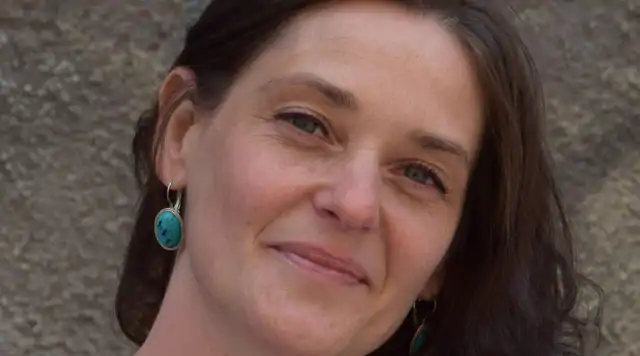
Teacher and school debater Filippa Mannerheim.Photo: Press
Teacher and school debater Filippa Mannerheim today publishes an open letter on Expressen’s culture page to Sweden’s Riksdag politicians. “It is time to merge across party lines and stop the expansion of limited companies,” she writes.
This is a cultural article, where writers can express personal opinions and make assessments of works of art.
Parliamentary politicians!
I am a Swedish citizen. I am a teacher. I’m a parent. And I am deeply concerned about the future of Swedish schools.
The Swedish school has been subjected to a world-unique experiment. In the rest of the world, it is unreasonable for limited companies to make unregulated profits on tax money. Despite this, we in Sweden donate hundreds of millions of kronor to shareholders in company groups year after year – money that was intended for our children’s education.
With the deregulation of the 1990s, the ambition was to create thriving, independent schools, foundations, parent cooperatives and small limited company schools with educational alternatives. Today, this vision has turned into an uncontrollable market where venture capital companies are expanding and devouring tax money at breakneck speed.
The business model is simple: you buy smaller independent schools and incorporate them into the growing groups and then make a profit by targeting marketing to easy-to-teach, independent students, through special dress codes, requirements for high tempo and great drive or through English as a study language. With a sold-out, simpler student base, the corporation schools can reduce salaries, teacher density, resource staff and – to attract even more lucrative student customers – sprinkle with joy-ratings to show the school’s “high results”.
When the profitable students have been absorbed by the independent school, the municipal school is left with a more difficult student base and with the overall responsibility for all the municipality’s students. And when the municipal school’s student allowance must be increased due to the task becoming more demanding, the independent schools ‘student allowance is also increased and the groups’ profits can increase even more. A bomb-proof business model for venture capital companies but a devastating tax waste for the Swedish citizens.
You, politicians, have made our common school a wet dream for venture capital companies.
Because while the school giant Academedia, now listed on the stock exchange, makes a profit of SEK 556 million before tax, the size of the children’s groups in the preschool increases and greatly exceeds the National Agency for Education’s benchmarks. While the International English School (IES) presents a profit of 254 million, many children are in classrooms without teaching materials and are taught by foreign teachers without Swedish qualification or by qualified teachers who earn SEK 3,000 less a month than their municipal colleagues. While schools and colleges are sounding the alarm about declining knowledge results, joy grades are rising, as grades have become a competitive tool on the market. While the independent school giants receive a rent discount for establishing themselves in the municipalities, children with diagnoses or a mother tongue other than Swedish are rejected, as they are more expensive to teach.
Before the National Agency for Education made all statistics about individual schools secret – because it became a “trade secret” – all this information was available to us. Today it does not do that anymore, which threatens our democracy.
I accuse you of that.
Swedish schools bleed at the same time as resources are available. But the tax money that was intended to go to student support, small groups, more teachers, more resource staff, teaching materials and smaller classes ends up in tax havens instead.
You, politicians, have made our common school a wet dream for venture capital companies. It’s shameful. It’s sad. It is unworthy of a knowledge nation.
After Chile abolished profit-driven independent schools four years ago, we are left alone in the world with our school system. Denmark, Norway, Germany, the Netherlands, England all have independent schools but profits are prohibited or strictly regulated. If the rest of the world can have well-functioning independent schools for parents to choose from, without the owners being allowed to pick out millions in profits – why can’t we?
The company magnates have the money. Nine politicians have the power. I have, apart from my furious despair over the state of affairs, only my pen and my conviction that the truth about Sweden’s school system must emerge.
I’m accusing …! was written by Émile Zola and published January 13, 1898. Zola turned in the letter to the President of France and took a stand for the Jewish officer Alfred Dreyfus who had been convicted of high treason.
Parliamentary politicians. This letter has become long and it is time to summarize:
• I accuse you, the Social Democrats! Your party name is a pathetic remnant from the time when you defended an equal school – for all children from all walks of life. Today you have voluntarily put your gag on one of Sweden’s most important issues – the marketing school. It is not democracy but its exact opposite: it is political pity.
• I accuse you, the Moderates! You are talking about more controls, even though it obviously does not help against the corruption-like elements that the market school has produced, where joy grades, instead of education, have become a competitive tool in the fight for the most easily taught students. You have with your nonchalance betrayed our nation and its youngest citizens.
• I accuse you, Liberals. You call yourself a “school party” and claim that teachers should be authorities in the classrooms. At the same time, you have turned children and parents into school customers and “grade shoppers” and teachers into servile sellers of grades, with the task of keeping customers happy for their own school’s survival. The system is morally corrupt and you are partly responsible.
• I accuse you, the Christian Democrats. Your reluctance to see how the interest in profit hits the school is depressing. You earn money when you should serve our children. To you, I have only one thing to say: Drive the traders out of the temple!
• I accuse you, the Green Party. In 2013, your congress voted no to welfare gains. After that, your school policy has consisted of hand hearts on Youtube, despite the fact that you held the post of Minister of Education. Your contribution on the school grounds has been an unfunded “Read-write-count-guarantee” and a struggle for more sex and cohabitation education, while the school falls.
• I accuse you, the Sweden Democrats. You talk about assimilation, community and security. Yet you support a school system that increases segregation and allows jihadist schools run by people with links to Islamism and violent extremism and schools with religious indoctrination of children. And after a special lunch at Riche, you turned to the issue of banning profiteering and sat yourself on lap in the independent school lobby.
• I accuse you, the Left Party. You have been passive and have not even indicated that you would like to overthrow the government on this issue. The school groups’ profit-taking and expansion is a matter of destiny for our country and no matter how outrageous alone you are here in Sweden, you have the rest of the world on your side. Overthrow the government! This issue is not negotiable.
• I accuse you, Center Party! You put venture capital companies’ right to millions in profits ahead of future generations and call Sweden’s principle of openness – the foundation of our democracy – a “hot pursuit of free enterprise”. You let your friends in business management legally steal our taxes – millions that were meant for education. You pose shamelessly with the groups great in photo, without being ashamed. You have let Sweden down.
Knowledge, education and upbringing should be at the center of this socially important activity – not money.
My questions to you politicians are the following: What will happen to Sweden when more and more children do not get the education they need? When foreign venture capital companies gain more and more influence over the school and we citizens lose both transparency and the principle of openness? When tax money, through independent school groups, ends up in the pockets of fundamentalists and shareholders in Kuwait, Saudi Arabia and Malta? What opportunities will we have to govern the school in a democratic way when the power of foreign owners over our education system increases through the expansion of the school groups?
One last reflection. Whatever it may now be worth to you: Schools are not just buildings with children and teachers inside. Schools are not just childcare while parents work. The school is a common community building, where we adults prepare future generations for the future. Knowledge, education and upbringing should be at the center of this socially important activity – not money.
If we demolish this common building, which you, politicians, are well on your way to doing, society will also fall to pieces, slowly but surely. Your society, just like mine. Your children’s society, just like my children’s society.
Parliamentary politicians. The time has come. It is time to merge across party lines and stop the expansion of venture companies and take back the tax millions and education to the Swedish people.
While we still can.
By Filippa Mannerheim
Filippa Mannerheim is a high school teacher of Swedish and history, and a school debater.
Writing in ohiocapital.com, Jeanne Melvin and Denis Smith denounced the central role that the Thomas B. Fordham Institute plays in directing education policy in Ohio. TBF is the think tank of the Ohio Republican Party; that party has controlled the state in recent years. It is curious that TBF directs education policy in Ohio since TBF is based in Washington, D.C.
Melvin is a parent activist, and Smith worked for the Ohio Department of Education.
In Ohio, TBF has been a strong advocate for high-stakes testing and school privatization. It has pushed charter schools and other conservative reforms in Ohio.
As the article says, TBF is an advocacy organization, not a think tank. Its policy positions are aligned with other conservative organizations, still promoting the failed reforms of the past two decades, unable to imagine schools that are not subject to high-stakes testing, unable to imagine schools that are not governed by carrots-and-sticks. TBF is also a charter school authorizer and collects a percentage of the state revenue for every student who enrolls in one of their charter schools. Many of their charter schools have failed. Most charter schools in Ohio are rated low-performing by the state.
The ultimate killer of robograding os Dr. Les Perelman of MIT, who recently retired as a professor teaching writing to students at MIT. Les Perelman and his students cracked the code of robograders and showed how easy it is to fool the computer scoring essays. Use long sentences. Use o score or multisyllabic words. Don’t worry about whether your assertions make sense or are correct. The robograder doesn’t care if you say that World War II started in 1902, because facts don’t matter. Perelman and his students created a device called a Babel Generator, into which you insert any three words and it will spit out a high-scoring incoherent essay.
Peter Greene describes an effort to reclaim the soiled reputation of the robograder. He describes several states where robograders are currently in use.
One state was inexplicably left off that list of infamy: North Carolina.
A bill has been filed in that state peppered with words like “equity” and “opportunity,” a typical ruse to divert attention from the main purpose of the bill: privatization of public funds and defunding of public schools.
Republicans in the North Carolina General Assembly want more public money to flow to unregulated and unaccountable private and religious schools, which are free to use any curriculum they want, free to hire unqualified teachers, free to kick out or exclude students they don’t want, for any reason. Such schools are not subject to federal regulations securing the civil rights of their students. They are not subject to the state’s accountability system that applies to public schools. They are free to discriminate against students they don’t want.
While other states are requesting waivers from federally-mandated tests this spring, Texas is moving forward, requiring all students to take in-person tests.
Given the stress and dislocation caused by the pandemic, this is madness. State Commissioner Mike Morath was never an educator, and apparently he lacks common decency. Instruction has been uneven for almost a year, and many students have experienced the trauma of severe illness and death in their family. What is Morath thinking? He is certainly not thinking of the well-being of students.
Texas public school students must show up in person to take the STAAR test this spring, and districts can apply for waivers to socially distance test takers, according to recent guidance released by the Texas Education Agency.
The state is moving forward with the state standardized tests, taken in grades three through 12, this spring and summer during the pandemic and requiring students to take them at a “monitored” testing site. School districts can set up sites outside of their schools, including performing arts centers, hotels and recreation centers where they can “ensure equitable access and maintain test security.”
Texas is requiring all districts to allow in-person learning for all students who want it, with few exceptions. A state survey at the end of October showed 2.8 million of 5.5 million students were learning on campus, meaning millions were still learning remotely.
Although some may be reluctant to return in person during a pandemic, Texas high school students receiving remote instruction who do not show up to take the required standardized exams may not be able to graduate. Texas has already said students in younger grades who fail required STAAR exams can move up to the next grade. And as of December, school districts will not receive state ratings this year based on how their students perform on the exams.
“A Wolf at the Schoolhouse Door” focuses on a fundamental debate on the nature of schools. Education, the authors argue, is best treated as a public good that belongs to everyone.
“Like clean air, a well-educated populace is something with wide-reaching benefits,” Berkshire and Schneider write. “That’s why we treat public education more like a park than a country club. We tax ourselves to pay for it, and we open it to everyone.”
The alternative: education as a private good that benefits and belongs to those who consume it. In that increasingly influential view, families should choose schools – or other education products and services — the same way they choose restaurants or where to buy their shoes, with little concern for anyone else.
The threats they describe are not a wolf but a veritable wolfpack: conservative ideologues who want to reduce taxes and shrink government, anti-union zealots, marketers bent on “selling” schools, self-dealers making money from ineffective virtual-school schemes and technology enthusiasts who envision a future in which algorithms replace teachers.
That may make the book sound like a polemic; it’s not, at least in my reading. The authors offer a fair and accurate reading of opposing views and acknowledge that public schools aren’t perfect. All too often, they admit, public schools have excluded or failed students of color, immigrants, religious minorities, students with disabilities and others…
I remember, in the late 1990s, being surprised when the Indiana Chamber of Commerce said it planned to push for vouchers. Democrats controlled the governor’s office and the Indiana House. Just a few years earlier, a well-organized voucher push led by prominent business officials fizzled out.
But, as Schneider and Berkshire document, voucher supporters have played a long game, carried forward by groups like Indianapolis-based EdChoice and the American Legislative Exchange Council. In 2011, with a GOP supermajority in the legislature and Mitch Daniels in the governor’s office, Indiana approved vouchers. The program started small but grew to include over 300 private schools, nearly all of them religious, and over 36,000 students. Now there’s talk of expanding it further – or possibly of adopting education savings accounts, one of the “neo-voucher” programs that Schneider and Berkshire describe.
There is reason to hope, he writes, but also reason to be alarmed and vigilant.
Mercedes Schneider reports here on the absurd class sizes assigned to teachers in Louisiana in virtual classes. The teachers are not “teachers,” they are in charge of case loads. They are using a canned curriculum called “Edgenuity,” and she says that it can easily be gamed by students to get higher marks. Education? Not really.
She writes:
Unlimited enrollment is particulary obvious in the virtual high school numbers.
First-semester biology, 282 students; first-semester environmental science, 461 students– both belonging to the same teacher of record (who has an additional 91 students in two other classes).
Yowsa.
First-semester US History, 306 students; first-semester World History, 129 students, AP US History, 48 students– all assigned to one teacher.
First-semester English I, 381 students; first-semester English I Honors, 55 students– both courses, one teacher.
First-semester Algebra I, 394 students assigned to one teacher, who also has another 125 students in 3 additional courses.
First-semester Government, 567 students. One teacher.
First-semester English II, 299 students; first-semester English II Honors, 68 students– same teacher.
Alg II, 220 students; Spanish II, 208 students; Spanish I, 193 students; Computer Science, 93 students; Pre-calculus, 81 students; Algebra III, 72 students; Algebra II Honors, 57 students; Pre-calculus Honors, 29 students; Spanish III, 3 students; Business Math, 49 students. All. Overseen. By. One. Teacher.
How thin can you spread your peanut butter and still call it a sandwich?
When a single teacher is responsible for tutoring and regularly communicating with 400, 500, 600, 700 students on a pre-fab curriculum that students are expected to primarily complete independently, you tell me how much quality education is transpiring here.
The SAT is in trouble. Its business model is threatened by the more than 1,000 colleges and universities that no longer require it for admission. Many more higher education institutions dropped the SAT due to the pandemic. The SAT is big business. It collects more than $1 billion each year in revenue. Its CEO, David Coleman, was architect of the Common Core standards, with a background at McKinsey. His salary is about $1 million a year. He achieved notoriety when he promoted the Common Core and came out against personal essays; he told an audience of educators in New York State that when you grow up, no one “gives a sh—“ about how you feel. They want facts. His Common Core curriculum insisted on the study of more non-fiction, which drove down the teaching of literature.
Some relevant history: The SAT was created in the 1920s as a replacement for the traditional College Boards, exams that were written and graded by high school teachers and college professors. The leaders of the College Board decided to adopt the SAT on December 7, 1941, Pearl Harbor Day, when it was clear that the nation was entering the War. The author of the standardized, machine-scored SAT was a Princeton psychologist named Carl C. Brigham. He wrote a notoriously racist book called A Study of American Intelligence, in which he used the I.Q. tests of World War 1 to compare the various races. Brigham was a pioneer in the development of I.Q. testing; like most psychologists at the time, he believed that I.Q. was innate, fixed, and inherited, rather than a product of environment and .educational opportunity
Critics saw the changes not as an attempt to streamline the test-taking process for students, as the College Board portrayed the decision, but as a way of placing greater importance on Advanced Placement tests, which the board also produces, as a way for the organization to remain relevant and financially viable.
“The SAT and the subject exams are dying products on their last breaths, and I’m sure the costs of administering them are substantial,” said Jon Boeckenstedt,the vice provost for enrollment management at Oregon State University...
In recent years, the SAT has come under increasing fire from critics who say that standardized testing exacerbates inequities across class and racial lines. Some studies have shown that high school grades are an equal or better predictor of college success.
More than 1,000 four-year colleges did not require applicants to submit standardized test scores before the pandemic, and the number rose — at least temporarily — as the coronavirus forced testing centers to close and made it difficult for many students to safely take the test.
Perhaps the biggest hit came in May, when, following a lawsuit from a group of Black and Hispanic students who said the tests discriminated against them, the influential University of California system decided to phase out SAT and ACT requirements for its 10 schools, which include some of the nation’s most popular campuses.
The College Board acknowledged that the coronavirus had played a role in the changes announced on Tuesday, saying in a statement that the pandemic had “accelerated a process already underway at the College Board to simplify our work and reduce the demands on students.”
But David Coleman, the chief executive of the College Board, a nonprofit organization that in the past has reported more than $1 billion a year in revenue, said that financial concerns were not behind the decisions, and that despite the growing number of schools making the SAT optional, demand for the test was still “stronger than some would expect.”
He said the organization’s goal was not to get more students to take A.P. courses and tests, but to eliminate redundant exams and reduce the burden on high school students. “Anything that can reduce unnecessary anxiety and get out of the way is of huge value to us,” he said.
Some experts, though, said eliminating the subject matter tests could have the opposite effect, increasing pressure on students to take A.P. courses and exams, especially in their junior year, so credits can be submitted in time for college admissions decisions.
Saul Geiser, a senior associate at the Center for Studies in Higher Education at the University of California, Berkeley, said the move would “worsen the perverse emphasis on test prep and test-taking skills at the expense of regular classroom learning…”
At the University of Massachusetts at Amherst, officials dropped the SAT essay requirement in 2016 because they saw it as an undue burden on students, including an added fee, said Mike Drish, the university’s director of first-year admissions.
Mr. Drish said the university evaluated students’ writing preparedness based on their grades in English classes, as well as teacher recommendations and essays submitted as part of the admissions process.
For more on the uncertain future of the SAT, read this story in Inside Higher Ed.
Scott Jas him, a veteran reporter about higher education, writes:
Many observers — some of them long-standing critics and others sometime fans — say the College Board will be smaller and less influential in the future. And they expect most colleges that went test optional this year to stay that way, further eroding the board’s influence...
Although there were an increasing number of schools adopting test-optional admission policies, in this area, as in so many others, the pandemic has accelerated what will come to be permanent changes in the functioning of our society,” said Steve Syverson, a retired senior admissions official at the University of Washington at Bothell and Lawrence University.
“Lots of colleges didn’t really even need to require the SAT, as they were already admitting everyone who was admissible, but they didn’t want to eliminate it as a requirement because they felt it would devalue them,” Syverson continued. “In a sense, the pandemic — and the pervasive adoption of temporary test-optional or test-blind policies — gave them permission to eliminate the requirement. And I believe a large number of institutions will not return to requiring it. So I think there’s no going back.”
Syverson was the co-author of a 2018 report that found colleges that are test optional generally get more applications and more diversity among those applicants and among students...
Pat McGuire, president of Trinity Washington University, which does not require tests for admissions, said, “Eliminating the SAT essay and subject tests is an admission of some problems in the SAT system, but hardly enough of an overhaul.”
She added, via email, “If the College Board really wants to save itself, it would eliminate the SAT entirely and, instead, become a leader in working with institutions to develop innovative strategies for assessing student strengths and competencies, not only in high school but across the life span, thus helping higher education do a better job of matching students and programs more effectively. More effective matching of student talents and interests would reduce attrition and wasted credits, save students money and increase completion, a win-win for everybody. But as it is right now, the SAT is simply a high barrier that funnels students without much concern for what happens to them once they get through the barrier.”
A high school counselor who asked not to be identified said, “My small-d democratic side says, goodbye tests, good riddance to chasing a test score, goodbye to a zillion-dollar test prep industry, goodbye to a built-in advantage to resourced kids and schools.” She is quick to add, though, that even if that happened, and the role of the College Board shrank, there would still be a need for changes in admissions to bring students from diverse backgrounds into higher education.
The other side for her is that “tests give the illusion of a meritocracy,” and that parents — at least of the wealthy — love tests. Eliminating the SAT would be very difficult in that environment, she said.
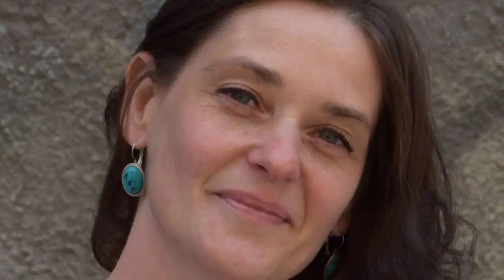 High school teacher Filippa Mannerheim.
 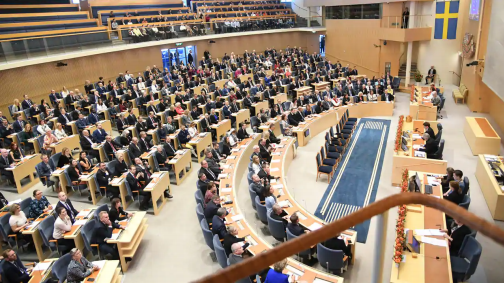 The Swedish Parliament.


 Diane Ravitch's blog