Archives for category: Childhood

I frequently get comments by people who are very angry. They are hateful, and their comments are hateful. They say horrible things about anyone who dusagreees with their worldview.

I try to block them but they sometimes slip through. Life is too short to argue with people who wish you were dead.

This message is for them, but you can watch too.

Andru Volinsky lives in New Hampshire, where he has been active in politics and protecting public schools. He served on the state’s Executive Council, he successfully litigated a challenge to the state’s system for funding public schoools. He ran for Governor in 2020 and unfortunately was not elected. He writes here about the risks that America’s immigrant children face today.

His article was posted on the blog of the Network for Public Education.

Andru Volinsky: The Threat to Public School Access for Children of Immigrants

Andru Volinsky alerts us to one of the other threats to education that may be coming for immigrant children. 

School children who cannot prove they are legally in the US may soon be threatened with exclusion from public schools.  Since 1982, when the Supreme Court decided the case of Plyler v. Doe, public schools have been required to accept children who immigrate to the US, regardless of their legal status. The Plyer opinion, however, was issued by a deeply divided court (five different justices wrote opinions) with only a bare majority deciding in favor of the school children. And now, much like the Roe v. Wade abortion decision, the Plyler decision is under attack by right-wing extremists. Texas governor Gregg Abbott has publicly challenged the decision and it appears there is an organized effort to overturn the right of immigrant children to attend public schools.

Earlier this year, the Saugus, MA School Committee adopted stringent proof of legal residency requirements for its school children shortly after Massachusetts governor Maura Healey announced a state of emergency concerning Massachusetts’ over 5000 recent immigrants, many of whom were from Haiti, Nicaragua and Venezuela. Saugus is a town of about 30,000 residents located just outside of Boston. The immigrants from these three nations were legally admitted to the US under a Biden administration special humanitarian parole program adopted in 2023.

Legislators in Oklahoma, Tennessee and Texas recently also considered legislation to either explicitly bar children from attending public school if they cannot prove they are legally in the US or to require extensive proof of legal residency that can then give local officials excuse not to admit students. The Saugus School Committee is reported to have deployed this tactic to delay admission of a six-year-old girl from Nicaragua for six months.

According to a Pew study released in July 2024, the unauthorized immigrant population in the United States was 11.0 million in 2022, the most recent year available. About 850,000 of these immigrants were children under 18.

About 4.4 million U.S.-born children under 18 live with an unauthorized immigrant parent.  More than eight million workers in the US are unauthorized immigrants. Only 5 percent of these unauthorized workers are single persons without children. The remainder are heads of families most of which are of mixed legality of their immigration status.

If we exclude children from public schools because of their immigration status, how can we expect them to become “good citizens?”

Read the full post here. You can view the post at this link : https://networkforpubliceducation.org/blog-content/andru-volinsky-the-threat-to-public-school-access-for-children-of-immigrants/

The war for Ukrainian freedom grinds on. One of its ugliest chapters is the mass kidnapping of Ukrainian children. Thousands have been stolen from their homes and taken to Russia, where they are “adopted” by Russian families.

A new art exhibit in New York City is a stark reminder of their plight:

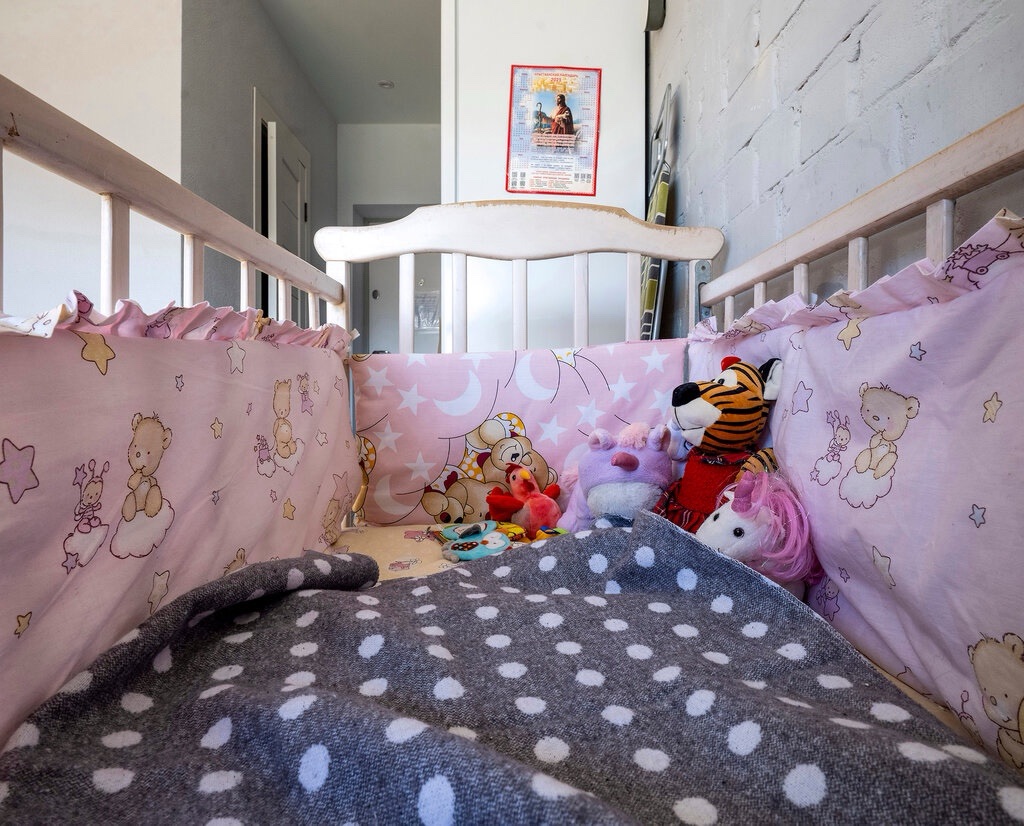
On a quiet block in Manhattan’s Little Ukraine in the East Village, passers-by are confronted with haunting reminders of war. A 100-foot-long mural shows children’s beds lined with stuffed animals and toys, but no children, symbolizing the thousands of Ukrainian children who were separated or taken from their families since Russia invaded their country in 2022.

The piece, titled “Empty Beds, is an eight-foot-tall photographic installation by the artist Phil Buehler. It was officially introduced on Saturday, when children tugged their parents closer to look at the cuddly toys, while other visitors sat on yellow folding chairs nearby to reflect.

The mural, on display until Nov. 30 at 44 Second Avenue (at East Second Street), uses the visual language of absence to signify the continuing war in Ukraine.

“Bed of Hannah” in “Empty Beds” art show

Over recent years, we have heard again and again that parents always know what’s best for their child. And so we have vouchers and home-schooling because “parents always know what’s best for their child.”

No, they don’t.

Read this story and ask yourself whether this parent knew what was best for her child.

I wish I had saved the many stories of this kind that I have read over the past decade. Thank God, they don’t happen every day but they do happen.

Whenever I write about abusive parents like the one in this horrific story, I get inundated by angry letters from advocates for parents’ rights, especially homeschoolers. Let ’em write.

The state should have had someone to look after this boy. They should have had the authority to take the child away from his mother, who hated him, to save his life.

The big story in the mass media and blogs over the past two days was the way Trump answered a question in an appearance in New York City about whether he would do anything to make child care affordable; he was asked to be specific. He gave a long (two minute) reply that was meandering and incoherent. He seemed to say that the money that the U.S. will collect from tariffs will be so huge that it will wipe out the national deficit and make everything possible, including the cost of child care, assuming that tariffs would produce revenue instead of raising consumer prices. He didn’t answer the question.

Meanwhile, in another setting, JD Vance was asked about child care. He responded that parents could ask grandparents or other relatives to help out; and he suggested lowering the certification requirements for child care providers.

The New York Times must have realized, based on the keen interest in this story, that its original reporting was inadequate. At 4:42 pm EST, the Times published a story by Michael C. Bender about what happened. With this article, The New York Times squelched persistent rumors that it was not reporting on Trump’s mental acuity.

This was the headline:

Trump and Vance Took Questions on Child Care. Their Non-Answers Said a Lot.

The former president and his running mate gave nearly equally confusing answers when asked separately this week how they would make child care more affordable.

But instead of a crisp, camera-ready reply from a seasoned three-time presidential candidate, Mr. Trump unspooled two of the most puzzling minutes of his campaign.

His answer was a jolting journey through disjointed logic about how the size of his tariffs would take care of all the nation’s children, which only raised a new, more complicated question about why he remains unable to provide straightforward answers about policies he would prioritize in a second term.

“Well, I would do that,” he said when asked if he would commit to supporting legislation to make child care more affordable, and how he would seek to do so.

“And we’re sitting down — you know, I was somebody — we had Senator Marco Rubio and my daughter Ivanka was so impactful on that issue,” Mr. Trump continued, referring to the pair’s previous push for paid family leave and expanding the child tax credit. “It’s a very important issue. But I think when you talk about the kind of numbers that I’m talking about that — because the child care is, child care, it’s, couldn’t, you know, there’s something, you have to have it. In this country, you have to have it.

“But when you talk about those numbers compared to the kind of numbers that I’m talking about, by taxing foreign nations at levels that they’re not used to, but they’ll get used to it very quickly — and it’s not going to stop them from doing business with us, but they’ll have a very substantial tax when they send product into our country. Those numbers are so much bigger than any numbers that we’re talking about, including child care, that it’s going to take care.”

Mr. Trump has long portrayed himself as the nation’s economist-in-chief, a rich businessman-turned-politician now focused on increasing the wealth of everyday Americans.

He has spent two years campaigning against rising prices for Americans, from housing to food to, yes, child care. At times, he has spoken briefly about instituting “baby bonuses” for parents of newborns, and he has said that he would consider expanding the child tax credit but has not said by how much.

Mr. Trump’s rambling answer handed Vice President Kamala Harris’s campaign an opportunity to press one of its central messages: that Mr. Trump is so out-of-touch with normal problems facing most Americans that he cannot be expected to find the solutions.

“He’s always been profoundly discursive, but this one is instructive,” said Liam Donovan, a Republican strategist. “He immediately referenced the Rubio-Ivanka effort, which is actually the right answer. He just wasn’t involved or engaged in the details. So beyond that, he just pivots to a stream of consciousness about what he knows and cares about.”

Just a day earlier, on Wednesday, Senator JD Vance, the Republican vice-presidential nominee, responded to a similar question about child care with a nearly equally confusing answer at an event in Mesa, Ariz.

Mr. Vance, like Mr. Trump, acknowledged that the issue of affordable child care was “such an important question.” But his initial answer was that parents should get help from grandparents or aunts and uncles.

“Maybe Grandma and Grandpa wants to help out a little bit more,” Mr. Vance said.

But many parents cannot rely on help from relatives — and many relatives are not in a position to help with someone else’s children. Mr. Vance seemed to acknowledge that conundrum, and pivoted to calling for fewer regulations on child-care providers, falsely saying that child-care specialists were required to have “a six-year college degree.”

“Americans are much poorer because they’re paying out the wazoo for day care,” Mr. Vance said. “Empower working families. Empower people who want to do these things for a living, and that’s what you’ve got to do.”

Mr. Trump’s answer offered little additional clarity.

The former president seemed to outline a theory that his tariffs would result in such prosperity that the nation could wipe out its $6 trillion spending deficit and pay for additional benefits, like reducing child-care costs.

“As much as child care is talked about as being expensive, it’s, relatively speaking, not very expensive compared to the kind of numbers we’ll be taking in,” Mr. Trump said on Thursday.

But Mr. Trump’s answer ignored that most economists say that the burden of tariffs are largely shouldered by middle-class consumers in the form of higher costs. Left unsaid was that he spent twice as much borrowed money during his term in the White House as President Biden has, according to an analysis by the nonpartisan Committee for a Responsible Federal Budget.

Ms. Harris has called for restoring and expanding a child tax credit and proposed a new $6,000 benefit for parents of newborns. Her child tax credit proposal would increase the maximum to $3,600 per child, up from $2,000 now.

Joseph Costello, a Harris campaign spokesman, said in a statement that the tariffs Mr. Trump is proposing as part of his “‘plan’ for making child care more affordable” would raise costs on middle-class families. “The American people deserve a president who will actually cut costs for them, like Vice President Harris’s plan to bring back a $3,600 child tax credit for working families and an expanded $6,000 tax cut for families with newborn children.”

Thursday was not the first time that Mr. Trump has punted on the question of child-care costs.

In his debate with Mr. Biden this year, before the president dropped out of the race, the moderators asked Mr. Trump twice about what he would do to help with the affordability of child care.

In his first answer, Mr. Trump went off on a series of tangents related to earlier debate topics, defending his firing of retired Gen. John Kelly as his chief of staff, denying that he had called soldiers who had died in war “suckers” and “losers,” boasting about his firing “a lot of the top people at the F.B.I.,” accusing Mr. Biden of wanting “open borders” and denouncing him as “the worst president.”

Given an additional minute to address child-care costs, the topic of the question, Mr. Trump did not mention the word once.

“Just so you understand, we have polling,” Mr. Trump began. “We have other things that do — they rate him the worst because what he’s done is so bad. And they rate me, yes, I’ll show you. I will show you. And they rate me one of the best, OK?”

Trump spoke yesterday to the Economic Club of New York–an organization composed not of economists but of people who work in the financial sector (e.g. Wall Street). At the end of his speech, he took a few questions. The last one came from a woman who said that American families were worried about the high cost of childcare, costing as much as 20% of their income. She asked Trump what he would do to help families and what specific actions he would take.

His answer was rambling and incoherent. He never answered her question.

Lawrence O’Donnell played the full question and Trump’s answer last night. Watch at 18:00.

This is an unedited transcript of his response:

Well, I would do that, and we’re sitting down, and I was, somebody, we had Senator Marco Rubio, and my daughter Ivanka was so, uh, impactful on that issue. It’s a very important issue. But I think when you talk about the kind of numbers that I’m talking about, that, because, look, child care is child care is. Couldn’t, you know, there’s something, you have to have it – in this country you have to have it.

But when you talk about those numbers compared to the kind of numbers that I’m talking about by taxing foreign nations at levels that they’re not used to — but they’ll get used to it very quickly – and it’s not gonna stop them from doing business with us, but they’ll have a very substantial tax when they send product into our country. Uh, those numbers are so much bigger than any numbers that we’re talking about, including child care, that it’s going to take care.

We’re gonna have – I, I look forward to having no deficits within a fairly short period of time, coupled with, uh, the reductions that I told you about on waste and fraud and all of the other things that are going on in our country, because I have to stay with child care. I want to stay with child care, but those numbers are small relative to the kind of economic numbers that I’m talking about, including growth, but growth also headed up by what the plan is that I just, uh, that I just told you about.

We’re gonna be taking in trillions of dollars, and as much as child care, uh, is talked about as being expensive, it’s, relatively speaking, not very expensive compared to the kind of numbers we’ll be taking in. We’re going to make this into an incredible country that can afford to take care of its people, and then we’ll worry about the rest of the world. Let’s help other people, but we’re going to take care of our country first. This is about America first. It’s about Make America Great Again, we have to do it because right now we’re a failing nation, so we’ll take care of it. Thank you. Very good question. Thank you.

Even though he didn’t answer

Paul Krugman, the economist who writes a regular column for the New York Times, recently explored why Republicans oppose free lunch for students. The simple answer is that it’s just plain weird. The more complex answer is that they don’t want to create an “entitlement” for children. The irony that he does not explore is why Republicans are unwilling to pay for free lunches, yet eager to pay the tuition of students who attend religious or other private schools, regardless of their family’s income.

He writes:

You could say that Tim Walz became the Democratic vice-presidential nominee with one weird trick — that is, by using that word to describe Donald Trump and JD Vance, a categorization that went viral. In his maiden campaign speech he upgraded it a bit further to “creepy and weird as hell.” (If you think that’s over the top, have you seen Trump’s bizarre rant speculating about whether Joe Biden is going to seize back his party’s presidential nomination?)

But Walz is more than a meme-maker. He has also been an activist governor of Minnesota with a strong progressive agenda. And I’d like to focus on one key element of that agenda: requiring that public and charter schools provide free breakfasts and lunches to all students.

Perhaps not incidentally, child care has long been a signature issue for Kamala Harris, and Walz’s policies may have played a role in his selection as her running mate.

In any case, free school meals are a big deal in pure policy terms. They have also met fierce Republican opposition. And the partisan divide over feeding students tells you a lot about the difference between the parties, and why you really, really shouldn’t describe the MAGA movement as “populist.”

Now, even many conservatives generally support, or at least claim to support, the idea of cheap or free lunches for poor schoolchildren. The National School Lunch Program goes all the way back to 1946, when it passed with bipartisan support and President Harry Truman signed it into law.

Why should the government help feed kids? Part of the answer is social justice: Children don’t choose to be born into families that can’t or won’t feed them adequately, and it seems unfair that they should suffer. Part of the answer is pragmatic: Children who don’t receive adequate nutrition will grow up to be less healthy and less productive adults than those who do, hurting society as a whole. So spending on child nutrition is arguably as much an investment in the future as building roads and bridges.

There’s a strong case that in general child nutrition programs more than pay for themselves by creating a healthier, higher-earning future work force. In other words, this is one area where there really is a free lunch.

Schools, then, should feed students who might otherwise not get enough to eat. But why make free meals available to all children, rather than only to children from low-income households? There are multiple reasons, all familiar to anyone who has looked into the problems of antipoverty policy in general.

First, trying to save money by limiting which children you feed turns out to be expensive and cumbersome; it requires that school districts deal with reams of paperwork as they try to determine which children are eligible. It also imposes a burden on parents, requiring that they demonstrate their neediness.

Additionally, restricting free meals to children whose parents can prove their poverty creates a stigma that can deter students from getting aid even when they’re entitled to receive it. I know about this effect from family history: My mother, who grew up in the Depression, used to talk about her shame at not being able to afford new shoes because her parents, although just as poor as her classmates’ parents, couldn’t bring themselves to apply for government assistance.

And it’s not as if feeding children is prohibitively expensive. So if you want to make sure that children get enough to eat, having schools offer free meals to all their students, without an income test, would seem to be simple common sense.

But Republicans in general aren’t on board. The Minnesota law that Walz signed passed essentially along party lines. The people behind Project 2025, in particular, don’t approve. (Yes, despite denials, Project 2025 is a very good guide to what a second Trump administration might do.) The project’s magnum opus, “Mandate for Leadership,” whose 900 pages lays out a detailed policy agenda, singles out feeding students as something that should be reined in. “Federal school meals increasingly resemble entitlement programs,” it warns, as if this is self-evidently a bad thing. A bit farther down, it reads, “The U.S.D.A. should not provide meals to students during the summer unless students are taking summer-school classes.” I guess being hungry isn’t a problem when school is out.

Stories like this are why my hackles rise whenever people call MAGA a populist movement. The people who will almost certainly make policy if Trump wins are as committed as ever to a right-wing economic agenda of cutting taxes on the wealthy while slashing programs that help Americans in need — including programs that help children.

In addition to being cruel, this agenda tends to be unpopular. Most Americans support providing all students with meals, regardless of their income, just as most Americans now support the Affordable Care Act, which Trump will very likely again try to destroy if returned to office.

But the American right lives in an echo chamber that normalizes views on both economic and social policy that are very much at odds with what a majority of voters want. Those extreme views often fly under the radar. But sometimes they do attract attention. And when they do, many people find them … weird.

I enjoyed reading this story about the frantic efforts to find four young children who survived a plane crash in the Amazon. The adults on the small plane were killed, including their mother. They were found after 40 days of wandering. How they were found and how they survived makes a good story.

Scholars at Brown University and Stanford University recently released a study concluding that spending more on schools reduces child mortality.

The paper is titled “Priceless Benefits: Effects of School Spending on Child Mortality.”

The authors are: Emily Rauscher of Brown University; Greer Mellon, Postdoctoral Research Associate, Brown University; Susanna Loeb, Stanford University.

The authors’ summary:


The academic and economic benefits of school spending are well-established, but focusing on these outcomes may underestimate the full social benefits of school spending. Recent increases in U.S. child mortality are driven by injuries and raise questions about what types of social investments could reduce child deaths. We use
close school district tax elections and negative binomial regression models to estimate effects of a quasi-random increase in school spending on county child mortality. We find consistent evidence that increased school spending from passing a tax election reduces child mortality.

Districts that narrowly passed a proposed tax increase spent an additional $243 per pupil, mostly on instruction and salaries, and had 4% lower child mortality after spending increased (6-10 years after the election). This increased spending also reduced child deaths of despair (due to drugs, alcohol, or suicide) by 5% and child deaths due to accidents or motor vehicle accidents by 7%. Estimates predicting potential mechanisms suggest that lower child mortality could partly reflect increases in the number of teachers and counselors, higher teacher salaries, and improved student engagement.

Suggested citation: Rauscher, Emily, Greer Mellon, and Susanna Loeb. (2024). Priceless Benefits: Effects of School Spending on
Child Mortality. (EdWorkingPaper: 24-1008). Retrieved from Annenberg Institute at Brown University:
https://doi.org/10.26300/s7t7-j992

Emily Rauscher
Professor of Sociology
Brown University
Box 1916
Providence, RI 02912
emily_rauscher@brown.edu


Greer Mellon
Postdoctoral Research Associate
Population Studies and Training Center and Annenberg Institute
Brown University
greer_mellon@brown.edu


Susanna Loeb
Professor of Education
Stanford University
482 Galvez Mall
Stanford, CA 94305
sloeb@stanford.edu

The Atlantic contains a lovely article by contributing writer Stephanie H. Murray about a growing movement to close streets to cars so that children can play without adult direction.

She begins:

In the summer of 2009, Amy Rose and Alice Ferguson, two mothers living on Greville Road in Bristol, a midsize city in southwest England, found themselves in a strange predicament: They saw entirely too much of their kids. “We were going, like, Why are they here?” Rose told me. “Why aren’t they outside?” The friends decided to run an experiment. They applied to shut their quarter-mile road to traffic for two hours after school on a June afternoon—not for a party or an event but just to let the children who lived there play. Intentionally, they didn’t prepare games or activities, Rose told me, as it would have defeated the purpose of the inquiry: “With time, space, and permission, what happens?”

The results were breathtaking. The dozens of kids who showed up had no problem finding things to do. One little girl cycled up and down the street “3,000 times,” Rose recalled. “She was totally blissed out.” Suddenly, the modern approach to children’s play, in which parents shuttle their kids to playgrounds or other structured activities, seemed both needlessly extravagant and wholly insufficient. Kids didn’t need special equipment or lessons; they just needed to be less reliant on their time-strapped parents to get outside.

The experiment also produced some unexpected results. As children poured into the street, some ran into classmates, only just then realizing that they were neighbors. Soon it became clear to everyone present that far more children were living on Greville Road than anyone had known. That session, and the many more it prompted, also became the means by which adult residents got to know one another, which led to another revelation for Ferguson and Rose: In numerous ways, a world built for cars has made life so much harder for adults.

The dominance of cars has turned children’s play into work for parents, who are left coordinating and supervising their children’s time and ferrying kids to playgrounds and play dates. But it has also deprived adults of something more profound. Over the years, as Rose and Ferguson have expanded their experiment to other parts of the United Kingdom, neighborhoods across the country have discovered that allowing kids to play out in the open has helped residents reclaim something they didn’t know they were missing: the ability to connect with the people living closest to them.

Modern folks tend to think that streets serve largely mobile purposes—getting cars from one place to another in swift, orderly fashion. But “prior to the automobile, streets had a ton of stationary functions,” Marcel Moran, a faculty fellow at New York University’s Center for Urban Science and Progress, told me. Streets were where people sold wares and socialized. And particularly after the United States and Europe began to industrialize, streets were the primary location for the rising number of urban-dwelling children to play, according to Jon Winder, a historian and the author of Designed for Play: Children’s Playgrounds and the Politics of Urban Space, 1840–2010. This remained the case in the U.K. and the U.S. even after playgrounds became widespread in the early 20th century. Only when cars hit the streets in larger numbers did things begin to change. Society, Winder told me, began prioritizing “the movement and storage of motor vehicles over children and their playful behavior…”

Rose and Ferguson’s project on Greville Road is of course not the first or only effort to reclaim the streets for children. In the U.K., play streets emerged roughly a century ago as a sort of compromise in the process of booting kids off the street. But after peaking in the 1960s, they largely dwindled out, to be revived only in the late 2000s. New York has had a play-streets program since 1914, and Philadelphia for more than half a century—and recently, the idea has been taken up in other U.S. cities. Chicago launched a play-streets program in 2012, followed by Los Angeles in 2015; an initiative in Portland, Oregon, hosted its first events in 2023.

In the U.K., Rose, Ferguson, and their friend Ingrid Skeels expanded their experiment in 2011 by founding Playing Out, an organization that has helped residents on more than 1,000 streets in dozens of cities across the country set up their own play sessions. These typically last for two hours and occur weekly, biweekly, or monthly.

Open the link to read the rest of the article. It’s an inspiring idea that is great for children and parents alike. Plus, it introduces neighbors to each other.