The National Education Policy Center announced that it would no longer post on Twitter, nor would it open an account on Threads. I refuse to refer to Twitter as X because is a letter, not a name. NEPC is a trustworthy source of research about education.
I have faced the same dilemma. I have opened an account on several of the alternative social media sites but stayed with Twitter because I have almost 150,000 followers there. When they retweet, my posts go further.
This is what NEPC announced:
The decision to close the @NEPCtweet account was straightforward but not easy.
We truly valued NEPC’s 13 years on Twitter, sharing our work with our 7,500 followers and engaging in often-interesting discussions. Yet after the company’s change in ownership and shift in policies, our continued presence on Twitter (now “X”) became impossible. Disinformation and conspiracy theories, as well as bigotries of all sorts, have moved from tolerated to celebrated.
NEPC cannot, at this point, find a sensible alternative. We may still decide to open a Mastodon or Bluesky account, but their current limited reach and other constraints mean that active participation will have minimal benefits.
Meta’s new platform, Threads, presents a unique set of concerns. Because Threads is attached to Instagram, the Meta privacy policy is the Threads privacy policy. And it’s a “privacy nightmare”–the privacy policy is so weak that Meta can’t launch Threads in the EU.
We remain concerned that Threads and other Meta platforms are used by school-aged children and accordingly raise the sorts of privacy harms that NEPC has long investigated and condemned. NEPC has, for example, recently published analyses of the Summit Learning Platform and the Along platform, both of which are associated with Meta and the Chan Zuckerberg Initiative.
NEPC is committed to working with top scholars to provide a bridge between high-quality research and public deliberations about education policy and practice. Our mission statement reads in part: We are guided by the belief that the democratic governance of public education is strengthened when policies are based on sound evidence and support a multiracial society that is inclusive, kind, and just. The social platform now known as “X” is the antithesis of these values.
The message Michael Farris had come to deliver was a simple one: The time to act was now.
For decades, Farris — a conservative Christian lawyer who is the most influential leader of the modern home-schooling movement — had toiled at the margins of American politics. His arguments about the harms of public education and the divinely endowed rights of parents had left many unconvinced.
Now, speaking on a confidentialconference call to a secretive group of Christian millionaires seeking, in the words of one member, to “take down the education system as we know it today,” Farris made the same points he had made in courtrooms since the 1980s. Public schools were indoctrinating children with a secular worldview that amounted to a godless religion, he said.
The solution: lawsuits alleging that schools’ teachings about gender identity and race are unconstitutional, leading to a Supreme Court decision that would mandate the right of parents to claim billions of tax dollars for private education or home schooling.
“We’ve got to recognize that we’re swinging for the fences here, that any time you try to take down a giant of this nature, it’s an uphill battle,” Farris said on the previously undisclosed July 2021 call, a recording of which was obtained by the watchdog group Documented and shared with The Washington Post. “And the teachers union, the education establishment and everybody associated with the education establishment will be there in full array against us — just as they were against home-schoolers.”
“We’ve got to recognize that we’re swinging for the fences here, that any time you try to take down a giant of this nature, it’s an uphill battle,” Farris said on the previously undisclosed July 2021 call, a recording of which was obtained by the watchdog group Documented and shared with The Washington Post. “And the teachers union, the education establishment and everybody associated with the education establishment will be there in full array against us — just as they were against home-schoolers.”
The 50-minute recording, whose details Farris did not dispute in a series of interviews with The Post, is a remarkable demonstration of how the ideology he has long championed has moved from the partisan fringe to the center of the nation’s bitter debates over public education.
A deeply religious evangelical from Washington state, Farris began his career facing off with social workers over the rights of home-schoolers and representing Christian parents who objected to “Rumpelstiltskin” being read in class.
In recent years, he has reached the pinnacle of the conservative legal establishment. From 2017 to 2022, he was the president and chief executive of the Alliance Defending Freedom (ADF), a powerhouse Christian legal groupthat helped draft and defend the restrictive Mississippi abortion law that led to the overturning of Roe v. Wade. ADF and its allieshave filed a flurry of state and federal lawsuits over the past two years alleging that public schools are violating parental and religious rights.
Yet it is outside the courtroom that Farris’s influence has arguably been most profound. No single figure has been moreinstrumental in transforming the parental rights cause from an obscure concern of Christian home-schoolers into a GOP rallying cry.
When former president Donald Trump called for a federal parental bill of rights in a 2023 campaign video, saying secular public school instruction had become a “new religion,” he was invoking arguments Farris first made 40 years ago. The executive order targeting school mask mandates that Virginia Gov. Glenn Youngkin (R) signed on his first day in office cited a 2013 state law guaranteeing “fundamental” parental rights that Farris helped write.
In Florida, ahome-schooling mom introduced Farris’s ideas to a state lawmaker, setting in motion the passage of the state’s Parents’ Bill of Rights in 2021. The law, repeatedly touted by Gov. Ron DeSantis (R) on the presidential campaign trail, laid the groundwork for the state’s controversial Parental Rights in Education Act, dubbed by its critics the “don’t say gay” bill.
“He is our hero,” Patti Sullivan, the home-schooler involved in Florida’s 2021 law, said of Farris. “He is the father of the modern movement in parental rights.”
Fundamental parental rights measures have been proposed or enacted this year in more than two dozen other states, according to a Post analysis using the legislation-tracking database Quorum, and in March, a federal parents’ bill of rights passed the Republican-controlled House.
Farris has not been personally involved in pushing the most recent bills, which have been fueled by anger over covid-19 mask mandates and how schools are handling Black history, sexual orientation and gender identity. Tiffany Justice, co-founder of the right-wing groupMoms for Liberty, which has become a powerful force in the parental rights movement since its launch less than three years ago, said it would be a mistake to overemphasize the impact of conservative Christian home-schoolers on the battles now playing out across the country.
Justice said she has met Farris but that the arguments he was making in the 1980s haven’t strongly influenced her organization, whose members have pushed to remove some books with LGBTQ+ themes from schools and to restrict what teachers can say about race and gender.
“It’s 2023,” she said. “There are a lot of things that people thought 40 years ago.”
Yet to those who have followed Farris’s career, the adoption of his arguments by so many families unconnected to home schooling is a measure of his success. In the eyes of his critics, he has masterfully imported an extreme religious agenda into the heart of the nation’s politics through the seemingly unobjectionable language of parents’ rights. Some argue that it has always been the goal of the most radical Christian home-schoolers not merely to opt out of the public schools but to transform them, either by diverting their funding or allowing religion back into the classroom.
“Everyone should be aware of Michael Farris and his influence on the Christian right,” said R.L. Stollar, a children’s rights advocate who was home-schooled and has long warned of the conservative home-schooling movement’s political goals. “To Farris’s credit, he is really good at what he does. He is really good at taking these more extreme positions and presenting them as if they are something that would just be based on common sense.”
The story continues in extensive detail about Farris’s battles to win acceptance and public funding for home schooling.
He tried but failed to criminalize gay sex. His biggest victories have been in his demands to expand home schooling. He and his wife have 10 children. They enrolled her in a public school, bur removed her after two months. They put her in a Christian school but withdrew her after concluding she was being influenced by other 6-year-olds.
Farris wrote that public schools are “a godless monstrosity.”
And he wrote that by their very nature, public schools indoctrinate:
“Inculcation of values is inherently a religious act,” he said. “What the public schools are doing is indoctrinating your children in religion, no matter what.”
My view: public schools unite us as a nation, a people, and a democracy. While there are some highly-educated people like Michael Farris who homeschool their children, many uneducated people are following their lead and their children will be indoctrinated into their religion and be poorly educated.
Thom Hartmann is one of the best political bloggers in the nation and a superb journalist. This is a very important article. In 2016, I pleaded with readers not to vote third party because Trump was clearly unhinged and ignorant. Jill Stein siphoned off enough votes to elect him. I’m still haunted by the infamous photo of Jill Stein sitting at Putin’s table with Michael Flynn before the election.
We can’t afford any more George W. Bush’s or Donald Trump’s, who were both brought to us by Democratic-leaning voters thinking they were doing the right thing by voting for third party candidates…
One of the most fashionable statements these days among progressive-leaning voters who pretend to great political insight is:
“I want to vote for the person I like themost, not some party or candidate that I only half-agree with.”
Its corollary is:
“You’re just trying to get me to vote Democratic because you support that party’s corruption. I won’t be intimidated: I’m going to vote for the best person to run the country!”
Often these types of statements are followed by:
“People in France and Israel can vote for any one of a dozen parties and nobody complains that they’re ‘throwing away their vote.’ This is America: we’re even better! So, I should be able to vote for anybody I want!”
Some people pushing this line simply don’t understand the difference between thepolitical systems of France/Israel and theUS.
Others are cynical hustlers (this is true mostly of the talk-show and YouTube hosts trying to differentiate themselves by pushing this), trying to grab and hold an audience by being “edgy,” “iconoclastic,” or “a rebel with a cause.”
So, let’s review some political basics.
Whatever its genesis, this opinion — that ignoring our two-party system and “voting for the best candidate is a good thing” — is widespread. After all, intuitively it seems to make perfect sense.
In a rational world, who would want to vote for anyone less than the best candidate? Unfortunately, though, America’s political system is not as rational as that of countries with proportional representation or ranked choice voting.
A 2022 Pew poll found people’s unfavorable view of both parties has gone from 6 percent in 1994 to 27 percent today. Similarly, 38 percent of Americans “wish there were more political parties to choose from in this country” and may be persuaded to vote for a third-party candidate.
So why is it that third parties don’t work in America, but they do in France?
The United States, in 1789, became the first modern democratic republic founded on thenotion of the leaders of a government, through elections, “deriving their just powers from theconsent of the governed.”
The Framers of the Constitution had never heard of proportional representation or themodern parliamentary system (more on that in a minute), so they went with a simple strategy that’s today referred to by political scientists as “first-past-the-post winner-take-all” (FPTP) or, sometimes, as “majoritarian” or “plurality” election systems.
Whoever gets the most votes becomes theelected politician, and everybody else gets nothing. If you voted with the majority, you’re represented; if not, you’re not at all represented by a person or party that shares your view.
America was an English-speaking country and, as a result, this system spread mostly throughout the English-speaking world and in former British or American colonies. Majoritarian FPTP systems like ours are used in Canada, the UK, India, Jamaica, Liberia, Singapore, Philippines, Pakistan, Australia, New Zealand, Ireland and Bangladesh.
As a result, most all of these countries are dominated by two parties who tend to pass control of the nation back-and-forth over time. (Australia, New Zealand, and Ireland use Ranked Choice Voting, an even more recent innovation which allows for more political parties; more on that in a moment.)
In such a system, third parties almost always act as spoilers, drawing votes away from the major party to which they’re most closely aligned. People who vote Green, for example, generally would have voted Democratic, thus reducing that party’s vote; people who vote Libertarian would have voted Republican with the same effect.
For example, in Florida in 2000, Ralph Nader on the Green Party’s ticket got 97,488 votes, while George W. Bush “won” Florida by 537 votes.
It strains credulity to assert that the majority of Nader’s voters would have either voted for Bush or not voted at all, which is why when David Cobb ran for president on the Green Party ticket in 2004, he explicitly told people in swing states not to vote for him but to cast their ballots for John Kerry instead.
Jill Stein had no such moral compunction with her Green Party candidacy in 2016. Michigan, Pennsylvania, and Wisconsin provided Trump’s margin of victory in theElectoral College over Hillary Clinton, and, in each of those states, Stein pulled more votes than Trump’s margin.
(In Michigan she got 51,463 votes and Trump won by 10,704; in Pennsylvania she won 49,678 versus Trump’s margin of 46,765; and in Wisconsin Stein carried 31,006 votes but Trump only won by 22,177.)
In other words, had liberals not voted for Ralph Nader in Florida in 2000, Al Gore would have become president and we never would have been lied into a war; had people in Michigan, Pennsylvania, and Wisconsin not voted for Jill Stein in 2016, Hillary Clinton would have become president and America would have been spared thetrauma of 500,000 unnecessary Covid deaths and the ongoing assault to our democracy.
This is apparently not lost on sour-grapes Jill Stein, by the way; she’s reportedly helping run Cornell West’s 2024 Green Party candidacy. It’s also not lost on the Democrat-hating folks at No Labels, who have pledged to put up a candidate for president (presumably Joe Manchin) in 2024.
In the 1950s, French sociologist Maurice Duverger published several papers on this odd quirk of FPTP systems and the way they turn aligned third-party candidacies into agents for the opposition party.
This simple reality — apparently unknown to those who advocate third party candidates — has since come to be known as Duverger’s Law.
So, why can France have so many political parties without damaging their political system but here in America third parties harm those they’re most closely aligned with?
This goesto the invention of what’s called “proportional representation.”
It wasn’t until the year the Civil War started, 1861, that British philosopher John Stuart Mill published a how-to manual for multi-party parliamentary democracies in his book Considerations On Representative Government.
It was so widely distributed and read that nearly all of the world’s democracies today — all of them countries that became democracies after the late 1860s — use variations on Mill’s proportional representation parliamentary system.
In Mill’s system, if a political party gets, say, 12 percent of the vote then they also get 12 percent of the seats in that country’s congress or parliament. A party that pulls 34 percent of the vote gets 34 percent of the seats, and so on.
The result is a plethora of parties representing a broad range of perspectives and priorities, all able to participate in thedaily governance of their nation. Nobody gets shut out.
Governing becomes an exercise in coalition building, and nobody is excluded. If you want to get something done politically, you have to pull together a coalition of parties to agree with your policy.
Most European countries, for example, have political parties represented in their parliaments that range from the far left to theextreme right, with many across the spectrum of the middle. There’s even room for single issue parties; for example, several in Europe focus almost exclusively on the environment or immigration.
The result is typically an honest and wide-ranging discussion across society about the topics of the day, rather than a stilted debate among only two parties.
It’s how the Greens became part of today’s governing coalition in Germany, for example, and are able to influence the energy future of that nation. And because of that political diversity in the debates, the decisions made tend to be reasonably progressive: look at thepolitics and lifestyles in most European nations.
In our system, though, if a party gets 12 percent of the vote — or anything short of 50 percent plus one — they get nothing. Whoever gets 50-percent-plus-one wins everything and everybody else gets nothing, which is why we always end up with two parties battling for thehigher end of that 50/50 teeter-totter.
Pretty much every democracy in the world not listed above under the FPTP label are using Mill’s proportional representation. But we don’t, which is why we’re stuck with a two-party system.
Australia and New Zealand have diminished the damage third parties can do to themain, established parties, by using a voting system called ranked choice voting. In a system like that I could have voted for Ralph Nader as my first choice in 2000, with Al Gore as my second choice. When it becomes apparent that Nader isn’t going to make it, my first choice is discarded by thesystem and my vote for Gore becomes theone that gets counted.
Over 300 communities in America are now using ranked choice voting (including Portland, Oregon) and it works great. Moving from FPTP to proportional representation would require amending the Constitution, though, so that’s not going to happen any day soon: ranked choice voting is a nearly-as-good alternative.
At the national level, though, the best way to solve the problem of some Democratic politicians not being as progressive as we’d like is to get active by joining theDemocratic Party and becoming a force for positive change within it. To stand up for public office and elect more progressives, something that can only be done within theDemocratic Party.
To not “throw away your vote,” but to help rebuild the institution that brought America Social Security, the minimum wage, the right to unionize, Medicare, Medicaid, free college, regulatory agencies that defend and protect the environment and working class people, support for people in poverty, and that built America’s first real middle class.
Yes, there are corrupt and bought-off politicians within the Democratic Party. Ever since the Supreme Court fully legalized political bribery with their Citizens Uniteddecision and its predecessors, there have been more than a few Democrats who have enthusiastically put their hands out. The most obvious and cynical ones call themselves corporate “Problem Solvers.”
But voting for a third-party candidate and thus handing elections to Republicans won’t solve that problem: if anything it will make it worse, because the entire GOP has committed itself to being on the take and, as we saw with Nader and Stein, third-party candidacies often simply hand more power to the GOP.
Try to find, for example, even one Republican who isn’t benefiting from the billions in oil dollars that have flowed through the Koch network over the years and is thus willing to do something about climate change. Republican governance and their fealty to the fossil fuel industry is literally destroying America.
This is why real progressives like Bernie Sanders, Alexandria Ocasio Cortez, and Pramila Jayapal stay and work within theDemocratic Party. For progressives to take over the country, we must first take over the DNC.
In other words, get inside the Party and take it over! It’s what hard-core conservatives did with the GOP over the past 20 years, starting with the Tea Party movement, and it’s what progressives must do with the Democratic Party.
Cornell West is a great guy, but with our FPTP election system a vote for him for president in a swing state is effectively a vote for theRepublican nominee. No third-party candidate has ever won the White House, and none ever will until we have nationwide ranked choice voting.
So, the next time somebody tells you how they’re going to only vote for “the best candidate,” you may want to give them this little Civics 101 lesson, along with the phone number, website, or email address for their local Democratic Party. And get behind themovement to bring ranked choice voting to national elections.
We can’t afford any more George W. Bush’s or Donald Trump’s, who were both brought to us, in part, by Democratic-leaning voters thinking they were doing the right thing by voting for third party candidates
Josh Cowen, professor of education policy at Michigan State University, summarizes the latest research on vouchers for the Brown Center Chalkboard, a publication of the Brookings Institution.
He finds several salient points:
In 2023 alone, seven states passed new school voucher programs and nine expanded existing plans—highlighting a push that is largely coming from red states.
The last decade of achievement studies have shown negative voucher impacts, with more mixed or inconclusive results on attainment.
Data from traditional voucher programs has indicated that the larger the program, the worse the results tend to be.
Most students who use vouchers never attended public schools.
Many private schools raise their tuition to take advantage of voucher funding.
Many pop-up schools of dubious quality are created to receive voucher money.
Please open the link and read the rest of the article.
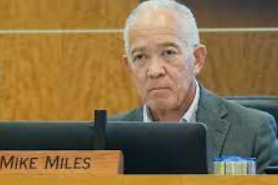
Mercedes Schneider summarizes the checkered career of Mike Miles, who was put in charge of the Houston Independent School District by State Commissioner Mike Morath, who was appointed by hard-right Republican Governor Greg Abbott. Abbott wants to punish Houston for not voting for him. What better punishment than to install Mike Miles as superintendent?
On June 01, 2023, the Texas Education Agency (TEA) appointed Mike Miles as the new HISD superintendent.
Miles is the golden-child product of market-based, ed-reform leadership. As reported in his LinkedIn bio, Miles holds no college degrees in teaching (engineering; slavic languages and literature; international affairs and policy). He has never been a classroom teacher, never a site-based administrator, yet he was a district superintendent in Colorado for six years (2006-11) and superintendent of Dallas ISD for three.
Though he does not mention it in his LinkedIn bio, Miles was a member of the Class of 2011 at the Broad Superintendents Academy A 2011 EdWeek article on Broad superintendents includes the criticism that they “use corporate-management techniques to consolidate power, weaken teachers’ job protections, cut parents out of decisionmaking, and introduce unproven reform measures.”
Indeed.
In 2015, Miles abruptly resigned from Dallas ISD amid being, as WFAA.com states, “at the center of controversy since he took the position nearly three years ago,” which apparently included questions about misdirecting funding intended for at-risk students and the subsequent exit of the Dallas ISD budget director. (Also calling Miles “a lightening rod for controversy,” WFAA.com offers this timeline of Miles’ unsettling tenure in Dallas.)
Following his Dallas ISD exit, in 2016, he founded a charter school chain, Third Future Schools, which has locations in Colorado, Texas, and Louisiana. For two years (2017-19), Miles was a senior associate in an education consulting firm, FourPoint Education Partners.
Nancy and I co-authored a book that serves as a glossary about fads and “reforms.”
She begins her new article:
School reform continues to privatize and destroy public schools. August marks ten years since I began blogging. Within that time I have written two books and co-authored a third with Diane Ravitch. I’m proud of all this writing but Losing America’s Schools: The Fight to Reclaim Public Education is the book title that especially stands out today.
Many Americans still don’t understand or value their ownership of public schools, and how they’re losing one of the country’s great democraticinstitutions. Instead of working together to build up local schools, to iron out difficulties, they’re willing to end them.
Thank you for reading my blog, commenting, and for those of you who have written posts. I am amazed at the wonderful educators, parents, students, and policymakers I have met. I have appreciated debate.
Here are some of the main education issues still of concern.
The Arts
School arts programs help children thrive. Those with mental health challenges benefit. Students might find art jobs. Sadly, many poor public schools ditched the arts. Some schools might get Arts Partnerships or entrepreneurships (Hansen, 2019). These programs aren’t always consistent. Public schools must offer well-rounded and fully resourced K-12 arts programs.
Assessment
Assessment is important for teachers to understand students. But high-stakes standardized tests push a narrow, one-size-fits-all agenda used to drive parents to private schools which, on the other extreme, have little accountability. Tests have been harmful to students.
Controversy originally surrounded Common Core State Standards, promoted by the Bill and Melinda Gates Foundation in 2010, but Common Core continues to drive profiteering, especially in online programs.
A massively well-financed campaign of billionaires and politically powerful advocacy organizations that seeks to replace our current system of public education which, for all its many flaws, is probably the most democratic institution we have and one that has done far more to address inequality, offers hope, and provide opportunity than the country’s financial, economic, political, and media institutions with a market-based, non-unionized, privately managed system.
Corporations and Politicians
Corporations and politicians continue to work to end public schools and drive teachers out, transferring tax dollars to nonprofit and for-profit entities.
Nancy covers many more topics that have been harmful to public education.
Open the link and read her article in its entirety.
John Thompson, retired teacher and historian in Ohlahoma, keeps us up to date on the battle between Tulsa Public Schools and Ryan Walters, Oklahoma’s far-right MAGA Secretary of Education.
He writes:
Who won the latest battle between Oklahoma Superintendent of Public Instruction Ryan Walters and the Tulsa Public Schools (TPS)?
Walters had promised to fire TPS Superintendent Deborah Gist, and drive “Diversity, Equity, and Inclusion” (DEI) out of the classes, as well as mandating his ideology-driven curriculums. Then, Walters said at a Moms for Liberty event, “Tulsa Public Schools is getting money from the Chinese communist government,” He said, “They funneled it through a nonprofit — I mean, money-laundered it through a nonprofit in Texas.”
But Walters’ assault on the TPS accelerated further when Walters said he “had been in regular communication with Houston [HISD] about their school takeover.” And according to HTUL news, he has said “there’s currently a standards team and textbook committee to gather information on possible vendors like Hillsdale College and PragerU.” It thus became clear to Tulsans that the survival of their schools (and Oklahoma schools in general?) was at stake.
Walters’ promised to reveal his plan during the Oklahoma State Board of Education (OSDE) meeting on August 24. So, TPS board member, Jennettie Marshall, warned “during the board’s 90-minute discussion of the district’s accreditation status. ‘We are under attack. If you’re not keeping up with Houston, … if we continue the course we’re on, that’s where we’re headed. That shouldn’t be.’”
The day before the OSDE meeting, Deborah Gist resigned in the hope that Walters wouldn’t take over the state’s largest school system. And at the meeting, the World also explained that Walters “praised the local school board for ‘rooting out a cancer in the district that caused so many problems,’ referring to the Tulsa school board’s formal agreement approved Wednesday evening to part ways with Tulsa Superintendent Deborah Gist.” But “he also vowed to give the local Tulsa school board ‘a very short rope,’ saying he would return and ask for additional authority from the state Board of Education if he does not see adequate progress made within a few months.”
In response, the TPS Board Chairperson, Stacey Woolley, criticized Walters’ misstatements about the system’s student outcomes. She also said, “Antics and rhetoric must stop. We had two bomb threats at schools in the city of Tulsa because of rhetoric.” she said. “I do look forward to going forward and continuing the work and accelerating that work.”
Similarly, “Rep. Regina Goodwin, D-Tulsa, told the state board Walters has been ‘fostering an atmosphere of intimidation’” and protested, “When you talk about Black and brown children in Tulsa, Oklahoma, there are issues that go on in larger cities that have to be addressed. You don’t just say ‘You better perform better in three or four months!’ What kind of plan is that?”
Almost certainly, pushbacks by TPS supporters, and private communications, produced this outcome. It is too soon to know which side won the battle. Or, should I say lost less?
Unless Walters is correct and the TPS is secretly plotting with China to bring our democracy down, or violence erupts, I believe that the most important aspect of the battle could be the way that educators and journalists (especially at the Tulsa World) issued fact-based rebuttals to the extremists. Then, the Schusterman and the Kaiser foundations publicly opposed Walters’ takeover threats. Mayor G.T. Bynum finally came out against the takeover. And on the day of the OSDE meeting, Booker T. Washington H.S. students walked out.
The resistance even reached the point where the World editorialized, “conservative lawmakers must speak up.” And also, Gov. Kevin Stitt distanced himself from Walters who he appointed and then repeatedly supported. The World reported that Stitt said he “believes the State Board of Education will not overreact when considering accreditation for Tulsa Public Schools.” Stitt now says, “I don’t know what takeover is, what they are talking about. I believe in local control. I think the local board needs to address that.”
Secondly, the battle wasn’t over Deborah Gist. It was about the future of public education, and defending our democracy.
Thirdly, the former-teacher Rep. John Waldron (D) explained what we now know, “A far-right media source spread a doctored video suggesting a librarian was spreading a ‘woke agenda,’“ causing a Tulsa Union elementary school and the librarian to receive a bomb threat. (By the way, Waldron noted that the librarian’s actual agenda was promoting “reading and kindness.”)
Then, Walters reposted it, leading to two more bomb threats. NPR’s Beth Wallis reported that the first threat included, “I’m not going to stand as you bastards continue to indoctrinate and prey on our children.” And it also warned the librarian, “We know where you live.” Walters’ response was, “Woke ideology is real and I am here to stop it.” Another threat said:
“We placed a bomb at [the librarian’s elementary school address] and inside the Residence of [the librarian]. You will stop pushing this woke ideology or we will bomb every school in the union district.”
At the time that Wallis published the story, Walters had not removed his “repost of the altered video.”
Perhaps we will someday learn the behind the scenes discussions that prompted Walters to pull back from his most extreme threats. Who knows, perhaps this mayhem will prompt Republicans who are appalled by Walters to come out in support of public education and against the dangerous politics of hate. However, Rep. Mark McBride, R-Moore, the chair of the Oklahoma House subcommittee on education funding who has frequently challenged Walters, complained to the Oklahoman that “he was unable to sit in the conference room during the board meeting, despite requesting a seat along with multiple other lawmakers for several weeks.”
Finally, the other issues pushed by Walters at the OSDE meeting are a recipe for dysfunction and chaos. As Nondoc’s Bennett Brinkman reported, the board unanimously approved Walters’ demand for a “a report of ‘foreign government contributions to Oklahoma schools,’” and “a report regarding district policies and informal guidance for ‘student pronouns in Oklahoma schools.’”
Moreover, Walters’ mandates, such as teacher training in the science of reading, can’t be rushed into place. As Linda-Darling Hammond explains, school improvement can only “move at the speed of trust.” Moreover, will teachers be expected to focus on phonics, or will the TPS be allowed to bring back the science and history instruction that is required to build the background knowledge that is needed for reading for comprehension?
Sadly, we’re likely to learn more fake news over the next few months about what Walters sees as student outcomes, and a passing grade for high-challenge schools. Across the nation, we have seen the disastrous effects of rushed, test-driven instruction that was forced on high-poverty schools. Also, I sure hope we don’t see violence. But, even though Walters warned the TPS, “Do not test me,” I expect that the defenders of schools in Tulsa and elsewhere will continue to push back diplomatically but firmly. For better or for worse, we’re likely to see in the next few months what the TPS will face.
I am so excited for the new school year to begin. I admit that I am a bit sentimental when it comes to public schools. That’s because public schools are one of the few institutions that almost all of us have been through, which means that the experiences of schooling connect us within and between generations. There are the common schedules and rituals. There will be the first day of school. There will be school pictures. There will be holidays and dances. There will be field trips. And, of course, homework and tests. It’s part of the growing up experience in America. In a diverse society, it’s easy to focus on our differences. But public schools not only bring diverse people together, they give us something to share for a lifetime.
As we head back for another school year, then, I hope that we can put aside some of the loudest and most extreme voices of our partisan culture wars. Actually, most Americans want the same things. We want our kids to have a fair shot. We want our kids to be part of a shared national community. We want our kids to be challenged, and also supported. We want our kids to be safe.
That’s why public schools, I still believe, can bring us together.After all, the overwhelming majority of parents support their local public school. And for good reasons. There is strong evidence that public schools are effective for students at all income levels. Yet partisan rhetoric has eroded support for public schools. From the right, advocates of parental rights and privatization urge parents to find schools that reflect their familyvalues, rather than see the schools as places where we forge common values. But too many on the left, including many educators, also question whether we Americans can share the same histories, holidays, values, and rituals. In the name of cultural pluralism and diversity, they challenge the public schools’ longstanding mission of socialization.
We need to keep the faith. As an immigrant, I know that public schools can be our welcome mats. Our nation has had, and still has, its share of nativism and prejudice, but what other nation welcomes so many people from so many different backgrounds? In public schools, we all become Americans. We read the same books, eat the same cafeteria food, play the same games, studythe same subjects, and get to know each other.
So this is my plea for the new school year. We will always argue over what we should teach, and in a democracy we should. But let’s enter this year focusing on what we share and what binds us together, rather than what separates us. There is so much pulling us apart today. It’s a shame that our public schools have become one more thing to fight over because we need them. We benefit individually and collectively from an educated public.
As the new school year begins, I hope we can all take a deep breath and remember that despite all their flaws, despite all our disagreements, at some deeper level, we Americans all agree that the rituals of American schooling—the academics, the bell schedules, the band concerts, the football games, the fieldtrips, the prom decorations—define us. We maintain them because they maintain us.
Greg Olear wrote an analysis of Samuel Taylor Coleridge’s “Kubla Khan,” which is hilarious and insightful. I read it in high school or college but never saw it as he sees it now: the product of an opium-addled brain. He compares parts of it to rock music and shows something my teachers never mentioned: that behind his feverish dream is an erotic imagination.
Then he connects the theme of the ecstatic poem to one Donald J. Trump and the joyless Putin.
His essay on this mysterious poem made me laugh out loud.
Florida Governor Ron DeSantis told a story during the GOP debate about a baby who survived multiple attempts to abort her, presumably to justify his near-total ban on abortions (after six weeks). But the Miami Herald reported the true story, which is very different from DeSantis’ version. The event occurred long before abortion was legal, and the person who tried to abort the baby with a coat hanger was the baby’s father.
The story was reported by Julie K. Brown with the aid of Sarah Blaskey, investigative reporters for the Miami Herald and was based on statements previously recorded by Penny Hopper, contemporaneous newspaper articles, public records and an interview with a family member who asked not to be identified. The DeSantis campaign did not respond to a request for comment.
At Wednesday’s Republican candidates debate, during a discussion of late-term abortion, Gov. Ron DeSantis told a horrific but puzzling story.
“I know a lady in Florida named Penny,” the GOP presidential candidate said. “She survived multiple abortion attempts. She was left discarded in a pan. Fortunately, her grandmother saved her and brought her to another hospital.”
Critics of the governor flocked to social media to suggest the “Penny” story was made up or wildly embellished. Supporters countered that liberals were triggered by an ugly truth.
Penny is real and her last name is Hopper. But DeSantis failed to note key details from her remarkable story: The person who tried to end Penny’s life in the womb was not a doctor or even an illegal abortion provider — it was her father. And his effort to abort his daughter with a coat hanger took place almost two decades before the Supreme Court’s seismic Roe v. Wade decision, which established a woman’s right to an abortion…
Miriam “Penny” Hopper’s story begins in 1955, in a hospital in Wauchula, a small farming town in Central Florida. News reports at the time described her as a miracle baby, born weighing 1 pound, 11 ounces. She was so tiny that the nurses initially had to feed her with a dropper.
Her now-deceased father, Charles Wesley Browder Sr., was a U.S. Army sergeant during World War II who served on the front lines in Europe when he was just 20. His family said he was a “scout” who performed advance reconnaissance missions before being wounded, captured and tortured by the Germans. Military records show he was discharged with honors in 1945 and was awarded four Bronze Stars in addition to a Purple Heart, a Good-Conduct Medal and the World War II Victory Medal.
Charles married Glenda Marie Pierce, and they settled in Wauchula, Florida, about 75 miles from Tampa.
In 1953, birth records show, Hopper’s parents had a son, Charles Browder Jr., who was born at Walker Memorial Hospital in nearby Avon Park. At the time of the 1950 census, Glenda worked as a receptionist in a doctor’s office, and Charles was a salesman. Hopper’s mother soon became pregnant with her second child, also a boy. In a video posted on YouTube several years ago by a group called “Florida Right to Life,” Hopper said that she learned later that her father had used the coat hanger to abort her mother’s second child. It is one of at least two videos on the Internet relating her story, although the videos differ on some details.
When her mother became pregnant a third time with her, Penny Browder said her father returned to the same method in an attempt to end the pregnancy, later explaining to his daughter that he was earning only $125 a week, which he felt wasn’t enough to support a larger family.
Browder’s mother developed complications during the coat-hanger procedure. The couple rushed to a nearby medical facility in the middle of the night, with her mother very ill and bleeding. In the video interviews, Hopper said her parents were met at the clinic by a doctor in his pajamas. He examined her mother — and concluded that the fetus had no heartbeat. He advised the couple to abort the baby, telling them the child would likely be stillborn.
“If it lives, it will be a burden on you your whole life,” the doctor allegedly said. He used saline and injected her mother with a drug, then left, instructing the nurse to “discard the baby dead or alive,” Hopper said in a video interview, a segment that was to be incorporated into a TV commercial by the anti-abortion group “Faces of Choice.” It can be found on YouTube.
When the baby arrived shortly after 3 a.m., the nurse wrapped her in a towel and placed her in a pan, Penny Hopper said one video. In the other, Hopper said her mother told her the baby was placed in a basket.
The following day, Glenda’s mother and aunt came to check on her at the clinic, where she was recuperating. They found the baby outside on a back porch, unwrapped her, and discovered she was alive, Hopper said.
“My grandmother was so upset she called the local police,” she said.
A news clipping incorporated into a video segment said the baby was transported from the medical facility in Wauchula to what was then Morrell Regional Hospital in Lakeland. The news clipping, which isn’t labeled, seems to partially contradict Hopper’s story, as it states that the doctors at the Wauchula facility “put forth greater efforts to keep the 1 pound, 11 ounce baby alive.” The story said the child was on the “brink of death” when she was transported to Lakeland, with a police escort that crashed on the way to the hospital.
The Tampa Tribune from Nov. 29, 1955, reported on the crash, saying the baby had been born premature that morning. The infant was placed in an incubator, where she remained for four months. Hopper, however, said that while she was in the hospital her father tried to disconnect her from the incubator because he was upset at how much the care was costing. The hospital summoned the police to restrain him, Hopper said in one of the interviews.
“He basically couldn’t stand the thought I was alive,” Hopper said.
In March 1956, she was finally strong enough to go home with her parents…
Anti-abortion groups use Penny Hopper’s story to demonstrate why abortion should be banned.
Pro-abortion groups use it to demonstrate why abortion should be safe and legal. Coat-hanger abortions will resume, and they endanger the life of the mother.


 Diane Ravitch's blog