Archives for the month of: August, 2023

Ohio Republicans are trying to ban abortion by limiting it to six weeks, before women know they are pregnant. The legislature passed a law prohibiting abortions after six weeks of pregnancy but a federal judge halted the implementation of the ban. However, people who support reproductive rights want to write them into the state constitution. They gathered more than 700,000 signatures, nearly double what the state requires. They succeeded in getting their referendum on the ballot in November.

The state Republicans want to stop them but they know that abortion rights have prevailed in other red states (think Kansas). So the legislature came up with a new ploy: there will be a special election on Tuesday August 8, to require that any change in the state constitution get not a simple majority, but at least 60% of the vote. Furthermore, any proposal to change the constitution would require signatures from all 88 counties, not the current 44. Obviously they want to blunt the pro-abortion campaigners by making it nearly impossible to get on the ballot.

Republican strategists are hoping that turnout will be low and that the abortion rights side will fail to block the referendum. Polls have shown that some 58% support abortion rights, so they will never pass an amendment if Issue 1 succeeds and raises the threshold to 60%.

Politico wrote:

Ohioans United for Reproductive Rights, a nonpartisan coalition of abortion-rights groups, submitted the ballot language earlier this year, kicking off a four-month dash to collect signatures and campaign across the state. Proponents, including state Democrats, ACLU of Ohio and Planned Parenthood Advocates of Ohio, anticipate spending upward of $35 million on the effort heading into November.

Opponents have pushed against the measure by arguing that it would allow for gender-affirming care without parental consent, even though such a provision is not in the initiative’s language.

Aside from the abortion issue, there is a question about whether it’s right to impose a 60% requirement to get a referendum on the ballot. Why not let the majority (50% plus 1) decide?

Paul Waldman wrote on MSNBC’s site that the issue is stark: Now Ohio Republicans are trying to duck the will of the voters with some clever maneuvering. The state’s voters will decide on two ballot initiatives in two separate elections in a matter of months. One is explicitly about abortion, while the other is only implicitly about abortion but would go even further, to the very question of whether democratic accountability should exist at all…

Lest there be any doubt, the Legislature scheduled the vote on Issue 1 for a special election in August, when it could be assured a lower turnout. So if it succeeds, the abortion amendment on the ballot in November would have to get 60% to pass. Ohio Republicans are so committed to this farce that the Legislature ignored the law it passed in December banning almost all August special elections. When liberals pointed out the obvious contradiction, the Republican-majority on the state’s Supreme Court ruled the Legislature could simply break the law it passed less than a year ago.

Meanwhile, doctors in Ohio have mobilized against the abortion ban, according to ProPublica.

In her eight years as a pediatrician, Dr. Lauren Beene had always stayed out of politics. What happened at the Statehouse had little to do with the children she treated in her Cleveland practice. But after the Supreme Court struck down abortion protections, that all changed.

The first Monday after the Dobbs v. Jackson Women’s Health Organization ruling was emotional. Beene fielded a call from the mother of a 13-year-old patient. The mother was worried her child might need birth control in case she was the victim of a sexual assault. Beene also talked to a 16-year-old patient unsure about whether to continue her pregnancy. Time wasn’t on her side, Beene told the girl.

“What if it were too late to get her an abortion? What would they do? And I just, I felt sick to my stomach,” Beene said. “Nobody had ever asked me a question like that before.”

Beene felt she had to do something. She drafted a letter to a state lawmaker about the dangers of abortion bans, then another doctor reached out with an idea to get dozens of doctors to sign on. The effort took off. About 1,000 doctors signed that letter, and they later published it as a full-page ad in The Columbus Dispatch.

Beene felt momentum building within the medical community and decided to help use that energy to form the Ohio Physicians for Reproductive Rights coalition. Now, Beene and the coalition are working to pass a citizen-led amendment to enshrine reproductive rights into the state constitution. The state’s six-week ban on abortion was blocked by a judge in October 2022.

The group is a part of an emerging political force: doctors on the front lines of the reproductive rights debate. In many states, the fight to protect reproductive rights is heating up as 14 states have outlawed abortion. Doctors who previously never mixed work with politics are jumping into the abortion debate by lobbying state lawmakers, campaigning, forming political action committees and trying to get reproductive rights protected by state law.

Reasons to vote NO on Issue 1:

ARGUMENTS AGAINST ISSUE 1

The following argument was prepared by senators Paula Hicks-Hudson and Vernon Sykes along with representatives Dontavius Jarrells, Bride Rose Sweeney and Dani Isaacsohn…

This amendment would destroy citizen-driven ballot initiatives as we know them, upending our right to make decisions that directly impact our lives. It takes away our freedom by undermining the sacred principle of ‘one person, one vote’ and destroys majority rule in Ohio.

Last year, Ohio politicians eliminated August special elections saying, “Interest groups often manipulatively put issues on the ballot in August because they know fewer Ohioans are paying attention.”

And yet here we are, voting in August on just one question: should Ohio permanently abolish the basic constitutional right of majority rule?

Special interests and corrupt politicians say yes. They don’t like voters making decisions, so they’re trying to rewrite the rules to get what they want: even more power.

Here’s why we’re confident Ohio citizens will resoundingly vote NO:

  • Issue 1 Ends Majority Rule: It means just 40% of voters can block any issue, putting 40% of voters in charge of decision-making for the majority.
  • Issue 1 Shreds Our Constitution: It would permanently undo constitutional protections that have been in place for over 100 years to check politicians’ power at the ballot box.
  • Issue 1 Takes Away Our Freedom: It would destroy citizen-driven ballot initiatives as we know them, guaranteeing that only wealthy special interests could advance changes to our constitution.
  • Issue 1 Applies to All Issues: If this amendment passes, it will apply to every single amendment on any issue Ohioans will ever vote on – you name it, just 40% of voters will decide.

We all deserve to make decisions that impact our lives. We must protect our freedom to determine our future, not permanently change our constitution to give up our rights. Vote NO.
Governor Josh Shapiro promised Democrats that if they passed the state budget, he would veto the voucher legislation so beloved by Republicans. Gov. Shapiro had previously declared his support for vouchers. Thursday, the governor kept his promise. He signed the state budget and vetoed vouchers.

Carly Sitrin of Chalkbeat Philadelphia wrote:

As promised, Pennsylvania Gov. Josh Shapiro signed the $45.5 billion state budget without a state-funded private school voucher program on Thursday, ending weeks of drama about the proposal.

Budget negotiations had been stalled for nearly a month over the dispute about whether to create a $100 million statewide voucher program. With a one-vote majority in the House, Democrats refused to approve any spending plan that included vouchers — even one supported by Shapiro, a fellow Democrat.

In the end, Shapiro cut a deal to sign the budget and strike the voucher provision, much to the chagrin of Republicans who claimed the governor was turning his back on his own campaign promise.

“The people of Pennsylvania have entrusted me with the responsibility to bring people together in a divided legislature and to get things done for them – and with this commonsense budget, that’s exactly what we’ve done,” Shapiro said in a statement announcing the signing.

In his message announcing that he would use a line-item veto to eliminate vouchers from the budget, Shapiro said the proposal — called the Pennsylvania Award for Student Success Scholarship Program, or PASS — remains “unfinished business.”

“This budget is a first step towards a comprehensive solution that makes progress for our children over the long term, and I look forward to continuing this work with both chambers as we discuss additional programs to help our children including PASS,” Shapiro wrote.

PASS would have expanded the state’s school choice offerings, which currently include the Opportunity Scholarship Tax Credit and Education Improvement Tax Credit.

Critics in Philadelphia claimed that an earlier version of the program could have upended the city’s public school system.

Nathan Benefield, senior vice president of the conservative Commonwealth Foundation that has backed voucher programs, said in a statement Shapiro’s veto “while not unexpected, is disappointing and unnecessary.”

Benefield said his organization will continue to push for vouchers and cast the program as Shapiro’s “chance to redeem himself, fulfill his campaign promises, and offer a genuine opportunity to thousands of low-income kids who deserve a better future.”

Advocates opposing vouchers celebrated Shapiro’s voucher veto, but also expressed disappointment that the Republican-led Senate has yet to approve some education funding.

Among the programs in the budget Shapiro signed Thursday that will still require Senate approval is so-called Level Up funding for the 100 school districts with the lowest spending per pupil, including Philadelphia. Level Up funding is in addition to the Basic Education funding that schools receive from the state and is included in the $45.5 billion budget Shapiro signed.

“It is disappointing that Senate leadership is standing in the way of releasing needed funds for programs included in their own budget, including Level Up dollars that benefit students in the most underfunded school districts,” the PA Schools Work Campaign said in a statement.

The advocates called it “ironic” that Senate Republicans are still holding up “funding for our students in the most underfunded schools specifically because they were unsuccessful in an attempt to institute a new private school voucher program that purports to help … these very same students.”

Philadelphia Federation of Teachers President Jerry Jordan said in a statement that the union is “pleased” that Shapiro signed the budget without the voucher program.

”The misguided push to divert public dollars into private institutions was a distraction that diverts us from our collective responsibility to truly invest in public education,” Jordan said.

Jo Becker and Julie Tate of The New York Times reported today that a wealthy health care executive paid for a spiffy RV that Justice Clarence Thomas purchased in Phoenix in 1999 and uses to burnish his image as a man of the people.

Justice Clarence Thomas met the recreational vehicle of his dreams in Phoenix, on a November Friday in 1999.

With some time to kill before an event that night, he headed to a dealership just west of the airport. There sat a used Prevost Le Mirage XL Marathon, eight years old and 40 feet long, with orange flames licking down the sides. In the words of one of his biographers, “he kicked the tires and climbed aboard,” then quickly negotiated a handshake deal. A few weeks later, Justice Thomas drove his new motor coach off the lot and into his everyman, up-by-the-bootstraps self-mythology.

There he is behind the wheel during a rare 2007 interview with “60 Minutes,” talking about how the steel-clad converted bus allows him to escape the “meanness that you see in Washington.” He regularly slips into his speeches his love of driving it through the American heartland — “the part we fly over.” And in a documentary financed by conservative admirers, Justice Thomas, who was born into poverty in Georgia, waxes rhapsodic about the familiarity of spending time with the regular folks he meets along the way in R.V. parks and Walmart parking lots.

“I don’t have any problem with going to Europe, but I prefer the United States, and I prefer seeing the regular parts of the United States,” he told the filmmakers, adding: “There’s something normal to me about it. I come from regular stock, and I prefer being around that….”

His Prevost Marathon cost $267,230, according to title history records obtained by The New York Times. And Justice Thomas, who in the ensuing years would tell friends how he had scrimped and saved to afford the motor coach, did not buy it on his own. In fact, the purchase was underwritten, at least in part, by Anthony Welters, a close friend who made his fortune in the health care industry.

He provided Justice Thomas with financing that experts said a bank would have been unlikely to extend — not only because Justice Thomas was already carrying a lot of debt, but because the Marathon brand’s high level of customization makes its used motor coaches difficult to value.

In an email to The Times, Mr. Welters wrote: “Here is what I can share. Twenty-five years ago, I loaned a friend money, as I have other friends and family. We’ve all been on one side or the other of that equation. He used it to buy a recreational vehicle, which is a passion of his.” Roughly nine years later, “the loan was satisfied,” Mr. Welters added. He subsequently sent The Times a photograph of the original title bearing his signature and a handwritten “lien release” date of Nov. 22, 2008.

But despite repeated requests over nearly two weeks, Mr. Welters did not answer further questions essential to understanding his arrangement with Justice Thomas.

He would not say how much he had lent Justice Thomas, how much the justice had repaid and whether any of the debt had been forgiven or otherwise discharged. He declined to provide The Times with a copy of a loan agreement — or even say if one existed. Nor would he share the basic terms of the loan, such as what, if any, interest rate had been charged or whether Justice Thomas had adhered to an agreed-upon repayment schedule. And when asked to elaborate on what he had meant when he said the loan had been “satisfied,” he did not respond.

“‘Satisfied’ doesn’t necessarily mean someone paid the loan back,” said Michael Hamersley, a tax lawyer and expert who has testified before Congress. “‘Satisfied’ could also mean the lender formally forgave the debt, or otherwise just stopped pursuing repayment.”

Justice Thomas did not respond to requests for comment.

The Supreme Court Justice is a fortunate man indeed. He grew up in poverty, but now has many very wealthy friends who are happy to pay for luxury vacations, private jet travel, his mother’s home, his nephew’s tuition, and countless other gifts. He seldom reports these gifts because why should he? The Supreme Court has no code of ethics and polices itself. It is the only part of the federal government that is above the law.

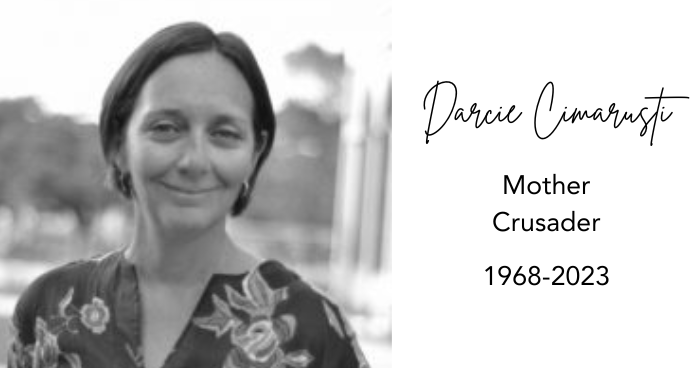
The Network for Public Education has lost a beloved friend and ally. Our communications director, Darcie Cimarusti, lost her valiant battle with ovarian cancer. Everyone who worked with her loved her for her spirit, her dedication, her kindness, and her courage.

Carol Burris released the following statement on behalf of the staff and the board:

NPE Mourns the Loss of Former Communications Director Darcie Cimarusti

Mother Crusader.

That is what Darcie Cimarusti called herself, and it was a title she earned again and again.  As a mom, devoted spouse of a teacher, NPE Communications Director, and school board President, Darcie was devoted to public schools.

Darcie began her advocacy work by exposing the fraud and shenanigans of the charter schools that were draining resources from New Jersey public schools. She was delighted when her investigative work led to a story by Mike Winerip in The New York Times. Winerip gave Darcie credit for exposing the machinations and falsehoods put forth by a charter operator in pursuit of a Federal Charter School Program grant. In that article, Winerip characterized applications to the Federal Charter School Programs (CSP) as an invitation to “fiction writing.” Years later, when NPE investigated the CSP program, we came to understand that what Darcie uncovered was not a bug but rather a feature of the CSP.

Last July, even as she was battling ovarian cancer, Darcie did a masterful job of exposing the spread of Hillsdale charter schools in the Answer Sheet of the Washington Post.  That important investigation inspired other reporters to take a closer look at the Barney Charter Schools initiative of the small conservative Christian college.  She always worked behind the scenes connecting the dots between billionaires, charter schools, and profiteers.  Her research was remarkable. As a graphic artist, she created memes, reports, and website designs that brought NPE advocacy messages to life.

On August 3, Darcie peacefully ended her battle with cancer, surrounded by her beautiful daughters, her husband David, her brothers, her father, and her extended family.

NPE President Diane Ravitch worked with Darcie from the beginning days of NPE. “Our dear friend Darcie was a crucial founder of NPE. While she worked hard as a parent and as a member of her local school board, Darcie always made the time to build NPE into a national voice for public schools. As “Mother Crusader,” Darcie spoke out fearlessly for the public schools her twins attended. She was a kind, thoughtful, dedicated, and fearless friend. We will miss her.”

Dear Mother Crusader, we will indeed miss you. We at NPE will ensure that your memory, good work, and legacy live on. Yours was a life well-lived.

The Texas legislature passed a law in its last session requiring booksellers to rate any books they sell to public schools for its sexual content. And to rate any book they have ever sold in the past to public schools or to teachers.

The law threatens the survival of some 300 independent bookstores across the state. “And by April of next year, every bookseller in the state is tasked with submitting to the Texas Education Agency a list of every book they’ve ever sold to a teacher, librarian or school that qualifies for a sexual rating and is in active use. The stores also are required to issue recalls for any sexually explicit books.”

Small bookstores, like Blue Willow in Houston, may be bankrupted if they are compelled to comply. Blue Willow has two full-time employees and 12 part-time employees. It sells books to 21 school districts. Sales to schools comprises about a fifth of the store’s business.

The law is set to take effect on September 1.

Blue Willow has joined a lawsuit to block the bill. The lawsuit was filed by Austin’s BookPeople, the American Booksellers Association, the Association of American Publishers, the Authors Guild and the Comic Book Legal Defense Fund. “The lawsuit argues booksellers will suffer financial damage if they lose school-related business. Koehler estimates that a fifth of Blue Willow’s business is with schools.”

The legislature doesn’t care about the financial impact on small bookstores like Blue Willow.

Let’s see if the courts do.

The Florida Department of Education has created a new position for an administrator to collaborate with and encourage rightwing school boards. This appointment is intended to cement and expand Governor Ron DeSantis’s control over school boards. DeSantis has endorsed school board candidates to make sure his ideology—and none other—is taught in the public schools.

Leslie Postal of the Orlando Sentinel wrote:

A new office in the Florida Department of Education aims to “facilitate partnerships with district leaders,” but the director’s first months of work show interest in meeting mostly with conservative school board members, records show, including Moms for Liberty members and those endorsed by Gov. Ron DeSantis.

“We would be happy to meet with the Conservative Coalition of School Board Members as a group to explore ways that our efforts may align,” wrote Terry Stoops, the new director, to a Volusia County School Board member on April 23. “If you hold regular meetings and would like us to participate, please let me know.”

In another email, he shared his views of the previous night’s Orange County School Board meeting with Alicia Farrant, a Moms for Liberty member elected to the board in November.

“I watched some of the very misguided public comment at last night’s school board meeting. I just wanted to pass along a note to thank you for serving on the board and standing up for families,” Stoops wrote her on May 10.

“Thank you so much! I’m proud to represent our community and be a voice for many who feel voiceless,” responded Farrant, who has pushed for the school district to remove library books she finds offensive.

Stoops is the director of the education department’s new Office of Academically Successful and Resilient Districts, a job he started in April, according to his LinkedIn page. Stoops spent nearly two decades in North Carolina mostly working for the conservative John Locke Foundation, with a focus on education policy.

The Florida education department’s press office did not respond to emails asking questions about the new office and Stoops’ salary. He is not listed in the state payroll database on the governor’s office website.

In North Carolina, Stoops drafted what would become a framework for a North Carolina “parents’ bill of rights,” legislation that like Florida’s was criticized as anti-LGBTQ, apushed for more school choice options, such as charter schools and school vouchers.

His first months on the job in Florida showed meetings with board members and advocacy groups aligned to DeSantis, according to emails and his calendar obtained by the Florida Freedom to Read Project and shared with the Orlando Sentinel.

The new office shouldn’t be working only with those with certain political views, said Stephana Ferrell, an Orange County mother and one of the project’s founders.

“This department seems formed for the sole purpose of ensuring the DeSantis agenda is worked into policy,” Ferrell said. “It is using tax payer funds in a very deliberate, political way.”

In Orange, for example, Stoops reached out to Farrant but none of the other seven board members, Ferrell said. The same was true in Volusia, she said, where two conservative members got emails but the other three did not.

DeSantis wants to control what is taught in every school and college class. He is a dangerous man.

Scott Maxwell is an excellent columnist for The Orlando Sentinel. He brings us up to date on Florida’s efforts to promote the bright side of slavery.

He writes:

Every week lately, Florida seems to make more headlines for trying to turn public schools into a political war zone. The two latest examples:

The Sentinel revealed the Florida Department of Education has hired a new political operative who’s working with the book-censoring Moms for Liberty — and won’t say how many of your tax dollars the state is paying him or even why.

Also, the state has approved new classroom videos made by a guy who admits his goal is “indoctrination.”

One video features a cartoon version of Christopher Columbus telling kids that, while slavery might not be great, “being taken as a slave is better than being killed.” Another tells students that one of the most important things kids “need to know” about slavery is that “White men led the world in putting an end to the abhorrent practice.”

White men as saviors is quite the top-line takeaway on slavery.

The Orlando Sentinel first broke the news about the new hire, revealing that the state had hired Terry Stoops, a guy who pushed GOP education policies in North Carolina, to lead its newly created Office of Academically Successful and Resilient Districts.

The office title sounds like gobbledygook. But what are Stoops’ job responsibilities? And how much are you, as a taxpayer, paying him? Well, the state wouldn’t answer either question.

Even Florida’s online employee-salary database somehow omitted Stoops.

But emails obtained by the Florida Freedom to Read Project — which is leading the fight against classroom book-banning and censorship — showed that Stoops seemed to be working as a state liaison to right-wing crusaders.

In one email, Stoops wrote a Volusia County school board member to say: “We would be happy to meet with the Conservative Coalition of School Board Members as a group to explore ways that our efforts may align.”

In another, he told Orange County school board member Alicia Farrant, a Moms for Liberty member leading Central Florida’s in-school book-banning crusade: “I just wanted to pass along a note to thank you for serving on the board and standing up for families.”

Just for argument’s sake, let’s say you think it’s a swell idea for government to use tax dollars to push a political agenda. What excuse could you possibly have for hiding from taxpayers how many of those dollars you’re using and for what allegedly public purpose?

In normal times, that secrecy would be big news. But that revelation was eclipsed by the even more disturbing news that Gov. Ron DeSantis’ education department had also decided to welcome videos into classrooms from a guy who admits his goal is indoctrination.

As the Miami Herald reported, the Department of Education said it had concluded that the controversial PragerU program “aligns to Florida’s revised civics and government standards” and “can be used as supplemental materials in Florida schools at district discretion.”

If you’re not familiar with Prager, you should first know that PragerU is an actual university in the same way Dr. Dre is an actual doctor. It’s not. Instead, it’s the creation of conservative radio show host Dennis Prager who freely admits his goal is to indoctrinate kids.

Just last month, at a Moms for Liberty event, Prager said that when critics say to him “you indoctrinate kids,” he responds that is true. “That’s a very fair statement,” he said. “But what is the bad about our indoctrination?”

In Florida, where DeSantis often decries the evils of indoctrination, we’re again reminded that every accusation is often a confession.

I encourage you to watch some of the PragerU videos for yourself.

In one video, a cartoon version of Columbus tells kids who ask about his support of slavery: “Being taken as a slave is better than being killed, no?”

That’s quite a bar you’ve set for yourself, cartoon Chris. And for the kids.

Another video — “A Short History of Slavery,” narrated by conservative pundit Candace Owens — tells kids: “Here’s the first thing you need to know: Slavery was not ‘invented’ by White people.”

Yes, that’s actually “the first thing” PragerU thinks kids need to know about human captivity. Not how slavery destroyed generations of lives to help slavemasters enrich themselves. Or that, heaven forbid, that was wrong. But that White folks didn’t pioneer the system.

So were the harsh realities of human captivity at least the “second thing” kids need to know about slavery? Nope. According to PragerU and Owens, who is Black, the second-most important thing kids should know is that “White people were the first to put an end to slavery.”

So one of PragerU’s top two lessons on slavery is basically: Yay, White people!

Bizarre? Yes. Yet it seems to work well with the new Florida curriculum standards you read about last week — the ones that tell teachers to stress the “personal benefit” some slaves received in terms of learning job skills. And also with the laws GOP legislators passed that instruct educators to censor discussion about “systemic racism” and to sanitize history lessons that might upset some children’s parents.

The Freedom to Read organization is suggesting Florida families use the state’s new “parental rights” law to opt-out of PragerU’s indoctrination.

But it seems like it might be simpler to, oh, I dunno, maybe just not indoctrinate?

Maybe just teach history like it really happened, warts and all.

And maybe be fully transparent with taxpayer money and public positions.

Unfortunately, that all seems like too much to ask.

smaxwell@orlandosentinel.com

The Network for Public Education sent out the following notice to its 350,000 members. Join NPE so you can be on our mailing list (no cost to join). The charter lobby wants your public school.

Dear Diane,In a rare moment of candor, Nina Rees, the President and CEO of the National Alliance for Public Charter Schools, said that her organization’s “personal goal” is to make all public schools “like charter schools” that would be “schools of choice.”

If Ms. Rees and her charter trade organization have their way:

  • Children would enter a lottery to attend their neighborhood school.
  • There would be an appointed private board, not an elected school board.
  • Teacher tenure and bargaining rights in most states would disappear.
  • The school could shut down based on test scores, enrollment, or even the private board’s whim. 25% of all charters shut down in their first 5 years
  • In most states, the school could be managed by a for-profit corporation.

All of the above are the characteristics of charter schools. Every district in the nation would be a New Orleans–where schools open and close, and citizens have no voice in school governance.

That is why NPE fights so hard each year to ensure that the National Alliance does not get the funding increases it lobbies for from the federal Charter School Programs (CSP). We are so pleased to share the good news below.

The Orlando Sentinel published a series of investigative reports about a shocking scandal: for years the ground water in Seminole County was poisoned by toxic chemicals, and the public did not know. The Sentinel published a four-part series, which I highly recommend. It’s a shocking story of political neglect.

Toxic Secret: Our series about 1,4-dioxane in Seminole water

Here is the series:

This is an excerpt from part four.

The Fulmer family dogs died two by two.

Tasha slipped away in 2004 and Rocky passed with cancer three years after. They were Rhodesian ridgebacks. Alan and Patricia Fulmer and their children took in another pair as puppies, Zipporah and Ariel. They would succumb to cancer.

In 2018, the city of Sanford tested their well water and soon came back with results.

“They said don’t drink it, don’t cook with it, don’t brush your teeth with it, don’t bathe in it, don’t touch it,” Patricia Fulmer said, recalling that moment. “It was really scary.”

The Fulmers were blindsided repeatedly.

First, when they learned a chemical called 1,4-dioxane, deemed likely to cause cancer, was in their drinking water coming from their private, household well at a high concentration.

Then they found out officials had known for years that the chemical, linked to hazardous pollution at a former Siemens factory in Lake Mary, was contaminating the underground water supply – the Floridan Aquifer – in all directions around their home just south of Sanford.

The third shock was when Patricia Fulmer was diagnosed with a malignant tumor, adding to the stress of their two daughters coping with chronic illnesses and the passing of a fifth pet, Dunder, a miniature pinscher.

In 2021, they sold their home to a developer and moved away.

The former house of Alan and Patricia Fulmer on a bulldozed lot at the corner of H.E. Thomas Parkway and Cherry Laurel Drive in Sanford, photographed Tuesday, April 11, 2023. The house is located northeast of the former Siemens-Stromberg factory at 400 Rinehart Road in Lake Mary. The Fulmers moved away several years after learning that 1,4-dioxane, a likely carcinogen detected at the former factory site, had contaminated their water well. (Joe Burbank/Orlando Sentinel)

The former house of Alan and Patricia Fulmer on a bulldozed lot at the corner of H.E. Thomas Parkway and Cherry Laurel Drive in Sanford, photographed Tuesday, April 11, 2023, days before the home was demolished. The house is located northeast of the former Siemens-Stromberg factory at 400 Rinehart Road in Lake Mary. The Fulmers moved away several years after learning that 1,4-dioxane, a likely carcinogen detected at the former factory site, had contaminated their water well. (Joe Burbank/Orlando Sentinel

*****

“It all began making sense,” said Patricia Fulmer, whose family has been firm in requesting a measure of privacy as they confront medical struggles and worries about their exposure to 1,4-dioxane. “It’s just so wrong.”

Her reaction has precedent in Florida. Some of the state’s most harrowing pollution episodes played out in stages: anxiety over exposure followed by distrust of officials for silence about a known threat.

1,4-dioxane was in use across the U.S. by the 1970s. The Siemens factory, making telephone network components, had been cited by the Florida Department of Environmental Protection the time it closed in 2003 for shoddy handling of hazardous chemicals.

There may be no way to learn when and at what strength 1,4-dioxane first invaded drinking water in Seminole County, but its presence was confirmed in the tap water of Sanford and the county’s Northwest Service Area in 2013 and in Lake Mary’s water in 2014.

Factory owners, including Siemens Corp. and General Dynamics, have denied liability for toxic pollution at the Lake Mary manufacturing site, but stated in 2017 that contaminants “may have been the result of historical activities at the Former Facility.”

‘You have the right to know’

The Fulmers were not alone in the dark.

Of the tens of thousands of residents and workers of Lake Mary, Sanford and Seminole County also exposed, it’s difficult to know how many have been made aware of the 1,4-dioxane they were consuming in drinking water.

It’s likely to be a very low percentage, judging from people well positioned to have learned of such a contamination of the Floridan Aquifer.

Caroline Hendrie, a veteran journalist who wrote for many years at EdWeek, wrote an overview of the implementation of vouchers (or “Education Savings Accounts“) in states that have endorsed “universal” access, removing almost all limits on access to them. Vouchers for rich and poor alike. As Josh Cowen has written in many articles, most students who use vouchers never attended public schools. And those from public schools who use vouchers are likely to do less well academically than the peers they left behind. No longer do you hear that vouchers will “save poor kids from failing public schools” because they don’t. In red states, they are a gift of public funds to families who happy to collect $6,000-$10,000 to underwrite their private school tuition.

Hendrie explains that voucher fans fall into two camps: On one side are those who want voucher families to restrict their use of public funds only to authorized expenditures, like tuition, tutoring, computers, school supplies. On the others are parents who say they want no restriction on what they purchase.

Like Florida, the states of Arkansas, Iowa, and Utah have all enacted laws this year that would open ESAs—sometimes after a multiyear phase-in—to most if not all school-age children in their states. Those four followed Arizona and West Virginia, which started implementing similar universal programs in 2022.

That wave plus other legislative action in 2023 brought to 13 the number of states with one or more education savings account programs funded directly from state revenues. In addition, Missouri has an operating ESA program paid for through tax credits.

Amid this growth, controversies have flared over ESA implementation—most notably but not exclusively in Arizona.

Critics complain that voucher money has been spent on non-education expenses, like swimming pools, kayaks, bbq grills, greenhouses, chicken coops, pianos, pizza ovens, and trampolines.

But parent groups have advocated for maximum flexibility, in which parents get a debit card and are free to purchase whatever they want, with no oversight.

Of course, vouchers create new for-profit opportunities. A company named ClassWallet has emerged to provide financial services to voucher states.

In 2019, Arizona contracted with the company ClassWallet to facilitate ESA transactions on its online spending-management portal. ClassWallet is also used by ESA programs in Indiana, Missouri, New Hampshire, and North Carolina.

On its website, the Florida-based ClassWallet lists its offerings:

ClassWallet is a digital wallet with an integrated eCommerce marketplace, automated ACH direct deposit, and reloadable debit card with pre-approval workflows and audit-ready transaction reporting. ClassWallet reduces overhead costs, saves valuable time, and better visibility and control for decentralized purchases.

Save Our Schools Arizona, which led the campaign to stop voucher expansion in 2018, is convinced that the state’s new commitment to universal vouchers will prove harmful to public schools, where most students are enrolled.

Save Our Schools Arizona, which advocates for public schools and opposes the 2022 ESA program expansion, argues that ongoing disputes over implementing the broader program prove it has become, as the organization’s executive director, Beth Lewis, puts it, “too big to succeed.”

Lewis said that the program is “wide open” for fraud. “It is interesting to watch my taxpayer dollars be used to build a garden in everybody’s backyard, when my public school can’t afford one,” she said. “It’s just this unspoken rule of, if you see it in a public school, then it’s approvable.”

Other states should view Arizona’s move to universal eligibility not as a model but as a cautionary tale, Lewis argues. She sees evidence of that happening in states such as Arkansas and Iowa, where newly passed laws call for incremental, multiyear expansions before getting to universal eligibility.

“I think they looked at Arizona and saw that this is a complete disaster and is not serving families well,” Lewis said. “There’s no way to ensure transparency. And they said, ‘Well, at the very least, we need to phase this in.’”

School-choice advocates tend to defend Arizona and see its uneven expansion process as par for the course when states try something different to promote educational freedom.

The last thing the choice lobby worries about (if ever) is the well-being of public schools, even though they enroll the vast majority of students in the state.