The Texas Tribune reports that conservative school board candidates in some suburban districts failed with culture war issues.

School board elections: Even though school board races are nonpartisan, the Nov. 8 elections for Round Rock and Wylie independent school sistrict trustees drew high-profile endorsements from the Republican Party of Texas.

But in both districts, every candidate endorsed by the Republican Party of Texas, a total of nine, lost. In Round Rock, the races weren’t even close, with one candidate, Tiffanie Harrison, beating her opponent by 25 percentage points.

While Texas Republicans largely swept Tuesday’s elections and GOP-backed school board trustees made gains elsewhere in the state, the results in Round Rock and Wylie raise questions about the current conservative strategy in suburban school districts and the appeal of an agenda built on culture war issues.

One of the primary targets for conservatives running for school board seats has been critical race theory, a college-level discipline that examines racism within social and legal structures within the United States. It is not taught in elementary or secondary public schools in Texas, but Republicans have used the term to target how students are taught about race in schools.

Republicans leaned on a strategy modeled after one used in Tarrant County, where in May, a slate of 11 conservative, anti-CRT candidates won races in school boards. But the GOP was unable to mimic the occurrence in the midterm elections cycle.

Jill Farris, a Round Rock school board candidate endorsed by the Texas GOP who lost her race, attributed the results to a changing electorate that is more liberal than in previous years.

“Maybe we were all kind of relying a little bit on this red wave and thought that parents were just as angry as we were,” Farris said. “At least now, we know where the community stands and we can move forward.”

Dr. Helen F. Ladd is one of the most eminent economists of education, possibly the most eminent. She has written important studies that document the importance of poverty in the lives of children and its impact on their educational outcomes. She has written critically about No Child Left Behind. And she has written international studies of school choice with her husband Edward Fiske, a veteran journalist.

I sponsor an annual lecture series on education at Wellesley College, my alma mater, and was delighted when Sunny Ladd, as she is known, accepted my invitation to be the first post-pandemic lecturer. She prepared this paper, which has been published by the National Education Policy Center.

She maintains that charter schools disrupt sound educational policy making.

This an overview of her important paper:

As publicly funded schools of choice operated by private entities, charter schools differ from traditional public schools in that they have more operational autonomy, their teachers are not public employees, and they are operated by nonprofit or for-profit private entities under renewable contracts. The main sense in which they are public is that they are funded by taxpayer dollars. This policy memo describes how charter schools disrupt four core goals of education policy: establishing coherent systems of schools, attending to child poverty and disadvantage, limiting racial segregation and isolation, and ensuring that public funds are spent wisely. The author recommends that policies be designed both to limit the expansion of charters and to reduce the extent to which they disrupt the making of good education policy.

Open the link and read it in full.

The Parent Coalition for Student Privacy urges you to write a letter on behalf of your child or everyone’s children to the Federal Trade Commission. The deadline is November 21.

Right now, the Federal Trade Commission is collecting comments from the public about how their oversight of the use of personal data by commercial enterprises can be improved. As you know, many parents are rightly concerned that too many vendors that collect personal student data at the behest of schools and districts have recklessly allowed that data to breach, and/or have used it for advertising, sale, or other commercial purposes. The comment period to the FTC has been extended through this Monday, Nov. 21, 2022, and we encourage all parents to submit comments by the end of that day.

Since the pandemic, the risky use of digital programs and apps in schools has soared. Most of these programs are operated and owned by for-profit companies who have been collecting personal student data without parental consent, sufficient oversight, restrictions, and/or security protections. As a result, the number of student data breaches has exploded.

This is in part because the existing data security provisions in federal law are weak or non-existent. The Children’s Online Privacy Protection Act, or COPPA, only requires “reasonable” security without the FTC having defined that term, while FERPA does not specify any security standards at all. And too many vendors are using personal data to target ads to students or their families, and/or to build new programs and services around, which are clearly commercial and not educational purposes.

We encourage you to submit your comments here; no later than this Monday at 11:59 pm. Let the FTC know that they should use all their authority to ensure that student data is safe and secure and used ONLY for educational purposes. A sample email is below, but please edit it any way you like. MOST important is for you to add any examples of when your children’s data was breached or improperly used. Please also share any such experiences with us, to aid us in our work going forward, by emailing us atinfo@studentprivacymatters.org

A sample email message is below. Thanks!

______

To the FTC:

I am a parent and am very concerned about how the number of student data breaches has skyrocketed in recent years, through hacking, ransomware, and other cybersecurity events. Moreover, too often school vendors are also using and abusing student data for commercial uses. I urge you to require enforceable contracts that require encryption, as well as other strong security standards for the collection, disclosure, and use of student data. Also, these contracts must prohibit vendors from accessing or using any data they do not need for the purposes of carrying out their contracted services, and the information they do collect should be deleted as soon as possible, preferably at the conclusion of each school year or at the very least, when students graduate or leave the district.

I also urge you to strongly prohibit the use of student data for any commercial purpose, including allowing vendors to sell it, to use it to target ads, and/or to use it to develop new products or services.

Yours sincerely [ add your name here].

And have a great Thanksgiving!

Leonie Haimson & Cassie Creswell, co-chairs
Parent Coalition for Student Privacy
124 Waverly Pl.
New York, NY 10011
info@studentprivacymatters.org
www.studentprivacymatters.org
Follow @parents4privacy
Subscribe to Parent Coalition for Student Privacy newsletter at https://www.studentprivacymatters.org/join-us

Timothy Snyder, historian at Yale and expert on European history, invites you to contribute to a very important fund that he created.

He writes:

Sometimes things are very simple. If you can easily do something to halt a genocide, then you should.

As I have been arguing here in “Thinking about…”, the Russian intention in Ukraine has been genocidal from the beginning.

The notion that Ukraine does not exist, that its state is artificial and its national consciousness a confusion — this Putinist rhetoric was genocidal. Moscow’s claims that Ukrainians are all Nazis or gays or Jews or Satanists (the current line) is nothing more than a fascist politics of us-and-them: the enemy is defined via hate speech as subhuman, as beyond any ethical concern, existing only to be destroyed.

The standard Russian occupation practices of kidnapping children, raping women, and executing local leaders are genocidal. Everywhere that Russia has been forced to leave Ukrainian territory, for example in Kherson region these last few days, Ukrainians find the death pits and the torture chambers. These and other actions constitute genocide in the sense of the 1948 convention, as I explain in this lecture.

It is Russian policy to deprive Ukrainians of light, heat, and water during the winter by destroying civilian infrastructure. Just yesterday Russia fired dozens more missiles at civilian targets, leaving about ten million people without electricity during very cold nights and days. As I write, people I care about are in bomb shelters, listening to explosions.

This deliberate creation of misery and lethal conditions for civilians is contrary to the laws of war. It is also another violation of the genocide convention, which forbids “deliberately inflicting on the group conditions of life calculated to bring about its physical destruction in whole or in part.” That this is indeed the intention is gleefully affirmed practically every day on Russian state television.

Yesterday’s attack was the largest on Ukrainian civilian infrastructure since the war began. Russia launched 95 missiles and drones. To stop the missiles, Ukraine needs Western government help with air defense and aircraft. The Shahed drones, from Iran, are what is known as loitering munitions. For weeks they have been used to destroy the Ukrainian power grid as well as other civilian targets. They are a terror weapon put to a criminal purpose.

The Ukrainians are good at repairing what the Russians destroy. But the large number of drones has made it hard to keep up. And the loss of the electricity grid as such will lead to horrific conditions and tremendous loss of life, especially among the vulnerable and the elderly.

This is where we can do something. We can help stop the drones. President Zelens’kyi’s United24Foundation asked me to raise money for a cause of my choice. As a historian, I could have chosen a destroyed library (which I visited in Chernihiv a few weeks ago), and in the future I will do just that. But right now Ukrainians need to get through this winter and win this war.

So rather than indulge my own preferences, I asked where I could be most immediately helpful. The answer from the Ukrainians I asked was a system to defend against the Iranian drones. And so that is what, as an ambassador of the president’s United24 platform, I have pledged to do: to raise $1.25 million for such a system, a Shahed Hunter.

Donate to fund a Shahed Hunter

I am honored to be among a wonderful group of ambassadors — including Mark Hamill, Liev Schreiber, and Barbra Streisand — who have made similar pledges to raise funds.

Now, the Ukrainians might think that I am famous, but I am not famous like these wonderful actors! So I am counting on you to help, and to spread the word.

A difference between this genocide and others is that you can do something to stop it easily and right now. Please make a contribution here to protect Ukrainians from the drones that are destroying their conditions of life. And then please share this post with others who might wish to do the same. Thank you.

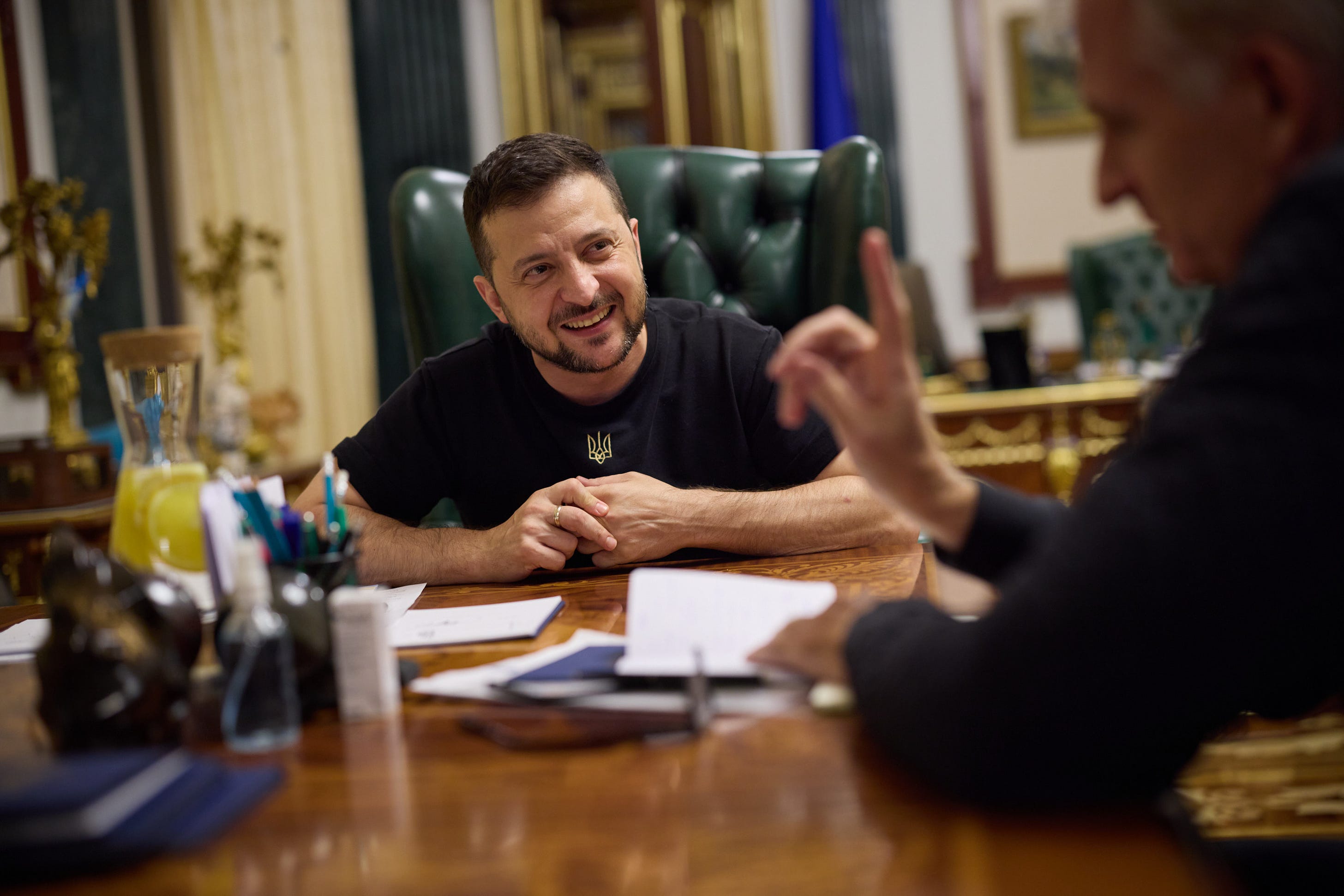
Another great actor… and profoundly decent man. I did get him to laugh once or twice. The warmth and intelligence he is able to show in these profoundly distressing conditions is just hugely admirable. Help me to get to that smile again by providing Ukrainians with what they need most.

Steve Hinnefeld reports that the voters of Indiana did not buy the anti-CRT baloney in important school board races. Indiana is a solid red state where Republicans swept every statewide race. But parents mostly like their school boards.

He begins:

School board elections are the quintessential local elections. In most states, including Indiana, they are nonpartisan. Voters make their choices based on the pros and cons of candidates, not parties. Issues matter, but candidates with strong networks of friends and supporters are likely to do well.

That makes it hard to draw conclusions from the school board elections that took place across the state last week. But it appears that conservative culture warriors didn’t do as well as they had hoped.

In some school districts, candidates vowed to take on “critical race theory” and “wokeness” in the schools. Those folks won and now have a majorityin Hamilton Southeastern, an affluent suburban district north of Indianapolis where white parents protested the hiring of the district’s first Black superintendent last year. In the New Albany-Floyd County district, two candidates backed by Liberty Defense, a PAC that supports Republicans, were among four winners.

But in Carmel and Noblesville, suburban districts that are demographically and politically similar to Hamilton Southeastern, they gained a seat but remained a minority. In Zionsville and Avon, also Indy suburbs, supporters of teachers and administrators won all contested seats. Zionsville conservatives who wanted to rewrite curriculum, and one who made national news when he said “all Nazis weren’t bad,” fell short. In Northwest Allen Schools, a suburban Fort Wayne district, incumbents held off a challenge by conservatives, including one endorsed by U.S. Rep. Jim Banks, R-Ind.

One disturbing result was in Lafayette, where a winning candidate said he looked forward to scouring classrooms for “gay and lesbian flags, that sort of thing.” But he’s one board member. He can make an ass of himself, but he can’t dictate policy, much less curriculum.

Open the link and keep reading.

Paul Bowers writes about what happened when a slate of extremists took control of a local school board in South Carolina. He described their actions as “vandalism.”

He begins:

A hard-right faction took control of the 4th-largest school district in South Carolina last night and immediately got to work smashing anything that wasn’t nailed to the floor.

On the same night they were sworn in to the Berkeley County School Board, a slate of candidates backed by Moms for Liberty and the local Republican Party fired the district’s first Black superintendent, fired the district legal counsel, voted to cut property taxes, approved a ban on “critical race theory” in the classroom, and set up a panel to begin reviewing and banning books containing sexual content that they deem inappropriate.

I was there when it happened, part of an overflow crowd of community members who told the board what they were doing was shameful. We might as well have delivered our little speeches to a brick wall. What we witnessed last night was more like vandalism than leadership.

I live-tweeted the meeting last night if you want to take a closer look. Because this newsletter has a national(-ish) audience, I wanted to share some broad observations that might be helpful as conservatives put all of our schools in their crosshairs.

They came prepared

The temptation is to think of our political opponents as stupid or insane. They might in fact be both, but we can’t think strategically about defeating them without assuming a base level of cunning on their part.

The Berkeley County Republican Party is a well-oiled machine. From the moment the newly elected conservative super-majority members took their seats in the boardroom last night, it was obvious they had a plan and they were sticking to it.

The new members didn’t deliver any flashy soundbites. They hardly discussed their policy proposals at all, aside from a running narrative by their newly installed board chair, Mac McQuillin. McQuilin is one of the longer-serving board members and knows Robert’s Rules of Order. He knew when to call a vote, and his allies on the board dutifully cast their votes in a 6-member bloc. On a 9-member board, they didn’t need to bother with persuading the other side.

This is called party discipline, and Democrats are terrible at it. Progressive activists and politicians could learn a thing or two about tactics here.

They take cues from the national level

Two rallying cries of conservative activists in this country right now are banning uncomfortable discussions of history under the guise of “critical race theory” and forbidding students from learning about the existence of trans people. The messaging is clear and consistent from Tucker Carlson’s mouth to your racist cousin’s ears.

Unlike with Statehouse-level legislation, where watchdog groups like ALEC Exposed track the spread of “model legislation” from the American Legislative Exchange Council, we don’t have a robust way of tracking the spread of billionaires’ pet projects at the level of local school boards (Or maybe we do! Let me know if you have a good resource).

Read enough local news and you start to see the patterns, though. Conservative county council and school board members have no qualms about copying and pasting policies from each other.

Earlier this month in South Carolina, the Horry County School Board set aside a “restricted access” section of school libraries where students can’t read books without parental permission. Book bans and “library consideration policies” were on the agenda in Lexington 3 and Beaufort County school districts this week too, borrowing ideas from Florida’s latest book ban laws.

Following the template, Berkeley County’s school board voted last night to approve a similar book-banning regime, effectively overriding policies that were written by the district’s own school librarians last year.

Please open the link and keep reading.

The Boston Globe wrote about the activities of a Dark Money group called Parents Defending Education, which has filed lawsuits against the public schools in Wellesley and Newton in their quest to ban books and cleanse the schools of teaching about racism and gender.

Maurice Cunningham wrote a letter to the Globe explaining the reason for the harassment. He thinks their goal is intimidation. He’s right. But there is more. I think their goal is to undermine confidence in public schools and build support for privatization.

He wrote:

LETTERS

In its challenges to schools, group’s object lesson is intimidation

Updated November 18, 2022, 2:30 a.m.

Moms for Liberty, represented at an event last month in Vero Beach, Fla., is among the groups associated with Parents Defending Education, which has been promoting conservative values in education and challenging school districts in court.

Re “Schools wary as nonprofit targets teaching: Right-leaning group’s complaints cite bias in lessons on gender, race, sexuality” (Page A1, Nov. 15): Parents Defending Education is an obedient franchise of right-wing interests, including Charles Koch and the Council for National Policy, that are working to destroy public education.

Legal actions such as Parents Defending Education’s civil rights complaint against the Newton Public Schools and its lawsuit against Wellesley Public Schools are meant to generate publicity and foster intimidation. As the Globe has reported previously, the group’s civil rights “complaints likely will go nowhere.” The lawsuit settled on terms favorable to Wellesley.


However, Parents Defending Education isn’t after legal recourse; it’s after harassment. Wellesley School Superintendent David Lussier said he has received “obscene” and “awful” e-mails from people connected to the group. In December 2021, the Globe reported that two Black school principals in Newton had received “racist and confrontational” messages after the right-wing publisher Breitbart published an article misrepresenting how the principals’ schools were handling lessons about the verdicts in the trials of Kyle Rittenhouse and the men convicted of killing Ahmaud Arbery. Breitbart’s story was framed by Parents Defending Education.

Racist and obscene messages menacing educators are not an unfortunate consequence of Parents Defending Education’s machinations; they are entirely foreseeable.

Maurice T. Cunningham

Cambridge

The writer is the author of “Dark Money and the Politics of School Privatization.” He is a retired associate professor at the University of Massachusetts Boston and a former state assistant attorney general in Massachusetts.

Mackenzie Scott, ex-wife of Jeff Bezos and richest woman in the world, has released her list of very lucky grant recipients. No one knows who advises her. No one applies for grants. Decisions about her largesse are secret.

Among the lucky recipients are Girl Scouts, Junior Achievement, Urban League chapters, Big Brothers Big Sisters Clubs, and many more.

A dozen public school districts were on her list, including Detroit and Chicago. She gave the Chicago Public Schools $25 million, but the Noble Network of Charter Schools in Chicago got $16 million, and LEARN Charter School Network in Chicago will receive $7 million. The two charter chains will get almost as much as the much larger school district. The Noble Network has 12,700 students. The LEARN charters enroll 4,000 students, pre-K through grade 8. The Chicago Public Schools enroll 320,000 students. So, 16,700 students get almost the same as 320,000 students.

Teach for America, which has hundreds of millions in its bank account, was gifted with $25 million.

Four KIPP charter schools received millions, although KIPP is amply funded.

Need does not seem to be a criterion in her giving.

When Florida Governor Ron DeSantis won re-election, he declared that Florida is the state where WOKE goes to die. By WOKE, he means any teaching about racism that makes white students uncomfortable. Teaching anti-racism is WOKE.

Well, WOKE isn’t dead yet.

A federal judge ruled yesterday that the WOKE act is “dystopian” and banned its enforcement in higher education.

A federal judge on Thursday ordered Florida to stop enforcing its new Stop WOKE Act at the state’s public colleges and universities.

The ruling came in two lawsuits — one filed by a University of South Florida student and professor and another led by Florida A&M law professor LeRoy Pernell — both alleging that the law illegally prevents frank discussions about the nation’s racial history in classrooms. The same judge issued a ruling in August that blocked the law from applying to workplace training.

The legislation prohibits advancing concepts that make anyone feel “guilt, anguish or other psychological distress” related to race, color, national origin or sex because of actions “committed in the past.” It is also tied to proposed regulations that would govern tenure reviews of faculty members.

Professor Adriana Novoa and student Sam Rechek, both from USF, argued the law was unconstitutional. The state countered that it has not harmed the plaintiffs and does not prohibit some of the discussions of the race-related topics mentioned in the lawsuit.

In Pernell’s lawsuit also challenging the act, the same defense lawyers wrote that because faculty members are employees of the state, “the First Amendment simply has no application in this context” because their employer “has simply chosen to regulate its own speech.”

Adam Steinbaugh, a lawyer for the Foundation for Individual Rights Expression, said the ruling was important for faculty of all political persuasions — including those who may have favored the Stop WOKE Act. The foundation is representing Novoa and Rechek.

The ruling “recognizes that faculty members are hired by the state but they don’t speak for the state,” Steinbaugh said. “They’re hired to engage in the robust exchange of views and ideas. Some of those views and ideas are going to be ones the state doesn’t like.”

In his 139-page order issuing a preliminary injunction against the law, U.S. District Judge Mark Walker quoted George Orwell. “‘It was a bright cold day in April, and the clocks were striking thirteen,’ and the powers in charge of Florida’s public university system have declared the State has unfettered authority to muzzle its professors in the name of ‘freedom,’ ” his ruling said.

He wrote that the state was trying to argue that professors only had academic freedom if they expressed the viewpoint of the state. “This is positively dystopian,” he wrote.

In a statement, USF said, “We are carefully reviewing the order and will promptly update our guidance, as needed.”

University of Florida Provost Joe Glover said the school was suspending its investigation procedures for reported violations of the law. The State University System said it does not comment on pending litigation. And the office of Gov. Ron DeSantis, who pushed the law, did not respond to requests for comment.

Steinbaugh, the plaintiffs’ lawyer, said he expects the state to appeal Walker’s ruling.

Novoa contended that she would have to remove readings from her courses, such as one about Jackie Robinson, the first Black man to play in baseball’s major leagues. A court filing said her instruction “advances and engages the question of how baseball’s racial past continues to shape both the game and society today.” In its response, the state contended that the act applied to the present, not historical fact.

Faculty in the Pernell case alleged universities had been taking down “public-facing statements that espoused anti-racist principles” and canceling anti-racist trainings, “creating a climate of increased racial hostility and harassment” and “generating fear among plaintiffs and other Black instructors and students who teach or take coursework in which the viewpoints disfavored by the Legislature are likely to be discussed.”

DeSantis first unveiled the framework for the law in December 2021 as he ramped up his fight against the influence of critical race theory and “wokeness” in schools and businesses across the state. Its formal name is the Stop the Wrongs to Our Kids and Employees Act.

During the 2022 legislative session, the measure spurred fierce debates and criticism, particularly from Democrats and Black lawmakers who said it would exacerbate inequities faced by minorities. The law took effect July 1.

Read more at: https://www.miamiherald.com/news/local/education/article268882172.html#storylink=cpy
Educators, parents, and civil rights groups in Virginia are outraged because Governor Glen Youngkin has directed the rewriting of the state’s history standards. The Youngkin standards eliminate anything that extremists and rightwingers find objectionable. The Youngkin team initially deleted all mention of Dr. Martin Luther King Jr. from the elementary curriculum. Presumably any discussion of Dr. King’s life and legacy might be interpreted as “critical race theory” by the Governor’s allies.

At the same time, Youngkin’s cultural warriors expanded coverage of Ancient Greece and Rome, expecting children in the early elementary years to learn about major figures in those civilizations for whom they have no context or understanding.

In the rewrite of the standards by the Youngkin team,, a startling amount of material about African Americans was deleted. The curriculum and standards were literally whitewashed.

And as you will notice, the Youngkin draft refers to Native Americans and indigenous peoples as “the first immigrants.” What?

The Youngkin rewrite shows zero knowledge of what content is age-appropriate. As you will read below, first-graders are expected to learn about the Code of Hammurabi. Are first-graders really ready to learn about ancient Babylon? The educators who wrote the statement below warn that the Code includes references to adultery and sex, possibly violating recent legislation that bans sexual content in the early grades.

Many years ago, I was deeply involved in the revision of the California History-Social Science standards and curriculum framework. The process must involve teachers, historians, and experts from different disciplines (such as geography, sociology, and other social sciences). Our committee reflected the state’s ethnic diversity and included teachers from different grade levels. The draft was circulated to teachers who would teach it to get their comments. It was then presented at public hearings where parents and the public expressed their views. It was a long and arduous process, but the state ended up with a fair and accurate account of state, national, and world history, along with an appreciation of different perspectives about history.

History is not “a story.” It is told differently depending on who is writing it, and it changes as historians learn more.

That kind of deliberation was started in Virginia but it was short-circuited by Governor Youngkin, who wanted to fulfill his campaign promises about “parental rights” and “critical race theory.” The result is that the process was politicized, and the standards were warped by political interference.

The meeting to discuss the standards was held last night. I will let you know what happens. I will keep watch on the effort to whitewash Virginia’s standards of learning and to make them explicitly Eurocentric.

Press Release by Concerned Educators of the Commonwealth

RELEASE DATE: For Immediate Release

CONTACT: Concerned Educators of the Commonwealth

WHAT: The Rewrite of Virginia’s Proposed History and Social Science Standards

WHEN: Thursday, November 17th Board of Education Meeting, James Monroe Building, Richmond

The History and Social Science Standards of Learning have always been written as a non-partisan document that values input from all sides of the aisle in a transparent process. During the October 20, 2022 meeting of the Virginia Board of Education, a number of Board Members pushed to have the proposed History and Social Science Standards along with supporting Curriculum Framework documents presented for “first review” at the next meeting. The State Superintendent of Instruction resisted this in favor of further delay. Instead of honoring her promise for only a brief delay to allow new board members appointed by Governor Youngkin time to review the proposed Standards, the links below reveal that the proposed Standards have been completely rewritten at the last moment and replaced. This rewrite was led by Superintendent Balow, the Superintendent’s selected consultant, Ms. Shelia Byrd Carmicheal and staff from the Governor’s office. It is NOT the original draft of proposed standards created in partnership with countless educators, historians, professors, museums, organizations, parents, teachers, and VDOE staff in the process laid out in Virginia Code. As indicated by Item I Memo, Shelia Byrd Carmichael will present the ¨Final Redraft of VA HSS Standards for K – 12. 11.10.22¨ There is no mention of the VDOE History and Social Science staff members who have led this work for the past two years.

In addition to this flawed and undemocratic process, there are several aspects of the rewritten standards that we find to be unacceptable, and we urge the Virginia Board of Education to reject these rewritten standards and not consider them for first review at their upcoming meeting on November 17th, 2022:

  1. The inital rewrite of the proposed Standards which were made public on November 11, 2022 entirely removed Martin Luther King, Jr. from the elementary curriculum. This selective erasure of one of the most prominent Black men in American history calls into question this entire revision of the proposed Standards. This was partially addressed on November 16th, 2022 with the sudden addition of the “Martin Luther King, Jr. Day” to SOL K.7b. However, the public needs to be aware that this last minute half-measure still removes Martin Luther King, Jr. from the 1st grade and 2nd grade SOLs that have been in place for years. This significant reduction is still unacceptable, and it not only shows how much this process was rushed in isolation with a outside consultant, but it now seems to be a paternalistic attempt to placate and mollify.
  1. The rewrite of the proposed Standards removes most of the 2020 technical edits that were made by the recent Commission on African American History Education (click here in order to see what has been removed).
  1. The rewrite of the proposed Standards refers to Native Americans and Indigenous Peoples as America’s “first immigrants” in SOL K.2a and b – this strips a historically marginalized group of 10,000 years of human history and their heritage as native and indigenous people who numbered in the tens of millions prior to European contact.
  1. The rewrite of the proposed Standards completely removes the African civilization of Mali from the Third Grade standards while Ancient Greece and Rome have been greatly expanded. All of these civilizations should be explored for students to fully understand the world – not just the Western World. This represents another example of erasing people of color from the previous version of the standards while elevating a Eurocentric view of the world.
  1. In addition to political bias, the rewrite of the proposed Standards contains several examples of age-inappropriate content that is far too complex for adolescent children. For example,
    1. The “Code of Hammurabi” is now listed as required content for First Grade (SOL 1.1c). The Code of Hammurabi not only requires considerable historical context for students to understand Ancient Babylon, but many of the codes are inappropriate as they address topics such as adultery, sex, and capital punishment. The time period, as well as the graphic nature of the content, is highly inappropriate for 1st graders. The inclusion of the Code of Hammurabi may come into conflict with the recently passed legislation that forbids the inclusion of sexually explicit content in curriculum.
    2. The Fertile Crescent, Mesopotamia, and the Tigris and Euphrates Rivers are now required content in SOL 1.1 for First Grade. Students in primary grades have limited context of their own communities and the world around them. Therefore, they need to focus on basic map skills and geographic features such as continents and oceans – not on specific locations that require in-depth knowledge about ancient civilizations. it should be noted that the previous revision version of the Standards placed this content appropriately in secondary courses such as World History I and World Geography that is typically taught in 8th or 9th grade. Asking our youngest learners to learn about “civilization” before they have any context of their own “communities” shows a clear lack of understanding about what is developmentally appropriate in grades K-1.
    3. The Third Grade Standards require students to learn about several historic figures that are far too complex for this grade-level such as “Socrates, Plato, Aristotle, Hippocrates, Alexander the Great, Crassus, Julius Caesar, Mark Antony, Trajan, Hadrian, Marcus Aurelius, Constantine, Odysseus, and Aeneas.” While certainly historically significant, these figures are much more appropriate for secondary courses such as World History I which is typically taught in 8th or 9th grade. Such misunderstanding of elementary education calls into question if the person or persons who drafted these revised standards have any understanding of what is developmentally appropriate for younger learners and if they have any experience in elementary education.
  1. The rewrite of the proposed Standards is full of grammatical, spelling, and formatting errors. For example, in SOL 2.2c, the famous closing statement of the Declaration of Independence is misspelled where the signers pledged their “lives, fortunes, and scared [sic.] honor” rather than sacred honor. Another simple mistake appears in SOL USI.7c, where the revised Standard states, “students will describe challenges faced by the new nation by….explaining what the Constitutional Conventions was.”
  1. The rewrite of the proposed Standards is also full of historical errors and inaccuracies. For example, SOL VS.5f requires students to “explain the reasons for the relocation of Virginia’s capital from Jamestown to Williamsburg” as part of the overall standard about the Revolutionary War. However, this makes absolutely no sense given that Virginia’s capital was moved from Williamsburg to Richmond during the Revolutionary War in order to provide greater protection against British attack. A discussion of the move from Jamestown to Williamsburg seems to be a glaring historical error given that Jamestown burned in 1698 and the capital of Virginia was moved to Williamsburg 77 years before the outbreak of the Revolutionary War. The previous version of the proposed Standards did not contain egregious historical errors such as this because they were developed by a team of educators, division leaders, and historians. Another example of historical error appears in SOL VS.6 where Zachary Taylor is incorrectly identified as the most recent President from Virginia. Taylor was Virginia’s 7th President elected in 1848. Woodrow Wilson was Virginia’s 8th President elected in 1912.
  1. The rewrite of the proposed Standards emphasizes the memorization of content knowledge at the expense of skills and deeper understanding. The level of content knowledge is so extensive that it leaves very little time for critical thinking, inquiry, and project-based learning. For example, SOL CE.1n requires students to learn the “charters of the Virginia Company of London April 10, 1606, May 23, 1609, and March 12, 1612.” Such specific content knowledge in this regard promotes rote memorization and detracts from the larger goal of deeper understanding, skill development, and learning the knowledge and facts by anchoring that content to larger conceptual understandings
  1. Contributions from the Sikh and the Asian American Pacific Islander (AAPI) community have been greatly limited in this redraft.
  1. The rewrite of the proposed Standards completely alters the course sequence and will cause major disruptions as divisions struggle to redesign learning materials and resources for courses in grades K-9. If adopted, this mandate would move middle school courses to elementary and high school courses to middle school. This also has the potential to create major staffing issues as teachers will have to change teaching assignments, grade levels, and even schools. The altered sequence of courses negatively impacts students who are already in the middle of a particular course sequence. Publishing companies and education departments have created grade-appropriate materials to accompany the current SOL sequence. Making these drastic changes without allowing time for the creation of high-quality, enriching, age-appropriate supporting documents is disruptive of student learning and compromises Social Studies education.

Note: I can’t guarantee that the links will open, as this is a copy of a copy of a copy.