Archives for category: Teachers

Finland’s educational success became an international sensation when the nation’s students unexpectedly topped the PISA test a few years back. The Finns really don’t care much about rankings and standardized tests, and they were as surprised as everyone else. Thousands of visitors came to Finland to find out what they were doing. Then Finland slipped out of first place, and the gossip mill began spinning out theories about why Finland was losing its luster. Finland still doesn’t care about rankings or test scores.

In this post, Finnish expert Pasi Sahlberg and Finnish educator Peter Johnson explain what Finland is doing and what it is not doing to improve its schools (not its test scores).

They identify the three cornerstones of Finnish education:

*Education systems and schools shouldn’t be managed like business corporations where tough competition, measurement-based accountability and performance-determined pay are common principles. Instead, successful education systems rely on collaboration, trust, and collegial responsibility in and between schools.

*The teaching profession shouldn’t be perceived as a technical, temporary craft that anyone with a little guidance can do. Successful education systems rely on continuous professionalization of teaching and school leadership that requires advanced academic education, solid scientific and practical knowledge, and continuous on-the-job training.

*The quality of education shouldn’t be judged by the level of literacy and numeracy test scores alone. Successful education systems are designed to emphasize whole-child development, equity of education outcomes, well being, and arts, music, drama and physical education as important elements of curriculum.

They then debunk the myths and misperceptions that have been bruited about.

Unlike the U.S., where billions of dollars are wasted in efforts to switch control of schools from public to private, Finnish educators are trying to work through the problems of building a curriculum and pedagogy for the 21st century–and beyond.

When then Governor Christie and then Mayor Cory Booker persuaded billionaire Mark Zuckerberg to give $100 million to impose corporate reform on Newark, performance pay for teachers was the heart of their plan. Pay the “best” teachers for getting high scores, eliminate “bad” teachers, and Newark schools would be transformed.

In a major blow to the corporate reform movement, the latest teacher contract in Newark just eliminated performance pay.

It didn’t work in Newark, and it hasn’t worked anywhere else. It is a zombie idea. Teachers aren’t holding back, waiting for a bonus to goad them on. They are doing the best they know how. With help and support, they can improve, but not because of rewards and threats.

https://www.chalkbeat.org/posts/newark/2019/08/15/merit-pay-was-the-heart-of-a-revolutionary-teachers-contract-in-newark-now-the-cory-booker-era-policy-is-disappearing/

In 2012, Newark teachers agreed to a controversial new contract that linked their pay to student achievement — a stark departure from the way most teachers across the country are paid.

The idea was to reward teachers for excellent performance, rather than how many years they spent in the district or degrees they attained. Under the new contract, teachers could earn bonuses and raises only if they received satisfactory or better ratings, and advanced degrees would no longer elevate teachers to a higher pay scale.

The changes were considered a major victory for the so-called “education reform” movement, which sought to inject corporate-style accountability and compensation practices into public education. And they were championed by an unlikely trio: New Jersey’s Republican governor, the Democratic-aligned leader of the nation’s second-largest teachers union, and Facebook founder Mark Zuckerberg, who had allocated half of his $100 million gift to Newark’s schools to fund a new teachers contract.

“In my heart, this is what I was hoping for: that Newark would lead a transformational change in education in America,” then-Gov. Chris Christie said in Nov. 2012 after the contract was ratified.

Seven years later, those changes have been erased.

Last week, negotiators for the Newark Teachers Union and the district struck a deal for a new contract that scraps the bonuses for top-rated teachers, allows low-rated teachers to earn raises, and gives teachers with advanced degrees more pay. It also eliminates other provisions of the 2012 contract, which were continued in a follow-up agreement in 2017, including longer hours for low-performing schools.

“All vestiges of corporate reform have been removed,” declared a union document describing the deal.

Teachers and parents have listed Nick Melvoin on Yelp as a business, and they are rating him. Nick is one of the leading charter advocates on the LAUSD school board. He was elected because of millions from the charter lobby and its billionaire allies.

https://www.yelp.com/biz/nick-melvoin-lausd-board-member-los-angeles

His ratings are terrible. If he were a teacher, he would be fired.


Clifford Wallace and Leigh Wallace, a father-daughter team of professional educators, lambaste state officials for their relentless attacks on the state’s public school teachers. 

They begin:

Leadership matters. It has the potential to influence student outcomes. Clearly, there is a lack of leadership in Frankfort. Kentucky State Education Commissioner Wayne Lewis is taking pages from the flawed and unsuccessful playbooks of his neoliberal, pro-privatization counterparts in Louisiana, Indiana, Ohio, and Wisconsin. From no longer requiring master’s degrees for teachers to maintain certification to promoting privatized for profit “charter schools” as the panacea to save the “failing public schools” – our “commissioner” is helping dismantle our public schools – and the teaching profession – in Kentucky.

Lewis continues to disparage professionally prepared – and experienced – educators through diminishing the significance of the complex work they do on a daily basis, insulting their commitment and expertise, threatening their pensions, and cutting programs and budgets. Recently, in addition to painting a negative narrative around our public schools and the professionals that work in them, he proposed a “pay for performance” incentive for Kentucky Public School teachers as a means to motivate them to “work harder” and ensure every student has access to a “quality public school.” While this may sound promising on the surface – especially if you have not read the numerous studies conducted by scholars on this practice over the past 30+ years – it is a failed solution.

Lewis’s proposal for merit pay or performance bonuses is absurd. It has been tried repeatedly and failed everywhere. It was tried in Nashville, with a bonus of $15,000 for middle school math teachers who raised test scores. It failed. It has been tried again and again over the past 100 years and has NEVER worked.
Lewis is no “Reformer.” He is being paid to demoralize professional educators and find excuses to privatize public schools. This is not “leadership.” This is Disruption.
The teachers and students of Kentucky deserve better leaders who are dedicated to improving conditionsof teaching and learning.


Jonathan Burdick, a history teacher in Pennsylvania, wrote on Twitter about a new group called “Free to Teach,” which encourages teachers to abandon their union and form an “independent” union.

He can be found @JonathanBurdick on Twitter. In case you are not on Twitter and can’t find the thread, Jonathan writes that the group’s ads are sponsored by an Oklahoma-based organization called “Americans for Fair Treatment.” Here we go down the rabbit hole of right-wing groups. That group shares the same registered address in Oklahoma with “The Fairness Center,” which sued the teachers’ union in Philadelphia and lost. The Fairness Center shares offices in Harrisburg, Pennsylvania, with the Commonwealth Foundation. The Commonwealth Foundation is funded by DonorsTrust and Donors Capital Fund. These organizations are part of a massive network of right-wing groups called the State Policy Network. These organizations have donated HUNDREDS OF MILLION OF DOLLARS to extreme right causes: many anti-union and pro-educational privatization. These organizations are funded by billionaires including the Koch Brothers and Richard and Helen DeVos—the parents-in-law of Betsy DeVos. They also fund the Mackinac Center in Michigan, a favorite cause of Betsy DeVos, which works to crush unions and workers’ rights. Jonathan Burdick points out that Peter Greene wrote about “Free to Teach” and its connections to the right-wing oligarchs.


Sometimes you have to use plain words to describe a theftin broad daylight.

Read Kentucky teacher Randy Wieck’s description of the broad-daylight theft of teachers’ pension funds and what this means, not only to teachers, but to school districts across the state.

The Kentucky public pension “deform” abomination signed by Governor Bevin July 24, 2019 – opposed by all Senate Democrats and 9 Republicans in the Kentucky Senate, deforms the pensions – it does not reform them.

The essential knife-thrusts to the heart of the government retiree pension are these:

1) It clips future hires from the plan (and future pay-ins).

2) It allows 118 quasi-governmental agencies (rape crisis centers; health departments, regional universities, etc.) to buy out of the retirement plan with only vague plans to pay off their 30-year pension deb.

The amounts owed are so large it is daft to think the agencies could meet their obligations without declaring bankruptcy and then consequently cutting the benefits of retirees…

By pushing the pension obligations on to individual school districts and thereby increasing the percentage of school-district budgets that must be paid into the pension plan they force the districts to seek cover in bankruptcy.

This will result in significant job losses:

To wit, Louisville, Kentucky, where I am a teacher, recently shut all of its outdoor summer pools; cancelled the most recent police recruit class; and shuttered several libraries to cover increased pension costs. School districts will have to follow suit if this fiscal breach of faith, if this crime – goes unchallenged in the courts, our last resort.

I am reposting this post because the main link was dead and I fixed it. Also, it was originally titled “The D.C. ‘Miracle’ turns to Ashes,” and a reader said a miracle can’t turn to ashes. So it has a new title.


A year ago, reformers were touting D.C. as their triumphant example. Those graduation rates!

Unfortunately, like every other reformer tale, it was a hoax. The graduation rate was phony. Students were walking across the stage without the necessary attendance or credits. Metrics!

From PBS:

“Critics view the problems, particularly the attendance issue, as an indictment of the entire data-driven evaluation system instituted a more than a decade ago when then-Mayor Adrian Fenty took over the school system and appointed Michelle Rhee as the first chancellor. Rhee’s ambitious plan to clear out dead wood and focus on accountability for teachers and administrators landed her on the cover of Time magazine holding a broom. But now analysts question whether Rhee’s emphasis on performance metrics has created a monster.”

Ya think?

And the teacher-turnover rate is 25% a year! 

The national average? Only 16%. In fact, D.C.’s teacher turnover rate (across both traditional public and public charter schools) is higher than other comparable jurisdictions, including New York, Chicago and Milwaukee.

For both public and charter schools, the highest turnover is taking place at schools with the most at-risk students, with the rate pushing past 30% in Wards 5 and 8.

This is the fruit of Michelle Rhee’s work. A district that continues to have the largest achievement gaps of any urban district tested by NAEP, a phony graduation rate,  and a startlingly high teacher turnover rate. Another “reform” hoax.


Steven Singer wrote this last year, but it remains pertinent and on the money. He says that there is a narrative spun by Disrupters that American schools are in “crisis” and are “failing.” He says this is baloney, or bologna, whichever spelling you prefer.

Singer says that American public schools are among the best in the world.

He writes:

Critics argue that our scores on international tests don’t justify such a claim. But they’re wrong before you even look at the numbers. They’re comparing apples to pears. You simply can’t compare the United States to countries that leave hundreds of thousands of rural and poor children without any education whatsoever. The Bates Motel may have the softest pillows in town, but it’s immediately disqualified because of the high chance of being murdered in the shower.

No school system of this size anywhere in the world exceeds the United States in providing free access to education for everyone. And that, alone, makes us one of the best.

It doesn’t mean our system is problem free. There are plenty of ways we could improve. We’re still incredibly segregated by race and class. Our funding formulas are often regressive and inadequate. Schools serving mostly poor students don’t have nearly the resources of those serving rich students. But at least at the very outset what we’re trying to do is better than what most of the world takes on. You can’t achieve equity if it isn’t even on the menu.

The important thing to know about the international test scores is that we were never #1. Never. When the first international test of mathematics was offered in the mid-1960s, we came in last.

What holds us back is our high rates of child poverty. If we reduced poverty, we would improve our schools because children would arrive in school ready to learn, and would not lose days of instruction due to illness and lack of medical attention.

The biggest problem in American education, aside from our national indifference to the well-being of students, is that we have a crazy federal law that makes test scores the goal of education. That’s backwards. Test scores are supposed to be a measure, not a goal.

We should aim to be more like Finland, which not only has high test scores without test prep, but has been rated the happiest country in the world. Less testing, more time for the arts and more attention to creativity and divergent thinking. Teachers with autonomy and a love of teaching. Students encouraged to do their best but not measured by standardized tests. You know where Finland got these ideas? They borrowed them from the U.S., and we forgot them and went for standardization. As Albert Einstein said many decades ago, standardization is for automobiles, not for people.


Veteran journalist Peg Tyre is on a study mission to understand education in certain Asian nations. She has written several reports, some of which were posted here. She has written to tell me that she has enjoyed the feedback from readers of this blog, so keep those emails and reactions to her coming.

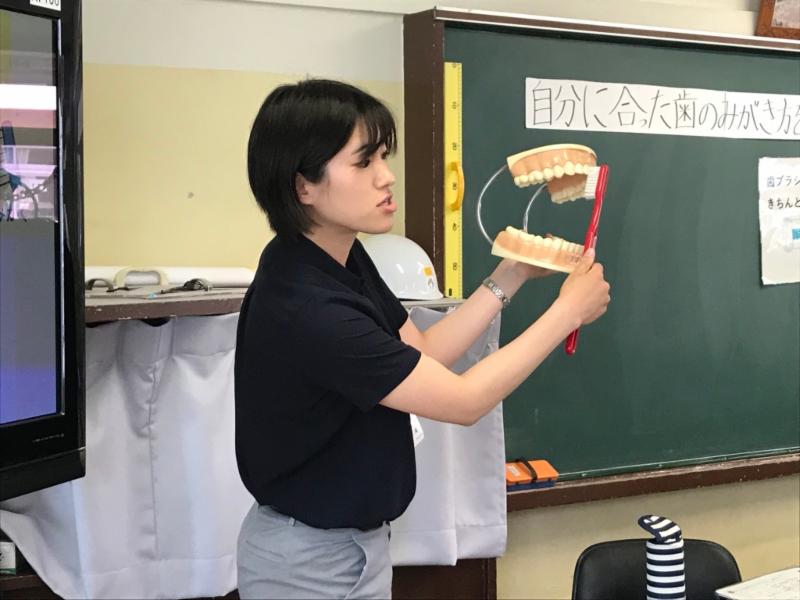
A teacher in a primary school giving a healthy-living lesson
Japanese Teachers Put In Longer Hours Than Any Other Teachers on the Planet
“Being a teacher is like being a 7-11. Open 24 hours.”
Here’s the project: The Japanese government, like many Asian countries with high performing schools, wants to educate students to become more innovative and creative in order to compete with AI and participate more fully in a global economy. They are promoting English language instruction (with an emphasis on speaking), creativity, self-expression, meta-cognition, critical thinking and problem-solving. I’m on a research trip in Japan to find out more.
Thanks to all the folks (and especially teachers!) emailing me questions and sharing reflections. Very inspiring. Keep those emails coming.
You Asked: What’s It Like To Be a Public School Teacher in Japan?
So I Looked Into It!
Answer: They Get a Ton of Respect But the Hours Are Crippling.
And lots of teachers fear the push to change schools is going to make those hours even worse.
The Good Part: It takes time and determination to teach in a public school in Japan. You need a college degree with an emphasis on education, a supervised practicum and you need to get a license and renew it every few years. The job application process is highly selective and only the best candidates land jobs. Once you get a job, you are encouraged to collaborate with your fellow teachers, and do a great deal of observation of other classrooms. Professional development is considered necessary for everyone.
Being a public school teacher in Japan is a prestigious job. You are entrusted to look after the academic, social and emotional lives of students as individuals and also foster group harmony, so people consider you a moral beacon. You teach kids life skills (like brushing teeth), help them navigate socially, help direct their careers and even do a little ad hoc family counseling.
Unlike in the US, where reformers often suggest that kids in low-performing schools would learn more if teachers were smarter, better educated or more dedicated, Japanese people regard the teachers in their local public school as something akin to a pastor or a doctor in a local clinic. The government appreciates you. Parents don’t criticize you. And school administrators are pretty supportive as well. The pay is pretty decent, definitely enough to live a middle class life.
The Bad Part: The hours are shockingly long.
In 2006, primary school teacher worked 53.16 hours a week.
In 2016, primary school teachers worked a whopping 57.29 hours per week.
Senior teachers and vice principals have even it worse.
In 2006, they reported working 59.05 hours a week.
In 2016, they logged 63.8 hours per week.
That includes teaching time, supervising clubs and activities after school, counseling, lesson planning, grading and preparing materials. Teachers also take their students on class trips on Saturdays.
In the Japanese context, working long hours is considered a virtue. But karoshi, literally working yourself to death, has become a big social problem in many sectors of the economy in Japan. And teachers are not immune.
Makamura Kunihiko is a veteran teacher and now principal at Sapporo Fushimi junior high school. (His photo is below) In an interview a few days ago, he told me that among his staff, about 20% of his teachers, usually parents of young kids, leave at 5 pm. About 20% of the teachers in his school stay until midnight– working.

Good Lord! What Does the Union Say? The responsibilities of the job, they point out, are unsustainable. And in the last few years, the number of people who say they want to be teachers is dropping. “Teachers are worn out. To keep ourselves healthy and to make sure we have enough [bandwidth] to communicate with students, we need to address the issue of overwork,” says Tamaki Terazawa, head of international affairs for the Japan Teachers’ Union.
The government has responded by asking schools to get community members to run after school programs and supervise class trips to shorten a teacher’s work day. And that is starting to happen. The government also capped the hours teachers can work but that’s a pretty toothless initiative since unpaid overtime falls into that gray area made up of what you are required to do and what you think should do. And teachers in Japan (and workers in Japan in general) don’t have many models for work-life balance.
A Day in the Life of as Japanese Public School Teacher:
8:15 am….. start work.
4:45 pm…. formal school day ends.
5:00 pm….supervise clubs or activities.
6:00 pm……teacher team meetings.
8:00 pm…… grading and lesson planning.
Weekend….. teachers often supervise class trips.
NEXT UP: Readers prompt me to think more deeply about who gets to be creative. How? And Why?
Interested in reading what I’ve discovered so far?
Newsletter 1: In The Beginning
You can take an active role in shaping this project. Please send me questions, observations, research, history and personal reflections about your own teaching and learning, thoughts about rote learning and your ideas about what makes an innovator. Tell me what you want to know from my reporting. Twitter: @pegtyre or email: pegtyre1@gmail.com
Also, if you know of someone who might be interested in being part of this project, kindly send me their email and I’ll add them to the mailing list.
My trip is made possible by a generous Abe Fellowship for Journalists (administered by the Social Science Research Council.) I retain full editorial control. I also appreciate the moral support of my colleagues at the EGF Accelerator, an incubator for education-related nonprofits.


This article in Education Week by two researchers—Joanne Golann and Mira Debs—ask why leaders of “no-excuses” charter schools think that children of color need harsh discipline. They interview parents and discover what they really want:

As researchers who have taught in and studied these schools, we found that parents’ attitudes were not that simple. The Black and Latino parents we interviewed in a no-excuses middle school valued discipline, but viewed it as more than rule following. They wanted demanding academic expectations alongside a caring and structured environment that would help their children develop the self-discipline to make good choices.

Recognizing the peer pressures their children faced, these parents told us that they did not want their children to become “robots” or “little mindless minion[s], just going by what somebody says.” Their concerns echo an earlier study that one of us (Joanne Golann) published in 2015, questioning whether the no-excuses model’s emphasis on obedience adequately prepares students for the self-directed learning skills they need to be successful in college.

What their children actually get is boot-camp discipline, where parents are called for the smallest infraction, like laughing during a fire drill.

No-excuses students are typically required to wear uniforms, sit straight, with their hands folded on the table, and their eyes continuously on the teacher. At breaks, they walk silently through the halls in single-file lines. Students who follow these stringent expectations are rewarded with privileges, while violators are punished with demerits, detentions, and suspensions.

The researchers say that Montessori schools get good results without harsh discipline in a climate that encourages creativity and collaboration.

I have always wondered where the no-excuses charters found bright young college graduates willing to enforce their harsh rules. Many of them presumably studied in progressive schools and colleges. How did they learn to enforce harsh rules? This “special” and harsh treatment of children of color smacks of colonialism.