Jim Swanson and John Graham, both CEOs in Arizona, wrote a stern warning against the legislature’s proposed voucher expansion, which would make almost all students in the state eligible for public funding to spend in a private or religious school. One of the authors is on the Arizona State Board for Charter Schools. Arizona is a state that likes low taxes; it does not fund its public schools adequately or equitably. Under the leadership of Governor Doug Ducey (who promised the Koch brothers a few years ago that he would drive taxes down as low as he could), the state is offering choice instead of adequate funding to its schools. Arizona has consistently underfunded its public schools and pretends to “reform” them by offering charters and vouchers.
They wrote:
The current, aggressive push to expand Empowerment Scholarship Accounts (ESAs) does nothing to address the systemic education challenges we face in Arizona.
It is a dangerous attack on our public education systems and our state’s economic future. As a business community, our priority is to ensure that all students have access to a top-quality school that meets students’ needs and interests.
Arizona leaders should focus on effectively funding public education and supporting innovative programs that improve academic outcomes.
The time is now. Public education is the single most powerful economic development tool we have as a state.
ESAs were originally designed to serve a small population of students – they were never meant to replace public education or to serve all students.
A full expansion of ESAs is nothing more than a boutique scheme to address a non-existent need for private school subsidies.
While being marketed as a solution for low-income students and students of color – the students whom data tells us need the most wide-scale, institutional support – SB1452 is the most offensive of the private school voucher bills proposed this session. The bill would make roughly 700,000 Arizona students eligible for ESAs – a 280% increase in a single move. This is nothing more than a bold attempt to privatize education.
There’s a lot wrong with this bill, but the worst is the fact that rather than focus on supporting low-income students of color, many of whom are already eligible, SB1452 will make many more middle- and high-income white students eligible for taxpayer-subsidized vouchers, exploiting the impoverished communities in favor of further subsidizing the tiny fraction (as few as approximately 5%) of Arizona families choosing to home-school, private and parochial schools.
Greater Phoenix Leadership, Southern Arizona Leadership Council and Northern Arizona Leadership Alliance, representing more than 200 CEOs across Arizona, have made it clear that they are against the expansion of vouchers in Arizona and have voiced support for our public education systems, from early childhood to higher education. Business leaders and voters are like-minded – we have consistently come together for public education with a focus on equity and access. Instead of proposing unsustainable ways to make 70% of students eligible for private school vouchers, we need to make the public schools better, stronger and more successful.
What our state needs is crystal clear – an equitable, fully funded, high-quality public education system that serves all students across Arizona, no matter the zip code or income level. We have fallen too far behind and the only way we catch up – the only way we move the needle and bring Arizona to a competitive, robust and morally conscionable state – is to focus on the public education funding formula. Programs like private school vouchers have a long history of excluding and segregating our communities rather than including and supporting them. ESAs don’t get us where we need to be.
We need to put our heads together – across the business, education and political realms – and finally execute big changes to the funding formula and other mechanisms that have proven inefficient and worse, inequitable. Now is the time to focus on what moves all our students forward – working together to properly fund the schools serving 95% of Arizona students.
Question: Will the legislature listen to Arizona business leaders or to Charles Koch and Betsy DeVos?
West Virginia was the first site of the Red for Ed teachers’ movement. The teachers of the state captured national attention for their statewide strike. Their strike included a number of issues, not only salaries and health care, but also charter schools. Teachers correctly saw them as a means of diverting funding from public schools. They wanted well-resourced public schools. But given the GOP dominance of the legislature, the charter supporters demanded charter legislation, and the best the teachers could was to limit their number.
Now, in the middle of the pandemic, the GOP is coming back with both charter and voucher legislation. The bills are advancing rapidly and teachers can’t mass their numbers in the Capitol due to restrictions on access.
CHARLESTON — Bills on schedule to pass the state House of Delegates this week would allow faster charter school expansion, promote online charter schools and give parents public money for non-public schooling.
It’s just the second week of the legislative session.
Fresh off their first statewide strike a year earlier, public school workers in 2019 shut down classrooms again to oppose an omnibus education bill that, among many other things, would’ve legalized charter schools and vouchers to provide public money for private- and home-schooling.
The effort staved off vouchers and limited charter schools to no more than three until July 1, 2023. County boards of education also were generally given veto power over charters.
This time, facing a Republican governor paired with Republican supermajorities in both legislative chambers, state public school worker unions are taking a more cautious approach.
“Maybe fight is not the best word, but to support our stand,” said Fred Albert, president of the state branch of the American Federation of Teachers, “and we’ve said this a million times: Elections have consequences. And we’ve always been about trying to elect friends of public education and people who support public education … [W]e know it’s going to be an uphill battle…”
Time to stop the bills appeared to be running out three days into the session. Perhaps it ran out in November.
By just Day Two of the session, House Republicans had already advanced charter school and voucher bills from the House Education Committee, which has been the graveyard of previous union-opposed legislation. The House Finance Committee passed the vouchers bill Saturday.
If the full House passes the bills, they head to the Senate, where there has historically been even more support for such legislation. A simple majority can override a gubernatorial veto...
Other factors could be affecting workers’ ability to combat the legislation. Many have borne personal tolls from the pandemic.
“People are dying,” White said. He said he confirmed Thursday five of his union members had died.
“I think people are feeling overwhelmed with the pandemic,” Albert said. “There’s a lot of fear out there for their own health and safety and for their children and classrooms.”
Teachers and others also have waged wearying battles over mandated returns to classrooms.
“I think people are exhausted from the fights over school reopening,” said Jay O’Neal, a teacher at West Side Middle who helped galvanize the 2018 and 2019 strikes.
A perfect time to sabotage public schools and their teachers, when everyone is 3xhausted.
SB 48 Will Be Heard at 3:30 p.m. on 2/17/21 in the Senate Appropriations Subcommittee on Education Your Voice is Needed! What you can do . . . 1) Make calls and/or send emails – We are urging all those connected to Pastors for Florida Children to contact the members of the Senate Appropriations Subcommittee on Education and encourage them to vote “NO” on this bill! We are hoping to flood their offices with calls/emails up until the committee discussion on SB 48 at 3:30 p.m. on 2/17. If you live within the districts of any of the Senators on the subcommittee, be sure to indicate that in your call/email. Ask your family members, friends and colleagues to contact them as well. Below is some more information as well as talking points about the bill: SB 48 is moving through the legislative process and will divert more tax dollars away from public schools and further remove public oversight, transparency and accountability. If passed, SB 48 would expand eligibility for school-voucher programs, consolidate existing choice programs and allow parents to use taxpayer-backed education savings accounts for private schools and other costs. Private schools that take state scholarships also do not have to meet state standards for teacher qualifications, facilities, curriculum or finances. Also, within the last calendar year, evidence has been presented that private schools that accept state money are currently able to discriminate against some of the state’s students without any repercussions. SB 48 will outsource the oversight of Florida’s $1 billion voucher program to private organizations that will profit from the program expansion. There is no local oversight from elected officials and private organization audits are also reduced from annually to every three years. The almost 3 million schoolchildren in Florida deserve better! Every child in Florida deserves to have access to a high quality education as is mandated by the Florida Constitution. Senate Appropriations Subcommittee on Education Members and Contact Information:Chair Doug Broxson (R)broxson.doug@flsenate.gov850-487-5001@DougBroxson Vice Chair Manny Diaz (R) — *Bill Sponsordiaz.manny@flsenate.gov850-487-5036@SenMannyDiazJr Sen. Janet Cruz (D)cruz.janet@flsenate.gov850-487-5018@SenJanetCruz Sen. Audrey Gibson (D)gibson.audrey@flsenate.gov850-487-5006@SenAudrey2eet Sen. Joe Gruters (R)gruters.joe@flsenate.gov850-487-5023@JoeGruters Sen. Travis Hutson (R)hutson.travis.web@flsenate.gov850-487-5007@TravisJHutson Sen. Kathleen Passidomo (R)passidomo.kathleen@flsenate.gov850-487-5028@Kathleen4SWFL Sen. Tina Polsky (D)polsky.tina@flsenate.gov850-487-5029@TinaPolsky Sen. Tom Wright (R)wright.tom.web@flsenate.gov850-487-5014@SenTomWright 2) Get Educated – The League of Women Voters of Florida hosted a Lunch & Learn program dedicated solely to the detriments that this legislation will cause, featuring Rev. Rachel Gunter Shapard, one of the co-founders of Pastors for Florida Children. If you would like to view it to learn more about SB 48 click here. If you were not able to attend the webinar hosted by Public Funds Public Schools entitled “Fighting Voucher Legislation in 2021: An Update on State Voucher Bills and Tools to Oppose Them,” you can view the recording here. The webinar featured representatives of Public Funds Public Schools (PFPS), the Network for Public Education (NPE), and the National Coalition for Public Education (NCPE). It is worth your time! 3) Write an Op-Ed – if you are a writer, we need you! It is imperative that we tell the other side of the story. Privatizers are bringing in parents and students who have benefited from vouchers to testify before legislative committees, but the problem is that private school students only represent 10% of the school-age population in Florida. We need to help amplify the stories of students who attended voucher schools and due to a negative experience had to return to public schools, or of public schools that are in underfunded that are doing incredible work, but need more resources to make a truly transformative impact. Contact us if you would like to write an Op-Ed. 4) Make a connection – If you know of students who have utilized a voucher “scholarship” who had a negative experience and had to return to a public school, please connect us to them! Now more than ever it is imperative to share the other side of the story. Sincerely, Rev. James T. GoldenChair, Social Action Committee,Florida African Methodist Episcopal Church Rev. Joyce Lieberman Executive/Stated Clerk,Synod of South Atlantic – Presbyterian Church (USA) Rev. Rachel Gunter ShapardRegional Vice President, Together for Hope – Black BeltContact us:pastorsforflchildren@gmail.com
The following article was written by Swedish high school teacher Filippa Mannherheim and translated by retired Swedish educator Sara Hjelm. It appeared in the Swedish publication Expressen. Sweden adopted a free-market system of schooling in the early 1990s, and the results have increased segregation without improving the quality of education or access to good schools. The free-market model, she writes, began with extravagant promises but has turned into a bonanza for entrepreneurs and profiteers.
Swedish education is a shame – you politicians have failed
Published 17 Nov 2020 at 06.15, updated 18 Nov at 10.05
Teacher and school debater Filippa Mannerheim.Photo: Press
Teacher and school debater Filippa Mannerheim today publishes an open letter on Expressen’s culture page to Sweden’s Riksdag politicians. “It is time to merge across party lines and stop the expansion of limited companies,” she writes.
This is a cultural article, where writers can express personal opinions and make assessments of works of art.
Parliamentary politicians!
I am a Swedish citizen. I am a teacher. I’m a parent. And I am deeply concerned about the future of Swedish schools.
The Swedish school has been subjected to a world-unique experiment. In the rest of the world, it is unreasonable for limited companies to make unregulated profits on tax money. Despite this, we in Sweden donate hundreds of millions of kronor to shareholders in company groups year after year – money that was intended for our children’s education.
With the deregulation of the 1990s, the ambition was to create thriving, independent schools, foundations, parent cooperatives and small limited company schools with educational alternatives. Today, this vision has turned into an uncontrollable market where venture capital companies are expanding and devouring tax money at breakneck speed.
The business model is simple: you buy smaller independent schools and incorporate them into the growing groups and then make a profit by targeting marketing to easy-to-teach, independent students, through special dress codes, requirements for high tempo and great drive or through English as a study language. With a sold-out, simpler student base, the corporation schools can reduce salaries, teacher density, resource staff and – to attract even more lucrative student customers – sprinkle with joy-ratings to show the school’s “high results”.
When the profitable students have been absorbed by the independent school, the municipal school is left with a more difficult student base and with the overall responsibility for all the municipality’s students. And when the municipal school’s student allowance must be increased due to the task becoming more demanding, the independent schools ‘student allowance is also increased and the groups’ profits can increase even more. A bomb-proof business model for venture capital companies but a devastating tax waste for the Swedish citizens.
You, politicians, have made our common school a wet dream for venture capital companies.
Because while the school giant Academedia, now listed on the stock exchange, makes a profit of SEK 556 million before tax, the size of the children’s groups in the preschool increases and greatly exceeds the National Agency for Education’s benchmarks. While the International English School (IES) presents a profit of 254 million, many children are in classrooms without teaching materials and are taught by foreign teachers without Swedish qualification or by qualified teachers who earn SEK 3,000 less a month than their municipal colleagues. While schools and colleges are sounding the alarm about declining knowledge results, joy grades are rising, as grades have become a competitive tool on the market. While the independent school giants receive a rent discount for establishing themselves in the municipalities, children with diagnoses or a mother tongue other than Swedish are rejected, as they are more expensive to teach.
Before the National Agency for Education made all statistics about individual schools secret – because it became a “trade secret” – all this information was available to us. Today it does not do that anymore, which threatens our democracy.
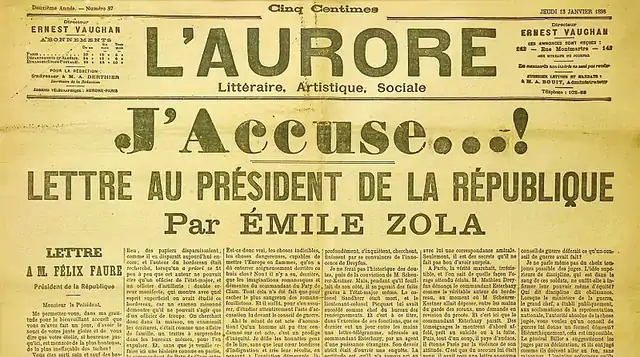
I accuse you of that.
Swedish schools bleed at the same time as resources are available. But the tax money that was intended to go to student support, small groups, more teachers, more resource staff, teaching materials and smaller classes ends up in tax havens instead.
You, politicians, have made our common school a wet dream for venture capital companies. It’s shameful. It’s sad. It is unworthy of a knowledge nation.
After Chile abolished profit-driven independent schools four years ago, we are left alone in the world with our school system. Denmark, Norway, Germany, the Netherlands, England all have independent schools but profits are prohibited or strictly regulated. If the rest of the world can have well-functioning independent schools for parents to choose from, without the owners being allowed to pick out millions in profits – why can’t we?
The company magnates have the money. Nine politicians have the power. I have, apart from my furious despair over the state of affairs, only my pen and my conviction that the truth about Sweden’s school system must emerge.
I’m accusing …! was written by Émile Zola and published January 13, 1898. Zola turned in the letter to the President of France and took a stand for the Jewish officer Alfred Dreyfus who had been convicted of high treason.
Parliamentary politicians. This letter has become long and it is time to summarize:
• I accuse you, the Social Democrats! Your party name is a pathetic remnant from the time when you defended an equal school – for all children from all walks of life. Today you have voluntarily put your gag on one of Sweden’s most important issues – the marketing school. It is not democracy but its exact opposite: it is political pity.
• I accuse you, the Moderates! You are talking about more controls, even though it obviously does not help against the corruption-like elements that the market school has produced, where joy grades, instead of education, have become a competitive tool in the fight for the most easily taught students. You have with your nonchalance betrayed our nation and its youngest citizens.
• I accuse you, Liberals. You call yourself a “school party” and claim that teachers should be authorities in the classrooms. At the same time, you have turned children and parents into school customers and “grade shoppers” and teachers into servile sellers of grades, with the task of keeping customers happy for their own school’s survival. The system is morally corrupt and you are partly responsible.
• I accuse you, the Christian Democrats. Your reluctance to see how the interest in profit hits the school is depressing. You earn money when you should serve our children. To you, I have only one thing to say: Drive the traders out of the temple!
• I accuse you, the Green Party. In 2013, your congress voted no to welfare gains. After that, your school policy has consisted of hand hearts on Youtube, despite the fact that you held the post of Minister of Education. Your contribution on the school grounds has been an unfunded “Read-write-count-guarantee” and a struggle for more sex and cohabitation education, while the school falls.
• I accuse you, the Sweden Democrats. You talk about assimilation, community and security. Yet you support a school system that increases segregation and allows jihadist schools run by people with links to Islamism and violent extremism and schools with religious indoctrination of children. And after a special lunch at Riche, you turned to the issue of banning profiteering and sat yourself on lap in the independent school lobby.
• I accuse you, the Left Party. You have been passive and have not even indicated that you would like to overthrow the government on this issue. The school groups’ profit-taking and expansion is a matter of destiny for our country and no matter how outrageous alone you are here in Sweden, you have the rest of the world on your side. Overthrow the government! This issue is not negotiable.
• I accuse you, Center Party! You put venture capital companies’ right to millions in profits ahead of future generations and call Sweden’s principle of openness – the foundation of our democracy – a “hot pursuit of free enterprise”. You let your friends in business management legally steal our taxes – millions that were meant for education. You pose shamelessly with the groups great in photo, without being ashamed. You have let Sweden down.
Knowledge, education and upbringing should be at the center of this socially important activity – not money.
My questions to you politicians are the following: What will happen to Sweden when more and more children do not get the education they need? When foreign venture capital companies gain more and more influence over the school and we citizens lose both transparency and the principle of openness? When tax money, through independent school groups, ends up in the pockets of fundamentalists and shareholders in Kuwait, Saudi Arabia and Malta? What opportunities will we have to govern the school in a democratic way when the power of foreign owners over our education system increases through the expansion of the school groups?
One last reflection. Whatever it may now be worth to you: Schools are not just buildings with children and teachers inside. Schools are not just childcare while parents work. The school is a common community building, where we adults prepare future generations for the future. Knowledge, education and upbringing should be at the center of this socially important activity – not money.
If we demolish this common building, which you, politicians, are well on your way to doing, society will also fall to pieces, slowly but surely. Your society, just like mine. Your children’s society, just like my children’s society.
Parliamentary politicians. The time has come. It is time to merge across party lines and stop the expansion of venture companies and take back the tax millions and education to the Swedish people.
While we still can.
By Filippa Mannerheim
Filippa Mannerheim is a high school teacher of Swedish and history, and a school debater.
In the Public Interest is a nonpartisan organization that protects the public interest and has a special focus on the dangers of privatization.
Here is its latest report on charter schools:
Welcome to Cashing in on Kids, an email newsletter for people fed up with the privatization of America’s public schools—produced by In the Public Interest.
Not a subscriber? Sign up. And make sure to like us on Facebook and follow us on Twitter.
Democratic charter school advocates are starting to help elect Republicans. Author and host of the Have You Heard podcast Jennifer Berkshire pointed out a noteworthy trend in the ever-shifting partisan dynamics of public school privatization. “Well-heeled Democratic charter advocates [are] spending big to elect Republicans.” This includes cofounder of Netflix Reed Hastings, a longtime charter school backer. Twitter
This pairs well with journalist Rebecca Klein’s breakdown of how state governments are carrying former Education Secretary Betsy DeVos’s torch as they consider school voucher programs. HuffPost
Now the rest of the news…
“Enabling theft and fraud” in Los Angeles. Carl Peterson documents how the Los Angeles Unifed School District continues to take away building space from public school students to give to charter schools, with past due bills totaling $1.9 million. Patch
Charter school founder gets a year in prison. The founder of a defunct charter school in St. Louis, Missouri, has been sentenced to 366 days in prison and ordered to repay nearly $2.4 million in state funding obtained by falsifying student attendance. St. Louis Post-Dispatch
“Charter schools invaded our neighborhoods without public input.” A group of parents, teachers, and educators in East Los Angeles detail how their neighborhoods have become saturated with charter schools to the detriment of public schools. Age of Awareness
And here’s this week’s opportunity to connect…
The Coalition for Community Schools and Institute for Educational Leadership is hosting a coalition town hall on racial equity in the “community school” model. Join February 23, 2021 2:00 – 3:00 PM ET. Coalition for Community Schools
On Wednesday February 10, I will host a Zoom discussion with Raynard Sanders about his new book, The Coup D’état of the New Orleans Public Schools: Money, Power, and the Illegal Takeover of a Public School System.
Sanders was the principal of a public school in New Orleans before the takeover of the district in 2005.
As you might guess from the title of his book, he considers the takeover to be illegal. It’s “results,” he contends are disastrous for the children of the district.
One of the casualties of the 2020 election was public education in New Hampshire, because Republicans regained control of the legislature. They already hold the Governorship (Chris Sununu, son of John Sununu, who was also Governor of New Hampshire and chief of staff to the first President Bush).
A new bill that would create the country’s first nearly universal voucher program has been introduced as the top priority for lawmakers in the 2021 session. House Bill 20(HB 20) would require the state to use state dollars currently allocated for public education to fund “Education Freedom Accounts.” Parents could then receive between $3,786 and $8,458 per student in state dollars, depending on eligibility and fees, to use for private school tuition, homeschooling expenses, and other school-related expenses.
The bill creates the same voucher program that lawmakers originally introduced in 2017 under SB 193 (though they were called “Education Freedom Savings Accounts” then), which was killed because of the deep inequities it would cause for students, as well as the steep costs to the state and local towns. The current version of the bill, HB 20, has no accountability requirements to ensure that students are receiving an adequate education or that public funds are being spent for the stated purposes, aside from self-reporting by the independent scholarship organization.
“Our communities are struggling under an inequitable funding system which will culminate in an $89 million cut in state funding next year. However, lawmakers have stated that one of their top priorities this session is to enact the most far-reaching voucher program in the country,” said Christina Pretorius, Policy Director at Reaching Higher NH.
“A question that I think our state leaders should ask is, what kind of state do we want 5, 10, 15 years from now? Will this program help to strengthen our state, our economy, and prepare our students — current and future — for life in the 21st century? This proposal, along with the funding crisis, presents a reckoning for our state, that I think we all need to grapple with,” she continued.
Here’s what you need to know:
HB 20 would create a nearly universal voucher program, where students attending both public and private schools would qualify for a voucher. Students who enroll in the program must disenroll full-time from their public or charter school.
There are no provisions in the bill that would protect students from discrimination, but the bill does protect educational service providers from being discriminated against based on their religious affiliation.
Parents could receive between $3,786 and $8,458, minus administrative fees, depending on the student’s eligibility for state aid programs. The funding would be placed in an “Education Freedom Account,” or voucher, managed by an independent scholarship organization and funded from the state’s Education Trust Fund.
Parents could use the voucher for various education-related expenses, including private and religious school tuition and program costs, homeschooling costs, tutoring services, computers and software, summer programs, college tuition, or other approved expenses. Recipients are permitted to “roll-over” unused funds from year to year.
Students with disabilities might waive their rights under federal and state disability laws, including the right to an IEP, the right to services, and the right to a free and appropriate education in the least restrictive environment.
There is little public oversight for state funds. There is no financial audit requirement for the scholarship organization to ensure that they are appropriately using public funds, nor are participating students required to take, or submit, the statewide assessment that public and charter school students are required to take. There is no requirement that participating students take any assessment of any kind, in order to ensure that public dollars are going towards programs that provide the opportunity for an adequate education.
HB 20, as proposed, would be the most far-reaching voucher bill in the country. Other states with voucher programs are targeted to low-income students, students with IEPs, and other identified or discrete student cohorts. HB 20, however, would be a nearly universal voucher program that is not targeted and is open to nearly all New Hampshire children.
Voucher programs have been shown to hurt student outcomes. Long-term studies of voucher programs have shown that participants in voucher programs have significantly lower math and reading scores than those who do not, and that those dips persist for years after the initial study. Other, short-term studies by independent research organizations and universities suggest that voucher programs hurt, or have an insignificant impact, on student outcomes.
The Constitution of the state of Florida bans the transfer of public funds to religious schools or any religious institution. The ban is unequivocal. It says: “No revenue of the state or any political subdivision or agency thereof shall ever be taken from the public treasury directly or indirectly in aid of any church, sect, or religious denomination or in aid of any sectarian institution.”
In 2012, the state voted on a referendum to permit vouchers for religious schools. The proposed Amendment 8 was misleadingly called “the Religious Freedom Amendment.” Voters turned it down by 55%-45%.
Despite the explicit language of the State Constitution, despite the defeated state referendum, despite the body of research that shows that voucher schools are mostly inferior to public schools, despite the number of religious schools that openly discriminate in admissions and that use textbooks that are racist and sexist, Florida’s Republican governors and legislature have steadily expanded its multiple voucher programs, which currently sends about $1 billion to mostly religious schools. These schools are not subject to the same standards and accountability as public and charter schools. Now Florida legislators want to combine its several voucher programs and expand them.
If you live in Florida, say no to this degradation of public education and waste of public funds.
From: Network for Public Education Action <carol@npeaction.org> Date: Tue, Feb 2, 2021 at 8:16 AM Subject: [test] Urgent: Stop the Florida Mega-Voucher Bill Today To: <burriscarol@gmail.com>
Florida SB 48 merges and expands the multiple voucher programs that already exist into two large programs.
If passed, this bill would also reduce the frequency of audits to detect fraud from every year to once every three years, increase the yearly growth rate of voucher programs, and via ESAs, expand the use of public funds for parents to “shop” for private schools or homeschool services.
Here is what to do.
1. Pick up the phone today and call:(Sample Script) My name is (name). Please tell Senator (name) that I strongly oppose SB 48. I support public education. SB 48 is one more attempt to fund private schools and destroy our public school system.
Get on Twitter and tweet: Don’t destroy Florida public schools. #SayNotoSB48 @PerryThurstonJr @TinaPolsky @Kathleen4SWFL @TravisJHutson @DougBroxson @jenn_bradley @loriberman @ShevrinJones @JoeGruters @NPEaction @pastors4flkids Stop the mega-voucher bill. I love Florida Public Schools. Stop defunding them. #SayNotoSB48 @PerryThurstonJr @TinaPolsky @Kathleen4SWFL @TravisJHutson @DougBroxson @jenn_bradley @loriberman @ShevrinJones @JoeGruters @NPEaction @pastors4flkids Stop the mega-voucher bill. #SayNotoSB48 that outsources Florida’s $1 billion voucher program to private organizations for profit.. @PerryThurstonJr @TinaPolsky @Kathleen4SWFL @TravisJHutson @DougBroxson @jenn_bradley @loriberman @ShevrinJones @JoeGruters @NPEaction @pastors4flkids
3. Send an email to the senators above, using the email addresses under their names (click the address and cut and paste text below): I oppose SB 48 because it contains no standards, no transparency, and only tri-annual accountability. It gives to the few while ignoring the needs of the many children in public schools. Please vote to oppose SB 48.
Don’t wait. Thanks
Carol Burris, Executive DirectorDonations to NPE Action (a 501(c)(4)) are not tax deductible, but they are needed to lobby and educate the public about the issues and candidates we support. Please make a donation today.Sent via ActionNetwork.org. To update your email address, change your name or address, or to stop receiving emails from Network for Public Education Action, please click here.
Avi Wolfman-Arent writes at the Philadelphia PBS website WHYY about the uncomfortable dilemma of the “school choice movement.” At least some of the choice champions had not come to grips with the fact that their movement was funded by Trump supporters. Perhaps the reckoning might have caused them to wonder if they were being used. It’s easy to forget–or perhaps never realize–that the school choice movement was created by Southern segregationists, borrowing the rhetoric of libertarian economist Milton Friedman. It i worth pondering why and how the Democratic Party abandoned its longstanding belief in equitable, well-resourced public schools as a common good.
He begins:
When Philadelphia-area mega-donors Jeff and Janine Yass made headlines recently for their contributions to Republican politicians — some of whom tried to overturn the presidential election — it stirred up a familiar debate in local education circles.
The Yass family has a long history of donating to Republican politicians and conservative causes. They also are among the largest donors to Pennsylvania’s school choice movement.
Therein lies a dilemma that, for some Democrats who support school choice, has caused increasing bouts of self-reflection.
On the ground, many charter school employees and school choice advocates are left-of-center, motivated by a desire to shake up an educational system that they see as not acting urgently enough to help low-income students of color.
But the movement’s growth — and success — has long relied on the political and financial capital of conservatives, who see school choice as a way to inject free-market thinking into the educational bureaucracy.
None of this is new.
What’s new is the reckoning forced by the Trump era, culminating in a violent insurrection that was fomented by Republican lawmakers — carried out with symbols of the Confederacy — who, on other days, could be a charter advocate’s best ally.
“For a period of time, this coalition was able to exist without some of the tensions we’re talking about threatening to rip it apart,” said Mike Wang, a veteran of the Philadelphia education scene who once headed a leading school choice advocacy group that lobbied in Harrisburg.
Will this unusual alliance survive? Can it find new political strength under an administration promising reconciliation and unity? Or will it disintegrate in an era of increasing political polarity?
At what point do well-meaning liberals understand that there is a fundamental contradiction between the free market and equity. The free market produces winners and losers, not equity.
Jake Jacobs, an art teacher in New York City, a leader of New York BadAss Teachers, and a writer for The Progressive, read and reviewed Hillary Clinton’s policy briefing book in 2017 and reviewed the education section for Alternet. I missed his article, but it’s worth reading now to understand how advocates of privatization have inserted themselves into both political parties and use their vast wealth to control public policy and undermine public schools.
Jacobs points out that Laurene Powell Jobs “has been close with the Clintons since the late ’90s, also sat with Betsy DeVos on the board of Jeb Bush’s Foundation for Excellence in Education. She set up billionaire “roundtables” with Clinton’s campaign advisors through 2015 while donating millions to Priorities USA, Clinton’s main PAC.”
Jacobs notes:
Notes taken by Clinton aide Ann O’Leary were made in interviews with Powell Jobs and Bruce Reed, President of The Broad Foundation (and former chief of staff to Joe Biden). According to the notes, the “experts” were calling for new federal controls, more for-profit companies and more technology in public schools — but first on the menu was a bold remake of the teaching “profession…”
Powell Jobs suggests letting principals “pick their teams,” making teachers individually negotiate salary (every teacher—really?), expanding online education offerings like Khan Academy and making teaching universities “truly selective like TFA and Finland.” This comment is perplexing because while Finland has demanding teacher vetting and training, Teach for America places inexperienced teachers in classrooms after a seven-week summer crash course...
Tying campaign donations to a singular issue like expanding charter schools might in days past been seen as a prohibited quid-pro-quo. But in this cycle, Podesta, O’Leary and [Neera] Tanden [director of the Center for American Progress and President Biden’s nominee to lead the crucial Office of Management and Budget, which sets priorities for federal funding] all busily raised campaign money from the same billionaire education reformers with whom they were also talking policy specifics.
But they did more than talk. On June 20, 2015, O’Leary sent Podesta an email revealing the campaign adopted two of Powell Jobs’ suggestions, including “infusing best ideas from charter schools into our traditional public schools.” When Clinton announced this policy in a speech to teachers, however, it was the one line that drew boos.
“Donors want to hear where she stands” John Petry, a founder of both Democrats for Education Reform (DFER) and Success Academy, New York’s largest network of charter schools, told the New York Times. Petry was explicit, declaring that he and his billionaire associates would instead put money into congressional, state and local races, behind candidates who favored a “more businesslike approach” to education, and tying teacher tenure to standardized test scores...
Not mentioning education would become important in the general election. This policy book shows a snapshot in time when wealthy donors were pushing Clinton’s and Jeb’s positions together, seeking more of the federal privatization begun under George W. Bush and continued by Obama...
This was predicted by John Podesta, who bragged just after the 2012 election about nullifying education policy differences between President Obama and Mitt Romney. Sitting next to Jeb Bush, Podesta proclaimed “ed reform” a bipartisan affair, telling donors “the Obama administration has made its key priorities clear. The Republicans are pretty much in the same place…this area is ripe for cooperation between the center-right and center-left”...
The 2014 policy book reveals some essential lessons about how education policy is crafted: in secret, with the input and influence of billionaire donors seeking more school privatization and testing—regardless of what party is in power. Even as the backlash against testing and the Common Core grew, Clinton’s advisors pushed her to embrace them. Clinton vacillated, then fell silent on K-12 policy, and as a result, education issues were largely left out of the election debate. Today, under Trump, privatization marches on worse than ever.

 Contact us: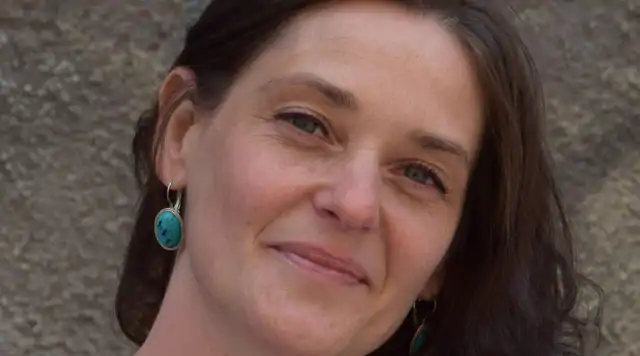



 Donations to NPE Action (a 501(c)(4)) are not tax deductible, but they are needed to lobby and educate the public about the issues and candidates we support.
 Diane Ravitch's blog