Jeff Bezos may have neutered the editorial pages of The Washington Post but he has not silenced the news reporting. Here is a terrifying example. Their communications strategy is to focus relentlessly on Trump as a “king,” a man of supernatural power. This is a gift article so you should be able to open the link and see the illustrations.
When actress Selena Gomez posted an Instagram video in January in which she cried about the Trump administration’s deportations of children, the viral clip threatened to stoke nationwide unease over the policy’s human impact.
But the White House digital strategy team had a plan. They dispatched videographers to interview the mothers of children killed by undocumented immigrants. They put President Donald Trump’s face on a Valentine’s Day card reading: “Roses are red, violets are blue, come here illegally and we’ll deport you.”
And they mimicked a style of video popular for its meditative soundscapes, known as ASMR, with a presentation that featured the rattling handcuff chains of a deportation flight. Gomez deleted her video shortly after posting, without specifying why. The Trump team’s video has been viewed more than 100 million times.
The effort was part of a new administration strategy to transform the traditional White House press shop into a rapid-response influencer operation, disseminating messages directly to Americans through the memes, TikToks and podcasts where millions now get their news.
After years of working to undermine mainstream outlets and neutralize critical reporting, Trump’s allies are now pushing a parallel information universe of social media feeds and right-wing firebrands to sell the country on his expansionist approach to presidential power.
For the Trump team, that has involved aggressively confronting critics like Gomez, not just to “reframe the narrative” but to drown them out, said Kaelan Dorr, a deputy assistant to the president who runs the digital team.
“We thought it was necessary to provide pushback in the harshest, most forceful way possible,” he said. “And through that, we had a viral hit on our hands.”
Stephen K. Bannon, a senior White House aide during Trump’s first term and the host of the “War Room” podcast, said the White House has reimagined itself as a “major information content provider.” What Trump does “is the action, and we just happen to be one of the distributors,” he said.
“Rapid-response communications are normally defensive,” he said. “They’re all offense, all the time.”
In press rooms, the administration is welcoming friendly “new media” podcasters, X users and YouTubers to deliver what White House press secretary Karoline Leavitt calls “news-related content” to their millions of followers.
And on social media, the White Houseis firing off talking points across every platform in a bid to win online attention and reach viewers who have tuned out the traditional press. In an X post, communications director Steven Cheung described their goal: “FULL SPECTRUM DOMINANCE.”
The administration has produced news-style reports trumpeting Trump’s successes and put them in email newsletters and Leavitt-narrated “MAGA Minute” video segments; soon, they’ll be delivered via text.
The president has appointed influential social media figures across the federal government — like Robert F. Kennedy Jr. and Kash Patel — who amplify his messages with their own marketing pushes. Trump has also fired off attention-getting posts of his own, including an AI-generated videotransforming the war-torn Gaza Strip into a gilded Trump beach resort, in line with his call to forcibly remove millions of people from Palestinian land.
The administration’s brash campaign-style tactics are designed to stand out on a crowded internet and speak to voters that officials believe are hungry for aggressive action.
“Even the tagline we’ve been using — ‘America is back’ — is very much saying: ‘We’re here. We’re in your face.’ It’s irreverent. It’s unapologetic,” Dorr, 32, said. (A veteran of both Trump campaigns, Dorr also worked as a “head of engagement” at Gettr, the right-wing social network run by Jason Miller.)
The posts have shocked and repulsed the left, leading Senate Judiciary Committee Democrats to say on X: “To find joy and entertainment in this is truly vile.” But the Trump team has been emboldened to go even further by the millions who have watched, shared and followed the accounts since Trump’s inauguration. Half of the White House’s Instagram views have come from non-followers, Dorr said, a sign that the team’s messages are gaining traction beyond Trump’s base.
White House spokeswoman Anna Kelly said in a statement that the approach is built to reach audiences without the media’s help and to broadcast Trump’s “America First message far and wide.”
But this model of messaging could supercharge the presidential bully pulpit until it shifts Americans’ perception of events, according to experts who study propaganda and the press. Like Trump’s moves to shore up loyalty in Congress and remake the judiciary, the strategy is designed to weaken his opponents and dismantle checks against executive power.
Undermining the accountability mission of the Fourth Estate and building a viral pipeline of state media helpsthe administration — and future ones — stifle dissent, said Anya Schiffrin, a senior lecturer at Columbia University’s School for International and Public Affairs.
And by replacing dispassionateobservers with partisan cheerleaders, political leaders are elevating a class of messengers incentivized to defend their decisions, no matter the seriousness or scale. Every policy maneuver could turn into a meme.
Said Renee Hobbs, a communications professor at the University of Rhode Island: “It’s an effort to replace the mainstream press with a partisan press” that will function as the new “purveyors of reality.”
‘Going to be great television’
Though members of the digital team serve on the front lines of what the White House calls the “most transparent administration” in history, Trump officials requested that their identities remain anonymous, citing personnel policy and concern over public backlash.
The team is made up of roughly a dozen employees — people mostly in their 20s and 30s from outside politics — who work out of the White House and are given wide leeway to craft content. By removing layers of bureaucracy before publishing, the team avoids the “analysis paralysis” of other messaging shops, Dorr said.
And members are expected to move at internet speed. When a federal judge declined to block the White House from banning the Associated Press from certain news events, the team raced to declare “VICTORY” in graphics that members slapped across White House TVs and social accounts.
They “have the buy-in from the [Trump] team to go out there and be unapologetic in our pursuit of advancing the administration’s goals,” Dorr said, “with the ferocity and the quickness and the pointedness” the White House demands.
For its rapid-response account, the White House employs video producers and editors, known as clippers, to create and post short videos on the fly. The role was first popularized by political activists looking to highlight opponents’ gaffes on the campaign trail, but Trump’s clippers often promote his moments, hoping to make them go viral in real time.
On Friday, within minutes of Trump and Vice President JD Vance’s fiery confrontation with Ukrainian President Volodymyr Zelensky, the White House accounts blasted out video of major punch lines, meme-ready photos and images of the American flag. “This is going to be great television,” Trump said as reporters filed out of the Oval Office.
The approach seems to be resonating online: Trump’s first Cabinet meeting, which was live-streamed and featured billionaire Trump ally Elon Musk, has more than 6 million views on X. “Trump is literally overwhelming them with information” in a way that is “changing the nature of the presidency,” Bannon said. “How many young men under 30 years old would ever watch two seconds of a Cabinet meeting?”
Kristi L. Noem, head of the Department of Homeland Security, has posted videos of herself in a flak jacket at the southern border and on immigration raids, including one on Tuesday at an apartment complex in Northern Virginia.
Footage from the raids is used in an international TV and digital ad blitz that warns undocumented immigrants to leave the country or be hunted down. At the Conservative Political Action Conference, Noem said the ads had a budget of up to $200 million and had been personally requested by Trump.
“We’re not going to let the media tell this story,” Noem recalled Trump saying, as was first reported by Rolling Stone. “We’re going to run a marketing campaign to make sure the American people know the truth.”
‘Desecrate their idols’
As the administration has expanded its marketing arm, it has also worked to uproot the classic structure of the White House press corps. In her first briefing, Leavitt called on “podcasters, social media influencers and content creators” to apply for credentialed access to a briefing room long filled by legacy news outlets. More than 12,000 have since applied, according to the White House, and several have been ushered to exclusive new-media seats near the podium.
Administration officials have said the change reflects a fundamental shift in American culture, as journalists compete for relevance with a new generation of influencers who speak to audiences of millions online.
But virtually all of the new-media creators have come from right-wing outlets friendly to the Trump cause. The Breitbart writer Matt Boyle asked whether the White House would continue its “breakneck” pace. (Yes, Leavitt said.) The pro-Trump podcaster John Ashbrook asked whether the media was “out of touch” about the border. (Yes, Leavitt said.) And John Stoll, the head of news at Musk’s X, asked about the White House’s “confidence” in going “toe-to-toe with Vladimir Putin.” (Very confident, national security adviser Michael Waltz said.)
“The Trump White House is loyal, and they are loyal to people who stood with them,” podcaster Dan Bongino said while toasting Rumble chief Chris Pavlovski’s moment in the new-media spotlight. (Days later, Bongino was named deputy director of the FBI.)
Some of the new-media figures have eagerly promoted Trump’s domestic agenda. A few hours after podcaster Sage Steele asked about the importance of passing a law to ban transgender women and girls from women’s sports, she stood behind Trump as he signed an executive order on the same issue.
Other Trump-boosting creators have joined the administration outright, like the “Dear America” podcast host Graham Allen, newly hired as the Defense Department’s digital media director. Brenden Dilley, a pro-Trump meme maker, said of the news, “There’s going to be nobody left doing podcasts soon because the top people are all going to work for the government.”
Friendliness between the White House and its messengers of choice is nothing new, including during the first Trump term, when right-wing provocateurs like Mike Cernovich and blogs like Gateway Pundit held credentials alongside the legacy press.
But back then, the traditional press corps set the tone, Bannon said. The softer questions during Trump’s recent Cabinet meeting, he said, made the first term’s briefings look like “hand-to-hand combat.”
Today “the powerful media is the ecosystem of the right,” Bannon said, “while the mainstream media [is] suffering layoffs.”
The right-wing media figures embraced by the Trump administration have often returned the favor. After the banning of the AP, Brian Glenn — a correspondent for the pro-Trump media network Real America’s Voice and the boyfriend of Rep. Marjorie Taylor Greene (R-Georgia) — was given the rare opportunity to question Trump in the Oval Office. A few days later, he posted a selfie with Trump on X that read: “So much accomplished, and we’re still under a month in office.”
For those working closely with Trump’s public-relations infrastructure, the first weeks have marked a huge opportunity for exclusive content. Benny Johnson, a Tampa-based MAGA influencer who calls himself the “Front Seat to the Golden Era,” got to interview Vance last month, then headed to the Capitol, where he live-streamed a friendly chat with two Republican senators before they voted to confirm Patel as FBI director.
“First time in history we’ll have the stream going from the senator’s office. This is amazing,” Johnson said on stream.
The night before, Johnson had posted a video of himself stopping to rejoice outside the shuttered offices of the U.S. Agency for International Development, once the world’s largest provider of food aid. “Destroy the idols of the conquered church, right?” he said with a laugh. “Desecrate their idols. Look at this. There it is. Blacked out. It’s gone.”
Cat Zakrzewski and Michael Scherer contributed to this report.
Jan Resseger reflects on the Trump administration’s determination to eliminate not only to eliminate programs based on “diversity, equity, and inclusion,” but the words themselves. Those three words must be expunged from our vocabularity. We must not recognize that there is diversity of people, even within the same religion or race. We must not strive for equity, which means that everyone has an equal chance to thrive. When they don’t thrive, we ask why. But we mustn’t care anymore.
Inclusion is the third “dirty” word that must be extirpated, inclusion means “all.” Remember when you recited the Pledge of Allegiance in school? I do. We said, “with liberty and justice for all.” I suppose it will be changed now to “with liberty and justice for some.”
Read Jan’s post. As always, it is thoughtful, incisive and well researched.
Have faith. This madness and meanness will come to an end.
It’s not customary for the President to speak at the Department of Justice, which seeks a measure of independence, but Trump is not a traditionalist. He spoke today at the DOJ, whined about how unfairly he had been treated (by clipping and hiding top secret documents and inspiring an insurrection to overturn the election), and railed against those who had prosecuted him. It was typical Trump: aggrieved, bitter, self-pitying, angry.
He said that his courtroom opponents were “scum,” the judges were “corrupt,” and the prosecutors “deranged.”
He said the people who did this to him are “bad people,” and they should be imprisoned.
Trump vowed to “remake the agency and retaliate against his enemies.”
He is unhinged, deranged, vindictive, and we are in deep trouble.
Jeff Bezos, the multibillionaire owner of The Washington Post, has driven away great reporters and many readers because of his groveling before the Great Trumputin, but the Post still has Glenn Kessler, perhaps the best fact-checker in the business. It was Kessler who counted the public lies of Trumputin in his first term. He had the exact number but I recall only the round number of 30,000. Loyalist KellyAnne Conway called them “alternative facts.” Yes, indeed, Trump’s outright lies were “facts” in an alternative universe, not this one.
Glenn Kessler wrote recently about Trumputin’s latest attack on facts and truth:
The Trump administration is sweeping through the U.S. government, terminating dozens of programs, laying off tens of thousands of workers, even dismantling entire agencies. At the same time, the White House has adopted a unique lexicon to describe its agenda — in some cases, using words that in ordinary contexts mean the opposite.
Here’s a guide to the verbiage, drawn from remarks made by President Donald Trump and White House press secretary Karoline Leavitt. ‘Transparency’
Traditionally, transparency in the federal government has meant access to data, federal contracts and government reports, even if they shed light on problems.
But Trump has fired nearly a score of inspectors general, who root out fraud and malfeasance in federal agencies. (Eight have filed suit, saying they were fired illegally.) One IG, for the U.S. Agency for International Development, was booted as soon as he issued a critical report on the aid stoppage ordered by the president. When reports emerged that a State Department website revealed that Tesla, a company owned by billionaire Elon Musk, Trump’s biggest financial backer, received a $400 million contract, the contract document was scrubbed to remove any reference to Tesla. Moreover, websites across the government were deleted — including every page for USAID.
Meanwhile, the Musk-led U.S. DOGE Service — which is targeting agencies for contract terminations and personnel cuts — operates in secret and the people on his team have not been revealed, though reporters have figured out the identity of some key players.
But the White House says the administration is transparent because Trump often answers questions from reporters. (His predecessor, Joe Biden, rarely did so and usually in controlled settings.)
“President Trump has led by example on this front as the leader of the free world, the president of the United States, with his show of access and transparency on a daily basis,” Leavitt told reporters. “The president takes questions from all of you almost every single day and really reveals what he’s thinking and feeling.”
Unfortunately, as we’ve documented, much of what Trump says is inaccurate or misleading. So he’s not an especially accurate source, compared to rigorously vetted reports and databases.
‘Free speech’
The First Amendment enshrines a right to “free speech” — the right to articulate opinions and ideas without interference, retaliation or punishment from the government. There’s always been some tension in this notion — does this give someone the right to yell “fire” in a crowded theater when there is no fire?
Conservatives objected to social media platforms such as Twitter (before Musk bought it and turned it into X) and Facebook downgrading or removing posts that contained inaccurate or false information, especially during the covid pandemic. Trump himself was removed from many platforms after he instigated a riot at the U.S. Capitol to prevent the certification of Biden’s victory in 2020. But he’s been reinstated and many social media companies have scaled back efforts to police false information circulating on their platforms.
“I stopped government censorship once and for all and we brought back free speech to America,” Trump told House GOP members after taking office.
But the White House in recent days has barred Associated Press reporters from news events because the agency still refers to the Gulf of Mexico, the internationally recognized name for the body of water that has been in use since the mid-17th century. In an executive order, Trump directed federal agencies to change the name to “Gulf of America.” The AP is an international news organization, and the rest of the world does not recognize Trump’s name change. Taylor Budowich, White House deputy chief of staff, said in a statement that the AP’s stance “is not just divisive, but it also exposes the Associated Press’ commitment to misinformation.” He said that as a result of “irresponsible and dishonest reporting” — citing the name used by the rest of the world — the AP could not expect the “privilege of unfettered access to limited spaces, like the Oval Office and Air Force One.”
Similarly, Leavitt told reporters: “I was very up front in my briefing on Day 1, that if we feel that there are lies being pushed by outlets in this room, we are going to hold those lies accountable. And it is a fact that the body of water off the coast of Louisiana is called the Gulf of America, and I’m not sure why news outlets don’t want to call it that, but that is what it is.”
‘Fraud and abuse’
Fraud generally means deception, often criminal, in pursuit of financial and personal gain. But the Trump administration has upended that definition — broadening it to include programs and policies it disagrees with — while at the same time making it harder to detect fraud.
“We’re finding tremendous fraud and tremendous abuse,” Trump said as Musk stood by his side in Oval Office. But a Fact Checker accounting of the announcements from DOGE, or Department of Government Efficiency, of terminated programs found that most concern diversity, transgender and climate change programs. Musk has also led an assault on USAID, the agency that long had bipartisan support to distribute billions of dollars in development aid around the world.
“It’s a scam,” Trump said of USAID. “It’s a fraud. A lot of it, most of it, but it’s a fraud.” Asked for evidence, the White House provided a list that was often wrong or misleading — and in any case amounted only to a pittance of the agency’s $25 billion budget.
In addition to firing IGs, Trump fired top ethics officers and neutered offices that protect workers from retribution. He also suspended enforcement of a nearly half-century-old law that investigates corporate corruption in foreign countries, while his Justice Department ordered the dismissal of bribery charges against New York Mayor Eric Adams (D) for political reasons (Adams supports Trump’s immigration policies).
A Feb. 13 White House news release berated states and localities pushing back against Trump’s executives orders on diversity and immigration. “President Donald J. Trump and his administration have a simple message: follow the law,” the news release was titled.
‘Deficit’
In Washington, the deficit usually means the federal budget deficit. But for Trump, the deficit that matters is the trade deficit. He imposed 25 percent tariffs on steel and aluminum, threatened tariffs against Canada and Mexico and proposed to upend the current trading system by imposing reciprocal tariffs.
“We have a tremendous deficit with Mexico,” Trump said last week. “We have a tremendous deficit with Canada. We have a tremendous deficit with Europe, the E.U., with China, I don’t even want to tell you what Biden is allowed to happen with China.”
(Actually, under Biden, the trade deficit with China fell to its lowest level in 10 years, according to the Census Bureau.)
In an interview with Bret Baier of Fox News, Trump said: “Why are we paying $200 billion a year essentially in subsidy to Canada? Now, if they’re our 51st state, I don’t mind doing it.”
According to the website of the U.S. Trade Representative, the goods deficit with Canada was $63 billion in 2024. The United States has a services surplus of about $30 billion with Canada, which brings down the overall deficit even more. But since Trump took office, the website does not display trade-in-services numbers.
Unlike a budget deficit — which depends on whether the government spends more than it raises in revenue — a trade deficit is shaped by underlying factors, such as an imbalance between a country’s savings and investment rates. A bigger federal budget deficit — caused by, say, a large tax cut contemplated by Trump — can boost the trade deficit because the country saves less and borrows more from abroad. A booming economy can also be at fault — the more money people have, the more they can spend on goods from overseas. And a strong currency means those foreign goods are cheaper for a particular country and its goods are more expensive for foreign consumers.
In other words, trade deficits may be beyond Trump’s ability to control.
Ruth Ben-Ghiat is a professor of history at New York University and a specialist in autocracy.
She wrote recently on her blog Lucid about some of the ways that Trump is helping Putin achieved his goal of reassembling the whole USSR. Many years ago, Putin said that the collapse of the USSR was “the greatest geopolitical disaster of the 20th century.” some might have said it was World War I or Wotkd War II. Not Putin, veteran KGB agent.
Ben-Ghiat wrote:
To understand the nature and scope of this momentous shift, it helps to think like an autocrat. For this kind of leader, democratic America, with its robust economy, far-reaching infrastructure of foreign aid, immensely powerful military, and checks on foreign malign influence and corruption initiatives, is a huge problem.
Trump’s path back to power so he could take care of this distressing situation was eased by Chinese, Iranian, and Russian disinformation campaigns, which, together with U.S. Republican propaganda, helped to discredit and weaken American democracy in the eyes of the American public. Trump’s ceaseless efforts to praise foreign strongmen and his delegitimization of democratic institutions, from elections to the free press to the judiciary, also had this aim.
Trump had long ago internalized a view of geopolitics that sees democracies, and American democracy in particular, as hostile actors who deny the rights of autocracies to expand their influence in the world. When Trump suggests that President Joe Biden’s support of Ukraine’s bid to join NATO provoked Russia’s invasion, he justifies the Kremlin’s aggressions as a legitimate response to democratic meddling.
Now that Trump is back in the White House, focused on the destruction of American democracy, we can expect public collaboration with Russia to take several forms. Trump and his enablers in and outside of the GOP will produce a steady stream of performances and propaganda meant for two audiences: autocrats, especially Putin, and the millions of Americans who still need to be indoctrinated to see the world in ways that benefit Trump and his Kremlin ally.
The novel co-presidency of Trump and Elon Musk has provided a one-two punch approach to quickly launch the other two ways the U.S. will collaborate with Russia. First, by erasing or dialing back America’s global soft and hard power footprint in the world. This could mean reducing military spaces abroad that are now deterrents to autocratic aggression, or using such spaces as launching pads for pro-autocratic military engagements that the US may one day participate in.
It also means ending or scaling back humanitarian assistance programs that have created goodwill for America among global populations. Musk has jump-started this latter action by destroying USAID. The goal is to create a vacuum of American power and influence in the world that China, Russia, Turkey and other autocracies can fill.
The second form of collaboration entails the removal of barriers to the free flow of Russian influence inside America. This was supposed to be a priority of Trump’s first administration. Just months after his inauguration, Trump hosted Russian Foreign Minister Sergey Lavrov and Russian Ambassador to the U.S. Sergei Kislyak in the Oval Office, with only a Russian state photographer from TASS present. This told the world that the White House would be a Russian-friendly space with Trump in power, with Kremlin views of politics and the world amplified by Washington.
President Trump with Russian Foreign Minister Sergei Lavrov and Russian Ambassador to the U.S. Sergey Kislyak in the Oval Office, May 10, 2017. Alexander Shcherbak/TASS/via Getty Images.
Then came the Russia investigation —a supreme annoyance made possible by the existence of democracy in America. During the recent meeting with Zelensky, Trump evoked the difficulties this investigation created for Russian capture of the United States, tellingly mentioning the toll it took on Putin–and just as tellingly, alluding to the pressures this obstruction of Putin’s plans placed on him as an ally with responsibilities to fulfill. His statement resembles the “self-criticism” Communist operatives were required to engage in when they displeased the regime.
“Let me tell you. Putin went through a hell of a lot with me,” Trump said. “He had to suffer through the Russia hoax…He went through a hell of a lot with me. He went through a phony witch hunt…It was a phony Democrat scam. He had to go through it. And he did go through it.”
This false start, and the heightened expectations for Trump to perform this time, are likely why Trump & Co. have acted so aggressively. In his first weeks in power, Trump signed orders to disband TaskForce KleptoCapture, which targeted Russian oligarchs, disband the FBI’s Foreign Influence Taskforce, and relax enforcement of the Foreign Agents Registration Act. Meanwhile, Defense Secretary Pete Hegseth has ordered U.S. Cyber Command to stand down from all planning against Russia, including digital actions.
The appointment of Tulsi Gabbard, who has a history of taking positions that defend Russian interests, as Director of National Intelligence, is another indication of the will to dismantle obstructions to Russian influence inside America. The walls of the national security fortress are coming down.
In 2018, before the Trump-Putin summit in Helsinki, Trump said that he saw Russia as more of a “competitor” than an “enemy.” Seven years later, that competitor has become an ally. Whatever forms Russia-U.S. collaboration will take, more Americans will come to understand that the man they elected to “save the country” is far more interested in solving Putin’s problems than in governing America. That means wrecking American democracy at home and dismantling American power abroad.
I didn’t watch Trump last night. The combination of his face, his voice, and his lies is intolerable. I get nausea and a headache. And my soul hurts. I have always loved this country. I am a patriot. And he is destroying it.
With a modesty we have come to expect of him, President Donald Trump informed Congress on Tuesday night that he had already ushered in “the greatest and most successful era in the history of our country.” He told the assembled lawmakers that he “accomplished more in 43 days than most administrations accomplished in four or eight years.”
Armed with a portfolio of fabricated statistics, Trump judged that “the first month of our presidency is the most successful in the history of our nation — and what makes it even more impressive is that you know who No. 2 is? George Washington.”
Republican lawmakers laughed, whooped and cheered.
Usually, such talk from Trump is just bravado. But let us give credit where it is due: Trump has made history. In fact, it’s not much of an exaggeration to say that, over the course of the last five days, he has set the United States back 100 years.
Trump on Monday implemented the largest tariff increase since 1930, abruptly reversing an era of liberalized trade that has prevailed since the end of the Second World War. He launched this trade war just three days after dealing an equally severe blow to the postwar security order that has maintained prosperity and freedom for 80 years. Trump’s ambush of Ukrainian President Volodymyr Zelensky in the Oval Office, followed by the cessation of U.S. military aid to the outgunned ally, has left allies reeling and Moscow exulting. The Kremlin’s spokesman proclaimed that Trump is “rapidly changing all foreign policy configurations” in a way that “largely aligns with our vision.”
And our erstwhile friends? “The United States launched a trade war against Canada, its closest partner and ally, their closest friend,” Canadian Prime Minister Justin Trudeau said on Tuesday. “At the same time, they’re talking about working positively with Russia, appeasing Vladimir Putin: a lying, murderous dictator. Make that make sense.”
It only makes sense if, against all evidence, you believe, as Trump apparently does, that Americans were better off 95 years ago than they are today.
We’re apparently going to have to re-learn that lesson the hard way. The blizzard of executive orders that Trump has issued, though constitutionally alarming, can be rescinded by a future president. Elon Musk’s wanton sabotage of federal agencies and the federal workforce, though hugely damaging, can be repaired over time. But there is no easy fix for Trump’s smashing of the security and trade arrangements that have kept us safe and free for generations. “We’re certainly not in the postwar world anymore,” Douglas Irwin, a Dartmouth College economist and fellow at the Peterson Institute for International Economics, tells me. He calculates that Trump’s hike in tariffs is the largest since the Smoot-Hawley Tariff Act of 1930 accelerated the nation’s slide into the Great Depression. And Trump’s current tariffs, which in Irwin’s calculation affect imports worth about 4.8 percent of gross domestic product, will have an even greater impact on the economy than did Smoot-Hawley, which affected imports worth 1.4 percent of GDP, and the McKinley administration’s tariffs during the 1890s, which affected imports worth 2.7 percent of GDP (and which also were followed by a prolonged depression).
Irwin figures the current tariffs “are likely to be much more disruptive” than those historical cases because the U.S. economy is much more dependent now on “intermediate goods” — meaning materials such as auto parts, needed by American businesses to make finished goods. Trump has brought the average tariff on total imports to 10 percent, a level not seen since 1943, in Irwin’s analysis.
Late Tuesday, after stocks plunged for a second day, Commerce Secretary Howard Lutnick appeared to signal a retreat, saying the administration would “probably” announce Wednesday that it was meeting Canada and Mexico “in the middle some way.” Yet even if Trump were quickly to abandon the trade war he just launched, the effects will probably be long-lasting, because he has upended the gradual liberalization of trade that has been underway since 1932.
Trump, in imposing 25 percent tariffs on Canada and Mexico, has violated the spirit, if not the letter, of the U.S.-Mexico-Canada Agreement he negotiated during his first term. “So, going forward, what country would ever sign a trade agreement with the United States knowing that we can find some sort of excuse that’s outside the agreement to raise the tariffs?” Irwin asks. Instead, he expects a return of the “corrupt process” that existed before the 1930s in which tariffs remain on the books and businesses try to curry favor (in this case, with Trump) to win exemptions.
Inevitably, the retaliation has already begun. Canada is imposing 25 percent tariffs on $155 billion of American goods — and the premier of Ontario, vowing to “go back twice as hard” at the United States, is slapping a 25 percent tariff on electricity going to the United States, while threatening to cut the lights off entirely. China is imposing tariffs of up to 15 percent on U.S. imports and banning some exports. Mexican President Claudia Sheinbaum, calling Trump’s justification for the tariffs “offensive, defamatory and groundless,” has said she would announce her country’s retaliation plans this weekend.
And Trump keeps escalating. After Trudeau said on Tuesday that Trump wants “a total collapse of the Canadian economy, because that will make it easier to annex us,” Trump mocked “Governor Trudeau” on social media and vowed that “when he puts on a Retaliatory Tariff on the U.S., our Reciprocal Tariff will immediately increase by a like amount!”
The Dow Jones Industrial Average shed more than 1,300 points. Inflation forecasts are increasing (the free-trading Peterson Institute says Trump’s tariffs will cost the typical American household $1,200 per year). Retailers such as Target and Best Buy are warning about higher prices. The Atlanta Fed’s model of real GDP growth, which a month ago saw 2.3 percent growth in the first quarter, now sees a contraction in the first quarter of 2.8 percent. And Trump is threatening to hit more countries with more tariffs, on metals, cars, farm products and more, in the coming weeks.
During his first term, Trump tweeted that “trade wars are good, and easy to win” — but he had the good sense not to test this in a major way. Now, we all get to experience what actually happens when we launch one.
Trump’s moves to dismantle the trade architecture of the last century is all the more destabilizing because he is simultaneously moving to knock down the alliances that maintained security for most of that same period. As The Post’s Francesca Ebel reported from Moscow, Putin’s government sees Trump’s humiliation of Zelensky as a “huge gift” that furthered Russia’s ambitions of dividing the West. Former Russian president Dmitry Medvedev called it a “proper slap down” of “the insolent pig” Zelensky. Hungary’s repressive leader, Viktor Orban, also celebrated: “Thank you, Mr. President!”
And while Trump blames the victim for Russia’s full-scale invasion of Ukraine, China is growing bolder in its desire to take Taiwan. Hong Kong’s South China Morning Post quoted analysts calling the Trump-Zelensky rift part of a “systemic reordering” of geopolitics in which “Beijing was positioned to capitalize on the ‘rapid disintegration of the West’ that legitimizes ‘Beijing’s vision for a post-American world order.’”
As the authoritarians celebrate, freedom’s defenders weep. Lech Walesa, the celebrated champion of Polish democracy, joined other former political prisoners in a letter to Trump expressing “horror and disgust” at the American president’s treatment of Zelensky, saying they were “terrified by the fact that the atmosphere in the Oval Office during this conversation reminded us of the one we remember well from interrogations by the Security Service and from courtrooms in communist courts.”
Democratic leaders across Europe, and across the world, spoke up in defense of Ukraine. “We must never confuse aggressor and victim in this terrible war,” wrote incoming German chancellor Friedrich Merz. Now, these democratic leaders must contemplate rebuilding what Trump has destroyed. “Today,” European Commission Vice President Kaja Kallas wrote on the day of Trump’s betrayal of Ukraine, “it became clear that the free world needs a new leader.” In the House chamber on Tuesday night, there was little sign of the United States that until now has led the free world.
Republicans, once the party of free trade, applauded Trump’s vows to impose tariffs — or additional tariffs — on Canada, Mexico, the European Union, China, India, Brazil and South Korea. “We’ve been ripped off by nearly every country on Earth, and we will not let that happen any longer,” he said. As for the pain his trade policies are already causing, he said: “There’ll be a little disturbance, but we’re okay with that. It won’t be much.” Trump spoke — repeatedly — about his election victory, about the “radical left lunatics” who prosecuted him, and about his culture-war battles against transgender Americans and against “diversity, equity and inclusion.” With taunts and nonsense claims (more than 1 million people over age 150 receiving Social Security!), he goaded the Democrats, who answered him with messages (“False,” “No Kings Live Here”) on signs and on T-shirts. When Al Green, a 77-year-old Democratic lawmaker from Texas, waved his walking cane and shouted at Trump that he had “no mandate to cut Medicaid,” Republican leaders, who allowed members of their party to shout “bulls—” at President Joe Biden from the House floor, called in the sergeant at arms to evict him. It took nearly an hour for Trump to talk about trade. He didn’t get to Ukraine until nearly an hour and 20 minutes into his speech, and then it was to level the false claim that Ukraine had taken $350 billion from the United States, “like taking candy from a baby,” while Europe spent only $100 billion on Ukraine — dramatically overstating the U.S. contribution and understating Europe’s. “Do you want to keep it going for another five years?” he said, looking at the Democrats. “Pocahontas says yes,” Trump added, referring contemptuously to Sen. Elizabeth Warren (D-Massachusetts). At this, Vice President JD Vance chortled — and the Republican side, once the home of proud internationalists, responded with derision, cheers and applause. And so collapses the architecture of freedom and prosperity: with a lie, a taunt and a guffaw.
Tonight, at 9 pm Eastern Time—which is to say, 5 am Wednesday Moscow Time—Co-President Trump will deliver the first State of the Union Address of the Redux. Congressional Democrats must protest this speech like the fate of the nation depends on it—because it does.
The time for traditional party politics has passed. No more “norms.” No more butter knives to gunfights. No more tone-deaf tweets. No more pathetic capitulation. No more infuriating appeals for donations from what’s left of Kamala Harris’s team. We cannot allow Chuck Schumer, Hakeem Jeffries, the anonymous new DNC chair, and the husk of Joe Biden to Merrick Garland our democracy into oblivion.
The Dems must become a true opposition party. Now. Today. A true opposition party recognizes that the real enemy of the people is sitting in the Oval Office, watching a little kid wipe boogers on the Resolute Desk. Since January 20th, Trump and Co-President Elon Musk have quickly consolidated power, causing all sorts of chaos and pain. This will continue until they have transformed this country into the Russian-style oligarchy of their despotic dreams.
They. Want. To. Hurt. Us. And we must stop them. All of us.
The nation is in urgent need of Washington generals—and not the kind who get beat up every night by the Harlem Globetrotters. Kamala Harris must snap out of her post-election funk and reboot the Joyous Warrior. Barack Obama must step away from his Hollywood party circuit and get his manicured hands dirty; Michelle Obama hates this crap, and I don’t blame her, but we need her help now. George W. Bush needs to put down the paintbrush and take up the mantle. Bill and Hillary need to come to the front. Mitt Romney? This ain’t the moment for dressage. Step away from your Dutch warmblood, mount the Warhorse, and ride in with the cavalry.
Since Election Day, the Democrats as a party have been rudderless, weak, and frustratingly out of touch. Chuck Schumer, Hakeem Jeffries, and the party leadership have been slow to recognize the threat. Hint: look at what Alexandria Ocasio-Cortez and Jasmine Crockett have been doing, and do that! Or better yet, step down and put them in charge! If the Dems can’t sort this out, and fast, to hell with them. If we have to galvanize behind Liz Cheney, fine, great, let’s do it. We can bicker about policy positions and party planks after the dragon is slain. Right now, we need a leader who isn’t a pusillanimous piece of shit.
On Monday, AOC asked:
Alexandria Ocasio-Cortez @aoc.bsky.social
If you were in Congress, what would you do for the State of the Union? What do you think Dems should do?
All members of Congress who oppose Trump—Democrats, Independents, and whatever Republicans haven’t capitulated—should come to the Capitol at the appointed time. They should have with them a laminated print of that infamous photo from Helsinki, where Trump follows behind Putin subserviently. They should tape the photo to the back of the chair. And as soon as Trump begins to speak, they should all walk noisily out, so that the cameras pan to empty chairs and scores of copies of that embarrassing photo. I wouldn’t object to a crisp “Pu-tin sucks!” chant.
Then, every member of Congress who opposes Trump should repair to his or her office and do a livestream, giving the same speech: a real State of the Union (or State of the Oblast, as it were). This way, every single opposition leader is doing must-see counter-programming simultaneously, to drown out Donald’s hateful lies.
This is what I think they should say:
My fellow Americans, good evening.
What is the state of the Union? Co-President Donald Trump will tell you the state of the Union is strong, but he’s lying, as usual.
Unlike Trump, I’m not going to lie to you. The state of the Union is precarious. It’s precarious and it’s perilous. We are hanging on by a thread. Our democracy is on life support—and Co-President Elon Musk wants to pull the plug and call it “efficiency.”
The Trump/Musk agenda represents a clear and present danger to the people of this country. This threat transcends party politics—like 9/11, like the JFK assassination, like Pearl Harbor. I am speaking to you now not as a Democrat, but as a member of the opposition.
I oppose cuts to Medicare, Medicaid, and Social Security.
I oppose the suicidal tariff war Donald has begun with our neighbors, Canada and Mexico.
I oppose the country descending into dictatorship.
I oppose an unelected, unconfirmed South African weirdo—who can’t be bothered to take off his baseball cap while presiding at their first Cabinet meeting—being granted godlike powers to cut funding, kill programs, and fire hardworking Americans—all at the whim of some half-ass algorithm slapped together by the teenage boys who comprise the workforce at the illegal shadow operation he calls DOGE.
I oppose rudeness, cruelty, and lack of respect.
Above all, I oppose the new world order Donald and Elon have created, where they do whatever they can to help that butcher and war criminal, Vladimir Putin.
My fellow Americans, this is the greatest country on earth—the greatest country that ever existed. And I refuse to allow the United States of America to turn into a vassal state of the Russian Empire. The occupant of the White House should be the Leader of the Free World, not some third-rate tyrant’s sidekick.
Donald has consistently denied his long ties to the Kremlin. “Russia Russia Russia,” he says mockingly, whenever some new revelation comes out about something involving him and Moscow. He has ridiculed anyone who suggests he is Putin’s puppet—as Hillary Clinton did, you may recall, in that debate back in 2016, right around the time the U.S. Intelligence Community warned that the Kremlin was attempting to interfere in the election on Trump’s behalf. Later, in Helsinki, Trump would side with Putin over our intelligence professionals!
He claims the Mueller investigation was a “witch hunt.” Same with Volume 5 of the Senate Intelligence Committee’s Report on Russian Interference in the 2016 Presidential Election. Even Marco Rubio, Trump’s groveling Secretary of State, signed off on that, admitting the Trump/Russia relationship. It wasn’t a witch hunt, you see. Donald doeshave lots of ties to the Kremlin. And, as he made abundantly clear in Friday’s Oval Office debacle, he is indeed Putin’s puppet.
Putin’s puppet: That sounds like the sort of insult Donald likes to hurl as his opponents, but I don’t mean it as an insult. I mean it as a statement of fact. Trump has thrown in with Putin. He has taken up Moscow’s position regarding the invasion of Ukraine. He has parroted Kremlin talking points about President Zelenskyy.
You don’t have to believe me; you can look it up yourself. This is why so many people were so upset about the abhorrent way Donald and JD behaved at that meeting. People know: that’s not how American leaders are supposed to act!
On Friday, Donald told President Zelenskyy that he didn’t have the cards to play. When he said that, he put his own cards on the table. And now, incredibly, the United States of America is overtly, eagerly sucking up to Moscow. Why? So Co-President Elon Musk and the other new American oligarchs can make even more money—by stealing it from you and me.
Putin regards the United States as an enemy of Russia—as he should. Because he’s certainly our enemy—even if a lot of Americans haven’t quite realized it.
We are now finding out what it means when the President and Co-President are Putin’s puppets. Donald and Elon are charting the course the Kremlin wants for America. They want us broke. They want us sick. They want us stupid. They want us fighting each other. And they want us to leave the rest of the world alone.
Over the first two months of his second term, Donald and Co-President Musk have worked hard to give their whoremaster Vladimir Putin what he wants. So has Speaker Johnson, most of the Republicans in Congress, and the entire Trump Cabinet.
Let me explain what that means, in real terms.
They want us broke. That means they want a recession, a depression, economic tumult. They want mass unemployment. They want the stock market to collapse. They want us to go broke struggling to pay our bills. Have you read the contents of the austerity budget Speaker Johnson wants to pass? Trump and Musk will cut $2 trillion from things like Medicare, Medicaid, SNAP, and other social welfare programs that Americans of allpolitical persuasions depend on. This will be to pay for tax cuts—which aren’t really tax cuts, because the American oligarch class doesn’t pay taxes like you and me. This is going to be mass theft on the grandest possible scale. This is stealing. You’ve heard of robbing Peter to pay Paul? This is robbing Grandma to pay Elon. The result of this will be financial hardship for most Americans—just what Putin wants.
They want us sick. There is a measles epidemic now in Texas. It’s spreading. This is the result of a massive, decades-old Kremlin disinformation campaign around vaccines. RFK, Jr., who has done more to push this Kremlin lie than any other person on earth, is now in charge of our national health systems. He’s antivax. You know who isn’t antivax? Putin. Putin and Rupert Murdoch, who owns Fox News and the New York Post and the Wall Street Journal, love their vaccines. Rupert was one of the first people on earth to get the covid vaccine. They know vaccines work—but they want you to think they don’t. RFK also wants to cut funding for cancer research and pandemic preparedness. He wants to get rid of SSRIs, which are incredible drugs that help millions of Americans who struggle with their mental health. Why? Because RFK’s job is to make us all sick—which is what Putin wants.
They want us stupid. Donald put the Department of Education in the hands of the head of a professional wrestling organization. Let me say that again: Donald put the Department of Education in the hands of the head of a professional wrestling organization. And she’s going to cut funding, if not kill the department entirely. They say they want to empower the states to decide how our children are being educated, but that’s just the cover story. All this will do is make our schools exponentially worse. Which is what Putin wants—it doesn’t help Russia if Americans are inventing things, and bringing new technology to the world.
They want us fighting each other, and they want us isolated from the rest of the world. Pete Hegseth, the drunken Fox News host who is somehow our Secretary of Defense, ordered Cyber Command to stand down its defenses against Russia. Why would he do that, if not to please Putin? Tulsi Gabbard ordered mass firings at the NSA, our largest and most important intelligence gathering agency. Why would she do that, if not to please Putin? JD Vance, the pompous imbecile who is a heartbeat away from the presidency, is on an anti-diplomacy tour, insulting all of our longtime allies—the leaders of Western democracies. Why would he do that, if not to please Putin?
This is what it looks like when a Kremlin puppet dictator is in the White House. This is why Hillary Clinton, and James Comey, and James Clapper, and Christopher Steele, and Pete Strzok, and Adam Schiff, and Nancy Pelosi, and Bob Mueller, and Jack Smith worked so hard to expose Donald Trump for what he is.
The message failed. The warning was ignored. And what is happening now, right now, is the result. The chaos, the cruelty, the ignorance, the rudeness, the lack of fundamental human decency, the fear and dread—that is the result.
We have Putin puppets in charge of our country. We are being led by full-on traitors: Donald Trump and Elon Musk, JD Vance and Mike Johnson.
None of those people care about you or your family; if they did, they would occasionally do something to help you. None of them care about what’s good for the United States; if they did, they wouldn’t be trying to burn it down. And none of them care about democracy; if they did, they would not be establishing a Trump/Musk dictatorship, modeled on the philosophy of the Unabomber. I’m not kidding—read the Unabomber Manifesto!
Maybe you think I’m crazy. Maybe you don’t believe me. Maybe you think I’m just trying to score cheap political points. Sooner or later—sooner, probably—it will become obvious to even the most zealous Trump supporter: Change is coming, my friends, and unless you’re one of the new oligarchs, you’re not going to like it.
Ignore me at your peril. Peril. Peril.
The state of the Union is perilous. And we must recognize the threat, and oppose it with every fiber of our beings, and with every means at our disposal. If we don’t, we will dishonor the memory of Abraham Lincoln. If we don’t, a government of the people, by the people, and for the people shall indeed perish from the earth.
God bless you, and God save America.
…or something to that effect. These motherfuckers have all but announced their plans to steal our Social Security. If you can’t message on that, hang up the spikes.
Or, if the Dems can’t manage something so sophisticated, offer an alternate broadcast—Manning Cam, but for the State of the Union. Have AOC and Jasmine live-stream themselves watching the SOTU, so they can fact-check and mock Donald while he’s speaking. I would certainly watch that.
And as for the rest of us? The course is clear: DON’T WATCH THE SOTU. Deny Donald the ratings he desperately craves.
If the Dems don’t offer suitable counter-programming, I’ve set my State of the Oblast speech to run tonight at 9 pm ET:
Or, if you prefer to ignore the whole shit-show—I don’t blame you!—turn on the telly and flip to TNT, where there’s an NBA doubleheader beginning at 7:30: First, Steph Curry and the Golden State Warriors are at Madison Square Garden to take on Jalen Brunson and the New York Knicks. (Go, New York, go, New York, go!) And then, the L.A. Clippers are in Phoenix to play Kevin Durant and the Suns. Remember: keeping the television tuned to a different station hurts Donald’s precious ratings.
There it is. Those are my proposals.
And if we see clips of Jeffries and Schumer and the others just sitting there as Trump rants and raves, looking solemn, clapping softly, normalizing the fascist takeover, we know damned well what that means: craven, cowardly, poltroonish surrender, of the most shameful kind, before the fight has even really begun.
Then we’ll know for sure the Democrats, like the Republicans, are dead as a political party.
This article appeared in The New York Review of Books. As daily newspapers have shrunk or abandoned their book reviewing, the NYRB stands out as the nation’s leading journal of literature, the arts, and politics. It takes books seriously. This is an essay-review about the history of vouchers. I reviewed Josh Cowen’s outstanding book The Privateers, about the cabal that engineered the expansion of vouchers. I hope you will consider subscribing to the New York Review of Books and reading Josh Cowen’s important book.
For decades, the term “school choice”—and the programs it signifies, which divert public money to private schools—was widely and rightly dismissed as racist. Now it’s the law in thirty-three states.
Minnijean Brown, Thelma Mothershed, and Melba Pattillo, three of the first Black students to attend Little Rock Central High School, with Arkansas NAACP president Daisy Bates (third from left), 1957
Donald Trump promised that he will make public funds available to private as well as religious schools in every state, and this is what his party wants, too. Over the past quarter-century, Republicans have assailed America’s public schools by supporting vouchers, which divert money from public education systems to subsidize tuition at private and religious schools.
But most voters today do not favor vouchers. In fact, since 1967 no state referendum on vouchers has ever passed. In 2024 three states had referenda on the ballot, and vouchers were again defeated. Voters in two of those three states, Kentucky and Nebraska, cast ballots overwhelmingly for Trump—and in both states public funding for private schools was decisively rejected. The story of how Republican politicians have twisted this widespread popular opposition to vouchers into pervasive education policy across the country is one that requires a deeper historical view.
This opposition to public funding for private schools changed on May 17, 1954, when the Supreme Court ruled, in the Brown v. Board of Education decision, that de jure racial segregation in public schools was unconstitutional. The Court’s decision had little to do with school funding, but it set off a frantic search among white elected officials in the South to find, or create, a legal mechanism through which to protect racial segregation. The overwhelming majority of southern whites considered the prospect of racial integration repugnant, and their elected officials were determined to block it.
Until the mid-1950s most Americans believed that the government should not underwrite the cost of private and religious schooling. Catholic organizations had periodically sought public subsidies for their schools on grounds of fairness; as taxpayers, they said their schools were entitled to receive the same funds as public schools. But they were repeatedly rebuffed by Congress, the courts, and state legislatures; most state constitutions explicitly prohibited the use of public funds for religious school tuition.
Southern governors and legislators found the rationale and language they sought in the writings of Milton Friedman, a prominent libertarian economist at the University of Chicago, who in 1955 published an essay called “The Role of Government in Education.” The paper argued in favor of parents’ rights to choose any school they wanted, as well as educational freedom, the right for a child not to attend a neighborhood school—music to the ears of segregationists. Friedman said that the government should finance schools but should not be expected to administer them. He recommended that government distribute money—in the form of what he called vouchers—to parents for each of their school-age children, and that parents should be free to spend this allotment at any institution, whether its operations were for-profit or nonprofit, religious or secular, so long as the school met certain minimum educational standards defined by the local government.
If Black parents wanted their children to attend a segregated Black school, Friedman said, or if white parents wanted their children to attend a segregated white school, or if parents wanted their children to attend an integrated school—all should be equally free to do so. Competitive private enterprise and parental choice, he asserted, would promote a “healthy variety of schools” while making teachers’ salaries “responsive to market forces.” He predicted that private schools would “spring up to meet the demand.”
Southern governors used Friedman’s rhetoric and arguments to fight the implementation of the Brown decision. They adopted his endorsement of “freedom of choice” as well as his belief that private schools would provide a better education than “government schools”; indeed, advocates of vouchers began to refer to “public schools” as “government schools,” a term of derision that continues to appear in our ongoing debates about “school choice” today. As the historian Nancy MacLean demonstrated in “How Milton Friedman Exploited White Supremacy to Privatize Education,” a 2021 paper posted by the Institute for New Economic Thinking, Friedman taught southern leaders that the best way to protect Jim Crow schools was to use “race-neutral arguments” and to “embrace both an anti-government stance and a positive rubric of liberty, competition, and market choice.” As a result, seven states—Alabama, Mississippi, Louisiana, Virginia, North Carolina, South Carolina, and Georgia—enacted laws to subsidize the private school tuition of families fleeing the prospect of desegregated public schools.
In the following decades, existing private schools for white students expanded, and new private schools opened—“white flight academies” or “segregation academies”—to enroll students whose parents opposed racial integration. Often the enrollment of a single Black student in a previously all-white public school was enough to spur an exodus of white families. This happened in New Orleans in 1960 when six-year-old Ruby Bridges enrolled at the William Frantz Elementary School. She had to be escorted into the school each day by federal marshals, on the direct orders of the federal judge J. Skelly Wright. Each day Ruby withstood the screaming of angry white parents at the schoolhouse doors. And Ruby was the only child in her classroom; only a handful of white students remained in the school.
As late as 1965, less than 3 percent of Black children in the South attended schools with white children. Until then southern states engaged in a strategy of “massive resistance” to school integration, blocking the implementation of the Brown decision by providing “tuition tax credits” (a form of vouchers) so that white students could go to all-white private schools, by intimidating Black students so that they would not apply to attend white public schools, or by closing public schools altogether.
Virginia was at the forefront of this “massive resistance.” In 1959 its general assembly repealed the compulsory school attendance law and allowed localities to close their public schools. Prince Edward County was ordered by two courts to integrate its schools but chose instead to shutter its entire public school system. Officials provided tuition grants (vouchers) for white students to attend all-white private schools but made no such arrangements for Black children. Some Black families organized makeshift schools, but for five years there were no public schools for Black students in Prince Edward County. It wasn’t until 1968 that the Supreme Court outlawed Virginia’s tuition grants to private all-white schools.
After the passage of the Civil Rights Act in 1964 and the Elementary and Secondary Education Act in 1965, which made federal funding available to public schools, the federal government had the legal and financial tools to end resistance to integration. Federal courts across the South struck down laws authorizing public funding for vouchers and private schools, as well as any other state laws intended to block racial desegregation. The US Office of Education informed school districts across the South that they would not receive federal funding unless they desegregated promptly. Because of this well-known history, the term “school choice” was so closely associated with resistance to the Brown decision that it was widely and rightly dismissed as racist. It fell into disrepute for decades.
Now, seventy years after Brown, vouchers have not only been rehabilitated, since the 1990s they have been enacted in various forms in thirty-three states and the District of Columbia. Some of these programs are euphemistically called “education scholarships” or “tuition tax credits” or “education savings accounts,” but the fundamental principle is the same in all of them: public money pays for private school, even—in fact, most often—for religious schools. Republican-controlled legislatures in states such as Florida and Arizona enacted voucher programs that started small (in 1999 and 2011, respectively), intending to “save poor kids trapped in failing public schools” or supposedly only for children with disabilities. Over time these programs expanded, increasing the number of eligible students. Now both states have removed all limits, and every student, regardless of family income, is eligible for a tuition subsidy, at a cost to taxpayers that is expected to rise to $1 billion a year in Arizona and $4 billion in Florida.
Josh Cowen, a professor of education policy at Michigan State University, explains this remarkable turnaround of voucher policy in his superb book The Privateers: How Billiionaires Created a Culture War and Sold School Vouchers. Cowen has researched vouchers for most of his career. He worked with teams of academics who received millions of dollars in federal and philanthropic funds to study the results of voucher programs in different cities and states. Like many of his fellow researchers, he hoped that vouchers would provide better education for low-income students. But three years ago he published an article in The Hechinger Report, a nonpartisan education journal, in which he bluntly declared that vouchers were a failure.
Cowen explained that his initial enthusiasm for vouchers cooled as the evaluations were released. He participated in a study of Milwaukee’s vouchers from 2005 to 2010 that concluded that “there was very little difference on test scores” between students in public schools and carefully matched students in voucher schools. Furthermore, when low-income and Black students left voucher schools and returned to public schools, their academic performance in reading and math improved. At the same time that the Milwaukee study ended, a new report showed “shockingly bad early test score results for students in the Louisiana voucher program in the years following Hurricane Katrina.” Those poor results persisted and were replicated by studies in Ohio and Indiana.
The Privateers tells the story of how and why public policy on funding private and religious schools changed. As the consistent failure of state referenda shows, vouchers were never a popular idea; it was the politicians’ dependence on big campaign donors that made school choice a staple of Republican rhetoric. The widespread adoption of vouchers, Cowen explains, was basically a policy coup staged by billionaires who were libertarians or religious zealots or both. Cowen explains
how a small band of interconnected and insular groups of conservative advocates, tightly networked to some of the wealthiest and most influential players in right-wing US politics, invented a rationale for school privatization largely from nothing and out of nowhere.
He describes the agenda of that “network of scholars, lawyers, donors, and activists” as religious nationalism.
The main organizations in this movement to break down the wall of separation between church and state were two right-wing philanthropies, the John M. Olin Foundation and the Lynde and Harry Bradley Foundation, which funded both the Harvard professor of government Paul Peterson and the libertarian lawyer Clint Bolick. The Bradley Foundation, based in Milwaukee, supported the creation of the nation’s first publicly funded voucher program in that city in 1990 and played a crucial part in funding the three pillars of the voucher movement: research, policy advocacy, and litigation. Peterson became the point person for voucher research and advocacy; he also mentored a cohort of graduate students at Harvard who became the nation’s most prominent evaluators of voucher projects.
Bolick, who ran the libertarian Institute for Justice (funded by the billionaire Koch brothers), oversaw litigation and appeared on behalf of the Milwaukee and Cleveland voucher programs in state and federal courts. When more money was needed for research or litigation, members of a secretive right-wing group called the Council for National Policy were available to help; the CNPincluded the Koch brothers and the DeVos family, who used their fortune from the multilevel marketing company Amway to fund conservative candidates and think tanks and deployed their philanthropy to advance public funding of religious schools. Reviewing the players and their strategy, Cowen concludes that “there is nothing in education policymaking today that comes close to the conservative political apparatus accessed by and…even driving, at times, the creation of evidence on behalf of school vouchers.”
In 1990 the political scientists John Chubb and Terry Moe published Politics, Markets, and America’s Schools, in which they asserted that school choice would heal American education; the book was funded by the Olin and Bradley Foundations. Many seemed to have forgotten the racist origins of school choice. Chubb and Moe argued that small-d democratic politics was a handicap for public schools because it kept them in the grip of vested interests, like teachers’ unions and associations of school superintendents. The result of this stasis, they claimed, was poor academic performance. They maintained that “reformers would do well to entertain the notion that choice is a panacea.” School choice “all by itself,” they claimed, could transform American education. The book was a sensation in the education world because it offered a simple solution to complex problems and, of course, gave ideological and scholarly weight to the growing movement for charter schools and vouchers.
That same year, the Milwaukee voucher program started at the behest of the local Black leaders Howard Fuller, a militant social worker who became Milwaukee’s school superintendent, and Polly Williams, a state legislator. Fuller and Williams were disappointed by the academic performance of Black students in public schools. The Bradley Foundation, which was eager to see a demonstration of the success of vouchers in its hometown, quickly provided funding. The Milwaukee Parental Choice Program began as a project that enrolled 341 low-income students in seven private schools. By 1994 it had increased to 830 students in twelve schools.
The legislation authorizing the voucher program required that the students take a state test and that the results be evaluated by an independent researcher. The state superintendent, who opposed vouchers, appointed John Witte, a professor from the University of Wisconsin, to conduct the evaluation. When Witte eventually concluded that the program had minimal impact on students’ academic outcomes or attendance and that voucher recipients returned to public schools at high rates, voucher advocates denounced him as biased. Cowen says that Witte was fair and that his study was accurate.
The loudest voice deploring the negative evaluation of the Milwaukee voucher program was that of Peterson, who wrote a letter to TheNew York Times eviscerating the Witte study for minimizing the academic gains of the students and the importance of parental satisfaction. Cowen points out that Peterson was a political scientist with minimal experience in statistical evaluation. Peterson worked with his then graduate student Jay P. Greene on a study, funded by the Bradley and Olin Foundations, of the Milwaukee program. They concluded that, contrary to the state evaluation, vouchers produced significant academic benefits. The voucher system produced these positive results, they wrote, despite legislative burdens such as income limitations and the exclusion of religious schools.
Peterson and Greene’s favorable review persuaded the Republican-controlled Wisconsin legislature to renew and expand the voucher program in 1995 by including religious schools and increasing the number of participants to 15,000. The inclusion of religious schools led to a court battle that voucher advocates eventually won, litigated by Bolick and the high-powered lawyer Kenneth Starr, who later became famous for his part in the investigation of President Bill Clinton. The Bradley Foundation underwrote his firm’s fee of $300,000 for one month of work, Cowen writes.
Meanwhile the voucher push shifted to Ohio, where the Republican governor wanted Cleveland to be a model for the nation. The program was designed for low-income students, but—unlike in Milwaukee—it did not exclude religious schools; nearly all of the fifty-two participating schools were Catholic. The official evaluator, the Indiana University professor Kim Metcalf, found “few overall differences in student achievement,” but once again Peterson and Greene dismissed the official evaluation and produced their own report—this time funded by the Walton Family Foundation in addition to the Olin Foundation—which showed “large gains” for voucher students. Cowen notes that Peterson’s work was typically reported in newspaper editorials (usually the pro-voucher Wall Street Journal), not in peer-reviewed scholarly journals.
Cowen points out that Peterson’s research findings were more clearly directed toward the Supreme Court than toward other scholars: he filed an affidavit on behalf of the Cleveland program in the crucial 2002 case Zelman v. Simmons-Harris, which concerned the legality of public funding of religious schools. The Court decided 5–4 in favor of including religious schools in the voucher program—a significant reversal of numerous decisions upholding the separation of church and state. Justice Sandra Day O’Connor cited Peterson and Greene’s work in her concurring opinion.
Since that Supreme Court decision, vouchers have been sold to the public as a way to “save poor kids from failing schools.” School choice has been described as “the civil rights issue of our time” by Betsy DeVos, Ted Cruz, and Donald Trump. Republican elected officials adopted school choice as party dogma, and state after state enacted laws authorizing vouchers, despite a distinct lack of public support. Voters in Utah rejected vouchers in 2007, voters in Florida rejected vouchers in 2012, and voters in Arizona rejected vouchers in 2018, but the Republican leaders in all three states ignored the referenda and continued to expand voucher programs. Republican legislatures and state courts have also ignored explicit provisions in state constitutions that forbid the public funding of religious schools, claiming that the voucher goes to the parents, not to the religious schools where they pay for tuition. Where there’s a will, partisans find a way.
Voucher advocates continually promised academic gains, especially for the poorest students, but after 2010, as the voucher programs grew in scale, the academic results turned sharply negative. Cowen realized that poor kids were actually harmed by using them. Low-income students did not use vouchers to enroll in elite private schools, which mostly did not accept these students—either because they were behind academically or because the voucher was worth far less than the school’s tuition—but to enroll in religious schools whose teachers were uncertified or in pop-up private schools created to capture the government money. When the outcomes were disappointing, the right-wing foundations and Republican officials promoting vouchers moved the goalposts: test scores didn’t matter, they said, but graduation rates and parental satisfaction did. When the test scores and the graduation rates were surpassed by local public schools, the pro-voucher foundations, elected officials, and researchers shifted to a different rationale, one that was “always the underlying goal,” Cowen argues: to satisfy the “values” of parents. Just as segregationists in the 1950s invoked “the right of parents” to avoid integration, voucher advocates in the twenty-first century believe that parents “have the express right to use public dollars to self-segregate.”And these advocates claim that parents have the right to receive taxpayer support for their children to attend religious schools; denying them that “right,” they argue, infringes on religious freedom.
Cowen describes how he came to this understanding. From 2013 to 2016 two teams of researchers—one from MIT and another from the Walton-funded Department of Educational Reform at the University of Arkansas—reached the same dire conclusions about vouchers in Louisiana: they “caused unprecedented large, negative impacts on student achievement.” The Louisiana voucher students were mostly Black and low-income. They entered voucher schools at the fiftieth percentile in math; after a year in private school, they dropped to the twenty-sixth percentile. They improved in the second year but remained behind their peers in public schools. This was solid evidence from two separate groups of researchers “that voucher interventions actually caused damage” to the poor students they were supposed to help. Voucher advocates insisted that the experiment needed more time and that it was overregulated by the state.
The bad results kept rolling in: from Indiana, where independent evaluators documented negative outcomes in 2015; from Ohio in 2016, in a study funded by a conservative think tank; and from Washington, D.C., where evaluators found poor results in 2017 and 2018. Cowen concludes that
no explanation then or now has fully explained the learning loss displayed in locations so different as Louisiana, Indiana, Washington, and Ohio as does the simplest one: that for all of Milton Friedman’s purported brilliance, and for all the millions of dollars pumped into the effort by Betsy DeVos, Charles Koch, and the Bradley Foundation, the idea simply did not work. The bigger and more recent the voucher program is, the worse the results have been.
Republican-led states simply ignored the evidence that low-income students who used vouchers fell behind their peers in public schools, and they continued to enact the policies, thanks to large contributions from right-wing billionaires to the campaigns of like-minded state officials. Furthermore, several of the Republican-dominated states removed income restrictions and other limitations, thus abandoning the rhetoric of “saving poor kids from failing schools.” A dozen states currently have “universal” voucher programs, meaning that any family may apply for a voucher, without regard to their income. Tennessee enacted universal vouchers only weeks ago. Other states are likely to follow their lead.
Cowen reports that, with or without income restrictions, the majority of applicants to voucher programs were not trying to leave public schools; they were already attending private schools. This is the case in every state with vouchers. Right now between 65 and 80 percent of students who claim vouchers are using them to pay the tuition of private schools where they were already enrolled. Vouchers are also used in many states to pay the expenses of parents who teach their children at home. In Arizona, according to reports in The Arizona Republic and ProPublica, parents have used their “education savings accounts” to buy trampolines, swing sets, expensive Lego sets, horseback riding lessons, kayaks, trips to Disney World, chicken coops, skiing trips, cowboy roping lessons, and ice-skating lessons. Republican governor Doug Ducey led the campaign to make public funds available to all students in the state. His successor, Katie Hobbs, a Democrat, predicted in 2023 that the state’s voucher program could cost nearly $1 billion, with over 53 percent of all new funding paying for 8 percent of Arizona’s students.
Just as troubling to Cowen as the academic results of the voucher project is the publicly funded discrimination that these schools make possible. Right-wing rage in response to the pandemic enabled the eruption of the so-called culture wars over masking, vaccines, and teaching about race and sexuality in schools, as well as the presence of these topics in library books. In 2022 Christopher Rufo, the right-wing provocateur who first raised an alarm about “critical race theory” in public schools (few public school teachers had ever heard of the term; it refers to a course usually taught in law schools, if at all), called on conservatives in a speech at Hillsdale College to promote universal distrust in public schools in order to arrive at “universal school choice.” This distrust was fueled by right-wing groups, which made wild accusations about teachers allegedly “grooming” their students to be gay or Marxist, and about the curriculum allegedly turning students against their own country.
Vouchers appeal to those who want to escape lessons about racism, diversity, or gender equality. Religious and private schools that receive publicly funded vouchers are not bound by civil rights laws, and many openly bar the admission of LGBTQ+ students and the hiring of LGBTQ+ staff. Some bar students with disabilities. Some religious schools accept only students who are members of their own religion.
Trump issued an executive order on January 29 titled “Expanding Educational Freedom and Opportunities for Families,” which called for the diversion of federal funds to underwrite tuition at private and religious schools. He claimed that “rigorous research demonstrates that well-designed education-freedom programs improve student achievement and cause nearby public schools to improve their performance,” which according to Josh Cowen’s book The Privateers is not true. Trump issued the order on the same day as the release of the latest national test scores by the National Assessment of Educational Progress. Florida, which has a robust voucher program, experienced a sharp decline in its scores, the state’s lowest in twenty years on this test.
Cowen considers the manipulation of culture-war issues like race and gender to be a feature of vouchers, not a bug. Groups like Moms for Liberty and Parents Defending Freedom use the clarion call of “parents’ rights” to condemn the discussion of race and LGBTQ+ issues, as well as access to books about these subjects, in public schools. Such groups want to censor what is taught to all children, even those whose parents disagree with them and want their children to learn about race, gender, and sexuality. Imagine teachers in a segregated Black school being told by the state that they cannot teach accurate Black history. Why should those parents have no rights?
Cowen writes that the learning loss of poor children who used vouchers was larger than the learning loss caused by the pandemic, and at this point the evidence against their efficacy is overwhelming. Yet more states adopted vouchers in 2022 and 2023 than in any previous legislative sessions. Texas is the only large Republican-controlled state that has not enacted legislation to implement them, owing to the combined opposition of parent groups, Democrats, religious leaders who believe in the separation of church and state, and rural Republicans defending their district’s only public school. Yet Governor Greg Abbott has said that vouchers are his highest priority. He received millions of dollars from billionaires to defeat many of the rural Republicans who opposed vouchers. The issue will soon come to a vote in the legislature.
The reality is that when states offer charter schools and vouchers, public schools lose. Each time students leave for private alternatives, public schools must reduce their teaching staff, increase class sizes, and cut back on curricular offerings. States cannot afford to pay for three different school systems. Is the goal to eliminate public schools? That argument seems inherent to some who share Friedman-style thinking.
What does Cowen recommend?
Fund public schools. It really is that simple…. The more money we spend on schools, the better off children are, not simply academically, but in later-life outcomes like higher wages and fewer encounters with the criminal justice system.
Wealthy parents spend amply to educate their children—to make sure that they have certified teachers, small classes, a well-supplied library, and a curriculum that includes the arts and sciences as well as physical education and time for play. And, of course, wealthy children never go without food or medical care. We should give the same to all children.
Glenn Kessler is a professional fact-checker at The Washington Post. I hope Jeff Bezos doesn’t fire him because he does a great job documenting Trump’s lies.
“Here are some of the flagrant scams that, as an example, they’ve spent money on … $520 million for a consultant … you know, when I hired consultants, and they just take advantage of you, it’s a horrible thing to watch. I give them $25,000. I feel I’m overpaying. These guys got $520 million [for] environmental, social governance and investments in Africa.”
“Here are just some of the things that we’ve paid, and we’ve stopped, and we’ve gotten the money back: $520 million for a consultant to do ESG, that’s environmental, social and governance investments in Africa.”
Kessler cites more of the many times Trump has made an example of this “consultant” who was given a $520 million contract.
But here’s the truth, that is, the fact-based truth:
Almost daily lately, President Donald Trump complains about what he claims is an egregious contract that the U.S. Agency for International Development gave to “a consultant” for work in Africa — $520 million for what he calls “environmental, social and governance.”
Sometimes he might mention investments, but not always. And sometimes he riffs about the outrageous fee this consultant received, compared with the $25,000 or $50,000 in fees he would dole out to consultants when he was in business. Once, he described it as “an environmental study.”
We’ve debunked many claims the White House has made about USAID funding, from condoms for Gaza (not true) to a transgender opera in Colombia (also not true). But this is an especially glaring error — the money was directed toward supporting a program launched in the first Trump presidency.
The Facts
First of all, while Trump suggests that the $520 million contract has been terminated and “we’ve gotten the money back,” not even the website for the U.S. DOGE Service — the organization overseen by billionaire Elon Musk to carry out government firings and spending cuts — makes this claim. While the DOGE website lists a $520 million contract with DAI Global, it pegs the value recovered as about $159 million.
Meanwhile, the USA Spending website says DAI Global has received $128 million in outlays and $361 million has been obligated.
In other words, much of the contract has already been awarded, so Trump can’t brag about getting back $520 million.
The contract is with DAI Global, a global development company founded in 1970 with 350 people at its headquarters in Bethesda, Maryland, plus staff at a dozen offices around the world. According to its website, DAI implements “programs funded by international donors, national governments, private corporations, or major philanthropies.” (DAI declined to comment.)
A White House official defended the president’s use of the phrase “a consultant” because DAI, among its many services, provides social sector and nonprofit consulting. But that’s just a small part of its business.
As for the $520 million contract, it established something called the Prosper Africa Trade and Investment Activity. “The purpose of this Activity is to mobilize enterprise-driven solutions that increase trade and investment in Africa, including North and sub-Saharan Africa,” the contract language said. “It will strengthen Africa’s markets by developing new trade and investment relationships, particularly between the U.S. and Africa.”
Prosper Africa, ironically, was launched in 2019, during Trump’s first term.
“Prosper Africa is a Trump Administration initiative intended to foster U.S.-African trade and commercial ties,” according to the Congressional Research Service. “The initiative seeks to double U.S.-Africa trade, spur U.S. and African economic growth, and — as U.S. officials have stated — ‘demonstrate the superior value proposition of transparent markets and private enterprise for driving growth.’” The idea was to harmonize the existing programs of 16 U.S. agencies and departments in a cohesive, coordinated manner to promote sales and investment by American companies — as a way to counter China’s growing influence in Africa.
“The President is criticizing the contract, not necessarily Prosper Africa,” the White House official said.
So how does a program designed to bolster a first-term Trump initiative get twisted into something negative (ESG!) and worthy of termination? Through some creative cherry-picking.
The White House official noted that DAI, on its website, uses words such as “social” and “governance.” For instance, “We tackle fundamental social and economic development problems caused by inefficient markets, ineffective governance, and instability. … We are committed to shaping a more livable world.”
None of that, of course, is part of the contract, which is focused on investment.
The official also pointed to a DAI blog post that mentioned that “inadequate access to reliable electricity remains a critical constraint to the social and economic growth prospects of 580 million people in Africa,” providing an investment opportunity for U.S. businesses, particularly exports of U.S. clean technologies. The project would “increase U.S. clean energy exports to Africa and close at least $350 million worth of cleantech energy deals by 2026,” the blog post said.
As far as we could tell, clean energy is only a piece of the Prosper Africa Trade and Investment Activity — and, in any case, the goal was to boost American business.
We should note that earlier this month, House Foreign Affairs Committee Chairman Brian Mast (R-Florida) described the contract as “$520 million to pay consultants to teach people in Africa about climate change” — which is also wrong. His staff did not respond to repeated requests for comment.
The Pinocchio Test
Trump’s claim is based on a series of misunderstandings. • $520 million is not being saved. • The contract is not with a consultant, but a company that, among its many services, offers some consulting. • The contract was to promote investment and American business, under a program started by Trump. • Social and governance activities are not in the contract, though (horror!) it would promote sales of U.S. clean energy exports.
Thom Hartmann, independent journalist, finds it curious that the Republican Party so frequently displays Nazi symbolism. And why does the major media ignore usually overlook the fondness for Nazi iconography by Trump, Musk, and their allies? Is it their youth? Their historical ignorance? Their caution?
He writes:
Is it a shout-out to the hardcore racists and haters that make up the GOP’s base, all just a performance to get enough votes to win elections? Or a proclamation that the end-goal of Republican governance is the destruction of American democracy, perhaps in deference to Vladimir Putin? How about it’s being a bizarre attempt at trolling people old or well-educated enough to remember or know what Nazism inevitably leads to?
One of the enduring mysteries in today’s American political life is why so many Republican politicians and their friends are adopting or promoting openly Nazi symbols, iconography, and slogans.
And why are America’s mainstream media so unwilling to even report on, much less discuss, all the Nazi and neo-Nazi references surrounding Trump and today’s captive Republicans?
Elon Musk, Trump’s #1 campaign donor and co-president, threw two Nazi “Sieg Heil” salutes following Trump’s inauguration, causing the media to fall all over itself trying to make excuses for his behavior. Actual, declared Nazis and white supremacists were thrown into an ecstatic tizzy, however, with the Ohio Proud Boys posting the clip with the words, “Heil Trump!”
The neo-Nazi group Blood Tribe posted the Musk clip with the Waffen SS lightning-bolt emoji; their leader, Christopher Pohlhaus, wrote: “I don’t care if this was a mistake. I’m going to enjoy the tears over it.” Other neo-Nazi, Nazi, and white supremacist groups across the web jumped in to celebrate the salute, as Rolling Stone extensively documented.
It all seems to have really picked up steam after young neo-Nazis marched in Charlottesville in 2017, chanting Nazi slogans, murdering a young woman protestor, and giving Hitler salutes.
Our media completely failed to identify them as Nazis, even though they were proclaiming that themselves.
Since Trump’s endorsement of their behavior with his “good people on both sides” comment, which he continues to defend, such behavior has been emulated across the nation.
Poke anything associated with Trump and odds are Nazi memes will pop out.
The “America First” slogan was the name of an openly pro-Nazi movement in America in the 1930s, a fact that seems to have been lost down the memory hole. And Trump told his former Chief of Staff, Marine General John Kelly, that “Hitler did some good things…” along with referring to American soldiers as “suckers” and “losers.”
And then there are Trump’s attacks on the media, echoing Joe Stalin and Adolf Hitler with their “enemy of the people” rhetoric. He’s suing media outlets left and right, just like Putin and Orbán did in their early years to intimidate reporters and bankrupt opposition publications and websites.
Elon Musk just called for reporters for CBS’s 60 Minutes program — “the biggest liars in the world” — to receive “a long prison sentence.”
In an echo of Hitler’s “denunciations,” his “border czar” is even calling for the police at the Department of Justice to investigate Alexandria Ocasio-Cortez for telling immigrants about their constitutional rights.
After pointing out at a rally that Hitler said that Jews were “poisoning the blood” of Germany (yes, he pointed it out himself), Trump then said of nonwhites in America:
“It’s true. They’re destroying the blood of the country, they’re destroying the fabric of our country, and we’re going to have to get them out.”
The 2021 CPAC meeting featured a stage resembling the Odal Rune, a potent Nazi symbol, that drew a rebuke from the hotel hosting the conference.
In 2022, Trump dined with Nick Fuentes, a prominent and out Holocaust denier. Trump later posted a 30-second video that twice references a “unified Reich.” Trump’s buddy Steve Bannon has repeatedly endorsed the notoriously antisemitic and racist novel The Camp of the Saints” which characterizes Black Americans, “dirty Arabs,” and “feces-eating Hindu rapists” as engaging in a conspiracy to destroy white people and civilization.
His son, Don Jr., retweeted a message by a white supremacist who attacks interracial dating and queer people, “liked” tweets by another account that postspictures of Jews with exaggerated noses, made a “joke” about gas chambers and our media, and participated in an interview with a talk show host who said slavery was the best thing to have ever happened to Black people.
When Vice President Vance visited Germany this past week, instead of meeting with that nation’s chancellor or his peer, he hung out with the leader of the Nazi-adjacent AfD party, while giving a speech in which he extensively quoted Putin’s sentiments. Proud to be known by the company he keeps…
And then there’s DOGE, the official title of the iron-fisted, massively rich oligarchs who ruled Venice for ten centuries that’s been reclaimed by billionaire Musk for himself and his work. The logo is arguably explicit, as Jim Stewartson points out at his excellent mind-war.com newsletter/website:
“On the DOGE logo there are 8 stars above the cartoon, and 8 stars on the flag inside the gear. This is another National Socialist signal. It means Heil Hitler. Musk has used this signal numerous times, in addition to quite literally doing two Hitler salutes at the inauguration.”
There are also 14 teeth on the gear that makes up the O in DOGE in the logo, a direct rip-off from Hitler’s Nazi labor movement of the 1930s, reflecting the famous “14 words” memorized by every white supremacist: “We must secure the existence of our people and a future for white children….”
Following that theme, Trump, Vance, and multiple Republican politicians and media figures have, for years, promoted the Naziesque “Great Replacement Theory” that posits American Jews are paying their agents in business, government, and society to hire Black, brown, and queer people and women to replace white men.
Additionally, when Trump tweeted out his Anders Breivik quote about saving the country and thus violating no laws, Musk retweeted it with 14 American flag emojis. These guys aren’t subtle because they don’t have to be; they know any American media that calls them out will either be attacked as paranoid or they’ll simply say it was a joke or misunderstanding.
But their followers know exactly what they’re saying, and why. Just like they understood that Trump’s birther crap was really his way of saying, “Hey, white people, have you noticed that guy in the White House is Black? We can’t tolerate that!”
And they also clearly heard the dog whistle when he came down the escalator and attacked brown-skinned immigrants. Or when he claimed the Potomac crash was because the helicopter pilot was a woman hired “because of DEI.”
Or when Trump offered refugee status to white South Africans, but not to Black or Indian South Africans.
There’s so much evidence of Trump’s and Musk’s apartheid leanings, it’s pretty much impossible to deny any longer. Which raises the question: Is our media in with the Nazis, or just committed to Not-Seeing them?
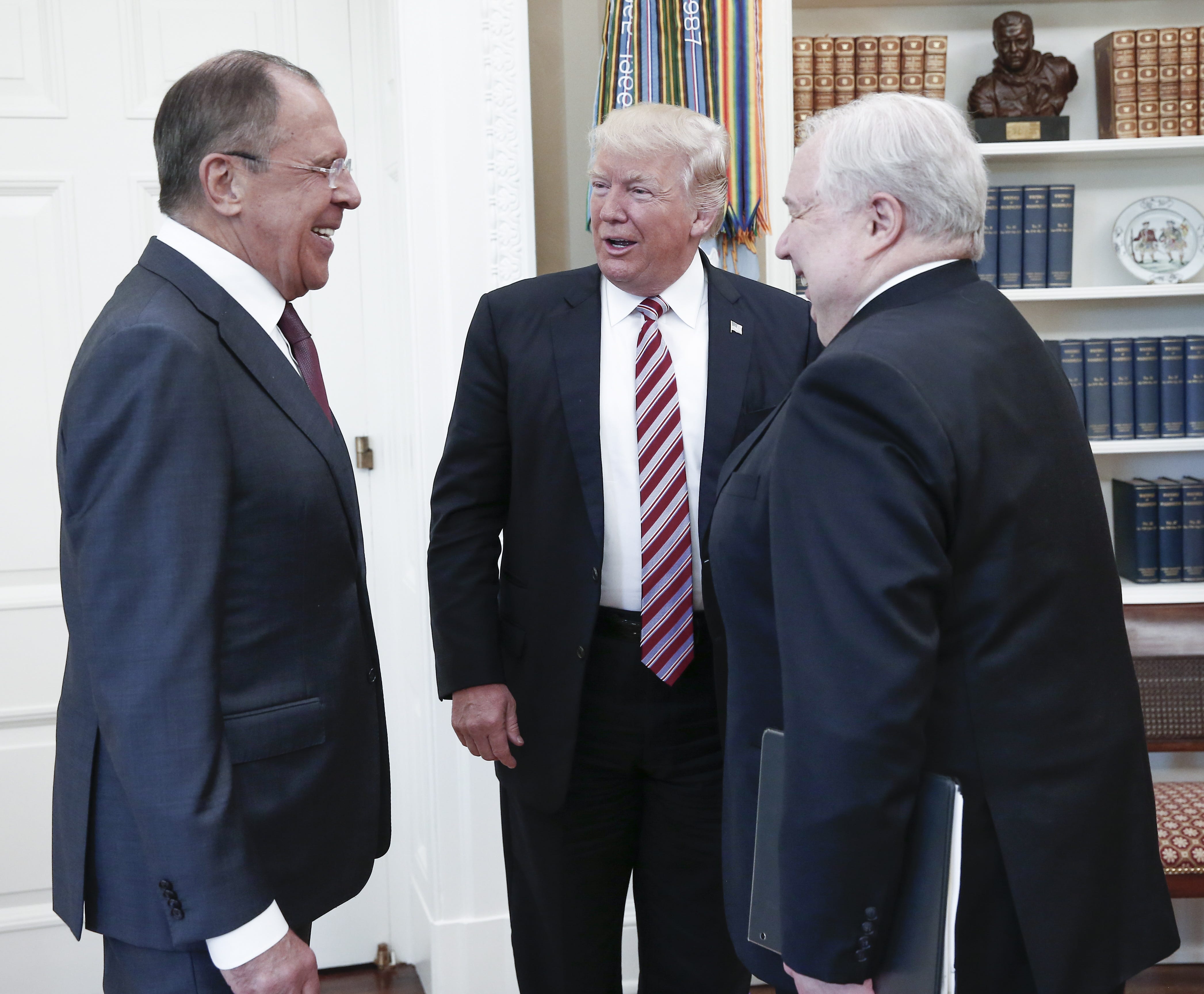


 Diane Ravitch's blog