Carol Kocivar is former President of the California State PTA. She has worked as an attorney, journalist, and ombudsperson and is the parent to two children who graduated from the San Francisco public schools
Scary as this may seem, it is time to talk with your children about how our democracy is threatened.
I know. I know. Those are strong words. I certainly am not suggesting that we ask first graders whether the president should have more power than the Congress or the Supreme Court. But I am looking at this through the lens of history– with the knowledge that Hitler and Mussolini strengthened their hold through the indoctrination of youth.
Our children are not born with democracy in their DNA. It is our responsibility to ensure that each generation has the knowledge and skills to support and preserve our democracy.
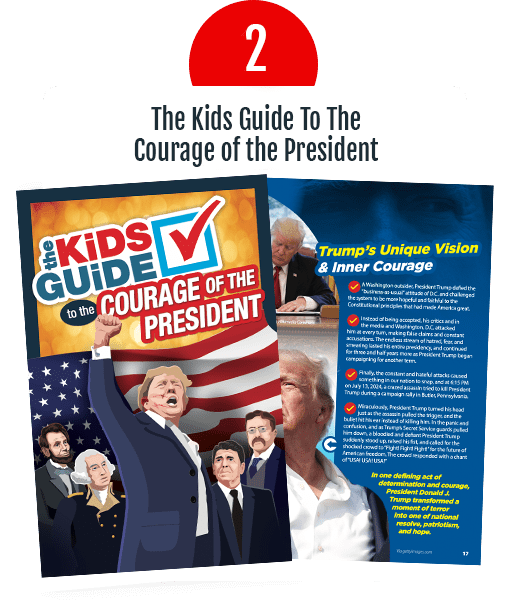
Political outreach to children is already underway. Below is an example of a Kid’s Guide on the internet.
“With the triumphant return of President Trump to the White House, Americans everywhere are celebrating his return and what it means for our nation. And, as our kids are the future of our country, it’s important for them to understand how Trump will make America great again. That’s why we created The Kids Guide to President Trump, and right now we’re giving it away for FREE!”
Kids are taught about the Constitution in school In elementary school, students should already have some basic knowledge about how our government is supposed to work. By the time they have completed the 8th grade, they should know the basics of our constitutional democracy. For example, the California History/ Social Science frameworks provides that 8th graders should be taught about separation of powers, checks and balances, the nature and purpose of majority rule, and the ways in which the American idea of constitutionalism preserves individual rights.
They should know, for example, that the president is not a king.
They should know that the Congress passes laws, not the president.
They should know that the President and his staff cannot refuse to follow court orders.
They should know the president does not have the right to refuse to implement spending decisions of Congress.
They should know their rights include freedom of speech.
What can parents do?
In age appropriate language, discuss current events with them. I was going to say discuss it at the dinner table but you probably have a better shot at their attention as you drive to and from sports events.
Seek out incidents that challenge the basic principles of our democracy and discuss them.
What do they think? How does that square with what they know about the constitution?
Explain why you think it is important that they understand what is happening in the country.
Discuss money for schools. Does their public school need more or less money? What do they think about cutting funding for their school?
Talk about the importance of voting. Can voting change public policy?
Ask what would help them become more involved in issues that affect their school? Their community? Their country?
It’s up to us to preserve democracy for our children.
Olga Lautman is a fearless defender of democracy. She keeps close tabs on authoritarian regimes and has had many reasons to should the alarm since the return of Trump. Now that Trump controls the executive branch, Congress, and usually the Supreme Court (where he occasionally loses when Barrett and Roberts dissent), he is on a path to tyranny.
She warns that his crackdown on dissent is a decisive step towards full-fledged authoritarianism. Let me add as a personal that not all forms of dissent are legal, even by the most liberal definition. As Justice Oliver Wendell Holmes wrote, you can’t shout “Fire!” in a crowded theater. While I support student protests, there are reasonable limits defined by time, place, and manner. If students prevent others from learning by disrupting their classrooms or closing the library, that’s out of line, in my view. You are free to disagree. That’s your right, as it is mine.
Lautman writes:
Trump’s Crackdown: Silencing Dissent and Censoring the Press
While Trump floods the zone with chaos, I am watching a deeply disturbing pattern emerge. Recently, he has targeted universities under the guise of combating antisemitism, threatening to cut funding, open investigations, and deport foreign students involved in what he deems “illegal protests.” This move to silence student voices is part of a broader strategy—Trump is systematically laying the groundwork to criminalize dissent. Concurrently, he has continued to invoke emergency powers over immigration, granting himself sweeping authority with minimal oversight.
Adding to this concerning trend, Trump is weaponizing the Federal Communications Commission to suppress media freedom. Under his regime, the FCC has initiated investigations into major news organizations like NPR and PBS, scrutinizing their content and funding. The White House has also barred Associated Press reporters from covering presidential events, citing disagreements over “terminology.” Furthermore, the regime has taken control of the White House press pool, deciding which journalists can cover presidential activities, effectively beginning the process of sidelining independent media voices.
Today, the targets are “antisemitism” and “immigration.” Tomorrow, it could be any form of resistance to the regime. This pattern mirrors tactics employed by autocratic governments, where laws and regulations are manipulated to suppress opposition and control public discourse. It is imperative to recognize and challenge these encroachments on our democratic freedoms before dissent becomes a criminal act, and that is why I felt it was important to bring it to everyone’s attention.
The Playbook of Repression
Trump’s attacks on universities have nothing to do with stopping antisemitism. If they did, there would be a serious, balanced approach to addressing hate across the board. Instead, he’s selectively using it as a pretext to punish colleges, strip funding, launch investigations, and lay the groundwork for broader crackdowns on protests. These moves, along with the threat to deport foreign students who participate in protests, are a classic authoritarian tactic—silencing youth movements before they become a real threat.
In Russia, we have seen this exact strategy play out. Putin started by using the language of “public order” to justify suppressing protests. Then, he expanded it to clamp down on journalists, opposition figures, and universities. Today, any form of public dissent in Russia is met with immediate arrests, long prison sentences, or exile.
Trump is following the same playbook. First, redefine what qualifies as a legal protest. Then, frame all opposition as a national security threat. Finally, implement policies that criminalize resistance. Let’s not forget—during his first term, Trump wanted the military to shoot protesters, but guardrails stopped him. Now, with those guardrails gone and loyalists installed in key positions, he is laying the groundwork to justify an all-out assault on free speech and assembly, using the rhetoric of “law and order” to disguise repression as a “necessary” security measure.
The Danger of Emergency Powers
Trump’s continuing invocation of emergency powers on immigration is another red flag. Emergency powers are not inherently undemocratic, but in the wrong hands, they are a tool for consolidating unchecked authority. In Russia, Putin used emergencies—terrorist attacks, economic crises, and foreign threats—to justify expanding his power. Each crisis became an excuse to centralize control and dismantle any resistance to the regime.
Trump is testing the limits of emergency powers to override legal norms. He has already deployed the military on U.S. soil for immigration enforcement—what stops him from escalating further? With the Insurrection Act looming in the background, he is laying the groundwork to use military force against civilians under the pretense of a “national emergency.”
This is Just the Beginning
We are witnessing the early stages of a full-blown authoritarian shift. The selective targeting of student protesters, the abuse of emergency powers, and the push to redefine “illegal protests” are all interconnected. Today, it’s about silencing students. Tomorrow, it will be about crushing unions, blacklisting journalists, or jailing political opponents.
This is not alarmism—it’s a pattern seen time and again in authoritarian regimes. And it’s why we must sound the alarm now.
What Can We Do?
Expose and Document – Share information, track developments, and call out every attempt to silence dissent. Authoritarians thrive on people looking the other way.
Support Targeted Groups – Defend students, journalists, unions, and activists under attack. Legal funds, advocacy groups, and independent media need resources to fight back.
Pressure Lawmakers – Demand that Congress and state governments put up real resistance. Emergency powers must be challenged, and unconstitutional crackdowns must be met with legal action.
Mobilize and Protest – Peaceful mass protests and civil resistance are essential. Authoritarianism collapses when people refuse to comply.
Prepare for Escalation – The time to organize networks and alternative platforms is now and will be critical to keeping resistance alive.
The question is not whether Trump will attempt to consolidate power—it’s whether Americans will resist before it’s too late.
Sherrilyn Ifill is a law professor at Howard University and former president and director-counsel of the NAACP Legal Defense Fund. She writes a blog called Sherrilyn’s Newsletter, where this post appeared. Open the link to see her footnotes.
“There is never time in the future in which we will work out our salvation. The challenge is in the moment. The time is always now.”
-James Baldwin
Illustration by Nick Liu
The past week has shown us in stark terms what it means to fight – to actually fight – to protect against the rise of authoritarians. This week we also saw that somehow, despite years of preparation, some of the leaders of our most powerful institutions seem unprepared for the particular nature of this fight. Others appear just…. unwilling to engage.
Last week the Trump Administration took its most bold actions yet. Through the actions of either Trump himself, Elon Musk or members of Trump’s cabinet, this Administration has:
· Unleashed an unprecedented attack on higher education, the centerpiece of which was a targeted attack on Columbia University. In a letter sent to the University, the Administration[i]demanded that university essentially turn over its decision-making to the Trump Administration, insisting that the University close the Middle Eastern Studies Dept, ban mask-wearing, expel students involved in pro-Palestine protests, and announced the withholding of $400 million in federal dollars until the University accedes to Trump’s demands, unless the University took these actions to address “antisemitism on campus.” The Administration underscored its intentions by entering student dormitories and arresting a Palestinian student who is a legal permanent resident of the U.S. As his 8-month-pregnant wife looked on helplessly, ICE officers arrested Mr. Khalil and then disappeared him, moving him from facility to facility, and offering only vague and unsubstantiated justifications for his arrest. His central “crime” appears to be “advancing positions that are contrary to the foreign policy of this Administration,”[ii]– a concept so staggeringly outrageous it can scarcely be absorbed.
· Fired half the staff of the Department of Education[iii] – as a down-payment on the Administration’s vow to close the agency.
· Indicated its intention to “eliminate Social Security;”[iv]
· Continued firing government workers and removing funding from government agencies including NIH[v] and shuttering offices like the Voice of America.
· Intensified tariffs against Canada and rhetoric suggesting that the sovereign nation of Canada should be annexed to the U.S.;[vi] declared that the European Union was created to “screw the U.S.”; declared that the South African Ambassador to the United States is no longer welcome,[vii] continuing the Administration’s Musk-inspired determination to recognize racist white settlers as victims of Black rule.
· Issued Executive Orders targeting law firms who have litigated cases against Trump in the classified documents cases and who provided pro bono counsel to Special Counsel Jack Smith, removing security clearances and blocking government connected work.
· Argued in court that transgender soldiers should be removed from the military.[viii]
· Removed information about Black, Asian American and women military heroes from the Arlington National cemetery website,[ix]disappearing the accomplishments of people of color and women from official recognition.
And that’s just part of it.
But the resistance to Trump’s authoritarian rule has been busy as well:
· Protests across the country have demanded the release of Mahmoud Khalil, the Palestinian student taken into custody.[x]
· “Tesla Take Down” protests at Tesla dealerships across the country in protest against Elon Musk’s takeover of our government have been so effective in tanking the brand and its stock price,[xi] that President Trump turned the White House into a car lot and personally embodied the used car salesman he was destined to be (if not for his father’s money) in an attempt to gin up Tesla sales.
· Protests nationwide continue to demand an end to government worker firings.
· Voters have shown up at town halls across the country to express anger about proposed plans to cut Medicaid/Medicare and Social Security[xii].
· Lawsuits filed by parents,[xiii] and by a score of states[xiv] have challenged the closing of the Education Department.
· Perkins Coie, the law firm targeted by Trump boldly challenged the Trump administration’s effort to blackball the firm and imperil its business;[xv]
· Federal courts have required Trump to rehire thousands of federal employees fired by DOGE[xvi]
· Federal courts have enjoined Trump’s efforts to freeze spending on governments grants and other funding.[xvii]
· Federal courts enjoined the Administration from removing migrants targeted under Trump’s invocation of the Alien Enemies Act – a decision the Trump Administration has defied.[xviii]
But the big stories last week were less about those who have protested and sued, and more about those among the most powerful institutional actors who appear to have lost the plot. Political scientists Steve Levitsky and Ryan Enos offered a blistering and spot-on condemnation of universities that have remained silent in the face of Trump’s authoritarian challenge to the freedom of universities.[xix]Calling out Harvard University specifically (where both scholars teach) for its silence in the face of the hideous attacks on Columbia University, Levitsky and Enos condemned the inaction of universities that have chosen a strategy of “lying low, avoiding public debate (and sometimes cooperating with the administration) in the hope of mitigating the coming assault.”[xx]
Meanwhile on Capitol Hill, Senate Minority Leader Chuck Schumer has faced a wave of outrage and demands for resignation after his decision to vote in favor of cloture to avert a government shutdown. To be sure, the Democrats have few options for stopping the Republicans, who are firmly in the majority in the House and Senate from torching our government. But as many of us have been reminded ad nauseum during the years when Democrats controlled the Senate, the filibuster is one of the few procedural rules the party in the minority in the Senate has to counter being overrun by the majority.
But frustratingly, although Democrats were unwilling to abolish the filibuster in 2022 to advance their agenda, last week they were unwilling to use the filibuster to defy the Republican power grab. Heads the Republicans win. Tails the Democrats lose.
It was hard to understand the point of Democrats affixing their signature to a continuing resolution to fund a government that is being cut to the bone every day by Elon Musk – an unelected billionaire with no official government position – who has been permitted to usurp the appropriation power of Congress. When Trump and Musk lawlessly gut agencies and fire government workers, and Speaker Mike Johnson and his caucus cede the power of Congress to the President, we are in a constitutional crisis.
Trump and Musk’s anti-constitutional usurpation of congressional power with the complicity of the Republicans in Congress is an emergency. It demands an emergency response. Minority Leader Schumer and 7 other Democratic Senators (and I suspect more who were covered by the Leader’s unpopular action) were unprepared to meet the moment in a way that would have upped the stakes. Sometimes when the game is fixed, you have to overturn the tables.
I will concede a serious point Schumer later offered that got lost in the Comms disaster of his Wednesday night statement that suggested there would be a shutdown, and then his Thursday morning announcement that he would vote to avert one. If the government shutdown happened, there would be little chance of obtaining judicial orders enjoining decisions by Trump/Musk to eliminate programs, because legally during a government closure, the President enjoys unfettered power to determine which functions of government are “essential” – standard to which the courts would likely defer. By contrast, with the government open, challenges to DOGE firings and closures continue to do fairly well in the courts and have slowed down the force of Musk’s chainsaw.
In any case, Schumer’s decision and perhaps moreso the clumsy comms that accompanied it have resulted in boiling outrage within the base of the party, including calls for him to step down from leadership.
Of course, none of this compares to the perfidy of the Republican Party. We must never forget the unconscionable and dastardly conduct of Speaker Mike Johnson and the Republicans in the House and Senate – men and women who have abdicated their allegiance to this country and to democracy itself. Their cowardice and complicity in the destruction of this country must never be forgotten or whitewashed. Their betrayal is singular and historic.
But there’s another group that is failing to meet this moment. America’s corporate leadership has been nearly silent during one of the most volatile economic periods in years. Last week the stock market took a nosedive – entering “correction” status as a result of Trump’s manic and unhinged tariff announcements. [xxi] Trump’s erratic tariffs – up one day, down the next, up again two weeks later – are lunacy. Every rational business leader knows that.[xxii] The predictable market response to Trump’s irrationality threatens the retirement plans of older Americans hoping to retire and the American economy. America’s leadership in the world has been compromised by Trump’s saber-rattling, and his insistence on imperialist moves towards Canada, the Panama Canal and Greenland, is destabilizing the integrity of perception of American stability. Combined with the massive government lawyers, Trump’s policies are bad for America and bad for business.
As Trump literally tanks the American economy and the trust of the international business community, where are the voices of America’s business leaders? Are they all hoping that Trump will do a commercial on the White House lawn hawking their products too? Are the leaders of the Business Roundtable (200 CEOs of the nation’s leading corporations) agnostic about the President’s stubborn insistence on policies that are wrecking the U.S. economy and our standing in the world?
These same business leaders enabled the lie that Trump is a “successful businessperson” – knowing full well that Trump does not seem to know what he’s talking about when he wades into economics, knowing of his six bankruptcies, knowing of his refusal to pay contractors, his false representations, and knowing that no responsible Fortune 500 CEO would ever have gone into business with Trump before he was elected President, or even after. Being wealthy is not the same as being a successful businessperson and they all know it.
In an interview on CNBC, even host Maria Bartiromo – a Trump sycophant – felt compelled to remind Trump that successful business leaders need predictability to make coherent decisions about investments, infrastructure, expansion, and product development for markets. She noted that the up-and-down tariff mania undermines predictability. Trump responded, “well they say that. It sounds good to say.” Really? Is that it? Or is it a fundamental tenet of business that even a first year MBA student would know? At other times last week he has repeated with “we’re gonna have so much money from the tariffs” with a desperate insistence that suggested mental instability.
American corporations have either tried to placate Trump by paying tribute,[xxiii] or have “crawled into a protective shell” like the university officials called out by Levitsky and Enos. In either case, it is utterly irresponsible. Their voices and influence – presented collectively and forcefully – are critical to protecting the economic interests of this country, and our democracy. Their failure to act is a betrayal of their responsibility as citizens.
Media owners have shamed themselves – whitewashing their teams,[xxiv] surrendering the independence and diversity of their editorial pages,[xxv] and taking a knee before Trump’s demands rather than standing firm in the face of the challenge to our democracy.[xxvi]
In the week ahead, there will be many additional opportunities for leaders from our most powerful democratic institutions to meet this moment. Already it appears that the Trump Administration has defied a federal court order to turn around planes taking Venezuelan migrants accused of being to El Salvador.[xxvii] The Administration announced that the first 250 migrants arrived in El Salvador.[xxviii] What does that mean? Two hundred-fifty Venezuelan nationals have been disappeared into the one of the world’s most notoriously abusive prisons in El Salvador, without judicially approved trials or due process.
What will judges do as Trump appears to defy judicial orders? This week will test the readiness of our judiciary to defend the rule of law.
Meanwhile ordinary people have been showing tremendous leadership, protesting, launching and participating in boycotts, conducting teach-ins, calling their elected representatives every week, sometimes several times a week, visiting district offices, participating in “die-ins,” writing letters and petitions, and building support for opposition candidates in special elections. A “mass march” has been announced by the organization Hands/Off for April 5th, although information is still spotty [please drop info in the comments]. Black churches have launched a 40-day Lenten boycott of Target for its obsequious abandonment of its DEI commitments.[xxix]
Every day we are called upon to meet the moment. As we see our neighbors seized by plainclothes agents without judicial warrants, and see our workplaces “obey in advance” – removing from websites, official policies and even mission statements expressing their commitment to equality and to inclusion, and as we see law firms crouch before this Administration’s threats, and media outlets silence voices that write the truth about this Administration, we have to decide how we will respond.
All over America ordinary people are looking into their toolboxes of non-violent actions and determining which ones they will use. It’s been beautiful to see.
But we must not absolve the leaders of our most powerful institutions – those who have the money and power, and influence to insulate themselves from the worst consequences of this Administration’s excesses – from their obligation to act and to meet the moment.
To those who are business leaders, captains of industry, university leaders, and media owners, decide who you will be at this moment. If we fully lose democracy in this country, it will be because the most privileged among us refused to accept the responsibility to speak out, to say “no more,” and to lead. History will not kindly remember those who left it to Americans with considerably less power and protection, to do the hard work of saving this country. Your tax cuts will not be large enough to cover your shame. And we will remember.
Timothy Snyder is Professor of European History at Yale University and a bestselling author. See his book “On Tyranny.”
He writes here about Jeff Bezos’ attempt to limit editorial expression at The Washington Post. When Bezos, the world’s second richest man–after Elon Musk–bought the newspaper, he insisted that he would not interfere in its editorial content. Many assumed that his vast wealth would insulate him from political pressure.
But the prospective return of Trump changed his views about editorial independence. He has other businesses (Amazon, Blue Origin) that made him a billionaire and that have government contracts. He blocked the publication of an editorial endorsing Kamala Harris. After Trump’s election, he gave $1 million to his inauguration fund. Then his company Amazon–source of his riches–paid $49 million to Melania for producing a film about her life; a tidy sum for a person with no experience as a film producer.
Bezos’ ham-handed efforts to mute criticism of Trump has hurt the reputation of the Washington Post. It has suffered a huge loss of readers–more than 300,000–and an exodus of some of its best writers. Just this week, Deputy Editor Ruth Marcus quit after Bezos or his henchman Will Lewis killed her latest column.
Snyder here takes issue with Bezos’ intervention into the Post’s editorial space:
On February 26th the Washington Post announced a new editorial line that refers to freedom while restraining it. I submitted a proposal to them on the question of what it would meant to support freedom in a newspaper. I have waited two weeks for a response. I would still happily write that opinion piece! In the essay below, I explain how the Post’seditorial line is nonsensical and authoritarian.
Jeff Bezos, who owns Washington Post, has announced its editorial line: “We are going to be writing every day in support and defense of two pillars: personal liberties and free markets.” The use of these terms in this way demeans the concept of freedom and pushes the country in the direction of tyranny.
I will start from some arguments that are more conventional and that others have rightly made. But I want here, in ten steps, to push the point to the end. On February 27th, the day after the new editorial lines was announced, I enjoyed myself and did this as parody. Today I ask for your patience as I do so as philosophy.
1. “Liberty” is self-contradictory as an editorial code. To use liberty as a demarcation of what is and what is not to be published shows a deep misunderstanding of what liberty means. Liberty is an open meadow, not a fence. An editor who believes in liberty helps writers to make their own arguments well, because their freedom has to do with them. Liberty has to mean that people have the right to say what they want, including (for example) that liberty doesn’t need to be qualified by the adjective “personal,” that liberty is an infinite concept and not one that can be listed as specific “liberties,” that the concept is in tension with the fiction of the “free market”, or that the word is being put to pernicious, Orwellian purposes by American libertarian billionaires.
2. Editors who take “personal liberties” as a restriction on what contributors write would need protocols of measurement and control. Can we accept that a certain someone knows, for certain, whether a given article trends in favor or against personal liberty? What could this mean? To grant such authority is absurd, and also tyrannical. The whole point of freedom is that it extends beyond the boundaries of any one mind at any one moment. James Baldwin called truth “freedom which cannot be legislated, fulfillment which cannot be charted.” And surely this is all the more true of the truth about freedom! Treating the issue as impersonal makes matters no better. Imagine an official list of “personal liberties” hanging on the walls of the Posteditorial offices, each with a definition. Who decides what that says, though? And such a list would not be enough. There would then have to be some set of rules (algorithms?) by which to establish whether an article met the definition. Very quickly (on day 1? has this perhaps already happened?) we get to the Kafkaesque situation of a Post editor submitting a proposed opinion essay to an AI and asking whether it “supports and defends personal liberties and free markets.” Freedom is what distinguishes us from machines. It has to do with affirming values over the course of a limited time on earth, with taking risks, with building character. No machine can capture that. None of these practice that could be used to enforce the editorial line can possible affirm “personal liberties.” Enforcement means either human arbitrariness or mechanized abasement.
3. The qualification of the noun “liberties” by the adjective “personal” is unfounded. Any qualification is unfounded. This particular one suggests that we can become free people without society, which is absolutely not true. We all begin life as helpless infants. Whether we can become free or not depends on circumstances beyond our control. No amount of declaiming “personal liberty” will create the conditions in which a baby grows up with the capacities and structures needed to be a free person. That effort to create a person must be social, beginning with the parents, and extending to friends, teachers, child-care workers, and others. A child needs a special kind of time at a special time of life, and that time will only exist if we recognize that the entire situation is about freedom and that freedom requires cooperation. If we want liberty, in other words, we cannot limit ourselves to the personal. The example of the newborn is important, because it is what we all share, but also because it suggests a truth that continues throughout life. In one way or other, we are always vulnerable, and our ability to be free will always depend on cooperation.
4. The pairing of the phrase “personal liberties” with the phrase “free markets” suggests an understanding of freedom that is negative: freedom as just an absence of oppression, or an absence of government. The editorial line implies a world in which there is nothing more than isolated individuals and a government that might or might not oppress them, with nothing in between. To be sure, the government should not oppress people. But to ensure that governments are not oppressive, people need freedoms that go beyond the personal: that we can all vote, for example. Voting is not just a personal freedom: if you think about it that way, you will be unconcerned about equal voting rights for others, and your democracy will soon become something else. And the government is not, as negative freedom indicates, the only possible instrument of oppression. Companies and oligarchs can also oppress. And when they do, democratic governments are the only institution that can defend freedom. But for governments to be democratic, people have to be able to act together. They need a freedom that goes beyond the personal: not only to vote in fair elections, but to protest in groups, to join labor unions, to assemble and cooperate.
5. The use of the plural “liberties” (rather than “liberty” or “freedom” in the singular) is not an extension but an unwelcome qualification, in fact a limitation. The use of the plural suggests that there is a finite list of specific liberties, rather than freedom for all people as such. This indicates that liberty is constrained for people. Interestingly, no such constraint is placed upon the inhuman abstraction that also figures in Jeff Bezos’s editorial line, “the free market.” What has unqualified freedom, according to Bezos? Not people. The market. And this, as we shall see, is not only incoherent but authoritarian.
6. The two parts of the editorial line would be contradictory in practice. The “free market” and “personal liberties” would have to contradict one another in editorial decision-making, to the point that they could not be enforced together (even leaving aside the inherent problem, discussed already, of defining and “personal liberties”). If “personal liberties” include anything meaningful, they would have to include the freedom of expression — which would include the freedom to debate what markets should be like and how they should work. Otherwise the (nonsensical) orthodoxy of the “free market” functions as a restriction on freedom of speech, and “personal liberties” just turns out to mean repeating an unquestioned political orthodoxy.
7. The two parts of the editorial line are also contradictory in principle. The assumption that “free markets” and “personal liberties” work together as “pillars” is mistaken. These two concepts are not the same, and very often point in opposing directions. A “free market,” for example, would mean that companies can pollute as much as they like. But if the atmosphere poisons me and I die of cancer, I am not enjoying “personal liberties” of any sort.
8. Any reasonable concept of “personal liberties,” of freedom, will in fact constrain the market. Consider the market in human organs, which of course exists. Should there be a “free market” in human kidneys? Should rich people have the right to hunt you down on the street, tranquilize you, and harvest your organs to sell them? If not, why not? The answer has something to do with the freedom of human beings, the autonomy of their bodies, their right not to have them violated. There is no way to get to that answer, however, from the starting point of the “free market.” A “free market” includes your kidneys.
9. The editorial code requires writers to affirm the non-existent. Americans say “free market” all the time, so it sounds like something that exists, but it does not and cannot. There is no such thing as a “free market,” in the sense of a market that functions unconstrained, without government. The basis of a market is the right to property, which is of course enforced by a government. A government decides that there is such a right, and whether or not it extends to organs (or people, for that matter). Property rights are thus “government intervention,” in the jargon of the people who like to talk about “free markets.” Once this undeniable fact is recognized, we are simply in a conversation about which government action we advocate and which we oppose. Once we understand that we need governments for markets to work, and that we are inevitably making choices about how markets work, we can have a reasonable conversation about what sort of markets we want and how we want them to function. We can ask, for example, whether monopoly capitalism is the best sort of capitalism. If editors insist on calling markets “free,” they are insisting that writers connive in political fiction. And a very dangerous one, especially right now.
10. The language of “free markets” is authoritarian. Freedom belongs only to people. It does not belong to institutions or abstractions — and least of all to non-existent institutions or abstractions. The moment that we yield the word “free” to something besides a person, we are yielding our freedom. And we should be aware that others who abuse the word by taking it from us intend to oppress us. When we endorse the fiction of “free markets,” we are entering a story told by others than ourselves, in which we are the objects, the tools, the non-player characters. We are accepting that we people owe duties to those markets. By way of an unreal concept we pass into real submission. We are accepting that we have the duty to oppose “government intervention,” which is to say that we must oppose political actions that would help us to be more free: safety for workers, protection for consumers, insurance for banks, funding for schools, legality for unions, leave for parents, and all the rest. We must accept whatever the market brings us, to go wherever the billionaires take us, to surrender our words, our minds, ourselves.
James Pintell of The Boston Globe wrote yesterday, after the fractious meeting in the Oval Office in which Vance and Trump insulted Zelensky, as the beginning of a “new world order.”
He wrote:
The blow-up set the stage for an entirely new world order, should future presidents choose to accept its premise. Or they could, of course, go in a different direction.
Following World War II, the global order was clear. There were two major powers, two teams, and nearly every event was viewed through the lens of which side it benefited or which it cost.
Then the Soviet Union collapsed, leaving the United States as the world’s sole superpower…
Then Russia invaded Ukraine three years ago.
The early international response to that war fell into three broad camps. At first, Russia was isolated, sanctioned by developed nations that also provided support to Ukraine. Eventually, Russia found allies: China gave it money, Iran gave it drones, and North Korea gave it troops. Meanwhile, much of the Global South remained neutral, sitting out the conflict altogether.
But the Oval Office meeting Friday may have formalized something that has been brewing since Trump’s reelection in November: a new era of neocolonialism, where a handful of powerful nations dictate global affairs.
Is this what Trump voters wanted?
Did Americans realize when they voted last November that they were voting to abandon NATO and our European allies? Did they realize that they were voting for an alliance with Putin and Russia? Did they know they were voting to abandon Ukraine in its fight to be free of Russian domination?
The two big issues were immigration (“out of control,” said Trump) and inflation (Trump said inflation would fall as soon as he was insulated.
I don’t recall any promises to create a new world order in which we voted with Russia, North Korea, and Iran against condemning the Russian invasion of Ukraine.
I don’t remember Trump promising to create chaos in every federal agency. Or pledging to stop all foreign aid. Or making Elon Musk the co-President.
Yet the meeting in the Oval Office in which Trump and Vance berated Zelensky clarified that the U.S. position in the world has changed.
We are now in Putin’s camp. we do not defend democracy, freedom, and Western values. We do not defend nations that are struggling against authoritarian regimes. If it were 1939, we would be allied with Hitler.
The meeting was a set-up. Zelensky undertook an arduous journey from his war-torn country, assuming that he was going to sign a deal to give the U.S. half of Ukraine’s natural resources, in exchange for our continued support. The deal was written.
But Trump wanted Zelensky to agree that Putin could keep all the Ukrainian land he had seized.
Zelensky wanted security assurances to guarantee that Putin would not invade Ukraine again.
The meeting began with Zelensky thanking Trump for inviting him to the White House. Almost immediately, Vance attacked Zelensky for not showing sufficient gratitude. Note that as a Senator from Ohio, Vance voted against every aid to Ukraine bill.
Vance and Trump insulted Zelensky repeatedly. Zelensky didn’t show enough respect to Trump, Zelensky was not sufficiently grateful.
Zelensky left or was thrown out, I’m not sure which.
Trump immediately crowed about his strength and power.
Every single cabinet member tweeted how proud they were of Trump for “putting America first.” So did MAGA members of Congress.
Dimitri Medvedev, the Prime Mjnister of Russia, tweeted that he was pleased that “the insolent pig” (Zelensky) was ousted from the White House.
This is not the country I grew up in. This is not the country to which I recited the Pledge of Allegiance every school day.
All of those wonderful songs I sang about liberty, freedom, justice, equality. All the stories about standing up against tyranny so that people could live in freedom. All dashed.
We must have the courage, the strength, the fortitude to recover our country, its values, its ideals.
Friends with a murderous tyrant? This is not who we are. Or were.
It’s dizzying to watch the changing views of Jeff Bezos since he bought the Washington Post. First, he pledged not to interfere in the editorial content of his prize bauble. Last fall, he yanked an editorial endorsing Kamala Harris. Now he has new instructions for editorialists and opinion writers: we support personal liberties and free markets.
The thing about American newspaper opinion sections is this: Their owners get final say. If the man who signs the checks — it’s almost always a man — really really really wants to see his cocker spaniel run City Hall, you’ll probably see “Our Choice: Fluffernutter for Mayor” stripped atop the editorial page. For generations — from Murdoch to Loeb, Hearstto Pulitzer, Daniels to Greeley — this has been one of the overriding perks of media ownership. If Jeff Bezos wanted to turn The Washington Post’s opinion section over to an AI-powered version of Alexa, he’d be within his rights to. So his announcement this morning — that Post Opinions would henceforth reorient “in support and defense of two pillars: personal liberties and free markets” — is, in a sense, merely restating the traditional droit du seigneur given over to capital.
But the scale of the hypocrisy on display here is eye-watering.
But Bezos’s assertion of power is downright laughable compared to the rhetoric he was using just four months ago when trying to justify his killing of the Harris endorsement. Remember his muddled, oligarch-splaining op-ed? His core argument back then was that the worst thing a newspaper’s opinion section could do is appear to be taking one side politically.
Bezos, October 28, 2024: We must be accurate, and we must be believed to be accurate. It’s a bitter pill to swallow, but we are failing on the second requirement. Most people believe the media is biased. Anyone who doesn’t see this is paying scant attention to reality, and those who fight reality lose. Reality is an undefeated champion. It would be easy to blame others for our long and continuing fall in credibility (and, therefore, decline in impact), but a victim mentality will not help. Complaining is not a strategy. We must work harder to control what we can control to increase our credibility.
Presidential endorsements do nothing to tip the scales of an election. No undecided voters in Pennsylvania are going to say, “I’m going with Newspaper A’s endorsement.” None. What presidential endorsements actually do is create a perception of bias. A perception of non-independence.Ending them is a principled decision, and it’s the right one.
Endorsing a candidate for president is bad because it can create the perception of bias — that the newspaper is institutionally tilted to one side or another.
So the solution is…to have the owner spend months shipping millions off to Trump HQ and then declare that certain opinions not in favor on the political right will now be verboten in the Post’s pages?
Bezos, February 26, 2025: We are going to be writing every day in support and defense of two pillars: personal liberties and free markets. We’ll cover other topics too of course, but viewpoints opposing those pillars will be left to be published by others.
Back in October, Bezos was saddened by even the concept that his personal interests might influence the Post’s content.
Bezos, October 28, 2024: When it comes to the appearance of conflict, I am not an ideal owner of The Post.Every day, somewhere, some Amazon executive or Blue Origin executive or someone from the other philanthropies and companies I own or invest in is meeting with government officials. I once wrote that The Post is a “complexifier” for me. It is, but it turns out I’m also a complexifier for The Post.
You can see my wealth and business interests as a bulwark against intimidation, or you can see them as a web of conflicting interests. Only my own principles can tip the balance from one to the other. I assure you that my views here are, in fact, principled, and I believe my track record as owner of The Post since 2013 backs this up. You are of course free to make your own determination, but I challenge you to find one instance in those 11 years where I have prevailed upon anyone at The Post in favor of my own interests. It hasn’t happened.
But of course — when one of the wealthiest humans in the history of the species decides to block critiques of “free markets” from one of the nation’s most important news outlets, it has nothing to do with any of his interests. Completely unrelated.
Bezos, February 26, 2025: I am of America and for America, and proud to be so. Our country did not get here by being typical. And a big part of America’s success has been freedom in the economic realm and everywhere else. Freedom is ethical — it minimizes coercion — and practical — it drives creativity, invention, and prosperity…
I’m confident that free markets and personal liberties are right for America. I also believe these viewpoints are underserved in the current market of ideas and news opinion. I’m excited for us together to fill that void.
A few months ago, Bezos was confident that the Post had to differentiate itself from the swarm of misleading online content by being staunchly independent of any ideological agenda:
Bezos, October 28, 2024: Many people are turning to off-the-cuff podcasts, inaccurate social media posts and other unverified news sources, which can quickly spread misinformation and deepen divisions…
While I do not and will not push my personal interest, I will also not allow this paper to stay on autopilot and fade into irrelevance — overtaken by unresearched podcasts and social media barbs — not without a fight. It’s too important. The stakes are too high. Now more than ever the world needs a credible, trusted, independent voice, and where better for that voice to originate than the capital city of the most important country in the world?
But today, the existence of all that internet muck is positioned as a perfect excuse to abandon all desire for a broad-based opinion section.
Bezos, February 26, 2025: There was a time when a newspaper, especially one that was a local monopoly, might have seen it as a service to bring to the reader’s doorstep every morning a broad-based opinion section that sought to cover all views. Today, the internet does that job.
So, to recap: A newspaper can’t be seen as taking a side. Until it’s essential that it be seen as taking a side. Bezos would never use his own ideological beliefs to restrict the Post’s work. Until he decides he must use his own ideological beliefs to restrict the Post’s work.
As was the case in the fall, the problem with these swings is less their content than their naked service to one man’s agenda. A newspaper is free to endorse or not endorse whoever it wants. An owner is free to shape his opinion section to his will. But the realpolitik context of those decisions clashes wildly with Bezos’s lecturing tone and freshman-level political analysis. I doubt today’s announcement will generate another 250,000 subscription cancellations, if only because there are so many fewer subscribers left to cancel. But the impact will be felt. Only three months ago, the Post was prepping a plan to “win back” wayward subscribers by focusing on the paper’s star reporters and columnists — people like Ashley Parker, Eugene Robinson, and Dana Milbank. Parker’s already jumped ship; how are opinion voices like Milbank and Robinson supposed to fit into the new no-critiquing-the-genius-of-unrestrained-markets regime?
Something astonishing happened at the United Nations today. Ukraine sponsored a resolution condemning Russia’s invasion of Ukraine three years ago. The General Assembly overwhelmingly voted for the resolution.
The resolution was opposed, however, by Russia, North Korea, Iran, the United States, and 24 other Russian allies.
The United States voted with Russia, North Korea, Iran and 14 other Moscow-friendly countries Monday against a U.N. resolution condemning Russian aggression in Ukraine and calling for the return of Ukrainian territory. The resolution, sponsored by representatives from Kyiv, passed overwhelmingly in the U.N. General Assembly.
The U.S. delegation also abstained from voting on its own competing resolution that simply called for an end to the war, after European-sponsored amendments inserting new anti-Russian language in the resolution were approved in the 193-member body by a wide margin. The amended U.S. resolution also passed.
Did the American people vote last November to abandon our allies and to create a new partnership with Russia, North Korea, and Iran?
In other news:
Trump renamed the Gulf of Mexico. He says it is henceforward “the Gulf of America.” Frankly, this is the sort of meaningless BS that he manufactures to please his base. It doesn’t lower the price of eggs. It’s pointless. when Trump is gone, the Gulf of Mexico will be the undisputed Gulf of Mexico.
The Associated Press has continued to call the Gulf of Mexico by its rightful name.
So Trump had to punish the AP. Its reporters have been barred from White House press conferences and from flying with Trump on Air Force 1 with the press pool.
Judge Trevor McFadden told the court there were several reasons he denied the temporary restraining order. He noted there was a difference in the issues of this case and case law presented by both parties.
He also questioned the amount of irreparable harm the AP would suffer as the news outlet can get access to the same information whether or not they’re in the room where it happened, he argued.
Right. They can always watch the press conference on television. They just can’t ask questions or ride with the press pool on Air Force 1.
Judge McFadden was appointed by President Trump in 2017.
The Associated Press is an international news organization. it has refused to change the name of the Gulf of Mexico to the “Gulf of America,” as ordered by Trump.
In retaliation for refusing to adopt Trump’s name change, the AP reporters have been excluded from White House press conferences and barred from riding with other members of the press on Trump’s Air Force One.
The Associated Press filed a lawsuit on Friday against top White House officials, accusing them of violating the First and Fifth Amendments by denying A.P. reporters access to press events in retaliation for references to the Gulf of Mexico in its articles.
The lawsuit was filed in the U.S. District Court for the District of Columbia. It named as defendants Taylor Budowich, the White House deputy chief of staff; Karoline Leavitt, the White House press secretary; and Susie Wiles, the White House chief of staff.
In the complaint, The A.P. said that the White House had ordered it to use certain words in its reporting and that it was suing “to vindicate its rights to the editorial independence guaranteed by the United States Constitution and to prevent the executive branch from coercing journalists to report the news using only government-approved language.”
The lawsuit centers on The A.P.’s decision to continue referring to the Gulf of Mexico in its articles, rather than the Gulf of America, as the body of water was decreed by President Trump in an executive order on Jan. 20
We have never seen a president like Trump. He never misses an opportunity to grift. He got $16 million from ABC News because George Stephanopoulos said he raped E. Jean Carroll (the judge in the case agreed). Never went to trial. He got $25 million from Zuckerberg because he was locked out of Facebook after the January 6 insurrection. Name he wants a payoff from CBS because he claims that “60 Minutes” edited its interview with Kamala Harris to show her in a favorable light.
Now Trump’s head of the FCC has told CBS to hand over the raw footage so he can decide whether “60 Minutes” was unfair to Trump. Gee, I wonder what he will decide?
How was Trump injured by Harris’s interview?
Not at all. He’s president and now he can turn the powers of the federal government to coerce media and other institutions to cower, and if necessary, pay tribute.
CBS and its “60 Minutes” have long stood as shining beacons of broadcast news.
The Sunday night newsmagazine, with its ubiquitous ticking clock, earned a reputation for not backing down from a fight. For a half-century, the show established the standard for TV investigative reporting with its no-holds-barred questioning of U.S. presidents and others in power.
But a different clock is ticking.
President Trump’s new chairman of the Federal Communications Commission, Brendan Carr, this week demanded CBS turn over the full, unedited transcript of its “60 Minutes” interview in October with former Vice President Kamala Harris, including film footage from the different camera angles.
That interview provoked the ire of Trump, who filed a lawsuit against CBS alleging the network was engaged in deceptive editing practices.
“We are working to comply with that inquiry as we are legally compelled to do,” CBS said Friday in a statement.
The latest development comes as Paramount Global lawyers engage in preliminary talks to settle the lawsuit Trump filed in October over his objection to edits to the “60 Minutes” interview. Trump alleged the network “deceptively” edited the interview to present Harris more favorably in the closing weeks of the election.
Lawyers for Trump and Paramount on Friday asked a Texas judge to extend a key deadline in the court case to give the two sides additional time to try to hammer out a truce.
The FCC inquiry raises the stakes in the dispute, which has stoked fears that Trump and his team are using levers of power to chill unflattering news coverage. Paramount’s controlling shareholder, Shari Redstone, has been agitating for her team to settle Trump’s lawsuit to facilitate her family’s sale of Paramount to David Ellison’s Skydance Media, according to people familiar with the matter who were not authorized to comment.
Paramount needs the approval of the FCC for the Skydance deal to advance.
The company’s seeming willingness to placate Trump has roiled journalists, including within CBS News. First Amendment experts initially interpreted Trump’s “60 Minutes” lawsuit as a political stunt. They said settling the case with Trump would deliver a crushing blow to CBS News’ legacy.
“This is an act of pure cowardice for short-term gain that corrupts every journalistic value imaginable,” said USC Annenberg School for Communication and Journalism Gabriel Kahn.
“It is a sad day,” 1st Amendment lawyer Floyd Abrams wrote Friday in an email to The Times. “It’s heart-breaking that CBS —say it again, CBS — seems ready to pay big bucks for its own editing decisions.”
The storied news division has maintained “60 Minutes” as the gold standard in television journalism for more than five decades. People inside the company, who were not authorized to discuss the matter publicly, said they fear the move will not only tarnish the “60 Minutes” brand but also set a dangerous precedent that could encourage the Trump administration and others to weaken journalism institutions.
“You think in the next four years we’re not going to say something that’s going to get him riled up again and he’ll do this again?” said one veteran journalist in the division.
Anger over a possible settlement runs so deep that CBS News could experience an exodus of journalists and even executives if the company caves to Trump’s demands, some said.
George Cheeks, co-chief executive of Paramount Global, has been made aware of the news division’s concerns over how a settlement would be perceived in the industry and its broader impact on press freedom. Paramount Global board members also have received pleas from inside the news division to fight the Trump lawsuit, sources said.
“It’s a literal kowtow … a sign of obeisance toward a new overlord — a.k.a. the Trump family — which is exactly the relationship that media owners in Belarus, Hungary and Russia have with the regimes there,” Kahn said. “This is essentially a crack in the foundations of our free press.”
Cheeks spent months trying to navigate choppy waters amid Redstone’s increasing unhappiness with CBS News and “60 Minutes” over its coverage of the war in Gaza.
Redstone has not publicly expressed an opinion on the Trump settlement talks. A spokesperson for the mogul declined to comment.
People close to the lawsuit describe the settlement talks as preliminary. Some executives privately suggested that settling the lawsuit was the price of doing business in Trump’s second administration. These people viewed a settlement as an efficient means to keep CBS out of court and expedite the completion of the Skydance deal.
Paramount and Skydance Media also declined to comment.
CBS News executives were already discussing releasing a full transcript of the interview with Kamala Harris before the FCC inquiry. But they saw that as a dangerous precedent because raw transcripts of edited interviews are typically only released to address issues related to possible defamation. Trump’s lawsuit is not a defamation case.
I just wanted to end today’s show by thanking all of the wonderful people who work behind the scenes at this network. You may have seen some reports about me and the show, and after giving all of this some careful consideration and weighing in alternative timeslots CNN offered me, I’ve decided to move on. I am grateful to CNN for the nearly 18 years I’ve spent here doing the news. People often ask me if the highlight of my career at CNN was at the White House covering Donald Trump. Actually, no. That moment came here when I covered former President Barack Obama’s trip to Cuba in 2016 and had the chance to question the dictator there, Raul Castro, about the island’s political prisoners. As the son of a Cuban refugee, I took home this lesson: It is never a good time to bow down to a tyrant. I have always believed it’s the job of the press to hold power to account. I’ve always tried to do that here at CNN, and I plan on doing all of that in the future. One final message. Don’t give in to the lies. Don’t give in to the fear. Hold on to the truth and to hope. Even if you have to get out your phone, record that message. I will not give in to the lies. “I will not give in to the fear!” Post it on your social media so people can hear from you, too. I’ll have more to say about my plans in the coming days. But until then, I want to thank all of you for tuning in. It has been an honor to be welcomed into your home for all these years. That’s the news. Reporting from Washington. I’m Jim Acosta.


 Diane Ravitch's blog